Competing icons at the RCM: Gould, Liszt and others

It’s a branding exercise to give a building a name. Roy Thomson has his hall. Both Rogers and Four Seasons have Centres.

They already have The Glenn Gould School in the Royal Conservatory of Music. So why not also give him a wall?

Or so I’m thinking since seeing Gould’s Wall, a site specific opera Tapestry Opera premiered for the Royal Conservatory on Bloor Street West with music composed by Brian Current and a libretto by Liza Balkan.

At the most literal level it would seem to christen the inner Atrium wall. After seeing this show will we ever look upon that bumpy old surface again without thinking it’s in some sense Gould’s wall?

Although come to think of it, for me it will be Lauren Pearl’s Wall. She’s the one risking her life flying up and down on wires. I hope that isn’t heresy.
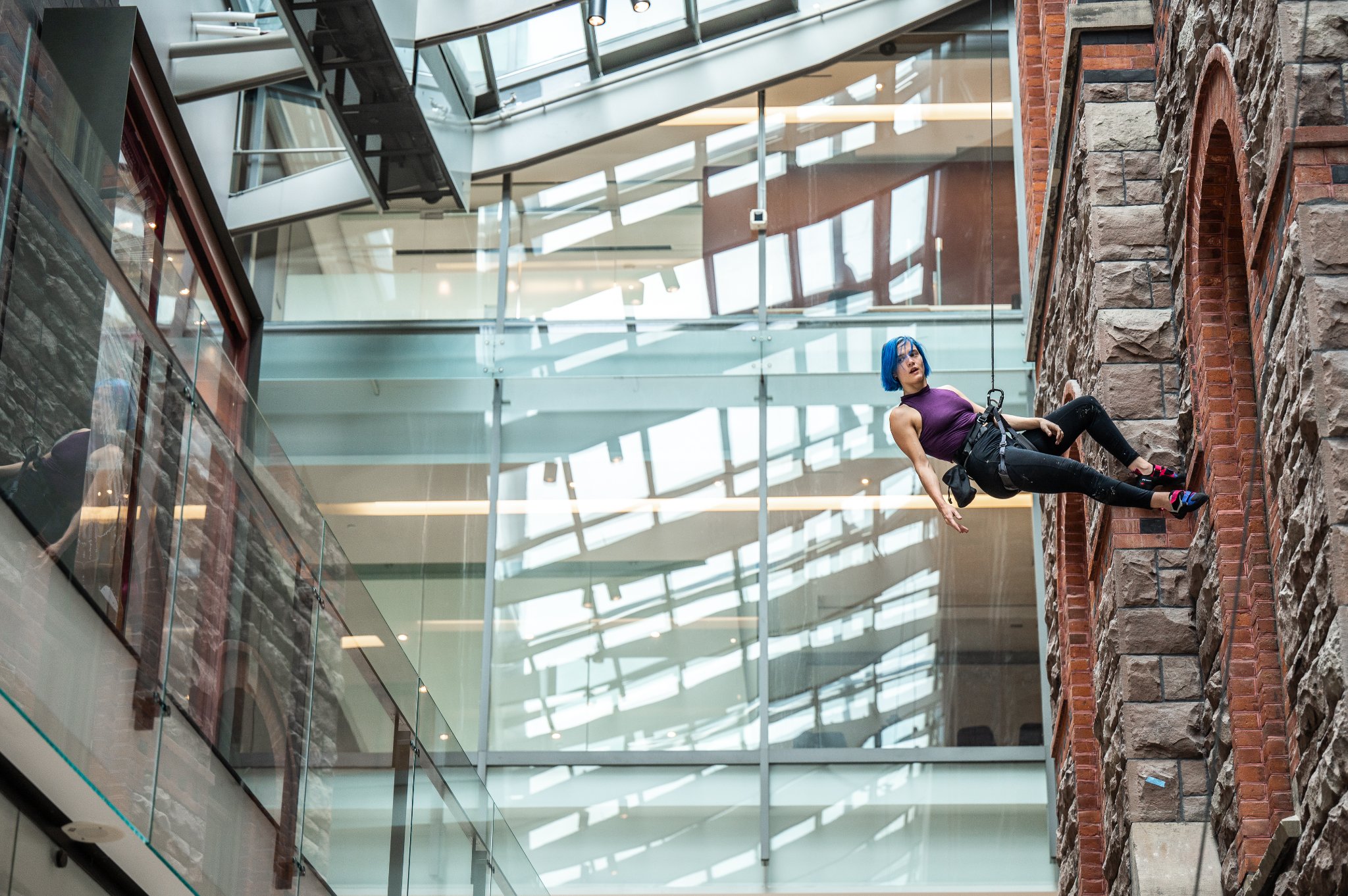
Lauren Pearl as Louise in Gould’s Wall (photo: Dahlia Katz)

To be truthful, I’m aware that it’s an illusion that she was truly risking her life. Yes it seems dangerous, indeed that perception of danger is a goal. But the reason you have careful rehearsals is to ensure that the aerialist is not truly in danger.

There was a magic moment when Lauren seemed to “whoops” and everyone leaned forward in terror, reminded of the danger she faced, hanging above the floor so far below. I’d have to think this was a contrived moment, not a genuine slip with real danger. We watch stage-fights where actors seem to die, we see all sorts of things simulated that are not real. Creating that illusion of danger is a big deal.

I recall hearing an anecdote from a friend, telling me of a time when safety personnel watching her practice (aerials using silks), who decided that she must be in danger. But that is what practice is for, to ensure that what seems dangerous is not truly life-threatening.

As if that weren’t enough Lauren faces additional challenges singers don’t usually encounter. Ever notice how singers will carefully plant their feet, set themselves up to sing? It’s rare for example to see someone sing while lying down or while walking or while moving. That’s because the act of singing is already a physical activity involving our muscles, especially the diaphragm. To sing while also moving about throws things into flux, undoing the careful foundation of support that singers usually want to establish for their vocal production.

I remember a workshop (I wish I could recall the singer who led it) at the Festival of Original Theatre (aka FOOT) in 2005 at the University of Toronto. We were rolling round on the floor in a rehearsal room while trying to sing. For those of us who thought we knew how to sing? It was humbling, a shock to discover that wow it’s so much harder to sing steadily when the tumbling action screws up your support, your vocal production, as though suddenly you’re a beginner. The workshop leader could do it. I suppose with practice we also might have learned how to do it, to practice this new discipline.

Clearly Lauren Pearl knew how, singing Brian Current’s score including some remarkably high notes while flying around on the end of a wire.

As I was thinking about the space I remembered another powerful presence from musical history whose spirit informs the downstairs corridors of the RCM, not far from the site to be used for the performance of Gould’s Wall.

There’s a seven foot tall sculpture of Franz Liszt, aka Liszt Ferenc as we Magyars might like to say it.
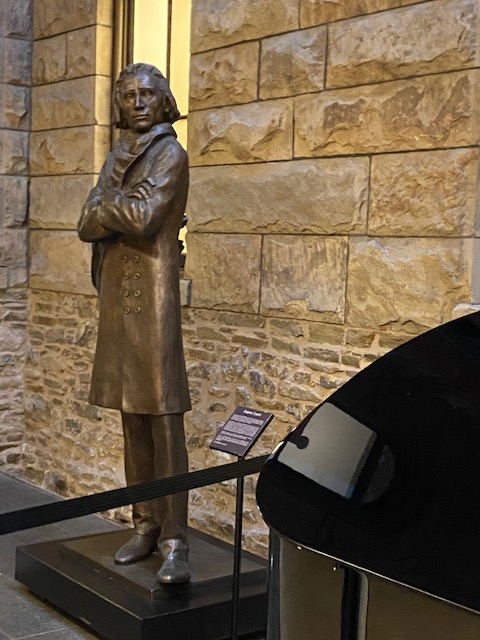
Statue of Franz Liszt by Géza Stremeny, donated by Tamás Fekete,

It’s common for Hungarians to adapt. It was never Solti György, but rather Georg Solti. I suppose in the music business it has always been a better career move to use the German version of a name. For Solti and Liszt that seemed to work better.

Liszt is an artist who might seem to signify the direct opposite sort of persona to Gould, which is why I spoke of “competing icons”, at least in my mind.

In an article from 2014 Hungarian Free Press by György Lázár reports as follows:

A whole-figure statue of Ferenc Liszt has been inaugurated at the Royal Conservatory of Music in Toronto. Jeff Embleton the Manager of Public Relations mailed me the photo of the 7 feet (2.25m) tall sculpture which was generously donated by Mr. Tamás Fekete, a Canadian with Hungarian roots, who arrived to Canada after 1956… The sculptor is also Hungarian, Géza Stremeny.
(link to report )

At this point no one is nominating Liszt to compete with Gould as the spirit of the RCM. I’m simply a huge fan, and believe Liszt is under-rated. If you only know him from his most famous pieces (the Mephisto Waltz, the 2nd Hungarian Rhapsody, the well-known Liebestraum melody) you’d probably roll your eyes at my assertion. Liszt championed Berlioz & Wagner (to name but two composers) who would have had a much more difficult time without the piano transcriptions that helped popularize their music.

I couldn’t help noticing that while these two will share the same space inside the RCM, Gould and Liszt are opposites. Gould refused to perform in public, while Lisztomania (his reception by the public) was the prototype for the modern media frenzy of super-stardom.

Speaking of that wall, I think Current’s music resembles the architecture.
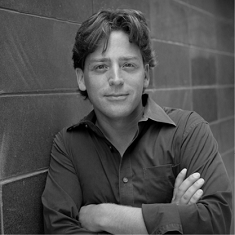
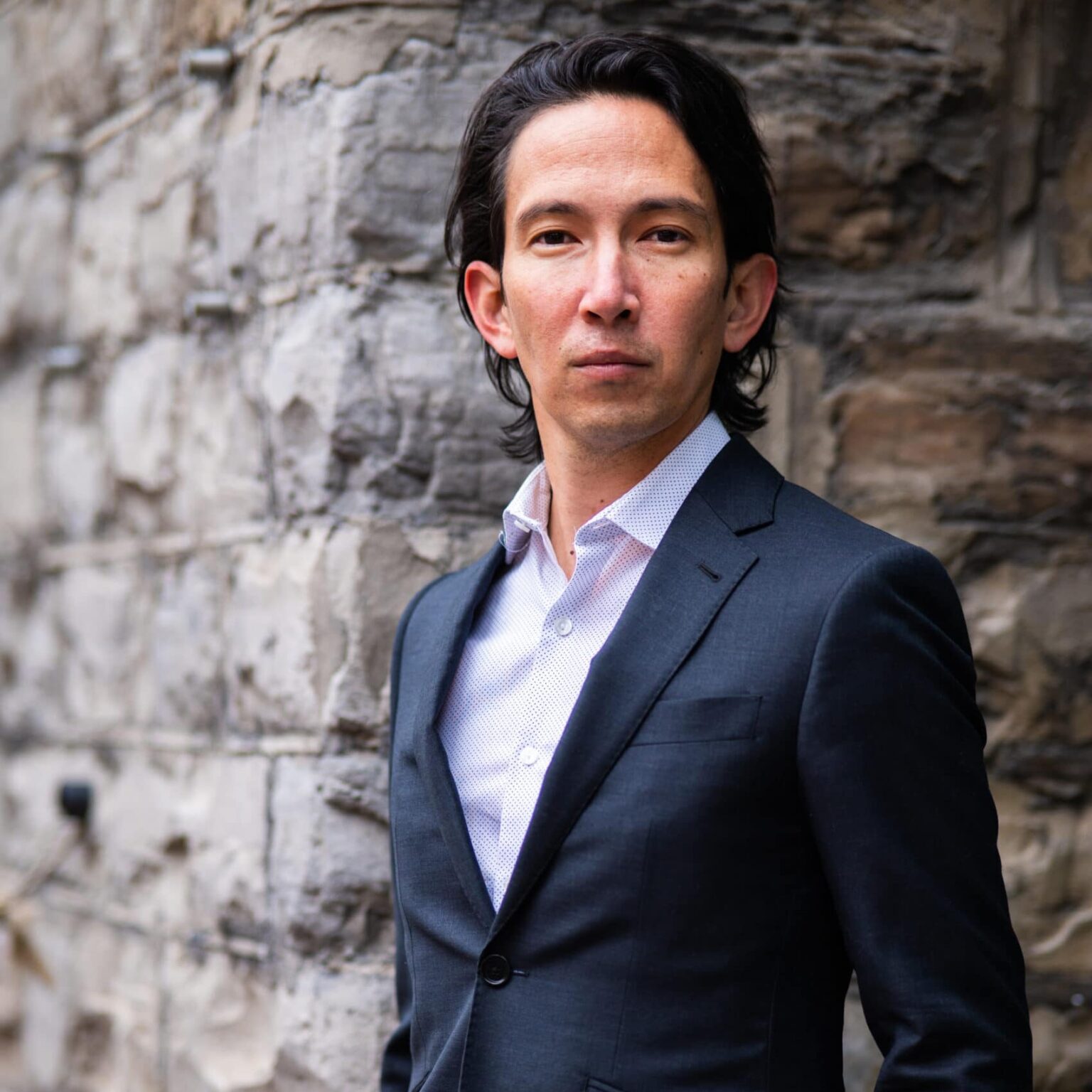
Brian Current

The RCM buildings combine old and new styles into a whole, in a style we might call “post-modern”. I doubt that Current was consciously imitating the eclectic mix, but his musical choices vary broadly, at times offering us a romantic sound-world, at times dissonant. There’s a moment when the libretto speaks of dodecaphony (if I recall correctly), a word I would assume means the twelve-tone approach to music we know from composers such as Schoenberg: but I couldn’t be sure whether that’s reflected precisely in what Current composed. My understanding of po-mo is a refusal or even a repudiation of modernism, including a willingness to recycle and repurpose the old, to combine and mix, to be pluralistic and eclectic rather than adhering to a single objective.

Opera by Wagner or Richard Strauss would be the modernist prototypes, with unified styles supporting the aim of Gesamtkuntswerk, or total art. The post-modern would turn from their ideal indeed Gould’s Wall is not at all like something from Wagner or Strauss. It’s more meditation than story, what Pirandello might have titled “a series of scenes in search of an ideal”. This is a pragmatic score, the music serving its purposes much like the different parts of the RCM building.

I was very grateful that Tapestry offered us a printed copy of the libretto.
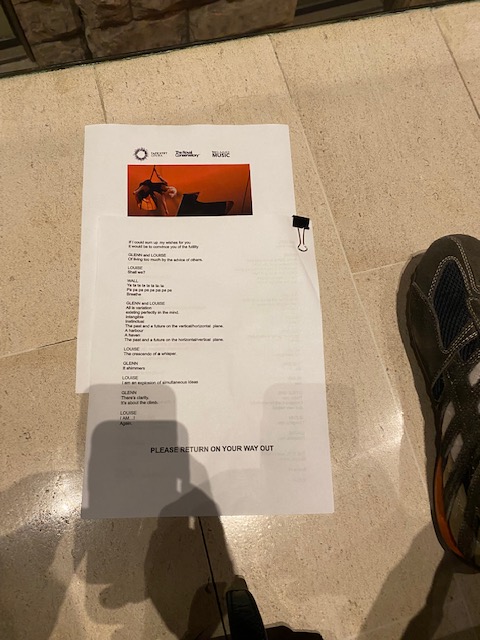
The last page of the libretto. Notice that it says
“PLEASE RETURN ON YOUR WAY OUT”

Being a nerd I followed along dutifully, as I wanted to be sure I knew what was going on.

Is that crazy? Greg Finney, who was seated beside me, seemed to be watching the action: which is arguably the sane thing to do especially when a performer seems to be risking their life in front of you.

Greg would be the first person to tell you: he knows how to enjoy himself. Indeed he’s the life of the party.
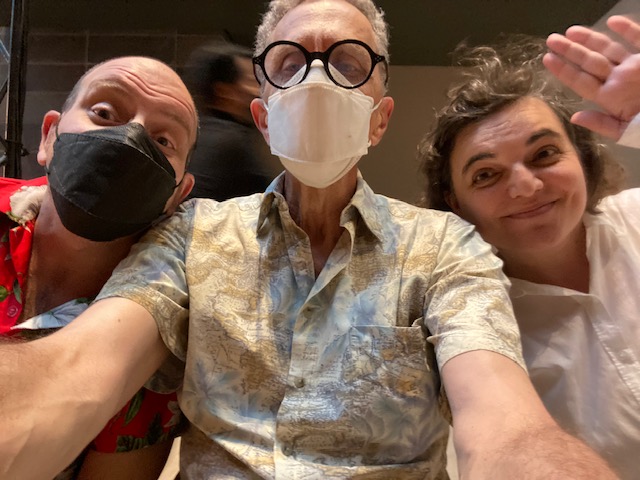
Three writers, namely Greg Finney, moi and Lydia Perović

I wanted to be sure I knew what they were singing, especially if I was going to presume to offer comments on Current’s and Balkan’s opera. I wish I could see the score.

I am going to repeat something I keep saying over and over. Projected titles are a huge asset. RUR (in May) worked really well because we knew what they were singing, thanks to the projected titles. Perhaps there was no place to project titles at the RCM so that we could all see them (recalling the very wide but narrow audience). Too bad, as the ideal would be to watch the aerialist instead of staring at the printed libretto.
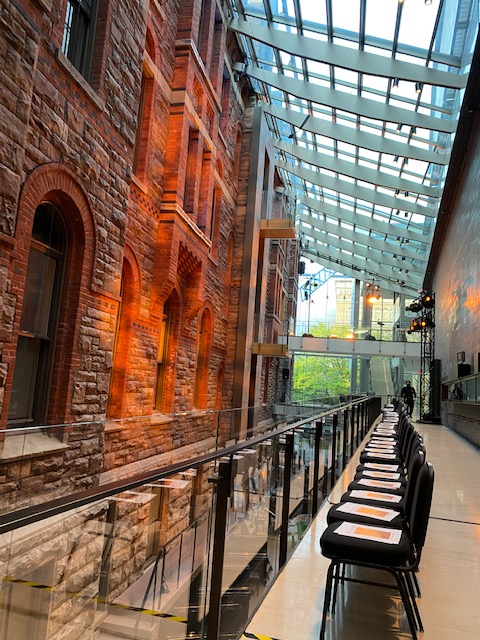
Gould’s Wall continues until August 12th.
Posted in Art, Architecture & Design, Books & Literature, Music and musicology, Opera | Tagged , , , , , , , , , , , , | Leave a comment

Gould’s Wall

Tapestry Opera have premiered Brian Current’s new site-specific work Gould’s Wall, an event that adds another layer to the association between the Royal Conservatory of Music and one of their most distinguished alumni Glenn Gould.

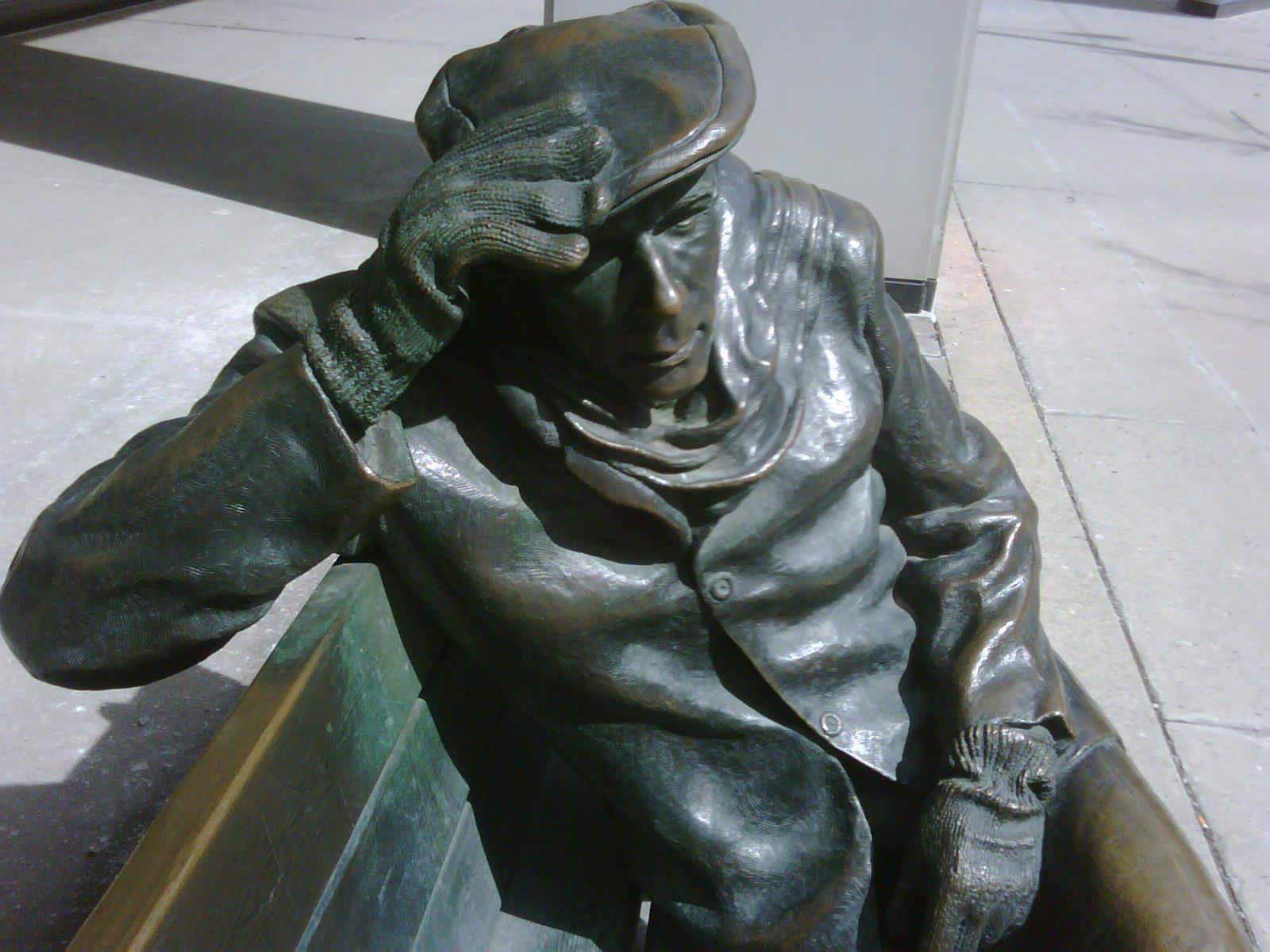
Ruth Abernethy’s statue of Glenn Gould.

I like it more than I expected. We knew the visual component –especially Lauren Pearl climbing the wall of the RCM on a wire—would be electrifying.

For years now we’ve been watching various sorts of aerial performance, usually decorative eye candy rather than an expressive choice essential to the material being presented. What a wonderful novelty to watch this kind of movement when it’s inseparable from the story.

Some of the scenes work better than others. Liza Balkan’s libretto assembles the abstract materials for Brian Current’s score. Less story than meditation, the mature Glenn Gould onstage portrayed by Roger Honeywell is the avatar of quirky creativity resisting structure. It’s the cranky middle-aged genius rather than the young prodigy, although perhaps this is to be understood as Glenn’s immortal essence. Louise might be any of us striving to be better. Her climb is a suitable metaphor for the process of learning, complete with the fear of falling, the genuine sense of risk.

Speaking of which it’s fascinating to observe the audience reactions to Lauren’s apparent danger, as she seems to be on the verge of falling. The extreme narrowness of the audience and stage heighten the drama.

The show is a spectacle not unlike a circus –given that we do see aerial performances in a circus—even as Louise and Glenn revolt against that aspect of live performance.

It’s been a crazy year for Tapestry, two big shows delayed due to COVID, both hugely successful. Both RUR (opened in May) and now Gould’s Wall were years in the making. Artistic Director Michael Mori is on a winning streak, the most important creator of new opera in town. After Michael brought Nicky Lizée and Nicolas Billon together for RUR, carefully nurturing their collaboration over several years, now he’s done it again with Gould’s Wall, this time employing composer Brian Current and librettist Liza Balkan, with stage direction by Philip Akin.

Michael Hidetoshi Mori, Tapestry Opera’s General Director

We were given copies of the libretto, likely because the text is difficult to discern without projected titles; I wonder whether the option of printing the libretto was perhaps cheaper than figuring out how to project titles on the many surfaces of the venue. At times I wanted to look up at the performers, especially Lauren moving about on the wire.

Current’s score is mostly tonal and quite stunning. The last pages were especially compelling, the opera captured by its own big ideas. On the last pages of the score we’re hearing about the “futility of living by the advice of others”, about the “past and future on the vertical and horizontal plane”, or that “it’s all about the climb.” Current’s music matched the poetry of those last images from Balkan.

The score for an ensemble of 18 (seven winds, five string players and five pianos plus a percussionist) is often played on one or more piano, but punctuated by several larger eruptions from the ensemble at the base of the wall. The acoustic of the space must have been daunting (I understood fewer than half the words during the obligatory opening speeches), especially for the conductor. Tonight’s show was led tightly by Jennifer Tung.

Balkan’s libretto features some clever solutions to the challenges she faced, dramatizing abstractions and ideas. There are places in her libretto where she makes a kind of music out of short phrases, many only one word long.

I’m always wondering with new operas whether anyone might want to stage them again. Gould’s Wall may be site specific, but I think it would be worth doing somewhere else, if the right space were found. Glenn Gould is a well-known figure, purveyor of original ideas known far beyond this city. While I’ve joked that Toronto is Gould’s Burg that doesn’t mean we’re the only ones who would enjoy this opera.

The audience erupted with satisfaction, the piece not overly long, totally engaging and irresistible.

While I believe the run is sold out I’m hopeful that the run might be extended. Further info click here.

Posted in Art, Architecture & Design, Dance, theatre & musicals, Music and musicology, Opera, Reviews | Tagged , , , , , , , , , | 1 Comment

Immortal Glenn Gould

I want to write something about Glenn Gould. Who is he, what is his legacy in 2022?

I’m thinking about what GG means to me as I anticipate Tapestry Opera’s premiere of Gould’s Wall, a new site-specific opera opening August 4th, that would seem to dramatize the ongoing influence of the great pianist based on what I surmise from the program.

Louise is
A young, extraordinarily talented artist and musician on a quest to uncover her own voice.

Glenn is
“The presence of Mr. Gould. He is Inspiration. Consciousness. Sub-consciousness. Support. The Artist. The Icon. The Man. One might call him a ghost, but he is 100% real and present: an inhabitant of the wall and the building

The third and arguably most important character in the opera is the site namely The Wall. As composer Brian Current tells us in his program note:
“Since the beautiful new Royal Conservatory building was completed in 2009, the inner Atrium wall has been crying out to become the setting of a vertical opera. Huge thanks to librettist Liza Balkan and Tapestry’s Artistic Director Michael Mori for creating such a wonderful theatrical premise to fit the site.”

I’m reminded of the 1984 appearance of Sankai Juku in Toronto, performing butoh suspended from the sides of buildings in Toronto. Whatever the aesthetic, when the art transcends our experience and our expectation we move into the realm of “the happening.”

I suspect that’s to be the likely impact of Gould’s Wall. You can read more about the show here.

Here’s what I think of when I contemplate Glenn Gould.

He grew up in the east end of town. There’s a plaque somewhere (Victoria Park I think) attesting to this fact.

He was a great talent, but unique in his choice to give up live performance, offering his work exclusively through various media such as recordings, television, or radio.

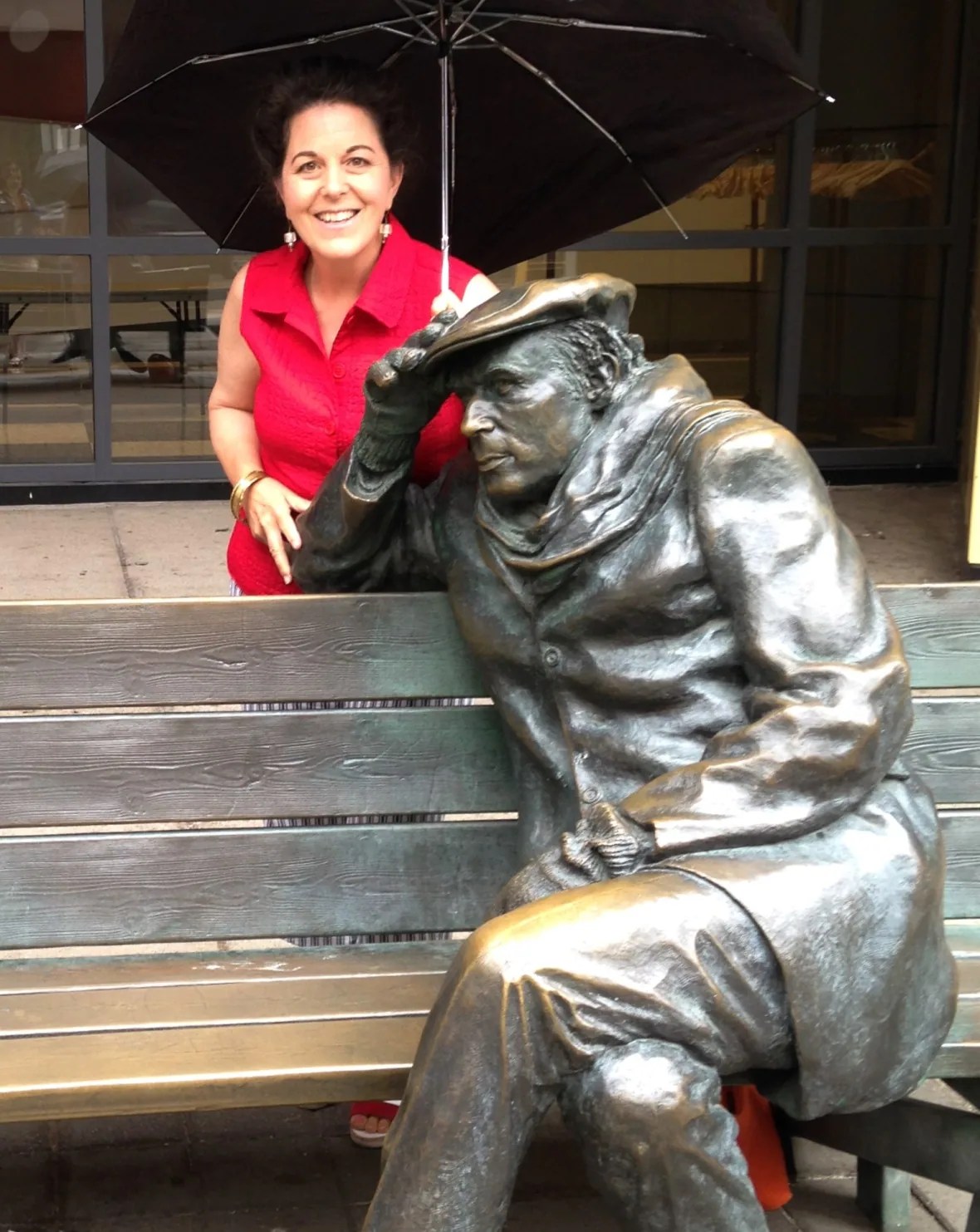
He had a special relationship with the CBC, seemingly understanding the impact of media at least as well as Marshall McLuhan. It’s perfect that his likeness sits on a bench in front of the CBC building on Front St, sculpted by Ruth Abernethy.

Sculptor Ruth Abernethy with her statue of Glenn Gould. (Laurie Allen/CBC)

His choice to stop live performance made sense given that he seemed to be someone who was more introverted than extroverted, a quirky genius. I say that without ever meeting him or knowing him. But he made the transition to cultural icon partly through rumours and stories. His piano was supposedly prepared differently; he sat lower to the keyboard than what we’re usually taught (or so said my teacher).

He died too young. Gould was born on September 25 1932, and died October 4 1982. I can’t help noticing he was born and he died in the sign of libra (the scales… not the kind of scales we play at the piano but rather the sort we use to weigh things), a classical symmetry also seen in his name (five letters in both the first and last names).

Yes, we’re coming up on his 90th birthday.

Gould seems especially relevant in this post-pandemic era of virtual work, dating, meeting, concertizing and living. He was ahead of his time. It’s funny that Gould’s Wall is in a sense celebrating him as an icon in live performance even though he could be the avatar for Zoom and the online concert experience.

The premiere of Gould’s Wall was delayed by the pandemic, postponed until its arrival next week. While that might be understood as a logistical disaster—particularly for Michael Mori and his team at Tapestry Opera—it might be a good thing. What was brand new received extra rehearsal for its second coming, making it just a bit more sure-handed, the music more secure.

Gould is associated with the music of JS Bach, especially a pair of recordings of the Goldberg Variations that bracket his life (one in his youth, one much later) like bookends. Apt for a libra.

I have been most interested in Gould’s relationship to three pieces. While none of them are by Bach, old JS lurks in the background for these three like a ghost. Originally we encountered these three in a recording of piano transcriptions of the music of Richard Wagner: the prelude to Die Meistersinger, the Dawn & Rhine-Journey from Gotterdammerung, and the Siegfried Idyll. I can’t decide whether Gould’s approach points at the influence of Bach on Wagner or simply shows us Gould’s own fascination with counterpoint, bringing out something in Wagner that I’d never noticed.

Later Gould published the transcriptions. Two of them are oxymorons in the sense that they aren’t really playable by a single person in live performance, but require either a second pianist or –as in Gould’s case—the overdubbing of a second pianist into a recording.

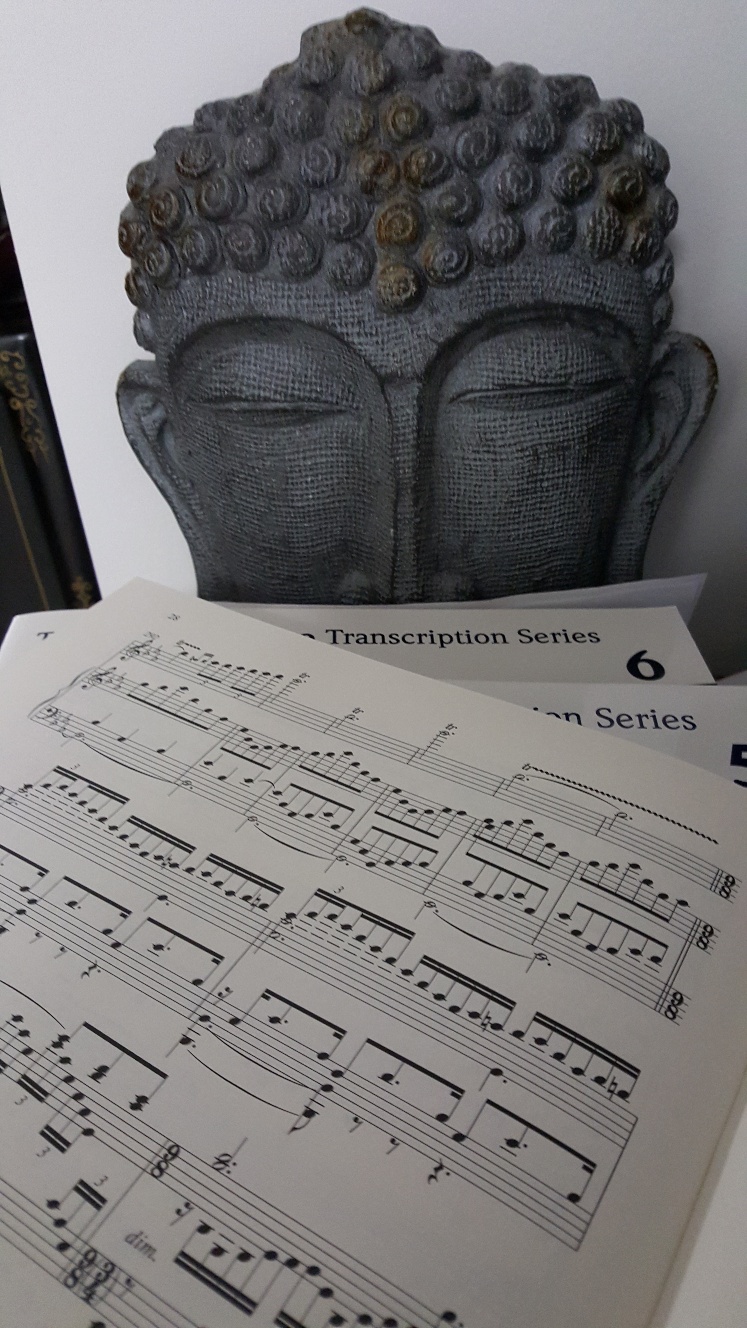
“5” is the Siegfried-Idyll, “6” the Meistersinger Prelude while the page is open to an unplayable passage in Siegfried’s Rhine Journey. Buddha had nothing to say.

It’s arguably a practical joke he was playing on those who would insist on live performance.

Somewhere I think Glenn is laughing.

Posted in Art, Architecture & Design, Books & Literature, Dance, theatre & musicals, Music and musicology, Opera | Tagged , , , , , , , , , , | Leave a comment

Rebuilding Janise: Andrew Smith’s labour of love

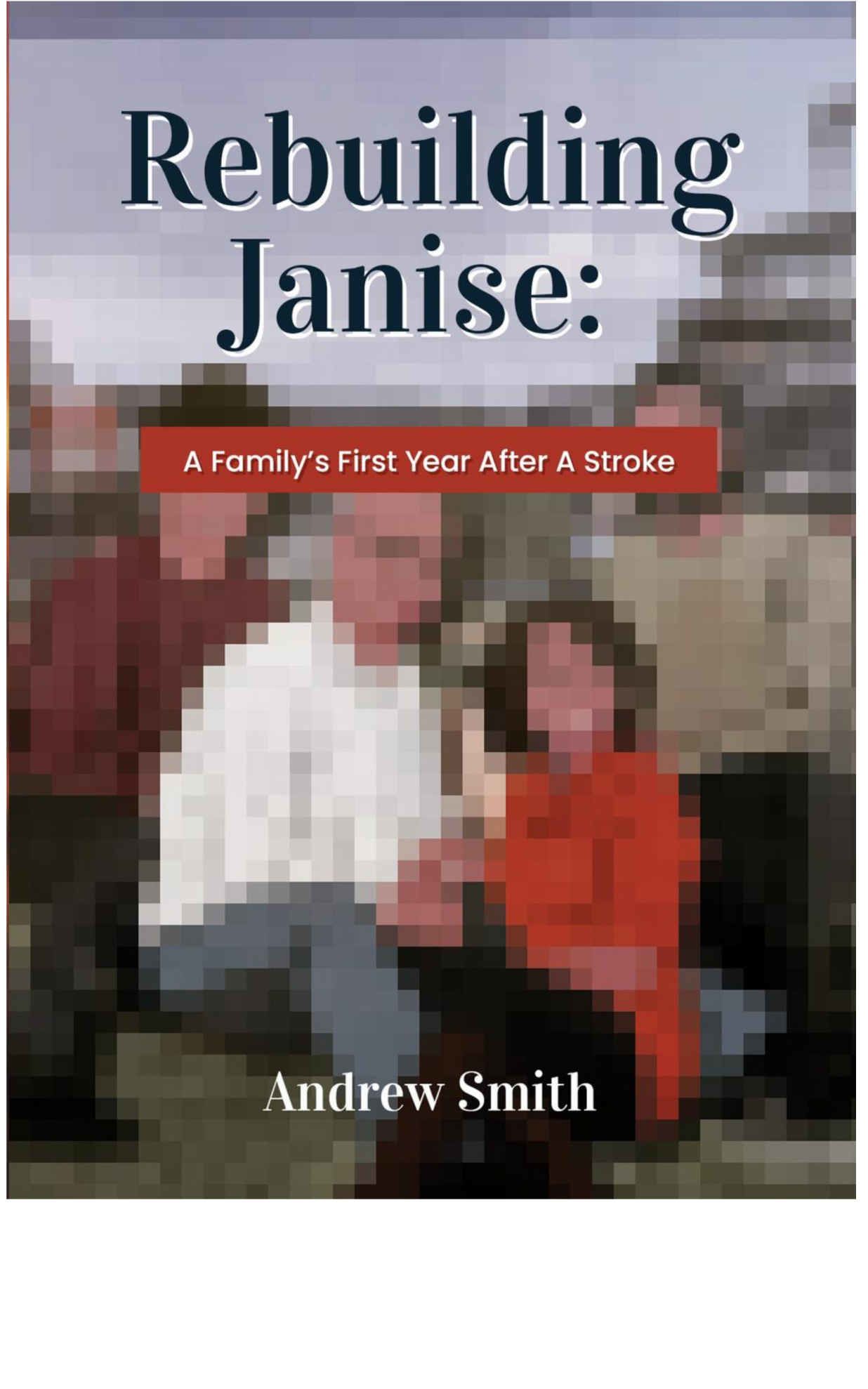
The cover picture is a disturbing metaphor for its subject.

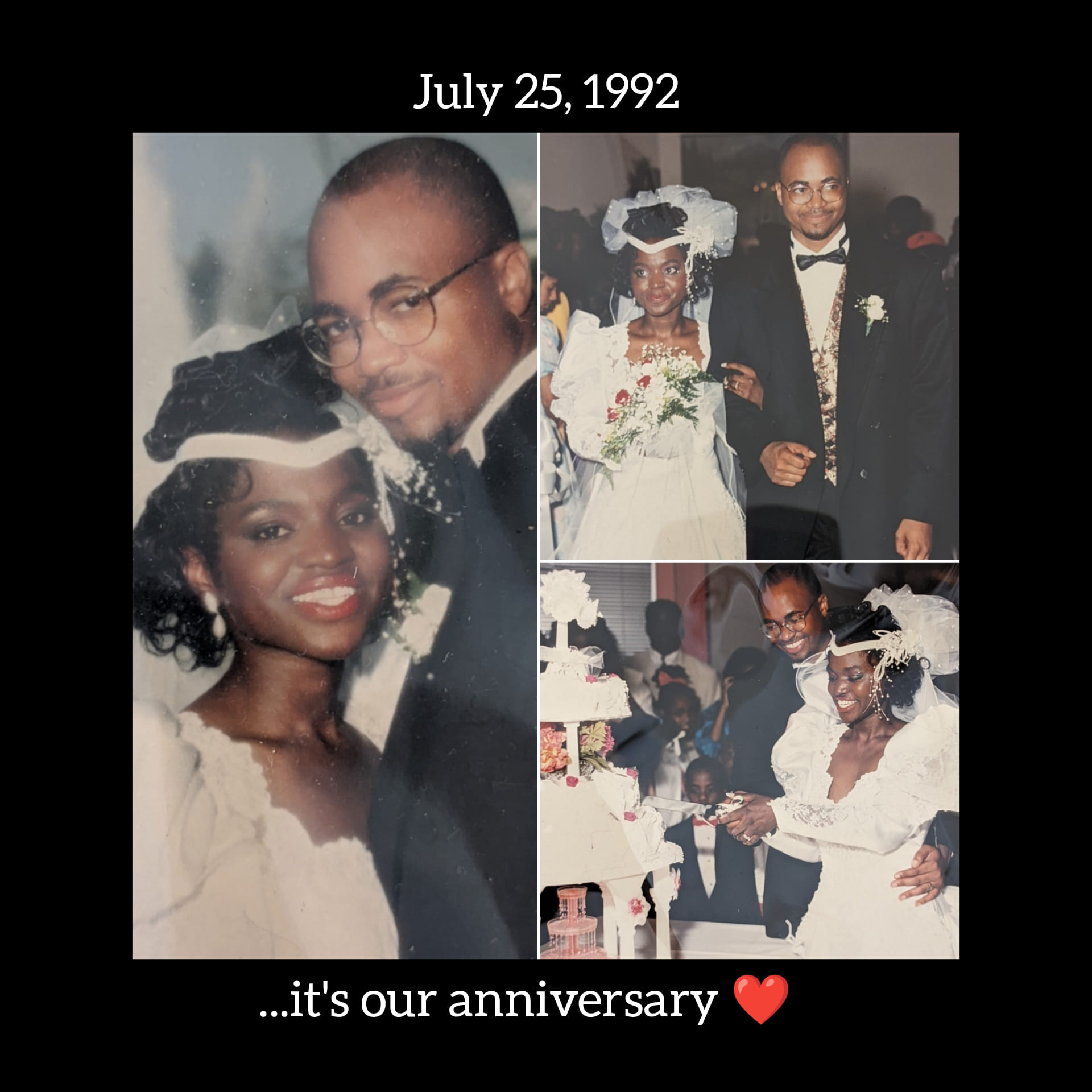
In 1992 Andrew and Janise were married.

This poem “What Once Was”, is by Andrew Smith, posted in July 2022 on Facebook.

what once was; is so long ago.
two fools, insanely naïve;
i pinch myself; it’s not a dream.

what once was, left many clues.
there are pictures and videos,
people’s memories,
of that time & all that was seen.

what once was, is our foundation.
keeps us solid & built to last.
standing strong;
despite life’s storms.

what once was, a gift we share.
has brought us to our life; here.
& now a feeling that is so blessed
& now a love that is so stron
g.

Tomorrow, July 25th, is their 30th anniversary. By coincidence today July 24th is the 35th anniversary of when Erika and I started living together. It’s fun to post this book review today, with the coincidental anniversaries.

I know Andrew Smith as my accountant, the man I see once a year at tax time. Through social media I discovered that he wrote a book: “Rebuilding Janise: A Family’s First Year After A Stroke”

The subtitle gives you a perfect synopsis, but there’s a lot more to it.

Janise Smith had a stroke March 18, 2019. The event impacted the whole family, meaning Janise, Andrew and their sons.

Andrew explains in his introduction that “before Janise’s stroke we were an affluent Black Canadian family with Caribbean roots. Janise managed the family and was always in the midst of organizing events to support the female movers and shakers of the Scarborough area of Toronto Ontario.

That was before.

He tells us that “after her stroke everything in our lives changed. Our family dynamics and our individual and our collective roles were impacted beyond our imagination. Starting with the crisis of finding Janise unconscious, the frenzied drive to the hospital, and then the uncertainty of whether she would live, as a family, we faced what it truly means to love and back each other through adversity.

In a way this book makes perfect sense, given what we know of Andrew. Every year when Erika and I visit with our assorted notes, he makes order out of our chaos, the receipts, T4s and T4-As, our muttered pleas for mercy & understanding.

Save us from the CRA Andrew! Okay I may be exaggerating. But our visits are full of laughter and joy. Andrew is the most fun we’ve ever had with an accountant, by far.

Given his usual meticulous attention to the details of our lives, his patience with our stories, his ability to drill down to find the rules we need to know, he would be the ideal helper. Andrew was always very kind & gentle examining our various documents and patiently hearing our anecdotes. At times he feels less like an accountant and more like a father confessor or a psychotherapist.

He’s good at what he does.

Of course there’s also the matter of his relationship to Janise. This might be the most romantic enterprise I’ve ever encountered. I remember asking him whether he had seen the film 50 First Dates, which is a very romantic movie that reminds me of the challenges they face, with some parallels to the patient daily structure Andrew brings to his family life.

The book reports the day by day progress of Janise with her loving partner & caregiver Andrew resembling a journal in some respects.

I think the discipline has been also been good for him, getting him to meditate, to write, to exercise. He has the soul of a poet, nurtured by his routine and his discipline.

There is an ongoing positive vibe to the book, gratitude for what they have as a loving family, dodging the more serious outcomes while looking ahead with hope to better days.

Andrew Smith

Andrew has an unusual sense of humour, self-deprecating, making fun at the darkest moments. I feel privileged to be taken into the presence of these feelings he shares with us, not papering over the messier aspects of rehabilitation.

It’s personal for me having seen something similar in my mother’s rehab at Bridgepoint Hospital. While my mom is much older, what she faced is simple compared to the aftermath of Janise’s stroke. I wonder if I connect better with this account of Andrew and Janise because I had my own look at rehab. As I ponder my relationship with my mom & her ongoing challenges I’m aware that the story has two sides to it, as much the drama of the healthy caregiver as a portrayal of a person doing rehab.

There’s a lot to it, as you may discover in your turn.

Andrew Smith’s Rebuilding Janise is available from Amazon in both in e-version & paperback editions. To find him click here.

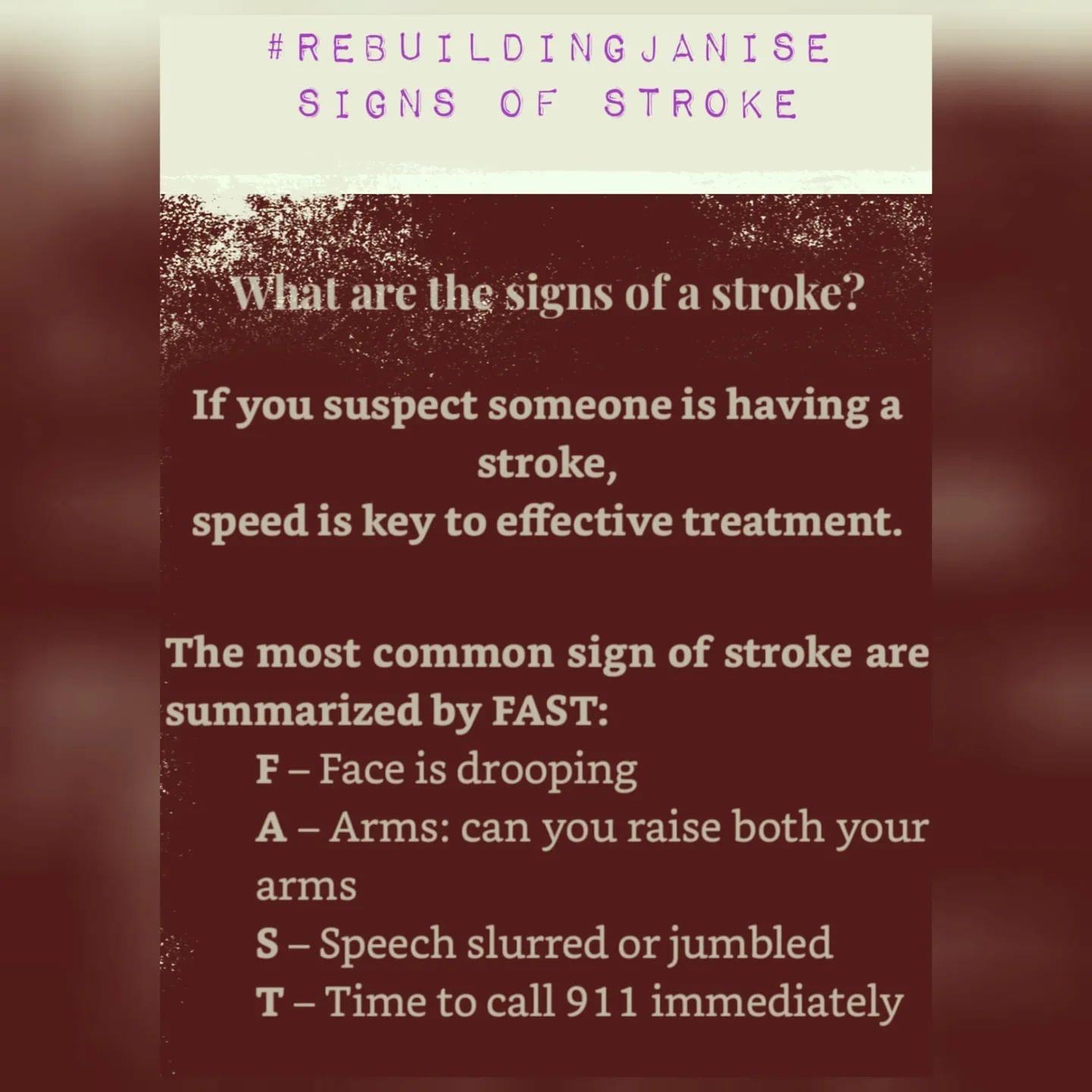
Andrew posted this useful chart concerning stroke.

Posted in Books & Literature, Food, Health and Nutrition, My mother, Personal ruminations & essays, Psychology and perception, Reviews | Tagged , , , | 1 Comment

Scary Dead Broke

I saw Will King’s darkly comic Dead Broke today at the Toronto Fringe.

I was blown away by King’s first play From the Water in December 2018, amazingly good for a first play. This one is better, unfolding in a remarkably economical 60 minutes.

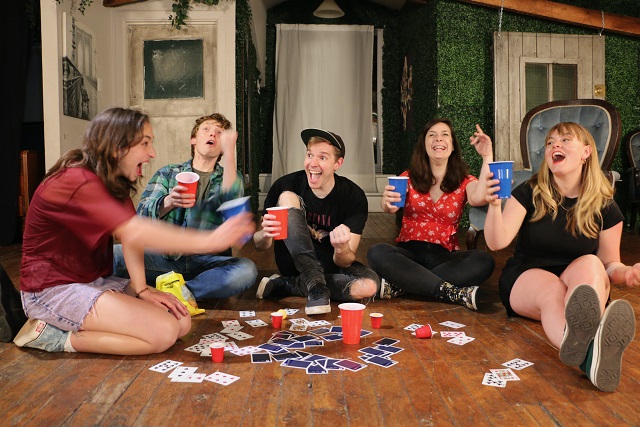
(L to R): Claire Shenstone-Harris, Gordon Harper, Will King, Courtney Keir, Elle Reimer
(photo by Calvin Petersen & Will King)

I often see operas, dance works or spoken theatre creations running 70 to 80 minutes where I swear they’re padded to seem more substantial, when they could have told their story in an hour or less. Yes a Hamlet or a Parsifal take longer.

King packs a great deal into his 60 minutes. Every word counts.

King also portrays his gormless protagonist Oliver alongside Courtney Keir, Claire Shenstone-Harris, Gordon Harper and Elle Reimer, a strong and believable cast creating suspense, directed by Calvin Petersen.

Here’s the promotional blurb from The Fringe website:

Oliver, a university student, is in trouble. After switching majors and losing all financial support, he begins squatting in an abandoned home to reduce costs and save his relationship. But when the house is revealed to have a sinister past, and someone goes missing, Oliver’s life spirals desperately out of control. This surreal thriller, and dark ensemble comedy, asks us what we do when we are at a point of identity crisis. What’s the cost of living for nothing?

The life of a 20-something artist can be pretty scary even without a father cutting off financial support, unexpected plot twists, romance & mysterious sounds in the night. When you add the possibility of drugs to alter consciousness, reality itself becomes more & more tenuous.

I really love the existential ambiguities created in King’s text. I’m not exactly sure what I saw in the hour of Dead Broke, which is totally enjoyable, very cool.

There are four more performances of Dead Broke, July 13, 14, 16 and 17 @ Tarragon’s Extraspace. Click for further info.

Posted in Dance, theatre & musicals, Reviews | Tagged , , , , , , | Leave a comment

Thinking of Diefenbaker for Canada Day

A good performance can change how you understand a piece. I stumbled upon a YouTube recording that I keep listening to over and over, a piece I thought I knew.

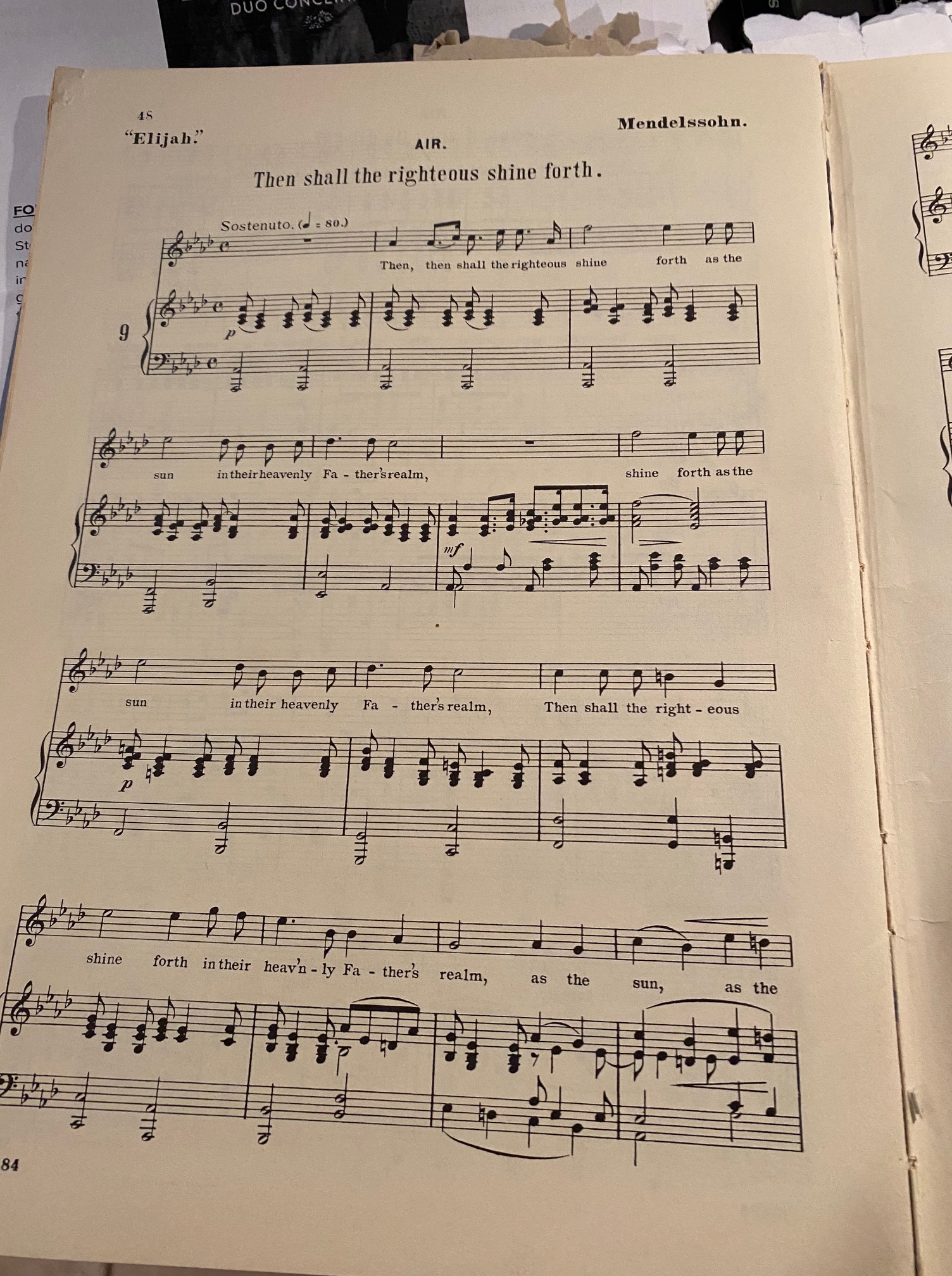
There are two contrasting tenor arias in Mendelssohn’s oratorio Elijah. I’ve sung them both in church a number of times, so of course I’ve memorized them inside out. Even so I didn’t really understand them.

The one near the beginning is a probing exploration of faith, including an admission of doubt. “Oh if I knew where I might find him, that I may even come before his presence.”

The one near the end is the opposite, its confident prophecy like an answer to the doubts in the first, an affirmation using text from Matthew 13:43 and Isaiah 51:11

Then shall the righteous shine forth
as the sun in their heavenly Father’s realm.
Joy on their head shall be for everlasting,
and all sorrow and mourning shall flee away forever.

Sure, I understood this in terms of how to sing it, and where it comes in the narrative of the oratorio.

My new perspective might be better aligned with what the composer was trying for.

A few weeks ago I wrote about how I am sometimes troubled about singing some religious texts, that I am at least a bit conflicted about reconciling performance, especially foregrounded virtuosity, and the notion of prayer and worship. They seem like a contradiction.

Meanwhile, I’ve been singing this piece over and over, feeling no contradiction in this confident prophecy. For whatever reason it’s been a comfort to me, the only piece that seems to work as something touching upon our physical manifestation in a way that doesn’t contradict science. In the weeks before and after our dog Sam was put down, I’ve enjoyed the spiritual overtones of this text. It’s almost pagan in the simplicity of its suggestion that when we die we become pure energy: “the righteous shining forth as the sun in their heavenly Father’s realm.” Never mind doctrines or complexities, this is simple.

We have eternal life as the radiant sun.

Mortality is my troubled subtext. We may try to live as though we will live forever but truth stares back at us. My mom is coming up on her 101st birthday. My dog is now gone. I cannot help thinking about what follows life.

I’ve wondered sometimes whether one should sing this Mendelssohn piece gently and softly or passionately with energy. Good music usually offers alternatives, more than one way to make a score work.

But when I stumbled on this version, my doubts were gone.

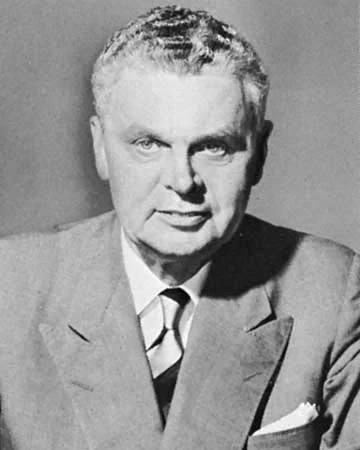
For the 1979 funeral of John Diefenbaker (a former Conservative Prime Minister of Canada, strongly associated with the province of Saskatchewan) they brought in a tenor born in Saskatchewan, namely Jon Vickers, who sings this with heroic intensity.

I believe this is how the piece should be sung. Vickers’ high notes are explosive, brightly shining like what they would sing of.

I recall when I mentioned I was a big fan of Vickers back in my days at UTS, my friend Richard Outerbridge happily said “he’s my uncle”.

Richard passed away earlier this year. Vickers died July 10th 2015.

This aria proclaims that they live on, that we all live on.

Happy Canada Day

Posted in Books & Literature, Cinema, video & DVDs, Music and musicology, Opera, Spirituality & Religion | Tagged , , , , , , | Leave a comment

TSO + Rajaton = ABBA

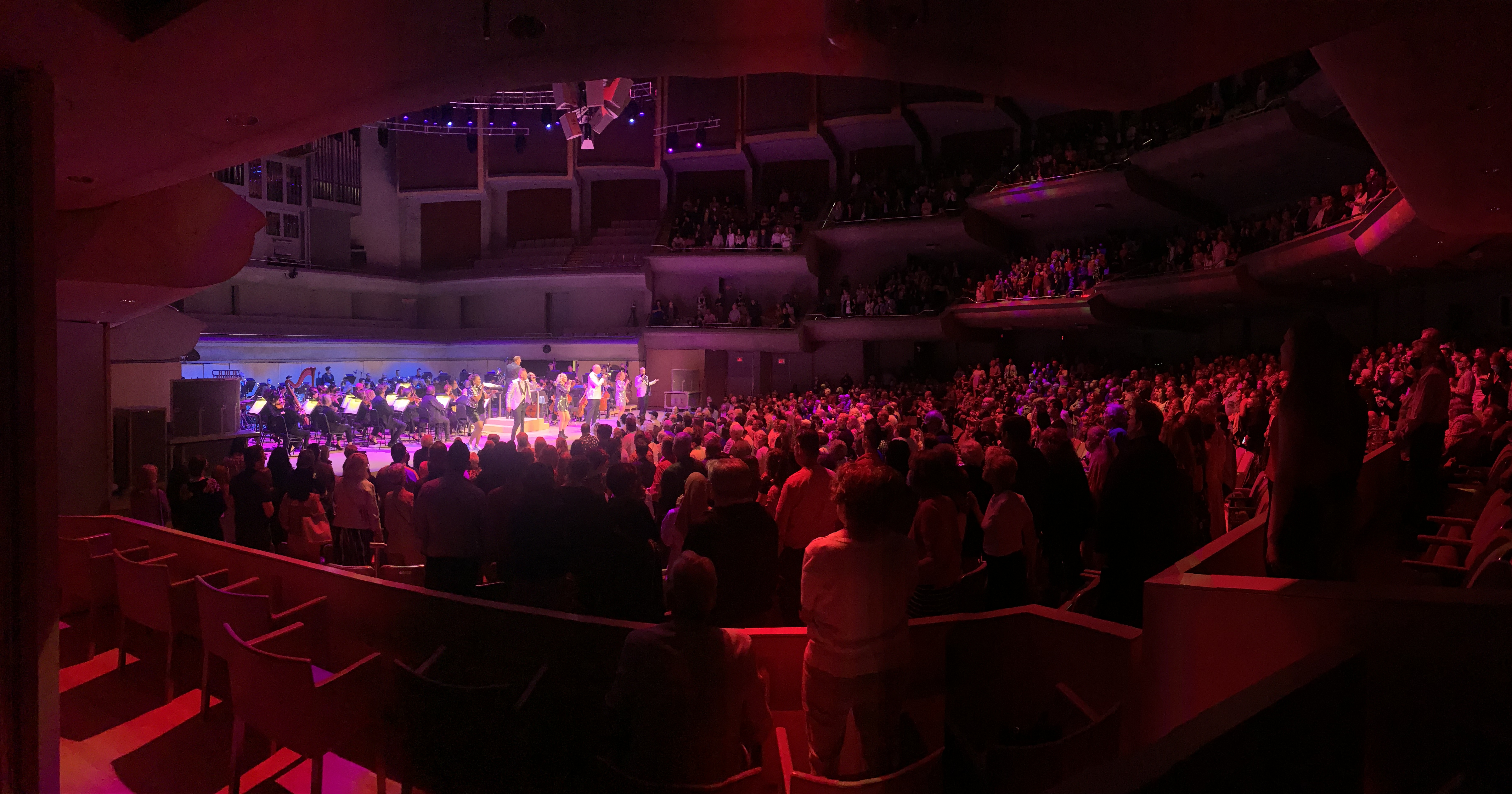
This week the Toronto Symphony under their pops conductor Steven Reineke presented three concerts of the music of ABBA featuring Rajaton, the Finnish vocal ensemble. While they describe themselves as an a cappella ensemble –singing their vocals accompanied—it was electrifying to see them team up with the TSO today. Most of their songs were accompanied by orchestra.

As you can see the audience were ecstatic in response, coming to their feet to sing and dance along for the final encores.

Everyone was on their feet at the end

ABBA have four members in their band (Agnetha Fältskog, Björn Ulvaeus, Benny Andersson, & Anni-Frid Lyngstad, where the initials of their first names give the band its name).

Rajaton have six members (Essi Wuorela, Aili Ikonen, Soila Sariola, Hannu Lepola, Ahti Paunu & Jussi Chydenius).

While I love the TSO, the best performances today were Rajaton’s a capella songs, brilliant arrangements getting maximum impact from the members of Rajaton. Bass Jussi Chydenius anchors these songs while the others offer clever percussion effects into their microphones. Baritone Ahti Paunu has the most lovely tone, reminiscent of Johnny Mathis, soaring above, as do all three women.

The TSO are sometimes subtle in their support, sometimes over the top in the exuberance of “Waterloo” or “Dancing Queen (performed a second time as one of the encores).”

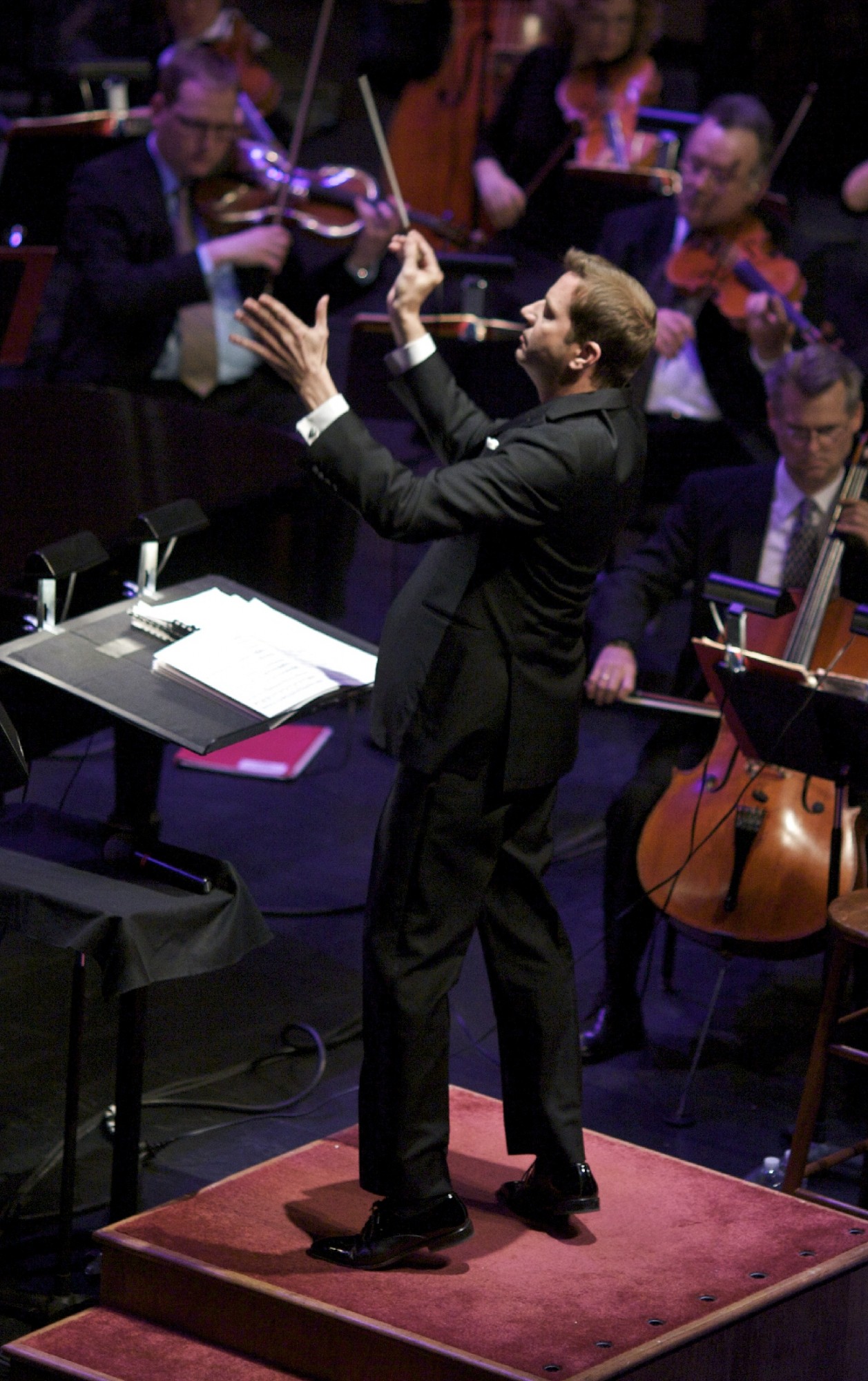
It’s fun to watch Reineke with his physical conducting style, at times like another dancer, inspiring the orchestra.

Conductor Steven Reineke (photo: Michael Tammaro)

Rajaton singing ABBA songs with the TSO make a good fit. ABBA are soft rock, very tuneful and musical in their compositions, which suit TSO pops audiences. The singers of ABBA make music that’s almost like music-theatre, between the melodrama of “The Winner Takes it all” or the silliness of “Mamma Mia”.

Of course my perspective may be distorted. Hindsight is 20-20, right? You must know they’ve made a musical titled Mamma Mia out of ABBA songs. The point is, I suppose, I’m obviously not the first person to notice how well-suited these “rock tunes” are for a music-theatre treatment.

The ABBA concerts are presented by the TSO as a Pride- related event, the third & final concert tonight. I took Erika as part of her birthday celebration this week, but couldn’t help remembering dancing to them when these songs first appeared: many birthdays ago.

It was like a celebration including dinner afterwards, our first time back at Elephant & Castle across the street from Roy Thomson Hall in over two years. Yes I ate too much. Dessert was outrageous.

Is she smiling because I have lettuce stuck in my teeth?

Posted in Dance, theatre & musicals, Music and musicology, Popular music & culture, Reviews | Tagged , , , , | Leave a comment

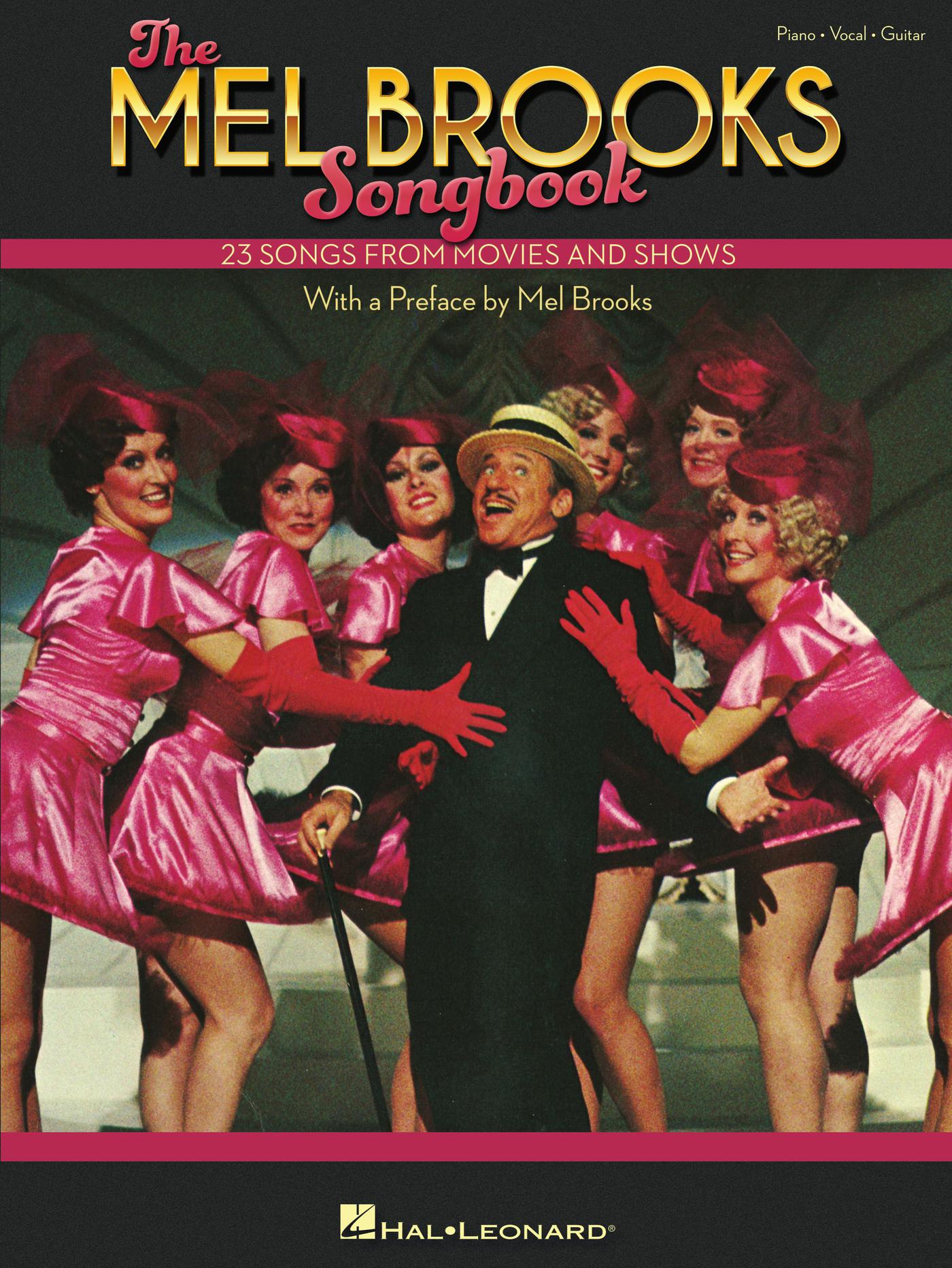
The Mel Brooks Songbook

Happy Birthday Mel Brooks. He turned 96 today.

And no joke, there really is a Mel Brooks Songbook. When I picked it up from the shelf in the Indigo bookstore I was a bit disbelieving myself.

Mel Brooks, songwriter? The subtitle is “23 Songs from Movies and Shows”.

Even before Brooks wrote the songs for The Producers, his huge Broadway hit musical, we already had ample evidence of something verging on a gift.

In the film of The Producers there were two remarkable songs. I’m sure you’re already hearing one in your head at the mention of the film. “Springtime for Hitler” wasn’t just a song, it was Brooks’ original title for the piece, back when it wasn’t clear whether it would be a play or a film. The other great tune is “Prisoners of Love”.

In his next film, The Twelve Chairs, there’s another brilliant song. Brooks’ preface is very entertaining when he talks about stealing “Hope for the Best, Expect the Worst” from Johannes Brahms: a tune that Brahms himself appropriated for his Hungarian Dance #4.

“If it was good enough for Brahms to steal, it was good enough for me”.

According to a post from Cinema Shorthand Society—the source where I was alerted to Brooks’ birthday today– he doesn’t read music. Apparently Brooks hums into a tape recorder and then gets someone to transcribe it. That was the method for those first two songs, and everything else thereafter.

Lest you think I might believe this makes him incompetent: far from it. I am also an admirer of Luciano Pavarotti, one of the greatest voices I ever heard: another talent who couldn’t read music.

There are three great songs from Blazing Saddles namely the main theme, the song from the uproar near the end of the film “The French Mistake” and “I’m Tired.” With those two words I am instantly reminded of the great Madeleine Kahn, who made so much of the piece.

Arkady Spivak of TIFT

There are also four songs from a musical I’m dying to see, namely Young Frankenstein, adapted from the film. While it was produced in the USA, revised and then produced in the UK it hasn’t yet made it to Canada.

(Are you listening, Arkady Spivak?)

Let me encourage you to check out the book, especially if you’re a fan of musicals. In addition to what I’ve mentioned there are also songs from High Anxiety, History of the World Part 1, To Be or Not to Be, Robin Hood: Men in Tights, and Spaceballs.

Brooks is one of the funniest people I have ever encountered, a gifted writer who not only gives us brilliant stories & lyrics but also seems to know how to compose the music for songs too.

See for yourself.

Posted in Books & Literature, Cinema, video & DVDs, Dance, theatre & musicals, Popular music & culture | Tagged , , , , , , | Leave a comment

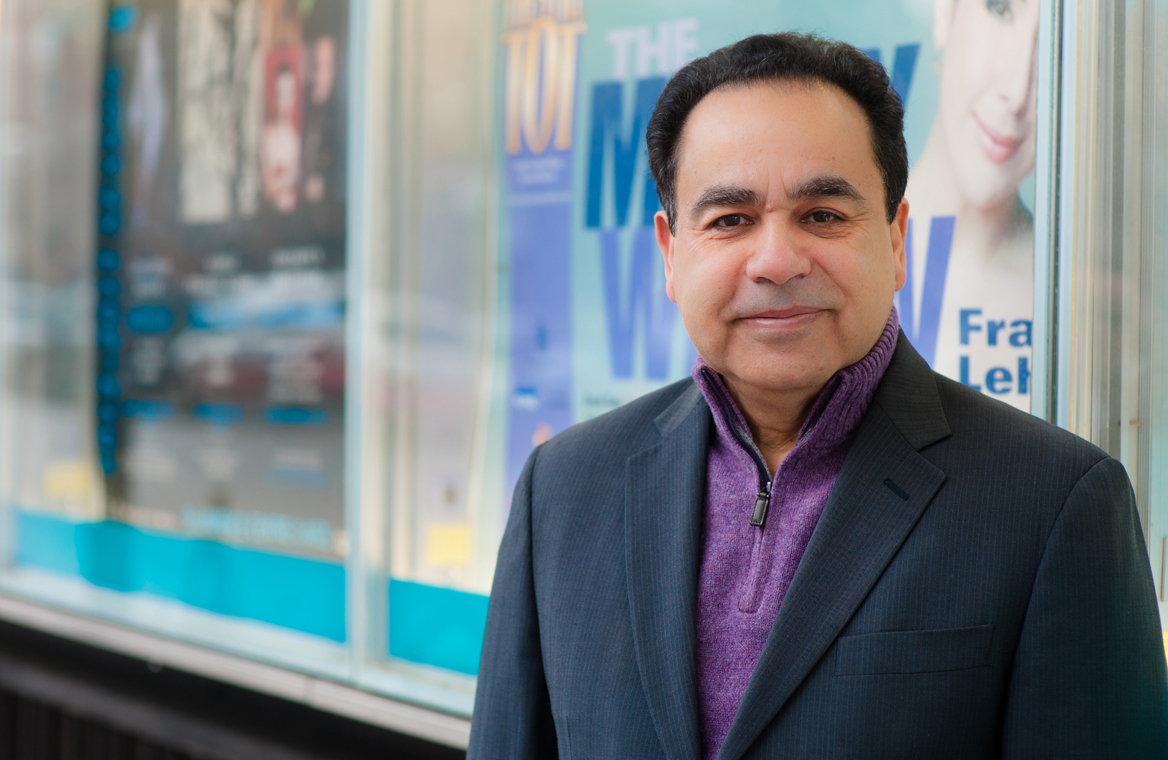
TOT: A Waltz Dream

Insights sometimes sneak up on you. I was blind-sided by one today watching the Toronto Operetta Theatre Canadian premiere production of Oscar Straus’ A Waltz Dream at St Lawrence Centre. TOT play an important role offering local artists a place to hone their craft, giving work to singers & musicians especially now after the horrors of the last two years, aka the pandemic.

Yet they’re also giving us opportunities to sample rarities we might never hear otherwise.

I didn’t expect to connect to this obscure work from a composer who is almost completely unknown, but I had déjà vu, listening to the way some of the characters talk down to one another: a big part of films such as The Shop Around the Corner, where much of the humour and the tensions of the plot, derive from the awareness of class.

One of the perpetual questions with TOT casts is to observe the balance between their skill-sets. Some sing but aren’t fabulous actors, some act but don’t sing so well, and some can do both. I wonder sometimes how Director Guillermo Silva-Marin sleeps at night, given the responsibilities he shoulders juggling three different artistic endeavors. Opera in Concert is over for the year, and with today’s show, so too with TOT, while the workshops of students at Summer Opera Lyric Theatre are just beginning to exhaust Guillermo.

Guillermo Silva-Marin, General Director of SOLT

Shows such as today’s display an assortment between younger talents emerging at the beginning of their career, alongside more seasoned performers.

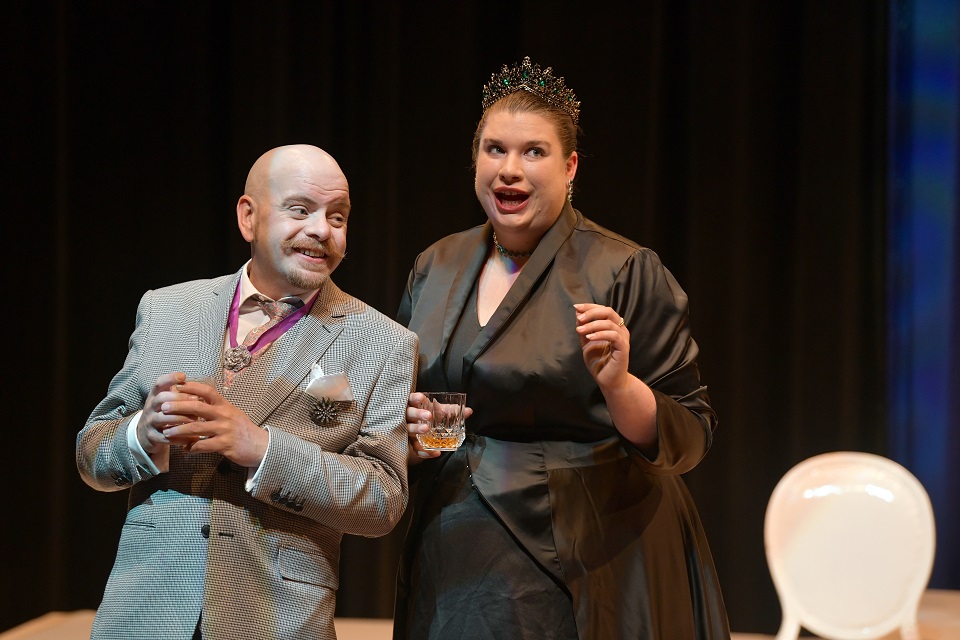
The biggest laughs as well as some of the best singing was created by Gregory Finney as Count Lothar, reminding us of the adage “there are no small parts, only small actors.”

Greg Finney as Count Lothar and Karina Bray as Princess Adelaide (photo: Gary Beechey, BDS Studios)

Greg makes everyone better, funnier, giving us the additional pleasure of watching his chemistry with the cast. Alexandra Weintraub as Fifi probably had the most opportunities to share the limelight & laughter, while Brittany Stewart as Isobel also had a few hilarious moments with Greg.

Like Greg, Elizabeth Beeler as Theodora gave us professional delivery of her comedy and terrific singing, even if her role requires her to be more of a set-up for others to get the laugh, somewhat like a comic straight-man.

As so often happens with TOT, Derek Bate had me wondering how he gets so much musical value out of such a small ensemble, playing idiomatically, sensitively and supportively. Straus was well-served by singers, chorus and this tiny but energetic orchestra.

Guillermo and Derek must balance the dramatic and the musical, as not everyone has the multiple talents of Greg or Elizabeth. Andrea Nunez as the Princess Helene and Scott Rumble as Niki, gave us a convincing romance with lots of lovely singing. In this rather big cast I found the women more convincing in reconciling the music and the comedy. Amy Moodie as Franki was central to the romantic plot, while Karina Bray as Princess Adelaide was often right in the middle as the funniest moments of the comedy unfolded.

Posted in Cinema, video & DVDs, Dance, theatre & musicals, Opera, Reviews | Tagged , , , , , , , , , , , , , , , | Leave a comment

Joyful Gimeno + Virtuosic TSO

The title of tonight’s performance by Toronto Symphony was “Gimeno + Beethoven’s “Ode to Joy”, a celebratory concert. It’s the TSO’s centennial season and a perfect way to bring Gustavo Gimeno’s first in-person season as music director to a conclusion.

The orchestra seems to respond to their new maestro. At times they seem to read his mind, everyone in accord. I listened to the quickest tempi I’ve ever heard in this well-known work, one we’ve all heard many times. The TSO have become an assembly of virtuoso talent, sounding fearless and bold. Faster is the way the historically informed players do it, so this is arguably authentic even if we’re hearing modern instruments rather than the sort that you’d hear from a band such as Tafelmusik.

At this tempo, the “Ode to Joy” is very enjoyable. And I think it’s easier for singers, who don’t require as much air, and don’t have to sit so long on the high notes.

The audience went crazy at the end with their applause.

I was a little bit surprised to see the placement of the soloists, in the centre of the choir loft with the Toronto Mendelssohn Choir.

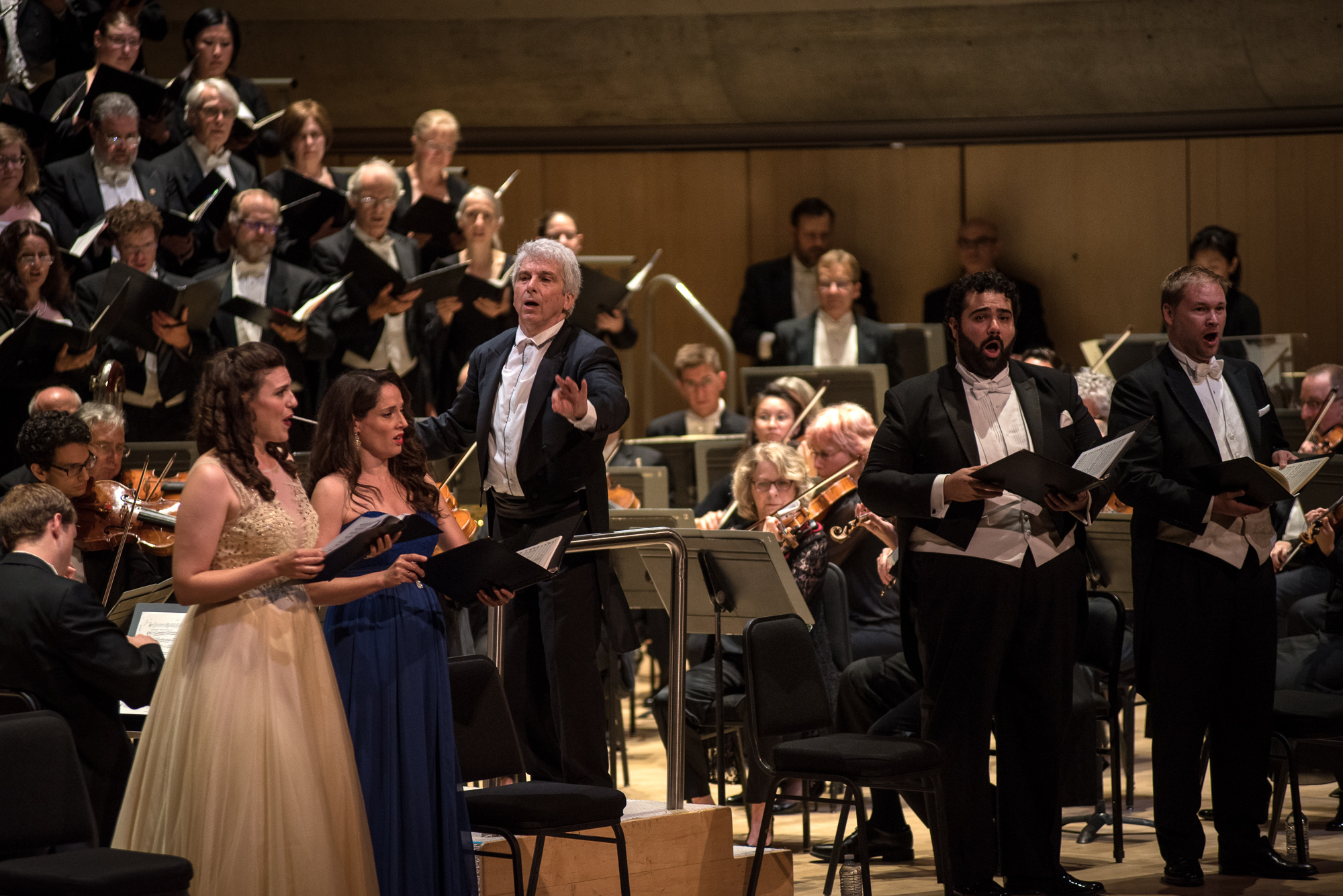
Soloists MacKinnon, Segal, Haji, Duncan, led by Peter Oundjian (photo: Nick Wons)

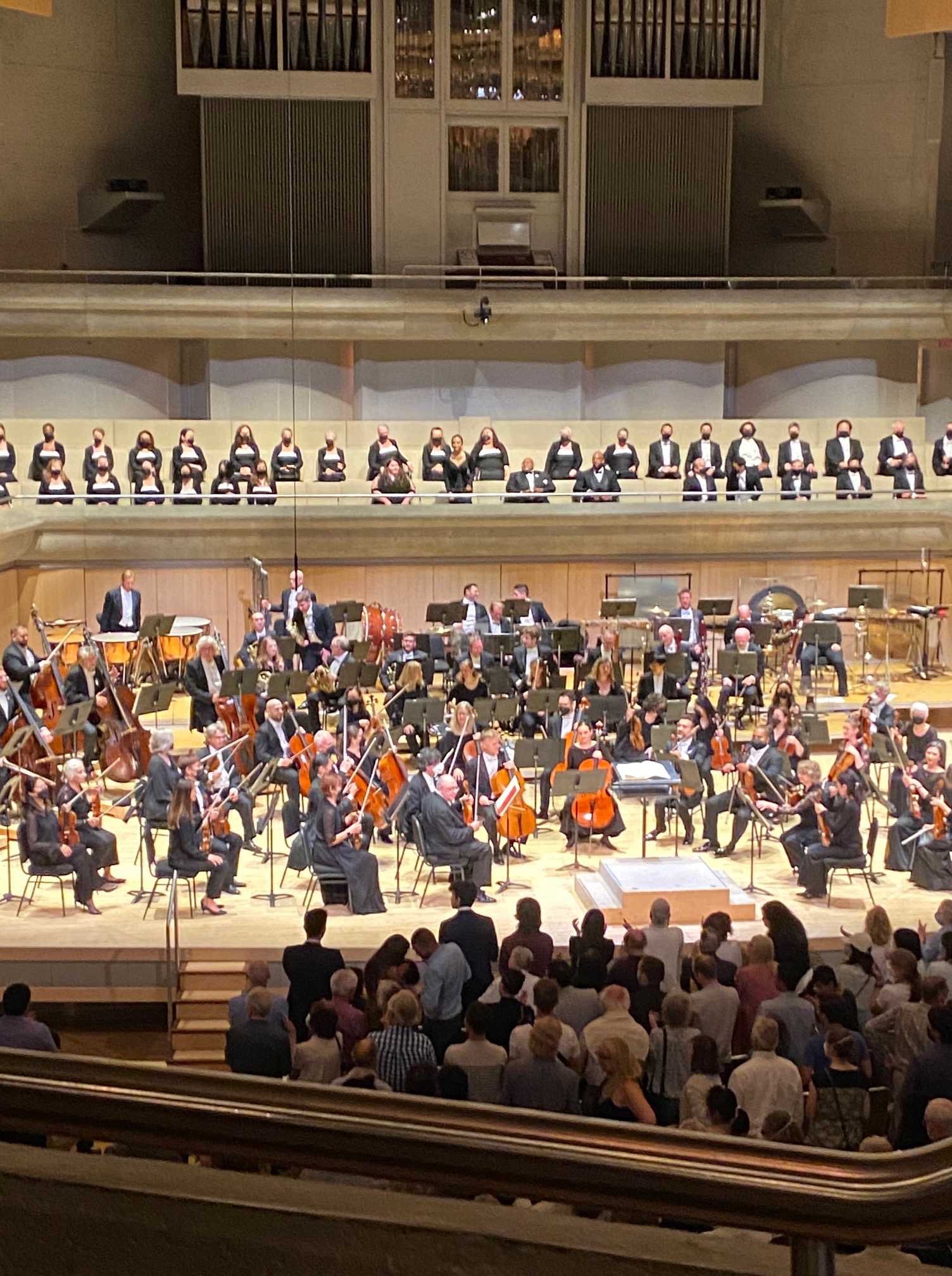
When we heard the TSO and TMC commemorating the departure of Peter Oundjian in June 2018 (already four years ago) the soloists were at the front of the stage which is as far as I know it closer to the acoustical sweet spot than where this group of soloists (Angela Meade, Rihab Chaieb, Issachah Savage and Ryan Speedo Green) were placed last night. Excuse me for the amateurish photo I’m supplying, from the curtain call. Gimeno is not visible, but the soloists are there far from the audience. They sang very well.

While it is true that tenor Issachah Savage likely has a bigger voice than Andrew Haji, I wonder: did they seek out a heldentenor (that is, a tenor with a sufficiently heroic sound suitable to carry over a Wagnerian orchestra) knowing that he and his soloist colleagues would be placed so far away? They all had big strong voices.

The opening of the concert was especially intriguing as the TSO offered three consecutive pieces receiving their world premieres with this concert series, each one a TSO NextGen Commission:
1-A Dream of Refuge by Adam Scime
2-Bite by Bekah Simms
3-Unrelenting Sorrow by Roydon Tse

It was tempting to frame them in context with the Beethoven that was to follow intermission. While each five minute work has a different rationale and style, composed by a different young Canadian composer, I saw them as a kind of triptych. Remember that before the soloists and chorus enter for the fourth movement of Beethoven’s 9th we get three contrasting instrumental movements.

Beethoven’s allegro seems to emerge out of a misty nothingness, the ambiguous void of its open fifths. That was in the back of my mind listening to Scime’s piece, that also employed some ambiguously open tonalities in service of his exploration of alienation and the anxieties of the pandemic. The big existential questions of life underlie both the first movement of the Beethoven and Scime’s work.

Beethoven’s second movement scherzo is a burst of energy, less about asking the meaning of life and more likely to make us ask “how did they make that sound?” It’s a fabulous exploration of orchestral timbres that still sounds fresh two centuries later (the premiere was almost exactly 200 years ago by the way). Simms’ piece is the one of the three new works most concerned with timbre, indeed likely to make you say “how did they make that sound:” which is pretty cool to achieve for 2022. As with Beethoven’s scherzo we’re in ambiguous territory emotionally, neither comical or tragic, but listening to big and small sounds, very much in the moment even with the teasing silences near the end. As with the Beethoven, the tempo is faster –Gimeno’s arms moving faster in this piece (I almost said “movement”… but pardon me, it’s not really triptych no matter how hard I try to make it into one) – than in either of the other two works.

When we began Tse’s work I was reminded of the third movement of the Beethoven. I may be wrong to say this but I’ve always seen the opening two movements (the allegro and the scherzo) as hugely revolutionary, the existential ambiguities of that first movement leading us to such things as the opening D minor chase of Die Walküre and the ambiguities of tonality we get in Nuages by Debussy at the close of the 19th century. The second movement scherzo changes the rules for such movements (even if he already hinted at this in some of his earlier works such as the piano sonata Op 101), opening the template wide for what’s to come in the early 20th century with Mahler and Shostakovich.

The third movement though? The adagio might be Beethoven almost saying “nicht diese tone”. I’m being ironic of course, as I don’t mean in the spirit of the “Ode to Joy” which opens with that phrase, asking us to be joyful, but rather speaking to our sense of musical style: literally not these tones. If Beethoven has so far freaked us out with the newness of his first two movements –and it’s reported that’s how some people responded—the gentle opening notes and the melody coming as consolation and reassurance, take us to something less radical, less threatening, with more than a hint of nostalgia.

That’s how I see Tse’s piece. Of the three new works, in “Unrelenting Sorrow”, where he would explore loss from war and pandemic, Tse is undertaking the most conventional sort of piece in seeking to be melodic and appealing to our emotions, taking us in a late-romantic direction. As such it’s a brave choice, one that not all composers can handle. I think the work succeeds admirably.

And so, let me just ponder the triptych for a moment (given that I’ll never encounter them again this way), this trio of existential angst (Scime), provocative and experimental sounds in the moment (Simms), and a melodic exploration of sadness (Tse). They made a terrific appetizer for the evening, ably executed by the TSO and Gimeno, who so far seems to be championing new composition. I don’t know who’s really deciding the programming and commissioning, but when they’re up there on the stage, Gimeno is truly leading the players, and they’re giving us a full commitment.

The concert repeats Saturday night and Sunday afternoon at Roy Thomson Hall. For further information or tickets click here.

Posted in Music and musicology, Reviews | 1 Comment