The title of the lecture was “Art Canada Institute presents: The Making of a Masterpiece– Kent Monkman.”
Monkman is an enormous star, famous far beyond the immediate milieu of art dealers and galleries.
But I have no real idea who he is. Before tonight I had never seen him in person, never heard him speak, had no sense of who he is.
No wonder Koerner Hall was packed.
Let me repeat, he’s a star. When he came onto the stage tonight to be interviewed, there was a huge ovation.
“The Scream” is surely the most cited image by a Canadian artist of the current generation.
I remember feeling dizzy at the Shame and Prejudice show in 2017 at University College, as though the ground had opened up under my feet. I hadn’t really understood the urgency of the Indigenous use of the word “genocide”: until then.
His art is a curious mix, suggesting a complex personality. Monkman is ambiguous in his persona, his tone, and so much more, when you encounter his alter-ego Miss Chief Eagle Testickle.
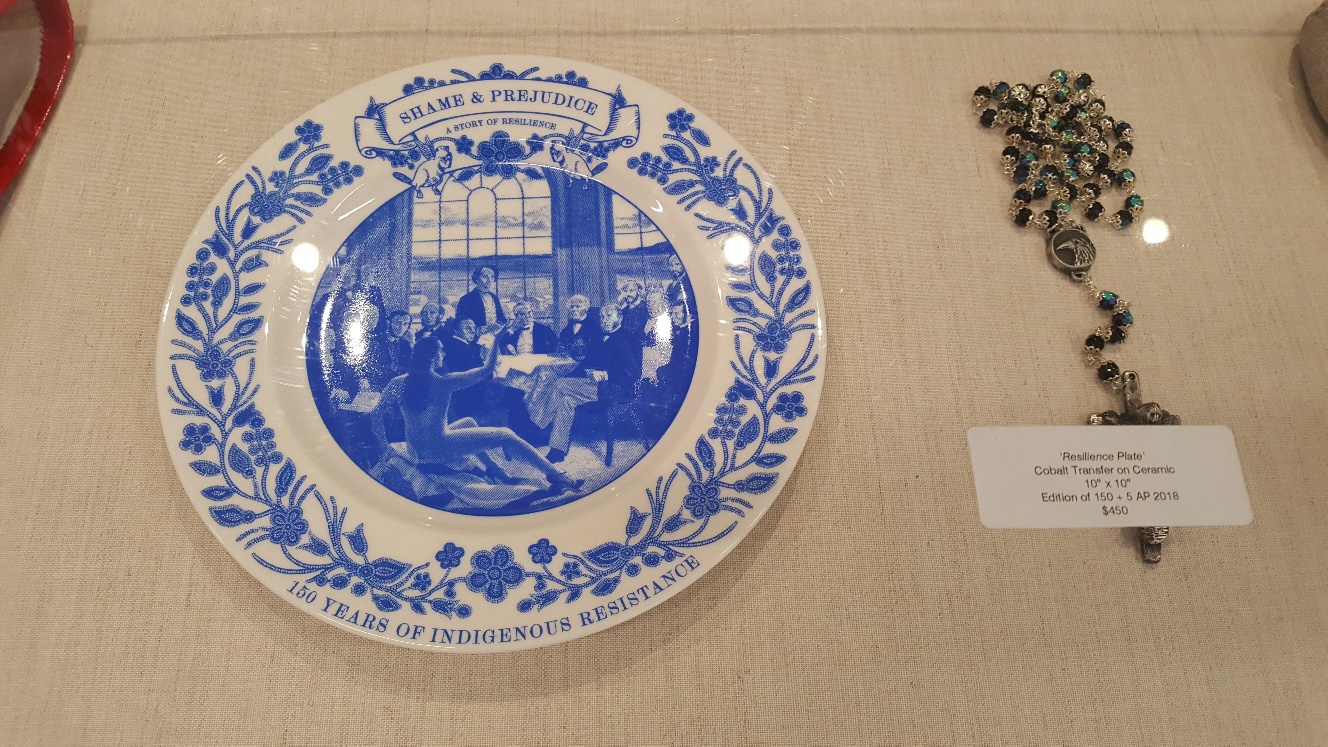
Underlying the serious and ironic statements is an ongoing project, that can be nicely captured in a quote from the program to his 2017 show “Shame and Prejudice: A Story of Resilience”:
“I could not think of any history paintings that conveyed or authorized Indigenous experience into the canon of art history. Where were the paintings from the nineteenth century that recounted, with passion and empathy, the dispossession, starvation, incarceration and genocide of Indigenous people here on Turtle Island?”
The works for the big 2017 Toronto show, and especially in his commission at the Metropolitan Museum of Art in NY, can be understood as an attempt to redress that balance, to fix that great injustice of lies and omissions among the canon of art and by implication, in what we know and understand.
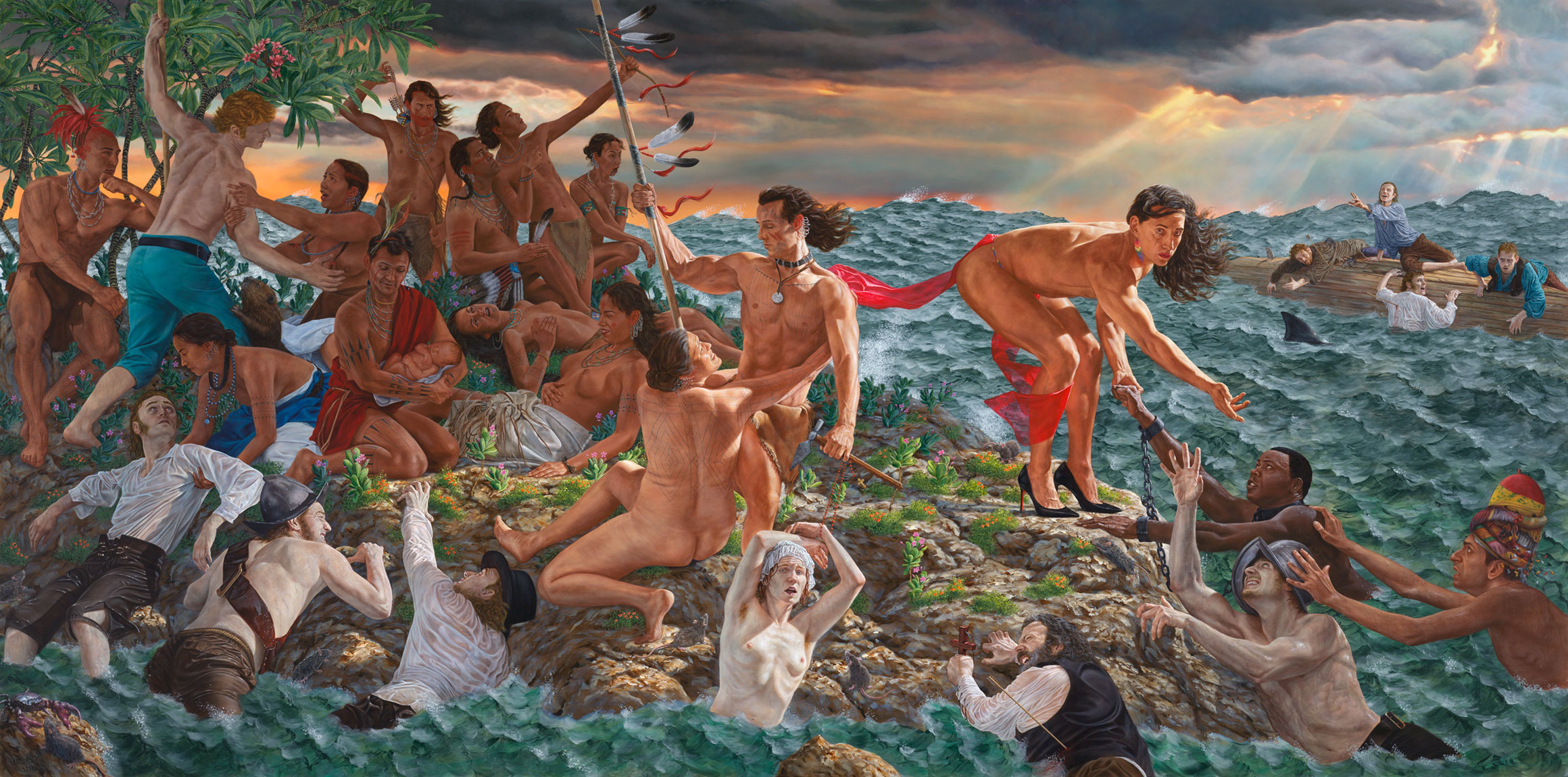
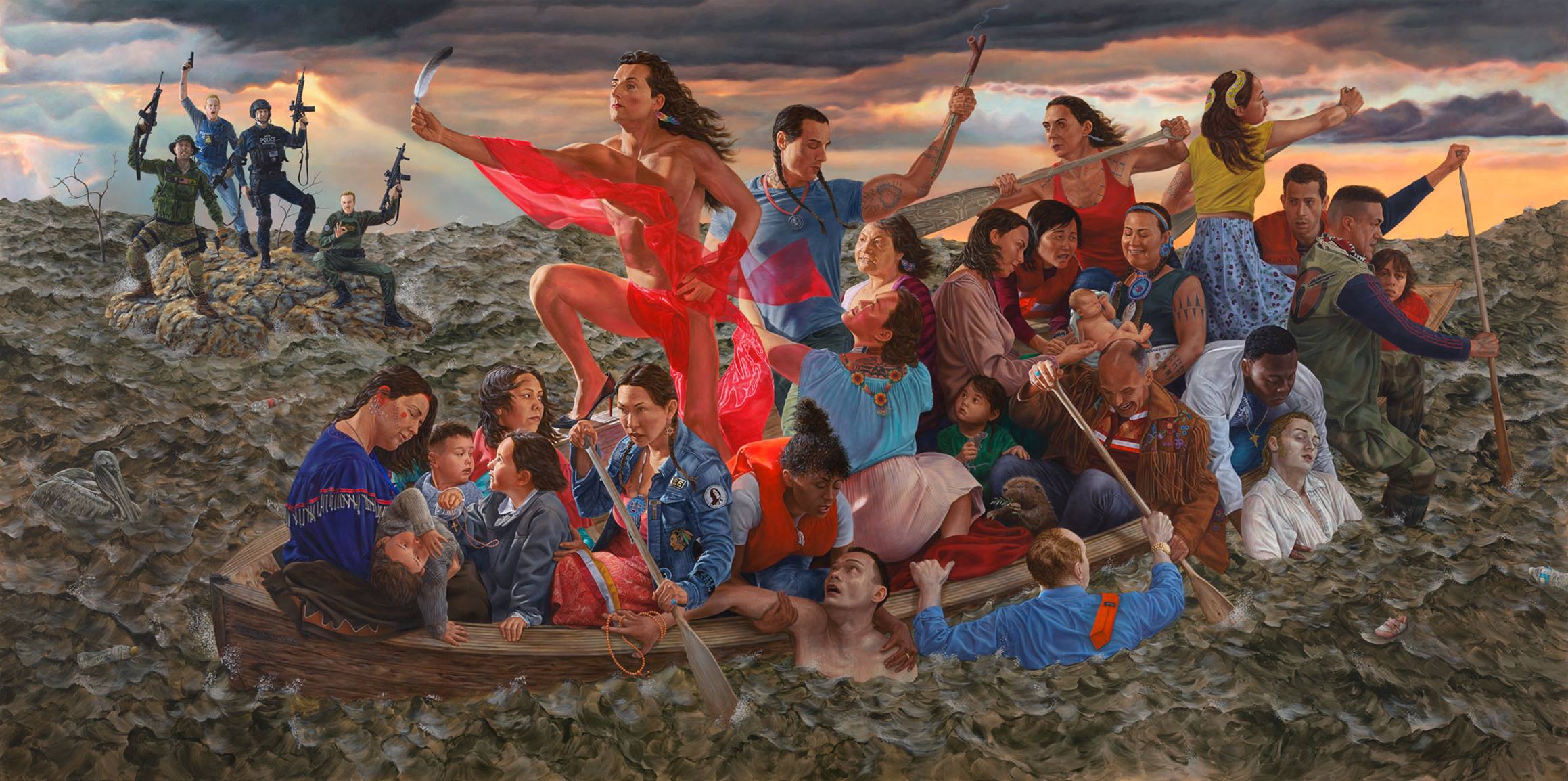
The two great pieces (mistikôkosiwak (Wooden Boat People), or Welcoming the Newcomers and Resurgence of the People) take the canon of art as exemplified by works housed in the Met, and then reframe them, in his own work.
Kent Monkman (Cree, b. 1965). Welcoming the Newcomers, 2019. Acrylic on canvas, 132 x 264 in. (335.28 x 670.6 cm). Courtesy of the artist
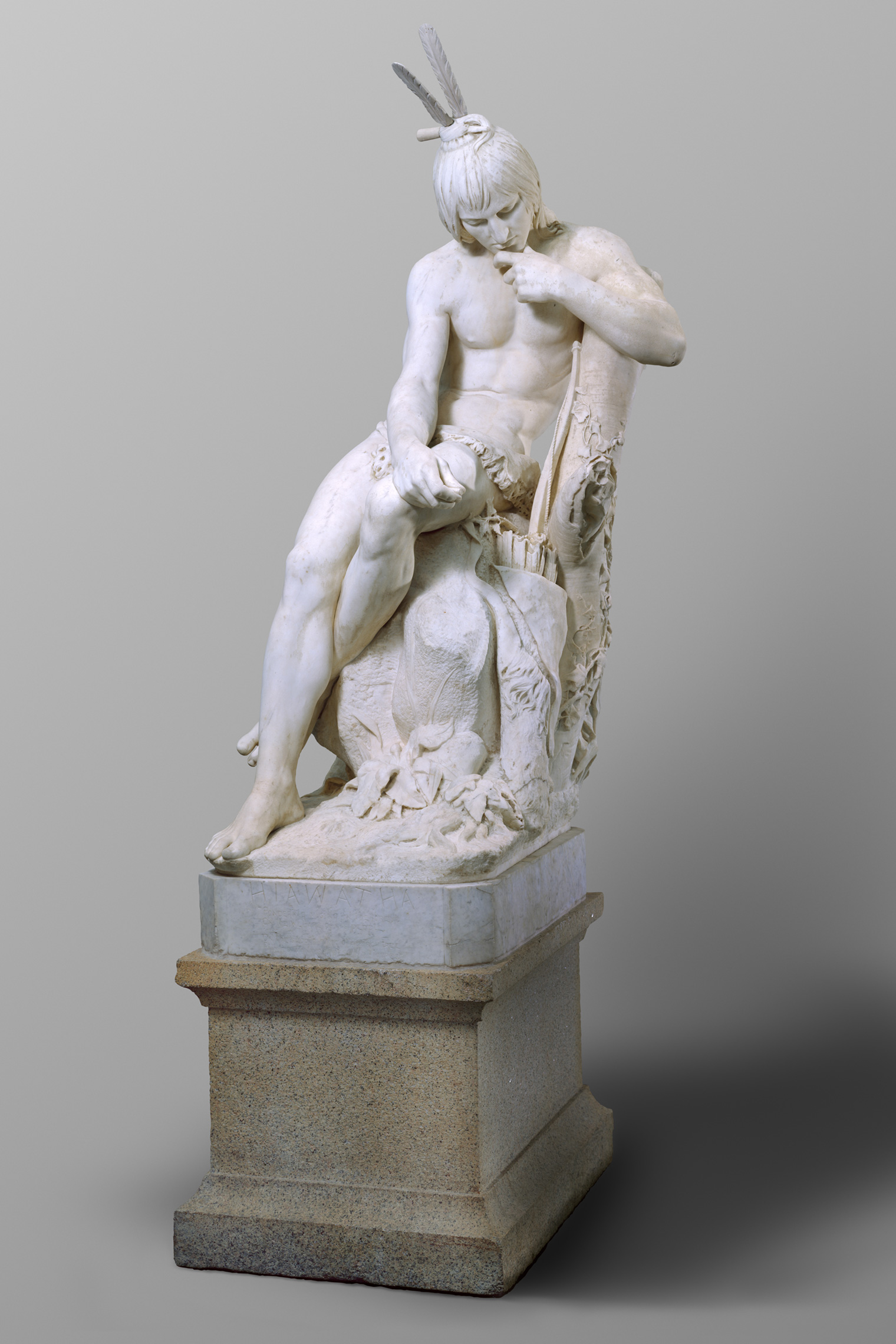
Augustus Saint-Gaudens (American, 1848–1907). Hiawatha, 1871–72, carved 1874. Marble, 60 x 34 1/2 x 37 1/4 in. (152.4 x 87.6 x 94.6 cm). The Metropolitan Museum of Art, New York, Gift of Diane, Daniel, and Mathew Wolf, in memory of Catherine Hoover Voorsanger, 2001 (2001.641)Kent Monkman (Cree, b. 1965). Resurgence of the People, 2019. Acrylic on canvas, 132 x 264 in. (335.28 x 670.6 cm). Courtesy of the artist
I’m not sure how we’re to see these works, but it’s a wonderfully bold approach. As a genre it’s something very original, not unlike parody if we consider the way something pre-existing is reframed in the new form. The brooding sculpture Hiawatha you see (above) for instance recurs in a corner of “Welcoming the newcomers”, while Miss Chief boldly leads the vessel in Resurgence of the People”, in a heroic echo of Washington crossing the Delaware. Miss Chief is at least a trickster figure in being a disruptor, forcing us to revisit our shared assumptions about culture.
I can’t miss the prescience of his images in the background of that painting, those macho yahoos with guns who turn up on the news with heart-breaking regularity over the last couple of years.
Emanuel Leutze (American, 1816–1868). Washington Crossing the Delaware, 1851. Oil on canvas, 149 x 255 in. (378.5 x 647.7 cm). The Metropolitan Museum of Art, New York, Gift of John Stewart Kennedy, 1897 (97.34).
The big commission for the Met can be read as a species of adaptation in the same way that a film such as Clueless is an adaptation of Pride and Prejudice. I’m mindful too of the Jane Austen, given that Monkman was himself playing with the title in his show “Shame and Prejudice: A Story of Resilience”.
Monkman is very humble, very generous in sharing credit, with a wonderful sense of humour that you can see in his work. I think there’s a lot more he may show us, considering what we saw in his 2018 show “Miss Chief’s Praying Hands”.
Lest you be too cocky that we Canadians are so much more sensitive or aware of Indigenous issues than Americans? We got smacked down brilliantly. Yes Monkman did say that Americans are more conscious of blacks and Latinos than Indigenous issues. And then he told us of a Canadian woman who, when his name was mentioned said “Honey it’s the gay Indian!”
Ouch. Yes there are racists in this country too. So perhaps we should tread carefully, not be too quick to act “holier than thou”.
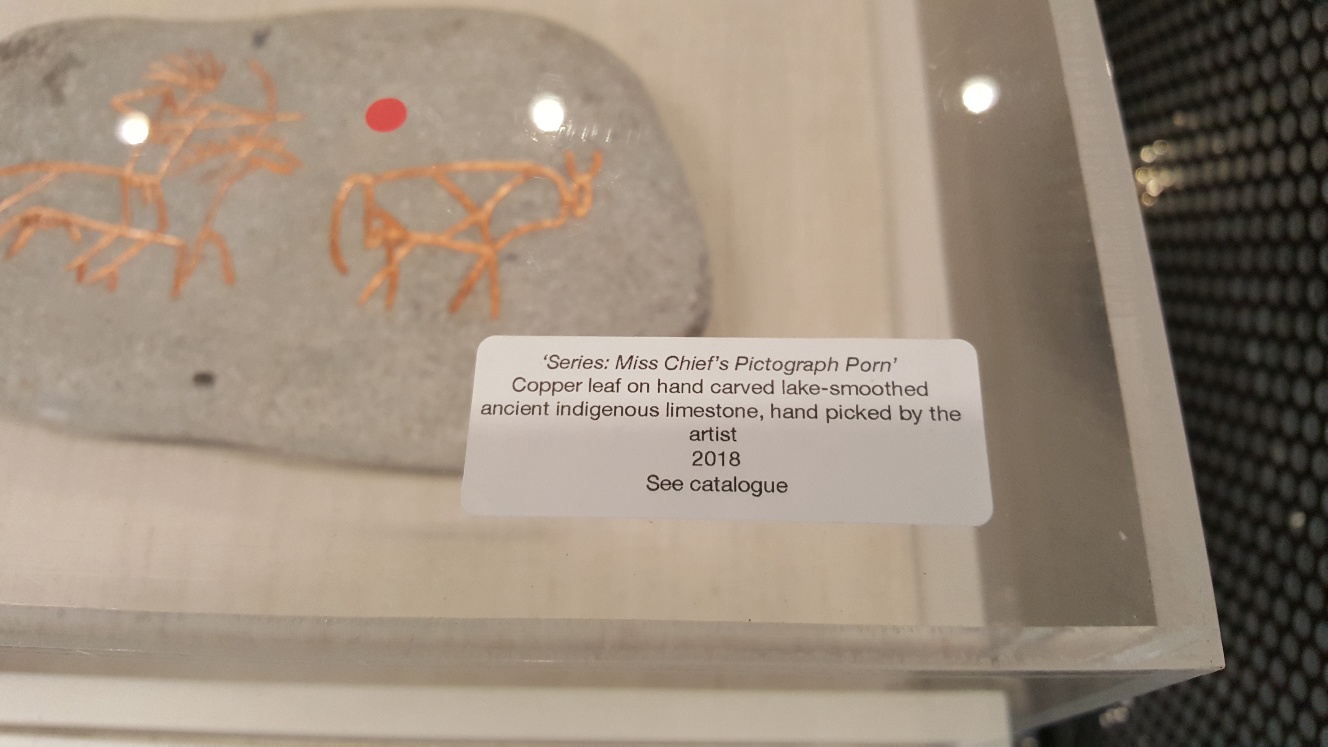
Pictograph porn. The gallery staff were super-serious but I was laughing.Canadians will recognize Robert Harris’s painting “The Fathers of Confederation”, parodied here.
Tonight I picked up a copy of a new book about his two works at the Metropolitan Museum, titled Revision and Resistance. I can’t tell you more than that because I haven’t even removed the plastic covering the book. But I want to see more of Monkman, hoping he is again interviewed, perhaps drawn into new projects.
I wish Miss Chief would consider writing an opera or musical. Perhaps there’s a film in their future.
I wish CBC would get them to host This Is My Music: because I’d like to get a better sense of their personality. What kind of music does Kent / Miss Chief listen to? I’m sure I’m not the only one asking.
Someday I hope we get to find out more about Kent Monkman. In the meantime I am very grateful to the Art Canada Institute, whose offerings I’ve just stumbled upon today, via their lecture.
Today I watched an outdoor performance of Alice in Wonderland presented by the Canadian Children’s Opera Company.
Over the past few weeks it’s been a joy to see productions that signal a return by many companies forced to the brink by the pandemic, often with a celebratory tone regardless of what was being presented.
That was especially so for today’s Alice, with libretto by Michael Patrick Albano and composed by Errol Gay, premiered in 2015 and offered this year in honour of its composer, who passed away in 2019. In addition to Alice, Errol had also composed A Dickens of a Christmas and Laura’s Cow: the legend of Laura Secord.
I was impressed watching the complexities of the music in Alice. The cast had memorized their parts, the music sometimes made challenging modulations, with nary a missed cue or note. I have no idea how much rehearsal it took for them to achieve this level of perfection, only that it’s tremendous fun to watch, observing the supportive parents gobbling it up.
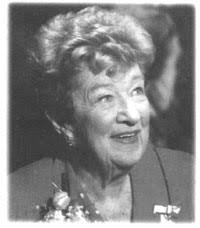
Founded by singer, broadcaster and impresario Ruby Mercer and Music Director Lloyd Bradshaw, the company was designed to offer young people top quality instruction in operatic and choral singing, stagecraft and drama. This training, paired with numerous and varied annual performance opportunities, places the CCOC in a central position in the Canadian opera scene.
I was thinking how useful this would be as part of an education. You may well ask me “what do they mean by “children”? What are the ages? To be honest I didn’t know. They seemed pretty sophisticated. So I consulted their websitehttps://www.canadianchildrensopera.com/.
Wow, there’s a great deal of detail there for a parent considering sending their child.
This is no idle recreation. CCOC have carefully studied the subject given that they’re coming up on their 55th anniversary. They break down their activities by age cohort. As they tell you in a couple of places on the site (especially if you’re a parent hoping to find a placement for your child), they “have 6 choirs for children and youth grades from JK and up.”
Today’s performance was accomplished by members of that “Youth Chorus”.
If you follow the links for each age group’s choir, you’ll see that this is a fully developed curriculum, well-planned to train the prospective performer in musical theatre, let alone opera. If you’re considering it for your child, have a look at their page titled “Auditions – what to expect“.
I can’t imagine a better pathway for someone who hopes to end up in a post-secondary theatre programs such as the ones at universities or colleges in this country. But never mind career. This is a brilliant way to socialize children in an environment encouraging discipline, goals, and the exploration of personal limits. If they learn something, so much the better, but at the very least their activities are creative and likely to foster confidence. At a time when some schools are reducing their arts education the CCOC’s offerings could be vital.
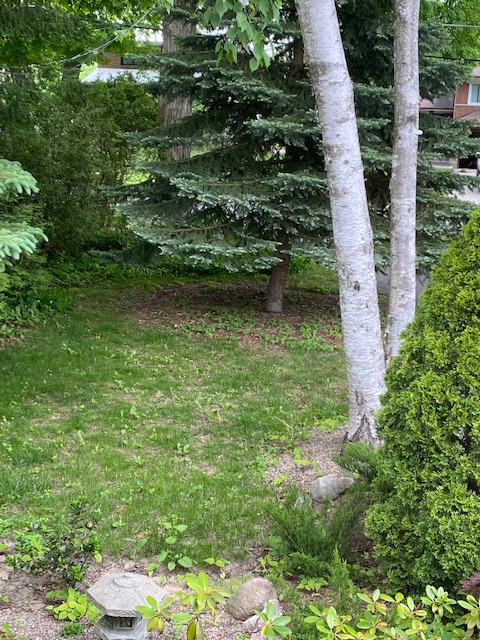
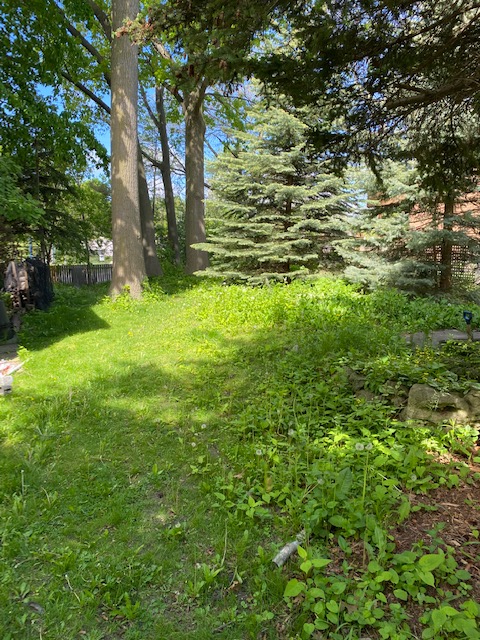
It’s June which means the back-lawn has had its first complete trim.
In front I’ve been able to dodge this question – between protecting pollinators by letting dandelions & weeds grow vs trimming and cutting—by allowing other sorts of growth, led by a big spruce and a birch.
In the back it’s designed as more of a progression. The further away from the house you get, the more unruly it becomes (i almost said “beecomes”, perhaps a Freudian slip?).
Against the house things are carefully manicured, although even here nature has her say.
There’s a big remnant from Sam’s winter pathway. When we were dealing with big snows, she had to rely on the pathway a shovel’s width that I created into the snow in the back.
Sam back in January
I loved how tiny it made her seem against the yard. The snow made me feel small too. And of course this conditioned precisely (i almost said “peecisely”) where she would pee.
It’s no surprise that for the spring, while she may be gone (a story I’ve shared) we still have an indirect reminder of her. I don’t want to sod over this bald patch (at least not yet): which serves as her calling card.
It seems to say “Sam was here”.
Sam was here
Lindsay Anne Black was the first person I ever heard use the word “rewild” aloud, when I interviewed her a few days ago. I have neighbours whose entire lawns are given over to wild growth although I’m not including any photos.
We rely more on bushes and trees. It’s not just that I’m mindful of bees and pollinators. In the back there’s also the noise factor, vehicles going up and down Brimley Rd. Mother Nature is my pal when she helps the bushes and trees grow, acting as noise absorbers.
Adapting a play into an opera can be fascinating work, especially when it’s as well-known a play as Hamlet. I’ve seen several attempts to turn this play into something else including a couple of musicals, an opera long ago, and today’s production on the Met high-definition series in a movie theatre.
While it may be early to pronounce the adaptation by Brett Dean and Matthew Jocelyn a success, I’d like to stay away from anything like an appraisal. First and foremost, it’s no stretch to say that the work is satisfying to audiences, not when I watched the audience scream their approval, or when I teared up in so many scenes, including the last one. I liked it a great deal but of course that’s just one opinion.
You may remember Jocelyn as the former Artistic Director of Canadian Stage, a champion of inter-disciplinary performance for many years, and a successful opera director. Dean too was here as curator of the Toronto Symphony New Creations festival in 2016.
Matthew Jocelyn (photo: V Tony Hauser)
Yes there are parts of Shakespeare’s original that are missing. But just as I doubt we’d pronounce Verdi’s Otello a failure because of the omission of the first act, making note of divergences doesn’t mean dismissal. I admire the ways Meredith Oakes altered the ending of The Tempest, the one composed by Thomas Adès, changes that resemble some of what Matthew Jocelyn does in his libretto of Hamlet.
There’s no sign of Fortinbras, so the usual last line to bid the soldiers to shoot can’t happen. The ghost isn’t seen on the battlements to begin. And –minor change—it’s Rosenkrantz and Guildenstern rather than Osric explaining the wager and then judging the fencing contest in the last scene of the show. Those distinctions aren’t significant.
Far more important are the ways in which Jocelyn and Dean approach the text. You might recall the Tempest adaptation of Adès/Oakes, where librettist Oakes dared to write shorter lines, disregarding Shakespeare’s iambic pentameter. Just as Mallarmé, when confronted with Debussy’s musical setting of Après-midi d’un faune, said something along the lines of “I thought I already set it to music”, so too perhaps Shakespeare (if he could be reached for comment).
If you’re to sing intelligibly for an audience over an orchestra you can’t also be dealing with humongous lines of imagistic poetry. Oakes wrote shorter lines. Jocelyn did something different but comparable, namely giving short chunks of text to a character and then often having the lines repeated many times, sometimes by another character. Hamlet says “or not to be” over and over near the beginning. And we hear “the rest is…” without that last word several times before finally finishing the well-known sentence. I would have wished for Jocelyn to have made the truly brave choice, leaving out the “is silence” because if he’s dead after having said “the rest is” without saying “silence”, we know enough Shakespeare to fill in the blank ourselves. Oh well.
And sometimes the repetition was handed back and forth among several characters. I liked the effect although at such moments I’m reminded of something I saw in a review, when Zachary Woolfe of the NY Times calls it “”an adaptation about ‘Hamlet’ as much as it is an adaptation of ‘Hamlet’”. Yes. When the actor who will be the player king is the one saying “to be or not to be”, we’re in curiously meta- dramatical territory. But this is possibly the best known play in the English language. I only wish Jocelyn had done more rather than less of this, as for example Hamlet’s last line.
Missing too are most of Hamlet’s famous soliloquys, among the treasures of the play. But the role is already huge, so something had to go. I think the choice is valid, even if there will be those coming to the text feeling cheated of their favorite parts.
Allan Clayton’s Hamlet is tremendous vocally and dramatically. There are places where I might quibble with the choices Jocelyn and Dean made, for instance in emphasizing the conspiracy brewing between Claudius and Laertes against Hamlet, leaving Hamlet to have a bigger share of the scene in the graveyard (where usually Laertes and Hamlet aren’t just debating who loved her more but coming to blows). But in this moment as in almost every one, the results were powerful, compelling, dramatic. And the bottom line that can’t be forgotten is that in a play that’s already so long, trying to include everything would make the opera impossibly lengthy. I think when you watch this opera you will be seeing a Hamlet to move you a great deal, a portrayal that wins you over.
Rod Gilfry is a very believable Claudius, but darker than any I’ve ever seen to be honest. If there’s a problem in this, it’s in the dynamics with the others. I’m reminded of some of the Iagos and Hagens I’ve seen, whose transparent evil makes the characters around them look gullible for believing them. Just as an obviously evil Iago or Hagen undermines your Otello or your Siegfried and make them seem less hero than patsy, similarly with Gertrude, especially when she seems clueless about her son’s feelings. Gilfry’s singing is excellent but the role as written doesn’t have the ambiguities I recall from stage productions, where we may question whether the ghost might just be a figment of Hamlet’s mind. In this operatic treatment Claudius is unambiguous. I welcome productions where I believe that some of Claudius’s motivation is his attraction for Gertrude, that his prayer has some semblance of feeling. Yes Sarah Connolly sings a beautiful Gertrude, convincing in the big scene with Hamlet where Polonius is murdered.
William Burden is quite wonderful as Polonius, a voice heard in Toronto with the COC in Death in Venice and Semele. Jocelyn and Dean giving us some absurdly wonderful text to flesh him out. His final lines as he dies recapitulate his bizarre list of genres with the players. He repeatedly addresses his daughter as “green girl”: a line Shakespeare’s Polonius utters but once, that not only becomes his mantra towards her, but –once she is mad—becomes something she utters too.
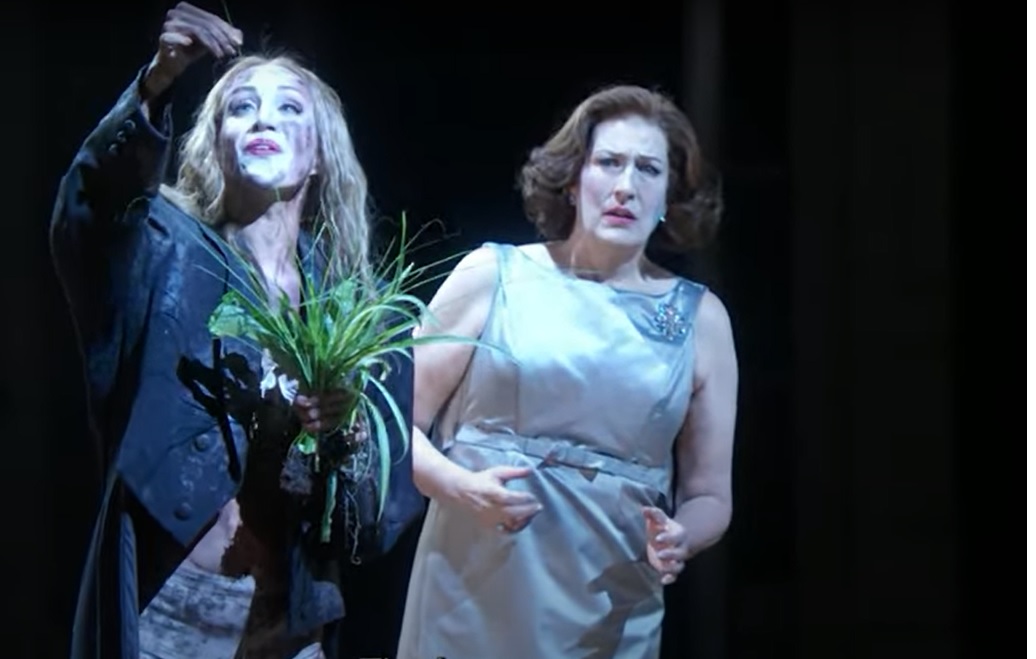
Ophelia’s mad scene (Brenda Rae) observed by a concerned Gertrude (Sarah Connolly)
Oh my, I cried a lot for Ophelia, a character who has never touched me nearly so much as in this version. I’m tearing up just thinking about her. It may be the combination of Brenda Rae’s performance, as well as the costuming in her final scene that leaves her looking like a ravaged survivor of a ship-wreck without the serenity of the famous Millais painting. I’m accustomed to crying for Laertes too as I usually see him and his sister as innocent victims of circumstance, but he’s made into more of an active conspirator than victim in the Jocelyn / Dean version. I thought we hear Ophelia singing along with Gertrude in the scene when her death is reported, an inspired touch, even if this too seems a bit like a gloss on the play, an adaptation in some respect that’s about Hamlet rather than merely adapting it. And it’s no coincidence that this relatively small role gets one of the last curtain calls, and the audience goes crazy for her.
The other key player is perhaps to be expected, John Relyea in multiple roles, as Hamlet’s father, as the grave-digger and a player. Relyea is electrifying every time we see him regardless of the size of his part, not just vocally but even in his silent moments.
This is a production that premiered in Glyndebourne in 2017. The first Ophelia was Barbara Hannigan who sang “And once I played Ophelia” for String Orchestra and Soprano, another piece by Dean given its Canadian premiere in Toronto in 2019; I can’t recall it well enough to know whether it’s at all like the role in the opera, but the composer’s notes to this piece tell us a great deal about his perception of Ophelia:
Though traditionally portrayed as a meek, even weak character, often dressed in flowing white robes and unable to defend herself before the pressures of Elsinore cause her to snap, I’ve often felt that much of what she says betrays a feistier personality than the one we often are presented. (“And I that sucked from his musicked vows…”) And perhaps, just perhaps, Ophelia drowns not from a romantically-fed whim or madness, but simply because of the pure weight of the words others say about her caught irrevocably in her pockets.” (from the website of the publisher of the composer Boosey & Hawkes)
Just as Adès & Oake alter the ending to The Tempest, letting Ariel and Caliban inherit the island at the end of his opera, so too Jocelyn and Dean, in their approach to Ophelia. It’s the most conventionally operatic part of Hamlet and very powerful, very successful.
Produced by Neil Armfield, conducted by Nicholas Carter I recommend this without reservation. I hope there’s eventually a video. I will watch for the encore presentation July 23rd. Dean’s score is full of thrilling effects, a small chorus in the orchestra pit, some instruments playing from behind the audience. There are moments of brilliant wit, for instance the roles of Rosenkrantz and Guildenstern as countertenors, the players accompanied by a frenetic accordion, the moans of the chorus observing the carnage of the last scene. I kept wanting to look over my shoulder for the subtle sounds around me (in the stereo of the broadcast), leads me to wonder how much better it would be if heard in person.
To close, here’s a small sample of Brenda Rae’s version of Ophelia’s mad scene in a video from the dress rehearsal of the Metropolitan Opera production.
Singulières is a piece of theatre about single women in Québec, although the most remarkable things about the show are not what I expected.
Five women fill the stage of Crow’s Guloien Theatre with vibrant life, sometimes throbbing with joy, sometimes distressed and inconsolable. Some of what we see and hear is like documentary film, as though we’re watching Québec reality TV, courtesy of Théâtre Français de Toronto. They’re mostly speaking French but we have subtitles and lots of video.
There’s also a trigger warning, that the play tackles themes of emotional and sexual abuse.
The synopsis we were given in the program describes it this way:
“Directed by one of Quebec’s fastest rising directors/auteurs, Alexandre Fecteau, Singulières is an unexpected, hilarious, and moving encounter with five “single ladies” from Quebec. This brilliantly imagined live-documentary, explodes with theatrical vitality, and follows the women in their 30s and 40s over two years, each of them living the single life with joy and purpose, all the while defying society’s expectations and redefining their own concepts of happiness, identity, and love.”
As an Anglophone male decoding a mostly Francophone show with subtitles perhaps I’m the wrong person to lead you out of the labyrinth of imagery in Singulières, especially considering that I’m happy when I’m lost, not seeking to escape this kind of delicacy.
It’s an enjoyable evening of theatre, reminding me of some films I’ve seen about single life. Whether we’re speaking of Bridesmaids (2011) or How To Be Single (2016) to name two influential examples, the bar for what’s understood to be crude and disgusting keeps moving lower and lower with each decade, such that our ideas of what we understand as a comedy of manners keep getting revised with each change to what we understand by “normal” behavior. I mention those two because the women in Singulières are so much kinder and more sympathetic than much of what we see from Hollywood. While there is some horror reported from women on a couple of occasions, they have our sympathy, the pathos with which they’re shown at least makes them objects of a respectful gaze, avoiding the denigration or ridicule we sometimes see in films exploiting women.
The performances of the five women (Frédérique Bradet, Savina Figueras, Danielle Le Saux-Farmer, Nadia Girard Eddahia and Sophie Thibeault), taking us through so many brief snapshots of life, are energizing and inspiring.
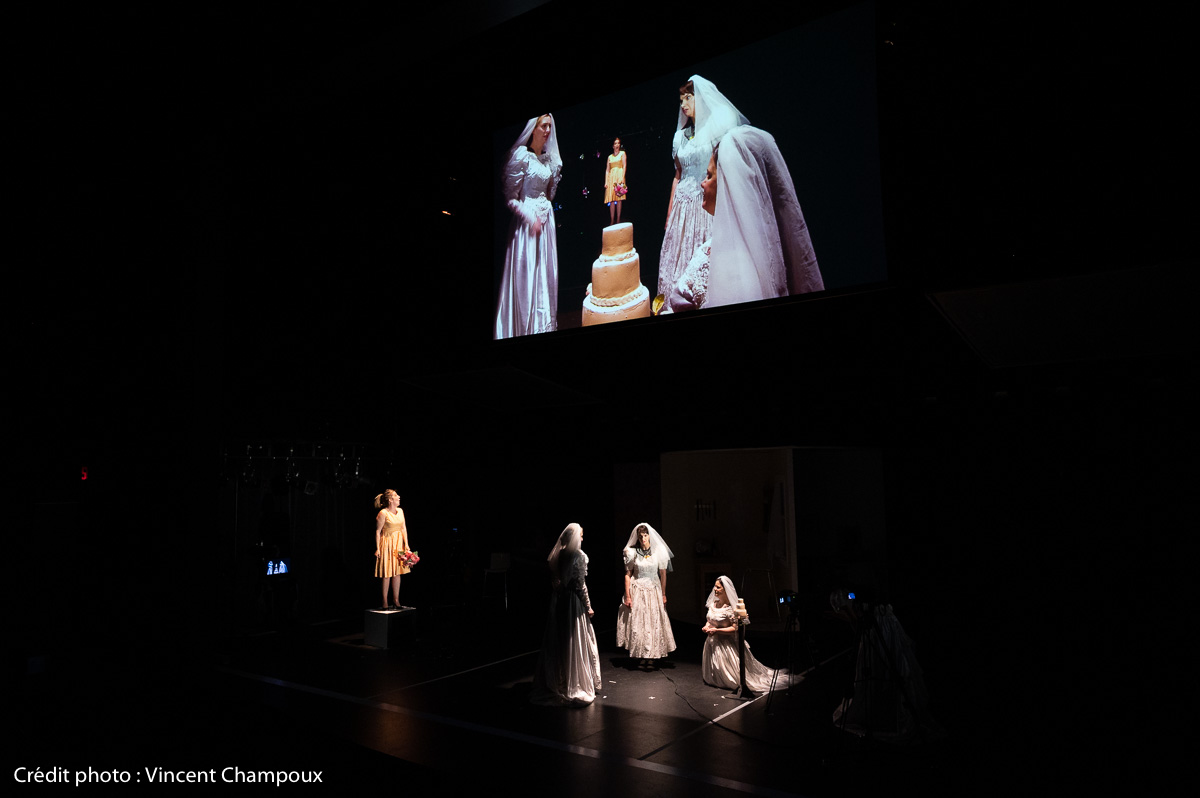
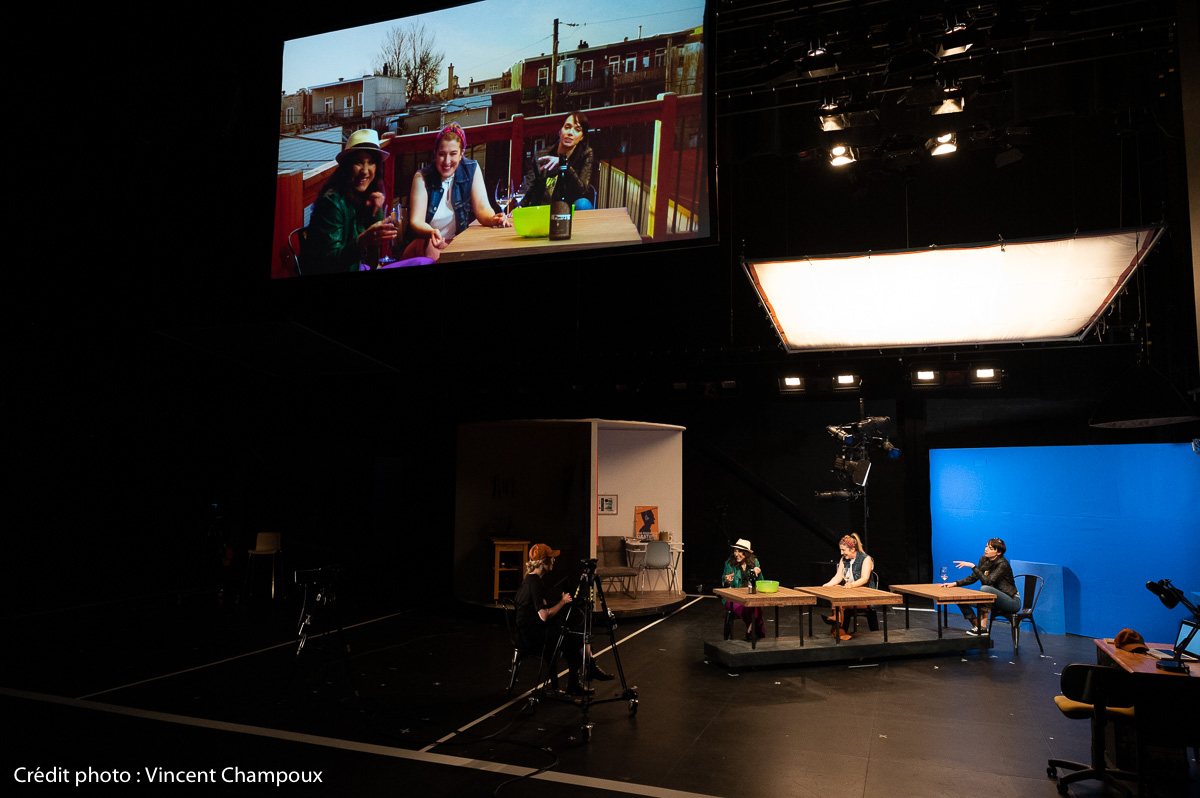
For me the most exciting aspect of the presentation was the brilliant use of video. I was discussing Robert Lepage’s use of high resolution video in his 887 with Eric Woolfe, who used video in his own adaptation of Lovecraft’s Mountains of Madness this past Tuesday. But in a few short years technology and mise en scene seem to have gone way beyond that in 2022, tonight’s show employing at least four cameras combining images onto three screens, sometimes including brilliant special effects.
Discussing possibilities of marriage with married friends while you’re apparently reduced to an ornament on top of a wedding cake?
The impossible illusion is on the screen above (Photo: Vincent Champoux)
Revisiting memories of your youth in close-ups?
A face seen inside the fishbowl?
Friends shown having drinks on an outdoor balcony?
We see it filmed onstage, see the illusory reality on the screen above (photo: Vincent Champoux)
We had both the theatricality of seeing how this was all assembled onstage combined with those remarkable illusions on one or more of the screens: a heady combination that’s unforgettable.
The team of David B. Ricard (Video Projections) and Billy Bergeron (Technical Director and Production Manager) brought this remarkable combination to us, taking advantage of the wonderfully pliable set designs of Ariane Sauvé.
Between Playwright Maxime Beauregard-Martin and Director Alexandre Fecteau, Singulières offers an interesting study in the culture of young women. Is Ontario’s culture different? I don’t know for sure. At times I felt I was observing a milieu that’s not like what we have here, partly because of language but partly because these women were all so nice, so likeable.
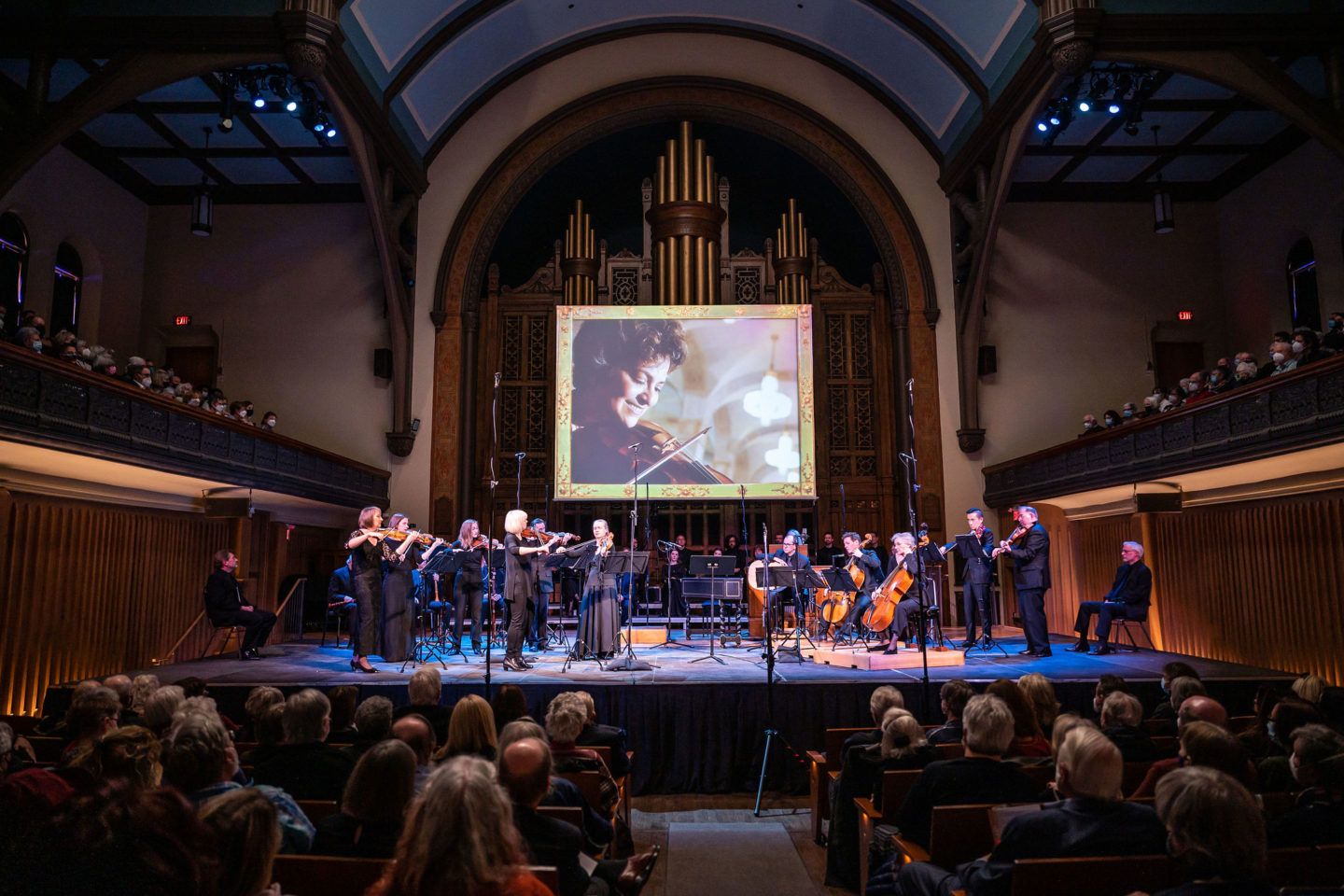
Tonight I watched a Tafelmusik concert recorded in April, celebrating the life of Jeanne Lamon.
I knew the curated experience from Alison Mackay and Christina Mahler would be meaningful, and they exceeded expectation.
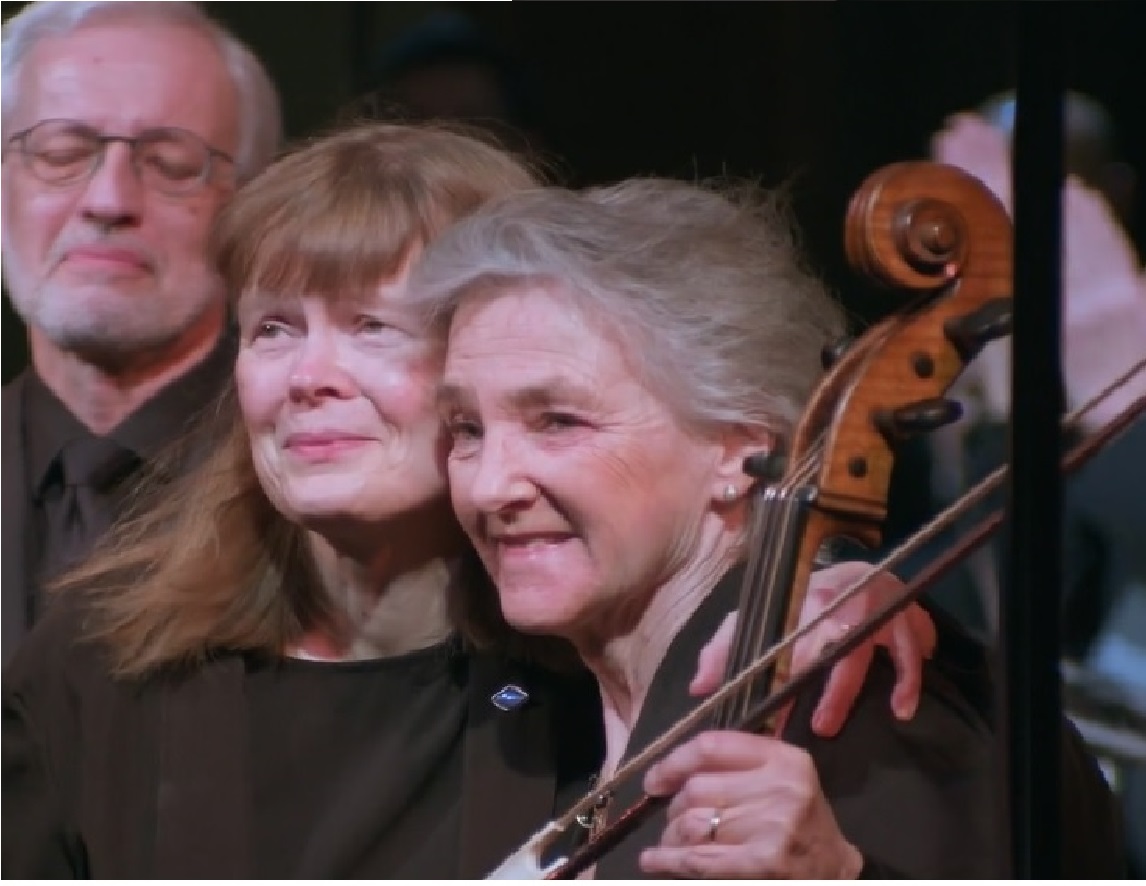
Curators Alison Mackay and Christina Mahler, accepting applause afterwards
R.H. Thomson narrated a kind of documentary of the life and times of Jeanne Lamon’s spirit: as embodied in Tafelmusik and their baroque music. Lamon’s life story is almost indistinguishable from the life story of the orchestra, given her role in its founding and ongoing life, their decades long relationship.
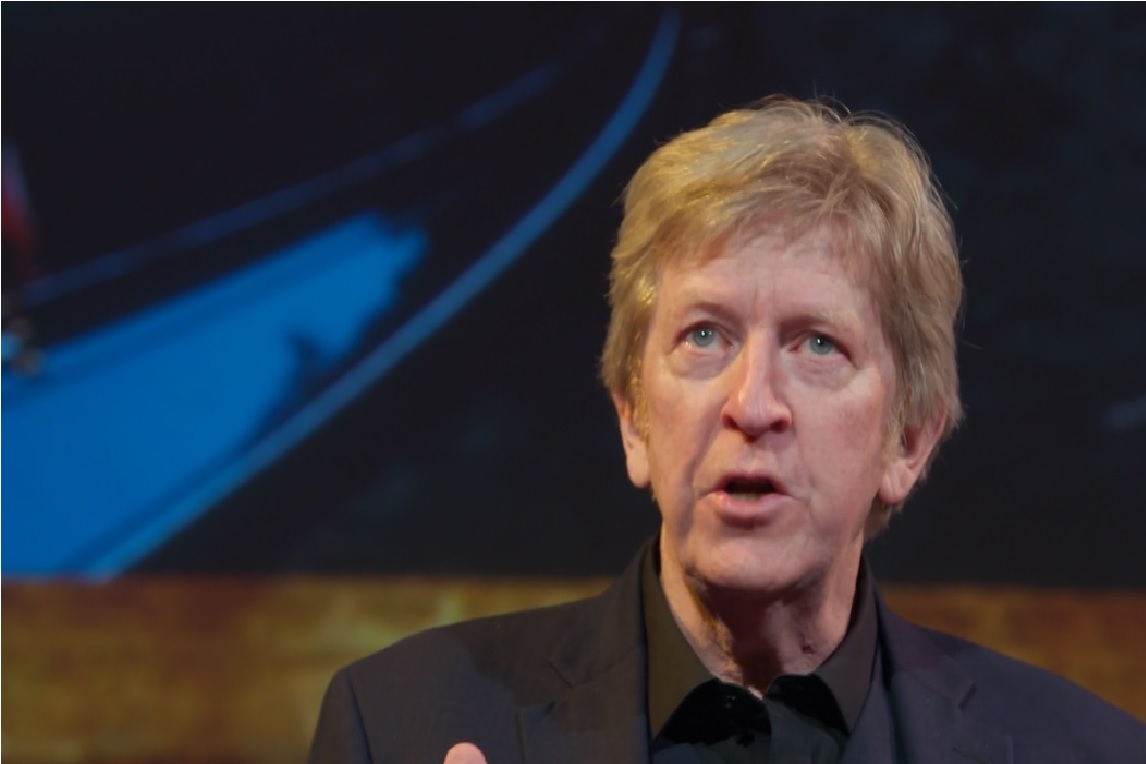
Narrator R.H. Thomson
But we were watching a kind of memorial service, testimonials and eulogies offered on the instruments of their orchestra and the voices of their choir.
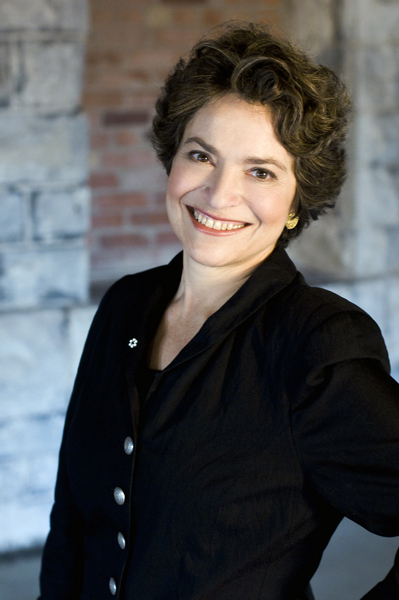
Jeanne Lamon (photo: Sian Richards)
Their was a great deal of joyful energy but at times we saw sorrowful faces reflecting the passing of their leader, mentor and friend. We heard reflections on the extraordinary manner in which she led and shared leadership of the orchestra, with Ivars Taurins, with Bruno Weil, with Opera Atelier.
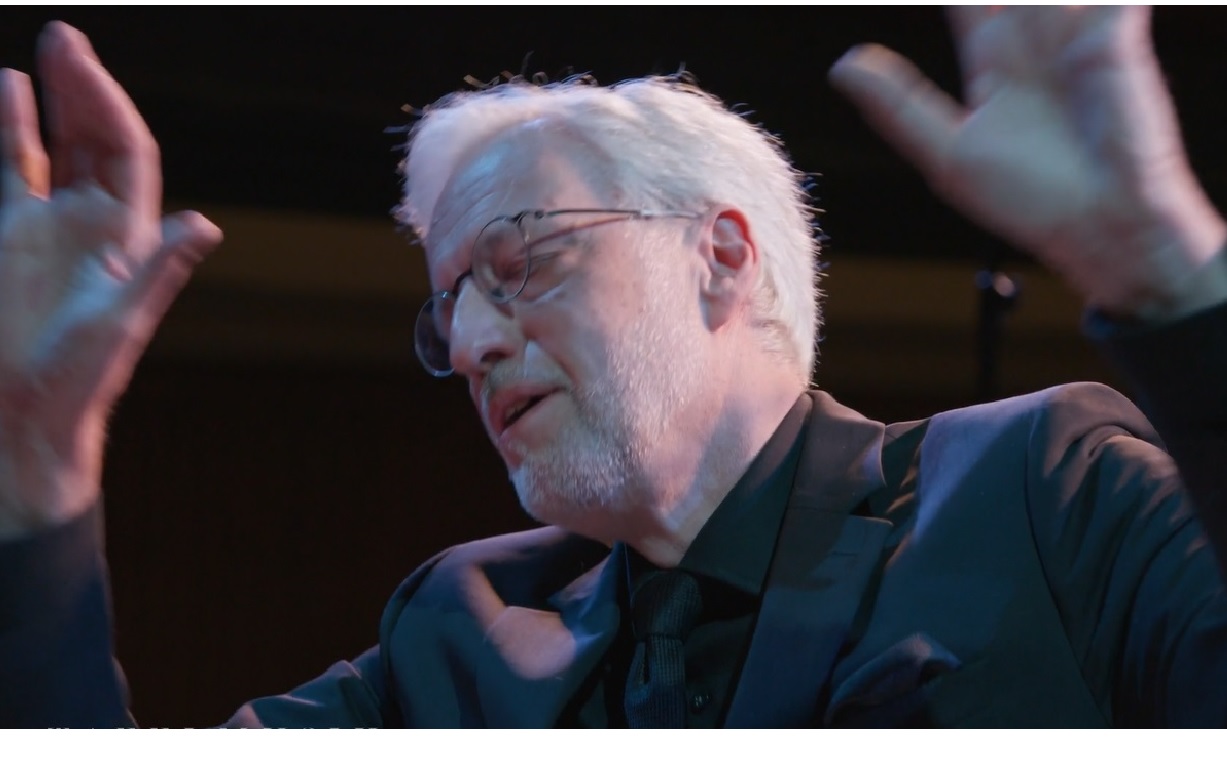
Ivars Taurins, conducting the Tafelmusik chamber choir
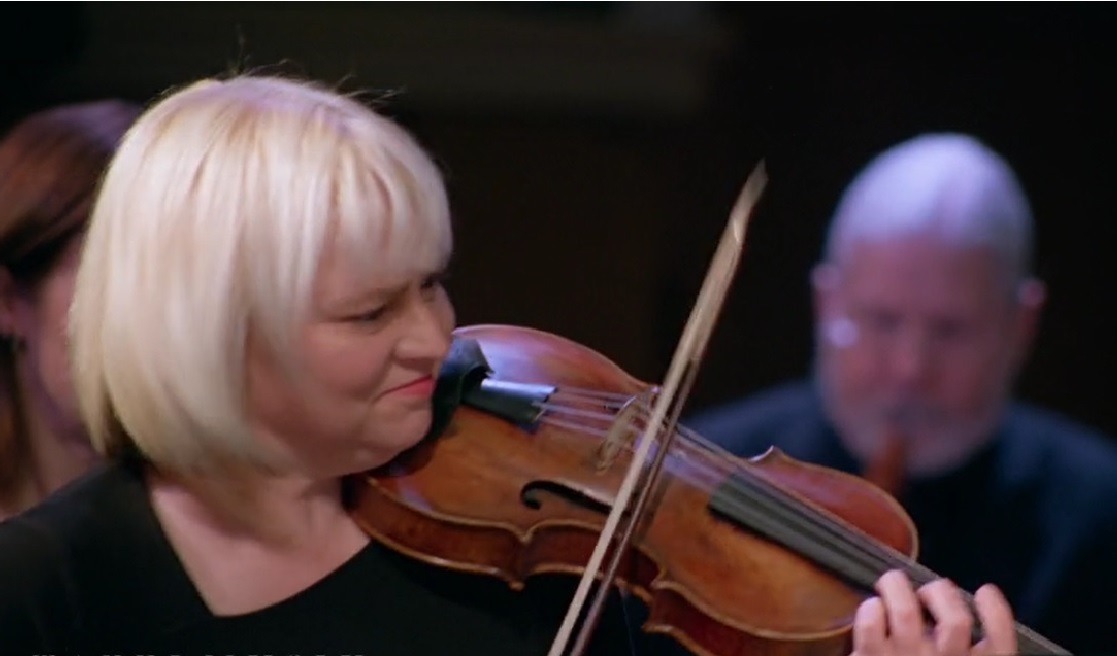
There were choral pieces led by Ivars Taurins, including some lovely solos from baritone Brett Polegato, although most of the music was orchestral music of the baroque, led by Julia Wedman’s enthusiastic presence on violin.
Julia Wedman, leading the orchestra
I’ve often resisted the virtual concert, seeking something authentic, however this concert satisfies completely: because of the emotions in play. It’s not just another concert. Film-maker Barbara Willis Sweete has accomplished something miraculous, the variety of camera angles feeling organic and unforced, the sound wonderfully alive.
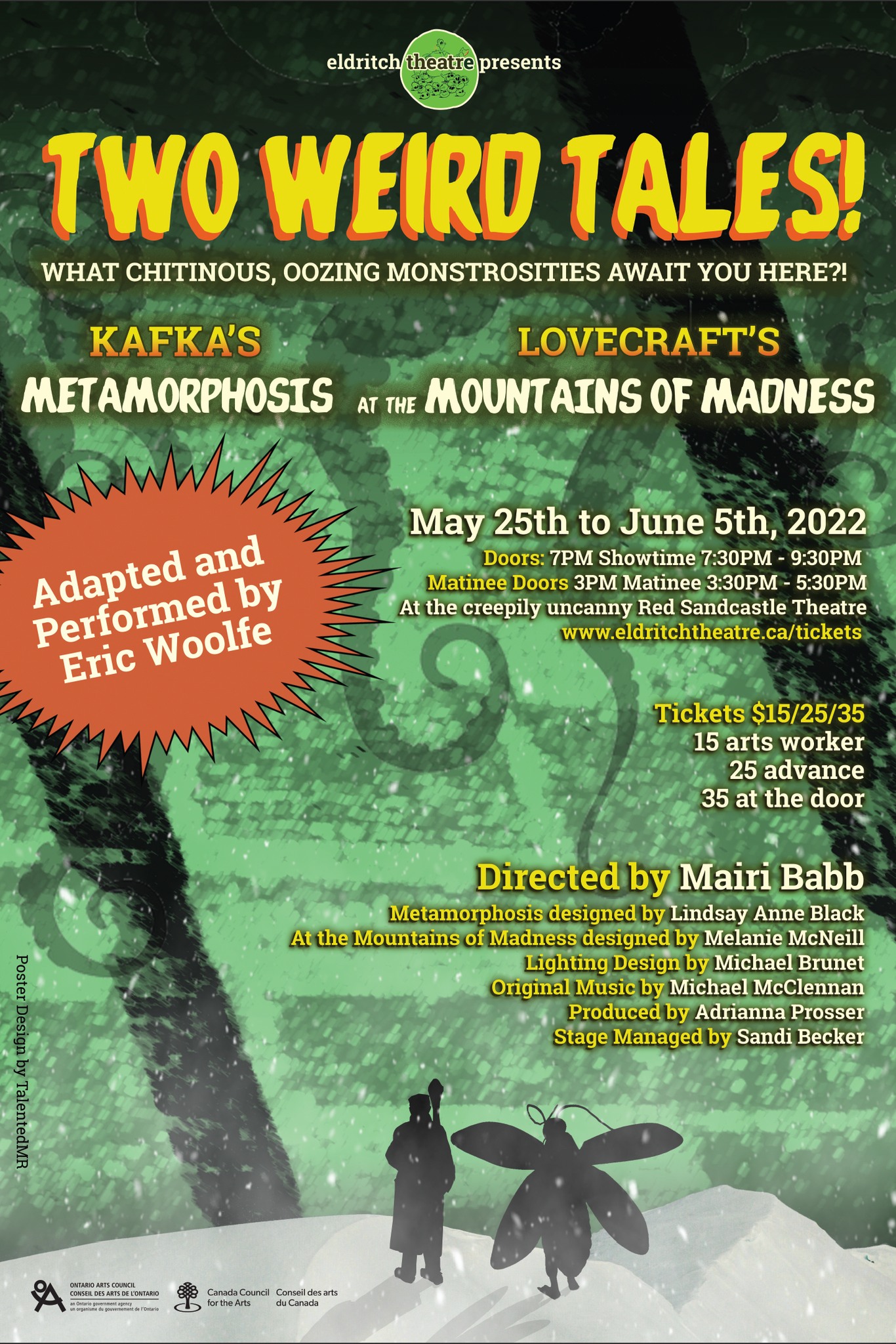
Whether your Kafkaesque fate is to wake up to the discovery you’ve turned into an insect, or merely that you have to hide inside your house because of coronaviruses and lockdowns, I think we’re ready for Eldritch Theatre’s current theatrical double bill adapting two of the 20th century’s most acclaimed novellas of the uncanny. Franz Kafka’s Metamorphosis and HP Lovecraft’s At The Mountains of Madness are their Two Weird Tales, created and performed by Eldritch Theatre’s artistic director, Eric Woolfe.
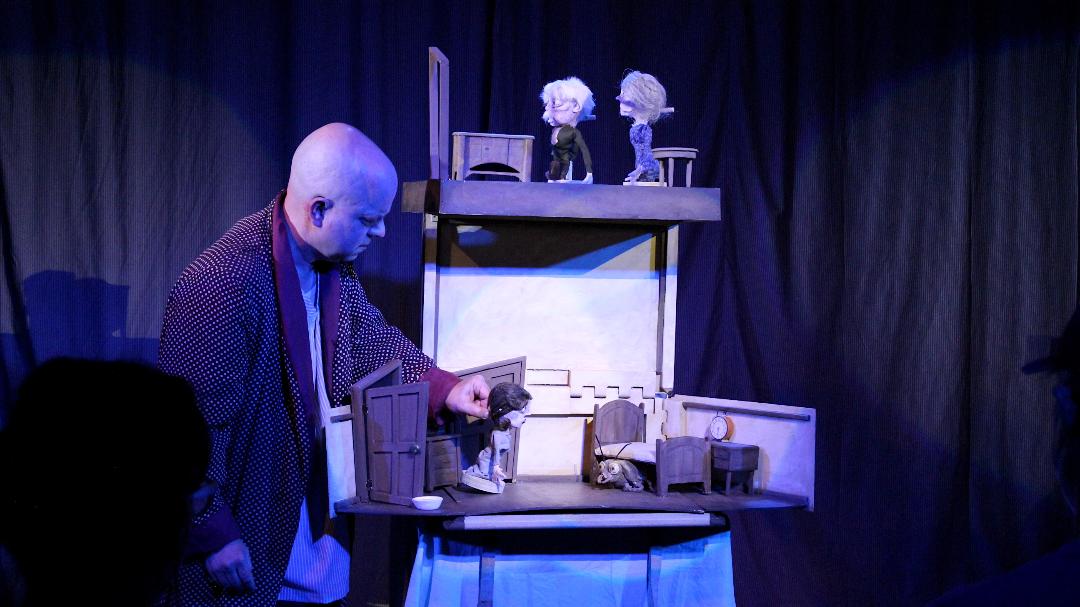
Eric Woolfe in Metamorphosis (photo: Adrianna Prosser)
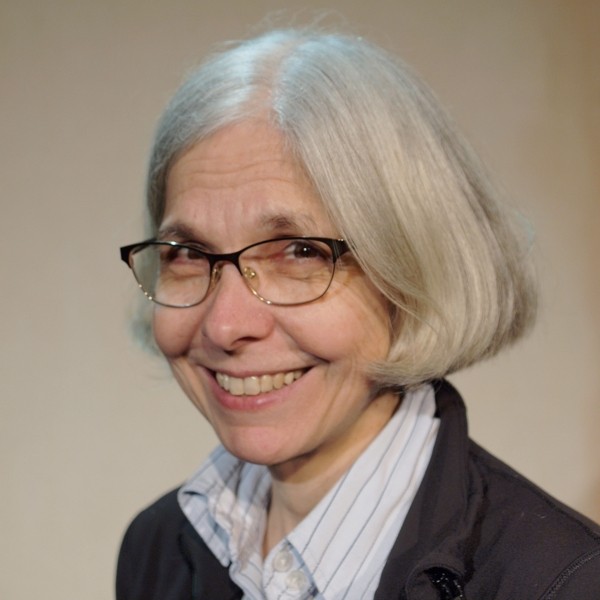
Lindsay Anne Black the designer was also a source of inspiration. Indeed she did the work from her home in Stratford, where she’s largely housebound due to a diagnosis of Multiple Chemical Sensitivity (MCS), interrupting her hugely successful career. This project was conceived as a way to bring her talents if not her actual presence back to the stage, allowing her to collaborate remotely while in isolation.
Zoom was often her pathway to work, and it was the method used for our interview. I had to find out more about MCS and about her virtual design work for Eldritch Theatre.
*******
Barczablog Are you in Stratford?
Lindsay Anne: I am. It made sense to move back here when I had left my career in theatre already. And my ten year relationship broke up and I knew I wouldn’t be able to afford to live in Toronto, by myself, to any degree of safety.I had been living in Parkdale for ten years.
But I had lived here in Stratford when I worked for the Festival in the early aughts, had loved living here. It made so much sense because I grew up in abject countryside.It melds the convenience of the things you can do in the city (I could walk to get groceries) but then I could also see more than three stars at night, and we had a pond in the backyard. It was the right balance when I lived here before and it absolutely made sense to come back. When it didn’t really matter where I lived anymore, it was a place I loved where I still had some friends. That’s the drawback of Stratford if you’re in the arts, sometime your friends are only here for fleeting moments.
Barczablog: I love Eric’s work, and I was so excited and interested to read about your part in these shows.
So the first thing I always ask is “Would you say you’re more like you father or your mother?“
Lindsay Anne: I am absolutely more like my mother in terms of my day to day affect, my sense of humour, my interest in the arts and my work in the arts. Anyone who knows me would say that of me, but my father was the one who taught me carpentry, perhaps a bit too young with things like a lathe, it was something I learned and absolutely shaped the kind of work I wanted to go on to do as I was starting to work in the arts myself and figure all of that out. He also taught me some basic electronics.
He has a company that makes radio remote controls for heavy machinery and mining equipment and locomotives.
Barczablog: Sounds like something Eric could use! I’m picturing remote control creatures crawling the walls.
Lindsay Anne: That’ll be next.
Barczablog: Robots?
Lindsay Anne: Except I can’t solder anymore.
Barczablog: Forgive me for not knowing your resume and all that you’ve done. So have you done hands on construction of props and sets in Stratford…?
Lindsay Anne: I was primarily a scenic artist and a props builder for the first little while but I was designing at the same time, doing children’s shows, the way you do when you’re starting out as a designer. And I had picked up calls as theatre electrician for many years. And had done carpentry mostly as being a props builder, but also did a few gigs as an assistant carpenter for full shows. I worked primarily in Ontario, a few things in BC but all over Southern Ontario, and in the later years, largely in Toronto.
Barczablog: So I wonder if you could talk about Multiple Chemical Sensitivities: what it is, how it impacts you, your life and what you do.
Lindsay Anne: Sure… ES/MCS….The “ES” is “Environmental Sensitivities”, that’s the umbrella, and “MCS” or “Multiple Chemical Sensitivities”, is the condition that I have.
Aphasia is one of my symptoms. I have to find the right words.
Electromagnetic Sensitivities, (EMS) is also under the umbrella of ES. I only have minor issues with that.
I probably had a predisposition. That seems likely. It is heritable to some degree, we know that for sure.
I probably inherited “genetic damage”, for want of a better word, from my mother. My family is all visual artists back four generations on that side. So starting with my great-grandfather constant exposure to oil paints and solvents, and then the next generation did the same and my mother was a visual artist for most of the 80s. Watercolors: but they were also renovating the house, because they bought an old farmhouse and restored it back to what it might have looked like when it was new.
Barczablog: I was going to ask you if living in Stratford is cleaner than living in Toronto, and that you’d left Toronto because the air is polluted or something like that.
Lindsay Anne: No it’s more of a lateral move.
Barczablog: I suppose farmland can be bad. You’ve got all that pollen
Lindsay Anne: Well pollen isn’t an issue.
The difference between an allergy and this kind of sensitivity is an allergy is your body, your immune system mis-identifying something as a threat and over-reacting to it, to kill it and try to get rid of it. This (MCS for instance) is my body accurately identifying a toxin. It’s at a much lower level. Most people can tolerate those toxins at those low levels, and I cannot. And it’s just a layering on of poisons, which then affect systems.
It can be cognitive if it’s something like a petro-chemical, that’s one of the worst exposures I can have. It will affect my heart rate, my circulation, my cognitive abilities: aphasia, balance, I just lose all of my faculties, which is not great.
[This isn’t the first time in our conversation I’ve seen Lindsay Anne describe something painful or even horrific in its implications yet giggling as she says this…]
Barczablog: Does it come on suddenly with an attack? Do you feel it coming?
Lindsay Anne: It depends on the trigger and how acute an exposure it was. So for example, a couple of days ago a neighbour (I think) was filling his gas-powered lawn mower. I don’t know for sure that’s what happened, because I didn’t see anything. But I was suddenly choking on what was probably gasoline that had drifted over onto my property.
And it affected my equilibrium. I couldn’t see clearly. I couldn’t manage my hands to type to my friend who watches out for me when these things happen. I had to have a shower right away to get the scent out of my hair because if it lingers I’m just putting it in the house.
Because I lose balance that’s kind of dangerous. I have a system in place so I don’t break my neck.
[again the laughter]
But then there are others things that can happen: because that’s a small part of the answer. The other things that can happen are asthma, which is one of the few things they can diagnose separately, and I have rescue inhalers for that. I actually rely on coffee much more.
I can also get headaches, rashes, my heart rate regularly goes over 80, sometimes over 180, again depending on the trigger. And so the other triggers might be something like hand sanitizer, Lysol, paint, adhesives, out-gassing plastic, out-gassing MDF like laminate wood. Things like that. Anything that is emitting a VOC, a volatile organic compound or a petrochemical, which includes a lot of plastics. It can transfer to food through packaging. That’s my food insecurity issue right now. Not so much food, but what food absorbs. I don’t have any allergies but there’s very little I can eat right now.
Barczablog: And there are things in food you might not even know about until they make you unwell. I was reading today that they’re even using certain microplastics as fertilizer, which blew my mind, the thought one could be poisoned without knowing about it. All of us! (here’s the link )
Lindsay Anne: We are all having this same issue, to some degree. It’s just that I’m symptomatic.
Barczablog: You’re the canary in the mine, as it were.
Lindsay Anne: In the support groups for MCS, we will sometimes refer to ourselves as “canaries”.
Barczablog: How long were you suffering some kind of symptom(s) before you figured out what this is? You’re an expert now, and I’m impressed with how articulate you are. You must have been going through times when you wondered “what’s wrong with me?”
Lindsay Anne: Absolutely.
Barczablog: How long did that go on?
Lindsay Anne: Well I remember having symptoms as young as eight. Having grown up in the countryside…
[pauses, turns to look at what I’m looking at]
Barczablog: I was smiling at the cat.
Lindsay Anne: That’s Zigfried Dander Stardust
We lived adjacent to corn-fields. We were there in the 70s, they were still spraying. Now it’s impregnated in the seeds I believe. But I would have been playing in those fields. And my father had the shop on the property for the first little while, and I spent time at his shop after it moved, so there was always heavy machinery, and oil around him. There was renovating the house, the things you’re exposed to, while you live in the place of a renovation.
Plus it was the 70s and 80s, and there was Aqua Net…
[I had to look this up, it’s hair spray].
It’s a wonder anyone’s okay. The first symptom I remember was being unable to climb the stairs because of heart palpitations, and having to lie down halfway up the steps. I went through testing all the way through high school with no definitive answers because there was nothing mechanically wrong with my heart.
But the heart palpitations were frequent.
Then I went away to university, to Queen’s for theatre, and transferred to the university health services. My doctors there never asked any questions like “to what have you been exposed”: which would have solved everything. But instead they said “we don’t really know what it is but we’re going to refer you to psychiatry.”
And so I went through the psychiatry department, where they said “But maybe it’s panic disorder“.
Barczablog: Your body was signaling you, how did you handle it?
Lindsay Anne: The psychiatry department gave me drugs: for something they already knew I didn’t have. Because you’re so desperate for answers. I accepted it at that point and said “I guess I have panic disorder” said very calmly while she had heart palpitations. So I tried to take the things I had prescribed. But I ended up being harmed by the drugs, because I can’t metabolize them. Genetically I can’t metabolize most pharmaceuticals.
Barczablog So they were also a kind of poison.
Lindsay Anne The cure was also harming me. So for years I just didn’t have a doctor. And I just accepted: sometimes I have heart palpitations, sometimes I have asthma and rashes, sometimes I get very confused and sometimes I can’t remember anything. And to be honest, in that period I didn’t know how ill I was, because I never felt good, and there was nothing to compare it to. It was just this long accumulation of harm.
At some point I remember coming home with a burning rash, some paint spatter had landed on my arm, and I said to my partner at the time “I think I might be becoming allergic to paint”. And you know the panic? you suppress that because it was my primary job. Kept painting. Kept designing. Did all the going into poisonous places all the time, like Canadian Tire. I don’t know how anyone survives working in that place. But then in 2010 that was when the symptoms were so bad I couldn’t deny it anymore. I was having kidney pain. Whenever I opened certain types… It was Benjamin Moore Stays Clear Semigloss. And every time I would open it, specifically that can, I would be in crippling pain.
And that was 2010, and that was when I retired from painting and props. I kept designing with assistants and associates. And everyone was really great about trying to keep that going for me and make it accessible. But the process just doesn’t make it possible no matter what you do if you’re keeping the same process.
But in that time I did get a diagnosis. I went to the Environmental Health Clinic at Women’s College Hospital. It’s the only program we have like that in this part of Canada. It was a 16 month waiting list. And I was allowed only three visits: because the demand is so high. There are close to a million people in Canada diagnosed with MCS. And that doesn’t include people like me who didn’t realize how sick they were because they didn’t realize, they just felt that way.
So the diagnosis happened around 2011-2012. And I had to retire from designing by 2014, because even with everyone doing their best, I was still being harmed on a regular basis, just accidentally, inevitably. It was too much.
Barczablog: So let me ask, right now, you’ve done this show with Eldritch Theatre. I’ve seen the pictures, it looks like a great show. What would you like to be doing? Do you see yourself doing more like this?
Lindsay Anne: Not necessarily. It was a bit frustrating, and the only reason it was possible at all was because we adapted the process.
Eric Woolfe (photo: Adrianna Prosser)
We began work on this before the pandemic, working over Skype and FaceTime well before remote work became ubiquitous. When I had quit designing, it was partly because I was never able to see each colour or texture in person, or feel the hand of a fabric, and I had frequently been disappointed in the finished product. That had also felt like I was letting down my collaborators. Here, we decided that if Eric was the primary writer and I was contributing, and I was the primary designer but he was contributing—he was obviously doing the building of the puppets—if we built the show up together over the full process, it meant that I could still trust Eric was making the choices I would make once they got in the room without me. Working in tandem was the key. This wouldn’t be replicable in a standard process or timeline.
The other thing we did in terms of process that made this possible was normally you would build the puppet, and you would then build the costume to put on the puppet. That’s the logical thing to do. The way that we did things so that I could actually put my hands on something, was I built the costumes for the puppets, and sent them to Eric and he just retrofitted them with puppet.
[huge laugh]
Because obviously if he had sent me a fresh foam glue latex adhesive painty thing I wouldn’t be able to tolerate that, or even have it in my house. But this way it meant that I could contribute to the actual building of these puppets.
It is frustrating because it is backwards, and it is difficult, to be honest, building a period costume to that scale was beyond my existing skillset. Because as a costume builder, I’m more of a draper. I put things on a model, pin things until it looks right and then I stitch it down. I don’t really know how to draft patterns, and it’s that much harder when they’re only this big [hands 6 inches apart].
So that’s one of the reasons it wouldn’t necessarily work with a more standard kind of theatre piece or performing arts piece, there’s just so much I can’t do, and if I can’t be present for shopping or for fittings, it gets back into that trap of not being able to do any quality control or even accurately know what it is I’m seeing or contributing to.
I have already been engaged to … see writing is different than the designing. You don’t have to be present in the same way. Because you’re using actual language, as opposed to non—verbal language. I’m working on a piece for Prairie Theatre Exchange that is not about my experience but from my perspective. That was the pitch. It’s very much about some of the issues that I encounter in day to day life. But it’s also about the fact that (per the UN) we have to rewild an area the size of China, in order to not have the planet die in a horrible heat-death. How local bylaws push back against the rewilding of certain parts of land and consider native plants to be “weeds”.in some circumstances and how a citizen can make small steps to… you know, corridors for our native birds to help sustain not just their lives but ours. All of that is from my perspective.
Barczablog: Let me ask how your project with Eric was born. You said it started before the pandemic. What seems so interesting to me… When I see a project that begins with that famous first sentence, of The Metamorphosis that seems perfectly matched to what many of us were living with.
As Gregor Samsa awoke one morning he found himself transformed in his bed into a gigantic insect.
The alienation, the mysterious transformation, life turning into something unrecognizable and strange, a metamorphosis. You’ve been talking to Eric about this since before the pandemic. And then along comes this reason why everyone suddenly should be working this way (on zoom) from a distance, with masks on, concerned about things coming at us that will make us sick. It’s such a perfect parallel.
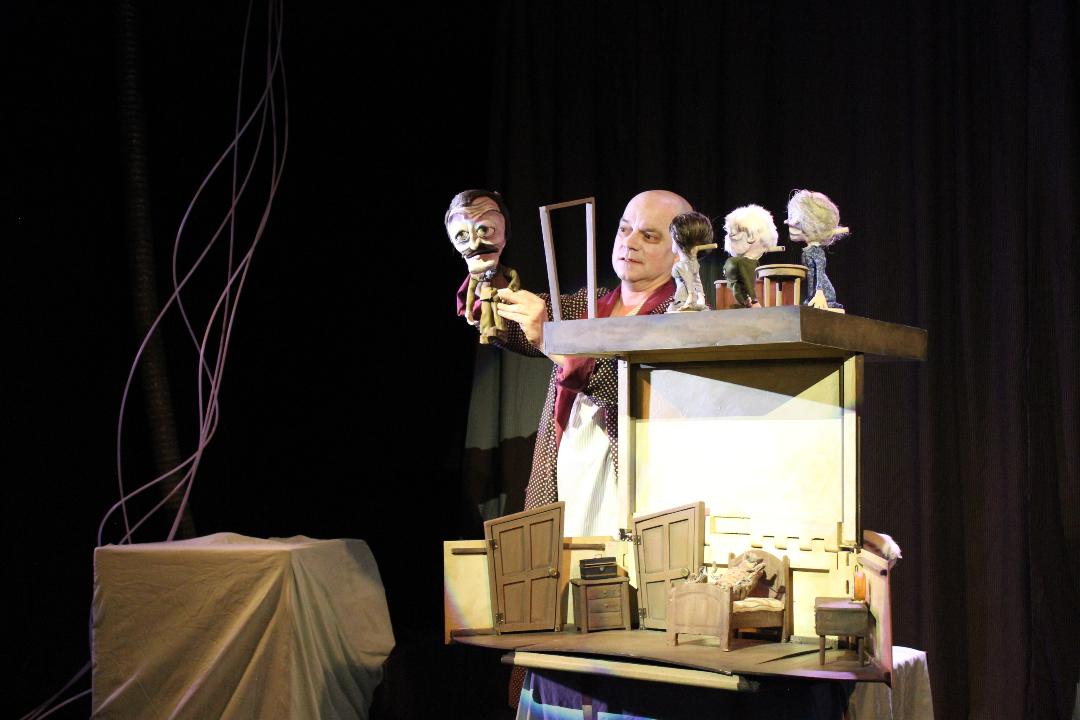
Eric Woolfe and his world (photo: Adrianna Prosser)
Lindsay Anne: Yes. We were chatting over Messenger and over a period of more than an hour, I think we had been improvising the story of a play and making each other laugh.
He disappeared for awhile, and so I thought he’d gone to have dinner or something, or become bored of me. I didn’t know. And he came back, and said “sorry I was looking up the grant deadline dates”. And it was too soon to write the thing we had been improvising but he had already had the adaptation in mind to do some day. He had done a version of it when he was very young, and he wanted to do a professional version of it now.
So Eric pitched it to me because he saw the crossover, the Venn Diagram of That Story, and My Life. And so we did start to flesh out how we could specifically help young people. We were planning to target at the time, high school students, how to build empathy for people who live with chronic illness and disability.
Because there’s so much we have in common. You know, your body changing, and your not understanding why and it impacts everything you do, impacts how people react to you, perhaps there are things that you used to do that you loved to do, and you’re feeling the loss because you shouldn’t really do those things that kids do anymore. There are so many ways we thought we were going to be presenting this almost educational piece to the general public, but also go into schools. And the conversation at first was very much about building empathy. And I don’t think it’s changed much now that it’s become this other thing informed by a global pandemic and the isolation everyone has felt in general and the fear and loss that everyone has had, loss of agency. All of those things are now a bit more universal but we all still need to work on the empathy. So the goal, in a way, has not changed: despite everything that has happened in the last few years.
Barczablog: Can you talk about the project? I’m dying to see i. I don’t know the Lovecraft story. There are two stories (“two weird tales”).
Lindsay Anne: The first half is Metamorphosis and that’s the one on which I worked, and the second half of the night is Mountains of Madness and that’s the Lovecraft. Melanie McNeill designed that one. And I was laughing when we did our tech run, it was the first time I’d see a run of our show and then their show, and realized that what we’re really presenting is the story of a man who lives with chronic illness, comes to terms with it, befriends the physical manifestation of his chronic illness and then goes off on an adventure through the mountains where he ultimately goes completely insane. I love this story. They go together in the most interesting way. They aren’t intended to be understood as the same story, two different plays that we’ve presented at the same time.
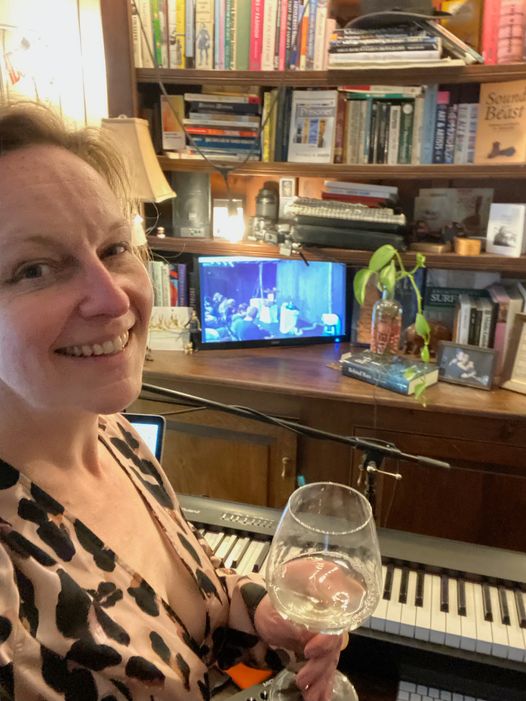
Lindsay Anne Black in Stratford, watching her opening night in Toronto
Barczablog: Could you talk about your influences, teachers?
Lindsay Anne: Yes.
Professor Natalie Rewa
Natalie Rewa was my professor in “Women in Theatre” which I believe I did for two years. She was influential for some of the conversations we had out of the class, even more so than in class, just for shaping how I engaged with all sorts of work I did later, not necessarily design.
Natalie said something that stayed with me and has served me in a lot of different capacities, that “meaning is found where repetition fails”. In the same way that Philip Glass gives you a pattern but changes it slightly or brings it back in an inverted way, that’s how you know where you are: to whatever degree, and to whatever degree that matters.
Natalie put to us that meaning is found where repetition fails. If you are a stage manager or house technician as I was for a time and you’re watching the same show, what is supposed to be the same show night after night: but it isn’t the same show. If you are a person who doesn’t like that kind of repetition the way to avoid the boredom is to look for the things that are different and ask why: and that’s always interesting. And if you are a designer working with pattern line colour texture sometimes the choice that best supports what you are presenting is to create a pattern and then break it. Or use a pattern that tricks your mind into thinking something is larger or smaller than it actually is. That’s the all-encompassing thing that she gave to us.
Craig Walker was a fantastic professor but I also designed for him. Some of the first designs I did were for Theatre Kingston, and plays he directed.
Fred Euringer was one of my playwrighting professors: and he was a huge influence.
Out of school the person who influenced my work the most was Karen P Hay , she had been the head scenic artist here [unconsciously pointing out the window because she’s in Stratford, and I’m not] at the Festival. And she quickly became one of my best friends as well I was hired by the Festival, but she really (indirectly) taught me how to run a department, how to manage a department. The way that shop ran was the ideal. It was the best place I’d ever worked. The Stratford Festival paint-shop was the best place I ever worked. But it was not because of the Festival at large, because if there was something going on in the greater company, stressful upsetting things perhaps, that didn’t enter the room. But: it also wasn’t a secret. There was the respect. If you asked she would explain what was happening. You could have a conversation about it. You were shielded if you needed to be shielded. And you were let in if you wanted to be let in. And that allowed everyone to engage with the work, with the company at the place where they were most comfortable. There was also a lot of frivolity and joking in the room, and the rule was you can be as silly as you want but: your brush has to be moving.
Barczablog: The work has to get done.
Lindsay Anne: The work has to get done. And so the way the tone was set I realized early on, was really important: and I tried to take that forward, wherever I was the head scenic artist. I don’t know that I was always successful. But those were some of the most important lessons.
Barczablog Did you migrate from one area to another, so did you start in props or design and then move…You kind of did everything eventually. But what did you do first?
Lindsay Anne: Well I was a dancer first.
[pause after picking my jaw up off the floor]
Barczablog: Wow, I wouldn’t have guessed that.
Lindsay Anne: No you wouldn’t. My mom was a visual artist, my whole family on that side, visual artists. Photographer, sculptor. I think I wanted to do something in the arts that wasn’t exactly what my family already did: so I wouldn’t be told how to do it, which in retrospect, wasn’t a great choice. That was how I felt at the time.
But I did start in dance, and was doing some paid gigs, was approaching semi-professional: but then had a car accident where I couldn’t walk for four months, and left for school to do theatre, so that was sort of the end of that. I couldn’t continue to dance at the level, the frequency of classes that I would need, to work, in order to stay at the level at which I had been, let alone improve. That was just dropped. That was the first career where I had to just forget about it and go on to do something else.
But then theatre seemed to be the thing I really wanted to do. But I went in thinking I was a dancer – director and it turned out I didn’t want to do either of those things anymore, so I sort of got streamed for design. And I had been making masks since Grade 10. My high school actually sent me to some Theatre Ontario events with Theatre Beyond Words, when I was in drama classes. I had been building masks and working with them. So that was how I got into puppets. And I did a lot of puppets in university. But then I also ended up painting shows, just because in a liberal arts theatre program you have to do some of everything. And then I was hired from school by Thousand Islands Playhouse as head scenic artist there.
Barczablog: So you were working in that area around Kingston / Thousand Islands?
Lindsay Anne: Just after school I was there, but after I moved to Toronto shortly afterwards. I’ve moved a lot but ultimately not very far away. So I guess paint was the first thing that I did professionally at a higher level but I was also doing electrics calls, carpentry calls and whatever else.
[again the laugh]
Barczablog: I was thinking: if you hadn’t had the car accident you might have still been dancing. I wonder if you would have had the same exposure to paints and so forth, if you kept dancing.
Lindsay Anne: There are a lot of what-ifs.
Barczablog: I’m looking at you now wondering: are you able to go for long walks or jog or exercise? [shake of the head] Does that even interest you?
Lindsay Anne: Hiking interests me, but I can’t walk around town. I’m now completely housebound, at this point. It’s not safe anymore to just walk up and down the street, for fun. And it’s not fun. Because I’ll always get nailed by barbecues and laundry perfume, bonfires and people washing their car and whatever else toxicity is going on in the neighbourhood.
Barczablog: There’s a rising awareness of this. We’re not allowed to wear cologne or scents in the theatre anymore. Everybody is becoming a little more sensitive. And I wasn’t joking, this canary in a mine metaphor is very powerful for me.
Lindsay Anne: I think we’re all suffering from the exposure in some way but I’m one of the people who is symptomatic and most other people are not. So I think the damage is probably being done, it’s just that the bodies aren’t reacting in the same way because perhaps the predisposition wasn’t there, and there wasn’t the same level of chronic and acute exposure that I have had. Certainly if anyone in the medical field had asked me “to what are you being exposed” I would have changed courses, I would be doing music, or something else that would do less harm.
It’s a big question because the research isn’t really being done. There isn’t any money in researching MCS because if we’re not able to metabolize pharmaceuticals then there’s nothing to sell to us. So there’s actually more money in the grand scheme in discrediting the existing research. Because that allows people to continue to manufacture and sell the goods that are doing the harm, to I think, everybody.
Barczablog Do you ever go out or do your friends come in?
Lindsay Anne People come here now. I used to have some safe spaces. But all of that is now different because in order to be open at all, they’ve mandated certain other types of cleaning products. Without any safe spaces out in the world I can’t even try a new place because I’ll be trapped. It’s too dangerous.
Barczablog: Do you do a lot of home delivery (to your place)?
Lindsay Anne: Exactly. My friend Mike McClennan, who is the composer for Eric’s show, does a lot of my grocery shopping. We used to go grocery shopping together and he’s the friend who best knows my parameters, in terms of what I do and don’t buy, should and shouldn’t buy and he knows what questions to ask if he’s making a substitution.
Barczablog: I saw you with your keyboard, you did music for a show.
Lindsay Anne: Yes. So my dayjob right now –because it’s something I can do from home—is mostly social media. I have mostly dog-trainers as clients actually. Which is hilarious because I’m obviously a cat person.
The other thing that I do is to assist Donna-Michelle St Bernard, who’s a wonderful playwright. She has been very supportive of my transition into doing music as a sideline. I’d like to be making music that would then be licensed to people who are making mini-documentaries, or even youtube videos, in the way DW uses music in their documentaries. DW is like the German TVO. Creating that kind of music where it can he put in a place and licensed and just be a side thing. Donna has been completely supportive and that includes that she gave me some of her poems to underscore. “Here’s a project, let’s do this thing together.”
Barczablog: There are so many things you’ve done. Dancer, musician, painter, designer…. Puppet maker, prop-maker. And you probably have a few more up you sleeve.
Lindsay Anne: They all inform each other. It’s all part of the same body of work.
Barczablog: You didn’t mention sleep issues. I’m wondering because that’s often relevant for artists.
Lindsay Anne: Yes, that’s when asthma issues tend to build up from the day. I have a rescue inhaler beside my bed. But I sleep now far more than I ever did before. During my theatre career, I was working extremely long hours, going from one theatre 8-5 to another from 9-11 and possibly doing an overnight… it’s the way of scenic art. It’s the way of trying to eke out a living in indie theatre. The joke used to be: “Due to scheduling issues, I will be taking my day off overnight.” I would not be as sick as I am now if I had ever slept, and let my body repair itself as best it could. Now, I’m almost narcoleptic at times. It’s one of the only tools I have.
It’s learned, and almost addicting in a way. But it’s incredibly damaging in the long term. I learned it in high school. I would leave early for the long commute with my step-father, who taught music at the middle school, do a full day of school, walk to the dance studio and teach until 11pm, and then drive home for an hour and begin my homework.
Barczablog That’s probably hard on the body, and the brain.
Lindsay Anne: Absolutely
Barczablog: The moment of your diagnosis: did you feel a sudden blast of validation? Suddenly it all made sense, for the first time. I am guessing your life changed.
Lindsay Anne: Yes and no, because it was also rather a slow burn in the sense that I had to find a lot of the information myself. It took a full year of research before I was able to get the referral from my GP to go to the Environmental Health Clinic at Women’s College Hospital. Then there was a 16-month wait to be seen by the specialist. So all-in, I spent almost three years researching, and by the time I got the official diagnosis it was more of a bureaucratic exercise. That’s an exaggeration to some degree, because obviously they also helped me by doing the expensive bloodwork a GP is not authorised to do, but to some degree it did feel like I was helping them with their research more than they were changing my life.
What I wrote on the giant application to the EHC—while I was still working, and having horrible daily reactions to triggers—was very different from what I reported to them in person in my first appointment. So much time had passed that I had already begun to isolate and remove all the known triggers from my day-to-day life. Interestingly, I actually felt worse for a while. That’s because the baseline shifted. Once I was removing the toxins from my daily life, I was having moments of feeling much better. Unfortunately, by comparison, that can make the reactions feel worse than before.
Barczablog: Total elapsed time since first symptoms? Was it over 10 years? perhaps 20 years? or more? oh wait you said you were 9 and now you’re over 40, so wow…
Lindsay Anne: Yes, I’ve likely had this my whole life.
Barczablog: I have one other question, which is more of an observation. My wife always asks me why i laugh at some things that are painful. Throughout our conversation, you were laughing and guffawing while reporting pains and horrors. Fascinating. You’re so stoic coping with challenges. Are you even aware of your laughter? I feel a kinship & connection even if I think you are so much bolder in what you have faced.
Lindsay Anne: In first-year university I earned the nickname “The Plant” because I am an active listener. Ha ha ha. Yes, I am aware of it, and further to one of your first questions, it is one of the ways in which I am most like my mother.
Barczablog: You mean, they’d put you in the audience for comedies? To laugh at shows that needed support? You were “the plant” like a claque.
Lindsay Anne I also try to find the humour in everything. It’s the only way forward. I was cracking jokes to the nurses while they stitched up a puncture wound in my leg; I don’t know any other way to negotiate the challenges of life. It’s a defence mechanism at times, of course. But it is also just part of my personal lexicon, I suppose. It can’t be helped.
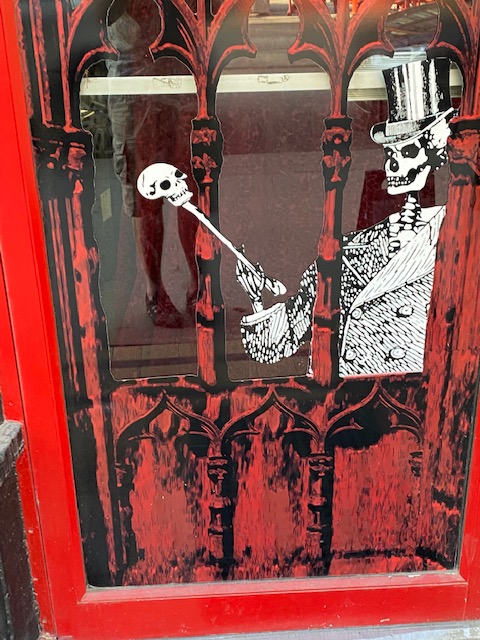
The sign on the door of Red Sandcastle Theatre facing out onto Queen St portends mystery.
Or in other words, I don’t know what it means
Metamorphosis and At the Mountains of Madness. Kafka and Lovecraft.
A huge rabbit safely eluded my car as I drove past Crow’s Theatre, not far from Red Sandcastle. A Hummer brazenly forced its way into my lane almost causing an accident. The hottest May 31st ever was making everyone a bit crazy.
Thank goodness the theatre was so cool inside, for us to hear two weird tales from Eldritch Theatre, to listen to tale-teller Eric Woolfe.
Eric Woolfe in the world of Metamorphosis (photo: Adrianna Prosser)
I’ve been talking to designer Lindsay Anne Black, who collaborated with Eric on Metamorphosis. This version of the story seems very apt for 2022. I understand they were thinking of it before the pandemic, but it got that much deeper when the whole world seemed to understand Gregor Samsa.
Gregor was alienated because he woke up from a disturbed sleep to discover he had turned into a cockroach.
The rest of us were alienated because we woke up to a world beset by coronaviruses and the various strategies to avoid getting sick. Gregor hiding alone in his room was a lot like the rest of us.
As if that weren’t enough, on top of that, Lindsay Anne’s life experience parallels Kafka’s story, as she was isolated by her diagnosis of Multiple Chemical Sensitivities (MCS), leaving her as housebound as Gregor.
So I had to see it.
I worry sometimes that I laugh too much at the theatre, unable to control my impulse to giggle. It’s funny that I seem to have that in common with Lindsay Anne, who seems to be afflicted with the same unquenchable desire to laugh. I had a great time, watching Eric’s deadpan presentation.
I don’t know how he keeps from laughing.
The second part of the program after intermission is in some ways a natural continuation. Where Gregor is a big bug confined to his bedroom, the Lovecraft tale is a lecture that presumes we are all professors listening in to a harrowing story of exploration, grotesque creatures and mystery. The Lovecraft tale is designed by Melanie McNeill.
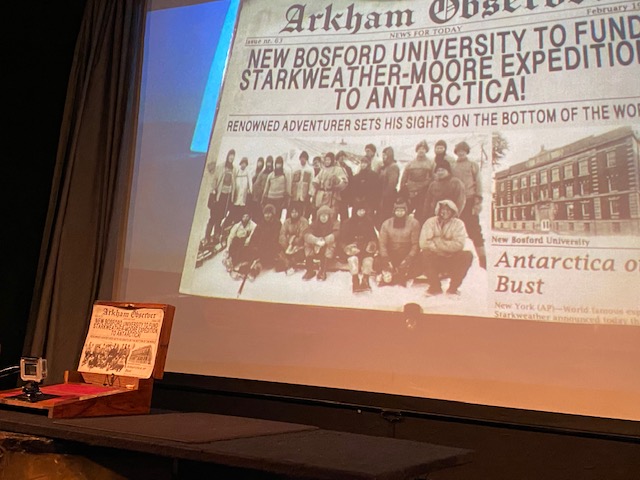
Eric expands the reach of his lecture via the use of video. His tiny creations come leaping out of the screen, especially when they get closer to the camera.
Notice how the small newspaper to the left becomes huge on the screen. Ditto for the puppets.
In both parts of the evening Eric brings creatures to life while telling their stories, a huge solo performance including several feats of magic. I’m reminded of Georges Meliès, the cinematic pioneer of roughly 100 years ago, a brilliant story-teller who was also a famous magician. Eric works magic tricks into his tales as though he were a latter-day Meliès.
There’s a wonderful musical score for the Kafka from Michael McClennan, at times suggestive of the music of central Europe in Kafka’s time (as though he were channeling the neurotic dissonances of a Franz Schreker). The music in the second tale (by another composer, uncredited in the program) is more subdued but subtly underscores our descent into craziness. Director Mairi Babb is master of the revels, getting the most out of our solitary actor. They truly do make magic
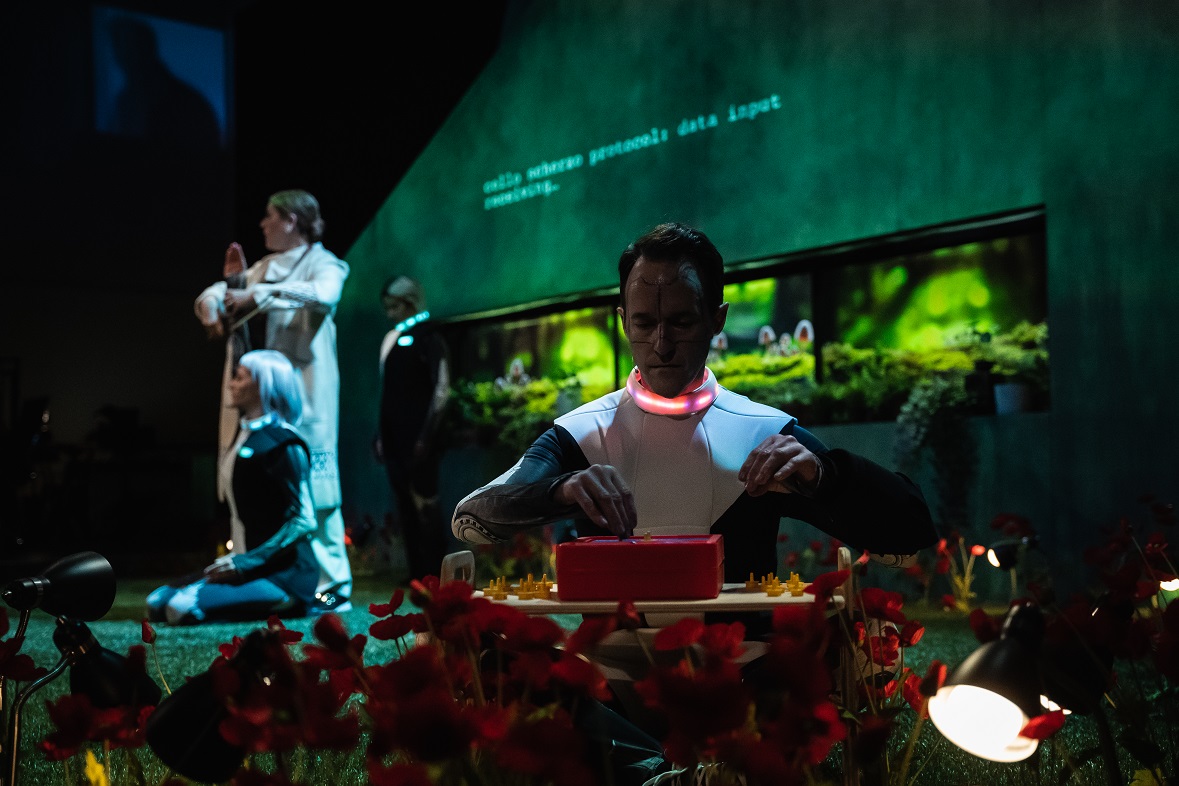
Tapestry Opera and OCAD University have a new site-specific opera on display. I chose the verb carefully given that many think of the medium as something one hears, when its tradition has often been one of spectacle, design, the Deus ex Machina, huge expensive productions..
In many ways RUR A Torrent of Light can be understood as a traditional opera, for its determination to show you something unlike anything you’ve ever seen or heard before. It succeeds admirably.
Background Alex Hetherington Krisztina Szabó and Sofi Gudiño Foreground Scott Belluz (photo: Elana Emer)
The text I read on Tapestry’s website is useful.
Inspired by Karel Čapek’s 1920’s science-fiction play Rossum’s Universal Robots (which introduced the word “robot” to the English language), composer Nicole Lizée’s and writer Nicolas Billon’s R.U.R. A Torrent of Light grapples with one of our generation’s most fascinating questions.
Čapek is a departure point, the “inspiration” rather than the text that has been adapted. But Capek isn’t Shakespeare, where people will notice whether or not the libretto observes the same plot. It doesn’t matter too because the word “robot” has so thoroughly been absorbed into our culture, whether in industry, warfare or science fiction, that people would likely be upset if the robots didn’t look like the robots we’ve come to know and love.
And while a science-fiction opera might sound like an oxymoron, a total contradiction given the usual perception of opera via winged helmets (a cliché that’s relevant to a tiny portion of opera), or possibly the dying divas of traviata or boheme (much closer to the mark), Tapestry have pulled it off.
Let me interrupt this review to mention how star-struck I was in the presence of the composer Nicole Lizée, or “Nicky” to those who get to know her. She’s not just a great Canadian composer, she’s one of the really great composers in the world, period. Adams, Reich, Glass, Part, Lizée. She is their peer, composing with her unique voice.
My chief fear tonight was that something would go wrong, but clearly director Michael Mori did it right. In the winter they were workshopping the piece, with its libretto by Nicholas Billon.
While we had surtitles, which I always find helpful no matter how well a cast enunciates, this was a very intelligible piece. The music was simple and elegant, staying out of the way of the vocal lines. Lizée has a distinctive sound that sometimes resembles pattern music but includes echoes of popular music twisted and distorted as though someone plays with the record: an old analog idea arguably out of step with the high-tech world in this story. But who cares, it’s a beautiful effect and I don’t care what it signifies, I like it.
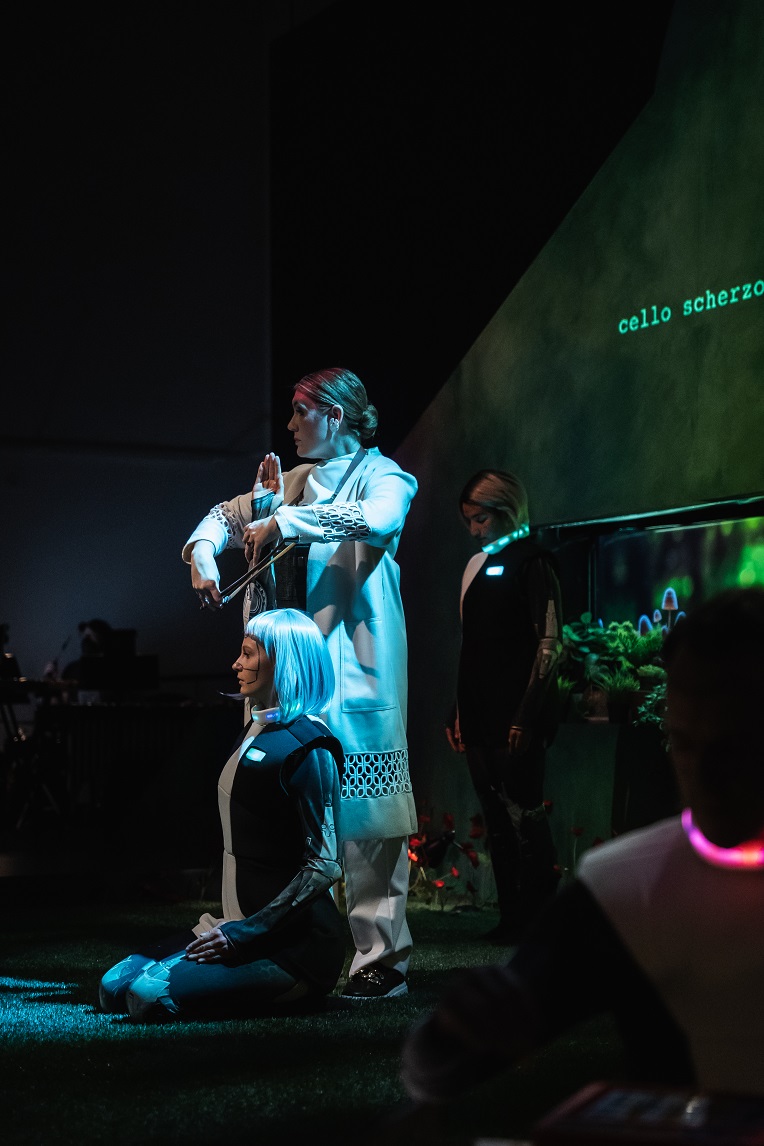
Tonight we saw some things that are truly new, in the use of the voice, and other things adapted from elsewhere, such as the movement vocabulary of robots as we’ve already seen in cinema, especially Scott Belluz as Alex, a robot who is shown in the first part as he is beginning to learn, and then is stripped of most of his intelligence, a bit like the HAL 2000 in the film 2001: A space odyssey. It’s quite wonderfully pathetic.
The dance-movement element underscores much of the action, enhancing and expanding the scope of the work. Lately we’re not accustomed to opera companies in Toronto doing what they often did in the 19th century, broadening the discourse with movement and relying on dance to tell part of the story. One doesn’t know where to look, as there’s so much to take in and notice.
OCADU make a wonderful case for themselves in this space, even if its acoustic is a bit harsh & blatant. I spoke to two people who were overwhelmed by the sound (note: for those of you who like powerful experiences, this is a good thing!). I talked about how I used to stuff paper in my ears at rock concerts. This isn’t quite that loud although there are a couple of moments pushing me to the limit.
Billon and Lizée employ a great deal of repetition. It’s less like Philip Glass and more like Sam Shepherd, Laurie Anderson or perhaps liturgy. Repetition solemnizes a great deal of the action even as we stare at pure actions without human intelligence. There’s a great poignancy in that, and stunning beauty at times. Near the end of the first act we’re watching something resembling a ritual as Alex is accompanied by a cortege of robots, breath-taking in their simplicity.
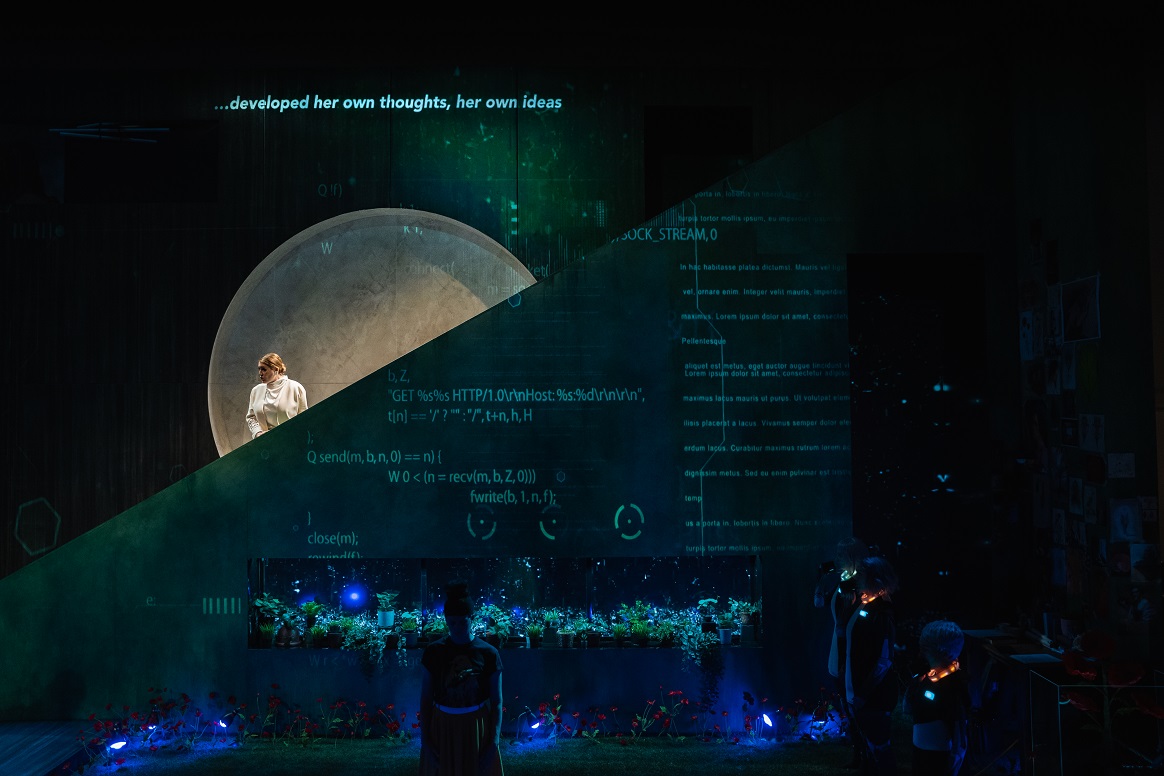
I can’t do the complex visuals justice except to observe how rich the stage picture was. There were times I was reminded of 1950s science fiction, with lights flashing in obvious fakery that one excuses when one’s having a good time. But sometimes it’s cutting edge, CGI that swallows you up.
Alex Hetherington, Krisztina Szabó, and Sofi Gudiño in R.U.R. A Torrent of Light. (Photo: Elana Emer)
There are many beautiful moments, lots of great performances. Kristztina Szabo’s Helena is very powerful, especially in the second act, her voice amplified in the relatively tiny space. Lizée gives her some remarkable lines, a very original approach to vocalism. Keith Klassen, subbing for an ailing Peter Barrett in the role of Dom, sounded good, so believable he rarely seemed to be a substitute. Danielle Buonaiuto as the machine Helena was wonderful vocally, offering some of the same physical quirks we saw from Belluz.
Conductor Gregory Oh leading a chamber orchestra delivered a totally coherent performance of the complex score that included personnel widely separated on either side of the stage, chorus members singing and sometimes playing hand-held instruments. I’ve heard that Lizée’s scores can be very challenging, as she will write out effects that one can sometimes make with a joystick on a keyboard: but she makes the ensemble play the effect. I wonder if that was the case tonight? It’s beautiful music that rarely distracts from the story, although we’re not really in a realistic / naturalistic realm but instead something more towards the symbolist if not expressionist. Perhaps we need a new descriptor for this style.
The coda, which is like an epilogue is especially beautiful, as the dance – movement element finally takes over, as though the id, or the machine-equivalent were answering the ego.
I’ll see it again if I can swing a ticket.
Krisztina Szabó in R.U.R. A Torrent of Light. (Photo: Elana Emer)
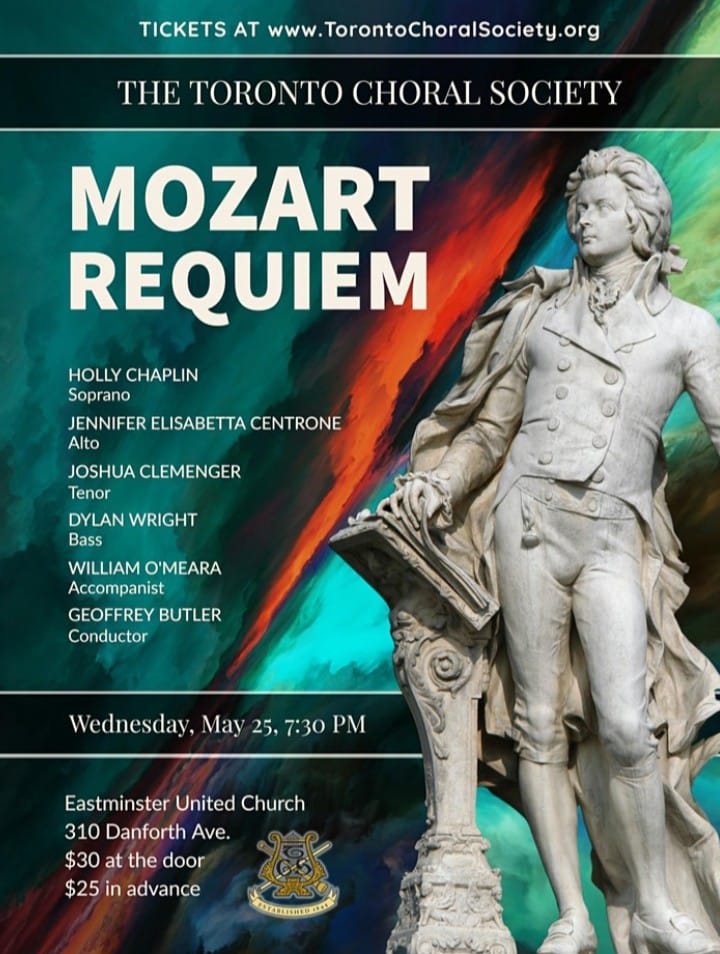
I had my first experience with Toronto Choral Society last night at Eastminster United Church on Danforth.
Holly Chaplin’s page on Facebook (where my review of the weekend opera was shared) told me that she and Joshua Clemenger (also in Mother of Us All) would be singing. I was at least as fascinated by the audience and the experience, as I was by the performance of Mozart’s Requiem.
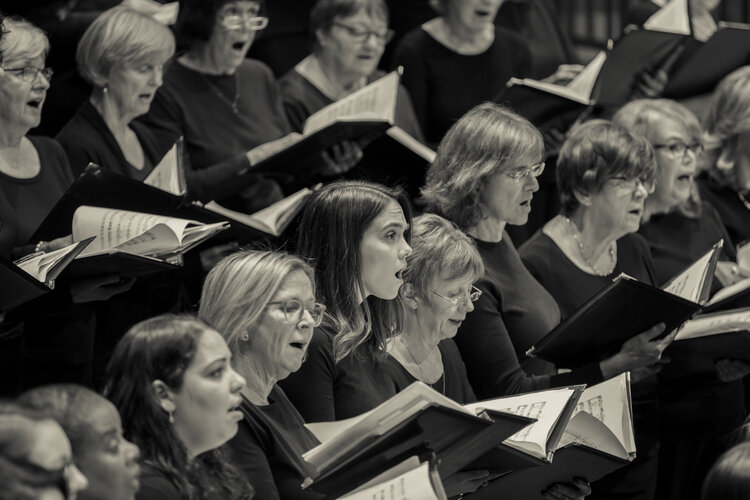
Toronto Choral Society remind me a bit of Toronto City Opera, another organization that combines volunteers with professionals. I think it was their first time back in a live venue (rather than virtual) since the pandemic, so there was a great deal of excitement.
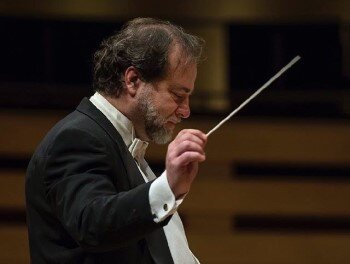
Conductor Geoffrey Butler
Last night we watched Geoffrey Butler conducting accompanist William O’Meara, and soloists Holly Chaplin (soprano), Jennifer Elisabetta Centrone (alto), Joshua Clemenger (tenor) and Dylan Wright (bass): and the choir, with over 90 names listed in the program.
While the soloists bring a professional polish to the program, the choir are not far off, pushed by Butler’s energetic tempi (which I really liked), and O’Meara’s pristine playing.
It’s not what I’m used to.
A woman sitting in front of me video-taped the soloists during their quartets, something we’re usually not permitted to do. I watched her holding up her phone, only slightly distracted from the wonders of the performance. It’s not the first time I’ve wished classical music producers would permit social media, although I understand there are copyright concerns, and maybe singers dislike the sudden presence of a camera, especially if it flashes. But it felt so natural and spontaneous. I think this is truer to the spirit of Mozart’s time than the usual strictness we impose upon modern audiences.
A gent sitting near me had a score. I heard someone ask him about following. Indeed I heard him gently singing along a few times. And why not? I know some people would balk at the idea but it seems so honest. I heard him mention something in conversation –forgive me if I sound like an eaves-dropper – but as I was sitting there eaves-dropping on Mozart and 100 performers I couldn’t help hearing him say something about his voice changing. The lady he spoke to giggled (perhaps thinking of what boys endure in puberty), but it’s no laughing matter. I don’t have the high notes I used to have. A singing voice is just another of our athletic capabilities. We don’t usually run as fast or as far at 75 as we could run at 25, and similar changes come into play for vocal cords and our lung capacities as we age.
There was a chorus member who entered early with a cane indicating possible blindness. When she sang it was without any musical score, apparently from memory, which in some ways was the coolest thing I saw all night. This seems to be a choir that believes in inclusiveness.
I have heard that singing or dancing help longevity. If you google you can find several mentions of the idea, such as this one. I love to sing, sometimes with my 100-year old mom. She is still all there mentally, never more so than when she’s singing an old Hungarian song for me, as I marvel at her memory.







 barczablog