Kafka’s Metamorphosis & Lovecraft’s At the Mountains of Madness
Two Weird Tales is a theatrical double bill adapting two of the 20th century’s most acclaimed novellas of the uncanny: Franz Kafka’s Metamorphosis and HP Lovecraft’s At The Mountains of Madness. Both plays are created and performed by Eldritch Theatre’s artistic director, Eric Woolfe, using a unique blend of puppetry, parlour magic, and storytelling. The novellas were chosen as they exist at the crossroads where high art intersects low trash, expressionism meets pulp excess and allegory smacks head long into nightmarish horror, and yet arrive at this meeting place from opposite directions. Directed by Mairi Babb (Space Opera Zero) and be performed in Eldritch’s newly refurbished home at Red Sandcastle Theatre, in the heart of the Independent Theatre District in Leslieville.
The Metamorphosis is Franz Kafka’s famous tale about a travelling salesman who wakes up one morning to discover he’s transformed into a gigantic insect, and his resulting isolation and decline in the months to follow. This stage version has been created with celebrated designer, Lindsay Anne Black, who retired from theatre in 2014 as a result of her diagnoses of Multiple Chemical Sensitivity causing her to become largely housebound. This project was conceived as way to bring her talents back to the stage, by allowing her to collaborate remotely while in isolation.
HP Lovecraft’s At the Mountains of Madness, chronicles a doomed Antarctic expedition’s discovery of an ancient, alien civilization rife with cosmic horrors, and is considered by many to be that controversial author’s greatest work. The adaptation was created in collaboration with Eldritch Theatre’s resident designer, Melanie McNeill, during the first Covid19 lockdown.
It was excellent, this Canadian premiere of The Mother of Us All, Virgil Thomson’s setting of Gertrude Stein’s poetic libretto. The opera tells us about Susan B Anthony starring Meghan Lindsay in the title role, presented under the auspices of Voicebox—Opera in Concert. The best was saved for last, to conclude their cycle of three operas about three extraordinary women. I may be accused of arrogance to say that, having missed one of the three, but the one I missed is Vanessa, a well-known work.
[I have now heard of a student production at Wilfrid Laurier U in the 1980s, which makes this the Canadian professional premiere. I’m inserting this three days after the fact.]
I went to the performance out of curiosity, not expecting to be blown away by the most fulfilling and entertaining piece I’ve seen in a long time.
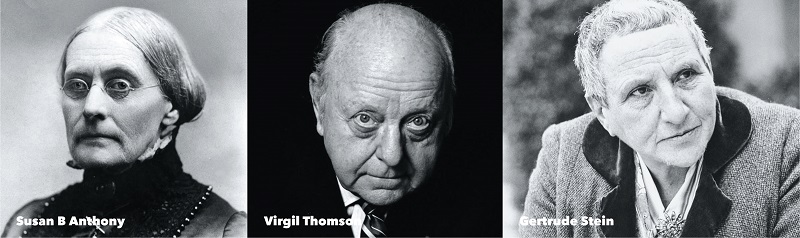
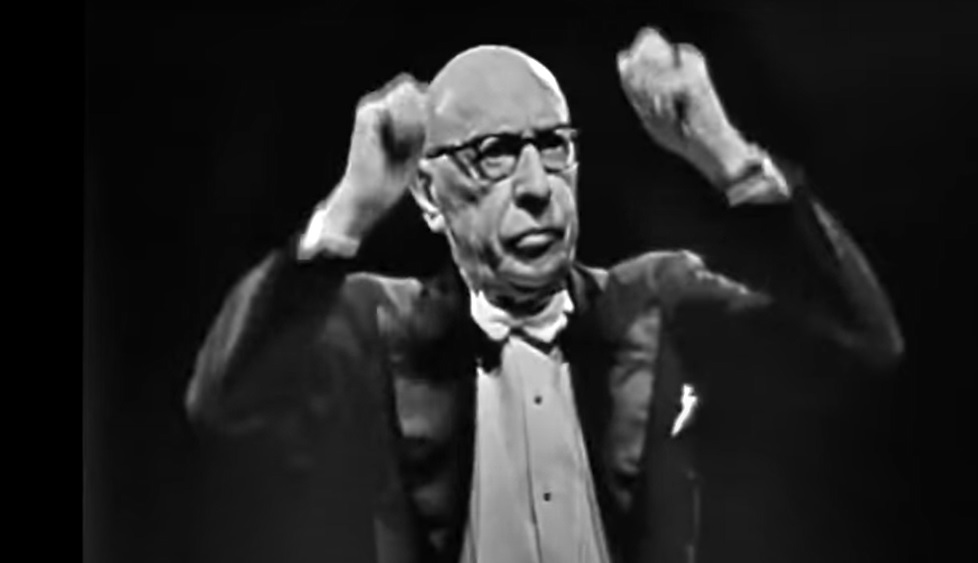
Left to right, the opera’s subject, composer and librettist
I must properly credit Kate Carver, Music Director and Robert Cooper, Chorus Director, who between them pulled together a performance of crispness and clarity, giving us a delicious experience of this unfamiliar score. One couldn’t ask for a better introduction. I was pleased to join with the enthusiastic audience welcoming a brilliant performance of this challenging work.
Let me add that I remember Opera in Concert as it began under Stuart Hamilton, a bunch of singers holding scores with minimal staging. Fast forward to today when we watched the entire cast singing from memory in Guillermo Silva-Marin’s poetic staging. Today they gave us theatre with very little missing, leading me to wonder whether it’s almost time to stop calling them “Opera in Concert”.
I had a bit of insight into why this opera hasn’t yet become part of the standard repertoire, when I overheard a composer dissing the score. I think it’s perhaps because Virgil Thomson resisted the temptation to do what successful composers usually do. Thomson chose not to foreground his music, not to show off his compositional virtuosity. How amazing that Thomson did not merely seek to impress us, and instead did the unexpected by purposefully staying out of the way, permitting the piece to work as a piece of theatre. That’s the way opera is supposed to work right? But tell that to the composer who didn’t like it. Thomson’s music never obstructs the complex libretto: which is far easier said than done. Yes the music is deceptively simple, employing a style reminiscent of America in the old days, between its invocation of hymns, spirituals, marches, or old melodies, totally diatonic. But wow there is so much going on in the text that we’d never penetrate its complexities if the musical score worked in the usual ways, meaning a composer being a typical composer. I will resist the impulse to illustrate in detail partly because I don’t have a score handy and partly because I can’t let my long-winded nerdy side triumph over my desire to make this a readable review.
But let me simply offer a bravo to Virgil for his good job even if it’s largely unappreciated. This is a work that deserves to be heard more often, a piece of theatre and never mind if the conservatory doesn’t appreciate it. Perhaps audiences have caught up to what Stein was attempting.
You may recall that I ranted a bit concerning the song cycle sung by Barbara Hannigan at the Toronto Symphony a few days go because I only caught ¼ of her English words, and I was upset that Roy Thomson Hall don’t yet project titles to help us follow along. Operas, like song cycles, are a multi-media art-form, a hybrid combining music and words. The TSO shouldn’t expect us to bury our heads in the program when we need to also watch the deportment of the performer. Thankfully Voicebox gave us a brilliant sets of titles, some of the best I’ve ever seen. If a cast were to do a straight read-through of Stein’s words, you’d hear something of dizzying playfulness, the libretto often featuring strange contradictions or a mass of repeated phrases that are almost impossible to follow. Our titles today helped us sift through the repetitions while also giving the text a bit more logic than what you hear in the libretto as written.
I think the key to this opera is the way Stein problematizes discourse. How better to show us a suffragette revolutionary in an anti-feminist time, than to undercut her words, with the words of the seemingly crazy people surrounding her. She is presented as a person who seems to know who she is and what she wants, while surrounded by people who are conflicted and confused. Almost everyone else sounds mixed up, tangled in a web of words and contradictions.
Meghan Lindsay
Meghan Lindsay was remarkable as Susan B Anthony, committing a huge role to memory even though she gave only the single performance. I dearly hope she gets to sing it again, not just because of the work she put in but also because of the excellence of her portrayal. For the most part she is strong as steel but at times she wavers, shows vulnerability, the ambivalence brought on by facing and opposing the normal social consensus of her entire society. Lindsay’s voice continues to fascinate me, as I’ve said several times. She can sing just about anything.
Susan B Anthony is surrounded by a huge cast of characters, both fictional and historical. Daniel Webster opposes Anthony, heroically sung by baritone Dion Mazerolle, who gets one of the best solo moments of the opera, making the most of it vocally and dramatically. Evan Korbut brought his lovely sound to the role of Virgil Thomson; yes you read that right, the composer self-reflexively inserts himself (a bit the way Alfred Hitchcock might) into his own creation. Across the stage, his librettist Gertrude Stein also puts in a mannish appearance, played intensely by Daniela Agostino (a very different sort of trouser role against her usual type).
Holly Chaplin played the Angel who haunts Daniel and the rest of us for that matter, solid vocally and quite magical floating about the stage. Joshua Clemenger was a lovely presence both for his comical delivery and his voice –sometimes very operatic, sometimes lighter—playing the part of Jo the Loiterer. I wish I had understood (perhaps from costuming?) that he is a soldier and veteran, perhaps insistent on his passive role as a loiterer because of something like shell-shock or PTSD. Clemenger was the most sympathetic male on the stage, both as an ally of the suffragettes and as a lovable prototype for the modern man.
Madeline Cooper, playing Susan B Anthony’s friend and confidante Anne was very sympathetic, in some respects the key to the whole work. While almost everyone else (other than Susan B and her close friend) seems mad in some respect, either for their inability to say things plainly or in Jo’s quirky ideas, Anne is that one who simply listens, the one to whom Susan comes when she’s upset, her biggest supporter. It’s more than just the quiet excellence of the portrayal elevating the performance, as she’s a bit like Susan’s shrink, the one sane person listening and validating her, reminding me of Horatio (Hamlet) or Benvolio (Romeo & Juliet). Cooper underplayed in the midst of all the cartoonish craziness, becoming in some respects the kind beating heart underlying or mirroring Susan’s strident activism.
Let me conclude by underlining the importance of this production as far as the mandate and purpose of Voicebox-Opera in Concert. Today we saw the Canadian premiere of a work long overdue for presentation. Their stage is a laboratory, helping us explore and understand the possibilities of opera.
And when I look at the online program notes that I have been using (having misplaced my printed program), I didn’t see much mention of Guillermo Silva-Marin who directed this insightful production (although I’m sure he’s credited in the printed program I lost). Both as their curator & programmer (who selected the operas for the season) as the man who choreographed the movements of the huge cast onstage, and directed the interactions of the singers, I must say I’m grateful.
Guillermo Silva-Marin, General Director of Voicebox – Opera in Concert
My mantra is “I’m a lucky guy”. It’s admittedly designed to be a self-fulfilling prophecy, useful because you notice the good things happening to you if you begin with the belief in their likelihood, the presupposition of good fortune and gratitude.
So there we were at the last performance of the Canadian Opera Company spring season this afternoon, including an unexpected cast change for this afternoon’s Magic Flute, that in a way resembled a bit of a preview of another show altogether.
How?
Soprano Caroline Wettergreen who had played the Queen of the Night when I saw the show back on May 11th was not able to sing her arias or the final ensemble in today’s performance. Perhaps she had COVID? They didn’t say.
Perhaps bad luck for Wettergreen could be good luck for the rest of us: as she walked through the role, miming the part in costume, while Teiya Kasahara 笠原貞野 sang the role for us.
And wow did they ever sing the role. The Queen of the Night is like a cameo, the small part that everyone remembers best because her music is so phenomenal, unique and challenging.
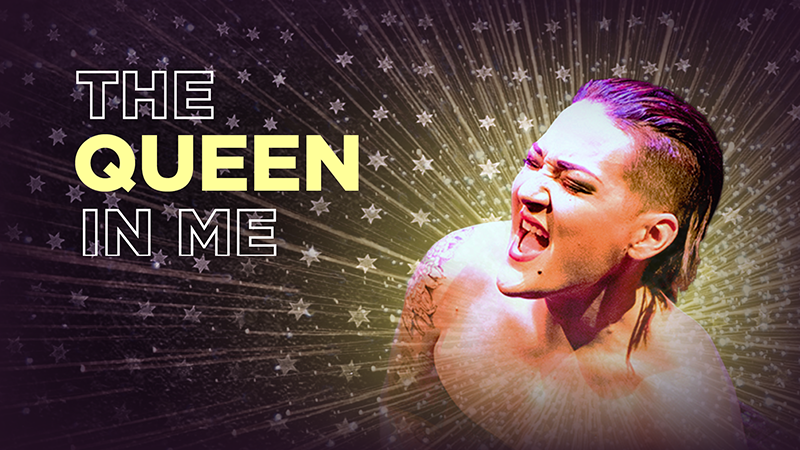
Flashback to October 2019 when Amplified Opera debuted, including an earlier incarnation of a work created by Teiya, namely The Queen in Me. When I wrote about it on that occasion, I observed that…
“the Queen is that badass character in The Magic Flute, the Queen of the Night, soldiering against one of the most misogynistic storylines going. Sometimes the Queen sings what’s written and sometimes she bursts out of the strait-jacket of the character, both in the mechanical sense of her costume and the subtler implications of the role written for her. She is a perfect mechanism for the exploration of the mad world of opera, the many females co-opted into rituals celebrating female subjugation: except the Queen won’t do it anymore. She seems to be on a quest, exploring different roles as ways to articulate the feminist position, sometimes working within a role, sometimes fighting or subverting it. I can recall previous satirical pieces in different decades that were knowing nods to the audience, while more or less keeping the artform & its creators (this time Mozart & Schikaneder) on their pedestals. This time it’s more in keeping with the mission of Amplified Opera, as a site for activism and shit-disturbing, largely in fun yet with an underlying seriousness to its mission. They appear to be fearless.”
For 2022, with Amplified Opera now in residency with the COC as “Disruptor-in-Residence”, we anticipate the next version of The Queen in Me, coming June 2nd , 3rd and 4th to the Canadian Opera Company Theatre, co-produced by Amplified Opera, Nightwood Theatre and Theatre Gargantua, co-directed by Andrea Donaldson and Aria Umezawa.
I find that epithet “disruptor-in-residence” so intriguing. I think it’s meant to suggest that these disruptors will up-end our assumptions, change how we see and feel, to enable us to experience the old works in new ways.
Teiya’s Queen in Me goes far beyond what Mozart wrote, a critique framed around this edgy and disruptive figure.
Of course the Queen of the Night was already a disruptor even before Teiya’s exploration of subtexts enlarged into a whole new piece of drama, a prototype and a role model.
But let me just say that today it was thrilling to hear that voice again, singing the two arias plus the ensemble at the end of the opera.
If you want to read more and/or to obtain tickets click here.
It was a splendid formula. Far be it from me to propose something as reductive as math in the headline, only that the concert is titled “Gimeno + Hannigan”, which is certainly a quick overview. Between them Gustavo Gimeno and Barbara Hannigan gave the audience a lot to cheer for.
At this point in time when we’re rediscovering live music everything is new. We’re still in the early days of Gimeno’s tenure as the new Music Director of the Toronto Symphony. How magical to hear two world premieres. How marvelous when the oldest music on the program was from the 20th Century:
Julia Mermelstein: in moments, into bloom: Celebration Prelude (world premiere #1) Igor Stravinsky: Scherzo fantastique, Op. 3 Zosha Di Castri / test by Tash Aw: In the Half-light (world premiere #2) Igor Stravinsky: The Firebird (original 1910 complete ballet)
While the hall appeared to be less than half full, they more than made up for it in response to the performances, including the nerd behind me explaining every piece to his companion. While it’s frustrating when talk interrupts music, I had to like their enthusiasm for the TSO, for Stravinsky and for Hannigan.
The three composers gave us three contrasting styles of music.
The song cycle sung by Hannigan was a bit frustrating for me, although you might well say it’s my own fault. I read the poetry over twice, possibly three times, then sat listening to the cycle. The first sung words I was able to discern came in a pianissimo passage halfway through the first song, when Hannigan sings “you give me food. I offer a dress”. At this moment the orchestra allowed her to sing unencumbered. Should her words be intelligible? I’m not sure. I encounter rock music without being able to understand lyrics, forced to look them up online. When I listened to Mahler’s Song of the Earth for the first few times I always followed along with the text. So perhaps I was being unreasonable in wanting to hear it without the printed text in front of me. Even so, I think it’s long overdue for Roy Thomson Hall to project text onto readable surfaces, such as the concrete above the orchestra (as I remarked in a review I wrote when Hannigan sang here in 2019) I must emphasize that it’s a stunning piece of music whether one hears every word clearly or not. I knew from reading the text what the cycle was about (“subjects of displacement, belonging and home“), but still, only picked up roughly ¼ of the words. And maybe the orchestra was playing too loudly; or am I invoking a quaint idea, that the soloist should be heard clearly? I would rather watch the performers, rather than having to bury my head in a program, especially when I don’t know beforehand whether the house-lights will be on or not; I think they were on….but by then it was too late, as I was using the virtual program I’d received on my iPhone, which they tell us to shut off at the start of the concert. A few times Hannigan is soaring to the top of her range, sometimes making sounds that are powerful, sometimes vulnerable to the point of seeming broken, sometimes softly lyrical. She’s a brilliant performer, a fabulous actor, so no wonder I chose to watch her. It’s 20 minutes of magic, both from the soloist and the orchestra that sometimes growls brass clusters, slides around between pitches on glissandi, always keeping our interest. For me the affect spoke more to alienation and dislocation than a joyful adventure. I wish I could hear it again.
Mermelstein’s brief fanfare in celebration of the Toronto Symphony’s centennial was a lovely three minutes of shifting colours, as though suggesting the growth of Canadian music created for the TSO. I think the metaphor worked, as the music did seem completely organic, even alive in what we heard.
The other composer we encountered was once a touchstone for “new music” even if the two pieces on tonight’s program were the most conventional of his works. One might even be understood as a popular classic, at least as far as the audience’s recognition of some of its themes. I speak of the Firebird, presented in a slightly different version than usual, but still offering the audience huge thrills. The ovation was genuine.
Gimeno has shown me a tendency to take the TSO on thrill-rides, tonight being no exception. Soloists in every section had great opportunities to show us their stuff, but often in the context of faster than usual tempi. It’s wonderful to see the rapport between them, the trust they place in his hands and the response they make to his baton.
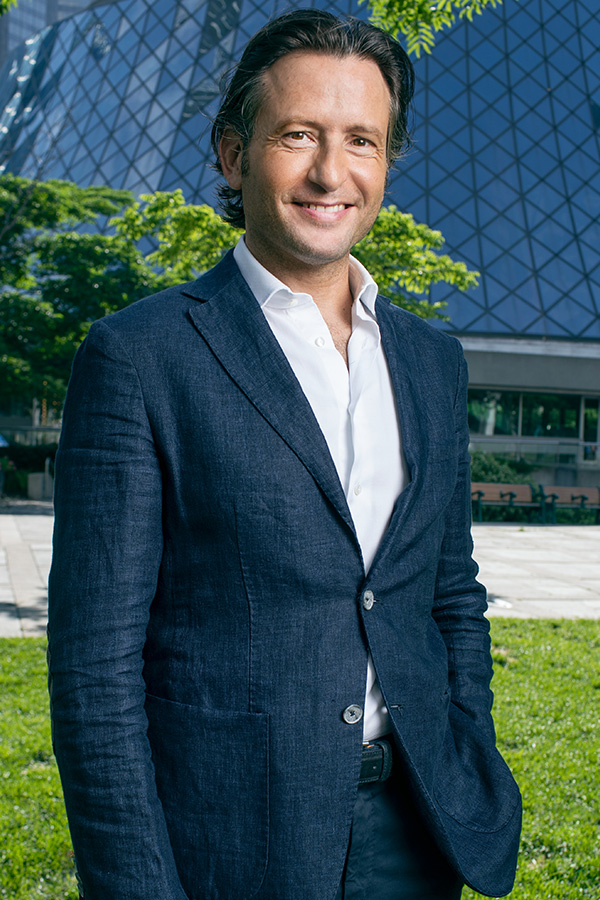
TSO Music Director Gustavo Gimeno
You can catch this concert on the night of Saturday May 21st when the TSO repeat this program at Roy Thomson Hall.
Erika and I went to see Conan and the Stone of Kelior tonight. It’s the last night of the run of the pasticcio opera from Kyle McDonald at Alumnae Theatre. There’s a final matinee Sunday that I would have attended except we’re having a couple of friends over, so this was the best choice.
Kyle McDonald
I knew Conan was going to be a difficult and complex show, so I wanted to wait until the end of the run, to give the company and the singers a chance to figure it all out.
It’s the most fun I’ve had at an opera in a long time. Why?
I say “campy” employing Susan Sontag’s use of the word. Kyle’s take on Conan –the hero you may know from Arnold Schwarzenegger’s films or from the Weird Tales created in the 1930s by Robert E Howard—may involve fun but it’s not disrespectful. They’re making fun with Conan, not making fun of Conan, a key distinction that Sontag explains. It’s excessive, over the top, not to be mistaken for realistic. While we see a huge body count, it’s never scary because it’s unbelievable, verging on silly in its artificiality.
Kyle not only adapted Conan for the stage, he used many of the most popular operatic melodies to tell the story. We heard the Soldier’s Chorus from Faust for a bunch of soldiers. We heard the duet from Pearlfishers at a moment when two people (who had been fishing) were singing the tune about friendship unto death, as we watched Conan and another swordsman fighting unto the death. We heard the anvil chorus, while soldiers beat swords against their shields. We heard the Papageno-Papagena duet, but reframed not to sing of marriage and little children but fighting and killing, sung just as sweetly as Mozart could ask: and the death was that we died laughing. We got the scene when Rigoletto is acting nonchalant while casing the joint looking for his daughter, only this time it’s someone whose bum hurts from being spanked by Conan. When the courtiers do their fake “ha-ha-ha” I couldn’t resist hahaha-ing along (although Erika gave me a look). Seriously, where else can you do something like that? We also heard re-purposed parts of the Messiah, the Mozart Requiem, Pictures at an Exhibition, a Rachmaninoff Prelude all used to vivid effect.
At times it seemed like a cast of hundreds, possibly because people kept getting killed. I noticed that Brittany Stewart for example played three different roles, each one getting brutally killed. Singing aside, she died really well. My gosh there was a lot of stage-fighting, sometimes in slow motion, sometimes really quick. I don’t think Brittany was the only one to have every one of their multiple characters die. The body-count was marvelous, not at all bloody, and because it was camp, not troubling in the slightest.
While I don’t pretend that I followed all the twists and turns of the story –including an additional twist brought on by a cast-member missing the show due to an illness—the great thing is, I don’t care. I felt a bit like one of the people I might have dragged with me to one of Wagner’s Ring cycle operas, trying to sort through the characters and motivations: but seduced by the music. I was too busy having fun to really worry about the details of the plot.
Kyle was totally deadpan, never tipping us off that it was in any way comical. Everyone was in deadly earnest. For example, in the first part we were told that we could take pictures or short videos, to share to social media, with the winner to receive a poster from the show autographed by the cast. Cute!
I nerded out a bit talking to Erika in the car about Richard Wagner’s critique in Opera and Drama (and she indulged me or at least pretended to do so…), when he said that while the original intention in the early days in Florence had been to employ music in making a dramatic form, they got it all backwards, instead using drama to make a musical form. Wagner may have redressed the balance somewhat, but he was still making music mostly. The point in mentioning this, is that Kyle’s direct approach totally swept us away, helping us forget reality for a couple of hours of romance and heroic story-telling.
I felt we were having fun watching a spectacle including belly dancing, puppets, sexy moments, scary moments, suspense and intrigue, all while having fun with familiar music. Erika commented that this was the most unpretentious thing she’s ever seen that’s associated with opera. But you get the idea. Kyle took the best elements of the Conan stories –the romance, the violence, the sexy clothes, the movement—and packaged then into something operatic. It’s not like anything you’d see from any other opera company in Toronto.
We also heard some good singing. Corey Arnold sang a version of “nessun dorma” that impressed me very much, even if I had the temerity to laugh at the end: when Corey collapsed in a heap due to some magical shenanigans.
A little later Corey pulled off something amazing. In the film Men in Black, do you recall the way Vince D’onofrio becomes the creepy bug, walking around as though he’s an alien with a dead human body loosely hanging on his bug body, as his dressing gown? Corey pulled off something like that, when –after dropping dead—a magician has a spirit walk into his body, bringing him back to a staggering semi-life. It was creepy and brilliant.
Kyle did so much yet I may not be giving full credit. Not only did he write the words, adapting all these bits of opera into a coherent whole, not only did he get his company Mightier Productions to produce this, the latest of his projects, but Kyle was also rolling around the stage as Conan, fighting, wrestling, killing, romancing, and also singing.
And directing..(!).
Although Robert de Vrij wasn’t present (due to the aforementioned illness) his performance was at least partially captured somehow. A miracle of technology? I suppose that’s the other thing to remark upon, that Diana DiMauro conducted the singers and a virtual orchestra, presumably synthed or sequenced, synchronizing the pseudo-orchestral sounds with the singers onstage. The only credit I saw in the program that might explain this is also attached to Kyle, where it says “Written, Arranged and Directed by.” I’ll ask him next time I see him.
I recall seeing a furor online a few years back when there was talk of plans to do a Wagner opera (perhaps a whole Ring cycle? I can’t recall) with synth instead of orchestra. Of course this is contentious depending on whose side you’re on. If you’re a musician, especially if you’re in the union, you take offense at the idea of being replaced. But opera is hugely expensive, and this is a way to save money and that means getting shows produced. People may not realize that the “orchestra” they hear in shows such as Les Miserables on Broadway or in Toronto was filled out by synthesizer keyboards. This is not so much the way of the future as long-established reality that’s decades old. But it’s still relatively new in the operatic world.
If you liked Kyle’s creation there’s a cast album. I was thinking of it but we left too quickly. We might still get it and if I do I may write about it some more.
And there’s one Conan performance left Sunday at 4:00 pm at Alumnae Theatre (click here for info).
This is the third time in roughly a decade for the Canadian Opera Company to offer the Diane Paulus Magic Flute, with its meta-theatrical approach employing flamboyant visuals, from set and costume designer Myung Hee Cho. I hope I can be excused for using a photo with the 2017 cast. But I was trying to give an impression of the staging which isn’t tied to the casting.
Lauren Segal, Emily D’Angelo, Aviva Fortunata & Andrew Haji in COC’s 2017 revival of The Magic Flute (photo Michael Cooper)
As with their Traviata I think we forgive the company for opting to minimize risks in such a difficult time, planning in the shadow of the pandemic.
As with their Traviata the orchestra and chorus were the stars, the best thing in the show, particularly given the eye-candy. Conductor Patrick Lange led a wonderfully energetic account. I was especially taken by the flute solo in the last act initiation ritual, a wonderfully creative elaboration of what Mozart wrote and a bold departure from what we usually hear; was that Douglas Stewart, Principal flute? Bravo!
There were a few soloists who were especially impressive. I’m delighted to hear the voice of Gordon Bintner as Papageno, looking forward to hearing him again (when I use my subscription ticket later in the run). The voice is the most mellifluous sound we hear in any opera this spring from the COC. Every note is beautiful, the choices in his phrasing sometimes remarkable. He stands out in the cast particularly because his singing seems effortless, joyful, fun.
Gordon Bintner (photo: Brent Calis)
Midori Marsh was a good match for Bintner as Papagena, with a voice every bit as precise and tuneful in her small role, having impressed in her work in the virtual Mozart Requiem a few months ago.
Full disclosure: The Magic Flute was the first opera I really came to know from the inside out. My step-father bought the score when I was eight. My brother sang a Papageno at the COC in the 1970s. And I’ve been listening to or playing through this music all my life. Speaking as someone who has always thought of Magic Flute as one of my favorite operas, I’m happy with the COC’s production, which won’t disappoint.
David Leigh gave us a wonderfully full-bodied Sarastro. Caroline Wettergreen as the Queen of the Night managed to be impressive in this tiny role, always the one people remember.
It was great to see Russell Braun as the Speaker, a role to which he brought his usual gravitas. Michael Colvin reprised his brilliantly wacky take on Monostatos. Anna-Sophie Neher was a compelling Pamina, dramatically and vocally.
As Traviata is sold out perhaps Flute will also sell out? tonight was pretty full, the audience wonderfully enthusiastic, loving the novelty of a live performance. There are four shows left.
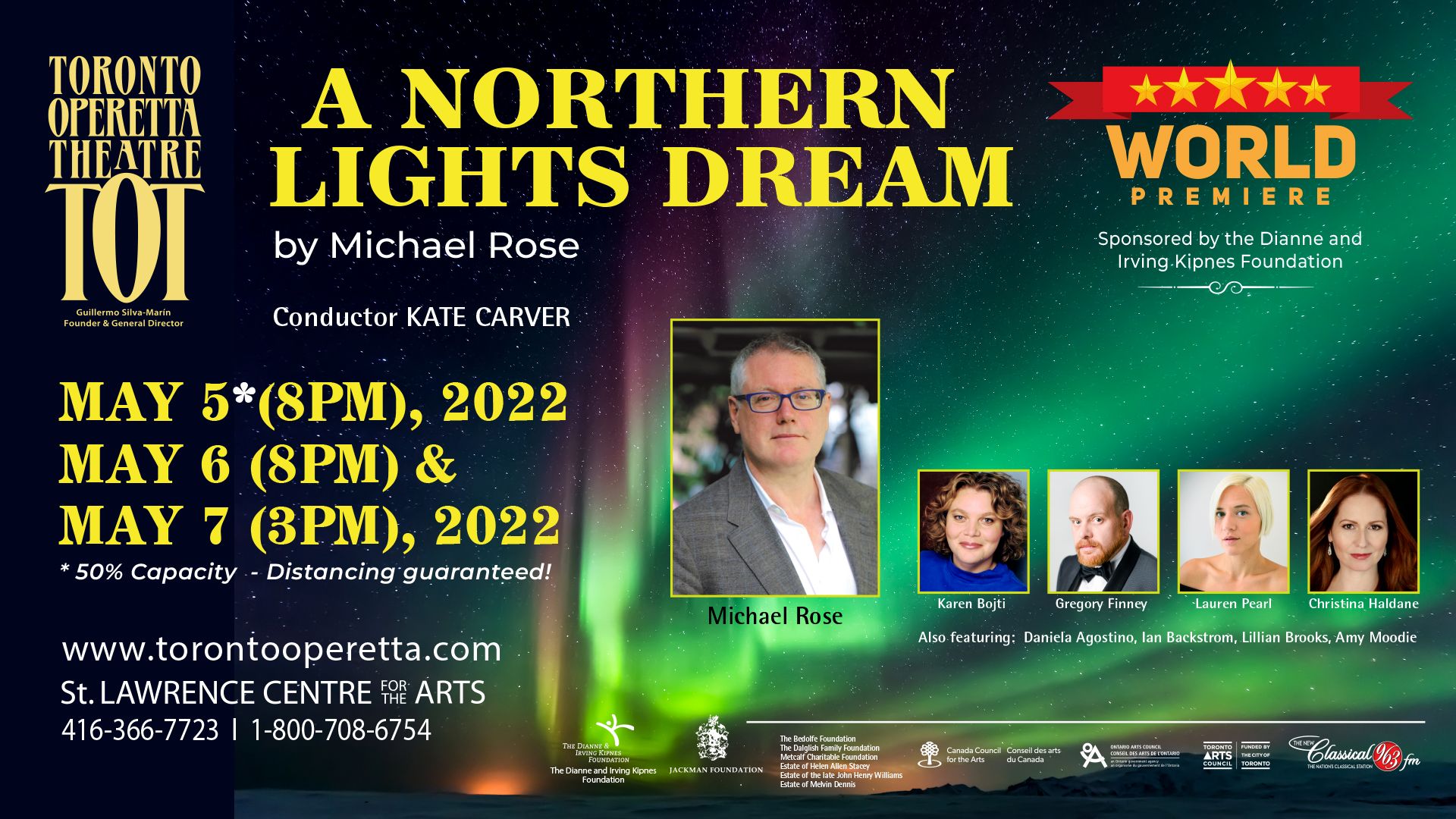
Greetings Barczablog reader, Leslie Barcza was unable to attend the world premiere of Michael Rose’s, A Northern Lights Dream so I asked him for special permission to be a contributor in his absence.
Karen Bojti Cast member, A Northern Lights Dream
“I have had a most rare vision. I have had a dream, past the wit of man to say what dream it was.” ― William Shakespeare, A Midsummer Night’s Dream
Curating Can Con at the Toronto Operetta Theatre
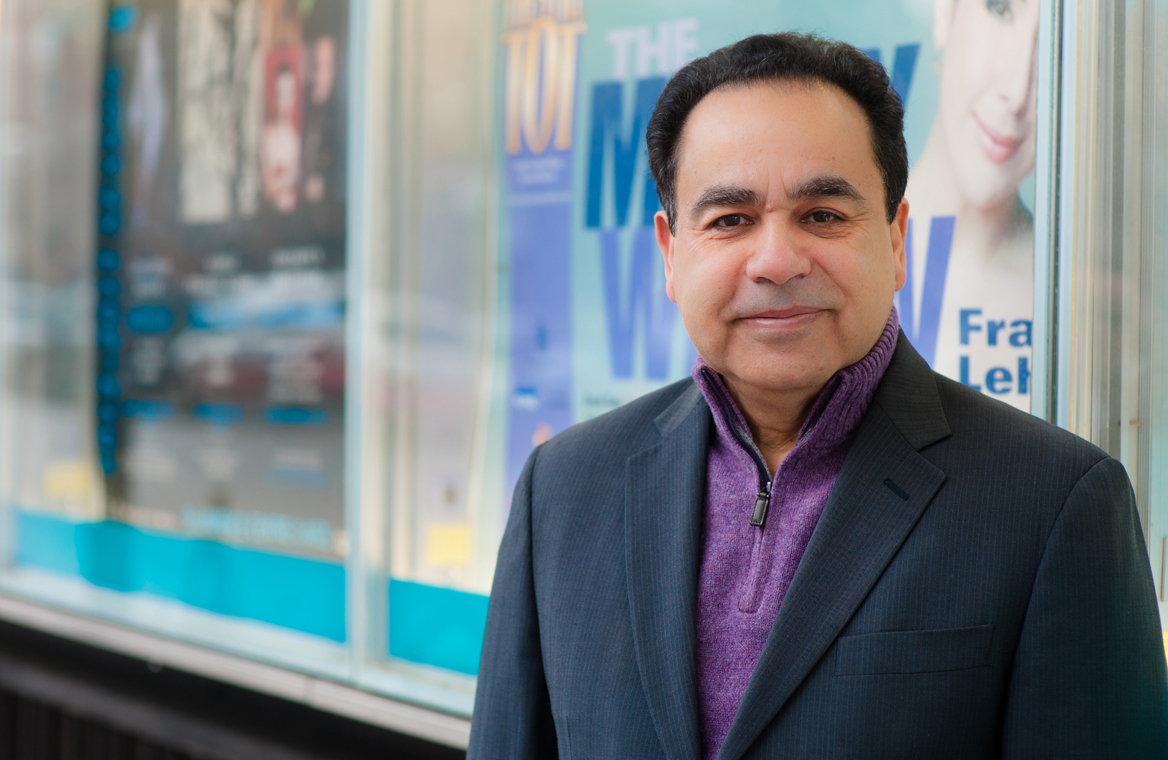
Toronto Operetta Theatre is best known for what you might guess. Have a lovely dinner and then come to the theatre enjoy an evening of great music, beautiful singing and stir in a merry dance or two with a bit of jiggle on the side. Artistic director Guillermo Silva-Marin (Bill) has brought Toronto a bevy of some of Canada’s best performers, musicians and conductors for our pleasure.
Guillermo Silva-Marin, General Director of SOLT, TOT and Voicebox-OIC
With years of directing Operetta under his belt he knows a thing or two about the nuts and bolts of operetta and musical theatre. Bill has also curated two Canadian works that are (for now) lesser known, but every bit as enjoyable. I have been lucky enough to briefly rub shoulders with the creators of 2008’s Earnest, The Importance of being. This month, I had the great pleasure of performing in Michael Rose’s, A Northern Lights Dream (ANLD). Both of these works were curated, slowly with few resources and no incentives other than the desire to create great theatre.
Michael Rose
ANLD was developed in stages. Michael Rose wrote it as a one act musical play for students at the Summer Opera Lyric Theatre. Rumour has it that Bill made a suggestion in passing as they were planning the 2017 season and Michael handed in an ensemble piece full of wit, unrequited love and GORGEOUS singing opportunities. I was lucky to sit in the audience that year to hear Michael’s beautiful songs. “Is there Room in your Closet?” will knock your socks off. It is written with such compassion for a women who will never receive the kind of love she hopes for from her husband. I recall him explaining to me that he wanted to write a musical theatre show for actors who could really sing. As a performer with two left feet who loves musical theatre, I wanted in from the start.
There’s nothing like having first contact with the composer. Our now expanded two act production was delayed twice and another production was canceled 3 times due to COVID. We squeaked through. I therefore had access to the score for a couple of years. I also had the privilege of being able to bend Mr. Rose’s ear from time to time as he developed my character of Mrs. Duke. “She’s not like other contralto roles.” Michael would explain. “She desperately wants to find friendship”. The first (one act) iteration of ANLD gave Mrs. Duke a wonderful comic song which is full of humour and fabulous ensemble singing that any fun-loving ham, like me, would kill to perform. The second act gives us another side of Mrs. D as she attempts to come to terms with the consequences of her actions.
“In the scale of things, love’s a little thing. But your love is all the world to me.” is the lyric sung elegantly by Lauren Pearl in the finale of ANLD this past May of 2022. She would not know it, but we fellow cast members waited nightly in the wings to hear those words, those notes and that soul stirring light touch of Lauren’s exquisite singing. For a guy who insists that he does not like people much, composer Michael Rose has created a bevy of great tunes and characters who personify the all too human need to be seen, understood and loved. Each in their own way they are flawed, loveable and held captive by unrequited love-in-idleness.
Set in Shakespeare, Ontario, Michael Rose pays homage to A Midsummernight’s Dream replacing Athenians with home grown salt of the earth local folk. The top of Arden Hill doubles as the fabled woodland and the realm of the fairies who await the arrival of their goddess, the Aurora Borealis. Her servant, Robin (Puck) is dispensed with the task of playing cupid with the humans. Try as he might, Robin’s matchmaking skills don’t quite hit the mark.
Mrs. Duke (me) is an aggravating contralto that jams a wedge into the story by refusing to pay for a load of tacky bridesmaids dresses (ordered by her) because her stepdaughter has called off her wedding. Mrs. Duke stiffs the local dress shop, sending its designer Helen (Christina Haldane) and dress maker Taylor (TOT fave Greg Finney) to the brink of ruin.
Tenor and Donut Donkey seller Nick (Ian Backstrom) pines unseen for his unrequited love. Having made a deal with Robin (Lauren Pearl) to cast a love spell on her university crush, soprano Christina can’t quite figure out why her husband does not return her affections. Rounding out the cast are the three fairies (Lilian Brooks, Daniela Agostino & Amy Moodie) who have presided unseen over humans for hundreds of years. They announce the coming of Aurora through song, sample bad coffee and enjoy Robin’s anguish over his unconsummated desire for Aurora.
Lauren Pearl (as Robin) and Christina Raphaëlle Haldane (as Helen) Photographer: Katherine Barcsay
Our audiences for the three performances were small but mighty. My cast members and I took this in stride. We were surprised and grateful to make it to the finish line. After 4 weeks of rehearsals, singing with masks and dipping ourselves in hand sanitizer, none of us felt confident that we’d make it to the stage. Nevertheless we persevered. One of our cast members did in fact contract COVID and missed almost half of the rehearsal period. She zoomed in from her sick bed and we carried on. While restaurants and other venues in Toronto seem to be “back in business” the theatre crowd may be more circumspect about re-entering public events. Many of TOT’s biggest supporters are seniors and quite wisely may be waiting a bit longer to come to the theatre.
Singers will be clamoring to sing these roles once the word gets out. While audiences were small, their appreciation was palpable. Small crowds can be shy to laugh or react (especially Canadian audiences) but not this crew. What a pleasure it was to ride the waves of recognition and connections from the crowd. We all worked hard to make those connections but the hard work started years before any of us hit the rehearsal hall.
I have never had the experience of sitting in a room to watch a conductor and a composer work through a score. There were cuts made for time saving reasons as TOT could not risk paying overtime fees at the St. Laurence centre. Our conductor, accompanist and coach Kate Carver led the rehearsal with a deep commitment to Michael Rose’s score. Every tempo was honoured and Kate cross referenced her piano score with the instrumental score very carefully to be sure that everything was inline. Admiringly she’d say, “This is such an incredible score, who’d think to use a recorder here? Michael, that’s who.”
Kate has a gentle touch which was needed. When you are working on a new score, you can’t cheat and listen to other singers. You have to make it your own which can be daunting but it’s also an opportunity. It’s not easy to put a bunch of singers at ease. On the rare occasion where she might have a disagreement with the composer (in front of the cast) she’d beam and casually call over her shoulder, “Mommy and daddy are fighting.” We all had too much on our plates to let egos get in the way.
As we walked off the stage from our final performance, it dawned on me that I had been a quiet witness seeing some of the origins of this piece that began to germinate 15 years ago. Michael Rose despite what he said about not liking people is a generous and mild mannered person long accustomed to working with singers. With all of his skills and talent, first and foremost, he’s a fan.
His arrival during the rehearsal period may have caused worries for those who do not know him. If that was the case those worries evaporated immediately when we saw his face. He has a way about him that makes you feel he assumes competence from singers. I met Michael Rose somewhere around 2005.
New to Toronto at that time, Michael had been hired as the musical director for Summer Opera Lyrics Theatre’s (SOLT) production of Falstaff. I freely admit to being a fish out of water in the singing world but for a lark, I thought that I would try my hand at opera.
Our ANLD director Bill Silva is a clever gentleman. He runs three separate companies through the same facility. Each company is designed to support singers at various stages of their development. I doubt if there are any impresarios like Bill. A retired singer, Bill was handpicked by the late Stewart Hamilton to take over Opera in Concert (OIC) which preforms rare gems that do not as a rule make it to the big stages. SOLT, OIC and TOT have cultivated and given a base to many of Ontario’s best singers. Our province is full of excellent singers who emerge from music programs with few options as to the next step for career development. Some lucky/gifted people may find themselves selected for apprentice programs with North American opera companies. Some go straight into teaching or other careers.
I call myself a fish out of water because I arrived at SOLT as a theatre program grad and comedic actor who studied clown and improvisation. I had no real understanding of the discipline and the amount of training it took to become a “legit” singer. By this I mean what some call a classically trained singer. I started singing lessons in my mid-thirties and found myself with a summer off sitting in a room with a bevy of some very high-strung singers. Like race horses, they were ready to sprint out of the gate or place a well-aimed kick to the side of your head. They felt the pressure and now with a little distance from those days, I understand why. I was nervous, visibly older, plus sized and thinking that I had made a huge mistake in coming. I sat in a chair beside a young soprano who with a sidelong glance got up and moved as far away from me as she could. I looked to my left and there was this handsome man with deep blue eyes you could swim in smiling at me. We chatted and I soon discovered that he would be my music director and friend of many years.
Greg Finney
One of my co-stars in Falstaff ended up becoming my dance partner in ANLD. Greg Finney recently admitted to me that this was his first opera too. I never would have guessed. Some of us develop more slowly than others. Not Greg. He quickly grew through the ranks of Bill Silva’s repertory system to become a huge fan favourite at TOT.
Bill runs a tight ship and he is the captain. He needs to be as he has a lot of singers to look after. He is also responsible for paying the light bill and getting audiences to come to performances. He is serious and dedicated to running each operation smoothly. If you hope to sing on the larger stages, you will have to show him you will pursue excellence and simultaneously treat your colleagues with respect.
Coming from a theatre background I related best to Bill’s study of Stanislavsky. I would watch singers adjust to a new set of demands past making the most beautiful ahhhh sound on a B flat. He talked about the given circumstances for our characters and asked singers to analyze the text. This is why, I think that he would have us sing in English rather than the language for which an opera was written in originally.
One day, the world will wonder what Michael Rose is like. I can tell you that he is as enigmatic as any great artist. Michael is not a joiner, he has a mind of his own, he is curious, well read, understands the languages of opera, and plays piano like nobody’s business. While in Toronto Michael was a high in demand pianist almost instantly. He’s a foodie. One day, I walked into my coaching session with a Starbucks cup in my hand, he grabbed it and tossed it into the trash. “I’ll buy you a proper cup of coffee. Let’s go.” Off we sauntered down the Danforth for a much improved cup of Jo. I couldn’t admit to him that I didn’t taste the difference but I am sure that he was right. As my singing coach, he taught me refinement and to really hone in on what I was doing. His lessons were invaluable to me. Bill Silva knows a good thing when he sees it. I popped in and out of the scene while Michael and Bill continued to collaborate building a short hand with one another.
When you have creative people but no money or time? I do not know how any of the companies run through the Jackman Centre survived a two year hiatus. Many companies have had to fold. We perhaps kept going to honour the donors and show results.
Victor Davies in 2007 (photo: Lori Davies)
I mentioned Ernest, the Importance of Being, another show built in collaboration with TOT. Once again I circle back to the Summer Student program where Bill offered roles in this show to young up and coming singers. I was cast as the indomitable Lady Bracknell.
Karen Bojti as Lady Bracknell
Bill provided us with the opportunity to meet with the Composer Victor Davies and librettist Eugene Benson. Once again, I was shy. I should have asked more questions. They talked about the challenges of getting produced in Canada, meetings they had with big companies and the drive to create. They talked about their ongoing debates with Bill Silva acting once again as the unofficial dramaturge. With so many obstacles and no way to make a living this way I wondered what kept them going.
Victor Davies came to every performance and wept through each one. He has a big heart and he’s quite a lot of fun. On closing night he and his wife walked me to my car and gave me some words of encouragement that I’ll never forget. Eugene bought me lunch one day during rehearsal and talked to me about living as an artist in Canada. Likewise, Michael Rose would become misty-eyed during rehearsals. I am not sure if he could believe that finally his work had hit the stage after years of fine-tuning and quiet collaboration with Bill Silva.
Karen Bojti
What I wonder about most is what will encourage these creative people to keep going. Other countries seem to have money to invest in their artists. It’s an old problem. We love to import the good stuff and we forget the richness we have here. Both of these shows can stand proudly up against any of the old chestnuts. Ernest, the Importance of Being could slide easily into the Shaw Festival’s season. Shavians would go nuts for it. Likewise we could all see A Northern Lights Dream at Stratford. Imagine seeing that at the newly rebuilt Tom Patterson theatre. It checks all the boxes and if we do say ourselves, it was a great show. The world does not know it yet, but we have just been a part of a major Canadian musical theatre piece that mixes elements of Operetta, bel canto singing and musical theatre. Our dream lasted over three performances.
“In the scale of things, love’s a little thing. But your love is all the world to me.” Michael Rose, A Northern Lights Dream
When Perryn Leech the Canadian Opera Company general director came out before the performance of La Traviata last night, it was the first time I’d seen him in person, after several messages in the virtual world.
He spoke briefly to loud applause. While it might be too early to pronounce it as a love affair, the omens are good.
COC General Director Perryn Leech
The revival of this familiar opera was very well-received.
The remainder of the run is reportedly sold-out.
Whatever we may have lost in productions cancelled and lives disrupted, Leech gets full marks for preserving the company’s infrastructure in this difficult time. Hindsight suggests Leech’s season was wisely chosen. The COC orchestra and their chorus under the firm leadership of COC music director Johannes Debus were brilliant reminders of what we’ve missed. The flamboyant visuals from Director Arin Arbus, Set Designer Riccardo Hernandez, and particularly from Costume & Puppetry Designer Cait O’Connor satisfied our ravenous appetite.
It’s ironic that we sat masked for this opera about a woman dying of a respiratory infection, as we’ve learned a lot about hygiene since the original Dumas story appeared in the 1840s. We saw a couple of people refusing to comply, including one who resisted the polite usher’s admonition to cover his huge nose with a curtly threatening “back off”. I’m resisting the urge to publish any photos I took of his nose hanging out. But I must thank the Four Seasons Centre staff for bravely seeking to enforce rules for a population who don’t always remember their manners. For the most part we were compliant, a happy resumption of theatre life complete with bravos and standing ovations.
Full marks to the audience for recognizing the real star of the show, giving their biggest ovation in an unexpected direction. While this is a love-story between Violetta (Amina Edris) and Alfredo (Matthew Polenzani) on another level the story is really about convention. Giorgio Germont (Simone Piazzola) is Alfredo’s conservative father, resisting the relationship between courtesan Violetta and his son. I believe that when this opera is done faithfully to the dramaturgy at the time of its premiere, it becomes more of a melodrama, in the classic sense of the word, remembering that in a melodrama the characters don’t have any agency, dominated by forces beyond their control. Such is the world for both Alfredo and Violetta, in spite of their attempts to find happiness. Giorgio isn’t more powerful, he’s just a mouthpiece for convention. And until the last scene, he’s blind to the true impact of what he’s demanding of Violetta, as much a passive victim in his way as any of the others.
Amina Edris as Violetta and Simone Piazzola as Germont (Photo: Michael Cooper)
If permitted (as we saw last night) the opera devolves into a conflict between Violetta and Giorgio, with Alfredo almost as a passive observer. For example we forgive his rudeness at the party because he was an ignorant puppet unaware of the nature of Violetta’s promise to Alfredo’s father. I think this dynamic is true to the essence of the work, especially with Piazzola’s approach. The virtuosity of singers and actors signaling to us that we are in an artificial performance may tend to obstruct the illusion of theatre. Piazzola seemed so real as a father precisely because he was stiff in his style, signifying something remarkably authentic in the theatrical illusion (and was applauded for it) even if his singing may have been less than perfect.
Soprano Edris gave a strong vocal and dramatic reading, especially in the traumatic scenes of Act II. Veteran Polenzani’s performance was a bit like a singing lesson, sometimes showing off the wonders of a true bel canto voice, sometimes delicately saving himself and always seeming to have lots of voice left.
If you can’t get a ticket to the sold-out run of La Traviata there’s always The Magic Flute.
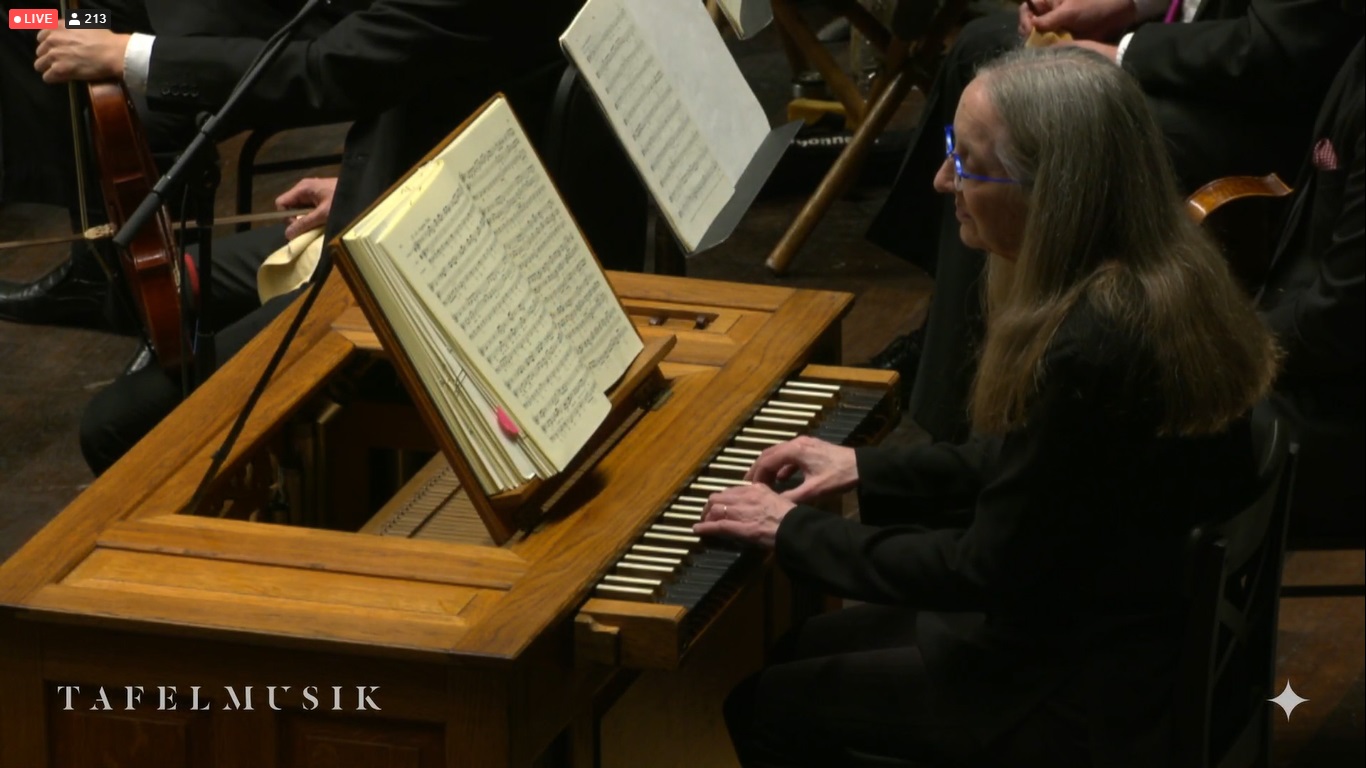
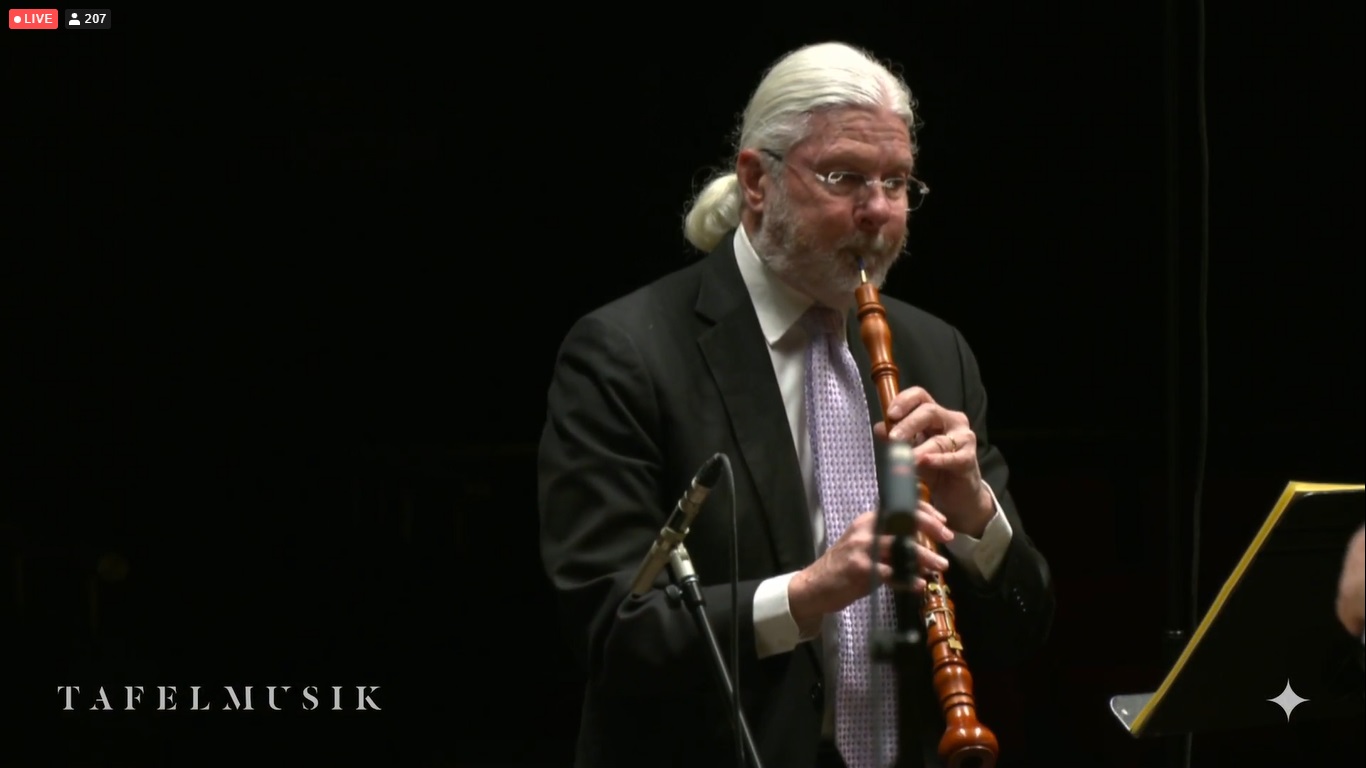
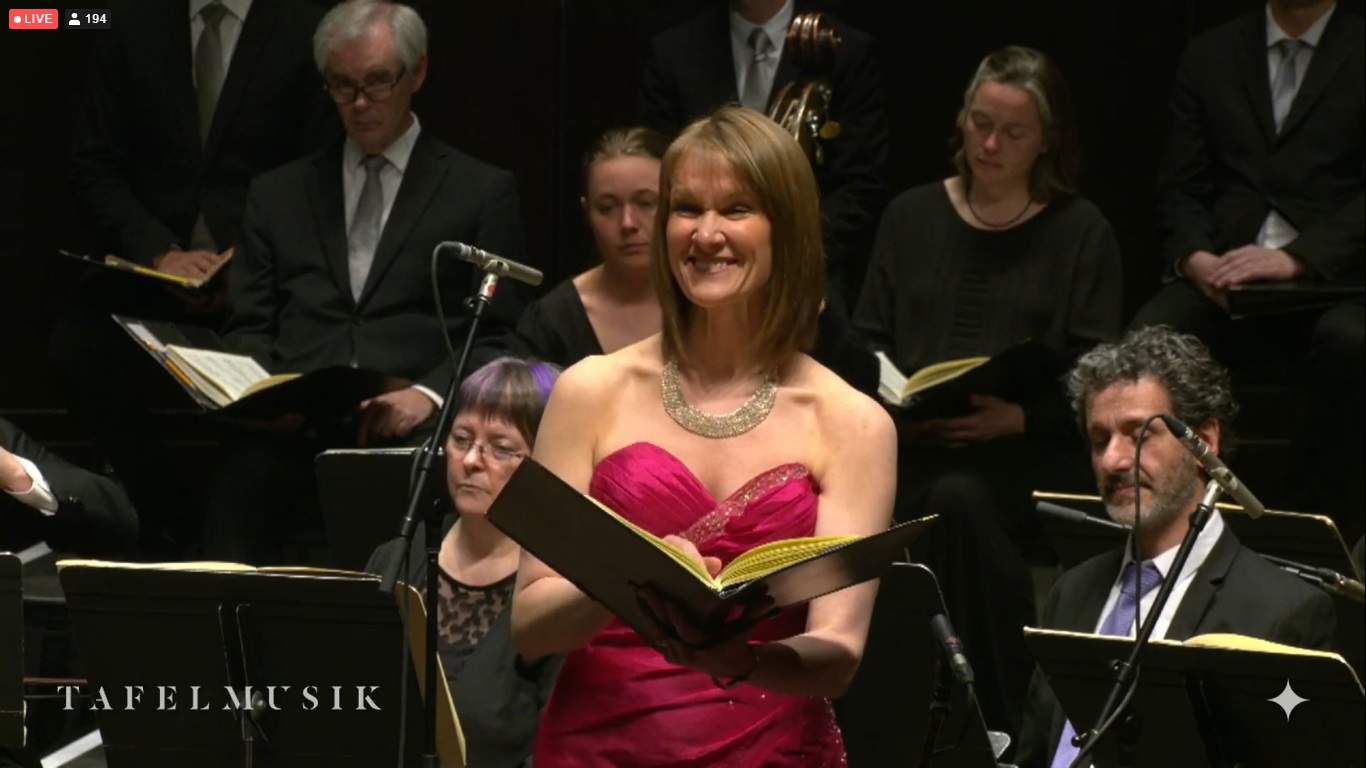
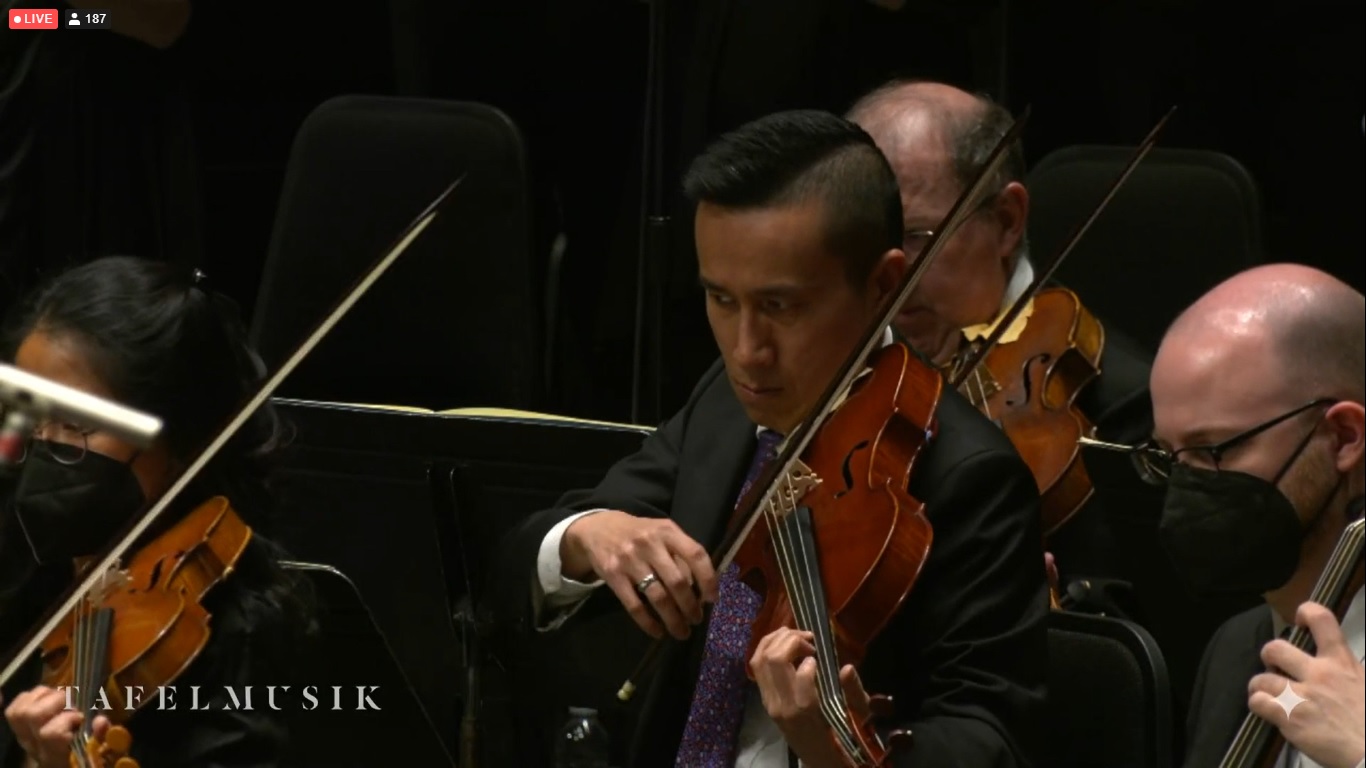
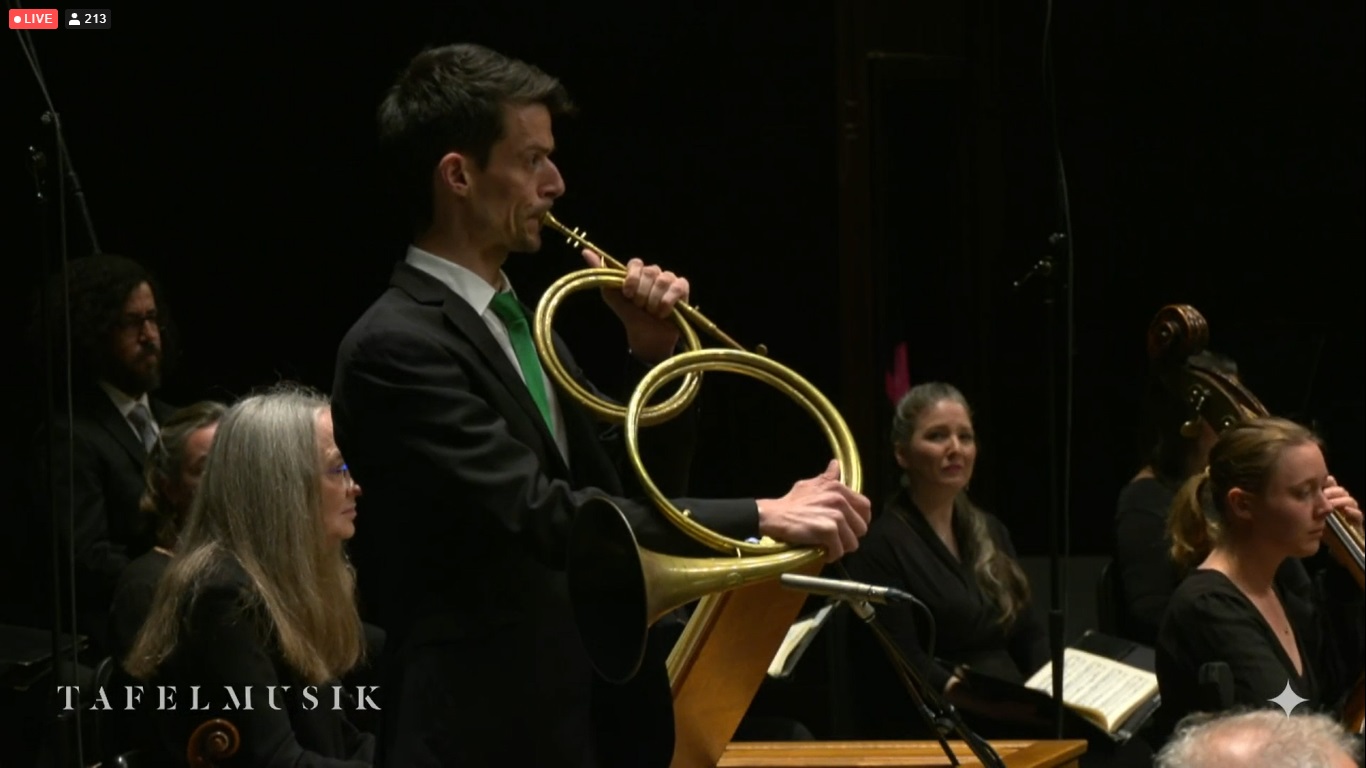
While I hoped to go to Tafelmusik’s presentation of the Bach B-minor Mass Thursday night in Massey Hall it was not to be. I was still testing positive for COVID.
Instead Friday night I chose to watch a live concert on my computer. The online version will be available until next Friday if you have the same idea as me (for further info).
It was a bit surreal. The guest conductor Masaaki Suzuki, the four soloists (Joanne Lunn soprano; Tim Mead countertenor; Thomas Hobbs, tenor; Jonathon Adams, baritone), the orchestra, and the Tafelmusik chamber choir came out on the Massey Hall stage: or so I assumed watching the view on my laptop. We never got a view into the hall, which would confirm the location: although I’m pretty sure they’re telling the truth.
There was no applause from the audience although the performers applauded one another afterwards. While this was arguably a perfect performance, it was still not quite right, because I was not in the audience (ha, there was no one there…). I was unable to watch from inside the hall. It took me a few minutes to get accustomed to this medium, that is so perfect as to seem unreal.
The camera work is amazing, giving you intimate glimpses of soloists, choristers and players.
Masaaki Suzuki (photo: Marco Borggreve)
The acoustic in this virtual version is pristine, which for me means it’s not quite right. I want to hear the sounds of coughs and chairs adjusting, the evidence of people performing and listening, the interchange between performers and the community of listeners. In this medium the listener (me) is effectively silent.
A lot of that is missing, making this near to perfect. I’m sure that’s how many people will prefer it.
Soprano Joanne Lunn
And there’s no danger of catching or sharing a virus in this artificial venue.
While I have now (as of Friday) tested negative on the antigen test, I still feel safer for having stayed at home.
And I can revisit Suzuki’s interpretation again until next Friday.
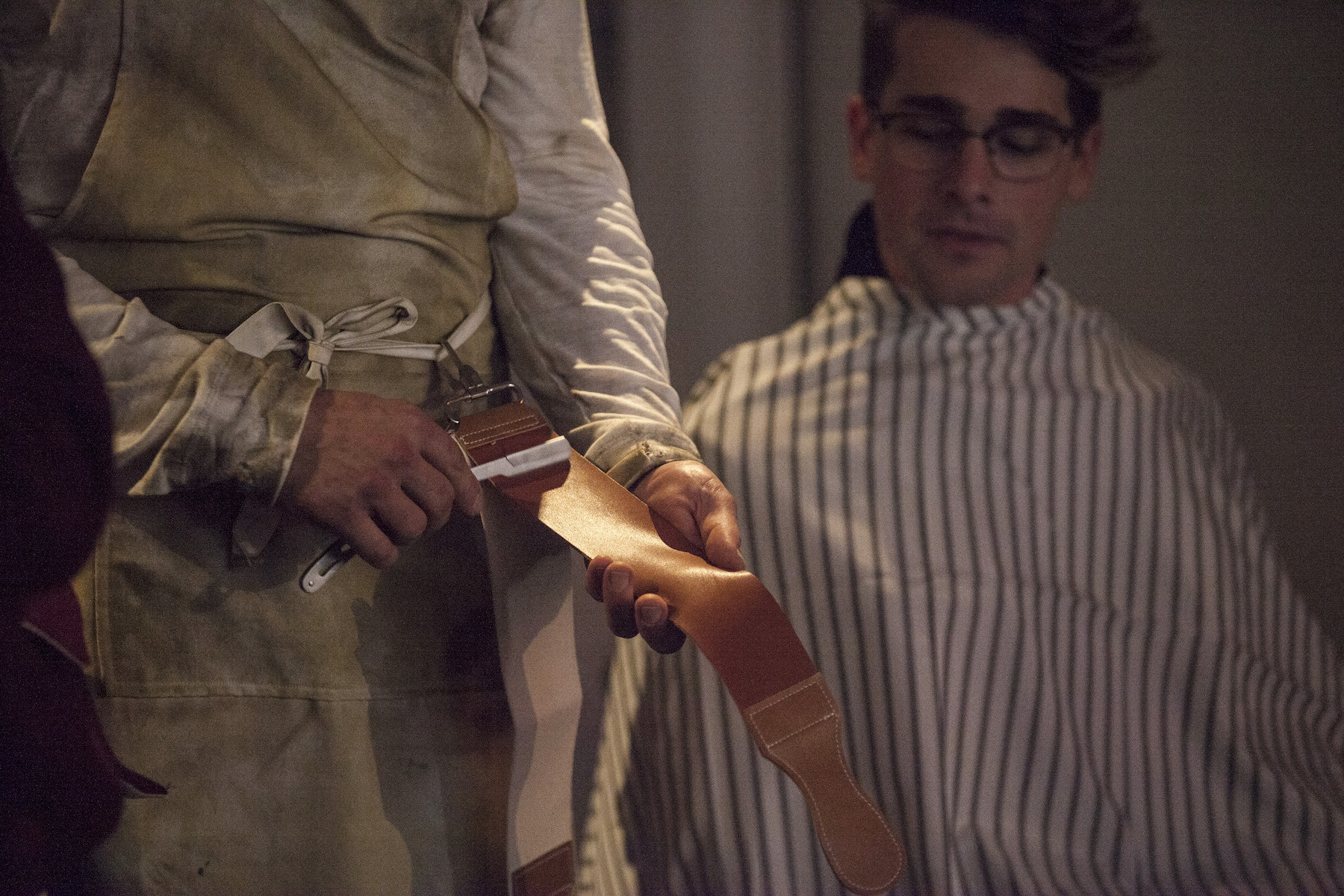
After a three-week pop-up appearance in London, UK, in 2018, TIFT is bringing their steady hands and sharp razors to cheeks and necks in need in Toronto in June.
Located discreetly within the Neighbourhood Food Hub at 1470 Gerrard Street East, clients are sure to receive the closest shave they have ever known, given with more dexterity than any street mountebank.
Services are $70+HST and also include a stylish trimming of the hair, a soothing skin massage, a pomaded head, and a slice of meat pie (while supplies last), all while being serenaded by some of the country’s top theatre talent.
TIFT’s Toronto Tonsorial Pop-Up Parlour will be open to 44 patrons per day and for limited hours between June 6 and July 3, 2022.
For more details and bookings, please go to www.tift.ca and click on Sweeney Todd: The Demon Barber of Fleet Street.
“Press releases and announcements” are presented verbatim without comment





 barczablog