As Kevin Bazzana observes in his Toronto Symphony Orchestra program note, “there is no one definitive Messiah.”
It’s an ironic turn of phrase considering the religious implications one might give that phrase. Indeed when I look at the bizarre mockeries of Jesus’s Word that have the temerity to call themselves “Christian” nowadays? I take comfort in Handel’s many incarnations, whether in the reliable King James version texts or the various approaches to the music.
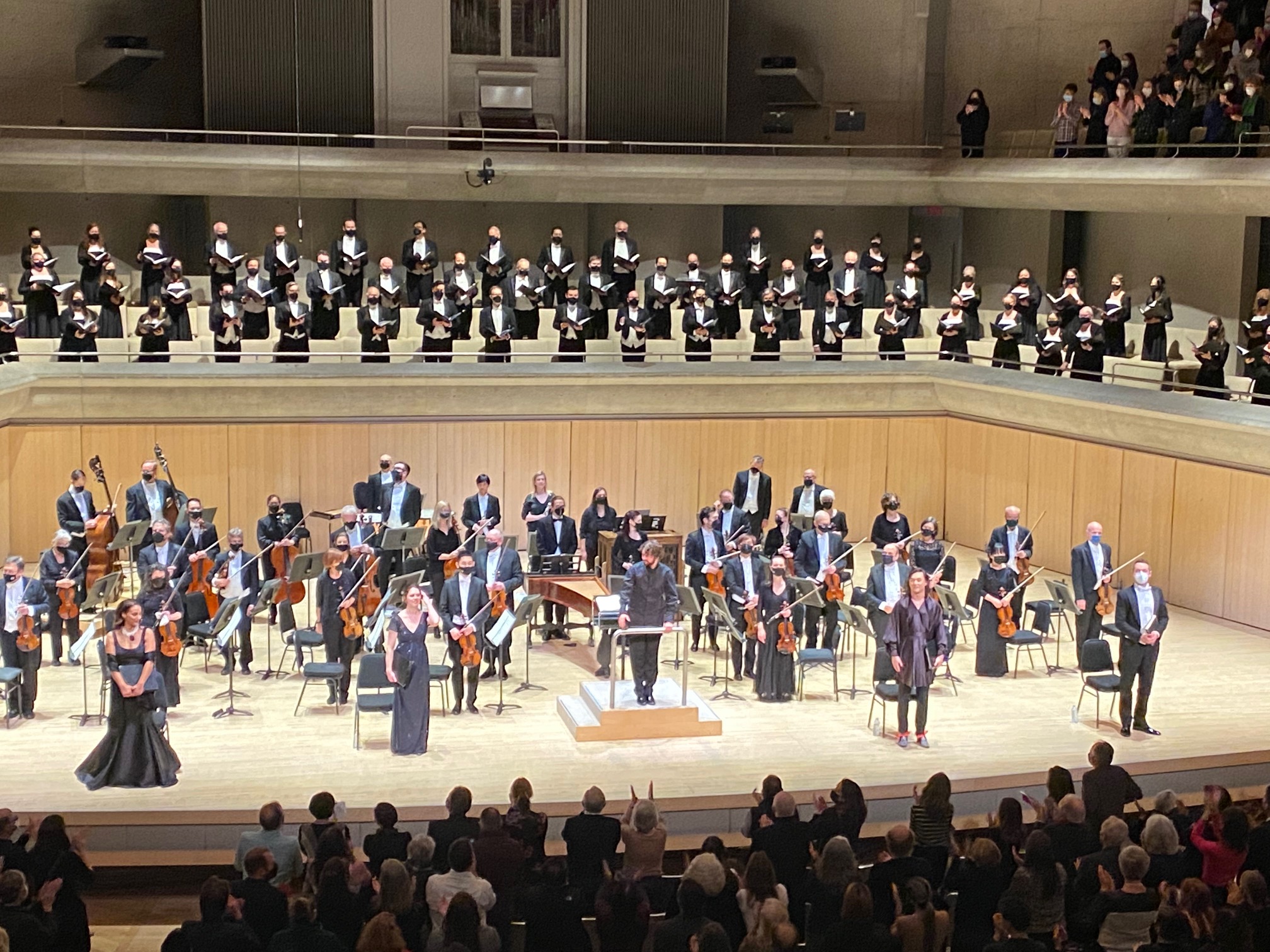
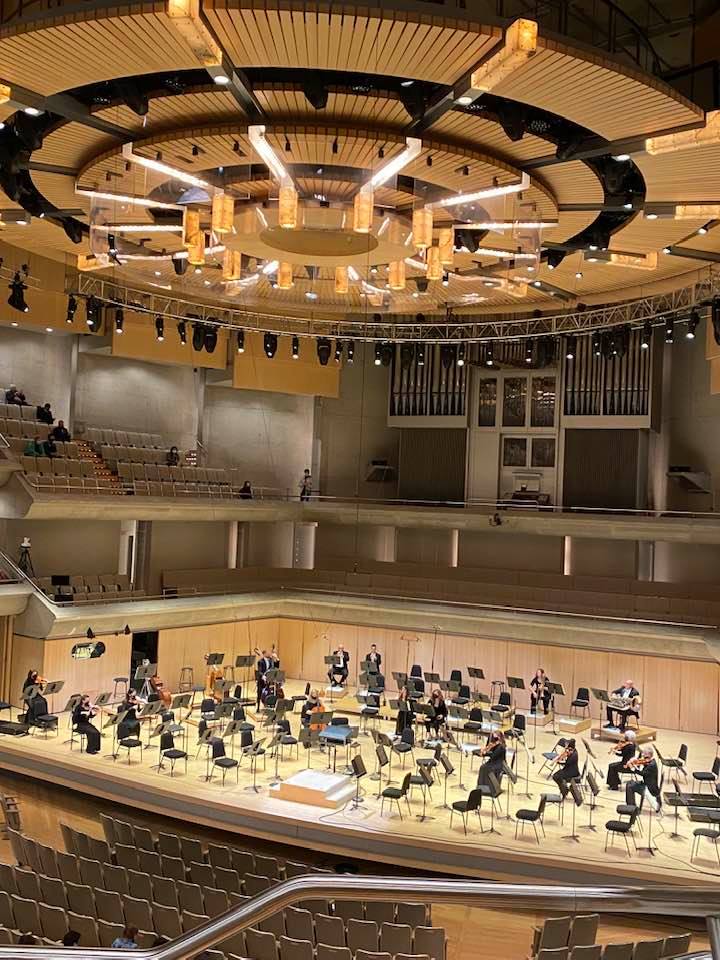
Tonight was the first of several TSO Messiahs to be heard at Roy Thomson Hall featuring the Mendelssohn Choir, Conductor Simon Rivard, and four terrific young soloists.
As we optimistically return to concert halls, I don’t anticipate quibbles from purists. We’re all so grateful for what we can get, whether they’re virtual operas or arias sung over beers in a bar-room, hymns from online services or sung alone.
This 85 minute version is the latest in a series of adaptations to the new normal. Chorus and orchestra, except for the wind players, were masked. They reduce the hall’s capacity, eliminating intermissions and reducing the onstage complement: all in the interest of safety. The by-products are a cleaner sound due to a better acoustic, and a more economical program.
There’s not a lot missing from this version, aided by Rivard’s brisk tempi and insistence on crisp articulation from the chorus and orchestra.
Soprano Anna-Sophie Neher, mezzo Rihab Chaieb, tenor Spencer Britten, and bass-baritone Stephen Hegedus sing all the important solos, often interpolating lovely cadenzas. I was grateful for their clear enunciation of the text.
In the foreground: Rihab Chaieb, Anna-Sophie Neher, Conductor Simon Rivard, Spencer Britten and Stephen Hegedus, with the Toronto Symphony and Mendelssohn Choir
The TSO Messiah continues until the weekend at Roy Thomson Hall, with matinees on both Saturday and Sunday. Click here for further information.
This is more appreciation than review. If you’ve never seen a Wes Anderson film this will read differently than to those familiar with his style.
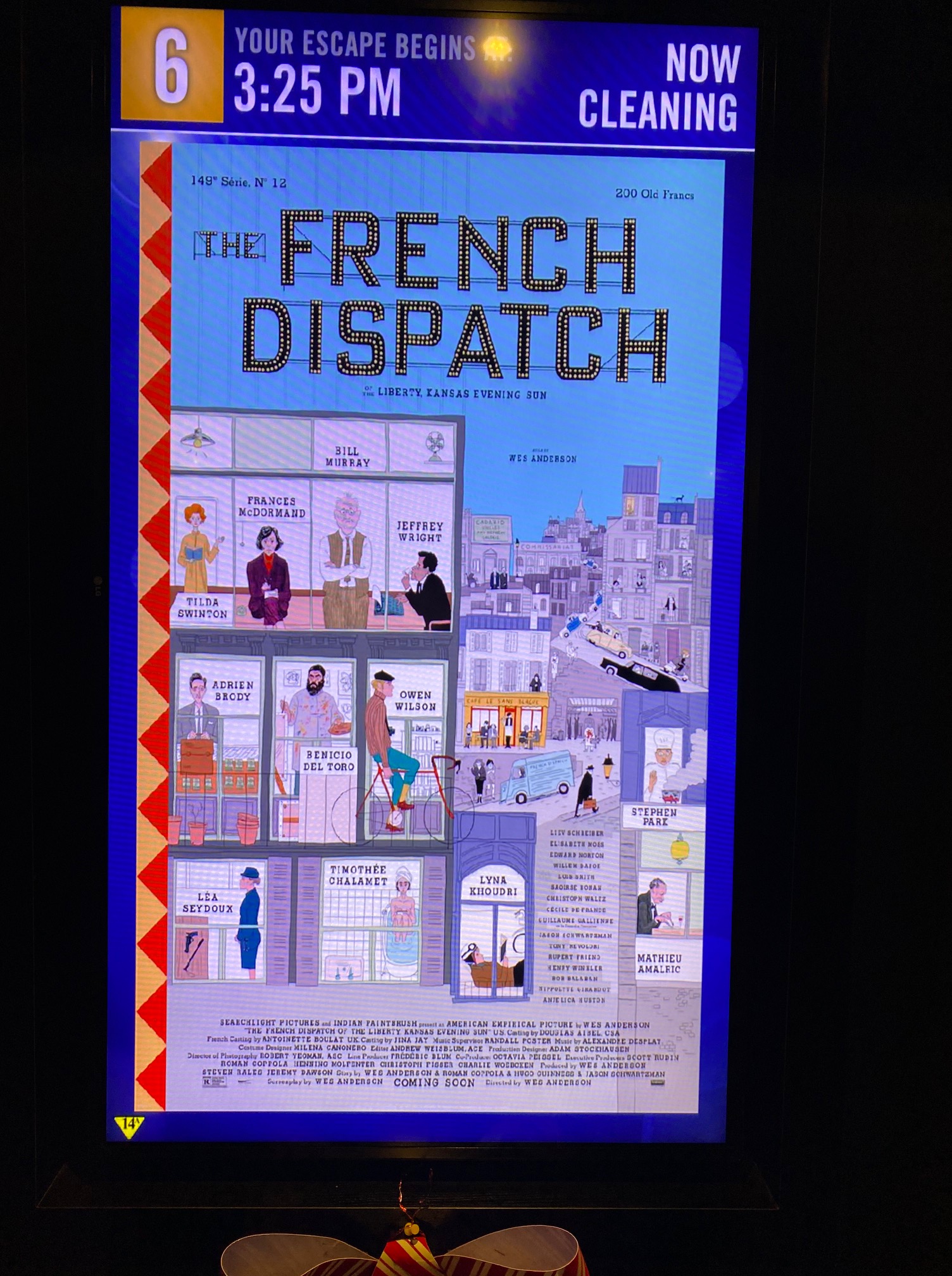
The title, subject and structure of Wes Anderson’s film The French Dispatch of the Liberty, Kansas Evening Sun (2021) comes from a fictitious magazine, an anthology plus an ending sequence to enact the concept given at the outset. Early in the film, its editor Arthur Howitzer Jr tells us that upon his death the magazine must cease publication. The final sequence concerns his obituary.
The poster looks more like a magazine cover than cinematic promotion.
Anderson follows his usual stylistic procedures for The French Dispatch. Screen pictures have a compulsive symmetry, with so many reminders of artificiality that you can never mistake this for reality. We get his usual elaborate chase sequences. Romance rears its head. We not only get moments that use models but even periods when animation takes over. And yet amid Anderson’s fetish for order we get elaborate depictions of chaos, fights, mayhem. Anderson again puts an elaborate title sequence at the end requiring multiple viewings / hearings to see all the detail. We are presented with a series of clever magazine covers each before us for only a few agonized seconds, then snatched away.
The cast includes many of the usual actors seen in previous films, whether in small parts (Ed Norton, Owen Wilson, Willem Dafoe), or big ones (Bill Murray, Tilda Swinton, Frances McDormand, Adrien Brody), joined by actors in their first appearance (Timothee Chalamet, Benicio del Toro, Jeffrey Wright, Léa Seydoux, Liev Schreiber, Henry Winkler).
One of Anderson’s recurrent themes concerns youth and children, who seem to be our best hope. Some of his movies (not this one) might even be mistaken for children’s films, the sort of cinema intended for the young.
There are three magazine stories in the film plus the closing sequence. The first segment explores the sale and commodification of art. The second concerns student activism and the influence of the press upon the creation of the story, including its transformation into other sorts of discourse. The third segment is more ambiguous, broaching concerns about race, crime, class.
The original release of French Dispatch was announced for July 2020, but delayed until autumn 2020, then put off again into 2021, finally released in October of this year. Anderson’s next film Asteroid City is in post production, announced for 2022, starring Tom Hanks & Scarlett Johansson, with appearances from such regulars as Bill Murray, Tilda Swinton, Adrien Brody and Jason Schwartzman.
I find that repeated viewings of films help me discover layers of meaning that I didn’t notice the first time. While I can’t decide how much I like The French Dispatch, possibly because I’m not sure I understand it, I know I will see it again. Anderson invites this, indeed seems to require this from his elaborate self-referential structures and the density of the creation in places such as the series of magazine covers at the end of the film. There are moments to make you think, some to make you laugh, but I was missing anything so urgent as to make me cry, at least on my first viewing; I suspect that will change as I get to know the film better.
As I try to avoid spoilers forgive me if I make it sound completely abstract. The writing of reviews can be ruminative, a way to digest and rediscover the joy and beauty of a work of art. Or simply an attempt to figure out what you’ve seen and heard.
APPENDIX: Trailers for Wes Anderson’s ten feature films
1-Bottle Rocket (1996)
2-Rushmore (1998)
3-The Royal Tenenbaums (2001)
4-The Life Aquatic with Steve Zissou (2004)
5-The Darjeeling Limited (2007)
6-Fantastic Mr Fox (2009)
7-Moonrise Kingdom (2012)
8-Grand Budapest Hotel (2014)
9-Isle of Dogs (2018)
10-French Dispatch (2021)
Asteroid City would be the eleventh, reportedly in post-production and expected in 2022 according to its IMDB entry.
The pandemic is simultaneously new in its requirements and yet old in once again reminding us of our ultimate destiny. Modern science may blind us to history’s lessons. The images on the tray in this picture come from Täby kyrka, a medieval church that probably influenced Ingmar Bergman in showing death playing chess in The Seventh Seal. I brought the tray home as a souvenir from my trip to Sweden.
An image reproduced on a tray from Täby kyrka, an 11th century church near Stockholm
The Canadian Opera Company and Against the Grain Theatre have collaborated on a film of Mozart’s Requiem, the latest of the COC’s online offerings. Director Joel Ivany revisits the Requiem, previously seen at the Mozart @260 Festival in January 2016, with the Toronto Symphony, the Amadeus Choir & Elmer Iseler Singers bearing the epithet “semi-staged”.
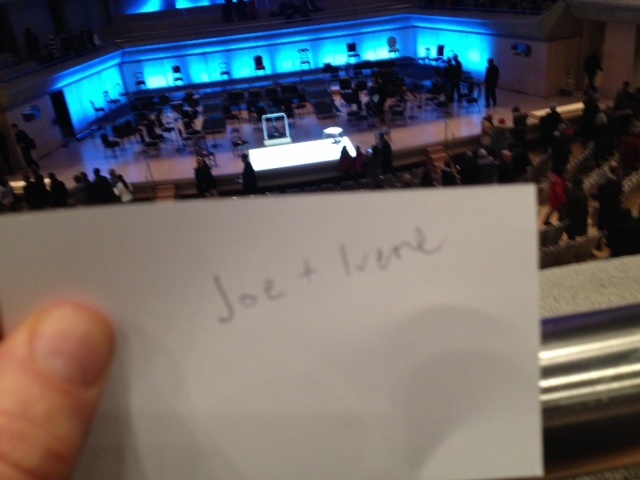
For that 2016 live performance Joel got a personal investment out of each of us by handing out blank cards to each of us, as we came in. We were told in the pre-concert introduction to write the name or names of someone whose passing we would choose to celebrate or mourn.
A new ritual & convention of mourning was invented on the spot.
My private memorial.
Each of us used the card in our own way, but this abstract template furnished a place where we all seemed to meet even though this was not a church, just a concert hall.
For 2021 the new film posed some dramaturgical questions that I’ll attempt to articulate while looking at how Joel and the COC responded. On the website we see the following textual preamble: “This multi-disciplinary presentation in collaboration with Against the Grain Theatre invites us to reckon with the impact of COVID-19 and devastating losses—and heal together through the power of Mozart’s astonishingly moving Requiem.”
We’re invited to explore the implications of death in the Requiem text, probing even further than what Joel gave us in 2016 at the TSO. The film alternates back and forth between two sorts of discourse, not unlike classic number opera. But instead of recitatives telling the story, followed by arias or ensembles exploring the passions of that moment in the drama, we have Mozart’s numbers alternating with a series of gentle interviews with the soloists (soprano Midori Marsh, mezzo-soprano Marion Newman, tenor Andrew Haji, and bass Vartan Gabrielian) speaking of their experiences. This was a film version of the thing Joel did back in 2016 when he asked us to write down names of the people we had lost. And towards the end of the film we again saw names and concepts such as +215 written on pages before us in this communal space of mourning and commemoration. The comments function the way arias do in number opera, giving us reflective pauses in the Requiem. In addition to the concert context we also watched film of the soloists on a beach, lovely images not unlike what we see in the film The Tree of Life, even as it also resembles the Scarborough Bluffs beaches near my home in the east end of town.
All four soloists have great moments, although I’m particularly impressed by the sensitive and idiomatic work of Midori Marsh, a young singer who is part of the Ensemble Studio. Andrew Haji continues to sing like a star, sympathetic and always musical.
At first I had wondered about the interpretive choices made by Johannes Debus leading the orchestra and the COC chorus. They sound very dry, even astringent in the choruses that we hear, setting up the solos as an escape from something dreadful and terrifying. There is no consolation to be heard in the opening statement of the “requiem”, or the “kyrie”. The sonics of the auditorium plus the producer’s choices (where the microphones are placed, equalization etc) seem designed to maximize the scariness of the text rather than to bring us any kind of ritual consolation. I was frankly confused, until I started to notice how the commentaries from the soloists as well as their solos were placed in sharp contrast to the work of the chorus. Whether this was a conscious choice (to maximize drama and dryness) or an accident of acoustics, the combination works. As we get closer to the end, there is a more vulnerable sound from the chorus, a gentler sound.
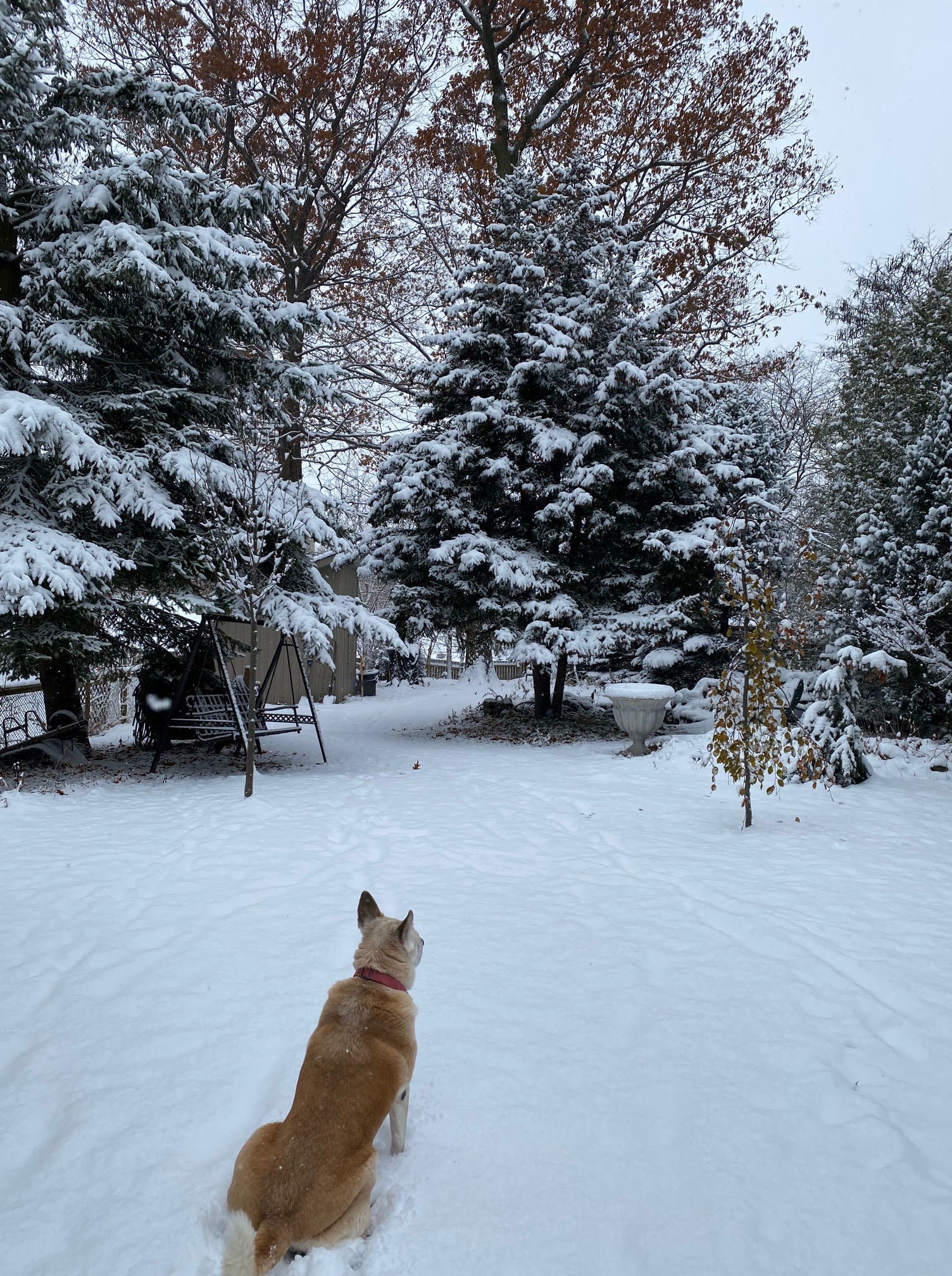
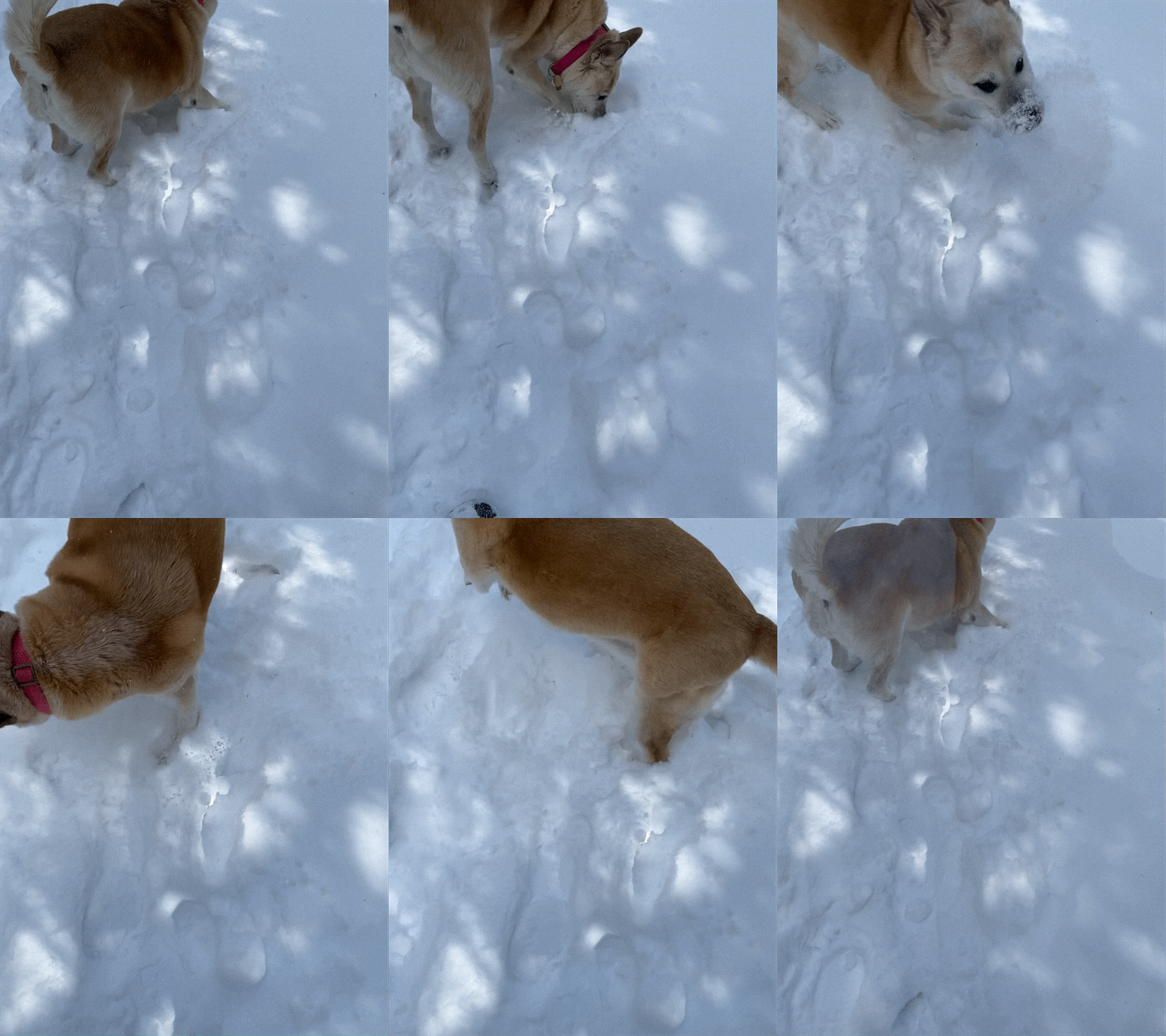
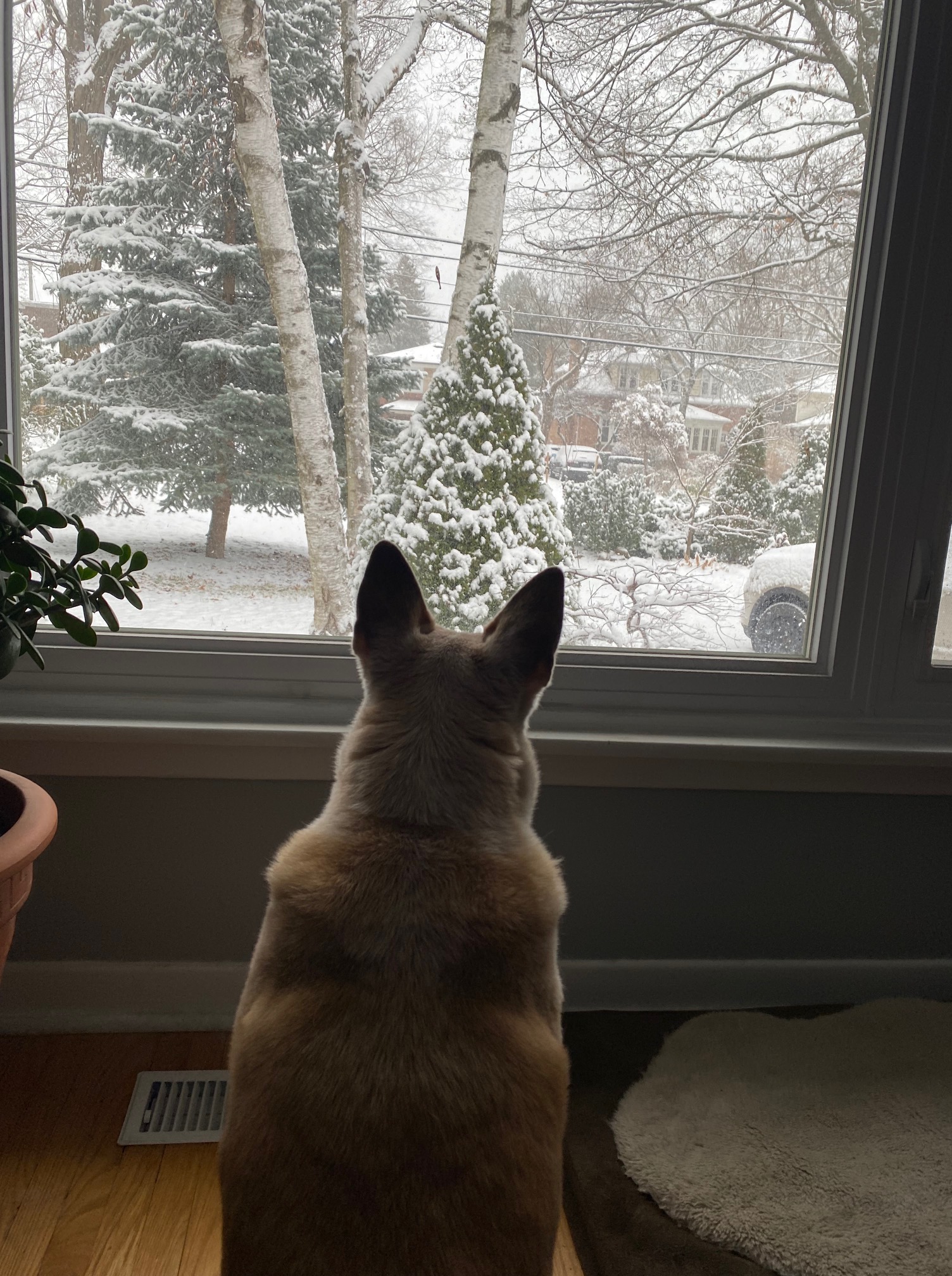
This morning I had that magical experience of taking my dog outside after the first snowfall last night.
I remember my home room teacher (sorry can’t recall his name) chewed me out in grade 7 when I blurted out “it’s SNOWING.” Yes I disrupted his lecture with my the heartfelt explosion of joyful wonderment. I was all of 12 years old.
When it snows I’m 12 again. Every year I feel the same. Yet I’m a beginner compared to a canine.
This morning I took Sam outside, as we explored the first blanket of white. I let Sam off the leash (we start on the leash as a disciplinary thing, but also as a safety thing). She isn’t as agile as she was when I got this gif of her spinning in place in the snow, back in February.
It reminds me of the “spinerama” move of Montreal Canadien defenseman Serge Savard, the pirouette that got its nickname from Danny Gallivan back in the 1970s.
This morning she seemed to be teasing me, spreading her front legs to get her head a bit lower, before dashing away from me. She seemed to be goading me into chasing her.
Which I did.
So there we were, as frisky as two 12 year olds. Sam is in fact 15, but a fifteen year old dog is not as agile as a human teenager. Ah but she still outruns me, cantering today rather than galloping, fast enough to leave me in her wake.
Let me elaborate on my minority position that winter is actually the best season, using Sam as my main witness for the defense.
Snow is perhaps the first thing to talk about. It’s not winter in late November, yet here we are contemplating the white stuff on the ground. I find snow beautiful in every sense even if snowfalls may be inconvenient, snarling the traffic, necessitating cleanups and purchases of snow-melting products.
I like the exercise I get shoveling. I prefer smaller shovels full to big ones, for the simple reason it’s easier on the body. It’s easier to lift ten 5 pound weights than two 25 pound ones. What’s the hurry? I enjoy the stretching sensations, the movement of the body. Yes we need to be careful, mindful, just as we must re-think walking when the ground is icy. I used to fall once every year up until about 2010. Now I’m always a bit slower possibly because I know it’s dangerous. The fact I had a mild concussion from hitting my head also woke me up. I say “woke my up” even though i was knocked out for a bit. When I came back around, you might say, I woke up in every sense. Never mind that, we learn from our mistakes and our mishaps.
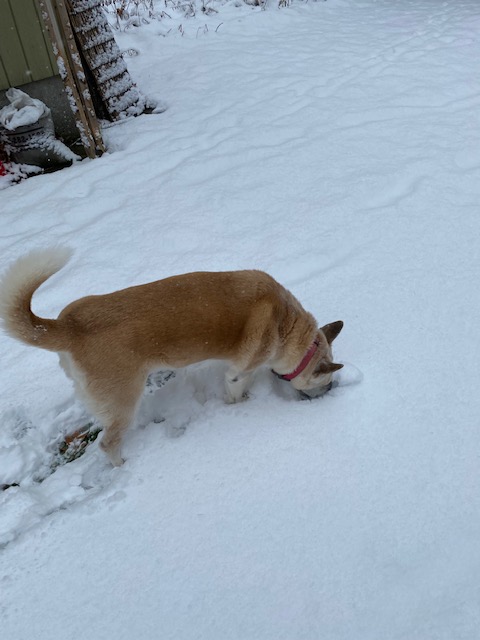
I will pause, enjoying the view, especially if I am not in a hurry to get anywhere. Here’s what we can learn from the puppies: to stop rushing about and instead, enjoy the smells and sensuous pleasures of winter. Winter, sensuous? Tell that to the dog, who sticks her snout right into the snow, enjoying how it feels on her back. I suspect it’s much harder to smell anything with freezing temperatures. So she works extra hard, probing and sniffing.
Sam with her snout in the snow
I like the way snowfalls look, encrusting the trees, covering pavement and buildings, and yes, people too.
I love the way my dog behaves in the snow. The sound of snow, stilling the cars and insulating noise around us, is glorious. Everything is brand new.
And a cold winter with its low temperatures has side-effects. It feels cleaner to have the insects and bacterias sealed under a frozen layer.
I’m conflicted about the effect, though. I like that the insects are gone. I didn’t enjoy having a tick trying to burrow its way into my leg to raise a family or merely steal my blood. I don’t hate mosquitoes but I am comfortable killing them, because they kill millions of humans via malaria without even trying.
I do regret what I’ve read, that there’s been a huge crash in the insect population. While I can hear the cheers, wait a moment. Yes we’ve noticed how our survival is intertwined with the lives of bees, worried for bee populations and loving the little guys who pollinate our plants.
And the murder hornets? Not so much.
But without insects, what will the robins and larks and finches eat? We’re connected to the food chain, until such time as it’s all artificially germinated and grown.
(shudder)
“Oh what can ail thee knight at arms, alone and palely loitering. The sedge is withered from the lake and no bird sing.” Pardon the Keatsean digression, but that line always moved me, sometimes close to tears, the deadly stillness of “no birds sing”.
Fewer bugs means fewer birds.
So while my neighbours may glare at me for leaving leaves on the lawn (ah who am I kidding, nobody glares, I have the nicest kindest neighbours on Larwood, truly), I believe in leaving the leaves in place, as a refuge for the bugs.
Hey isn’t that why we call them leaves? They’re not called “pick me up”. No I’m not lazy. It’s actually a mindful choice.
My nervousness about climate change and ecological disaster has winter as a kind of primal root, in my childhood. When the ice cube in your drink has melted, how are you going to keep it cool? Our planetary ice cube is melting, melting, melting. The warmer temperature of the great lakes likely signals a winter of lake-effect snows.
Meanwhile, Sam loves winter. No she isn’t intellectualizing it like I am. But she’s looking younger today than she has in awhile. Whether inside or outside winter is a good thing for my dog, and for me when I watch her responses. She’s a great teacher.
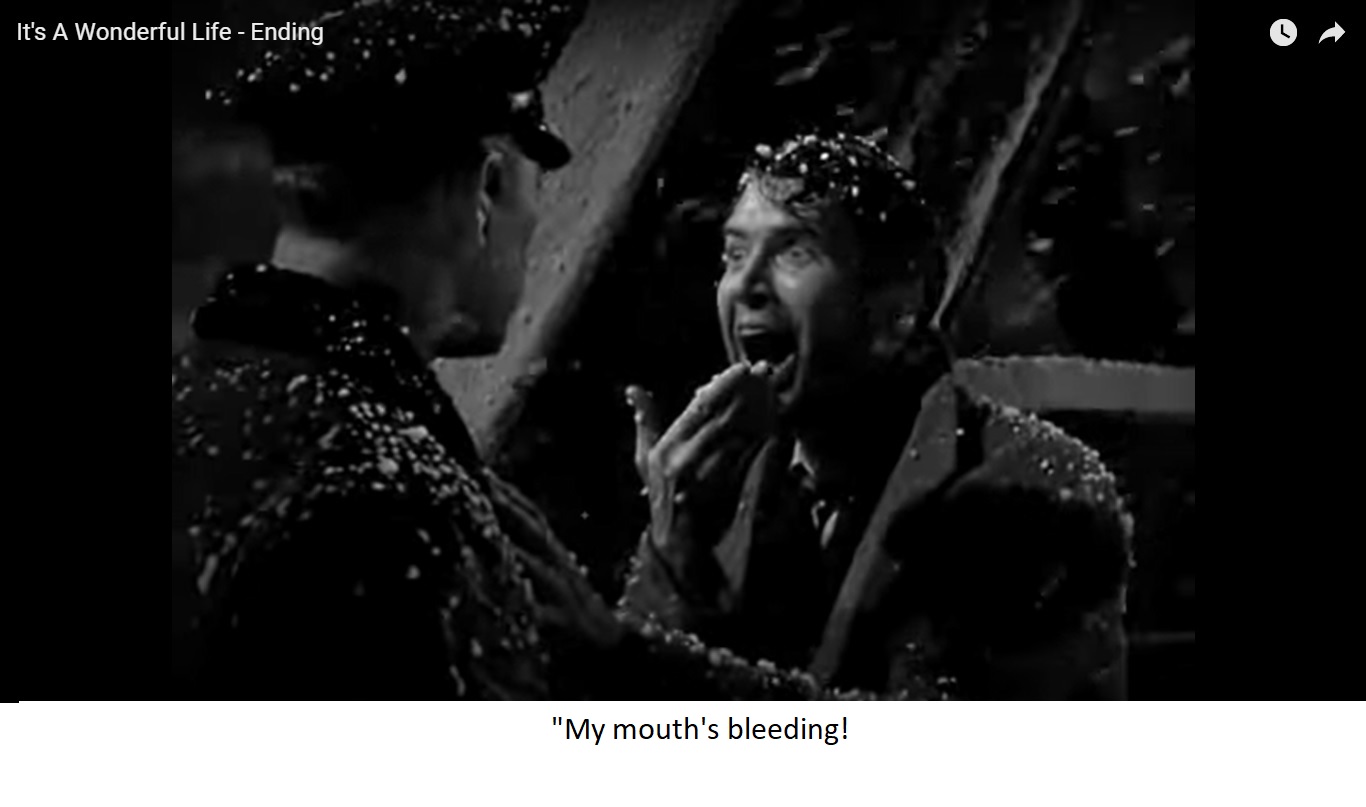
Do you remember how, at the end of It’s a Wonderful Life (that great film encouraging us to be grateful, to appreciate what we have): George Bailey celebrates and appreciates a return to normalcy after the end of his nightmare?
He laughs that his mouth is bleeding.
He cheers when he sees the Bedford Falls sign, he runs through the streets shouting Merry Christmas, grateful to have his old life back.
That’s how I felt tonight, watching “A Tafelmusik Christmas” at Jeanne Lamon Hall, Trinity-St. Paul’s Centre, a concert to be repeated Nov 26 & 27, and premiering online December 16.
I’m not saying the pandemic is over, but it has been a nightmare that we have been unable to go into concert halls or theatres. It’s also poignant because we haven’t been able to have church services, yet there we were inside Trinity-St Paul’s, enjoying a lot of music with connections to Christmas.
Hurray!
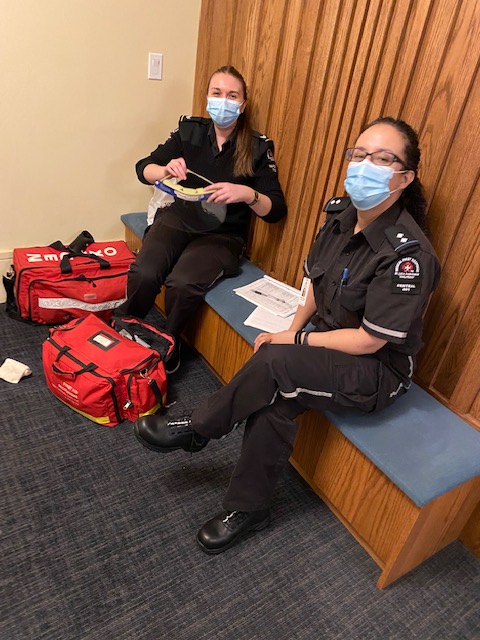
And just like George I was overjoyed to see the familiar mundane aspects of the concert experience, like the St John Ambulance volunteers that regularly help make the concerts a safe experience.
St John Ambulance volunteers
That’s all preamble to saying that perhaps this won’t seem objective, not when the George Bailey who shouts “hurray” (I actually shouted “bravo”) is writing a review. I told my wife when I got home that I thought it might have been the best concert I’ve ever seen.
It was more than a concert. It was truly an occasion. It’s almost been 21 months since their last live public performance at Jeanne Lamon Hall. And A Tafelmusik Christmas also serves to launch Tafelmusik Chamber Choir’s 40th anniversary season, an extraordinary ensemble led by Ivars Taurins since its founding.
There have been personnel changes in the interim. A couple of familiar faces were missing (@baritonekeith? Brenda Enns? ) and not just because features were concealed under a mask. But departures are inevitable given the challenges of the past year and a half. Tafelmusik are fastidious about more than just music. This is the first time I’ve seen a performance where the entire ensemble of singers and orchestra plus their leader wore masks, with the exception of wind players.
Although I am a loyal supporter of companies like the COC or the Met, who offered virtual performances during the pandemic: yet I’ve been pining for the chance to hear music in person. I remember something I heard from the composer Domenick Argento, who spoke of voices in live performance as genuine magic. You can’t fake what singers do, how they can make you feel, by making your air vibrate within you. And thank God they’re back.
Ivars is a scholar of choral music. We had a little something from several centuries, with the Coventry Carol from the 16th century, a piece by Marc-Antoine Charpentier from the 17th, lots of Bach and Handel from the 18th, Hector Berlioz from the 19th and Francis Poulenc in the 20th. Throughout we were also hearing the exquisite sounds of the Tafelmusik baroque orchestra in support of the choir.
Ivars is the most remarkable conductor you will ever see, a choral conductor who treats the orchestra as though they were merely another group of singing voices. There’s this thing he sometimes does, that I’ve only seen once from another conductor, namely Zubin Mehta, where he will create a unique gesture encompassing an entire phrase. So instead of beating the usual way, he is shaping phrases, sometimes big ones, sometimes smaller ones. It’s breath-taking not just because it’s original, but especially considering how well it works. While it’s not a long concert, Tafelmusik chamber choir and Ivars had a workout tonight, singing a great deal of music over the course of the 85 minute concert. Except for two orchestral performances accounting for perhaps ten minutes, a bit like interludes, the chamber choir sang for over an hour, often in extended passages of counter-point, including several big choral excerpts from Messiah, all apt for Christmas. Ivars rarely pushes them, keeping the ensemble prudently within their limits, usually mezzo-piano, gently intricate rather than overwhelming. But they often sing pieces like the Messiah choruses faster than I’ve ever heard them sung, and make it sound easy.
I’m not sure what I’d identify as my favorite. I love “Lift up your heads,” Handel’s miniature demonstration of religious dialectic before our eyes. No other ensemble I’ve heard manages to sound so clear in this piece, so well-enunciated, so intelligible, so persuasive. The Berlioz “L’adieu des bergers” was stunningly atmospheric, Poulenc’s “Videntes stellam” subtler still.
Ivars and the choir concluded the concert with Christmas carols, leaving the audience jubilant over their concluding “In dulci jubilo”.
In retrospect I realize I was a bit insensitive corralling Ivars for a selfie afterwards.
Thank you Ivars Taurins..!
His conducting style is astonishing athletic, a bit like watching a swimmer from overhead for the generous investment of physical energy, his eloquent body language inspiring the singing. In stopping to let me get the selfie he was polite even though my God, that must be exhausting, almost as many moves up there as Cab Calloway. I’m thankful.
The concert is to be repeated Nov 26 & 27, and premiering online December 16. For further information go to https://www.tafelmusik.org/
We’re still in the earliest days of Gustavo Gimeno’s tenure as music director of the Toronto Symphony, enjoying the pandemic protocol of smaller groups onstage playing for smaller groups in Roy Thomson Hall, in 60 minute concerts. That’s why we had a focus on the strings earlier this week, and tonight we got the rest of the orchestra, the spotlight on the winds, brass and percussion.
What an hour of contrast, variety, surprise.
Fanfare for the Uncommon Woman, No. 1 by Joan Tower Serenade in D Minor, Op. 44 by Antonín Dvořák Music For Pieces of Wood by Steve Reich Symphonies of Wind Instruments by Igor Stravinsky Sinfonietta for Winds and Percussion by Oskar Morawetz
Considering that we were not hearing from the entire orchestra, there was still an astonishing variety.
Tower’s fanfare (one of five) is a thrilling little curtain raiser for our evening.
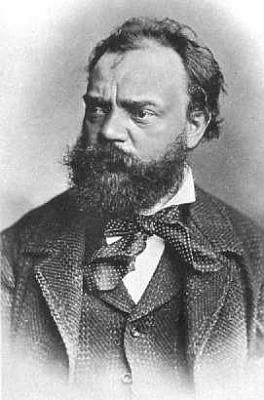
Antonín Dvořák
The Dvořák Serenade is a four movement masterpiece that (as mentioned in my previous review) drove me a bit nuts when I first heard some of it on radio, but couldn’t identify it until years later. Its opening sounds like a baroque overture, a pompous processional. The second movement minuet is a sunny delight more typically Slavic in its pastoral splendor, until we get to the unexpected rhythms of its trio. Then there’s a tranquil romance, and a quick finale.
Gimeno again hinted at romantic tendencies, quick off the mark in the finale but pulling back for the second subject, breath-takingly quick in the trio of the minuet. Some of the dynamics bely the usual expectations for this piece as “chamber music”, especially when Gimeno turned the brass loose for the big fanfare in the coda. While the dynamics were very gentle in the romance, they didn’t hold back when invited to make a bigger sound. So far the players are responding to his leadership.
The applause after that Serenade led to one of the coolest things I’ve ever seen from the TSO. Gimeno pulled something out that I thought might be a microphone. But no, he was holding pieces of wood, given that he was about to play. Ah yes, I had heard that Gimeno used to be a percussionist.
And he still is, it seems!
The version of the piece I checked out yesterday has all five of the players onstage, as you can see in this video.
Cool piece, right?
But Gimeno and the TSO added something a bit different, to make it a whole lot more dramatic.
As mentioned, Gimeno took centre stage while the ensemble we’d heard for the Dvorak took their instruments off the stage. I’m trying to recall, did he even wait for them to leave? I guess he probably did. But I was watching, fascinated.
Gimeno, alone at centre stage, began to play a steady beat.
After awhile a person strolled onto the stage from stage left, also carrying pieces of wood. And joined in.
Then another person walked onstage, this time from stage right, with his own pieces: and joined in.
Person four came from stage right, then a bit later, person five from stage left.
The piece is like a cleanse for the mind and the ear. While I find the Dvořák is a bit of an ear-worm in the best sense, passages resounding in my head for days after a hearing, this simple piece had me forgetting all that. All you hear is the clicks.
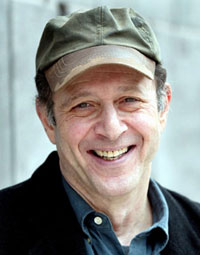
Steve Reich
You may know the words “minimalism” and “minimalist”. Reich and his music have been identified by the epithets even if they’re not offered in any desire to be complimentary. The number of heads I saw bobbing, hands smacking legs, or feet tapping (guilty), might suggest we weren’t at a symphony concert. But of course we heard something that doesn’t resemble classical music in the usual sense. Not only might it change some minds of those who think of classical music as stodgy or square, I think they’d love it.
It was especially magical to watch Gimeno at the centre, not as conductor but as a participant. His role is a bit like a metronome, which come to think of it is a lot like what he does as a conductor, if we deconstruct his role into the simplest essence of what conductors must do in keeping a steady beat. His metre is solid. It was exciting to see him playing among other players, and later watching him cue them in other compositions.
He is no hoary maestro.
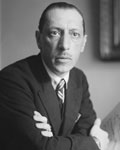
Igor Stravinsky
We had gone from brief fanfare to delicious wind serenade, to pieces of wood, and now, even though Gimeno didn’t emulate John Cleese by saying “And now for something completely different”, he certainly enacted the contrast for us, as we next went to Stravinsky.
I’m a bit hypnotized by this work, that sometimes brays loudly, sometimes squawks sweetly. At the risk of pronouncing heresy, I love that over its roughly eight or nine minutes, nothing happens.
I listened to the usual version of the piece then found a piano transcription. I find them fascinating both for the way they help you get insights about a piece of music, and for the way you literally get inside the piece, enjoying it at the keyboard. The piano version highlights the rhythms and harmonies of the composition even as it removes all the orchestral colours.
If you listen to it you can see what I mean.
The featureless sound of the piano (the absence of the variety you get with orchestral timbres) suggests something I’m tempted to identify as minimalist. We won’t have symphonic development or strict form to impose meaning, but rather a peaceful stasis in this curious soundscape. While it has none of the usual assonant tonality of a minimalist composer, it reminds me of a slightly dissonant Slavic-flavored version of something Debussy might have written, a bit like Nuages only without any pressure to be beautiful or to give us changes; perhaps I make the connection due to Stravinsky’s dedication to the French composer, who died two years before the piece was written in its original form. Debussy of course wanted beauty above all, where Stravinsky lets things be just as they are. I admire this piece, enjoying its refusal to do what others would do. Of course the colours have been removed at the piano, so when you reconstitute it with orchestral colours it’s especially stunning.
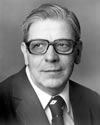
Oskar Morawetz
And for the final work we were again in the presence of the Slavic sensibility, via Oskar Morawetz’s Sinfonietta. I was sad that I couldn’t find him on Youtube, a testimony perhaps to shifting fashion rather than any weakness in his music. We’re hearing some of the same modernist tendencies of Hindemith in the bold use of orchestral colour, sometimes suggesting mystery or satire, although Morawetz is an original. This is a music unafraid to take the stage, theatrical or perhaps cinematic, full of energy. Where the subtleties of the Stravinsky drew a polite response, Morawetz inspired a big ovation.
In this the second week of Gustavo Gimeno’s tenure as music director of the Toronto Symphony, we’re already seeing some exciting programming choices.
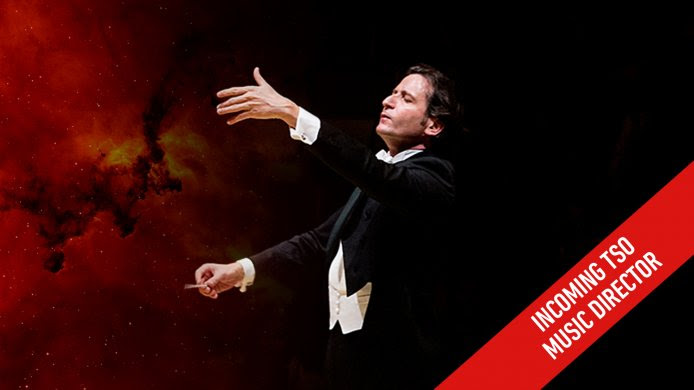
Incoming Toronto Symphony Music Director Gustavo Gimeno
Someone thought to limit the number of players onstage to around 50 as a safety measure, affording them the pretense to get creative. Tonight and tomorrow the works employ the strings, while Friday and Saturday the spotlight shifts to the winds, brass and percussion. They’re also reducing numbers in the audience (safety again), offering as a byproduct, the improvement to Roy Thomson Hall’s acoustics.
Or in other words, they sound tremendous.
Gimeno’s choices of music also seem a good match for a changing audience, accepting of experimentation and eager to explore new repertoire:
Composer Caroline Shaw
The repertoire offered tonight and tomorrow: Boris Kerner by Caroline Shaw “A Letter from the After-life” from Two Pop Songs on Antique Poems by Dinuk Wijeratne Rains of Ash and Embers by Kelly-Marie Murphy Adagietto from Mahler’s Symphony No. 5 Verklärte Nacht (Transfigured Night) from Arnold Schoenberg.
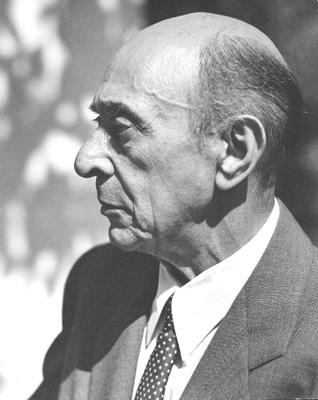
Arnold Schoenberg
As I peek at upcoming programs I wonder if this will be the new normal. We shall see!
Shaw’s piece acted as curtain-raiser, Joseph Johnson’s solo cello joined by Charles Settle playing a series of flower pots selected perhaps for their pitch and their resonance, the two blending wonderfully with the cello line that began a bit like a solo Bach composition.
We segued without pause (or without sufficient audience response when the piece was over) into “A Letter from the After-life”. Murphy’s bittersweet piece followed, the third consecutive piece to be heard that was composed in the 21st century: and it’s not even February. The applause was enthusiastic, although relatively tame compared to the response to the two 20th century works.
How we listen has changed radically. At one time it might have been unthinkable to program a single movement from a Mahler Symphony, particularly one with a reputation as one of his greatest hits, as we might say of the Adagietto from the 5th. The safety requirements push us to listen to new combinations of repertoire from different groups of instruments onstage. I wonder if this will persist after the pandemic is over? Nowadays we listen to single movements on our devices, on the radio, mixing idioms promiscuously, pragmatically.
Playing through the single movement followed by Schoenberg’s Verklärte Nacht, encouraged us to notice their affinity. I’m looking forward to hearing Gimeno survey symphony literature, enjoying his tendencies. Gimeno’s rapport with his orchestra is manifest, even at this early date. Maybe it’s the acoustics, but I hear a delicacy of sound in genuine pianissimos, a real sustained softness of texture, musicians listening to one another.
I also want to mention that they fixed the one problem from last week, namely the bottleneck of personnel checking our vaccination credentials at the door. We started more or less on time.
Coming up in the concerts Friday & Saturday, I’m eager to hear Dvorák‘s brilliant Serenade for Winds. I remember being puzzled and driven a bit crazy when I heard a small excerpt on the radio, but missed hearing who wrote it. Oh no! Unable to identify its unique & original idiom, I had it in my head for years until I stumbled upon a performance conducted by the late Kerry Stratton who also programmed it on CFMZ. And this wonderful piece that we wouldn’t usually expect to hear from the TSO is only one part of the upcoming concert, that also includes works by Joan Tower, Oskar Morawetz, Igor Stravinsky and Steve Reich.
It’s so exciting to enjoy live music again. Last week I saw the Toronto Symphony. This afternoon I went with friends to see & hear the Oakville Chamber Orchestra in a baroque program featuring Vivaldi, Lully, JS Bach and Domenico Scarlatti at St Simon’s Church, led by their music director Charles Demuynck.
I’m again thinking about trade-offs. With the TSO using only 50 players and limiting capacity to 50% they not only lessen the hazard of inhaling airborne droplets carrying coronavirus, they also improve the acoustics. Imagine the same thing (the safety and the acoustical benefits) on an even smaller scale. At St Simon’s we were only permitted to sit in every second row, enjoying the sounds of roughly 20 players.
We heard Bach’s keyboard concerto BWV 1052; Symphonies #17, 7, 3 and 10 from D Scarlatti; a suite from Lully’s music for Le Bourgeois Gentilhomme; and a Vivaldi concerto for 2 violins in A Minor that may be familiar to you when reconstituted on the organ by Bach.
I spoke of trade-offs. We hear the rosin on the bows vibrating the strings. We hear anxious players sometimes making sounds before they’re cued to begin. Everyone is exposed because of the intimacy of the space, and there are plenty of opportunities for eye contact too.
I’m especially enamored of Lully, the greatest composer who is mostly unknown, a huge success in his time but often misunderstood nowadays. In Opera as Drama Joseph Kerman dismisses him, without having a clue how his operas work. Not only are his operas worth a look, his music is gorgeous: as we heard today from the OCO.
Jason Cheng was the excellent soloist in the Bach concerto on the piano, a pianist I hope to hear again someday.
Next came four brief symphonies from Domenico Scarlatti, the last a veritable oboe concerto, brilliantly played. I wish I knew which oboist listed in the program (either Wendy Bornstein or Heather Ryan) was the soloist. Perhaps they’ll tell me?
Aha I hear that it’s Wendy Bornstein. She also has awesome hair by the way.
To close we heard Vivaldi’s concerto for two violins played by concertmaster Alain Bouvier and David Rehner.
As I look at the OCO’s upcoming concerts, I have to admit that not only does Music director Charles Demuynck have a clear & steady baton, not only does he curate a season of fascinating musical selections, but he’s also very entertaining in his introductions to the pieces.
Oakville Chamber Orchestra Music Director Charles Demuynck
Demuynck and the OCO will be back with three different programs in 2022. For further information have a look at their webpage.
I was among the ecstatic audience for the opening of Zorana Sadiq’s MixTape tonight at Crow’s Guloien Theatre.
Yes we’re thrilled to be back in a theatre, delighted to be looking at one another, guessing identities behind the masks. Was that Michael Mori, perhaps Allegra Fulton, or Chris Abraham? In any other city it might be trouble to perform such an oxymoronic ritual as this business of pulling out photo ID rendered meaningless by our face coverings. It’s a silly masquerade, joy overflowing, leading to a brilliant show.
The first half hour was full of big laughs, the audience drawn in by Zorana’s primal TED talk.
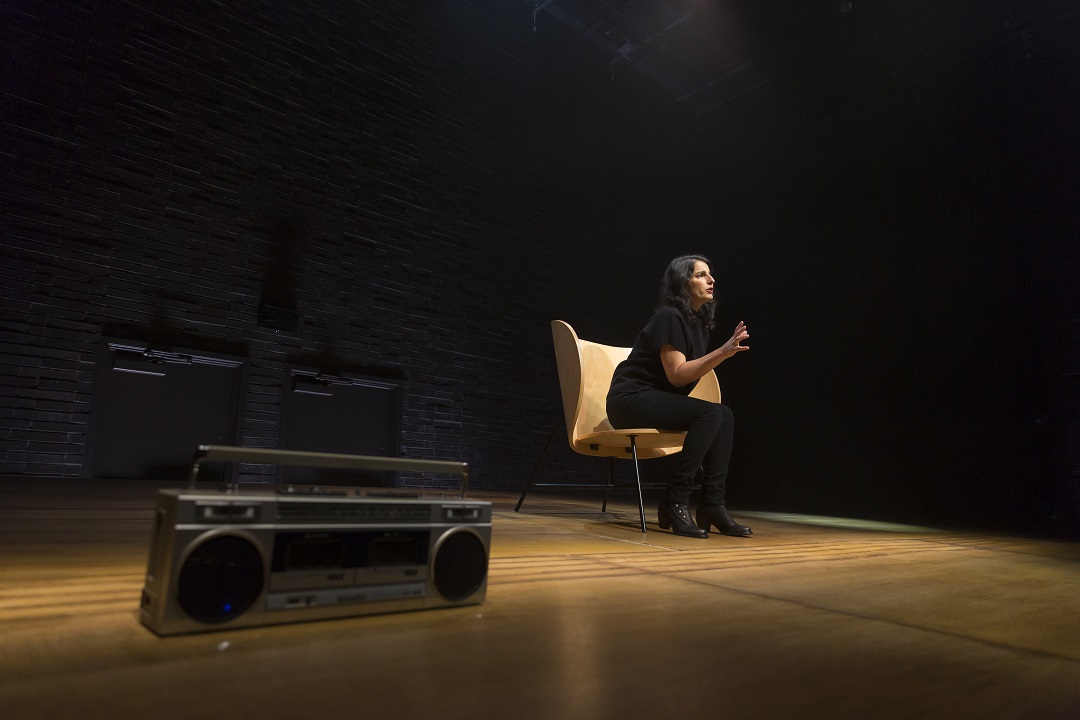
Zorana Sadiq in MixTape at Crow’s Guloien Theatre (photo: Aleksandar Antonijevic)
While I am completely fascinated by the phenomenon of the mixtape, that personal artifact curated from our shared culture: but this is so much more than that, as we soon discover.
Director Chris Abraham explained a bit about the creative process for the piece: “As part of last year’s pandemic response, we welcomed artists at Crow’s Theatre to create new works and to develop them through a series of creation residencies. Like Cliff’s As You Like It, and several of our digital offerings this year, MixTape was developed as part of this new Multi-Platform Program.”
I think I discredit it to call it “performance”, when it seems so genuine, so authentically confessional. We’re exploring interconnected aspects of voice and sound and music, the body of the singer being the nexus. This investigation of live music-making and singing from first principles is the most natural place to resume theatre after the hiatus we’ve all been through. Anyone who sings or speaks on a stage will be drawn in irresistibly and enjoy the spirit of discovery & insight.
Is it ironic that the sound design for MixTape is live? Thomas Ryder Payne as sound designer and live sound operator dances on the edge of that interface between live sound and recording. We listen to an organic combination of Zorana and her many voices, the boom box onstage plus the subtle sounds coming from the P.A. that couldn’t possibly be put onto a tape, at least not if it was going to properly respond to the living voice. The sounds (not sure if I should call it a “score”) enact that ideal of being so minimal, so understated as to be subliminal, gently supporting Zorana’s every nuance, virtually unnoticed as a subtle background.
I experienced a few epiphanies. While I avoid spoilers I must quote one at least. I loved hearing Zorana say that the shout is a weaponized use of the voice. A shout can hurt the instrument as much as it hurts the ear of the listener.
It should go without saying that singers aren’t just vehicles for music. The music that moves us moves them too, and all that emotion can get in the way of the process. They are their own instrument, the curator of their music and their own audience.
What does a child hear in the womb and what is the effect?
Zorana submits to a fearless self-examination, in this work that she has been developing for years. She is both the performer and the specimen, both doctor and patient, sometimes opened up for us to discover what’s inside. And she even gives you her playlist afterwards.
This Toronto Symphony Orchestra concert was a happening.
They’re back!
The audience clapped when the players appeared. And we clapped when Gustavo Gimeno came out for his first appearance as our New Music Director. The occasion was special for several reasons.
While we’ve seen him guest conduct this is different. He made a brief passionate speech about music and its power to communicate: and then defended his thesis in no uncertain terms.
I heard that the TSO are welcoming a thousand healthcare workers to concerts this week as a way of saying thank you for their heroics during the pandemic. Hear hear!
Everything about the concert seems new, partly because we’ve all been away.
The program notes are almost completely online now, saving a great deal of paper. I used to find it heart-breaking looking at the immense amounts of paper generated at the TSO as well as other venues around town. There’s just enough info in this program, as we know how many movements each piece has: except I was so lost in the experience that I applauded between movements, forgetting myself completely.
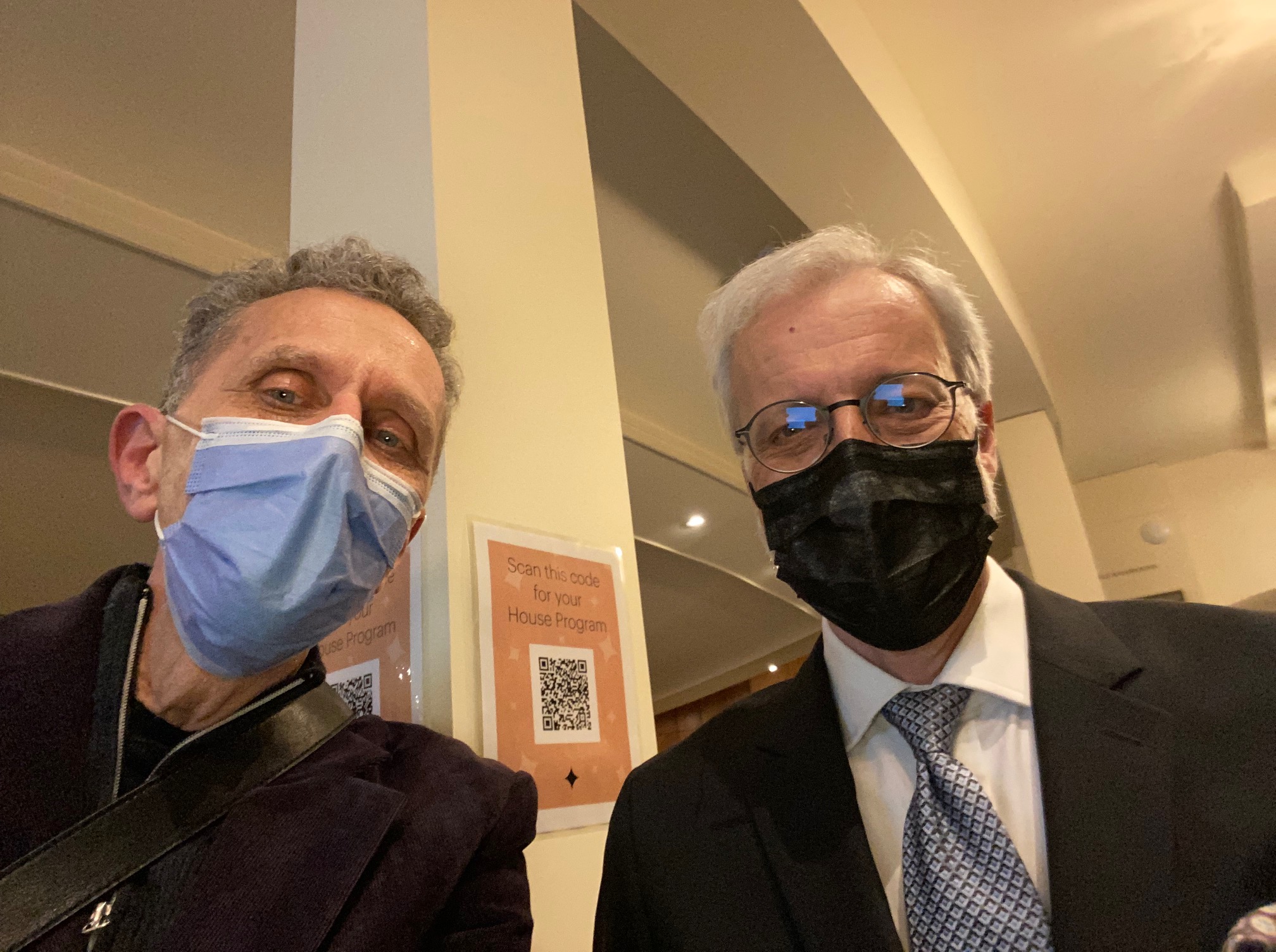
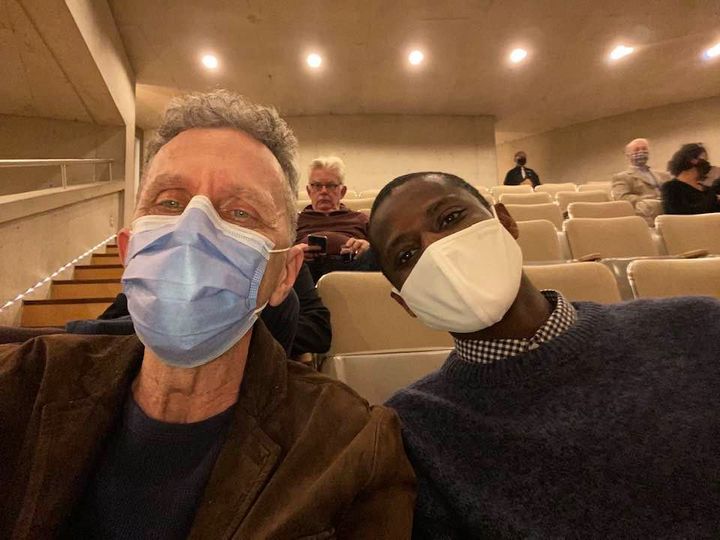
The gent sitting directly beside me happened to write the program notes, namely Michael Zarathus- Cook.
I asked for a selfie with Michael Zarathus-Cook, then captioned it on Facebook/Twitter as “Wow the gent beside me seems to know as much about the music as the guy who wrote the program note. Remarkable.”
The protocol is new. The concert was roughly an hour long, that began 20 minutes late likely due to the bottleneck at the entrance as a big audience were required to show our vaccination documents. We had an hour without an intermission, likely because there is no way to accomplish social distancing in the Roy Thomson Hall washrooms (at least that’s my best guess). This surely hurts their revenue stream due to the loss of intermission sales. As I wondered whether this is just tonight or for longer, I saw on the TSO website the following statements about “resetting the stage”, and I quote: • November through February concerts will be 60–75 minutes without intermissions, and include approximately 50 musicians on the stage. • March through June Masterworks and Pops concerts will feature the entire ensemble in full-length programs with intermissions.
I also saw this factoid under :safety measures” “Approximately 60% of available capacity will be offered for TSO performances in November at Roy Thomson Hall (roughly 1,550 seats out of 2,600).”
I wondered a couple of times: is it my imagination? The acoustic of the hall seems: different. The brass especially had extra pop. I wondered if that was because of the new onstage configuration of players. The concertmaster and principal cello used to stare eye to eye from the lip of the stage, but Joseph Johnson’s cello cohort are now alongside violins on the same side of the stage, with the double basses deep on that side as well. The brass were fully upstage close to the wall.
Perhaps the powerful acoustic is a function of the hall capacity, given that a full hall of people sucks the energy out of the music, while an empty one would have more energy.
It’s nice if the pandemic can offer us a bonus.
Oh wait, and then there’s the music. Our hour-long concert was a wonderful welcome back, both for the audience and the TSO, consisting of four works: Anthony Barfield’s Invictus in its Canadian Premiere Haydn’s Overture to L’Isola disabitata (The Desert Island) Hindemith’s Concert Music for Strings and Brass Op 50 Schubert’s Symphony #5
Recalling the promise I mentioned to limit the players onstage to roughly 50, it’s a brilliant choice of works. Both Barfield’s and Hindemith’s boast a dozen brass players featured prominently, while the Haydn and Schubert conform to a typical chamber orchestra giving us a wonderful contrast between the different sorts of musical sounds & styles in our hour.
Those two brass-heavy works (Barfield & Hindemith) reminded me of the good old days of stereo, when we’d select a work especially to test a sound system. I’m glad the brass (mostly) got to rest in the other pieces. Indeed we need to remember that in a real sense Gustavo Gimeno is testing out the fit between himself, the orchestra and the hall, calibrating the way they respond to him, like a driver taking his car for a test drive, noticing how the engine responds when he accelerates, how it corners, how it feels when he puts on the brakes.
I wonder how his experience compared to what he heard in the audience?
Meanwhile, I’m intrigued by what I’ve heard from Gimeno so far, a series of impressive performances. No wonder the TSO like him. During the ovations he was very generous in sharing the spotlight with his orchestra. Tonight they played for us and played for him, but that’s no surprise considering the special occasion.
It’s early days, but I think I detect signs that Gimeno is a “romantic” in his approach. In the Schubert, there were clear distinctions as he’d consistently get a slightly slower tempo for the second subject in the exposition, the repeat of the exposition and again in the recapitulation, but much more brisk in the main orchestral tuttis. When there’s a dotted rhythm Gimeno demands crisp & clear articulation, and seems to want them to play a bit faster. This was also evident in the Schubert finale, taken faster than I’ve ever heard before. Gimeno has a strong sense of meter, not just in his accuracy but also in his interpretive ideas. I think I remember hearing somewhere that in a previous part of his career he was a percussionist, which might explain his clear beat, his consistent and solid grasp of meter. The fast passages in the Haydn and the Schubert put me in mind of practitioners observing historically informed performance, for the brisk tempi and the crisp approach to articulation. But the story of Gimeno’s art will unfold in the years to come.
It’s going to be wonderful to hear what Gimeno does this season, especially with big powerful pieces such as the Mendelssohn “Reformation” symphony and the Rachmaninoff 2nd Symphony. Not only do we have the adventure of discovering the quirks of a new artist who seems to have a strong set of ideas about the music, we also have the adventure of hearing the music in halls with reduced capacity, aka enhanced acoustics.
Roy Thomson Hall never sounded so good.
This program will repeat Thursday November 11 and Saturday November 13, each at 8:00 pm.




 barczablog