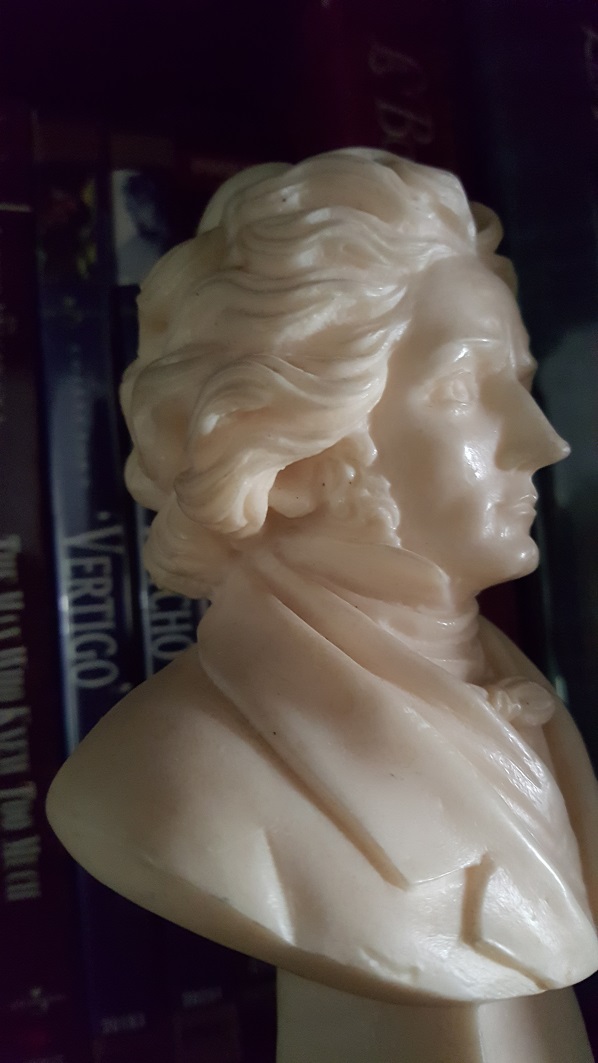
Ludwig van Beethoven was born in December of 1770.
I suppose the only people who might care about the precise date would be those of us who want to throw Ludwig a party.
In my day one was taught that his birthday was December 16th although it’s now understood that his actual date of birth isn’t known. There’s a registration of baptism for December 17th, so some people think it was the day immediately before. But that’s a guess.
A vague beginning? It reminds me of the ambiguities in the opening of his 9th Symphony. Listen….to the beginning at least. If you’re not paying close attention you may not discern the moment when it began: just like Ludwig himself.
It’s very theatrical. He creates a stage, where we can watch something happen, the blank space for an event or the background in a painting with something that will be added into the foreground, something natural & organic. The quiet anticipatory buzz in the orchestra that might suggest something about to happen is like a misty view of a lake or ocean before sunrise. It reminds me of the birthday mystery, that gradual opening. From the foggy mist, the theme will emerge, mythic. I take it as a self-portrait of the man, even of the species. Surely Wagner had it in his head as an influence if not an actual prototype when he wrote the opening to his Ring cycle, another long gradual beginning that reminds one of nature & the origins of life.
The Ludwig who landed into a world without Victrolas or vaccines, a place where people on average didn’t live much past the age of 40, and child mortality rates that would claim one in four children, might be more astonished by our plans for celebrations than for pandemics. In that time composers were neither published nor remembered the way they are now. It was decades after his death that Mendelssohn brought Bach back from near extinction, just as Wagner would help popularize Beethoven.
I recall the reverence of the Beethoven bicentennial in 1970, unlike any other commemoration before or since. The place to worship was in the record store, interpreters like a priesthood. How ironic that these recordings that seemed so perfect would in time be relics of a failed religion: for of course they were vinyl.
As Americans brace for the outcome of their election,…As Canadians bundle up for winter & indoor life safe from the coronavirus…As we look around at what’s missing from our lives (Halloween or hockey, theatres & recreation), while seeking to remember those who have passed away,…? chances are that the commemoration of that life lived so long ago is the furthest thing from anyone’s mind, especially given that concerts & operas are all but impossible right now.
I suspect Ludwig would just shrug.
But I’m going to do my own little Beethoven 250 commemoration, posting here over the next few weeks leading up to the day that might be his 250th birthday, December 16th.
I stumbled upon something quite by accident and want to share the good news.
No I can’t take credit. We’re fixing some old windows, and needed to work with the contractor, who was blocked off by the way the furniture was arranged.
I was at my mom’s, when Erika took the initiative. She asked me if it would be okay to experiment a bit, and I said “sure”: because her taste is really good. It made sense for her to do this when I wasn’t around to get in the way or object.
I’m still impressed by how much she moved all by herself: especially the piano.
So as I report on our experience, let me propose this to you as a possibility, something to consider for your own living space.
Have you ever wanted to make a change, but lamented that changes are usually expensive & difficult? A new paint-job? New furniture or decor?
A new piano?!!
That’s the thing. Whatever you have, high-tech or acoustic, can seem brand-new if you do as Erika did. She simply re-arranged the furniture. Please note, she didn’t have the acoustical properties of the space in mind. It was primarily to do with the guy fixing the windows, and the need to clear space for him to work.
He’s coming this week!
Have you ever analyzed the acoustics of your living space, the way your instrument(s) make(s) sound when they’re played in your home? Even if you only have one room, there’s likely a place in the room, the proverbial sweet spot, where the music sounds best. If there are multiple rooms, there are surely places where the sound is dead, and others where it’s alive. Maybe you seek out the softest place to play, to inflict the least sound on your neighbours, maybe you seek out the most lively response. Maybe you play as softly as possible. Maybe you don’t hold back.
No I’m not suggesting you be a scientist, an acoustical engineer. I merely mean, listen, and pay attention to what you hear. It might change the way you play, indeed it should change the way you are playing, because after all when we make music we’re also listening: and not just to ourselves. The title of Gerald Moore’s memoir sums up the old-school understanding of the accompanist (a word that is out of favour in the 21st century), namely “Am I too loud?” To answer such questions, one doesn’t merely play, but one listens as one plays.
But I digress.
Do you listen to the room before you start? And this can be the funniest part, although haha the joke may be on you.
What does it sound like when you’re not playing, when you’re listening to the ambient sound?? Is there sound from other apartment dwellers? Perhaps music drifting in (and I am suddenly recalling the experience waiting in the corridors of the Royal Conservatory, hearing singers & instrumentalists all working away…. Creating a fearsome din).
And suddenly I remember the first time I did music for a show in the Robert Gill Theatre back in the 1990s, while I was doing my MA at the Drama Centre, University of Toronto. It was a thrill to get to work on the show, written by Daniel David Moses, directed by Colin Taylor. As I sat in the empty theatre talking to Colin he pointed out something about the theatre: that I had never really noticed.
The Robert Gill Theatre is on the 3rd floor of the Koffler Student Services Centre, a wonderful multi-purpose building in what used to be the Central Library at the corner of St George & College Streets: repurposed as a student centre and bookstore with multiple office spaces. The old theatre on the third floor was refurbished for the Drama Centre’s use, but had some weaknesses, both as far as sightlines and acoustics.
Colin was alerting me to the sounds in the space. And I now recall Anton Kuerti long ago talking about the bane of musicians everywhere in Canada, especially those who have to tour, an issue also present in the Gill, namely ventilation noise. Music is ideally presented into silence: but that’s not what we’re usually working with.
Before Colin & I even started to discuss cues for the show, he asked me to create something he called “a bed-track”, that would conceal the ventilation sounds behind a curtain of something quasi-musical, gentle sounds that would be meta-music, given that we’d play this track at the threshold of hearing, just loud enough to meld with the noises but not be so obtrusive as to be noticed.
We’d start playing it during the pre-show as the audience came in. It was one among many lessons.
I’m still learning: as we flash forward to 2020 and Erika’s experimentation. When the piano moved it had at least three impacts:
1) The place looked different: and Erika liked it. This might have been her primary consideration..? I suspect this is what one often faces in real life, that visual concerns trump everything else.
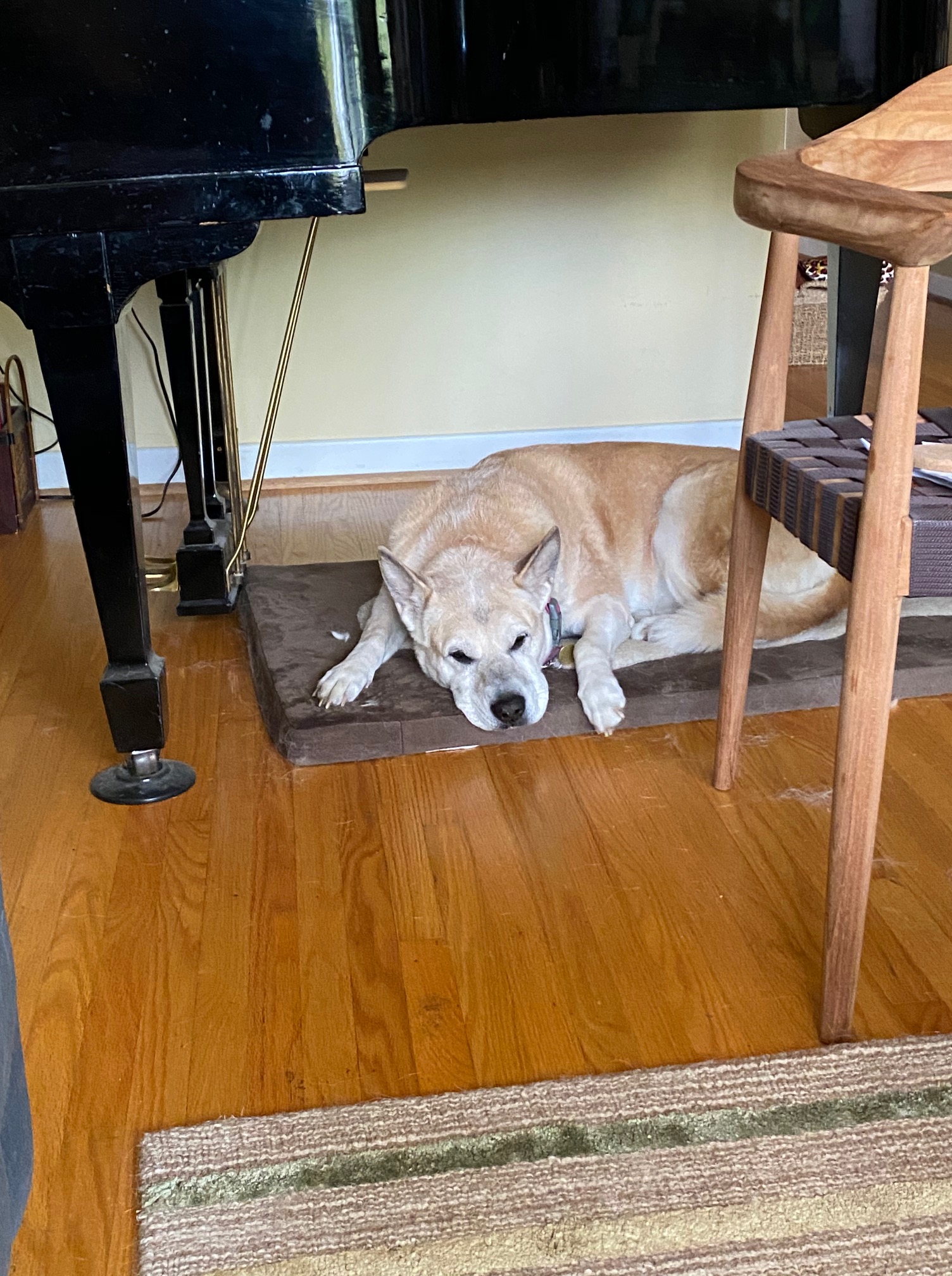
2) The dog had a new place to sleep, given that the piano is a den where she sleeps. Believe it or not she’s under there while I am playing, sometimes happiest (it seems) with the biggest loudest pieces. I say this because when she’s elsewhere and I begin playing one of these she gets up and finds her way over to her bed under the piano.
Who’d a thunk it?
3) The piano sounded different.
I am still figuring this out. One of the first things I played through was the last few pages of Tristan und Isolde minus the voices of course, something I’ve been playing a lot over the past few weeks.
It sounded brand new: because the lower notes had a new depth and sonority with the walls bouncing the sound to me in new ways. The upper notes sounded sweeter, as though they were free to fly, where previously I hadn’t heard them as clearly.
This has been true for everything I’ve played since the move. Chopin and Schumann and Dvorak and Wagner and Ravel and Debussy are all sounding different. I was hesitant about joining in (weird to say that… I said that impulsively, not remembering that it’s ME who is playing) with my voice. Singing along with myself in this new location feels different. Because of course the singing voice is also different with the new acoustic, the different set of surfaces bouncing the music (both instrumental & vocal).
I find I want to play differently now. Indeed I think this is always the case with any new instrument, that I hear the music in new ways and understand the contours and shapes of the music in new ways.
Let’s set aside the question of whether it’s any good. As a critic, a person expected to judge, to tell you this is good and/or bad”, you may want to frame this around judgment & questions of making something better, perfecting the music. But anyone can change their musical experience by examining their acoustic. The options may not be huge, indeed you may already have found the sweet spot and are sounding as good as you can in your space.
Even so, I want to put this out there.
If the pandemic means you’re not able to get out to the usual places where you practice and /or perform (and I am certainly missing the church where I was accustomed to sing & play, especially the loving community)? If you’re not feeling inspired because you don’t have the usual opportunities?
Altering the configuration of your space is a way to rejuvenate your experience of music.
They’re an odd pair, Bob Woodward & Michael Cohen. Or more properly, their books make an odd couple.
One man uses four letter words for his titles, the other book has a title with a sub-title followed by a sub-subtitle (although come to think of it he features four letter words throughout his book). Maybe the length of the titles tells us something about the writer & their confidence in their project.
One man might be identified as a crusader who already has a place in the history books (including the ones he’s authored). There’s the film we’ve all seen, All the President’s Men, where he’s portrayed by Robert Redford.
The other man went to jail, and might even be identified as a crook. More on that in a moment.
Michael Cohen’s book about his time working for Donald Trump is called Disloyal in huge letters, then A Memoir in smaller letters, and finally The True Story of the Former Personal Attorney to President Donald J. Trump. As far as I can tell it is his first and only book, and now a best-seller.
Rage is the latest Bob Woodward book about Donald Trump. Not only has Woodward written over a dozen books, he’s even written another one about Trump, Fear.
After a taste of Disloyal and a sniff of Rage (that is, sampling each book), I dove into Cohen’s book without hesitation as I found it much easier reading. The book by the beginner is full of wit & reads like a conversation. The book by the professional is a slower slog, much more careful in its construction and as a result much harder to read.
I wonder, does this perhaps parallel the larger world & the discourses surrounding POTUS #45? The beginner politician might be expected to flounder although to some (himself especially) he is the greatest ever.
Conventional wisdom doesn’t apply to Trump. Indeed he seems to deliberately push against the mainstream, and that guarantees him publicity & his ongoing ownership of the headlines & our attention. Cohen writes the way Trump tweets, which is to say without expertise and without any evident hesitation. It seems impulsive & organic, where Woodward’s writing is accurate but careful & deliberate. If this were a morality play, Woodward would be the personification of the rule-book & convention. We see the path to Trump’s White House of maskless self-indulgence in Cohen’s book, a thrill-ride with no fear of consequences or the bill to pay. And it’s natural to encounter Woodward as the nagging voice asking about the morning after, about where it leads & how much it will cost.
Needless to say one is more fun than the other, a guilty pleasure.
If you think Satan was the hero of Paradise Lost you will love Cohen’s book & the villainy it captures. It’s a matter of aesthetics & politics, taste & morality. The Godfather books & films are much clearer in telling us who is a good guy or a bad guy than Disloyal. But come to think of it, everything seems blurry lately, as far as which way is up, who’s good or bad.
There is a strange pair of voices heard in each book.
For Woodward it’s what we might have demanded of the press in 2016: that for every known falsehood, that it be balanced with truth. And so Woodward interviews Trump for hours, capturing all sorts of falsehoods and half-truths inside the quotation marks, followed by a kind of rebuttal in the next sentence from his authorial voice, as though to set the record straight.
For Cohen it’s more a matter of his conscience. He’ll be doing something awful and telling us that he knows it’s wrong, perhaps mentioning the disapproval of his wife and children, and shifting his tone to comment upon himself, asking why he was so mesmerized by his leader. We hear about Jim Jones & the Koolade, the question of Trump’s cult-like following. Clearly cognitive dissonance was mild for Cohen, possibly because he was riding the coat-tails of his boss Trump.
I read the books one after the other, startled at how nicely they go together.
I offer a cautionary note to anyone considering these books. If by the time you are going to read, it turns out that the election is over and Trump has been re-elected, I wouldn’t recommend the books. They will depress you if you’re a Democrat. If you’re a Republican, they might promote cognitive dissonance, although maybe you can ignore the sensation if you are sufficiently enamored of the joys of “winning”.
Woodward’s book is more timely for me, given that the elephant in the room—COVID19—steps forward in 2020. The pandemic wasn’t relevant for Cohen’s book. There’s a natural sequence to the books, that I hit by accident. Cohen tells us how the idea for a Trump presidency was born, and takes us through the campaign, ending in 2019. Woodward’s book is much more current, taking us into 2020 & right up to the present day pandemic horror show.
And of course I will have a different perspective when I wake up next week, depending on the outcome of the election.
While killing time waiting for the latest Saturday Night Live to begin I stumbled across something much more enjoyable than expected.
As Father Figures (2017) begins to unfold, and I saw vague resonances to other recent films I tried to imagine the conversation as the film was being pitched.
Glenn Close is playing a mom who has been promiscuous in her youth, so much so that her memory of the conception of her boys is a bit hazy: not unlike the premise for Mamma Mia, although it’s not a musical. But instead of bringing the possible dads together on a Mediterranean isle, we get a journey of self-discovery.
Kyle (Owen Wilson) and his mother Helen (Glenn Close).
Owen Wilson & Ed Helms are contrasting brothers who seem estranged, driving each other a little bit crazy. It’s not so different from what we saw in Wes Anderson’s The Darjeeling Limited (2007), although this time Wilson is less of a jerk, more of the silly over-the-top fount of enlightenment & wisdom he played in the Fokker films, beginning with Meet the Parents (2000).
If you recall Helms from the Hangover movies you may be waiting for the craziness underneath that is ready to erupt.
It’s a classic pattern really, this idea of a journey of self-discovery, with conflict & male-bonding, . We’re sometimes verging into territory that is uncomfortable, but this isn’t as gross & scary as some comedies I’ve seen in the past few years.
One reason it feels so fresh is that Lawrence Sher is making his directorial debut leading a strong ensemble cast including JK Simmons, Ving Rhames, Harry Shearer and Christopher Walken, in addition to Wilson, Helms & Close. Sher has recently been an Oscar nominated cinematographer for The Joker after a long apprenticeship behind the camera, that certainly earned him his shot at directing.
While there’s a lot of testosterone in the film it’s refreshing, sensitive, while dodging many of the usual pitfalls. There’s little cliché or sentimentality. I am sure they’ll let Sher direct again after a strong start.
And then there’s Justin Malen, who wrote the script.
The mystery deepens when I look more closely. Malen’s entry on IMDB mentions Office Christmas Party (2016) and Wished another 2017 film, identified as a Chinese film, and for which Malen’s credit is under the name Hongwen Mai. So perhaps his career isn’t properly documented because he has changed his name.
The writer explains
While it may seem to be good that he has three films opening in 2021, none of them sound terribly exciting. Two of the three (Yes Day and Clifford the Big Red Dog) seem to be aimed at children and Bad Teacher 2 is a sequel to a forgettable film. Clearly the powers that be have noticed that the man can write, and have given him lots of work, perhaps insisting that he pay his dues. But I hope someone will eventually ask him what sort of project he wants to write. Full disclosure: I love children’s films. I was musing just yesterday that Gru (the evil genius/reformed hero of the Despicable Me cycle) sounds like a kid’s version of Sacha Baron Cohen’s Borat, and thereby empowered to mangle the language in a way one never hears in the adult cinema world. I remember Clifford from numerous bedtimes with the kids, and will likely see Malen’s creation one way or another. While the industry doesn’t always seem to respect children’s literature, I’m not the industry. I love Roald Dahl, Maurice Sendak, The Nutcracker & anything undertaken as art or entertainment intended for children.
I believe Malen has genuine talent. While the big actor names & Ivan Reitman as Executive Producer likely helped promote the project, it was the writing that made this such an enjoyable film. You’ll hear people complain about comedies that follow the deeply worn tracks of a genre so well that there’s nothing new anymore, and then when someone tries something genuinely new they complain because it’s unfamiliar & challenging.
Father Figures isn’t a predictable film. I think I need to see it again to have a better sense of it, but it held my attention. While it was only asked to fill the time before SNL it was the highlight of the night, and has me musing the morning after.
If you get the chance to see it, I’d recommend it.
Confession: this is a meta-review, a preamble to what’s ahead. I’ve been reading lots of books, and will write about them in the next little while.
Once again the pandemic seems to be changing our rules. I saw Singin’ in the Rain a few days ago, a film that I admire for many reasons, especially its illustration of the way a changing paradigm can upend and disrupt our lives. When the talkies arrived our ideas of excellence were changed forever. My favorite number in this film is one that for me captures the essence of musicals, the idea that the music goes where the word can’t. After a certain point in this scene the words cease to mean anything at all: so no wonder they venture into something totally meaningless. No it’s not Robert Wilson but this number seems very modern to me.
At one time –long ago—I was more like the studious fellow doing the tongue-twisters, not realizing that I was taking everything too seriously.
So speaking of the new & the changing paradigms, I’ve been avoiding e-books for years. It’s not an objection to technology, this avoidance of digital documents. But I do love the feel of a book, the smell of a book. Ah let me wander in the depths of a used book store, especially a music store. My collection? largely used books I’ve stumbled upon particularly the scores. Magic. How did they know I was looking for that opera? Of course I need to wrap my head around electronic scores, especially now that I’m composing again. Yes it’s embarrassing to admit how much I did using a pencil, although I did a few things with a tiny cheap program I bought for $20, which worked fine for the songs & music cues in Christmas at the Ivanov’s, (oh my dog so many years ago.)
Oh my dog…
But I’m now understanding something I saw before. I recall speculating on social media when I couldn’t find a bookstore that would carry Piketty’s Capital in the 21st Century, foolishly attributing this to something political as though the book were being suppressed. Silly me. Flash forward to 2020, when I can’t get a hard-copy of Alex Ross’s new Wagner book. I realize now that both times the key was not politics but logistics. An American best-seller will be made available in the USA first and only later will they get around to Canada & her tiny customer base. We’re like a blanket on the back of a behemoth, only useful to keep the animal warm, otherwise beyond notice. I’ve seen this pattern with other products.
So in other words I’m now fighting my aversion to the e-version. When I tried to procure a copy of Alex Ross’s new book about Wagner, the kind charming person from the bookstore said there were no copies available in this country.
Really?
This is only partially true of course because we were only speaking of hard copy. Digital versions? Different story.
I was softened up because I was already looking at other electronic volumes. A professor I know in the USA directed me to Paulo Freire’s A Pedagogy of the Oppressed, available as a pdf for download at no charge. I’ve been reading it.
I recall reading other old essays this way, such as several of Richard Wagner’s writings, and opera libretti that can be found online. It’s a way to side-step commercial market forces. Books that don’t make big $ are available this way. There are trade-offs. I can’t just shove it onto a shelf or lend it to a friend: at least I haven’t figured that part out yet. But I am shocked at how easy they are to read. I had thought the digital interface in your face would not be so comfortable. Surprise surprise.
So now I’m eagerly hunting for more books. Sometimes I get the old-fashioned hard copy. I’ve recently been reading dry Bob Woodward (a disappointment so far), funny Michael Cohen (an unexpected surprise at least so far), singer David Geary’s memoir, Sky Gilbert’s brilliant Shakespeare analysis (I am on my third trip through this remarkable study), Fareed Zacharia’s newest & John Lithgow’s funny new book.
When I need a break from all those words (just like Gene Kelly & Donald O’Connor in the video above) there’s always music. So I’ll write something about that.
And of course I’m reading Alex Ross electronically and so far loving it.
I will tell you more about these books in the next little while. I hope it’s helpful, with Christmas coming. Did you know that books make wonderful gifts?
It started out as a nightmare, that classic things going wrong dream, where you have a show to give or a piece to perform and don’t remember your lines.
I was to give a presentation or teach a class.
I had been hanging out with friends in a theatre space, something vaguely like the McMillan Theatre. No I’ve never done that before.
And I suddenly remembered that I was scheduled to talk about something upstairs, (even though hm, wait, isn’t the classroom downstairs?) So I was quibbling with the dream already.
I realized that I didn’t have the CD for the music I was supposed to discuss. And I didn’t have notes. For a microsecond I was nervous.
There are broadly speaking two kinds of dreams. I don’t mean “fun” and “scary” although I suppose that is also true. I meant to divide dreams between the ones where you are immersed in the dream as though it were your reality (and it can scare you because you believe in it), and the ones where you know you’re dreaming, which is called “lucid dreaming”.
So it dawned on me that I was dreaming.
And I had a marvelous epiphany during the dream. Ha, I should hope so. Who wants a banal epiphany or a boring epiphany? But I really mean it. As I noticed how odd the situation was – that I’m supposed to give a presentation when I’m not currently enrolled in any courses nor am I teaching—it hit me, that, wait, it’s 2020. Nobody is doing any of these things right now.
And I had the fun realization that not only was this a dream but hey, I could talk about anything I wanted in the classroom. Sure, that’s always the case: that a teacher doesn’t necessarily have to be a slave to curriculum or structure.
But I was particularly aware, that this was an opportunity, an unreal magical moment.
I miss the EJB, the theatres & concert spaces, the gatherings of people including the ones who are excited to be there. And even if some are bored I miss them too. I miss the whole kit & kaboodle.
It was nice to be temporarily immersed in a world that I’m not able to visit right now, and even nicer to know that it could be like a playground, in this dream. At one point I was rushing to take the elevator upstairs and of course it was in the wrong place, and when the door opened the floor was 3 feet away from proper alignment. I climbed in, amused that the floor was more like the dirt in the garden outside than a real elevator, an amalgam of recent experiences (I’ve been raking leaves this week, not riding elevators at the EJB). I climbed in thinking my jacket would get dirty and it would be fun explaining this to the listeners at the presentation: and knowing that, no I suppose it was just a dream.
The dream didn’t last long once I realized what was up.
And it was Saturday morning. I was grateful that Erika had let me sleep in, and had taken the dog outside for me, sparing me one of the usual morning chores.
Hm, come to think of it, it’s a pleasure to walk outside watching the dog romping around in the yard. Not a chore at all. It’s a pleasure.
I went to make coffee, to shake off sleep, to tell Erika about the dream…and to make the dog her breakfast.
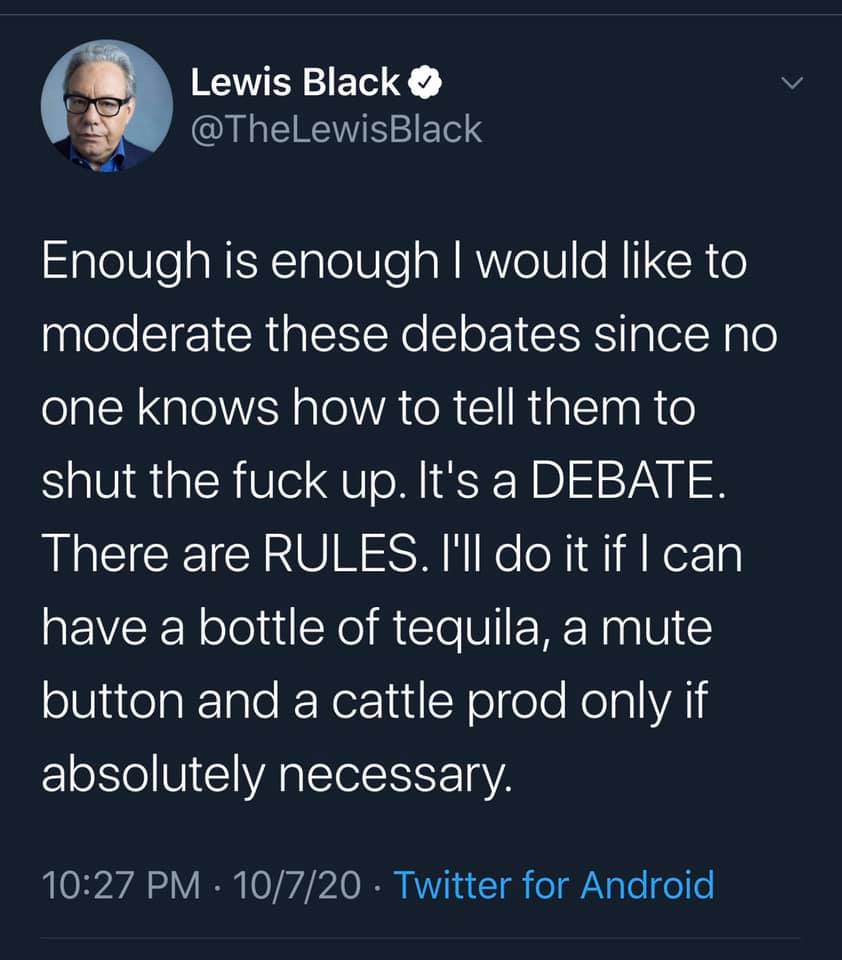
We have lived for quite a long time in a culture here in the western world, where the consensus is often unspoken. While there may have been something friendly & cordial in our past, genuine collegiality is now the exception rather than the rule.
No I am not proposing cattle prods.
But maybe it’s also time to move past our fantasy of a gentleman’s agreement between contestants, given that no one behaves like a gentleman anymore.
I would point you to the NBA for an alternative. Why?
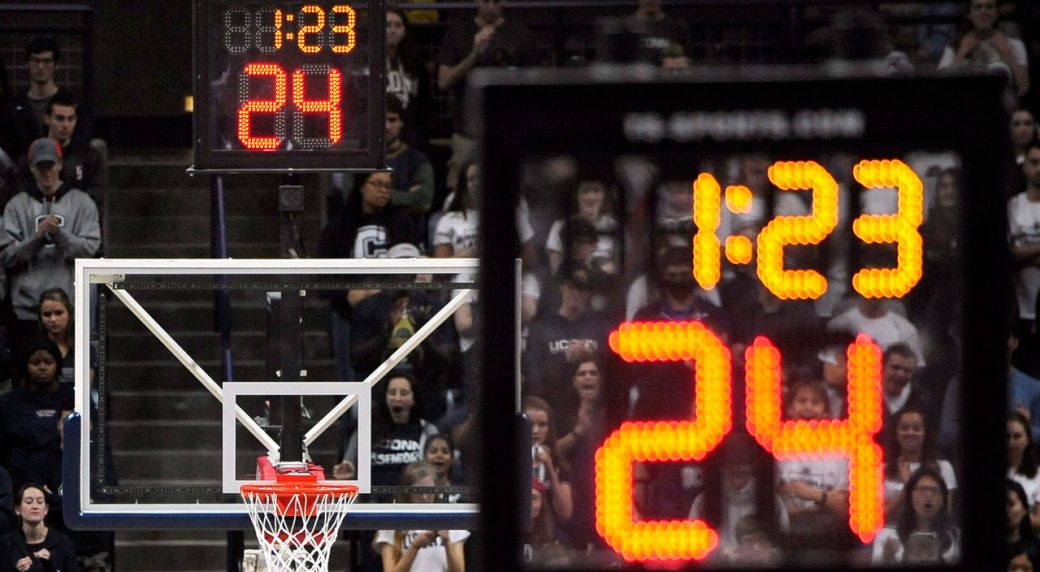
They have something called a shot clock, which is a way to regulate possession. You get your turn –not unlike what happens in a debate– but it’s limited to 24 seconds. If you can’t get it done in 24 seconds, if you are too cautious or if the other team’s defense is too good, the referee ends your opportunity, and the ball is given to the other team.
How would it work in a debate? suppose each contestant gets two minutes to answer a question from the moderator (and the mod is not a passive schlumph like what we saw in 2020 so far).
The clock runs. When your two minutes it up, the other person gets their turn.
If someone goes over time, it comes off the clock. So if for instance you do a Mike Pence and blather on for 30 or 45 seconds while the mod tries to stop you? that comes off your time for the next question, when instead of 2:00 minutes you get 1:30 or 1:15.
Simple right?
And the same could work with interruptions and heckling. If you disrupt 30 seconds of a reply, you lose 30 seconds of your own time.
Lest anyone say this isn’t how it works in Parliament: they have a Sergeant-at-arms lest The Speaker of the House is ignored.
Are we now fully into the era of reality TV, without any civility? Gameshows are the ultimate reality TV. If that’s the world we live in, why not give the mod a water pistol, to douse the transgressor?
I’m sure the prospect of a soaking wet comb-over would silence some people you can think of.
I wish there were a way to put the toothpaste back in the tube, to rewind to a time when people remembered decorum. Parliament demands it. Why shouldn’t we as well?
I regret the violence implicit in all of this. Wouldn’t it be amazing if debaters were required to listen to one another, and before replying, were required to spend 30 seconds paraphrasing the words of their opponent, to prove that they understand what’s being discussed? I can imagine a debate protocol where you are required to defend the point of view of your opponent. Joe Biden espousing the GOP ideals, Donald Trump defending Obamacare. Is that a mind-expanding exercise to dream of a debate as a kind of drama of identification?
I know what you’re thinking. “But that’s not what a debate is!”
(and here I’m recalling that Monty Python sketch, where John Cleese argues about argument)
Is this absurd enough for you yet? But at least they are not moderating debates with live ammo. I’m nostalgic just like Captain Hook, wanting to shout “bad form!”
Are we in a post-debate post-logic world?
Discourse is conversation ultimately, but if no one listens, is there a conversation?
Arkady Spivak is the Artistic Producer of Talk is Free Theatre, a company you may recall for some remarkable shows.
I remember tiny perfect shows like their adaptation of Candide, Parkdale Peter Pan or Dani Girl. I can’t forget bigger more complex shows such as Bulgakov’s Moliere, their co-productions of Assassins or The Wedding Party. These are among the very best shows I saw in the past decade.
Playwright Kristen Thomson, Tom Rooney, Jason Cadieux in The Wedding Party (Photo: Guntar Kravis)
I saw on TIFT’s website that they’re doing a pilot project of a basic income guarantee (or BIG) for artists.
Universal basic income is an idea that’s in the air. Andrew Yang ran for President in the USA, proposing that everyone over the age of 18 get a universal basic income of $1,000 per month, in response to worker displacement driven by technological automation. While he lost the nomination for the Democrats, his ideas got lots of attention. But it’s not new. In the 1930s there was a political party in Canada called “Social Credit” who had similar ideas, that all citizens should be paid a dividend as capital and technology replace labour in production. They were elected for the first time in the 1930s in Alberta. With the discovery of oil perhaps they no longer needed to offer the dividend, but the party would also win elections in Quebec & British Columbia. If you’re curious you could read more about a variety of basic income experiments in the world, and parties (usually in opposition, sometimes a tiny minority) seeking to advance the idea in countries all over the world.
Which brings us to Talk is Free Theatre (you can see more on their website).
The TIFT Artist BIG Project is a pilot project designed to offer a number of Artists (approximately 20) a minimum annual income guarantee each year, for a three-year period. The income would be earned through the Artist being engaged on various and separate projects with TIFT throughout the year, as determined by TIFT’s Artistic Producer (“AP”) and the individual Artist together. The BIG Project is NOT full-time and is NOT employment. Rather, TIFT would guarantee that the Artist is able to earn enough in fees from the separate independent contracts with TIFT each year to at least equal the minimum annual income guarantee. One of the goals of the BIG Project is the exploration of a new operating system, through action research, that would offer artists and theatre companies a more sustainable and effective paradigm in which to create theatre.
I wanted to discuss this with Arkady.
Barczablog:I am recording. I have a new phone. I tested it with some Wagner
ARKADY: If it’s good for Wagner it’s good for me.
Barczablog: So please speak clearly & feel free to be Wagnerian.
ARKADY: That has never been an issue for me.
Arkady Spivak (photo: Scott Cooper)
Barczablog: I read about Talk is Free Theatre Artists Basic Income Guarantee pilot project on your website. Talk about it in your own words.
ARKADY: Sure. Yes. So this is not an idea we developed just because of COVID, just now. This has been kicking around for about a year and a half. Where it started, about a year and a half ago we launched a sort of study or enquiry, about professional artists (particularly those who are either in mid-career or approaching mid-career) as a support system. All of the artists who are around, might be 40, 41, years old, and ask “do we have a kid or not?” , “Do we have to live with the industry” Because as you know it’s a counter-intuitive thing to family life. You know, you’re not at home, you have to work at night.
Barczablog: And it may be different for a woman than for a man.
ARKADY: Especially for women, but you know not exclusively because there are same sex male couples who are adopting kids, it becomes the same thing. But for women, the biological clock is what it is, you cannot change it. If you’re 50 you’re less likely to have a child, than if you’re 40. We’ve been noticing these things… We’ve done a deep questionnaire to the ensemble membership of TIFT. What’s needed, what are your barriers, that sort of thing. There were five actions plans that came out. All of them but this one (that we’re talking about) were instantly implemented because they didn’t require study. So things like paid child-care, giving artists a child-care allowance. So you don’t need a study.
Barczablog: so parenthetically can I ask you to summarize what those other things are that you already did?
ARKADY: sure
1-Paying child-care. 2-Shortening rehearsal day: instead of eight hours making it five hours, working 10:00-3:00 so mothers / fathers / caregivers can run home to daycare before the school is over. 3-And work five days a week instead of six days a week, and to compensate for that we just have to add another week of rehearsal which is not necessarily the worst case or the worst thing for creating art: to give it more gestation.
And those were the main things.
And one of those things became that: the reason that people become reluctant to adopt the lifestyle at 41 or 42 if they want to stay in the profession, they’ve worked for over two decades to achieve a certain positioning in the industry, where someone can hire them without an audition and that kind of stuff.
And why would you let go of that? After you’ve everything you were building towards. And you know it’s sort of counter-intuitive and the thing is the fear that, the moment you give up a part somebody else will play it and your career spirals out of control.
So we realized –and I put a little committee of artists together—that the best way to ensure the lifestyle is to promise people work. To promise them an income.
Because even for self-employed there was a government program. It is very difficult to decipher but it is possible. And it may have to be that the work adjusts itself to the lifestyle needs of an artist as opposed to the converse. ….But at any rate something was needed. And that’s when I came up with the idea of financial guarantee.
And then I said this is going to have to be a pilot project. And we got busy with tours and programming and all this stuff.
And then COVID happens.
And then we see the very first thing that happens is that everybody was thinking of contracts. And whereas after a certain healing & rebalancing other professions could make their own luck within theatres. So playwrights can in fact seek a commission from a theatre, because we can develop new work. Nothing stops us from developing new work. Or they could get a grant to develop new work, as an individual artist. And they could do professional development.
But an actor can do none of those things. The only thing an actor can do is be hired by a theatre and speak the material, the words given to them by a playwright. And they’re effectively shut out from all of the training programs. Most do not accept applications from actors partially because there are so many, and because –no offense—it’s very difficult to determine who is professional who is not, as an actor: for the purposes of an arts council. And so there is a huge degree of unfairness. So I started planning figuring out what we can do.
And so what this is, is a financial guarantee, a contract that there will be contracts, nothing more.
Successful applicants to the program will be offered a minimum financial guarantee per year. The minimum will be $10K per year. They could go higher. It really depends on how many will apply. If an artist is a mainstay in the company and they’ve earned an average of $25K a year over the past 3 years, we would probably look at the average per year. If they’ve been making $25-27,000 a year and we offer them $10,000: that’s kind of a slap in the face.
And this will be about 25% of the general work we offer to artists every year. So the premise is this. You are put on a financial guarantee, for three years. Then when it’s time to program the season I meet with a chosen person. And we discuss what work is interesting for them, given the career aspirations, what makes sense given the lifestyle marrying all those ideas creatively in professional decisions, because it’s difficult to separate them. And we come up with a program. They say “I always want to play Hamlet” and I say “well I see you more as a Claudius” and so we negotiate a work program. It is actor-centric but it’s not exclusively for actors.
And what sort of evolution they need from this program. And so then we decide what it is (the program). And when it is. It follows the same benefit of European rep system without surrendering to the shortcomings of it. And the shortcomings are that an actor has no artistic control. And they really work for an institution, you know? It’s considered their work ethic where their work opportunities are tied to the institutionalized vision or institutionalized legacy of this or that organization.
I’m a Moscow Arts Theatre actor. Fine…This is what it really is. It basically looks at and it still has the feeling of an ensemble & working together over a long period of time. But it looks at people as individual institutions that are working together, sort of like a European Union of actors.
Barczablog: it sounds like you’re doing several things at the same time. Not exactly a company, or a collective. I read what you described in the invitation. There are escape clauses built in.
ARKADY That’s right.
Arkady Spivak (photo: Scott Cooper)
Barczablog: You’re trying to make the artists feel safe. You don’t want to box them in, always playing the same type of part.
ARKADY Well yes. This is not what we’ve been doing historically. We’ve never used people in the same light before, that’s number 1. I always operate on the “what is the scariest possible but rational proposition” for that person. Second of all an actor can always say “no I’m not doing it”. And then I’m on the hook financially, right? If we don’t come to an agreement on what you should do for year 1 or year 2 or 3, then I have to pay you out.
Barczablog: How many will it be?
ARKADY It will be approximately 20 we think, right now.
Barczablog: it’s a governance question & also an artistic question. You are not a tyrant, in my experience. In some artistic endeavors, especially if you go back 50 years, the AD was more tyrannical. We’ve seen a change to something more collaborative, co-operative, where the leader is facilitating rather than commanding. Do you expect to have a co-operative relationship among the artists, and they would be speaking amongst each other, and offering suggestions to one another. It wouldn’t just be the job of the artistic director.
ARKADY you’re 100% right. And the only way to run a successful theatre company is to keep everyone busy doing what they want to be doing. There is no other recipe to a productive & safe workplace in my view.
Barczablog: what if they start to see opportunities. What if Joe Blow, who has never played King Lear before, and they notice he would be great if he did x or y or z. They get ideas for adaptations & directions to go in. Maybe a dumb example I gave but you know what I’m driving at.
ARKADY you mean artists talking to each other?
Barczablog: and actually thinking about projects that they might do together.
ARKADY: Oh I will actually encourage that. Because for me to produce something, I don’t want to call it ”check-marks it ticks off” …but how many priorities does it take care of at the same time..? And if I have a project that seven of my absolutely cherished actors are useful to, then feel useful for, it immediately gets staged. I will ask them to cluster together. And meet each other and go for coffee. And pitch projects. I will counter offer them something. I mean if somebody gives me a feel that the work is not quite risky enough, not quite forward thinking enough, for complacent, that’s never going to be upper-most in my mind. So you know it is an artistic discussion, an artist participates in what it is that they want to say. And part of the program the very purpose of it is to ask people to take on other artistic functions and challenges.
Barczablog: How far can that go? Are you saying actors to become musicians or directors or writers?
ARKADY Well… musicians have to go to school for a long time. It needs to be something that is a professional contribution, not a hobby. It could be an actor who has appeared in musicals doing a classical text. It could be within their own profession. It could also be, what I like to do is to go to an actor, and say “why don’t you make your professional directing debut”. And we sometimes have one or two of those in a given year. Because I don’t run a million dollar organization.
Barczablog What about front office functions…
ARKADY If someone wants to go into administration I will let them. If they have $2000 still un-used, …I’m not going to ask them to clean toilets.
Barczablog But maybe the website.
ARKADY Exactly. It has to be self-interested. What I hope it does, is to actually bring artists to a bigger presence within the organization and how it’s governed. If you tell me you want to undertake marketing? I am more interested in hiring an actor to do marketing than a marketing professional. Will I ask you to do that? Not necessary. I’m doing quite fine. First of all in COVID one doesn’t have to market. Anything is a hit.
I will also say that this program is not for everyone. You really have to be actively interested. This is an action research project, meaning that we are learning and we are creating in this paradigm, with this new system, hopefully duplicate-able as we go. We have done some research a lot of thinking for it, but you know you can never prevent yourself, and that is why those webinars are important because they will help inform this through questions people ask. At the end of the day, what is here is that it’s not the only system with which we have a relationship with actors. There is still the conventional way.
Barczablog: so would it be fair to say your pilot is going to be a certain percentage of TIFT and if it catches fire it might grow and even become the entire company?
ARKADY I don’t think it should become the entire company. I sort of look at it as a Highway 401. There is an express lane & a collector lane. You choose which one you want. You can be totally stuck for three hours in either one of them, OR you get through in like six seconds. So my point is that it’s not for everyone. Some people just want to work, they want to show up for work and do the best they can. And they will have to go through a conventional process. And it is also possible and will happen that an actor who is not on that program will end up making more money than the artist who is. It’s just that they’re not part of the cohort that is looking to change the world.
Barczablog And of course every year will be different year. Different people, different chemistry & opportunities.
ARKADY Of course. And if you’re in the three year program as you see there are three uptown opportunities first of all you can forego one year entirely if you know your schedule, if you’re going to be doing a series on television, you can also apply to extend the terms of the program, extend the financial guarantee over a longer period of time, which is technically what I would do first before I say no to the year. You can always say no later on. And if you realize it’s not giving you any satisfaction (professional or whatever) there is nothing in it for you, ….
Barczablog You’re communicating with your participants, did you also expect to talk to unions about this?
ARKADY I didn’t, but there is nothing in it, all the contracts still have to be negotiated relative to each artist.
Barczablog so you don’t see any problem…
ARKADY In order for you to earn this money you still have to be signed on to an Equity contract or designers contract, musician, etc. You’re not getting any money on the side. You still have to work it.
Barczablog Okay. So guaranteed annual income. It’s been proposed in many places. There was a candidate in the American election, there are countries who have tried this, and discussed here too. During the pandemic artists are hurting, having lost gigs & income. This was something you were developing anyway? You did a survey… how long ago did you start?
ARKADY we started about a year and a half ago but this idea has been kicking around. The pandemic made it all the more necessary. It’s a coincidence. I hope it only goes to show how important that is.
Barczablog: Your survey: how many artists?
ARKADY the survey went out to 103 people on our mailing list: people who had done at least one thing with us in the last 5 years.
Barczablog: How many responses did you get back?
ARKADY There were 27 replies. People didn’t identify themselves by name but people identified themselves by gender & age etc
Barczablog: I can see this applying to many different disciplines: theatre, or dance, or opera or musicals. Do you see this as an important experiment that could be adopted elsewhere?
ARKADY I hope so.
Barczablog: Are you leaning heavily on govt support, or the city of Barrie?
ARKADY As an operation, if you’re talking about the company overall then absolutely because what we do is risky artistic projects, risky ancillary initiatives like this, and until they’re proven successful I cannot really go and get a sponsor. So the government generally speaking is much more certainly through arts councils, there is more support for risk work.
And I have a feeling even without this project there will be a better situation for the actors going forward. Because we actually now had to fight for something. Which as a country we’ve never had, on our own premises. We had war & had to send troops, but we never had to defend our land (well it’s not “our land”…), but our place. Number 1
And number 2, the way I consoled my colleagues, was “well you lost contracts”…. But everyone lost contracts. And you know, so… there is that.
Barczablog: I notice in the proposal, you have a preference for Barrie artists. If people have worked for TIFT before, you want to find local sponsors as well. Do you see this as a community building exercise?
ARKADY I see it as an arts community building not a geographic one. And that particular clause you’re referring to says you have to have previous work experience in the city, as opposed to have residence here. Or be from here. The thinking behind that is, …and by the way, not every contract will have to be fulfilled in Barrie. It is for all of Canadian artists. You just have to be legally allowed to work in Canada. But you can be anywhere in Canada, or live in UK….
Barczablog Okay Let me frame this around my own experience. I’m a Canadian Opera Company subscriber. They cancelled the last 2 shows of the last season, the first 2 shows of this season. And I just heard that the 4 operas in the 20-21 season are also cancelled. Do you see yourself working in a virtual arena for the next little while?
ARKADY Absolutely not. I think theatre is all about gathering. We’ve just programmed the entire September, outside performances, including a very big NAC project they’ve commissioned us to do, so I’ve squeezed in two-months-worth of programming that just closed on Saturday into the month of September. I don’t think theatre belongs online (and it’s not about whether it’s Stratford or whatever) I’m very glad for Zoom, for the conferences I can now do, the meetings you don’t have to get dressed, you can do a lot, it’s very effective. In terms of the actual content? what is actually important is the gathering itself more so than the story. I am perfectly happy to wait until we can meet again. OR Nobody says theatre has to have at least 50 -100 people. I am happy to do it for an audience of 1!
So you know, once this program is up and running, the idea is, instead of going to an artist and saying “can you give me 6 or 7 weeks of your time, we’re going to rehearse this particular thing and maybe tour it afterwards what is interesting we will work on more projects over a longer span. So I will throw ten projects into rehearsal. We will work one week at a time…., until it’s safe. And Moscow Theatre is where I grew up, and you start working on something without even knowing when the opening night will be. Because everybody is paid for by government. Every schedule was compiled monthly. And you would commit a month before, based on when it was felt it was going to be ready.
Barczablog: is there anything you want to tell me that you didn’t tell me yet?
ARKADY We are not going to answer every question. In fact I want questions to come out.
A few gray hairs ago…
Barczablog your illustration with the Moscow Theatre was good because it shows that it can’t be always about making money or earning back the investment. Some theatre is experimental and that’s very exciting. And you don’t know what’s going to happen. That’s what art is. It’s propositional.
ARKADY At the same time, raising revenues for my programs is 90% of what I do. I am more of a business man than a curator. But at the same time it’s not about commercial reality. It’s the business reality against a very specific artistic vision. Right? Because art has to be underneath everything. And anything can get away and deserves to be seen the question is, to develop an innovative business formula for that art, not as a reality in & of itself. We should not be afraid to commit to something instinctively & use the business sense to validate it.
Barczablog: so as a last question, you have the dates etc on the website & the deadline right?
ARKADY Yes the deadline to submit is Oct 23rd at 5 pm EST . Then our hope is to let successful applicants know by the end of November. I have a feeling it will be much quicker than that. Because there are internal reasons for that. I have to start programming season, I can’t wait until December. I want to give the evolution more time.
Barczablog: I’ll be interested to see how it unfolds. Thanks Arkady!
ARKADY: Thanks!
For further information go to Talk is Free Theatre’s website.
Is he really gone? Alexander Neef may be in Europe with the Paris Opera but it was already a promiscuous relationship, this General Directorship of the COC. Neef was working for his Toronto audience while at the same time taking on the role of Artistic Director of Santa Fe Opera.
People work from home during the pandemic. Here I am, musing at home all by myself, as I wonder: does Neef even need to be in Toronto to lead the COC? Hmm I wonder. At some point in the next few years he may finally be gone. I wonder when the Alexander Neef era will actually end.
Alexander Neef (Photo: Gaetz Photography)
Recently I’ve seen two fascinating pieces about Alexander Neef & the Canadian Opera Company.
I’m not sure which one I like better, but want to be honest in recognizing how much I like both pieces, and how they trigger my own thoughts.
I have been on both sides with Neef. I have been very supportive applauding many of his choices, wonderful shows & brilliant casts: yet I have been a persistent nag with the nationalist question for years. However Canadian our Canadian Opera Company might be, I think at this time of financial hardship in ALL artistic disciplines, one might legitimately compare them, asking what right the COC has to government support if they keep importing stars from abroad. The Canada Council is to support Canadian artists, not to fund luxuries: by which I mean the imports we can’t afford at a time like this.
Aria Umezawa, Canadian director (Hayley Andoff Photography)
“Yes we can” might be the answer to a question that has not even been articulated in the realm of the Canadian Opera Company as part of this question: what comes next. It’s vitally important to consider a few parallel organizations who actually believe that a Canadian could lead them, the ones I display as examples in this blog. Are we still a mere colony, foolish children requiring the parental guidance of Europeans to teach us about a culture that we don’t understand or appreciate?
Or to reframe this around the headline, admittedly borrowed from Barack Obama’s election campaign, are there doubters who think we must hire a European or an American to lead the COC?
Alaina Viau, Canadian director (photo: Dahlia Katz)
Exhibit “A”: The National Ballet of Canada and Karen Kain. Fiscally healthy, led by a Canadian, coming to the end of her tenure.
Exhibit “B”: The Stratford Festival and Antoni Cimolino, led by a Canadian.
Exhibit “C”: Pacific Opera Victoria & Tim Vernon born in Vancouver.
Exhibit “D”: Vancouver Opera & Tom Wright, born in north Vancouver
Exhibit “E”: Opera de Montreal & Patrick Corrigan (Montreal born) & Michel Beaulac (Montreal born)
Exhibit “F”: The Canadian Opera Company, General Director: Alexander Neef. Who will succeed him?
Let me recount some of my favorite Neef moments • Semele, especially the self-righteous puzzlement in some quarters. • Wajdi Mouawad’s Abduction from the Seraglio & Peter Hinton’s Louis Riel: revisiting or even redeeming problematic operas. • Those three Ring operas in consecutive winter seasons, especially the tenors singing the role of Siegfried. • Cenerentola especially Lawrence Brownlee. • Ariadne with Jane Archibald & Adrienne Pieczonka. • Rusalka and Anna Bolena: two wonderful productions showcasing Sondra Radvanovky.
The bar has been raised higher under Neef’s leadership, the orchestra led by Johannes Debus sounding wonderful.
But if there were ever a time to consider this question it’s right now: when financial considerations loom large, when modest prudent steps are needed. Parsifal will wait. Expensive productions must be put off until the COC is able to afford them.
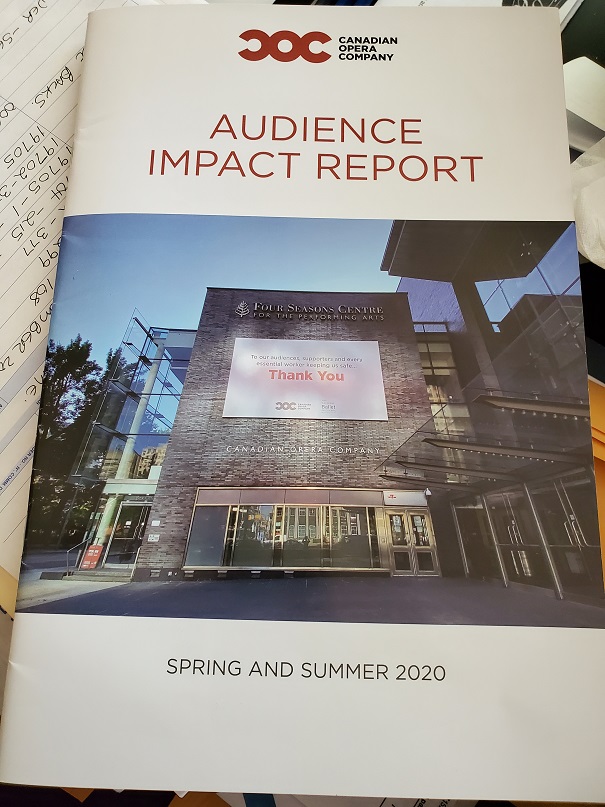
I was looking in the Canadian Opera Company’s latest publication, a shiny offering that arrived in the mail less than an hour ago, with the title “Audience Impact Report.”
Speaking of impacts the mailing included the obligatory return envelope & a request for a donation.
We’re considering it. No that’s not the royal ‘we’. One of us wants to help the COC more than the other. One of us needs deductions on her taxes more than the other. So we shall see.
It struck me as I was staring at the list of donors in the back of the book, that there are two primary pathways to impact a company such as the COC, and wow, my neighbourhood really impacted the arts.
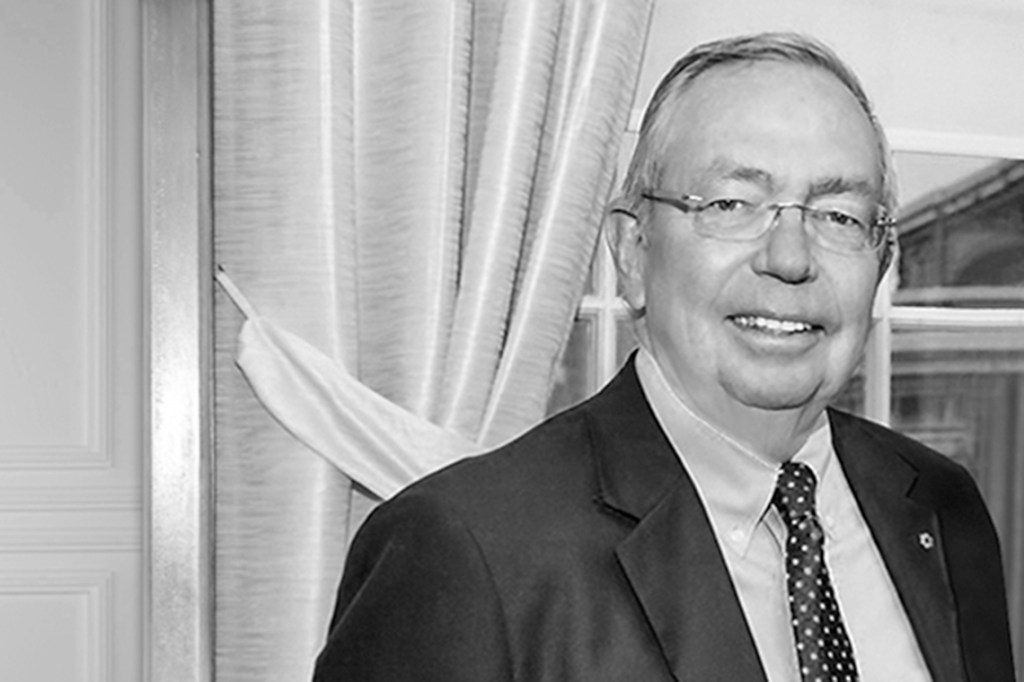
#10 is where philanthropists Arthur & Susan Scace used to live, directly across from where I grew up. I saw with sadness that Arthur passed away just a little while ago, back in May of this year. He was always very kind when I saw him, across the street from us. Years later, I have seen his name mentioned in multiple places, as a donor to my alma mater University of Toronto Schools, the University of Toronto, as well as in support of companies such as the COC.
Arthur Scace, philanthropist, Rhodes Scholar & nice neighbour
Their next door neighbours @ # 8 have made their impacts another way. This is where Alex & David Fallis grew up.
Alex is a wonderful actor & director, and now a professor in Newfoundland.
Alex Fallis
David is a brilliant conductor, the Musical Director with Opera Atelier and prominent in several other organizations such as the Toronto Mendelssohn Choir.
I remember playing ball hockey with David & Alex. I recall David’s stirring eulogy for his father many years later at the same church where he could just as likely be seen & heard conducting the Toronto Consort. We rode the bus together en route to UTS when we were young.
On our side of the street (odd numbers directly across) I was a younger kid in the same house where COC baritone Peter Barcza (aka my brother) lived as a child.
We were next door to the house of Louise Morgan, the same Louise Morgan whose name is seen in several places around the Four Seasons Centre as a donor. I’d like to think Mrs Morgan (as we always called her) enjoyed hearing us, with me at the piano & Peter singing.
There were lots of other interesting people not far away in this part of town, such as Rod & Doug Beattie, or Dan Needles (of Wingfield fame), who if memory serves, rode the same Nortown westbound bus, getting off one stop before we did (at least when they were youngsters…). I wonder if the conversations that eventually came to fruition on CBC began on the bus.
Or Al Fleming, my favorite mathematics teacher and eventual UTS Principal, who would get off two stops before that (Roselawn I think).











 barczablog