Today it’s the full moon, when people seem to go mad.
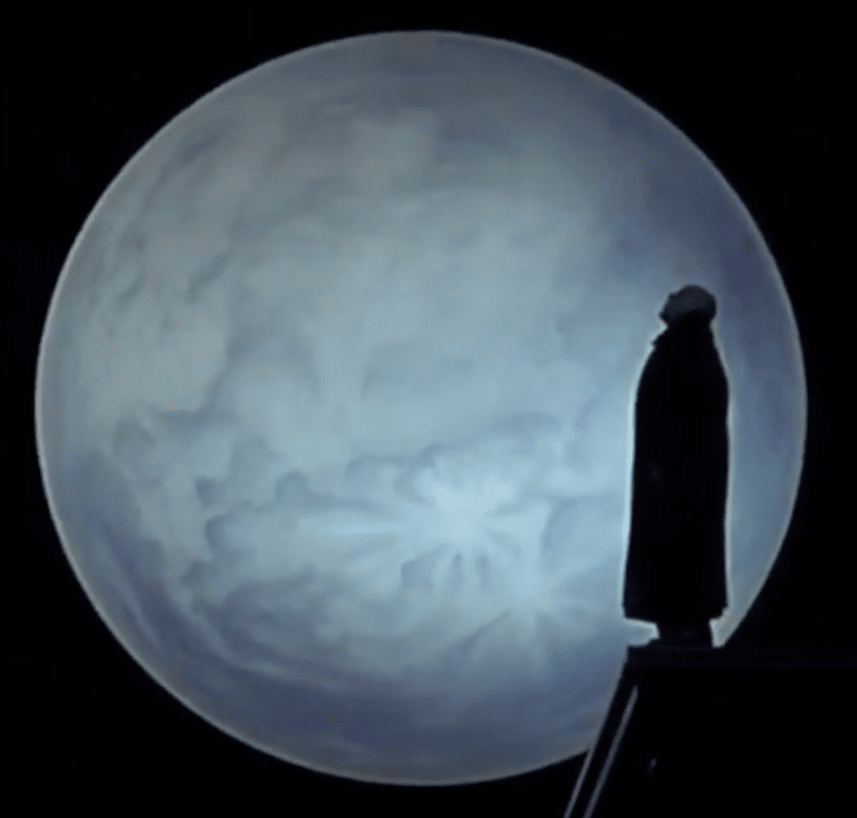
I have just watched Scott McClelland’s Orville Doodles and his Terrible Imagination: a retelling of the Faust legend at the Red Sandcastle Theatre.
No, there was no transformation into a werewolf.
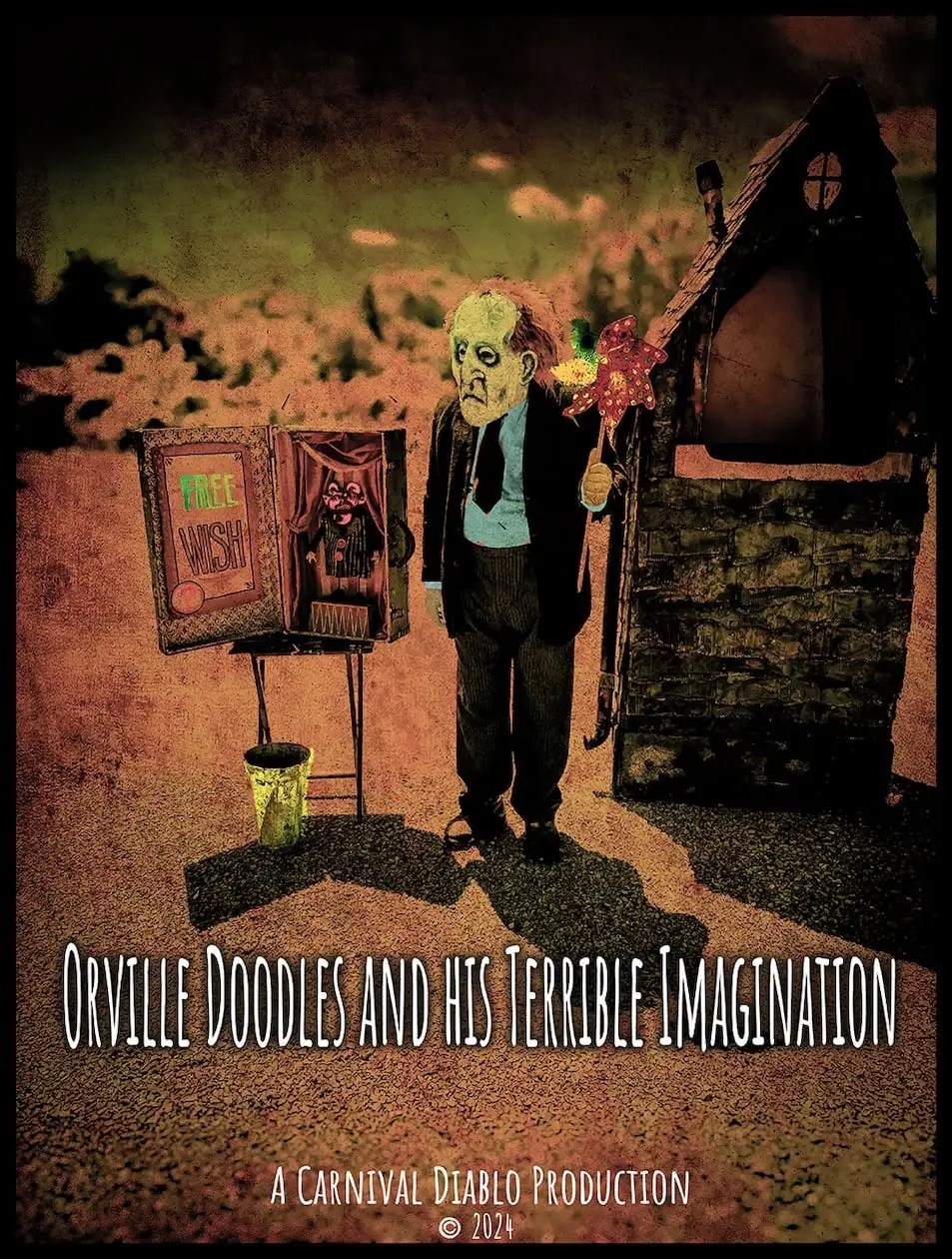
But we did witness an encounter between a normal person and the powers of darkness threatening damnation, a devil & demons, a dog and even a few things that don’t begin with the letter “D”.
The original Faust may as well be Fester screaming at the moon, wishing for a better life. In various versions of the tale the hero sells his soul to the devil in exchange for something he lacks such as youth, love or excitement.
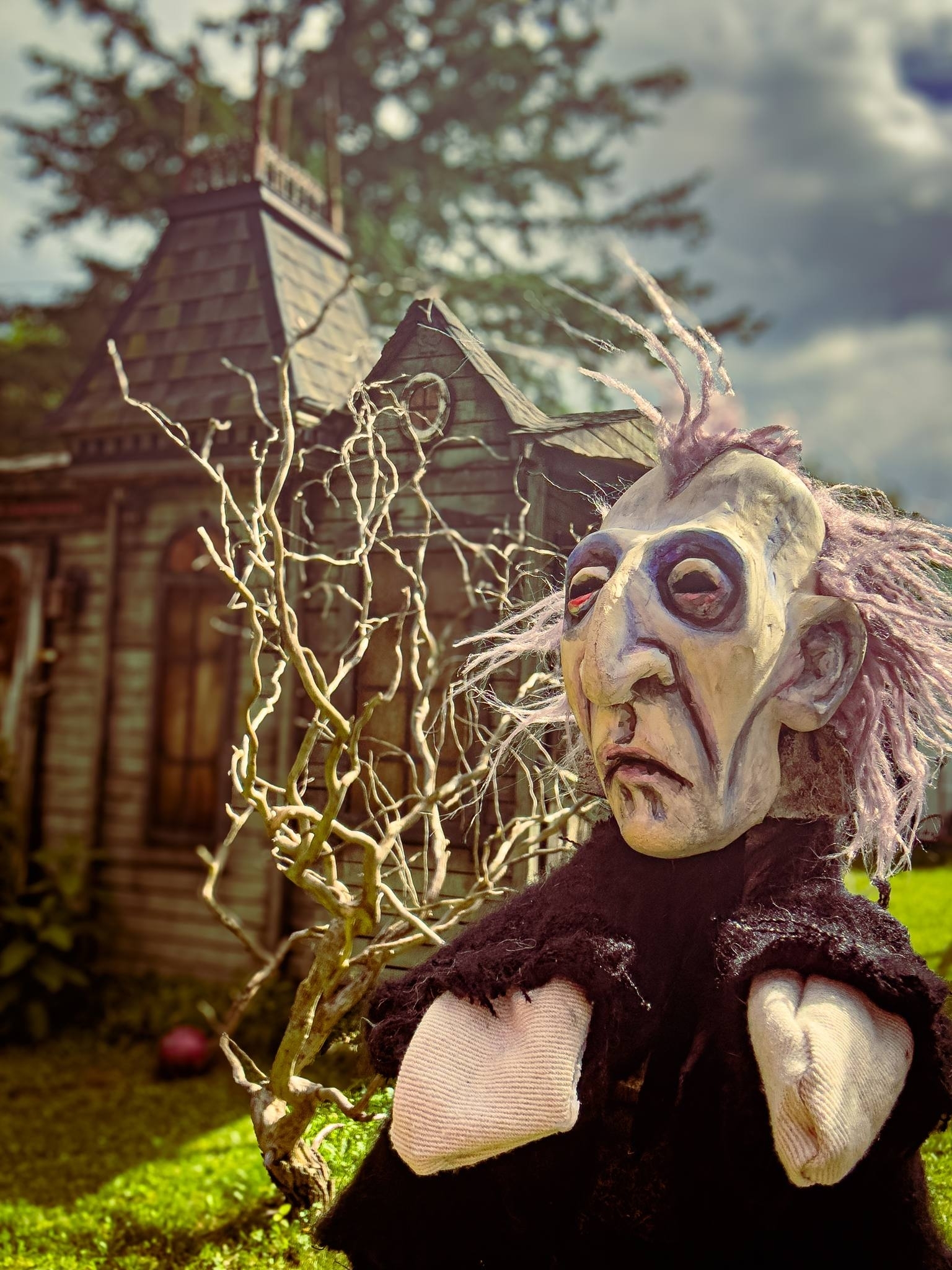
After seeing the show I understand that the cryptic title has multiple meanings.
Orville lives a life that seems unbearably boring, a daily routine that is stupefying. No wonder, because Orville has no imagination.
When the devil offers him an imagination in exchange for his soul, I wonder: would someone with an imagination foresee what this might mean, what consequences he might trigger? We might ask:
1-is his imagination terrible when it encounters the horror?
or
2- is his imagination terrible when it fails to anticipate the consequences of his choices?
Orville takes us along on his voyage of discovery, as though we too will learn about the world, learn how to imagine.
We see a fairy get devoured by a devil-dog.
We see ghosts & demons.
We see Orville’s body change.
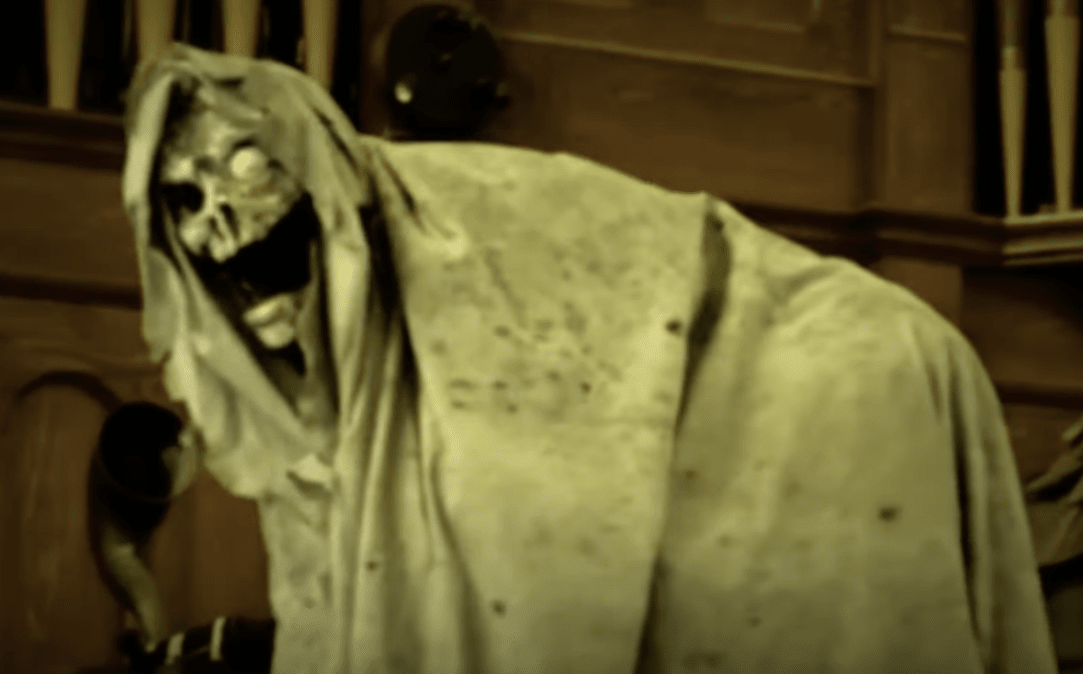
As Scott manipulates puppets and works magic, creating an illusion, we are invited to use our own imaginations. We may ask about the hazards, the danger for Orville and our own danger. Is the ability to imagine a blessing or a curse? If the performer succeeds in creating imaginative engagement with the audience it means we are moved, sucked into the story, rather than indifferent.
The story hints at the hazards of an imaginative sensibility.
The transformation of Orville’s life from boring routine into something magical parallels what we watch. Scott the magical practitioner strips layers off of the surface of reality, as Orville takes risks.
Is this the path to redemption or damnation? You’d have to see the show to find out, as I’d rather not spoil it. But it’s entirely kid-friendly, suitable for children ten years of age and up.
I had a chance to meet Scott.

You’ll notice how flamboyant and friendly he seems while I was stunned from the heat before the matinee.
Thank goodness for the air conditioning at Red Sandcastle Theatre.

 barczablog
Insightful and interesting review.
Not dull in any way, which begs the question, did you sell your soul?
I hope not.
Great to meet you! 🙂
LikeLike
HA! good question. Thanks for the kind words and indeed pleased to meet you too.
Do I bay at the moon? My neighbours could tell you. I have huge sympathy for Fester (who fell hard for Debbie in that film Addams Family Values).
I’ve been pondering this a lot lately, the way puppets and animation inspire some of us more than others. Similarly I go crazy for piano transcriptions of symphonies. Is it madness to imagine as I play a piano reduction of a Strauss tone poem or a Wagner opera, that I can hear the wild orchestrations as I play the reduced version? It’s a similar sort of madness as when we’re looking at the machinations of Eric or Scott, the magic they do making their manufactured minions manipulated into magnificent life. When I play the piano I imagine, as does the audience for the puppets or animated figures. Theseus in Midsummernight’s Dream says something about how imagination aids the portrayals –speaking of the pathetic Pyramus & Thisbe before him and his court–the lunatic the lover, and the poet / Are of imagination all compact– part of a deal we make. Those without imagination such as poor Orville sadly struggling at the beginning of the play need rescuing. We’re all just like Orville, indeed so is Scott or Eric. Imagination is a kind of redemption and a pathway to wealth, the riches of the world.
LikeLike