
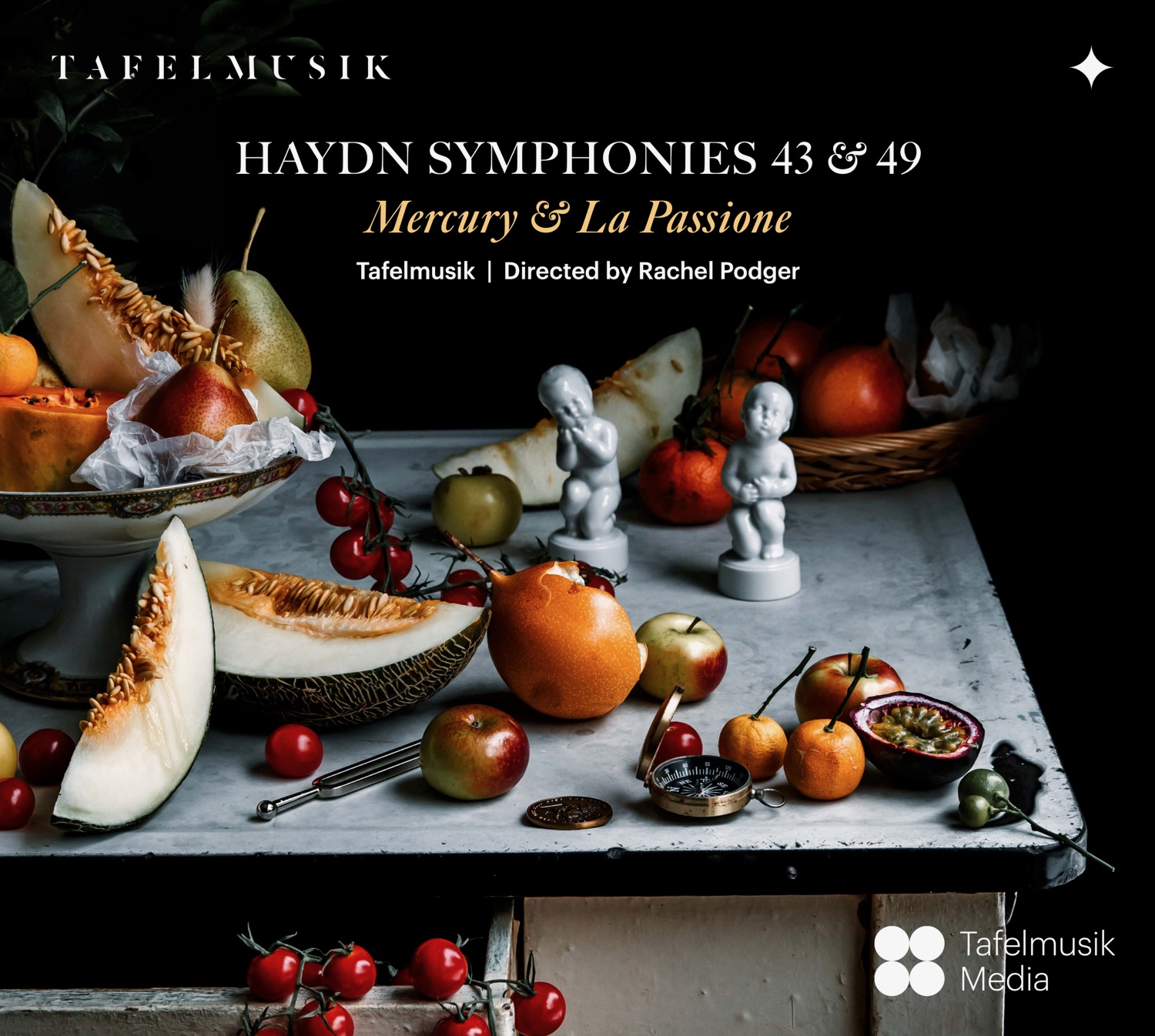
There’s a new recording of two Symphonies by Joseph Haydn scheduled to come out in October from Tafelmusik.
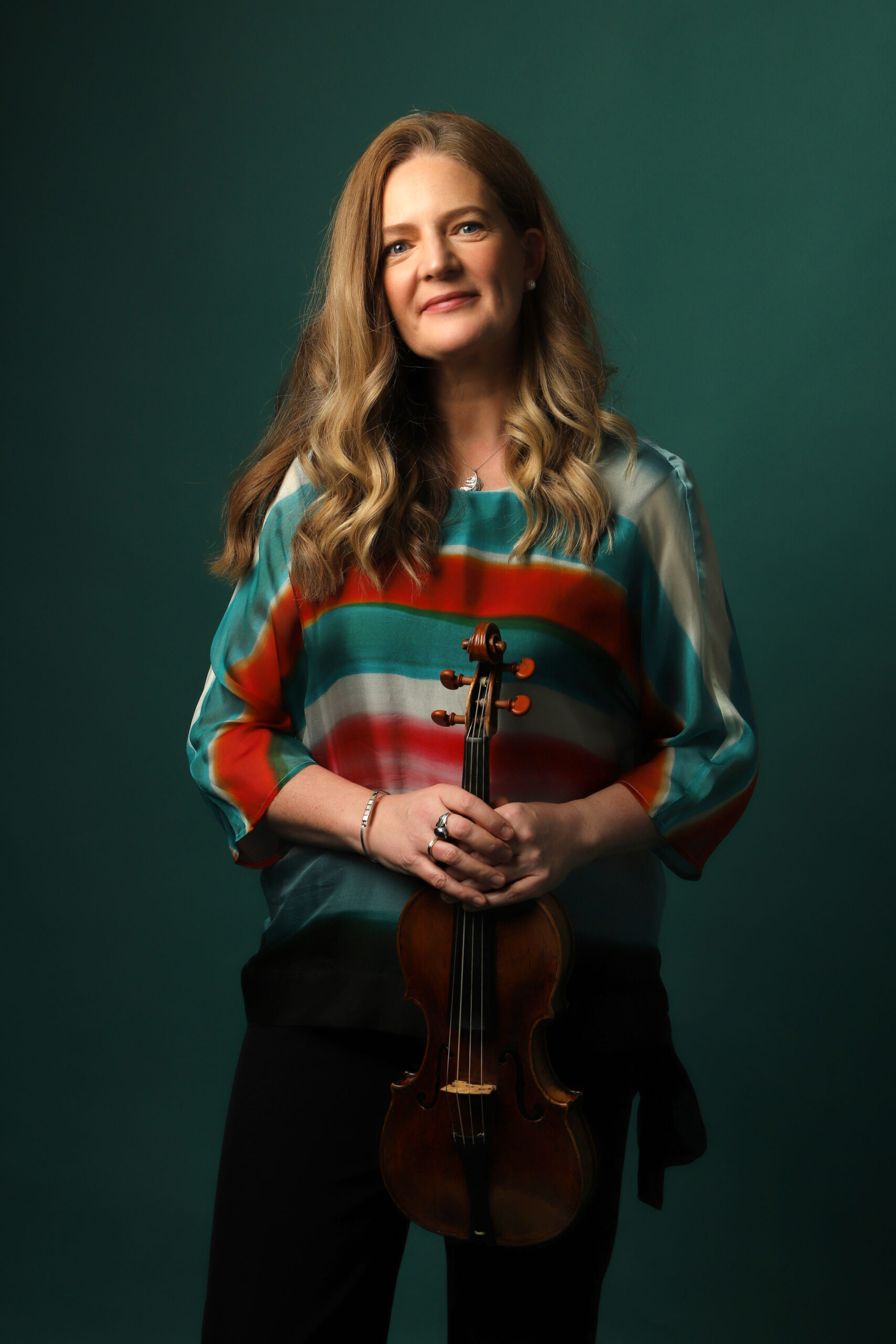
The performances feature violinist Rachel Podger, who debuts in her new role as Principal Guest Director later this month when Tafelmusik begin their fall season with an all-Mozart program at Koerner Hall September 27, 28 and 29.
The new recording offers Haydn’s symphonies #43 and #49, a contrasting pair of works. Haydn was a prolific composer who lived from 1732 to 1809, composing 104 symphonies, over 20 operas as well as many works for smaller ensembles or soloists.
We’re told in Charlotte Nediger’s excellent and enjoyable program notes that Symphony #43 dates from 1771, and that the nickname “Mercury” for #43 likely comes from the quick Finale, applied years later. The first movement after a sedate beginning suddenly doubles its effective speed (same tempo but feels twice as fast), building in intensity until a gentle second subject comes in, truly Mercurial in its alternation between vibrant and gentler moods, experienced once more as we repeat the opening exposition. The development similarly vacillates back and forth, the horns adding to the drama yet still grounded and astonishingly economical in its swift handling of the materials. If brevity is the soul of wit Haydn makes a persuasive case here and in the subsequent movements of this symphony.
Don’t get me wrong. The next movement Adagio is much longer, and more deliberate in its treatment of a theme and its elaboration. Where the first movement sounded like a big powerful statement mostly from the whole orchestra, much of the slower movement features gentler textures from parts of the ensemble dialoguing back and forth in a gentler sort of back and forth, a bit like a call & response.
The boisterous Menuetto & Trio is just over two and a half minutes long.
And the aforementioned Finale is just over six minutes of Allegro, beginning softly then erupting into something employing the whole crew. We are again alternating between softer passages and bigger stronger statements, the contrasts delightfully sudden. Is this why someone invoked Mercury? Nobody knows, but there’s certainly mercurial quality to the outer movements.
Let’s pretend there’s an intermission between the contrasting symphonies, an intermission of sorts when I will interrupt commentary on Haydn to remark on the superb performances of Tafelmusik on period instruments and violinist Rachel Podger as a team. I feel that we’re in a different place in 2024.
There’s been a transition, perhaps best understood as a sort of culture change, an evolution. I recall the first times I heard historically informed performances. There was a Handel disc on vinyl while I was working at the classical record shop in Yorkville around 1980. I wanted to like it..? There was also the Posthorn Serenade performance from the CJRT Orchestra around this time, the unfortunate soloist unable to handle the painful posthorn solo.The period instruments had a special sound but were occasionally so challenging to play that we would hear mistakes during performances or on records. In the next decades I sought and collected new recordings, although I regularly encountered people who refused to even listen to this sort of thing. Over time the skills of the players gradually caught up to those challenges.
And Tafelmusik themselves were gradually upgrading their skills over the years. They’re now at a place where their live or recorded performances have the colour, heft and weight of the older instruments but delivered without any of the fluffs one used to encounter in the previous generation. The rapport between Tafelmusik and Podger, herself not just a conductor but a performer leading from the violin, is palpable, infectious.
Symphony #49 in F Minor is a very different sort of piece from the work that opens the recording. Don’t let the higher number on the work fool you, as it actually dates from from the 1760s, three years before. Not only does it begin with a darker colour, but its emotional depths are starkly different from the upbeat work sharing the recording. The minor key is a relative rarity, one of eleven in the 104 Symphonies Haydn composed. All four movements begin in the same minor key. The nickname of “Le Passione” (again a later addition rather than one created at the time of composition) connects the work to Holy Week and possible performance on Good Friday, likely when secular music was prohibited. Elaine Sisman’s article “Haydn’s Theater symphonies” suggests a theatrical origin as she hypothesizes that Haydn’s symphonies served as theater music. Given the question-marks I welcome the chance to hear the music, given that performances are opportunities to explore such questions, if not answering them.
Reading about Haydn one sees the descriptive epithet “Sturm und Drang“, or storm and stress, a phrase that sometimes functions as more of a tease than a description. Yes composers and writers of the time were seeking to arouse emotion in the listener, to scare you, stir you up or upset you, long before we reached the romantics or gothic novels, although Walpole’s Castle of Otranto (1764) is in fact from before this symphony. Such things are relative of course. What scares or upsets someone in 2024, a time when we’re accustomed to school shootings, lying politicians and pictures of deaths caused by bombings of civilians, is surely far removed from what was undertaken by a writer or composer in the 1760s, when Haydn’s first known opera was composed (and there’s at least one more from before that’s been lost). While these are still far removed from what Haydn or Mozart would accomplish in subsequent decades, they’re still exciting and dramatic.
There are again four movements, reversing our usual expectation in placing a slow movement at the beginning and faster ones as the second and fourth.
While the complete CD is exactly 52 minutes long, it feels enormous in some ways for the density of the materials, the concentration of ideas. Yes Haydn’s movements are sometimes short but they are fleet-footed and intense. I’m listening to the recordings over and over, stunned by their economy and clarity.
Now that Podger and Tafelmusik have taken us on such a delightful tour of Sturm und Drang Haydn, I’m ready for their “Mozart Jupiter” program at the end of September.
For further information and tickets click here.
 barczablog