
The concert was titled “Pictures at an Exhibition.” Roy Thomson Hall was full Saturday night for a fun evening at the Toronto Symphony.
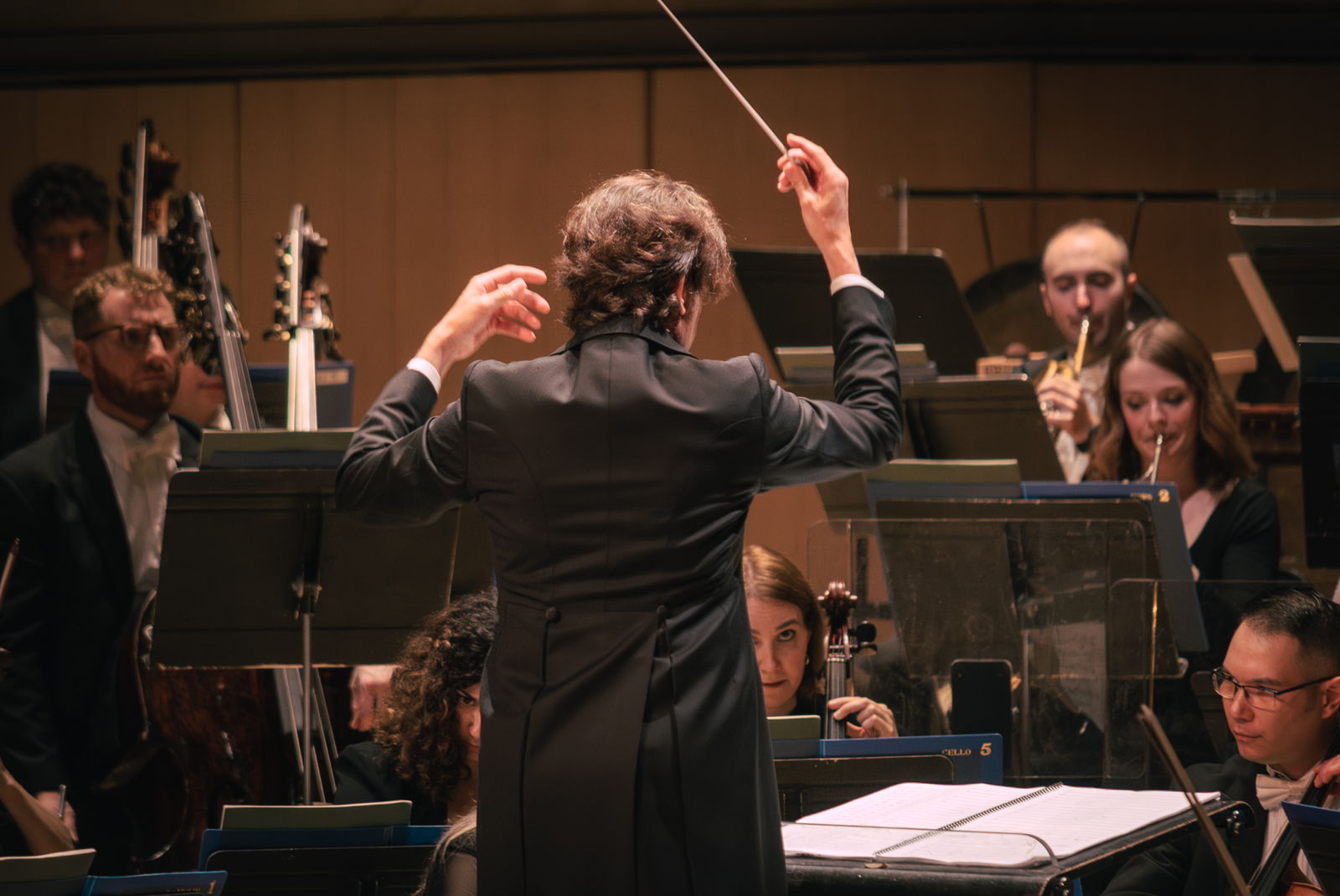
It was a showcase for the TSO. Music Director Gustavo Gimeno’s program notes suggest that he was engaging in an exercise to build his ensemble by challenging them somewhat.
The first half featured Beethoven’s triple concerto employed TSO concertmaster Jonathan Crow violin, principal cellist Joseph Johnson and Jan Lisiecki, 2024/25 TSO Spotlight Artist on piano.
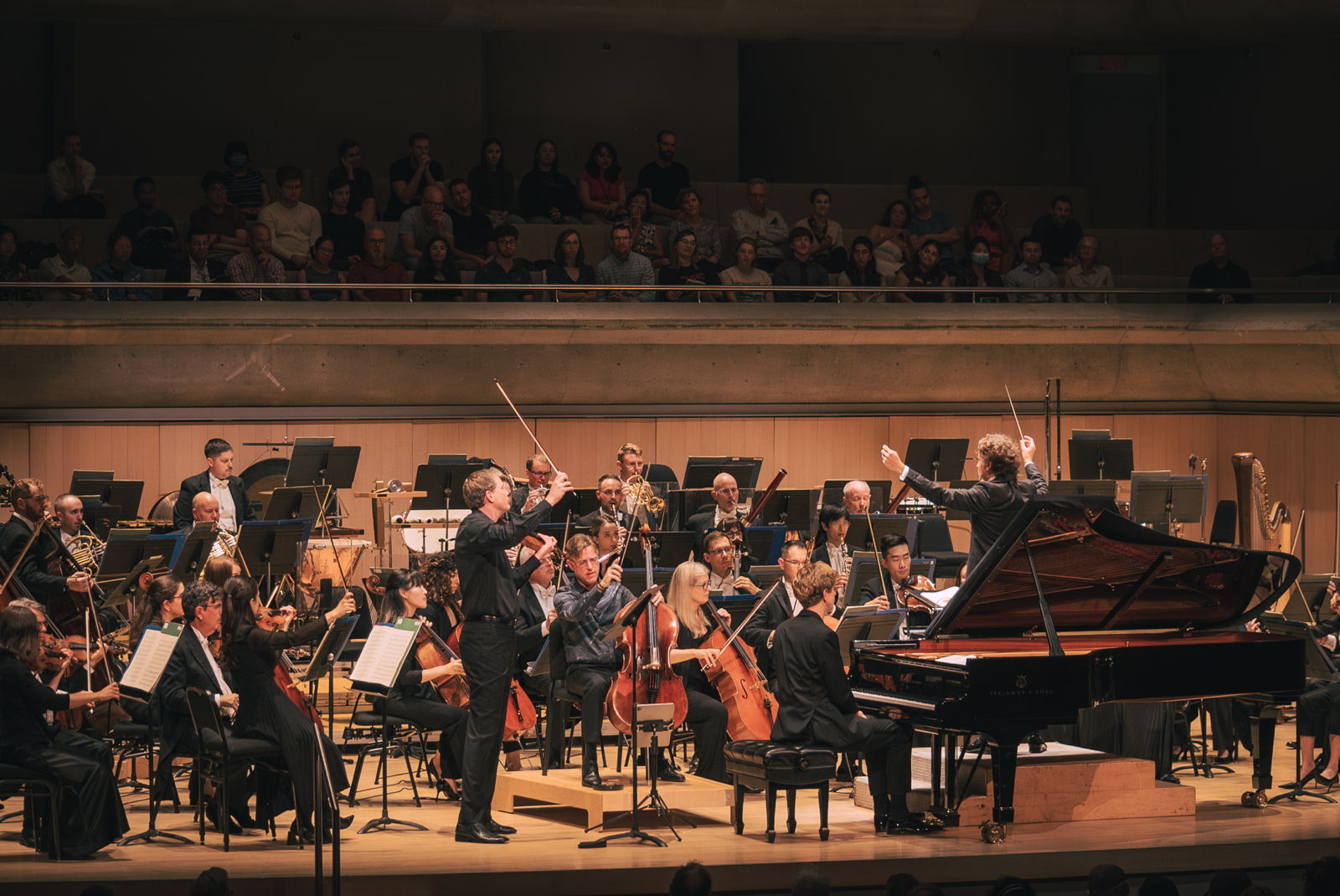
After a splendid and sensitive account of this uplifting Beethoven piece, we were treated to a substantial encore, announced as “a bit of Mendelssohn”. I think it was the slow movement in A from the D minor trio #2, a delicious bonus to reward the delighted crowd, exquisitely played. It has been exciting to watch these three young artists develop and grow with every new challenge, and a bit of a coup to see them working together as such a cohesive trio.
The concert opened with Carlos Simon’s Wake Up! Concerto for Orchestra, receiving its Canadian Premiere this week. The title puts me in mind of the subtext a composer might have, wanting to entertain and delight the listener but maybe not wanting their serenade to put us to sleep. Although the piece opens with a series of jagged and raucous utterances of a two-note motif that sounds a lot like an orchestra saying “wake up” (given the title of the piece) there were also several lyrical passages, lovely solos for flute, violin and cello, exciting passages for the percussionists and complex rhythmic pages to give conductor Gimeno a bit of a workout as well.
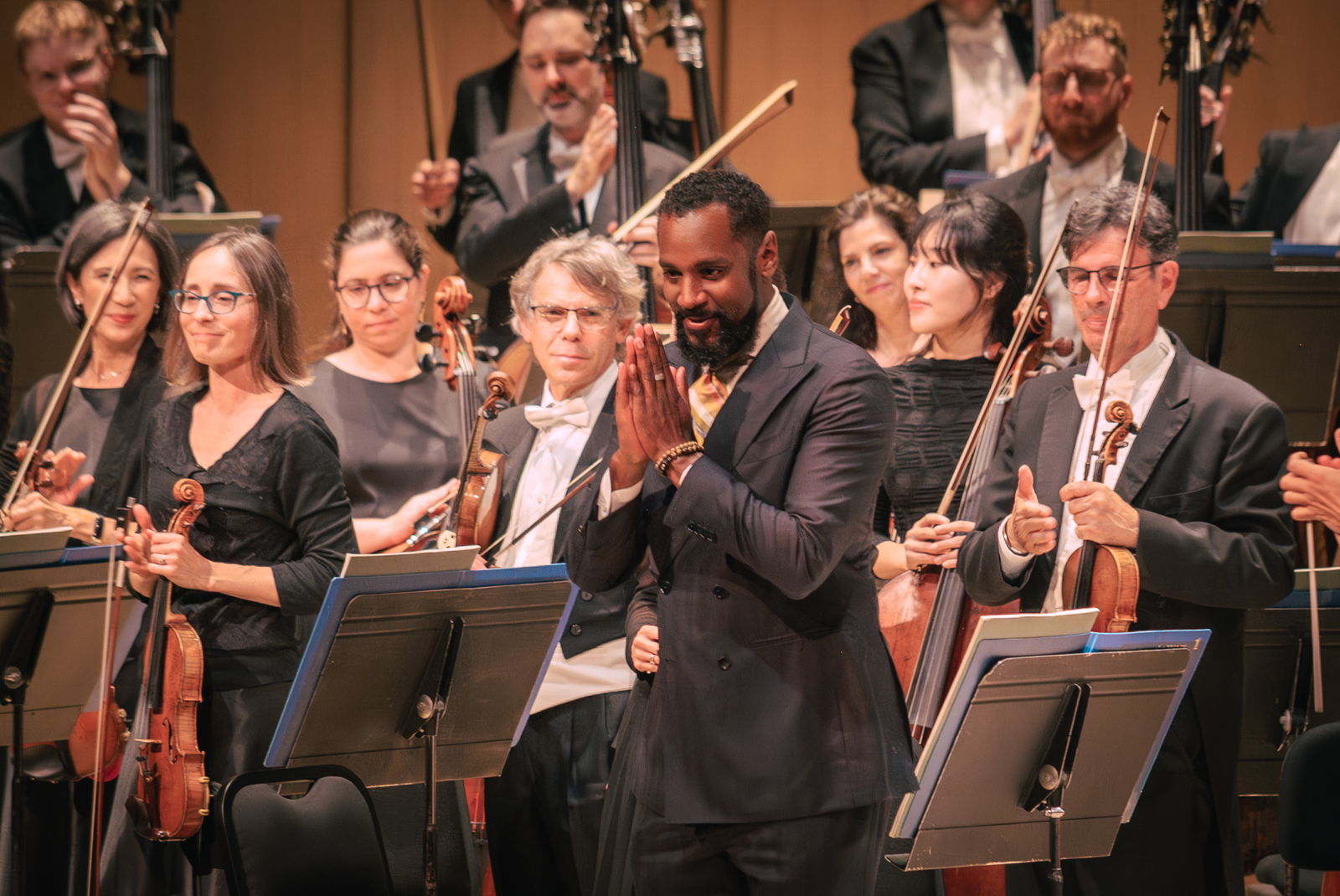
And after intermission, Mussorgsky’s Pictures at an Exhibition but not get the usual Ravel transcription as conductor Gustavo Gimeno explained in his program notes.

“For the second half of the program I wanted to approach a familiar piece from an unfamiliar angle, and this brought me to Pictures at an Exhibition orchestrated by Sergei Gorchakov…I greatly admire Gorchakov’s rarely performed version. To me it feels more direct and raw, and less sweet and refined, with a soundscape that captures the original mood of the music. This is not to say that the differences are conspicuous. Unless you are intimately familiar with Ravel’s instrumentation, you may not even notice them. But for the musicians, it’s the equivalent of playing the part of Hamlet for years and then all of a sudden being asked to instead play Claudius. It is a way to challenge ourselves, to refresh the whole formula and it’s going to be wonderfully invigorating.”
The effect was to make a familiar piece seem new. In a few places Gorchakov uses similar instruments, for example in the opening Promenade featuring trumpet for the melody as in Ravel. But in many places we heard something bigger, louder. The brass had a bit of a workout, especially given that they were already employed prominently in Simon’s opening piece.
Gorchakov (1905 – 1976) seems to be a bit of a one-hit wonder, although perhaps in time we will learn more and hear more about him. I saw references to him in Google as a conductor but could not find anything reliable, given that I can’t read Russian.
Roy Thomson Hall was full, the crowd enthused and vocal in response to a terrific Saturday night concert to conclude the opening program of Toronto Symphony’s 2024-2025 season.
Somebody must be doing something right, considering how much younger this group is than the audiences I am seeing at other Toronto cultural events. The TSO have been gradually changing over the past decade. Music Director Gustavo Gimeno begins his fifth season on an impressively high note.
Mark Williams is their new CEO since April 2022.
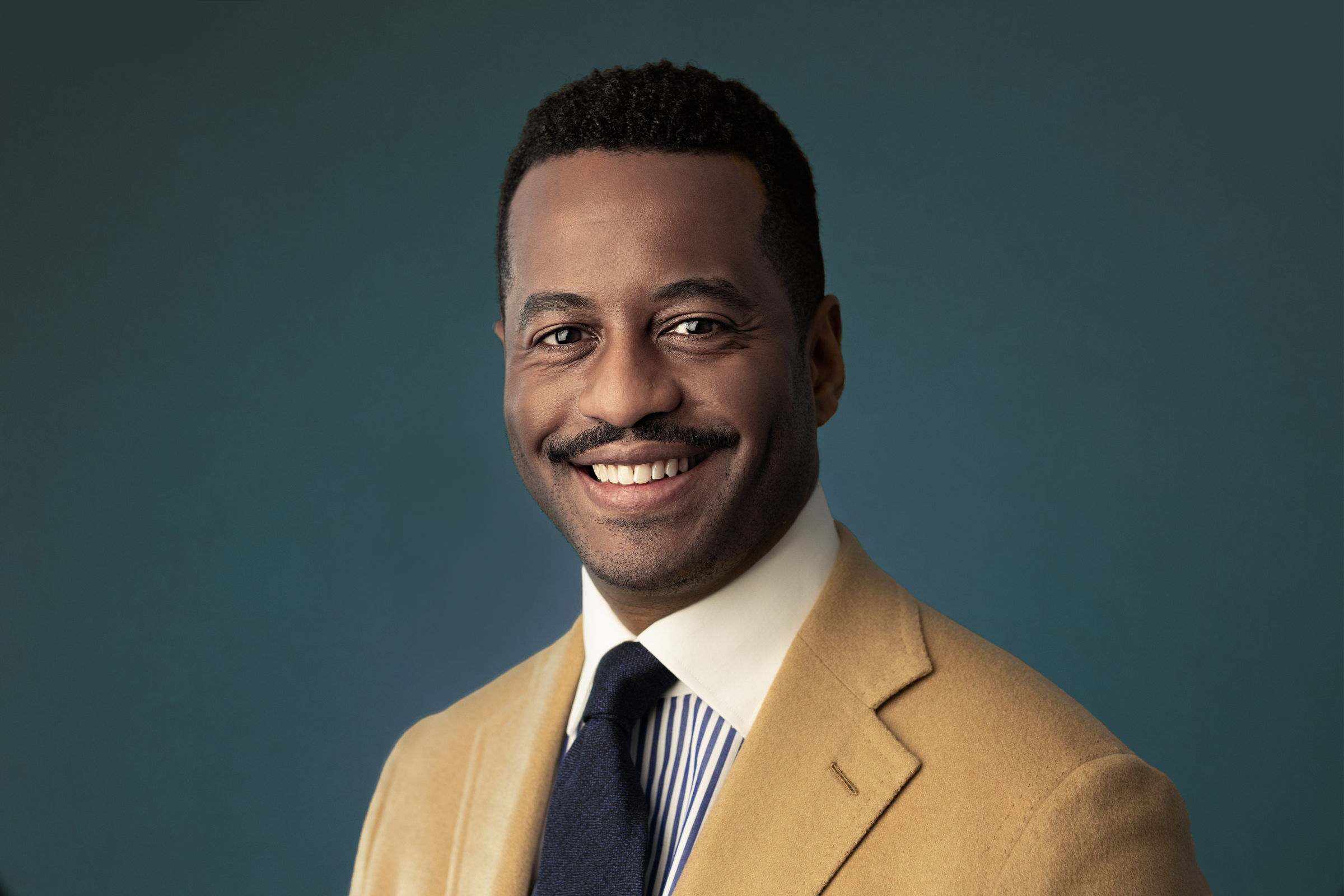
Mark came out to make an announcement before the concert.
“The Toronto Symphony Orchestra (TSO) is thrilled to announce a landmark $15 million gift from the Barrett Family Foundation, marking the largest pledge in the orchestra’s history and the most significant commitment ever made to support programming at a Canadian performing arts organization. This extraordinary gift will support the TSO’s community engagement and education programs, ensuring that the power of music continues to reach and inspire audiences of all ages across the city.”
It has been a great start to the season.
 barczablog
Nice writeup. I had no idea the TSO would perform the Gorchakov version of Pictures, and so I too experienced the same effect of having the familiar now seem new. Unfortunately for me personally, I dreaded this performance. My bias perhaps was blinding me, but it was clear to me why Ravel’s orchestration is the standard. None of the changes made by Gorchakov felt appropriate, and all of the sublimity that makes this masterpiece so epic were completely lost in the pursuit of promoting a Russian flavour in this version. Just an excessive use of percussion that muted the brass, and a significant reduction in dynamic range. I hope the TSO never performs this version again.
LikeLike
Thank you for the kind words.
Funny, I think our perspectives on Ravel’s version aren’t alike. I wasn’t planning to attend the concert until I read the press release explaining that this would be a different transcription. Full disclosure: I far prefer the piano version. I played through it on Thursday as a bit of a refresher. I haven’t played it in a few years, but did perform the finale (the last bit of the Hut on Fowl’s Legs + the Great Gate at Kiev) as a postlude in church a few years ago.
I find Ravel a bit blatant and obvious in places, although Gorchakov is fairly over the top himself. I find the two playful ones (the Tuileries & the unhatched chicks) subtler in this new version. As far as Gimeno’s interpretation, I wondered about the dynamic markings in Bydlo (the ox-cart), as I had always understood this as being somewhat loud at the beginning building to a huge climax as though we’re hearing them go by, fading away: but that’s not what Gimeno & the TSO gave us. So I wonder if the markings in the score don’t match that. And at the end I think Gorchakov gives us something closer to the original (unlike Ravel), as the last thing we have on the piano is a single loud note (E-flat), not the big chord that Ravel gives us (with bells). So maybe the reason I embrace Gorchakov’s version is that I really wish to hear something closer to the original.
To each their own, of course.
LikeLike
Thank you for the insights. I should be more considerate to the interpretive intent and not be too subjective to my bias for Ravel’s version.
I did find it fascinating how the timbres of the trumpet and saxophone dramatically changed the feel for their respective solos for the Old Castle and Samuel Goldenberg and Schmuÿle, and both performers played rather well.
I too was taken aback by the dynamics of Bydlo, and have shared the same thought of having the oxcart passing by the viewer.
It was interesting to hear the return of Promenade 5. I prefer its omission as it does feel a bit out of place at this point in the piece, and enjoy the thought of the exhibition attendee now exiting the gallery and entering into the paintings and travels through them to each piece.
I suspect though that if Mussorgsky had been able to listen to both versions, he would have preferred the Gorchakov
LikeLike
You raise some good questions, especially that concluding one (by implication), when you speak of Mussorgsky comparing versions. Adaptations and paraphrases are a fascinating problem for the audience, who may be conflicted out of loyalty to the original. I recall blushing as I presented a paper alongside Linda Hutcheon (who was just about to publish her book “A Theory of Adaptation”), raising the question of fidelity to the original, and she bluntly asked me “why should the adaptation be faithful?” I was gobsmacked. I’m the student alongside the professor who was (and is) older than me but I was the one resembling the conservative old fart while she blew me away with the implications of the question. My attachment to the original piano piece is kind of absurd when we recall that these pieces are based on paintings: images we never see except as inspired by the composers and the musicians. My preference for the piano version is arguably perverse given that they’re all aiming to help us see images in our minds’ eye(s).
I wish there were some way to ask Mussorgsky.
LikeLike