
It sounds so simple: a self-accompanied Winterreise.
It’s already a significant achievement to either sing the songs or play the piano part of Franz Schubert’s romantic song-cycle of the lonely winter wanderer.
But doing both at the same time? A tour de force, and without any recent precedents I am aware of, setting aside Schubert’s own performances singing & playing his own songs: in the early 19th century.
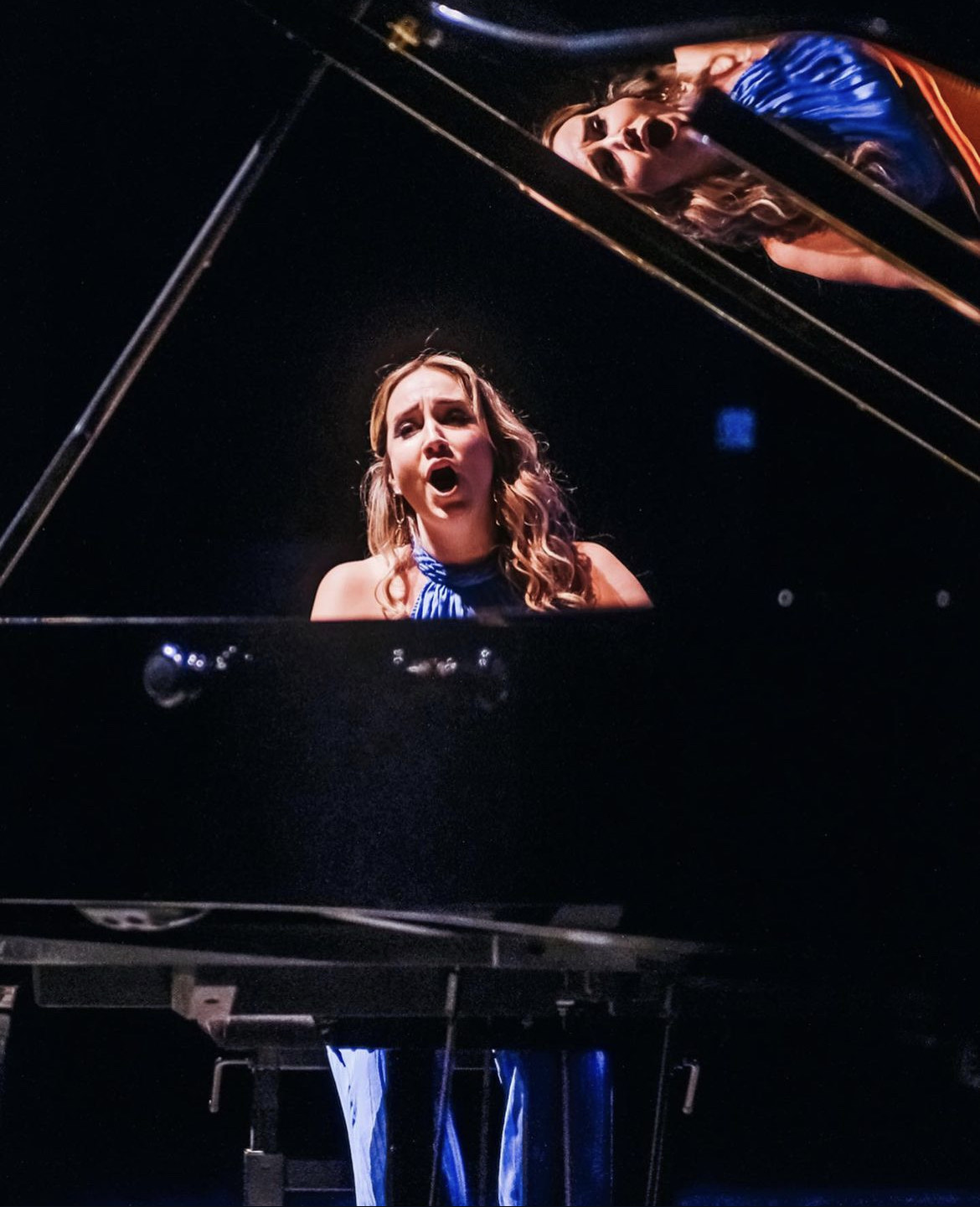
If we were only speaking of the virtuosity required, that would already be something remarkable, but there is an additional level of expressiveness. We sometimes speak admiringly of a pianist who seems to follow the singer as if they were of one mind.
As if they were of one mind?
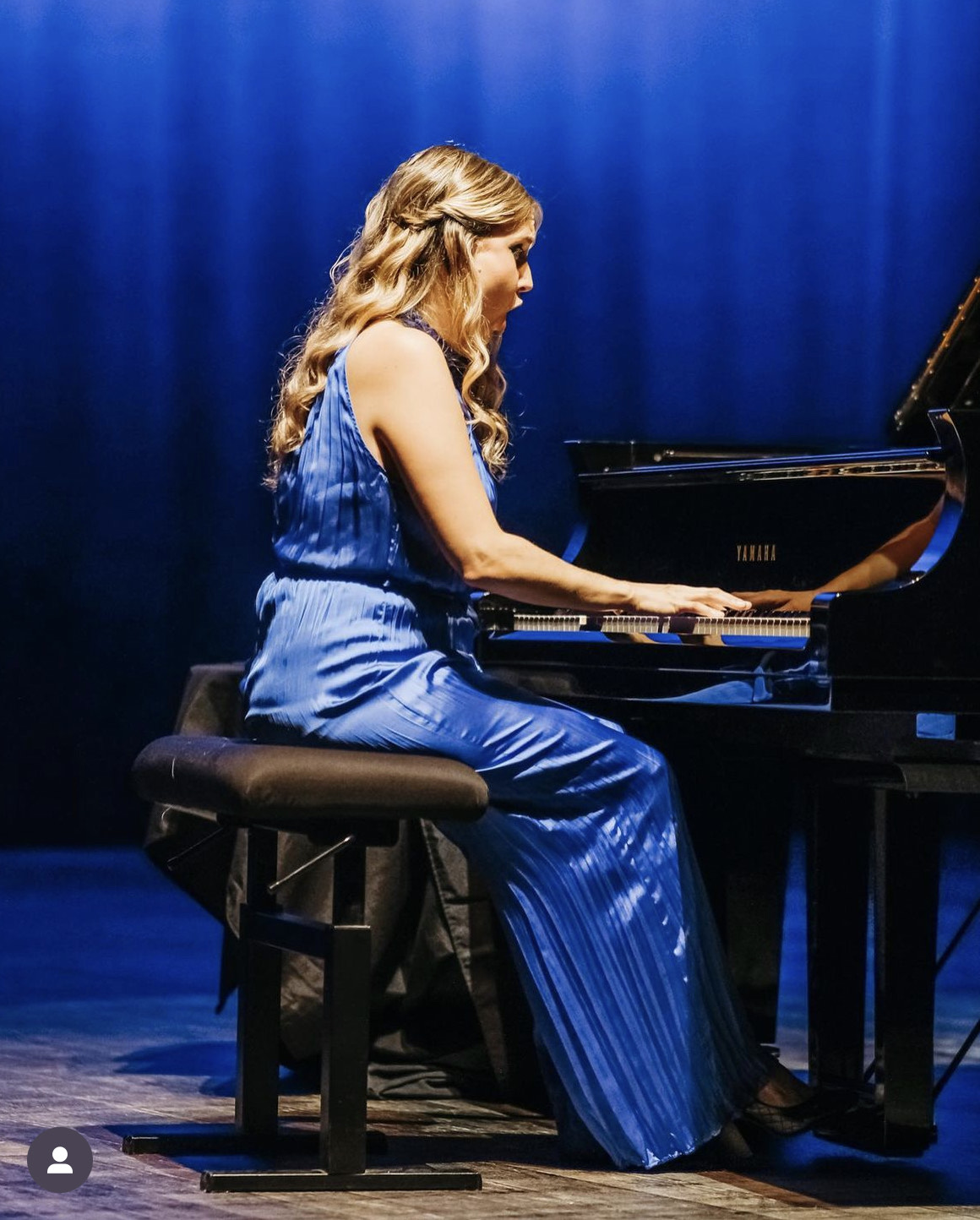
But in this case it’s actually one mind producing the whole: and it’s extraordinary. What i have heard from Rachel so far is remarkable, superb. She is one of a kind.
On October 11th Orchid Classics will be releasing her new recording of Schubert’s cycle: playing the piano and singing the songs.
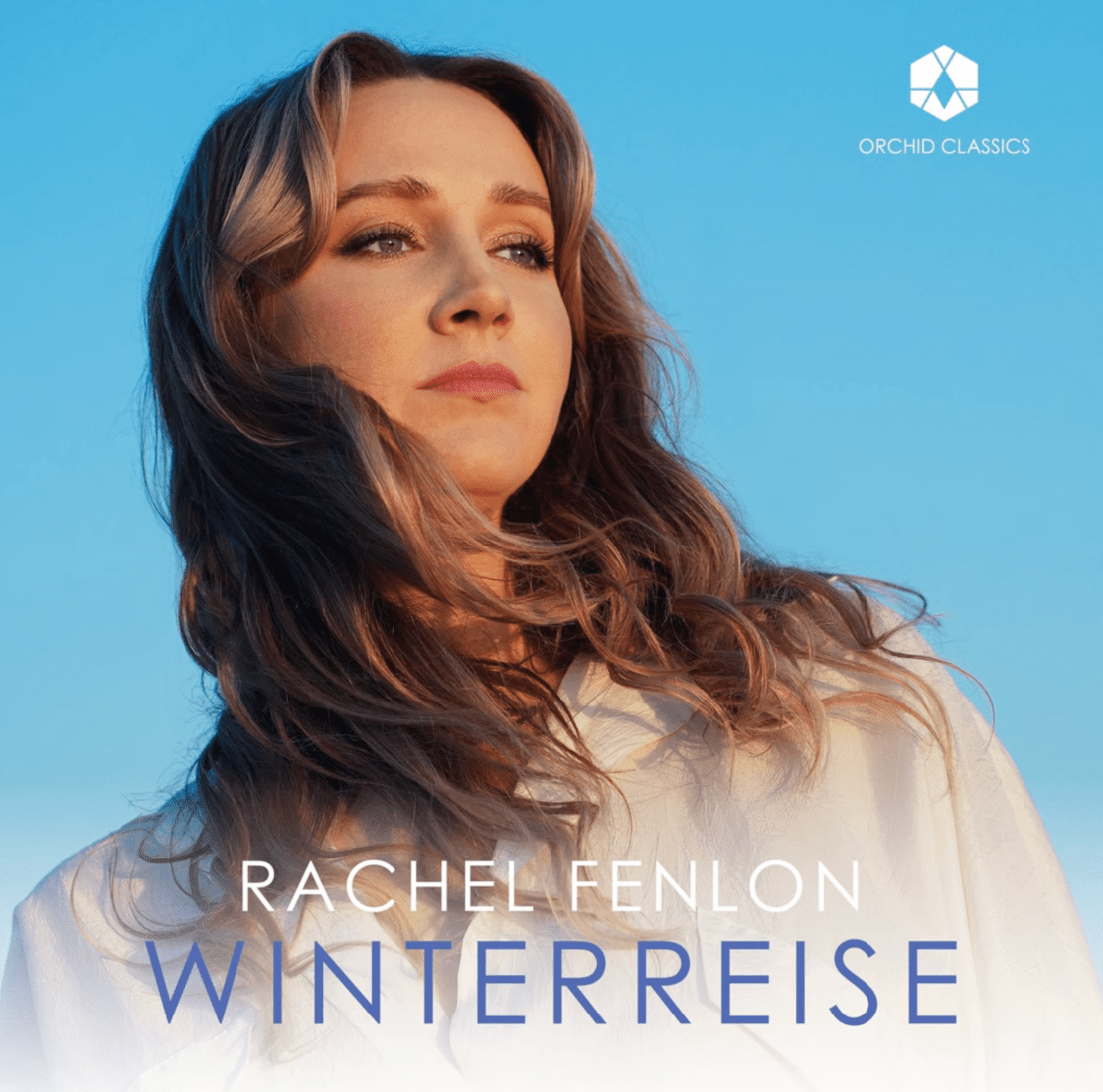
I had to find out more about her and her remarkable artistry.
Barczablog: Are you more like your father or mother?
Rachel Fenlon: My mother has been a huge influence for me, and I definitely like to think I’m more like her. She was a Montessori kindergarten teacher and was formerly in air traffic control for the British Air Force (there’s a total parallel between these two jobs, btw), and she just retired last year. I think our similarities are, whilst we both have ambition, and the calling to contribute to community and culture, we both value family and our personal connections so much. My mum has been my greatest teacher on what it is to love, and to connect.
BB: What is the best or worst thing about what you do?
Rachel Fenlon: Haha. Great question. The best thing about what I do is that it isn’t work at all. It is my greatest passion, and the fact that I get to perform full time still blows my mind all the time. The worst thing is probably navigating a life on the road being away from the people I love, despite the fact that the people I love are scattered all over the globe… it’s hard to miss birthdays and important moments for the people you love.
BB: Who do you like to listen to or watch?
Rachel Fenlon: Listening to music is a huge part of my daily life. I love listening to the old classical greats such as Gould, Richter, Annie Fischer, Horowitz, Gieseking, Jessye Norman, Elly Ameling, Wunderlich…I also love those genre-fluid artists, people like Meredith Monk, Chick Corea playing Mozart, Laurie Anderson, Tanya Taqaq, Olivia Chaney. I listen to a ton of pop and indie music as well – I love radiohead, Bjork, Sufjan Stevens, Joni Mitchell, Joan Baez….the list goes on and on.
BB: I’m not surprised at all.
What ability or skill do you wish you had, that you don’t have?
Rachel Fenlon: I wish I could really cook. My sister Sophie is a professional head chef, and she’s that person who can take random end-of-week ingredients from your fridge and turn them into a gourmet meal. I mean, I cook to stay alive, but, you know, there’s not a lot of imagination there.
BB: When you’re just relaxing and not working, what is your favourite thing to do?
Rachel Fenlon: I love being in nature. It resets me, in a way nothing else does. I love hiking, and being on, in, or next to the ocean shore. My Mum lives on Saltspring Island and when I think of truly relaxing, it’s being there, spending my days in nature, making home cooked dinners with friends with produce from the garden.

In my daily Berlin life, I would say relaxing looks a little different. This past year, I felt like I learned the importance of rest between the busy times, and I’ve really been leaning into that. So in my Berlin life, relaxing looks like spending an entire day at home, getting cozy and reading, watching a movie, watering my plants. Going for long lazy walks along the Kanal, spontaneously meeting friends for food or wine.
BB: What was your first experience of music ?
Rachel Fenlon: My first experience of music was hearing my Grandad play – he was a jazz pianist, and my earliest memories are sitting at the piano with him, and playing the piano with him from age 3. My Grandad was self-taught and he was the only person in my family who was musical, so it bonded us in a really deep way. What was amazing about him was how he listened to music. He didn’t read music, but his ears did all the reading you’d need… He taught me how to truly listen. We would also spend hours listening to his record collection, which is amazing to think about now – how he would do that with a 4 year old child! He introduced me to so many of the jazz masters – Armstrong, Corea, Ellington, Peterson. He passed away when I was 18, and the beautiful thing is that he got to see me develop quite a lot over those last years. I dedicated my upcoming album to him and my mother.
BB: What is your favourite melody / piece of music?
Rachel Fenlon: Schubert D.960 – the B flat piano sonata, the opening theme of the first movement, is my favourite melody. It is everything.
It would be impossible to answer my favourite piece of music!
BB: Understood. Forgive me if I seem to be a sadist with that question, but it’s always interesting to see how people respond. So, if you could only sing one song what would it be ?
Rachel Fenlon: The Irish folk song “The Sally Gardens.”
BB: You are both a pianist and a singer. Talk a bit about your background training, and how you got here.
Rachel Fenlon: My introduction to music was playing piano, from age 3, and from about 7 years old I was so obsessed with the piano that I was always positive I would be a pianist. I don’t come from musical parents, but as I mentioned earlier, my grandfather played jazz piano. With singing, I always sang around the house – I’m reminded by my family that I used to make us all reenact entire musicals and perform them for neighbours. So yeah, I was definitely always a singer! My formal singing lessons didn’t begin until I was 17 years old. I was in children’s choir, and then choirs in high school, which was hugely influential now that I look back, and in choir is where I really developed my love for singing and performing. It wasn’t until a high school choir kept me after rehearsal once when I was 17, had me sing through Olympia’s “doll song” aria, and sent me home with some opera CD’s that I had considered being an opera singer. But like many singers, that first interaction with opera is HUGE. That same year, I was in the children’s choir for “The Cunning Little Vixen” at Pacific Opera Victoria, and it all sort of sealed the deal: I wanted to become an opera singer. The path after that is winding – pursuing singing and piano, and in University at UBC in Vancouver, finding myself going back and forth constantly between the instruments – singing leading roles in the operas, playing piano for singers, learning Beethoven piano sonatas when I wasn’t learning a Mozart soprano role. I was a young artist at Vancouver Opera, and singing roles on their mainstage from age 24, and it wasn’t until I moved to Berlin and truly challenged myself in my identity, in who I am as a person and an artist, that I realized that I would never be quite whole unless I found a way to combine my singing and playing.
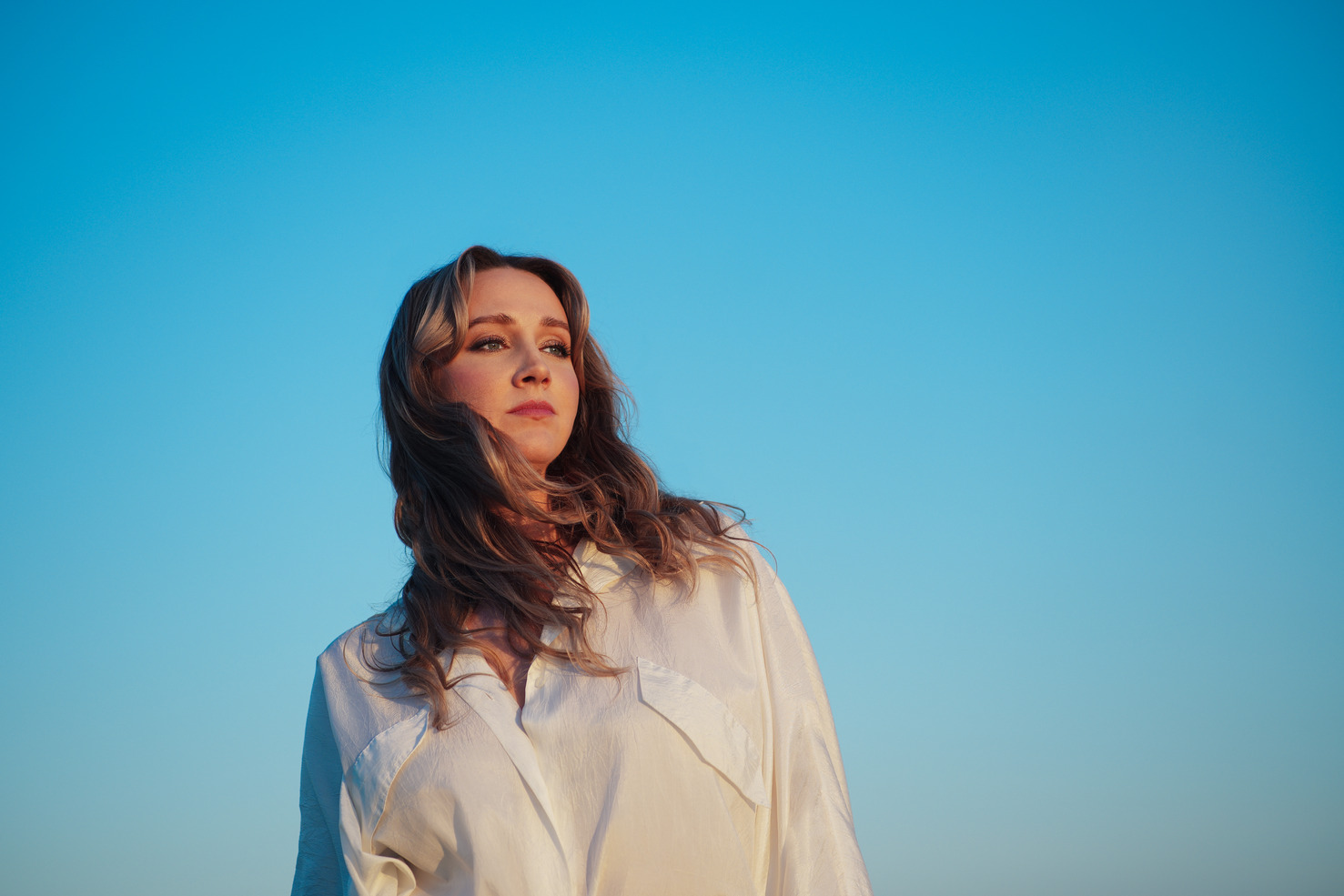
When I reflect back now, it was all leading me to 8 years ago, when I gave my first self-accompanied performance of Schubert Lieder, and I had the first feeling on stage of being home. Since 2016, that feeling has been my guide for pursuing this in a really professional sense and I’ve been completely committed to being a self-accompanied singer first and foremost.
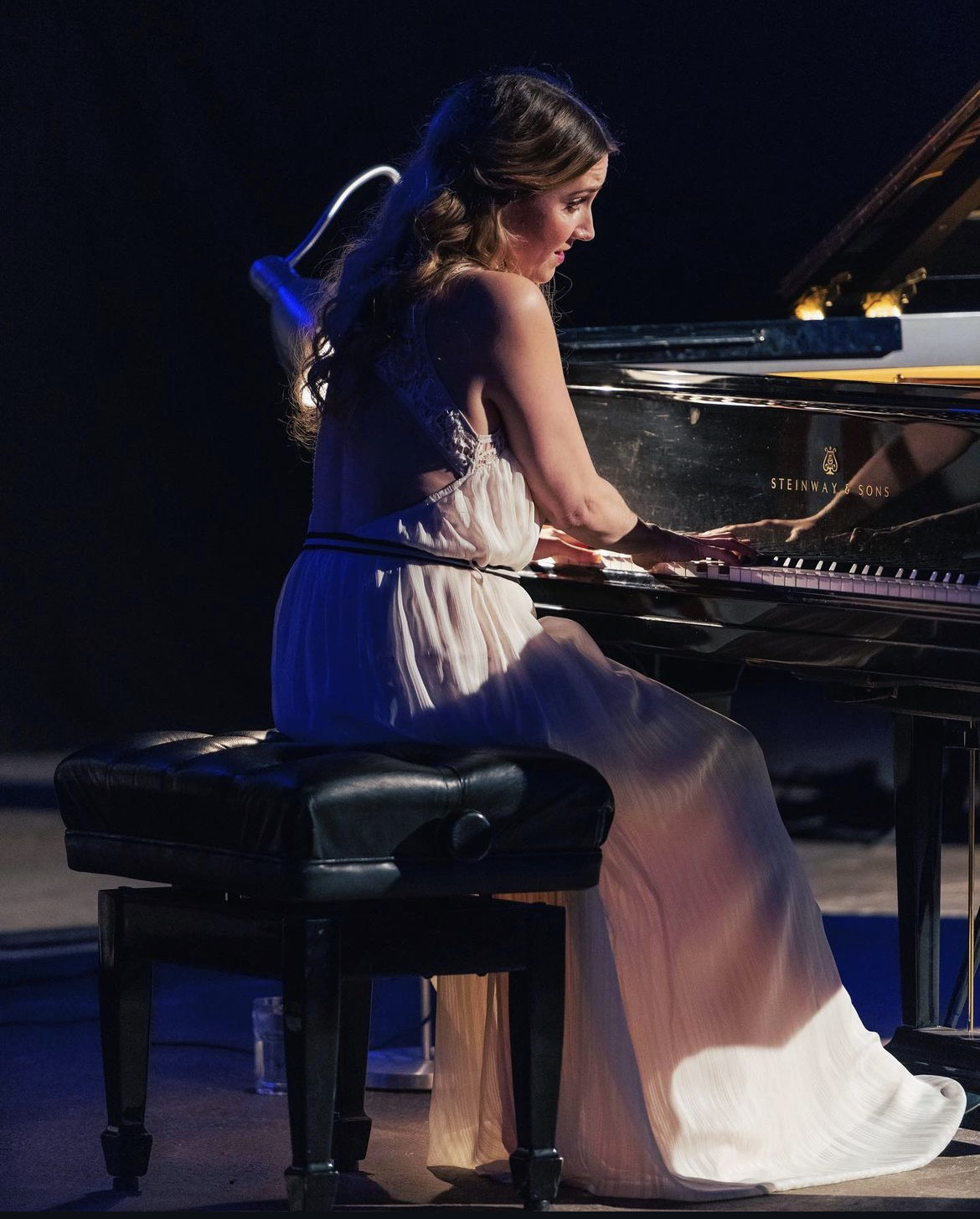
BB: You’re releasing your recording of a self-accompanied Schubert’s Winterreise. Could you unwrap that for us, what does that mean?
Rachel Fenlon: Yes! I’m so excited about this record. It’s my debut album, and it’s a long, long, longtime dream to put my interpretation of Schubert out into the world. Winterreise is about 75 minutes long, and this recording was made over 5 days last summer (2023) at Domaine Forget, in their gorgeous concert hall which was designed especially for recording. The record is me singing and playing simultaneously – I’ve been asked a few times if I ever considered recording the parts separately, but that’s so impossible for me to imagine – the way I sing and play are so interconnected. They completely inform one another. For me, singing and playing doesn’t feel like two things, it feels like one complete, new entity.
My producer, Carl Talbot, and I had the concert hall to ourselves for 5 days,staying in little huts with views of the river, and we recorded day and night. We actually opened up the final evening of recording to a public performance – from which, many of the album takes were chosen, coincidentally!
What self-accompanied means, for those not familiar with classical song tradition, is that I am sitting at the piano singing and playing the accompaniment, which is unusual. The common performance practice with art song in the 20th and 21st century has been that there are two musicians on stage – a singer and pianist. However, this wasn’t always the tradition. Schubert himself premiered the first 12 songs of Winterreise, singing and playing himself. Reynaldo Hahn, the famous French composer, was a great singer and sang and played all of his songs. The tenor Richard Tauber also has recordings of self-accompanied Schumann songs. All of this has been an inspiration to me, as well as the contemporary pop music singer-songwriters, such as Joni Mitchell, Nina Simone, Elton John, Maggie Rogers…
BB: Classical singers with proper support normally prefer to sing standing. What’s it like singing while playing the piano?
Rachel Fenlon: I honestly find I’m able to access a deep sense of support for my singing when I’m sitting. The ribs expand easier, and I can connect to certain core muscles which are harder standing up – so once I started practising from that knowledge, things got a lot easier. The challenges for me lie in things like when the piano part is enormous and bombastic, and I have to sustain a free, floating vocal line over that.
It can also be tricky to be aware of balance because I’m so submerged in what I’m doing. I often record my practice sessions to figure out things like balance – especially when I’m singing loud, I can’t always tell if I’m playing too loud. I really need external ears or a recording to figure those things out. Another funny challenge which I’m constantly giving myself notes on is not to slow down when I’m having a soprano moment…. I often write to myself “be your best accompanist!!!”, as in: help myself out more!!
BB: And there’s that other tiny issue, the gender: as the cycle was originally written for a male singer. Please talk a bit about that.
Rachel Fenlon: I sing the entire Winterriese in the original key, which is the high key (although there is a version for an even higher voice, but I don’t like that as much). The original key fits gloriously for my voice. The first time I sang and played through it for fun, in 2020, I was shocked how much I loved singing it.
To be honest, I love it in the female voice, and I have two beloved recordings of women singing it: Christa Ludwig and Brigitte Fassbaender. Chistine Schaefer also recorded it…it’s definitely not unheard of in Germany, although it’s still very rare to have a woman singing it. I mean, of the 300 plus records of Winterreise, there are probably 5-6 women singing it (you’ll have to double check those stats).
And there is no recording of a singer accompanying themselves, which is wild to me!
BB I’m not surprised!
Rachel Fenlon: Something I would love to comment on with regards to your question on gender is that, whilst I am female-identifying, I have never in my life felt as close to a character as I do when I’m singing Winterreise. I feel I embody it with my entire being. I don’t change the pronouns of myself to be a woman, nor my love interest to be a man, nor do I imagine my sexuality differently. It transcends that for me. It truly does. We live in an interesting time in history where there are many beautiful, open conversations happening around gender. For me with Winterreise, it’s not about me being a man, woman… it’s about being a human and what it is to grieve, to feel, to lose, to have hope, to love, to suffer, to be alive.

Rachel Fenlon: I also want to share that I get a lot of comments after a Winterreise performance that people are surprised how much they loved it in a soprano voice. That always makes me happy!
BB: I think song cycles are usually improved when a woman sings them, because the voice isn’t competing with the lower notes for piano or orchestra the same way. A composer has to get out of the way of a male voice (and sometimes they totally fail to do so…), while a soprano is usually soaring freely: or at least that’s what it sounds like. I’m sure you sound great on lots of other song cycles.
And you mentioned in an email that you’ve been singing and accompanying yourself on the piano in art songs. What cycles / songs have you done or are working on for the future?
Rachel Fenlon: Yes! Singing and playing is about 95 percent of my career, which takes me on the road internationally, year round. When I first began, 8 years ago, part of my goal was to learn as much repertoire as I could to figure out what really worked – and didn’t work.
I’ve performed everything from Schumann’s “Frauenliebe und Leben”, Brahms songs, Debussy’s “Ariettes Oubliees”, Britten’s folk songs and “On This Island”, tons of Schubert, Mozart, Hugo Wolf, both Mahlers, Alban Berg’s “Sieben Fruhe Lieder” to very contemporary music such as George Crumb’s “Apparition”, a staple of my repertoire, and several song cycles which have been written especially for me as a self-accompanied singer.
One of the beloved song cycles in my repertoire is a new song cycle written for me by Canadian composer Matthias McIntire, called “Sing Nature Alive From My Insides”, set to my poetry, for me to sing, play and perform live electronics.
I premiered that at Ottawa Chamberfest in 2022, and I’ve been taking it on the road so much the past two years, as it is one of the most incredible works I’ve encountered. The piece will be having its Berlin debut in February and at the Konzerthaus Berlin, which is a huge moment for us.
I think the repertoire is vast, and I’m curious if other singer/pianists will pop up, and what they gravitate to.
BB: You mention “soprano solos and synthesizer“. Does that mean you sing while someone else synths, or do you play a synth, and if so what are you playing?
Rachel Fenlon: What I mean by that is that I perform with live electronics, which sometimes means a synthesizer, or a different midi medium, like laptop or midi keyboard for live electronic and vocal processing. The cycle I mentioned above, sing nature alive, is written for electronics and live vocal processing as well as acoustic voice and piano. I run all of that myself – triggering cues on midi mediums, and sometimes playing synth, which I absolutely love. The work which has me doing this the most so far is Matthias McIntire’s sing nature alive. His electronics are as exquisite as his acoustic writing – Matthias is one of the great gifted composers in Canada. I’m going to share a couple of recordings – one from “sing nature alive” , and one from his work “cathedral grove” for solo violin and electronics.
What I love about performing with electronics is that as a solo performer, you feel like you suddenly have an entire orchestra on stage. The sonic scope is huge and infinite, and it’s so all-encompassing. It’s also a TON of fun.
The clip you’ll hear is “Sing nature alive” from a recent performance at Sweetwater Festival, where I just performed it a few weeks ago. I’m playing the sounds of my own voice, as well as overlapping waves and singing.
This is “tide”, the last movement of the song cycle.
BB: Classical music is often understood as a separate discipline from other musical genres & forms. Some artists such as Gershwin or Bernstein encountered huge obstacles and disrespect from the musical establishment because of the way they crossed over into popular forms. Please talk a bit about the boundaries that singers and pianists encounter, and how that looks to you as of 2024.
Rachel Fenlon: I think Classical Music can be its own worst enemy. I don’t believe in high art – it’s a term I’ve come across a lot, and one which has even been thrown in my face a few times. It’s not a real thing. Music is music. Art is art. I think the very notion of genre itself wants to limit us, and it comes out of a place of fear, not out of abundance. If classical music wasn’t afraid of its own relevance, it would be much cooler. Which is why I think it’s on us – my contemporaries, peers, generations ahead and behind – to make the music we feel called to make. That’s always what it’s about for me. The music which calls us is the music we answer. For me, that’s Schubert, that’s Crumb, that’s crazy-amazing contemporary music. I LOVE pop music, and I feel like Schubert songs are the original pop songs. Simple harmonies, and simple thoughts about love and life. You know that Sting recording when he sings Dowland songs? Or Barbra Streisand singing Schubert and Faure? Or Bjork performing Pierrot Lunaire? That’s where my heart is at. I think our society pushes us in a direction of labelling things too soon and too often – and so much of the magic of humanity lies between those things. A great day is a great day not just because of the beautiful event which happened at x o clock but because of the morning interaction I had with a stranger, and then the way the sun hit the leaves in the backyard, which triggered a memory of this special moment… I think we put way too much emphasis on the extremes and it misses so much nuance. It’s also why I struggle when I go to orchestra concerts and it all sounds so shiny and rehearsed, and I leave feeling like I’m missing something. The great orchestras for me are the ones who find the spirit of spontaneity, who are daring, commissioning amazing composers and taking risks.
Thinking about singers in 2024, it’s an interesting question. From my perspective, singers have little power in the industry so it’s all about finding ways to empower ourselves and gain our autonomy. For me, that autonomy is singing and playing and just doing my own thing, without waiting for approval. But this is much harder when you’re an opera singer, and you need an orchestra or a full opera set. Empowering oneself feels like it’s about finding what you do uniquely that calls you, and listening and committing to that calling, I think. It’s not always easy. Singers get so much different feedback. One day your voice is too small for this role, the next it’s too big… It’s extremely precarious and yet, it’s the most precious thing of all, having that kind of incredible voice. I admire my opera colleagues so much. I guess what I would say also about being a singer in this time is that it is also about building a community, not a network – I hate the term networking – so that you have the support of people who love and support you no matter what. I also think community can be collaboration as well – I’m part of three artist collectives which serve exactly this vision.
There are a few contemporaries of mine I admire who are really following their unique voice – one is the Toronto based Danika Loren – who is a singer/composer and sings her own compositions – she’s incredible. Another is Olivia Chaney, who trained classical but sings and plays more indie/folk and records on nonesuch label. I also really admire Gabriel Kahane. I love his records, and he also sings and plays lieder sometimes apparently! Hania Rani is fantastic – a Polish composer/pianist/singer, who studied classical piano and composition and is now having a huge international touring career, and I listen to her records all the time.
BB Please talk about how you approach performance vs recording.
Rachel Fenlon: It’s funny, because until Winterreise, I always thought the surrender happened on stage in live performance. Now that I’ve recorded my first album, I realize how much surrender happens in the studio, too. It’s just a different form – it’s a long form. We took almost a year to master the album, choosing takes and things, and it’s wild how creative that process is, too. The beautiful thing about an album is that you get to say something else about the work in a really “complete” way, and it’s so personal, because it’s just between you, the producer and the composer. Even though, it too, is ephemeral – it is just one moment in time.
Live performance is about rehearsing with a ton of intention and clarity, and then being completely present on stage, and actively listening with your audience. In my heart, I love nothing more than being on stage and sharing music – I love the communion of it.
BB: If you could tell the institutions how to train future artists, what would you change?
Rachel Fenlon: I’ve been teaching masterclasses more over the past couple years and I absolutely LOVE working with the next generation. I think for me it is about elevating their joy and passion, and giving students as many tools so they can figure out which ones work for them. I think where institutions can go wrong is by not seeing the multitude of what a musician can be – we get pretty niche and limited pretty early on. How amazing would it be if singers could take composition classes, and electro-acoustics, and instrumentalists could sing and they could all collaborate together? I learned the term from an interview last week, called informal learning. I wish that was more encouraged in institutions.
Also from a practical business point of view, being a successful musician seems to have a lot to do with organization and business skills. It would be amazing to offer that to young musicians – basic key skills for having your own enterprise. It’s not that I think artist are entrepreneurs or anything, I just think it’s a tough life to choice being that it’s so against the grain of society and information about how to pitch yourself, how to interview (haha), how to do admin every day (because when you’re a full time musician, you get tons of emails a day), how to manage your finances, etc., is empowering.
BB: What influences / teachers were most influential on your development?
Rachel Fenlon: The most influential teachers were my university voice teacher, Nancy Hermiston, who taught me tenacity and confidence.
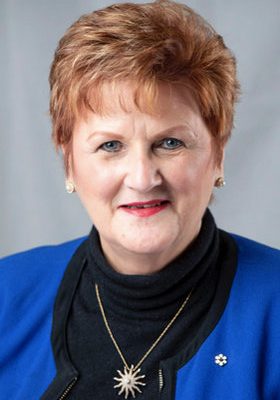
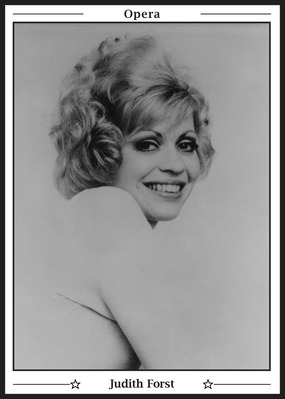
Judith Forst has been a big influence as well, she was also my voice teacher for a while and I learned a lot about technique as well as musical preparation from her.
I’ve never really had one mentor, rather, I’ve had many coaches and people I look up to who have taken me under their wing – conductors, composers, people in the industry who have a great deal of experience and believed in me from very early on. Alongside this, I would say my biggest influences are my friends – certain friends who I can discuss music with, others who I can share my work with and get feedback, friends with whom we share career advice, friends who are huge emotional supports, friends with whom I collaborate regularly. I think this kind of peer-learning has been huge in my life, and I would not be half the musician I am without the friends in my life.
*******
BB: October 11th Orchid Classics release Rachel Fenlon’s new recording of Schubert’s Winterreise.
I wanted to share a video of a recital Rachel did last year. My mind boggles watching this, given that
BOGGLE #1– long ago I accompanied my brother in An die ferne geliebte by Beethoven, a song cycle that Rachel plays and sings from memory,…Perfectly.
BOGGLE #2– and more recently after I watched Emily d’Angelo singing the Berg cycle last November with the TSO, I got the songs from the EJB library to play through: but wow here she’s singing and playing these challenging pieces from memory. Awesome.
OMG this is impressive.
And as far as what’s in this recital, we begin with
Berg– Sieben Frühe Lieder,
at 18:15 you get Beethoven – An die ferne Geliebte,
at 34:00 Crumb – Apparition 1 The night in silence under many a star and
at 38:00 Messiaen – Trois Mélodies.
 barczablog
Thanks for this multi-layered introduction to a wonderful and distinctive artist. I look forward to hearing more of her work.
I’m lucky to have this sort of conversation, a wonderful privilege.
And (as far as looking forward to hearing more): ME TOO!