Excuse me for this preamble, pondering Christmas oratorios. Toronto is Messiah town, as musical ensembles large (Toronto Symphony Dec 17-22 at Roy Thomson Hall or Tafelmusik Dec 20 & 21, plus the Singalong December 22nd) or small (Opera by Request / No String Theatre Dec 7 & singalong Dec 8, or Toronto Beach Chorale Dec 8th, and many more…) each present their versions of Handel’s work.
And the meme is largely accurate.

This is meant to contextualize my discussion of Tafelmusik’s presentation of JS Bach’s Christmas Oratorio the weekend of November 22-24. Messiah may be the usual Christmastime oratorio in Toronto even if roughly two-thirds of the piece concerns the Passion rather than the events of Advent and Christmas. While Bach’s work is more properly the Christmas piece, you don’t fight tradition.

While there are some wonderful contributions by the four splendid soloists, I feel that in Bach’s oratorio the dramaturgy of the work makes the chorus the most important contributor.

My departure point for my musings are, as usual, inspired by the excellent program notes from Tafelmusik keyboardist Charlotte Nediger.
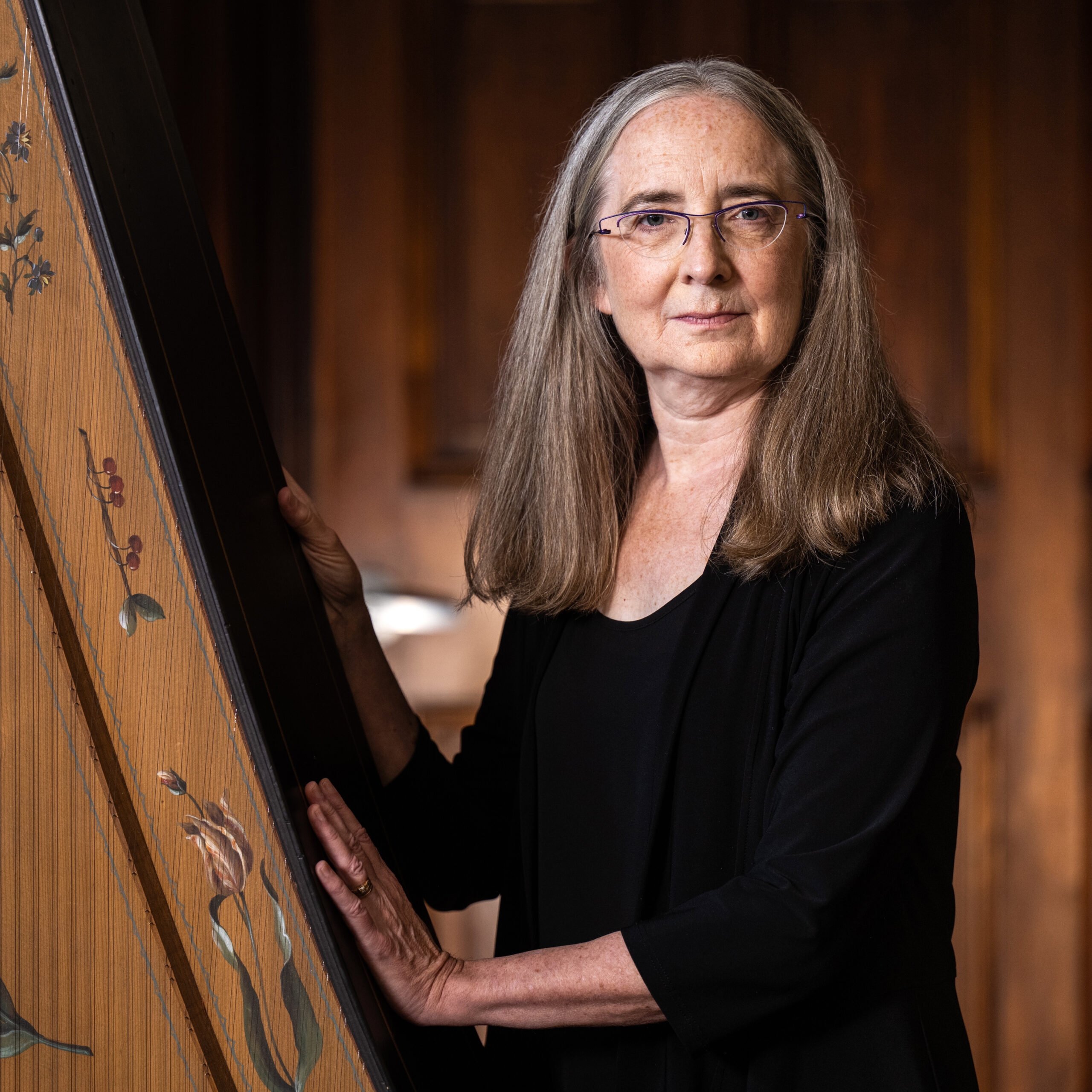
I’m quoting her discussion here:
“The single most unifying gfeature of the Christmas Oratorio, apart from the continuous narrative, is the use of chorales, the distinctive Lutheran hymns. At least two chorales are heard in each part in a variety of settings, from “simple” four-part harmonizations, to chorale-based choruses, to reflective quotes in accompanied recitatives. All of the chorales used by Bach would have been very familiar to the congregations hearing the Christmas Oratorio in 1734. Chorales were fundamental to Lutheran worship, used throughout the church year and sung from memory by the congregation. When hearing chorale melodies in the context of a cantata, oratorio, or Passion, Bach’s audience would have understood their significance on a visceral as well as intellectual level. Listeners today who approach the work from a secular point of view may still experience the chorales as moments of feeling grounded, or moments of affirmation.
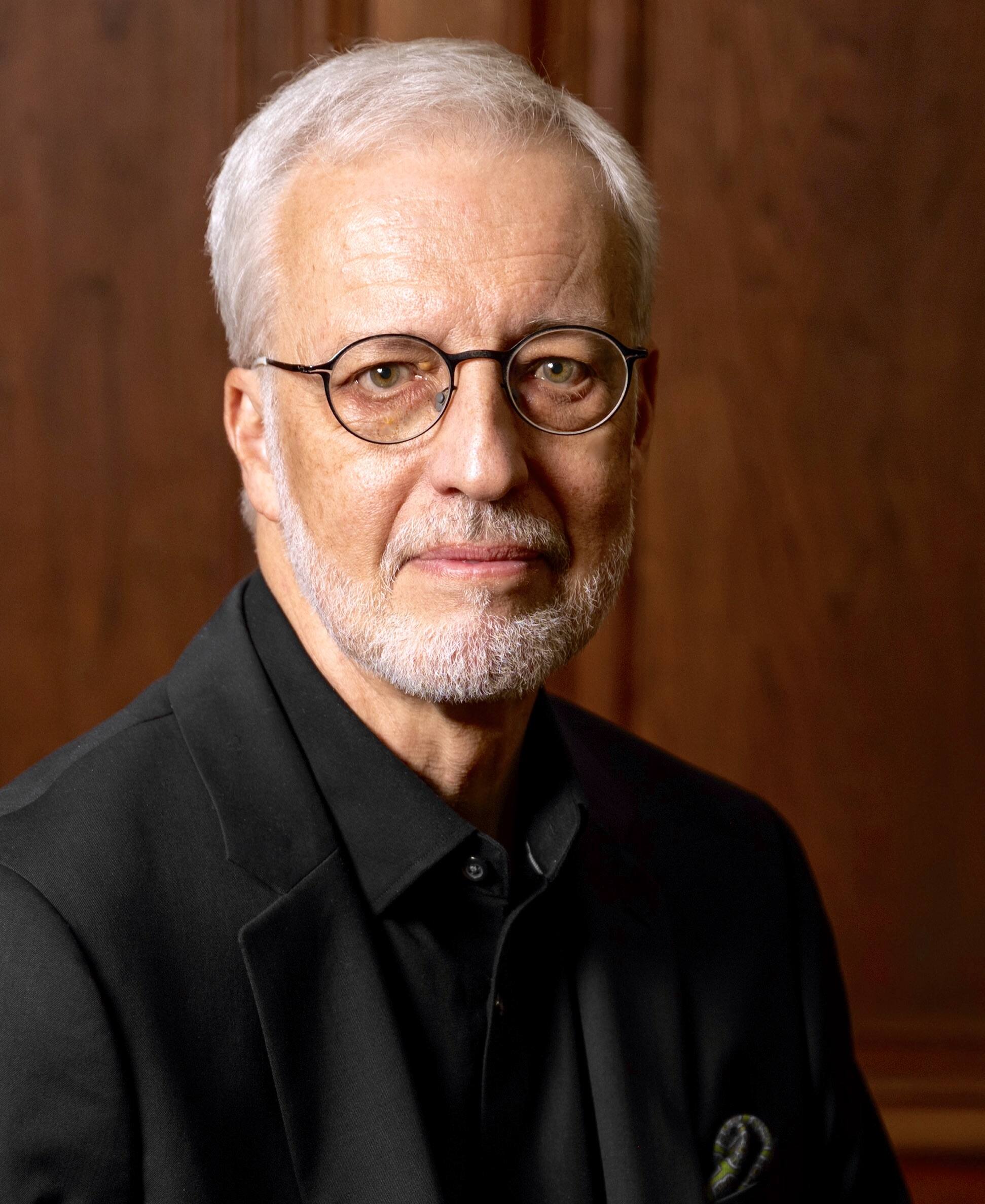
I may have been triggered by the presence of Ivars, aka “Herr Handel”, the leader of the singalong Messiah, but I can’t help wondering, in 1734 whether the congregation would have been as quiet as the modern audience.
Charlotte’s notes say “all of the chorales used by Bach would have been very familiar to the congregations hearing the Christmas Oratorio in 1734. Chorales were fundamental to Lutheran worship, used throughout the church year and sung from memory by the congregation.” If so, would they simply listen or would they perhaps have joined in? I’m no expert but I did find at least one commentary that says “these all use famous chorale melodies that Bach’s congregation would have known, and they could sing along on these pieces. This is why these are usually sung at a slow tempo to make it easier for the congregation to join in the singing.” I find the de facto evidence of Bach’s writing persuasive.
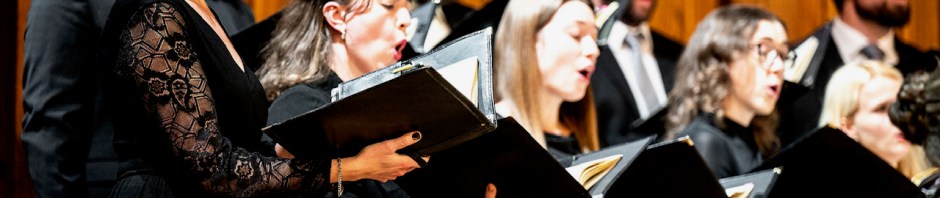
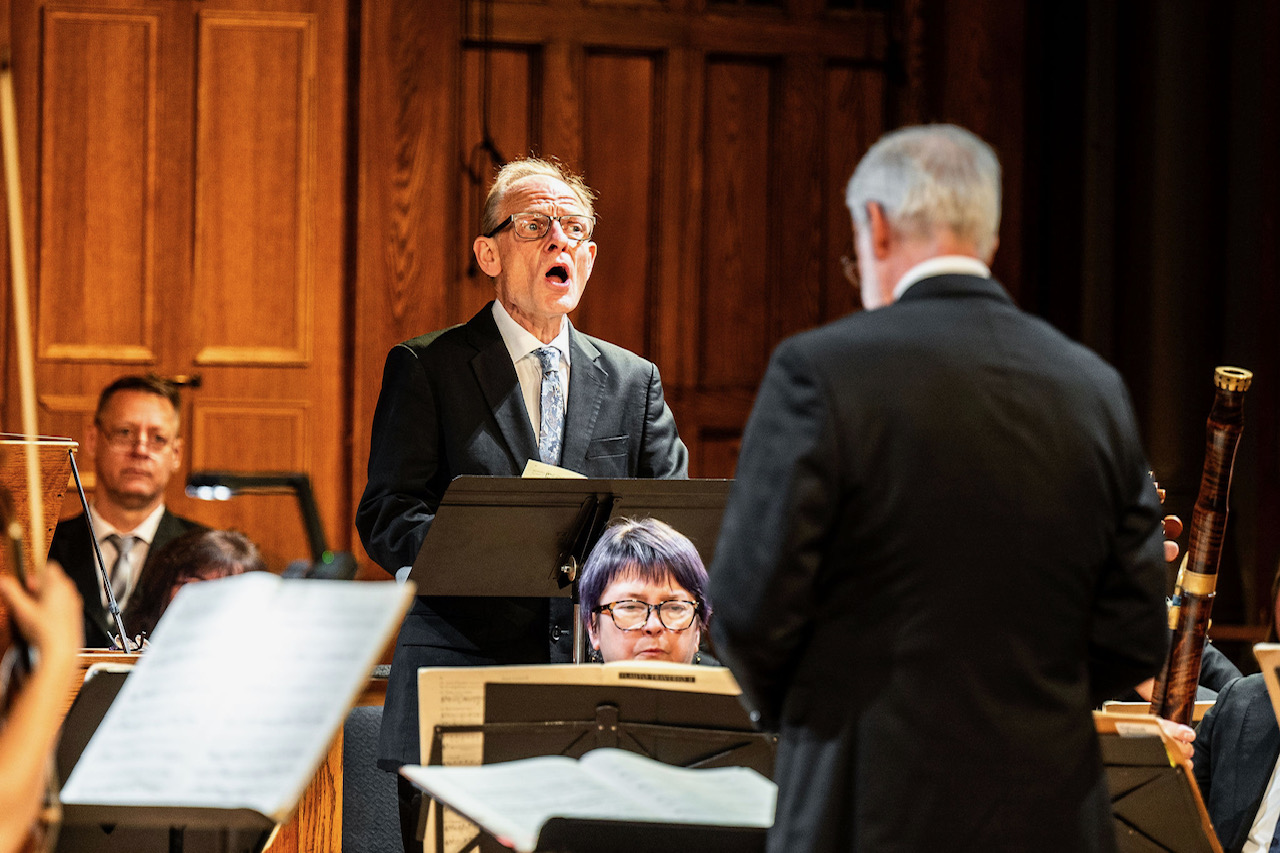
The Tafelmusik chorus led by Ivars had me leaning forward in my seat. At the very least Bach was speaking directly to his congregation, who knew these pieces by heart. And maybe congregants were singing along in Bach’s day. There is a gentle lyricism to soft chorus singing, allowing a different sort of reflection than in the virtuoso solos, the words transparent.
Please excuse me as I may seem to make an abrupt leap, in thinking of Friedrich Nietzsche, who criticized Bach for his faith which he understood as a submission. Of course.
Yet I was mindful of a passage in Nietzsche’s Birth of Tragedy that could be describing Bach and his Christmas Oratorio. While most people think of Nietzsche as a nihilist he was for a time a theological student, whose complex relationship with JS Bach might be put alongside his love-hate relationship with Richard Wagner. In 1870 Nietzsche went to hear Bach’s St Matthew Passion three times, a work he admired very much. Nietzsche was a scholar of ancient Greek tragedy but in his youth had been immersed in a Christian context that he would reject, including his time as a composer who even undertook his own Christmas Oratorio (unfinished).
I want to quote Birth of Tragedy because of the way Nietzsche struggles with the concepts of the chorus, reminding me of what I heard and saw Saturday from Tafelmusik and JS Bach in Jeanne Lamon Hall.
Pondering the origins of Greek tragedy, Nietzsche writes “tragedy arose from the tragic chorus, and was originally only chorus and nothing but chorus. Hence we consider it our duty to look into the heart of this tragic chorus as the real proto-drama, without resting satisfied with such arty cliches as that the chorus is the “ideal spectator” or that it represents the people in contrast to the aristocratic region of the scene.” Nietzsche’s complex discourse is my departure point, as I suspect Nietzsche likely first encountered his ideal in the workings of Bach’s chorus as an expression of a faith from which he would turn away. The strong gentle under-current of the Christmas Oratorio is found in the expressions of faith captured in the chorales.
I was thrilled to have my first historically informed experience of this music, that I’ve long listened to in the old way on vinyl, meaning big orchestra without restraint. Ivars led a subtler reading yet still bold when required especially from the trumpets. I’m amazed that something baroque can sound so fresh and new. The soloists made a significant contribution particularly tenor Charles Daniels, whose role as the Evangelist contains a great many notes and syllables delivered in the gentlest most self-effacing manner, plus an aria “Frohe Hirten, eilt, ach eilet” containing a great number of ornate passages sung softly.
In fairness soloists –soprano Hélène Brunet, mezzo-soprano Cecilia Duarte and baritone Jesse Blumberg–were flawless in their execution.
But I was hypnotized by the subtleties of Bach’s choral writing.
Tafelmusik will be back for the Messiah December 20 and 21 at Koerner Hall, plus the Singalong Messiah December 22nd at Massey Hall,
 barczablog
Please remove Thomas Burton from your mailing list. Tom passed away Oct 21,2024.
Sent from my iPhone
Thank you for your comment (also the similar message 8 days ago), and I’m sorry to hear of your loss.
I asked wordpress for help, and they told me that subscription is not something I should be doing. A reader chooses to subscribe or unsubscribe. The helpful wordpress engineers suggested that you could contact them. Please note, I would have messaged you directly but in neither of these messages did you include an email address, so I couldn’t reach you. The only option I saw was to approve your message in hopes you would see my reply. And for what it’s worth the wordpress engineers approve of this choice (and the possibility this might be helpful to someone).
If you don’t have access to Thomas Burton’s email account but were to contact the engineers directly, I believe they can help. You can reach them at passwordhelp@wordpress.com, hope they can help.