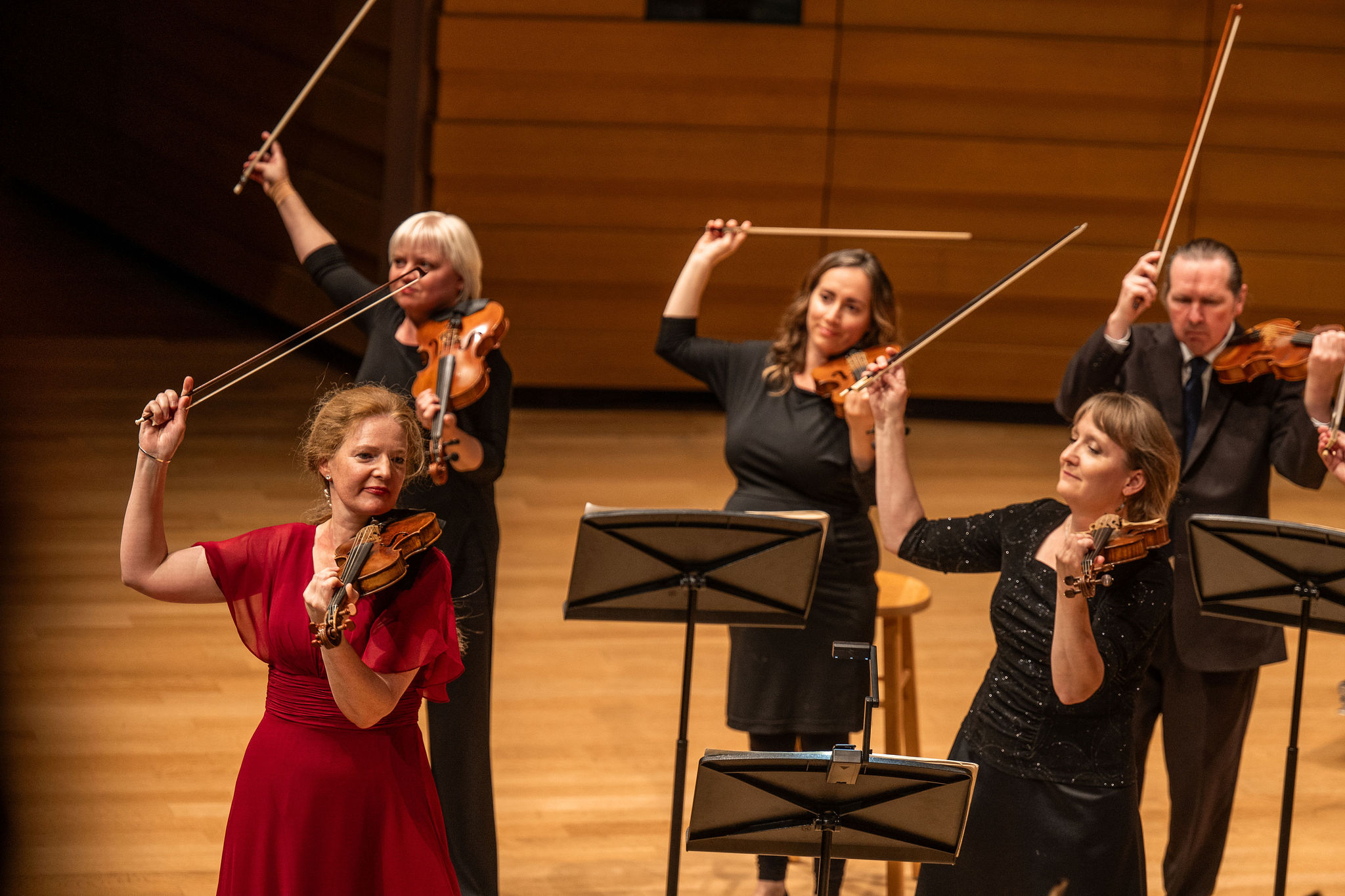
Friday night was an exciting beginning to the Tafelmusik concert season led by their charismatic Principal Guest Director Rachel Podger featuring works of Mozart & Schubert, a concert to be repeated Saturday & Sunday at Koerner Hall.
The spectacular performances of a pair of familiar works (Mozart’s Symphony #40 and Schubert’s Symphony #5) showed the music in a new light, while displaying the remarkable chemistry we saw last year between Tafelmusik and Podger. Once again the orchestra played with the kind of tight ensemble we see in chamber music, evident not just in the precision of the music but in the eye contact & smiles of everyone onstage, clearly enjoying themselves. Whenever Podger appears with Tafelmusik the music-making is special.
Tafelmusik seem to be intent on helping us to learn as we discover new ways of hearing music, often by unlearning the assumptions of the past. Charlotte Nediger’s program note includes a smoking gun from Schubert’s diary, describing the admiration with which Schubert experienced Mozart, and would emulate him at least in his choice of instruments, if not in the actual sound. What a terrific opportunity, to hear these works one after the other, blowing away the cobwebs we inherit of the retrospective thinking we get from musicology, the wisdom of hindsight that may distort the performance. I’m grateful for a new way of understanding them, that is less about musicology and influence than the practical experience of hearing the music.
Their mutual similarities are not as clear when Schubert is seen through the lens of Beethoven & subsequent romantic composers. And the view is further distorted by matters of size, when a chamber orchestra of 40-plus members or more can’t offer the subtleties we heard from the 26 playing for Tafelmusik last night, their careful musicianship reminding me of the way we understand a string quartet: their unanimity like the effect of a single instrument rather than an orchestra, the music emerging as a single thought.
And I returned again to a question I have recently found myself asking over and over, particularly since seeing the Toronto Symphony led by Mandle Cheung. How much of what we hear is via the conductor, and how much is an orchestra managing itself? We saw the kind of instantaneous response between players that one expects in chamber music. Size matters, as this cohesion becomes impossible, the bigger the band gets.
We were treated to high drama in the Mozart G minor symphony. The pace in the outer movements was fast as quicksilver, stormy, stressful, given to abrupt explosions of emotion amid passages of lyrical beauty. We think of Mozart as a paragon of the youthful genius but here we see glimpses of a darker side. He may have died at 35 but had already been a famous musician for decades, perhaps world-weary by the time he came to this his penultimate symphony. The second movement offered depths of feeling worthy of a romantic.
Between the two famous symphonies we watched and heard the theatrical dialogue of Mozart’s Rondo in B-flat for violin & orchestra. Besides aligning us with the key we’d be in for the concluding Schubert, we watched and heard the back & forth game playing of the young Mozart, a work of joyous innocence to contrast the darkness of the symphony we had heard. Not only is this a work where the music seems to play games, but Podger seemed to be toying with us, playing with our expectations in the audience. Podger was spectacular on the violin but perhaps more importantly drew something remarkable and rare from Tafelmusik, who played with passionate commitment.
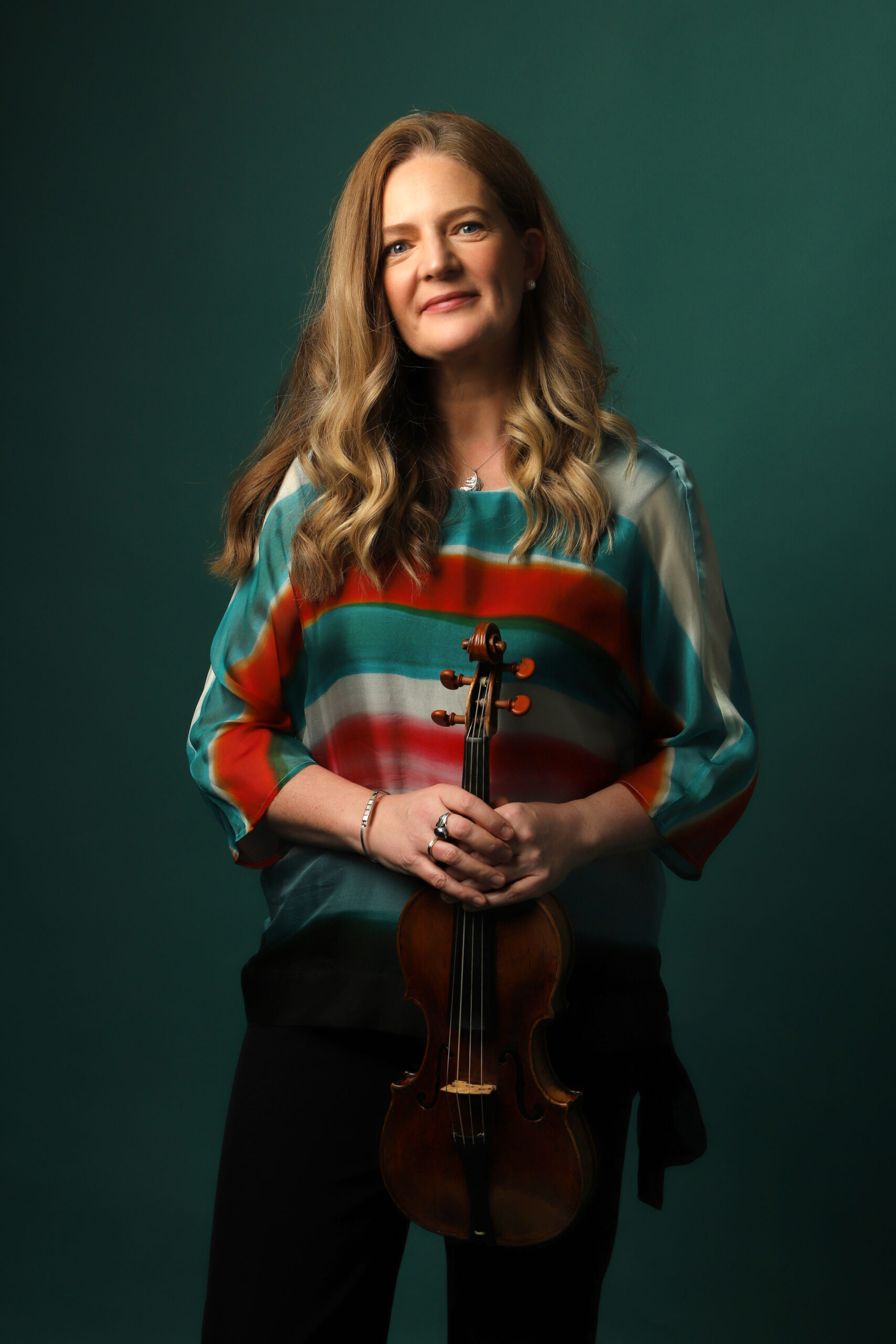
The concluding reading of the Schubert #5 reminded me a bit of the old recording I have of London Classical Players led by Roger Norrington who passed away recently. Decades later I still wish Tafelmusik would undertake more of the romantic works Norrington & the LCP recorded back in the 1980s, and believe there would be interest. Considering the wonderful job they did with the Beethoven Symphonies or works such as Weber’s Der Freischütz, I know the orchestra is more than up to it, as they showed us again Friday night. I can’t tell if I am out of step in making such a suggestion, when I see Tafelmusik promoting this concert on Facebook with a video of Rachel Podger under the heading “Baroque Music Excellence.” Yes their Bach & Handel are amazing. But I am sure they could also play Berlioz or Schumann. For now, I am grateful to hear them play Schubert and how wonderful they sound playing this music.
This splendid concert repeats Saturday & Sunday nights, and then Tafelmusik will be right back to Mozart for Opera Atelier’s Magic Flute opening October 15th at the Elgin Theatre.

 barczablog