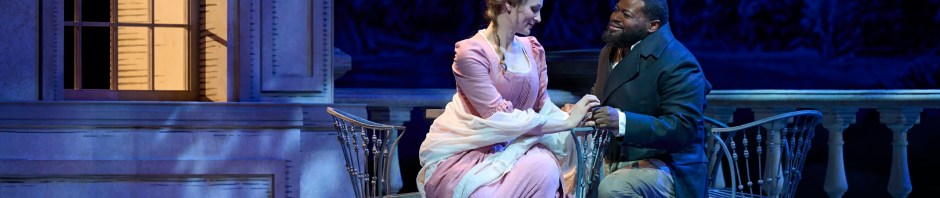
Excuse me as I gush. I love the new Canadian Opera Company production of Werther, featuring some of the best singing we’ve heard in years. I want people to come see this opera, so that the COC decides to do more Massenet. Manon sometime soon? Oh well, one can dream.
I came Saturday night with Ann Cooper Gay, a former artistic director of the Canadian Children’s Opera Company and a soprano with the COC before that.
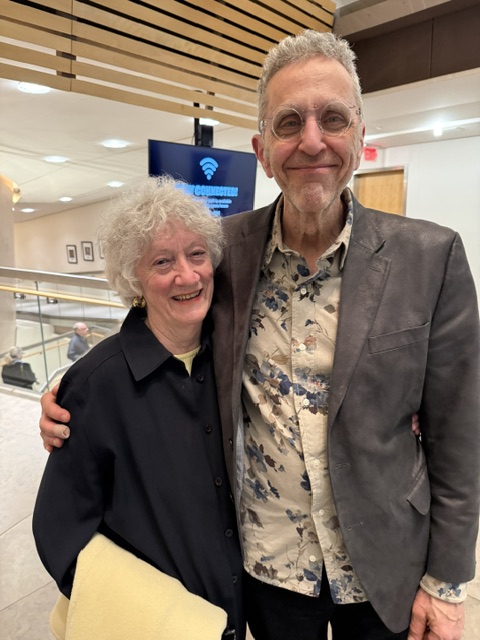
It felt absolutely perfect to be sitting beside her, given how this opera frames its action with children’s voices, sung by members of the company she once led. It is in my opinion the best such chorus in any opera I could identify. Yes I love the parody of militarism at the beginning of Carmen. This one is better because it’s functional to soften the story, framing the opera at the beginning and end. Even knowing it’s coming I get all teary-eyed hearing the angelic voices sing of Christmas as Werther & Charlotte discuss the meaning of life. The bravissimos erupting from the Saturday audience at the end suggest that maybe I am not the only one who turns to crème brûlée at Massenet’s soft landing on the hero’s death.
There was a lot of drama even before the show, on a night when the Don Valley Parkway was closed on a busy weekend. And to add to the suspense, the COC have added extra security coming into the Four Seasons Centre. It seems apt to submit to the usual procedures for boarding an airplane, considering that we hope to be transported somewhere by the magic of opera.

The stoic Toronto crowd wouldn’t let that stop us. From a chat in the lobby with Kenneth Baker, it would seem that this time we got through the screening process quicker than his previous experience last week. Chances are staff will get better at this as they get accustomed to the procedures (and maybe ditto for the audience). All I know is, I was primed for a magical experience, and the COC delivered.
Oh yes, the opera. I think Jules Massenet is under-rated, perhaps still to be properly discovered. I recall he was a favourite of Stuart Hamilton, whose Opera in Concert presented sixteen Massenet productions (some operas repeated), as you can see on their database. I believe the culture of opera in French has a tradition of responding to the text going back to Lully, Charpentier and Rameau, but especially in the century of Berlioz, Gounod, Bizet, Saint-Saens, Debussy, Ravel, Poulenc: and of course Massenet. Italian might be a more fluid language to sing, but the composers in French kept their musical forms in check to allow space for literary ambition to have their moments in a way no other culture would do. If we think of the possibilities of opera as a medium where text is illuminated by music, the romantic composers are for me the apex in the 80 years between 1850 and 1930. The ideal is often something we contemplate, dreaming of the possibilities we encounter in our imagination via audio recordings. For me this one exceeded my expectations and showed me how powerful the medium can be.
My headline is meant to suggest what I experienced in the theatre, taken up in the passions of young Werther: a seminal figure if there ever was one. We could go off on a tangent with the novels influenced by Goethe, whose Werther & Faust are like the skeletons in the closet of romanticism. I don’t think you get Byron or Wagner let alone all varieties of Bildungsroman, the heroes of Dickens or JD Salinger without Goethe. Yes yes i am making sweeping generalizations, as I write after midnight, still entranced by the COC’s production.
But think for a moment, about the real magic of an adaptation going from a private literary medium like poetry or prose, into a public performed medium such as theatre or opera. When we read of Werther’s sorrows we have a different experience than sitting with hundreds of others listening to a tenor embodying pure sensibility, whether telling us of the beauty of nature, his admiration for a woman, or his despair. It’s one thing to read about an emotion described, something tremendous & magical to give us the visceral experience of that emotion as sometimes happens in music.
Many have tried to bridge that gap, between the page and the stage. I have watched & listened to Berlioz and Gounod try to show us a sensitive man tell us of the beauty of nature, but they pale beside what Massenet accomplishes in the first act of Werther. I think of Massenet occupying the middle ground between complex artistic ambitions (thinking of Berlioz or Debussy), but not so blatant as a crowd-pleaser (an accusation one might level at Gounod). The music is simplicity itself, first in the orchestral introduction, and then completed by the soaring tenor line when Werther tells us what he’s feeling, and you feel it too. I’ve heard so many different approaches to this, some gentle like Cesare Valetti, some powerful like Jonas Kaufmann. When the composer has done it right, there’s space for different interpretations and this is especially true of this opera. I was on the verge of tears (and am a sucker for this nature-sensibility music before anyone comes onstage, which is among my favourite compositions by anyone anywhere), anticipating Russell Thomas. We’ve heard the voice before, it’s heroic, wonderfully precise as far as intonation. He soared fearlessly over the orchestra from the beginning. While he would sing more softly later, especially in his final scene, he was close to perfect in this huge role, his top notes calling to us eloquently. His technique seems phenomenally good, in the confidence he gave me every time he ascended, the certainty I always had in his ability to hit the high notes. I understand that there is a trade-off, when his approach to a French vowel might be to pronounce it a bit differently in order to enable him to sing high notes so reliably; if the alternative is clearer French but sung less securely, I am happy to accept that trade.
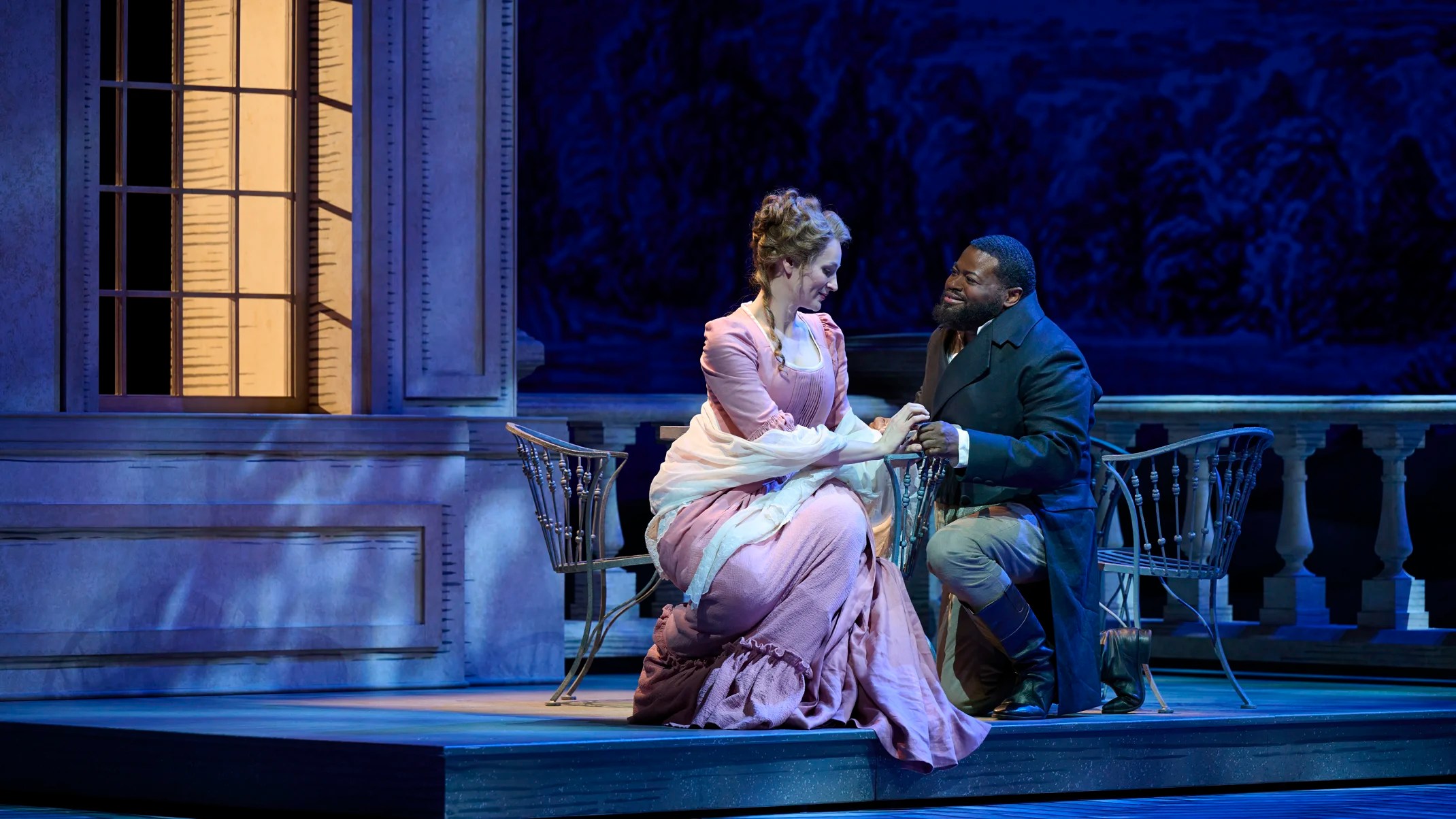
There’s even a Mother’s Day tie-in, as Charlotte tells us of her deceased mother. I can relate. Charlotte lost her mom three years ago, I think she said. Mine passed about a year and a half ago. For me this was the highlight in the performance by Victoria Karkacheva, a moment of sensitivity that was relatable. That’s what Massenet does, distilling emotion & experience into simple & direct musical expression.
This was among the best sung shows I have ever encountered from the COC. Gordon Bintner and Simone Osborne were truly note-perfect as Albert and Sophie.
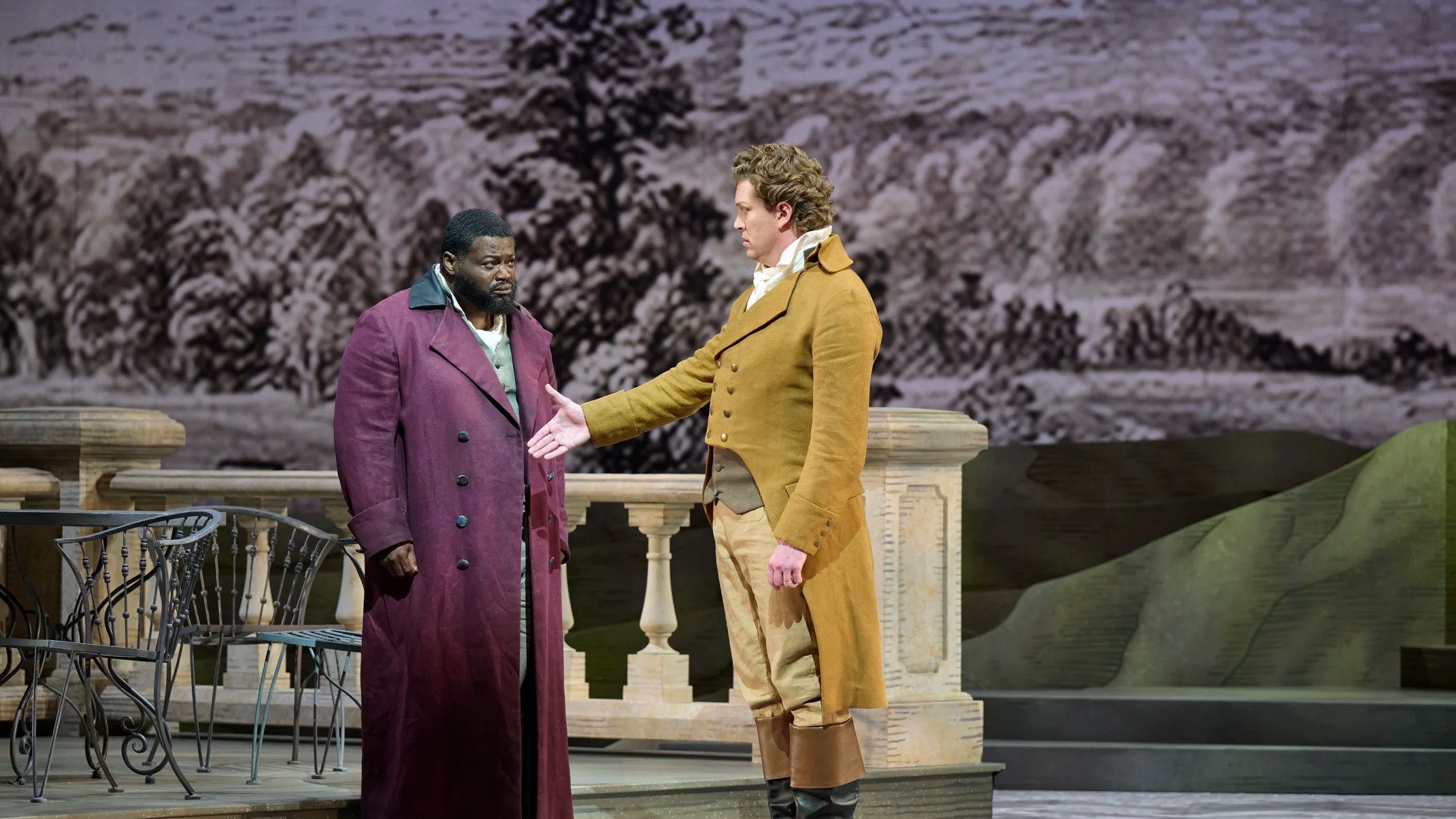
Gordon’s Albert is a wonderfully sympathetic creation, making Charlotte’s marriage much more than just the outcome of a promise made to her mother to marry this man, but a believable action under the circumstances. Simone’s Sophie offers an important contrast to the obsessive principals, giving us a glimpse of normalcy as a backdrop to the action. Her expressions of joy help to balance the darkness coming from Werther & Charlotte.
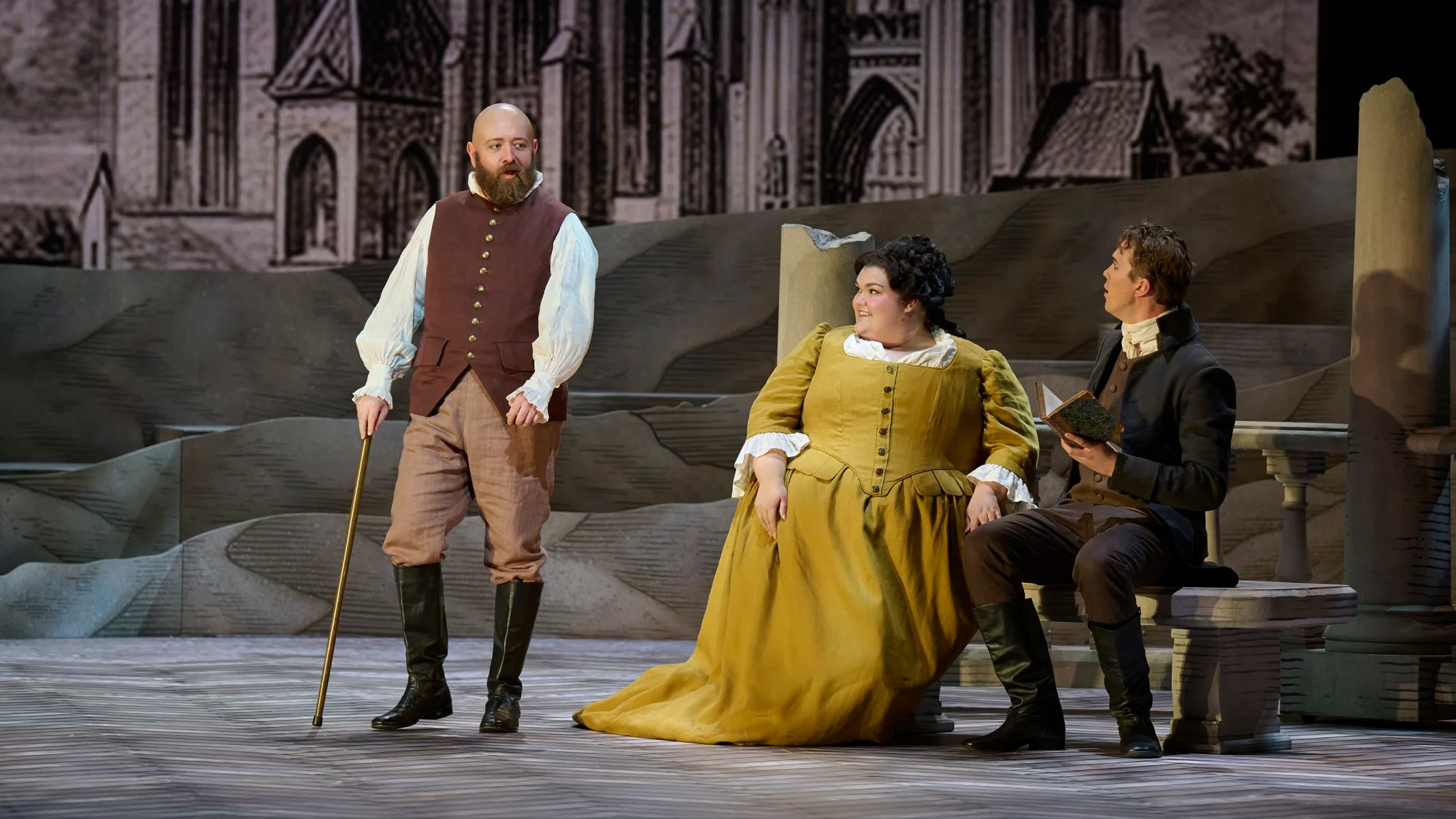
Ditto for the three men we meet in the first and second act. Robert Pomakov (Le Bailli) is a gruff but lovable choir-master with the children, a father-figure without elaboration.
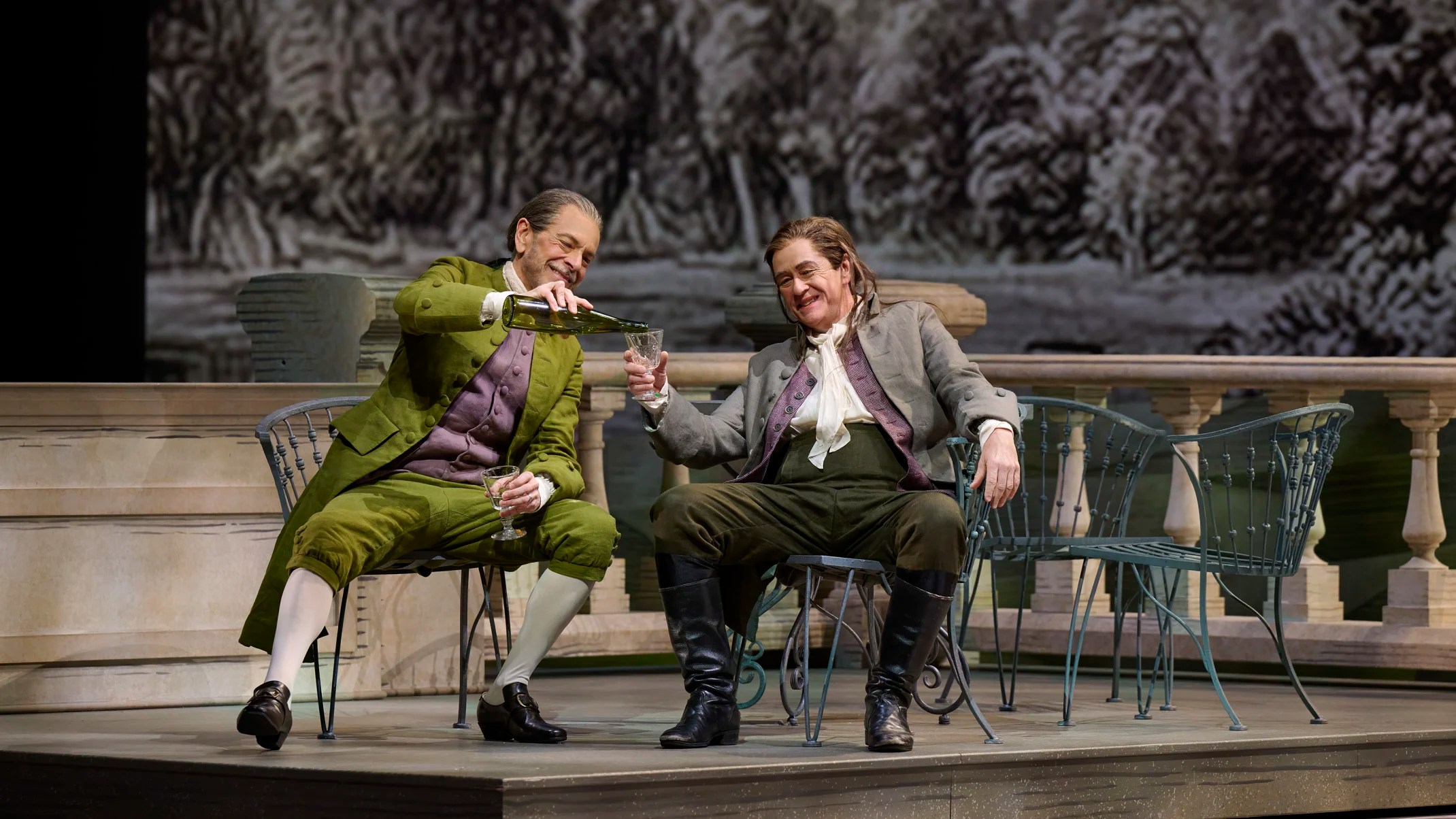
Michael Colvin (Schmidt) and Alain Coulombe (Johann), express their admiration for Bacchus & beverages, again supplying important bouyancy to the opera.
And there’s also the pair of Emma Pennell & Ben Wallace giving us reason to smile, as Käthchen & Brühlmann.
This is a co-production with Opéra de Montréal and Vancouver Opera directed by Alain Gauthier. I am grateful that the period is consistent with the novel (18th century) rather than modernized, given the conservative mores, as with Charlotte’s obedience to her mother’s wishes or the frequent references to Christianity in the opera.
The COC Orchestra led by Johannes Debus sounded superb, although (as I have hinted) I was dying to hear Massenet and was more than ready to be thrilled by what I heard and saw. Werther continues with five performances remaining, May 13, 15, 17, 19 & 23.


Love your review. I concur with you. I still have a few images in my mind from the last production in 1992. This is a delightful production with fabulous singers. Great to see you last night.
Kenneth
LikeLike
Thank you sir! you’re too kind. I’m grateful to talk to someone who was actually there. Testimony is vital.
LikeLike
This opera was splendid. I just read Goethe’s Young Werther last summer, so it was fresh in my mind, and I liked how the opera treated the story — as you said, taking it from a private medium to one that is much more public. Beautiful music, sung wonderfully well, and I loved the set design, the costumes: everything about the staging. (I too noticed a few anomalies in the French pronunciations but thought it must have just been me.)
LikeLike
I’m seeing the closing show of this one next week. Russell Thomas has an interesting technique that allows him to find his way up to his high notes, but in the process squeezes the vowels out of shape. He reminds me of James McCracken, a singer who had a very similar sound, employing diphthongs that in the process of hitting the note make the French vowel sound a little odd, perhaps a wee bit like a heroic version of Inspector Clouseau. Thanks for your comments, Mary!
LikeLike