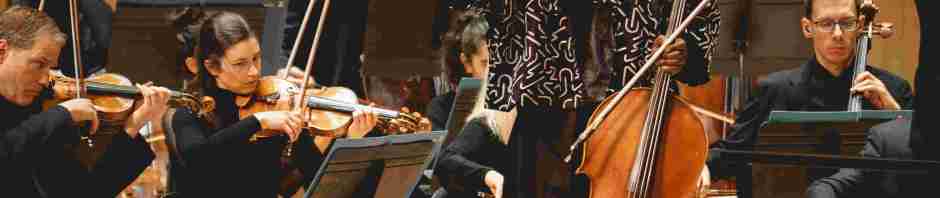
Thursday night the Toronto Symphony showed us they could blend Western & non-Western cultural traditions. When Gustavo Gimeno spoke in his program note of the imminent arrival of thousands from abroad into our city for the FIFA matches, he spoke of a “spirit of international togetherness and exchange”, the dream of peaceful co-existence at a time of stress & conflict.
The concert’s title “Epic Wagner — Legends & Lore” only hints at the broad range of styles. In addition to Wagner we were treated to South African cellist Abel Selaocoe in his TSO debut as featured soloist in Jessie Montgomery’s These Righteous Paths for cello soloist & orchestra, a TSO co-commission in its North American premiere. Hers is a unique and compelling voice that I need to hear again. I hear lots of contemporary compositions played by the TSO and elsewhere, rarely anything as imaginative and beautiful as this. We need to hear more music by Jessie Montgomery.
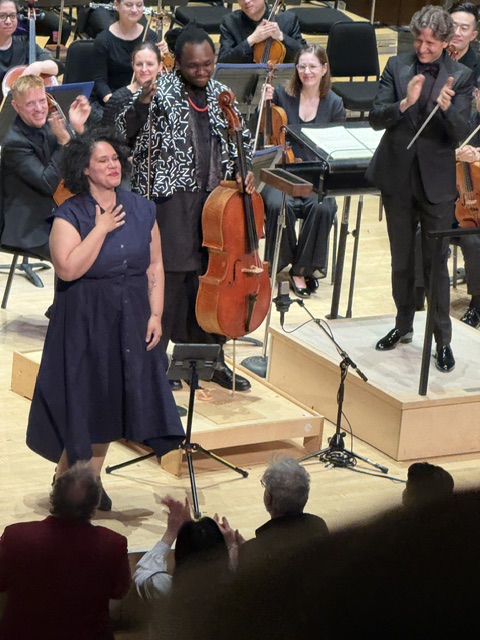
I wish Gustavo would program this wonderful piece some night when a recording is being made, as I must hear this again, a piece that deserves to be captured even if a big part of this was Abel and his unique gifts as cellist and as a vocalist. The sounds he gets from his cello are unlike anything I have heard before, a virtuoso who makes the instrument sing, and who joins in as a vocalist. I’m trying to find ways to describe my experience that properly honour what I saw & heard, an amazing cellist in his encounter with an amazing composition. Frequently during this piece, I was staring at the orchestra trying to figure out who was playing in order to figure out just where the colours were coming from, meaning what combination of instruments. While it’s modern the music is beautiful yet edgy and dramatic, some of the best new music I have ever encountered. That Jessie drew her inspiration from her deceased mother’s poetry was a layer of complexity I need to decode, by listening to the piece again.
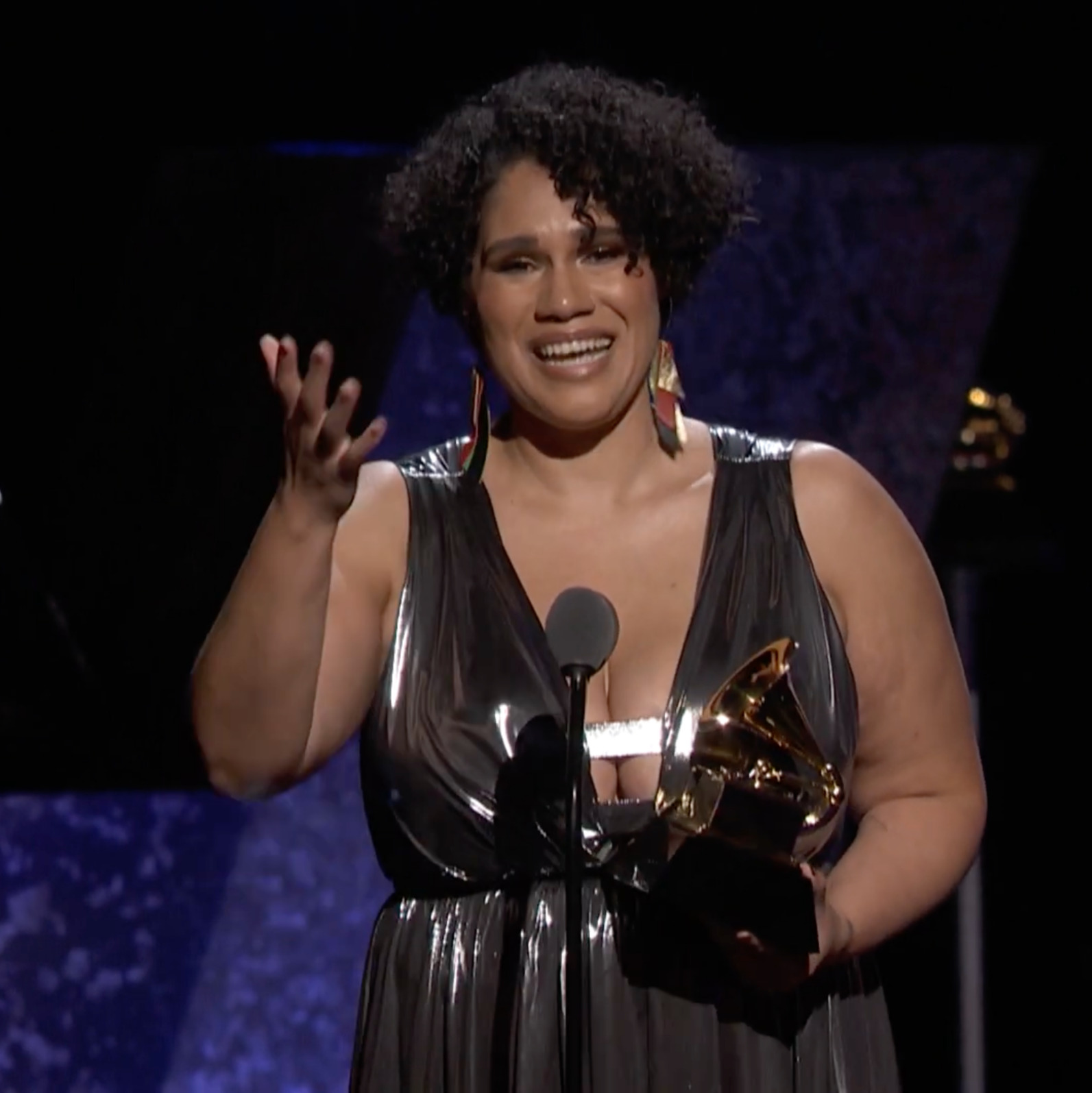
Exciting as the concerto was, Abel surprised us in his encore, an interactive improvisation calling for audience participation and a little help from the orchestra behind him as well. I didn’t want it to end but of course that’s unfair to Abel, whose energy seems unlimited, and whose charisma calls forth the best kind of response from the listener.
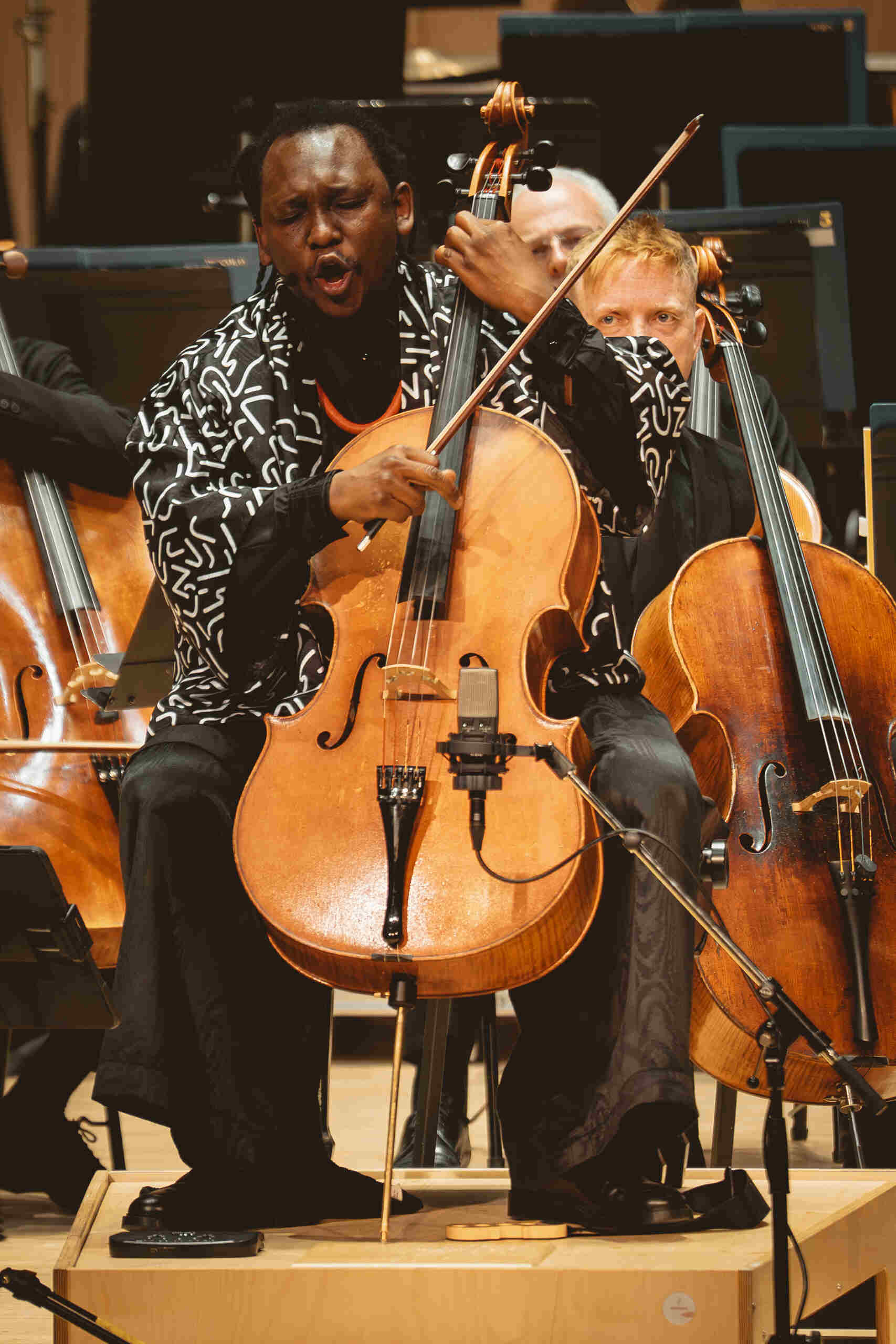
At times he was playing super soft notes on the cello, seguing into something employing his voice as much as his cello, showing us two different sounds to his voice. His bass notes seem to go down to the low C that basses aspire to (meaning the C below the F in O Isis und Osiris by Mozart or the D sung in Koyaanisqatsi from Philip Glass), low and deep and powerful. So in addition to that epic low note, Abel also has a croony melodic sound at the top of his range, that might go up to a bass’s E or F above middle C. The two voices are so distinct that they almost sound like two different people, and in a concert like this one, are amazing to hear while he also plays the cello. And then, the audience was responding, singing back to him, and he also had the double bass section of the orchestra giving a kind of backup pattern (something like A- E, G-D, first sung by Abel) then as he pointed at them, played by the double basses.
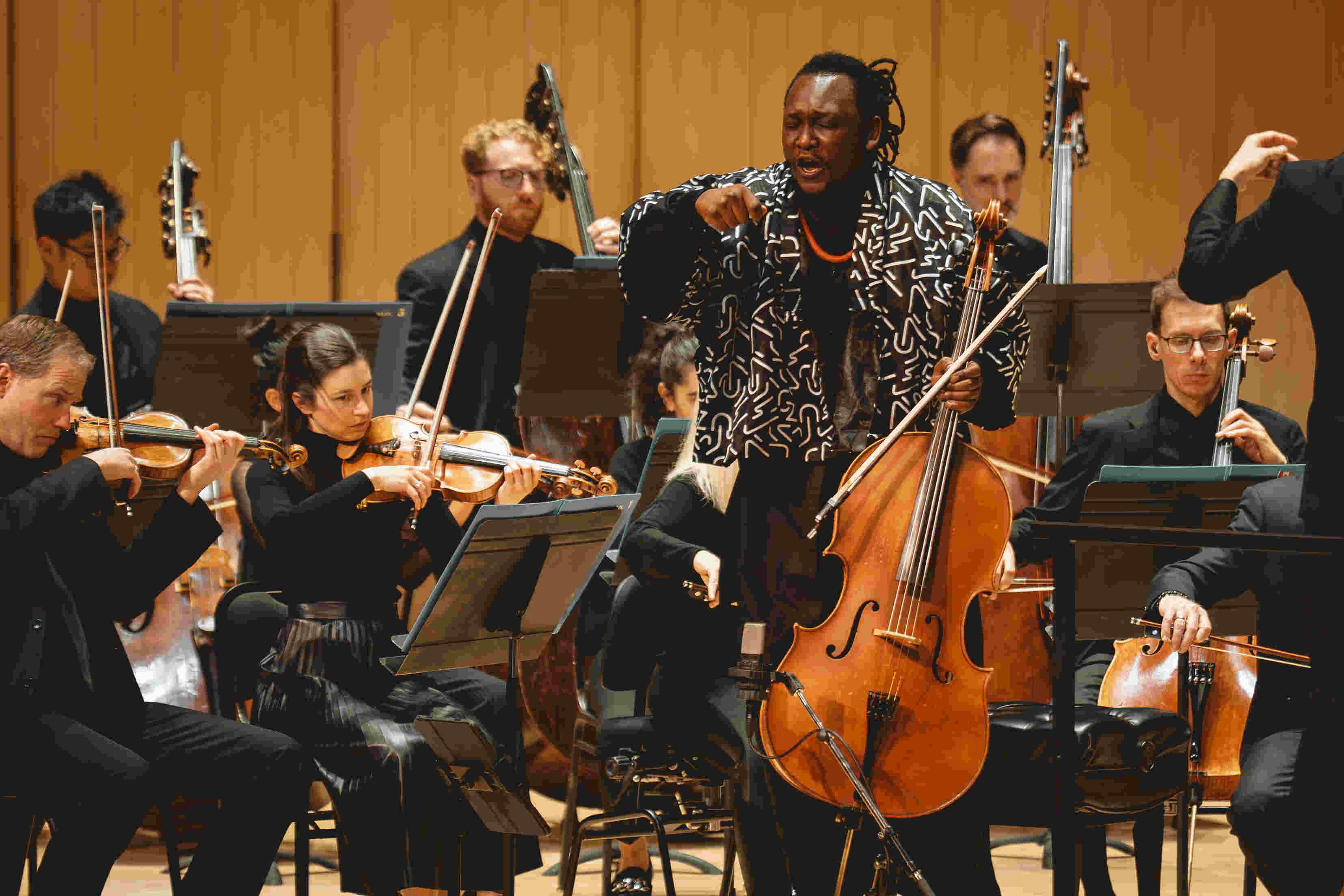
I feel lucky to have seen Abel who is a very exciting artist, whether as soloist playing the compositions of others or improvising alone, and bringing out the best in the TSO audience. For the first half of the concert alone, I strongly recommend that you go see the TSO when they repeat the concert on Saturday May 16th at 7:30 pm.
The second half was entirely different, when we heard orchestral pieces from the operas of Richard Wagner. Full disclosure, although I was intrigued by Abel, the Wagner was the reason I came to hear the TSO on this occasion. My favourite composers are the romantics, even if I can never get enough.
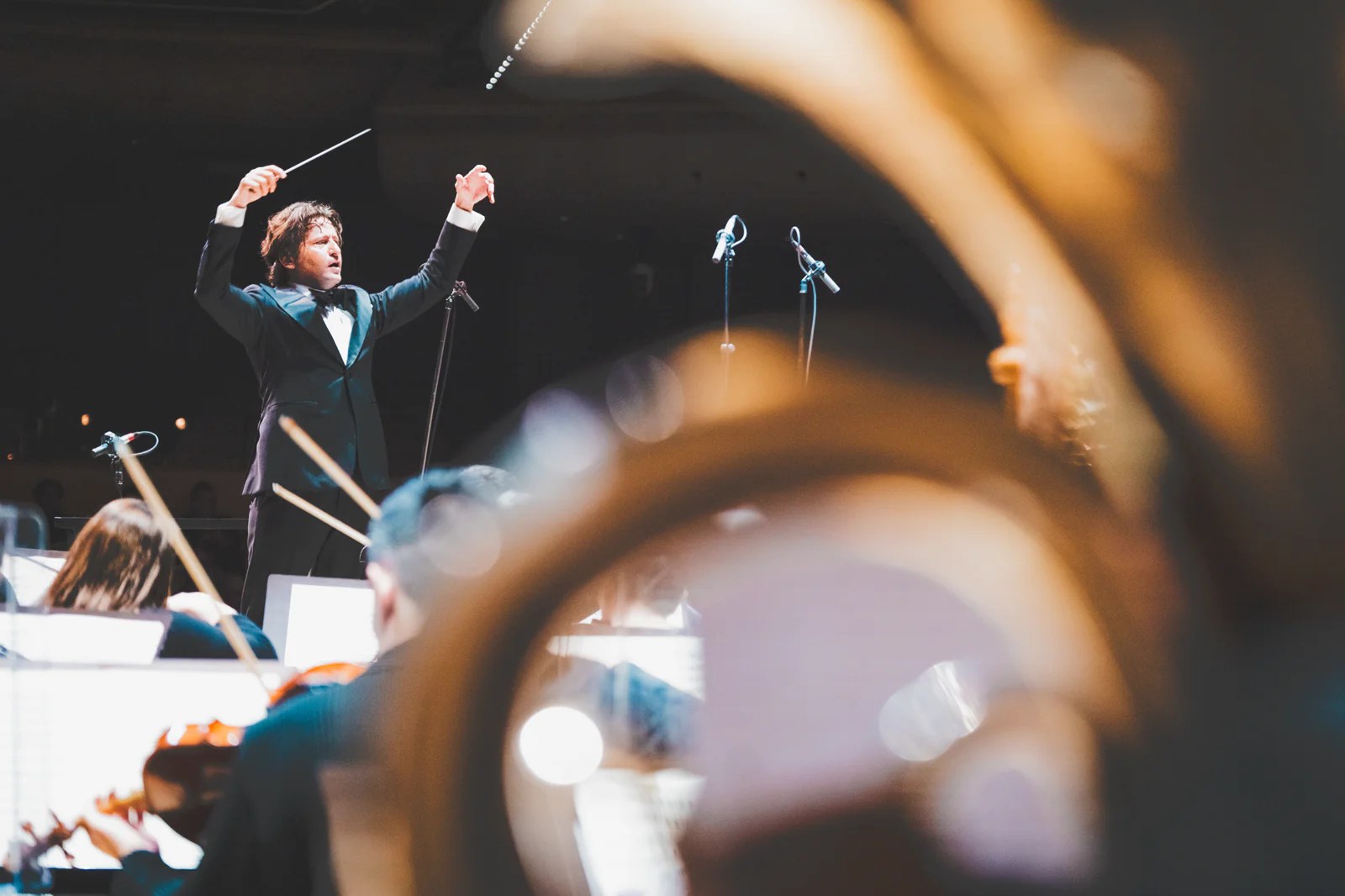
After intermission we first heard the Flying Dutchman overture, a piece that gives us the first good look at the composer Wagner would become, a relatively tight composition for its time in its samples of the themes of the opera, such as the Dutchman’s theme, the redemption motif, the sailors song, taking us to a powerful ending.
What followed was a selection from Lorin Maazel’s Ring Without Words, a longer work that is an orchestral paraphrase created from the four music dramas The Ring of the Nibelungen. Our nearly half-hour segment took us on a trip through the last of the four operas, namely Twilight of the Gods, in three big chunks. I’ve previously encountered two-thirds of this, in a combination of Siegfried’s Rhine-journey and Siegfried’s funeral music sometimes with a direct segue from one into the next as though it were one composition. Maazel does this too, adding an additional segue into the final ten minutes of Brunnhilde’s Immolation scene, where the cycle comes to its cataclysmic conclusion. When sung Brunnhilde is supposed to ride her horse into the funeral pyre (even if that is rarely staged that way), but this way without voices it’s simpler, no staging, singers, horses, or fire: just the orchestral music. And this way we also avoid any debate about the director’s choices.
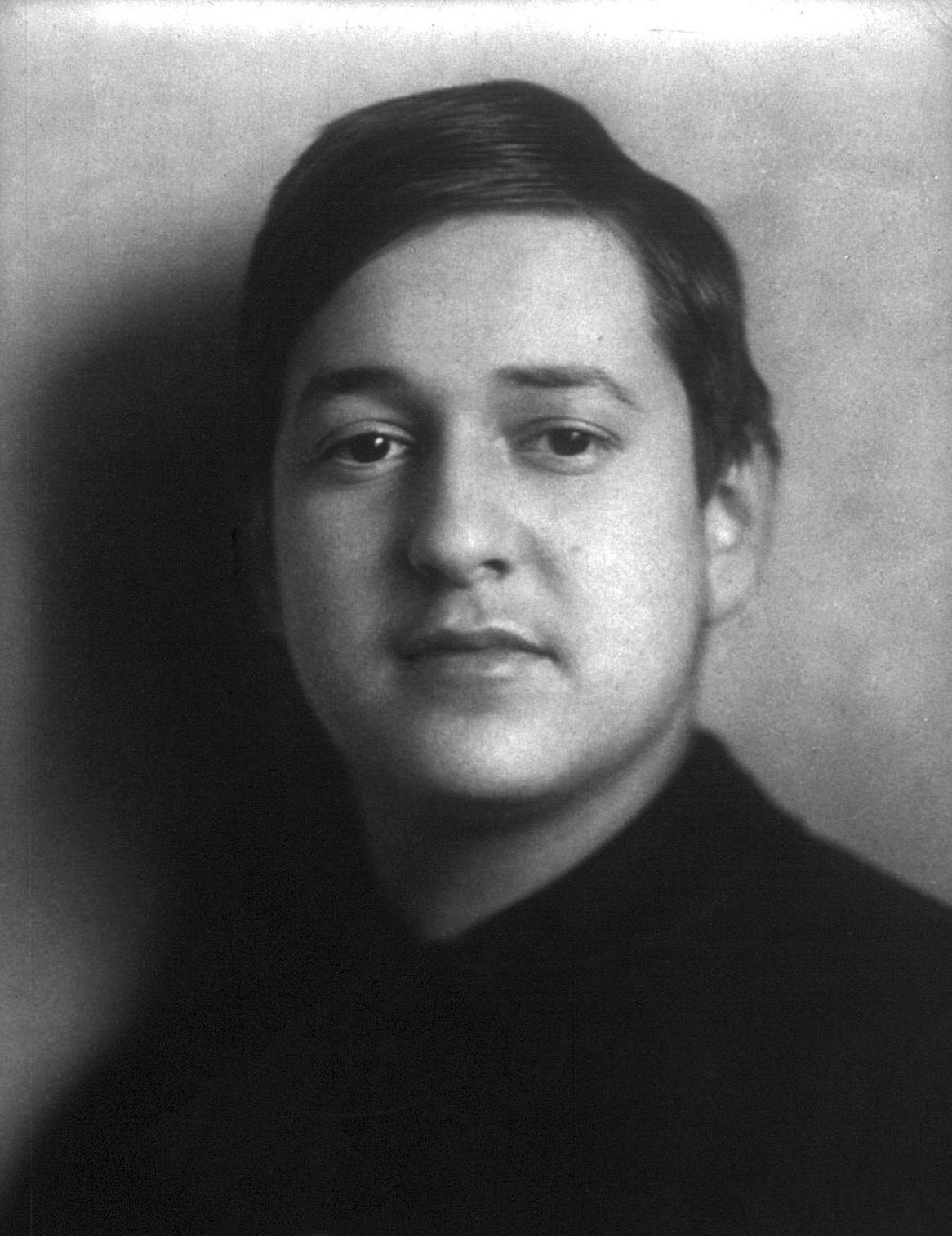
It’s quite a spectacular piece of music that had me teary-eyed in a few places, calling for the most enormous orchestra you’re likely to encounter, especially given that Wagner’s orchestra is usually in an orchestra pit rather than assembled on a stage before you. Even without the voices it’s a stunning experience that’s a bit like film music in presenting us with the soundtrack minus the visuals. That seems reasonable especially when we remember that Wagner would be the prototype for the first film music composers in the 1930s. It’s ironic if we recall that some such as Erich Wolfgang Korngold were refugees from the Third Reich, a place where Wagner was treated like a hero.
The TSO repeat the concert on Saturday May 16th at 7:30 pm. The week of June 4th the TSO take some inspiration from cinema, including Bernard Herrmann’s suite from Psycho and Korngold’s violin concerto, a work containing themes from his films.
 barczablog