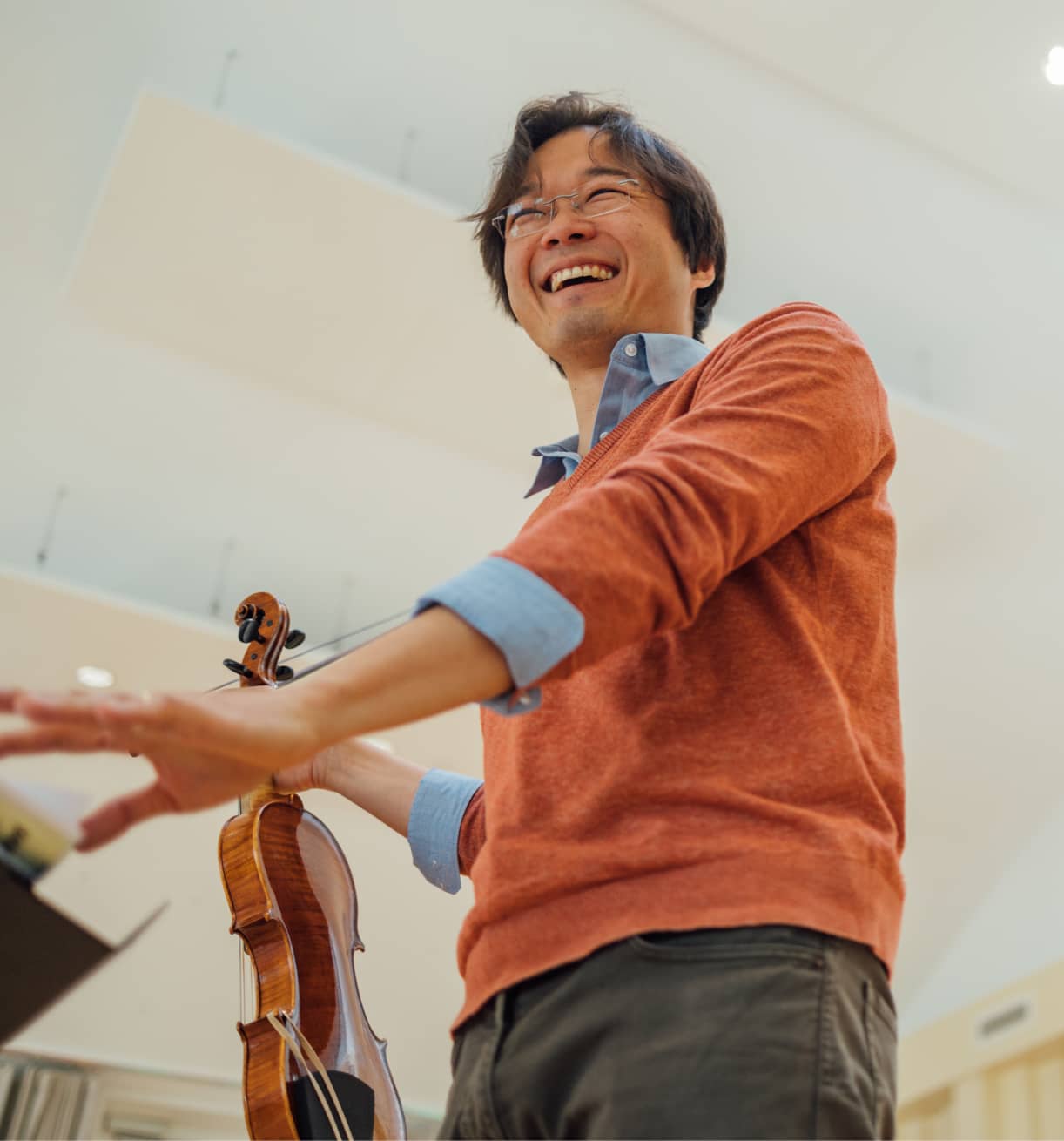
Descending the stairs after the final Tafelmusik concert of the season at Koerner Hall, walking slowly behind older audience members, a woman beside me glanced over, eyes glowing, wanting to share her experience.
She had to talk. And so we chattered back and forth about Shunske Sato, Tafelmusik’s guest artist this week playing and directing the orchestra while playing.
And I had to say it. “That was the best violin playing I have ever heard.”
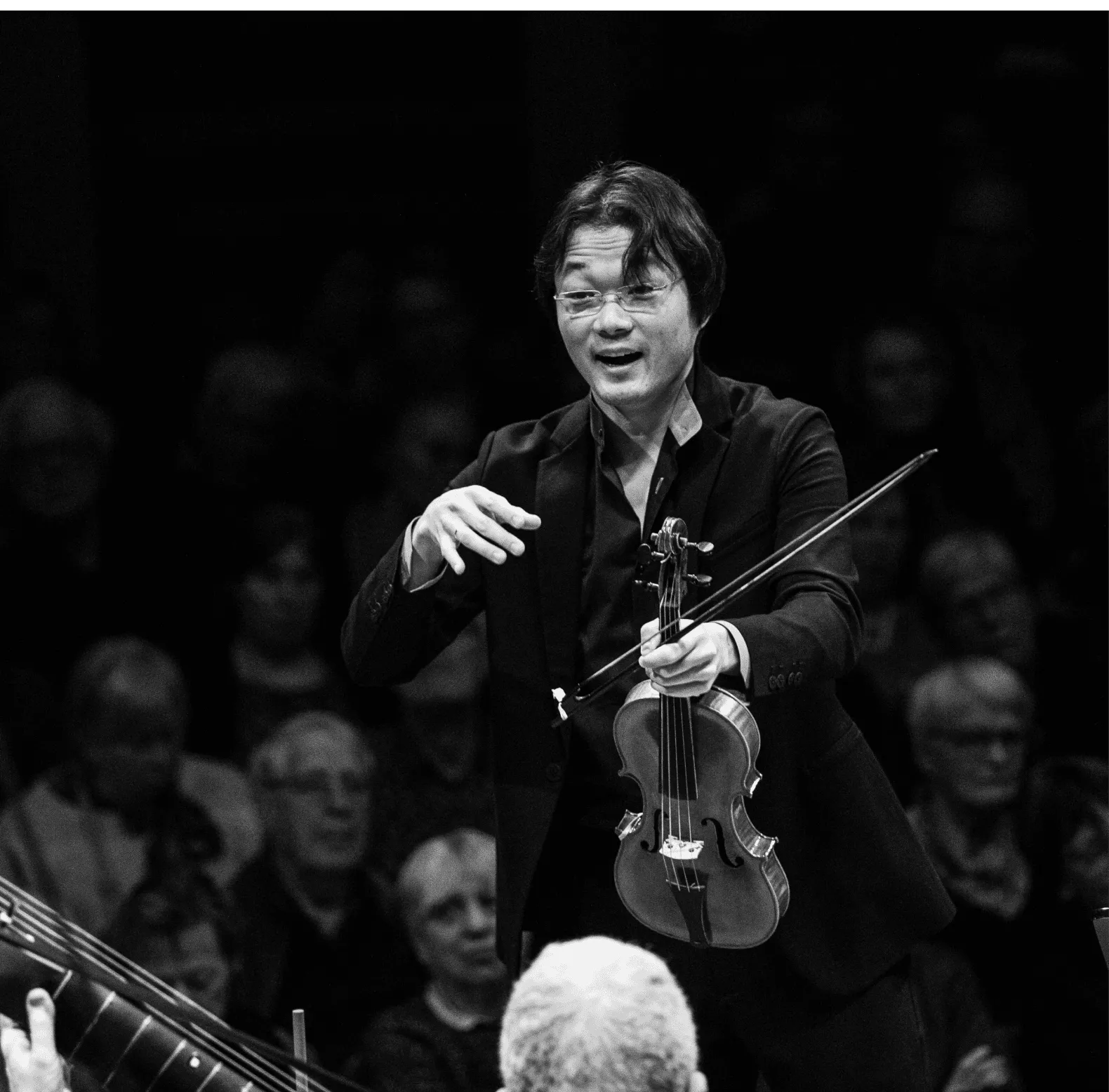
Playing in the historically informed style usually entails compromise, issues with tuning. Sato played so well it was as though he was on a modern instrument not one employing the original-style instruments you hear from Tafelmusik & their collaborators. I swear he played every note precisely in tune, indeed sounding to my ear as fluid and effortless as anything I can recall from a violinist.
As I write this, the next day, pondering & wondering, I have fallen down a bit of a rabbit hole aka YouTube listening to Sato. If you search for his name on YouTube you’ll find all sorts of great things. For the usual go-for-baroque tendency of Tafelmusik there’s remarkable Bach. Here’s the full Partita no. 2 in D minor, although I’ve cued up the YouTube link at 15:51 for the Chaconne (my favourite part).
Or you can hear some more recent compositions. Before he switched to the baroque violin Sato recorded the Korngold Concerto, the one we’re going to hear this week with the Toronto Symphony. There’s a glimpse of Brahms done historically informed, that whets my appetite for more. In his bio in the Tafelmusik program I read that “with his newly founded PastForward Ensemble [Sato] devotes himself to the realm of 19th-century performance practice.”
Whoever curated the concert to conclude Tafelmusik’s season can be proud of an exciting choice of works titled “Beethoven Eroica & Bologne: The Winds of Change”.
Gossec: Overture to Le Triomphe de la Republique (1794)
Bologne: Concerto for violin in C Major op. 3 no. 2 (1774): Shunske Sato soloist
Beethoven: Finale from Creatures of Prometheus op. 43 (1801)
–intermission–
Beethoven: Symphony no. 3 in E-flat Major “Eroica” (1804)
I often aim to go mid-week, seeing the first concert in a series so that I can be helpful, promoting a good program for the remaining concerts. This time Erika and I were out of town, so the only option was to catch the finale Sunday May 31st.
Erika and I have been discussing the whole question of conductors, what they do, what an orchestra gets from a leader, watching Mandle Philharmonic last week. I regret that Erika couldn’t come with me, as I wish she had seen what Sato accomplished, both as soloist and as leader, playing and conducting the works while playing his violin with the orchestra. I’m reminded that conductors did not appear until the 19th century (notwithstanding what you saw in the film of Amadeus: a play not history please note), and that maybe the role evolved out of the kind of role Sato took leading the ensemble while playing. That too is part of the “winds of change”.
As usual Tafelmusik curated our listening experience with great sensitivity, although this was not their usual baroque but closer to my greatest love, the transitional period from classical to romantic and after. In the opening work by François-Joseph Gossec I thought of the giggling younger daughters in Pride & Prejudice, thrilled by men in uniform and the romance of war as seen in an overture dating from 1794. Why after all would men want to be soldiers unless they heard music such as this thrilling composition. Sato held nothing back, turning the brass and drums loose to suggest the drama of the battlefield or parade ground, painting a noble picture of heroism without any sign of the grim realities of war. Hearing this was a beautiful way to allude to the sensibility behind the Eroica, while presenting a composer & a work most of us had never heard before. Sometimes we mistake in thinking a Mozart or a Beethoven invented something that may have been current among composers who have since been forgotten.
Next Sato stepped into the role of soloist for Joseph Bologne’s op 3 no. 2 concerto.
While he’s not yet played as often as Mozart, Bologne is starting to be more of a regular on the concert stage, and is coming up with Apocryphonia next week. And his life was even the subject of a recent biographical film, admittedly fictitious.
In the outer movements Bologne makes his greatest demands upon the violinist, yet we’re watching a witty display, not a struggle, a soloist who is self-possessed and above all entertaining. We see the composer in at least one painting holding a sword, a composer known for his duelling prowess.
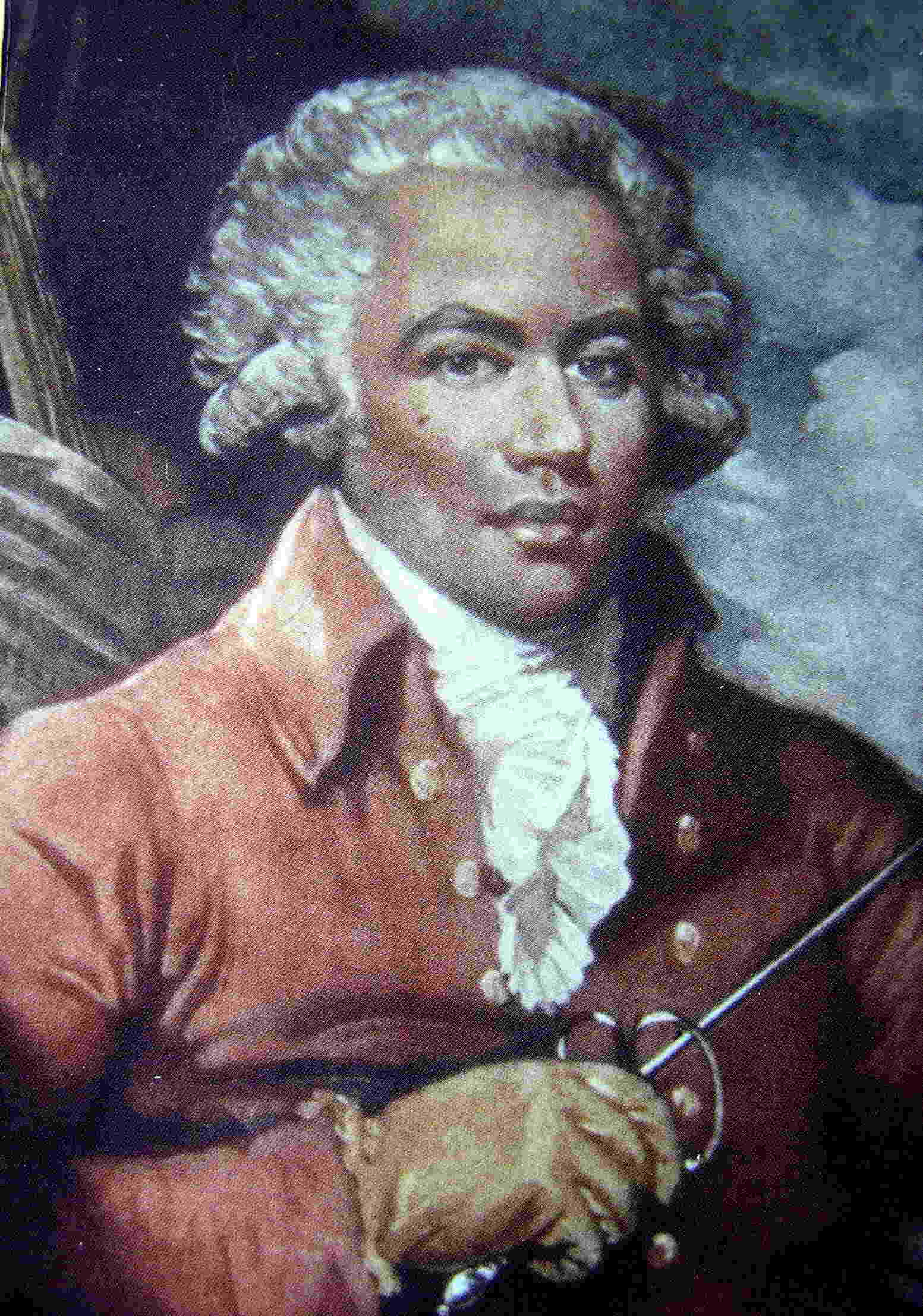
I wish I knew more about the music and the man who composed that music.
Sato our soloist wielded his bow with the fluid elegance of a dancer, the drama of the quick finale playful and joyous. In the middle movement we heard a more introspective & lyrical side. I don’t know the work well enough to say whether this is the usual approach (indeed can there be such a thing for a work only recently becoming known?): but Sato made it seem easy, an effortless display of skill and showmanship.
The next item was a useful preparation for what we were to hear after intermission, namely the finale to Beethoven’s Creatures of Prometheus. Beethoven would use the same theme again in the finale to the Eroica symphony. And once more Sato appeared to be having a terrific time with the piece. When I see the orchestra members smiling broadly, their eyes on their leader, you know he’s doing something right.
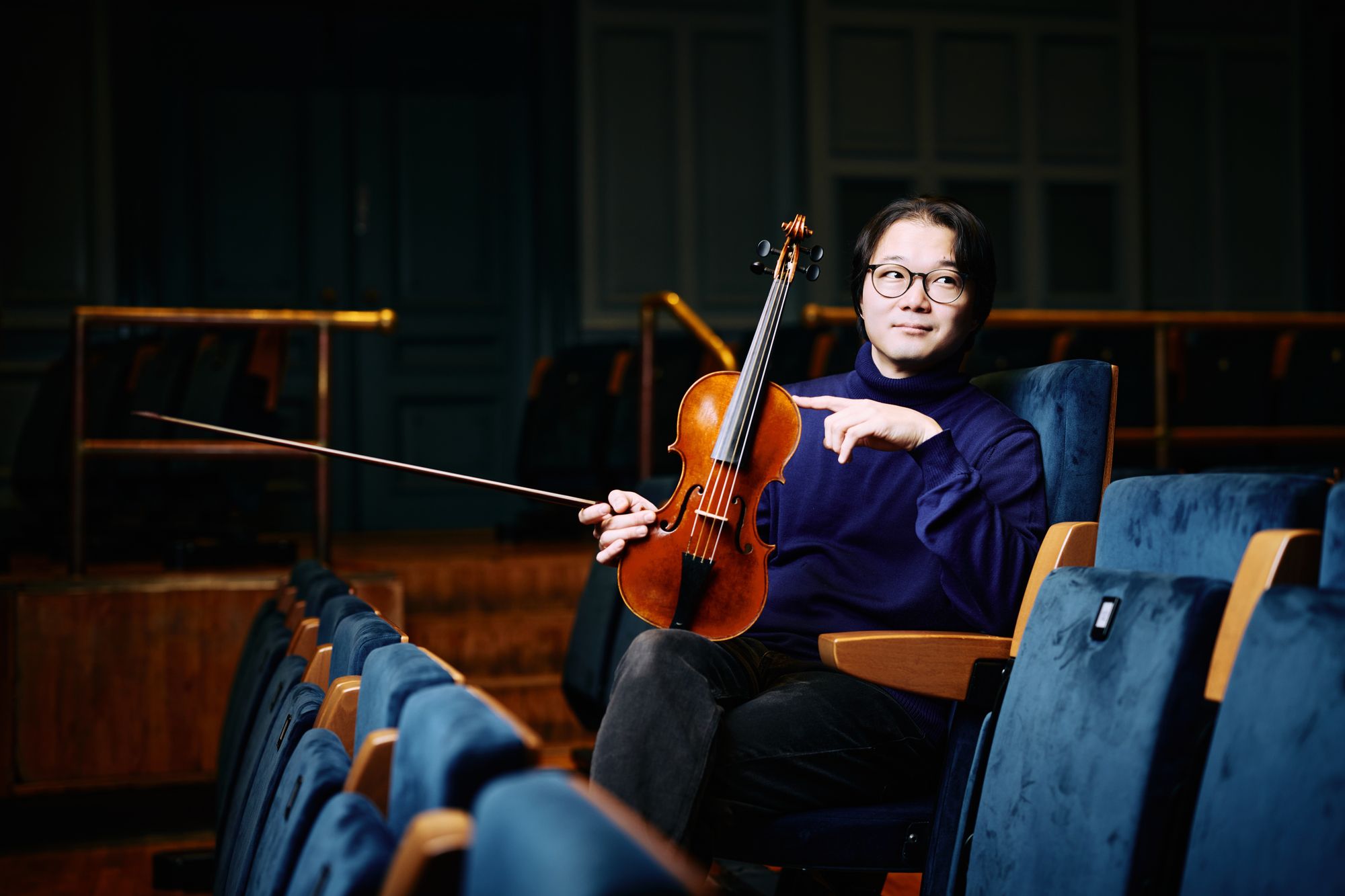
It was after intermission when Sato led Tafelmusik in Beethoven’s Eroica. This big creation in E-flat feels at times like the cornerstone of everything that followed, and like a true cornerstone gets its significance from what is on top, added later. The Toronto Symphony’s recent concert playing a Wagner orchestral suite including Siegfried’s Rhine-journey and Siegfried’s funeral music both feature huge E-flat climaxes that I understand as inter-textual allusions back to Beethoven and to the Eroica, Siegfried being the quintessential hero. No wonder Richard Strauss’s Heldenleben puts the main theme into E-flat, the key of the romantic hero.
I’m not overstating things when I say he made the familiar symphony sound new, a work I think I know really well, whether in piano reduction, but first via the 20th century approach of conductors such as Herbert von Karajan. Modern orchestras used to play the Eroica with a Wagnerian sound, as though conductors wanted to show us the connections between Bach, Beethoven, Wagner, Handel, Mendelssohn or anyone else sufficiently Germanic to be subjected to this heavy-handed approach. When I look at conductors & players undertaking the movement towards historically informed performance, including of course the first and second generation of players with Tafelmusik, I think it’s like a kind of primal therapy, to cleanse music of the Wagnerian taint while trying to get us back to the innocent purity of the composition as written, the original being like a childhood before it was corrupted. First and foremost, Sato’s Beethoven did not sound at all Wagnerian. Far from it. After hearing and seeing what Sato accomplished, both as an interpreter of Beethoven and in the inspiring way he led the ensemble I only wish I could hear more, much more. I wanted Tafelmusik to record this performance, I want them to bring Sato back to conduct again.
I was dazzled and dazed within moments of Sato’s beginning, with his Eroica. With Karajan and his peers however loud or soft it may be, we get something uniform in its tempo from beginning to end, as though the understanding were that a Beethoven tempo must persist from beginning to end. That’s not at all how Sato approached the Eroica. We heard the powerful blasts that open the work in a relatively slow tempo, as a rhetorical flourish. And then with the entry of the main theme, the orchestra took off at a much quicker tempo. The variety seen on the first page would continue, sometimes speeding us up, sometimes slower. While I think I know this work as well as anything I hear in a concert hall, it became brand new in this incarnation. At times, such as the notes just before the recapitulation, the orchestra were so soft as to be a complete mystery, full of suspense & drama. At times the orchestra was explosive in its sound.
We came to the second movement funeral march, beginning again with slow thoughtful first notes, but soon enough picking up tempo. When we came to the passage in C major we were going faster. But Sato made it feel brand new with his spontaneity, an organic approach alive in the moment. The only movement that was as regular as an old style conductor such as Karajan might have done, was in the scherzo, taken at a fast pace, then handed to the horns (Marie-Sonja Cotineau, Pierre-Antoine Tremblay and Chris Gongos) for their stunning trio.
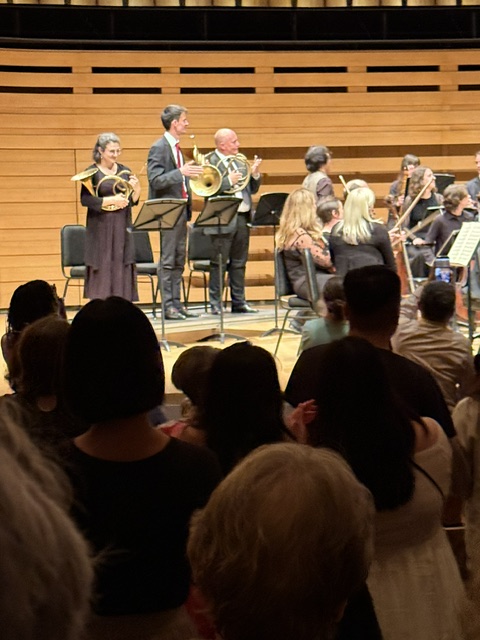
I have heard this done so many times, I didn’t think I could hear something sounding brand new: but that’s what Sato accomplished here and again in the finale.
While they call themselves a baroque orchestra and have emphasized Bach & Handel year after year, from time to time Tafelmusik do venture into the 19th century, as for instance in their recordings of the Beethoven symphonies with Bruno Weil, almost a decade ago. While I love their Messiah & Bach Passions with the Tafelmusik chamber choir, I await further ventures into romantic music. Perhaps Sato and the powerful response from this audience, jumping to their feet at the final note of the Eroica, will give impetus to further exploration of the 19th century and beyond.
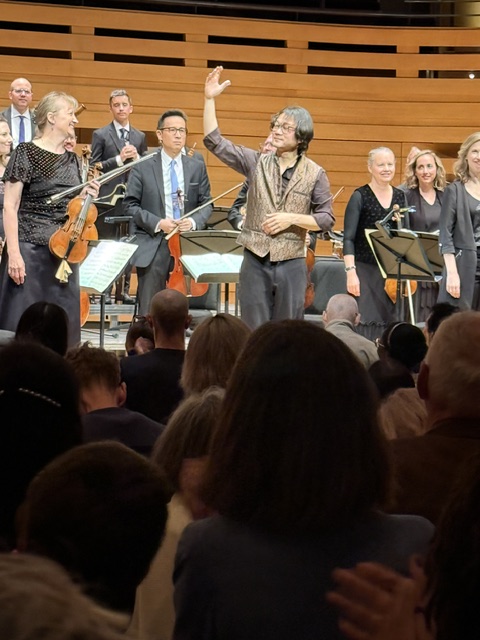
I had been hopeful when Opera Atelier announced their recent Pelléas et Mélisande, although it was less a historically informed Debussy than an attempt to channel Debussy’s baroque influences (happy to discuss this with anyone who’d like to take it offline). I am a CD collector who admires historically informed performances of Schubert, Schumann, Mendelssohn and Berlioz dreaming of the day Tafelmusik plays their works. I don’t get enough of these composers from the TSO although I dream of hearing such music played the way Shunske Sato does it, leading an orchestra like Tafelmusik. I am grateful to see Beethoven with Jakob Lehmann (in September) and Mozart with Rachel Podger (May 2027) like the bookends to next season with lots of baroque in between.