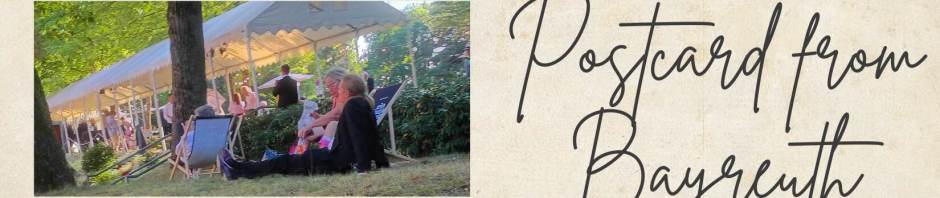
This guest blog is written by Canadian Margarete Von Vaight:
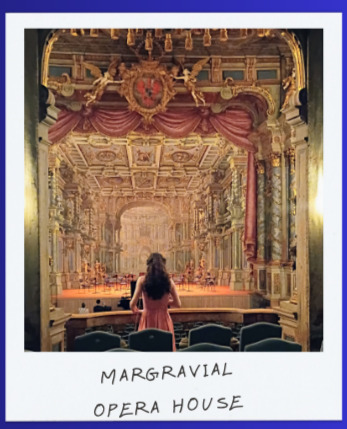
her Postcard from the 150th anniversary Bayreuth Festival.
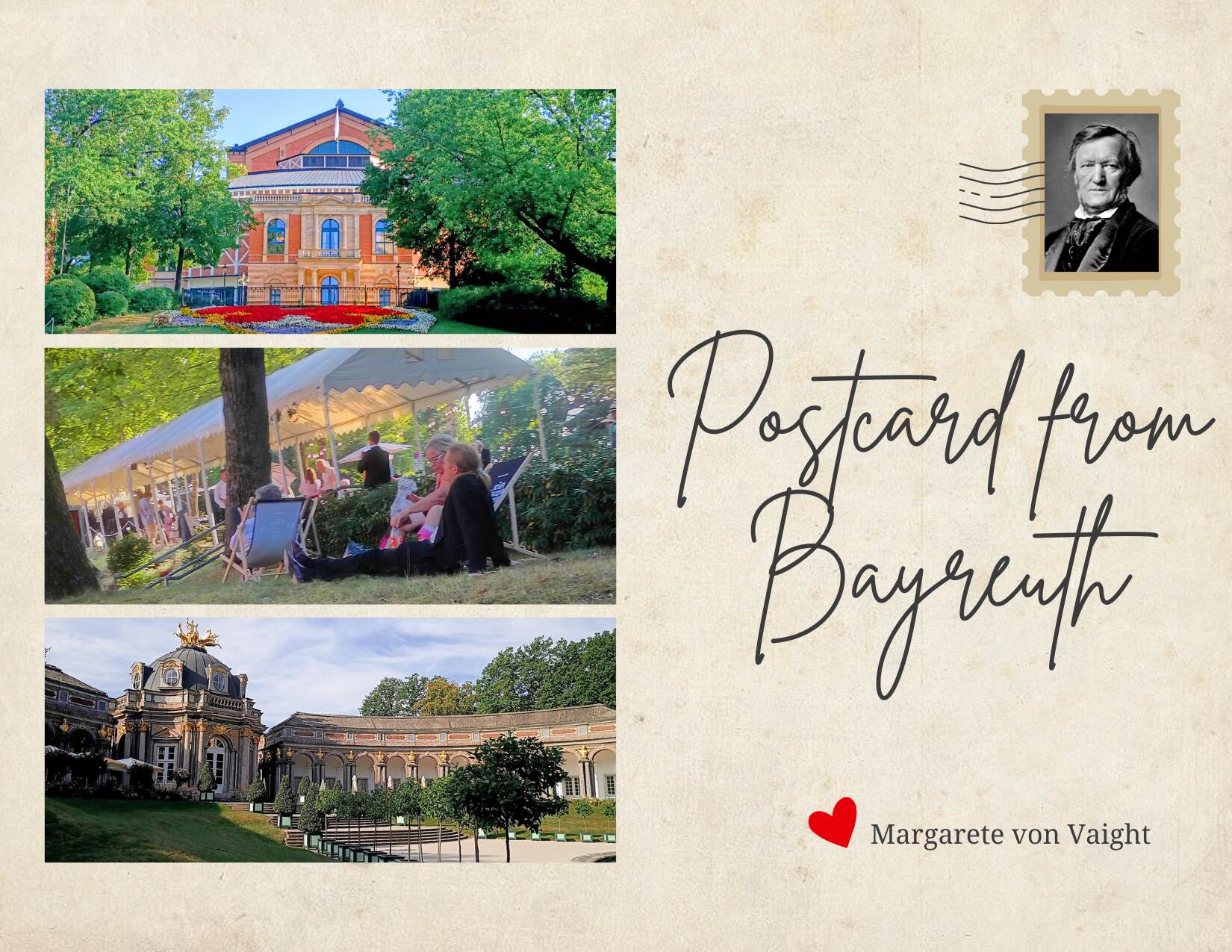
What happens when you travel to Bayreuth to see The Ring and discover there is no ring?
No gold. No sword. No Tarnhelm. No sleeping Brünnhilde. None of the familiar visual mythology through which Wagner’s vast meditation on power, possession, corruption, and desire has been understood for generations.
And yet people travel considerable distances to sit on wooden seats in the Franconian countryside, often in temperatures exceeding 40°C, and this year devote nearly thirty hours to it.
Why?
Because Bayreuth is more than an opera festival. It is an institution, a pilgrimage and, for a few weeks each summer, a community of Wagnerites or soon-to-be Wagnerites, arrive to hear the music differently, reconsider an interpretation, hear a particular singer, or simply because Wagner has become part of their cultural lives.
So 2026, Bayreuth’s 150th anniversary year, was never going to be ordinary.
Alongside the complete Ring, the Festival presented Rienzi, Wagner’s early opera never previously staged at Bayreuth. Rienzi offered much of what audiences had come looking for: spectacle, dramatic clarity, recognisable human stakes, and a visual language that remained legible alongside the music.
It also gave me one of the particular pleasures of the Festival.
Magnus Vigilius (Rienzi), who appeared in the title role, and I competed together nearly fifteen years ago at the Lauritz Melchior International Singing Competition. I representing Canada, he Denmark. To see him now in the title role at Bayreuth was genuinely moving, and I could not have been more pleased for him.
His voice has been carefully guided and developed over those years into an extraordinary instrument of stamina, power, and increasing refinement, with invaluable musical support from conductor Nathalie Stutzmann. There is a maturity to it now that suggests not simply what he can do today, but the even greater things still ahead.
The Ring, meanwhile, became the great argument of the season.
Wagner Was An Innovator
It is tempting to dismiss the AI production simply as an assault on Wagnerian tradition. That would be too easy. Wagner was himself an innovator. He challenged the conventions of opera, rethought the relationship between music, drama, staging and audience, and created Bayreuth as a place where those ideas could be pursued differently.
For 150 years, the Festival has done precisely that: arguing with Wagner, challenging Wagner and repeatedly reinventing how his work is presented. So why should AI be excluded from that conversation?
The question is not whether Wagner would have approved. Wagner is no longer here to tell us, and none of us are Wagner. Any certainty on that point is speculation.
The better question is whether the experiment understood what innovation is for.
The AI Experiment
According to the Festival “curation” team, Ring 10010110 – From Myth to Code deliberately used AI to generate imagery informed by 150 years of Ring history, archival material, Wagner’s work and previous Bayreuth productions. The proposition was fascinating: could a machine continually reinterpret the Ring rather than impose a single director’s visual vision?
The production occupied an uneasy space between concert and theatre. Singers stood behind a large gauze screen while constantly shifting projections dominated the stage. There was no conventional staging and, importantly, no visible director. At its worst, the production seemed less interested in Wagner than in demonstrating what the technology could do.
Rheingold became an exhausting stream of images competing with one of the greatest scores ever written. At times, it felt like watching a horrible 1970’s film projector gone rogue mimicking a screensaver while Wagner struggled to hold the spotlight. By cycle three, the audience appeared to have reached its limit. The booing was so sustained that one might have wondered whether we had wandered into an entirely different opera house. Yet there were glimpses of what could have worked.
In Walküre, the imagery occasionally found restraint. In Siegfried, the Woodbird appeared in lush emerald green and produced one of the loudest audible responses of the evening. Essentially the audience was saying: Oh! A reprieve from the torture. Finally, something we can connect with. There, the technology complemented Wagner rather than competing with him. Then it all went downhill again. Brünnhilde did not wake. She simply twirl-walked onto the stage, leaving the audience confused at one of the Ring’s pivotal moments. The resulting booing was even louder.
By Götterdämmerung, the imagery had finally calmed and occasionally offered genuine beauty. But the central problem remained. The technology could certainly generate images. The question was whether those images gave us something we could not already hear in Wagner’s music. That is the real challenge of innovation at Bayreuth.
Wagner did not innovate simply for the sake of using something new. He innovated because he believed the old forms were no longer sufficient for what he wanted to express. Innovation at Bayreuth should therefore not be measured by how technologically impressive it is, but by whether it deepens our encounter with Wagner. The point is not to preserve Wagner in amber. Nor is it to replace him with technology. It is to keep asking the questions that made his work matter in the first place.
And that brings me to the question I kept returning to throughout the Festival: Is the approach helping or hindering Bayreuth’s future?
The Invisible Director
I disliked the theatrical experience. Immensely. There wasn’t one. To this day, my seatmates “continue to hate it,” and there is clearly no convincing them otherwise. I, however, took the week that followed to think, digest and examine my own expectations. Had I simply remained with my initial reaction, I would have missed the beauty, ingenuity and extraordinary work behind what goes into making this Festival. As I write this, I continue to receive messages of firm protest, in good jest, followed by, “Ha! I don’t know what Ring you went to!?!” And perhaps surprisingly to those who know me, I will always remain fair when examining an experience from every perspective: musical, institutional, business, and ultimately, that of the paying spectator.
I was not, incidentally, entirely on the side of the audience revolt. I was challenged several times for being “too kind”, particularly because I defended the artists who deserved the attention, and at times, gave the broader Festival team what I considered deserved credit in trying to sustain a legacy in these challenging economic times. I was also told that “bovine boos are deserved when the outlay is significant.”
Fair enough.
There were people who left mid-performance and did not return. I try not to be presumptuous; perhaps there was another reason. The peeved murmurings and emphatic crash of the door behind them may, however, have given the game away. As the Festival continued, conversations over breakfast, the cafés, and intermissions where we kept finding ourselves led me to something I thought was more important than whether the production was simply “good” or “bad”, and there being “no place for AI in Opera!”.
AI did not eliminate authorship. It merely concealed it.
If an audience must acclimatize itself to the visual logic generated by an algorithm, have we really escaped the director’s authority? Or have we simply replaced the visible director with an invisible one, in this case rebranded as a curation team? The authorship has not disappeared. It has simply become harder to locate. Someone still decides what material enters the system. Someone decides what is excluded. Someone determines the parameters, the aesthetic vocabulary, the relationship between image and music and, ultimately, what the audience is permitted to see.
AI may generate the image.
It does not generate the artistic proposition independently. The machine is not free of direction. It is directed differently.
There is, however, a more fundamental theatrical problem. Opera has never depended upon the voice alone. The symbols of Der Ring des Nibelungen are not decorative accessories waiting to be discarded once technology becomes sufficiently sophisticated. They are part of the grammar of Wagner’s work.
The gold is not merely material. The sword is not simply something for a character to carry. The spear, fire, Tarnhelm and other objects function as visual and dramatic shorthand. They allow an audience to understand power, inheritance, possession, transformation, violence and desire before a character has explained any of it. Remove the sword and one does not merely remove a prop.
One removes a piece of the audience’s vocabulary.
That matters enormously in a work as architecturally complex as Wagner’s Ring. An audience does not arrive possessing an encyclopaedic knowledge of its mythology. It learns the relationships between characters, objects and ideas as the drama unfolds. The physical world of the stage helps teach us how to read the world of the opera. That is why the absence of objects in Bayreuth’s experiment is more consequential than a disagreement about visual taste.
If the gold is no longer recognisably gold, if the sword has no physical presence, if the objects upon which the mythology turns are translated into continuously distracting, shifting digital imagery, the audience is being asked to learn an entirely new semiotic system while simultaneously following Wagner’s exceptionally demanding music and drama.
That is a considerable cognitive burden.
The production sought to liberate Ring interpretation from a single human perspective. Yet in doing so, it may have required the audience to submit to something even less familiar: the logic of the machine. The question, therefore, is not whether AI belongs in opera. Of course it does.
The question is what AI is being asked to replace.
If it replaces an unimaginative backdrop, it may enlarge the theatrical imagination. If it replaces the accumulated visual language through which an audience understands the drama, it may instead make the drama less accessible. Technology should not receive artistic authority simply because it is technologically sophisticated.
The radical act may not have been putting AI on the stage. The radical act was asking whether an audience would surrender the familiar visual language of Wagner in exchange for one it had never learned to read. That is not the disappearance of the director.
It is the arrival of the invisible director.
Unlike the human director, the invisible one cannot be challenged in the rehearsal room, cannot explain its choices and cannot be held accountable for what the audience ultimately understands. For an art form built upon the relationship between human beings in a room, that distinction is not a technological footnote.
That is the warranted booing and this is where Bayreuth got it wrong.
It’s not an audience rejecting Wagner. Not even an audience rejecting innovation. It’s an audience making a distinction. The music was applauded. The performers were applauded. The experiment was not. That is the entire argument.
What Does the Audience Owe Bayreuth and What Does Bayreuth
Owe its Audience?
I have never experienced the quality of musical performance the way I experienced it at Bayreuth. Bar none.
However, this is where the business question becomes unavoidable.
Bayreuth is in the unusual and fortunate position of knowing that people will queue for its performances years in advance. Its audience travels considerable distances, competes for tickets and returns year after year because the Festival represents something rare: an encounter with Wagner performed at the highest level. That does not mean an institution should become captive to its customers.
Art cannot be governed by customer satisfaction surveys. If it were, very little genuinely new art would ever be produced. However, customer experience and artistic ambition need not be enemies.
There ought to be room for an institution to say: We are going to experiment with how opera can be made.
There ought also to be room for an audience to say: We came to experience Wagner, and found ourselves spending too much of the evening trying to understand the technology through which you chose to present him.
That conversation is not disdain. It is part of the contract between an arts organization and the people who sustain it. The more troubling question is whether, in pursuing a new method of theatrical creation, we have inadvertently given the director, or, in this case, the invisible director, too much power. There is a fine line, and not one cycle, but all cycles encountered the same reaction, revealing that line was being erased.
However, I reflect and ask, at what point does interpretation cease to illuminate the work and begin to compete with it? Well, there was a rather beautiful irony in the Bayreuth experience.
The more audiences recoiled from the AI, the more intensely they were sometimes forced back towards the one thing the technology could not replace: the human voice.
The musicians. The physical act of people making music together. When the visual field became distracting, some of us simply listened harder. What we heard deserved the extraordinary applause it received.
Klaus Florian Vogt was remarkable as Siegfried, particularly given the extraordinary demands placed upon him across the Ring, while also singing Loge in Rheingold and Siegmund in Die Walküre. Vogt has maintained a vocal instrument of extraordinary beauty and health in one of the most demanding works in the operatic repertoire. Bright, focused and remarkably youthful in sound, there is an effortless clarity to the voice that carries beautifully through Wagner’s orchestration while retaining a sense of vulnerability and innocence. A Siegfried who was vocally assured and deeply human.
Camilla Nylund brought a distinctly lyrical approach to Brünnhilde, favouring delicacy and sustained musical line over orchestral waves. There were, however, significant intonation issues throughout, with the voice frequently sounding unsettled. Perhaps the demands of singing so many Brünnhildes this year in constant succession contributed. Her phrasing has real intelligence, and when the voice settled, she brought a touching vulnerability and lyricism to the character.
Michael Volle was superb as both Wotan and the Wanderer. His voice had the authority, depth and dramatic intelligence to carry Wotan’s immense presence, while as the Wanderer he brought a fascinatingly weathered and reflective quality. Vocally commanding and dramatically captivating throughout, Volle gave the role a weight and humanity that was difficult to look away from.
The Chorus, who also appeared in Rienzi, were superb. The supporting cast members were
equally deserving of credit for their artistic contributions.
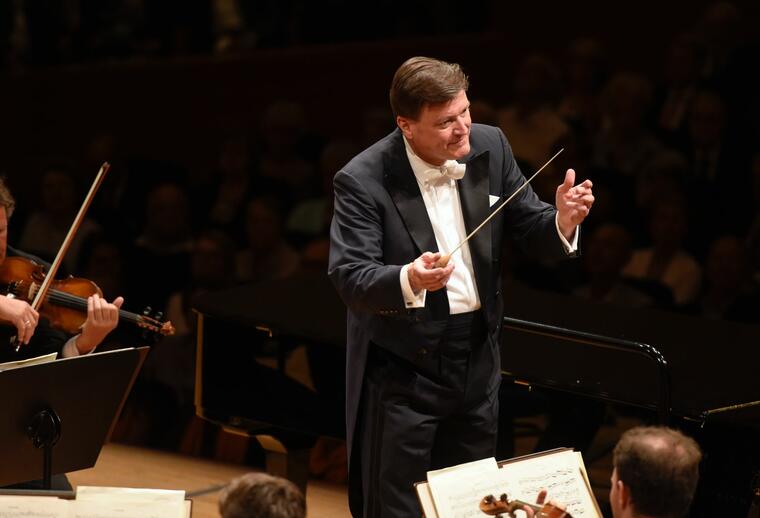
And then there was Christian Thielemann.
He demonstrated once again why Wagner seems to live so naturally under his baton. The Bayreuth Festival Orchestra was stupendous, with the solo musicians impeccable throughout. One must acknowledge the fanfare musicians as well, whose contribution added another dimension to the performance. Every detail, every colour and every instrumental voice was beautifully judged. What made the performance extraordinary was how Thielemann gathered all of it together. The orchestra became a ribbon woven from golden thread, continuously unfolding, shimmering and carrying the drama forward with extraordinary precision and beauty. Revealing, in the process, where the real gold of
Wagner’s Ring lies.
Every night offered something different.
People who did not share a common language somehow found one. Sometimes to agree. Sometimes, considerably more enthusiastically, to disagree. At one point, my seatmates were conducting an argument in two different languages, each perfectly happy to express their dissatisfaction with the occasional understanding of a word the other was saying. That, too, is Bayreuth. Wagner gives everyone something to talk about. Even when they disagree about what they have just seen.
But what of the moments one cannot capture in a review?
There is a particular kinship among those who survive Bayreuth’s extraordinary heat in a non-air-conditioned theatre, where outdoor temperatures climbed beyond 40°C. On one occasion, past 45°C. Bratwurst and champagne appeared at the kiosks. Inside, impeccably pressed gowns gradually surrendered to the heat while hand fans appeared, causing the Bayreuth hiss to emerge. There were multiple 60 minute intermissions. The penguin suits rushed for the parking lot, stripping off jackets, shirts, and bowties draping them over bonnets to dry, before settling into an impromptu one-hour tailgate session of sandwiches and drinks. It was less opera-house etiquette and more summer survival camp. Somehow we are all the better for it. Earning our Bayreuth badge of honour.
Having attended more opera in the past three years than in the rest of my professional life combined, I have discovered just how demanding and wonderfully human an opera audience can be. My own survival strategy was a pocketful of the only proudly Canadian brand I thought worthy enough to bring to Bayreuth: Dollarama.
My $1.50 fan earned me a tap on the arm from a lovely French gentleman who informed me that, in Paris, fanning was not permitted. I had to chuckle and remind him we weren’t in Paris. It broke the ice.
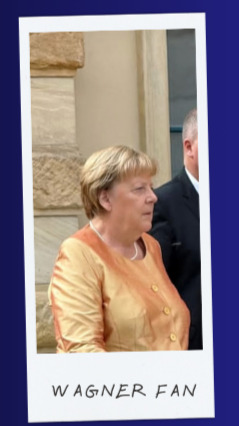
I respectfully stopped and planned a new approach. The following evening, I returned with another Dollarama trinket: a tiny misting bottle discreetly tucked into my décolletage. Far less intrusive. Considerably more effective. As I watched fellow opera-goers become seat lizards, peeling themselves from the wooden benches, I could not help wondering whether some former world leaders, also in attendance, had found themselves contemplating the very same survival strategy.
Yet as the week unfolded, something else emerged that I had not expected: the extraordinary hospitality of the Franconian people. What began with overheated seats, awkward encounters and the peculiar rituals of surviving a Wagner performance gradually gave way to an incredible warmth and welcome. Conversations became easier. Strangers became familiar faces and post-show discussions at the incredible Maisel & Friends were among the most memorable. What could have felt intimidating became remarkably generous.
These are the experiences that made the Festival worth attending. They are also the experiences no algorithm can manufacture. They brought together strangers, languages, arguments, heat, music, exhaustion, laughter, and Wagner’s extraordinary musical force resulting in: Presence.
AI can generate an image in an instant. It cannot breathe. It cannot sustain a Wagnerian phrase. It cannot manage a body inside an unforgiving costume while singing in extreme heat. It cannot feel the orchestra beneath the voice. It cannot decide, in the infinitesimal space between two musical phrases, how much humanity to reveal. That, in the end, may have been the unexpected gift of the experiment.
By making the technology so conspicuous, Bayreuth inadvertently clarified the thing it could never replace. The audience may have argued about the screensaver. It may have questioned the absence of the objects. It may have resisted the visual language. But when those voices began to sing, there was nothing artificial about the achievement. The applause belonged to the artists.
Resoundingly.
Perhaps that is where the balance should lie. Innovation should expand the possibilities of art, not require the art to justify the innovation. The director may change. The technology may change. The visual language may change. However, the reason we continue to gather in darkened theatres has not changed very much at all. We come to hear human beings make something together that a machine, however sophisticated, cannot experience for us.
That was the most important lesson of Bayreuth 2026. It is not that AI has arrived in opera.
It is that, after 150 years, the human being and our love for the extraordinary experience captured on the Green Hill remain the most difficult things to replace. And that is something we will fight to keep.
~~~~~
Margarete von Vaight is a lecturer, project professional, and classically trained musician whose career spans project management, business, education, and the performing arts. She joined the University of Toronto’s Faculty of Applied Science and Engineering as a lecturer in Business & Entrepreneurship in Engineering in 2024, bringing longstanding experience in Canada’s nuclear industry and complex project environments.
Her interests centre on leadership, innovation, and the relationship between institutions and the people they serve. She is a longstanding advocate for the development of emerging professionals across sectors and for the enduring role of the arts in professional and public life.


M’excuser de vous répondre en français.
J’ai beaucoup aimé cette carte postale justement parce qu’elle juxtapose avec finesse et expose, avec une intelligence pleine d’esprit, un texte que bien des gens de ma région trouveraient délicieusement drôle.
J’ai particulièrement apprécié l’écriture, et surtout l’humour qui s’y glisse vif, précis et toujours juste.
Pendant très longtemps, je me suis considéré comme un simple couvercle de pot de lait qui saute au moment où l’on se relève de son siège. Mais je dois bien avouer que je préfère désormais le « lézard » la description est infiniment plus juste.
J’espère sincèrement que cette auteure reviendra au Festival l’année prochaine. Elle semble avoir trouvé, dans les multiples facettes de son expérience, une joie et un plaisir que beaucoup d’entre nous n’avons peut-être pas su apprécier avec autant d’enthousiasme.
Bien depuis Mayence.
LikeLike
Merci pour ces remarques gentils !
LikeLike
Your response made my day. I’m pleased the postcard found its way to someone who enjoys a bit of mischief in the margins.
When I make my way back to the Festival next year, I’ll keep an eye out for you. I’m in the festival group with the rest of the milk lids and seat lizards.
Thank you.
****
Votre réponse a illuminé ma journée. Je suis ravi que la carte postale ait trouvé son chemin vers quelqu’un qui apprécie un peu de malice dans les marges.
Quand je reviendrai au Festival l’année prochaine, je garderai un œil ouvert. Je suis dans le groupe du festival, avec tous les couvercles et les lézards.
Merci.
LikeLike
I believe the Festspiele board of directors wouldn’t hate this review. They might hate it if it were like the rest they are accustomed to that are easy to dismiss.
Mm. Von Vaight is potentially much more troublesome than a hostile critic because she doesn’t simply say “this was bad.” She asks questions that an organization cannot easily answer by pointing to artistic taste. At the very least most would be uncomfortable with her and rightfully so. A conventional critic can often be dealt with. When the org responds to harsh criticsm they respond with “ X Critic didn’t understand the production.” or “They don’t like this director’s aesthetic.” or “That’s simply their opinion.”
Mm. Von is harder to neutralise because she appears to understand multiple sides of the system. She is a musician but she doesn’t confine herself to musicianship and understands technology in engineering systems and equally institutions then applies that way of thinking to an artistic organisation.In
In her writing shes changed the nature of the scrutiny. She is not relaying the value or whether the the production was good either.
She’s asking who made these decisions? What assumptions sit behind them? What is technology actually accomplishing? Who owns the authorship? What happens to the audience in this system? What happens to the people working behind the scenes? Does the institution understand the consequences of its choices? Has innovation produced something meaningful or something new? What happens when an organization substitutes a system for an identifiable artistic voice?
Those are institutional questions and institutions tend to be much more nervous about those than about criticism of a singer or director.
If I were running an opera organization I wouldn’t be afraid of her in the sense of thinking she was dangerous. I would be very alert to her. Because the particularly uncomfortable thing is that she doesn’t appear to arrive with an agenda. From this writing she was sceptical but willing to be persuaded. That’s actually much more formidable.
A reviewer who arrives wanting to prove that something is terrible will find evidence for their conclusion. Someone who arrives saying convince me and then seriously examines whether they have been convinced is considerably harder to dismiss.
Her reflection more than critique had me thinking of her intellectual approach here that would make me talk to my board about having a discussion with her if we were waning. She doesn’t appear to be writing at the Bayreuth Festspiele because she is writing through them. She’s treating the festival as a living system which connects directly to her unusual professional background.
Very impressive and likely a fluent systems thinker who has been trained to ask what happens when all the individual components interact (I’m a CSE I know this). A musician hears relationships between components that, in isolation may seem unrelated. Put those two habits of mind together and you get a reviewer who may notice things that a specialist critic doesn’t.
She has taken this experience mixed the bag of tricks together and written an uncomfortable truth for an organization because she can see across departmental boundaries. A music critic would see the singers or someone like me may see the tech (which even I didn’t understand because I didn’t think they knew how to utilize AI).
This review very capably IMO asks how all components interact and harder to answer because she’s qualified to write the conventional review and deliberately chose not to. She could have written about the voices because she knows voices or Wagner because she knows it or the performance because she has performed. Instead, she looked outward and asked what the experience meant beyond the performance.This review is intellectual confidence without needing to demonstrate her expertise by constantly displaying it. Frankly, that is the sort of reviewer I would take seriously if I were an organization.
Enjoyed this post more than most in a long time. Thank you.
LikeLike
Thank you for your comments.
What you describe was, in fact, my intention. I did not set out to write a review that declared the production either a triumph or a failure. Nor was I interested in settling the familiar debates that often surround Bayreuth. There are many capable critics who can speak authoritatively about voices, conducting, staging, or Wagnerian interpretation.
What interested me were the broader questions raised by the experience itself.
Bayreuth occupies a unique position in the operatic world. It is simultaneously an artistic institution, a cultural symbol, a technological laboratory, an economic enterprise, and a living tradition. When a major artistic decision is made there, the consequences do not end at the stage. They ripple through audiences, artists, technicians, administrators, and ultimately the future of the festival itself.
As someone whose professional life has involved how complex systems interact, I naturally found myself looking beyond the success or failure of any single component. A production may contain impressive technology, accomplished singers, intelligent ideas, and extraordinary technical effort, yet the experience can still fail to cohere. Conversely, individual elements may appear imperfect in isolation while combining to produce something artistically exceptional.
That relationship between the components was what interested me. I wanted to understand not whether the technology worked, but what it was working toward (which you picked up on). More importantly, did it reveal something within Wagner that could not otherwise have been seen? Did it deepen the dramatic, and musical experience,or create a meaningful connection between the audience and the work, or did the audience become preoccupied with the mechanism through which the work was being delivered?
These are not questions I approached with predetermined answers. I was skeptical, certainly, but I was also genuinely willing to be persuaded. Criticism should not become an exercise in defending the position one held before entering the theatre. It should remain open to the possibility that an unfamiliar artistic language may ultimately justify itself.
In this instance, however, I was not persuaded that the component parts resolved into a convincing whole. My concern was not that the production was technologically ambitious, nor that it departed from convention. Innovation is not diminished simply because it unsettles an audience. But novelty and meaning are not interchangeable. Something can be unprecedented without being spectacular.
Your observation regarding authorship is also spot on. When technology, institutional decision-making, and artistic interpretation become so closely intertwined, it can become difficult to identify the governing artistic voice. Who is ultimately speaking through the production? Is the technology serving the director’s interpretation, is the interpretation serving the technology, or has the system itself become the author?
This also leads to questions about the audience. The audience is not a passive or incidental part of the operatic system. It completes the exchange. Audience members invest time, travel, attention, and trust. In purchasing a ticket, they do not purchase an obligation to approve, but they do purchase the right to experience the work and form an opinion about how it has been presented.
Bayreuth may not face an immediate shortage of demand, but institutional sustainability cannot be measured only by the ability to sell the next cycle of tickets. It must also be measured by whether the festival is renewing its relationship with its audience. If the existing demographic is not sufficiently replenished over time, reputation and scarcity alone may not sustain the institution twenty years from now (as reinforced below).
That does not mean Bayreuth should retreat into comfortable or decorative traditionalism. On the contrary, a living institution must take risks. But those risks should remain connected to purpose. Innovation should help audiences enter more deeply into Wagner’s music, theatre, philosophy, and contradictions. I repast, it should not require Wagner to compete for attention with the very system intended to reveal him.
The audience response therefore mattered to me, not because applause or disapproval should determine artistic merit by majority vote, but because repeated and overwhelming reactions are data and information. When dissatisfaction is expressed not at one isolated performance but across multiple performances and cycles, an institution should be curious about what those reactions signify. To dismiss them as resistance to innovation or a failure to understand the production would be easier than examining whether the production itself failed to communicate.
I am also grateful that you recognized the distinction between criticism and reflection. I was not attempting to prosecute a case against Bayreuth. I was using Bayreuth to examine a larger issue: what happens when artistic institutions adopt complex systems whose capabilities may be advancing more quickly than the institution’s understanding of their artistic purpose?
Technology can expand the vocabulary of performance, but it cannot supply meaning on its own. Meaning still requires an identifiable artistic intelligence, a coherent relationship with the work, and an understanding of the audience’s place within the experience.
If the review is uncomfortable, I hope it is productively so. Institutions should not fear difficult questions, particularly when those questions arise from respect rather than hostility. I wrote the piece because Bayreuth matters, because Wagner remains capable of provoking engagement, and because an institution of such significance deserves something more serious than either unquestioning admiration or reflexive dismissal.
I would welcome the kind of discussion you describe, not because I presume to possess definitive answers, but because these questions belong to more than one discipline. They require musicians, artists, technicians, administrators, and audiences to speak to one another rather than from within separate professional boundaries.
Perhaps that is ultimately what I was trying to do: to look across those boundaries and ask whether all the elements were working together in service of Wagner, or whether the system had begun serving itself.
Thank you again for reading the piece with such care. To have the method behind the reflection recognized so perceptively is humbling.
MvV
LikeLike
I am thankful for your carefully curated response. I hope my response gets a laugh at the curated reference. Thank you and Grüß Gott.
LikeLike
A laboratory is right but we were the experiment. Garbage production. Good review and you’re too polite.
LikeLike
I went to Bayreuth and sat through this Ring. I had numerous discussions, read multiple reviews, white papers, and now this book of a postcard. It irritated me and this is where the trouble begins.
Where I disagree most strongly is the disappearance of Wagner’s familiar “visual vocabulary” / symbols. After 21 years of Bayreuth I am not shocked by a production that asks the audience to reconsider transformation. One comes here knowing the Ring may not look like the Ring one has in one’s head. I cannot agree that the disappearance of the familiar objects is, by itself, the fundamental problem. I didn’t require the props but I did require the production to give me a reason not to miss them. If something replaces them, then fine. If what replaces them is simply an accumulation of visual information then the problem is not the absence of the traditional symbols. The problem is that the replacement has not done enough. To her credit this is captured very well. Bayreuth audiences have been forced make sense of productions or reconsider characters, abandon literal readings and occasionally wonder whether the director has been watching the same opera as the rest of us. German audiences are not afraid of intellectual difficulty or doing the work. I believe she understands that. My further although slight disagreement with the writer is her minimal mention of attention. Attention is the currency of opera and I wish she would have given more feedback on the performers.
Now my irritation.
It’s not because the writer persuaded me that the sword needs to return. It does not. I mean this irritation as a compliment. I found myself returning to earlier ideas or counterarguments and most annoyingly realizing that I had not considered a question or experience quite that way before. She managed to move the furniture around in my head. After 21 years of Bayreuth, that is not easily done. This to me is the difference between reporting an experience and thinking seriously about one. She took the time to think about what she had encountered rather than telling us what happened. A task more difficult to do and more interesting to read than most of what was publicized. Perhaps this will reach young people and make them come to Bayreuth and experience the many offerings needed for a joyous heart. She would be welcome anytime. Viele Grüße, FR.
LikeLike
Thank you for reading and responding. Twenty-one years of Bayreuth is impressive, and I commend your endurance. Particularly in those years when the heat may have tested you, as it certainly did in 2026.
Acknowledging that each perspective will differ, what interests me more about this year’s production is how it lands. I suspect we agree more than one might think. As for the performers, I deliberately chose not to say much more about them as I was more interested in what seemed to be missing from the conversation.
I’m glad I irritated your thinking. It seems a perfectly respectable outcome for a “book of a postcard.” I happily accept that. Although after 21 years at Bayreuth, I suspect you knew the room was going to be rearranged… eventually. 😉
LikeLike
I appreciate someone taking a different view on the production via respectful disagreement and needed humor. This is refreshing in what can be a solemn temple of opera.
The coining of the Bayreuth hiss (thank you Mme. Von) is real and deserves its own leitmotif. My tiny shift in those famously uncomfortable seats had the row ahead respond with a hiss so synchronized it could have been conducted. I’ll never learn but I keep returning for the heart of this festival and story’s which are unforgettable.
LikeLike
Thank you for sharing your experience. I know my returning to the festival is a lesson in discipline and an even better reminder of how much patience, attention, and devotion the music asks of us. Thanks for reading! 😄
LikeLike
I went to Der Ring, Parsifal and Rienzi and I disagree with the singers mentioned particulary the gentlemen. I am not a musician, so I will not pretend to know or argue on everything you experienced. I do often find myself disagreeing with Americans on Bayreuth and interpretation. Bayreuth administration was forward coming this year they were going to be presenting an experiment. We were told what they were attempting and therefore I do not think it is fair to criticize it simply because it was not a traditional production to your liking. Culturally Americans has big productions with shiny costumes but opera is a nightly occurrence here that we don’t need that but when you come you complain.
LikeLike
Thank you for your comment. Disagreement is part of what keeps opera, criticism, and Bayreuth itself alive. Reasonable people can attend the same performance and emerge with entirely different conclusions regarding singers, productions, and interpretations.
That said, I would respectfully challenge the notion that an artistic experiment should be exempt from criticism simply because it was announced as one. An experiment succeeds or fails on its results, not its intentions. When audience dissatisfaction with a creative concept is not confined to a single evening but emerges repeatedly across an entire run of performances, it becomes entirely reasonable to question whether the experiment achieved its aims.
My concern, however, is not the short term. Bayreuth will continue to attract audiences next season. My concern is the long term. The real question is not whether a production can generate discussion today, but whether the festival is cultivating the audience that will still be making the effort twenty years from now.
Festivals are a business and survive because generations return. Wagner survives because each new generation discovers something unsettling and transformative within the works. If increasingly the conversation after a performance centres on the technology rather than the drama, the apparatus rather than the ideas, or the spectacle rather than the music, then it is fair to ask whether the audience is being brought closer to Wagner or further away from him.
I attended fully aware that Bayreuth was presenting an experiment and nobody was misled and experiencing Wagner is the point. The measure of success is not whether the technology functioned as intended but whether it illuminated Wagner’s music dramas, and deepened our understanding of them (a statement that is loosely based on the 90% of response witnessed during my week).
From my perspective, and from conversations with numerous audience members, including some who had purchased and attended all three complete cycles, the reaction was consistent. Not eliminating the less than two handfuls who somewhat like it. The technology became the subject, Wagner secondary. As we both know, this sentiment was not quietly expressed in private conversations. It was voiced openly and repeatedly from the auditorium itself. Not after one performance, but throughout. These reactions may not represent every attendee, but neither should they be dismissed because they are inconvenient. Moreover, Rienzi was received with abundant splendour and applause. How do you explain that when the audience was 95% the same as the cycle audience?
There is also a practical reality that cuts both ways. Bayreuth invested significant resources into this experiment. Audience members likewise invested significant sums of money, time, travel, and expectation. When one purchases a ticket, one also purchases the right to form and express an opinion about the experience. The relationship between Bayreuth and its audience is not one-sided. The cost is borne by both. Bayreuth asks patrons to invest in its artistic vision, and patrons are entitled to judge whether that investment delivered value and not necessarily monetary. That exchange is fundamental to the continued health of the festival.
As for your observation regarding Americans, it is, fortunately, your lucky day: I am not American.
More broadly, I am unconvinced that artistic opinion can be reduced to national identity. Supporters and critics of both traditional, and contemporary interpretations of Wagner can be found in Germany, Austria, Britain, Canada, and virtually every other country where these works are performed. Aesthetic judgment is not determined by a passport.
Indeed, as someone who holds multiple passports and has experienced opera across different cultural contexts, I make a conscious effort to view productions as fairly and pan optically as possible, considering them from multiple perspectives before arriving at a conclusion. My criticism is not rooted in a desire for tradition at all costs, nor in resistance to innovation.
Bayreuth should experiment. It always has. The question is whether a particular experiment serves Wagner or competes with him.
In my view, the most successful productions, whether traditional or radically modern, ultimately send the audience back to Wagner with a deeper understanding of the work. The least successful leave the audience discussing everything except Wagner. Judging from the reaction in the Festspielhaus, I fear this experiment fell into the latter category.
That is not merely a criticism of a production. It is a concern about the long-term sustainability of a festival whose future depends not on the novelty of its technology, but on its ability to ensure that future generations leave Bayreuth feeling more connected to Wagner’s music, drama, and ideas. If audiences remember the technology more vividly than the composer, then the experiment may have succeeded on a technical level while failing on a far more important artistic one.
LikeLike
From Dr Nasser Kalawoun
I have read & digested this superb review of Prof Maggie. I am familiar with few stars who performed Wagner in ROH London, but Your Bayreuth reflections, esp AI & absent director as well as physical objects, increased my suspicion of AI “new religion”. However, Bayreuth Festival is still on my radar in future 🙂
LikeLike