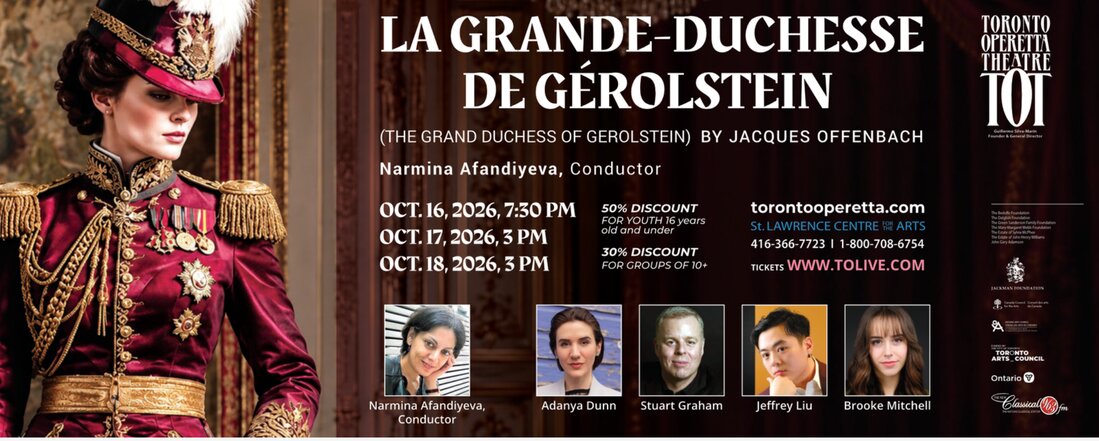
Adanya Dunn is a singer I know from modern opera productions with companies such as Tapestry Opera, FAWN Chamber Creative or Against the Grain.
I heard that the singer who was supposed to sing the title role in Toronto Operetta Theatre’s production of Offenbach’s La Grande Duchesse de Gerolstein had become ill and that Adanya is coming to the rescue of TOT, undertaking the role with relatively little time to prepare.
I had to find out more (and wow she found time to do the interview).
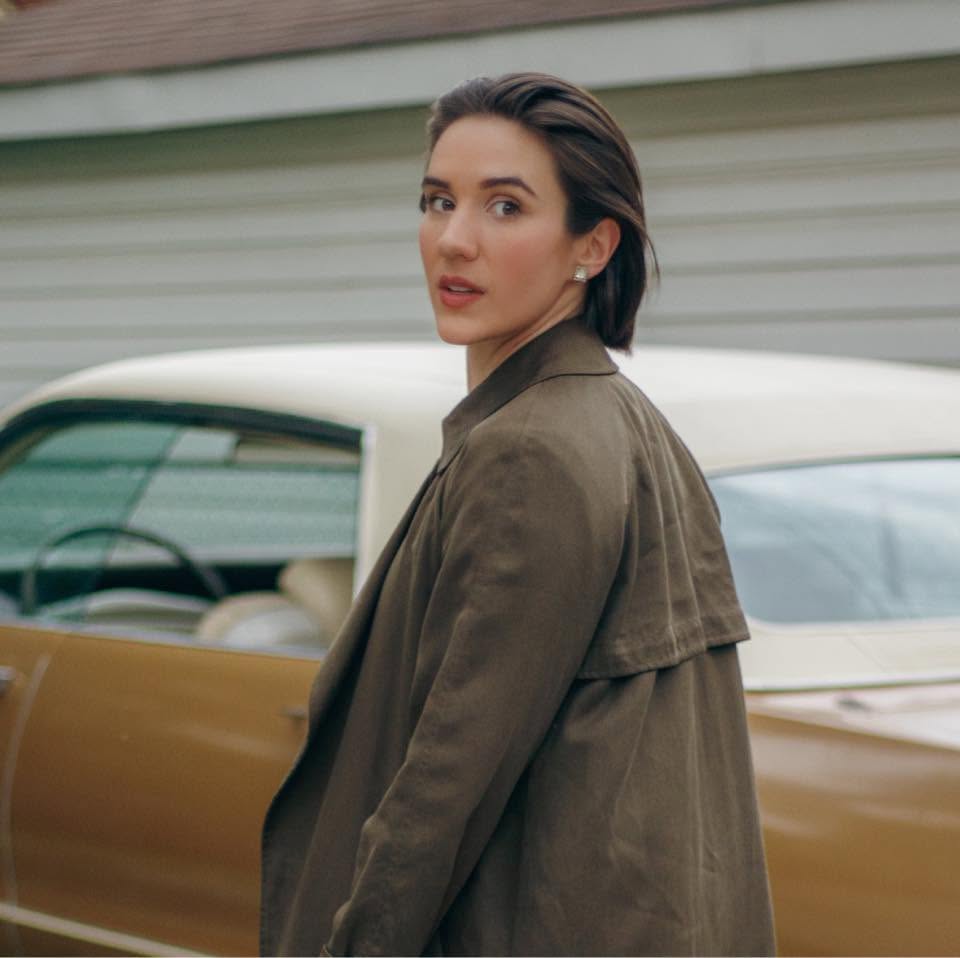
Barczablog: When you’re just relaxing and not working, what is your favourite thing to do?
Adanya Dunn: I love being in nature and sharing time with people whose company I enjoy – very intentional choices! In my downtime, I can usually be found being creative in other disciplines, whether that’s dance, visual art, writing, composing…
BB: Dogs or cats?
Adanya Dunn: I’m absolutely a cat person, though I do love all animals!
BB: Paper scores or digital?
Adanya Dunn: A mix! When travelling or on the go, a digital score tends to be the most economical in terms of space and weight. But I also really value the tactile experience of a physical score, and particularly being able to see the larger musical picture laid out in front of me. So I still use both, depending on the circumstances.
BB: When did you hear about this gig as the Grande Duchesse,
Adanya Dunn: I found out on September 28, while I was actually performing another gig, that I would be jumping in as the Grand Duchess.
BB: And what does that mean compared to your usual preparation time?
Adanya Dunn: On the 29th I received everything, the score and dialogue, and I began rehearsals on the 30th. So I basically had one day to learn and familiarize myself with the opera. One day! I think that’s the fastest I’ve learned an opera, though not an entirely unusual situation within my wheelhouse.
Of course, there’s a big responsibility in performing the title role – and I wanted to be part of the team and help bring the project to life. I enjoy a challenge and stretching myself beyond what might be considered normal or ideal circumstances. Also, this is my first time performing with Toronto Operetta Theatre – so what a chance!
I also want to acknowledge that there’s a certain sensitivity around doing a jump-in.
BB: Really? could you explain?
Adanya Dunn: Because it usually means that someone else is no longer able to fulfill a commitment for any number of reasons. It’s also a very common part of our profession. I can think of times when I’ve been ill or circumstances have come up where a jump-in was necessary to replace me. That happens. It’s part of working in what I consider to be a somewhat precarious career, and I think it’s important to remember that we’re a network of people who can help and support one another when these situations arise.
The success of a jump-in is dependent on many factors beyond the person jumping in! The team at Toronto Operetta Theatre, including director Guillermo Silva-Marin, conductor Narmina Afandiyeva and stage manager Myra Malley, have been extremely accommodating, giving me additional coaching, making certain adaptations where appropriate, and simply giving me the time, space and support to prepare.
It takes a whole support structure to make something like this possible.
On my end, a lot of it comes down to trust, and to everything I’ve learned through doing things I had never done before. There’s only so much I can anticipate because every set of circumstances is different. I had never been in exactly this position before, but I knew that I could do it, and I trusted myself to respond to what was in front of me.
BB: Please elaborate some more about how you prepare.
Adanya Dunn: There’s the immediate preparation, but there’s also everything that happened before I ever received the score.
I study regularly with my teacher Don Marrazzo, and I owe so much of my ability to do something like this to what we’ve built together, and to his guidance, care and support in developing my voice systematically and keeping me healthy and prepared.
Then there are the basic things I do myself: trying to keep myself in a good state mentally and physically, eating and sleeping well, continuing my own role study. It’s really about staying prepared for moments when they arise.
I’ve also always been a very quick study. I don’t know if that has any relationship to completing assignments the night before in high school and still somehow managing to pull out an A! But over time, I’ve developed a systematic way of learning things thoroughly both with a long runway and without!
I think the more I do, the easier it becomes to take on increasingly difficult or complex projects. That complexity might be musical, in pitch or rhythm, or it might be staging, choreography or simply time constraints. Working extensively in contemporary music makes learning more traditional repertoire feel easier; taking dance classes, performing and choreographing routines makes it easier for me to pick up staging and movement quickly. I compose, play piano, produce music, dance, paint and make visual art, and I find that these different practices are constantly informing one another. They contribute to having a flexible and adaptable mind and body. For me, performing and communicating stories is a very integrated experience.
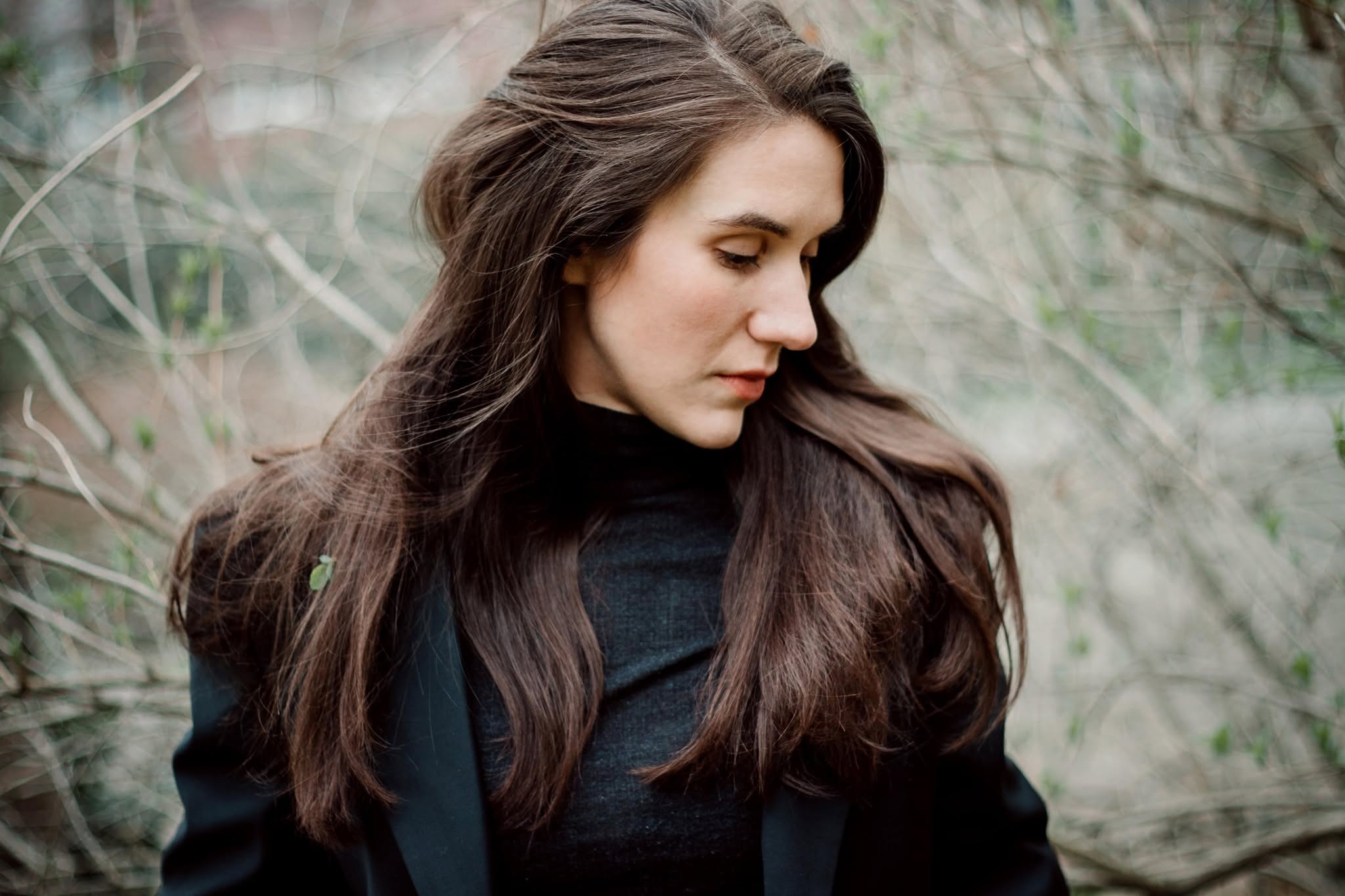
BB: I saw you sing at TIFF in 2017 singing Vivier & Schönberg with Topher Mokrzewski, with Tapestry & Against the Grain & Fawn before that time. Rightly or wrongly I’ve associated you more in my head with contemporary music than operetta. Please tell me more about your history with contemporary classical compositions.
Adanya Dunn: I think working extensively in contemporary classical music has kept me on my toes and sharpened my ability to respond quickly. I’ve premiered around 200 new works and have spent a lot of time working directly with composers, librettists and directors, whether on pieces written for me or works that we’re developing and work-shopping together.
Last summer, I work-shopped two new operas and was part of Tapestry Opera’s LIBLAB and Opera Briefs, where the turnaround was incredibly quick, with a couple of newly composed pieces per day. In these situations, we’re constantly negotiating new material in our own voices and bodies, and the piece may continue to evolve throughout the process. We learn how to absorb complicated pitches, rhythms, text and theatrical ideas without necessarily having the luxury of months to sit with them.
That kind of work has made learning more traditional repertoire feel easier in many ways. The practices inform one another, just as my movement and dance practice feeds into how quickly I can absorb staging and choreography.
This also isn’t my first jump-in. I’ve been in for studio recordings, and on standby and prepared for other situations. Sometimes circumstances simply don’t allow us to learn something as far in advance or as thoroughly as we ideally would. All of those experiences build on one another.
BB: Could you talk about how it works in practice, whether it’s new music with Tapestry or Offenbach with TOT.
Adanya Dunn: This is really a condensed version of my normal learning process. Things I might usually spend weeks working through, I’m having to do in a day.
I always begin with the text. I speak through all the parts, reading it like a play and getting a sense of how the language moves. If I’m working in a language I don’t speak, that also involves translating and speaking everything aloud before I begin putting it together. In this case, we’re performing in English, and the natural rhythm of the text is often nicely reflected in the music, so the two begin to come together quite quickly.
Then I get onto my feet. I start acting things out, moving through the material and infusing it with character and my ideas about who this person is. Right away, I want to start bringing my whole self into the process. Even in a coaching, if I still need to be reading from the score, I’m finding ways to remain physically engaged and aware of the character and what I’m communicating, rather than treating the notes as something separate that I’ll somehow add the theatre onto later.
In ideal circumstances, I have more time to work a role into my voice. Different repertoire asks different things of me vocally, whether that’s a role that sits somewhat higher or lower, or simply balancing it alongside other repertoire I’m singing at the same time.
The Duchess sits in a great range for my voice and I’m relying on the years of vocal technique I’ve built with Don, which allows me to bring all of these elements together on a much more condensed timeline.
BB: Tell us a bit more about the Duchess & Offenbach.
Adanya Dunn: Something I’ve found interesting in approaching the Duchess is that it can be easy to hear music that is light, catchy and seemingly simple and think, Oh, this is easy, and just gloss through it.
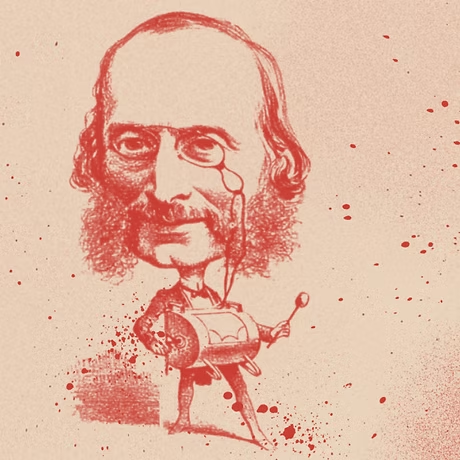
Adanya Dunn: But there are so many little chromaticisms and unexpected notes within the harmonies. Sometimes another note might technically “work,” but it isn’t what Offenbach wrote.
BB: OMG That is so impressive.
Adanya Dunn: For me, maintaining the integrity of the score is important because those notes were written that way for a reason.
At the same time, the piece needs a certain buoyancy. I don’t want the work of making it precise to weigh it down. Finding that balance has been really fun.
BB: Wow, I wish more people cared about such things. So who is she, and how will you portray your Duchess?
Adanya Dunn: The Grand Duchess is young, about 20 years old, and she has enjoyed a great deal of freedom. She has these men around her who have largely been governing the realm, and she takes a particular interest in her military – she wants to have fun! At the same time, there are societal pressures and responsibilities looming, marriage being one of the most obvious expectations placed upon her.
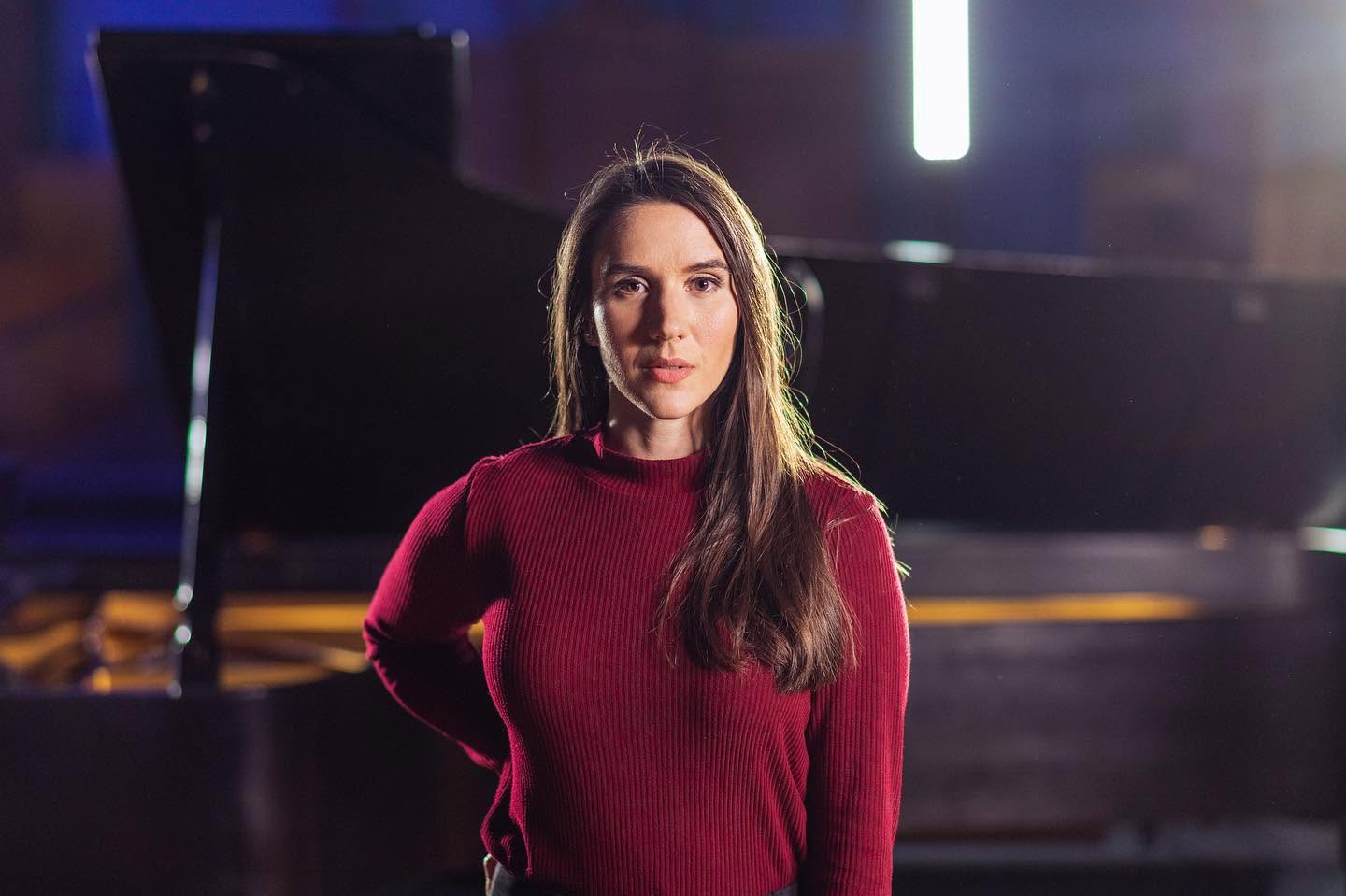
Our character work at Toronto Operetta Theatre is finding the complexity and nuance within her. We can see her social responsibility while also looking at the ways she wants to maintain, and perhaps in some ways re-claim, her own autonomy, wishes and desires to make change.
There is quite a lot of dialogue in the piece, and we’ve been having conversations in rehearsal about why the characters make particular decisions and even how individual lines can be inflected. The audience may never know every detail of the backstory or character work that we’ve explored, but they don’t necessarily need to. That work gives the choices we make a rooted and grounded place to come from, and that depth is still felt.
And then the music itself is so fun, catchy and glorious. This is also a piece that is rarely performed, so audiences have an opportunity to hear another side of Offenbach beyond the works they might already know. We’re performing it in an English translation by Geoffrey Dunn, no relation!
Guillermo has made various updates to both the libretto and dialogue, allowing us to consider how this work lives in the present. We’re not setting the operetta contemporarily, but we are performing it now, for an audience now. There’s an interesting distinction there. We can remain within the world of the piece while still being informed by our own context, and consider how these characters, their relationships and their choices might resonate today.
Audiences will be delighted by Toronto Operetta Theatre’s take on The Grand Duchess of Gerolstein. There are definitely some surprising twists and moments. The production remains very true to the original while also finding places where agency and free will can be exercised within the world of the operetta.
It’s also such a wonderful chance to hear Offenbach music that isn’t commonly performed. There may even be musical through-lines that audiences recognize from his other works, but here they get to experience this whole other piece, in English, with a wonderful cast.
Audiences might be pleasantly surprised by our Duchess. She may not be quite the same Duchess that people who know the operetta have encountered before. She’s a young woman with enormous responsibility who also has desires of her own, negotiating what is expected of her with what she actually wants. We get to explore that while still letting the piece be what it is: a comedic operetta that’s full of fun, with some unexpected twists and moments!
BB: Is comedy harder than tragedy?
Adanya Dunn: I don’t necessarily think one is harder than the other. They’re very different, and I feel that the director, the team and the particular production can inform the level of difficulty more than whether the material itself is comic or tragic.
With comedy, I think sincerity is incredibly important. There can be all these wild situations and circumstances that are almost beyond imaginable, while at the same time something within them is completely relatable. If the characters believe in what they’re doing and their choices come from somewhere grounded, that’s often where the humour lives. We don’t necessarily have to try to make something funny.
The Grand Duchess of Gerolstein gives us a lot to play with in that way. There’s physicality, movement and dancing, these wonderful larger-than-life circumstances, but we can still approach the characters as completely believable within that world. That combination is a lot of fun.
BB: Is there a teacher or an influence you’d care to name that you especially admire or wish to thank?
Adanya Dunn: Well… 6 years ago, I was a soprano! Earlier, I mentioned my private teacher Don Marrazzo, and I cannot thank him enough – I wouldn’t be where I am today without him! When I moved to Amsterdam in 2018, we began working together on my technique, allowing my voice the space to develop and reveal where it wanted to go in that phase of my life. After a couple of years of that exploration, I “made the switch” from soprano to mezzo-soprano, a process Don guided with such care and curiosity. We continue to work together week by week. I love our sessions, and the constant learning and growing I experience as an artist and performer is something I cherish deeply. As a result of our work, I feel better able to express myself in a more truthful and authentic way, both on- and off-stage.
I’m also so thankful to my manager Morgan Reid and the team at Dean Artists Management to be on this journey together! And grateful for the support and guidance from a wonderful lineage of educators and coaches throughout all stages of my development.
*******
Adanya Dunn is the Grande Duchesse of Gerolstein, starring in the Toronto Operetta Theatre production October 14, 15, and 16 at the Jane Mallett Theatre.