Madelaine Rose is an accomplished Toronto based multi-hyphenated internationally recognized award winning creator. She is an actor, producer and director with experience and training in both film and theatre. You can read a more detailed bio here on IMDB. I saw & reviewed Madelaine Rose in 2017 in Flea in her Ear and had hoped to work with her a few years ago in a production (that didn’t happen) so of course I’m a big fan.
Now Madelaine is doing her one-woman show Passed Down as part of Solo’d Out, a festival of solo plays at Red Sandcastle Theatre that runs April 17-27. Passed Down opens April 19th. I wanted to discover more about Madelaine and Passed Down so I asked her a few questions.
*******
Barczablog: Are you more like your father or mother?
Madelaine Rose : I often talk about how I feel like I was raised by a village. That village included my parents, but also my siblings, my grandparents, step-parents, aunts, uncles, cousins, biological family and chosen family. And I think I’m a little bit like all of these folks that had a hand in raising me.
My Mum is so creative, and I definitely feel like I get that from her, but my Dad is very logical and practical, and I feel like I also get that from him. I feel like my performer hat is from my Mum, and my Producer hat is from Dad.
But also somehow I feel like I’m so much like my grandmother, Pam Hobbs. She’s quite possibly the coolest person I’ve ever known, she is 95 and has truly no clue how old that is, she’s an author, and she spent so much of her life travelling the world and writing articles about the places she travelled to. She’s such a brilliant writer and I always thought the writing gene must have skipped me, until a couple of years ago when I finally started writing plays. Like this one!
Madelaine Rose
BB: What is the best or worst thing about what you do?
Madelaine Rose: I have the same answer for both! The best thing I do, is that I get to wear so many hats in this industry, the worst thing I do is also that I have to wear so many hats in this industry. Theatre and the arts in general feel like they’ve changed so much in the past decade or so since I started. I started my journey in this industry as an actor. But it quickly became apparent to me that that wasn’t enough. I started producing, then I fell into directing and eventually writing. I love all of these different facets of my artistic practice that I’ve fallen into. And I feel like each of them has given me a new love and respect for the other. I love producing and pulling a team together, doing things my way by leading with compassion and care. I also love directing and working with actors in such a meaningful way, finding all of the little nuances in a piece and bringing them to light. I have also found a newer love for writing, for putting jokes into a script, or coming up with just the right word for a character to say. But all of that can also be exhausting, especially when you’re doing so many of those things on the same project!
BB: Who do you like to listen to or watch?
Madelaine Rose: I’ll happily listen to or watch a wide range of genres, and mediums, as long as it’s good, or so bad it becomes good again, or really if there’s something interesting about it! Lately I’ve been watching the newest season of Survivor. I grew up watching it so to see that it’s not only still on but going very strong 20 years later is really captivating to me. I’m also part of a movie club which means I watch a different movie every month and meet with some friends to discuss it. Who gets to pick that month rotates, so I’m forever watching a wide range of genres and movies, some of which I’d never have thought to watch before which is part of the beauty of it!
BB: What ability or skill do you wish you had, that you don’t have?
Madelaine Rose: I’m not always the most technically inclined, I mean I can pass when it comes to tech stuff, but in the theatre and film worlds I am completely lost past the point of being able to plug things in and knowing the image I’m looking to create. It’s probably for the best though, being able to collaborate and work with others who are more knowledgeable in other areas is one of the best parts of creating theatre and film.
I’d also love to be able to paint, it seems so relaxing and there’s something so lovely about visual mediums where you have such a tangible product at the end.
BB: When you’re just relaxing and not working, what is your favourite thing to do?
Madelaine Rose: Hiking! Being outside in general.
Often after a big project, after I’ve spent so many months working like crazy on something, the best way for me to decompress and ground myself is to go for a long walk in the woods. Bonus points if there’s good company and snacks!
BB: What was your first experience of live theatre ?
Madelaine Rose: I think one of my first experiences with theatre was when I took drama classes as a kid. We definitely needed some sort of outlet as kids, especially me (I was definitely that hyper kid who never stopped moving), and I think the idea of sports bored my Mum so she put us into theatre instead. Little did she know, with me anyways, it would stick! I remember being bummed that I didn’t get cast as the lead, but I also don’t remember ever having stage fright. I don’t think there was ever an ounce of fear in me as a kid at the thought of running onto a stage in front of however many audience members. Those classes ended in a show on one of the biggest stages I’d performed on still to this day, and someone video taped it. I’ve since watched it back and I absolutely flubbed my lines, and yet I loved it! I hammed it up and made the audience laugh. I was like 8.
BB: Tell me about your upcoming solo show Passed Down.
Madelaine Rose:Passed Down was co-written by myself and the brilliantly talented Rosalyn Cosgrove, who is also directing it, and will be stage managed by Monique Danielle. Rosalyn is based in the UK so all of our meetings have been through video chat which has been it’s own fun, quirky experience, but I couldn’t imagine working with anyone else on this play. Rosalyn and I wrote out a short version of it for a 24-hr play writing contest, and decided to expand it for the festival. We’ve had a really great time finding ways to create tension in the play, to add moments of humour and to really dive into this medium of a one-person show.
This play is about Persephone, a young woman who inherits her Great Aunt’s Victorian-style home after her passing. It’s the first night in her new home, she’s filled with excitement and can’t wait to make this house her own, she’s invited her best friend over to christen the new place with a fabulous dinner. Through a series of phone calls with her Mums, and digging around she starts to learn more about the family history and wonders if the house is the only thing she’s inherited…
BB: The Eventbrite listing says the following: This one-person thriller will have you on the edge of your seat for the full 60-minutes, wondering if Persephone is indeed all alone in this house… or even stage. Be Careful what you inherit! It makes me want to ask: do you really want to scare us?
Madelaine Rose: I do! My director and I have talked lots about using the space in such a way to make the audience feel like they’re in this house with me, like they’re stuck here too!
BB: What are your favourite scary stories?
Madelaine Rose: Shaun of the Dead is one of my favourite movies, and I love the idea of mixing horror and comedy. I think it’s really smart and a great way to take care of your audience, to sort of make them laugh, then scare the heck out of them!
I also really like the series Haunting of Bly Manor. I like when folks take the classic horror movie genre and turn it into something else, like a TV series, or mix it with comedy, or in my case turn it into a play.
BB: Who are your main horror influences?
Madelaine Rose: I’ve only recently found a love for the horror/ thriller genre. Growing up horror wasn’t really anyone in my village’s thing so I wasn’t particularly exposed to it. However over the years I’ve slowly started getting into the genre as more and more critically acclaimed films from the genre felt like a “must watch,” such as Get Out, or Us. Then about 5 years ago some friends from my improv class started a movie club, and one of the members is a Horror professor, so naturally I began watching more horror, and really finding myself getting into the genre. I don’t know that I have any particular influences but I love a good old school horror, or creature feature. I’m a fan of the Scream series and really anything that has become a cult classic.
BB: Is there a genuine lesson to be learned from Passed Down, noting that your poster says “Be careful what you inherit“?
Madelaine Rose: You’ll just have to come check it out to find out for yourself! I do think there are lessons to be learned here when it comes to the story, but also when it comes to playing with the genre, and space.
BB: Talk about the excitement & challenge of a solo show.
Madelaine Rose: I have directed two solo shows in the past, but this is the first one that I’ve written and am starring in! I enjoy directing one-person shows, and getting to work one-on-one with an actor, and often times one-person shows can be very personal, so I’m forever grateful to the actors who bring me on to direct their one-person shows and share than vulnerability and authenticity with me. So creating my own felt like it was inevitable, it felt like it was time.
One-person shows definitely come with their own set of challenges. When I direct them I’m always trying to be conscious not to have my actor simply stand there and just spew their lines at the audience. With only one person on stage it can be hard to keep the show moving and dynamic.
As an actor though, there’s a whole host of other challenges that come up. I will be on stage, by myself, for 60 minutes! That’s a long time! Stamina, energy and the ability to talk for an hour straight all come in to play here.
As an artist though I really like to explore the medium I’m working with and the space I’m in. So I think myself and my director have had a really fun time exploring the ins and outs of the one-person play medium.
BB: You’re part of Solo’d Out: a one-person play festival, brought to you by Sigh No More Productions and Mad Butterfly Creative. Who are they?
Madelaine Rose: Sigh No More Productions is actually my production company (created by myself, Kareen Mallon and Natalie Morgan), and Mad Butterfly Creative belongs to Kelly Taylor, who is also the creator of “Thank U, Ex!” one of the other plays featured in Solo’d Out. Kelly and I met in 2017 when she cast me in her show “Ladies Sigh No More,” she was also acting in this show, and our two characters, Ophelia and Desdemona, were to be best friends (you may even see a little nod to this friendship in Passed Down). Well life imitated art because Kelly and I did indeed become good friends, and have worked together on many projects now. I often describe her as my partner-in-art. Kelly has this incredible ability to dive head first into a project and figure it out on the way down, her ability to just go for it is something that I am always in awe of. She’s the one who grabs my hand and says “let’s jump!”
For Solo’d Out, we came about the idea because both of us applied to a well known theatre festival and neither of us got in. She had a one-person show that she’d toured, quite successfully, across Canada and internationally, but never felt like she was able to do it properly here in Toronto. Whereas I on the other hand had ideas for one-person shows but didn’t know where to put them up. We also knew other folks with one-person shows in need of a somewhere to showcase them, so Solo’d Out was born! We applied for grants, and thankfully Canada Council for the Arts was generous enough to fund this idea. We’re so excited to share these solo shows, and all that this festival has to offer with Toronto Theatre audiences. We’re also hosting this festival at The Red Sandcastle Theatre where “Ladies Sigh No More” went up so many years ago. It feels like a really sweet full circle moment for us.
BB: Do you have any influences / teachers you would like to acknowledge?
Madelaine Rose: First and foremost I want to acknowledge Kelly Taylor, she’s been my partner in this festival, but also my partner-in-art and she’s been my mentor for so long now. I truly wouldn’t have accomplished many of the projects that I have without her influence.
Kelly Taylor
I’d also love to acknowledge some of my early career influences like my professor from York University Aleksandar Lukac, he showed me what it’s like to create weird and wonderful art, much like this show!
Aleksandar (aka Sasha) Lukac
I’m also incredibly grateful to all of the artists, crew, and supporters of Solo’d Out, and Passed Down, putting this festival up has been a dream come true and it’s only possible because of the amazing team of artists who have put so much work into it!
Friday April 4th the Toronto Mendelssohn Choir conducted by Jean-Sébastien Vallée presented Beethoven’s glorious Missa Solemnis to a partially – full Roy Thomson Hall.
Jean-Sébastien Vallée, Artistic Director of the Toronto Mendelssohn Choir
The Missa Solemnis is a perfect showcase for JS and his impeccable baton work leading this big ensemble, the huge Choir cutting off cleanly, entering boldly when asked. As the title suggests, it is a solemn work, among the finest works ever created by Beethoven.
Our orchestral experience came courtesy of the Kitchener-Waterloo Symphony, sounding entirely at home in the warm confines of Roy Thomson Hall.
Missa Solemnis includes a gorgeous series of violin solos during the Sanctus resembling a violin concerto. Bénédicte Lauzière made a stunning account of this intriguing section, where Beethoven’s spirituality takes a somewhat secular form. For me this was the highlight of the evening.
(l-r) Concertmaster Bénédicte Lauzière, Brett Polegato, Jean-Sébastien Vallée and Frédéric Antoun, before the K-W Symphony and the Toronto Mendelssohn Choir
Speaking of solos we were fortunate to have an excellent quartet of Canadians. Mezzo-soprano Simona Genga was impeccable in her phrasing and dynamics, a big voice at her command when she wanted, subdued and perfectly blended with the ensemble much of the time. Tracy Cantin reminded us of the dramatic sound she brought to the Canadian Opera Company as Lady Macbeth.
(l-r) Frédéric Antoun, Jean-Sébastien Vallée, Simona Genga & Tracy Cantin accepting our applause, with the K-W Symphony and the Toronto Mendelssohn Choir
It was great to hear tenor Frédéric Antoun (a stylish interpretation) and baritone Brett Polegato (his voice sounding bigger and darker than ever).
This is the first time for me to see the Missa Solemnis in person. It’s a subtler work than the 9th symphony, not as popular and a colossal undertaking. Tonight’s audience received the performance rapturously.
Before the concert I had a chance to chat with my friend Bruce McGillivray, who plays a double bass with the K-W Symphony. I interviewed him back in 2022. We met through our parents, who shared the same room at Bridgepoint rehab hospital in 2021.
Bruce McGillivray and his instrument
It was great to have a chance to reconnect before this wonderful concert.
I have just roared through Ardra Shephard’s memoir, a book that I loved from start to finish, wishing it wouldn’t end. I did not expect such a fun book.
If I call Ardra a multiple sclerosis activist it could make your eyes glaze over: but pay attention or you’ll miss the point.
Author and activist Ardra Shephard
The title Fall-osophy: My Trip through Life with MS is a tiny clue.
And then there’s the cover, the cartoony image showing someone flying ass over tea-kettle, a shoe coming off and a cane launched into the sky. This is a memoir of someone who knows how to live regardless of what life has thrown at her.
In Fall-osophy: My Trip through Life with MS you can’t help noticing that we’re in a realm of puns and jests, the perspective of someone sharing their trips and fall-osophy. Shakespeare would approve, the multiple meanings not so much suggesting comedy as the instability of meaning, the fluidity of a life that is perpetually unstable: as it must be when you discover you have relapsing remitting multiple sclerosis, or RRMS.
To say it’s funny is simplistic. Yes you have to find a way to laugh at the craziness you face with MS.
I’m in awe of Ardra for the fluidity of her prose, making the narrative about her journey feel universal, so relatable that it’s irresistible, overwhelmed to encounter so much wit so much brilliance. I am a bit starstruck to be honest. I fell for Fall-osophy, tripped up by its language and kick-ass attitude. I was seduced because instead of something serious and heavy and telling me what to think, I found myself giggling at every page, sometimes every paragraph, wishing I’d been invited to the party or at least asked to play the piano while she sang. Ardra is in your face challenging assumptions as though she’s somewhere between AOC and a stand-up comic, when she’s not telling us about not being able to stand up. I thought of the mouthy comedy of a Joan Rivers or a Chelsea Handler: confronting MS, confronting our dumb-ass assumptions, confronting thoughtless people. I was uplifted by this positive energy that inspired me even as I was also moved. Yes a few times I was surprised by tears precisely because it was never where you expect.
Great writing.
At several points I stopped reading to make notes, wanting to capture Ardra’s wisdom. For example at one point she articulated something Erika and I have struggled with for decades.
Ardra wrote “On some level, I already have a sense that one of the burdens of being sick forever is to let others know I’m okay.“
First off: yes chronic illness means “sick forever”: a funny turn of phrase, but that’s why it’s powerful.
And holy shit this impacts relationships, especially loving intimate relationships. This might be the most romantic book I have ever read because of how truthful it dares to be. I’m almost ashamed to admit it, because my version of reality was so full of denial and avoidance of pain. Ardra is braver than I.
As a man whose diagnosis for his own tiny chronic condition (minor compared to what Ardra faces, please note) took more than a decade, I had lived a lie, pretending to be normal and okay, sometimes in remission sometimes in pain, faking it because that was my only option. Erika helped me understand that one of the indirect results of my duplicity –pretending to be okay, living in denial of my own pain–was that I was always in denial, sometimes furiously so, making me hard to live with. Denial ain’t just a river in Egypt, it’s a pain management strategy. If I pretend I’m okay maybe I will be okay: or that was the plan, especially in the decade plus before I knew what was wrong with me. I could get very touchy about being asked if I was okay, as someone who was only pretending to be okay. And yes I know this sounds crazy. The thing is, reading about Ardra’s experience, her brash response to her diagnosis, has been like therapy for me, putting me in touch with the disconnect between expectation and reality.
But I need to point out that this is far beyond MS, because it’s universal as we all get older, at some point acquiring limps and bunions, hunching over, having trouble hearing or seeing or moving, in the disability drag show of simulating competence rather than admitting our need for help. We are all tasked with this question of whether we ask for help, whether we will let others know we are okay. But of course Ardra got the diagnosis at 23, meaning that she began to be aware of the consequences and implications of aging way earlier than most of us.
Another passage that hit home was when she suggested that the diagnosis was in some way her own fault. Ardra wrote A few weeks later I will think back to that drunken night and consider that my attempted conversation with the underworld and the shady deals I tried to strike with the Prince of Darkness somehow led to my diagnosis. Random shit doesn’t just happen. Bad things happen to bitchy people, and it couldn’t just be terrible luck that I’d gotten MS. There had to have been a reason, and for a few years, I will believe the reason is me.
So in addition to bearing the burden of the diagnosis, there was blame.
We watch a progression in the romantic story she tells, wondering if the bf The Bartender aka TB will still be in the picture later in Ardra’s story. For the rest of the trip, The Bartender never takes his eyes off of me. He seems to know when I want to move and is ready with an arm to steady me. I’m not completely incapacitated. We still lounge by the pool, play cards and go to the shows. We’re still having sex. But it’s not the same. My whole body feels foreign to me. Like I’ve been Freaky Friday’d and I’m existing in someone else’s skin, waiting for lightning to strike and put me back in my own anatomy.
I’m reminded of the dark humour of Trainwreck, trying to hear how this might sound if it were Amy Schumer delivering her verdict on Bill Hader. The Bartender has taken good care of me, but back in Canada, he drops me off at my parents’ place looking visibly relieved. My mom invites him to come in and have a drink, but he declines. Like an under-qualified babysitter handing back a kid they had no idea was an uncontrolled pyromaniac, he can’t get away fast enough. I can’t blame him. He signed up for a sexy beach vacay, not an unpaid internship as a personal care worker. I didn’t exactly nail fun, cool and low maintenance, but I have bigger things to worry about.
This is much more than a story about MS. We see real-life implications for relating, for living, for loving. And it’s so authentic, so blunt I couldn’t stop reading.
The conflict between empowerment and the underlying powerlessness of MS lurks in the depths of this story. With the exception of Dr. Poker Face, who uncharacteristically has an ominous reaction when I skip into his office declaring myself basically cured, everyone compliments me for how I’m fighting this disease and winning. My MS is stable and I’m taking all the credit. I have smugly solved MS. Of course, the flip side of giving yourself props for doing well with this disease, for believing you control the outcome, is what happens when you have another attack. If fighting is all it takes to beat MS, who’s the loser when there’s another relapse?
Irony is a big part of Ardra’s toolkit, as she regularly tosses dark questions at the reader, working through stages of accepting the diagnosis. I wonder if there’s something equivalent or analogical to the Kubler-Ross stages of accepting death at work? her vulnerability is astonishing as she lays herself bare before the reader. For example… I think back to an event I attended when I was first diagnosed—a “Welcome to MS” information night when Mac’s top neuro talked to patients about treatments and research. When he said that in all of his years of treating MS the patients who did the best were the ones who accepted their diagnosis, I was outraged. I thought he was a quack. What kind of doctor tells you to kick back and accept it? My intention is to fight this disease with everything I’ve got, and to me that means being on high alert. Of course, the cost of my vigilance is steep and unsustainable. Every day, I wake up worrying about my next relapse, but crying and freaking out don’t seem to be staving off attacks. I don’t know how to not be scared of what is unquestionably scary. Although most of my moods are future-based daymares, I can’t deny that I miss the old me. I miss all of the mes I could have been if MS hadn’t entered the picture. Maybe I am depressed. I book a follow-up appointment and get on the bus to go home.
And Ardra’s tone and outlook change several times on our way through the memoir.
Yet fun is still possible. A day of pampering isn’t what it used to be. No sufficient word exists to describe the pain of dysesthesia. My feet are medically cold. My toes barely warm up in the spa’s tub of what I presume is hot water. My toenails are the colour of frostbite and the aesthetician tries to scrub off what she imagines are the remnants of blue polish (and not a sneak peek at my future corpse feet). Pedicures trigger spasticity, which causes my legs to seize, and/or clonus, an abnormal reflex that makes my feet bounce uncontrollably. I tend to tip extra if it even seems like I might kick my pedicurist in the face.
I hope I don’t seem to be a psycho that I find Ardra’s writing funny, but her self-deprecatory confessional writing slays me totally. She’s not letting MS stop her, and it’s beyond admirable. At moments like this I return to the title and the image on the cover of the memoir. The Manhattans were my most recent bad decision, but my first mistake was my choice of underwear. I lost my balance trying to pull down my skin-tight slip and stumbled backwards over (and kind of into?) the waist-high garbage can. And that’s how I ended up huffing bleach on the floor. All because I am incapable of putting comfort and practicality ahead of style. Well, that and also alcohol. MS was a factor, but I think we can all agree I did this to myself.
I should know better. I do know better. This is my fault.
While Manhattans aren’t what I drink I admire the dryness of the descriptions if not the drink (which isn’t dry).
The deeper we get into the book the darker the prose. To each their own, but I love the way she handles the darkness. Statistically, MS shaves roughly eight years off of life expectancy, which sounds a lot to me like MS is, in fact, coming for you, albeit eventually. … But eight years is the lifespan of the average Saint Bernard, and I for one am not comforted by the thought of MS shortening my life by one whole dog.
The story becomes more serious, as for instance in contemplating a medically assisted end of life scenario. It’s upsetting to realize that while I continue to wait for a spot to open up in rehab, I could be approved for MAID (Medical Assistance in Dying) in just ninety days. In addition to complaints of insufficient, under-resourced health care, a staggering number of disabled people point out the critical lack of adequate accessible housing that is driving them to seek out MAID. With so many sick people struggling to simply exist on a disability income that keeps them in poverty, it’s hard to believe that policy-makers are ultimately concerned with “dignity.” When death is the alternative to a properly funded health-care system, it starts to feel kinda eugenics-y.
There’s so much more to Ardra’s life than this book as you discover when you read the jacket cover, and she’s living that life with authenticity.
The book is the outcome of her growth as a media creator and writer. I’m in awe of her writing style and her attitude to life. If I’ve persuaded you to consider buying the book, here’s the link to Douglas & McIntyre’s website, where you can have a look.
I went home satisfied from tonight’s Toronto Symphony concert, a program including some items exactly as expected plus a few surprises.
For an evening titled “Angela Hewitt Plays Mozart” it was a very solid collaboration between the famous pianist and a young conductor from Poland named Marta Gardolińska leading the TSO.
At times Hewitt moves her left hand in response to the orchestral music almost as though she were conducting, seeming at least to be a mentor to the ensemble and their youthful leader. I’ve been listening to this 21st piano concerto of Mozart K467 all my life, so I was grateful to hear a touchstone executed faithfully with a couple of wonderful cadenzas. Hewitt didn’t seem to be working hard, her performance as effortless and perfect as her smiles.
Angela Hewitt (photo: Keith Saunders)
For an encore we went to the expected fountain of her inspiration, namely JS Bach. Before playing the Aria of the Goldberg Variations, she spoke of her joy being back in Canada, in Toronto, winning the enthusiastic applause of a patriotic crowd who had already risen to sing our national anthem.
We were told of the personal significance for Hewitt of 2025, as the 40th anniversary of a prize won here for playing Bach, the 50th anniversary of her first performance of the Goldbergs in Lunenberg NS. (I hope I got that right)
Her encore was pure magic.
For the remainder of the program we were in the realm of the unexpected.
We began with an Overture by Anton Reicha, a Czech-born contemporary of Beethoven whose work is largely forgotten, at least until recently. The first part of the Overture is conservative but before long it begins to employ an infectious dance rhythm in the uncommon time-signature of 5/4, that you might know from the modern piece Take Five, except we were in a folk idiom rather than anything jazzy.
Gardolińska showed herself to be firmly in charge during the Reicha Overture and the Mozart concerto.
The concluding work on the program, Mendelssohn’s Symphony #3 was for me the highlight of the evening, and reason to expect great things from this young conductor.
Conductor Marta Gardolińska
I’ve been listening to different interpretations of this work, subtitled “Scottish”. Mendelssohn is often singled out for the way his travels inspired works with local colour such as his Italian Symphony or his Hebrides Overture. This moody symphony is another great example of romanticism in music, although it can lead to a great variety of interpretation. There are four movements, two of them subdivided, allowing a great many ways to assemble the parts. I grew up on a very slow thoughtful disc from Otto Klemperer, recalling an admonition (from someone, surely not him but someone analyzing his approach) that a melody must never go so fast that it fails to be properly articulated. Of course tastes vary, and levels of skill may change from century to century especially as instruments are improved (valves for example), so that while his recordings clearly articulate every part, his tempi are largely out of favour, slower than what one usually encounters in a modern concert hall. Perhaps I am a bit of a dinosaur in adoring what Klemperer does on this symphony, even if for many other works I think he’s too slow.
I invoke him before mentioning the choices from tonight’s interpreter, Marta Gardolińska, who at times came closer to my beloved Klemperer than I’ve heard in awhile, particularly at the end. Her opening movement Andante con moto was sufficiently slow and thoughtful, preface to the Allegro un poco agitato (a little agitated), although I think her agitato was more than un poco. But it was tasteful, beautifully articulated as the TSO players responded to her leadership. The second movement vivace non troppo was as everyone does it nowadays, which is to say (in my opinion) ignoring that “non troppo” (not too much). The brass were magnificent in response, clearly phrasing the climax done at a pace I do find troppo. Perhaps the skills of modern players are improved beyond what Mendelssohn could have imagined in his time. Bold and brave as it was, I like it a bit more restrained, but it still works. Then when we reached the Adagio Gardolińska surprised me, taking things slower than anyone I’ve heard in a long time, carefully drawing out the luscious string melodies to make Otto proud (wherever he has gone), as we experienced the most deeply sensuous meditation. For one who appears to be so young, Gardolińska’s displays great maturity and good taste.
The finale, with its multiple segments, regularly frustrates me, conductors racing through the Allegro vivacissimo (although I wonder if Mendelssohn could have imagined the pace taken tonight): but one can’t blame her when the composer more or less asked for it, right? There is a slow transition passage to remind us of the fast themes in a dreamy reminiscence in A minor of the Allegro, before the A major asserts itself in the Allegro maestoso assai. I regularly cringe in horror because we don’t usually get something genuinely maestoso (majestic): that is, not if the conductor races through the finale.
Miraculo! Tears rolling down my cheeks for the whole movement, stunning, truly majestic, as the melody was allowed to take shape rather than forced. The ensemble built from a soft assertion of the hopeful melody. And once again this orchestra responded, making something stunningly beautiful.
I am once again impressed at the powers that be at the TSO who find new talent, in this case the brilliant Marta Gardolińska. I recommend this concert, repeating Thursday & Saturday at Roy Thomson Hall, plus Sunday afternoon at George Weston Recital Hall.
Spirited and sensitive, Jennifer King is a versatile pianist who enjoys exploring the world of classical music in the 21st century through the presentation of new music and the revisiting of past musical gems. She has established herself as a sought-after talent on concert stages across Atlantic Canada in both the role of soloist and collaborative artist. Her remarkable career spans three decades and the impact of her artistry has inspired the dedication of piano works and a growing number of commissions from Canadian composers. King’s countless contributions to musical life in the province have been celebrated with an Award of Appreciation from the Lieutenant Governor of Nova Scotia.
These past several years have seen King truly blossom as a recording artist. Frequently heard on CBC Ici Music and CBC Radio 2, her growing catalogue of works began with the 2018 release of O Mistress Moon, a collection of two centuries of Nocturnes and night inspired music. Consecutive releases include a live recording in 2019 (Doolittle: Minute Études “Excerpts”) and a collection of twelve short piano works inspired by fairy tales in 2020 (Twilight Hour: Collected Stories for Piano). In 2022, Jennifer released O Mistress Moon: Canadian Edition. Distributed by Leaf Music in Halifax, this set of twelve contemporary piano works embodies the moon, outer space, and the night. The album has received praise for its “dramatic out of this world sonic listening” (The WholeNote); it won Classical Album of the Year at the East Coast Music Awards 2023; has been featured on the cover of Tidal Music’s Piano Spheres playlist; and has seen numerous tracks featured in Apple Music curated playlists.
A familiar face on stages across Atlantic Canada, Jennifer has presented hundreds of recitals for many of our region’s iconic festivals and concert series. Jennifer also has co-written a musical play with mezzo-soprano Suzanne Campbell about women gaining the right to vote. “The Bessie Carruthers Study Club” features Jennifer as British composer and suffragist, Ethel Smyth while Suzanne plays the titular real life figure of Bessie. This play won a Prince Edward Island Heritage Recognition Award in March 2024 and received funding to tour by Innovation PEI and PEI Culture Action Plan.
Jennifer King (photo: Jive Photographic)
April 25th Jennifer releases a solo album of music by women composers such as Ethel Smyth and Clara Wieck-Schumann. I was happy to have the opportunity to ask her some questions.
*******
Barczablog: Are you more like your father or mother?
Jennifer King: My mother was a piano teacher who taught me at a very early age to sing and play. She showed me how the music staves worked when I was 4 and then I immediately read the whole beginner piano book. Reading music has always made sense to my brain, and I love the brain stimulation from reading music, absorbing it and performing music on the piano.
BB: What is the best or worst thing about what you do?
Jennifer King: While I don’t enjoy sitting for long periods of time, I do enjoy the activity of sitting at the piano. But I love being physically active so I power walk, hike (backwoods backpacking) and sea kayak, all great activities I love that provide a nice balance with my long hours at the piano.
BB: Who do you like to listen to or watch?
Jennifer King: Right now I am rewatching Mad Men. I hope we aren’t going back to those times.
BB: What ability or skill do you wish you had, that you don’t have?
Jennifer King: I would love to be better at hearing chord progressions. I can remember melodies but I would love to be more skilled in harmonic listening. Both my son and mother are SO good at this. I am jealous of them!
BB: When you’re just relaxing and not working, what is your favourite thing to do?
Jennifer King: Bake and make soup.
BB: Who do you think of first, when I ask you to name the best pianist ?
Jennifer King: Martha Argerich
BB: What was your first experience of music ?
Jennifer King: I don’t remember as it’s been that long, but my first performance was singing when I was 5 years old. My mother’s student, also 5, accompanied me on the piano. I think it was called the Chipmunk’s Lullaby.
BB What’s your favourite piece of piano music?
Jennifer King: Anything by Ravel
BB: do you have any ideas about reforming / modernizing classical music culture to better align with modern audiences ?
Jennifer King: Yes! I feel we need to use simpler language and take away the exclusivity of the classical world. This music speaks and tells stories, there are SO many entry ways to introduce new and diverse audiences, but we can’t keep doing the “same ol’ same ol’” . Music lives and breathes and can transcend time. Curation and inclusive vision at the top of arts organizations can help keep classical audiences engaged and refreshed.
BB: Talk about women in the classical music business. Is it roughly the same as society, or perhaps better? or worse?
Jennifer King: Unfortunately there is a long culture of “shelving” women in the classical music business and this includes composers and performers. I feel it is worse than in society. I love what Lady Gaga said recently about her lifetime achievement award at 38. I mean really? She took them to task for this award which basically said “ your time is up!” Music is a lifetime career and if you have the drive and energy to keep exploring and pushing yourself, no one has the right to limit you. That’s why I included Joni Mitchell on this album. What an inspiration!
Jennifer King (photo: Jive Photographic)
BB: As mentioned, your upcoming record features Women Composers. Classical music is changing very slowly. Between #MeToo, artists being called out, or instrumental activist Katherine Needleman would you say that the classical music world is changing fast enough for you?
Jennifer King: NO it is not changing fast enough but slowly and surely I hope things will improve. Yes, this album features composers who are women but the album is also about giving voice to composers who haven’t always had representation in concert halls. I have been working at championing female composers, and supporting composers in my community for some time.
When I discovered Ethel Smyth’s music it made me very curious about what other voices aren’t being heard, which led me to learning more about Mel Bonis, Fanny Mendelssohn and on and on… There are SO many voices to discover! This album just scratches the surface.
BB: Tell us more about the female composers on your recording.
Jennifer King: I am particularly fond of Ethel Smyth and her music. There is only one short Nocturne on this album but I have performed some of her songs, including her famous suffragette anthem, March of the Women, and will soon perform her Violin/Piano Sonata. I have also read her memoirs and listened to her operas and other large scale works. She was a force to be reckoned with! She gave up composing for two years to dedicate herself to helping British women gain the right to vote. I co-wrote a musical play with my friend, PEI singer Suzanne Campbell about Ethel’s battle called the Bessie Carruthers Study Club. Again, Ethel is a force and a beautiful composer with stunning music that should be more known.
BB: Wow, I see it was presented last year..! I hope you will get to present this again, perhaps here in Ontario.
Jennifer King: Thank you. This play was a lot of work and we were lucky the past two summers to receive support and funding to present it – once in a small theatre in PEI for a residency in 2023 – The Souris Showhouse and in the summer 2024, Innovation PEI and PEI Culture Action Plan gave us a grant to do a tour in PEI and Nova Scotia.
Jennifer King as as English composer Ethel Smyth (photo: Lesley Evison)
The Bessie Carruthers Study Club stars Suzanne Campbell (right) as Bessie Carruthers, with Jennifer King as English composer Ethel Smyth. (photo: Lesley Evison)
Both Suzanne and I would love to present it again and hope to so possibly this summer or in 2026! We are very open to presenters or conferences as this is a fun interactive show as the audience becomes the study club and it includes sing -alongs as well.
It’s lots of fun playing Ethel Smyth.
BB: Are women composers getting their due finally?
Jennifer King: It’s starting, but everyone (at all levels of arts organizations and in the music business) has to be on board. International Women’s Day and Women’s History Month are great opportunities to showcase female -identifying composers, but this problem is endemic. Concerted efforts need to be made with orchestras and arts organizations. [do we finally listen to them simply because they’re good? or are we still noticing the gender] We should listen because the music is extremely worthy and tells a bigger narrative about life from a woman’s perspective.
BB: Do you have any upcoming projects / shows / workshops you might want to mention / promote?
Jennifer King: Sure! I have a concert in Halifax on Saturday April 14th 7:30 pm at The Music Room with a violist from the OSM- Rosie Shaw. She is also a composer and has written solo works for viola, violin and viola/piano duo for the concert. We are also performing Rebecca Clarke’s Viola and Piano Sonata and Ethel Smyth’s Violin and Piano Sonata. Rosie and I have corresponded by email and had a few phone conversations, she heard my Scriabin Nocturne recording on CBC and loved my playing so much, she reached out to do a concert here. I think that’s pretty cool, and also very flattering. I can’t wait to start rehearsals with her.
BB: Are music programs doing enough to prepare students for the business?
Jennifer King: No not really, but there are other organizations that can help. Here in Nova Scotia we have Music Nova Scotia. I have learned lots of great business skills from attending their conferences and workshops.
*******
JENNIFER’S NEW ALBUM RELEASES ON 04.25.25 Jennifer King’s solo piano album Souvenance is a collection of nocturnes, romances, and meditations grounded in the romantic era and branching into the 20th century. Including rarely heard music by Ethel Smyth, Clara Wieck-Schumann’s beloved “Notturno”, and Jennifer’s own meditation on Joni Mitchell’s “Blue”, the album is an introspective journey rich with heartbreak, hope, strength, and tenderness. Recorded in Jennifer’s living room, Souvenance invites the listener to sit on the piano bench beside her for a deeply personal experience of the music. Souvenance’s composers are all women, most of whom faced formidable gender-based barriers to having their voices heard.
Tonight Erika joined me to hear the Scarborough Philharmonic Orchestra in a concert featuring joyful works by Beethoven and Bruckner.
No wonder they titled it “Joy!”
Stephen Sondheim, Andrew Lloyd Webber, William Shatner, and Dave Keon were all born on March 22nd. Me too. A concert featuring Bruckner’s Te deum and Beethoven’s 9th Symphony felt like a great way to celebrate my birthday, which will continue for another hour or so as I recall the event at the Salvation Army Citadel, just a short drive from home.
While I had told Erika what a splendid teacher Ron Royer (the SPO Music Director) was, she got a close look tonight. Ron is a superb communicator, both in his pre-concert talks and in his relationship with the orchestra, who respond to him.
Ronald Royer (photo: Dahlia Katz)
Both works on the program also featured the Toronto Choral Society, who are led by Geoffrey Butler, and who was conductor for the Bruckner Te deum.
Our soloists, soprano Holly Chaplin, mezzo-soprano Veronika Anissimova, tenor Corey Arnold and baritone Luc Lalonde, all had their moments to shine.
While Ron was conducting the Beethoven, I think the star of the 9th was Geoffrey’s choir, who were superlative throughout.
Soloists, chorus and orchestra were thrilling to watch in the intimate space of the Citadel. It was jam-packed with perhaps 3 to 400 people in attendance. If you consider that the TSO concert I saw earlier this week, attended by perhaps 2400 people, takes the lovely sound of our TSO, and forces six times as many people to make do with the sonic energy that we heard tonight. Yes there are wrong notes, there are players who make mistakes: but the richness of the orchestral timbres are so much greater in their detail, like a high-definition sonic picture. Some of the climaxes took my breath away.
There wasn’t space for seats for the choir, so that we watched the first three movements of the Beethoven, then paused while the chorus entered, to stand at the back for that finale. The drama of the movement was extraordinary, watching perhaps 100 pairs of eyes in the rear, the singers of the Toronto Choral Society, watching Ron, awaiting their entrance. I was moved to tears, loving the closeup intimate view.
I’m grateful for a wonderful night of music, thanks to Geoffrey, Ron, Holly, Corey, Veronika, Luc, the singers and players, plus the works of Anton and Ludwig.
Last night the Toronto Symphony celebrated an honour to their music director Gustavo Gimeno from his homeland, while affirming connections to Toronto, his new home.
Gustavo Gimeno (photo: Marco Borggreve)
Gimeno was appointed Commander of the Order of Civil Merit (Encomienda de la Orden del Merito Civil) by his Excellency Alfredo Martínez, Ambassador of Spain to Canada, conferring the insignia and certificate on behalf of His Majesty King Felipe VI of Spain at the concert tonight.
The speeches were dignified reminders of the relationship between Spain and “the sovereign state of Canada:” words that drew great applause from the crowd. And when they played the anthems of both nations, many of us sang along with the TSO for our own anthem; I sing it in French given that they’ve changed the English words so often I don’t trust myself to sing them correctly.
The title of the concert was in recognition of the big symphonic work on the program, Mahler’s Fourth.
Soprano Anna Prohaska
Before intermission we listened to a series of solos sung by Soprano Anna Prohaska, 2024/25 TSO Spotlight Artist. Prohaska began in the choir loft singing Rufus Wainwright’s “A Woman’s Face”, a setting of Shakespeare’s Sonnet 20, a work she has been singing for awhile judging from the different versions one can find online. This was not the only time the singing was theatrical in its presentation.
The TSO played a brilliant instrumental while Prohaska descended to the stage, the sparkling Overture to Der Schulkandidat by Maria Theresia von Paradis.
The TSO then showed us another side of Gimeno, as he accompanied Prohaska in a pair of arias. I’ve heard before about Gimeno’s work as an opera conductor, another skillset we are still discovering in the TSO’s new music director.
But the Mahler Symphony was really our focus, the reason most of us were there, and they didn’t disappoint.
I said Gimeno wore his heart on his sleeve in an attempt to capture what we heard from a conductor whose deportment and technique are often so very disciplined, so very carefully controlled. This was an interpretation that I feel met Mahler halfway, a reading full of schmaltz, warm emotion, playful celebration. The childlike tunes sprinkled throughout were given full voice, the brass especially given a chance to let their melodies fly without restraint. I’ve been listening to this symphony all my life, watching different cohorts of players, and believe this is not just the most skilled group but the best version I have yet heard in Toronto. Fans of this symphony would do well to get to Roy Thomson Hall Saturday when they repeat the program, but without the ceremonial presentation.
Prohaska’s entrance was very dramatic, coming onstage at the fortissimo climax of the third movement, coming forward to sing in the last movement. Her singing was deliciously idiomatic, responsive to the text.
I was completely blown away by the latest Tafelmusik concert I saw and heard tonight. It’s a reminder that, while we associate Tafelmusik Baroque Orchestra with music from long ago, that doesn’t mean they can’t surprise you with something new. Indeed what I heard tonight felt new and even revolutionary.
Tafelmusik players (photo: Dahlia Katz)
It wasn’t the first time I sat at a concert wondering: do we know what the baroque is supposed to sound like, and is this (what I am hearing) an accurate representation of that style? Baroque entails improvisation, elaboration and decoration, and of course one doesn’t necessarily find all the notes they play written on a page.
But I misrepresent this if my academic discussion makes it sound like a serious enterprise, given that we saw one of the most playful performances I’ve ever seen at a concert, the music seemingly spontaneous and alive in the moment.
Miloš Valent was leader and one of the soloists tonight on violin, sometimes singing (although I couldn’t understand what he sang), sometimes wandering about in Jeanne Lamon Hall, sometimes reacting in ways to underline the theatricality of what was being made, seemingly invented before us.
The program is an exploration of the influence of folk music on the baroque. The freshness of what I heard astonished me. I feel certain that when classical music seems to be a dry process working from old texts they’re doing it wrong. Not this time. Everything seemed newborn, organic, alive.
Miloš Valent
Don’t let the word “baroque” stop you from going to this concert. This feels very new, very spontaneous. Much of the music has strong dance rhythms, aided and abetted by percussionist Naghmeh Farahmand.
Naghmeh Farahmand
Naghmeh Farahmand previously appeared with Tafelmusik in 2018, a powerful contributor to Alison Mackay’s Safe Haven.
The program was deceptively simple on the surface, seeming to alternate between well-known composers (Telemann at least a dozen times, plus Purcell, Vivaldi, John Playford & Jacob van Eyck once each) and texts bearing the authorship label “Traditional”.
Just because music is from centuries ago doesn’t make it stodgy or conservative. It felt like a party.
Jan Rokyta offered some electrifying solos on several instruments, a virtuoso of the cimbalom, duduk, clarinet & recorders. I found that his instruments completely changed the feeling of the music, especially when I felt he was pushing my magyar buttons with his magical cimbalom sonorities. Anyone with European ties (either by your heritage or the music that moves you) may find themself transported to another world listening to this program.
Jan Rokyta
Miloš, Jan, Naghmeh and Tafelmusik will be back March 8th & 9th at Jeanne Lamon Hall.
Sarah Hagen describes herself as a “recovering pianist”. As a collector with a ridiculously big library of scores maybe I need to admit I have a problem, and someone like Sarah can help people like me.
Next week Sarah delves into the remarkable stories and piano music of forgotten female composers of the classical repertoire. This recital will highlight piano works by 18th and 19th century composers, including Mel Bonis, Cécile Chaminade, Agathe Backer Grøndahl, and others. Included will be stunningly gorgeous music by Marianna Martines, who lived in the same circles as Haydn and Mozart, and often joined Mozart in piano duets at the musical soirées she and her sister held in their Viennese home.
She is a pianist and a humorist, perhaps also a psychotherapist for those of us needing help. I’m ready to learn, first through an interview.
Sarah Hagen (photo: Karen McKinnon)
Barczablog: Are you more like your father or mother?
Sarah Hagen: I am a mix! I share their sense of humour and their sense of fun, and well as their deep love of music.
BB: What is the best or worst thing about what you do?
Sarah Hagen: The best part is seeing so many parts of the world and meeting such a wide range of people. I love the travel and the busy-ness of touring.
BB: Who do you like to listen to or watch?
Sarah Hagen: I love listening to singers from some decades ago… Astrud Gilberto, Julie London, Vic Damone, Blossom Dearie, Jack Jones. The song-writing and the orchestrations are so fine.
I have watched Moonstruck approximately 65 times. It’s a perfect movie.
BB: I agree! (and I’ve lost count of how many times I’ve watched that film). What ability or skill do you wish you had, that you don’t have?
Sarah Hagen: I wish I could play the banjo. And double bass! One day…
BB: When you’re just relaxing and not working, what is your favourite thing to do?
Sarah Hagen: Walking is my favourite pastime! On the beach when the tide is out, through fields, on city sidewalks… It’s when and how I do my best thinking.
BB: Who do you think of first, when I ask you to name the funniest comedian / comedienne?
Sarah Hagen: Victor Borge!!
BB: What was your first experience of music ?
Sarah Hagen: There was always music in my house. I’m the youngest of five and we all played the piano. My father had a melodious high tenor voice and loved to play records of gospel music… and music from the Holy Land… which for him was Norway! So I also grew up listening to a fair amount of Grieg. My eldest sister was a world-class jazz singer. In addition to her incredible voice, she was astonishingly good at drawing audiences in. I learnt so much from her.
Sarah Hagen (photo: Karen McKinnon)
BB: I see you created “Perk up, Pianist” a Fringe-type comedy show. Tell me more.
Sarah Hagen: I created the show out of burnout… and I have found it is a topic that a lot of people relate to. It is a show about laughing at oneself and finding healing and joy in small things. I have performed the show across Canada (and the US) at least 100 times now, so I like to jokingly call “Perk up, pianist!” a Canadian Classic. (Ha ha.)
I hope to bring the show to Toronto next season!
Sarah Hagen (photo: Karen McKinnon)
BB: Who are your humour influences?
Sarah Hagen: I love Victor Borge, of course. I also love the very subtle, zany humour of Zach Galifianakis. Jennifer Saunders and Victoria Wood have been big inspirations for me as well.
BB: do you have any ideas about reforming / modernizing classical music culture to better align with modern audiences.
Sarah Hagen: I like to think of classical music as just music, not its own category. Storytelling is a big part of this. I myself am interested in the stories behind the songs, so this is what I enjoy sharing, and I think audiences like having this window into the music as well.
BB: Is some of your comedy based on politics?
Sarah Hagen: I talk a lot in my show about bad dates, which in a way ends up being about sexism in some cases. After one performance a woman in her 70s came up to me and told me it occurred to her in the middle of my show that she had been mistreated by her husband for decades. I think humour is so close to the truth and for that reason it can carry the potential for huge positive impacts, beyond just the immediate laughter!
BB: Tell us more about the female composers on your program.
Sarah Hagen: I began performing this programme after purchasing a disappointingly thin volume of music by female composers about 20 years ago. After reading through the music, I remember shutting the book and thinking to myself, There must be more music than this, and certainly more music of a better quality! I simply didn’t feel the collection fairly represented the music that had been created by women during the 18th and 19th centuries. So I set off on a musical treasure hunt, searching online, through old collections of music, and in libraries. I have found that good music is getting easier to find as scholars take more of an interest in researching these remarkable women. So, I am constantly refreshing the programme!
I am also continually fascinated by the stories of the strong women behind the music. These are the women who fought for equal pay as their male colleagues, who insisted that they could also have a life and a career outside of the kitchen, who chose to shockingly forgo marriage to be able to fully focus on their art. These are the trailblazers who are an invaluable part of our journey to gender equality.
BB: Do you have any teachers or influences you would want to mention?
Sarah Hagen: A major influence for me has been Jamie Parker, who was my teacher at university for two years a long time ago. We have remained excellent friends and manage to get together either in Toronto or on the west coast (where we’re both from) at least once a year. He is so genuine and funny and grounded.
Ron was a teacher at my school, although I was only dimly aware of that because Ron arrived at the school long after I left.
Ronald Royer (photo: Jamie Way)
I encountered Ron as Artistic Director of the Scarborough Philharmonic Orchestra, an ensemble I have heard because I live in Scarborough and seek to support them.
I listened to music he composed. I went to concerts he curated and conducted.
The closer I looked, the more I admired the work Ron was doing in my community. Yet Ron is so modest about the life he had before arriving here, his amazing experiences. No wonder he is leading a meaningful life of creativity building something wonderful in my community, a composer, a musician and an excellent teacher who cares about people.
Very soon he will lead a SPO concert titled “Joy” coming up on March 22nd.
They’re playing the Bruckner Te Deum and Beethoven‘s Symphony No. 9. If you saw the interview I did recently with Holly Chaplin you may recall that she mentioned this concert, which features her as soprano soloist.
Joy indeed!
I’ve been listening to and admiring Ron for literally years. I’m overdue to interview him.
*******
Barczablog: Are you more like your father or mother?
I am closer to my mother, especially in appearance and personality. Virginia DiTullio Royer had a friendly personality, loved the arts, loved Italian food, was a night owl, and had a passion for music. She was an excellent pianist who focused on chamber music and accompanying. She was part of a successful family of professional musicians in Los Angeles, including her sister, flutist Louise DiTullio and her father, cellist Joseph DiTullio. There was a time in the 1950s when 5 members of my family played in the Los Angeles Philharmonic at the same time. On my grandmother’s side, there were musicians going back generations. I heard a lot of live music in my house and at my grandparent’s. It is hard to know how much of my love of music is from the genetics on my mother’s side or having so much music in my life.
While I am less like my father, Richard, he also influenced me in many ways, including the love of learning.
BB: Who do you like to listen to or watch?
I love listening to all types of classical music, from early music through today’s new music. I also enjoy listening to film music, jazz, musicals and world music. I enjoy watching movies, from older classics to new movies. I am not a fan of horror or violent/gory movies, but like most other genres. I have a particular passion for watching movies with great film scores. Pretty much any film with a John Williams or a Jerry Goldsmith score will get my attention. As well, there are many other terrific film composers I am a fan of. I enjoy some TV shows and recently watched the Young Sheldon series and thought it was quite funny.
BB: What is the best or worst thing about what you do?
Being involved with music is the best. Making music with other musicians is a joy, and teaching is rewarding. Composing is an engaging and enriching process. Each of these activities have different benefits. I really enjoy working with people, whether adults or students.
Ronald Royer conducting the SPO (photo: Dahlia Katz)
However, it is also valuable to have personal time where I can compose, study scores to conduct, or practice the cello.
Doing administrative work is less enjoyable but needed. Whether it is marking papers, attending staff meetings, or doing admin work (e.g. as part of my music director position with the SPO), it needs to get done. Keeping a positive mindset helps make the admin work less of a chore.
BB: What ability or skill do you wish you had, that you don’t have?
I wish I could have had skill as a visual artist. I had a great uncle who was an excellent pro violinist, who when he retired took up painting water colours and was quite good. I also wish I could be a good cook. My wife can make up recipes and tell when food is cooked by the smell.
BB: When you’re just relaxing and not working, what is your favourite things to do?
My wife and I love to travel, especially to places that have a concentration of culture and history. We are not into camping but like to stay in hotels when vacationing. We enjoy going to museums, plays, musicals, and restaurants.
Five years ago, I started the sport of Curling. Besides being an interesting and challenging sport, it has the tradition of being a social activity too. After the game, the winning team buys the losing team a drink, and everyone sits around and chats. I have been taking some private lessons and working to throw the granite rocks with some accuracy. I am enjoying the curling and the company.
Bb: What was your first experience of music?
When I was a baby, my parents would play classical music records for me. They would regularly play the Beethoven violin concerto and the triple concerto, and the Brahms violin concerto and the double concerto. I can still remember listening to this music in my crib and loving it. When the record would end, I would cry for more.
BB: Tell us how you became a cellist.
As a toddler, on Saturdays, I played in my grandfather’s music room while he taught cello. Throughout my childhood, my mother would regularly rehearse with my grandfather and aunt at our house. My mother was also regularly rehearsing with my grandfather’s cello students. I heard a lot of cello, piano and flute. My mother started teaching me piano when I was 6. I don’t think I was ready yet to get serious about music, plus I didn’t bond with the piano. At age 10, my mother asked if I would like to play another instrument, like the cello, flute, violin, horn, or oboe. These were instruments family members played professionally. The sound of the cello had always been appealing, so it was an easy decision. At this age, I was much more receptive to studying music and I made quick progress. By the time I was 16, I decided I would follow in my family’s footsteps and become a professional cellist. Little did I know that my music career would include much more than playing the cello!
BB: I heard your first concert with a major professional orchestra didn’t go as expected.
While in university, I spent three summers playing in the orchestra and studying cello at a music festival in Snowbird, Utah. During the 3rd summer (in 1980), a cellist in the Utah Symphony broke their arm, and the regular subs were out of town or not available. The symphony decided to have auditions for the cellists attending the music festival. I auditioned and won the opportunity to play the summer season with the Utah Symphony.
My first concert was a runout to a park in Ogden, Utah. The concert venue had a makeshift stage with no roof. We were rehearsing and it started to rain, so we stopped. The decision was made to sight read the rest of the music during the concert. This day was not going to expectations! We started the concert, but after a while it started to rain. We took a break. After we started again, it started to rain again. Our conductor had an idea. He asked for volunteers from the audience to come to the stage with their umbrellas and hold it over a musician, so that our crew could set off the fireworks and the orchestra could play one more piece. The orchestra was quickly covered by a sea of umbrellas. However, we couldn’t see the conductor, which was a problem. Our performance was not perfect, but the fireworks were making plenty of noise to cover up our imperfections. I was doing my best to play, but then something hit my right arm, bumping my bow off the cello string. I looked over and saw dogs running through the cello section! At the end of the concert, the principal cellist said to me, “I bet you will never forget this concert!”. He was right.
While this was the only time in my career where dogs ran through the orchestra, many years later I performed in what was billed as the first orchestra concert specifically for dogs. The IAMS dog and cat food company sponsored conductor Kerry Stratton and his Toronto Concert Orchestra to perform on the CNE grounds for a free concert. There was a lot of publicity surrounding this event!
Kerry Stratton
Dogs brought their masters to a lawned area so they could comfortably listen to a concert programmed to be appealing to dogs. We did a medley of famous dog themed pop songs (e.g. Who Let the Dogs Out), among with classical and movie favourites. The dogs were quite well behaved.
BB: Ron, tell us about your Los Angeles career as a gigging cellist.
I started my career as a free-lance musician in Los Angeles in 1980. I had the opportunity to play various types of music, from classical to film scores, musicals, pop, and jazz. When I was starting, I got a fortuitous break and was accepted into the New American Orchestra, led by a prominent film composer, Jack Elliot. Jack believed that the true American artform was jazz, so we did a lot of symphonic (third-stream) jazz. When I started, the principal bass was Ray Brown, who was Oscar Peterson’s bass player for many years. Sitting in front of Ray, I received quite an education on how to play a walking bassline!
Some of the artists who performed with us were Frank Sinatra, Dionne Warwick, Sarah Vaughan, Billie Eckstine, Gerry Mulligan, and the Modern Jazz Quartet. As well as performing jazz, Jack would bring in prominent film composers to conduct music from their scores. Being able to play music from Star Wars and E.T. with John Williams conducting was a treat. Most of the music the New American Orchestra played was commissioned, with prominent jazz and film composers making up a big part of the list.
Ron Royer during his Hollywood days in the early 1980s
Henry Mancini (we called him Hank) used to regularly perform with us. Performing the Pink Panther theme with him conducting was a blast! His body language told us how to get into the right grove and make the music fun! He composed Piece for Jazz Bassoon and Orchestra for our orchestra. We had a terrific musician in the orchestra, Ray Pizzi, who could play multiple instruments, including sax, flute and bassoon (called in the business a doubler). Ray made the bassoon sound hip and cool, and like Hank, made the music fun. We performed this work several times, with the audience always loving it. Besides being a great musician, Hank was a friendly, kind, and generous person, who had an impressive ability to remember everyone’s names (including mine).
Another standout experience was playing in the pit for a touring production of the King and I starring Yul Brynner, in 1983. During this run, we celebrated Yul’s 4,000 performance of this classic musical.
Yul was in bad shape with inoperable lung cancer. His prognosis was not good, but Yul was determined to keep performing anyway. For some shows, he could hardly talk, much less sing. That said, Yul had great onstage presence, and he found a way to give terrific performances. In each show, he would make some changes to his dialogue, finding a way to make the show unique and special. He often found a way to make the musicians in the pit laugh with an inside comment. I am sure the audience would wonder why we were laughing. Each show, he received a standing ovation. The tour did have to shut down for a few months while he received painful radiation therapy to shrink the tumor, but Yul went on to live until 1985 giving a total of 4,625 performances of the King and I. In both acting and fighting cancer, Yul was an inspiration.
BB:Tell us about some of your Hollywood Film and TV experiences.
Working in the Hollywood studios was quite an experience, with a number of highs, but also some lows. Having the opportunity to work with major film composers like Jerry Goldsmith, James Horner, Maurice Jarre, Henry Mancini, Lalo Schifrin, and many others, was inspiring and eventually led me to start composing. As for the work, I would be called to go to a studio on a particular day and was expected to sight read music I had never seen before, accurately and musically, no matter the style or difficulty level. We would run it once and then record it. You had to figure out and learn the music fast! Some recording sessions were not too hard, but others could be quite challenging. Because you were hired by the gig and had no job security, everyone had to develop a can-do mindset, with failure not being an option. Again, it was inspiring to be in such an environment, where everyone was determined to make the newly composed music sound great.
Some of my favourite projects that I worked on were the movies Children of a Lesser God, Footloose, Gremlins, Lethal Weapon, Star Trek 3 and 4, The Last Starfighter, The Outsiders, Young Doctors in Love, and TV shows such as Dallas, Little House on the Prairie and Fantasy Island. As a teenager, I had enjoyed the original Star Trek TV show. Being able to play for two of the Star Trek movies was a fun experience. One memorable moment during a Star Trek III: The Search for Spock session was when the director Leonard Nimoy, and the composer James Horner, stood in front of where I was sitting in the orchestra and had a conversation about the music we just played through. Leonard Nimoy, who was professional and friendly, suggested that James’ music involving two Vulcans (including an adolescent Dr. Spock) had too much emotion, because Vulcans don’t have emotions. I thought, how can James have any less emotion in the music he composed? At the end of an impressively unexpected but ultimately diplomatic argument, Leonard Nimoy decided to accept the music and not require changes. Not all interactions I saw between a director and a composer were this creative, subtle or polite.
Sometimes there were challenges. For example, Jack Elliot was able to convince NBC executives to hire the New American Orchestra for a live 2-hour primetime TV show in 1981 called LIVE FROM STUDIO 8H: 100 YEARS OF AMERICA’S POPULAR MUSIC, featuring Paul Simon, Sarah Vaughan, George Burns, Henry Mancini, Gregory Hines, Steve Lawrence, and Eydie Gorme. Studio 8H was where Arturo Toscanini and the NBC Symphony Orchestra had performed, and during the last 50 years, has been the home of Saturday Night Live.
The show was mostly singing and dancing, along with some jokes by the elderly and funny George Burns. I was really excited to have this kind of opportunity to see New York City for the first time! Once in New York, I realized there was a problem: NBC had hired a director who didn’t really care about the music. We were in the city for a week of rehearsals, and most of the time the orchestra was not allowed to play, so the director could work on lighting, camera angles, etc, On the day of the show, our conductor had to argue with the director to give us some time to play through the music, most of which we hadn’t played yet at all. We started rehearsal at 9am and with minimal breaks, it went to 8:30pm. It was a wild day of trying to learn the music and figuring out how the show would run. At 9pm, we started the live show, but the crew didn’t turn up the lights for the orchestra, so we couldn’t see the music to start playing. Our conductor yelled, “improv in D“, and the orchestra started playing. For me, it was a bit scary making it up on national TV. The show had its challenges, I think most (if not all) of the performers felt stress, but we managed to get through it.
One of my most memorable performances was playing for the Grammy Awards in 1990. Sir Paul McCartney and Miles Davis received Grammy Lifetime Achievement awards. Despite the producers spending a year carefully organizing every detail, it was amazing how many things went wrong behind the scenes. Right before the show started, I was talking to the conductor, Jack Elliot.
He mentioned some of the problems: Stevie Wonder was stuck in rush hour traffic coming to the theater. And Paul McCartney was off schedule. Nobody knew if his flight from England would arrive on time for him to perform and receive his award. There was other drama as well. Miles Davis appeared to be high on drugs. And supermodel Christy Brinkley showed up wearing a red silk dress despite there being a formal black dress code.
The producers looked a little stressed to me, but they and their team dealt with the situations and did everything they could to make the show a success. Stevie made it to the theater in time to perform, Miles was able to play (remarkably well!) but struggled to speak while receiving his award, and Christie was allowed to attend wearing her red dress (she is a supermodel, she definitely stood out and looked fabulous).
As for Paul McCartney, some serious help was needed to get him to the theater, including speeding him through the airport, hiring a helicopter, and flying him from the airport to the roof of the theater (which didn’t have a proper landing area). I was told the Governor of California had to be involved to speed the airport situation. Paul ran on stage just as Meryl Streep finished the tribute to him and gave the introduction. He was able to accept the award and give an excellent acceptance speech (which you can see on YouTube) but decided to pass on singing the scheduled “Hey Jude”. I was disappointed to miss my chance to perform with Paul McCartney, but he did appear to be a nice and down to earth person. On the plus side, I was able to perform with some amazing musicians that night, including Ray Charles and Stevie Wonder!
BB: You performed as a substitute cellist with the Toronto Symphony Orchestra during the 1987-1988 season. Tell us about this.
I really enjoyed the opportunity to play cello with the Toronto Symphony. They were (and continue to be) a terrific orchestra. I got to play a lot of great repertoire and work with amazing conductors and soloists.
I will share a few stand out experiences. I was really blown away by pianist Shura Cherkassky. He was 78, short and non-assuming. He played Tchaikovsky’s 2nd Piano Concerto and he made it look effortless. There were times when the piano had to play over the full orchestra playing full tilt. Shura had no problem blasting through the orchestra. There were other times when he played so softly, you could barely hear it, but there was still an incredible beauty of sound. Besides the impressive technical skills, the musicality of the playing was truly moving.
I was very excited to be able to play for Michael Tilson Thomas, who had recently started his position as principal conductor of the London Symphony Orchestra (UK). Michael was conducting Mahler’s 7th Symphony for the first time. This is a tough symphony to conduct and play. Michael was wonderful to work for, but during the first performance, he got lost and gave a giant cutoff one bar before it was supposed to happen. The orchestra kept playing for the bar and then stopped. Michael’s expression showed something like “Oops”. He quickly recovered and the rest of the performance was brilliant. The subsequent performances were perfect. At the time, I was surprised. After thinking about it, my bet was Michael was so focused on giving an expressive performance, it allowed him to lose track of a technical element of conducting. As a conductor myself, I know it is easy to get wrapped up in the music. Classical musicians regularly have to balance the expressive/emotional side of music with the technical demands of the artform.
I played several concerts with Sir Andrew Davis, who was in his final year as music director of the TSO. Besides being a wonderful musician, he knew how to affectively lead and inspire his players.
Sir Andrew Davis (Photo: Jaime Hogge)
He showed his enthusiasm for the music and had a friendly disposition; I was a big fan. As well as performing concerts, I had the opportunity to record the album “Chaconne” with Sir Andrew. This featured violist Rivka Golani and included Canadian composer Michael Colgrass’ Chaconne for viola and orchestra (a wonderful composition!). Rivka’s enthusiasm and passion for this project was impressive.
BB: What made you change your career, from cellist to teacher, composer, conductor and music producer?
I met my wife in a summer music festival in Siena, Italy in 1982. Kaye, a clarinetist, lived in southern Ontario. We fell in love, had a long-distance relationship, decided to get married and decided to be based in Canada. I had enjoyed my Hollywood years, but I didn’t want to make working there my life’s work. In 1985, we married, and I emigrated to Canada. Between 1985 and 1990, I split my time between Burlington and Los Angeles. I wasn’t getting full time work as a cellist in Canada and I was still being offered work in LA. There were musical highlights during this period, but also some challenges and disappointments. I auditioned for a full-time position with the TSO twice, got into the finals, but didn’t get the job. In 1989, I began to experience some hand, arm and shoulder problems, as many musicians do. I applied for treatment at the first Musician’s Clinic, in Hamilton, but there was a 6-month waiting period. This was a time of self-reflection for my music career. I felt I should have a backup plan and applied to Teacher’s College and was accepted into the program at the University of Toronto. I wasn’t planning on becoming a teacher, but I ended up getting hooked. I started teaching for the Toronto District School Board and then was hired to teach at the University of Toronto Schools. I am now retired from teaching, but I loved my teaching career. The opportunity to teach students through music and share my love of music proved to be a meaningful career opportunity for me.
Ronald Royer (photo: Dahlia Katz)
For my first teaching position, I was hired at Oakwood C.I, which had a strong music program, and had an excellent advanced orchestra. I was asked to be the conductor. As such, I had to learn how to conduct, which was a welcome challenge. I had the opportunity to conduct works like Beethoven’s 5th Symphony and Elgar’s Enigma Variations for the first time.
I thought about composing as a teenager, but with balancing school and playing the cello, there wasn’t much time. I also thought I didn’t have the talent for it. With teaching came summer vacations. I started to compose at this point in my life, with no expectation of going anywhere with it. After 2 years of full-time teaching, I decided to go half time and pursue composition studies at the University of Toronto, which had and continues to have, an exceptional program. I also took private composition lessons with Alexander (Sasha) Rapoport, at the Royal Conservatory of Music. I am thankful to my wife for supporting my decision to go back to school to study. I am also thankful for my education, including my professors at UofT and Sasha at the RCM, which provided the skills I needed to be a composer. Upon graduation, I started getting opportunities as a professional composer. I was thrilled! A couple of years later, I started to be invited to conduct my music with orchestras. Because of all my recording experience and connections to people in the industry, I was also asked to serve as a producer on some classical music albums. I was and continue to be thankful for all these experiences to teach, compose, conduct and produce. Presently, I am enjoying being a full-time musician again.
BB: As a former music teacher, do you know how to play all the instruments in a string or wind ensemble? Which ones do you still know how to play, and which ones are your favourite? I saw an example of you playing cello on youtube.
The cello is the only instrument that I can play at a professional level. That said, I have been able to use those skills to learn the fundamental techniques of the violin, viola and bass. There are differences, but there is a fair amount of crossover too. In middle school, I played some trombone in my school band, and in high school I studied some French horn with a friend for fun. When I decided to become a high school music teacher, I took lessons from family members and friends on the various wind instruments, so I would have the skills needed to effectively teach wind classes. Three years into my teaching career, I was transferred to Monarch Park C.I., where I was assigned to teach vocal music. I studied how to sing, and how to teach it.
I was unusual in that I never taught a non-music class during my career, though I was qualified to teach history (and I love history). Whatever type of music class, or whoever I taught, I worked hard to be the best teacher I could be. I really cared for and respected my students, so it was important to me to have the skills to properly do my job.
BB: How did you become the music director of the Scarborough Philharmonic Orchestra?
I first attended a SPO concert when my wife, clarinetist Kaye Royer, was hired to be an extra player. After a few years, she auditioned and became the principal clarinet. A few years later, the SPO had a composition contest, and I entered. I didn’t win, but a member of the committee told me my music was viewed quite positively.
A couple of years later, I was invited to become the composer-in-residence, a post I held for 3 years. A couple more years passed, and the orchestra was struggling through some hard times. They were in debt, their conductor resigned, and they had to let go of their general manager. They were close to calling it quits. I saw the president of the board at a concert and asked how it was going. I knew the SPO’s Toronto Arts Council application was coming due and I was wondering what was going to happen with their planning for the next season. Since nothing was being done, I offered to help write the grant. This led me to help with organizing the following season, including finding guest conductors. The board suggested I conduct one of the concerts. After this season was completed, the leading contenders found jobs outside of the GTA. I was asked to become the new music director. At the time I wasn’t pushing for the position because I had a very busy schedule, due to teaching and composing. I thought about it and decided I would try it for a couple of years. I am presently in my 16th year as music director.
BB: You were a music teacher at UTS. Working with a community orchestra, you are often a teacher or mentor to your ensemble. You have also conducted professional orchestras. Please reflect on your vision of how to be a conductor.
I think a conductor should work to respect, to encourage, to collaborate with, and to inspire their orchestra. This is easier said than done. As the leader, your emotional state can affect your orchestra. If you are feeling stressed or frustrated, you will probably make your players feel the same. If you can show enthusiasm, stay relaxed, provide positive feedback, create a collaborative relationship with your players, and take other proactive steps, this can go a long way in creating a fruitful and positive work environment.
Ronald Royer Conducting UTS String Ensemble Remembrance Day 2017
If the orchestra players are feeling good, then the conductor can productively work on making music. There are two parts, one is technical and the other is musical. As for the technical, the conductor needs to be able to evaluate what the players can and cannot do. In any ensemble, youth, community or even pro, there is going to be a range of skill levels. The conductor needs to figure out what will be the most fruitful and productive use of rehearsal time. What items are essential for getting to the best possible performance?
There is a difference between working with pros vs. students and non-pro community players. Because pros have the training and experience, they know what is needed to play successfully in an orchestra. With students and non-pros, they need help for them to play their best. As such, the conductor needs to work on certain technical issues, that wouldn’t be an issue for a pro-orchestra.
As for the musical/interpretative element of conducting, there is also going to be a range of opinions on how the music should be interpreted. With student groups, differing opinions will usually be less of an issue. With pro players, who have a lot of experience and expertise, this becomes a bigger issue. However, if a conductor can get the respect of the orchestra, the players will usually support a conductor’s point of view, even if they don’t totally agree with it.
BB: During the pandemic, the SPO worked on musical projects that ended up bringing change and recognition to your organization. What did you do?
During the pandemic, it was difficult for orchestras to rehearse and perform. A lot of orchestras moved to online activities or just took a break. The SPO realized that we had the opportunity to improve our organization. Our online presence wasn’t very good, so we worked to reach as many people as possible. We decided to create the SPO Great Music Podcast, create music videos for YouTube and produce commercial albums. Most of the music would feature Canadian composers. Luckily for our organization, we had people in our community with experience in the recording and film industry.
The podcast series had interesting episodes with distinguished guest professors and musicians. We had top experts on Hollywood cartoon music, the history of pandemics and music, and the music that Shakespeare himself used for his plays. While we put a lot of effort into the series, it didn’t attract the audience we hoped for. On the other hand, our YouTube videos did quite well, with the number of views going from around 150 per year, to over 100,000 in one year. As for commercial recording, the SPO was able to develop a relationship with the Toronto based record label, Akashic Rekords, with worldwide distribution by the Universal Music Group. Our first album, Journey Through Night, featured the SPO’s ensemble-in-residence, the Odin Quartet.
Our most recent, Songs of Hope, features mezzo soprano Danielle MacMillan, soprano Maghan McPhee, and an ensemble of 8 musicians. To date, the SPO has released 10 albums, 8 of which have 100% music by Canadian composers. The response to our albums has resulted in a significant number of people from around the world listening to Canadian performers and composers. As well, the SPO produced Musical Angels, a short film by filmmaker Saul Pincus, with music by me, performed by the Odin Quartet. To date, Musical Angels has been selected by 17 film festivals in 8 countries, and has won awards in Rome, Florence, Mannheim, and Buenos Aires.
Songs of Hope album cover
Due to our online work, the SPO was awarded the Canadian Music Centre’s John Beckwith Award (for work to promote Canadian music), was selected to be one of four orchestras featured in Orchestra Canada’s resource, Online Audiences Toolkit, and helped us, for the first time, to receive grants from the Canada Council. All of this has raised our presence in the musical community and is helping our organization grow and develop. The SPO is continuing to post videos to YouTube and to produce commercial albums (we have four in production).
BB: I am a big fan of film music, indeed I used to teach a course in it, because the demand and interest is steadily growing. Tell us about the value of programming film music.
Due to widespread interest in movies, I think film music is a valuable tool for keeping orchestras relevant to contemporary audiences. As well, classical music needs new repertoire to continue as a living and thriving artform. Fim music, along with new classically composed symphonic music (and other types of music), helps orchestras bring in audiences and keep the artform alive.
I would like to share a little history here. When I started my career in the 1980s, film music was rarely performed by orchestras. I regularly heard symphony players and university professors dismiss film music. I think the criticism came from the point of view that film music had a different primary purpose, that of serving visual images. Symphonic music is geared to having the audience just focus on the music itself. Film music has come to be seen as a valid form of music for the concert hall. It is composed to touch the audience emotionally, and to help with this, the music often makes great use of the orchestra (e.g. the music of John Williams and others).
It has been interesting to see the situation change over the decades, to the point where film music is now an important part of standard symphonic repertoire.
BB: I know you as a champion of Canadian composers, which seems especially precious at a time when people are being urged to “shop Canadian”. Tell us more.
The arts are a valuable way a country can define itself. Artists help us understand who we are as people, a society, and a country. I think it is great that in Canada that we have arts councils who promote and fund the work of Canadian composers as part of this bigger cultural initiative. Because of this, it has helped our country develop quite a strong, large and diverse group of composers. So to speak, we punch above our weight as a country.
The SPO has a long history of supporting Canadian composers and having a composer-in-residence program. At present, there are a number of people in the SPO community that believe that supporting Canadian composers is important, and this includes my passion for it as well. As such, the SPO makes it a priority to program Canadian music.
Ronald Royer (photo: Dahlia Katz)
As for SPO recordings, it just makes sense. Does the musical world need another recording of Beethoven or Brahms by the SPO? The SPO decided that we can and should support Canadian composers (who deserve to be heard by a worldwide audience) and do something of value for Scarborough and the greater Canadian musical community. At a time when Canadians are rallying around our country, listening to Canadian music is something we can all do and feel proud of.
Note: all the SPO albums can be found online and listened to for free!
BB: do you have any ideas about reforming / modernizing classical music culture to better align with modern audiences
This is a tricky question. I don’t think there is a one solution that fits all, but there are a number of solutions for different orchestras and situations.
To me, classical musicians have to stay connected to the society around them. The key is to be sensitive to your audience, be willing to try new things, and then make changes. Organizations who evolve and change, generally do well. Those who refuse to change, generally struggle and have more problems.
BB: Do you have any upcoming projects / shows / workshops you might want to mention / promote?
I always enjoy conducting the Scarborough Philharmonic. We have wonderful players who perform with a high level of skill, musicality and enthusiasm. Audiences are also enthusiastic and usually give us a standing ovation.
On March 22, the SPO is celebrating our 45th anniversary by performing Beethoven’s 9th Symphony (Ode to Joy) and Bruckner’s Te Deum with the Toronto Choral Society. On May 3, we are performing Mahler’s Songs of a Wayfarer (featuring mezzo soprano Danielle MacMillan) and Borodin’s 2nd Symphony. Also included are short works by Ravel, and two pieces by the wonderful new generation Canadian composers, Rachel McFarlane and Shreya Jha.
I would like to mention a SPO album featuring my music, Night Star, Chamber Music by Ronald Royer. I am thankful for this opportunity to have had my music recorded.
BB: Of your own compositions what is your favourite?
I don’t have a favourite composition. Every piece I have composed has meaning to me. I would like to talk about two works composed recently that have special meaning for me. The Rhapsody Concerto, for Viola and Orchestra (2023), was composed for Máté Szücs, Hungarian soloist and former principal violist for the Berlin Philharmonic. Máté first performed two of my compositions when he was concertizing in Southern Ontario during the fall of 2019.
Recording “Mirage” with Joyce Lai, violin; Kaye Royer, clarinet; Talisa Blackman, piano; Daniel Mehdizadeh, page turner; Mate Szucs, viola; and Andras Weber, cello
He also recorded my Mirage quintet during his visit, and then recorded my Sarabande, from In Memory J.S. Bach, for Viola and Piano in Budapest in 2020. After this, he asked if I would write a concerto for him, wanting a showpiece for the viola. To date, the concerto has been performed by the SPO, the Peterborough Symphony and the PRIMA Festival Orchestra in Powell River, BC. At the end of each performance, the audience immediately stood and cheered. As a composer, it was gratifying to have such an amazing soloist perform my music and to see audiences react in such a positive way.
When I started college in the late 1970’s, I took a world literature class, which included reading Dante’s Divine Comedy. I hadn’t started composing yet, but after reading the book, I decided that I would like the challenge of composing music inspired by this epic poem. In 2024, I finally composed Women of Dante’s Divine Comedy for mezzo soprano Danielle MacMillan, and an ensemble of 8 players from the SPO. This was for the Songs of Hope project. The challenge of composing music for a work that went from hell to purgatory to heaven was intriguing. I have thought about this project for decades and finally the right opportunity came to compose it. This was one of those “bucket list” projects for me.
Ronald Royer conducting a rehearsal of the SPO (photo: Dahlia Katz)
BB: Do you have any closing thoughts?
As a teenager, I thought I would spend my career as a professional cellist. My family of musicians was in agreement. However, I had one uncle, Mario DiTullio, who disagreed. He said “Ron will need more than the cello to satisfy him”. When I started to have hand and arm problems in 1989, it caused me to reflect on my music career. I realized that I needed more than the cello to feel satisfied as a musician. I went to Teacher’s College, studied composition and conducting and transformed my career. A few years down the road, I produced my first album, for the Toronto Sinfonietta. I feel fortunate that I have been able to experience music from all different perspectives. It is interesting to note that most players, conductors, composers, administrators, and producers all view music and the music business a little differently.
My music and teaching careers have brought me many amazing experiences, but it has also brought a number of challenges. I have focused on the positives in this interview. I think the point of my interview is to stay positive, keep a sense of humour, work hard, get along with people, be open to opportunities, and be willing to make changes. We don’t know what life will bring, and it will bring challenges, but keeping a positive can-do mindset helps.
I want to thank you Leslie, for inviting me to do this interview.
Ronald Royer (photo: Dahlia Katz)
Upcoming with the Scarborough Philharmonic:
March 18, 2:00 pm – 5:00 pm: US-CAN Film-scoring Challenge A showcase and workshop (click for info)

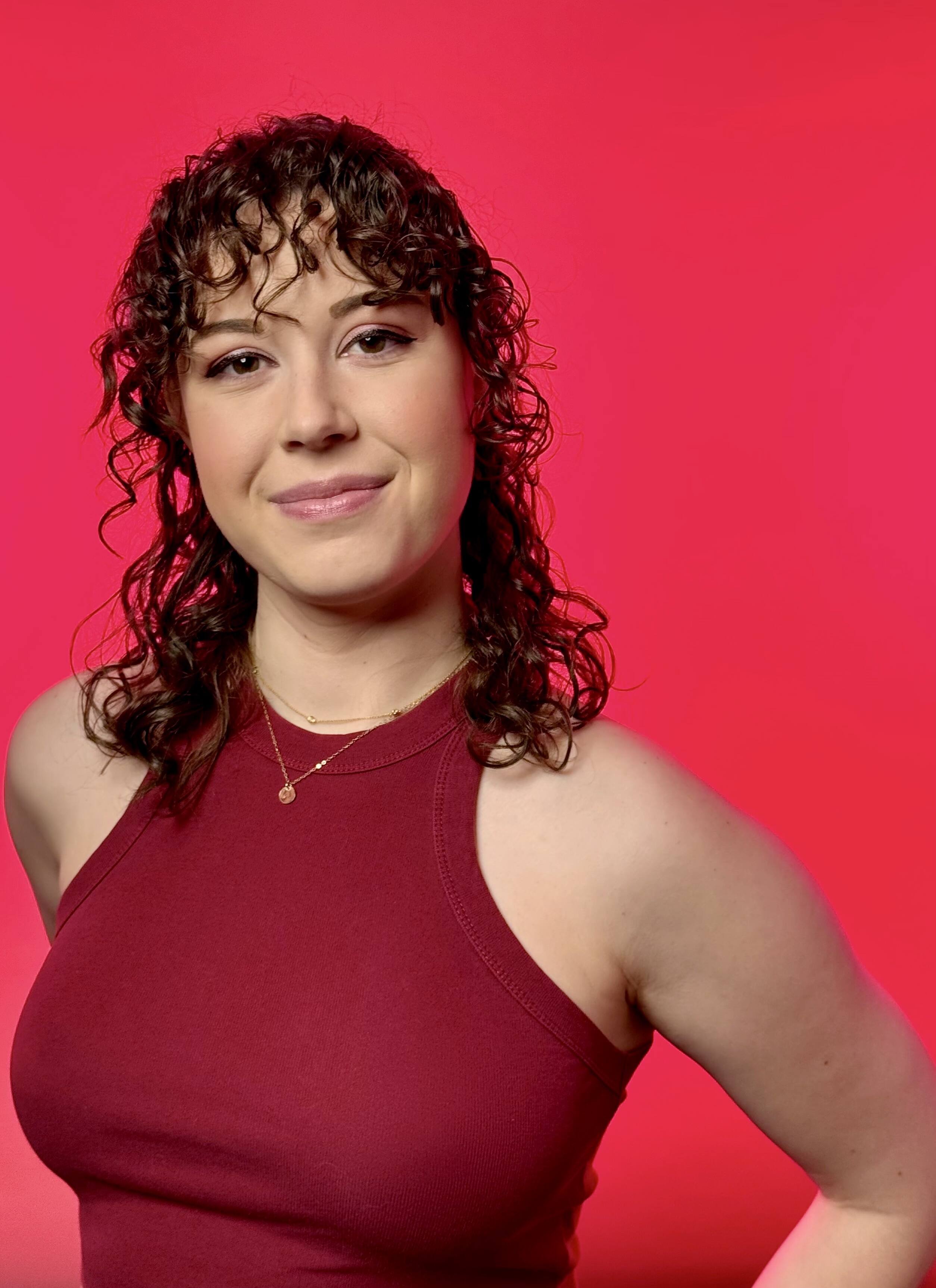

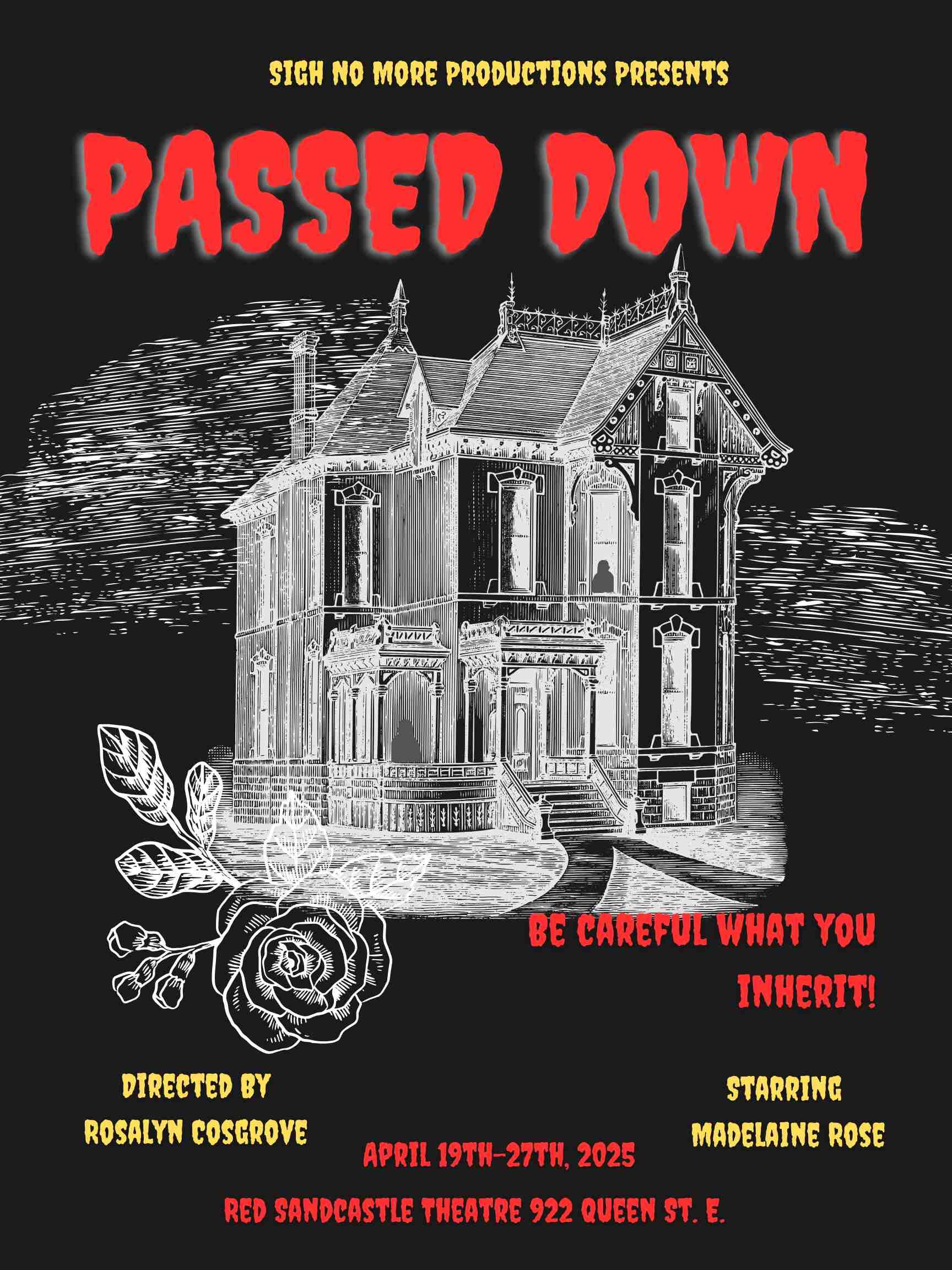
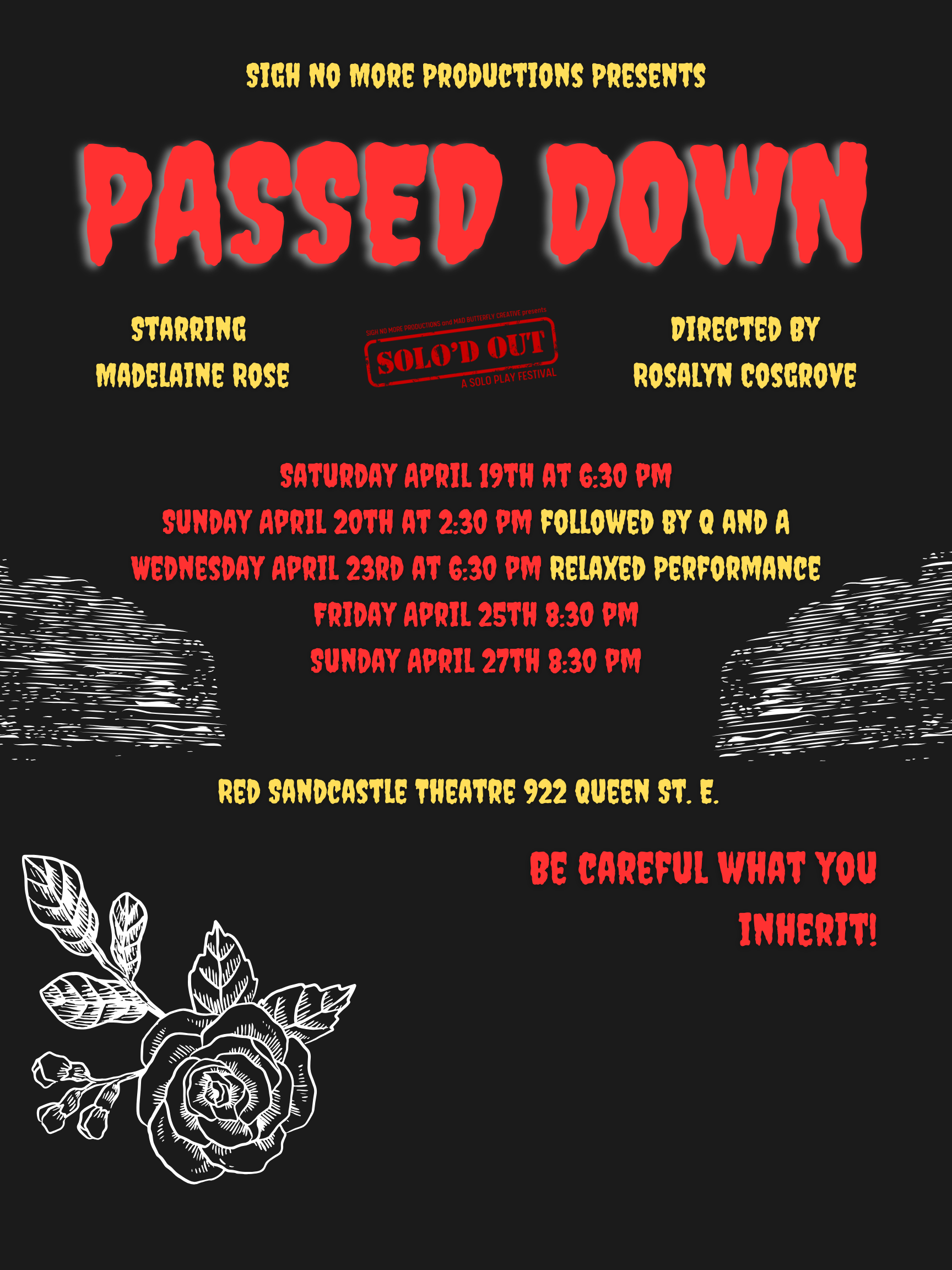
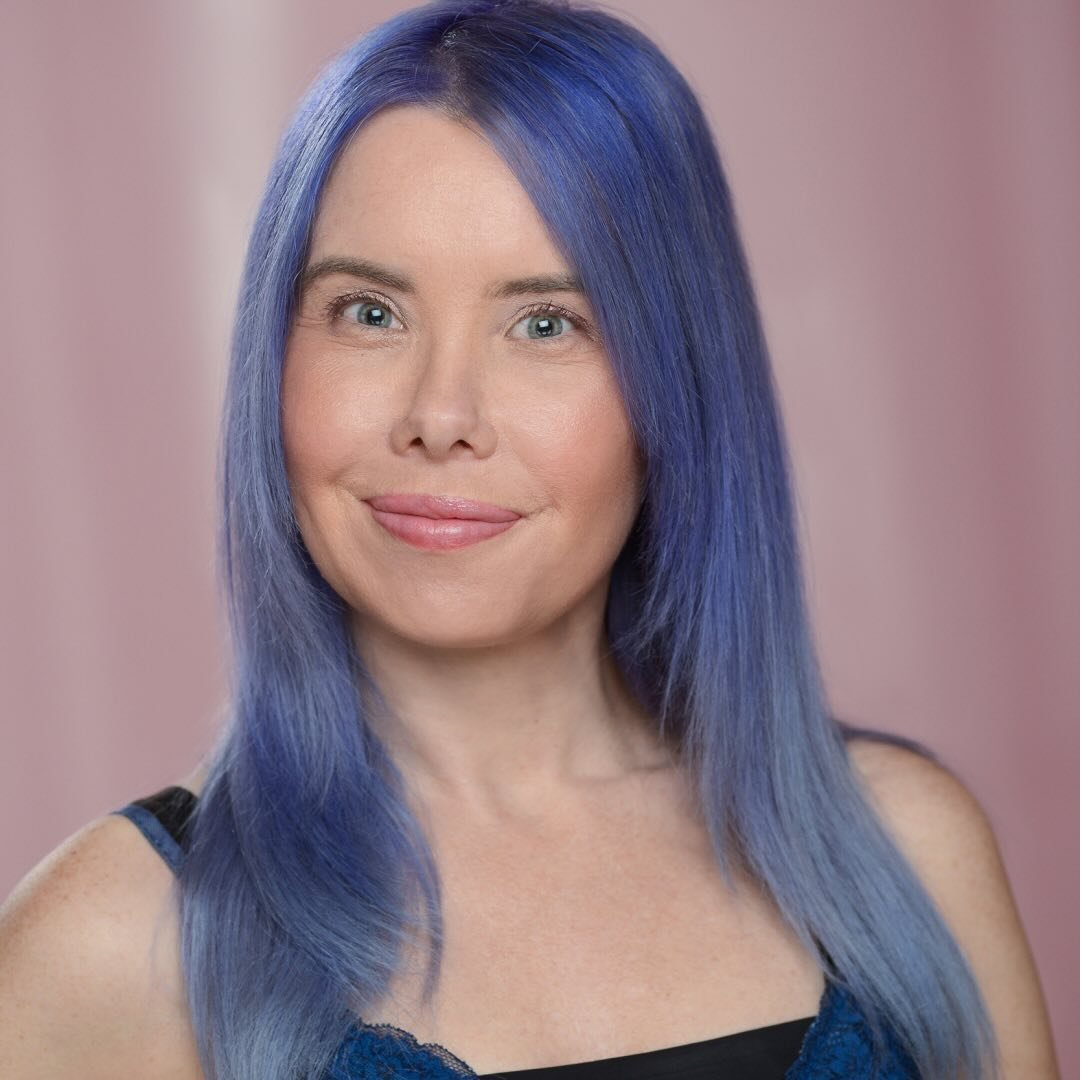


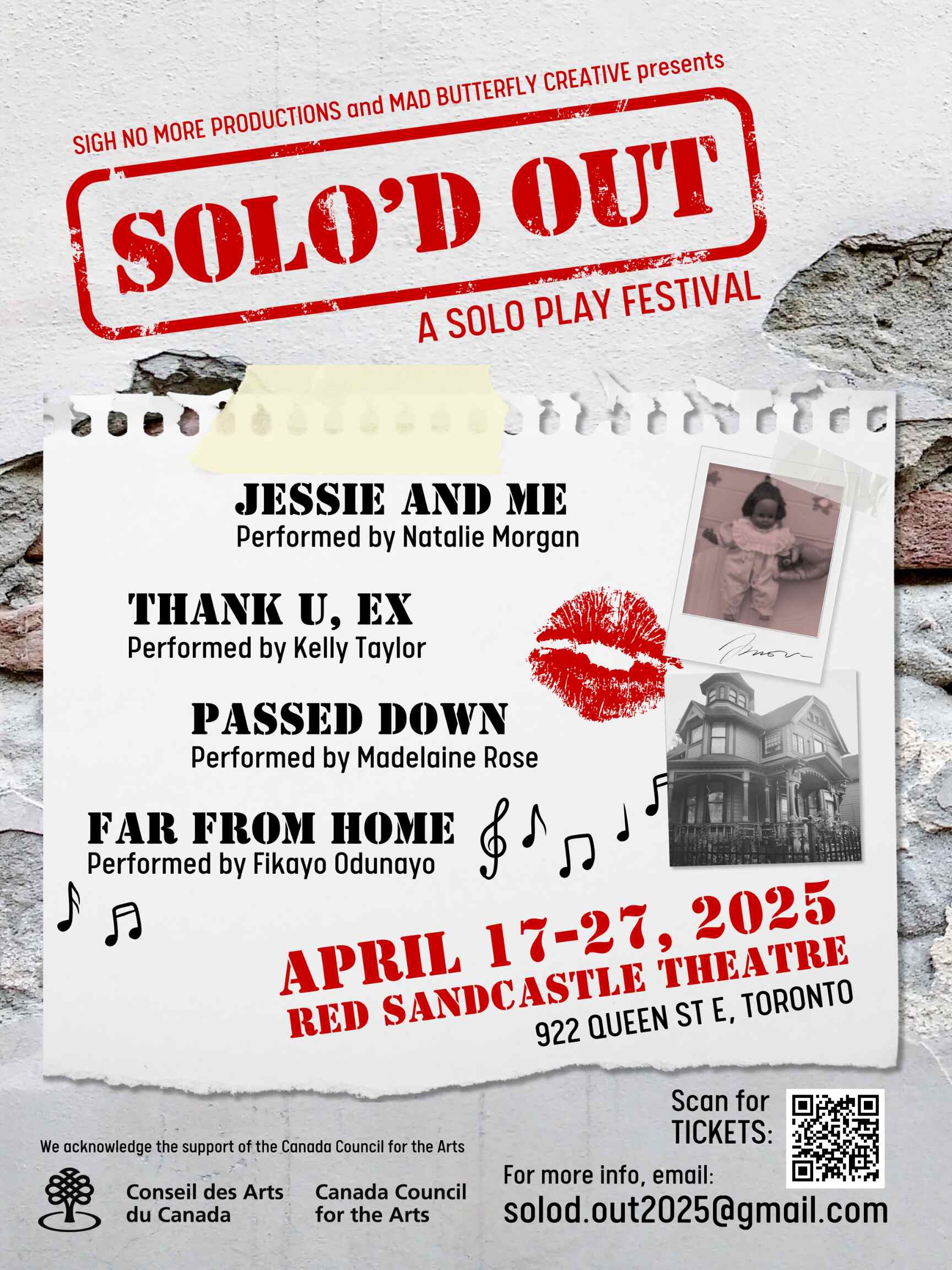
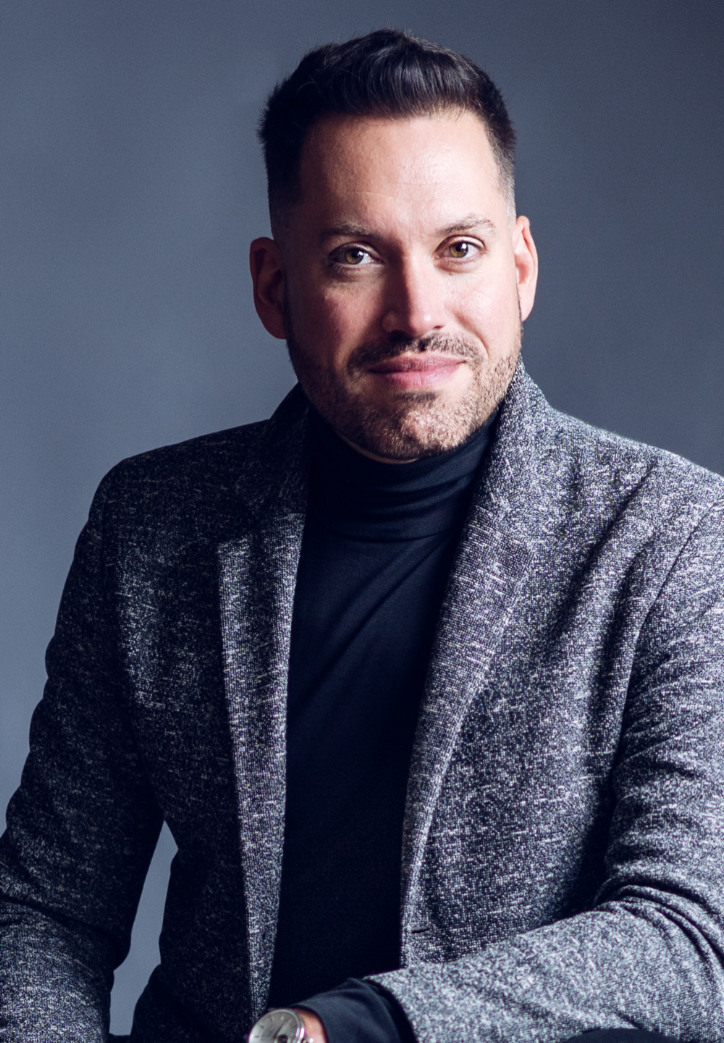
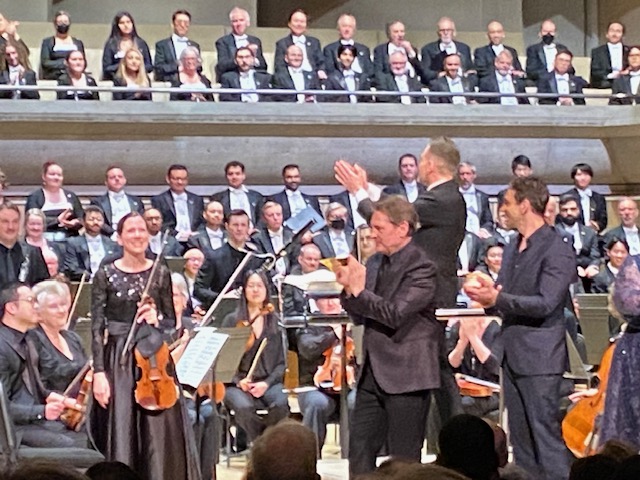
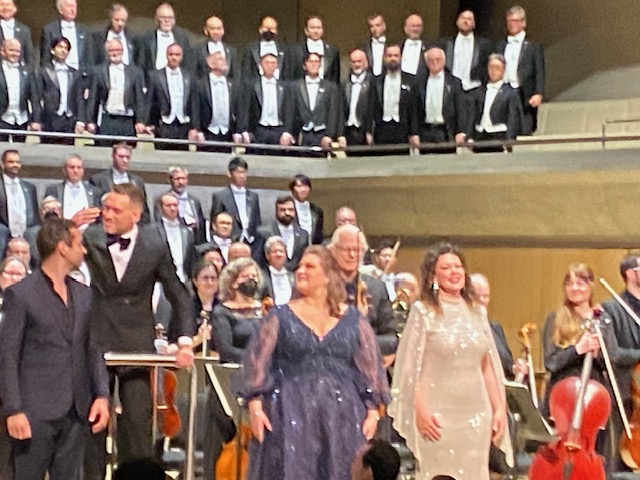
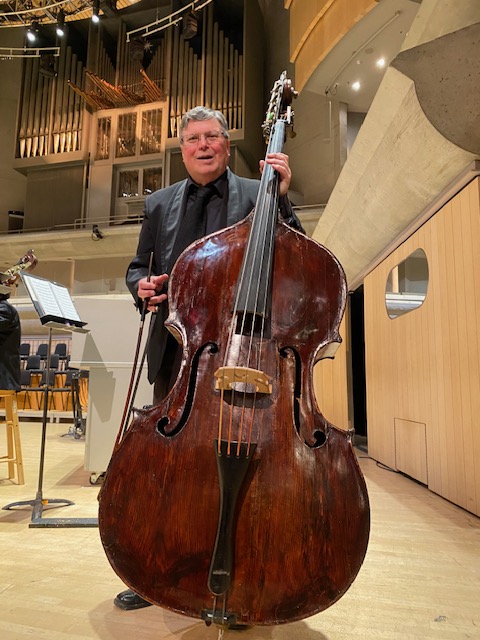
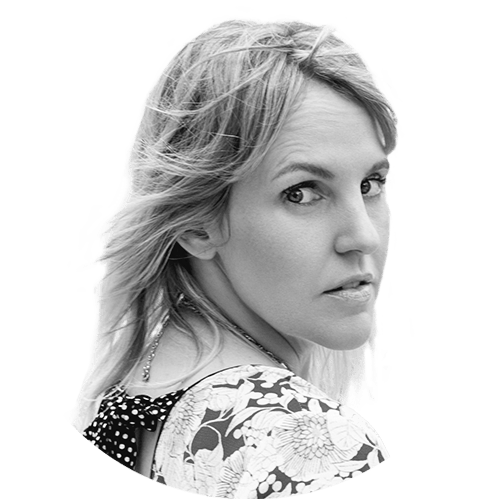
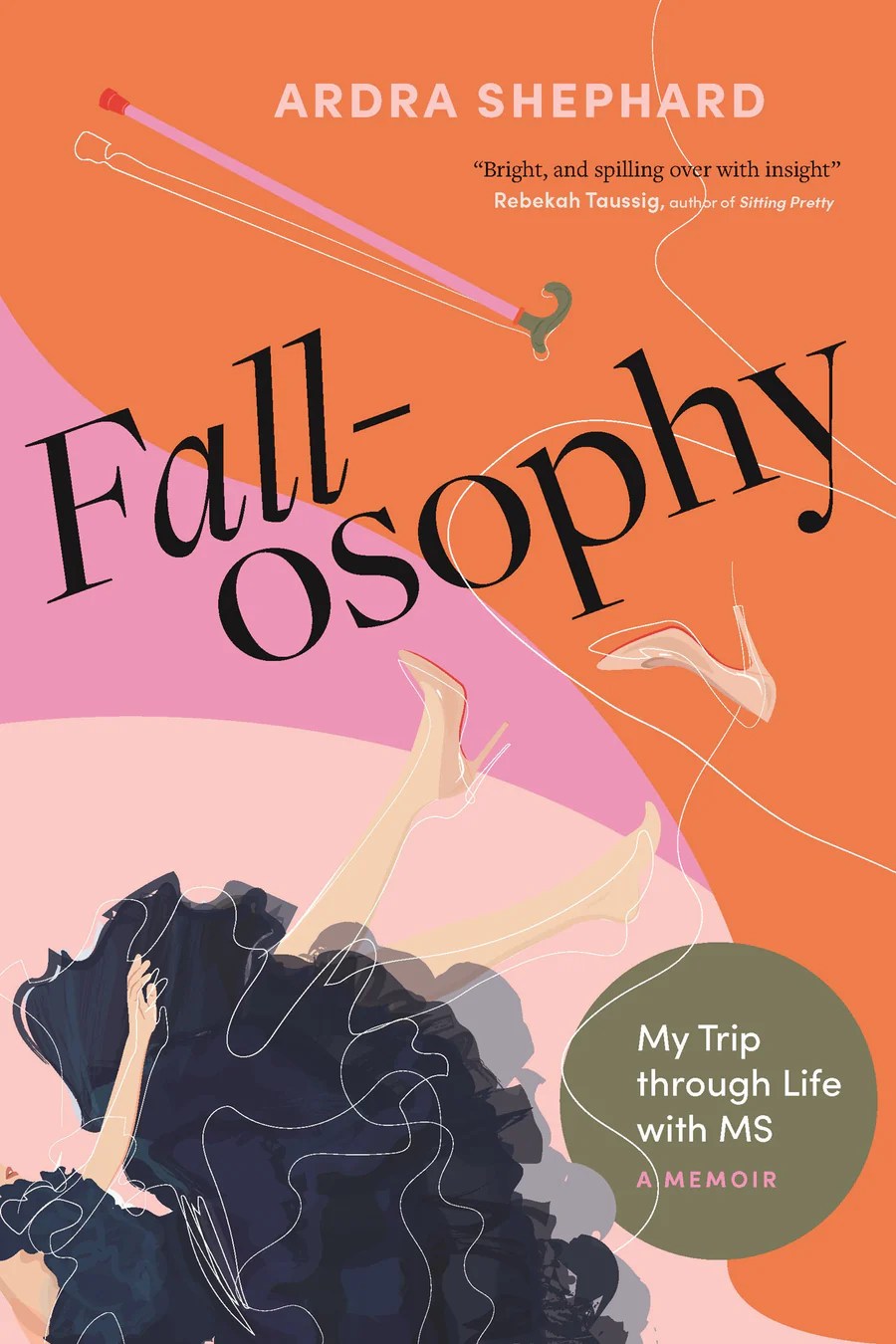

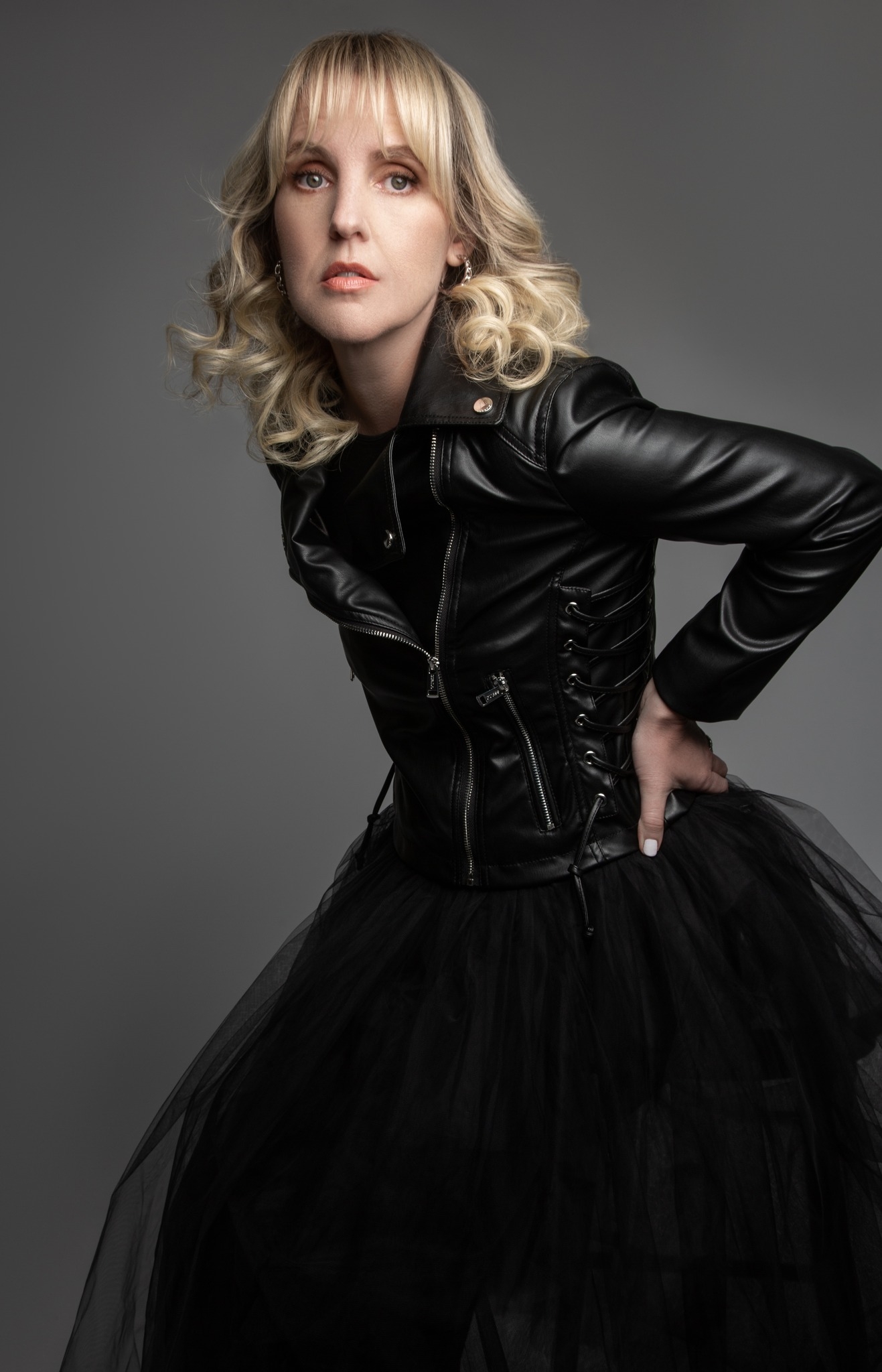


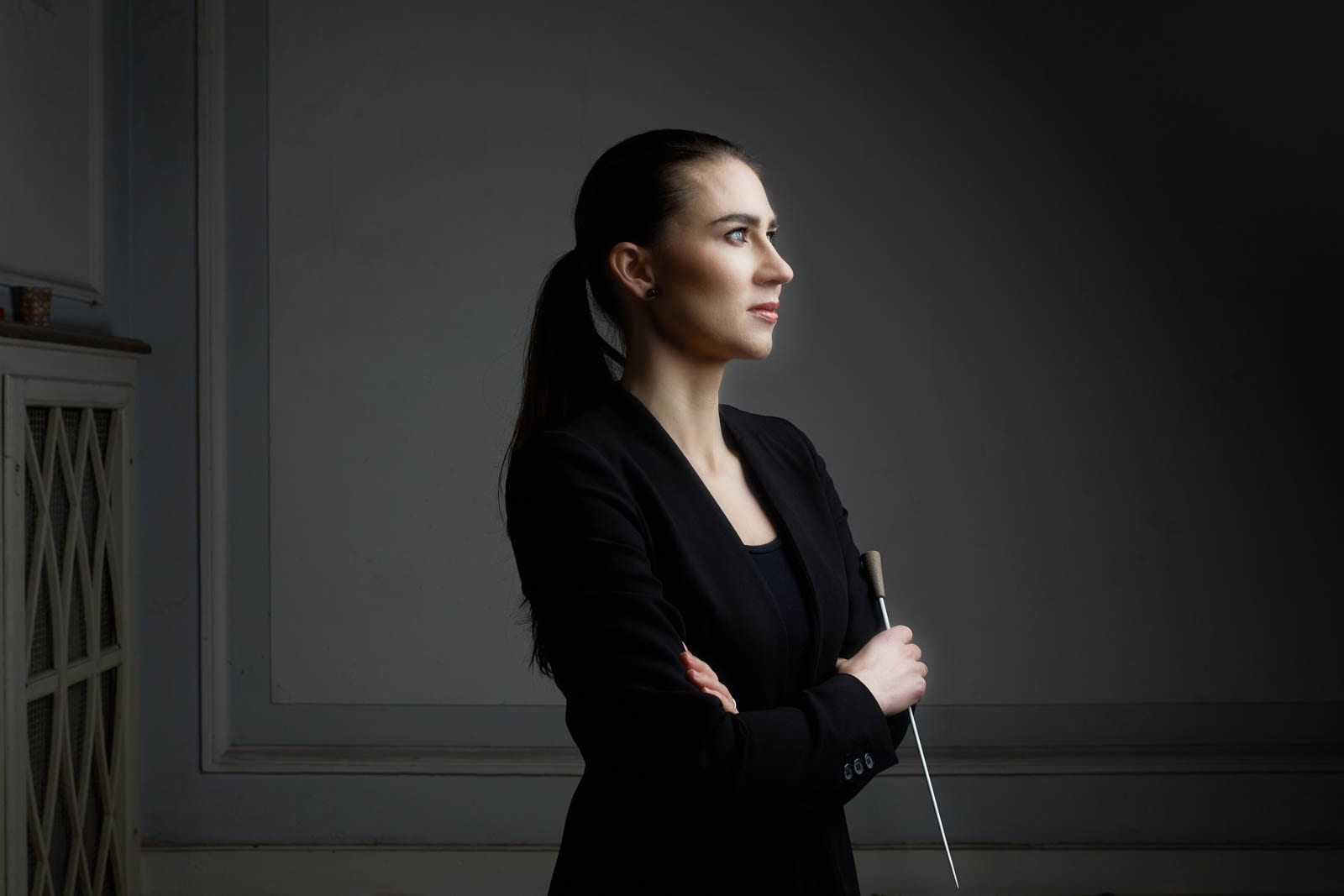

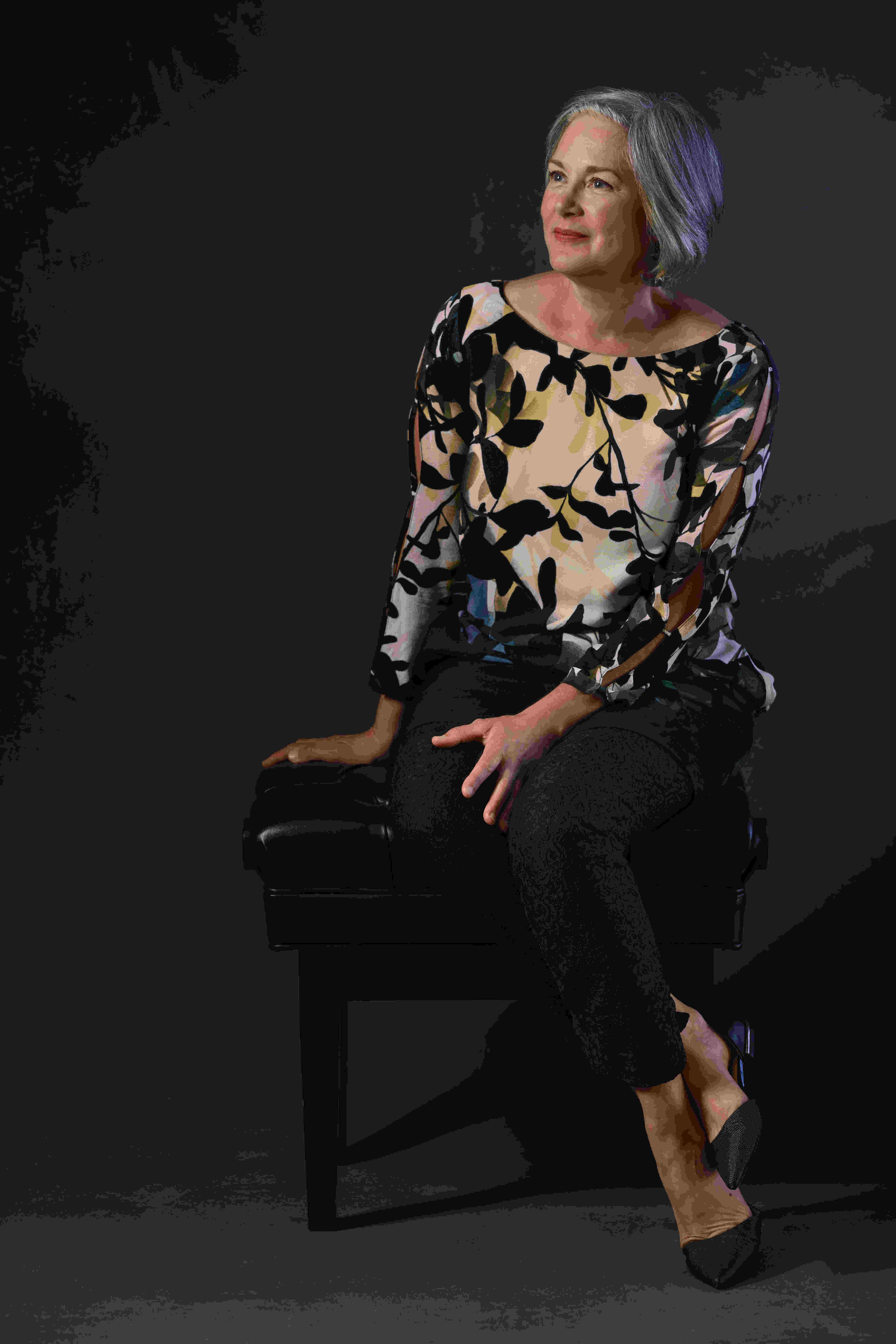
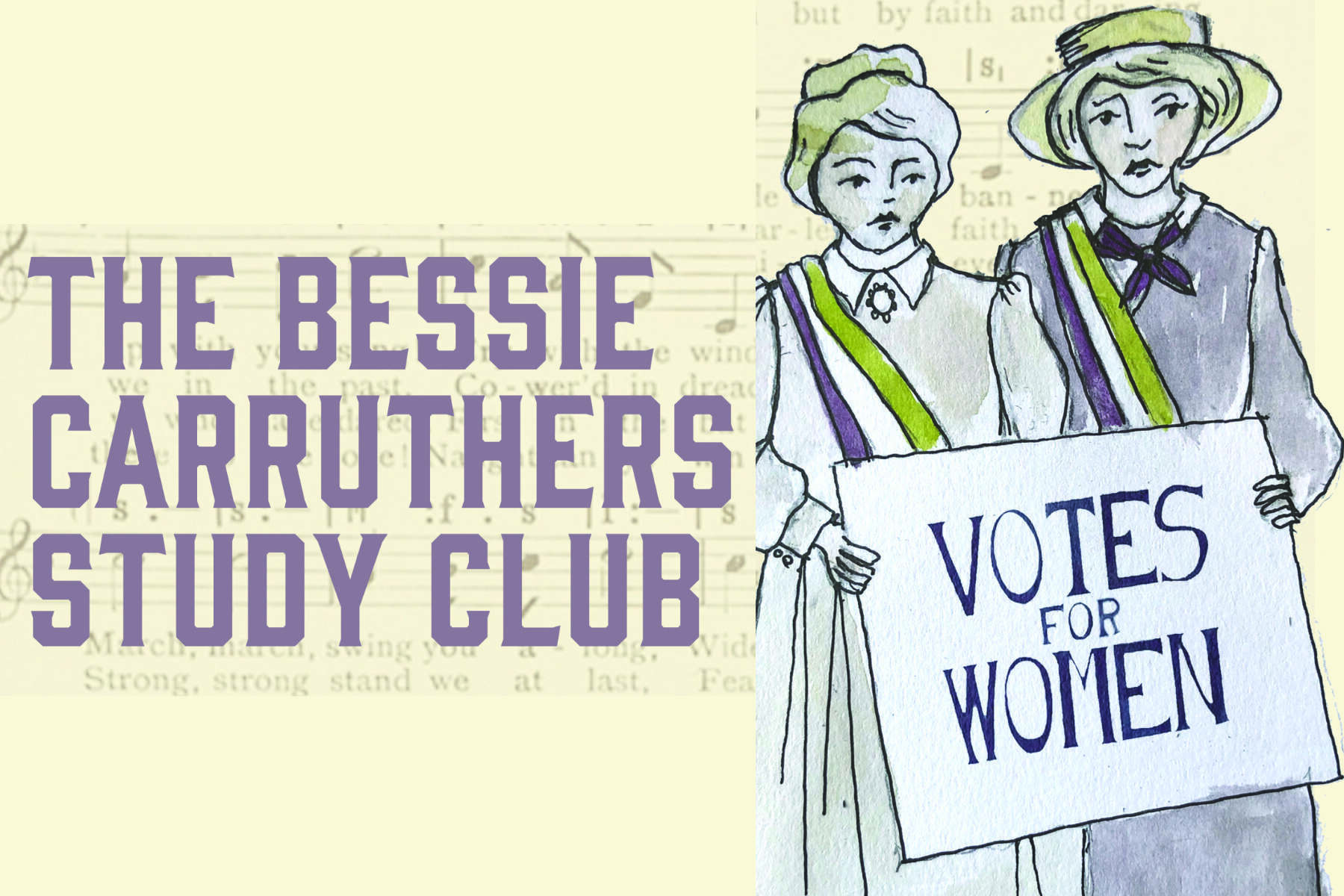
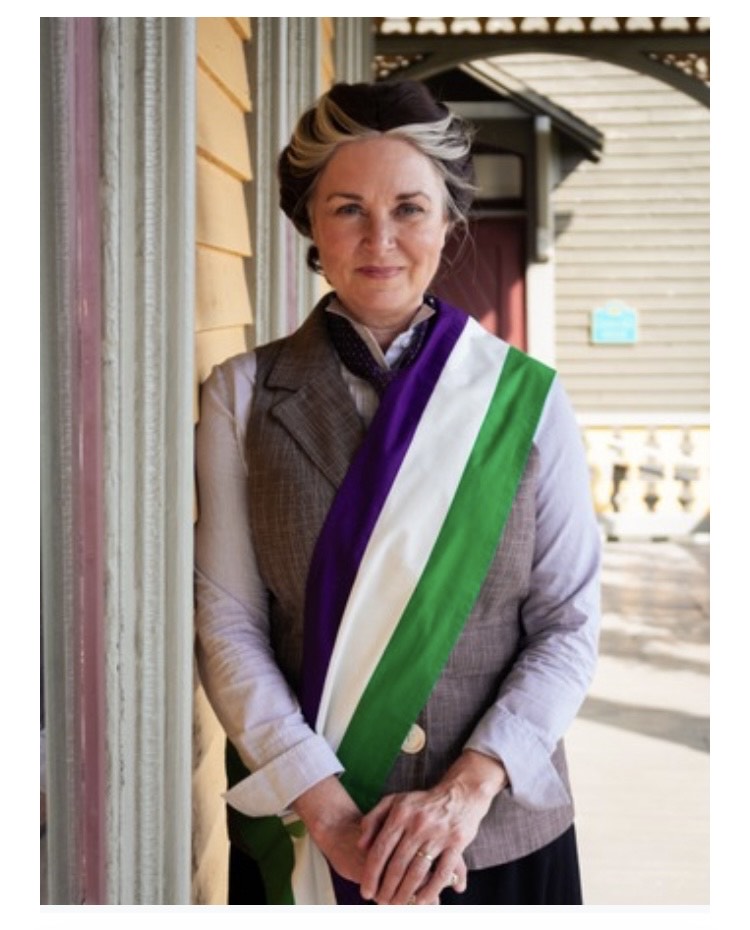
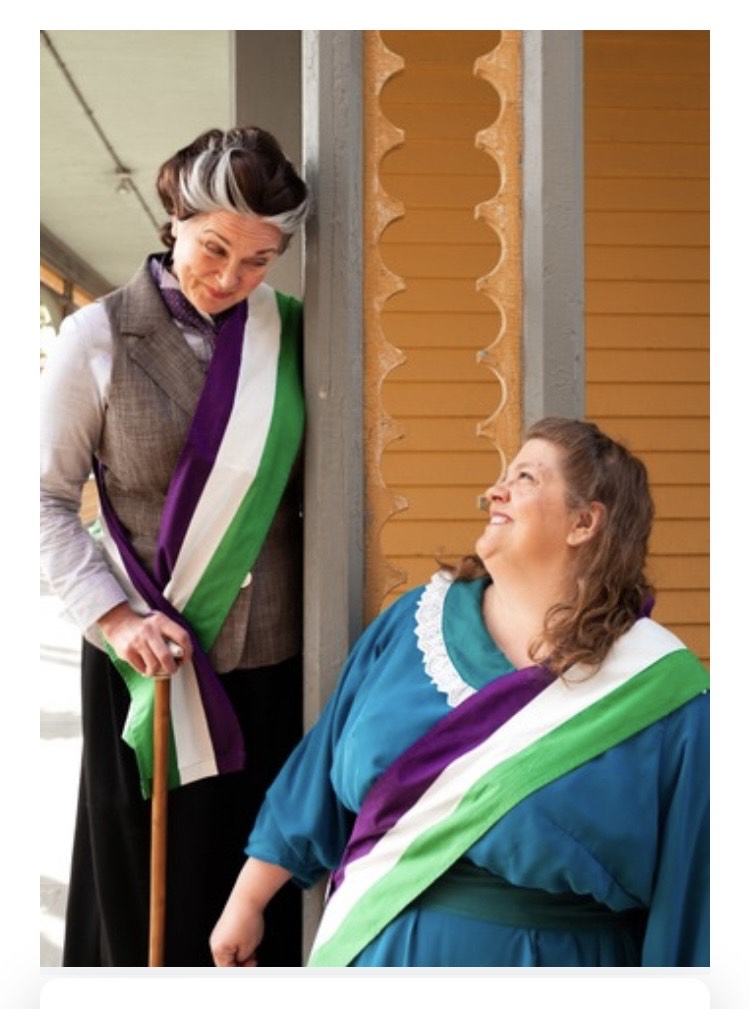
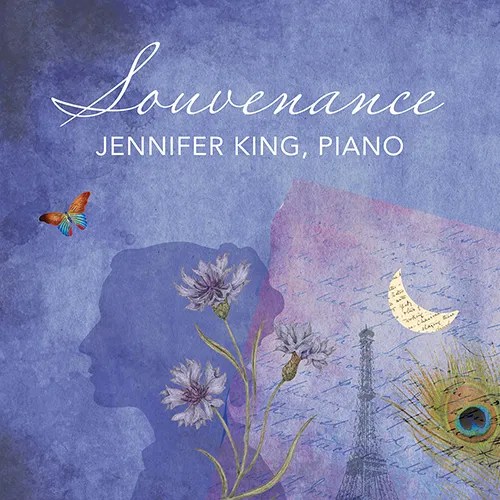
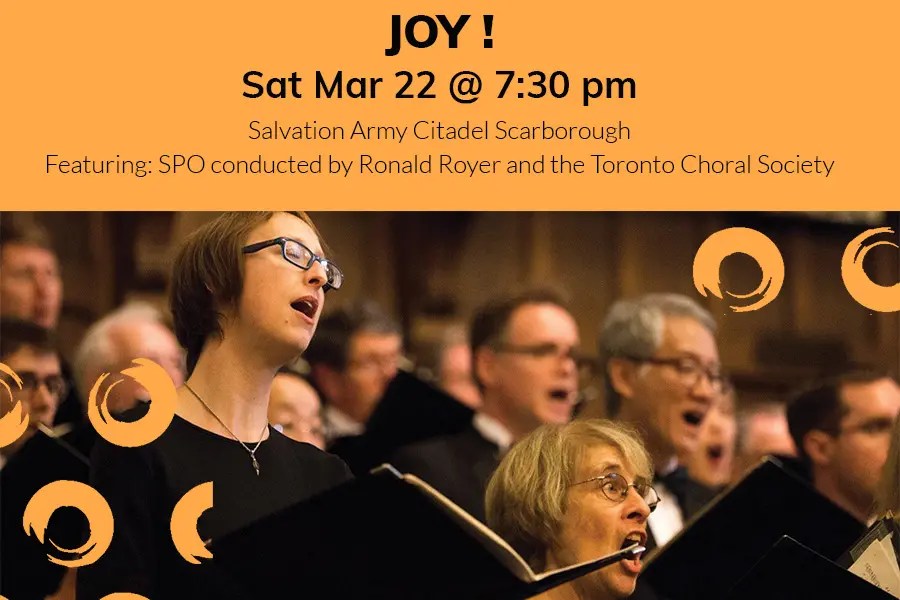
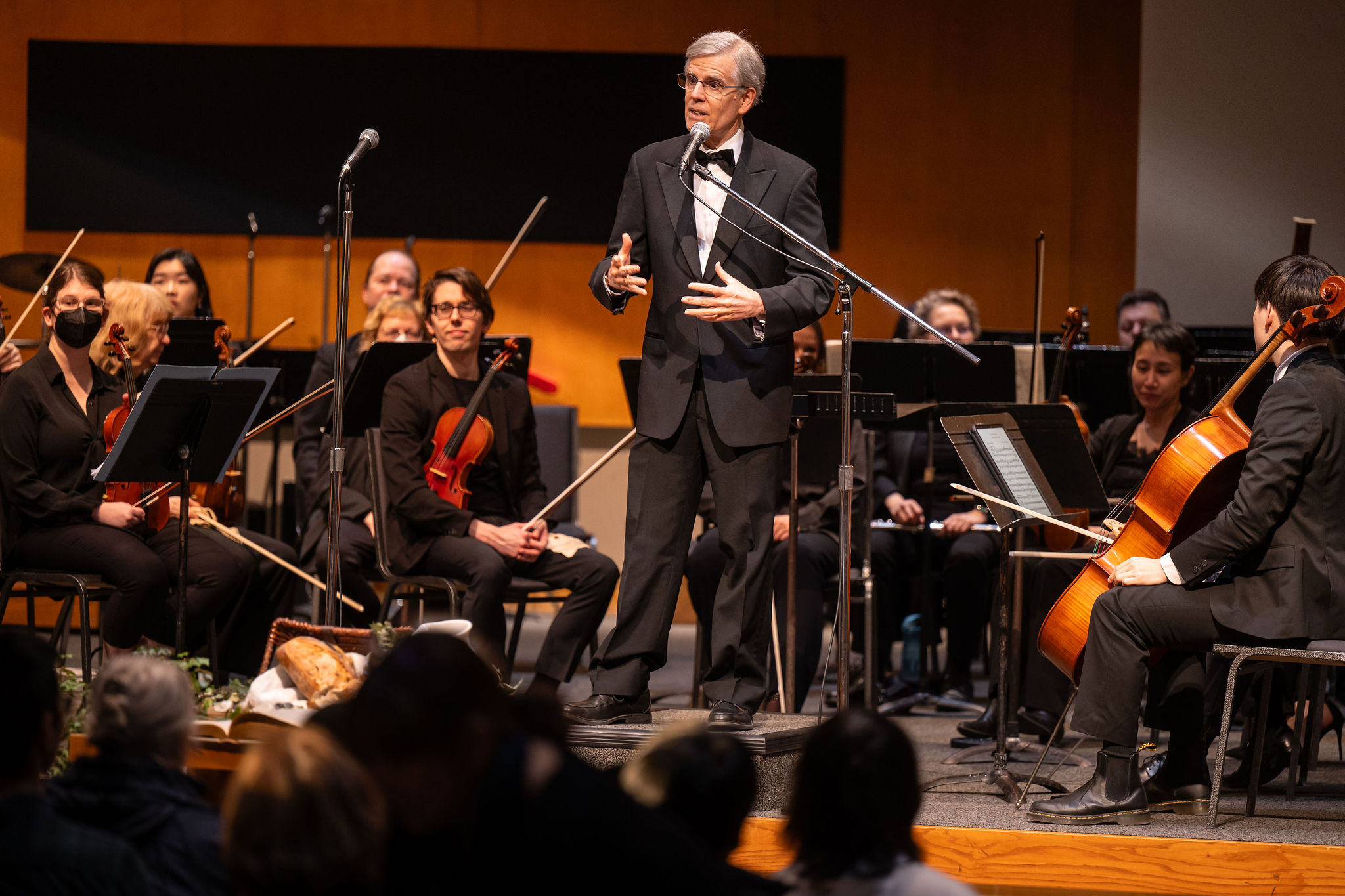
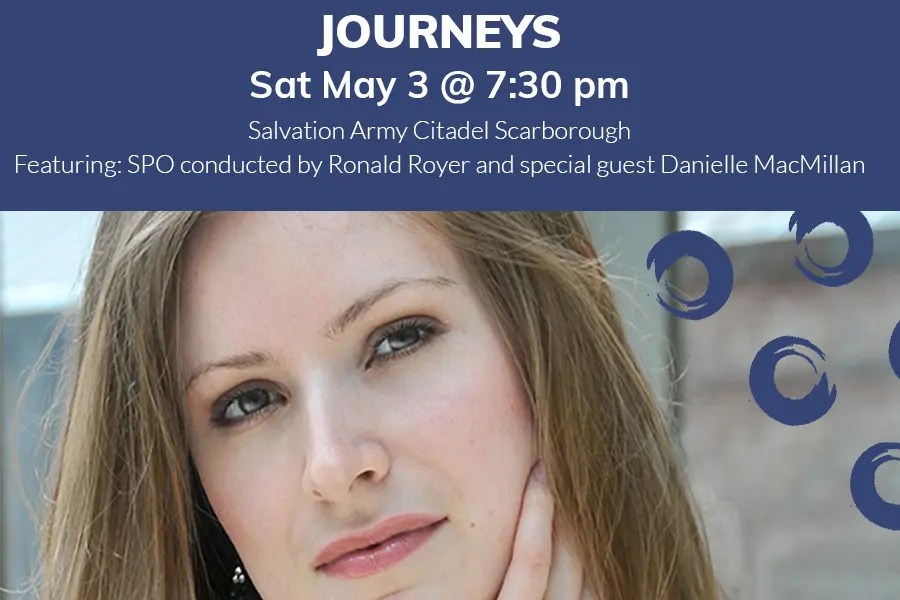
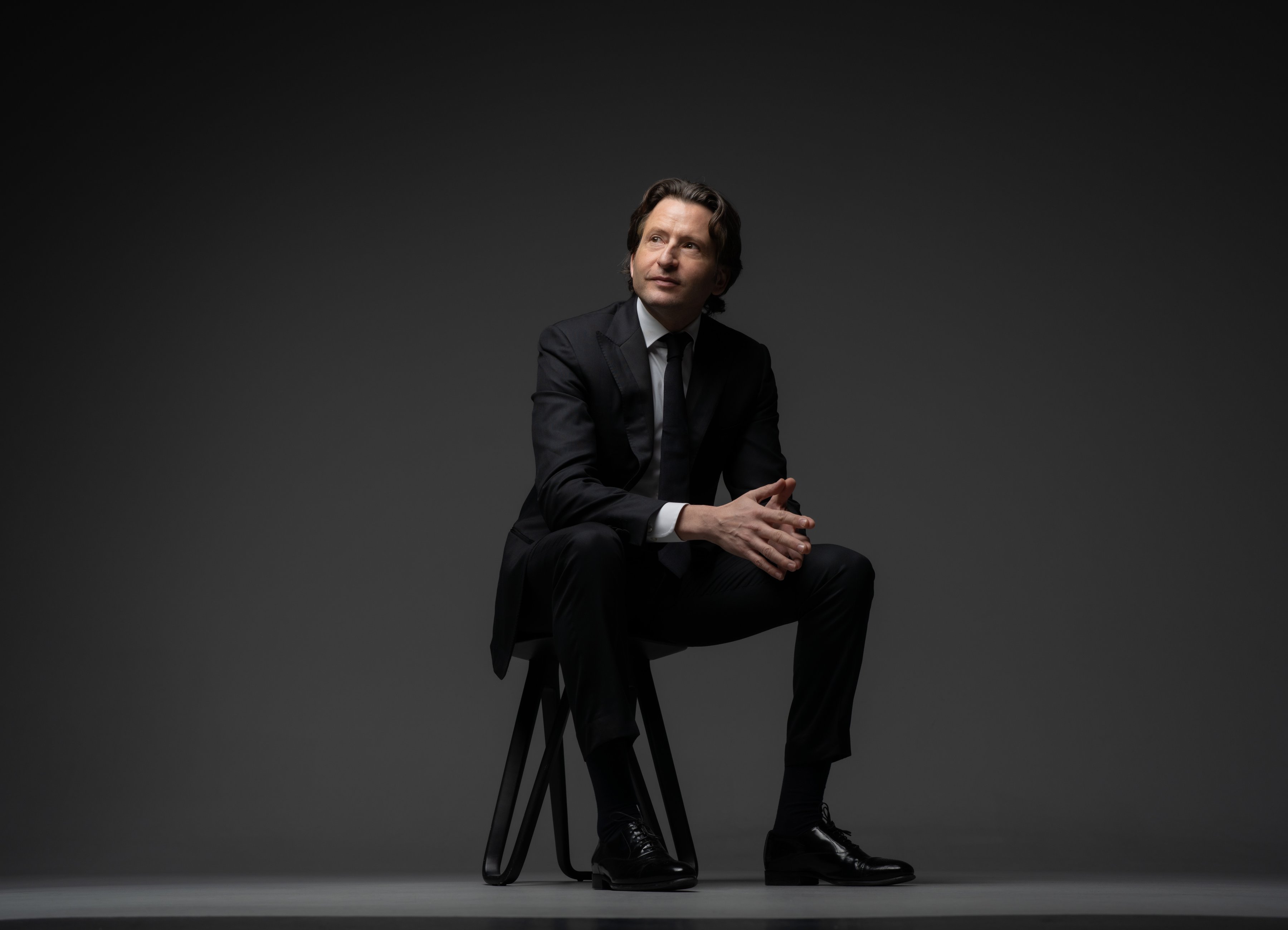
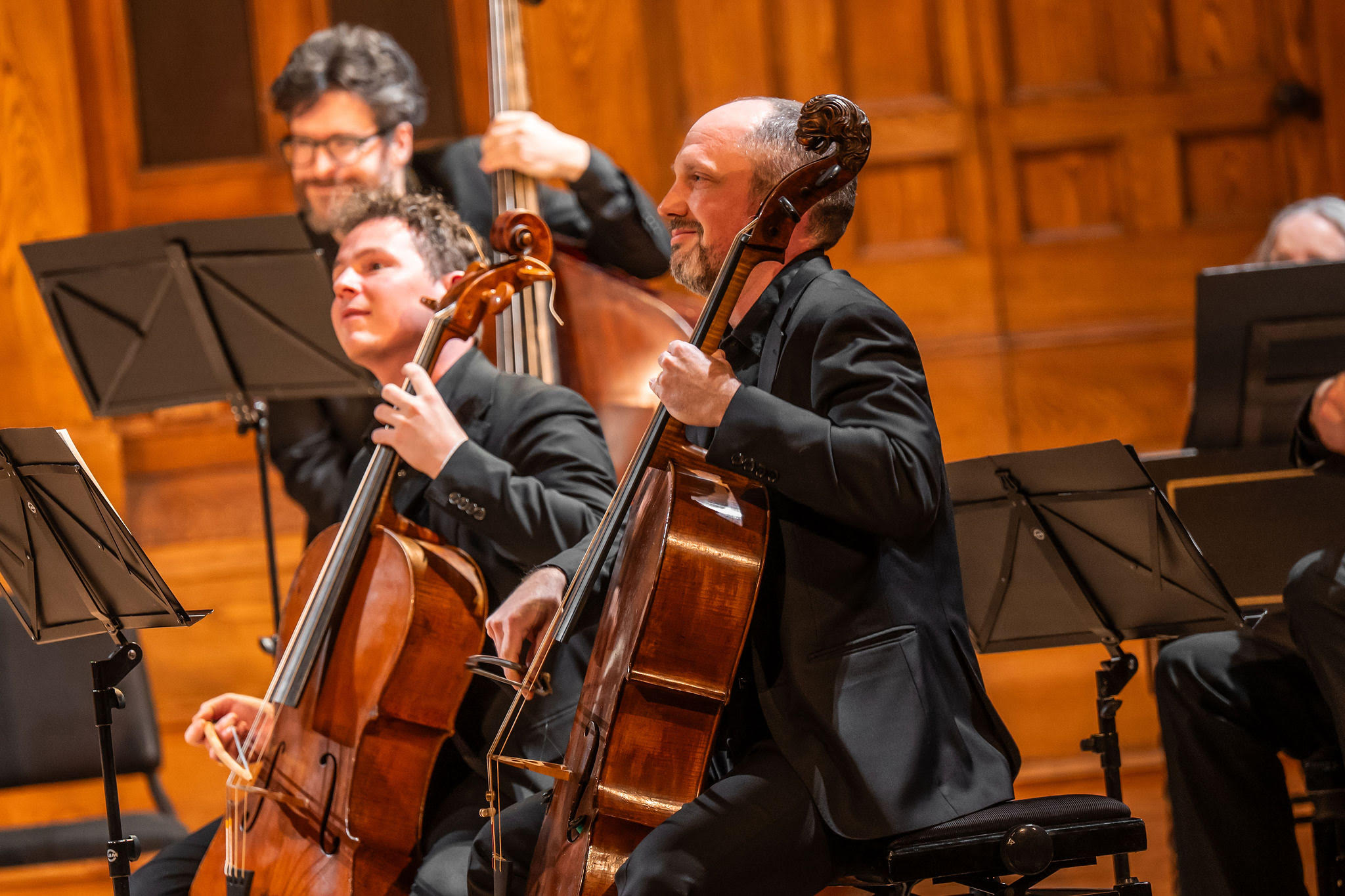
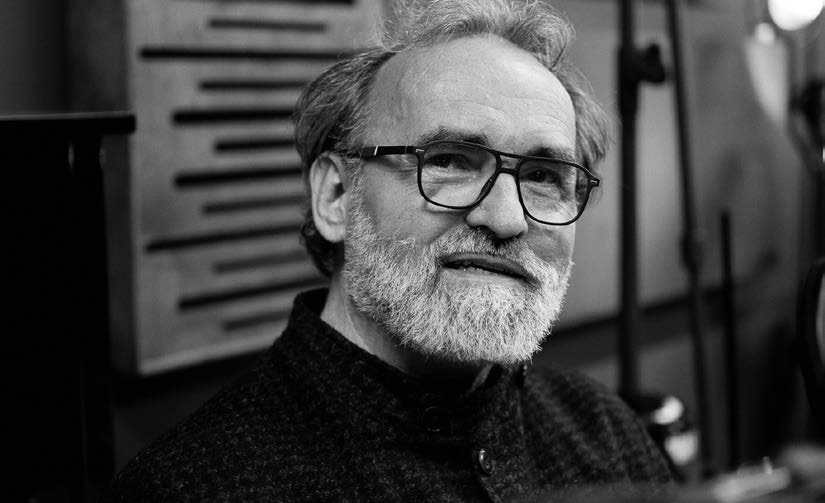

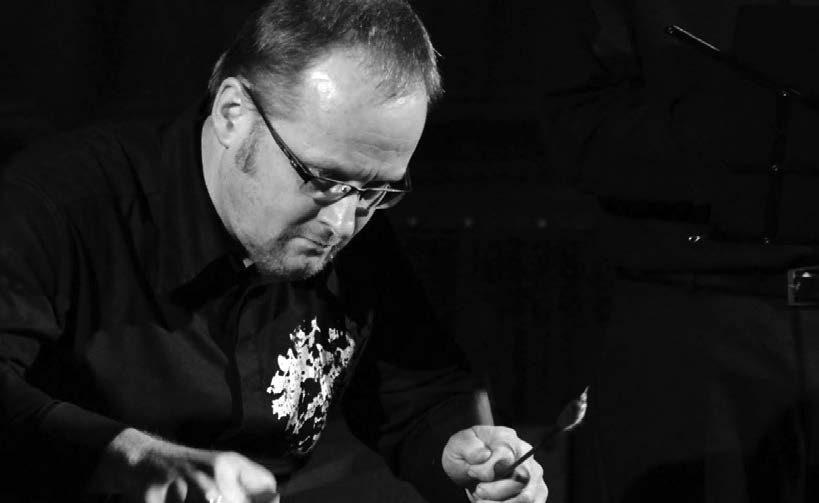
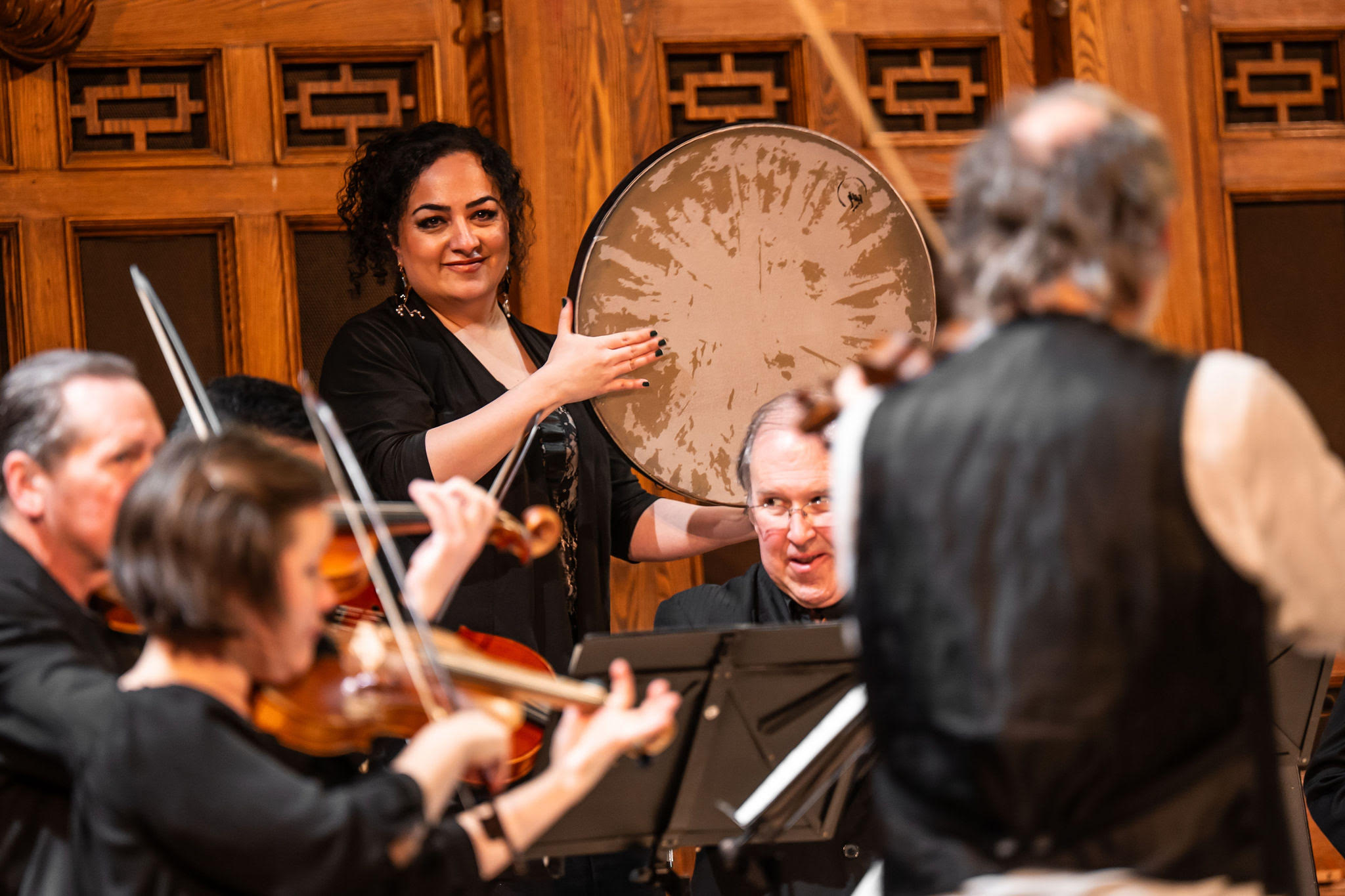
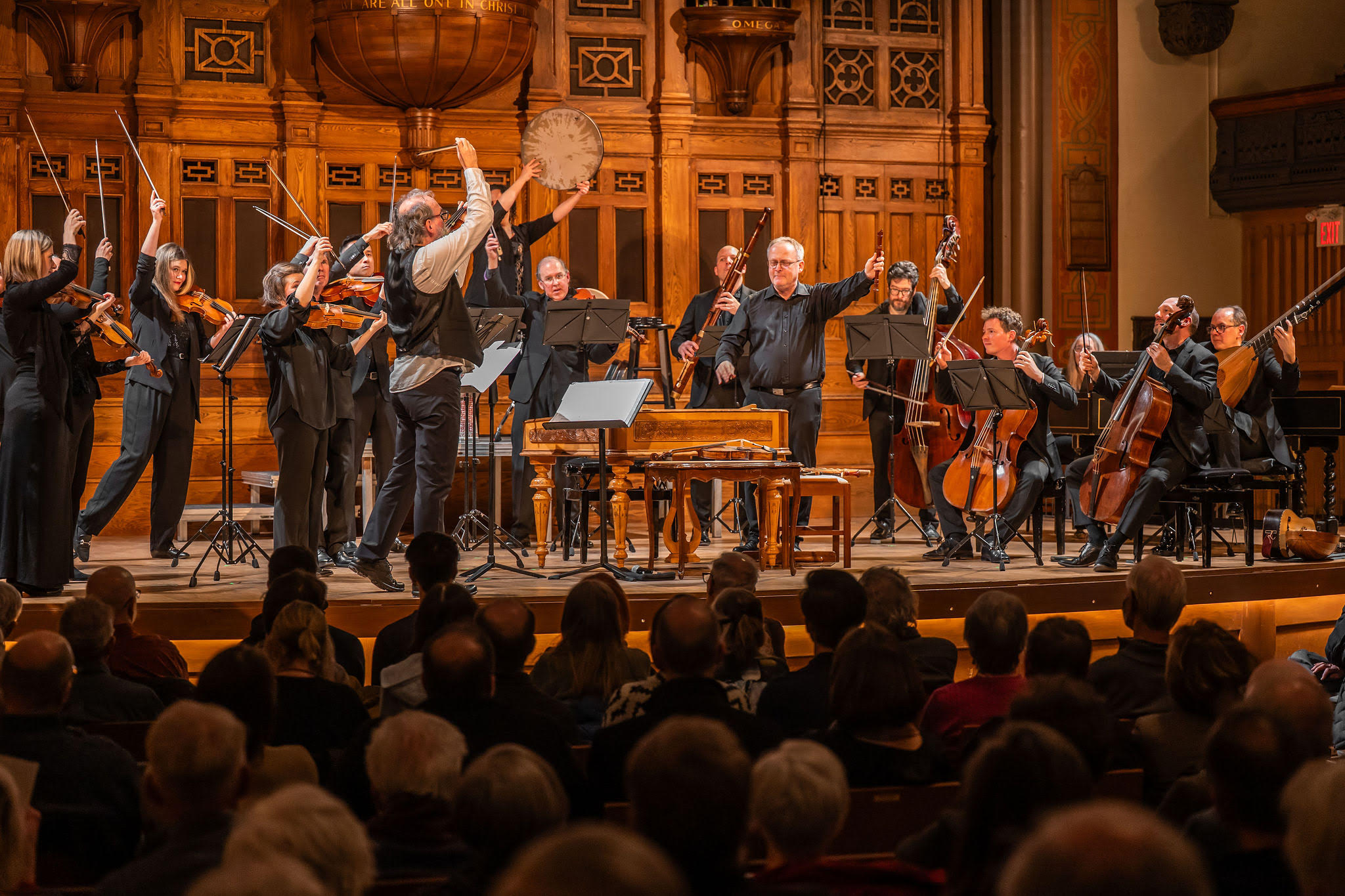
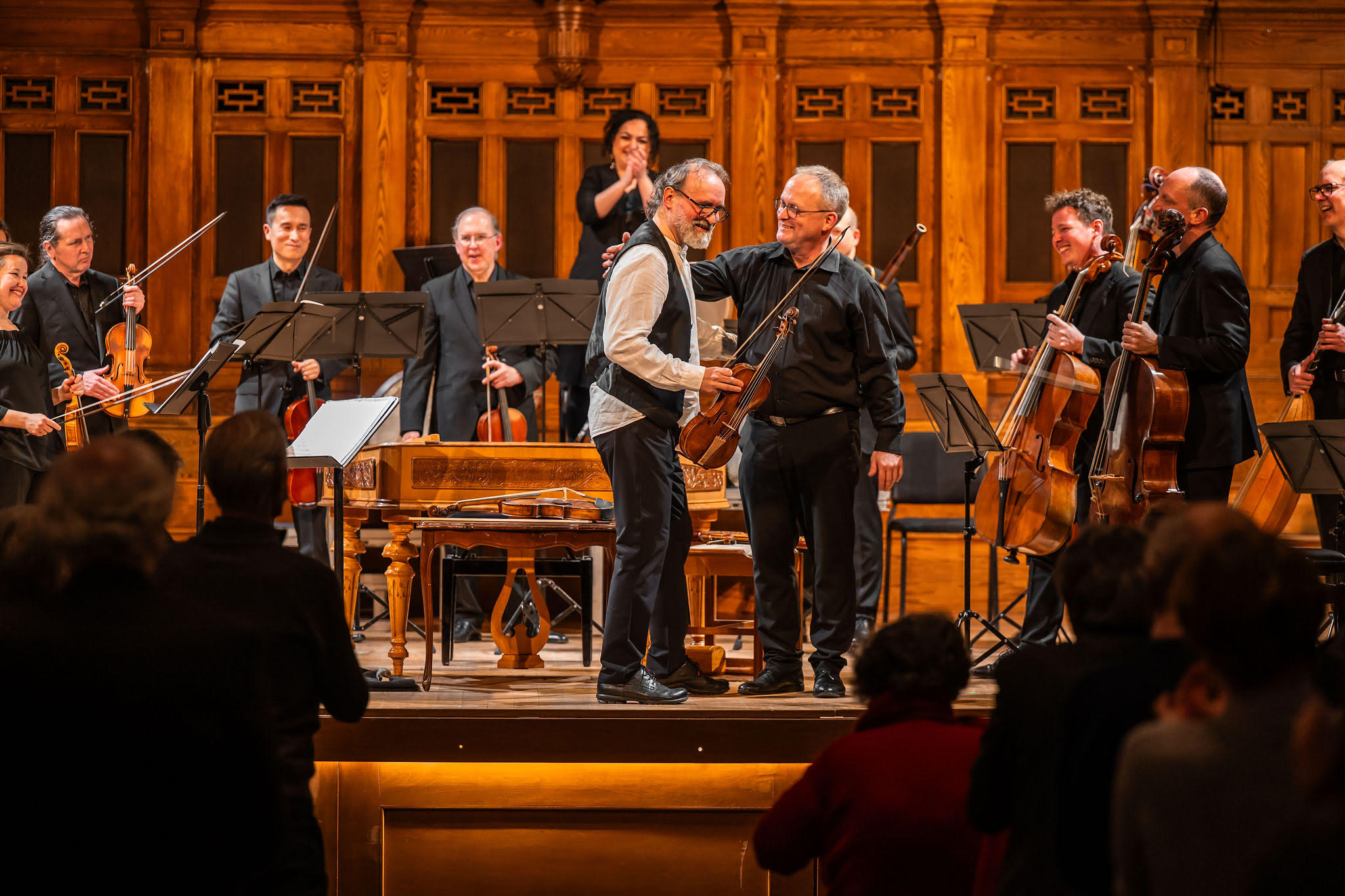
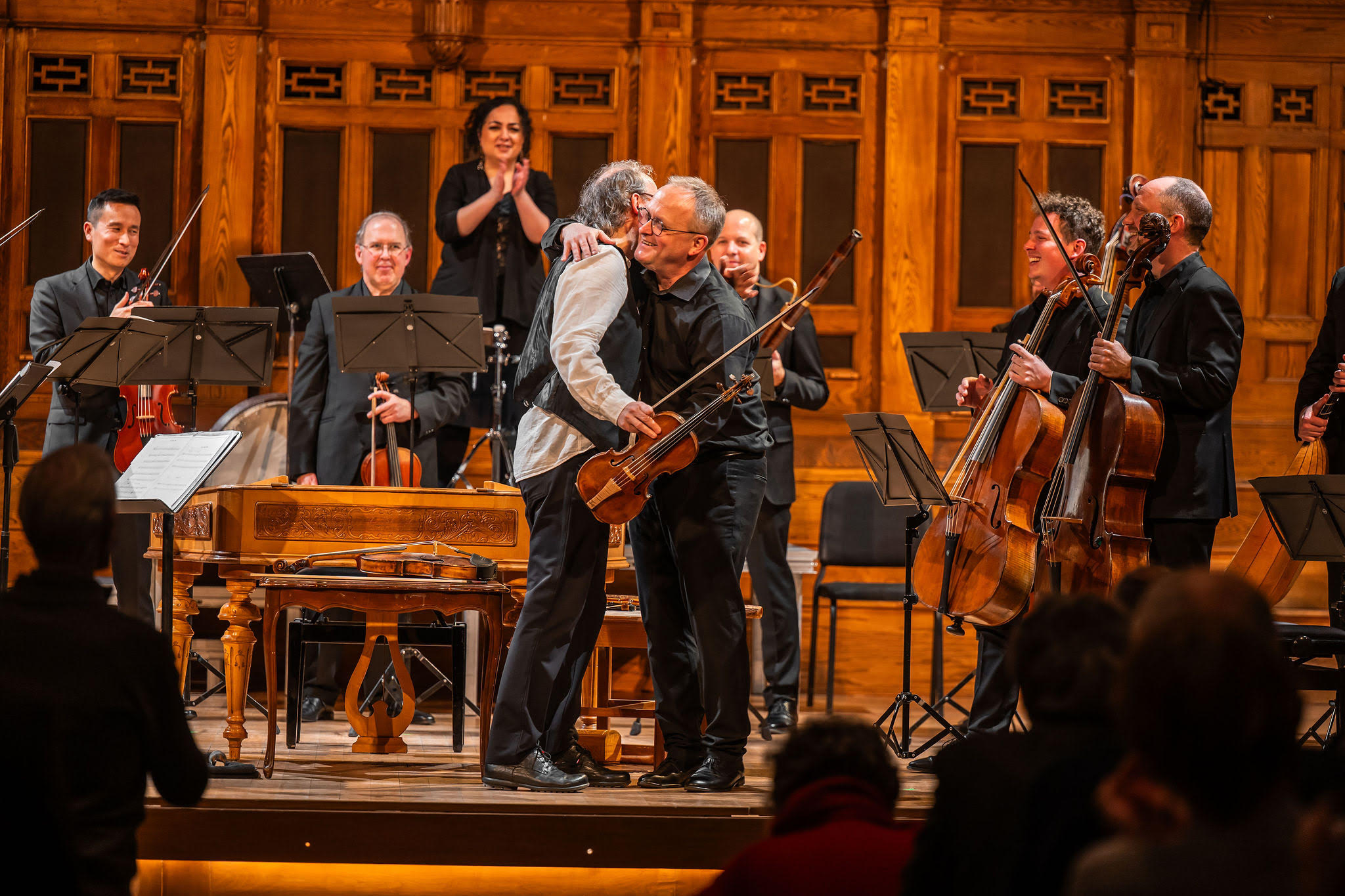
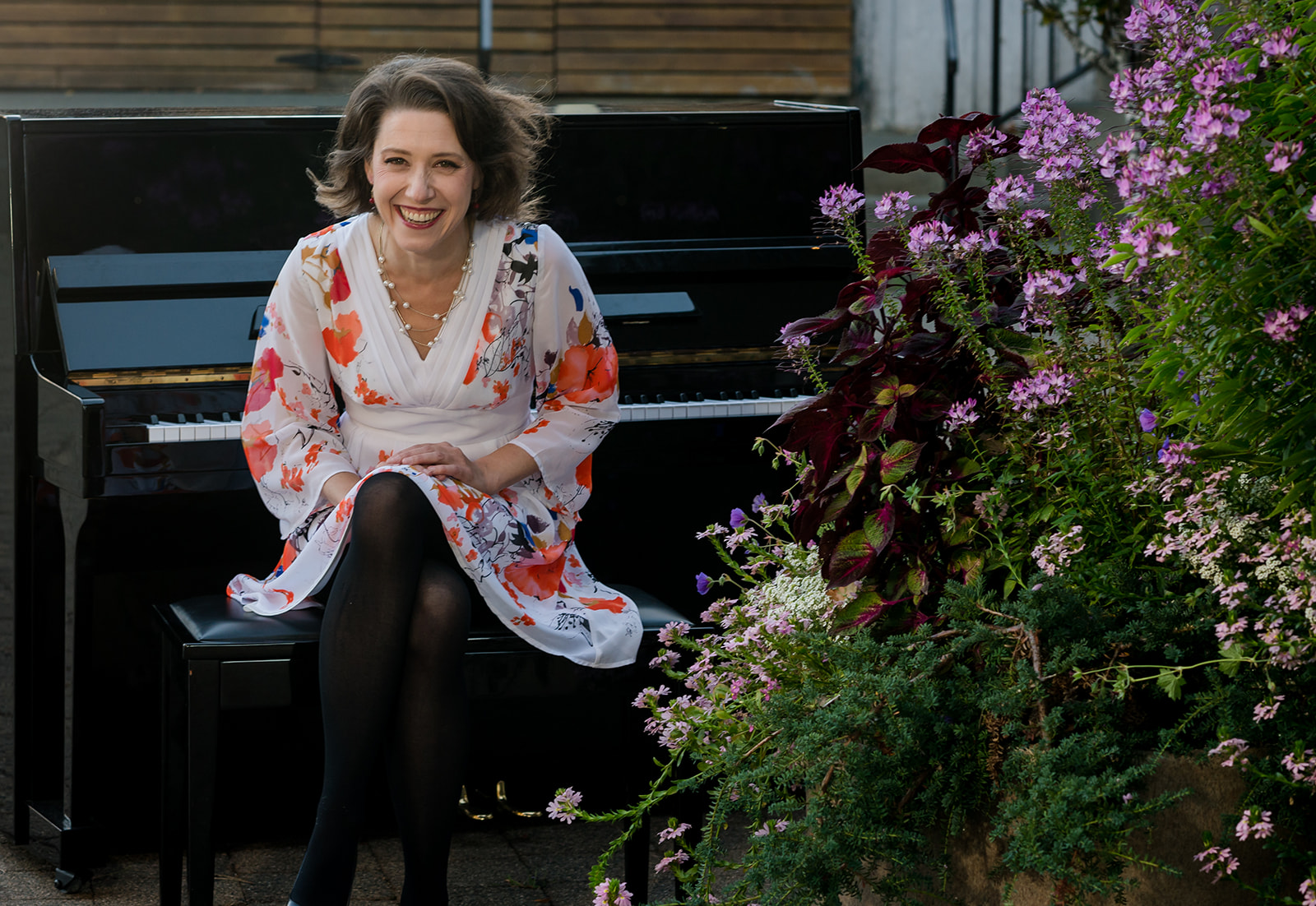
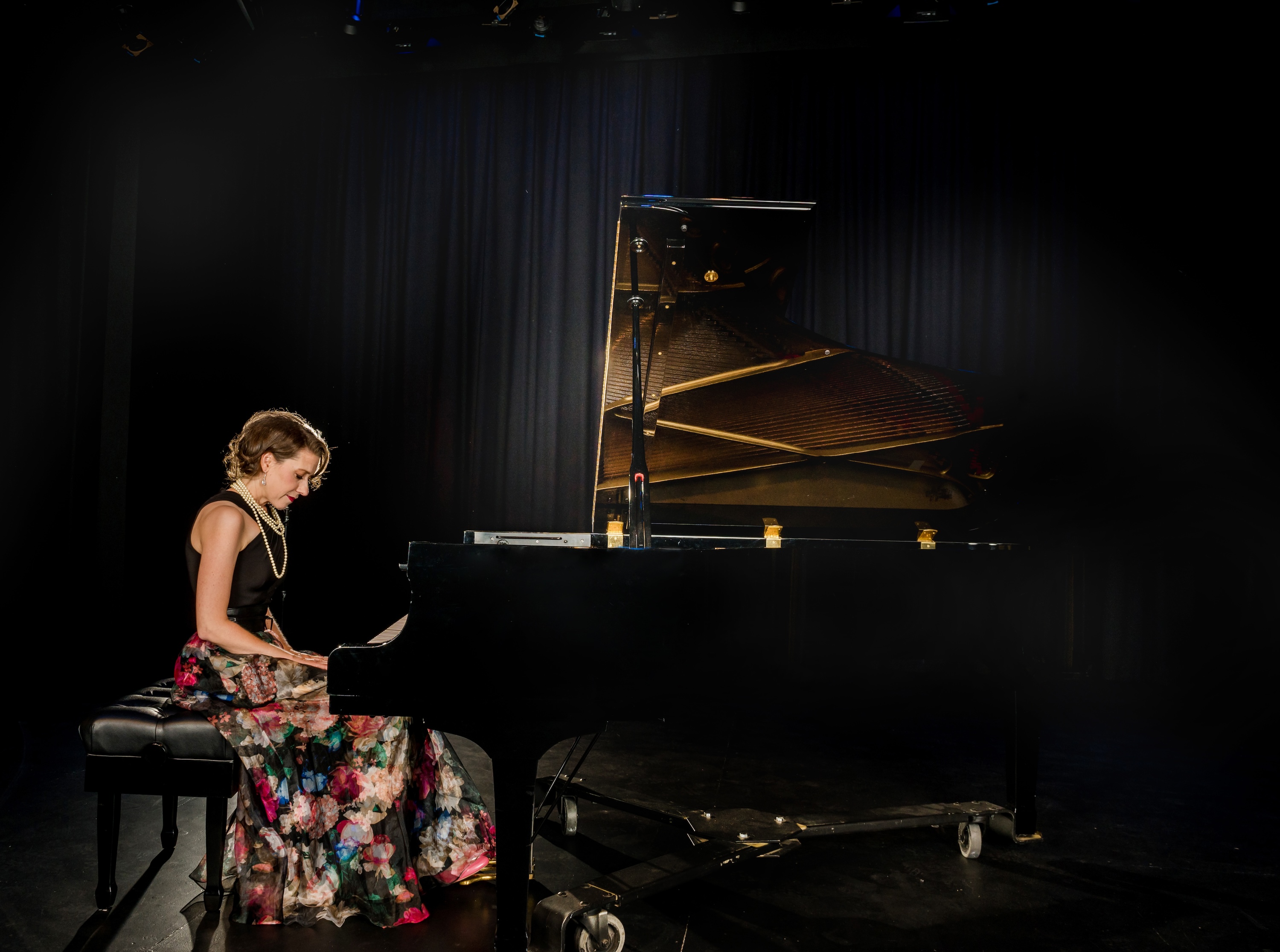
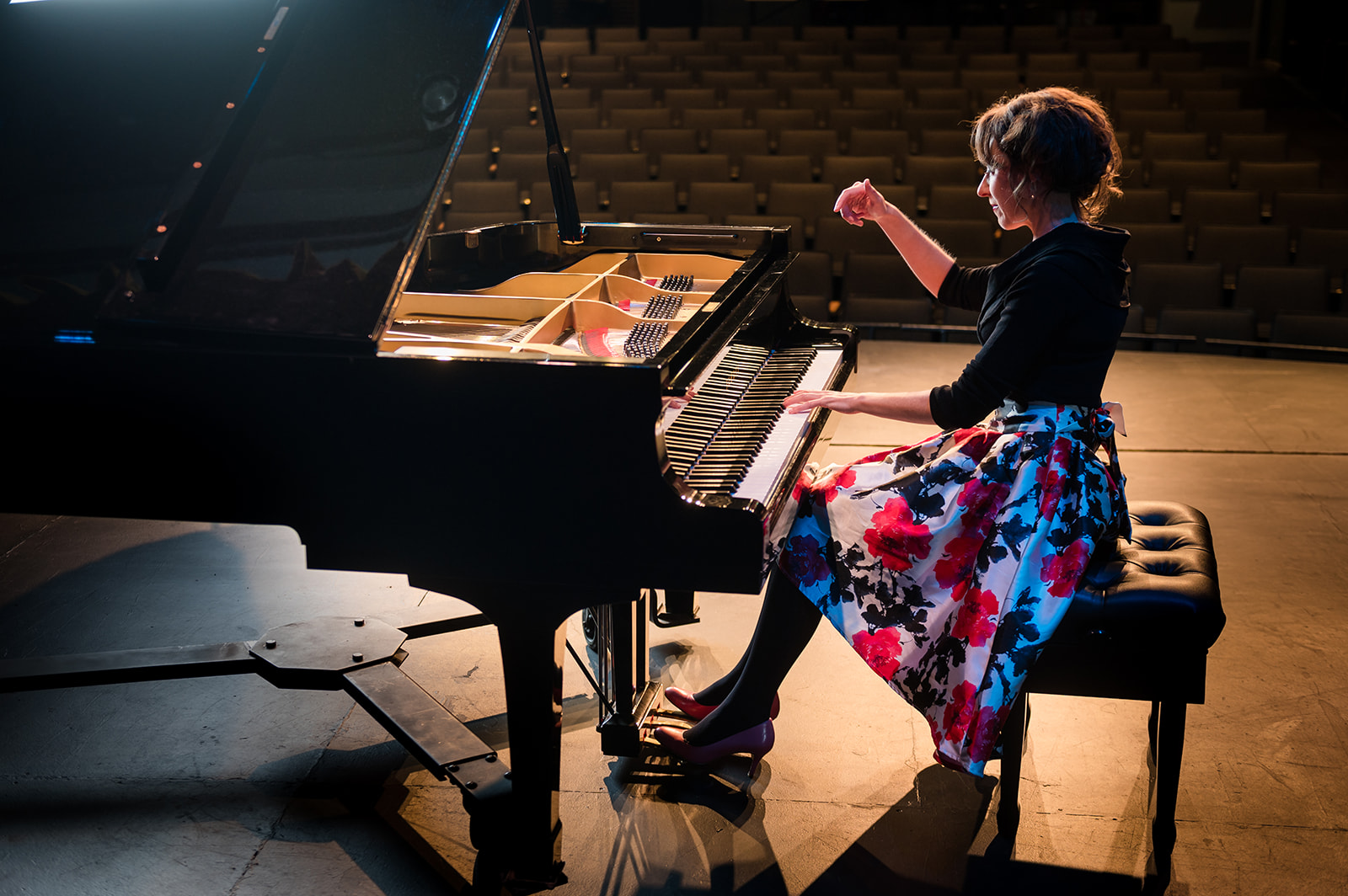
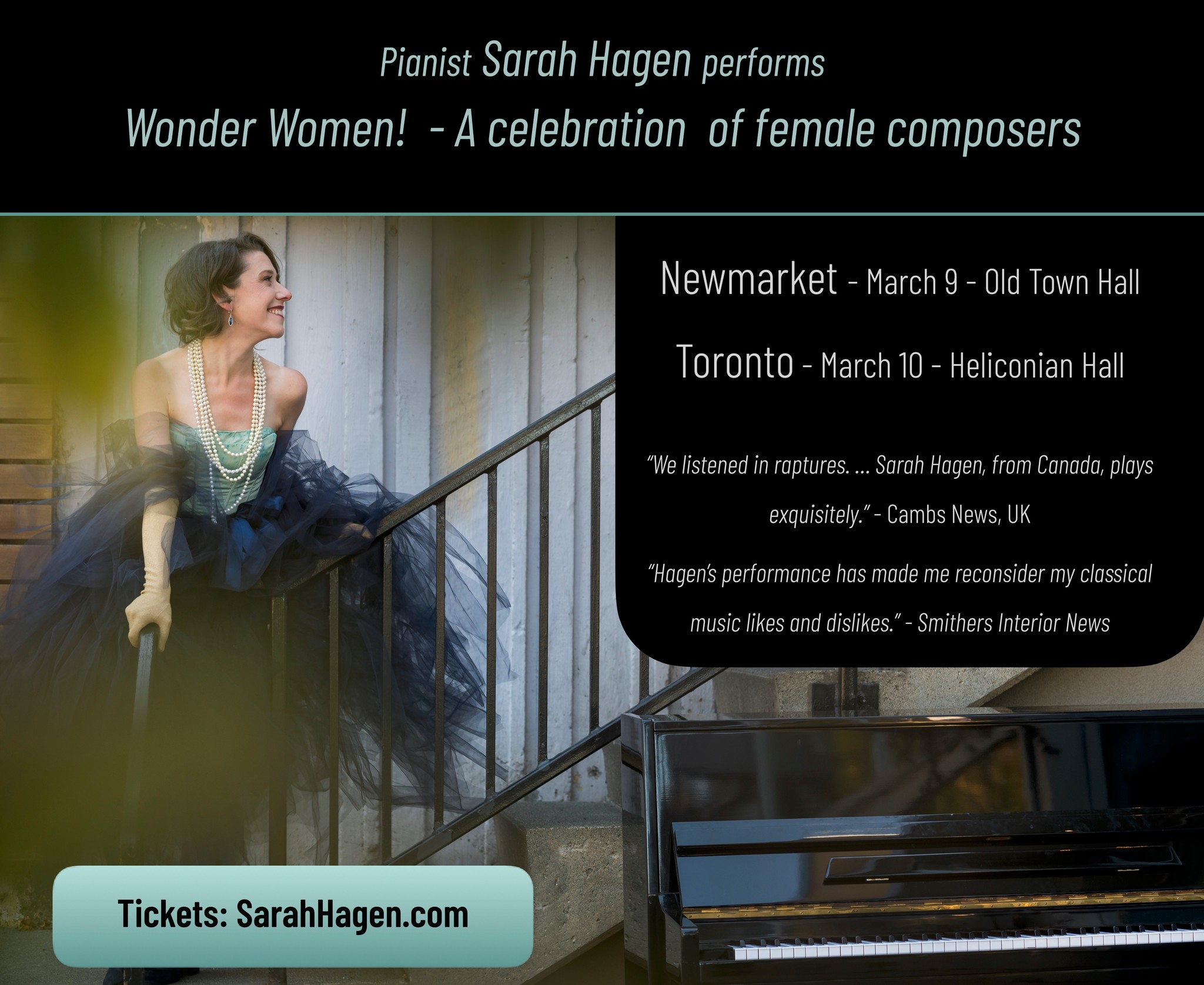
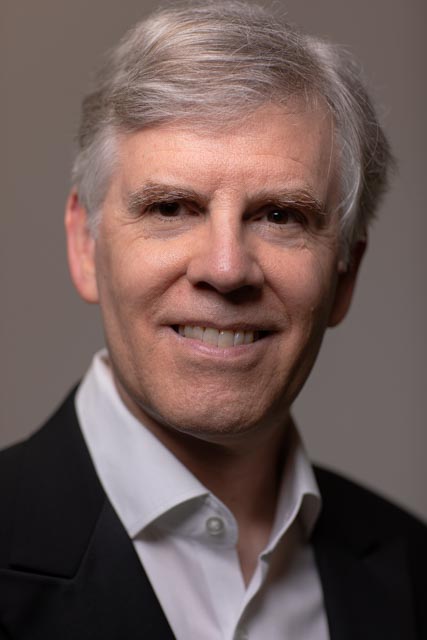
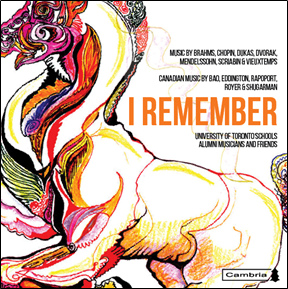
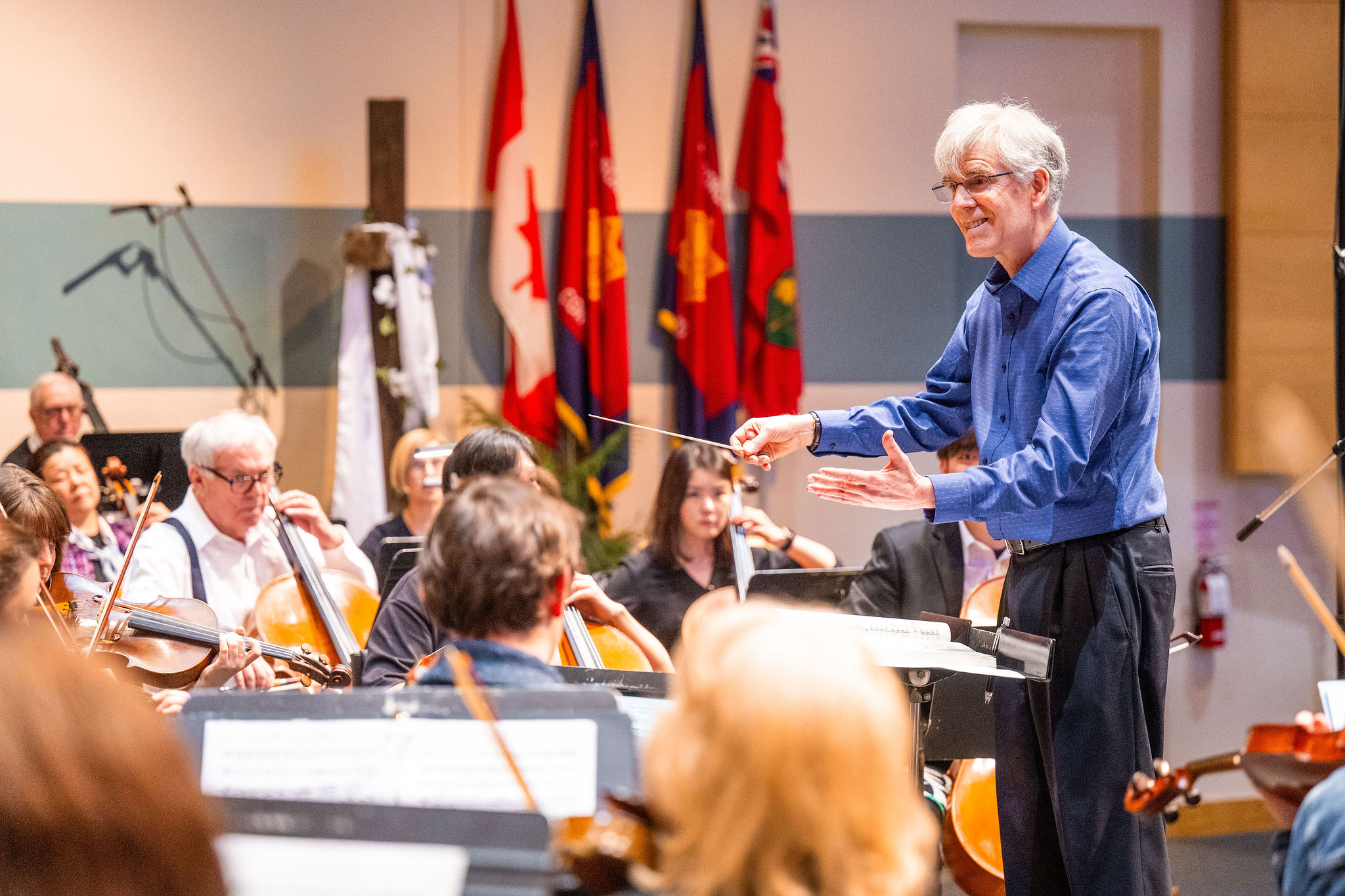
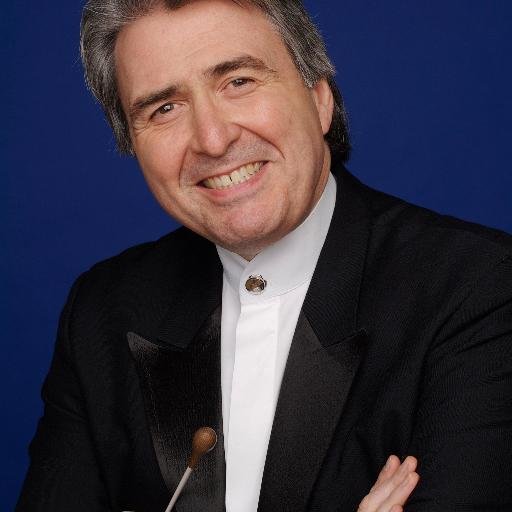
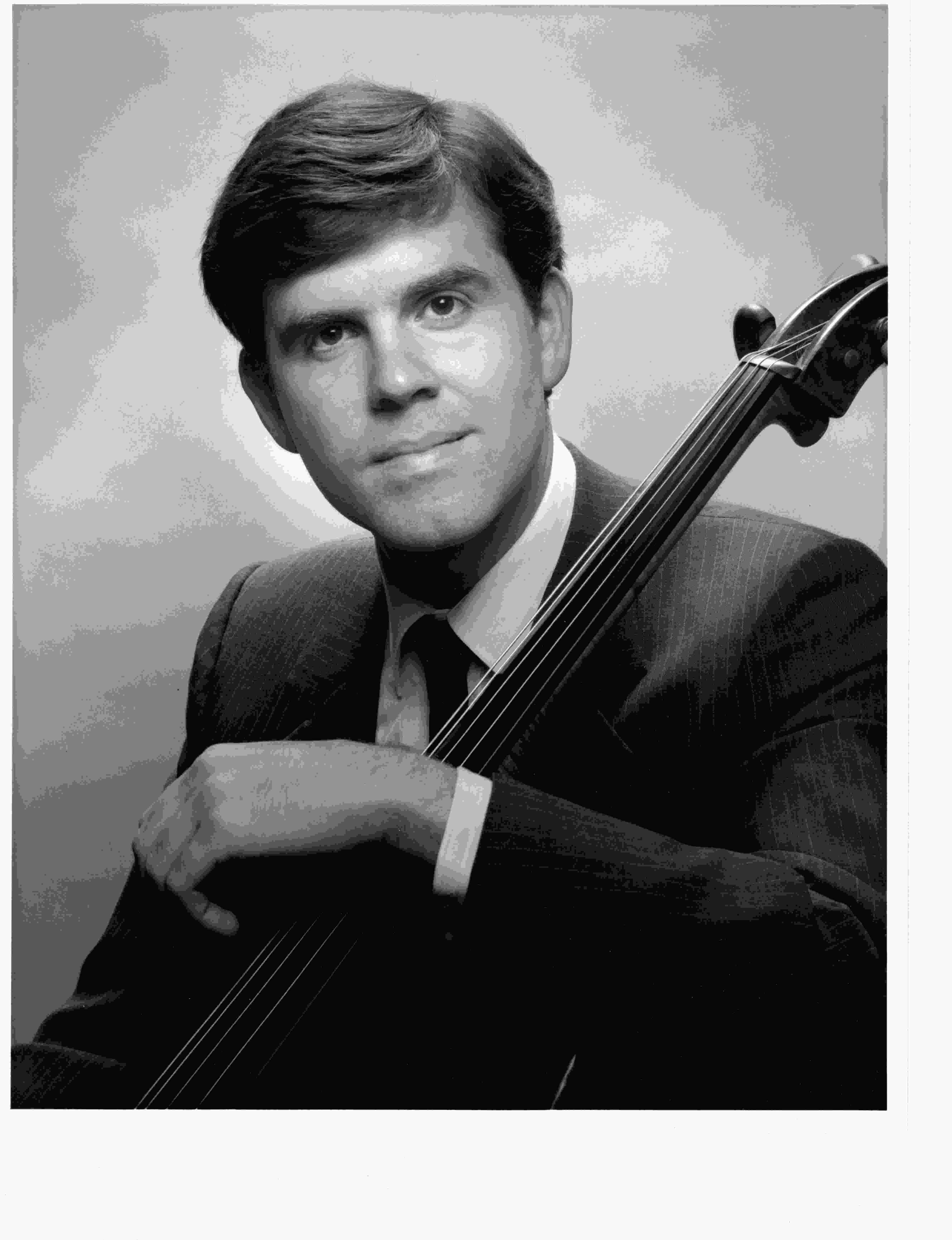
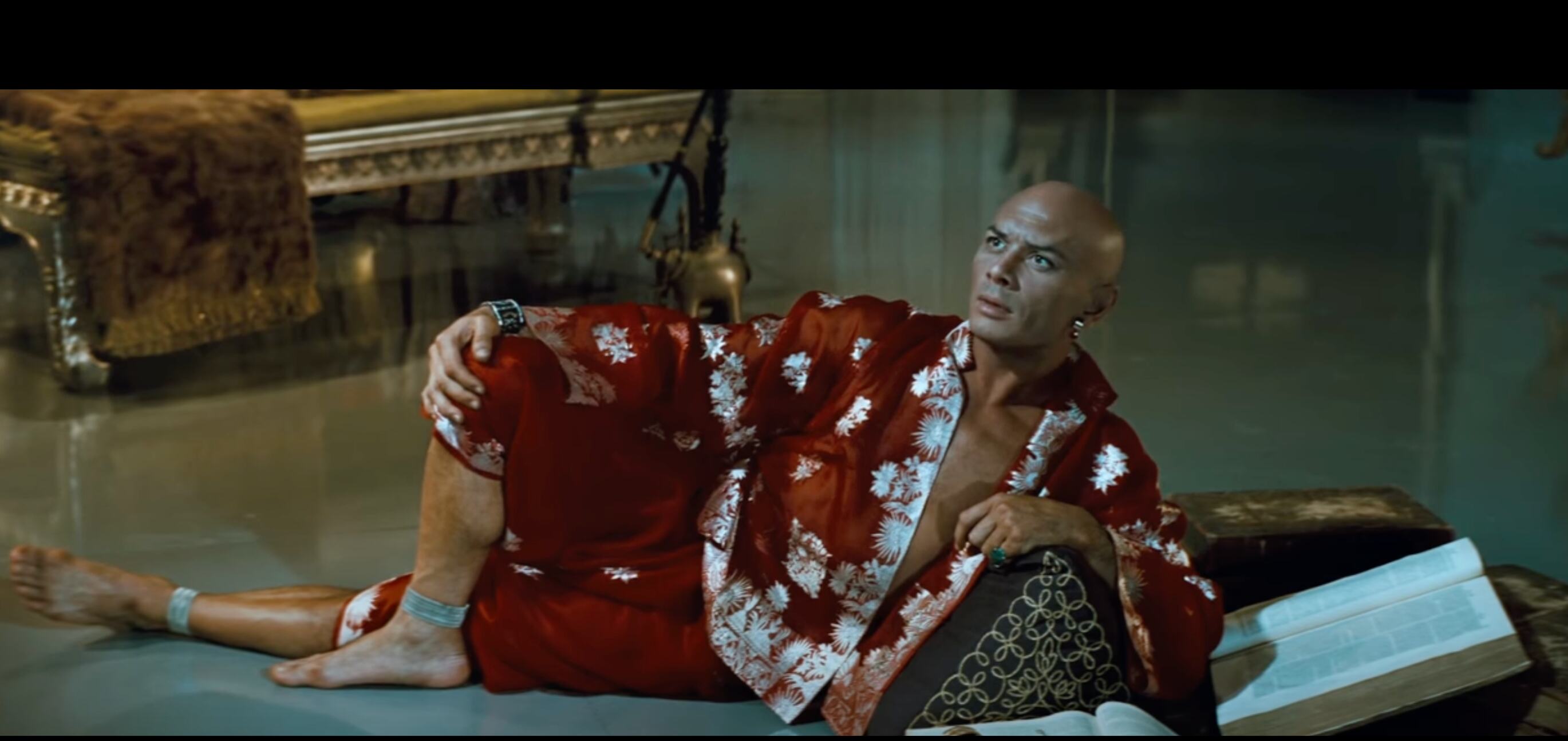
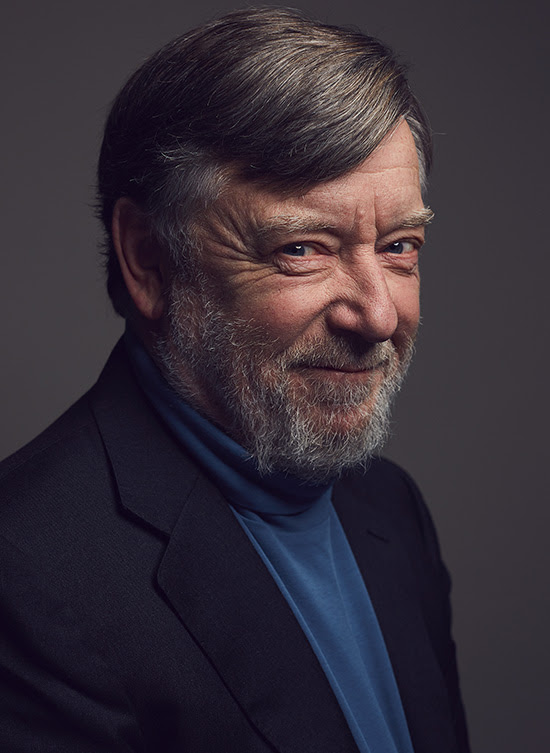
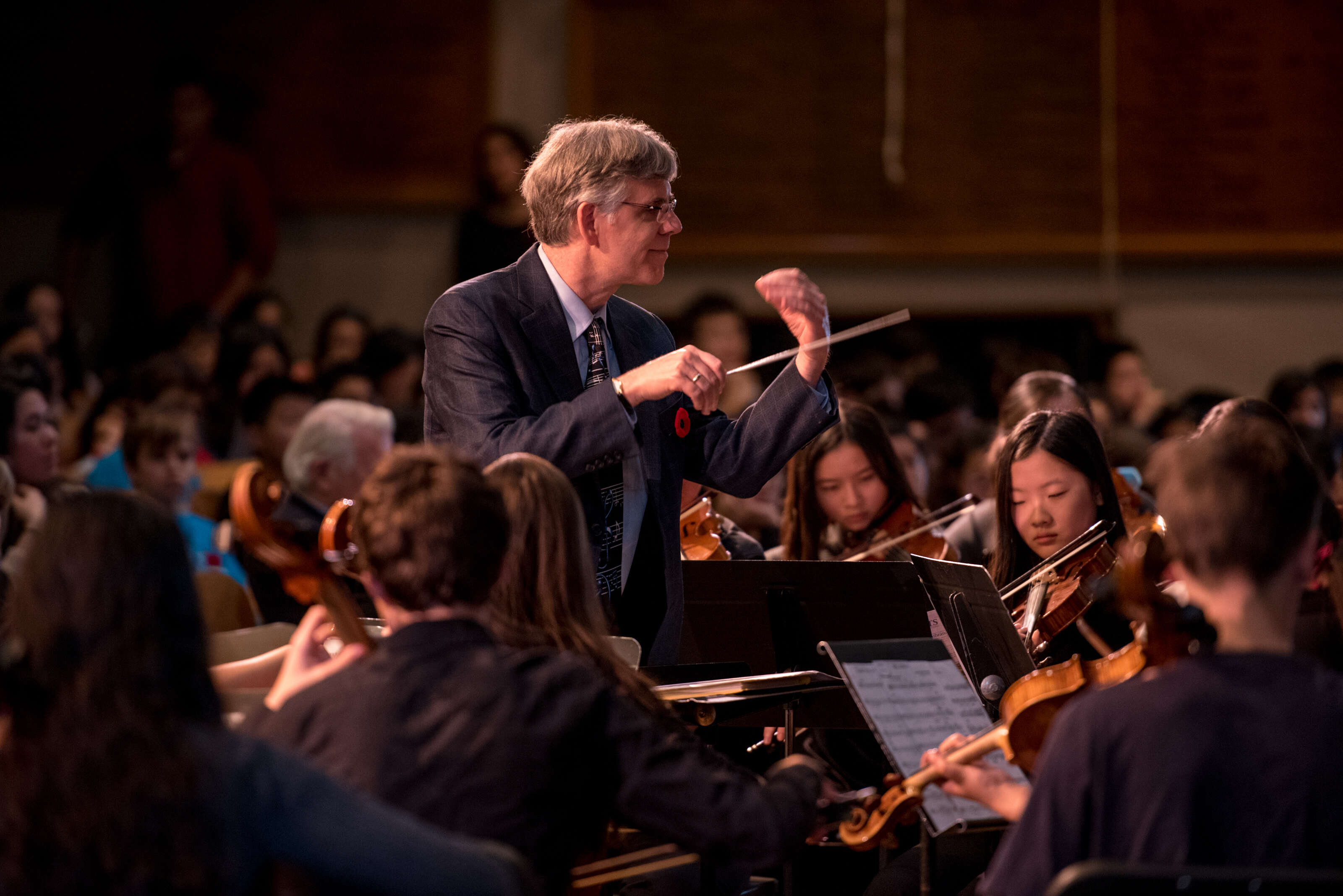
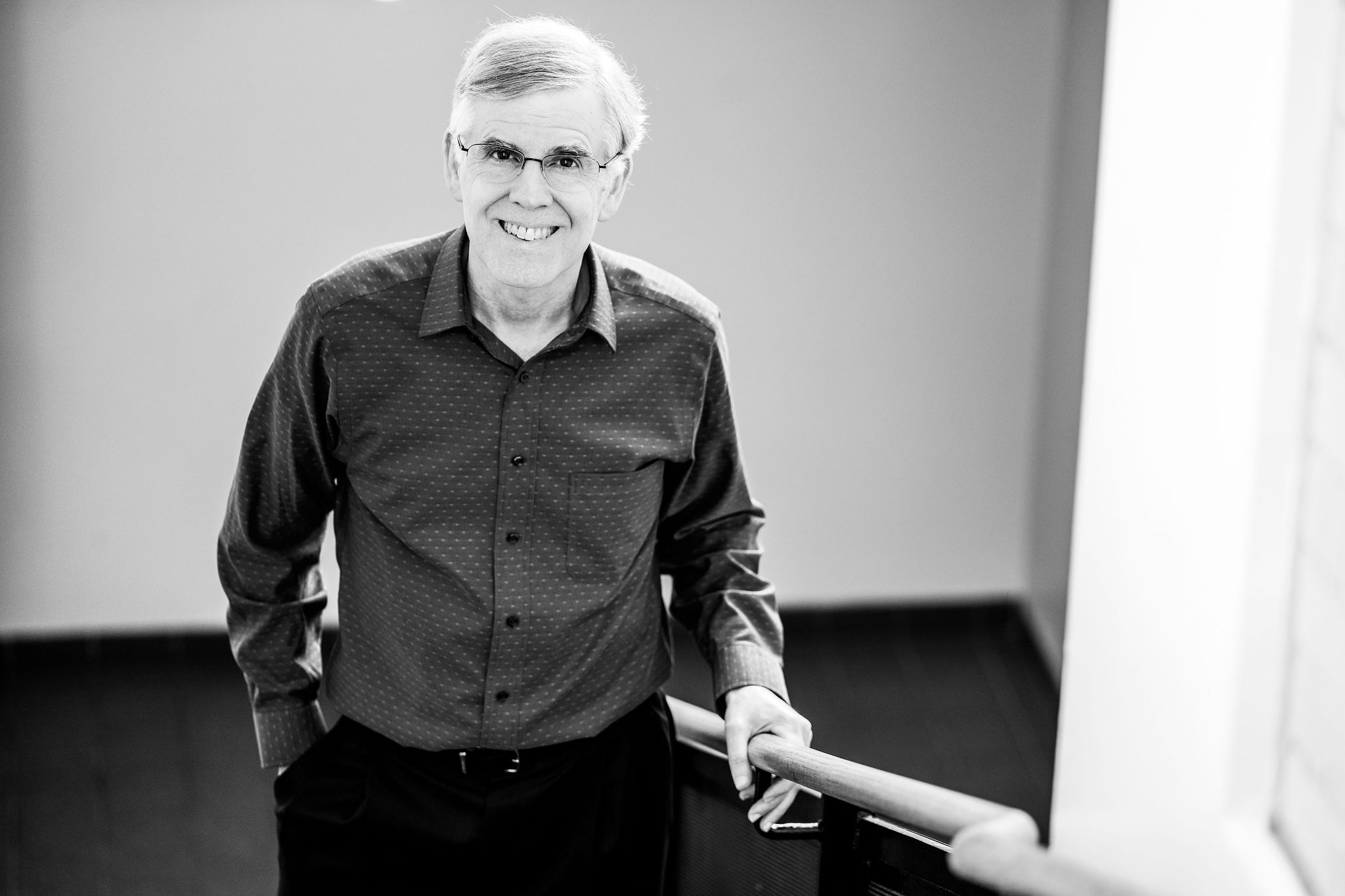
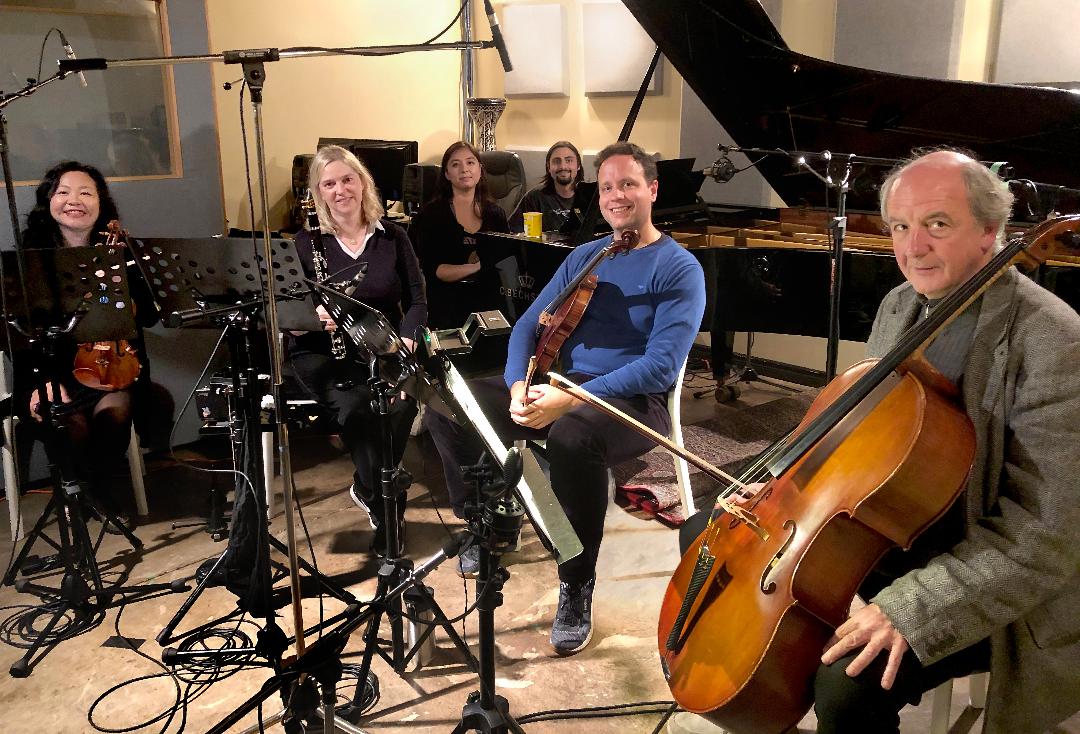
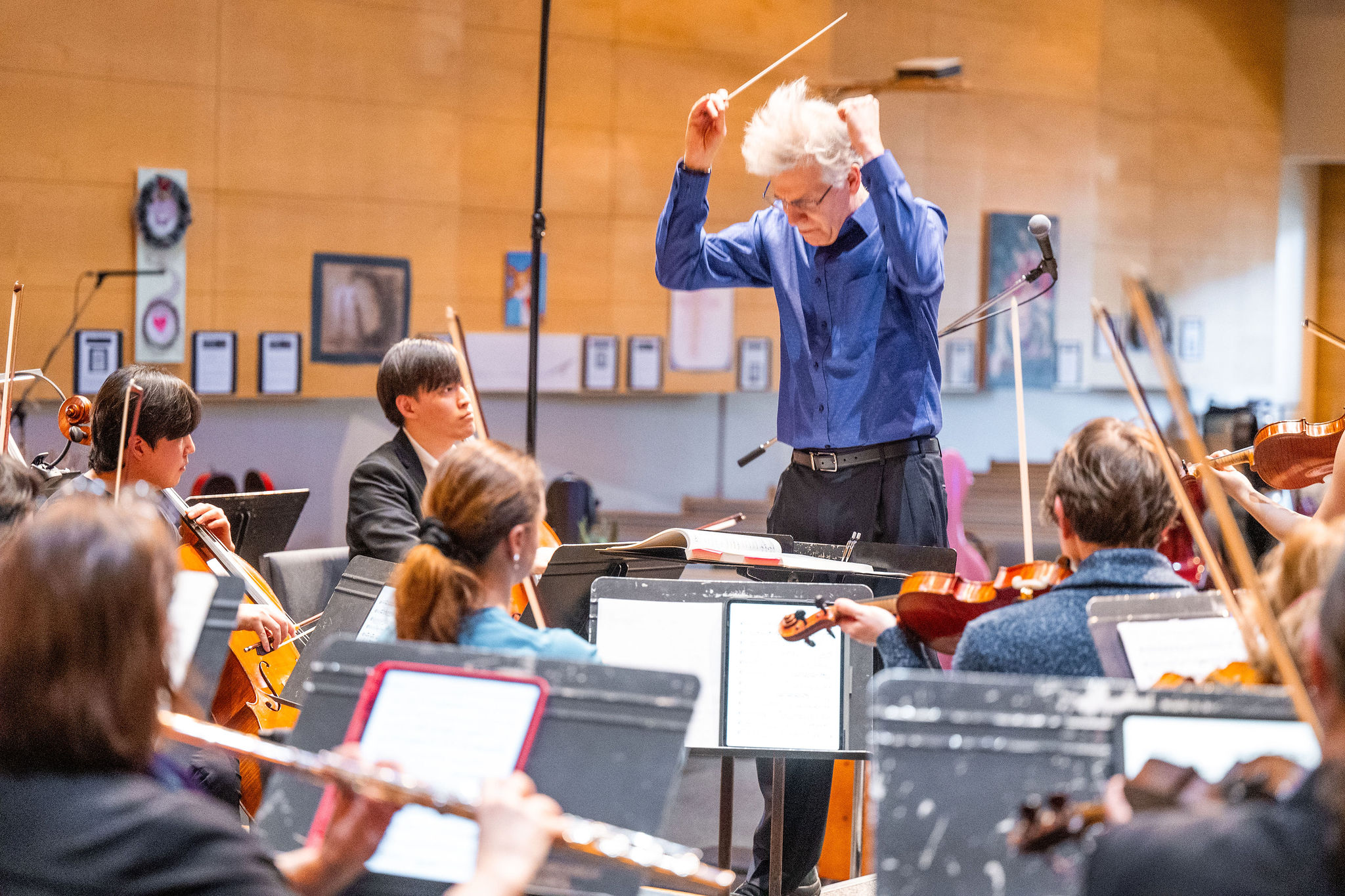
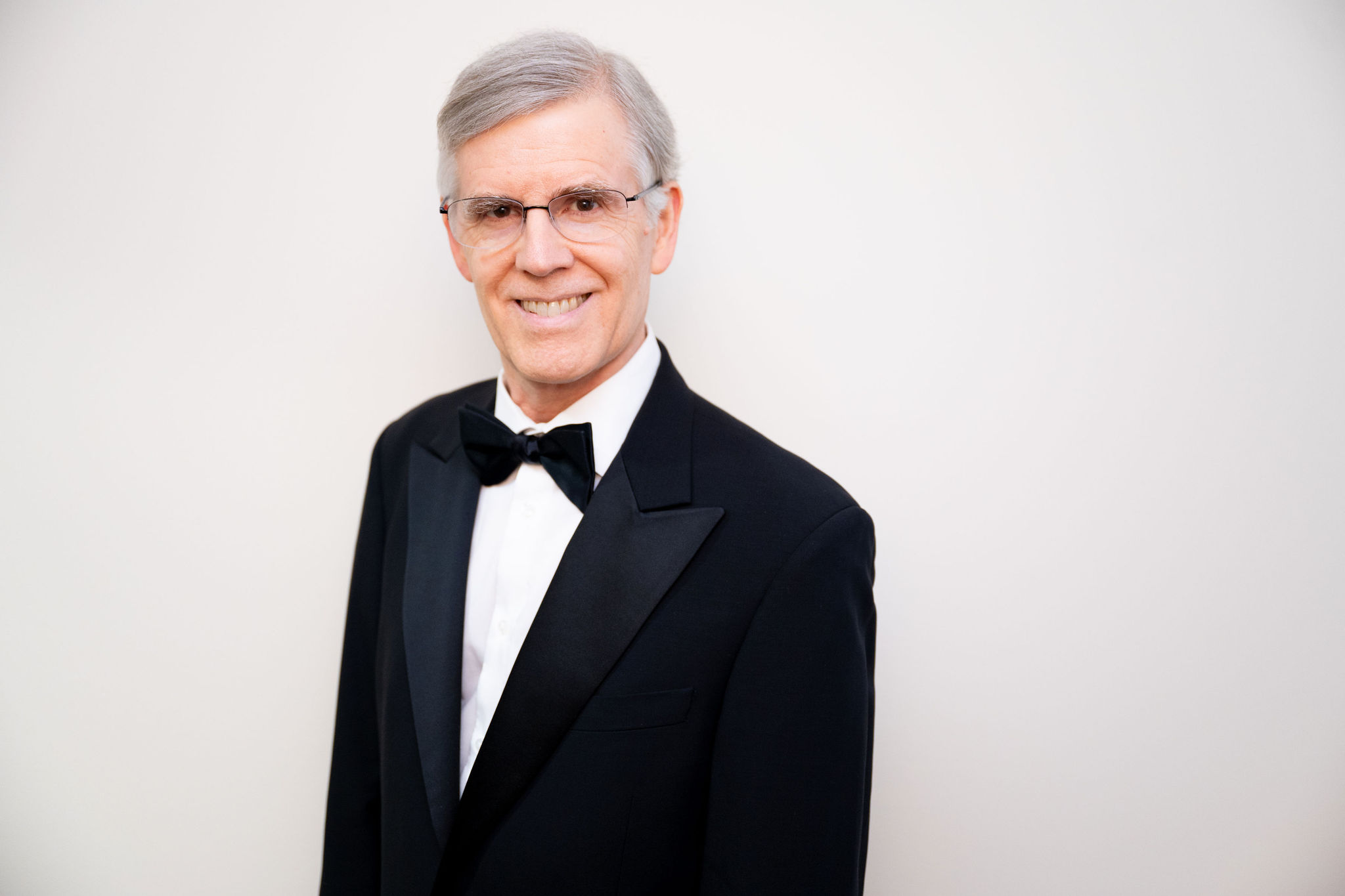
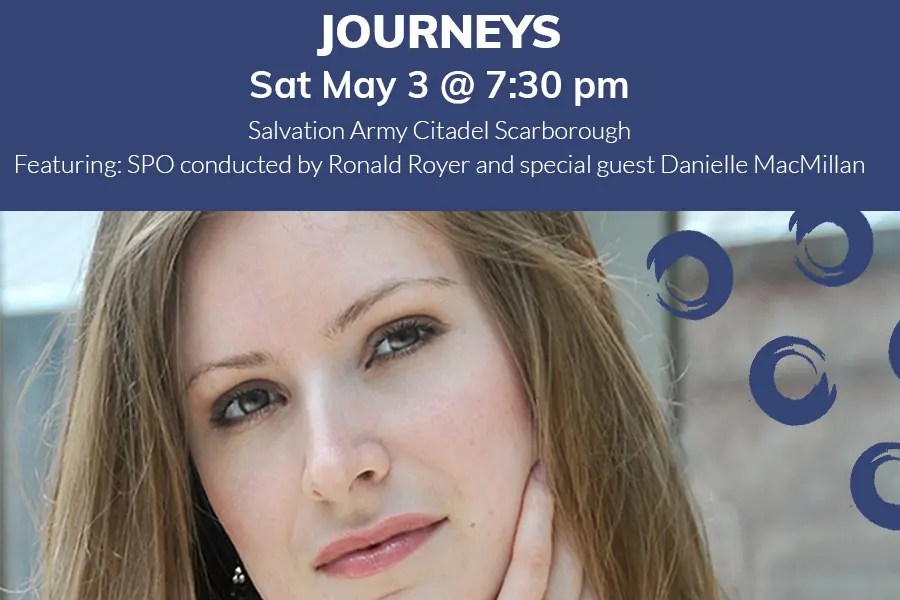
 barczablog