60th Anniversary of Hungarian Revolution: Two Commemorative Concerts

CANADIAN-HUNGARIAN ASSOCIATION FOR MUSIC PERFORMANCE COMMEMORATES THE 60TH ANNIVERSARY OF THE HUNGARIAN REVOLUTION WITH TOP CANADIAN ARTISTS

This year marks the 60th Anniversary of the Hungarian Revolution.  The influx of approximately 40,000 Hungarians in 1956 influenced society so much that it was declared a Canadian National Historic Event, and is part of Canadian heritage.

To commemorate this occasion two large-scale concerts with the title “A Bridge to the Future” are being organized by CHAMP:

Thursday, November 17, 7:30 PM.     —      Tuesday, November 29, 7:30 PM.

Trinity-Paul’s United Church, Toronto — Canadian Museum of History, Gatineau

Tickets available: www.champ1956.com  —  Box Office of Museum

The concerts will also commemorate the 135th anniversary of the birth of Béla Bartók with the performance of his Music for Strings, Percussion and Celesta. Works by Kodály, Liszt and Polgár  (North American Premiere) performed by Krisztina Szabó, mezzo-soprano, Daniel Warren, trumpet, Peter Cosbey, cello, Mary Kenedi, piano and a chamber orchestra led by conductor William Shookhoff.

The concerts are under the sponsorship of Stefánia Szabó, Consul General of Hungary, and Bálint Ódor, Ambassador of Hungary. Both events will be attended by both Hungarian and Canadian dignitaries, and will be followed by a reception.

###

The Canadian-Hungarian Association for Music Performance (CHAMP) was founded to present professional concerts with a repertoire of Hungarian and contemporary Canadian composers. The music bridges the two countries, reflecting the assimilation of the Hungarian refugees of 1956. Music is a universal language communicating equally to all.

Contact:   Mary Kenedi, Founder, Pianist  —  Website: www.champ1956.com

                   info@champ.com  —  416-272-4904


“Press releases and announcements” are presented verbatim without comment.

Posted in Press Releases and Announcements | Leave a comment

A Tale of Two Cities: the opera

Charles Dickens’ novel A Tale of Two Cities (shall we call it TTC for short?) has now been adapted by composer Victor Davies and librettist Eugene Benson as an opera, and given its world premiere production by Summer Opera Lyric Theatre and Research Centre (known as “SOLT”). That’s the same team who gave us Earnest, The Importance of Being (or EIB) premiered in 2008 by Toronto Operetta Theatre and revived just last year by TOT. When I say “the same team” I am loosely conflating TOT and SOLT, given that Guillermo Silva-Marin is the driving force & artistic director of both organizations. I’m hoping that history repeats itself; just as TOT premiered and then revived EIB, perhaps we’ll get to see TTC revived as well.

SILVA_headshot2

SOLT Artistic Director Guillermo Silva-Marin

After seeing their work presented, Davies & Benson may make revisions. Hopefully we’ll get to see another version of the work. Silva-Marin continues to be an important broker for new work in this city. Although SOLT,  TOT and Opera in Concert (all run by Silva-Marin) are three companies where one expects to see classic works from past centuries those organizations also occasionally venture into new work. Last year we saw the World Premiere of Isis and Osiris by Peter Togni and Sharon Singer via Opera in Concert.

The final performance was Saturday night at the Robert Gill Theatre in Toronto, an educational opportunity for all concerned. While SOLT is a kind of training program for young singers (whether they’re undertaking an older opera such as Handel’s Julius Caesar or a new work like this one) this is an especially glorious opportunity for Davies & Benson to explore the strengths and weaknesses of their new work. I chatted briefly with Silva-Marin, who described the six week workshop process.

For a creative team, getting the chance to try out a new work in front of an audience is invaluable. The theatre becomes a kind of laboratory, a place for genuine experimentation. Given that theatres usually aim to make money, an unknown and untried work is particularly risky. It seems to be an excellent partnership. SOLT used Davies & Benson as the context to teach young singers unique lessons about opera performance (world premieres don’t happen every day!), while Davies & Benson got the chance to try out their new work with live audiences.

I think TTC is a much more ambitious project than EIB. With the Wilde play you start off with a well-tested and stage-worthy play, whose setting as an operetta aimed to hit the same high-points as the play: and mostly succeeded. TTC however is a novel, which makes the adaptation process much more difficult. Lines that are spoken as one reads to oneself are not necessarily lines that work when spoken aloud in a theatre, a hurdle that is further heightened when the line must be sung rather than spoken. There’s also the question of the incidents of the plot for an entire novel, which can make for a much longer work (as in one of the long serialized TV adaptations) or a more condensed account of the story, depending on the choices made in the adaptation.

Listening to Davies’ music, I saw different possible directions as far as the understanding of genre. Sometimes the music was more dissonant, particularly when the events of the story were most fraught and upsetting. Sometimes the music was aptly sentimental for romantic scenes. Davies exhibited his melodic gift at times, although I felt the work is still not finished, as it still could be tightened up. In places the work seems operatic, in other places it’s more like a musical, reminding me at times of Les Miserables. I don’t think that’s a bad thing, though, as some musicals are wonderful pieces of theatre, that are sometimes undertaken by opera companies. I don’t invoke the genre question to judge (negative words especially) so much as to discover new opportunities, to better understanding the direction of a work and the best ways (and personnel) to exploit those opportunities.

Davies & Benson were well served by SOLT and Silva-Marin. For the most part characters were portrayed in a direct or sentimental way, sometimes resembling the melodrama of the mid-19th Century, their hearts on their sleeves. The exception was the barrister Carton, whose more conflicted emotions were subtly captured by James McLean, one of the seasoned professionals SOLT sometimes brings in to work alongside the students, an important part of their learning experience.

Michael Rose as music-director and pianist gave a stirring account of Davies’ score, while keeping things tightly organized even when the chorus was singing from far offstage. Davies sometimes threw lots of notes at the pianist, but the rhythms were mostly regular, the harmonies mostly tonal, and the singing rarely too difficult. As a result the singers were very easy to understand. I was pleasantly surprised that I understood almost every word without surtitles.

Posted in Opera | 1 Comment

CBD, part the second

After writing two pieces last night (one about the AGO, one about a trip to a dispensary to get CBD), I decided to take one of the pills, a gel capsule containing cannabidiol (aka CBD).

Please note, this is just the testimony of an average guy. I’m no expert, cerrainly nor a medical practitioner. I’m just a citizen trying to find the best way to live, and sharing my observations, which shouldn’t be generalized as a prescription. Anyone else thinking about alternatives needs to decide for themselves.

When I took the pill last night I had no alcohol in my system, just the caffeine from a strong coffee after dinner, plus whatever residue remains from the 2 coffees I’d had earlier in the day. I felt something within fifteen minutes of taking the pill.  It didn’t get me high, not one iota. As it was bedtime, it worked beautifully that I began to feel relaxed. This was ideal preparation for what I was doing first thing today  (Thursday morning), namely a dental hygiene appointment.

My arthitic symptoms include neck stiffness, tightness in the jaw, numbness and/or pain in various places such as my legs, my shoulders & my arms. In past years my dentist told me to take a valium before my appointment to help me combat that stiffness.   It’s a practical concern because it’s hard for a dentist or hygienist to work when my mouth doesn’t open all the way.  That inability to open can make the appointment quite uncomfortable, so in addition to the valium for muscle relaxation, I’d also take a Tylenol to lessen the pain.

This morning I went to the clinic for my 8:30 hygiene appointment, still feeling the effects of the pill I took last night. I remembered what I had read in the paperwork I was asked to sign by the clinic, that had admonished me to be mindful, that if I was in any way intoxicated: I must not drive.

But there was no intoxication, no altered reality. I woke up briefly in the night, thinking again about those concerns about driving if I was impaired. But I was fine. I woke up very well- rested this morning, having had a deeper than usual sleep. I had my usual breakfast, and took the recommended Tylenol in case I had any pain. When I brushed my teeth after breakfast I noticed that my jaw was looser than usual, that i could open my mouth quite wide.

Wow.

So that’s the first thing to report. When I began the appointment, I felt quite a bit different than usual. As I was being lowered back in the chair by the hygienist, I felt ten years younger, with none of the discomfort –or pains– I usually experience at this moment.

None whatsoever.

When we began the cleaning and I opened up, it was noticeably different. My usual is to be reminded sometimes to open wider. Today I was looser than last time, looser than any recent time I’ve been.

I thought of the times when I took the valium (which I didn’t do the last couple of appointments, having run out of the prescription and not bothering to re-fill it), which made me feel a bit dizzy. I hated the sense of being drugged, not fully there in the moment.

How ironic that something based on cannabis would help me to be more in the moment and less intoxicated.

The outcome of the appointment was much more positive than usual, as I enjoyed the experience rather than cringing.  Afterwards, talking to friends, I must have sounded euphoric with the unexpected sense of freedom.  I felt taller, although that may simply have been because i wasn’t hunched over in pain, wasn’t limping or aching.

Maybe part of what I felt is a placebo-effect, but even so, i felt amazing.

This is the beginning of a conversation with my doctors, as I will want to discuss how to use these pills and to make informed choices, to learn from the experience. I know that I will always want to take CBD before a dental appointment, but perhaps there’s more, given CBD’s supposed anti-inflammatory properties.

It’s nice to have options.

Posted in Food, Health and Nutrition, Personal ruminations & essays, Psychology and perception | Leave a comment

Gates yea, Martin nay

I wanted to like it.

As a child and teen, Lawren Harris was one of my favourite artists.  Steve Martin was and is one of my favourite comedians, actors, and writers.

But when I got to “The Idea of North: The Paintings of Lawren Harris” something was lost in the translation.  I wonder, thinking about such things as the French embrace of Jerry Lewis, as to whether Steve Martin’s version of Harris –passionate though it may be—misses something.

I quite liked the earnest little film of Martin talking about his discovery of Harris, mistaking him at first for Rockwell Kent.  That was my only brief encounter with Kent, but what struck me immediately was an aspect of Harris’s work that I’d never thought about before, something that hadn’t troubled me.

Kent’s paintings in juxtaposition to Harris’s work reminded me of the dual exhibit of Henry Moore and Francis Bacon, a recent AGO show I liked very much.  At the time I’d been struck by how abstract Moore seemed, compared to Bacon, and here I was again, possibly making a simplistic comparison.

Let me cut to the chase, telling you what I love about Harris, especially in this show, and what I felt was being disrupted by this presentation of his work.  For me Harris is extremely stylized, showing us a vision of rocks and trees, sky and water, that rarely resembles the subject.  Because we know what’s being signified it doesn’t trouble us to see trees that don’t look like real trees or mountains that don’t look like real mountains.  We may as well be looking at a visual allegory, a symbolic picture.

Symbol is really the key word.  I was reminded of Paul Gaugin and Maurice Denis in the handling of the colours, a pair of painters I associate with the symbolists, even though their works date from the 1890s, not the 1920s and ‘30s.  And as a painter whose images of Canadian landscape is so completely reified –without any signs of genuine life but instead from a symbolic (or symbolist) tableau—perhaps the paintings should be accompanied by the music of Debussy or Satie.

And so I believe the problem with this show is that we’re not embracing symbol but fighting against it.  We see photos and attempts to illuminate Harris’s vision.  Pardon me, but when I am in a theatre seeing an opera or a movie, please don’t interrupt my reverie with images of the actors out of costume, of biographical details.  Yes, later on I’m happy to view such things on the DVD. But as I walk through the gallery, as I seek to sink into a reverie with these paintings, to be yanked out again and again?  Not helpful, not respectful, not what I liked at all.

Better?

E-02409-theaster-gates-660

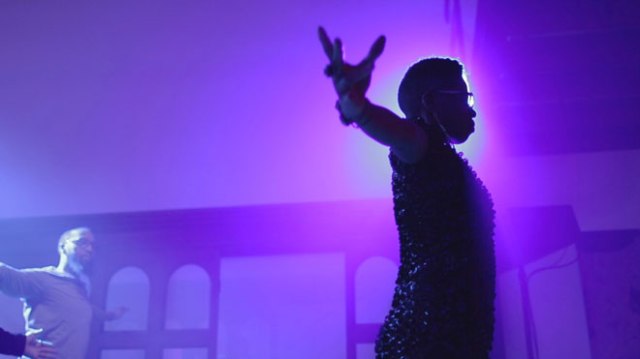
Theaster Gates, powerfully exploring meanings of “house” and “museum” at the AGO.

Upstairs there’s a show that blew me away from an American artist, Theaster Gates.  It’s political edginess strikes a chord in this season of rallies by Black Lives Matter, BLM being only one small footnote to this show.  First and foremost, I found Gates stimulating. Sometimes touching, sometimes achingly vulnerable, there’s a lot to think about, lots to feel.

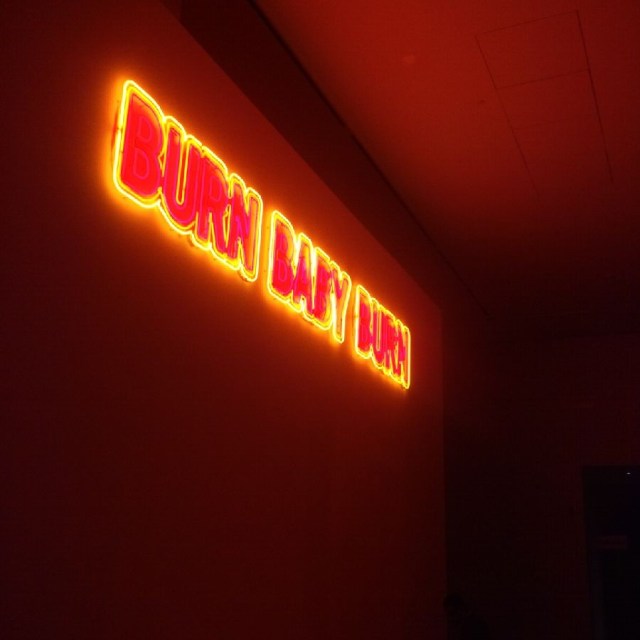
burn_babyBut perhaps it’s more important to say that I was able to access Gates in a way that I couldn’t really access Lawren Harris.  I kept bumping into the curating vision of all the other minds, all that big money seeking to tell me how great Lawren Harris is, and who Lawren Harris is. And in the process, they interrupted my delight in his paintings, because –excuse me– Lawren Harris is new to me the way Richard Wagner or Hector Berlioz is new to me: one of my favourite artists since childhood.  Only one room really allowed me –near the end of the second part of the show—to fully sink into the experience of Harris’s paintings.  Am i sounding petulant? perhaps. To repeat: i wanted to like it. I really did.

And make no mistake, there are a great many wonderful paintings there. Perhaps the key is to look at the art and ignore the many messages from curators and historians.  Don’t listen to people tell you who Harrris is.  Maybe they’re more accurate than I in understanding him?  Could be! But if you go to this show and find it’s not working for you, there are at least two possible strategies I would suggest for you to take, that I took:

  • Go upstairs to the fifth floor, where you can see an artist’s vision unencumbered by curatorial intervention. The energy and joy coming at you are unmistakeable.
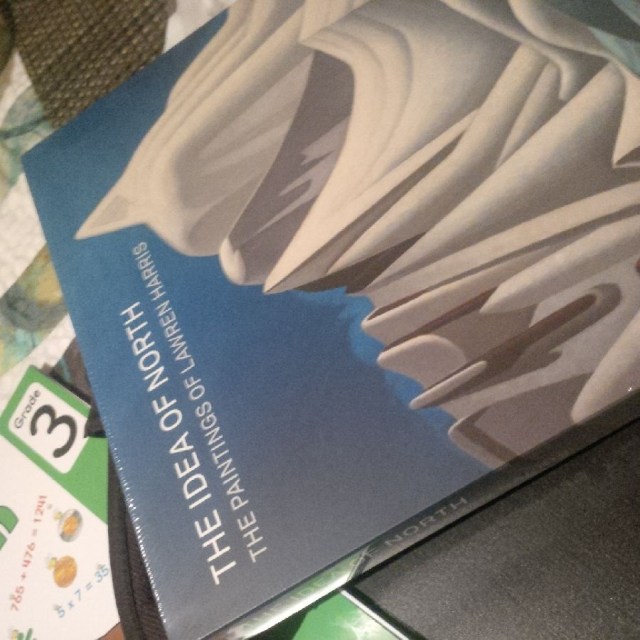
  • Buy the book. I think I came to know Harris from books, where his reified understanding of our landscape –an idea of north if ever there was one –comes through most clearly.
HARRIS_book_pic

Where better than the book of “The Idea of North” to get the idea of the Idea of North..?

And when I go back to the show I will concentrate on the paintings.  Just as we didn’t really need the French to tell us who Jerry Lewis really was, perhaps we can find Lawren Harris for ourselves.

Posted in Art, Architecture & Design, Books & Literature, Opera, Popular music & culture | 2 Comments

CBD, part the first

A loving family member cajoled me to try something new today. My chief pain management strategy for dealing with my arthritic symptoms could be summed up (before tonight) with the following quote:

“Denial ain’t just a river in Egypt. It’s a pain management strategy”.

In other words sometimes stoicism is the best medicine, given the hazards of the alternatives:

  • NSAIDs (aspirin is in this class, that includes much more powerful versions that do many of the same anti-inflammatory things).
  • Biologicals (Enbrel or Humira for example: powerful and expensive meds that might work for some, but aren’t recommended to someone who’s spooked by the list of possible side-effects / hazards. When your dad died of leukemia you don’t naturally think these are a good option)

I exercise.

I eat carefully (having discovered the low- or no-starch diet option).

And yet there might be another option. I have the initials CBD on the back of my hand, written there as a reminder, to know what to ask for. Cannabidiol or CBD? One of the many ingredients of marijuana.

canna

One can get pills containing CBD, bypassing the smoke & the stone altogether.

I was persuaded to visit a dispensary today, where I spoke to a nurse practitioner about my symptoms via skype. It was a bit surreal –she had a stunning smile, astonishing teeth that I coaxed out of their hiding place once I persuaded her to giggle at a bad joke I made—to be in this place in downtown Toronto.

I’ve talked to activists pushing for harm reduction and the legalization of cannabis, both medicinally and recreationally. I couldn’t help noticing that while the activists such as Lisa Campbell are an intellectually brilliant lot, that’s not what I saw at this dispensary.
In fact come to think of it, I guess what I saw resembles what I see when I go to a liquor store or beer store, except that the demographic was mostly the group under 35. I must have seemed an oddball there, a guy with posture problems and a bit of a limp (sometimes), among all these healthy young people.  No I am not saying they weren’t legit. But I did stick out like a (pardon the irony) sore thumb.

I know that the medicinal marijuana is for a host of things, sometimes stress, psychiatric issues, or to assist people in sleeping. I came there actually unsure what I would find, but persuaded to seek out CBD, rather than the usual cannabis. You can read a comprehensive paean to CBD in a piece arguing that it’s the “medicine of the future”.

But I am writing this simply to report on a fascinating phenomenon that seems to be under the radar. One of these days Justin Trudeau and Bill Blair will find the right language for legislation legalizing cannabis, both medicinal and recreational. I am impatient for it on the principle that alcohol and tobacco are legal even though neither is as safe as cannabis as far as I can tell / as far as I have read.

Part two of this conversation will be to report on my first CBD pill. From what I have heard, my dose is very mild, certainly compared to what is taken by a person coping with chemo and/or cancer.

Depending on how I feel that may be taken tonight.  I’ve got a dental hygiene appointment tomorrow morning, for which i used to take valium to ensure that my jaw is looser, to lessen the pains i experience in my neck and back.  Perhaps a good night’s sleep via CBD will be helpful.

Posted in Food, Health and Nutrition, Personal ruminations & essays, Psychology and perception | 1 Comment

The Coronation of King George II

This was the most fun I’ve had at a concert since the epic minimalist concert (oxymoron?) in August 1st 2013. Then as now I believe we were seeing Toronto Summer Music Artistic Director Douglas McNabney pushing the envelope of what’s possible in a concert. On that occasion it was a curious mix of elements, teasing us with possibilities.

But this time I believe we were engaging in genuine research, Daniel Taylor’s Theatre of Early Music (TEM) challenging us to see and hear in a new way. I put this performance alongside my experiences with PLS, the U of Toronto’s lab for exploring early drama, and so many historically informed musical performances encompassing Opera Atelier, Tafelmusik and the Toronto Consort (the Play of Daniel being only a recent example of such investigation).

Forgive me the preamble, but I think it’s vital to explain why this is important and not just a concert or a musical performance.

Lamb nov 2015

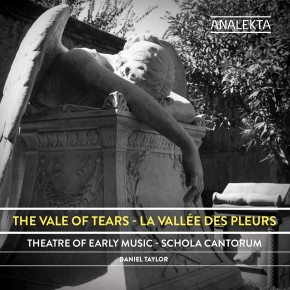
Nov 2015: Daniel Taylor conducting the TEM choir with Schola Cantorum at Trinity Chapel

Exquisite as the performances were, the framework changes everything.  Those of us who still go to church have a bit of a grasp, through the influential sonorities of Handel or Bach. When you watch the opening ceremonies of an Olympics, the national anthem (hopefully done without tampering) at a baseball game, you’re in a similar relationship between the music, the words and the assembled people. It’s important to recognize that when you’re singing the anthem before a hockey game or singing a hymn in church, you’re not the audience nor the performer, but something very different, and it is meant to stir you up. At such times –thinking of the notion of transubstantiation that may or may not describe what happens for you during communion, depending on your beliefs—there is a kind of ritual, giving immanent meaning to the music as everyone is united in their celebration.

But we don’t do this very much anymore, and so we lose the sense of much of the music from the past, when music was not ubiquitous on our electronic devices or coming out of the speakers to encourage us to shop at Christmas Time. Music was more rare and magical for people. The most extreme case of this that I am aware of –at least in the story I learned long ago, that is probably now understood to be bogus—was that Handel’s coronation anthem “Zadok the Priest” was only to be played at royal coronations, and therefore so rare as to not be heard by some in their entire lifetime. We now have sound systems, recordings, and so one can hear “Zadok the Priest”, but in theory it was impossibly rare.

I don’t know if you can tell, but I loved this concert that ventured into different territory beyond performance. We were re-enacting a public ritual from long ago, and I say “we” because the audience weren’t merely passive viewers. Whether it was McNabney or conductor Daniel Taylor who conceived & curated this event, they changed the usual ground-rules for a concert.

The evening was organized into a service: re-enacting a coronation, with a few modern pieces added. Bill Coleman silently portrayed King George II, while Alan Gallichan played the archbishop. During Zadok the Priest, in the long gradual build-up of tension, we saw the Bishop put a crown upon the King’s head, and then the two advanced towards us (the congregation?), leading to the shattering climax as the chorus came in.  The orchestra was a nice size to work with that fabulous chorus, comprised of a string quartet, two oboes, two trumpets, drums and organ.

thumbThis wasn’t any old chorus, as Taylor looked out upon a small ensemble of some of the best singers in the city, namely Theatre of Early Music (TEM). The magnificent chorus included Ellen McAteer (fresh from Friday night’s Rape of Lucretia) Asitha Tennekoon (heard in Tapestry Opera’s Rocking Horse Winner), Alex Dobson, and Toronto Masque Theatre’s Larry Beckwith (whose facial expressions throughout were one of the great joys of the evening). Hearing this in Walter Hall was a bit surprising, given that choral music with organ usually hides in the vague acoustics of churches, rather than such a precise space. Matthew Larkin’s organ playing was therefore required to have a precision, indeed, a perfection under which organists don’t normally labour. I was feeling a bit old hearing that the organ in this space is being refurbished, as I recall reviewing Charles Peaker playing it in its first year(perhaps 1976?) as an undergrad writing for the Varsity.

I was struck by the sentiments stirred up at this concert. We heard wonderful music including “Worthy Is the Lamb”, but also participated in singing Parry’s “Jerusalem”, admittedly an anachronism that served to personalize the event. I wonder, would the crowd in the 18th Century have cried out “God Save the King” along with the chorus in “Zadok the Priest”? Listening to this performance, I have to wonder.  It’s perhaps the most functional earworm I can think of, if as a result, one can’t resist the temptation to walk along saying “God Save the King”! (as I did for the next hour) But notice that it’s not wrong to be sentimental, not in this case. This isn’t a piece of art, it’s a practical composition for an event, intended to stir up our feelings. When they sing “Alleluia” (the one in this piece, not the only Alleluia of the night) it’s a genuine prayer, not just a bit of singing.

And of course those feelings are supposed to be there. No tears? Check for a pulse.
Listen to this performance (not nearly as period-accurate as what we heard) and now imagine a crown placed on the head of a king.

We have it all wrong, listening to this as a “concert piece”. That’s what it becomes I suppose, in the same way that a ballet score played at a symphony hall is changed. But originally? It’s a coronation anthem meant for an event like what we saw re-enacted tonight.

Wow.

Posted in Music and musicology, Popular music & culture, Reviews, Spirituality & Religion, University life | 1 Comment

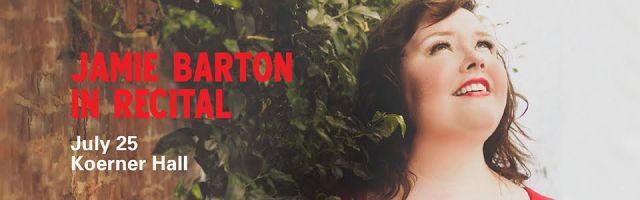
Jamie Barton in Recital

Toronto Summer Music continued their tradition of featuring a female vocalist.  In 2014 it was Sondra Radvanovsky, while in 2015 it was Karita Mattila.  Each of those two concerts represented a coup, and was a highlight of that year, nevermind of the summer.

Young Jamie Barton brought her considerable resume and vocal gifts to the 2016 Festival.  Having sung just a couple of days ago at Glimmerglass, perhaps she needed the first half of the concert to loosen up, kicking off her shoes when she came to the last items on the program.

Jamie-Barton-Web-Banner

Recitals are sometimes the place where the real person collides with who they are being pressured to be, either by the artform, the industry or their upbringing, and I think we saw that again tonight.  There were two very different sorts of repertoire that could be understood as a microcosm of Barton’s life.  She told us she’s from Georgia, that she used to sing in church.  I can’t help noticing that some of the rep seems completely natural for her, a perfect fit:

  • the Joaquin Turina songs to begin the evening
  • the Dvorak gypsy melodies sung after intermission
  • her encores

For those, she was completely in her body, happily letting her voice rip without restraint.

And then there was a more aspirational kind of music, perhaps representing what her teachers have told her to do rather than who she really is, the result of a girl from the south going to a conservatory where they told her to sing more quietly, rather than honouring the big honest voice she has.  (and I suspect that, to quote one of my favourite lines from Moonstruck, that she’d be quick to tell me to kiss her aspirations)

  • Chausson songs
  • Schubert songs
  • Three spirituals: but in artsy arrangements that seemed designed to turn the melodies into something very rarefied, like art-song. I couldn’t help thinking that when Leontyne Price –who surely had a similar background—did her recitals, she sang her spirituals to proudly show her roots, telling us who she was and where she came from.  I wish Barton would considering doing the same with pride.

Barton is young.  At some point she will have the life experience to make something wonderful of the Schubert songs, but right now, it seems very abstract.  With the exception of “Gretchen am Spinnrade”, which she sang with a great deal more voice in a very operatic reading, the artistry seemed like a poor fit.  It wasn’t bad but just didn’t have the same spark as the more direct singing i alluded to. But maybe that’s because she was singing on the weekend, and needed to warm up. The second half of the concert was a wonderful contrast.

In addition to the Dvorak songs – presented with a great deal more commitment and physicality (where she’s been standing relatively still through the first half), let alone pure power & volume—we had two wonderful encores (and hopefully I have identified them correctly):

  •  Var det en dröm”  by Sibelius, an art song that Barton sang with a great deal of commitment
  • Acerba voluttà from Adriana Lecouvreur, a fabulous aria rising to a high note that I think is a B-flat at the end.

Bradley Moore accompanied from the piano, a crisp supportive musician that followed well.

Barton has a great future ahead of her, particularly if we get to hear the big powerful notes she sometimes offers.  I wonder if she might someday sing Sieglinde or Ortrud.  Her range is remarkable, considering that we also heard some fabulous low notes too.

Posted in Music and musicology, Reviews | Leave a comment

Finding Dory and the symbolists

These days I am feeling a bit overwhelmed by emotions. I’ve had a death in the family (not a tragedy, when someone lives to a ripe old age, but still, it has stirred up a lot of feelings for me & everyone else in my family), and was already struggling with my responses to the American election.

How handy to have films that promise escape. I’ve been a fan of animation for a long time, possibly as an offshoot of my love of opera. I link animation to the media that are essentially symbolic or dare I even say symbolist:

  • Opera (thinking especially of Wagner & Debussy)
  • Ballet and dance
  • Puppet theatre
  • Music theatre
  • Music

Documentary films, realism or naturalism onstage and in film, reality TV, or the news usually engage an entirely different part of the brain than those less explicit sorts of signification.

Finding Dory was today’s little film,  preceded by Piper an even smaller film that was in its way perhaps even more ambitious. For the first half minute I thought I was watching a real film and not animation. Finding Dory spares us that ambiguity, by letting the denizens of this world talk and squawk with cute personalities voiced by genuine stars, mostly a kind of who’s who of the comedy world (Bill Hader, Kate McKinnon, Ellen Degeneres, Albert Brooks and Eugene Levy are almost like comic royalty).

All those wacky voices put us at our ease, as if to say “be not afraid”, while we cope with a very challenging story.  It can’t be real.

But wow.

tseliot

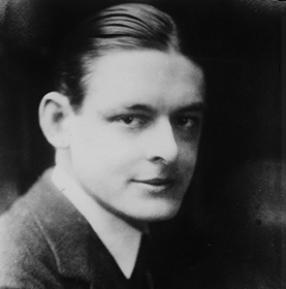
Poet TS Eliot

I watched this the night after an overpowering production of The Rape of Lucretia here in Toronto. I don’t think I’m offering any spoilers at this point (as I repeat what I heard over and over) by saying that the story concerns a character – the fish Dory played by Ellen Degeneres—with serious short-term memory issues. When I recall the way such things have turned up in mainstream film, which is to say, clumsily if at all, I then look at this as a strategy for story-telling. Nevermind your resistance to animation – if you’re one of the people who still thinks puppet theatre is for kids, that animation is “cartoons”. We’re in the same territory as Parsifal or The Waste Land even if many people who adore Wagner & Eliot  might be expected to look down their noses at such popular populist media.

But if you’re one of those people hahaha you’re not even reading this, right? As usual for the realm of social media, I am preaching to the choir. If you didn’t know Frank Zappa you likely wouldn’t have read what I wrote. I sometimes want to be an evangelist, spreading the gospel of what I love. I love Zappa, I love opera, I love puppet theatre, and yes I love animation. I think they’re fundamentally similar.

At a time when I have –temporarily—sworn off political posts on Facebook and am striving to be positive & sunny, Finding Dory was a no-brainer, the natural choice. I expected to cry, and was actually surprised that it elicited fewer tears than Inside Out.( a film that blew me away).  There were still a couple of warm fuzzy moments, but also lots of tough moments.

I can’t help thinking that this is a movie with real nerve. I compare it to a Gilbert and Sullivan operetta I saw that made me cry years ago, Iolanthe. When you take topsy-turvy to its absolute extreme, when your happy ending is so impossible as to be an absolute oxymoron, is it truly a happy ending? Such dark thoughts may never furrow your brow, but hey I have deep furrows in my forehead this week. Dory’s plight is impossible. The story is brave & uplifting in her response to the impossible situation she faces. I hope I’m not being too dark saying this. Perhaps you’ll feel much more positive seeing it than I.  Hm, I am again reminded of how sadly Lucretia comes onstage to join her housemaids, unable to share in their joy because she’s weighed down with her impossible grief and self-judgment.  I repeat the question I asked myself when watching Iolanthe at Stratford so long ago, starring Maureen Forrester… Is an impossibly happy story really a happy story? If the solution to the contradictions of the plot is impossible, what are we really left with?
This improbable tale (Dory) takes us to some very dark places: and illuminates them. I will want to see it again perhaps in a few weeks to see if my current perspective is unreliable, and if I see it differently next time.

I did not expect this film to remind me of Maureen Forrester, nor of Avo Kittask (along for the ride).


Posted in Books & Literature, Cinema, video & DVDs, Opera, Personal ruminations & essays, Reviews | Leave a comment

Lucretia: a messed up kind of story for a messed up time

Sometimes one escapes from the real world in the theatre, diverted from life. And sometimes theatre is such a perfect mirror that it reminds us of the craziness we’re seeing everywhere else.

That latter choice –finding the craziness of the world in the theatre—is what I experienced tonight at the Winter Garden Theatre watching Benjamin Britten’s Rape of Lucretia.
I think I understand this opera better from seeing what Against the Grain (in collaboration with Banff Festival & the Canadian Opera Company, presenting it this time under the auspices of Toronto Summer Music Festival, whew how’s that for a preamble) came up with. Or to put it another way, how should one feel after the events of this opera, wherein we see a pushy nobleman of Ancient Rome seizing what’s not his, jealous of a near-perfect relationship, leading the wronged wife to kill herself.
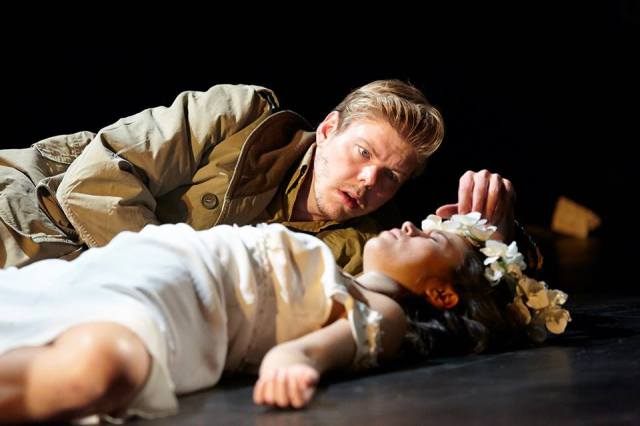
AFTER_he_strokes

Jasper Leever and Emma Char (Photo by Jorge Chaves)

While I have never felt closure or completeness at the end of this opera before, always attributing that messed up feeling to the composer’s shortcomings, I now see that hey: we should be messed up. This is a very messed up world we’re seeing –not unlike our own—and at the end we can’t feel closure, not even the closure one has when we see Rodolfo sobbing over Mimi or Jose confessing he’s killed his Carmen. This isn’t a neat tidy bundle.

Owen McCausland as the male chorus bore a large part of the burden of that mess. Every other production I’ve seen tries to make sense of that ending, with its platitudes and professions of faith, pointing us to a brighter day tomorrow. McCausland seems to be breaking down, shattered by what he’s seen and felt, and sounding less like the brave pillar than a confused and lost soul, and in so doing, making those lines sound real for once. In the process I think we see a transformation into what the chorus (male and female) can and should be, namely the conscience of the work.

I now really get that scene with the flowers, where Lucretia’s maids are ooh-ing and ahh-ing over the beauty of the morning, the most over-the-top rendition of this I’ve ever seen, and it came beautifully into focus watching Lucretia stagger onto the stage.

Let me ask you, have you ever had one of those days when it’s stunningly beautiful outside, but you feel depressed or lost or sad, and can see that none of that positive stuff can reach you, as though you’re somehow freezing in the hot sun? That’s what we saw tonight, as Emma Char blankly enters, in the face of the ridiculously joyful antics of her maids, played by Beste Kalender and Ellen McAteer. Here and elsewhere we’re less in the presence of operatic virtuosity for its own sake, and instead deep inside the drama. The moments a bit later, between Kalender and Char, are astonishingly touching. For certain kinds of drama music-theatre or opera have far greater power, as we saw in that scene.

Jasper Leever as Collatinus, the husband of Lucretia, had been a gently macho presence, to counter-balance Iain MacNeil’s tyrannical Tarquinius. While I was less convinced in the first act scene between the men, I was drawn in gradually. The scenes that one might expect to be the most difficult –thinking really of the last scenes of the opera, when we see the rape, Lucretia’s death and the aftermath—were the best. [morning after addition: I realize now –and after facebook chatting last night with AtG’s Joel Ivany– that I have been remiss in failing to properly celebrate both Leever and Peter Rolfe Dauz as Junius.  In the aftermath Junius is the one who will avenge Tarquinius’ crime, but not out of passion but political opportunism, cleverly packaged in the clothing of self-righteousness.  And Leever as Collatinus is totally destroyed, the other victim with Char as Lucretia. The stage picture at the end is messy, and no one is more messed up than Collatinus, rightfully, contemplating Lucretia’s body.  I knew this intuitively last night when i chose to lead with that stunning photo of Leever’s great wounded face, alongside Char’s body.  The arc of that ensemble, the two men from their first scene to the last, is one of the great joys of the production.]

I think I read somewhere that this is a semi-staged production, but I’m not so sure that’s accurate. Yes we had a visible ensemble sharing the stage with the singers and little or no set, but we’re in a meta-theatrical world, watching characters sing while male and/or female chorus walk in between them and comment or react. They’re singing with this ensemble, so how real could it ever really be? I would say that the attempts to enact “realism” (whatever that is understood to be) sometimes founder on their own contradictions, as various elements call attention to the illusion.

The star of the show for me was Topher Mokrzewski, the music director, who sometimes planted his baton between his lips while playing subtle accompaniment while standing at the piano, then stepping back to lead the ensemble, who sounded amazing. Britten was the beneficiary of this fabulous, gentle account of a score that was always shimmering with transparency, dramatically taut. Words were never obscured even though at times I wondered if we would have been better off with surtitles; but the important lines came through clearly.  I think Topher is ready to conduct at the Canadian Opera Company or  at the Toronto Symphony.  Young dynamic talent?  Nezet-Seguin is taken (busy busy now in Philadelphia and at the Met), but there’s also Topher.  We need him in Toronto, when he’s not conducting or playing out west.

aftermath_with_strings

This image of Emma Char alongside the orchestra is a small sample of the meta-theatricality of this production. (Photo by Jorge Chaves)

As one who’s been watching too much CNN, caught up in too many political comments on social media, I found the same crazy world here, the politics that reflect unresolved passions and unhappiness writ large.

I have to ask parenthetically, is the director Paul Curran who directed this show a few days ago in Banff? Or Anna Theodosakis, who has the credit in the program? On the website of MetroYouth Opera –where Theodosakis directed this opera a couple of months ago in a very different interpretation—they say this:

This summer Theodosakis will be the assistant director for Paul Curran’s production of The Rape of Lucretia at The Banff Centre

And Emma Char in her recent interview identified him as “Paul Curran, our director at the Banff Centre”.

So the same cast presents the opera a few days later, and it’s no longer Paul Curran’s? I’m confused.

But my confusion isn’t the sense of “messed up” I was speaking of.  I am really speaking of the complexities of the production, its willingness to stir us in several directions: no matter who directed it.

Posted in Music and musicology, Opera, Reviews | 3 Comments

Eat That Question: Frank Zappa in His Own Words

I can’t help thinking that composers are sometimes badly appraised in their own century.  I watched a documentary tonight that inspired me yet pained me, because it’s a nagging reminder of the undeserved obscurity enjoyed by Frank Zappa, and of his untimely death.

whatsnew_left01When I first encountered Zappa I loved his music right away, blown away by the best rock music I had ever heard (and it’s still the most interesting almost half a century later).  But he is much more.  I’m reminded somewhat of Leonard Bernstein, a composer who enjoyed success in both the serious and popular worlds, and like Zappa a composer strongly influenced by Igor Stravinsky.  But Bernstein never had to overcome the negative assumptions of those dismissing a long-haired guitarist, which might explain the comparatively higher reputation he enjoys compared to Zappa.  If you can see past the stereotype, you might consider something that I believe: that Zappa is a great composer.

Watching Thorsten Schütte’s 2016 documentary Eat That Question: Frank Zappa in His Own Words at TIFF gives a fair glimpse of the musician over the course of his life.   Yet there are not very many performances of his music, because we are mostly listening to him speak.  We encounter the political wit of Zappa – the funniest satirist after Tom Lehrer—yet he’s much more.  We hear him speak of his process, of his influences, of his beliefs and philosophy.

I am reminded of the way foreigners sometimes have greater objectivity, in their ability to recognize talent, whether it’s the way the French put Hitchcock on a pedestal, or saw genius in Jerry Lewis.  In Europe Zappa is appreciated much more thoroughly.  Zappa is seen being adored by the French (yes they did it again), and the Swedes and the Czechs.  We see Zappa meeting Vaclav Havel.

In the classical realm there are moments suggesting recognition, such as a glimpse of him with Pierre Boulez, a rehearsal with Kent Nagano.  In fact when I watch this following clip – from the Tonight Show with Steve Allen—I am reminded of many new music concerts, except what’s missing is the tone of ridicule. Zappa was always a man with a sense of humour.

We see several incarnations of the composer / performer, sometimes singing, sometimes strumming, sometimes pontificating.  For such a brilliant man he’s rarely given the kind of respect he deserves, as there’s often a note of disbelief, as though longer hair somehow sucks out your brains.  He is a very humble man, happy in his own skin and never terribly concerned with his reputation.  Crazy as our world sometimes is (and this has been a weird couple of weeks), the film is a reminder that we may be making progress, compared to what we see in this film (although the Europeans  clearly get him).

Alas we see the arc of his life-story, a tragically brief arc at that.  He died just before his fifty-third birthday.

Eat That Question: Frank Zappa in His Own Words continues at TIFF Tuesday, Wednesday & Thursday of this week, with four showings on each of Wednesday & Thursday.

Posted in Music and musicology, Reviews | Leave a comment