La bonne chanson @ RBA

Today’s noon-hour concert at the Richard Bradshaw Amphitheatre was the first collaboration between the Canadian Opera Company’s Ensemble Studio and the COC Orchestra Academy.  As I so often do I’ll begin with a preamble, one that corresponds to the gap between my expectation and the actual recital.
thumbnailsforweb

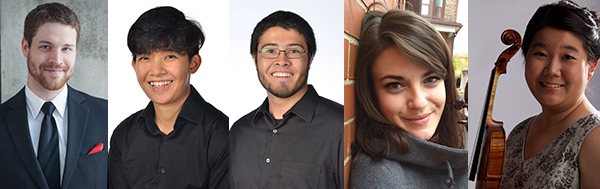
(l-r) cellist Drew Comstock, violinist Hua-Chu Huang, bassist Doug Ohashi, violist Meagan Turner, and violinist Yada Lee,

This is the third year of the COC-OA, a three-week intensive program, drawing upon students from the Glenn Gould School at the Royal Conservatory of Music and the University of Toronto’s Faculty of Music.  This year’s five  are mostly from the GGS:

  • GGS cellist Drew Comstock
  • GGS violinist Hua-Chu Huang
  • GGS violinist Yada Lee
  • GGS bassist Doug Ohashi
  • U of T violist Meagan Turner
09-10-S-01-MC-D-

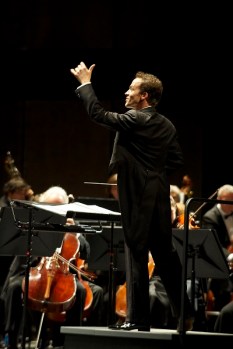
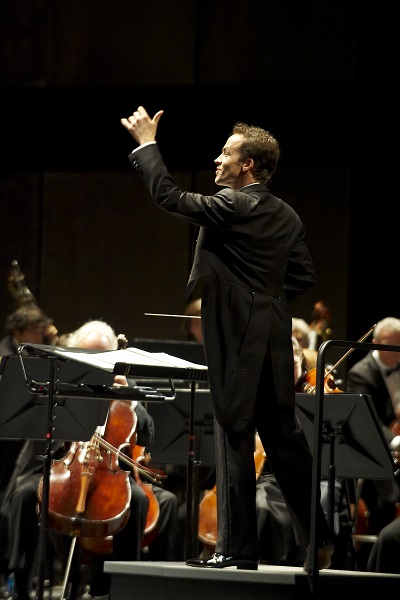
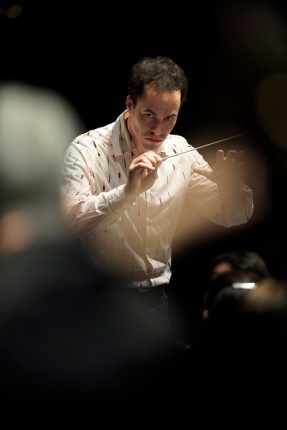
The COC Orchestra and Conductor Johannes Debus. (Photo – Michael Cooper)

The program is a kind of residency including time playing in the orchestra alongside professional mentors.  I understand that the five played last night’s epic dress rehearsal of Siegfried, and today –likely riding the same emotional high mentioned by our host & Master of Ceremonies Johannes Debus—they had to play a very different sort of music in a different venue. Where an orchestra pit is a dark place where you might be able to hide (even if Johannes & your mentor likely hears your errors) the RBA concert is the exact opposite, in its exposed playing, in a kind of fishbowl.  I’m sure some dread this kind of thing, although Drew Comstock seemed very confident as he stepped into the limelight for the introduction to the second—and lengthier—piece on the program by a Mendelssohn.

I came because the title of the concert made me eager to hear “La bonne chanson” of Fauré, to hear Jean-Philippe Fortier-Lazure sing, in collaboration with pianist Anne Larlee and the five member COCOA (hm… I like chocolate.. perhaps that’s why I enjoyed COCOA?).  While we may be Canadians in a bilingual country, one rarely gets this kind of treat, namely hearing a francophone clearly articulating a subtle piece such as this one in French.   Fortier-Lazure sang long phrases, clear sentences, occasionally opening up the throttle to offer us a passionate mezzo-forte. He puts me in mind of a recording I have of Les Troyens conducted by Charles Dutoit, employing a francophone chorus from Quebec, an eye-opener for me after having heard the way the Met chorus chopped the same work up into a series of discreet syllables of unintelligible gobbledy-gook.  This is very intimate ecstatic music (oh my, a song cycle from a happy person? that almost sounds like an oxymoron). I’m also mindful of Brahm Goldhamer’s subtle playing a few days ago at the RCM, where a small space created an opportunity for gentle music—making.

Fortier-Lazure has a fabulous operatic tenor that we heard for example in Barber of Seville about half a year ago; but he opted for some of the subtlest singing I’ve heard in the RBA space.  It’s a live room to be sure, but with some rep one really must resist the temptation to push. Fortier-Lazure took that quieter road.

I had to wonder how the seven players understood their relationship.  In the old days one might have thought that the musicians must accompany the voice, but that’s not what I saw.  Fortier-Lazure sang at times as though himself an ensemble musician rather than a singer, with no apparent ego on display. That the text is about images of flow and nature and love makes it all the better that we saw such a fluid interaction.

The big piece by a Mendelssohn?  The e-flat string Octet.  When I get a bit ambiguous about the composer it’s in response to the possibility –introduced to me in Comstock’s introduction—that the Octet (and perhaps the famous violin concerto!?) might have been composed by Felix’s sister.  I have no data (say it ain’t so, Giacomo!), only the memory of my outrage when I lost “pur ti miro”, snatched by a scholar in the 1990s from another famous composer whose name begins with M.

Whoever wrote the octet, it’s a very different sort of gig from playing hours of Wagner in the orchestra pit.  Three of the four movements go quite fast, including a great deal of exposed playing for everyone.  I was thinking that it’s not just a test for the COCOA but for their mentors as well.  For this work bassist Ohashi sat down, while the other four were joined by COC Orchestra players Paul Widner, assistant principal cello, Keith Hamm, principal viola, plus violinists Marie Bérard (concertmaster) and James Aylesworth.

Violist Hamm seemed especially comfortable in the spotlight, perhaps the de facto leader of the ensemble, as violists sometimes are, even if Bérard played an enormous number of notes, almost as though it’s her concerto (especially in the first movement).   After my close-up look at the Toronto Symphony earlier this month, I can’t help thinking about the ecology of this orchestra, the ways that this kind of exercise –the mentoring of the young players, and the chamber music recital—is valuable in building the orchestra, valuable for the Music Director and the community of music he wants to grow.  On the heels of last night’s immense opera, it was a delicious performance.

Debus & Alexander Neef were present for this charming hour of music-making, a very different sort of concert from the usual.
RESIZED_neef_Debus

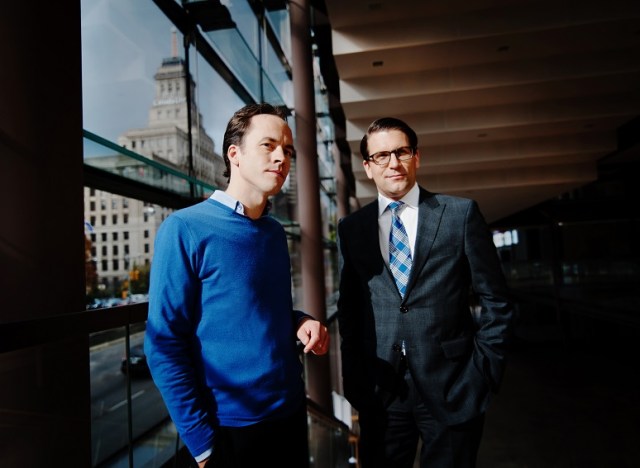
COC Music Director Johannes Debus and COC General Director Alexander Neef. (Photo: bohuang.ca)
Posted in Music and musicology, Opera, Reviews, University life | Tagged , , | Leave a comment

Questions for Johannes Debus: busy baton

09-10-S-01-MC-D-002

Johannes Debus (Photo – Michael Cooper)

The Canadian Opera Company’s winter season begins soon, featuring two long operas led by the same maestro, namely Johannes Debus. Siegfried, the penultimate of the Wagner operas in the Ring Cycle premieres January 23rd, while Mozart’s Marriage of Figaro follows on February 4th. Between the opening and the final performance February 27th Debus will conduct sixteen performances.

Debus made his COC debut conducting War & Peace in 2008, one of the best things the COC have ever done. No wonder then that within a few months COC General Director Alexander Neef would sign up the brilliant young conductor as the COC Music Director. Debus & the COC Orchestra continue to be the cornerstone of the company, especially in a season like this one. As the COC’s most indispensable performer this winter I had to ask Debus a few questions: about his life and his work.

1) Are you more like your father or your mother?

I grew up in a small, yet pretty town in western Germany: father archivist, mother a trained librarian, three siblings… – I think we could call it an academic middle-class household. Life was simple and not fancy or flamboyant at all, yet I can say that I had a happy and sheltered childhood. My parents did care about their kids, and they tried to give us the support we needed to explore our own interests and live our own little dreams.

I don’t know, if I’m more like my father or my mother, but I know that I inherited certain human values and virtues that were key to them both: sense of responsibility, honesty, fairness, modesty, altruism, reliability etc. My fingers are crossed I can live up to their high standards.

2) What is the best thing about what you do?

Being a conductor I would say it’s the thrill of a great performance that excites me the most of what I’m doing. Being a conductor I also quickly realize, how much I rely on other people. So let’s say it’s the thrill of working together and creating something extraordinary with likeminded people.

On a different level it’s the combination and range of things my job comes with – pure artistic subject matters take turns with simply ‘profane’ practical ones. It keeps me inspired and grounded at the same time. The ivory tower has an exit door to the outside world.

3) Who do you like to listen to or watch?

I’m attracted to beauty that comes from the rare combination of profound truthfulness, wit, esprit, (quirky) humour, boldness, vision and a dash of indescribable mystery. A soccer team performing like a corps de ballet, a majestic sunrise, Gigli singing “Mamma”, the acrobat/pantomime/clown/busker at the street corner, the ruins of an ancient temple, a stranger passing by – everything that belongs to and enriches the ‘Flying Circus’ of our lives…

4) What ability or skill do you wish you had, that you don’t have?

I would like to have legs to dance, arms to fly and hands to write music…

5) When you’re just relaxing and not working what is your favourite thing to do?

As I spend most of my time inside, it can be fairly relaxing to go for a walk/run and breathe some fresh air. My bicycle is also a good companion for a little ‘air-my-brain cruise’.

*******

RESIZED_ND3_7600

Johannes Debus (photo: Bo Huang)

More questions about work as COC Music Director.

1) Conductors as a profession live long lives. You were conductor for Tristan und Isolde in 2013 and Die Walküre in 2014, and now with Siegfried in 2016 you’re again leading the COC orchestra in an immense long work. Are these operas like a marathon for the conductor –requiring you to train—or is this music actually making you healthier?

The biggest challenge conducting such extensive operas as Siegfried is to stay on top of things and not to loose track of the overall shape and the architecture of the scenes and each act. You have to know where the peaks and landmarks are and how to work organically towards them.

In that respect we can compare conducting immense long pieces with running a marathon. It is ultimately your mind, enabling you to conquer such dimensions and not being completely exhausted afterwards. And with growing experience you learn to know, how much you get involved physically. Small gestures are often more than enough.

2) Mozart’s Nozze di Figaro and Wagner’s Siegfried are a contrasting pair of works even though they’re both long. One is through-composed, while the other has numbers (recitative, arias and ensembles). Nobody seems to write this way anymore, whether we’re speaking of long music-dramas or comic opera. If you could push a button and magically get a composer to create a work in the same style as ONE of these two very different operas, which would you choose and why?

Before I push the button and get a composer to write music like Mozart or Wagner, I want to explore the means and the style our own time offers to create new masterpieces of such perfection and esprit as Mozart’s Nozze or of such visionary, bold conception and electrifying magnitude as Wagner’s Siegfried. Mozart and Wagner both take us in very different ways on a journey through essential, archetypal questions of human life. And there are creative minds around us who face those same archetypal, essential questions, yet will find their own ways to answer it – with their own means and in their own style.

09-10-S-01-MC-D-

The COC Orchestra and Conductor Johannes Debus. (Photo – Michael Cooper)

3) What is your favourite passage in each opera, and if you could perhaps explain why it’s a favourite?

In Siegfried everything seems to gravitate towards Brünnhilde’s awakening. It’s hard to imagine anything more ecstatic, overwhelming and thrilling than the moment when the 100-people orchestra in the pit starts this climactic cresc. on “Heil dir, leuchtender Tag!” Admittedly I’m not immune to the shivers it gives me, even if I know that it is an almost obvious, just so well calculated and crafted effect. Let’s call it my ‘guilty pleasure’ moment in Siegfried. Less obvious, yet incredibly exciting for me is most of Act 1: bold, wild, rather experimental, harmonically utterly complex and by a Beethoven-like rhythmical furor driven. Wagner might have never been as ‘avantgarde’ as here.

To single out one moment in Le Nozze di Figaro is very hard. Every aria, every ensemble, even the recits seem to be of the greatest perfection and profound beauty. One pearl follows another and all together they form a most amazing pearl chain.

4-Please describe how you prepare for your first rehearsal of an opera such as Siegfried or Nozze di Figaro.

The preparation for an opera no matter what is in general the same: I study the score which often includes to play the score (in slow motion) at the piano, read the libretto, find out what the words mean – a dictionary is an important companion for that, gather some knowledge about the composer and his/her time and the time she/he wrote that specific piece, gather some knowledge about possible performance traditions. To gather information about performance traditions certain recordings can be helpful, i.e. it is surely not a bad idea to listen to some Wagner from Bayreuth or even better to go to Bayreuth and get an idea of the special sound you get there due to Wagner’s revolutionary acoustical invention of the covered pit. At the end however it is your personal choices, your personal taste that defines how you bring each piece to life. And it’s important to have made your thoughts about your own approach before rehearsals start.

5-Do you have a favourite composer whose music you love to conduct and/or hear?

Bach is my composer of choice for the desert island, however I would miss many others. And gladly I can keep Bach for the desert island, as I get to conduct so many of the other great ones here at the COC and elsewhere. I like the fact that at the COC I can go from the early beginnings in operatic history to the most recent creations. The spectrum is wide, undogmatic and pluralistic. As long as the piece speaks to me, as long as I feel a connection to it, I feel good about performing it.

6-Is there a teacher or an influence you’d care to name that you especially admire?

At the age of five onwards I had a wonderful chorus master who not only knew how to give young people access to the beauty of music, he also impressed me with his wide cultural knowledge in general. He could equally explain to you James Joyce’s Ulysses as he would give you an insightful analysis of a fresco by Piero della Francesca or would share his joy and enthusiasm about a Beatles’ song.

obit-henze2-popup

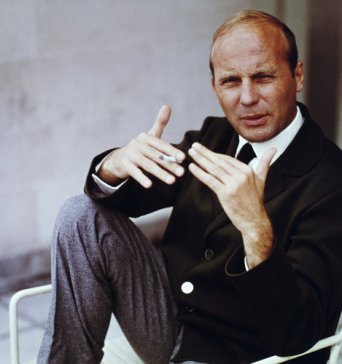
Hans Werner Henze. Credit Erich Auerbach/Hulton Archive, via Getty Images

Later in my life I was extremely fortunate to meet with Hans Werner Henze, the great German composer, and to share a profound friendship for more than ten years until his death. I wish he could have taught me composing, but that’s a talent I don’t own (see question no. 4). Yet he opened my ears, eyes and my heart to the magnificence of life. He was clearly thinking big, and he was living the richness and freedom of life to a degree that was unknown to me before. His music can tell you all about it.

*****

Johannes Debus gives the downbeat for Wagner’s Siegfried on January 23rd at the Four Seasons Centre, first of seven performances.  The Marriage of Figaro follows on February 4th.  For further information click here.

09-10-S-01-MC-D-095

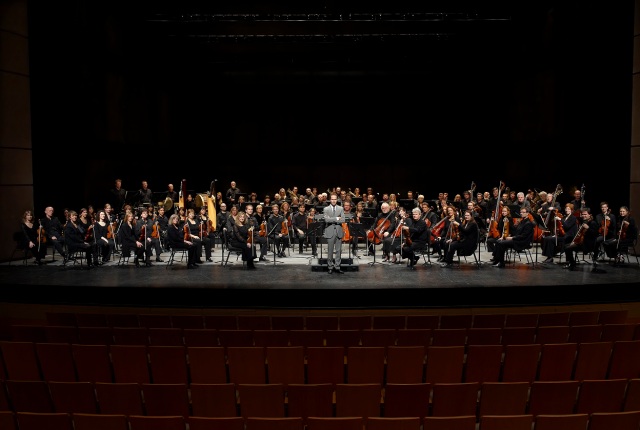
Canadian Opera Company Music Director Johannes Debus with the COC Orchestra (Photo – Michael Cooper)

Posted in Interviews, Opera | Tagged , , , , , , | 2 Comments

Goldhamer’s Schubert: where the music is

Where do you look during a concert?

One can look out the window, as i often do when given the opportunity.  I love the glass at the Richard Bradshaw Amphitheatre, or the glorious view at the Conservatory Theatre (seen below)

before

I ask, mindful of a famous picture that captures at least two of the options. In this painting of a Schubertiad –an intimate gathering surrounding the composer @ the piano—we encounter the pianist who is at least one of the possible places to stare (including the fingers on the keyboard).  Others stare at the ceiling (option #2). I recall thinking when I first saw this picture that it was so embarrassingly intimate.

Where do you look? moritz_von_schwind_schubertiade

And –speaking of funny questions—I wondered as I pondered this question about where to look, where is the music? Do you find it looking at the musician, his/her virtuosic hands, profound expressions, body language…? Or is the music somewhere in the air, perhaps in the expressions of our fellow travellers?  I think that when we’re watching the virtuoso, who is in some sense the embodiment of technique celebrated to the point of a fetish, we focus on the iconic person, the celebrity player / singer.

We may no longer be really hearing /seeing music any longer. The icon / celebrity hijacks the art.

All that’s in the painting, and of course, was there to be seen today at Brahm Goldhamer’s Schubert recital today at the Royal Conservatory Theatre: a tiny venue with a Steinway, a high ceiling, wonderful acoustics and a magnificent view of Bloor St & the neighbouring Michael Lee-Chin’s Crystal.  The seats wrap around the piano on two sides, giving us some interesting choices of view, as to what we’d be staring at:
1. Pianist
2. The view out the window
3. The view up at the ceiling
4. The other listeners, who are looking at 1, 2 or 3
I put this preamble out there because of what I experienced and what I heard. I’ve heard lots of virtuosi, piano players with great skill whose image and identity is associated with fast fingers. I traveled with the TSO earlier this month, seeing Jan Lisiecki play the Beethoven 4th piano concerto 3 times on three consecutive nights. You notice skill not just when someone plays well, but when we’re all tired from a late bus without rehearsal and the fingers still get the job done. Virtuosity has its place. Last night I heard Alexandre Tharaud playing Mozart with the TSO led by Bernard Labadie.

I believe something happens in the presence of complexity & detail. I am influenced by a radio program I heard on CBC today, discussing the advent of electric light and the virtues of clarity. We live in a positivistic world, obsessed with measurement, numbers, knowing & explaining where we are –with our GPS’s and onboard navigation—and deconstructing everything, every precise weather forecast and prediction of the fractions of a percent shift in interest rates. We are illuminated whether we want it or not, unable to find darkness or chiaroscuro (not so much dark as the twilight regions).

Forgive me if I oversimplify. I love ambiguity and complexity, mystery not as something to be solved but as a shroud to imitate reality.  Let Truth keep her clothes on, to make the flirtation last.

Musical development was/is a somewhat scientific process even in Beethoven’s time, an analytical fracturing of themes into fragments, sometimes contrapuntal explorations, sometimes sonata theme and development, that leads us later to musical modernism. Schubert’s approach is the road less taken, epic story-telling rather than novelistic complexity, episodes and tunes rather than architectonic composition. And yet he does write big long pieces out of those stories, episodes, melodies, ballads.

Inevitably we encounter Schubert –and Schumann and Liszt and others who are at least partially making these epic compositions (“epic” in the dramatic sense of what Brecht wanted, story-telling in episodes, not novels or symphonies)—in the hands of virtuosi, pianists seduced by the massive challenges, and processing this music as though it were Beethoven. How could it be otherwise? You call the fireman when there’s no fire, and they will still look for hazards and maybe spray you with their hose, fire or no fire. Don’t blame someone for being who they are. But also, don’t underestimate someone via one set of criteria. I was listening to Amy Winehouse a few days ago, heart-broken that a brilliant jazz-singer and composer went astray, becoming a pop singer; while she was still the best pop singer I ever heard, it was both a waste of her gift, and the likely route to her death (or so I conclude after watching the documentary Amy).

What I am alluding to in that analogy –the straying jazz-singer Amy Winehouse—is that I believe we can’t hear the real Schubert because of the misguided way pianists play his music.  We wouldn’t hand Shakespeare to the stars of daytime soap operas, yet we populate our concert halls with these manual athletes whose sensibilities are caught up in speed and clarity, positivistic pitfalls that lead us all astray.  I heard a different approach to Schubert today at the hands of Brahm Goldhamer. Maybe it’s been done before, but all I know is that I’ve never heard it. It’s not a matter of tempo, as there are people who play his music faster, some slower. I like the way Kuerti and Brendel play, two who are not completely seduced by the virtuoso impulse.

Yet what I heard Goldhamer do is entirely different.

The scale of the music was intimate. We were in the Conservatory Theatre, a space that seats perhaps 60-70, where the pianist could step forward to briefly address us and have comfortable eye contact with all of us, and with no need to raise his voice. In other words it’s more of a salon than a theatre. The forte in this space was still gentle, musical. The pianissimos were like whispers. If you play this way in a bigger space it won’t work, as one must elevate one’s game the way an actor uses their trained voice to be heard in a bigger space, to express nuance and emotion. As I say, Brahm scaled his playing to the space, something gentle & personal.

There was something Brahm did with his page-turns that signaled what we were seeing. As a life-long accompanist (and excuse me that I use the old politically incorrect term; I know everyone else is –supposedly—a collaborative pianist), I know the terror of the page-turn, the tension build as one approaches the bottom of the page. Sometimes one must omit some music or paraphrase in order to keep it going. This is not what Brahm did. We came to the ends of pages, and he paused like a story – teller when necessary. The music would wait when necessary. This imposed a sense of boundaries, of formal space around his effort and our necessity to accept what he was doing, rather than the imitation of the virtuoso effect of a perfect seamless reading.  It was a bit like what Brecht calls attention to, when speaking of the alienation effect.  These moments pulled us out of our dream, to be reminded of the player serenading us.  We were in that subjective place of the poetry reading.

I was most impressed with how Brahm approached the big B-flat sonata, as though it were a series of song-like episodes, even though at times its technical challenges are big. But this was not a show-off exercise, not a matter of interpretation. He was in a genuine sense invisible, once I decided to stare at the ceiling and let his music-making flood over me, carrying me away. His hands were at ease, his pianissimo touches as delicate as a caress administered to each of us in this warm intimate venue.

Apparently it’s been forty—five years since the last solo recital. But Brahm assured us that after this wonderful experience –a genuine example of communication—he would do it again next year.

I’ll be there.

after

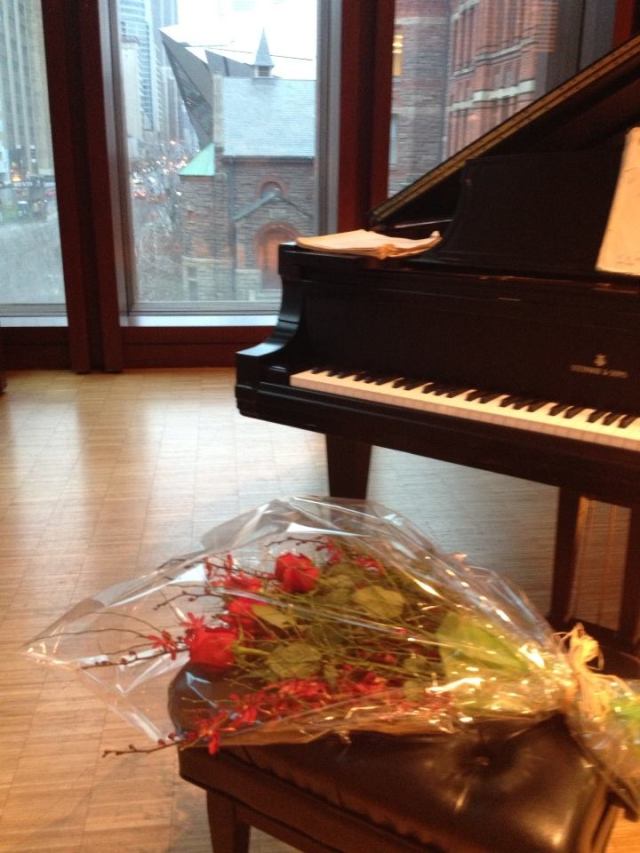
After the concert… that’s Brahm’s bouquet that i photographed while he went around the room thanking everyone individually for coming: which isn’t usual.

Posted in Personal ruminations & essays | Leave a comment

Labadie returns with TSO – Mozart @260

Conductor Bernard Labadie returned to the podium tonight for the first time since sickness stopped him for a year and a half of convalescence, to lead the Toronto Symphony Orchestra at Roy Thomson Hall as part of the Mozart @ 260 Festival.

Here’s what the Violons du Roy press release from October 2014 says:

Quebec City, October 20, 2014 – Bernard Labadie has announced he will resume his duties as founder of Les Violons du Roy and music director of La Chapelle de Québec during the 2015–2016 season. At that time, he will also continue his commitments as guest conductor nationally and internationally.
Mr. Labadie is being treated for a lymphoma diagnosed in May while he was slated to conduct in Freiburg, Germany. Since June he has been receiving care in Quebec City and the treatment is progressing normally. He initially canceled all his 2014 concerts in June, but because of an extended convalescence he will not be able to return to his conducting duties with Les Violons du Roy and the orchestras he was scheduled to direct until the start of the 2015-2016 concert season.
Mr. Labadie would like to take the opportunity to express his heartfelt thanks to the music lovers, musicians, and friends who have demonstrated their support and friendship by the hundreds since the onset of his illness. Their messages and encouragement have been invaluable.

So of course Labadie’s first return to the concert stage tonight was a particularly dramatic occasion. Although the Labadie you see on youtube normally conducts standing – but without a baton—tonight he conducted from a sitting position, likely still in a weakened state.

The TSO and Labadie brought us three facets of Mozart’s genius: the opera, the concerto and the symphony.

The operatic exploration consisted of excerpts from Don Giovanni, specifically the overture and a pair of arias. The chamber-sized orchestra, while employing modern instruments, seemed to be informed by the kind of historically informed performance style we sometimes hear from the COC when someone such as Harry Bicket comes to town to lead them. Labadie’s understanding of the overture is edgy, full of well-accented contrasts & witty turns of phrase. In contrast to Frederic Antoun’s lyrical reading of the romantic aria “Dalla sua pace”, Philippe Sly’s presentation of the catalogue aria was hilarious, his repertoire of voices a fascinating study in the opera buffa (in other words, comedy).

Although our concerto soloist brought another French name into the programme, this time we were watching a Parisian rather than a Quebecois, namely Alexandre Tharaud, although he has a history with Labadie.

This was a performance of great style, clean and crisp in the orchestral entries. Tharaud showed enormous energy particularly in his cadenzas.

After intermission we came to Mozart’s last symphony. I can testify that the TSO are in a groove, their playing inspired yet relaxed in the last part of their tour last week. This smaller ensemble placed at the front of the stage sounded especially good in Roy Thomson Hall, perhaps responding to the drama of the occasion and the commitment Labadie showed from the podium. The word that comes to mind is “perfection”, Labadie’s tempi as brisk as you’d expect from an exponent of the historically-informed style. The slower second movement was luscious with sensuous detail, the finale, muscular and tireless.

Joel Ivany headshot

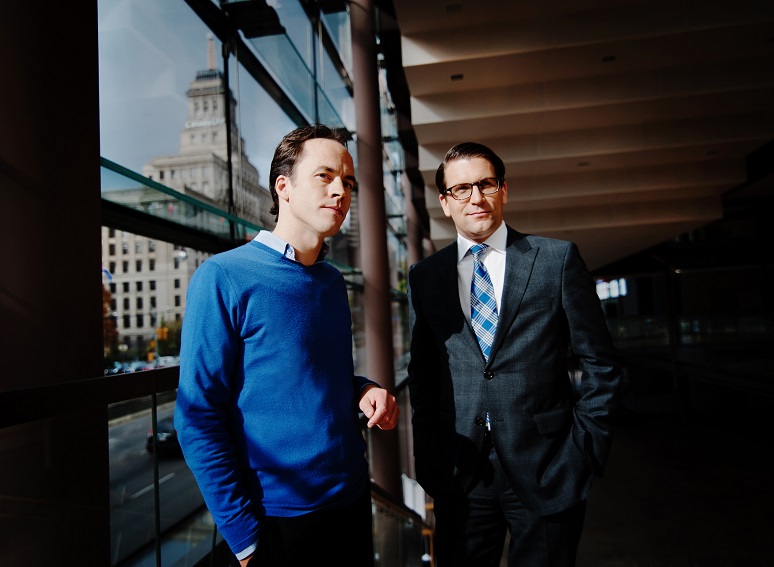
Director Joel Ivany

Next week Labadie will leads a semi-staged Mozart Requiem directed by Joel Ivany of Against the Grain Theatre. Jeff Melanson’s avowed mission to make the TSO the most innovative and most inclusive orchestra in Toronto comes to mind in this fascinating choice. Instead of the usual static standing and singing, Ivany brings something genuinely experimental to the stage. I witnessed a workshop last year that has me eager to see what Ivany & the TSO have come up with. I’m sure it will be a worthy experiment, opening new ways of understanding the Requiem.

For further insights here’s Labadie in a CBC interview.

Posted in Personal ruminations & essays | Leave a comment

Amy’s Requiem, in the season of mourning

Ahead? the return of Bernard Labadie, who was sick and is getting better. Saturday he’ll conduct the first of the Mozart @ 260 concerts with the TSO, next week conducting their adventurous staging of the Mozart Requiem.

Behind? A week that saw the passing of so many.

David Bowie

Brian Bedford & William Needles

Alan Rickman

The anniversary of my father’s passing is one marked every year in my family, casting a shadow over the beginning of the year, even without the additional sadness this week.

Between this litany of losses and the upcoming Requiem, I finally downloaded Amy,
Asif Kapadia’s 2015 documentary that I had been afraid to see for the longest time because i expected it to be too heart-breaking in its story of an untimely death of a true genius.  But i suddenly felt ready for it.  I guess it would be fair to say that i love her.

In some ways it’s exactly what I expected, a film that’s full of politics. As you watch the unfolding disaster of her life, the untimely death of Amy Winehouse, you sense the contention, fingers pointed. Whose fault was it? why did she have to die and who could have saved her?  Knowing how the story ends means there’s a huge weight hanging over the story, over her life.

But no, it’s not that kind of death after all, not that kind of film. No, it’s a chance to hear the voice and the songs, and to attempt to get inside the head of a brilliant talent while enjoying and celebrating the music.

In social media it’s possible to celebrate Bowie’s life, his achievements and the stories of what a great person he had been. Similarly we hear about the kindness of Rickman.

And so while everyone all around Amy tries to save her, she couldn’t be saved. At one time I think I recall an account in the press that seemed to blame a boyfriend, more or less the way Whitney Houston’s death has been blamed on a boyfriend. But that’s not how it happened. The boyfriend may have helped facilitate some of her habits, but her eyes were open, her choices lucid.  In a flashback her mother explains that she simply couldn’t be controlled, that she was larger than life even then.

I can’t get over the power of her most famous song, the one that suddenly elevated her in everyone’s eyes even as it seemed to celebrate an insane lifestyle. “Rehab” instantly begins with the expression of the conflict central to her life.

“They tried to make me go to rehab but I said no no no”.

The song erupts in the middle of her life-story, with a first line that in a heartless world would be her epitaph scrawled in blood on her grave-stone.

Eventually she did go. There are several heart-breaking moments in this film, but one I’ll never forget is the moment when she’s just won her Grammy (one of several) for “Rehab”. She had been clean for months at that point, other than her alcohol habit, and was telling her best friend at that very instant that she was so bored without drugs. The Grammy that might have stirred her earlier in her life? It meant little to her at this point.

If I may be forgiven for trying to psychoanalyze her, I felt very sad for her, that she lost her way. When she was younger she said she loved writing songs. At this point she was a genuine jazz artist, the voice her instrument, not her meal ticket. But she lost her way, seduced by the money people paid to hear her sing, and enslaved by the several substances she depended on (a horrific list).

Tony Bennett met her at one point, mightily impressed by her gift, yet he didn’t hear what we get to hear, namely the jazzier songs captured earlier in this wonderful film. I figured that however heart-breaking the film might be, I’d get to hear this wonderful voice, not expecting that I’d be discovering an original compositional voice.

At one point someone remarks that she sounded –in her early 20s—like a 65 year old jazz singer, little realizing how close she was to the end.

I look forward to listening to Amy again, less requiem than celebration.

Posted in Cinema, video & DVDs, Music and musicology, Personal ruminations & essays, Reviews | Tagged | Leave a comment

At last: #COC1617 is the most Canadian season yet 

Tonight’s Canadian Opera Company announcement of the coming season’s operas gave us reason to be proud, a genuine celebration of the sesquicentennial of Canada’s confederation.

We checked in with the key components of the COC:

  • Alexander Neef & Johannes Debus were interviewed onstage by Brent Bambury. Both of them are contracted until at least 2021: a fact that was heartily applauded
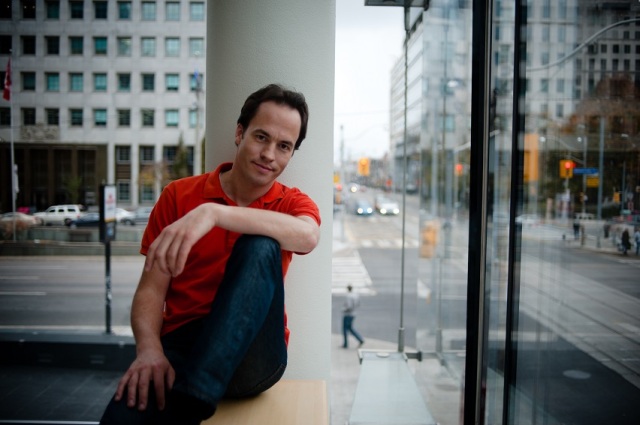
  • COC Music Director Johannes Debus and COC General Director Alexander Neef. (Photo: bohuang.ca)
  • We met the five members of the Orchestral Academy, operated by the COC in collaboration with The Glenn Gould School of the Royal Conservatory and the U of T’s Faculty of Music, mentored by the COC orchestra.
  • We clapped for roughly a dozen members of the COC Chorus, including Sandra Horst.
  • We applauded the Ensemble Studio, including their seven new members. We were also told they’ll perform a showcase of opera excerpts next season instead of the usual ensemble performance.

Neef called attention to the end of the first decade in the Four Seasons Centre (possibly the biggest single factor in the company’s success), while speaking of the soul-searching he’s put the COC through, in building a strategic plan.  We saw a statement on the screen resembling a mission statement, saying the following:

COC365: we will bring the transformative experience of opera to our local, national and global audience every day of the year.

Debus, who first came in 2008 for War and Peace spoke of his sense of welcome with the orchestra & the city.  The conductor of both operas in the winter season namely Figaro and Siegfried,  a potentially daunting job, Debus said he enjoys the contrast, finding the Mozart cleansing after the immersive experience of the Wagner.

We heard of the six operas to be presented next year including three new productions + three revivals.

New productions?

  1. Bellini’s Norma with Sondra Radvanovsky (perhaps the best Norma in the world right now, who happens to live in southern Ontario), double cast with Elsa van den Heever (also a wonderful soprano), Isabel Leonard, tenor Russell Thomas, with Stephen Lord conducting.
  2. Handel’s Ariodante starring Jane Archibald, with Alice Coote and Canadians Owen McCausland and Ambur Braid, directed by Richard Jones.
  3. Harry Somers’ Louis Riel in an all-Canadian co-production with the National Arts Centre, to be directed by Peter Hinton. Russell Braun is Riel, James Westman is Sir John A Macdonald, Michael Colvin plays Thomas Scott, John Relyea is Bishop Taché.   The cast also includes Simone Osborne (as Riel’s wife) and Allyson McHardy (as Riel’s mother).  The production will travel at least as far as Ottawa, to be presented at the NAC.

REVIVALS:

  1. Mozart’s The Magic Flute in Diane Paulus’ delightful feminist reading, directed by Canadian Ashlie Corcoran, is largely a Canadian cast, with Andrew Haji & Owen McCausland sharing the role of Tamino, Joshua Hopkins & Phillip Addis sharing Papageno,  Elena Tsallagova & Kirsten MacKinnon Pamina,  Ambur Braid & Kathryn Lewek as the Queen of the Night. Bernard Labadie conducts his first Mozart opera with the COC. 

We heard a wonderful sample, as Andrew Haji gave us a vulnerable portrayal in Tamino’s  Act I aria.

Andrew Haji (photo: Veronika Roux)

Andrew Haji (photo: Veronika Roux)

  1. Wagner’s Götterdämmerung completes Christine Goerke’s thrilling survey of the role of Brunnhilde, with the third successive role debut.  She wakes up opposite the Siegfried of Andreas Schager, before encountering the Hagen of Ain Anger, in a cast including Canadians Robert Pomakov and Ileana Montalbetti as Alberich & Gutrune respectively and directed by Tim Albery.

Goerke drew by far the biggest applause of the night in Ortrud’s curse from Lohengrin (an invocation of Teutonic gods such as Brunnhilde’s daddy Wotan, and yes Goerke is rehearsing her first Siegfried Brunnhilde during the daytime, which is role #2 of that remarkable survey).

  1. Puccini’s Tosca gives us a double cast that includes Adrianne Pieczonka/Keri Alkema and Ramon Vargas/Andrea Carè, Markus Marquardt as Scarpia in both casts.  Canadian conductor Keri-Lynn Wilson will be the first woman to conduct a COC opera, giving us another reason to celebrate.

But first comes the COC winter season, namely Siegfried opening January 23rd and Marriage of Figaro opening February 4th.

Posted in Opera, Press Releases and Announcements | 4 Comments

TSO Announcement: good days for Canadian composers

The official announcements are still to come.  It’s a great year, or will be a great year to be Canadian, as we celebrate 150 years of Confederation in 2017. Anticipation is a big part of the fun.

On Wednesday the Canadian Opera Company will make their official announcement for the upcoming season, likely explaining their plans for Louis Riel, the Harry Somers opera originally commissioned for the Canadian Centennial, that hopefully sees its revival soon (if not in 2016-2017, then hopefully in 2017-18).  The COC broke the ice by offering Pyramus and Thisbe this past season, the first COC ‘opera’ (in quotes because we’re using a loose definition of the term) by a Canadian composer in a long time.

Are there any other premieres to come? And what else will the COC offer? We shall find out Wednesday January 13th..!

TSO CEO Jeff Melanson's Facebook profile pic

TSO CEO Jeff Melanson’s Facebook profile pic

And while the official Toronto Symphony announcement is still to come I already have some news to share.

On the Florida tour, Jeff Melanson told me that the Toronto Symphony are about to announce a substantial commitment to Canadian music, in commemoration of the Sesquicentennial:

  • the commissioning of new compositions
  • the recording and dissemination of those compositions

The details will be announced February 3rd.

We can never know about the days to come. But we think about them anyway.

Perhaps these will be the good old days.

Posted in Music and musicology, Opera, Press Releases and Announcements | Leave a comment

Bus nostalgia: a top ten list

I’m all sentimental about bus trips after spending much of the past few days riding around Florida with the Toronto Symphony.  Here’s a list of movies that show us different aspects of life on the road, presented in reverse order a la David Letterman.

Numbers 10, 9 and 8 are variations on fear on the buses, reminders that there can be danger.  I will put these aside right away because I want to make you smile or giggle, not scream in fear.

#10-aka “who’s driving this thing?” Keanu Reeves vs Dennis Hopper with Sandra Bullock screaming for help in the driver’s seat, in Speed.  

Early in #9 we see a slow-motion bus crash that is the beginning of a lifetime of pain, as seen in Julie Taymor’s Frida complete with surreal puppets.

But violence and terror aren’t always horrible.  In #8 the big bus crash set-piece begins a man’s redemption. It’s scary –especially on the big screen where I was lucky to see it—but powerful stuff, as Harrison Ford leads Tommy Lee Jones a merry chase, in The Fugitive.  

#7 is a film I cited recently when speaking of politics. There are tons of great bus scenes in Bull Durham, a movie that romanticizes failure, making you feel a bit better about being a minor leaguer. I pick this scene because hey, I was riding with musicians. And looking at this clip, listening to Crash Davis ranting, you might say “everyone’s a critic”.   If only we could be this eloquent.  

And speaking of music, for #6 why not a song? How about Bono singing “I am the Walrus” from Across the Universe: a film with a few bus scenes.  

#5 is from the “Stranger in a Strange Land” category, a bus full of people who all know one another, looking at the newest passenger as though he’s from another planet: the scene at the end of Ferris Bueller’s Day Off.  Where has Jeffrey Jones gone?  And speaking of classical music remember him in Amadeus? where is he now?

And here’s another one of that scary feeling stepping into a bus for the first time.  In #4 schoolbus driver Siobhan Fallon meets young Forrest Gump.  I won’t tell you the name of the film.  The young lad will do that for you.

Have a look.  

In #3 – Mean Girls – the bus is an avenging angel.

In #2 the bus is the pathway offering a couple their escape to a new life, at the end of The Graduate.  

In #1,  one of the first great road movies, a new life is again dreamt of, namely It Happened One Night. Listen to “The Man on the Flying Trapeze”. Did people once sing this way in public? Have we perhaps lost something in our transition to commodified music that we don’t make ourselves?  

For me this series of bus rides is done, although for the musicians there will be other tours, other buses.  I’m so lucky to have had this delightful adventure aka #TSOflorida.

The road goes ever on.

Toronto Symphony in Florida

Toronto Symphony in Florida

Posted in Cinema, video & DVDs, Personal ruminations & essays | Tagged , | 2 Comments

TSO: Managing Content in the Age of Convergence

Although I’ve been enjoying the Toronto Symphony tour up close, pressing my nose up to the glass of my window on the bus to stare at the world going by, it’s been a kind of workshop in so much more.  I’ve had some wonderful conversations:

  • With Peter Oundjian, the TSO conductor & music director
  • With Adrian Fung, TSO’s VP Innovation (who sat beside me at a concert & again on the bus today)
  • With Jeff Melanson, President, CEO, tall guy and role-model.

I need to be careful.  Peter’s probably a bigger a role model in our city, and was at the TSO before Jeff arrived.  Culture change in an organization takes awhile.  Peter may have been earlier in that renewal process, but Jeff is giving it a huge push, while Adrian, a recent arrival, is both a new driver and indeed a sign of the changes at the TSO.

(aside to self, I hope it’s okay with them that I am using their first names, instead of my usual tossing around of surnames, I hardly know them)

Peter Oundjian, autographing the Scheherazade CD for (lucky) me

Peter Oundjian, autographing the Scheherazade CD for (lucky) me

I had a chat with Peter this morning.  I think I resembled the character Mime in Siegfried, who, when given the chance to ask Wotan a series of questions foolishly opts to show off what he knows rather than to actually seek after knowledge.  I wanted to convey my appreciation & admiration and indeed was under instructions from home to get that message across. I hope I succeeded.  I broached the subject with him that’s in the headline above, that was at the centre of my intense conversation on the bus today with Adrian.  Jeff has partially inspired it, just watching him in action, although I think all three of these men demonstrate this in spades.  And I want to add a fourth name for at least a hint at gender balance.  I’ve been spending a great deal of time with Francine Labelle, who is Manager of Publicity, and my chief interface with the TSO.

What do all four of these people have in common that might connect to the headline?

It’s a sign of the times that jobs have grown because we are living in an era of generalists.  Francine isn’t just a PR person, she is also herself a performer, required to organize & communicate.  Adrian may have an MBA but he is also a musician and a lateral thinker.  Peter is a violinist, conductor, mentor, public speaker (to name only a few). Jeff too steps up to the microphone, not just telling them what to do but walking that walk right onto the stage.

Convergence may be an overused word but I think we’re still discovering its significance.  I have a device that I carry in my pocket that not only sends email, records voices or films people, but also files music indiscriminately, the Beatles and Beethoven treated as equivalents (except possibly for the length of the track / size of the file).  Calling these files “content” levels the playing field and removes class / disciplinary biases between different media, different sorts of content.

I was joking with Peter about what I saw in the concert last night, what I glibly called “The Toronto 100”, alluding to the Daytona 500.  I swear he didn’t actually accept a bow himself, but gave all the focus to his orchestra. Gone are the days of the autocratic conductor, as obsolete as an autocratic VP or an autocratic CEO.  And is it any wonder that one of the most obvious things i saw on the bus was manifest chemistry, the cohesion of a team rather than people brought in merely because of virtuosity. It’s less important to play your instrument well on its own, than to be an ensemble musician.

When Jeff says the TSO seeks to change to make itself the most innovative orchestra in the world, it’s not something you can do by simply shouting at the troops and saying “okay boys, innovate”!  Change will manifest itself in everything from the music they play to the programs they offer children in our city and so much more.  I’m fortunate to have been the fly on the wall, overhearing some wonderful talk, that i am still seeking to understand.

The organization must change in every respect, modelling inclusiveness and an appetite for creativity. That may sound obvious in an orchestra, but we all know that we’ve seen institutions that become, well institutional.  Bureaucratic.  Rigid.  Political, and not in a good way.

The TSO will announce their new season soon, early in February.  They are already doing some brave & bold things.  I’ve been loving their series of films with live accompaniment this past autumn.  Their adventurous take on the Mozart Requiem directed by Joel Ivany is coming up very soon as part of the Mozart @ 260 Festival, led by Bernard Labadie.  Their New Creations Festival is coming up.  What will they do in 2016-2017, a season when one might expect a possible commemoration: of the sesquicentennial of Canadian Confederation.

I’m looking forward to finding out more.

Posted in Personal ruminations & essays | 1 Comment

The TSO 100, alongside the speedway 

Daytona Beach was the location for the latest instalment of the Toronto Symphony tour.  I heard them play at Peabody Auditorium, not far from the famous speedway that’s the site of the Daytona 500.  In speaking of the venue I hope I will make it clear why I need to talk about this.  It’s a theatre, rather than a concert hall, and seats  2 521 (Orchestra-1 518 • Loge-497 • 2nd Balcony-506)

Built in 1949, its space is very much a creature of its time, with advantages & disadvantages.  The reverberation time is remarkably brief, the sound fairly dry.  Thursday night? There was lots of wood in the last space where i heard the TSO, and at times the wood sucks up the energy, damping noise and harsh attacks, the same way that air-brushing can remove flaws, and help make an aging movie-star look young again. It was a flattering acoustic on Thursday, where we couldn’t fully hear the music.

But on Friday the TSO were playing on the stage of a proscenium arch theatre, which meant that they were raised above anyone in the front of the orchestra; luckily I was about 20 rows back, allowing me to see and hear perfectly (except for my view of the conductor during the concerto, blocked by the lid of the piano).  But we were in a space with hard walls that bounce the sound, a theatre designed to be a multi-purpose space.  I understand that a production of Aida will be played there in awhile, whereas a concert hall has space for musicians but no stage machinery, the musicians thrust forward into the same acoustic space as the listener (and with no proscenium arch framing the view).  For anyone seated in a good seat (as I, sigh, certainly was), the sound was in a sense unforgiving.

Here’s the thing.  I could hear the scratch of rosin on the bows, the movement of chairs on the stage floor, the breathing of players, and I think I heard every wrong note. The energy coming out of that relatively small box – the theatre space—was enormous, especially given the Olympian programming choices.  Every blemish on the surface of the TSO’s sonic bubble was in evidence.

Ah but there were no blemishes.  Or in other words, no wonder Peter Oundjian was grinning tonight.

I should add that this was hardly a day when we might have expected perfection. The bus ride was delayed, meaning that the players were tired, and did not get their usual rehearsal before the concert, which –as luck would have it—was scheduled to begin early, accommodating 300 school children.  I wonder if that created a sense of urgency.

Did they perform differently tonight?  I can’t be sure, because the performance space is so different, the acoustic generating not just my different impression, but certainly a whole new experience for everyone involved, especially Peter Oundjian, listening and leading on the podium.

Peter Oundjian soaking up some of that Florida warmth, aka applause after the concert (Photo: Michael Morreale)

Peter Oundjian soaking up some of that Florida warmth, aka applause after the  earlier concert (Photo: Michael Morreale)

I had the most intriguing sense of the conductor tonight.  We opened again with the explosive sounds of Estacio’s Wondrous Light.  I was reminded of the good old days of audio, when one would take a record to test the new systems one was hoping to buy.  Estacio’s crisp rhythms, charming phrases, and especially, his heroic brass would be a test for any speakers.  But instead of testing a sound system, I was calibrating the hall, so different from what we had yesterday.  Don’t disparage halls such as the Peabod-Aud, made of bricks and mortar, as wood is not the be-all and end-all acoustically, especially if misused (as I believe is the case in the Miami auditorium, where energy gets sucked up by the decorative wood). It’s true that the woodwinds, situated upstage sounded a bit remote in the Peabody, especially when the big string sections were playing: who were placed close to the sweet spot(s) of the hall.  Jonathan Crow and Joseph Johnson (concertmaster & principal cello respectively) as well as the rest of their sections came through powerfully.  Jan Lisiecki’s piano had such clinical transparency one could almost hear his fingernails on the keys (okay maybe I am exaggerating a bit); but where his ultra-romantic reading (of great contrasts) was dampened (as if air-brushed) by the gentle acoustic Thursday, this time everything came across (I’ve posted a separate analysis here).

Yesterday I mentioned how Peter Oundjian offers such thoughtful support of soloists during concerti, and it was so again tonight in Lisiecki’s reading of the Beethoven concerto.  But I’ll take it a step further tonight in recognition of how the orchestra played Scheherazade, specifically how they were led.

The piece is full of solos from all parts of the orchestra.  You may recall that this is a piece made up of stories.  The tale-teller behind The 1001 Nights is the harem girl Scheherazade, whose persona is signified through the solo violin, playing a theme that we hear many times in different forms throughout the long work.  Whenever Jonathan Crow had one of his solos Oundjian would cross his arms and in effect stand down as leader, allowing the solo to be freely enacted.  There was a moment tonight, possibly created by the lack of rehearsal, when Crow (at the latter part of the third movement) arpeggiates, a spontaneous eruption tonight that for the life of my sounded like a sobbing woman,  heart-broken.  I’ve never cried listening to this music before but i lost it this time.

At other times, you could see Oundjian smiling his encouragement at various players around the orchestra, some taking on their own solo across from a leader who had momentarily resigned his post to permit that character to take the stage.  When necessary –and there are many places where the rhythms and the developing drama require precise leadership—Oundjian steps back into the more conventional role.  But I don’t think it’s a coincidence that during the applause –fervent and wild as it was—that Oundjian never really let us clap for him, as he kept gesturing for someone or perhaps a section to take their bow.  It was as though he was leading one hundred soloists: which is where i got the reference in the headline to “The TSO 100”.

So in case I wasn’t crystal clear, the orchestral sound in the Rimsky-Korsakov was magical.  The violins and cellos were very strong from their location, the woodwinds harder to hear from their location (although their solos came through of course), and then the brass and percussion came through like lightning bolts.  The unforgiving acoustic was like an exposed stage where you could hear everything with pristine clarity: but they sounded perfect.

The challenge of such a venue might be worth pursuing from time to time, given the phenomenal performance tonight. I wonder for example how they’d sound at the Four Seasons Centre (even right on the stage).

I think they’d sound great.

Posted in Music and musicology, Reviews | Leave a comment