10 questions for Margarete von Vaight

Serendipity is a funny thing.

A few days ago Canadian heldentenor Ben Heppner announced his retirement from singing after one of the most extraordinary careers.  At the exact same time, I’ve been talking to Canadian soprano Margarete von Vaight, who just left town to participate in the Lauritz Melchior singing competition this week in Europe, a competition celebrating the kind of singing (at least among the young up and coming talent) Heppner excelled at, namely Wagner.

Canadian soprano Margarete von Vaight was a recent recipient of the Jim Madros Artist Award at the Musician in Residence Program at the Banff International Centre for Performing Arts.  She’s emerging as one of Canada’s exciting young dramatic sopranos, under the recent tutelage of Wendy Nielsen, and formerly with Jane Eaglen with whom she participated in the inaugural season of the Baldwin-Wallace Wagner Intensive Program, performing the role of the Third Norn (Götterdämmerung) and Brunhilde (Siegfried).

In addition to Ms. von Vaight’s musical education, she is currently a student a of Harvard University Liberal Arts Extension in Business Program in Cambridge, Massachusetts.

As they begin the competition in Jutland (Denmark), I emailed some questions to Margarete, asking about herself and the competition.  Luckily she answered.

1) Are you more like your father or your mother?

I possess a little of both. My father was an extrovert filled with joy and charisma. As a child I remember thinking he was a dichotomy. Albeit he was very masculine and gregarious, he belonged to a men’s choir. There was something very special about attending one of his performances. His face reflected the internal connection he felt with singing: elated. My mother is very clever and sophisticated. She is warm and understanding; always thinking outside the box with her business mind. She is a lover of the arts and is very creative. They were both influential in my exploring creativity in any form. Both were adamant that I learn from experiences whether good or bad. Life in the world of performance can be filled with highs and lows. They were influential on how I dealt with the both extremes. My parents would say ”one must take risks and keep a fun card in hand at all times”.
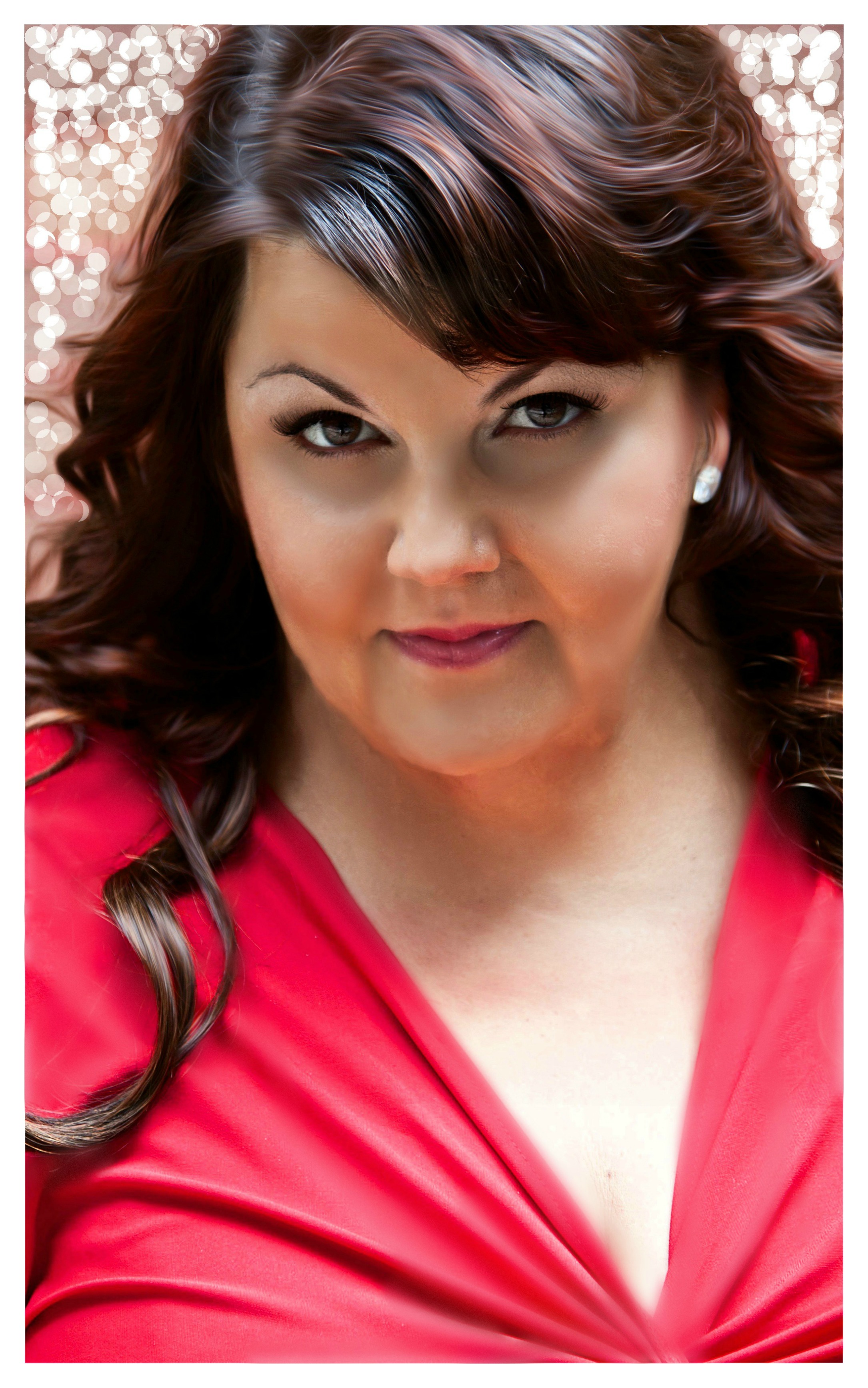
Soprano Margarete von Vaight

Soprano Margarete von Vaight

2) What is the best thing or worst thing about being a singer in a singing competition?

The preparation wins hands down. I was a Musician-in-Residence at The Banff Centre when I was notified about the LMISC. I panicked. It was my first international competition of this magnitude. An entire program needed to be performance ready in a short amount of time, three months to be precise. During my time there I worked with two exceptionally talented musicians, Cecilia Berkovich and Mark Simpson who experienced the repertoire from the perspective of the orchestra pit. It was an insightful opportunity to understand the composition from a panoptic view, not just the vocal line. Moreover, I felt I had already won. To have been selected to represent Canada was quite the achievement. Because I am in the early stages of my career, I felt the pressure was off. I could only become better aware of myself. What better place to learn than being on the stage itself? The process is the most enjoyable part for me- the end result of winning does not motivate me. I’ve invested a significant amount of time, effort and money; however, it is the music and the joy of learning and sharing that keeps me going.

I have enjoyed the impeccable attention to detail and precision the LMISC has provided. A fabulous support staff, top notch accompanists and wonderful facilities available to us. The people of Aalborg have been most welcoming and incredibly friendly. Like most singers, I enjoy visiting other countries and interacting with the local people. In addition, one of the highlights is singing alongside and learning from singers who are more advanced than me.  Learning a bit of the language ahead of time is also an interesting experience when put to public use. The response is usually in English followed by a giggle. After my first round of competition I saw a few of the audience members in the foyer, albeit we could not find a common language.  We managed to communicate via German, Danish and English. There were hugs! Music has no boundaries.

Unfortunately, the worst part of an international competition is the internal pressure one feels. No matter how positive one tries to make a competition sound, it can feel like a blood sport at times. Luckily I have not felt that at all while here. Consequently, it is the buildup of my own insecurities which I slowly diffuse over time. I’ve learned to laugh at myself. Matriculation comes through error. I cannot progress without errors. For anyone who says they do not experience insecurity: they are not being honest. It’s natural. It eventually wears off over time; personally I think a tad bit of insecurity is a good thing. It keeps the bar high ensuring I put my best work forward.

3) Who do you like to listen to or watch?

Joan Sutherland, Kiri Te Kanawa, Luciano Pavarotti, and Jussi Bjorling were my idols growing up. Their approach to singing seemed effortless. These days I listen a great deal to Irene Theorin, soprano. She has been a delight to watch. I’ve been in love with the Copenhagen Ring Cycle- I’ve been watching it time and time again. Stig Fogh Andersen blows my mind- his vocal and physical endurance beats many of the thirty-something year olds hands down. For the most part, one will rarely see me listening to Opera outside of the rehearsal hall. My musical tastes vary. My IPod includes Daft Punk, The Crystal Method, Agricantus,  Sarah Mc Laughlin, Emmy Lou Harris, Cote de Pirate and The Wilderness of Manitoba. I am also a lover of Danish and Swedish crime dramas- the soundtracks are also on my IPod.

4) What ability or skill do you wish you had, that you don’t have?

Unfortunately, I don’t “wish” I had a skill. I believe we all have skills, many of which are underdeveloped; however, some are more prominent than others. I am very action oriented. If I am required or interested in attaining a skill, I will learn it to the best of my ability and incorporate it into my skill toolbox. With that being said, I have many skills which best remain in the box. These days I am enamored with sewing. I designed all of my gowns for the competition and seem to have been successful in the execution of the skills I learned (patterns, cutting, sewing). Unfortunately, when my gowns were fitted I realized my sewing skills were terrible resulting in the hiring of a seamstress to correct my multiple errors. The body fit well; consequently, if I only had the arms of a ten year old and the height of a tree it would have worked out well.

5) When you’re just relaxing and not working what is your favorite thing to do?

I love driving. I drive every evening. I have been nicknamed “Night Rider”. When I lived in Toronto I could find myself up at Lake Simcoe after exploring the side roads. If I could drive to Europe I would. I am also an avid gardener. Attending to the garden is a trait inherited from my mother. I adore flowers. I also love living near the water. I eagerly await the return of summer so I may head out for my daily bike ride and stroll our deserted beach with my cruiser bike “Roxie”. Albeit not the norm, I am an enthusiastic furniture restorer. Unfortunately, it is a pleasure which best be controlled for I haven’t enough room to accommodate the space needed to house these projects.

*******

Five more about the singing competition.

1) Imagine for a moment what Wagner might say.  He wrote singing competitions into TWO operas…but those heroes–Tannhauser & Walther in Meistersinger–seem to mock rather than celebrate competitions.  Would he approve?

Absolutely!

Wagner pushed the boundaries on all levels. For the singer the real test is endurance, not just vocally, but psychologically. Both Tannhauser and Walther are tested figuratively and literally. At a glance, if one compares both characters side by side, Walther wins the precious hand of Eva, while Tannhauser loses his Elisabeth. Interestingly enough the same goes for singing competitions. Nothing is ever as it seems when it comes to Wagner. He was far too clever. His theme of redemption through love which applies to many of his operas runs parallel to singing competitions: redemption through performance; may the best singer win.

2) talk about the challenge of singing Brunnhilde in a singing competition, and how you’re approaching this special moment

In my experience singing the Wagnerian repertoire is a process rather than a challenge; moreover, it is not limited to the role of Brunnhilde. In my discussion with Poul Elming, Tenor (Lauritz Melchior International Singing Competition Director and re-owned for his role as Parsifal, Bayreuth, ‘94-‘01) the consortium of singers able to perform the work is rare and limited for several reasons. The voice type is rare. A prerequisite of course would be a moderately well developed sound, size and range of voice; consequently, the long period of development can be twice as long as for the non-Wagnerian singer. This also involves years of financial expense. As a student at the Royal Conservatory of Music in my teenage years I did not hear voices similar to mine. The range, size and vocal timbre was different than most of my peers. However, I was encouraged by my voice teacher at the time (Eraine Scwing-Braun) to sing with my natural voice. It was liberating. I was constantly being told to sing lighter or darker by other teachers. In my late teens I was asked to use Siegliende’s aria “Du Bist der Lenz” from “Die Walkure” as an exercise. It was evident that my voice responded to the long lines albeit I did not have the top notes. The higher register eventually developed over several years while the Wagnerian repertoire lurked in the background. It is important to note that the culture surrounding Wagner is different to the operatic culture of Puccini or Verdi. Wagner re-wrote the rules when it came to opera. Not only does he demand vocal stamina, and thorough examination of musical texture, but most importantly, he serves up a constellation of innovative orchestral structure in his compositions posing rhythmic and musical “clash” for the novice. For the singer, it requires one to collect this knowledge over time as it is multi-layered. This also requires a singer to go further by emotionally understanding his character’s motives through leitmotifs. I believe this requires quite a few years of “real life” experience to sincerely feel and portray for instance, the love Isolde has for Tristan. Singing the words and knowing the notes on a page is not substantial enough in my opinion. Often times the score does not provide the preamble to Wagner’s intentions. It is for these reasons that I have concluded that the process begins long before one reaches the stage of singing Brunnhilde or Isolde. Like Wagner’s compositions, maturation evolves over time, through experience.

3)   what do you love about singing Wagner? 

The Wagnerian repertoire is MAJESTIC! One of the most wonderful experiences I’ve had attending the LMISC is the thrill of hearing my colleagues. I feel alive and excited when I hear or sing the Wagnerian repertoire. The energy is like no other. It awakens a playfulness and joy that I do not experience elsewhere. While studying, I love the exploration of finding the answer to the question “Why did Wagner do that? What was his motivation?” Whether it is researching the works of Schoppenahuer, poetry, myth, or his letters, the quest for the answer is half of the fun.

4)  put this in context for us, at a time when the opera world seems so fragile, when so many companies are going under, and even the Metropolitan Opera seeming at risk.  Is opera an endangered art form, and how does that make you feel about what you do.

I believe it would be fair to say that Opera is undergoing an explorative renovation. Like most businesses there are high and low periods, sometimes, prolonged low periods. Businesses in general, not just Opera, are continuously trying to retain their clientele. Is the art form at risk? Absolutely. I am thankful to the administrative teams who work endlessly at trying to find innovative ways to retain and attract new patrons.  The silent communication between musicians and audience is electrifying. The sound of the human voice is extraordinary. To enter into “endangered” territory would be a disservice to society. At the end of the day I will forever advocate for live performance. The long hours of preparation, years of practice and joy of singing will continue- even if I have to set up my soap box in the town square.

5) is there a teacher or influence you’d care to recognize who has brought you to where you are today? 

Goodness, there are a few to list. My “dream team” Wendy Nielsen, soprano and Rachel Andrist, Pianist were an integral part of my development. Not only is their musical tutelage impressive, but their personalities and joy for creativity reflects a healthy approach to an art form which imposes the unrealistic quest for perfection.  Jane Eaglen, Wagnerian soprano extraordinaire, was also an integral part of my development. She remains in my opinion, the consummate musician. I learned a tremendous amount from her in the years we worked together. I must admit I hadn’t been the best of students in my younger years; however, I would not have been able to get to this point without observing Jane’s work ethic. Eric Weimer, (Lyric Opera of Chicago) permeated musical intellect like no other. A cornucopia of people, both family and extended family that put up with many years of supporting me. Lastly, the audience; without them I would not have as much joy in creating and continuing in this special art form.

*******

And so, the competition.  Friday night it began.

Margarete has sung in the first round, and although some singers were eliminated she’s through to the next round!

I’ll let you know what I hear, or check out their website (click the logo).
Posted in Interviews, Opera | Tagged | 7 Comments

Radvanovsky’s Theatrical Elizabeth

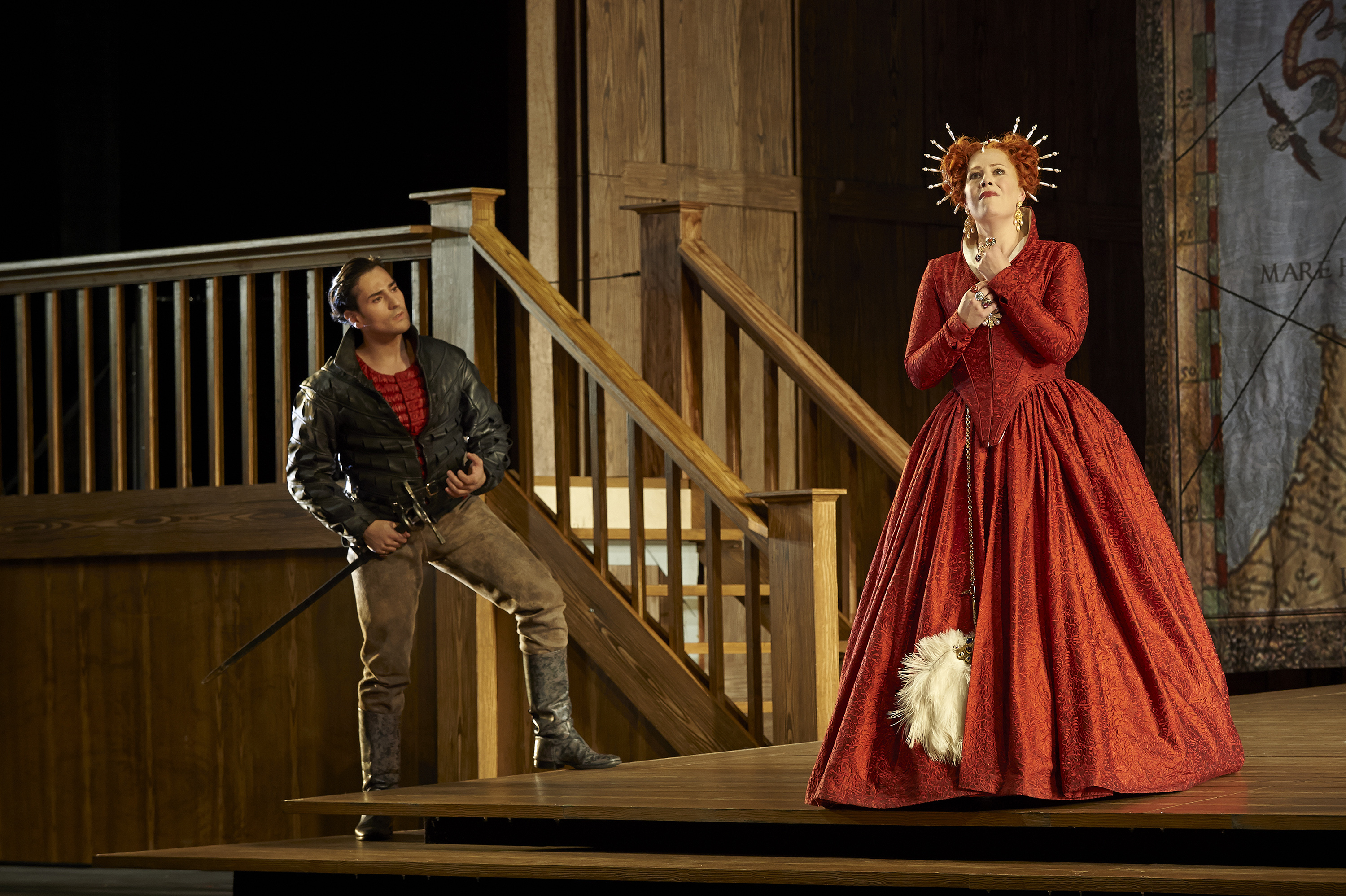
The opera is called Roberto Devereux but don’t let that throw you.  The reason we’re there, the reason to see the Canadian Opera Company production of that aforementioned opera is for another character, namely Elisabetta, aka Queen Elizabeth.

It’s a showcase for soprano Sondra Radvanovsky.  The best operatic roles demand singing and acting.  I recall being moved by Radvanovsky’s portrayal of Aida, so I was not totally surprised that she could act, even if I had no idea how far Stephen Lawless’s self-referential production would push his leading lady, and how far she’d answer his call.

As in his other two productions of the Elizabethan cycle of Donizetti operas, Lawless’s stage suggests the Elizabethan theatre.  It makes perfect sense if we think of how meta-theatrical the royal life was and is, what with the rituals and pomp that are already part of the institution of monarchy.   The opening sequence is particularly delightful in setting this up for us, aided by a few slightly obvious surtitles in case we miss the point.  But it’s a spectacular effect especially once Lawless gets to his last scene, a series of opportunities that Radvanovsky doesn’t waste.

While the program reminds us that composer Donizetti wrote in a style known as “bel canto”, this production is not an ideal example thereof.  It’s funny, one sometimes hears of director’s theatre where the radical production makes you cover your eyes, while your ears bask in the glories of the singing & orchestral playing.  This production is actually the reverse, a visual feast.  I’m accustomed to thinking of bel canto operas as virtuoso vehicles,  a mere pretense for a series of arias & ensembles enabling singers to show off.  Be prepared for something completely different –something better–from Lawless, designer Benoit Dugardyn and his cast, particularly Radvanovsky as Elizabeth I.  Yes there’s the usual oom-pah compositional style, the plethora of coloratura, especially for the soprano.  But it’s all in the service of a compelling if melodramatic story that we’ve seen before from Hollywood.  I think this version is as illuminating as anything I’ve seen onscreen, and Radvanovsky gives Cate Blanchett & Bette Davis a run for their money.  If the last scene doesn’t blow you away make sure you check for a pulse.

But except for the two principals, it’s the drama rather than the music that makes the magic.  Only Radvanovsky & tenor Leonardo Capalbo in the title role sounded genuinely Italianate, even though everyone onstage contributed to the compelling stage illusion.  I hold Conductor Corrado Rovaris responsible, letting the orchestra blast as though this were Verdi rather than Donizetti, thereby pushing some singers out of their comfort zone, struggling to be heard.  As this is opening night perhaps that can be adjusted in future performances.  But the lack of subtlety doesn’t spoil the effect, really, because we’re in a realm of storytelling, and the story being told is eloquent indeed.

Leonardo Capalbo as Roberto Devereux and Sondra Radvanovsky as Elisabetta in the Canadian Opera Company production of Roberto Devereux, 2014. Conductor Corrado Rovaris, director Stephen Lawless, set designer Benoît Dugardyn, costume designer Ingeborg Bernerth and lighting designer Mark McCullough. Photo: Michael Cooper

Leonardo Capalbo as Roberto Devereux and Sondra Radvanovsky as Elisabetta in the Canadian Opera Company production of Roberto Devereux, 2014. Conductor Corrado Rovaris, director Stephen Lawless, set designer Benoît Dugardyn, costume designer Ingeborg Bernerth and lighting designer Mark McCullough. Photo: Michael Cooper

I am looking forward to seeing this again from up close in my subscription seats, especially Radvanovsky’s vulnerability in the last scene.  We knew she can sing but now I know that she can act.

Prepare to be blown away.

Posted in Opera, Reviews | Tagged , , , | 1 Comment

Old with New

I was challenged to explain & even to defend something I love.  It was my second time seeing the Canadian Opera Company Hercules, accompanied by someone who prefers Puccini to Handel.

Why this old story in modern dress?  Or rather, an old story presented in an old style –baroque opera– but with soldiers wearing modern uniforms & carrying modern arms? Clearly it worked better for me than for her.

What I tried to explain was that Sellars’ Hercules permits us the luxury of being in two historic time periods at once.  We can experience the heroic times of Hercules yet watch him in modern dress.  It’s a curious parallel to what we experience in so many aspects of life.  While we have modern armaments, our ideas about honour and duty and compassion haven’t necessarily come very far.  We may wear modern clothes but we still experience love & hatred & jealousy, still need forgiveness & compassion.

Handel’s oratorio is a wonderful template for such an investigation, allowing us to be in both times at once.  The music divides the action up into discreet chunks for us, allowing us to contemplate one passion at a time, sometimes dwelling on one or two lines of text for five minutes of exquisite singing.

Sellars and his cast made a splendidly original use of the da capo convention.  Such arias  have an opening section, a contrasting section, then go back to the beginning, or from the head–da capo— of the page.  Historically informed performance practice has been employing the idea of elaboration in the repetition of the da capo part, meaning extra coloratura, extra showing off.

Or it can be a sudden emotional shift.  A man with post traumatic stress disorder can suddenly shift into a shadow of his self, behaving oddly.  A woman missing her husband, feigning happiness in the opening part lets her true concerns show in the repetition.  And so on, as the repetition is an opportunity for added dimensions & depths.

I was up close this time which kept my tear ducts busy.  Moments that moved me the first time were doubly powerful this time around.  There’s at least one for each of the principals.

One can’t let discouraging words get you down of course.  To each his/her own I would usually say, but with the caveat that when two people see the same thing and one has a significant experience, I’d rather be that person than the one who is able to deconstruct the show.

I won’t be able to see it again, alas, but so far Hercules is the best thing I’ve seen at the COC in a very long time.

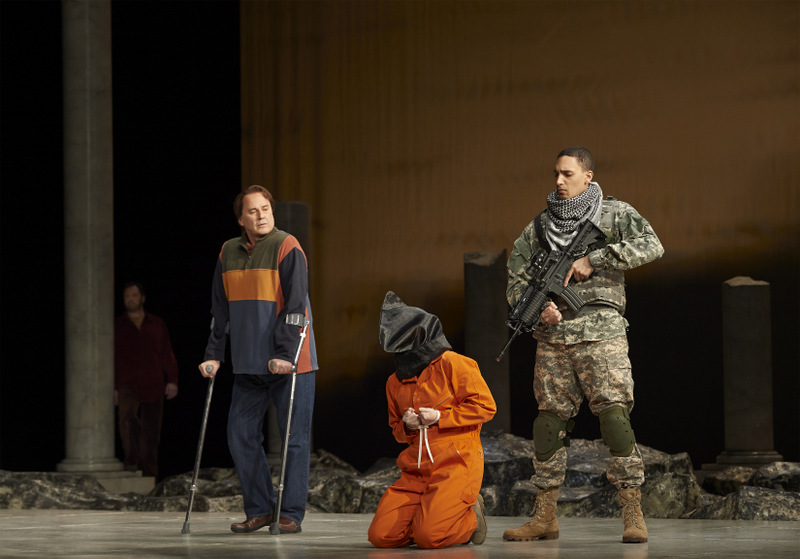
(l-r) David Daniels as Lichas (in background), Richard Croft as Hyllus, Lucy Crowe as Iole and Kaleb Alexander as Soldier in the Canadian Opera Company production of Hercules, 2014. Conductor Harry Bicket, director Peter Sellars, set designer George Tsypin, costume designer Dunya Ramicova and lighting designer James F. Ingalls. Photo: Michael Cooper

(l-r) David Daniels as Lichas (in background), Richard Croft as Hyllus, Lucy Crowe as Iole and Kaleb Alexander as Soldier in the Canadian Opera Company production of Hercules, 2014. Conductor Harry Bicket, director Peter Sellars, set designer George Tsypin, costume designer Dunya Ramicova and lighting designer James F. Ingalls. Photo: Michael Cooper

Posted in Opera, Reviews | Leave a comment

Polar Bears and Lullabies

Today Rick Sacks brought his charismatic performance style to the Richard Bradshaw Amphitheatre in a concert including the first piece dedicated to the RBA and the Canadian Opera Company. While we were in the realm of new instrumental music without any singing that didn’t mean Sacks wasn’t operatic, as he worked hard to build bridges between his world and that of the COC.

Sacks—the Artistic Director of Arraymusic and one of the most accomplished percussionists in this country— continues to be a mentor to the musical community. On this occasion for example, he undertook six different items that to the casual listener showed no evidence of a percussionist’s sonorities or sensibility. I am not even going to address the questions of virtuosity or skill in his performance, except to say that he makes it all look easy. The concert was titled “Polar Bears and Lullabies: New Works for MalletKat”. MalletKat is a velocity sensitive trigger resembling a keyboard but played with mallets, for varieties of digital synthesis.  With this gear Sacks strides with six-league boots: or more properly makes giant strokes with six league mallets.

David Lidov’s “I Want You to Know That I Love You (An Aria)” led off, seeming to use a singing voice via what I assume would be vocal samples (excuse me if I am unsure, but there’s quite a lot to the technical side of this concert) triggered by particular keys of the MalletKat.

Sacks’ “Lullaby” managed to sound a lot like acoustically created percussion, at least at one remove, given that he’d sampled a mbira, that he played in a manner sounding a bit like a marimba with more depth & tone. As with every one of these performances, I was a bit astonished looking at the choices made both in composition (assisted by Sacks’ explanations of how it was done) & performance (wondering what Sacks heard, given that his output was very gentle, never particularly loud or jarring), a kind of winnowing of enormous possibilities, down to a very select and economical composition. Yes it all seemed short, and I wish it had been longer.

“Dragnet” was not the last time Sacks would get into a dramatic portrayal while playing, employing evocative microtonalities from sampled piano (or so it sounded) to suggest something as old as one of those detective movies. Sacks looked like a cross between a Raymond Chandler detective & yes, a percussionist at the close.

“Polar Bear” was an open-ended improvisation using loops & a wonderful assortment of sounds. This was the only one on the program that didn’t blow me away but even this one had lots of beautiful moments.

“GOLEM“ by Giles Gobeil is a recent work Sacks claims he’s only played once before, the piece that was the highlight of the concert for me, which Sacks whimsically called a monsterpiece (and it was indeed). Gobeil sampled over 200 industrial sounds that are much more than samples, because they were electro-acoustic creations, which I presume are meant to mimic industrial processes. When Sacks played it was as though he and his MalletKat had become a factory (a cyborg?), standing there, the sunny University Ave view surrounding him, while he played a factory with his mallets. Or did he portray a factory? You tell me, given the dramatic overtones of the concert. This was a very gentle series of sounds in Sacks hands notwithstanding his warning that it might be loud; I wish it had been louder actually.

Last item was “Andronicus”, given its premiere on this occasion, dedicated to the COC and the RBA. I believe it was meant to honour Arraymusic’s relationship with the COC, especially after hearing and seeing what Sacks did.

Rick Sacks

We heard another composition of samples from the MalletKat, this time literally operatic. Some were instantly recognizable chunks or chords or passages from operas. Others were portentous sounds like bells or strings or ostinati, sometimes orchestrated into climaxes, sometimes piled high with mock-melodrama, while Sacks mugged outrageously. I’d seriously like to see / hear this again, wishing he’d take it to the next level, and see if he can sustain it longer without letting off the steam in mere comedy. I believe this can be several possible compositions, depending on how whimsical or serious one feels at the time.

I’ll have to think about this some more, in a concert that –for once—used the word “new” honestly and honourably. Sacks is a touchstone for brave & collegial exploration, gentle because he wants to take us along rather than leave us behind.

Posted in Personal ruminations & essays | Leave a comment

Rick Sacks’ free concert tomorrow

“Press releases and announcements” are presented verbatim without comment

Join Arraymusic’s Rick Sacks for a noon hour concert at the C.O.C.


Arraymusic

presents

Rick Sacks’ Solo MalletKat Concert

Thursday., April 24, Noon
The Richard Bradshaw Amphitheatre (
southeast corner of Queen Street West and University Avenue.)
FREE Admission

I Want You To Know That I love You, an Aria (2011 revised 2012) –  David Lidov
This piece uses the MAX programming language to access voice synthesis. It experiments with inflection and what we think of as song.
Lullaby  (2010) – Rick Sacks
Sampled mbira, with synthesizer sounds and Brazilian drums.
Dragnet (2010) –  Rick Sacks
A million stories in the big city. This one uses the Bohlen Pierce Tuning System.
Polar Bear (2012) – Rick Sacks
Using loops of different lengths this improvised piece uses a program called POLAR.
GOLEM  (2014) – Gilles Gobeil
Using 272 industrial sounds, Gilles has crated a monsterpiece. Both sympathetic and frightening.
Andronicus  (2014 world premiere) – Rick Sacks
Dedicated to the Bradshaw Amphitheatre and the COC.

Admission is on a first-come, first-served basis and seating is limited. Please join the line-up early to avoid disappointment. Latecomers will not be admitted. See you there!

Rick Sacks

Rick Sacks
Artistic Director Arraymusic

Posted in Music and musicology, Press Releases and Announcements | Leave a comment

Cobalt

click for Jocelyn Morlock’s website

It’s a colour.  It’s an element.  And most recently, it’s Jocelyn Morlock’s CD that I’ve been playing incessantly.

I first encountered Morlock as one of the composers in the workshop experience of Tapestry Briefs,  a process whimsically compared to speed-dating. Composers & librettists worked together on a series of brief subjects.  Morlock made a strong impression with the most disturbingly memorable five minutes of any I encountered.

Cobalt is not an operatic CD, but rather seven instrumental compositions that represent a kind of Morlockian smorgasbord,  demonstrating her flamboyant and distinctive voice.

1) “Music of the Romantic Era” gives a suggestion of the depths of her sensibility.  When was the last time you laughed out loud at the wit of a composition?  At once hysterically funny and poignant, a piece showing genuine ambivalence about music and music-making, ostentation and blatant rhetorical gestures of beginning & ending abound, calling attention to the bizarre realm of the concert and concert music.   This is a wonderfully accessible piece of music and a brilliant way to begin a CD.

2) “Cobalt” is as elusive and ambiguous as the opening piece was direct.  I found the composition somewhat inscrutable.  We’re listening to orchestra & a pair of solo violins in an obsessive duet, small phrases gradually elaborated into a bigger and bigger design in the whole orchestra.

3) “Disquiet” is one of the compositions on this album that is genuinely dramatic, suggestive of a mood & of emotional dynamics.   If I were to psychoanalyze this piece I’d say that “Disquiet” needs to go see a shrink, because it’s troubled.  Yet I can see that Morlock is exploring this way of being from a solid footing.  At times I think we’re on Bernard Herrmann’s crazy Hitchcockian turf, where dissonant clusters suggest pain that won’t go away, where repeated patterns resist change or healing. It’s a safe place ultimately for such an investigation, one that doesn’t leave me feeling tainted or troubled by the emotions that are stirred.

4) “Asylum” too comes from a place of emotional wisdom, showing us both pain and relief, a dynamic essential to feeling Asylum.    On this and a couple of other pieces I had wondered which came first: the music or the title.  Morlock said via Facebook that it’s usually the composition.  As the piece takes shape I suppose the meaning of the music begins to emerge.  However it works, the titles seem very apt.  As a person with romantic leanings myself, I prefer this approach, where the emotional side is not suppressed but actively cultivated.

5) Speaking of romantic “Oiseaux bleus et sauvages” sounds very much like what you’d expect at least at the beginning.  After a birdlike opening we’re into something minimalistic, which is to say that we’re in a realm of pattern music.  To me pattern music usually connotes music as music, notes that are not imitating birds or natural phenomena, but instead are music that makes a presence or mood.  That apparent contradiction notwithstanding, it works wonderfully well.  We get a few more sounds that are birdlike, or at least the sounds an orchestra makes when imitating birds.  The effect is neo-classical or perhaps neo-romantic, in calling attention to the apparatus of an orchestra imitating birds, not unlike the feelings we get in Prokofiev’s ‘Classical’ symphony.  It’s a very safe and charming version of  Nature.

6) I’m somewhat conflicted about this track, the only one that didn’t grab me from the first.   It’s called “Golden” and it’s growing on me the more I listen to it.  It doesn’t seem to fit with the others, but that hardly makes it bad.  I realize that this one has a great deal of subtext in the liner notes –which i’ve only just looked at now as i write this–so i need to open my mind to the ambitions of this composition.  Something about it rubs against my grain, perhaps because there are human voices and words.   Yet I believe this too is romantic on Morlock’s part and a sincere exploration of something that hasn’t quite penetrated for me.

7) we close with “Solace”, another piece employing a tuneful solo violin, but this time with a soulful cello as well.  There are moments reminding me of “”The Lark Ascending”, in a direct and bold statement of a musical idea.  It’s a strong demonstration of a composer with ideas and the wherwithal to develop them.

Overall it’s quite an impressive outing.  Diverse as the pieces are, I’m sensing a kind of post-romantic understanding of music linked to & inspiring feeling.  I continue to listen to the CD, and happily await more from this talented young composer.

Here‘s how to get “Cobalt”

And you can also find it in a record store from Naxos.

Posted in Music and musicology, Reviews | Tagged , | 4 Comments

10 Questions for Kate Applin

Toronto soprano Kate Applin founded Metro Youth Opera, a new opera company designed to create viable development opportunities for young artists in all fields related to the world of opera: singers, stage directors, music directors, and more. Holder of an Honours BMus in Voice Performance and an Opera Diploma from Wilfrid Laurier University, a former student of Kimberly Barber and Christiane Riel, Applin now studies in Toronto with Joel Katz.

In addition to her roles as Founder, Artistic Director, and President of Metro Youth Opera, Applin has performed with the company: as Despina in Così fan tutte in 2011, Adina in The Elixir of Love in  2012, and Serpina in La serva padrona in 2013.  Next up?  Hänsel and Gretel opening next week at Aki Studio Theatre.

On the occasion of the newest production from Metro Youth Opera, I ask Kate Applin ten questions:  five about herself and five more about her role in the company.

1) Are you more like your father or your mother?

When I was a kid, my sister and I were practically like carbon copies of our respective parents: I looked just like my dad with my red hair, freckles, and round face, whereas my sister looked so much like childhood photos of mum, you could barely tell them apart. The striking differences between us have definitely softened over the years, and our physical characteristics have met somewhere in the middle at this point in time.

My mother is a formidable woman – almost anyone who meets her can tell you that right away. She is intelligent, strong, poised, social, and almost always gets her way. She instilled in me a strong sense of self, and a willingness to come up with unexpected ideas and pursue them until they become real. Those traits are the ones I’m most proud to have received from my mother. On the other hand, my father was a very ordered man, with an infallible work ethic, great cooking skills, and an acerbic, British wit. While my cooking and wit are passable, I think my sensibilities tend toward the minimalist side of life, and I see that as coming from my father.

2) What is the best thing or worst thing about being artistic director of a company such as Metro Youth Opera?

The most gratifying part of running Metro Youth Opera is getting to see directly how the company can contribute to the careers of the emerging artists that pass through it. Knowing that our mission and mandate has helped a singer transition to a new stage in their career makes all the hard work worth it. I only wish that we had more time and resources to be able to mount more shows and help more singers on their journeys.

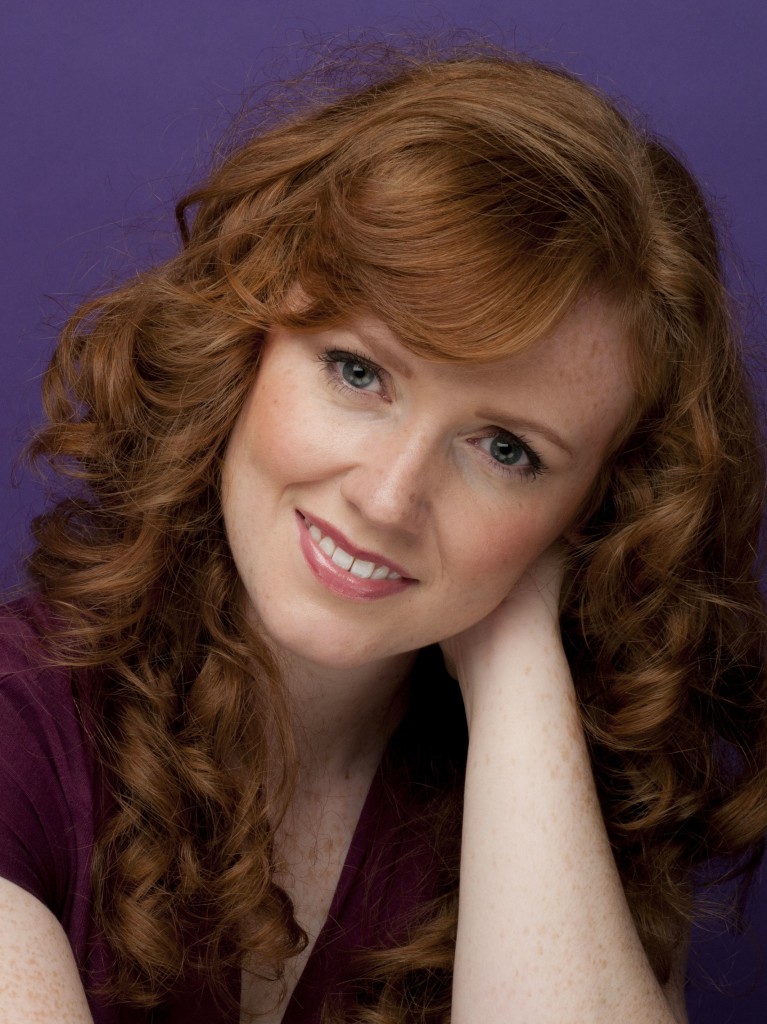
Soprano Kate Applin, Founder, Artistic Director, and President of Metro Youth Opera

Soprano Kate Applin, Founder, Artistic Director, and President of Metro Youth Opera

3) Who do you like to listen to or watch?

I was fortunate as a kid to grow up in a house full of music. My dad sang in church choirs in England as a boy, played some classical guitar, and taught himself to play Bach by ear when he turned 50. My mum was always singing when I was young – she trained quite rigorously and competed as a soloist in NATS and other competitions here and in the US. To this day, she is still very musically active, and sings with the Orpheus Choir of Toronto. I can remember lazy Sundays spent being quizzed on music as a kid: was this Mozart or Bach? King Crimson or ELP? Joni Mitchell or Joan Baez?

Growing up on such a mixed musical diet leaves me with a varied palate, and I tend to choose my music based on my mood or activity. Some days, I’ll pop on a favourite set of art songs (I could listen to La bonne chanson any day), somedays it’ll be a Songza playlist of indie rock, and sometimes I just need some serious Beyoncé empowerment to get me through the day.

When it comes to what I watch, I’m a bit of a TV marathoner. I don’t have cable, so I binge watch series on Netflix. Most recently, I watched the first three seasons of Homeland. I love Carrie’s strong and smart, yet morally questionable character. It’s very empowering to see the shift that’s happened in television lately: female characters painted with the same, complex brush that has been used on male characters for ages.

4) What ability or skill do you wish you had, that you don’t have?

Easy one: Dancing! I wish I was a talented dancer, because I love to move. I love, Love, LOVE to watch great dancers to their thing. Whether it’s ballet, tap, ballroom, hip-hop, modern…these artists have me, hook, line, and sinker. I am fascinated by the capability of the human body. We explore parts of it in our work as singers, of course, but I am captivated by the extension, flexibility, strength, and grace of great dancers.

5) When you’re just relaxing and not working what is your favourite thing to do?

My favourite way to relax is at home with friends, a glass of wine, some good cheese, and my cat. My partner and I love to have a mixed bag of friends from a variety of circles come over to meet, eat, and have fun, thoughtful conversation. I can’t really think of anything better than being social and at home at the same time!

*******

Five more about Metro Youth Opera’s Hänsel & Gretel upcoming April 25-27.

1) Please talk about the challenges in producing Metro Youth Opera’s Hänsel & Gretel.

One of my favourite things about this season’s production of Hänsel & Gretel is our cast. This is one of the most cohesive groups we’ve ever put together in a room: their energy, talent, enthusiasm, and commitment encourages me in my work as producer.

Ann Cooper Gay, Executive Artistic Director & Conductor of the Canadian Children’s Opera Company

I would say, on the production side of things, that Hänsel & Gretel is the most difficult show we’ve done so far because of the size of the cast. The leads are few (there are just 7 of us), but I was determined to have a children’s chorus in the show, and I had never mounted a show with kids in it before. Adding an extra 10 singers into the mix has brought with it its own set of challenges, but mostly joys. For a decade of my childhood, I sang with the Canadian Children’s Opera Company, and I was an eager and committed chorister for those ten years. This is where I really began to explore my love of opera, and one experience, in particular, is one of the most important factors that has brought me to where I am today. Singing in the children’s chorus of the Canadian Opera Company’s 1998 production of Hänsel & Gretel was like being part of a real-life fairy tale. We got to sing, dance, and play onstage each night amidst Maurice Sendak’s magical production. It was like wonderland to me.

Fast forward more than 15 years, and you can understand why I was so determined to have a children’s chorus in my production. We are fortunate to be working with 10 fantastic kids from the CCOC this season. It feels like things have come full circle for me, and I hope that MYOpera is able to give these young singers the same feeling of awe, wonder, and excitement about opera that I felt when I was their age.

2) What do you love about Metro Youth Opera?

My favourite thing about Metro Youth Opera is getting to watch the company do exactly what it set out to do. When I started MYOpera nearly 4 years ago, I saw a need in my community of emerging artists. We needed somewhere to incubate as we honed our craft, but as a performer you can’t incubate as an island. The only way to really improve your performing skills is simply by performing, and I felt that there weren’t enough opportunities to do that without landing yourself deep into debt with school, training programs, lessons, coachings, and the like.

At this point, Metro Youth Opera has hired over 25 emerging artists, and seeing their professional growth after they’ve left the company is the most rewarding part of my job. MYOpera alumni have been accepted to train in Young Artist Programs with the San Francisco Opera (Merola), the Canadian Opera Company, Opéra de Montréal, and Calgary Opera, and have been accepted to graduate and post-graduate studies across Canada and the US.

3) Do you have a favourite moment in Hänsel & Gretel?

Hänsel & Gretel is such a magical opera for me, so it’s hard to choose just one favourite moment! I find that the music in the pantomime scene between Acts II and III is exceptionally beautiful, though, so that might take the top spot. For our show, don’t expect a gilded staircase and flying angels, though. Our director Alison Wong has put together thought-provoking concept that addresses some questionable aspects of our consumer culture. I’m confident that audiences will leave the theatre feeling both challenged by the questions raised and satisfied by the story, the music, and the work of these talented artists.

4) How do you feel about the importance of Metro Youth Opera?

I started MYOpera with a very specific purpose: to give Toronto’s emerging artists the opportunity to perform complete roles and be compensated for it. I think the formula has worked so far because of our dedication to the company’s mandate: we only hire emerging singers with little or no professional (read: paid) role experience; we choose operas that can be performed with a small cast and a piano, and we give our artists the opportunity to take part in fully staged, costumed productions on well-thought-out, minimalist sets. By deciding years ago that this company was designed to serve the emerging artist, and that the emerging artists are not there to serve the company’s vision, we have created a formula that has legs to continue as long as there are emerging artists in need.

5) Is there a teacher or an influence you’d care to name that you especially admire?

I think many singers create strong bonds with their teachers and mentors, and there are certainly a few that have made me the person and artist I am today. They include, in chronological order:

  • Ann Cooper Gay (of the Canadian Children’s Opera Company): For bringing me back after a brief stint away from the CCOC. If I hadn’t been in the CCOC in my final years of high school, I never would have pursued voice in university, and then where would I be?
  • Kimberly Barber (voice teacher: B.Mus.): From the moment I accepted WLU for undergraduate studies, I hounded Kim to take me as her student. Each time I asked, she would remind me that these things were decided by audition in Orientation Week. Thankfully, I made it in to her studio in the end. From Kim, I learned the importance and beauty of language.
  • Joel Katz

    Christiane Riel (voice teacher: Op. Dip.): For my Opera Diploma, Kim was on sabbatical, and our replacement for the year was Christiane Riel. I was so lucky to have had her guidance, if only for 8 short months. From Christiane, I learned how to “sing from my womanhood!”

  • Joel Katz (current voice teacher): When I came back to Toronto after school, I knew I needed a teacher who would help me to really own my vocal technique, and Joel was the match for me. From Joel, I learned how to build my technical toolkit, and how to find a singer’s poise in the physical embodiment of all my characters.

*******

Metro Youth Opera present Hänsel and Gretel
April 25-27 at Aki Studio Theatre
Daniels Spectrum Building 585 Dundas Street East, Toronto.
Click for more information.

Posted in Interviews, Opera | Tagged , , , | 1 Comment

The Secret Life of Walter Mitty

The Secret Life of Walter Mitty (2013) cost $90 million to make but earned only $58 million. Even with the few bucks on PPV I spent tonight this is a film that seems to bely its own messages.    It’s an affirmative movie for a dark time, something Frank Capra might have appreciated even if it‘s missing his kind of happy ending.  “Dream big” it seems to say, or “don’t worry about the bottom line.”  But it’s a nasty world we live in.  In the 1930s FDR was President and everything was possible.  Now in Obama’s Presidency? nothing is possible except negative commentary (and forgive me if i’m guilty of same…i miss Capra, miss believing in the impossible).

No, this is not the story as we know it from James Thurber, as elegant & understated a piece of brilliance as you could ever encounter.  Believe it or not it’s available online, having first appeared in the New Yorker.

It’s been adapted several times for stage, once before onscreen with Danny Kaye, and now as a vehicle for Ben Stiller.  I never liked the Danny Kaye version.  I think I like Ben Stiller’s too much.  It breaks my heart that this film is so true to its own world.  This Walter Mitty’s daydreams are juxtaposed against an unforgiving backdrop of Life Magazine at the very end of its existence.   Losing your job doesn’t have to define you, the film says.  Money isn’t everything.  Materialism is wrong.

I love what this film is saying even if its lack of success suggests that most people are too busy struggling to find a job to believe in its messaging.  I think we’re in a time that needs  Capra’s schmaltzy comedy more than Stiller’s subtle zen.

What’s particularly different about this film is that Mitty defies his own name to become someone different.  That doesn’t mean he becomes rich or successful, just that he ceases to be a dreamer, and stops struggling.  It’s deep.

There are two remarkable performances alongside Stiller.  Kristen Wiig shows me that she can act, giving us a very laid-back presence that’s devoid of the usual frenetic weirdness with which she’s usually associated in her other roles.  Sean Penn gives us a persona that might be a parody of Sean Penn, but even so is very enjoyable.

I am not surprised that the film seemed to confirm everything the bad guys in the film were saying.  The values associated with print magazines & those of us who still remember how to read are quietly affirmed even though it’s a completely equivocal ending.

I wish I could forecast that in ten years or so, Stiller’s Mitty becomes a film with a cult following, even a money-maker.  This is a beautiful poignant film to watch, but one that is bittersweet.   I love this adaptation even though I wonder: will Stiller get another opportunity to direct?  Or will the bottom line dictate that it’s not permitted..?

Posted in Cinema, video & DVDs, Reviews | Tagged , , , , , | 8 Comments

Looking at Lully

There are two departure points for this little excursion.
1) Opera Atelier’s Toronto revival of Persee opening next week
2) Joseph Kerman’s departure from the realm of the living, earlier this year.

In Opera as Drama Kerman looks at a great many works while presenting his thesis that “the composer is the dramatist”.  It’s a seminal idea, whether or not it‘s always true.

I want to zero in on a small part of the book, a chapter called “The Dark Ages”.  Kerman’s viewpoint –that the baroque is a little known period of “unparalleled dramatic fatuity”–is dated.  I don’t deny that I bristle at the way he characterizes the artists of this period.  One of the big challenges in our encounter with a score (whether we‘re reading through it or hearing a performance)  from the baroque is all too familiar from encounters with new music (and one of which i must be mindful of, encountering new operas last week from Fawn Opera, or as i listen to a new CD by Jocelyn Morlock).  We won’t know the music, nor will the performers, which changes everything.  A score is like a puzzle that must be solved –and can be solved sometimes in several ways–before the performance happens.  We may mistake the effects we hear –the misadventures or failed experiments of performers–for the work of the composer, their challenges perhaps still too daunting.  We may not appreciate how familiar & mainstream works come to be known inside out by performers as they grow up, as part of their pedagogy and therefore as touchstones of eloquence & virtuosity.  Before singers learn how to float the high note at the end of an aria there may be years of struggle that are like a kind of debate, as different approaches are tried out.

Now imagine that we as modern performers, scholars and listeners come upon a body of work from a composer without having heard others sing this repertoire.  We can only work from what we’ve done before as singers, gradually figuring out new approaches.  Lully is such a composer, one among many whose popularity –more precisely, their lack of popularity–has made him obscure where he was once the most popular in his city.  How to decode his scores with perfect fidelity to the style of the time–that is, how to read the music and understand the various implied and unwritten requirements in the score that are part of the consensus of musicians & singers from that time– is surely impossible.  All we can do is hope that scholarship informs the efforts of the musicians, who read contemporary accounts, who stare at the scores & listen to what other musicians are doing.  Each performance is like an experiment, a speculative assembly of notes & words & especially assumptions.  Even when we’re dealing with music from long ago, there can be a consensus, admittedly among that very small group of performers exploring the repertoire, such as William Christie, David Fallis and others.

That’s all a preamble to looking at what Kerman said, or rather, looking at how Kerman looked at Lully.  Here’s the third paragraph of “The Dark Ages” chapter in its entirety.

    The period between Monteverdi and Gluck can also be called the dark ages of opera.  In spite of all its extent and fame, and in spite of much musicological research, baroque opera is little known today.  It is seldom produced; when it is the nearly always bizarre productions seem designed to distract the audience from one basic fact: that modern directors find it all of unparalleled dramatic fatuity.  The tacit judgment is equally harsh on French court opera, whose lasting model was formed in the 1670’s by Lully, and on the huge tradition of Venice and Naples, which settled in the middle quarters of the next century around the librettos of Metastasio.  French opera was a stilted entertainment combining baroque excesses with the driest neoclassicism.  Italian opera was a shameless virtuoso display, emasculating classic history into a faint and tedious concert in costume. What remains in the musical imagination from French opera is no more than its grave ballet suite; what remains from the Italian are the witty attacks of The Spectator, The Beggar’s Opera and Il treatro alla moda.  And some lyric “gems” to be sure, picked out for students in Gloires d’Italie or Masters of the Bel Canto, and even sung sometimes, in oddly anachronistic versions. (Kerman p40)

Click for more about Linda Hutcheon’s book A Theory of Adaptation

I need hardly mention that the most exciting opera in Toronto right now is another baroque masterpiece, namely Hercules.  The director–Peter Sellars– has indeed given the work a production one might call bizarre, in dressing the cast in the clothes of our own century, making Hercules himself a victim of post-trauma stress disorder.  The design brilliantly incorporates the ancient idea of ritual sacrifice by putting Hercules into a sort of fire-pit. He is indeed burned up by the poisoned cloak, as in the original story, yet informed by modern ideas making this very relevant & very powerful.  Handel is one of the dramatists, but shares surely with the modern team who add a gloss upon the surface of the original.  It seems a perfect demonstration of an effect Linda Hutcheon speaks of in her book about adaptation, where you can see meaning as though through several layers.

Opera Atelier do not super-impose very much over Lully’s scores, although director Marshall Pynkoski does interpret opera boldly.  He explains that historically informed performance still entails interpretation, and not attempting to simply reproduce what was done long ago.  The result is sufficiently reliable that OA revive this opera regularly since their first production sometime around the year 2000.  I recall how excited I was then, and how I’ve had to see at least one performance of each subsequent revival.

It’s no more a “stilted entertainment” than any other opera.  I know if I were to play Handel for some people of my acquaintance they’d laugh at this judgment.  I find Lully very tuneful, the orchestral colours –as embodied in the sounds of Tafelmusik Baroque Orchestra–seductive, so much so that I always regret when the opera ends.  The voices are not pushed the way they are even in Handel, let alone in Verdi or Puccini, which enables a level of expression one doesn’t expect in opera.  The only analogies  I can easily invoke for comparison are the arias Mozart wrote for Schikaneder in The Magic Flute: easy tunes that allow any singer to suddenly act (so long as they don’t become a ham).  Rossini does similar things in some of his comic ensembles, enabling singers to do schtick while they sing.  How can one act if one is struggling to sing?  Lully got this long ago.

In fairness I suppose Kerman is attempting to paraphrase the attitudes of his time, how others had judged Lully and so many other composers.    I just don’t like how much fun he has heaping abuse on these neglected gems.  And once you’ve seen these works performed you realize why they were popular in their time.  In the meantime, Opera Atelier regularly brings such works back for our amusement.  Persee opens April 26th at the Elgin theatre.  Or you can also see their production on DVD.

Don’t miss your chance to encounter Lully.

Posted in Books & Literature, Opera | Tagged , , | 2 Comments

Fawn Opera: l’Homme et le Ciel

I witnessed a clinic on how to create buzz. Let’s review.

Social media spread the word about L’Homme et le Ciel, an opera in progress from Fawn Opera.  This past week, the performers did a workshop, and then opened it up to the public for a single performance.  As a result it was standing room only.  Overheard furtively in the lobby: “are there going to be any more performances”?

The creators spoke briefly, explaining that this is a fragment of a larger work, to be completed and hopefully taken to our hearts.  They admitted it was a bit of a tease, partly for the purpose of fund-raising and to build interest for next time.

They succeeded I believe.  Amanda Smith, Fawn Opera’s Artistic Director, who directed and designed the performance, would seem to be the chief architect & instigator, and has reason to be excited by what we saw and felt tonight.    Having recently seen lots of new opera this year, I have to say Fawn stands up very well in comparison.  This is the most operatic new work I have seen in a long time.  Don’t make me name names, as I’d rather not laud Fawn by denigrating anyone else.  Instead let me unpack that thought.

By setting the work in French we were pushed into a more symbolic place than if we were in English.  I’m not saying I don’t like opera in English –although it’s the exceptional production in English that works for me whereas I always love opera in a foreign language with surtitles– but by creating this distance, we have less of a hurdle to accept music and singing.

By getting a story pertaining to spirituality and times verging on biblical we’re again in a place apt for opera.  No they don’t proselytize or push God into your face. Quite the opposite.  In fact l’Homme et le Ciel challenges or at least problematizes faith and religion.  To put this in reverse, the text wouldn’t work nearly so well were it spoken, especially in English.  By putting it into French, and especially by setting it to music, this text can become something much greater.

Composer Adam Scime explained how he came to collaborate with librettist Ian Koiter, on a story originating in the first centuries AD.

Composer Adam Scime

It’s a wonderful time to invoke; I am reminded of Giasone, the opera I saw last weekend.  Just as Cavalli, composing in the first century of opera avoids being trapped by the conventions bordering on dogma that we see in later composers, so too with a story that addresses spiritual thoughts from before religion was etched into stone.  The critique that’s front and centre in this text feels perfectly natural and not fraught the way it becomes in later periods (thinking for example of Brecht’s Life of Galileo).  Koiter’s version of this old story feels very fluid and unencumbered by the weight of doctrine.

A man’s passion is central to the story, so we’re in a natural place for singers to be delivering emotional lines accompanied by colorful orchestration.  I believe that expressions of passion have been the thing opera has done best –usually in the mouth of women rather than men–where you have a perfect vehicle for song and music.

There were three scenes, each substantially different musically from the other.  The first scene was very busy musically, at times overflowing with colour & dense with information.  The style felt somewhat modernist in its brazen dissonances (not sure if it was 12 tone or not), sometimes more expressionist in the powerful commitment to emotion and bursts of colour from the small ensemble playing beside the stage.  The dramaturgy reminds me of Salome (or Acteon) in the audience’s complicit voeurism, watching the protagonist Hermas watching and being moved by a beautiful woman, the small orchestra at times overpowering us with the intensity of the moment.

The second scene sounded much quieter, more reflective, more subjective, and that makes sense considering that the protagonist Hermas is asleep,  having a vision that’s enacted before us.  I had the impression (unsure because we didn’t have surtitles at this point) that Hermas seemed unwilling to accept the standard –religious– judgment for his very human responses.  And of course we the viewers are again complicit, drawn in and taken along on his journey. Smith’s design employed huge vinyl sheets resembling  shower curtains: making it all very intimate.

The third scene, I confess, mystified me, but let me add that this didn’t stop me one iota.  The surtitles stopped functioning partway through, yet this isn’t a bad thing.  I recall that the opening of Svadba had a similar problem, a performance also received rapturously.  I daresay that maybe some of us are tired of knowing what everything means, and enjoy being in a mysterious and problematic place: which is precisely where we were.  The synopsis tells me that Hermas sees another figure during his sleep who speaks to him about  temptations & family.  I only got that Hermas was again struggling with the discrepancy between what he saw and felt, between spirit & body.  At times in this scene –where the words (not fully heard, without surtitles) were the barest guideline– I was still carried away by the combination of the mysterious images before me, the singers and Scime’s composition.

At times the music included electronic elements, possibly via digital delay or some sort of processing of the performance, or maybe music originating from other performers.  There were people sitting behind us –in addition to the six-member ensemble of acoustic instrumentalists–who may have been playing other instruments.  I couldn’t tell, only that there were sounds coming from speakers, and I don’t claim to know how they were created.   I like electro-acoustic hybrids and combinations, and only wish I knew a bit better how these sounds originated.

I liked the sound of the vocalists even if I am hesitant about saying too much, when I was out to sea for much of the performance due to the absence of titling.  That only means I don’t know precisely what they were singing at a given moment, but still was moved by them.  Hermas was very effectively sung and enacted by Giovanni Maria Spanu. Rhoda, the woman bathing in the river who inspires Hermas’ responses, was sung by Larissa Koniuk.  Adanya Dunn was the Messenger, also a strong presence.

Fawn Opera return May 3rd with Synesthesia III, at which time several short films will be presented with new scores performed live for the occasion.  L’Homme et le Ciel will be presented in a more finished form at the Open Ears Festival in Kitchener in June.

Posted in Music and musicology, Opera, Reviews | Tagged , , , | 7 Comments