Marathon stamina

In June, Stewart Goodyear will be performing all 32 Beethoven piano sonatas in a single day, under the dual auspices of Luminato & the Royal Conservatory of Music.  I heard about this undertaking on Karenoke , where the pianist has inspired a parallel (if smaller) mountain-climb on the blog.

Karen is listening to each of Beethoven’s 32 piano sonatas and blogging about her own trip through the cycle.  Her blogging feat reminds me of Julie & Julia: where the writer undertakes a big job that’s run in parallel to that of someone more famous.

When you write that many of a certain type, there’s bound to be some ups and downs.  I am tempted to say “YMMV”, short for “your mileage may vary”: as testimony to the astonishing range among those 32.

stuck??Today, just to get a tiny sense of what’s involved in Goodyear’s task, I pulled out my sonata book and played through a few.  I skipped the first one because I don’t like it very much.  I went to the second one, I guess partly because Karen had expressed misgivings about it.  I studied it with a teacher long ago, a teacher who –curiously enough—spoke to me in defence of a sonata I didn’t like very much at first glance, the very sonata Karen didn’t like either.

Ha.  As I said to Karen yesterday on her blog:

“…don’t feel bad if you don’t love all of Beethoven, particularly not the Beethoven pieces that have never really been very popular. At this point –funny as it sounds–Beethoven wasn’t Beethoven yet.”

That’s what I guess I am thinking about as I post this to the blog.  Who says all 32 are all awesome masterpieces?  I have some I love dearly, and others that I am still learning to like.

So today, while bouncing back and forth to the laptop –to give my eyes and neck a bit of a rest on a day when I was working really hard—I went off to the piano for breaks in the afternoon.

#2 was harder than I remembered—that is the opening movement was hard—because I hadn’t played it in many years, yet I dove into it without any caution whatsoever.

The second movement?  Largo appassionata. Wow I’d forgotten how much I love this one.  I realized as I started playing this, that there’s been a revolution in Beethoven.  Roger Norrington, John Eliot Gardiner, Bruggen, plus assorted locals of the HIP (historically informed performance) persuasion have completely seduced me away from decades of pathos & gravitas.  I was once a follower of Klemperer and his ilk, whereas now I am at least conflicted, enjoying the options, between slower and (HIP)faster, heavier and (HIP) lighter.

So I played it way way faster than I’ve ever played it before, enjoying how fresh it felt.  Of course it should feel fresh when I hadn’t played it in a long time, and had never tried to re-think the tempi of the sonatas.  Hm… It’s a huge question. Omigod, it’s as though these pieces that I thought I knew: are suddenly new.  Why didn’t think of this before?

So when I came to Sonata #3 in C major, I played as fast as I could possibly manage in the outer movements.  Good thing nobody else was home to hear the train-wreck.  There’s no substitute for actual practice, and that includes brazenly trying to play through pieces at full speed.  In the inner movements –two of the most amazing things one finds in Beethoven’s single-digit opus numbers—the melodies work at any speed, really.  I wonder, with all the attention that’s been paid to symphonic music over the last few decades, whether I simply snoozed through a comparable controversy over the performance of piano sonatas.

For Sonata #4 in E-flat I tried to keep the lightness of the last movement of C major, but without quite so much speed.  And then I noticed that I wasn’t loose anymore, as my forearms were starting to tighten.  Aha.  I stopped trying to force things, and tried to relax as I played (easier said than done).  But I managed to get through the first movement.

And so I had a bit of a revelation of how it’s likely going to be for Mr Goodyear.  As I started the dramatic second movement of sonata #4, I felt the delicious opportunity to rest, as my arms had a breather, my shoulders and neck luxuriating in this slower movement.  Here I was, not yet halfway through the fourth sonata –in other words, not yet even one eighth of the way through the cycle—and I was seizing up.  Mind you, I had jumped in without any real warm-up, seduced by the smell of the old book and the familiar feelings it aroused.  Even so, I have to think that the cycle calls for a different approach.  I felt myself so infatuated with the loud passages in a few places, that I was totally airing it out without any restraint.  If this were a marathon, that’s the equivalent of getting so carried away with the view on the waterfront that you forget to pace yourself and start to sprint in your first half hour.

Not a good idea.

But I did keep playing, getting to the end of sonata #6 (having skipped #1) out of 32.  I don’t know that sonata at all, but it’s not horribly difficult: which is another way of saying that it was okay for sight-reading but a lame read-through and nothing more.  Wow, how cool to discover a movement I’d never really noticed before –the f-minor Allegretto—that finishes with an effect off the beat very similar to what we find in Op 27 #1; in both pieces we meet the melody in unison the first time, whereas the second time it’s as though there’s an echo a half beat later as one hand is out of synch with the other.  Perhaps there’s a technical term for this, but I don’t know what it is. It’s humbling in so many ways, starting with the discovery that every one of these sonatas is worthwhile in its own way.

And so, let me think again about Mr Goodyear.  I am reminded of other pianistic feats I’ve seen lately.  Watching Christopher Mokrzewski play La Boheme in a bar for Against the Grain Theatre, I knew he’d had at least one beer.  More recently –playing difficult pieces by Reich & Adams—I understand he (playing with partner Daniel Pesca) abstained until the end of the show.  But I recognize that the Puccini that he was able to play effortlessly even with beer is for me still something that I’d be afraid to play after having a drink.  I am trying to imagine what kind of energy Goodyear will have available for each sonata, when he has to conserve his energy for the full set…?  I am trying to imagine playing the really massive sonatas –the Waldstein, the Appassionata, and especially op 106—as part of a larger cycle where one is somehow expected to keep something in reserve.

Okay let’s have a peek: and so I found this sample, perhaps the most difficult thing to play in context with the marathon.  Let me add a parenthetical “Oh my God” (listen and see what you say…now imagine this near the end of the marathon). 

I am reminded of a workshop back in 2005, where we tumbled around the floor and still tried to sing with support.   You think you have energy, you think you have technique: and then someone comes along with a scenario to make you wonder whether you really know anything at all.  If you’re playing correctly and not fighting yourself with bad technique, those hours could be exuberant & transcendental for the player.  And if there’s anything wrong with your technique, you’ll know.

I have to think Goodyear already knows his strengths & weaknesses, knows that he’s up to the challenge, having proposed to scale this particular Everest.  The more I think about it, the more it makes me curious.

June 9th? I suspect I will have to be there.

•    Karenoke writing about her preparation for the marathon (not the only relevant piece she’s written please note)
•    Luminato’s page for Stewart Goodyear’s marathon:

Stewart Goodyear

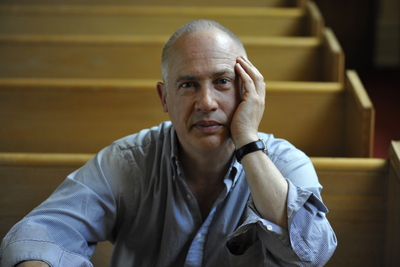
Pianist Stewart Goodyear: contemplating Everest?

Posted in Essays | Tagged , , , , , | 2 Comments

Madman in My Family

No this isn’t an exposé (in case anyone in my family saw the title).  Nor is it a confessional, although I am talking about myself.  I might be a bit whimsical in my use of the word “Madman,” still in the metaphorical shadow of Melancholia, a film whose madness is infectious.

Nietzsche

Nietzsche: spectator

Nietzsche could have been talking about hockey or football (meaning the American variety, although perhaps Friedrich might also have nodded to that other football, the one called “soccer” in North America) when he spoke of the Apollonian and Dionysian tendencies.  For anyone reading this, if you are noticing that your mouth is taking on a condescending sneer of dismissal, quick now.  Did you know that Nietzsche said all this in admiration of the operas of Wagner?  Before you toss my analysis aside, remember that Friedrich’s analysis—so useful in the theatre world—wasn’t really meant for some discussion of Arthur Miller or method acting.  Nietzsche was a died-in-the-wool Wagnerian, looking at opera as a (or should I say “the”?) successor to the Athenian tragedies of Aeschylus & Euripides.  If you –those of you who hate opera—can use Nietzsche to prop up your ideas about a theatre devoid of music (surely a wacky idea), you probably should hear me out as I contemplate another kind of theatre, admittedly populated by muscular dudes in helmets.  As soon as i typed that i was struck by the resonance with the popular (and maybe erroneous) image of Wagner: big men and women in another sort of helmet.  But if we think of ancient Greece and the Athenian theatre, the faces are covered and identities masked in ways very similar to what we get in football or hockey.

Sure, I’ve long felt that pleasures of sports are not so different from the pleasures of the arts: a position that is much easier to state in the presence of other die-hard sports fans.  For those who abhor violent sports as mere expressions of testosterone, the notion that sports are art will elicit laughter.  There’s no point trying to persuade those who have no interest in these sports, although it is fun, sometimes, to make people laugh.  While i didn’t write this big long looping essay to make people laugh, i’m happier with that reaction than indifference.

Forgive me, I am veering off topic, a bit self-conscious in this forum where I usually address artsy issues among fellow artsies.  But what I want to say about football and hockey is also a commentary on performing arts, and a back-handed stab at something similar to Nietzsche’s theorizing of human tendencies.

First, as I praise one sport I will complain about the other.

The big news in the football world this week?  A coach whose team was on top of the world recently was brought down to Earth in humiliating fashion. Sean Payton of the National Football League’s New Orleans Saints has been suspended for the entire 2012 season –an unprecedented penalty as far as I know—because of a system of “bounties”.  While the news is probably shocking to some (that players on the Saints were paid to deliberately hurt opponents), I am thrilled & delighted with the news.  The penalties imposed by the NFL commissioner attempt to bring some order to a chaotic game.

I say this as I watch the National Hockey League, who lack the decisiveness of the NFL. While rules are changed from time to time, hockey referees seem to cave in partway through the season, allowing the game to again be captive of its macho thuggish culture.

I am conflicted about this, which is where the title comes in.  Last season I thrilled to Boston’s victory in the Stanley Cup final, yet I was simultaneously troubled by a key absence.

Sidney Crosby was en route to one of the greatest season in NHL history.  Crosby can be abrasive at times, but he’s a creative artist with the puck.  Unfortunately the artist was knocked out of the NHL for most of the past year.  And so, when Crosby should perhaps have been crowning his season for the ages with another Cup, he was instead on the sidelines, wondering if he’d ever play again.

In fairness, both the NHL and NFL have been struggling with the head injury problem.  Struggling because their games seem designed to reward dangerous behaviour.  The bounties that came to light –leading to several penalties imposed on the New Orleans Saints—helped the Saints win a Superbowl.  Brett Favre was one of the players targeted, a key player for an opposition team.  The NFL can’t tolerate the practice of rewarding players who deliberately seek to injure, because to do so would de facto condone the practice.

Violence and brutal physical contact is the obverse side of the elegant plays in hockey or football.  A quarterback carefully times their throw to arrive in the hands of a receiver when they arrive at a precise point.  Disrupting this perfection is the job of the defensive players, who do so in acts of wilful chaos.  One tries to obstruct the ball, the players, the view… One distracts or delays.  The enemy of order is disorder, like a wooden shoe sabotaging a machine.  More fundamentally, the order of precise timing falls apart in the presence of fear induced by intimidation or even insults.

Hockey is a faster game than football because it’s on skates.  Because the top speeds are higher, and because the pucks are insanely fast when shot at a goalie, sometimes smacking players in delicate places, the possibilities for accidental injury are immense.  As the players get bigger and stronger it seems inevitable that hockey’s balance must tip ever further in the direction of chaos.

I recall the paradigm shifting shock when Canada faced the Russians in their summit series in 1973, on those big Russian rinks (with a larger ice surface).  When players are forced into a smaller space, as they sometimes were in a few arenas with smaller surfaces (the old Boston Garden for example), there was even more likelihood of physical contact, while the more spacious rinks helped pure skating teams like the Soviets.

We could conceivably re-invent the sport.  I recall seeing an article in the Toronto Globe and Mail by John Allemang, a very courageous attempt to propose rule changes.  The comments to this article were often unpleasant, reminding me that the fans for the NHL are simply not as ready to change as the NFL, who have often changed their rules with wild abandon.

My favourite idea among Allemang’s proposals is good because it not only improves the game but could rescue teams in financial trouble.  Imagine a rule-change that could save the ownership money!  Here it is: reduce the number of players on the ice.

It’s been done before.  At one time hockey was played by seven players, whereas it’s now played by six.  What if instead of six, we put five on each team (like basketball)?  Rosters could be smaller, and the ice surface would seem bigger without necessitating any construction projects.  If five is good, why not four?  From time to time penalties leave us with four a side: usually the most exciting part of that game, as players skate freely without any obstruction.  What we’re seeing is the removal of friction –entropy—and an injection of creativity, order, and dare I say it, beauty.  If a man can skate without being obstructed chances are it’s better than having him stopped.  The only good thing about the obstruction is how it helps mediocre teams compete against talented ones.  But if talent were rewarded?  I can dream.

Never mind Apollo & Dionysus, gods Nietzsche would associate with order & intoxication, respectively.  Art –and sport—are much more than celebrations of our Apollonian & Dionysian tendencies.  They are a constant battle between two much more fundamental principles, namely order & disorder.

Chaos and Order wear many guises.   We may see characters in a play or film who embody the conflict, one figure rebelling (think of Carmen or The Wild One) against the order signified by the other(s).  Sometimes they inhabit the same moment, in voices that are simultaneously musical and noisy.  When I think of Maria Callas or Janis Joplin, and their relationship to more harmonious approaches to vocalism in their chosen idiom (compare Callas to Joan Sutherland, or Joplin to Joni Mitchell), their struggle is personal as well as the one they perform.  Every physique trained to dance, to fight, to run, to skate, to play the piano, to sing, or just to stand in front of a camera & look gorgeous faces the ravages of age.  Each of us, regardless of our sport or art, fights off the encroachment of physical and mental limits.

I am conflicted about the physical side of hockey.  Watching all the collisions, I identify naturally.  I may dream of order, but I also revel in disorder.  There is something Dionysian in the pure mayhem of body contact on the football field or hockey rink.  Part of me craves order, part of me loves to see disorder thrown into chaos by the subversive violence of defensive players.  We have both tendencies, and as an aging man, I sometimes envy the fluid skating of youthful players, even as I admire their grace.

At times, though, human beings enjoyed watching bears baited, bulls speared (still done in places), cockfights, dogfights, and assorted barbarity.  I have dreamt of hockey where the only contact is clean: hip checks rather than sticks swung at heads.  In the meantime, players are getting horrible head injuries, due to the unavoidable consequence of immense speed and size, in small confined spaces.  There are limits to what protective equipment can accomplish.

And so, while one part of me dreams of an ideal form of the game, the other part of me loves these savage sports just as they are.  At one time I thought sport could be a substitute for war, a safe place to act out our aggression. OR maybe we need to learn to outgrow those impulses, both on the pitch and in  every other part of the world.  Ha… talk about the impossible dream.  No wonder i need to watch sports.

In the meantime, the spectacle in the stadium or arena might make Wagner grin with a kind of satisfaction.  The music at the kickoff or the ritualistic playing of Freddy Mercury tunes such as “We Will Rock You,” bring the crowd into a kind of unified exaltation that may not be so different from the ancient Athenian Festival of Dionysus.

Party time.

Posted in Personal ruminations & essays, Psychology and perception, Sports | 3 Comments

Melancholia

I am watching Melancholia for the second time.  Had I been able to get tickets when it came to the Toronto International Film Festival I would have seen it on a big screen.  Even on a small screen it’s quite powerful.

I go in circles making sense of its microcosm and macrocosm, the two senses of the title, as indications of what does and does not matter.

Justine (Kirsten Dunst) is getting married, and she is depressed.  If this had been the 1950s she would have simply taken some pills to fight off her moods.  Nowadays there’s an entirely different set of meds that are prescribed for what’s ailing Justine; but this is a movie and not to be mistaken for a realistic tale.  Lars von Trier’s world is mythological, its characters at times larger than life.  Neither Claire (Charlotte Gainsbourg) nor anyone else has a solution to her melancholia, given that it’s writ large, an emotional landscape that we are exploring as if it were another planet.

Hm, was that a strange segue?  But in fact, there is a second sense of “Melancholia”.  The film tells us of a new planet that is coming into the solar system, Melancholia.  Lunacy was the old notion that you could become mad if you looked at the moon too much.  By those standards, the arrival of a new planet in the solar system would be an occasion of emotional upheaval if not wholesale madness.  When John (Kiefer Sutherland), a wealthy man who dabbles in astronomy, speaks glowingly of how “Melancholia will pass right in front of us”, it’s hard to know whether he means the planet or the mood.

The first time through I was thoroughly frustrated at the use of music, largely because I have a lifelong relationship with the music from Wagner’s Tristan und Isolde.  Any Wagnerians coming to this film might be frustrated that the film doesn’t work in the expected ways with its music.   The large composition (the three act music-drama) avoids cadences, remaining in a state of suspended desire, just like the protagonists of the opera.  But over time Wagner does release the tension.  Von Trier’s use of Wagner, however, denies us even those satisfactions, often stranding us high and dry.  But this music is not a music drama, as it’s underscoring something entirely different.  When we hear that music we’re inside Justine’s pained sensibility, stuck in a place without any possible satisfaction.

Melancholia begins with some amazing images, the opening a surreal series of compositions whose context only unfolds for us in subsequent viewings.  Second time through (and likely every subsequent time I see this film), it’s  deeper.  The opening images are like a prelude accompanied by the longest chunk of Wagner, from the Tristan prelude.

Then we watch “Part One: Justine”, concerning her bizarre mess of a wedding, a conspicuous display of wealth to no purpose, even if we didn’t have the twin spectres: killer planet and mad bride.  At one point John explains why he paid for Justine’s extravagant wedding.  He offered it to her as a deal.  He’d pay if she would agree to be happy (and you may wonder: “which one is really mad?”).

In “Part Two: Claire”, we’re at the big estate of Justine’s wealthy sister.  John and Claire have lots of money and a son, and are taking care of Justine.  As the planet comes closer, scaring anyone who is “sane”, Justine finds a kind of lucidity.  The planet Melancholia is in some respects the love of her life, the objectification of her condition.

In our time of social inequity & conspicuous displays of wealth this film feels very relevant.  Whether the world ends or not (and this kind of big bang threat seems like another kind of madness…It’s vanity. Eliot had it right, that we’d end not with a bang but a whimper), the film is like a colossal set of symptoms.

But I am sorry I missed it on the big screen.

Posted in Cinema, video & DVDs, Psychology and perception, Reviews | 1 Comment

AtG-7DS = Against the Grain Theatre-Seven Deadly Sins

AtGAgainst The Grain (“AtG”) Theatre’s production The 7 Deadly Sins (and Holier Fare) resists easy categorization.  As I ponder this question (what is this show?), and try to stifle the impulse to classify, I can’t help noticing that the question in the microcosm (“what is this show—what did I see tonight”) is a nice mirror of the macrocosm (“what is this company?—how does it relate to the rest of the city?”).

It’s a question one wouldn’t have encountered a generation or more ago.  In the days when groups stayed within their disciplinary boundaries (dance companies doing dance, opera companies doing opera), you more or less knew what you’d get.  Theatre was less likely to surprise or shock you because by and large you were never stopped from knowing where you were.  And so long as companies had their funding and their audiences there was no reason to break that contract.

Those occasional adventures are becoming the norm:

  • The Toronto Symphony projects pictures while playing Mussorgsky’s Pictures at an Exhibition
  • A concert of Liszt last month from the Neapolitan Connection included a tableau vivante based on a painting from the 19th Century.
  • Tafelmusik have been creating concerts with elaborate concepts, such as their Galileo Project
  • Canadian Stage adds dance (Kid Pivot last month) & music-theatre (Queen of Puddings Music Theatre) to their programming

In other words everyone’s breaking that conservative contract: the one where you think you know what to expect.  In some cities that can be trouble, as for example in the boos Robert Lepage heard in New York for his Ring Cycle production; edgy productions from the Canadian Opera Company, however, have been winners at the box office.  In this city at least, there’s an appetite for daring productions.

And I think that’s the context for 7DS by AtG.  They’re not a conservative company taking a little walk on the wild side, before they go back to their usual programming.  The part where they disorient you (making you figure it out) is part of the process and also part of their charm.

Perhaps the most daring thing about AtG is that they’re allowing their mandate & their style to take shape organically, led by their interests & skills.  I don’t know much about their artistic director, Joel Ivany, except that his input & direction seems to be almost ideal.

Having seen AtG’s La Bohème –putting a modern version of a popular opera into a pub in English—I thought they’d try something similar.  Boy was I wrong.

Christopher Mokrzewski

Pianist Christopher Mokrzewski

7DS showcases two of the great talents in Bohème, namely soprano Lindsay Sutherland Boal and pianist Christopher Mokrzewski, teaming up with Daniel Pesca.   There are four items in a mixed evening of music-theatre:

  • Piano Phase by Steve Reich
  • Canticle II: Abraham and Isaac, Op. 51 by Benjamin Britten
  • Hallelujah Junction by John Adams (followed by an intermission)
  • The Seven Deadly Sins by Kurt Weill, libretto by Bertold Brecht

The Weill piece to close the evening is roughly half the program, and the only one of the four that seems to be staged with costumes and some props.  Lindsay Sutherland Boal used many different approaches, sometimes dripping with irony, sometimes very soft, and showing a full palette of vocal colours.  Boal as Anna-I had most of the lines, sung in German with subtitles, while Tina Fushell as Anna-II was a complete contrast with her calm dead-pan.  The family, comprised of Graham Thomson, Derek Kwan, Andrew Love and especially Giles Tomkins, sang with great clarity and precision, a strange group who were very funny.

Kurt Weill is a composer who’s had an enormous influence on what we hear in music theatre (it’s impossible to imagine Kander & Ebb without Weill & Brecht).  Coming from a time of harsh economic circumstances that we almost cannot conceive (wheelbarrows full of money to buy a loaf of bread?), there’s a grittiness to this music that is sometimes over-emphasized, to the exclusion of the romance and sweetness lurking in every phrase.  Boal with Mokrezewski & Pesca had a subtlety perfectly attuned to the room, enough voice but often teasing us with delicate sounds.  I think they’d adapt beautifully to a recording or (better) a DVD.

Piano Phase plays with our perceptions.  The Reich composition features phrases played with great care, but slightly out of phase with one another.  During this hypnotic piece, we watched Matjash Mrozewski and Kate Franklin dance close up against the back wall.  The patterns with their bodies & the shadows on the wall often paralleled the phase effects in the music.

The Britten piece is a very powerful work invoking the Mystery plays of the Middle Ages. Erin Lawson & Christopher Mayell as Isaac and Abraham, respectively, enact a drama of great power.

Closing the first half of the concert was Hallelujah Junction by John Adams, a work requiring every bit as much precision as the Reich piece that began the evening.  Whereas the other items had dancers or singers, this was the sole item presented in concert without any embellishments: the most dramatic part of the evening.  Pesca & Mokrzewski are a duo who’ve served notice that they’re as good as any in the world.

The two Steinways were wonderfully in tune, and a good match for the intimacy of the Gallery 345 space, never overwhelming the singers (due to the restraint of Mokrezewski & Pesca), while filling the space with a very warm sound.  I believe the arrangement of Seven Deadly Sins may be original, a version for two pianos that gave richness at the bottom, lovely tinkling colouration at the top, but without falling into the trap of being too loud, as might happen with a solo piano (and which i knew only too well when i tried playing through it).  They always found the music.

And so, AtG’s 7DS is a curious mix, part concert, part cabaret, part dance, a mixture not easily reconciled with simplistic definitions.  Unfortunately there’s one more performance on Saturday March 17th.  There aren’t many tickets left.  I hope they will revive this program so I can have another listen.

Posted in Opera, Reviews | Tagged , , , , , , , , , , | 2 Comments

Armide returns to Toronto

Opera Atelier’s production of Lully’s Armide is coming back to Toronto, the first stop in an international tour.  After a week in Toronto, May takes them to Royal Opéra, Versailles, followed by a summertime sojourn at Glimmerglass Festival in New York state.

Here’s a statement from Marshall Pynkoski about the upcoming co-production.

Pynkoski explains why it should be better this time.

Below I repost my November 2005 review of the production in its first Toronto incarnation.  At that time while it wasn’t perfect, we were treated to a wonderful theatrical adventure.  Knowing Pynkoski and Opera Atelier, I believe it will be even better this time.

~~~~~~~~~~~~

“Opera Atelier’s Armide”
November 14, 2005

Armide (2006)

Photo: Bruce Zinger (2006) / James Leja, Stephanie Novacek and Curtis Sullivan

Opera Atelier are currently in the middle of the Canadian premiere production of Lully’s Armide, an ambitious yet problematic affair that probably will be much better next time. In a couple of years they will revive it, ironing out inconsistencies and removing weaknesses. Such has been the remarkable pattern for the scholarly talents of Opera Atelier, who always improve upon the operas they bring back.

There are several great things one can say about aspects of the production, even though the end result still has not quite gelled. Or is the problem mine, in not knowing how to listen and watch? All the hallmarks of Opera Atelier—now a recognizable brand-name—are present in this their latest adventure.

We are again presented with the most excellent musical performance one could find. I wonder whether people recognize how good Tafelmusik is, re-inventing for us the forgotten sounds of Louis XIV’s court? One needs to forget what one knows about opera coming to Lully’s masterworks. Voices do not strive for the kind of virtuosity we encounter in Italian operas, not showing off their prowess in florid singing. There are no cadenzas, no high notes, at least, in the usual sense, but instead there is a seamless relationship between the music and the drama, voices releasing the passions of the story. Phrases are exquisitely contoured to express nuances of pain and pleasure, love, fear and anger, in the most economic manner.

We are again presented with a stage picture comprised of attractive bodies, historically informed costumes and elements of baroque movement vocabularies, re-framed within a modern rationale for the staging. The amount of dance Opera Atelier usually offers may already be jarring for anyone believing opera is an artform of stationary bodies interrupted by divertissements, a form primarily for singers, employing dancers as an afterthought. But Lully has always seemed like the promised land for Opera Atelier, a dance-master whose operas were filled with lithe bodies in motion. The productions that seemed to best suit Opera Atelier personnel and style have been French works such as Charpentier’s Medée and Actéon, or Lully’s Persée.

Let’s be fair. Nobody has ever staged Armide in North America before now. When it was new – in the 17th century(!)—its plot contained elements normal for its time. The prologue (cut for this production) paid the standard compliments to the King by foregrounding his virtues. The story that followed illustrated the conflict between Glory and Wisdom. A virginal Christian knight is tempted by a virginal warrior maiden against the backdrop of the Crusades in the Holy Land. While the maiden is from the other side –and therefore implicitly a follower of Mohammet—her language and that of her magician father invokes not the name of her God but demons and devils as her inspiration.

Whereas this tale was exotic in its time, it carries a curious resonance with current events. As a result, Marshall Pynkoski, the Co-Artistic Director of Opera Atelier and the director of Armide felt the need to deliver a lecture on opening night, asserting that Lully (composer) and Quinault (librettist) did not favour the Christians over the Muslims in their adaptation of an episode in Tasso’s renaissance epic Jerusalem Delivered (a work spawning many operas). He says this, even though throughout the surtitles one reads Armide’s invocations to demons and devils, as indeed, she is inspired not by her God Mohammet but by Satan (Canto IV of Tasso). In fact Pynkoski’s interpretive decisions–portraying Armide’s passions as a mirror to those of Renaud, her Christian adversary—elevate and dignify the action, emphasizing the psychology of passion. It’s too bad that his speech does not properly acknowledge the courage and creativity of his interpretation, but was likely intended as a nod in the direction of political correctness. I believe the truth is that Pynkoski has preserved the essence of the tale, making it relevant to a modern audience without modernizing it unduly.

There are so many glorious and beautiful moments, that it is with regret that I report the curious buzz in the audience who seemed genuinely perplexed to discover that the opera was over on an anticlimax. Whereas the earthly delights of the temptation scenes are compelling, the conclusion seems inadequate, as though there are loose ends that need to be tied up. The character of Armide is in some respects another Medea: angry, rejected, and a sorceress whose destructive powers are conflated with her erotic appeal. But whereas Stephanie Novacek’s Medée was suitably angry (in what is virtually a two-dimensional character), and made a glorious flying exit in that opera, her Armide is far subtler, particularly at the end. Perhaps what we need at the end of the opera is something simple and unequivocal, a clearer statement than what we received. I don’t think it’s Novacek’s fault, particularly because the mise-en-scène fails to deliver anything as flamboyant as what we’ve seen several times throughout the opera (Renaud’s temptation or the ranting of the figure of Hate). But this can easily be remedied in the next revival.

My objections are arguably anachronistic, from someone conditioned to 21st century performances. In Lully’s time I suspect that excellent performances by the subordinate players could upstage the leads, whereas nowadays we are conditioned differently. The most memorable performances came from Monica Whicher (Phénice) and Curtis Sullivan (Hate) rather than either Novacek’s Armide or Colin Ainsworth’s Renaud. James Leja, the dancer portraying Love makes an unforgettable appearance, contrasted wonderfully by the raucous Sullivan, who is an Opera Atelier stalwart. Sullivan is particularly impressive both vocally and physically with a strong dramatic presence resembling a wrestler rather than an opera singer.

And I can’t wait to see how they end the opera when they do their next revival.

Posted in Essays, Opera | Tagged , , , | Leave a comment

10 Questions for Lindsay Sutherland Boal

Trained as an operatic soprano, Lindsay Sutherland Boal began her career on Canadian and international stages singing the roles of the Countess in La Nozze di Figaro, Papagena in Die Zauberflöte, Zerbinetta in Ariadne auf Naxos and Madame Silkberklang in Die Schauspieldirektor. A two-time regional finalist of the Metropolitan Opera National Council Auditions, she also performed extensively in operetta and musical theatre, and as a concert soprano with the Winnipeg Symphony Orchestra, the Nova Scotia Symphony Orchestra, the Rainer Hersh Symphony Orchestra in the U.K. and the Vancouver Art Gallery Concert Series.

Following several successful cabaret performances, Boal changed her focus from traditional operatic repertoire to music from the Weimar Republic. This led to the creation of her first self-produced project: a one-woman, critically-acclaimed and award-winning show entitled Purely Cabaret. Subsequenty she earned an invitation to perform the work at the International Cabaret Conference at Yale University, where she was broadcasted internationally on National Public Radio and Voice of America. In 2011 she headlined A Little Nostalgia Cabaret with Against the Grain Theatre, singing the works of Kurt Weill as well as other cabaret favourites.

Boal recently returned to the operatic repertoire to sing the role of Musetta for two sold-out productions of Against the Grain Theatre’s La Bohème.  You can read more at www.lsblive.com.

This week Boal will make another appearance with Against the Grain Theatre in a concert presentation entitled The Seven Deadly Sins (and holier fare).

I ask Boal ten questions: five about herself and five about Seven Deadly Sins (and holier fare).

Lindsay live

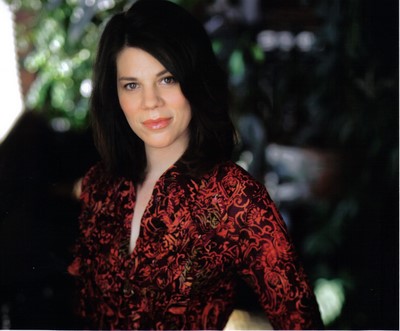
Lindsay Sutherland Boal, who looks like her mother.

1) Which of your parents do you resemble (what’s your nationality / ethnic background)?

I am the spitting image of my mother but I have my dad’s feet. I am 4th generation Canadian but before that my great-grandmother hailed from Wales and my great- grandfather England.

2) what is the BEST thing / worst thing about being a cabaret chanteuse?

There are so many “best things” about being a cabaret singer. I love the intimate nature of the cabaret setting. The audience is so close; it’s casual; I often feel like I’m having a conversation with my audience. I also find that I can express things through lyrics that I, for whatever reason, don’t have the courage to say in my daily life – I can safely hide behind a great line. I haven’t discovered a “worst thing” yet, which must be a good sign!

3) who do you listen to or watch?

I listen to all kinds of things… it depends on my mood. Eartha Kitt, Julie Wilson, Ute Lemper, Margaret Whiting are my favourites from the cabaret type world. I love the way Jean Stillwell uses text. I love the way Ute Lemper uses her body. I love watching Bernadette Peters talk to an audience. From the classical world I love Renee Fleming and Anna Moffo. I could listen to David Pettsinger sing the phone book.

4) what ability or skill do you wish you had, that you don’t have?

There are quite a few!! I would love to speak every language of the world. I would love to be able to reach the full expression of standing bow pulling pose in my Bikram Yoga series… I wonder if I’ll ever be able to do the standing splits! I would also love to know how to apply the perfect “smokey eye”.

Lindsay Sutherland Boal – Photo by Nikola Novak

5) When you’re just relaxing (and not working) what is your favorite thing to do?

I love to practice yoga; I love to share a fabulous red wine and fabulous conversation with my fabulous friends; I love to be with my two nieces and I also love to bake bread… my best is a cranberry pecan loaf.

Five more about 7DS

1) how does Seven Deadly Sins challenge you?

The choreography – there is more than just blocking!! Also, we’re performing this in German (with English surtitles). While I spent a bit of time in Germany and have studied the language at some length, I was not able to understand the libretto in its entirety at first sight… so I’ve had to brush up on my German to effectively communicate the text.

2) what do you love about Seven Deadly Sins and this type of music theatre?

Brecht and Weill

Brecht and Weill, in 1928 when they were rehearsing Die Dreigroschenoper.

I am a HUGE Brecht/Weill enthusiast. I love the fruits of all of their collaborations. I love the sound of Weill’s German works. But what particularly interests me about 7DS is the zeitgeist that was the 1933 premiere, both politically and within the relationships of the cast.

3) Do you have a favorite song or moment in the show?

Yes – from the first note to the last note. But seriously, I love the play out of Habsucht (Covetousness), the gorgeous melodies in Unzucht (Lust) and the intensity of Neid (Envy).

4) how do you relate to Seven Deadly Sins  as a modern woman?

I think everyone can relate to 7DS as a man or woman living today, 50 years ago, or 50 years in the future. We all face circumstances that lead us to question two sides of an id/superego coin. What should I do versus what do I want to do? What can I get away with and what can I not live with myself knowing?

5) is there anyone out there who you particularly admire, and who has influenced you?

I’ve been very fortunate to have had so many amazing people come into my life. Tracy Dahl and Jean Stilwell in the classical world have been very influential, as have Pam Meyers, Tex Arnold, and Julie Wilson from the cabaret world.

~~~~~~~~~~

Lindsay Sutherland Boal appears with Against the Grain Theatre in The Seven Deadly Sins (and holier fare)
March 16 & 17 2012 @ 8 PM
Gallery 345
345 Sorauren Ave., Toronto
Music by Weill, Britten, Reich, Adams
Directed by Joel Ivany
Choreographed by Matjash Mrozewski
Music Direction by Christopher Mokrzewski

Posted in Interviews, Opera | Tagged , , , , , , , | 1 Comment

10 Questions for Ann Powell

Ann and David Powell, aka Puppetmongers Theatre, have been delighting audiences for nearly 40 years with their extraordinary and innovative puppetry creations, fusing strong storytelling with their quirky sense of humour and technical wizardry.  At the forefront of puppetry arts in Canada, the award winning Puppetmongers have created 12 original shows for both young audiences and adults, and have toured extensively in North America, Europe and the Middle East.  They are 5 time recipients of Citations of Excellence from the Union Internationale de la Marionette,  and winners of both the Award for Excellence and the Presidents Award from the Puppeteers of America.  Closer to home, they are 2 time Chalmers Canadian Play award nominees at their productions have received 11 Dora Mavor Moore Award nominations.

For March break, Puppetmongers Theatre presents The Brick Bros. Circus created and performed by Ann Powell and David Powell, March 12th to March 17th.

I ask Ann Powell ten questions: five about herself and five about her work with her brother David.

Ann Powell

Puppetmonger Ann Powell

1) Which of your parents do you resemble (what’s your nationality / ethnic background)?

Bits of both really, in looks and habits (both the good and the not so good). The family background is “British”, combining English, Scottish, Welsh, Cornish, maybe Irish and who knows what else.

2) What is the best thing / worst thing about what you do?

The best is that I get to play for a living. The worst is having to do all the business of Selling what we do to make that living.

3) Who do you like to listen to or watch?

Mostly I enjoy quiet, to be with my own thoughts and ideas. If I do choose music to listen to, I’m likely to choose something from the Renaissance or Baroque periods. When it comes to TV, I’ll watch anything that grabs my attention – a good movie, an interesting documentary on TVO, occasionally a series like 30 Rock…

4) What ability or skill do you wish you had, that you don’t have?

A more retentive memory would be good.

5) When you’re just relaxing (and not working) what is your favourite thing to do?

I do enjoy baking. And reading. And having the time between sleep and awake to let my mind drift around problems and plans.

5 more questions concerning the upcoming presentation of Brick Bros. Circus.

bricks puppetmongers1) How does performing Brick Bros. Circus challenge you?

It’s up to us to persuade the audience to suspend their disbelief and see ordinary building bricks as the highly trained circus artistes they really are. It’s also a bit of a work-out as the bricks are quite heavy!

2) What do you love about the puppets you’ve created for Brick Bros. Circus and what you’ve written for them?

That we didn’t have to create puppets at all – friends volunteered bricks holding down jobs in their gardens and as doorstops, and auditioning trips to the local building yard keep us stocked with the rest.

The script is tongue-in-cheek circus banter, to invite the audience in on the silliness of the show – for which of course we had to attend a lot of circuses for research.

3) Do you have a favorite moment or section in Brick Bros. Circus?

That’ll partly depend on each audience’s reactions and response: if the audience is particularly enjoying an act, then it’s a lot of fun playing it up for them. I do though quite enjoy the wild brick in its cage…

4) How do you relate to Brick Bros. Circus as a modern brother/sister?

Modern, huh?! Some have said our work looks like we inherited it from our parents, that there’s something of an old fashioned sensibility about it. That said, this show that we built for fun more than 30 years ago is still opening audiences’ eyes to what else puppetry can be.

5) Is there an influence you’d care to name, a particular artist or an ensemble whose work you especially admire?

So many, in my getting-longer-every-year life – where to begin… Felix Mirbt was the first to open our minds to how much more puppets and puppetry can do and be in theatre. Theatre de Cuisine… Velo Theatre… Bruce Schwartz… Steve Hansen… amongst many.

~~~~~~~~~~~~~

Puppetmongers Theatre presents The Brick Bros. Circus
created and performed by Ann Powell and David Powell,
March 12 th to March 17th, daily matinees at 2:30 pm.
Puppetmongers’ Studio, 401 Logan Avenue
(at Dundas east), Toronto.
For family audiences: Ideal for adults, and children aged 4 and up.   Tickets: $12  at the door

Early bird discount tickets $10 : available on-line only until March 11 at www.puppetmongersbricks.eventbrite.ca

EXTRA: Post-show Puppet Making Workshops after weekday matinees
Suitable for children aged 5 – 12, $10 per child.
Info: www.puppetmongers.com or call 416-469-3555

Posted in Interviews | Tagged , , , , , | Leave a comment

Carlos: By Request

A singing teacher I know tells me that he always gives a speech to his students early on.  It’s about the math, the reality of having a career in opera, when there are so many people studying, so few actual jobs.

This is some of the subtext for Opera By Request, William Shookhoff’s Toronto-based project to give the surplus talent opportunities to be heard singing operas in concert with piano.  Bill is a wonderful pianist who has already produced fifty operas in five short years, responding to those requests from singers.

Tonight was a kind of fifth anniversary / fiftieth opera celebration, a sparkling reading of Verdi’s Don Carlos.  Although Shookhoff has on occasion brought in choral collaborators, on this occasion Verdi’s grandeur was mostly supplied by Shookhoff’s piano, the soloists and our imaginations.  Opera By Request’s usual venue of College St United Church felt appropriate considering the religious context for the story, a political struggle in the time of the Spanish Inquisition.  It’s not the first time this opera made me breath a sign of relief to be in a predominantly Protestant country with a clear separation between church and state.

Working without chorus I found myself thinking that maybe the quest for textual authenticity that governs operatic fashion worldwide might be a tad misguided in making the Five-Act version (heard tonight) the norm.  Minus the chorus which is at best a divertissement in the first scene (aka filler), not an essential piece of action, we watch Carlos the Infante approach Elisabetta, declare his love, and then literally moments later discover that she must marry his father (King Philip II) instead.  A relationship that was never consummated and has lasted perhaps 5 minutes isn’t much upon which to build an entire opera. So in other words, maybe the tradition of the four act version that begins with Carlos telling us of his heart-break is the better idea, at least dramaturgically.  Sometimes (this time!) the earlier version of a work that is discarded or changed, is left behind for good reasons.

That being said, we heard some wonderful singing tonight from one of the strongest casts Shookhoff has ever assembled, in an opera full of great solos & ensembles.

Tenor Paul Williamson

Tenor Paul Williamson

Paul Williamson was a wonderful Carlos, singing with no sign of fatigue whatsoever in such a huge taxing role.  Always Italianate, with a gorgeously shaped line and wonderful musicianship, I hope to have the opportunity to hear him again.

Michelle Minke’s Elisabetta was every bit as musical, her voice often luscious sounding, and at times breath-taking in its beauty.

Monica Zerbe’s Princess Eboli was a great crowd-pleaser in her two big scenes, both vocally & dramatically.  Steven Henrikson’s Rodrigo was splendidly sung throughout, including a heart-rending death scene.

The climactic scene between the Robert Milne’s King Philip II & Larry Tozer’s Grand Inquisitor, and their two powerful bass voices, was one of the highlights of the evening.

I didn’t miss the orchestra, as Shookhoff led a wonderfully tight performance.

Opera By Request return April 20th with Mozart’s Nozze di Figaro, and Stravinsky’s Rake’s Progress May 5th.  Before you know it, they’ll reach 100.

Posted in Opera, Reviews | Tagged , , , , | Leave a comment

10 Questions for David Powell

Ann and David Powell, aka Puppetmongers Theatre, have been delighting audiences for nearly 40 years with their extraordinary and innovative puppetry creations, fusing strong storytelling with their quirky sense of humour and technical wizardry.  At the forefront of puppetry arts in Canada, the award winning Puppetmongers have created 12 original shows for both young audiences and adults, and have toured extensively in North America, Europe and the Middle East.  They are 5 time recipients of Citations of Excellence from the Union Internationale de la Marionette,  and winners of both the Award for Excellence and the Presidents Award from the Puppeteers of America.  Closer to home, they are 2 time Chalmers Canadian Play award nominees at their productions have received 11 Dora Mavor Moore Award nominations.

For March break, Puppetmongers Theatre presents The Brick Bros. Circus created and performed by Ann Powell and David Powell, March 12 th to March 17th.  

I ask David Powell ten questions: five about himself and five about his work with his sister Ann.

David and Ann

Puppetmongers David & Ann Powell

1) Which of your parents do you resemble (what’s your nationality / ethnic background)?

I was always a bit more like mom.  The family is from England – though dad has Welsh blood a few generations back, and mom may have Scots a few farther back – but she was born in Sarawak (N. Borneo – then almost a part of the British Empire).

2) What is the best thing / worst thing about what you do?

The best is having fun being creative, the worst is the grind of having to make a living doing it.

3) Who do you like to listen to or watch?

My music interest is mainly Asian: Javanese Gamelan, Persian and Indian classical, Chinese Guqin etc.  Watching?  Other people at work; image/visual theatre; Cohen Brothers  movies etc

4) What ability or skill do you wish you had, that you don’t have?

That one is simple: natural business skill – requiring no arduous training to get there.

5) When you’re just relaxing (and not working) what is your favourite thing to do?

Daydreaming is pretty good, but I also really enjoy cooking – mainly Mediterranean styles and Indonesian/Malay

5 more questions concerning the upcoming presentation of Brick Bros. Circus.

1) How does performing Brick Bros. Circus challenge you?

The bricks are pretty heavy and have sharp corners – and they sometimes resist what I am attempting to get them to do. One March break we played at the AGO, a Kung-Fu brick ripped my thumb open – the show went on, clenching the cut shut, and I had five stitches in it after we took our bows.  And I don’t believe anyone in the audience noticed!

2) What do you love about the puppets you’ve created for Brick Bros. Circus and what you’ve written for them?

They are very easy to acquire – Ann is out buying a small load tonight, as we always have to replace at least one of the Kung-Fu contestants each show (those darned Kung-Fu bricks again!).

3) Do you have a favorite moment or section in Brick Bros. Circus?

I am pretty fond of the whole thing! The contortionist brick is pretty special, as is the Cirque-au-Lait sequence…

4) How do you relate to Brick Bros. Circus as a modern brother/sister?

Not sure how modern a brother I am – been at the sibling job for almost 60 years now… But we started the Brick Bros. Circus in 1978, and with the occasional change in acts and quite a few repairs, it seems to still be very current – electrically so with the right audience! We toured it in Newfoundland last Fall and it was a blast.

5) Is there an influence you’d care to name, a particular artist or an ensemble whose work you especially admire?

Felix Mirbt

Puppeteer & director Felix Mirbt

Puppeteers whose work I have admired and enjoyed would be Felix Mirbt, Le Theatre de Cuisine, Old Trouts, Sandglass, Bruce Schwartz, Julie Taymor, Paul Zaloom etc etc.

~~~~~~~~~~~~~

Puppetmongers Theatre presents The Brick Bros. Circus created and performed by Ann Powell and David Powell,
March 12 th to March 17th, daily matinees at 2:30 pm.
Puppetmongers’ Studio, 401 Logan Avenue
(at Dundas east), Toronto.
For family audiences: Ideal for adults, and children aged 4 and up.   Tickets: $12  at the door

Early bird discount tickets $10 : available on-line only until March 11 at www.puppetmongersbricks.eventbrite.ca

EXTRA: Post-show Puppet Making Workshops after weekday matinees
Suitable for children aged 5 – 12, $10 per child.
Info: www.puppetmongers.com or call 416-469-3555

Posted in Interviews | Tagged , , , , | Leave a comment

A contrasting pair

The Canadian Opera Company will be offering a pair of one act operas in their spring season that have some things in common.

  • Both works are set in Florence.
  • Both works are based on literature
  • Both have a character named “Simone” (they’re men by the way)
  • They were written roughly a year apart

And while they’re sharing the same bill and will appear on the same stage, that’s maybe as close as they’ll get to one another.

Zemlinsky

Alexander Zemlinsky

Both Puccini’s Gianni Schicchi and Zemlinsky’s A Florentine Tragedy (or Eine florentinische Tragödie) have literary antecedents.

Puccini’s comic masterpiece takes a small episode in the thirtieth canto of Inferno as subtext, spinning a story defending someone Dante consigned to one of the deepest places in hell.

The opera Zemlinsky gives us, in contrast, is of the genre Literaturoper: an opera based on literature, namely the play by Oscar Wilde (you can read it here).  The libretto is not exactly the same as the play, but Zemlinsky’s setting is essentially faithful, as with other examples of Literaturoper, such as Salome or Pelléas et Mélisande. No one quibbles about the insignificant discrepancies between the play and the opera.

Zemlinsky’s opera is not yet well-known, although this will likely change in the years ahead as it is programmed more and more, and people become acquainted with its late-Romantic glories. 

In contrast, Puccini’s opera boasts one of his most famous tunes.

Conducted by Andrew Davis, and directed by soprano-turned-director Catherine Malfitano the COC production of these two operas opens on April 26th.  The popular tune I spoke of –“oh mio babbino caro”—will be sung by Canadian soprano Simone Osborne.

I’m looking forward to it.

Posted in Essays, Opera | Tagged , , , , , , , | Leave a comment