Yuja Wang, Magnus Lindberg, Anton Bruckner and the TSO

As we tentatively poke our heads out, looking for signs that normal life has resumed after the pandemic, concerts like tonight’s from the Toronto Symphony affirm relationships & collaboration, the latest in a series of celebratory moments in the orchestra’s 100th anniversary season.

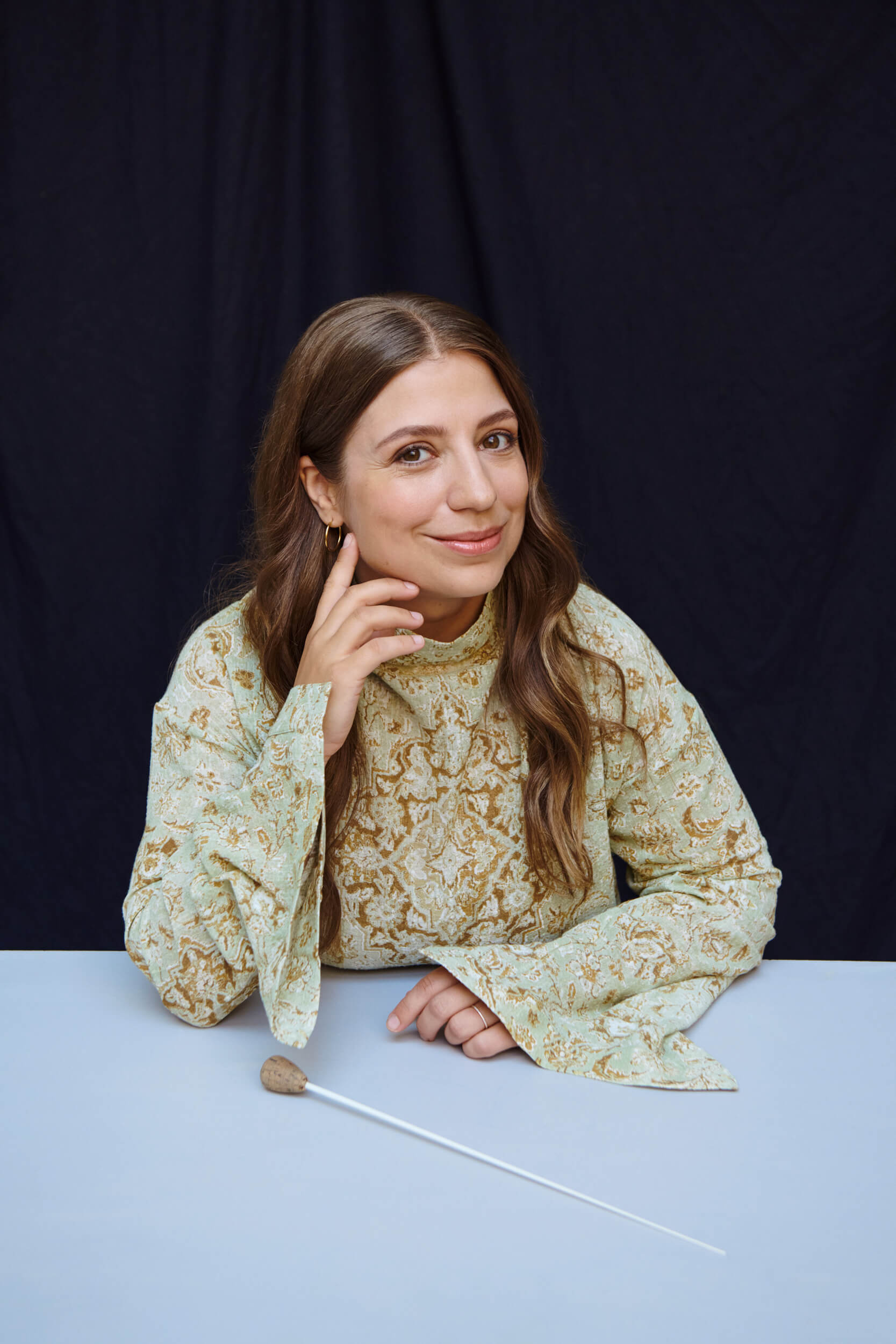
The first & worst sign of COVID to hit me in 2020 was Yuja Wang’s scheduled TSO concert in April: first in a heart-breaking series of cancellations. She might be the most exciting pianist in the world right now, between her stylish appearance, her flamboyant interpretations, brilliant technique and the encores to really impress. Thank goodness we now pick up where we left off in April 2020.

Magnus Lindberg’s piano concerto #3, composed with her in mind –co-commissioned by the TSO, the San Francisco Symphony, Orchestre de Paris, China NCPA Orchestra, Norddeutscher Rundfunk and NY Philharmonic—had its world premiere last week in San Francisco. One of the concerts included this encore, shared from YouTube.

You won’t hear better piano playing anywhere. The TSO rose to the occasion in response.

Yuja Wang under the watchful eye of principal cellist Joseph Johnson (photo: Gerard Richardson)

It will sound cliché, but Yuja makes it seem easy. Her deportment throughout the concerto and in her two delicious encores showed no signs of effort or struggle, just the joyful exuberance, sharing something beautiful with an adoring audience. While she has every right to behave like a diva –especially given the wild response from the Roy Thomson Hall crowd tonight—yet she’s the picture of humility, sharing the spotlight with TSO conductor Gustavo Gimeno, composer Lindberg (who came up onstage to a rapturous reception) and the orchestra.

Her bows always freak me out. She drops so far (an athletic move you don’t expect to see in a concert hall) I worry she’s going to hit her head. But she always comes up smiling, thank God.

Don’t get me wrong. Although Yuja beamed happily, this concerto does look challenging to play. But she’s Olympian in her technique, a true athlete of the keyboard. At times Yuja’s fingers were going quickly, at times she was boldly hitting octaves with precision with no apparent loss of accuracy even though the targets were widely spaced. Her energy seems limitless.

Yuja Wang and the TSO (photo: Gerard Richardson)

Lindberg’s composition reminded me at first of Ravel but more dissonant, the music emerging out of a wash at the beginning of all notes, gradually finding its way not just to tonality but something very beautiful, resembling a style we might call “impressionistic”. In short order I thought hmm reminds me of Gershwin in the extended chords but not really bluesy. What if Gershwin’s family never left Russia and then grew up in the same milieu as Stravinsky or Rachmaninoff? That’s what I thought I found in this music, sometimes melodic with chords and clusters, not as syncopated as jazz, and often luscious & sensual. There are some dissonant moments to make us appreciate the many moments of great beauty.

In the program note Lindberg alludes to the novels of William Faulkner and his narratives from several points of view. I’d want to hear it again, but I thought I encountered something like this, phrases or events that recur, sometimes in parts of the orchestra, sometimes entirely at the piano, a lovely metaphor even if this might be the normal self-referential writing you’d expect in a concerto from the middle of the 20th century or of course earlier, sometimes in a dialogue or working together. Everyone seemed very thrilled, between Yuja’s playing and the lovely sound of the TSO.

Lindberg, Gimeno and Wang enjoy the applause with the TSO (photo: Allan Cabral)

Yuja gave us a pair of encores. The first, paraphrasing music from the scene among the blessed spirits in Gluck’s Orfeo ed Euridice, was truly like a trip to heaven, as we heard some of the gentlest softest playing I’ve ever heard in Roy Thomson Hall, the audience dead silent in respectful awe. That was followed by something I can’t identify (sorry), a late romantic study of some sort, that was as big and brash as the first was gently angelic.

Most of our evening was the Bruckner 4th Symphony after the intermission. The symphony is called “the romantic” which also describes Gimeno’s approach to tempi & dynamics. Passages that were more introspective and soft were slowed, allowing space for reflection. But in the big powerful parts, especially when the full orchestra was called for, Gimeno pushed the pedal to the metal. The big climaxes in the last two movements were virtuoso displays from the whole orchestra. It was fun watching the applause afterwards, when Gimeno raised every section to give them recognition. The orchestra clearly respond to his leadership.

We began with a short celebratory fanfare composed by Janet Sit, with the whimsical title Omega Threes <*)))< Let me be clear, I’m not sure I fully understand that title although I do recall that for dietary health we’re supposed to eat fish oils to get our Omega Threes. The piece is a 21st century alternative to Saint-Saens “aquarium“ movement from his carnival of the animals.

The concert repeats Saturday night Oct 22.

Yuja Wang accepting the rapturous applause tonight
Posted in Music and musicology, Reviews | Tagged , , , , , | 2 Comments

The tenth anniversary ELIZABETH KREHM MEMORIAL CONCERT

Join us for an evening of music in celebration of Elizabeth Krehm’s life and in support of St Michael’s Hospital ICU.

Come Closer: Songs on Texts by Elizabeth Krehm – Ryan Trew
Symphony no. 4 “Italian” – Felix Mendelssohn 

Evan Mitchell, conductor
Rachel Krehm, soprano
Canzona Chamber Players Orchestra

Elizabeth Krehm

Thursday November 3, 2022, 7:30 pm
Christ Church Deer Park
1570 Yonge Street, Toronto

Admission by donation at the door:
Suggested minimum of $25
All donations go to the St. Michael’s
Hospital ICU in Elizabeth Krehm’s name

For more information, please call
647-248-4048

Posted in Press Releases and Announcements | Leave a comment

Darkly Comic Bengal Tiger at the Baghdad Zoo

I’ve just come from the matinee of Rajiv Joseph’s play Bengal Tiger at the Baghdad Zoo, presented by Crow’s Theatre in co-production with Modern Times Stage Company.

The title tells you the basic premise, a tiger is caged in a zoo far from its place of origin. It’s also the time of the Iraq war in 2003.

The Guloien Theatre space is configured as a square, a cage in the centre surrounded by rugs as we begin.

In the first minutes of the play we see a person (Kristen Thomson) in a cage, who we discover is portraying a tiger. We see no tiger costume but rather a person in a cage. This is only the first instance of many when we will be drawn in, invited to use our imaginations. While this war story may be based on recent events, while we see personages performing in Arabic languages without titles, creating an aura of realism: yet it’s a wild poetic fantasy including ghosts, guns and gore, even if we’re spared many of the grosser manifestations.

We begin with Kev (Christopher Allen) and Tom (Andrew Chown), two soldiers pacing around the cage with their weapons. When Tom carelessly reaches into the cage to offer some food to the tiger (how they see the woman in the cage) she tears his hand off: or so we’re told. Kev immediately kills her (the tiger): at which point she (the woman) steps between the bars of the cage. We’ve seen this for a long time in films, so it’s not troubling, indeed it makes a great deal of sense that the tiger and the humans can communicate, especially after they’ve died. She is but the first in a series of characters speaking from beyond the grave.

(l-r) Sara Jaffri, Ali Kazmi, Andrew Chown, Kristen Thomson, Christopher Allen and Ahmed Moneka (photo: Dahlia Katz)

Musa (Ahmed Moneka) is a figure we’ve seen in generic terms in the news, the local whose work with the invaders puts him in a dangerously compromised position, let alone coping with his own conscience. First shown working as a translator, we discover other aspects of his life, especially his work as a gardener who created animal-shaped topiaries. The set design by Lorenzo Savoini even includes a series of vaguely lit topiary-figures hanging above us on all sides of the theatre. Sara Jaffri plays two very different characters, the ambiguity of that duality part of what’s haunting Musa. Mahsa Ershadifar who is listed as “Iraqi woman” seems to play more than one person although ambiguities in the play add a fascinating layer to our experience, wondering whether the character is the same one we saw, also whether they’re living or dead.

I saw it described as comedy by Rouvan Silogix (director of the play & artistic director of Modern Times Stage Company) in his program note. It’s darkly comic, full of profanity. Yes there are places where people laugh. Also places where people shudder, gasp, quiver in awe. It grows on you once you figure it out, knowing who’s who and what to expect. I found myself wondering how come Kev’s vocabulary had improved: until I remembered that we had seen him near death. And his after-life version explained to us that he was learning a great deal. Please don’t mistake my discussion of ghosts as something to be confused with Halloween or Ghostbusters, as we’re instead in a very spiritual realm even if the spirits onstage hurl questions at their creator.

The story is a surprisingly positive view from a dark place, moments where the characters struggle is truly life and death, including reflections from beyond the grave. There are some dark characters, for example Ali Kazmi in an overpowering portrayal of Uday Hussein, son of Saddam. To be precise, we never meet Uday as he’s already a ghost when he first comes strutting into the middle of the stage. His accoutrements remind me of the operatic Salome as he walks in carrying the grotesque severed head of his brother. Depending on where you sit and how you feel about this sort of thing, it may give you the giggles or trigger you. Think of this as very dark comedy. If you have any kind of history with wars or bombardments you might not see anything comical at all.

But it’s very well done. I think John Gzowski’s sound design may have contributed to the sense I had that many were cringing: which may be exactly what the director wanted. For something so full of artifice & theatricality it sometimes resembles something we might have seen on CNN during the Iraq War.

But it’s well done. It works.

There are people I know who wouldn’t want to see this because it would trigger their visceral memories of war. If you want something powerful and totally unlike anything you’ll see onstage in Toronto, this is the show for you, on until November 6th.

Posted in Dance, theatre & musicals, Reviews, Spirituality & Religion | Tagged , , , , , , , , , , , , , | 1 Comment

COC Carmen Opens

I saw and heard opening night of the Canadian Opera Company’s Carmen tonight at the Four Seasons Centre, a revival of Joel Ivany’s 2016 production. It’s a wonderful take on a well-known work with a very original approach to the last act.

But don’t expect me to tell you. I aim to be spoiler free. To find out see the show. But it’s not odd or a travesty, distorting the work. Bizet would approve.

American mezzo-soprano J’Nai Bridges brings a sultry sound and a smoldering hot stage presence to everyone’s favorite femme fatale. She is especially good in the last scene with tenor Marcelo Puente, and he saved the best for last. I’ve never seen such a hair-raising interpretation for the last pages of the opera.

Marcelo Puente as Don José and J’Nai Bridges as Carmen (photo: Michael Cooper)

It’s not the same as last time (in 2016).

The night was full of terrific performances. Lucas Meachem, whom you may recall as Marcello from the COC’s 2019 La Boheme, was the best Escamillo I’ve ever seen, singing the role really well while swaggering with all the poise of an Elvis.

Lucas Meachem as Escamillo (photo: Michael Cooper)

Joyce El-Khoury gave us a superbly sung Micaëla.

Joyce El-Khoury as Micaëla and Marcelo Puente as Don José (photo: Michael Cooper)

It’s a cast featuring strong Canadian voices such as Alain Coulombe (Zuniga), Alex Halliday (Morales), Ariane Cossette (Frasquita), Alex Hetherington (Mercedes), Jonah Spungin (Dancaïre), and Jean-Philippe Lazure (Remendado).

Ariane Cossette as Frasquita, Alex Hetherington as Mercédès, Jean-Philippe Lazure as Remendado, J’Nai Bridges as Carmen and Jonah Spungin as Le Dancaïre (photo: Michael Cooper)

As with Flying Dutchman that opened last week, the COC lead with their strengths. Their orchestra led by conductor Jacques Lacombe sound superb, the chorus delightful throughout. Ivany’s stage is full of true to life performances, wonderfully authentic from every person or child onstage.

Carmen continues until November 4th at the Four Seasons Centre.

Posted in Opera, Reviews | Tagged , , , , , , , , , , , | Leave a comment

Gimeno prepares the taste-buds for Bronfman’s Beethoven

It was a unique Toronto Symphony concert. Conductor Gustavo Gimeno said he had never conducted six items on a program before.

It was pretty radical for me too, although I was fortunate. I noticed the unorthodox program and wrote about it a few days ago.

Gimeno actually took the microphone to speak of contrast, a word I am probably over-using at this point. This is the boldest TSO program yet, and with his little speech to begin things, he answered a question I had before. I had wondered: is this his idea or someone else in the TSO admin? The way he spoke it’s clear that this principle is near and dear to his heart.

TSO music director Gustavo Gimeno

Here’s what they played (the number with the ‘ gives you the length in minutes):

Volpini Celebration Prelude World Première/TSO Commission …3′
Ligeti Atmosphères …8′
Wagner Prelude to Act I of Lohengrin …9′
Haydn Symphony No. 39 “Tempesta di mare” …16′
INTERMISSION
Chin subito con forza …5′
Beethoven Piano Concerto No. 3 …34′

I’m going to make an analogy, using food to describe our symphony concert experience tonight. It was like a series of hors d’oeuvres to prepare us for one item on the menu. Instead of the four items in the TSO season opener (featuring Scheherazade, Chopin’s 2nd Piano concerto plus two shorter items), or the 4 item program at the end of September (with Saint-Saëns: Symphony #3, two shorter ones featuring solo violin plus the Hebrides overture), we had five shorter works to go with the Beethoven 3rd piano concerto (for a total of six), featuring soloist Yefim Bronfman.

I wonder if this is a trend in entertaining? I was at a party last week featuring appetizers only, a feast of finger food. When I googled the idea I found a recent piece from Better Homes & Gardens.

The point is, why limit this idea to food? It’s exciting and dramatic to have an array of flavors, textures, visually appealing and likely cheaper to pull off in the kitchen. For the TSO, that’s maybe where the analogy breaks down, because all those short pieces require a different approach, and needing rehearsal, would be costly. Even so, the contrast was as effective to or ears and minds, as if we were really fed a series of appetizers.

By the time we got to Bronfman’s concerto our ears had been teased, bemused, awakened, encouraged. I think I’ve never heard such a polite attentive audience. For every piece, we were on the edge of our seats as if we were little kids on Christmas Eve, thrilled by what was being unwrapped before us.

The most exciting part for me was right after Gimeno spoke, preparing us for something a bit surprising, that made perfect sense once it was explained to us.

Gimeno had the TSO play the Ligeti and the Wagner together without pause, as though it were one piece.

Amazing.

If you know Atmosphères from the soundtrack album to the film 2001: a Space Odyssey, you might be surprised by how the TSO sound. It’s a gentler piece than what I recall in the film, possibly because of the way Gimeno approaches it. There are places that the music becomes almost silent, possibly because of the way the piece is structured, in sections depending on who is playing. I felt that Gimeno let it breathe, almost pushing the pause button rather than racing along. It feels very gentle, a series of different approaches to sound. They’re curiously similar to what Wagner was doing over 100 years earlier in his Lohengrin prelude.

There’s a big explanation of the story in the program that likely only confused people, given that we didn’t meet any of those characters. But Wagner paints a tone picture, as if the Holy Grail were descending from above, then (after we hear a motif we will later associate with the discovery of Lohengrin’s identity, forcing him to depart), the Grail seems to go back up, section by section: until it ends as softly as it started. It begins with high instruments (winds then strings), gradually adding section by section, until we get a climax. The treatment of materials between Ligeti and Wagner is a bit similar, given their choice to employ small groups from the orchestra while leaving others sitting idly counting rests. The combination of the two is itself the highlight of the concert, although there’s lots more.

The short Haydn symphony # 39 is a wonderfully energetic little piece, again including a few pauses in the first two movements. I wondered: were those in the score or was that Gimeno? He made a few silent pauses in the Haydn that seemed as mindful and reflective as the segues between sections in the Ligeti. The outer movements go fast, suggesting stormy weather while the inner movements are elegant dance movements. Viewing Haydn in this curious retrospective way –coming back to the 18th century from ultra-modern Ligeti and romantic Wagner—we are extra attentive to every nuance.

I would be remiss if I didn’t mention Volpini’s Celebration Prelude, getting its world premiere tonight. It certainly did what was asked of it in beginning a very edgy program. I felt there’s more material there, that Volpini had not exhausted the ideas presented, suggesting (for me) points of light in the sky. We came to the conclusion, abruptly seeming to be high as if on a ledge: but wait we were finished…! I had this wonderful sense of vertigo, and that there was more to come. Volpini was playing with us.

We came to intermission, and I was certainly appetized. (Is here such a word?) I was hungry for more.

Then Chin’s subito con forza continued to play with us. It’s a delightful work with tiny bits of Beethoven. We get the series of notes from the Leonore overture (s) that seem to portend something, but without the conclusion, the cadenza from the opening of the 5th piano concerto, veering off track, the opening to the Coriolan overture twisted into pieces. Thinking back to another take on Ludwig, this is not nearly a fifth of Beethoven. More like a thimble full.

But that (including its final C-minor chord) set us up for the 3rd concerto, also in C-minor. Bronfman and Gimeno seemed to be on the same page, in a very conventional reading. I’m reminded of my Barenboim set, conducted by Klemperer, that has all the gravitas and seriousness the piece demands. Our ears were ready, the audience so keen as to applaud after the first movement. I’m not one of those purists who minds that.

This wonderful concert program repeats Friday and Saturday night at Roy Thomson Hall.

Posted in Personal ruminations & essays | Tagged , , , , , , , , , , , , , , | 1 Comment

Ernesto and Luciano: similar yet different

It was forty years ago. I was in New York on my honeymoon, seeking a ticket to see the Metropolitan Opera (even a scalper if necessary).

But I found tickets at the box office, 7th row (if my memory doesn’t fail me). It was Der Rosenkavalier, with omg Tatiana Troyanos, Kiri Te Kanawa, Kurt Moll, Judith Blegen… You couldn’t find a better cast.

It was to be broadcast. Would my view be obstructed, I wondered..? Perhaps that’s why I was able to get such superb seats.

The magic was captured for all time, broadcast on television.

The most brilliant thing in the show that I didn’t appreciate until I heard it?

There in the tiny role of the Italian Singer was Luciano Pavarotti. Has anyone ever sung it better?

Curiously Luciano didn’t read music. He was always on pitch.

What an ear. What a sound.

I was so lucky to stumble on that performance. Tis the season for gratitude (it’s our Canadian Thanksgiving this weekend).

Richard Strauss

Richard Strauss wrote this German opera to include the solo from the Italian Singer, singing up in the stratosphere. Is it high? Almost the entire solo is above middle C. It’s so simple in its design.

Strauss understood beauty.

I’m thinking of how few singers I’ve ever heard who make a sound comparable to Luciano. Of course everyone is unique.

But there is a younger singer we get to hear in Toronto from time to time. I’m thinking of Ernesto Ramirez.


Notice how perfectly pitched he sings, especially on the ringing high notes. He does read music, unlike Luciano.

Next week Opera by Request tell us they will present:
“the final chapter of The Three Queens with Donizetti’s Roberto Devereux, starring Canada’s formidable Ernesto Ramirez and Antonina Ermolenko in the leading roles… Ably assisted by mezzo-soprano Barbara King, baritone Michael Robert-Broder, and Francis Domingue and Bruce Reid.

I recall seeing Ernesto step in with the Canadian Opera Company in their 2014 production of Roberto Devereux, doing a superb job. Here’s a chance to hear him sing it again.

If you’re able to make it on October 15th, 7:30pm at College Street United Church, tickets are $20.

Posted in Opera, Press Releases and Announcements | Tagged , , , , | Leave a comment

COC Flying Dutchman Opens

I saw and heard opening night of the Canadian Opera Company’s Flying Dutchman tonight at the Four Seasons Centre, a revival of a Christopher Alden production directed for this revival by Marilyn Gronsdal.

Revival Director Marilyn Gronsdal

I liked it a lot.

The COC lead with their strengths in this production, with a wonderful outing from the orchestra under conductor Johannes Debus and the sparkling work of their chorus.

Flying Dutchman is a bit of a funny opera: literally. It’s ghostly enough to be apt for October and Halloween, the story of a cursed sailor seeking redemption through true love. Yet is full of comic elements that are often ignored if a director takes the work or himself too seriously.

It seems to sit on the boundary of genres, an evolutionary masterpiece from the young Richard Wagner that employs devices recognizable from older styles. The blend reminds me a bit of Beethoven’s Fidelio, a rescue opera with a disarmingly light comic opening due to the masquerade of the main character.

While the Dutchman is not disguised, he’s seen and understood differently by almost everyone. Daland, a captain who would like to marry off his daughter Senta, sees the wealthy Dutchman as an opportunity, and fits the type of a father in a romantic comedy. Erik is Senta’s jealous lover, who sees the Dutchman as a threat to his happiness.

Senta sings the ballad of the Dutchman while staring at his portrait. Her intensity disturbs everyone.

Although the other girls have been mocking her for obsessing about a man in a painting on the wall and because her boyfriend Erik would be jealous, when the sailors (aka their boyfriends or husbands) arrive home they rush away in excitement, conveniently forgetting all about Senta.

And so while the story of Senta might resemble a romance (where the usual comic ending might see Erik marry Senta), but for Senta herself and the Dutchman, it’s actually something quite new. It’s a spiritual tale of redemption.

I mention the comic element because that sometimes gets lost in the profundities. They make a welcome return this time out.

The chorus bring lots of joyful energy to the proceedings.

Chorus in Scene iii of The Flying Dutchman, 2022 (photo: Michael Cooper)

My favorite scene is the last one, when the ghostly crew of the Dutchman’s ship are roused by the chorus onstage. When we see the fun-loving sailors of Daland’s ship with their girlfriends / wives, the sudden shift in the music is genuinely scary.

Daland as sung by Franz-Josef Selig is a very human father, particularly in his second act aria, when he brings Senta & the Dutchman together with no thoughts of ghosts or redemption. He sings the role more softly and subtly than any I’ve heard. Christopher Ventris as Erik was very compelling.

Allen Moyer’s set design is a bit of a challenge in the Four Seasons Centre, sometimes leaving parts of the stage partially obscured, as well as leading to some acoustical quirks, unevenness of sound.

(front, l-r) Marjorie Owens as Senta and Johan Reuter as the Dutchman in the COC’s production of The Flying Dutchman, 2022, photo: Michael Cooper

It helps when the voices onstage are as good as Johan Reuter’s Dutchman and Marjorie Owens’ Senta. I was very impressed by the way they played the relationship. I don’t know if this is mostly their creation or something from Gronsdal, but I was delighted to see a genuine sense of connection and vulnerability between them. There’s so much big singing in this opera that it can seem larger than life, especially if the singers care most about making a big sound, becoming so preoccupied with their vocalism as to forget making a convincing connection onstage. It’s a cliché in Wagner operas, where the roles are so difficult that the acting can be forgotten or not prioritized. But not so on this occasion. I was struck by how human they seemed, thinking Wagner himself would have liked it.

The Flying Dutchman continues at the Four Seasons Centre until October 23rd.

Posted in Opera, Reviews | Tagged , , , , , , , , | 3 Comments

Provocative TSO program: a glimpse of Gimeno

It’s fun getting to know the new music director of the Toronto Symphony, Gustavo Gimeno. I’m excited both by the programming and the performances.

Assembling concerts involves a curating process, picking & choosing pieces for performance.

Forgive me for repeating myself, as I again quote Gimeno’s bold statement, resembling a manifesto. I’m excited by what Gimeno has told us they would do. It’s “they” because a team books soloists & assembles the TSO season; it’s not something he does alone. He is leader giving direction not only to the orchestra from the podium but also the whole TSO team.

His stated goal is very exciting.

“The creation of contrast is at the heart of what I believe about concert programming—the coming together of past and future, masterworks side by side with new commissions, old friends and new faces on the concert stage: all manner of refreshing or startling juxtapositions.”

I’ve seen musicians promise before. But when I saw the music the TSO are giving us next, the concerts on October 12, 14 & 15, I was really eager to hear. Let me explain. Here’s what they’re playing (the number with the ‘ is the length of the piece).

Volpini Celebration Prelude World Première/TSO Commission 3′
Ligeti Atmosphères 8′
Wagner Prelude to Act I of Lohengrin 9′
Haydn Symphony No. 39 “Tempesta di mare” 16′

INTERMISSION

Chin subito con forza 5′
Beethoven Piano Concerto No. 3 34′

It’s exciting for at least two reasons.

First off, it reminds me of some of my best experiences tasting food. Notice that we’re not getting meat & potatoes, but instead a series of aural appetizers, provoking our ears, prodding us with a big variety of different flavors. In a word: “contrast.”

Five items, mostly short, set us up for the sixth, the big finale.

And the pieces themselves? an intriguing mix to make you sit up and take notice. What grabbed my attention? First, seeing György Ligeti’s Atmospheres programmed at all, music you’ve probably heard in Kubrick’s 2001: A space odyssey, arguably one of the pieces of music most closely associated with modernity.

Ligeti composed in a style we call “modernist” although wonder of wonders, the next piece on the program is from the composer who arguably began modernism, Richard Wagner. In fact the first piece of his we might call “modernist” is Tristan und Isolde (composed years later), yet the Lohengrin prelude is a work of great importance.

That prelude from Lohengrin was influential. Baudelaire wrote a celebratory essay about hearing this piece, describing its impact, and no wonder. The composition seems to describe a host of angels bringing the Holy Grail down to earth. While the musical methods between Ligeti & Wagner are different in the extreme, yet both pieces have been used (at least when we factor in Kubrick) to suggest a journey of the spirit.

It’s hard to imagine a bigger contrast than that between Ligeti’s Atmospheres and Wagner’s Lohengrin Prelude.

The TSO follow those two with an example of something known by musicologists as “sturm und drang” (storm and stress), the 18th century precursor to the romantics like Beethoven. It’s intriguing that this short symphony by Haydn is actually understood as a suggestion if not a literal depiction of a storm, titled “Tempesta di mare”.

We move with each piece from the present further into the past, with Volpini’s prelude (2022) followed by Ligeti (1961), Wagner (1848) and Haydn (1765). The sequence is counter-intuitive, the way Godfather II probes the young Vito Corleone we met in the first Godfather movie, also reminding me of the sequence of essays in Sarah Polley’s Run Towards the Danger. We’re digging into the past, finding the origins of what follows, or at least playing with the way we hear. Wagner will sound edgier after Ligeti, and Haydn in turn will seem more provocative seen in context with what he started.

Following intermission we have a fascinating pair.

Before the Beethoven Piano concerto #3, we hear Chin’s subito con forza (Italian for “suddenly with force”), a remarkable piece full of allusions to Beethoven.

It still sounds like a 21st century composition, but there are unmistakable traces. We begin with something resembling the opening to Beethoven’s Coriolan overture. A solo piano cadenza reminds us of the opening to Beethoven’s 5th piano concerto. We get a pattern of repeating notes that build suspense something like the way it works in Beethoven’s Leonore overtures (overtures plural because Beethoven wrote more than one version).

Why not quote /or refer to other music? We do it in literature: but of course there have been periods when allusions were okay, other times when they weren’t in fashion. I love when Bruckner quotes Wagner or when Richard Strauss quotes his own pieces. Inter-textual references can be fascinating.

And then we come to the Beethoven 3rd piano concerto, from 1800. I think it’s under-rated. The first movement has the usual pair of contrasting themes, one dark & majestic, the other serene & melodic. But Beethoven also has a rhythmic motif going throughout the movement. I remember playing some of it long ago for Clark (a friend), who said it reminds him of the human pulse. It’s uncanny once you notice it. Clark thought the magical passage coming out of the first movement cadenza, when the orchestra softly resumes, with its soft insistent pulse motif, leading to the big conclusion, resembles waking up from a dream or coming down from being stoned on LSD. Or in other words it’s very cool.

The second movement is a sweetly melodic departure from the intensity of the opening movement, before the finale. Where did Beethoven get this tune, so unlike anything he wrote before or after? It sounds vaguely ethnic (Hungarian? Slavic?), and an excuse for wonderful pianism.

There’s of course a whole other side to the curating of a season, namely the talent. When it was Scheherazade we could bask in the warm tones of concertmaster Jonathan Crow, who works for the TSO. For next week we’ll hear Yefim Bronfman. I don’t know him, but look forward to finding out how he plays Beethoven. I wonder how they set this up? It’s complex I’m sure. Which reminds us of the team-work in programming. I wonder, did they start with Bronfman, ask him in 2021 or even before that “what do you want to play in 2022”?

And maybe he (or his agent) said “let’s do Beethoven’s 3rd piano concerto.”

At that point perhaps the TSO team began assembling the hors d’oeuvres to introduce their concerto, filtered through Gimeno’s goal of contrast…? It’s a fun thing to imagine assembling the meal, even more fun to have my mouth water in anticipation of the feast next week.

I’m looking forward to tasting / hearing it, and in the process getting a closer look at Gimeno.

TSO Music Director Gustavo Gimeno
Posted in Books & Literature, Cinema, video & DVDs, Music and musicology, Opera | Tagged , , , , , , , , , , , , , , , , , , | 2 Comments

Sarah Polley – Run Towards the Danger

I have just finished reading Sarah Polley’s Run Towards the Danger, a book like none I’ve ever read before.

It might be the most authentic autobiography I’ve ever encountered. Except that it’s not an autobiography.

I notice too that while Polley’s book has some celebrities in it –herself included– and tells us a fair bit about a life making film & TV & theatre content, the book does not contain the usual pictures, no photos of the famous. She doesn’t seem to exploit her fame. Indeed she seems kind of shy & reserved.

I like Polley for that.

Sarah Polley

Run Towards the Danger is a series of essays. Each pertains to a different period of Polley’s life. They’re not in chronological order but so what. I’m still trying to make sense of the first tumultuous decade of my life (when my dad died, when my mom tried to cope as a single mom with four kids), so this makes lots of sense to me. Doing things chronologically might work for a history book, but surely this is better.

You may recall that William Wordsworth said of poetry that it’s “a spontaneous overflow of powerful feelings”, and also “emotion recollected in tranquility”. There’s a gap or even a contradiction between the two: the action (overflow) and the passion (emotion), somehow reconciled by writing.

I’m thinking of this after reading Polley’s book. She’s still so young but she’s seen and felt a great deal already. It’s not a poetry book but it’s full of a kind of poetry.

I’ll give the titles of each essay but prefer not to say too much in the spirit of being spoiler-free. They’re inter-connected by the life of the author, her work in film & television, her family dynamics. There is a great deal going on under the surface, suggesting connections & additional layers. I delighted in the richness even as I sometimes paused, as though gaping at an abyss opening before me, pondering the enormous depths of feeling.

I’m looking forward to re-reading the book, knowing and enjoying the knowledge that a story –like a Beethoven concerto or a Shakespeare tragedy –reads differently when you know the outcome, when you can anticipate where it’s leading you, when you know the character and can guess where the underlying motivations will take the storyline.

It helps too if you’re captivated, trusting the sensibility of the author.

There are six essays.

In “Alice, Collapsing”, a young Sarah Polley played Lewis Carroll’s Alice in an adaptation for the stage at the Stratford Festival, and dealt with the physical ailment scoliosis. Sarah and Alice are both discovering aspects & attributes of a life and a physique that is changing, sometimes due to the normal process of a young body that’s maturing sometimes due to something else. Polley’s prose conflating the text by Lewis Carroll with her own life experience is wonderfully rich with overtones & resonances.

The Woman Who Stayed Silent refers to the time when Jian Ghomeshi was in the news, leading me to a brand new appreciation of the word “consent”. Yes there are the legal complexities, but I’m thinking more of how it feels. I did not expect to be changed by what I read. Men especially should read this.

High Risk is about pregnancy, meaning Polley’s. I’m suddenly remembering Molly Shannon’s book, another memoir of a young woman who lost her mother in childhood. Forgive me if I’m over-simplifying in seeing parallels. But Polley & Molly are two of the bravest people I’ve encountered lately, possibly because of the problematic aspects of their relationship with their father. In this essay Polley is boldly jocular in strolling to the ambulance & chatting about labour negotiations (no pun intended) rather than her health. I’m also reminded of one of my favorite sayings, that denial ain’t just a river in Egypt, it’s a pain management strategy. Polley is full of wit & humour while dancing around some very serious topics.

Mad Genius is about Terry Gilliam, director of The adventures of Baron Munchausen: I wrote a bit about this already. Every essay returns to the key themes of her book, at least a little bit.

Dissolving the Boundaries seemed to be an interlude, a departure from the tone of the rest of the book, including a trip to PEI. But here too we’re talking about some serious subjects at least obliquely. Polley is older, now a mom recollecting her childhood acting rather than describing the experiences as in previous chapters, also looking back at the experience of her mother’s death and how it was filtered through her performances. This isn’t the first time in the book that I’m struck by how much life Polley has had.

Run Towards the Danger, the final essay, concerns a concussion. The title is subtle yet profound as a kind of directive that could apply to every essay at least a little bit. It’s much more than just the mantra of a brave person, but that works for starters.

Polley has a gift, writing prose that grabs you. Sometimes she’s telling simple stories, sometimes unfolding something complex. But I found the book so compelling I’m re-reading parts already, enjoying connections between the essays, between periods of her life.

I recommend this book without reservation although some people especially need to see it. People who don’t get the idea of consent. People who let the famous live by different rules than the rest of us. I’m a father who thinks every dad could stand to read this.

I tried not to give too much away, forgive me for being a big mouth. But I do love this book.

Posted in Books & Literature, Cinema, video & DVDs, Dance, theatre & musicals, Food, Health and Nutrition, Popular music & culture, Reviews | Tagged , , , , , , | Leave a comment

Tear-drop garden

Of all the photos on my iphone, half are pictures of Sam, the dog whose life ended in the spring. When I look at her I feel connected to her even if she’s gone. No wonder I hesitate to delete them.

The ones that seem most accurate are the ones where she’s looking into the distance. I have no idea what she sees now, but it might be like this.


She seems so alive in the gif.

We have a garden that is a kind of memorial to her. Yes a new garden reminds us that there’s a cycle, life following from death, but it’s not just dead leaves fertilizing the soil.

There was a place in our yard where the grass wouldn’t grow. While there had been dead spots before, it was especially concentrated this winter. Because we had lots of snow with a narrow doggie corridor I’d shoveled, Sam would always pee in the same place.

It’s uncanny that she created a kind of dead zone due to her regular trips out, a lot of yellow snow in winter, followed by a dead zone in spring & summer.

The shape of the area, once it was delineated into the lawn bore a curious resemblance to a teardrop.

Coincidence?

We have now planted hydrangea and rose of sharon.

Someday her ashes may go here

The denizens of the yard now seem bolder. We see chipmunks, foxes and even skunks, fearless because the usual territorial predator is no longer prowling her territory, no longer scaring them away. It smells different.

Three baby skunks, to be joined later by a fourth

I have my memorabilia. From Midtown Mobile veterinary hospice services, we have not just Sam’s ashes but a pawprint, some of her fur, to go with my many photos. I’ve printed some.

Life goes on.

Posted in Animals, domestic & wild | 3 Comments