The Woods are Dark and Deep: internment story

poster

The Woods are Dark and Deep is a new, original historical drama by Mladen Obradović, a Toronto-based theatre creator. It is based on a little known historical fact that during World War I, immigrants who were living in Canada, but who came from countries that Canada was at war with, ended up interned. This included Germans, Italians, Ukrainians, Croats, Serbs, Austrians, Hungarians, Turks…. More than 8500 people were kept in 24 internment camps and receiving stations.

The story follows three Serbian men, and a Ukrainian family, parents with two children. All of these characters came to Canada to work and earn a better life for themselves and their families, but through no fault of their own ended up locked up and forced to do manual labour for several years, being payed a quarter a day.

A hundred years later, Canadian First World War Internment Recognition Fund is an organization that is dedicated to keeping the memory of these little-known events alive, and is hoping to educate future generations about the position of immigrants in our country and the ordeals that they had to go through to integrate into the fabric of modern Canadian society. In collaboration with Pulse Theatre, they commissioned and produced this show that will educate, thrill and touch the audience, reminding them how tough our ancestors were and how their sacrifices informed our legal processes and our today’s social freedoms. The show is based on historical events and highly educational when it comes to Canadian history.

Directed by Sandra Cardinal, featuring a diverse cast of immigrant performers, as well as actors of both Serbian and Ukrainian background, and with a soundscape of beautiful Serbian traditional songs, we can’t wait for The Woods are Dark and Deep to start it’s run in Factory Theatre. We will have eight performances, March 21-27th, and we do hope that you will come and see it.

*****

“Press releases and announcements” are presented verbatim without comment

For tickets click here.

Posted in Press Releases and Announcements | Leave a comment

Perchance to Dream

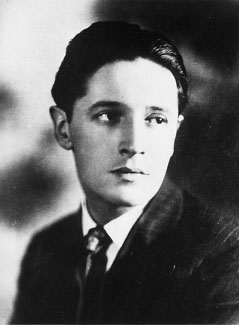
I’ve just seen Perchance to Dream in its Canadian Premiere with Toronto Operetta Theatre.  Ivor Novello’s musical romance was a great success upon its first appearance in London in 1945, although tastes have changed.

I was reminded of Salieri in Amadeus, a once-famous composer who has become obscure, if not forgotten.  I am once again moved to thank TOT Artistic Director Guillermo Silva-Marin for taking a risk in presenting this piece.  Happily the theatre was packed with an eager audience, sharing my curiosity and delighting in the melodious score.

ivor-novello-4-sized

Ivor Novello

Charming as the TOT production was, I can see how Novello has fallen from sight, if this show is any indication.  The tunes are all lovely, but it’s very much like a serenade, the songs and the choruses lilting and delightful.  It might be the prettiest score I’ve ever heard.  As theatre, though, it’s very gentle with few jolts or surprises.

Perhaps I’m born in the wrong era to appreciate it..?

Speaking of which, this is a very romantic story across several generations.   Indeed it’s like something you might have seen from Hollywood, love and loss in different centuries.  But the music is very tuneful, lovely melodies & harmonies. While there’s pain in the story the music is very sweet indeed.

The young attractive cast gave us a semi-staged presentation, although in formal attire rather than costumes, directed by Silva-Marin.

Lynn Isnar was an audience favorite in the multiple roles of Lydia – Veronica – Iris (depending on the year for the scene), singing the show’s big hit song “We’ll Gather Lilacs”.  Isnar’s voice was especially brilliant on top, used to great effect.  Caitlin McCaughey (Melinda- Melanie –Melody) certainly lived up to her character’s name, leading the women in the show’s boldest number “The Glo-Glo.”  Rosalind McArthur’s rich speaking voice was thrilling to hear as Lady Charlotte.

Tenor Cian Horrobin was affecting as Sir Rodney.  Joshua Clemenger and Yervant Khatchadourian both have beautiful voices with several lovely moments, courtesy of Novello’s melodious writing.

The musical direction by Peter Tiefenbach at the piano was perfection, very well-balanced & transparent whether working with a soloist, an ensemble or the entire company.   Unfortunately there’s just the one performance, but I hope TOT will consider presenting another one of Novello’s works someday.  There seems to be a demand for his music, judging from the full house today.

Posted in Dance, theatre & musicals, Music and musicology, Opera, Reviews | Tagged , , , , , | Leave a comment

Grainger’s rambling approach to popularity

There was a thread on social media not so long ago about music that gives you the shivers. It seemed like a fun topic, when I was walking along in nasty cold weather, to be able to shiver from a remembered tune heard in my head rather than due to the extremes of climate.

If you have to shiver anyway, why not let it be a positive and even an ecstatic experience?

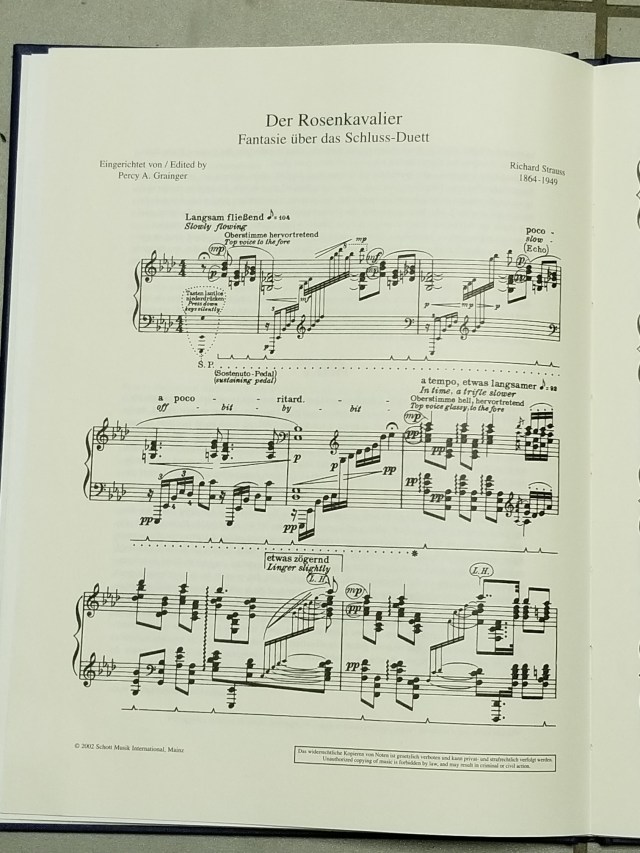
My current champ is Percy Grainger’s paraphrase of a Richard Strauss melody from Der Rosenkavalier. The Australian piano virtuoso already had a place in my heart with a piece I cited a few years ago that figures in the Merchant – Ivory film Howard’s End, namely the “Bridal Lullaby”. That one was already a guaranteed ticket to spinal chills, but this new one is even chillier.

In fairness the music Grainger is sampling from the Strauss opera is already pretty thrilling, likely to induce all kinds of electricity running up and down your vertebral column. When I recall parts of Rosenkavalier there are several that instantly induce paroxysms. Grainger has the good sense to boil it down to only a very small amount from Strauss. Wonderful as Strauss’s tunes are, the adventure playing a piano vocal score, imagining the complete work in your head is still virtual, because so much is missing. A paraphrase aims to somehow stand alone without the voices & the orchestra. It’s not that we’d ever trade an opera for a paraphrase, so much as the simple fact that if you’re all alone with your piano, it can be an amazing invocation of the larger work.

I made the serendipitous discovery when my friend Jim Fretz shared this on Facebook, namely the “Ramble on the love-duet from Der Rosenkavalier” by Percy Grainger. Here’s the tantalizing clip.

So of course I had to see if I could chase it down in the library. Thrill of thrills, there it was at the Edward Johnson Building library at the University of Toronto’s  Faculty of Music, and once again it’s from the “Schott Virtuoso Transcription Series”, that I’ve already lauded for the three Glenn Gould transcriptions and the stunningly beautiful editions they’ve printed.

schott_grainger_ramble

A beautiful score from Grainger, Strauss & Schott

Maybe it’s my fading eyesight talking, but if the notes are easier to read, surely that’s a good thing, no?

Grainger’s pianism varies. In some of his pieces (for instance anything invoking a cakewalk style such as “In Dahomey”, subtitled “Cakewalk Smasher”) he demands an extroverted and aggressive approach. What is being smashed if not the piano? The instructions in his score include words such as “clatteringly” or “chippy”, or (for one of his left hand melodies) “clumsy and wildly”.  You can see where Grainger’s instructions specify “LH hammered”.

Full disclosure, before we set aside the loud & boisterous Grainger (or even the perky Percy of “Handel in the Strand”): that “In Dahomey” is much more difficult to play, as you can probably tell listening to Marc-André Hamelin, than his softer pieces.

So yes, there’s another more lyrical side to Grainger, the gentle pianism you hear in this Ramble or in other works such as the aforementioned “Bridal Lullaby”.  Another ramble that he titled “Blithe Bells” based on Bach’s “Sheep may safely graze” resembles this one, in reproducing the famous tune more or less as we know it, but adding decorations.


There’s a festive flair to the embellishments, the melody intact but seemingly dressed up for the occasion.

I can’t help noticing that there’s another dimension to virtuosity that Grainger demonstrates with these pieces, that I was struggling to understand when Stewart Goodyear premiered his new piano concerto a few weeks ago. A species of popularity or some similar concept lurks underneath this conversation, at least as an implication. At the time I was aware that one of the subtexts is the perplexing question: how does a composer gets other artists to perform their work? What if you’ve written something so difficult that other pianists can’t play it? I was very much in awe of what Goodyear had written, wondering just how playable it might be. How indeed does an opera composer get commissions? how does a composer of virtuoso music get other virtuosi interested? I can’t help including this in the conversation. Does one compose simply to make music? Or to re-phrase the old aphorism (about that falling tree-branch in the forest):

If a composer writes a song and no one sings it: is there music?

If singers find music attractive they may perhaps then sing arias or songs by that composer, thereby promoting one another. If a pianist likes what they hear, likes what they see on the page, ideally they will want to take that music out to the world, sharing their discovery. Popularity isn’t just what the audience likes, indeed that’s totally filtered by what the artist is willing to perform. Maybe we should be asking pianists what they like to play, and whether that’s a factor in their choice of repertoire. How much of what we hear performed is conditioned by what the artist likes to play, as opposed to what the audience wants to hear?  The two are surely linked, but I’m not sure that we’ve spent enough time studying the former, as a factor in what we get in response to the latter.

Grainger’s rambles are not easy but they’re also not terribly difficult.  One doesn’t have to be a virtuoso to play them: because I am no virtuoso, and I can more or less handle these slower works. I am not sure if that is a good or bad thing, only that I feel lucky that I’m not excluded, that I am able to play them and enjoy them. That too is part of the “popularity” equation.

Posted in Music and musicology, Personal ruminations & essays, Popular music & culture | Tagged , , , , , , , , , , , , , , | Leave a comment

Gosford Park, Ivor Novello: Perchance to Dream

ivor-novello-4-sized

Ivor Novello

When I heard that Toronto Operetta Theatre will be staging Perchance to Dream, an Ivor Novello operetta, I was reminded of Robert Altman’s film Gosford Park.  I dug up the film again last night, delighting in its subtle intimations and implications.

Do you remember this film?  It’s not quite Altman’s last film. That would be Prairie Home Companion, from 2006, the same year he passed away.  I’d be hard pressed to identify my favourite Altman film: because I like so many of them.  Everyone knows MASH.  Have you seen McCabe & Mrs Miller, with its remarkable use of Leonard Cohen’s music? a hauntingly original film.  Nashville is pretty amazing too. And then there’s the bizarre world of Popeye. There’s his stunningly original segment in the anthology Aria¸ employing Rameau, bringing madness & opera into vibrant contact.  And there are three amazing films from the 1990s, namely Vincent & Theo, The Player and Ready to Wear.  There are many more I could mention.  Right now, though I have to think Gosford Park is my favourite, because of what I saw last night.

I was once again hypnotized, totally sucked into the film within a few minutes and hooked for the night.  It’s the 1930s, when we get to see an upper class English household through the eyes of their servants.    Among the house-guests are some tourists who work in film. There’s an actor researching what it is to be a servant, an impersonation that infuriates one of the real servants (played by Richard E Grant, who we saw on the Oscars a couple of days ago), who spills a coffee deliberately onto a very delicate place of his anatomy.  There’s Weismann, fictitious producer of the Charlie Chan mystery series, a charming little Jewish-American.  But in the midst of the fiction there’s Ivor Novello, a historical figure.  We meet the singer, song-writer and famous personality as portrayed by Jeremy Northam.

At dinner we hear a bit about the plan to film a murder mystery.  After dinner, Novello sings songs at the piano, entertaining the guests as well as the servants furtively listening.

His songs make for a gently romantic soundtrack, a dreamy style with more than a bit of crooning from Northam even as we discover more about the family & the master of the house, envied or hated by almost everyone present.  And then in the midst of one of the songs we see his murder enacted, and the tone of the film shifts only slightly.  At one point Weisman jokingly remarks about how much freedom servants have, that the butler really could do it, at least in a film.  But these police don’t take the servants seriously as possible suspects, which is a good thing.  Because if we want the perpetrators to get away with it, we can’t have competent police investigating the murder, now can we?  Sometimes incompetence is useful.

When I looked for a score to an Ivor Novello operetta in the music library I came up empty.  Although at one time Novello was a big star, composer of some of the most popular tunes, he’s beneath the radar at the Edward Johnson Building (at least for a complete score) although I think they must have a song or two in an anthology somewhere.

All the more reason for me to want to go see & hear Perchance to Dream this Sunday. He is arguably an important figure, now obscure after great fame in the first half of the 20th century.

Here’s Novello’s most famous song, written at the beginning of WW I, namely “Keep the home fires burning”.

Posted in Cinema, video & DVDs, Dance, theatre & musicals, Music and musicology | Tagged , , , , , , | Leave a comment

Questions for Stacie Dunlop – Lonely Child Project

Stacie Dunlop is a rare artist, a soprano who commissions original new music, some of the most original projects I’ve ever seen.

You can read her bio.

Three years ago I saw a workshop of The Harvester

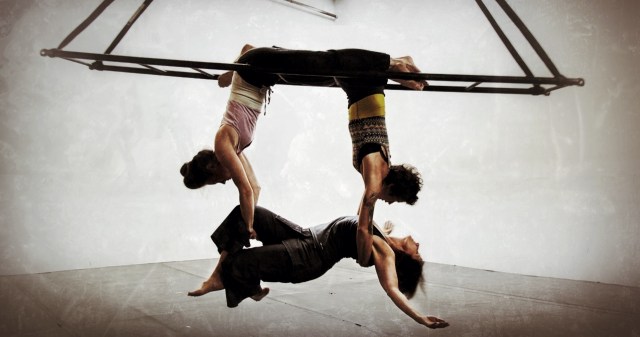
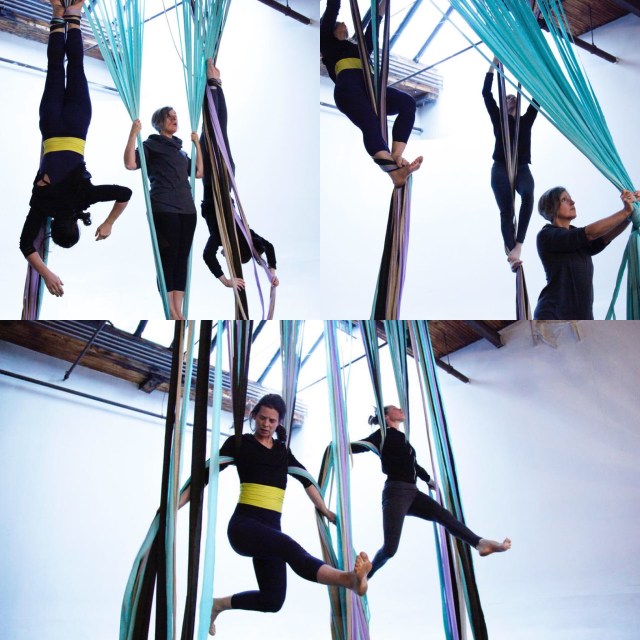
More recently came Balancing on the Edge, a mix of new music & aerials.

I was especially impressed at the time with the way Stacie explained her work to a young child in the audience. As I eavesdropped I found that I was becoming inspired.

And now Stacie and her team  are re-imagining Claude Vivier’s Lonely Child with an aerial element. Here’s the way it’s described on her website:

A three stage creation project. For the first stage a new arrangement has been created of Claude Vivier’s Lonely Child (originally composed for soprano and chamber orchestra) by composer/arranger Scott Good for singer (soprano Stacie Dunlop), pre-recorded instrumentals, and will be reimagined including theatrical elements and aerial choreography in collaboration with 2 aerialists (Angola Murdoch and Holly Treddenick). A grant has been received from the Canada Council to facilitate the creation of the new arrangement, along with a development period from October 2018 through March 2019.

The project is still in its first of three stages. Next week I’ll be seeing a workshop presentation that I’ll write about  afterwards.

But first? I must ask Stacie a few questions.

BB: Are you more like your father or your mother?

This is a difficult question…my childhood was unstable: I was taken away from my father at age 6, raised by my mother who was more of a child than a parent and eventually found my way back into my father’s life around age 21. I love my father: he is a kind, generous, loving, stable and supportive human being. I like to think I am like him, but I know I am also like my mother. Both of my parents are self-focused, and I know I am similar. Growing up, I was closest to my grandmother. We had a special bond…we were best friends and I think she understood me better than anyone.

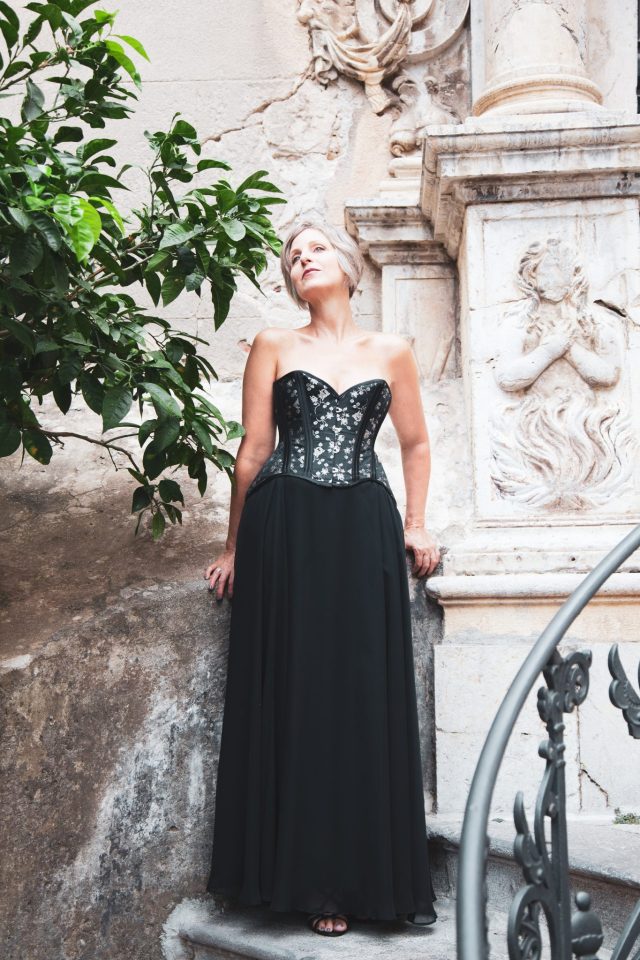
Stacie-Dunlop-Cefalú

Stacie Dunlop

BB: What is the best or worst thing about what you do?

The best thing about what I do is I bring to life my dreams…but the worst thing is that I am also driven to bring my dreams to life and this can be quite stressful, at times weighing on my soul heavier than even I realize, but then the dreams begin to come to life and that weight lifts and it can be truly joyous.

BB: Who do you like to listen to or watch?

Hmmm…funny question: I rarely listen to quality music unless I am researching something…and then I tend to obsessively play the same tunes over and over. When I run outside I like the drone of Indie Chill on Slacker, but when I run inside on the treadmill I like to watch bad movies, usually action or sci-fi, on AMC. This is kind of like white noise for me, but at home, when I am working, I do it in silence…I have never been able to work or read with music playing. I adore movies, especially horror and sci-fi genres, and am currently fascinated with any and all films Scandinavian or Korean.

BB: What ability or skill do you wish you had, that you don’t have?

People who know me will laugh at this question…I have quite a few skills up my sleeve, and like to think that I can pretty much do anything from installing car batteries and bathroom plumbing, to cooking gourmet meals and sewing drapes or knitting complex patterns. I guess I wish I played the piano with more skill, as I still struggle with the basics and can’t seem to keep up my practice. The same holds true with languages.

BB: When you’re just relaxing and not working, what is your favourite thing to do?

I love camping…the outdoors…smelling like a campfire, cooking over an open wood flame and sleeping in the fresh air…heaven!

*******

More questions for Stacie Dunlop about the Lonely Child Project.

BB: Stacie, tell us about your background and how that leads to Lonely Child Project.

In 2016, I was paired with aerialists Angola Murdoch and Holly Treddenick for a show called Balancing on the Edge, an evening of new music and new contemporary circus. We created a work called Ascension, where we took John Cage’s Aria and Fontana Mix and reimagined it theatrically with aerial elements. I mainly worked on the floor, but also worked with Angola and Holly on the ladder apparatus. It was an amazing experience and a truly unique collaboration beyond what I could have ever imagined.

Processed with Snapseed.

Ascension (Holly Treddenik, Angola Murdoch, Stacie Dunlop, music: Aria & Fontana Mix (1958/59), John Cage) from Balancing on the Edge, November 2016.

When we had drinks after the final show, we were all chomping at the bit to work together again, and that night I presented them with my idea for Lonely Child.


BB: why did you choose this piece?

I can’t remember what year it was that my mentor and dear friend, David Jaeger, took me to the CBC music library and plopped down the score of Lonely Child in front of me to peruse. He said he thought it would be a very good piece for me. Ever since that day, I’ve had it in the back of my mind as a work I needed to know, and also perform, but it was not until I spoke to Scott Good in late 2016 or early 2017 about reimagining this work for a smaller ensemble to be staged theatrically, that I knew in what form this was going to come to life. I just knew that it had to be brought to life by me in some way.

BB: Please talk about how you got the idea to explore Vivier’s Lonely Child in this way.

I am kind of obsessed in reimagining existing works in a new way: In 2009 I was introduced to the Debussy song cycle Cinq Poèmes de Baudelaire and knew I wanted to perform them, but they were problematic as the song cycle was quite long, so I had the idea to create a theatrically staged show with these songs as the base and I commissioned 4 more new works by three Canadian composers, Scott Godin, Tawnie Olson and Clark Ross and included other works by Jonathan Harvey, Elliott Carter and Sheila Silver, all of which were either inspired by or used texts of Baudelaire. I called the show Rêve doux-amer: it was about a life lived and loves loved. I am also passionate about the idea of taking an existing large scale work and creating a smaller chamber version of it. I had this vision with my opera project, which pairs a new opera (The Harvester by Aaron Gervais and Paul Van Dyck) with a new chamber arrangement of Arnold Schoenberg’s Erwartung. I commissioned Canadian composer Aaron Gervais to create both the new opera and the new reduced (10 player) version of Erwartung.

BB: Tell us about the way you’ll be presenting Lonely Child.

This work, originally composed for soprano and chamber orchestra, will be brought to life in a new way that will include the 2 aerialists working on 2 different apparatus (created specifically for this project), the singer, who will also be involved in some way with staging and movement, and it will involve recorded sound. The original score, set for chamber orchestra, will be pared down to string quartet (v1, v2, vla, cello), double bass, percussion and 2 accordions. This first stage process of Lonely Child is being brought to life using a midi-version of the score: that is, the electronic sounds of the live instruments will make up the recording and are set in a way that the tempos will work for the singer, including timed calculated breaths, and will be performed conductor-less. The total length at the moment is around 17 minutes. This is the first stage for the project. The second stage will include working with the 8 live instrumentalists.

BB: Talk about the team of artists working in the Lonely Child project.

There is so much that I can say about this creative team…these people all inspire me: Angola Murdoch and Holly Treddenick are aerialists but really that is just a small part of who they are and what they do. They are contemporary circus performers and the choreographers of this work. Holly has a background in contemporary dance and Angola is currently training as a therapeutic clown. They each run their own companies (LookUp Theatre (Angola) and Femmes du Feu (Holly)) and they are mothers, friends, passionate creators of art and two of the most incredible humans I have ever worked with in this lifetime so far.

IMG_7442

Scott Good is an amazing composer, instrumentalist, conductor, and friend. He knows Vivier’s work well and has previously arranged Pulau Dewata for Esprit Orchestra. Sara Porter has been an incredible support as our outside eye for this project as well as for our previous project Ascension. Her experience as a dancer and performing artist has been a huge asset as she gives us important feedback throughout our development of the work. I need to note here that there is no director or outside artistic vision. The work has come together organically through discussion, discovery and experimentation. The evolution of this work has not begun with a pre-conceived idea of what it should be, rather it evolves daily from our research, play and feedback within the group.

BB: do you expect to be working with aerial artists again in the future?

Yes, without a doubt. This project will continue to grow and I certainly would love to work with contemporary circus performers again…definitely with Holly and Angola, but also with other artists if the opportunity should present itself.

*****

I’m looking  forward to seeing The Lonely Child Project in its current version, as it evolves and grows.  Afterwards I’ll share what I’ve seen & heard.

Posted in Dance, theatre & musicals, Interviews, Music and musicology, Opera | Tagged , , , , , , | 1 Comment

Egoyan- Lite

I had another look at the Canadian Opera Company’s Cosi fan tutte tonight, a production that I enjoyed even more this time in its closing performance.

18-19-04-MC-D-0536

Tracy Dahl as Despina & Russell Braun as Don Alfonso (photo: Michael Cooper)

Last time I was content to have so much fun & so many laughs, but this time I guess I’m trying to be a bit more analytical, hoping to understand what’s different from five years ago. There are a few possible explanations

  • In this year’s version did Atom Egoyan see the light? Did he decide to be less pretentious? The overbearing images –Frida Kahlo, butterflies & pins to pierce them, and this heavy-handed “school for lovers”—are all still in the design concept, but feel different this time. Or was assistant director Marilyn Gronsdal the real genius behind this incarnation of the opera? (and the reason I like it so much better) If the director was more of a brand-name to sell the production than a real controlling force (as sometimes happens in revivals), perhaps the singers were able to shake off the original directorial concept (as seen in 2014) and bring the opera back closer to its usual tonal colour as a comedy.
  • In this year’s version was the change from Sir Thomas Allen to Russell Braun the necessary catalyst for a lighter reading? When I watched Braun high-five the entire chorus in the curtain call, there was no mistaking the joy in the company. They were having fun, whereas last time there seemed to be something more reverential at work, a pompous self-important tone, either with Sir Thomas or the director. Last time my first laugh was an hour into the opera, at the arrival of Despina. This time I was laughing throughout.  While this is a different sort of role for Braun –it lies lower than his usual baritone parts– I daresay he was phenomenal, and the driving force all night.  It was a pleasure watching him.
  • In this year’s version the women are funnier. Is this the personnel or their direction, I wonder? Wallis Giunta is a talented mezzo-soprano who was terrific last time. But Emily D’Angelo was turned loose in this version, showing a real gift for physical comedy. Last time I recall that Tracy Dahl was more or less on her own as the comic element of a rather serious reading of the opera; this time all three women were funny.

    18-19-04-MC-D-1520

    (l-r) Kirsten MacKinnon as Fiordiligi & Emily D’Angelo as Dorabella (photo: Michael Cooper)

  • The chorus seem to be smiling more this time. Again, I know they smiled last time, but there was an energy this time, a lightness of foot and a sense of delight. They have a huge amount of work to do, as witnesses & students observing the lessons they’re being taught by Don Alfonso. Braun’s school for lovers? It is a fun place, where Allen’s school seemed more solemn, so thoughtful as to be well, boring! Yes I almost fell asleep a couple of times in 2014.  Not this time.

There are still question-marks, but they’re not for Egoyan or the COC. I love this production but I am reminded as usual: of problems I have with this opera, with the libretto that Lorenzo da Ponte handed Mozart. Oh well, two out of three ain’t bad, considering that Don Giovanni and Nozze di Figaro (the other two operas Da Ponte created with Mozart in that miraculous 5 year period) are arguably the two finest operas of the 18th century. I am still waiting to see a production of Cosi that really balances the genders at the end, holding the men to the same account as the women. Egoyan / Grosdal are busy with other issues, and so at the end we listen to the women apologize, while nowhere do the men really apologize for anything. We come as usual to the “funny” line that always rankles, when Alfonso says “Cosi fan tutte”, a line that surely must apply to the men as well as the women. I have seen productions that aim for more balance than this one.  In this one? the quartet of lovers seem  estranged at the end. So while the music is fabulous and the performances mostly wonderful –especially the quartet of Canadians—it’s not much of a happy ending. But I guess that’s normal for 21st century productions of this opera.

There are a couple of oddities in this reading. We have a scene where we watch the young women drinking to excess, a moment that felt especially odd today with the news about R Kelly. Drunks (the women have consumed seven bottles of wine) and under-age persons (their clothing suggests school-age… maybe it’s just a metaphor?) cannot give consent. Happily I must admit that those two women –Kirsten MacKinnon & D’Angelo especially –are very good at appearing inebriated onstage. In the next scene they are suddenly sober, perhaps because the scene would be very troubling if they were still drunk. But that’s a tiny quibble.

And there’s something in the 2019 director’s note that I don’t understand at all, where Egoyan claims that the women have a parallel wager. Maybe he’s as troubled by the text as I am? My big problem is how this 18th century story parallels a 21st century double standard I’ve seen in some men, who think it’s okay for them to have affairs and adventures while holding their GF or wife to a different standard, to point fingers at any straying they do, while feeling completely empowered to have all sorts of affairs on the side. What I think I see in Da Ponte’s libretto is a critique of women without any comparable critique of the men, perhaps symptomatic of a culture (in the 18th century) holding women to a different standard than the men, and being bold & revolutionary in suggesting that women might be as capable of infidelity as men. The big gesture on the male side is to admit that they were playing a game, that they were messing with the women. Oh how kind of them to admit that they were screwing around. But where’s the admission that everyone is really the same? I think that would be a much more important objective than all the images of bleeding hearts and butterflies.

As a man it bugs me that we got off easy yet again.

Posted in Music and musicology, Opera, Reviews | Tagged , , , , , , , , , , | 1 Comment

Look at The Angel Speaks

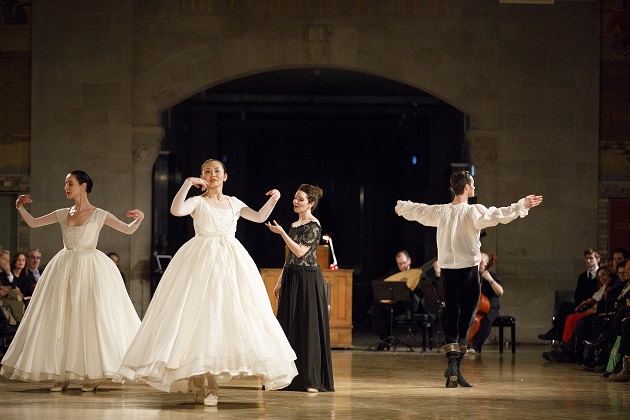
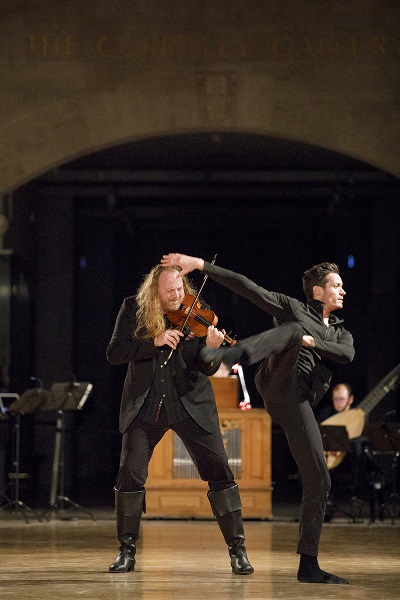
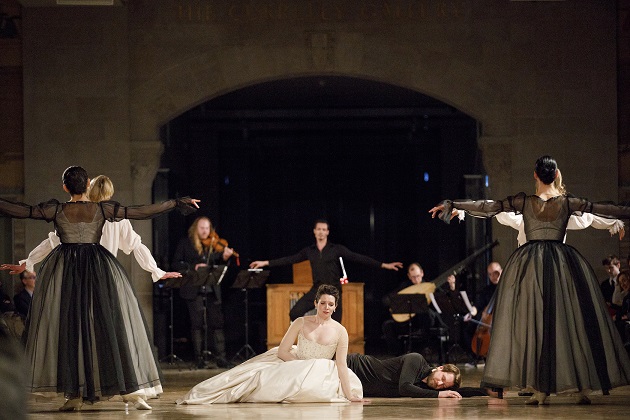
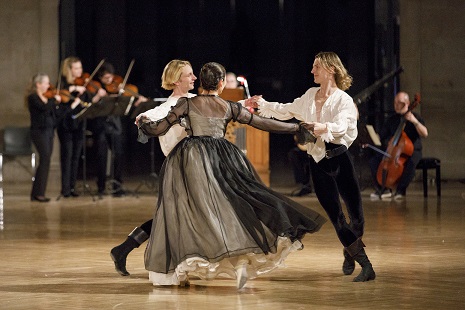
I’m sharing some lovely photos by Bruce Zinger of last night’s North American premiere of  The Angel Speaks at the ROM, featuring Opera Atelier and select artists of Tafelmusik Baroque Orchestra.

3.Edwin-Huizinga_Jesse-Blumberg_Tyler-Gledhill_Photo_Bruce-Zinger

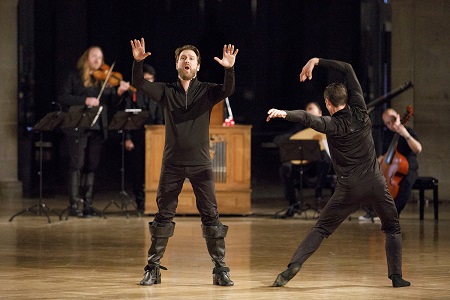
Baritone Jesse Blumberg sings alongside dancer Tyler Gledhill. To the left you can see violinist & composer Edwin Huizinga towards the back with the orchestra. Felix Deak, viola da gamba, is visible just behind Gledhill. (photo: Bruce Zinger)

Is Opera Atelier perhaps pushing the envelope of what artists do? while they’re thought of as historically informed purveyors of music from centuries gone by, The Angel Speaks required a lot of Jesse Blumberg & Mireille Asselin, the two singers employed in the midst of and as part of a great deal of choreography.  I was thinking about the way music-theatre now looks for the “triple threat” of actor-singer-dancer.  Whether or not other opera companies look for a new mix of talents, Opera Atelier have different expectations.

10.Jeannette-Lajeunesse-Zingg_Juri-Hiraoka_Mireille-Ssselin_Tyler-Gledhill_photo-Bruce-Zinger

Jeannette Lajeunesse Zingg, (dancer, choreographer and co-artistic director of Opera Atelier) Juri Hiraoka, Mireille Asselin and Tyler Gledhill (photo: Bruce Zinger)

I don’t think it matters what we call it –between such names as “opera” or “ballet”– so long as it works.

7.Edwin-Huizinga_Tyler-Gledhill_Photo_Bruce-Zinger

Violinist & composer Edwin Huizinga beside dancer and choreographer Tyler Gledhill (photo: Bruce Zinger)

The space’s post-modern design that’s a mix of new & old felt ideal for a performance that itself was just such a synthesis of old & new.

6.Artists-Of-Atelier-Ballet_Mireille-Asselin_JesseBlumberg_MembersOfTafelmusic_Photo-Bruce-Zinger

Artists of Atelier Ballet, Mireille Asselin, Jesse Blumberg (Photo: Bruce Zinger)

The space worked rather well for the musical performance. I was surprised at the excellent acoustics, without undue reverb but still quite live, likely due to the beautiful wood floor.

Perhaps we’ll be seeing more concerts, operas, ballets and theatre in this space: the Currelly Galllery at the Royal Ontario Museum.

2.Edward-Tracz_Juri-Hiraoka_Dominic-Who_photo-Bruce-Zinger

Edward Tracz, Juri Hiraoka and Dominic Who (photo: Bruce Zinger)

Posted in Dance, theatre & musicals, Music and musicology, Opera, Personal ruminations & essays | Tagged , , , , , , | Leave a comment

Questions for Kathy Domoney –DAM concerts

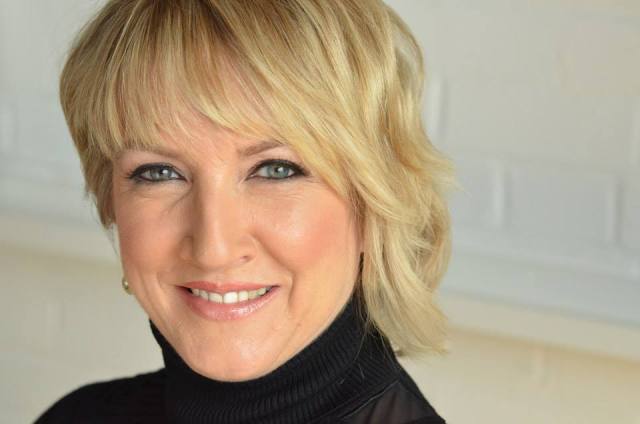
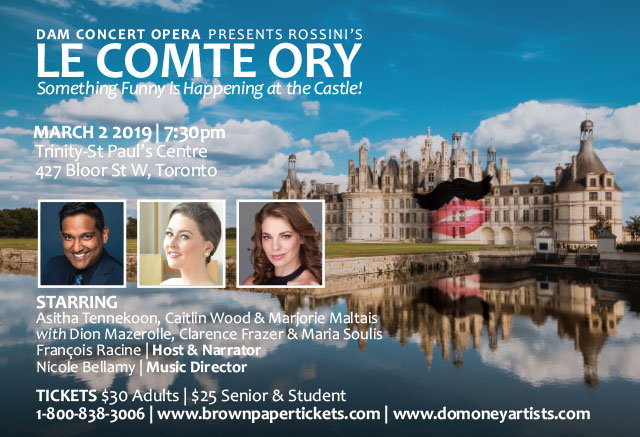
Kathy Domoney is the Director of DAM aka Domoney Artists Management who represent artists you may know & love. DAM now begets DAM Concert Opera, putting some of those artists onstage beginning with Rossini’s Le Comte Ory March 2nd at Trinity St Paul’s Centre.

A new producer of opera is always welcome. I wanted to know more, so I asked Kathy some questions.

BB: Are you more like your father or your mother?

Well, I would say I’m a combination of both.

My father was a self-made man, with a grade nine education, who was a mechanic in the Air Force during WW2. He was happy with a drink in his hand, and was an excellent golfer. He enjoyed the outdoor life of fishing and camping and was a terrific card player, too. My father was a born salesman and was manager of the shoe department in Woodwards Department Store in rugged Port Alberni, BC, where we lived til I was 9 years old.

My mother came from a cultured, educated, musical Oak Bay family (the Beckwiths) and was keen to return to Victoria. She spotted an ad for a shoe store for sale in downtown Victoria, so we moved there, opening Domoney Shoes. My mother was a patient, wonderful grade 1 teacher for over 30 years, and gave me my first piano lesson. She was an avid gardener, and loved dance and music, encouraging my studies in voice. My mother was not interested in fashion or the latest styles.

My father was keenly aware of style and trends, and was a dapper dresser. When I was about 20, he offered me the option of taking over Domoney Shoes , but the call of music was stronger, so we sold the business. I applied and was accepted to University of Toronto as a Voice Performance Major. On days when I am less patient, more critical and inclined to say “ you’re doing that wrong”, I can hear the voice of my father, Ben. On days when I think of my mother, I can hear Sheila’s voice saying “ oh, may I show you another way of doing that? ” My father was a savvy businessman, and I spent summers and weekends working with him at our shoe store. I learned a great deal about how to strike up a conversation with complete strangers, how to really listen, and close a sale, how to build trust so that today’s satisfied customer leads to future business. My mother’s ability to coach, encourage and give constructive criticism is something I try to incorporate as an artist manager, when working with my singers on their career development.
headshot

Kathy Domoney

BB: What is the best or worst thing about what you do?

The best is sharing the excitement and joys of my artists’ success. The worst is sharing the disappointment of my artists, waiting for “yes, you got the job!”, and dealing with “ no, they don’t want you this time”.

BB: Who do you like to listen to or watch?

I prefer having music in the background, so in my office I generally listen to BBC radio 3. I love their programming, which is generally a terrific range of classical/choral/orchestral music.

As a change of pace, I love to listen to classic jazz (Chet Baker, Jobim, Blossom Dearie) and I love Fado, with Amalia Rodriguez and also Madeleine Peyroux, Melody Gardot, Kat Edmondson…. I am never far from Sinatra and Eileen Farrell, just to revel in their voices and diction, such style! I saw Joan Sutherland and Pavarotti as a teenager, so I have a special fondness for both of these icons…and will gladly spend some quality time with their recordings, too. When I’m driving, I bounce along to Broadway or Met Opera on SiriusXM.

TV and Netflix – I’m currently revelling in Victoria on Masterpiece, and I enjoy many gloomy murder mysteries like Shetland, Endeavour, Maigret, Luther and Vera. I also enjoy current TV shows like This is Us, The Blacklist, How to Get Away with Murder, and never miss Coronation Street.

BB: What ability or skill do you wish you had, that you don’t have?

I do wish I had learned to ice skate with more confidence. I was a very timid little child, and afraid of horses, swimming, how to ride a bike, I never tried skiing….and skating ended when my music lessons took over my busy weekends. Both my parents were skilled at athletic pursuits, and were very patient in helping me overcome my fears.

BB: When you’re just relaxing and not working, what is your favourite thing to do?

When I need a break from a typical work day (writing and replying to dozens of emails, requests for auditions, editing artists’ bios, contacting organizations about auditions, discussing repertoire with singers, negotiating engagement details, planning auditions, completing contracts for artists, updating social media for artists’ performances) I can happily relax with watching Love it or List it Vancouver, or Say Yes to the Dress. Watching other people shop – whether for houses or dresses – is very entertaining!
When I’m not on the road, I love my little city garden, so from spring to fall I am happy to plan and putter in my flower garden. When I travel to see my artists perform, I always look for a local museum/art gallery, stately home or botanical garden to visit in between performances and meetings. This spring, I will be in London UK, and can’t wait to visit the Dior exhibit at Victoria and Albert Museum as well as the Chelsea Flower show.

*******

More questions for Kathy Domoney and the upcoming presentation of Le Comte Ory by DAM Concert Opera on March 2nd.

BB: Who are you, KD? Tell us about your background that leads to DAM Concert Opera.

My singing career was a very enjoyable blend of staged opera, concert opera, song recitals and oratorio with orchestras and choirs. I was privileged to sing with some wonderful colleagues at the Canadian Opera Company, the Aldeburgh Connection, Tafelmusik, Opera Atelier, at the National Arts Centre, with Metropolitan Opera Guild in New York, and as a guest soloist with many of Canada’s orchestras, from Victoria to Ottawa in a wide range of range of music from baroque era to world premieres.

BB: Talk about the artists that we’ll be hearing in Le Comte Ory

I am lucky to have artists on my roster who excel in the specific vocal demands of Rossini – namely, dazzling fast notes , easy high notes, a beautiful legato line, as well as a keen sense of comedic acting in opera.

Asitha Tennekoon stars in the title role as Count Ory, who is has all of these qualities. Ian Ritchie commented on Asitha’s “ boundless strings of high notes, a dazzling virtuoso display of impossibly quick runs” (Bound, Against the Grain Theatre). Asitha recently debuted in Champion with Opera de Montreal, and is well-known to Toronto audiences for his impressive performances with Tapestry Opera, Opera 5 and Voicebox: Opera in Concert. He debuts with Toronto Mendelssohn Choir in Haydn’s Mass in Time of War and sings his first Evangelist in Bach’s St. John Passion with Ottawa Choral Society and joins the cast of Tapestry Opera and Opera on the Avalon’s premiere of Shanawdithit.

ATennekoon-3005

Tenor Asitha Tennekoon (photo: Dahlia Katz)

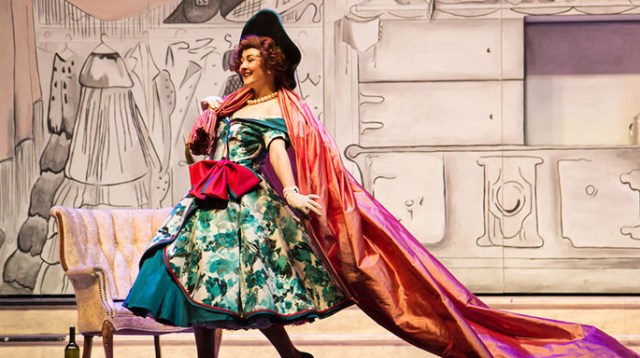
Caitlin Wood stars as Countess Adele, having recently sung Adele the lowly chambermaid in Die Fledermaus with Toronto Operetta Theatre, where she “exploded with personality – and thrilling ring – each time she sang” (Greg Finney, Schmopera). Caitlin earned rave reviews as Susanna in Marriage of Figaro with Vancouver Opera Festival and this season sings Carmina Burana with Ottawa Choral Society and rocks out to Abba Mia! at Westben Festival this summer. In 2020, Caitlin sings her first Cunegonde with Edmonton Opera’s Candide.
header_caitlin_wood_soprano_170306-1-crop-u79226 (1)

Caitlin Wood as Clorinda, La Cenerentola Edmonton Opera (photo: Nanc Price)

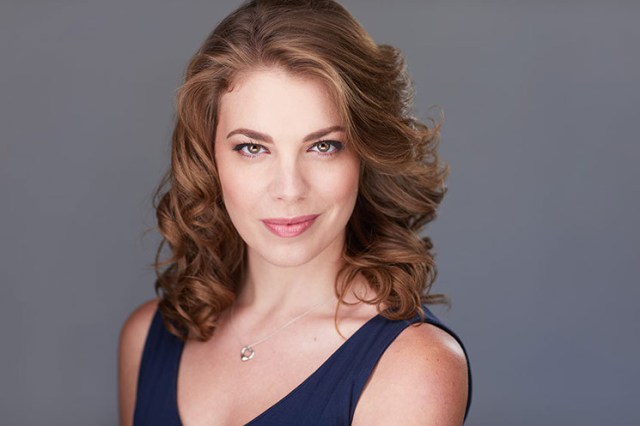
Marjorie Maltais first came to the attention of Toronto audiences in 2015 at COC Centre Stage Competition, where she “ wowed us with a stunning Cenerentola….fiery eyes…remarkable coloratura” (Greg Finney, Schmopera). Noted for her performance as Cherubino with Voicebox:Opera in Concert in Mercadente’s I Due Figaro and as Mrs. Goby in The Medium with Victory Hall Opera in Charlottesville, Virginia, Marjorie premieres Ian Cusson’s song cycle Le Récital des Anges at Canadian Opera Company’s Noon Hour Recital Series on March 5, and is a guest artist with Les Boreades/St. Lawrence Choir in Bach Cantatas at Salle Bourgie, Montreal. In June, Marjorie will perform in “Versailles: Portrait of a Royal Domain”, featuring operas by Charpentier/Lalande in her debut with Boston Early Music Festival .
marjorie_maltais_soprano_gallery_6

Mezzo-soprano Marjorie Maltais

Joining this formidable cast are two established singers, baritone Dion Mazerolle as the Gouverneur, and Maria Soulis, as Dame Ragonde. Dion recently sang the role of Giorgio Germont in La Traviata with Societe d’art Lyrique de Royaume in Chicoutimi, Quebec, Bach’s B Minor Mass with Montreal’s Ensemble Caprice, and will be making his debut with Against the Grain Theatre in their production of Vivier’s Kopernikus . Mezzo soprano Maria Soulis recently portrayed the Mayor’s Wife in Jenufa with Pacific Opera Victoria, as well as Clara in Tapestry Opera’s Oksana G, and this season sings Respighi’s Il Tramonto with Toronto Sinfonietta and in concert with Harbourfront Music Garden.

dam-cf-170927_clarence_frazer_headshot_500px_bw-crop-u53655

Baritone Clarence Frazer

Baritone Clarence Frazer rounds out the cast as Raimbaud, having recently sung Marcello in La boheme with Saskatoon Opera. Highlights this season for Clarence include Handel’s Israel in Egypt with Ottawa’s Caelis Academy Ensemble, Mozart Requiem with Windsor Symphony, and Shanawdithit with Tapestry Opera/Opera on the Avalon, as well as Antonio/Figaro(Understudy) in National Arts Centre’s concert performances of Le Nozze di Figaro.
I am always keen to showcase my wonderful roster of singers – depending on schedules and availability, we may indeed present another concert opera next season.

Stay tuned!

BB: how did you get the idea for DAM (Domoney Artists Management) Concert Opera, to present Le Comte Ory (why this opera)? And tell us how you’ll be presenting Le Comte Ory

When Caitlin Wood was invited to sing Adele in Le Comte Ory with Edmonton Opera, and Asitha was asked to come understudy John Tessier in the title role, it just made sense to me to give both of these singers a chance to “ try out” these roles, and for Toronto audiences to have a chance to see them. I do like to create events and putting on my “ Impresario” hat on occasion – a few years ago, I wrote and produced The Star of Robbie Burns, and thought it would be fun to share this beautiful music with a curious audience. I have fond memories of singing in the chorus of the COC production at the Elgin Theatre in 1994, and it has been a real joy to re-acquaint myself with this opera.

One summer, I saw François Racine direct Le Tragedie de Carmen at Highlands Opera Studio and I was absolutely enthralled. I have a vivid memory of all the cast standing still on stage at the beginning, as he talked and walked around each singer – explaining their personality, their wants and desires, as well as their relationship to each character in the opera, and sometimes speaking to them directly. I tucked that image away, and when the idea began to develop about producing a concert version of Le Comte Ory, I knew immediately that François and his style of “Interactive narration” was exactly what I wanted to present.

This will be a night of storytelling , with François leading the audience through the silly plot and scenes. We have eliminated the womens’ chorus and a few small roles, kept a small male chorus and are focusing on the main arias/duets/ensembles for the singers. We will enhance it all with a few props and costume elements to give a stronger sense of what is happening, with whom, and where in the castle.

The singers will be using their scores, sometimes carried in their hands, or on a music stand, and singing in French, with Nicole Bellamy (music director), leading from the piano.

The audience can just sit back and listen and watch – no need to look at surtitles, or read program notes/synopsis….it is all about watching the fun and enjoying the magnificent singing.

It is entirely possible that we may present another DAM Concert Opera in the future…it depends on timing, availability of artists, and finding appealing repertoire to best showcase my artists. I do believe that audiences will really enjoy this style of presenting, with a host/narrator.

We chose Le Comte Ory for a combination of reasons – primarily to give Caitlin and Asitha a chance to perform it before singing it in Edmonton; it has some of the most gorgeous music; my other singers had a window of availability to sing the other roles; it is a silly, fun story, and after our long winter, I think comedy is especially enjoyable to see. I am excited to give Toronto audiences a taste of this fresh, entertaining way to present opera.

I remember it being absolutely fun, with lots of silly stage business …and exquisite floating moments of the most sublime singing, to counter the comedic scenes.
I will share an anecdote – at a staging rehearsal at the Elgin Theatre, all of the women were kneeling with heads bowed in the scene and from above, a crescent moon was supposed to gently float down. Well, due to some mishap, the floating became a crash, and it landed on the head of the lead soprano, knocking her over…she who was not seriously injured, but promptly left the production and was replaced.

Live theatre is always an adventure!

BB: are there any influences you would care to mention?
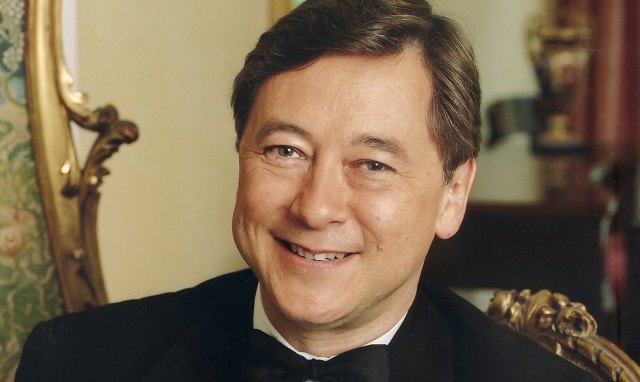
Bruce-Ubukata-bio-2

Bruce Ubukata

Oh, so many people…I would say I was very lucky to have studied voice with sensible teachers as a teen in Victoria (Kathleen Paulin, Frances James)and Edward Parker, piano. It was such a privilege to have Bruce Ubukata as my studio pianist and recital partner when I studied with Helen Simmie at UofT; I was extremely fortunate to spend a summer at Banff Centre as Nanetta in Falstaff, directed by Colin Graham, and to be coached by Evelyn Lear and Donald Palumbo. Don Tarnawski was a demanding but wonderful coach, and I was always VERY prepared as a soloist, thanks to his insight. When I left my singing career and was considering this new direction as an Artist Manager, I consulted several colleagues about this crazy business…and know that I can ask for input from these same people anytime.

I would like to say that I owe a great deal to both my parents, who were so encouraging and helpful, in urging me try new things, and to overcome my fears and gain confidence, which we all need to thrive in today’s demanding world.

*******

DAM Concert Opera presents Rossini’s Le Comte Ory March 2nd at Trinity St Paul’s Centre at 7:30 p.m. Click here for ticket info.
dam-190302_le_comte_ory_poster

Posted in Interviews, Opera | Tagged , , , , , , , , , | Leave a comment

The Angel Speaks

Tonight I was present at the North American Premiere of The Angel Speaks, a program of several works in several styles from Opera Atelier in a single performance for a small audience at the Royal Ontario Museum.

Would we call it opera?  The word takes many forms and shapes.  I think tonight I wanted to call them “Ballet Atelier”, this company who foreground dance, and whose identity is more rooted in movement vocabularies & physical appearance than in anything you’d find in a score or a libretto.

As Opera Atelier co-artistic director Marshall Pynkoski explained it in his introduction The Angel Speaks, the work we saw tonight, is part of a longer development process. It was a pleasant unveiling, entirely in the right place.

We were watching the performance in the Samuel Hall Currelly Gallery of the Royal Ontario Museum, in a space with the same foot print as the chapel space in Versailles (where I think the work was premiered, if I understood what Pynkoski was telling us).

Speaking of footprint…!

dino

Dinos in the dark…. exchanging glances

…we were in the presence of old and new, the building a post-modern juxtaposition of styles, the dinosaurs as the most ancient witnesses.  The dance was both the baroque we’ve seen before from Opera Atelier and something new, as Tyler Gledhill spent a great deal of time on the floor. The scores were from Henry Purcell but also new ones from baroque violinist Edwin Huizinga, tuneful pieces that are not out of place in such a program or in the midst of a baroque program. It’s the ultimate challenge to a composer to put their new work alongside brilliant compositions that have endured for centuries: a test Huizinga passed. His music is mostly melodic, at times reminding me of Vivaldi in the frenetic solo passages for his violin –that he played himself—while in others, channeling a minimalist mix of Erik Satie & Philip Glass, gentle pattern music that easily held the stage and the audience.

While there was singing, I felt we were more in the realm of dance than opera, as the singing was often self-conscious rather than dramatized, a very theatrical presentation that did not call forth much in the way of a dramatic illusion. Baritone Jesse Blumberg started us off with Purcell’s beautiful “Music for Awhile”. I looked across the space at the audience, not sure if they were getting the text, especially when we come to the magical phrase “Till the snakes drop…..drop…. drop…. from her head, And the whip from out her hands.” Purcell’s composition really sounds like something is dropping when we hear those words.  Blumberg delicately began the opening phrase on the threshold of our hearing.

Huizinga’s setting of Rilke’s “Annunciation” seems to be the heart of the piece. Here’s a bit from the program note:

In the process of turning this poem into a dramatic cantata, we have developed a loose, expressionistic plot line that focuses on the angel Gabriel, rather than the Virgin. Gabriel’s confusion, disorientation and gradual recognition of his mission provides exceptional fodder for accompanied recitative. It also allows for the opportunity of writing for two voices—soprano and baritone—from distinct worlds. The angel Gabriel is able to see the Virgin; he circles her,, touches her and explores the sensation of awe she inspires. She, in turn is unable to see the angel-but mesmerically repeats selections of his words and key phrases, as though speaking in a dream. At the conclusion, Gabriel is drawn back into his true element and the Virgin is left standing alone. She is like an icon or jewel—exquisite but unaware of its own brilliance.

While the objective may be operatic, so far the dance & the music are the most advanced in this project, and clearly in the foreground of what we saw, as so far the dramatization is in the movement + music less than in some treatment of the text via the singing.   Most of what we heard and saw was very beautiful all the same.

I will sound like a bit of a school-marm when I say that I had one objection. But the closing piece, sung exquisitely by Mireille Assselin (who was perfection throughout) was mis-used if not abused. I’m speaking of Purcell’s “An Evening Hymn”, a favourite of mine and one of the most genuine & sincere addresses to the creator that I’ve ever encountered, since I stumbled upon it on Michael Slattery’s The People’s Purcell CD last summer, a phenomenal piece of writing. It’s such a simple thing, as though the singer were talking to God. And so it began wonderfully in a solo, that turned into background music while the entire company danced to it. Sorry, but the choreography cheapens and arguably perverts the spirituality in this music. Okay it’s an experiment, and hopefully they will notice this glaring shift of tone, hopefully noting that what does or does not work. No one is asking me, but I’d suggest that they either permit Asselin to sing the hymn to its conclusion, perhaps at the beginning rather than the end (when the prayerful quality of the piece takes us deep into the heart of everything Rilke would want to invoke), and if the full ballet must take the stage to end, then finish with a secular piece such as the excerpt from Come Ye Sons of Art.

But the baroque music—a bit of Boyce and a whole lot more Purcell—was stunning throughout from a few members of Tafelmusik Baroque Orchestra, Asselin & Blumberg.

I’ll be intrigued to see what comes of this experiment. So far so good.

Posted in Music and musicology, Opera, Reviews, Spirituality & Religion | Tagged , , , , , , , , , , , , , | 1 Comment

Paolozzapedia

Commedia dell’Arte is a living theatre language. In Paolozzapedia, Adam Paolozza’s new meditation upon his heritage & influences, a Bad New Days Production with the support of Theatre Passe Muraille, that opened tonight at TPM, we get one of the freshest & most vivid uses of the CdA vocabulary I can ever recall.  If you study CdA one reads textbooks full of pictures & characters & comic routines. In the theatre it can lead one into something so respectful as to suggest a museum or a mausoleum: which is ironic for a medium that existed for centuries without benefit of books or texts but rather in a realm of improvisation.  Tonight it felt brand new.

What I love about CdA at its best is the escape from text into something spontaneously physical and instantaneous in the moment. But it doesn’t have to be funny, it doesn’t have to be comical at all. There’s wonderful poignancy in the masked figures, astonishing moments of universality: as we experienced tonight.

The title is very ironic, I think. There is no book, no “Paolozzapedia” full of the aspects of what it is to be a Paolozza, and certainly not in a show that was so spare and clean. Yes we did explore Adam’s family background, his Italian culture via Oshawa. In a month where I’ve seen the profoundly dysfunctional family dynamics of Elektra and Hamlet it’s refreshing to be in a place of love. Adam creates several moments of great beauty without straining a muscle, and without making us strain ourselves either.

We could smell pasta sauce cooking, a simple visceral effect to suggest Italian culture.

Adam shares the stage with Maddie Bautista, Eduardo Dimartino, Christina Serra & Matt Smith, who are at times masked, at times wielding puppets of various sizes. Co-directed by Kari Pederson, we are in a very theatrical realm, stories being told or hinted at.  Sometimes nothing more than a gesture was needed, filling the space & holding our attention.

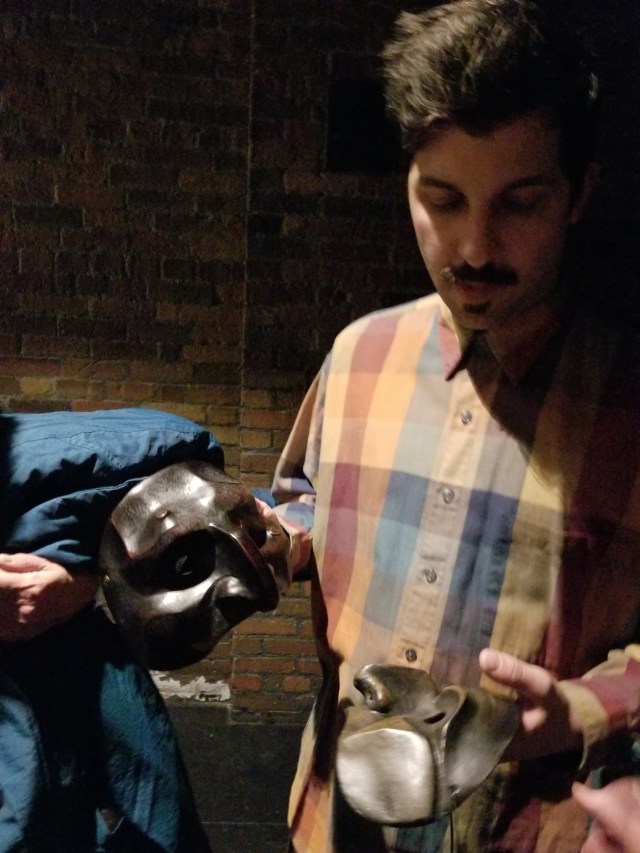
Adam’s world straddles two places as he told us. One is the old world, Naples Italy where his family originated, a place of influence and a natural connection to the CdA, the Pulcinella masques we see on the performers.

masks

Adam Paolozza holding two of the beautiful hand-made masks we saw in Paolozzapedia

And the other is Oshawa, where he grew up, where his family lives now. We’re poised in the space between the two, between long ago and now, between Europe and suburban Ontario, a cultural blend that’s quintessentially Canadian, a hyphenated hybrid.

We’re taken on an exploration of Adam’s cultural background. We discover that part of his inspiration came from a stroke his father suffered, the intimations of mortality.
I am impressed by the way some performers can effortlessly capture our attention. Adam has the most relaxed and self-assured way onstage, without requiring a big complex story. I am reminded of some of the best comedy I’ve seen, which is made from the most mundane & concrete aspects of life, not profundities or abstractions. And in the moments confronting the little nothings, transcendence blindsides you with something deep. The hardest thing is to make something of nothing, and often that’s exactly what we’re doing, the Paolozzapedia being a book of little moments & minutiae, not big issues. It’s a huge relief to be in such a simple place.

Paolozzapedia continues at Theatre Passe Muraille until March 3rd. I recommend that you see it while you can.

poster

Posted in Dance, theatre & musicals, Reviews | Tagged , , , , , , , , , , , | Leave a comment