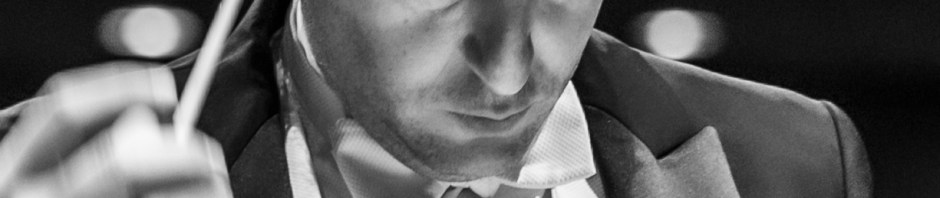
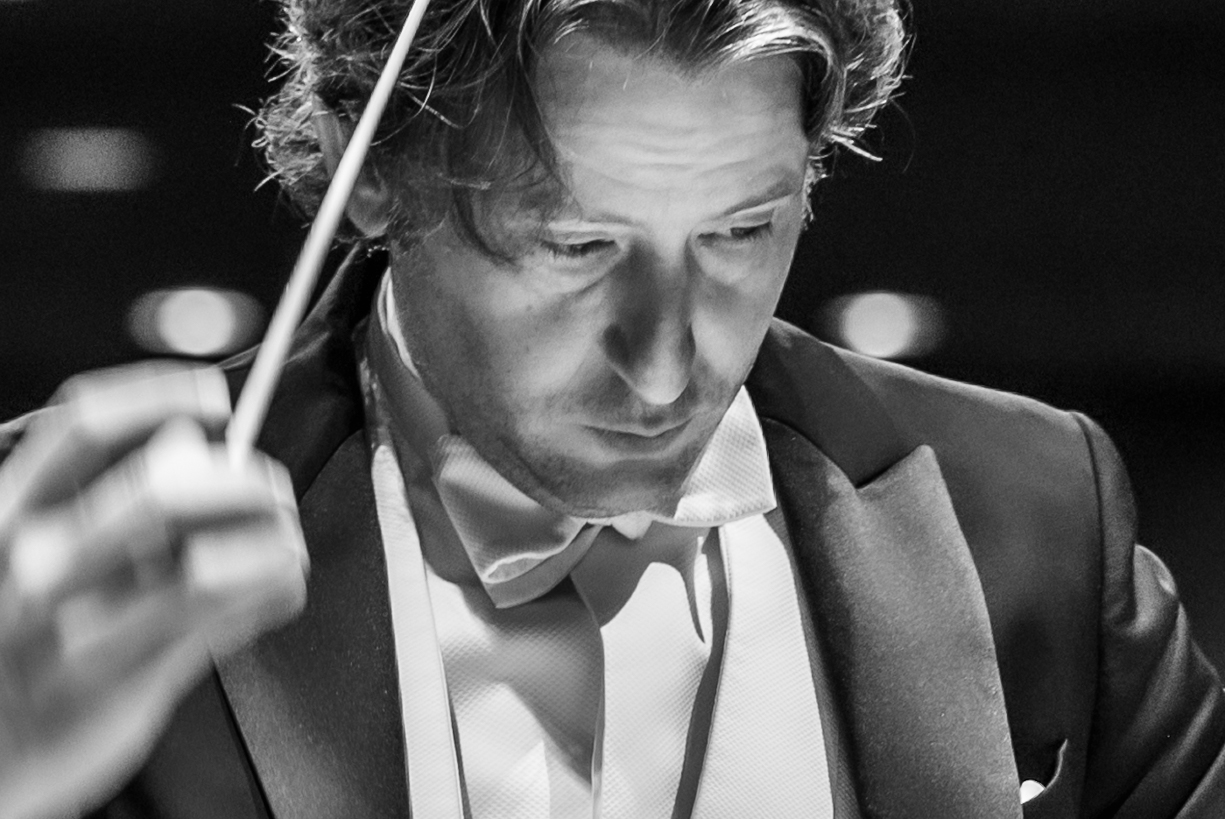
Tonight Gustavo Gimeno and his Toronto Symphony presented their latest TSO live concert at Roy Thomson Hall, recorded for future release by Harmonia Mundi recording label. We were a well-behaved audience, not making any disruptive noises, like polite voyeurs watching an ongoing love-fest between an orchestra and their leader that wouldn’t have been out of place last week for Valentine’s Day, a romantic comedy with a guaranteed happy ending.
All three works on the program for the concert titled “Stravinsky’s Pulcinella” refer back to other musical influences or texts:
Kelly-Marie Murphy: Curiosity, Genius, and the Search for Petula Clark
Igor Stravinsky: Divertimento from Le Baiser de le fée (the Fairy’s Kiss)
–intermission–
Igor Stravinsky: Pulcinella (complete ballet)
While Murphy’s ten-minute curtain-raiser was commissioned in 2017 to celebrate Gould’s birthday and his relationship with the TSO, via his experience listening to Petula Clark on the radio, it was ideal for this occasion, alongside pieces making connections between musics, a good appetizer for the ear and the mind. I searched but didn’t find Petula Clark’s music in Murphy’s score but that doesn’t matter. The piece lives up to its title encouraging us to sit forward in our seats displaying curiosity. And Murphy gives the percussionists a workout on several instruments, soloists in several sections interacting with flamboyance and verve as a warmup for what was to come.
It made a superb preparation for two works by Stravinsky that rework music from other composers namely The Fairy’s Kiss and Pulcinella. I have to wonder, did Stravinsky get tired of making music that caused riots, as with Rite of Spring, and decided to create something of stunning beauty, while still employing the most original means? These two works still sound so original a century later even as they reframe older melodies and styles in a newer framework. It challenges my understanding (and overuse) of the word “new”.
I have had a longterm relationship with Stravinsky’s music for Fairy’s Kiss. First came the multi-year struggle to find this piece, having been seduced to the bottom of my soul when I heard bits of it on the radio, missed the part where the host tells you what it is, and then puzzled over it. Because it’s hardly mainstream and in a style that defied my understanding, it would lurk in the back of my head as possibly the most beautiful thing I had ever heard. I was chasing the afterglow, as elusive as an actual fairy kiss. I wonder if Stravinsky had something like this in mind, writing a piece that vaguely alludes rather than quotes older music. Fairy’s Kiss (1928, revised 1949) is much subtler in its relationship to the past than Pulcinella (1920). When I stumbled on piano music by Tchaikovsky including compositions that served as sources for Stravinsky they hit me like deja vu, a magical experience. I believe the composer was aiming for something like this. So while I can’t promise anyone a lifelong relationship with the piece on first hearing it, I can’t be objective about a piece that has lived inside me like a remnant of the half-forgotten dreams we chase in the morning.
For the twenty or so minutes before intermission, Gimeno led a confident polished reading. There are passages where the sections are massed together, a choir of horns in one movement, a clutch of flutes in another. The horns were subtle and gently athletic without stridency or excess. The flutes were ravishing, the strings seductive. It makes me smile to think that I can get this on a recording one of these days to hear the beautiful passages whenever I want.
After intermission we were in a different kind of sound-world. Stravinsky’s ensemble for Pulcinella is much smaller than what we’d heard in the previous pieces, as is appropriate for the baroque. But it’s not really old, not when the materials are used this way.
Pulcinella was part of the ongoing interest in commedia dell’arte that lurked in the theatre decades after the form had effectively died out, especially around the beginning of the 20th century. Diaghilev (who had already called upon Stravinsky for his most famous ballet scores in the previous decade, namely Firebird, Petrushka and Rite of Spring) would have been aware of Meyerhold’s ongoing interest in the masqued figures of the CdA and may have seen Faure’s nostalgic romance Masques et bergamasques premiered in Monaco in 1919: and Stravinsky responded.
It’s as though Stravinsky’s score, turning away from his big flamboyant scores said “and now for something completely different.” I wonder how much of Stravinsky’s inspiration for the neoclassicist breakthrough of Pulcinella began in the pragmatism of the re-purposed music one finds in a theatre. Neoclassicism can be understood as a frame that’s a bit like a mental proscenium arch, through which we look and listen. I’m reminded of Linda Hutcheon’s metaphor of the palimpsest, a page where we can see one text written over top of another; her analogy is that with this kind of adaptation it’s as if we’re looking through layers, seeing both the original version and the newer one. Inside that magical gate we see the past but it’s re-framed in an edgier modernist package, still recognizably old but reconstituted.
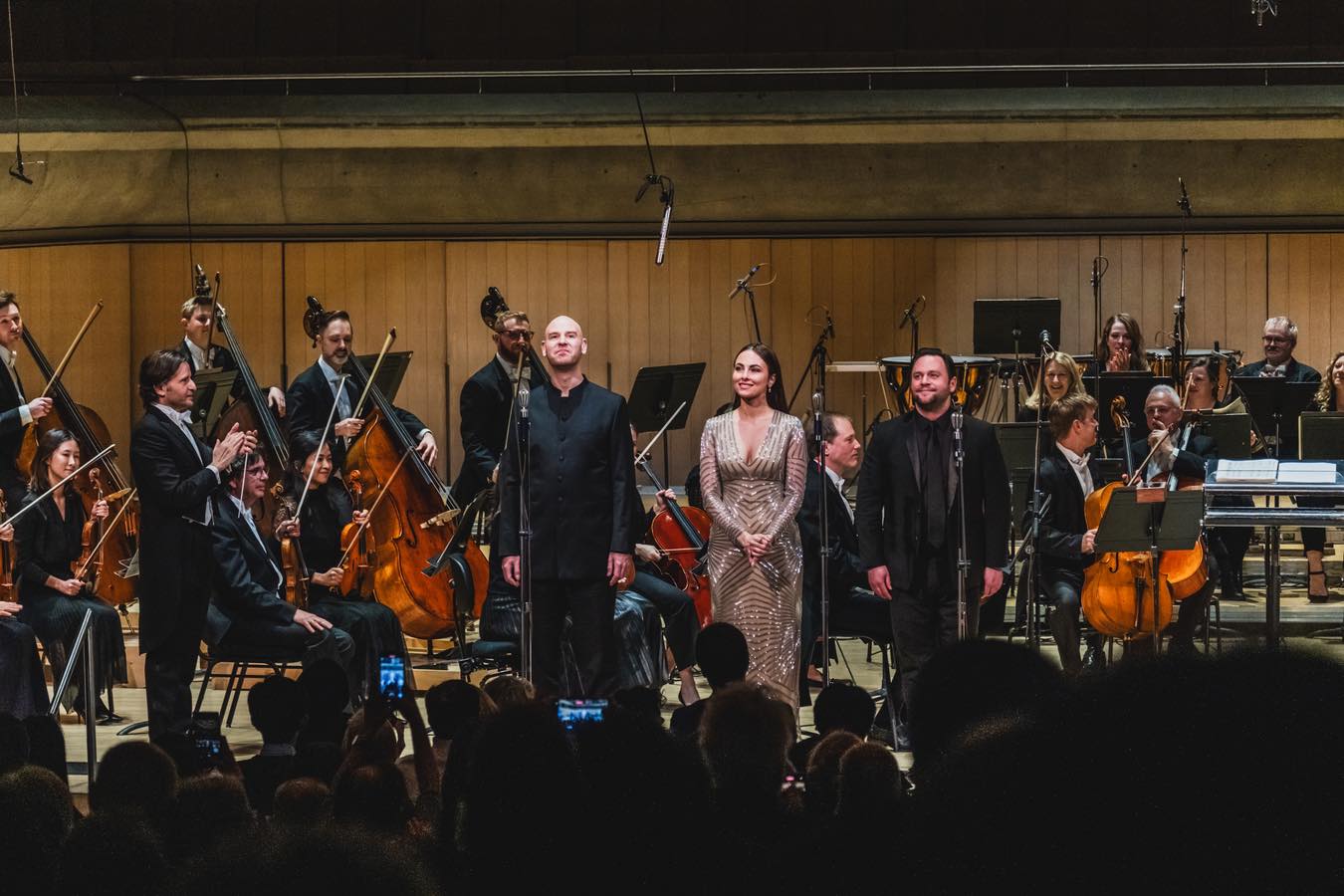
Speaking of frames, for Pulcinella I felt as though we were in a recording studio observing a session between Gimeno, the TSO and the three wonderful soloists, namely tenor Paul Appleby, mezzo-soprano Isabel Leonard and bass-baritone Derek Welton. While these were TSO premieres, two of the three have been heard at the Canadian Opera Company before. Appleby was Ferrando in the Atom Egoyan Cosi fan tutte in 2014, Leonard was Adalgisa in Kevin Newsbury’s Norma and before that a brilliant Sesto in Christopher Alden’s Clemenza di Tito in 2013.
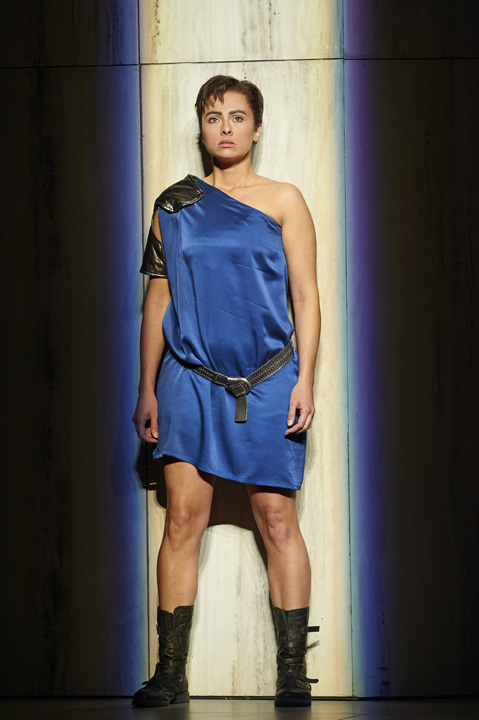
For Pulcinella I must return to my earlier suggestion of voyeurism at a recording session. While I loved what I heard, while I was impressed by musical values, we were on the outside of that charmed circle of musicianship where Stravinsky was brought to vivid life. Gimeno and the TSO made something I will certainly obtain for my collection. The quality of the soloists helps sell the project to the outside world. I was again frustrated that while the Italian text with translations is printed in the program, we were sitting in the dark unable to make any use of the wonderful program notes. That’s probably necessary, a wise choice given the necessity for silence in a recording, when hundreds of rustling pages might be audible. Why in this day and age that we didn’t have projected titles baffles me. If the music with sung text is just a soundtrack for a ballet, all well and good: except we were watching a concert performance without any ballet. Yes I’m sounding like a stickler, but when I watch a film in another language I expect subtitles unless I know the language. Leonard, Appleby and Welton are gifted singing actors. There was one segment where Appleby –standing close to the microphones– sings almost inaudibly, mysterious, that the titles might have explained his interpretive choice. Yet by the same token I regularly miss lyrics of songs by Beyoncé or Billie Eilish that I have to search out later, so maybe I’m out of step. The next time I’m listening to this music will likely be on the HM recording, when I expect I can refer to the liner notes for text.
The concert will be repeated at 8:00 Saturday night February 24th at Roy Thomson Hall, highly recommended.
 barczablog
I am always impressed with how well you are able to to find words that so perfectly evoke your musical experiences. Well done.
Thanks so much for the kind words. That you’re a writer yourself makes it doubly meaningful to me.