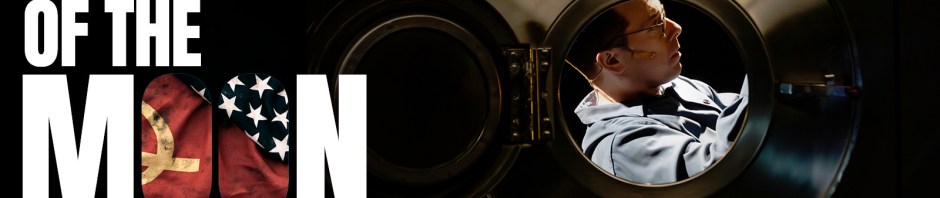
If you are a fan of theatrical presentations, brilliant design and innovative stage techniques you must get a ticket to see Far Side of the Moon by Robert Lepage / Ex Machina at the Bluma Appel Theatre until November 16th. I don’t know if Canadian Stage will be able to extend the run, but this is a show that people will be talking about for a long time.
You may know Robert Lepage as an innovator, a brilliant designer, known for collaborations with everyone from the Metropolitan Opera to Cirque du Soleil and Peter Gabriel. He simultaneously offers grand spectacle and quirky glimpses of human vulnerability.
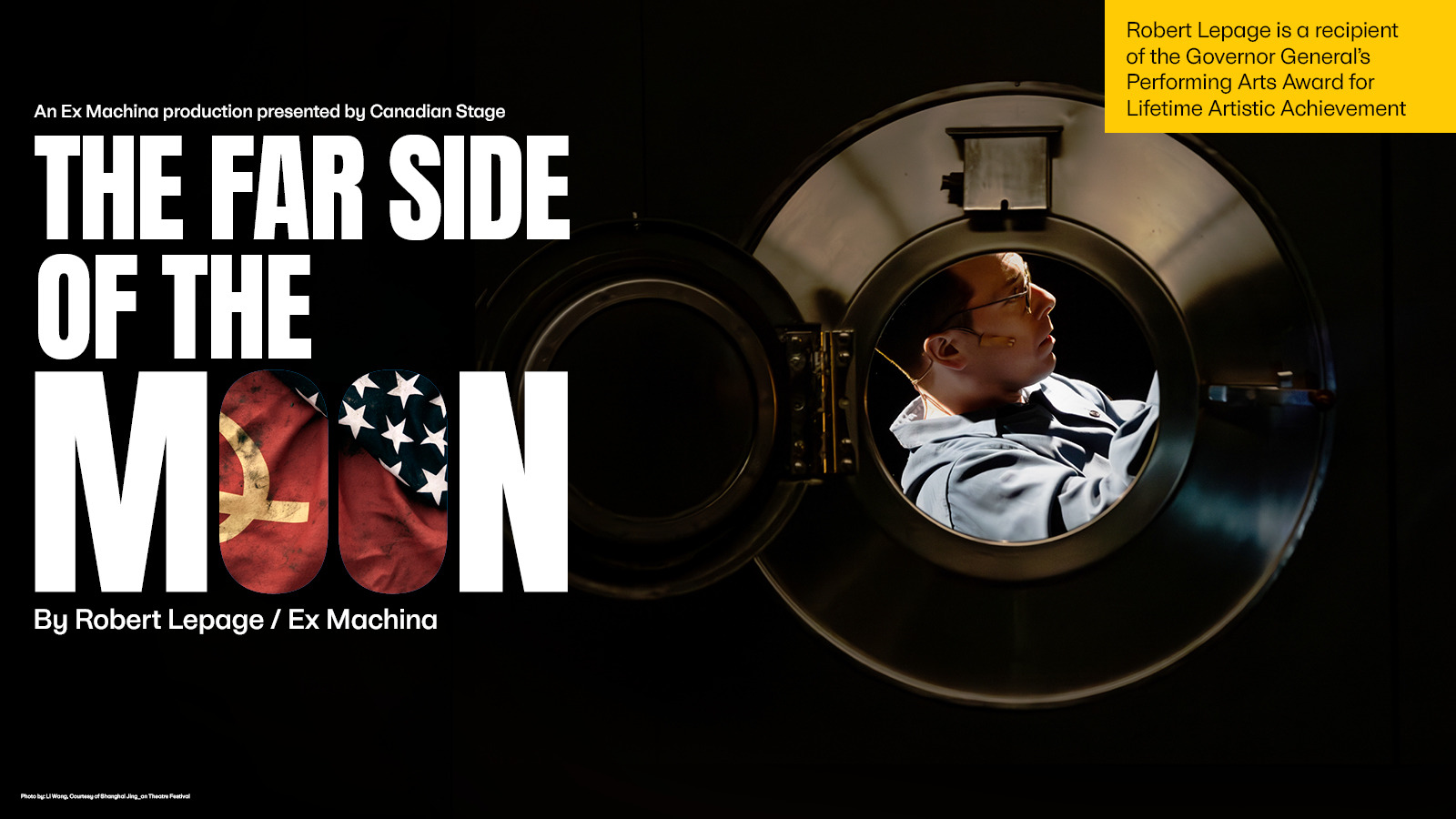
Olivier Normand plays all the parts in a show that Lepage played himself when it first appeared in 2000. Once again we see autobiographical elements, as we saw with Needles & Opium, Eonnagata and especially 887.
Two estranged brothers are brought together by the death of their mother. Normand plays both brothers, the mother and her doctor too.
The synopsis from the Ex Machina website says:
The Far Side of the Moon is based on the tempestuous relationship between two brothers with perfectly opposed ambitions, and on the improbable reconciliation caused by the death of their mother. As a backdrop, the Russian-American moon race of the 1960s, where the losers may not be the ones we imagine.
There is a sometimes thin line between the trivial and the sublime. Here, visual poetry allows the central character, Philippe, to pass from the banality of everyday life to the majesty of the spatial world, to escape the earth’s force of attraction for the lightness of the sidereal void.
While both brothers look up into the sky their approaches couldn’t be more different.
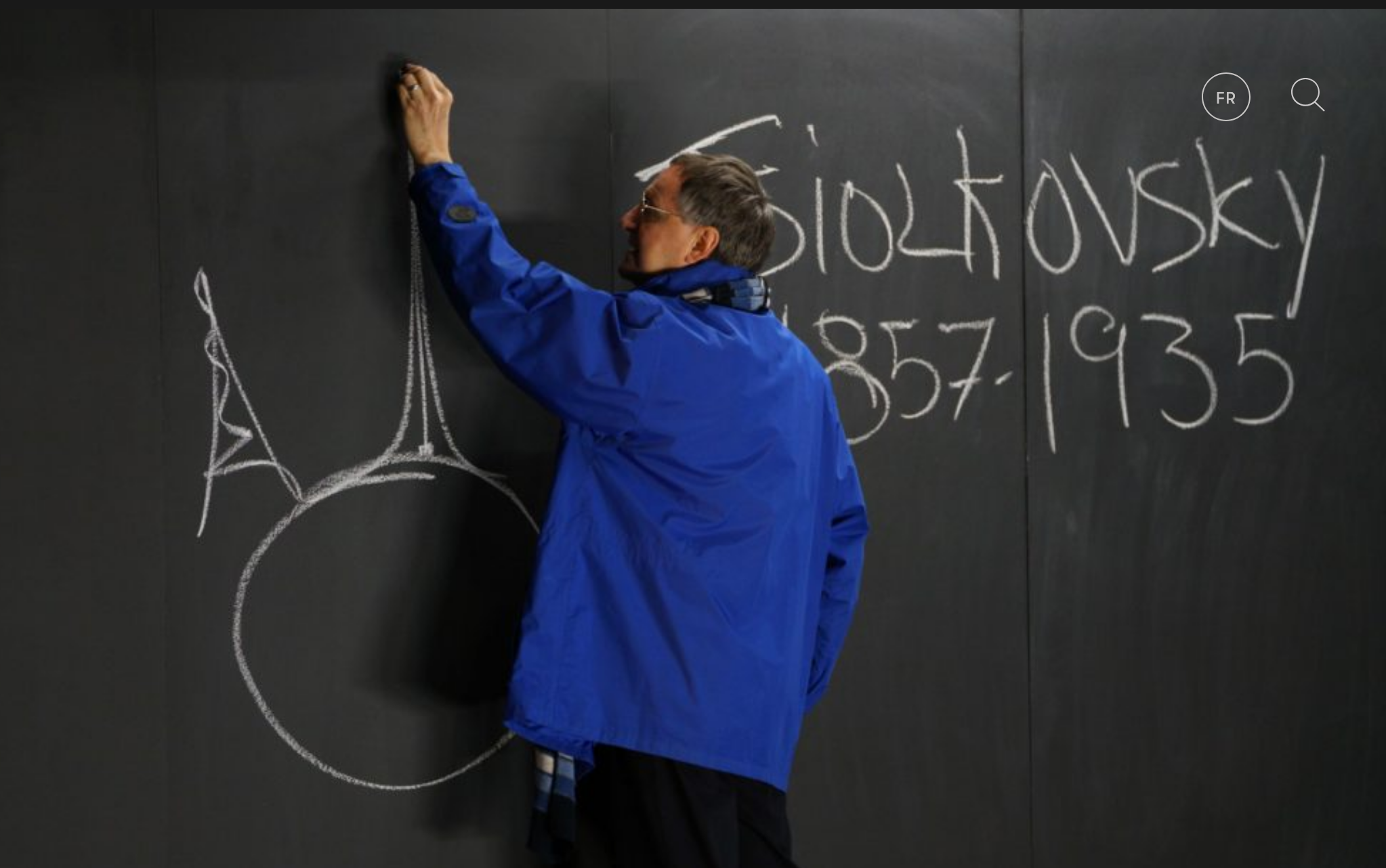
Philippe is an introverted astronomy student whose dissertation concerned Konstantin Tsiolkovsky (1857-1935) the Russian rocket scientist who has been called the father of space flight. and who conceived of the space elevator, an idea that’s closer to science fiction than fact.
His brother André, is a successful television weatherman.
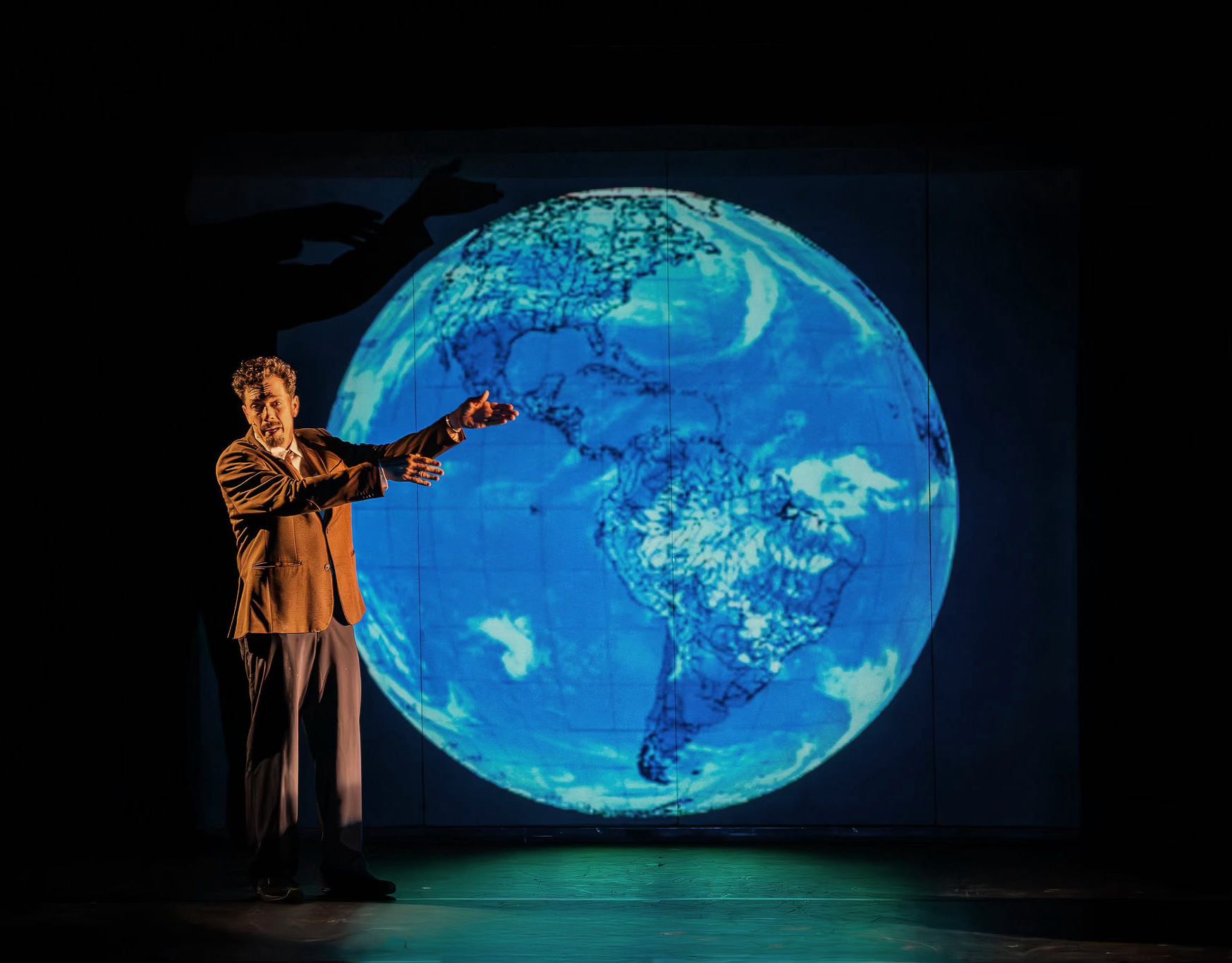
The two brothers are brought together by banal details arising from the death of their mother. What about the contents of her room? What will become of Beethoven: her goldfish? As Ex Machina told us, there is a sometimes thin line between the trivial and the sublime.
As a son who recently lost his mom and spent much of the past year going through her possessions, trying to decide what to keep as memento and what to donate or give away, this part of the story has a blunt edge that spoke to me with great clarity, right on that thin line between trivia and sublimity. I. found myself a bit astonished trying to reconcile two parts of Lepage. Sometimes he is a reticent symbolist, encouraging a poetic response while keeping us at a distance. At other times he is painfully real, and very funny. One brother has a practical relationship with the sky, making money from it, while the other engages in impractical research that is more obscure or avant-garde, likely reflecting the two sides of Lepage or any artist for that matter. We are not seeing objective figures but rather through the filter of one or the other brother’s perspective, as when we see the mother holding a baby-sized astronaut.
The symbolist side is fed by the imagery, an approach to stagecraft seen over and over in Lepage’s work. The set for Far Side of the Moon is like a trial run for the opera designs for Berlioz’s Damnation of Faust and the Wagner Ring cycle.
In the Berlioz we get an enormous set of squares dividing the stage picture, allowing for projection and division of the performance area. That’s similar to what Lepage and Ex Machina did in Far Side of the Moon, inserting one recurring motif into the stage picture as a departure point for the visual story-telling. A laundromat washing machine door doubles for orbital technology, the same shape doing double-duty to stimulate our imaginations, while the actor or puppets go in or out of that portal.

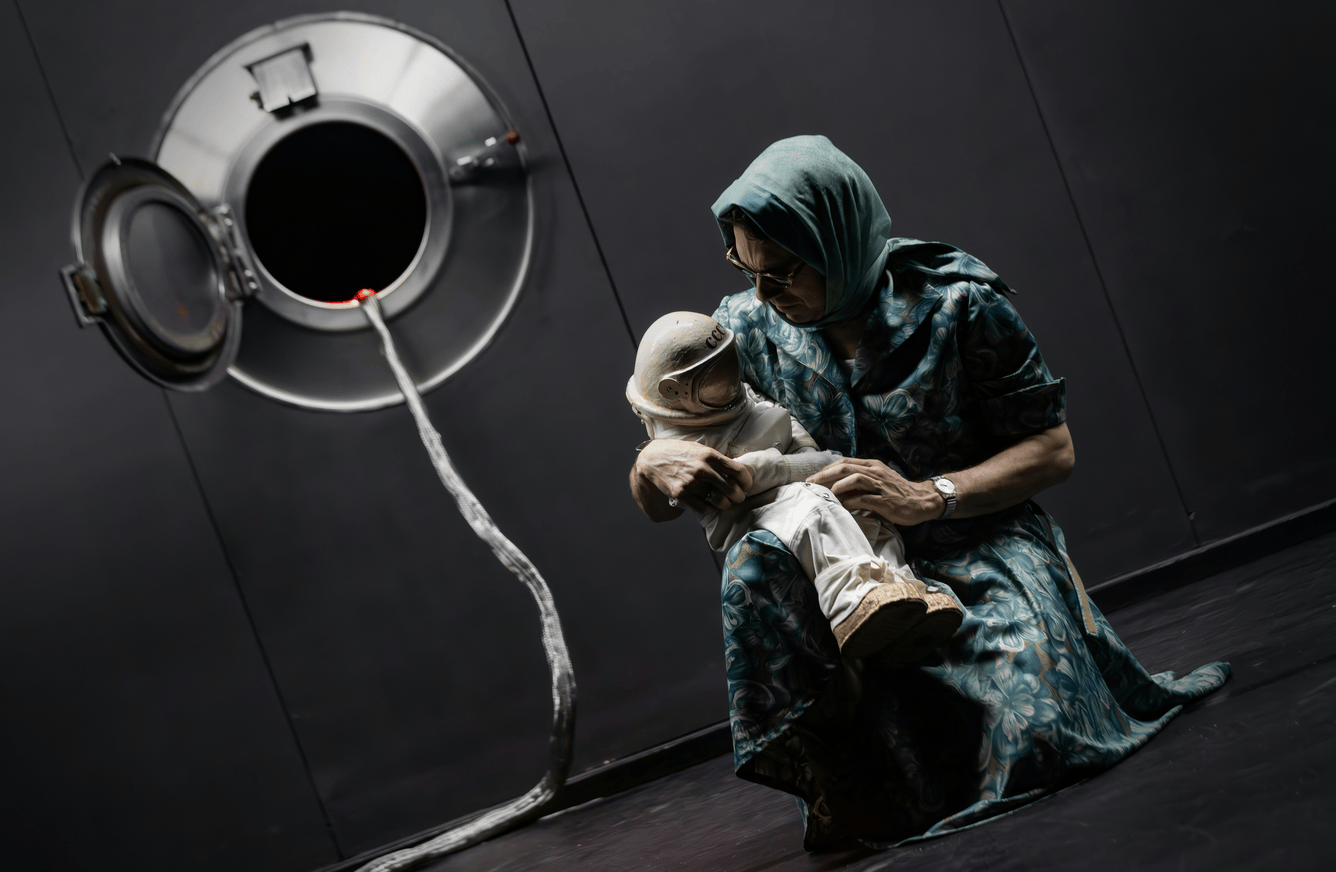
Far Side of the Moon is an economical design when compared to the massive architecture in the Met operas or the Macbeth we saw this past summer at the Stratford Festival. But even on this smaller scale Lepage & Ex Machina enact the same thing as in the Ring cycle, where the set is a model for a world that is completely flexible, changed in radical ways at unexpected moments. And I must also mention that Lepage conceives of his actor (originally played by Lepage himself) as another changeable and ambiguous component like the set, representing everyone. It’s mind-altering and druggy in the best way.
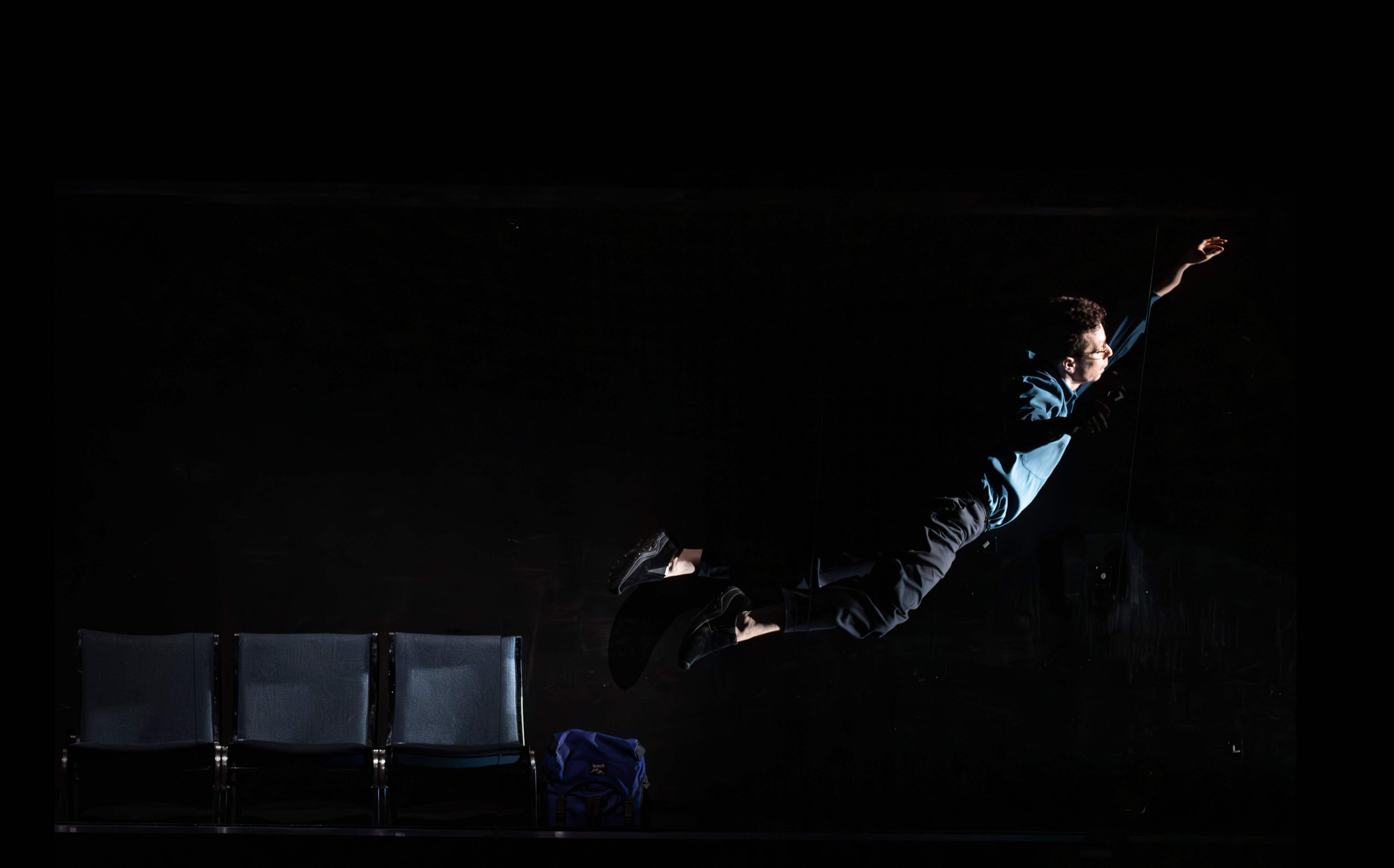
Lepage again employs video to offer secondary viewpoints of something onstage, in addition to the use of a big mirrored surface onstage. As in 887 or Macbeth the video can be very subtle. Sometimes the reflections may confound our expectations & perspectives, as if to suggest being in orbit.
Watching the trailer for the film Lepage made in 2003 from the play, I only wish I had seen that before the show, as it illuminates several interesting connections, underlining moments in the play that went over my head. Now I have to get a copy of the film.
In the final sequence of the play Lepage makes something magical, hinted at briefly in the film trailer, with the help of the mirrored surface onstage, a hauntingly beautiful suggestion of weightless ballet. The musical score created originally by Laurie Anderson is a stunning feature of the show, sometimes in the background but foregrounded in the set piece that concludes the play.
Far Side of the Moon by Robert Lepage / Ex Machina continues at the Bluma Appel Theatre until November 16th. Don’t miss it.
 barczablog
Thank you for sharing the poem! I had noted it when I saw the show but as I wasn’t 100% certain decided to omit that. That’s wonderful!
Amazing experience – still processing it. If it was extended, I’d go again as I’m sure I missed quite a bit. The final scene was truly magical.
Was extremely disappointed there was no physical program and the digital one, sparse as it is, is not downloadable. I don’t mind paying a nominal fee, as I do at COC productions, to have a physical program that I can keep.
You want a way to process it further? Get Lepage’s film of the play. I just returned it to Bay St Video. There was so much in the play that I didn’t understand, subtle allusions, actions that are clearer when you see it again. Full disclosure: i watched the film 3 times. I will write a review, was busy today with Opera in Concert (and the review). But seriously, go get the film from Bay St Video. It’s helpful.
And thank you for your comments.
Pingback: Accompanying Lepage to The Far Side of the Moon | barczablog