
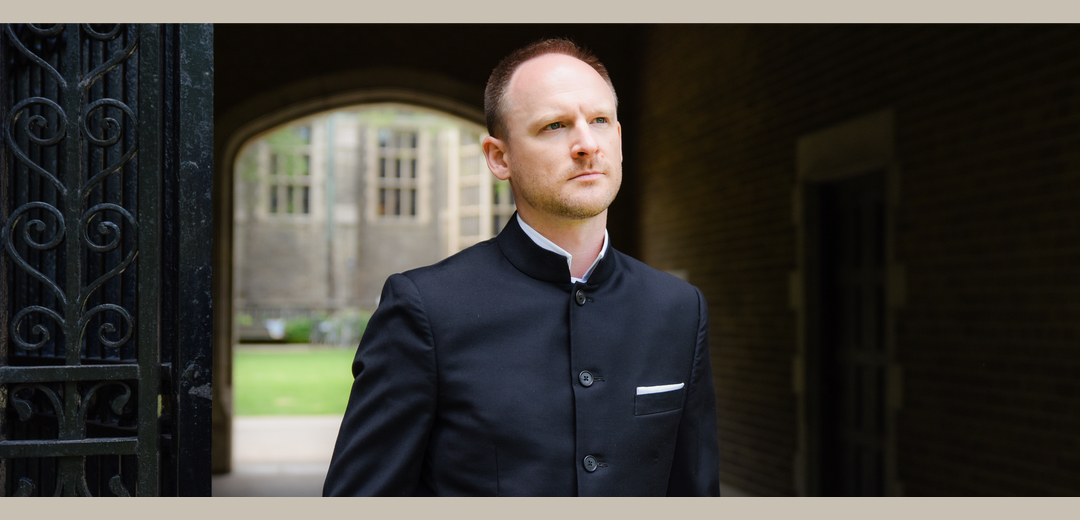
Tenor Lawrence Wiliford joined with pianist Steven Philcox and together founded the Canadian Art Song Project (CASP) in 2011.

Someday I hope to interview pianist Steven Philcox, who has partnered Lawrence on his CASP journey.
A few years ago Lawrence shared his MA thesis with me, leading me to wonder if I really understood the field I claim to know. Lawrence has great ideas, and I’m still trying to decide how they fit and how I feel about them. Much of my academic life was on the boundary between theory and practice, the opportunity practitioners have to understand their art from the inside. It’s thrilling for me to get a chance to learn from someone who appears to be on the cutting edge, making interesting new projects.
It was in that spirit that I asked Lawrence to expand upon his ideas, because I think they’re original & important, so I was pleased that he agreed to be interviewed.
*****
Barczablog: Are you more like your father or mother?
Lawrence Wiliford:
How am I like my mother?
My complexion is most like my mother’s: fair-skinned, blond hair. She was also incredibly creative. She took on all manner of craft projects, from sewing to stamping, furniture restoration, basket making, and painting. She crafted for as long as she lived. She also loved gardening, and when I was young I remember spending a lot of time digging in the soil and planting annuals. My mother always found ways to dream and imagine what might be possible, and she rarely let obstacles stop her.
How am I like my father?
My father has a great voice and loves music. He also has an intensity with which he shares his ideas and convictions, and I’m guilty of this as well. We also share our name, Lawrence J. Wiliford (though our middle names are different).
I’m not sure who I’m most like. Perhaps I dream like my mother and work like my father. One of my friends in undergrad called me “Will-to-Power,” which I think I earned after he witnessed the tenacity and determination with which I got things done, often accomplishing things that didn’t seem possible. Maybe that combination is the overlap of both my parents’ superpowers, and it explains how I’ve been able to achieve much of what I’ve achieved.
BB: What is the best or worst thing about what you do?
Lawrence Wiliford:
Best thing:
What I’ve done for most of my life (since I was eight?) is perform and sing for an audience. I’ve sung on stages that were tiny (church potlucks) and large (major concert halls and opera houses), and that is a privilege. Not everyone feels called to share their gifts in this way, and even if they do, not many have the opportunity. Every time I’ve taken the stage as a professional singer, I’ve been aware of the privilege of being on stage and sharing my voice.
Sharing music with another person or people in an audience is incredible. Sharing music with another person on stage as a colleague, in front of an audience who wants to hear from you, is otherworldly. I’m not singing in front of audiences as much these days. The seasons of life and career do change. So right now, most days the best thing about what I do in my capacity as an artistic director, producer, and arts advocate is lifting up artists who deserve notice, and demonstrating that hard things can get done.
Worst thing:
As a performer and arts worker, the worst thing is how difficult it is to build a career with longevity—one that can shift as you grow as an artist and as new life stages emerge. As someone trying to maintain a home in Canada with my family, the path has gotten harder and harder.
During and after COVID, everything changed. I have a lot I could say about this, but I think it’s its own conversation. I’ll just end by saying that being an artist of any kind in Canada is harder than it should be, given how much we invest in young and emerging talent. We lose much of that talent far too soon, either because artists leave Canada or because they stay but have to change careers. It’s a pretty poor investment strategy, if you ask me.
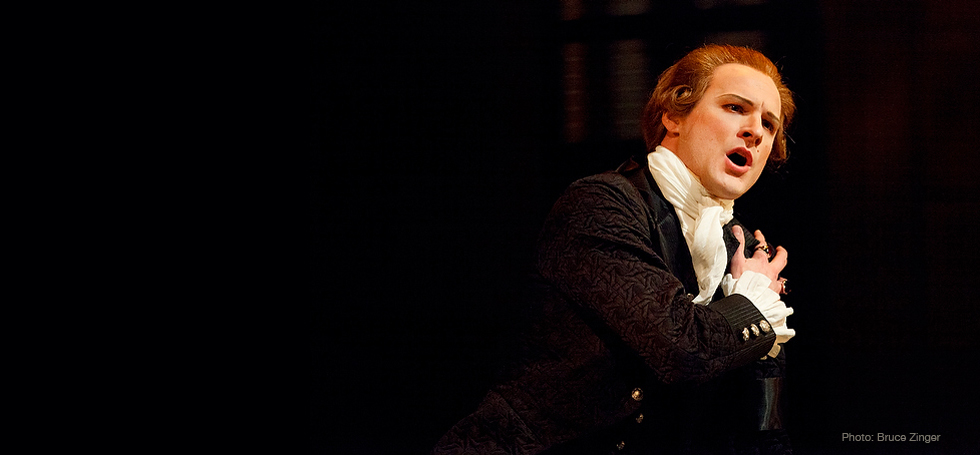
BB: Agreed! it reminds me of something you said on Facebook that I shared almost a decade ago, including your photo. You made what amounted to a nationalist challenge. As I said you’ve been been putting your money where your mouth is, as co-artistic director of the Canadian Art Song Project.
BB: Who do you like to listen to or watch?
Lawrence Wiliford: I like to listen to and watch almost any artist who is deeply invested in sharing their gifts. I don’t really have a single “favourite” anymore. I can be deeply moved by any number of artists in many different practices.
BB: What ability or skill do you wish you had, that you don’t have?
Lawrence Wiliford: I wish I played the piano. I took lessons many times in my life, and I had to reach a certain levelof proficiency to complete my music degree, but I started late and it never clicked. It’s one of my great sadnesses. I also don’t speak another language… another sadness.
BB: When you’re just relaxing and not working, what is your favourite thing to do?
Lawrence Wiliford: I like to be with friends and spend time with creative, fun, compassionate people.
BB: Who do you think of first when I ask you to name the best singer?
Lawrence Wiliford: “Best” doesn’t mean much to me anymore. I’ve been inspired by so many incredible singers across genres, both historical and currently active. I’m drawn to clarity of tone and ease of approach, nuance of phrasing, and intelligent diction—but most of all, honesty in performance.
BB: What was your first experience of singing?
Lawrence Wiliford: My first real memories of singing are with my family: my two brothers and I singing ’60s folk songs, protest songs, and church camp songs with my parents—my dad playing guitar—everyone in the living room.
BB: What’s your favourite song?
Lawrence Wiliford: I’m not sure I have one. I like everything from Jim Croce to Sting to U2 to Queen and Rush. I even liked Phish for a while in high school—don’t judge.
But I think I really fell in love with music when I started listening to Mozart—especially the Jupiter Symphony. I also love Mahler’s 3rd and 4th symphonies, and John Williams’ score for The Empire Strikes Back.
I also have a hard time relaxing when I listen to classical music with words. I don’t really relax listening to most music with words—I analyze it. Ugh.
BB: As you look back on a career singing opera and concerts, what memories stand out? Who was most influential in shaping the artist you’ve become?
Lawrence Wiliford: When I came to Toronto in 2003 to study at U of T, I had no idea I would end up singing at the level that I have. The first time I thought I might have some success was performing with Helmuth Rilling on the stage of Walter Hall for one of his Bach cantata lecture concerts. I sang an aria that was fiendishly difficult. He stared at me the entire time he conducted, and when it was over he turned to the audience with a huge grin and said, “He’s pretty good, isn’t he?” The audience response was unlike anything I had experienced as a tenor soloist up to that time.
Rilling, in large part, launched my career as a concert singer. I learned so much from him just being on stage and watching and listening to his direction. He was inspirational to work with, and I’m deeply thankful for his early support and belief in me.
MA Thesis / MRP and CASP
BB: A few years ago I read your MA thesis… would you be willing to comment on how that is playing out so far?
Lawrence Wiliford: When I wrote the paper in 2022, Canada was still deeply affected by prolonged theatre closures and audiences were understandably reluctant to return to large indoor gathering spaces due to concerns around COVID. I was completing my MA in Media Production at TMU online while navigating the uncertainties of pandemic life at home, trying—like many parents—to ensure that my daughter could make it through constant disruptions of partial school closures and testing, simply to complete Grade 2. At the same time, a number of filmed projects undertaken by performing arts organizations—often using stage-production funds or emergency arts grants to employ artists during full closures—were beginning to be released via streaming, with very mixed results.
The thesis was very much an attempt to capture that moment. It reflects on how the unprecedented conditions of the pandemic led many performing arts companies to explore filmed work at a scale that had not been seen in Canada since the height of Bravo!, Rhombus Media, and CBC/Radio-Canada arts programming in the late 1990s and early 2000s. As I note in the paper, during that earlier period broadcasters played a central role as commissioners, producers, and distributors. By contrast, during the pandemic, “the production and distribution responsibilities of new performing arts content in Canada were now left to individual artists and performing arts organizations.”
As a result, many companies found themselves effectively trying to operate as creative media, film, and television production entities, often without the training, infrastructure, or distribution expertise to do so. Imaginations were running high and the impulse to experiment was genuine, but stage production is not film production. Performing arts organizations know how to sell ickets and invite audiences into concert halls and theatres, but they did not—and largely still do not—have the tools to reach audiences through digital distribution. To be fair, even media companies with deep experience in television and film are struggling to adapt to constantly changing realities of digital distribution.
For roughly two to three years, while emergency funding and recovery money were available, many organizations tried to make this work. Orchestras across the country invested in high-quality streamed concert broadcasts. Opera houses and concert halls invested significant sums in purchasing and upgrading in-house recording, streaming, and filming equipment to capture performances at a professional technical standard. Yet very few have sustained that activity. One of the only organizations I know that continues to invest regularly in filming, recording, and distributing high-quality work for an online audience is the Vancouver-based tenor/bass choir Chor Leoni, where Artistic Director Erick Lichte has made filmed releases on YouTube a central strategy for audience cultivation and growth.
I’m not in the rooms where all of these decisions are being made, but from what I have heard—and what seems observable—most organizations have stepped back from filmed and distributed work as a core strategy. Many of the conversations I had near the end of my research could be summed up like this: we tried, but this isn’t our wheelhouse; our audiences didn’t respond strongly to the digital product; we need to refocus on live performance; and making filmed work look good and finding a market for it is hard and expensive.
What feels unresolved, rather than failed, is the structural question the paper raised at the outset:
how filmed performing arts work can be sustainably supported in a system where policy,
funding, labour frameworks, and distribution mechanisms were not designed for hybrid artistic practices. As I argue in the thesis, without changes to those underlying conditions, experimentation was always likely to remain episodic—energized by crisis but difficult to sustain once the urgency and temporary resources receded. I do think there is still an audience for filmed, media-specific performing arts productions. We simply shouldn’t expect performing arts organizations and individual artists to shoulder that responsibility alone. Instead, we need artistic and media-production expertise that can collaborate with the performing arts sector and bring ambitious filmed work to the screen through well-resourced production and distribution mechanisms.
BB: Can we draw a line connecting your thesis to what CASP is doing now?
Lawrence Wiliford: In short, yes. We can draw a very clear line.
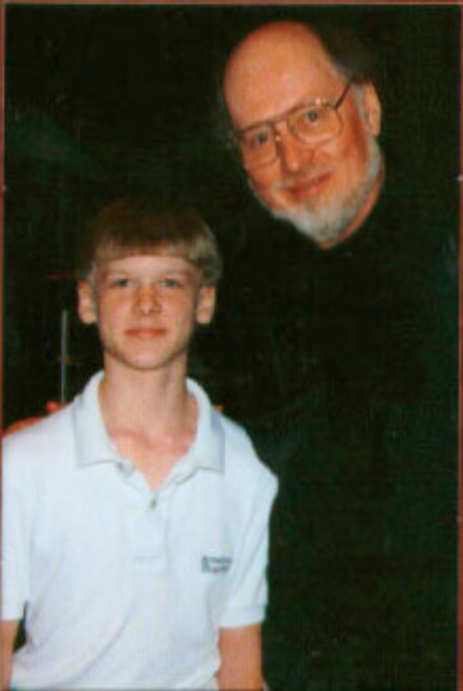
I mention at the start of the thesis that my own interests in classical music were largely introduced through film and television. John Williams’ scores for the original Star Wars trilogy were hugely formative in my awareness of orchestral sound.
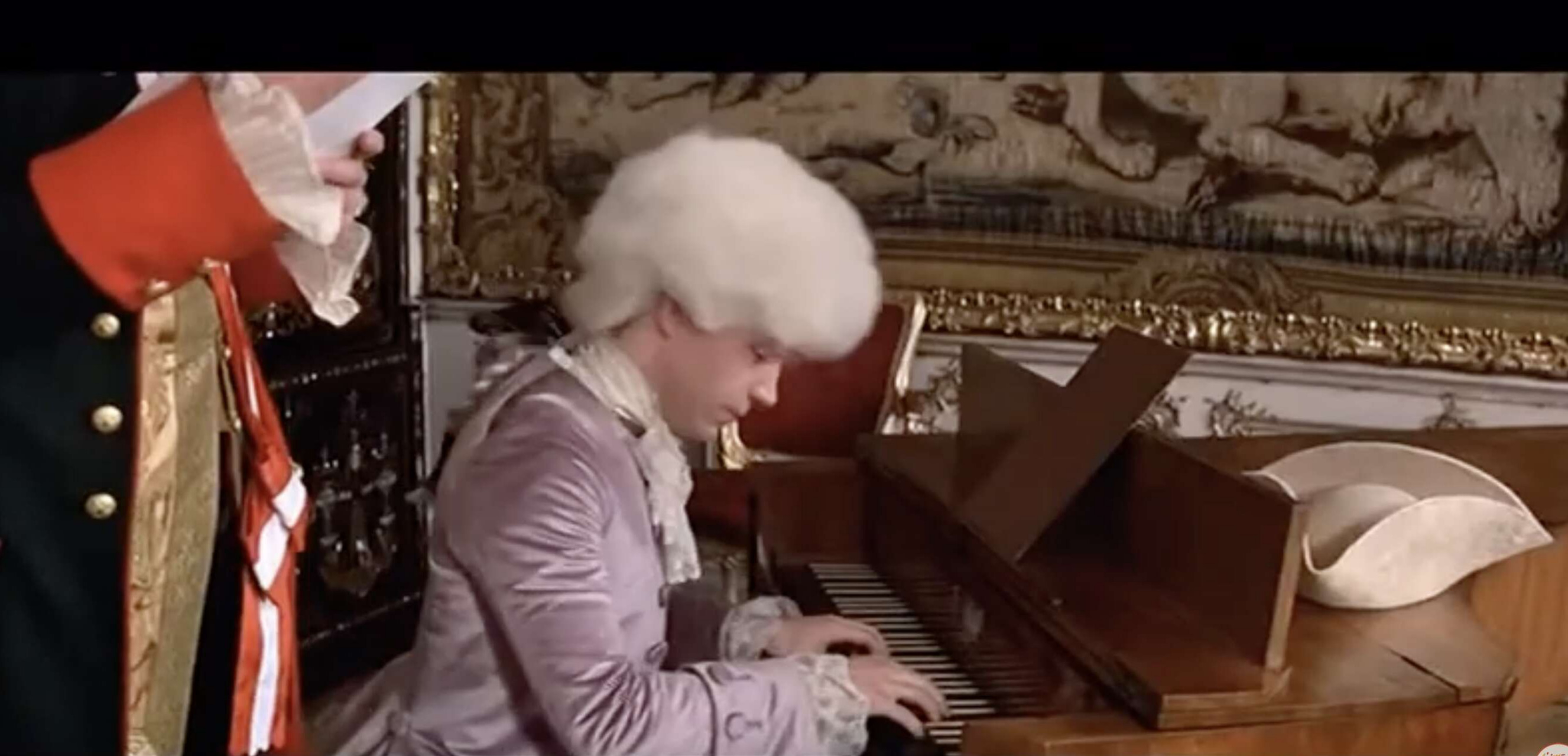
Seeing Amadeus—Miloš Forman’s film based on Peter Shaffer’s play—was genuinely life-changing. It introduced me not only to Mozart and opera, but to the idea that music could be surrounded by drama, politics, psychology, and history in a way that felt immediate and visceral.
I also remember animated shorts from my childhood—playful, educational, and imaginative—that introduced basic musical ideas long before I ever walked into a concert hall.
When my daughter was born (ten years ago!), I assumed it would be easy to find age- appropriate, engaging ways to introduce her to the performing arts and to concert music. In reality, the options were surprisingly limited. There are a few touchstones—the Eric Carle animated short I See a Song, the Fantasia films, the Classical Kids recordings—but they are exceptions. Considering the sheer volume of content available to young audiences today, non-commercial jazz, classical, and art music are remarkably absent from the visual and narrative spaces where people actually encounter culture.
That realization connects very directly to both my thesis and CASP’s current work. The thesis argues that the performing arts sector, particularly in classical music, lacks effective mechanisms for reaching people who are not already part of the Western concert music tradition. That problem hasn’t gone away. If anything, it has become more pronounced. The audience for concert music that is not attached to an existing IP ecosystem—Bridgerton, Dune, Harry Potter, Final Fantasy, Zelda—continues to shrink. I don’t believe that is because the music itself lacks relevance or resonance. I think it is because our practices remain largely disconnected from the cultural spaces where most people now encounter storytelling.
One of my priorities with CASP flows directly from that thinking. Alongside live performance and recording, we are deliberately developing media-specific projects: animated shorts based on individual art songs (which are naturally well suited to animation in scale and duration), and longer-form film projects based on song cycles. These projects are not conceived as documentation of stage work, or simply as marketing tools for concerts, but as standalone artistic works designed for the screen. They bring composers, performers, filmmakers, animators, and designers into genuine collaboration around Canadian stories and voices.
In that sense, CASP’s work is a practical continuation of the questions raised in the thesis. Where the thesis was diagnostic, CASP’s projects are experimental responses. What remains unresolved—and this is where the line from then to now is clearest—is the structural issue. Funding models, labour frameworks, and cultural policy still struggle to fully recognize hybrid performing arts and screen-based work as artistic creation in its own right.
Filmed projects are often positioned primarily as engagement or outreach activities, rather than as works of artistic creation with intrinsic cultural value. I’m convinced there is an audience for media-specific performing arts work. The challenge lies in developing sustainable creation and production models that combine public investment with partnerships across the screen sector, including producers, broadcasters, and digital platforms. Public funding can support research, development, and artistic risk, but long-term sustainability will require cross-sector collaboration and access to domestic and international distribution ecosystems.
BB: Should Canada emulate what the Met and European opera houses do in capturing performances for broadcast?
Lawrence Wiliford: I don’t believe that any Canadian company can—or should—try to replicate what the Metropolitan Opera does. The Met operates at a scale, with funding structures, branding, labour agreements, and long-standing broadcast infrastructure that simply don’t exist in Canada. Similarly, while some European opera houses distribute work through platforms like Medici or MarqueeTV, they are working within different public-funding models and artist contracts that explicitly account for filming and long-term distribution. Those conditions are not easily transferable to the Canadian context.
Where I do think there is a viable and exciting path forward for Canada is working intentionally with experienced production companies on discrete, purpose-built projects. Rather than attempting ongoing capture or large-scale broadcast replication, Canadian organizations can focus on one-off or limited projects that are conceived specifically for the screen, with a clear artistic vision and an understanding of film as its own medium. That approach allows for higher quality, greater coherence, and more realistic production and distribution partnerships, without placing unsustainable expectations on performing arts organizations.
Career / Repertoire / Media Questions
BB: Reconciling earlier music (Classical/Baroque) with new music for CASP—disconnect, or growth?
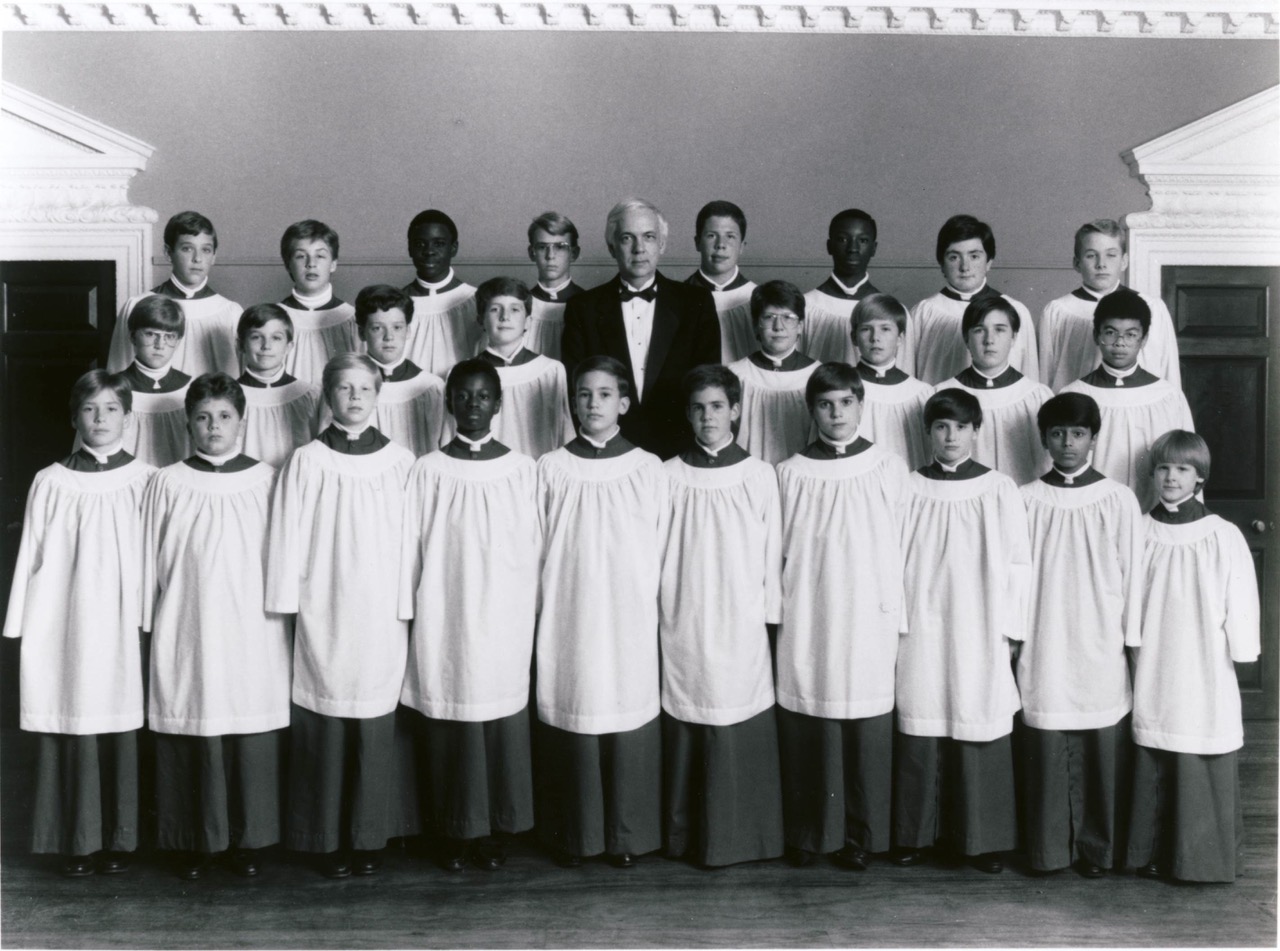
Lawrence Wiliford: I don’t experience it as a disconnect at all. My musical foundation was never exclusively focused on earlier music. My earliest formative training came through my years singing with The American Boychoir in Princeton. That repertoire spanned centuries. We sang early music, Romantic choral works, and contemporary commissions. I still vividly remember premiering a commissioned work by Milton Babbitt. From a very young age, I understood that new music was not an outlier, but part of the same continuum as historical repertoire.
That sense of continuity carried into my undergraduate studies at St. Olaf College, where I focused on choral conducting and solo vocal repertoire. Minnesota has a particularly strong contemporary music culture, shaped by the American Composers Forum and by composers such as Dominic Argento, Stephen Paulus, and Libby Larsen. New music wasn’t something exotic or separate; it was simply part of being an engaged musician in that environment.
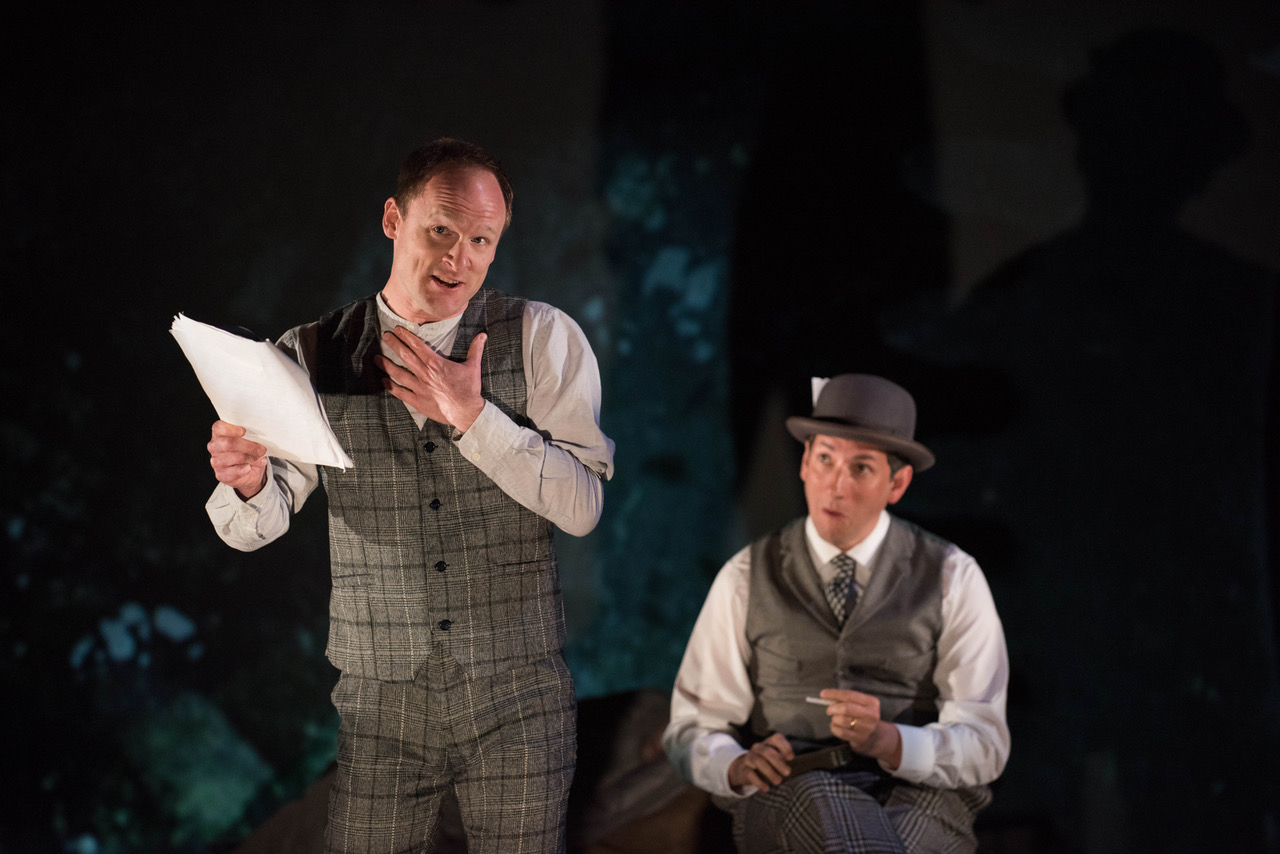
(photo: Hugo Glendinning)
In many ways, my professional focus on Baroque and Classical repertoire came later, largely because I was asked to perform it and was drawn to it—probably through my choral background. But even there, what attracted me was not the historical distance, but the immediacy of communication and storytelling. Attention to text, rhetoric, phrasing, and meaning is central in Baroque music, just as it is in contemporary vocal writing.
The work I do now with CASP feels like a natural extension of that trajectory. For singers trained in the classical tradition, much of our professional life is devoted to reinterpreting works that have already been performed countless times. That can be deeply rewarding, but artists also need opportunities to create. There is something uniquely powerful about singing words and music that have never been performed before, and about being part of the process that brings new work into the world. I feel a real urgency in ensuring that classical music is not only rooted in the historic canon, but also expanded to reflect lived experiences that are often missing, so that our collective work remains meaningfully connected to contemporary life.
Looking back, the balance between earlier music and new music feels right. At both ends of the repertoire spectrum, the core skill is the same: communication. Whether the music is Baroque or newly written, the responsibility of the singer is to make text, intention, and meaning come alive. In that sense, my work as a performer and my work with CASP are not separate paths, but different expressions of a similar artistic impulse.
BB: Do we of the press/media oversimplify by categorizing an artist by fach or style?
Lawrence Wiliford: Yes, although I think that oversimplification is often a reflection of how the repertoire used to be taught and performed. There may have been a time when these distinctions mattered more, but I don’t find them particularly useful for me—or for many singers working in North America now. Even if someone wanted to build a career singing only Baroque or Classical repertoire, it would be very difficult to do so. In North America, that repertoire is performed not only by historically informed ensembles such as Tafelmusik or Arion, but also by regional orchestras and large symphony orchestras, almost always in sizeable concert halls. That means singers need to produce sound that can carry in those spaces, rather than working within the narrower parameters often associated with specialist ensembles.
So, while the press may want to categorize an artist by fach or style, the lived reality of the work is far more fluid and practical. Singers adapt to the contexts in which the music is presented, the ensembles they collaborate with, and the spaces in which they perform. As a coach once said to me—and still reminds me when I question a particular repertoire choice—you sing what you’re paid to sing, as long as it doesn’t hurt you. That said, there is repertoire that feels more comfortable and repertoire that stretches me, and I prefer not to stretch too far from my happy place.
BB: What don’t we understand about live performance vs filming live performance?
Lawrence Wiliford: I think what we often misunderstand is that filming live performance doesn’t just capture it—it changes it. Live work is built around shared presence and scale, while filmed (and studio recorded) work is shaped by framing, editing, and point of view. Once a camera and editing are involved, you’re no longer dealing with the same art form.
BB: Good point! That’s an understatement.
Lawrence Wiliford: A good example is Hamilton. The filmed version works because it was very clear about what it was trying to be: a carefully produced record of a landmark stage production. It wasn’t trying to become a movie, and audiences understood that going in. That clarity of intent is part of why it succeeded. In that sense, it’s similar to why people used to buy DVDs of opera productions. You might want to hear the singers, of course, but you were also watching to experience a particular production as a snapshot in time, or to understand a stage director’s approach to a well-known work. Neither those DVDs nor the streamed Broadway cast of Hamilton were ever intended to replace the live experience; they were intended to amplify reach.
The Wicked films show the other side of the coin. The filmed adaptation makes huge adjustments to scale, spectacle, pacing, and visual storytelling to take advantage of what film does well. It doesn’t try to preserve the stage experience; it re-imagines it for the screen.
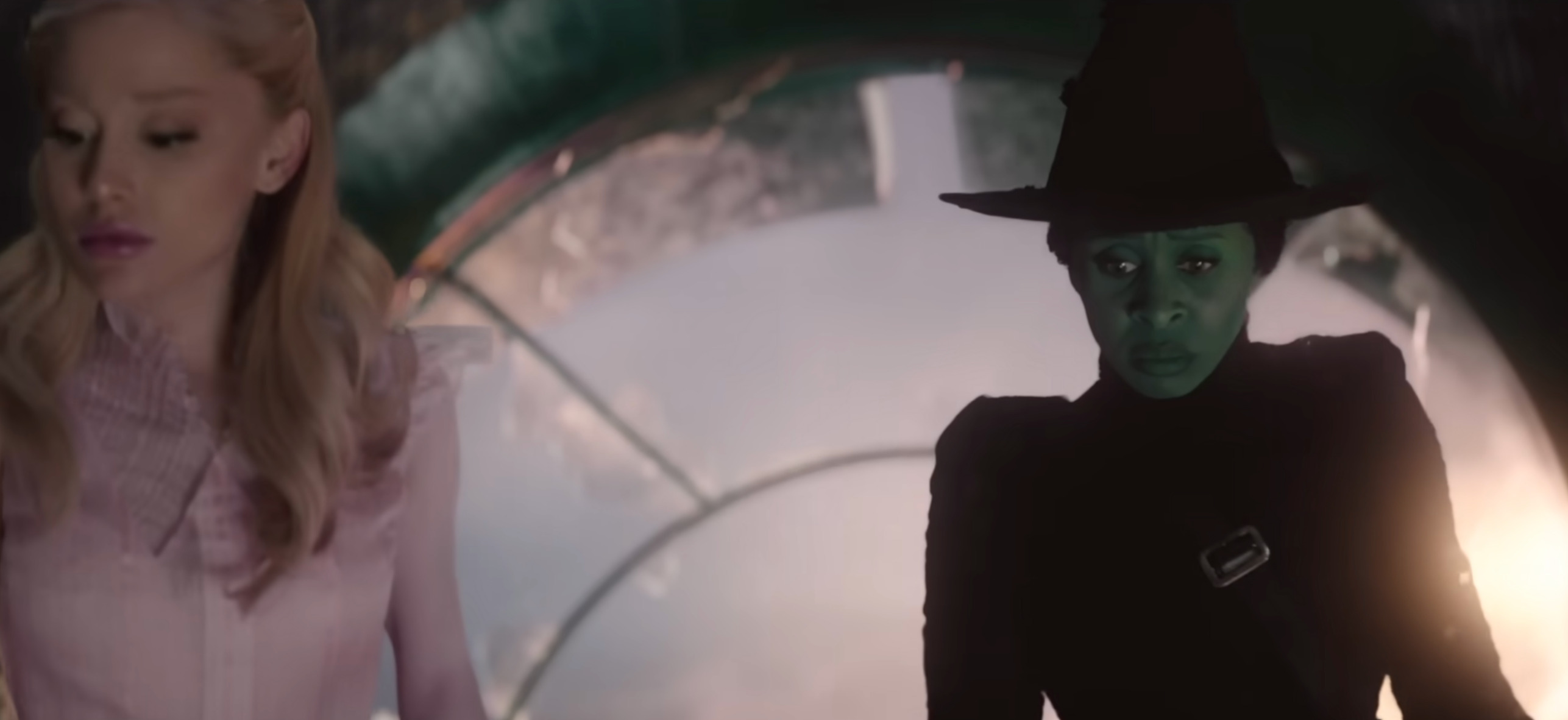
Where we still struggle, especially in the performing arts, is assuming that documentation and adaptation are the same thing. They’re not.
BB: Wow, in fact you’re showing me that there’s a whole spectrum, arguably as many different forms as there are different media. Hm, lots to contemplate. Thanks.
Lawrence Wiliford: Until we’re clearer about whether we’re preserving a live event or creating a work specifically for the screen, filmed performance will keep feeling unsatisfying—even when it’s beautifully shot. To be clear, I think capturing stage productions on film is valuable. It documents work, preserves performances, and allows audiences to encounter productions they might otherwise never see. But that isn’t really what I’m personally most interested in.
What excites me is adapting work for specific media, or creating projects conceived for the screen (and other media) from the outset. Media-first work allows one to think differently about scale, intimacy, pacing, and storytelling, and to explore intersections between film, animation, recording, and the performing and vocal arts in ways that live capture simply can’t. That’s where I feel there is real creative potential right now, and a meaningful opportunity to broaden our reach.
CASP / Culture / Support Questions
BB: How do you feel about the way Canadian singers are supported & received in Canada, especially in Ontario?
Lawrence Wiliford: There are many strong opportunities for young and emerging singers in Canada, particularly in Ontario. Our training institutions, young artist programs, and early-career platforms are genuinely excellent. Where I think the system struggles most is supporting singers at the mid-career and later stages. This isn’t entirely new, but it is more challenging now than it was even when I was coming up.
The sustainable pathways for maintaining a long career in classical vocal music in Canada are quite narrow. We cultivate remarkable talent, but unless an artist moves quickly into an international career, relocates to Europe, has access to independent financial support, or transitions into institutional teaching, it becomes very difficult to remain an active artist beyond the mid-30s. That isn’t a reflection of artistic quality; it’s a structural reality. And this doesn’t even begin to account for broader life pressures such as housing, starting a family, or the cost of childcare.
Canada relies heavily on provincial and federal grants to support individual artistic development, and for classical singers in particular that model is under increasing strain. Grant programs are extremely competitive, and understandably so. At the same time, classical solo vocal music now engages a smaller and more specialized audience, and access to live performance has become more limited and, in many cases, more privileged than it once was. That context makes it harder for singers to demonstrate impact in the ways funding systems often require. I will say that federal funding has, in recent years, been more robust than provincial funding, and I was relieved that the most recent federal budget did not include cuts to arts and culture, as many in the sector had feared. In Ontario, however, the level of investment remains a serious concern.
There is also a question of alignment. Peer juries are asked to assess an enormous range of artistic practices, and classical vocal projects can be difficult to articulate within frameworks that prioritize discrete project outcomes, innovation metrics, or short-term public reach. That doesn’t mean those frameworks are wrong, but they don’t always map well onto the current realities of the classical music industry in North America. The result is a gap at exactly the point where artists should be consolidating their practice: developing and expanding into mature repertoire, undertaking first recordings, deepening collaborations, and taking artistic risks that aren’t immediately marketable. If the only viable pathway is a few years in young artist programs followed by a patchwork of short contracts, travel, auditions, and largely self-funded development, we risk losing an entire generation of Canadian singers.
I don’t think the answer is simply more funding, stricter quotas, or pitting artistic traditions against one another. The real challenge is designing support systems that recognize long-term artistic growth, provide meaningful mid-career stability, and value vocal artistry as a sustained practice—without relying entirely on opera companies and orchestras that are facing serious funding challenges themselves. If we don’t address that, we will continue to train exceptional singers who ultimately have no viable way to remain artists in Canada.
BB: Tell us about the most recent CASP animated short.
Lawrence Wiliford: The Piece Atop His Pate is an animated short inspired by Jocelyn Morlock’s song “Bobby Hull” (premiered by Tyler Duncan and Erika Switzer), from her cycle Perruqueries, with text by Bill Richardson. It’s a sharp, funny, and surprisingly operatic take on one of hockey’s more peculiar moments: the 1978 WHA game in which Bobby Hull’s toupee was knocked loose on the ice. Morlock and Richardson take playful liberties with the story, turning it into a satirical art song that blends Canadian sports mythology, media culture, and musical wit.
We released the short in the fall, and it’s now available to watch online:
The song is performed by baritone Keith Lam, with Steven Philcox at the piano.

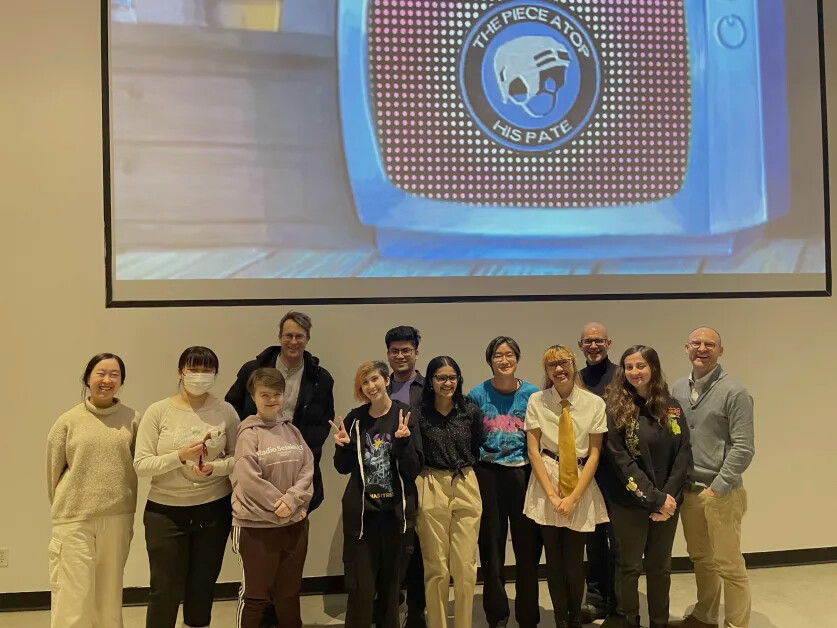
It was professionally recorded and mixed by Dennis Patterson at Imagine Sound Studios in Toronto, and produced by me. That recording became the foundation for the film and was conceived specifically for a visual medium, rather than simply as a stand-alone audio document. The animation was created in collaboration with students from OCAD University’s Department of Experimental Animation, under the supervision of Philippe Blanchard and myself.
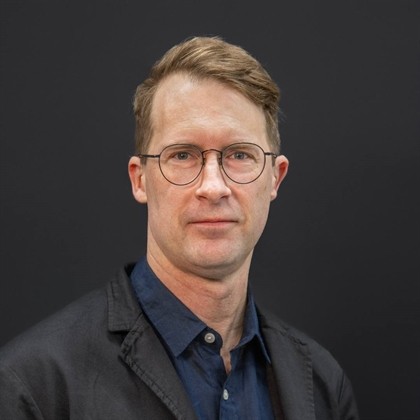
A large team of students worked together in a studio-style process, with clearly defined roles including story-boarding, research, character design, animation direction, and visual development. I presented a project brief outlining specific parameters and references we wanted to explore, and the students began by researching the era and cultural context of the song. Visually, they drew inspiration from late-1970s CBC hockey broadcasts, analog television graphics, and Hanna-Barbera animation—particularly the Peter Puck cartoons that once helped explain hockey rules to young viewers.

Listeners may also catch a playful nod to Dolores Claman’s Hockey Theme, which immediately situates the piece in a shared Canadian memory.
One of the challenges—and pleasures—of the project was working with a real historical figure.
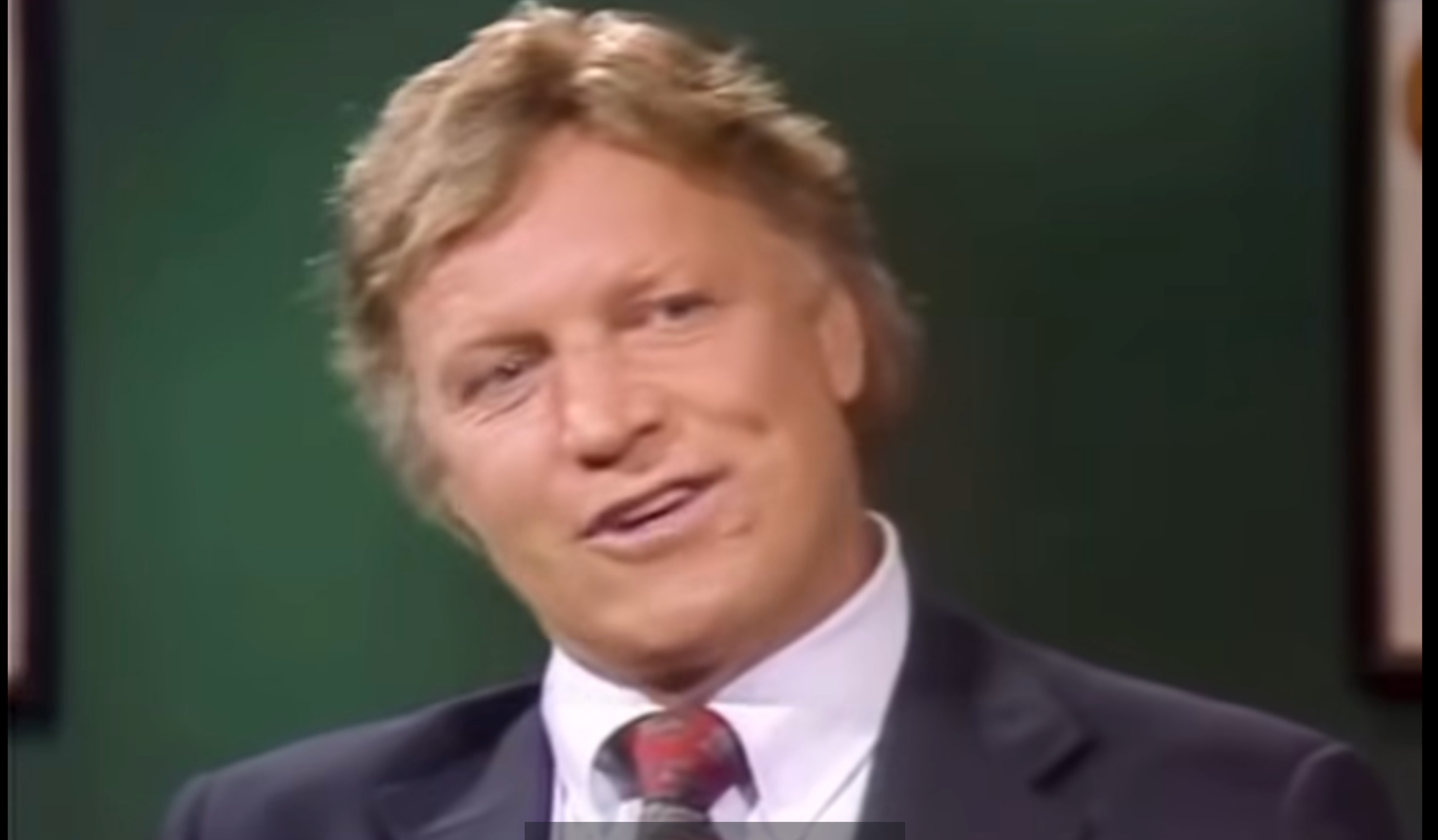
Bobby Hull is a complicated and, at times, controversial character, so we were very conscious of tone, aiming for satire that was good-humoured rather than cruel. The students leaned into empathy as much as irony, finding a balance that allows the audience to laugh while still recognizing the vulnerability of the moment.
The introduction of a mascot-style narrator character, Stan, became a way to guide the story visually and give it a slightly absurd, self-aware lens, while also nodding to the visual language of Peter Puck without directly replicating it.
For CASP, this project is as much about process as outcome. We start by creating high-quality audio recordings of Canadian art song and then place those recordings in the hands of visual artists who are encountering this repertoire for the first time. The students are asked to respond creatively to both the music and the text. What’s been consistently striking is how personally invested they become in the projects, and how often they describe this as their first experience of art song as something living, flexible, and relevant.
The Piece Atop His Pate builds on our earlier animated short The Wild Goose and points directly to where CASP is heading.
Alongside live performance and recording, we’re committed to developing media-specific projects that allow Canadian vocal music to intersect with film, animation, and contemporary visual culture. These projects aren’t about replacing the concert hall; they’re about expanding how and where Canadian musical stories can be encountered. Our next animated short, My Agnes from Niagara, based on a song by R. Nathaniel Dett, will take this approach into very different historical and emotional territory, but the underlying objective remains the same: to bring Canadian art song to life in unexpected, thoughtful, and distinctly Canadian ways.
BB: In 2025 Canadian culture seems precarious… thank you and CASP for doing your part…
Lawrence Wiliford: Thank you—I really appreciate that. I’m very conscious of how important it is to create opportunities in Canada for artists to build sustainable careers and to share Canadian stories, both here and abroad. That’s very much at the heart of what CASP is trying to do.
BB: Could you offer any advice to Canadian singers?
Lawrence Wiliford: My advice for Canadian singers is to absolutely invest the time and energy into building a solid technique. Listen to a lot of singers early—not to copy what they do, but to understand what really good singing and artistry is. Try to find opportunities to collaborate with more established artists and learn from their experience.
Then—go be an artist. Find ways to contribute to what it means to be a singer now. In the current context, very few people will be able to build careers the way singers did in the past. Most will need to juggle performing with something else, so blaze a trail that makes that possible for you, if indeed that is what you want to do. Above all, be original. Create, and bring what makes you unique into your performing.
BB: Do you have any influences/teachers you want to acknowledge?
Lawrence Wiliford: My circle of support over the last 15 years or so includes my voice teacher, Lorna MacDonald (also godmother to my daughter), Liz Upchurch, who really believed in what I had to offer during my training as a COC Ensemble Member, Don Tarnowski, who has been my primary vocal coach for most of my solo career, Michael Albano, who guided me as a stage director during my graduate work at U of T and served as a secondary reader of my thesis during my MA in Media Production at TMU, and my MRP supervisor at TMU, James Nadler. I also need to thank Linda and Michael Hutcheon for their incredible support, both personally and the work of CASP.
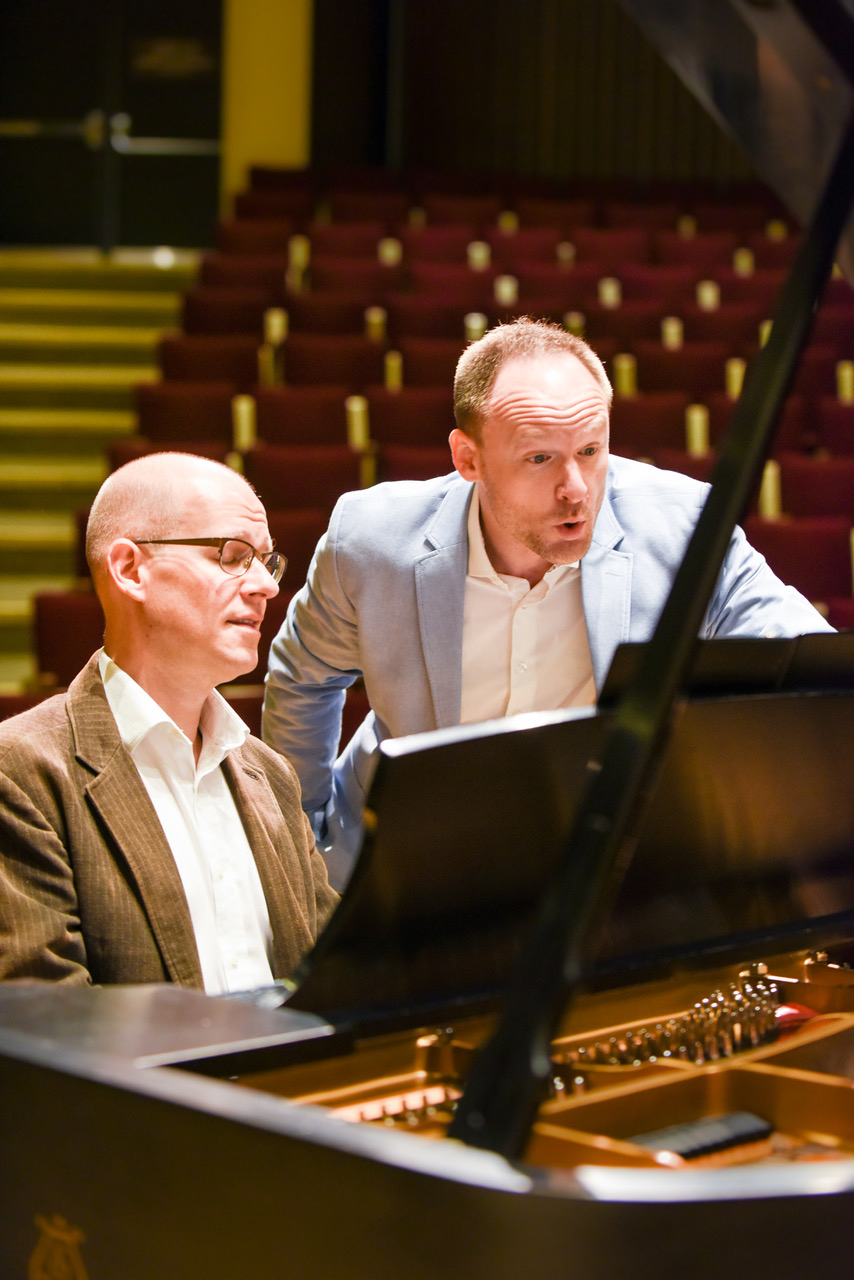
Steven Philcox has been an incredible friend, musical collaborator, and artistic partner, both within and outside of CASP.
Finally, my spouse Katie Larson and our daughter, Lyra. The honest truth is that I couldn’t have continued to be an artist in Canada without Katie’s support, and my daughter rejuvenates how I perceive the world almost daily.
There are many others from my life and training prior to my arrival in Canada that are very important (indeed vital) to my development as an artist, but I think in this context, the more I name, the more I might unintentionally leave out. I am indebted to so many mentors and friends. They know who they are.
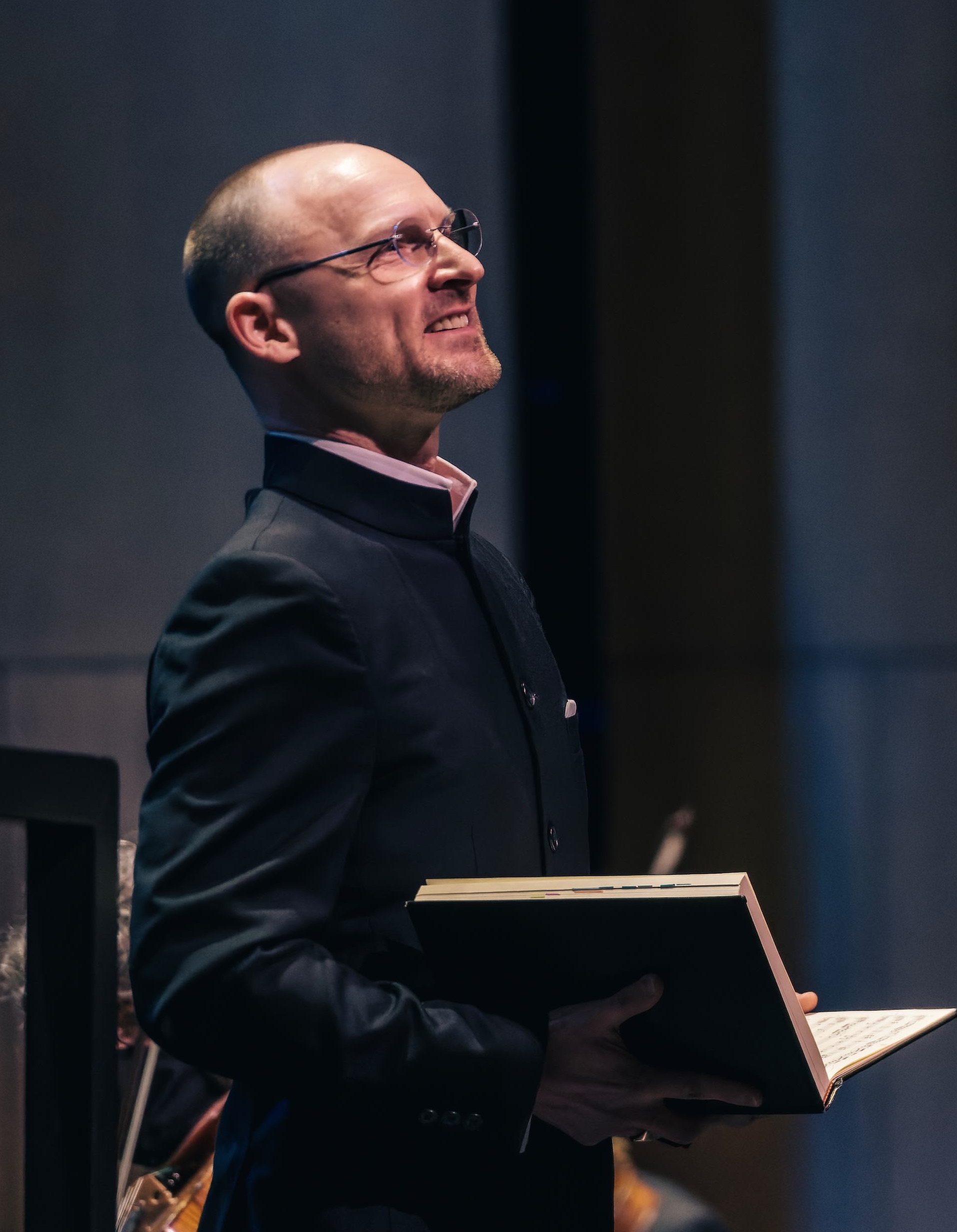
Lawrence’s website is here.
Read more about CASP on their website.

 barczablog