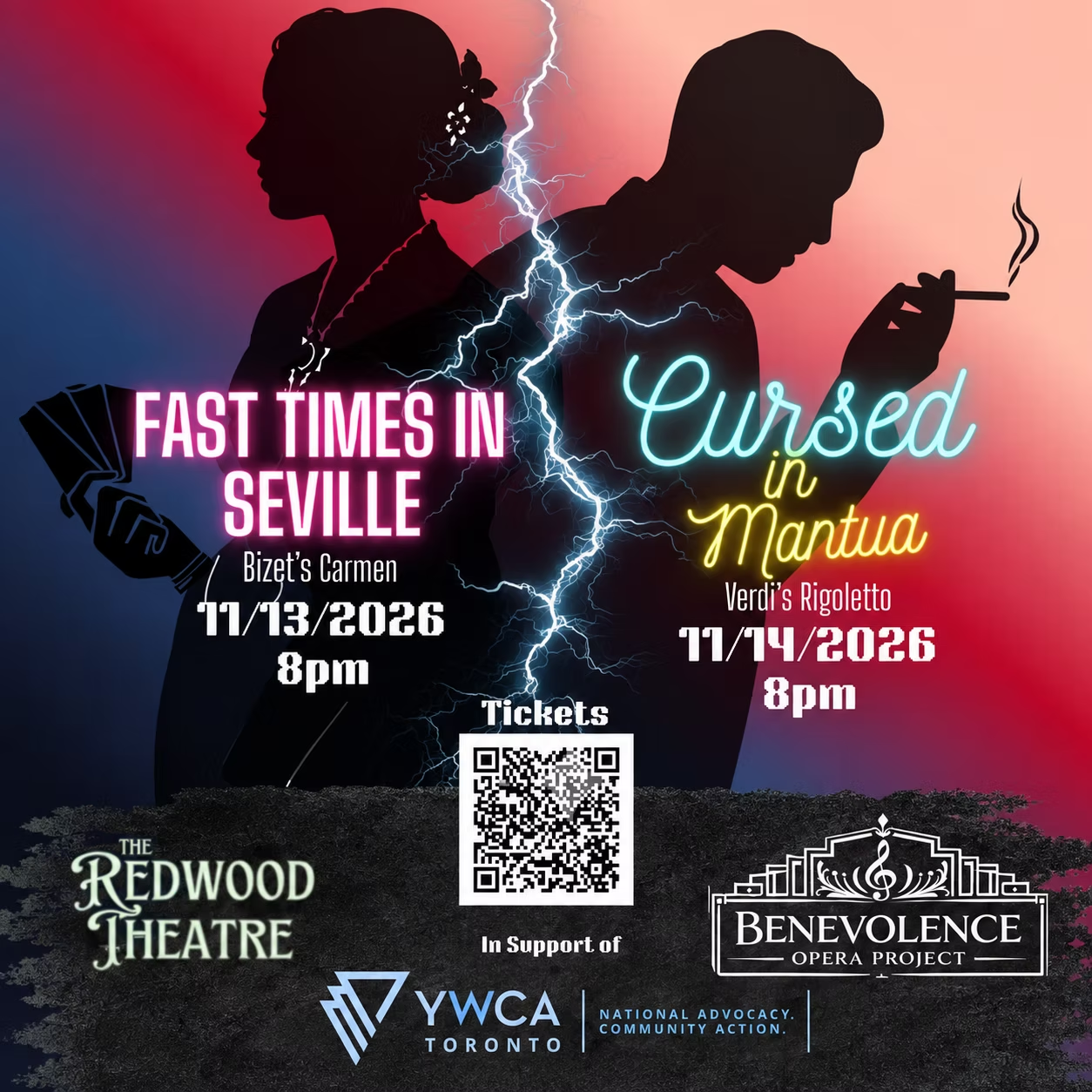
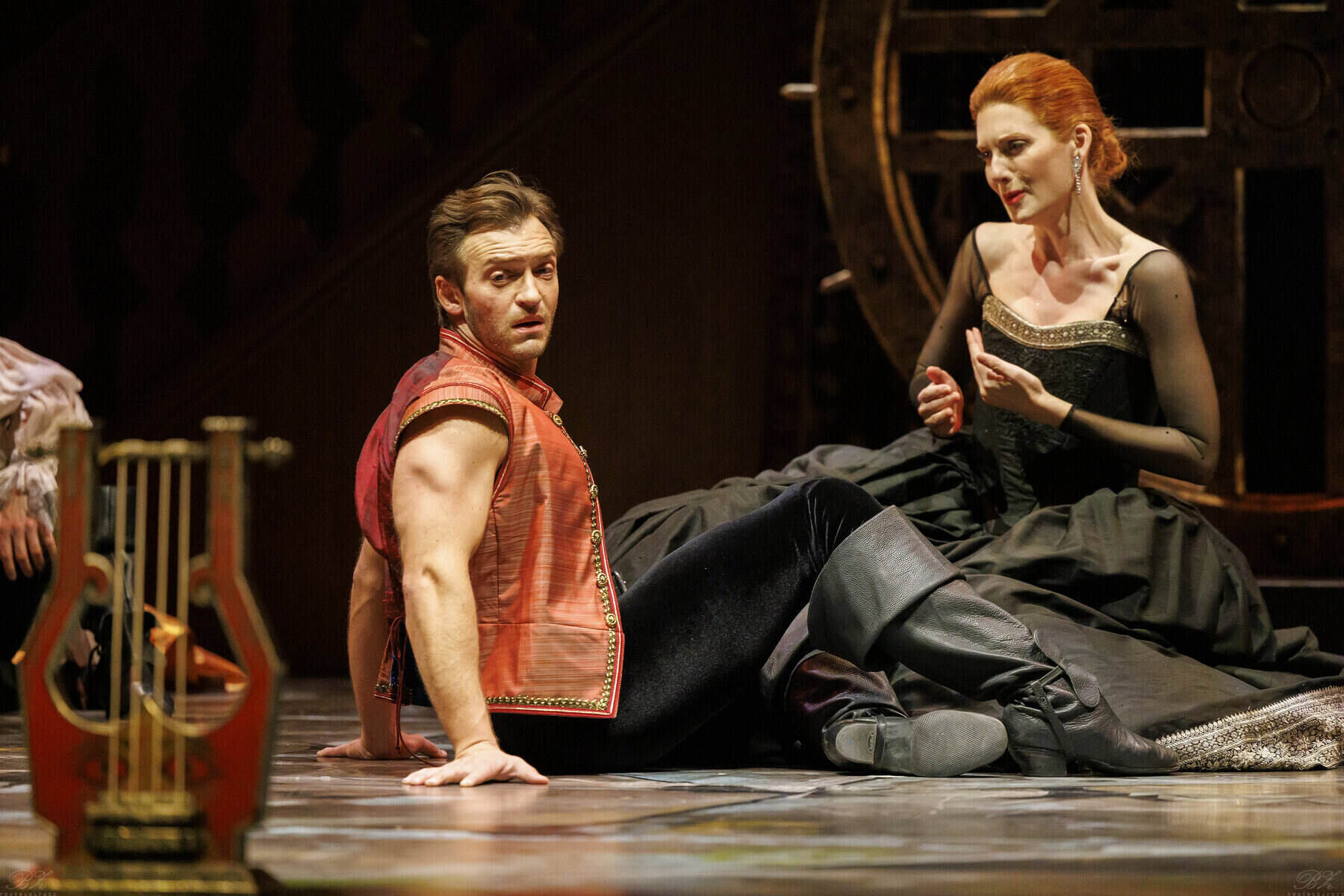
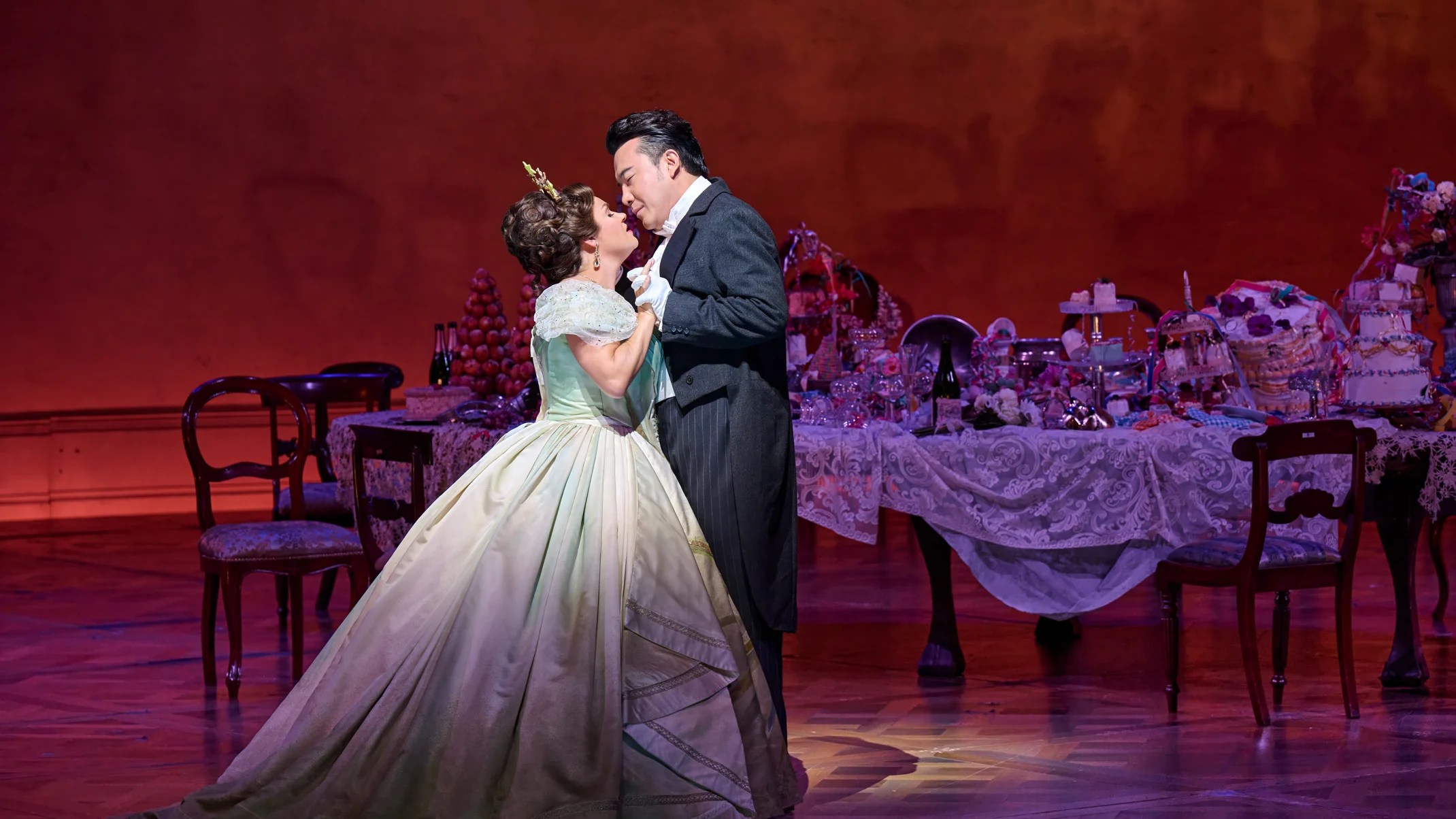
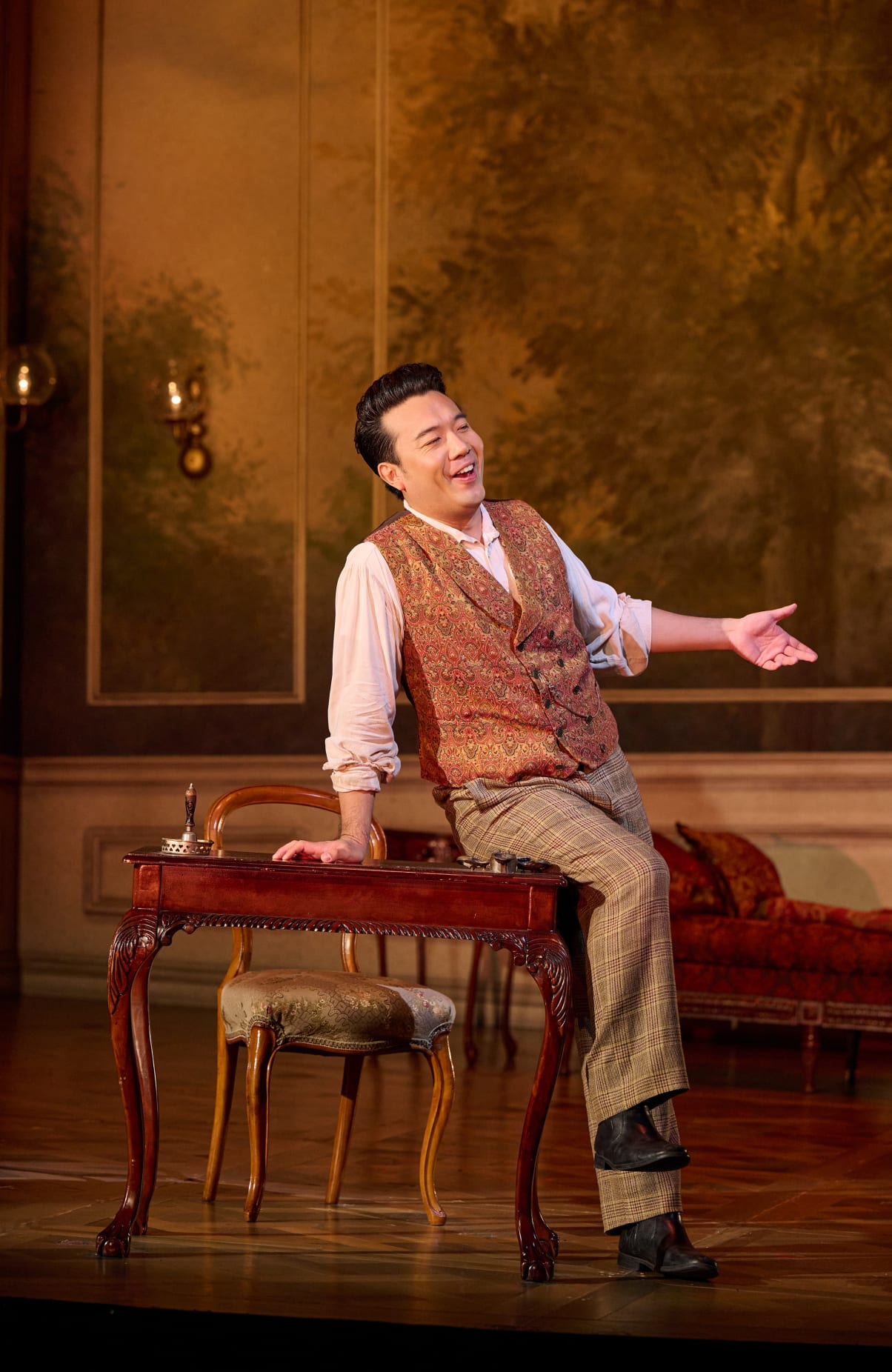
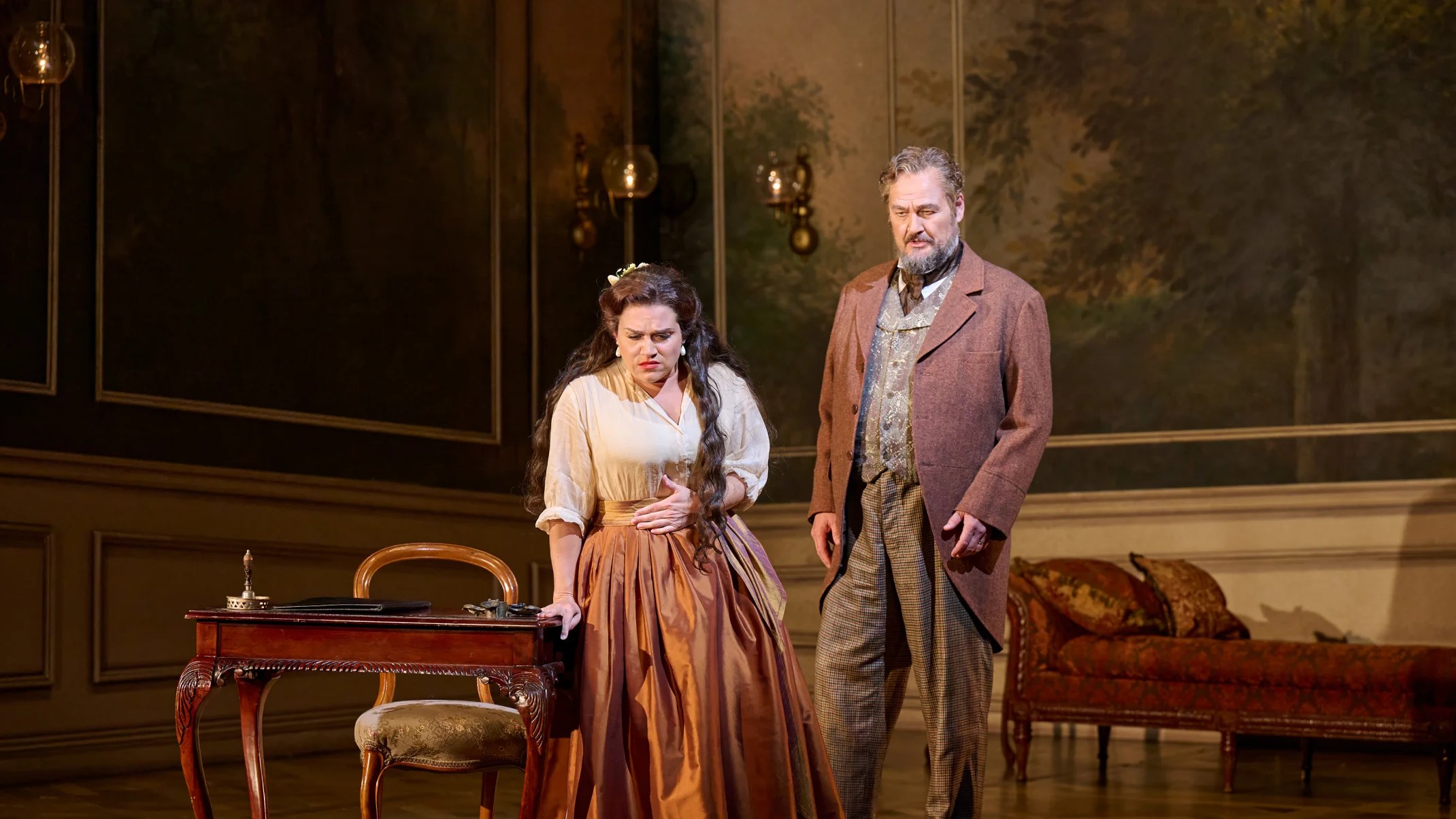
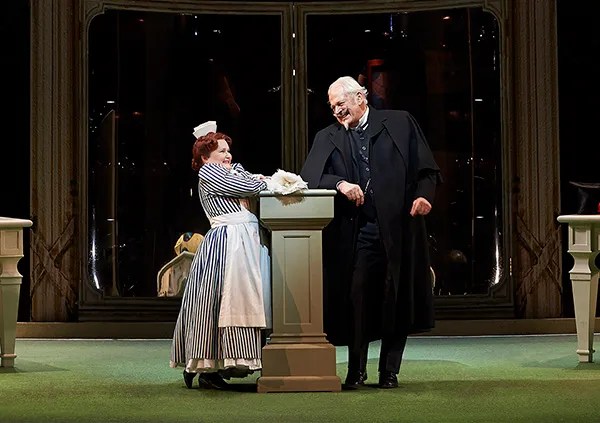
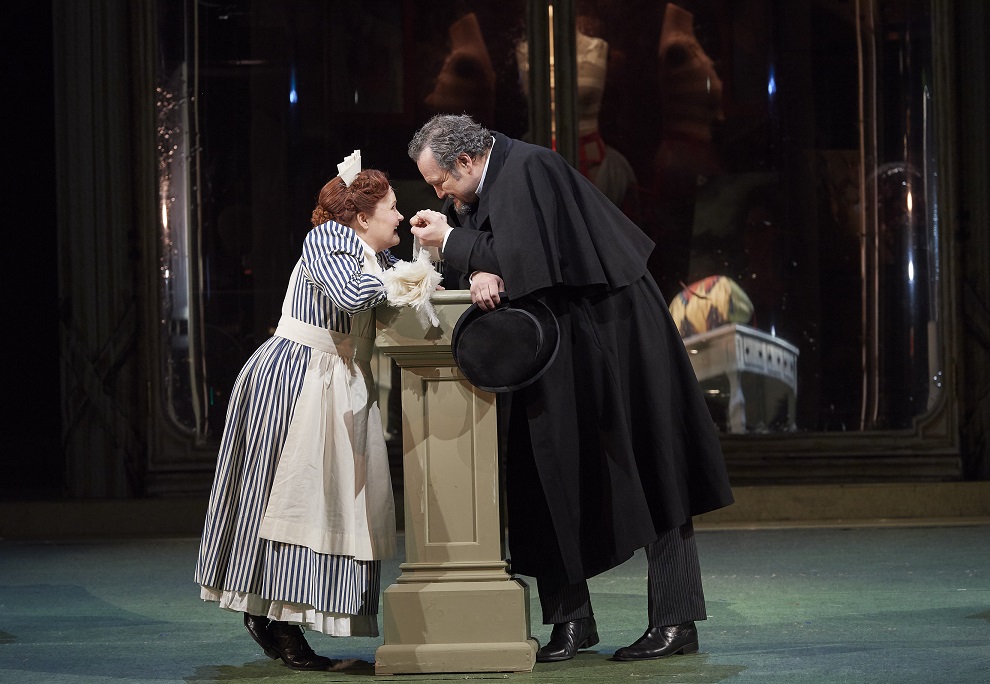
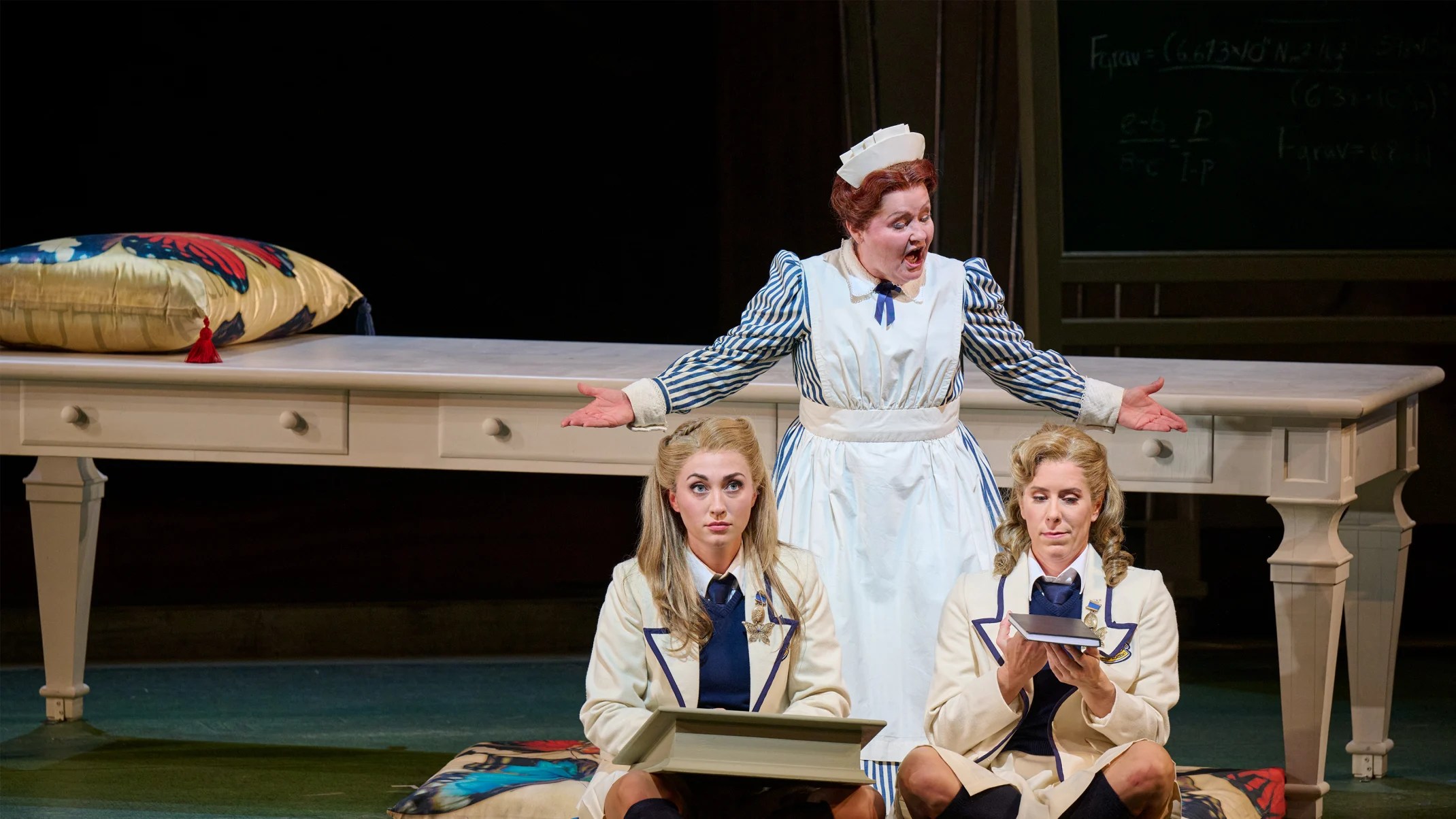
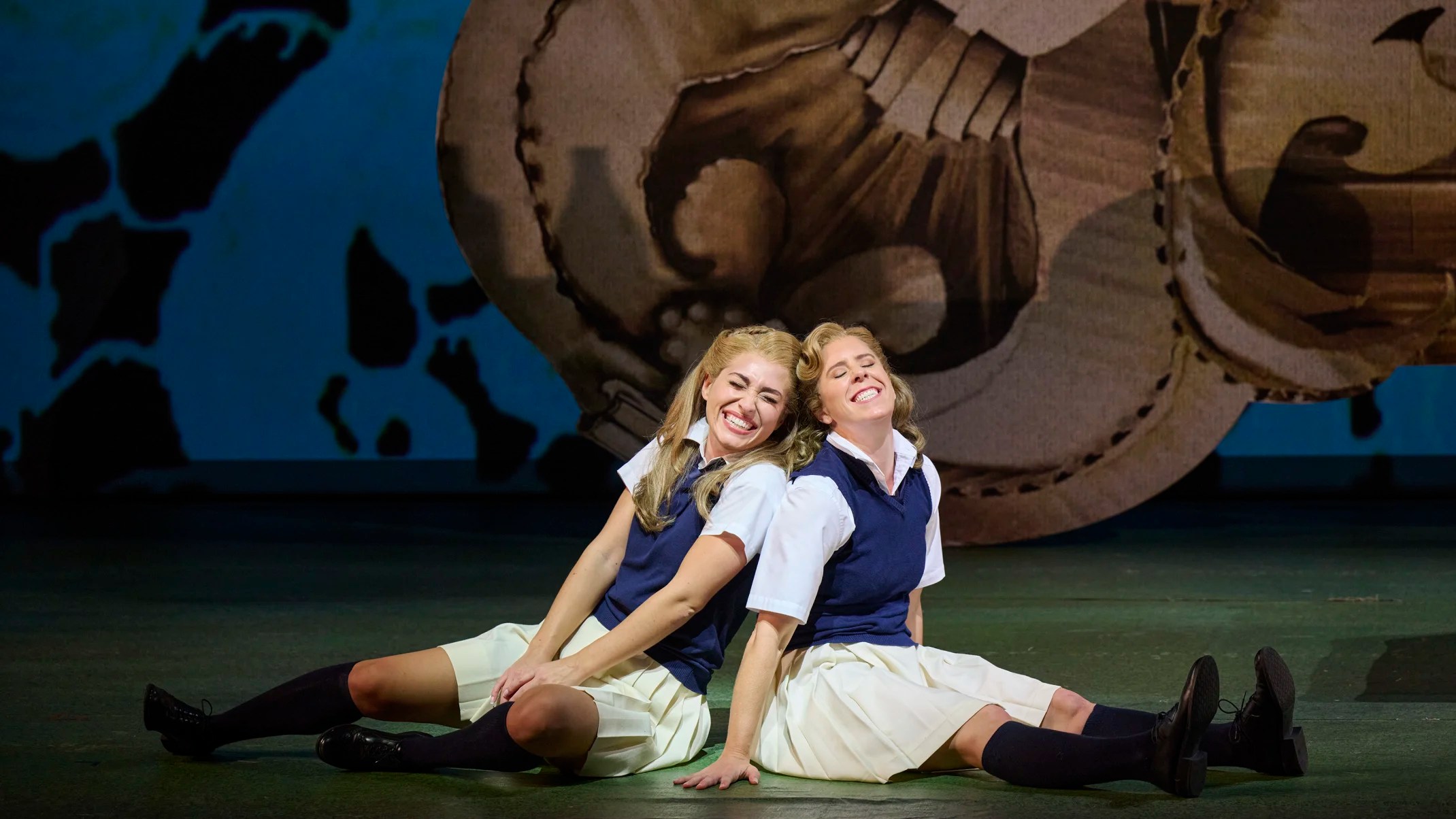
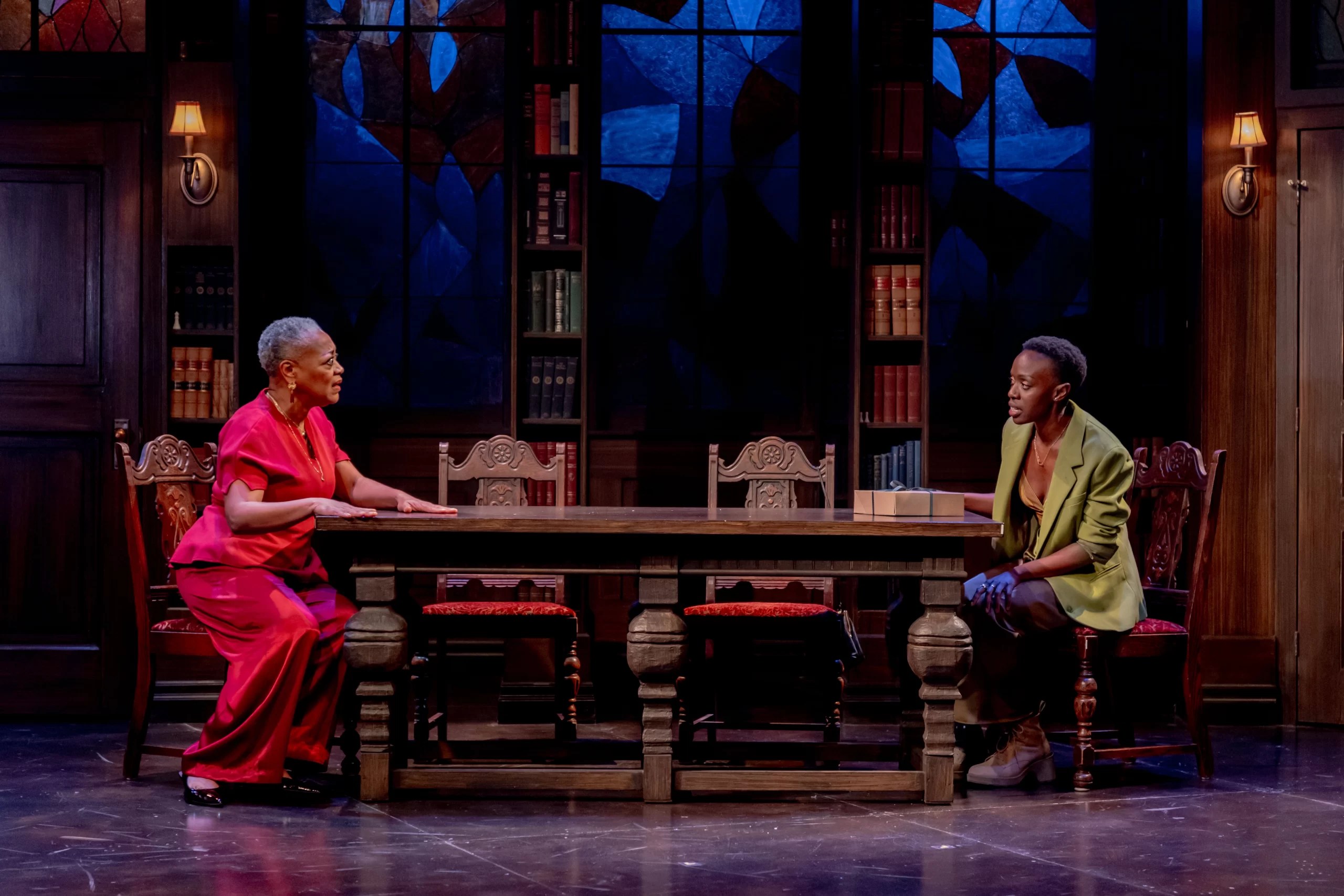
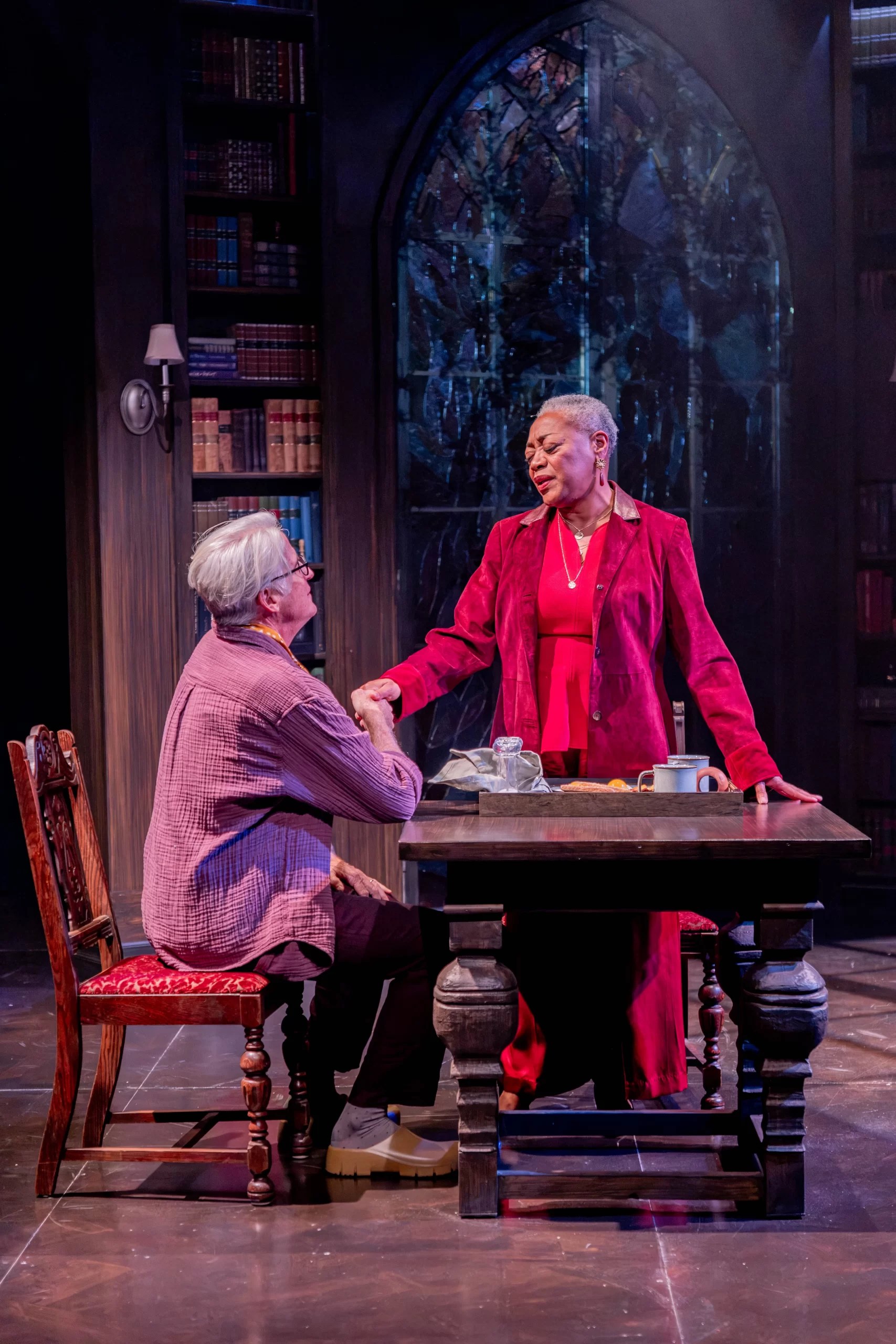
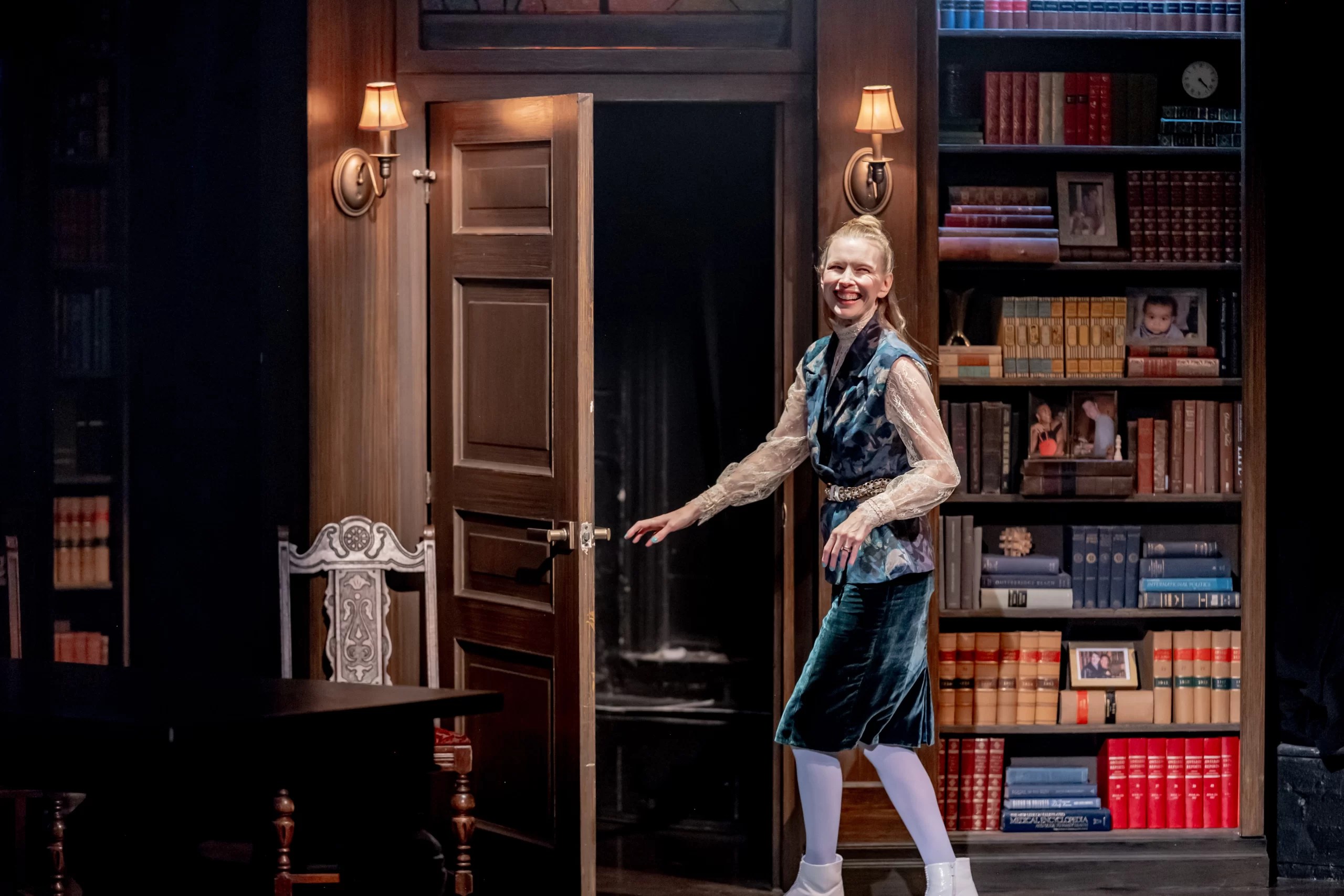
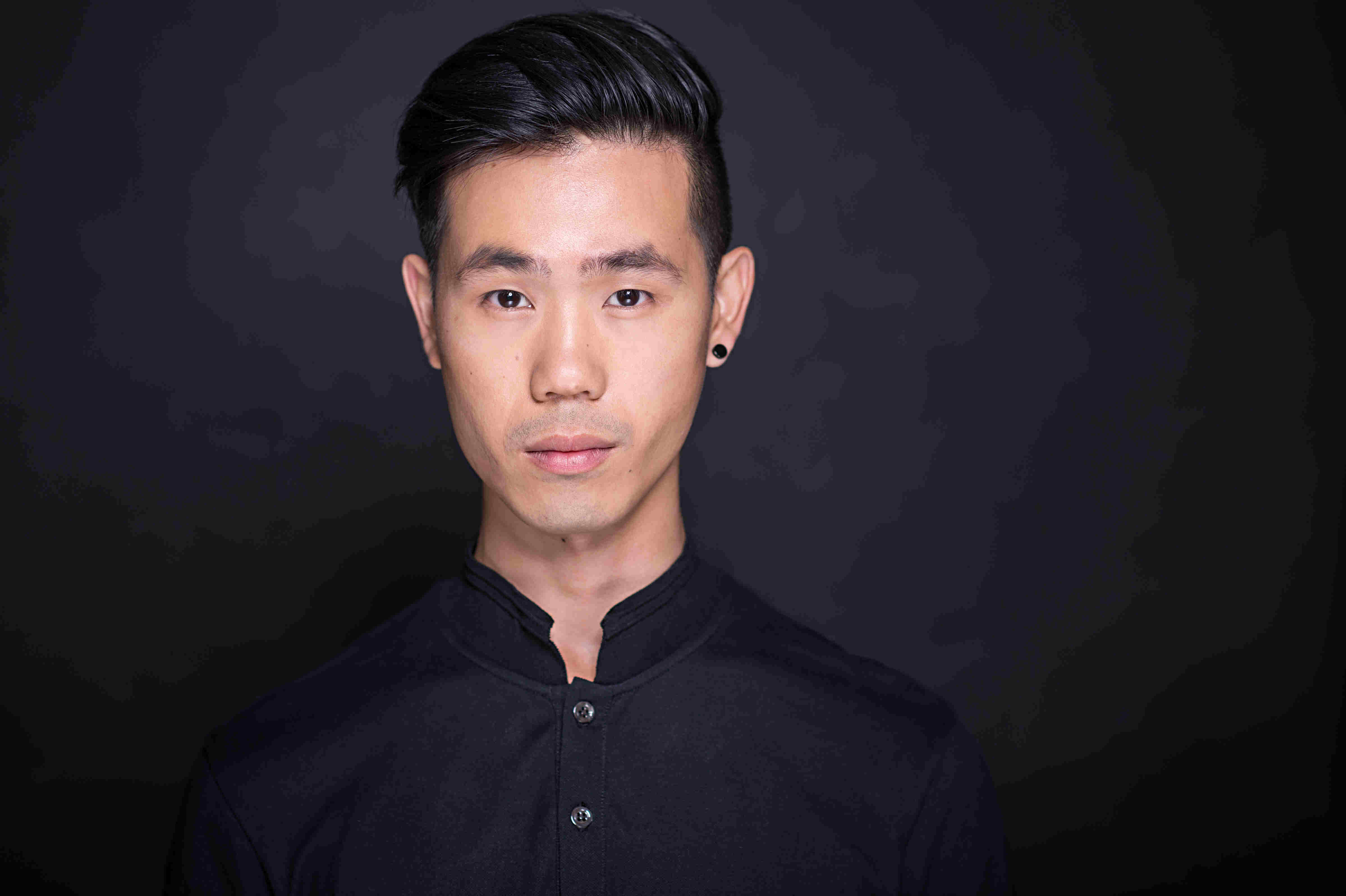
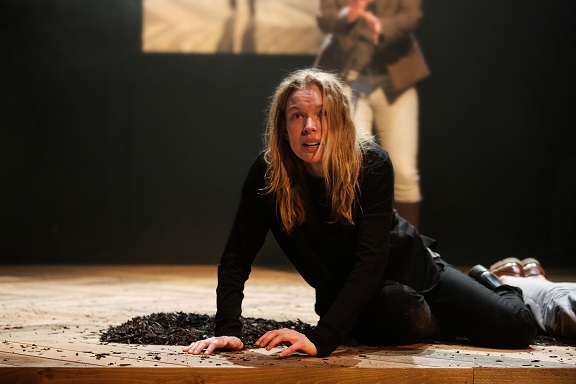
Fast Times in Seville is a new version of Carmen, coming Friday November 13th. Cursed in Mantua adapts Rigoletto the next night, Saturday November 14th.
Both shows are fundraisers in support of Benevolence Opera Project (aka “BOP”), a new organization, dedicated to combining high-quality opera productions with community engagement and support for meaningful causes. They’re offering a two-show deal, giving you a discount when you purchase tickets for both shows.
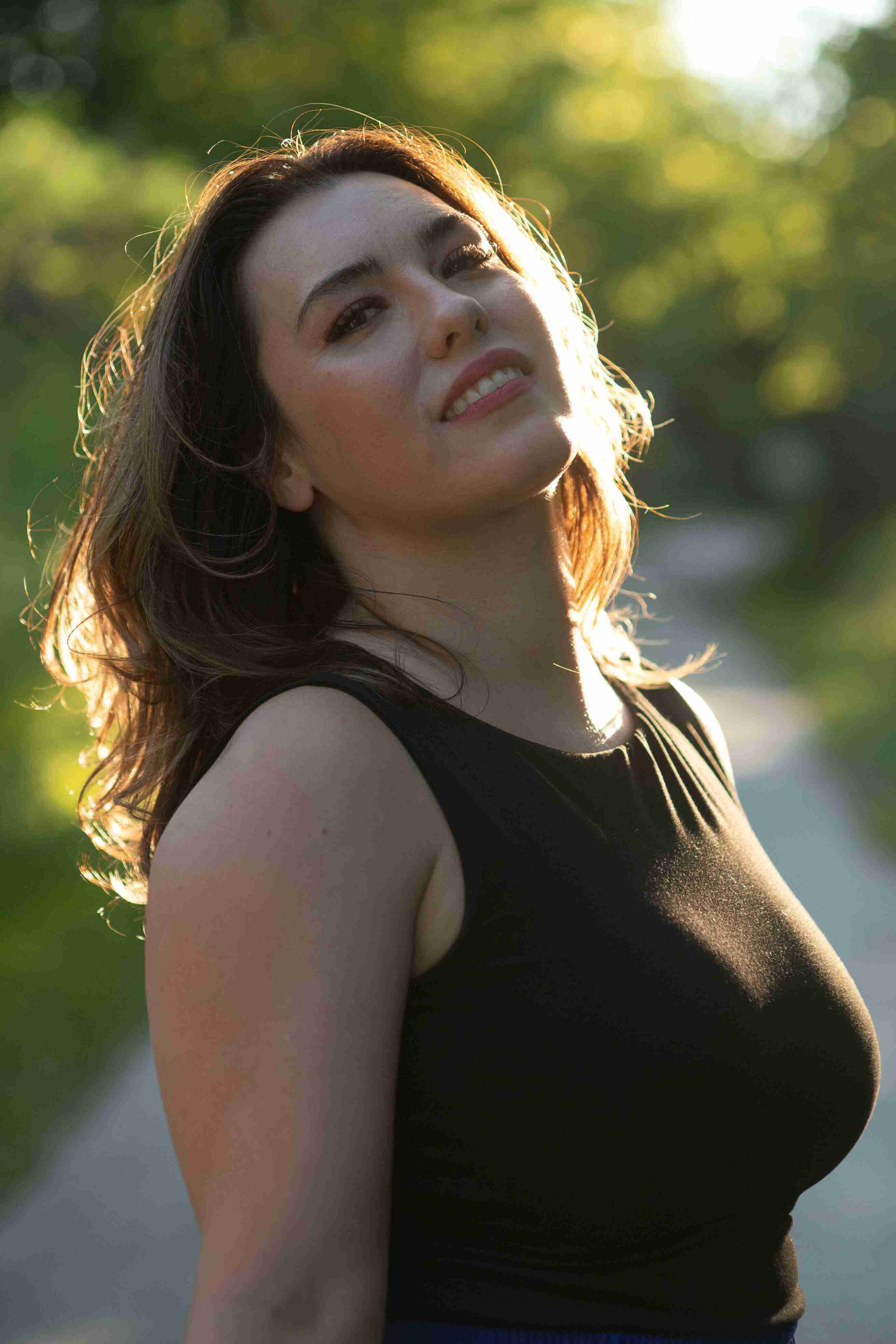
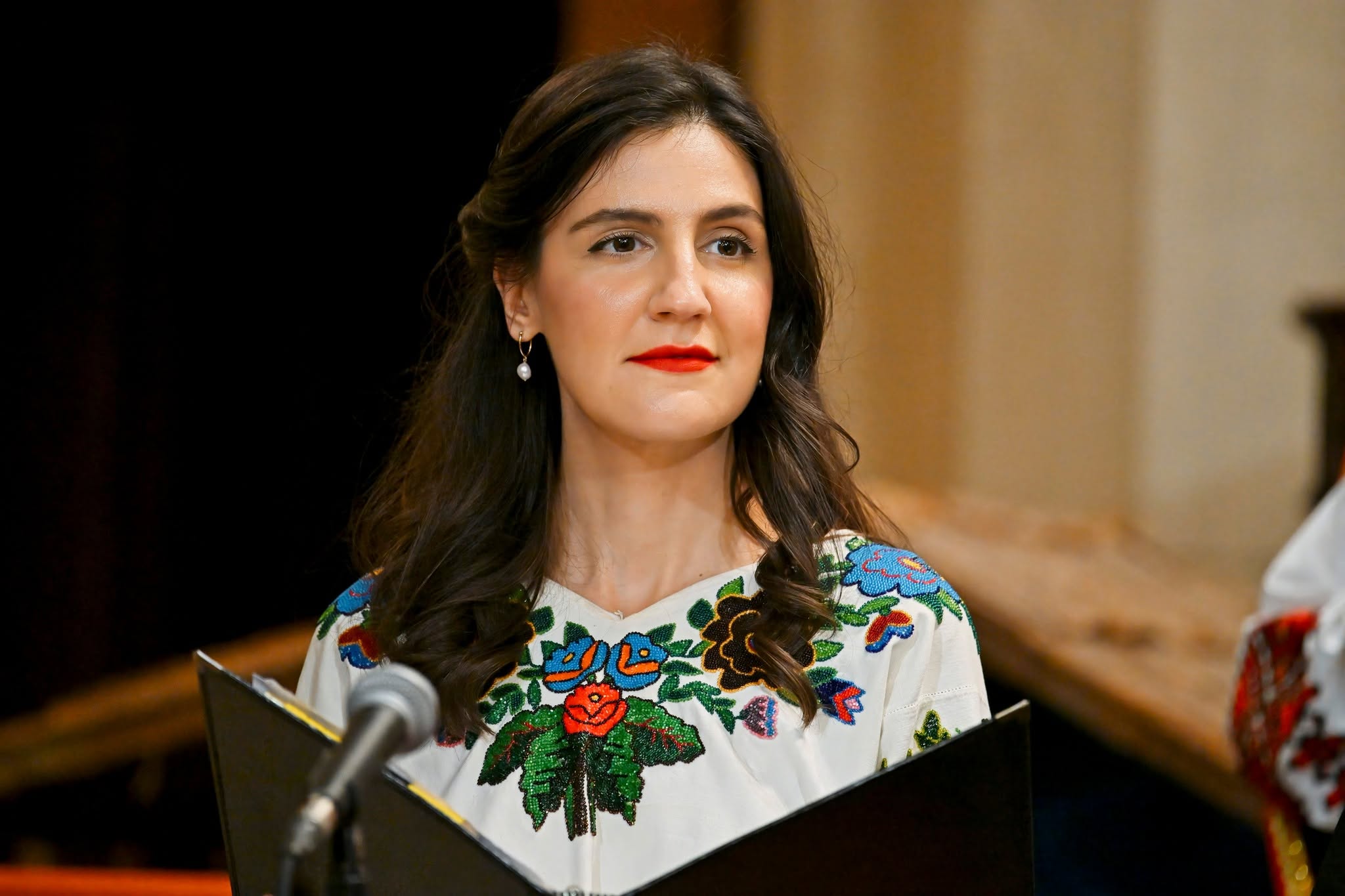
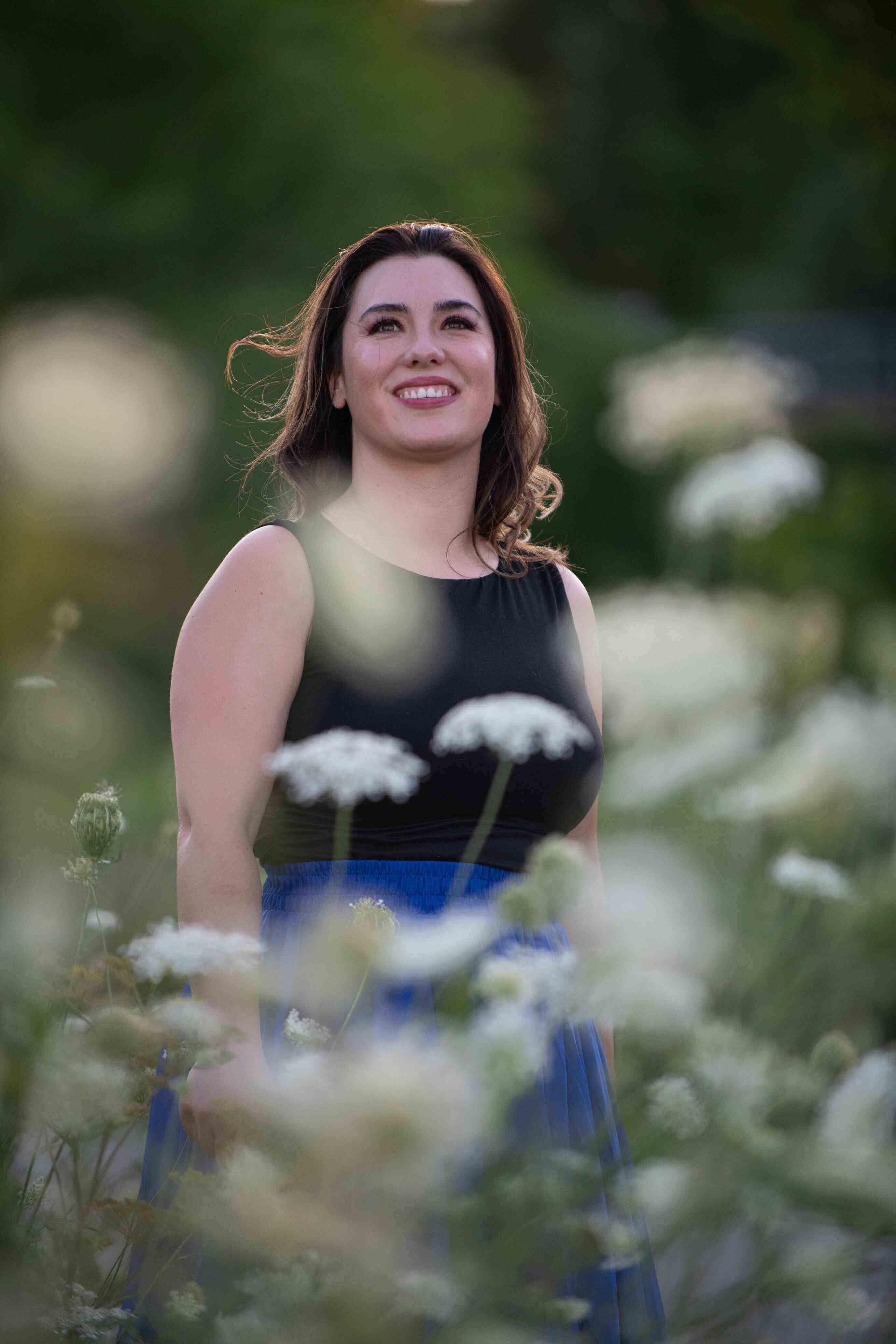
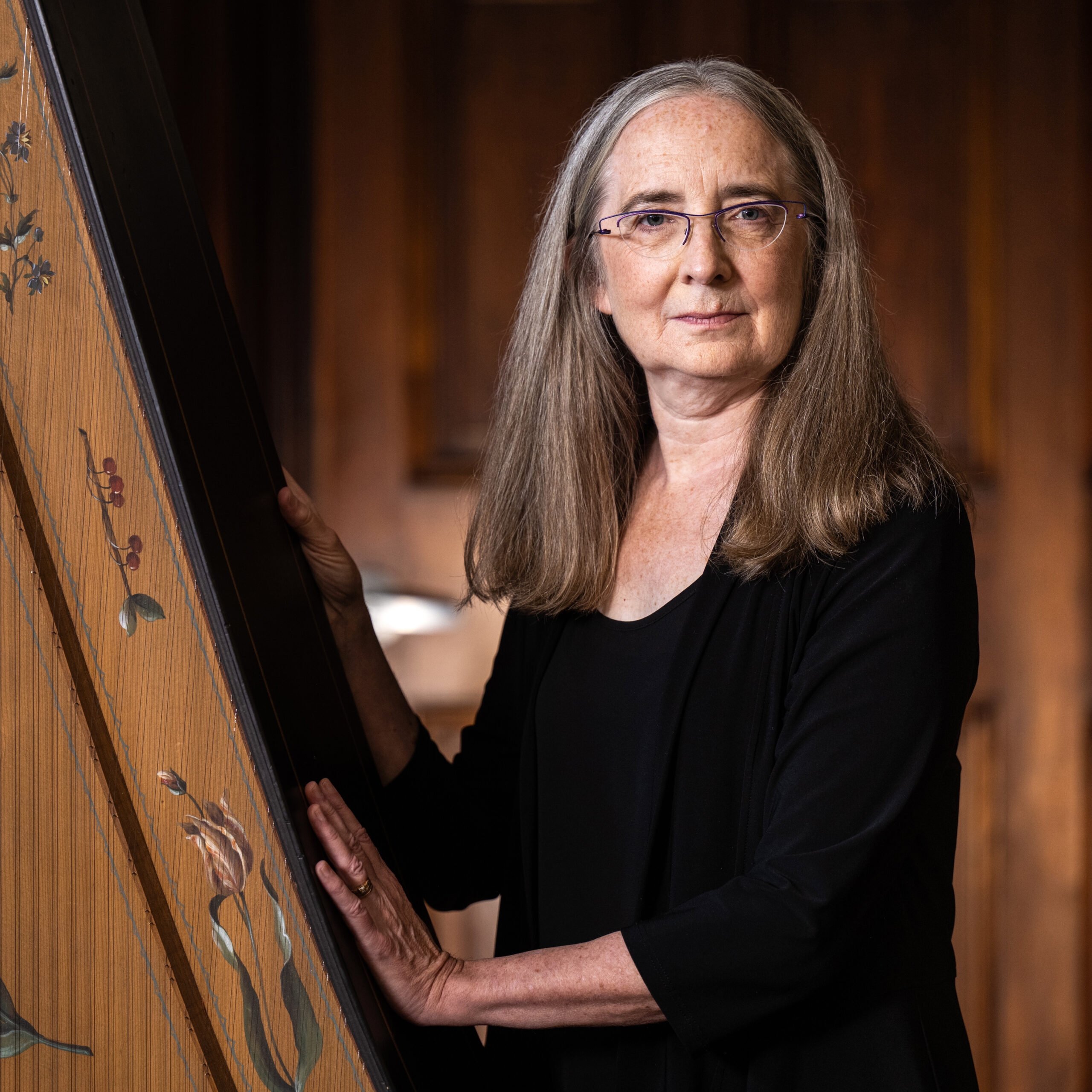
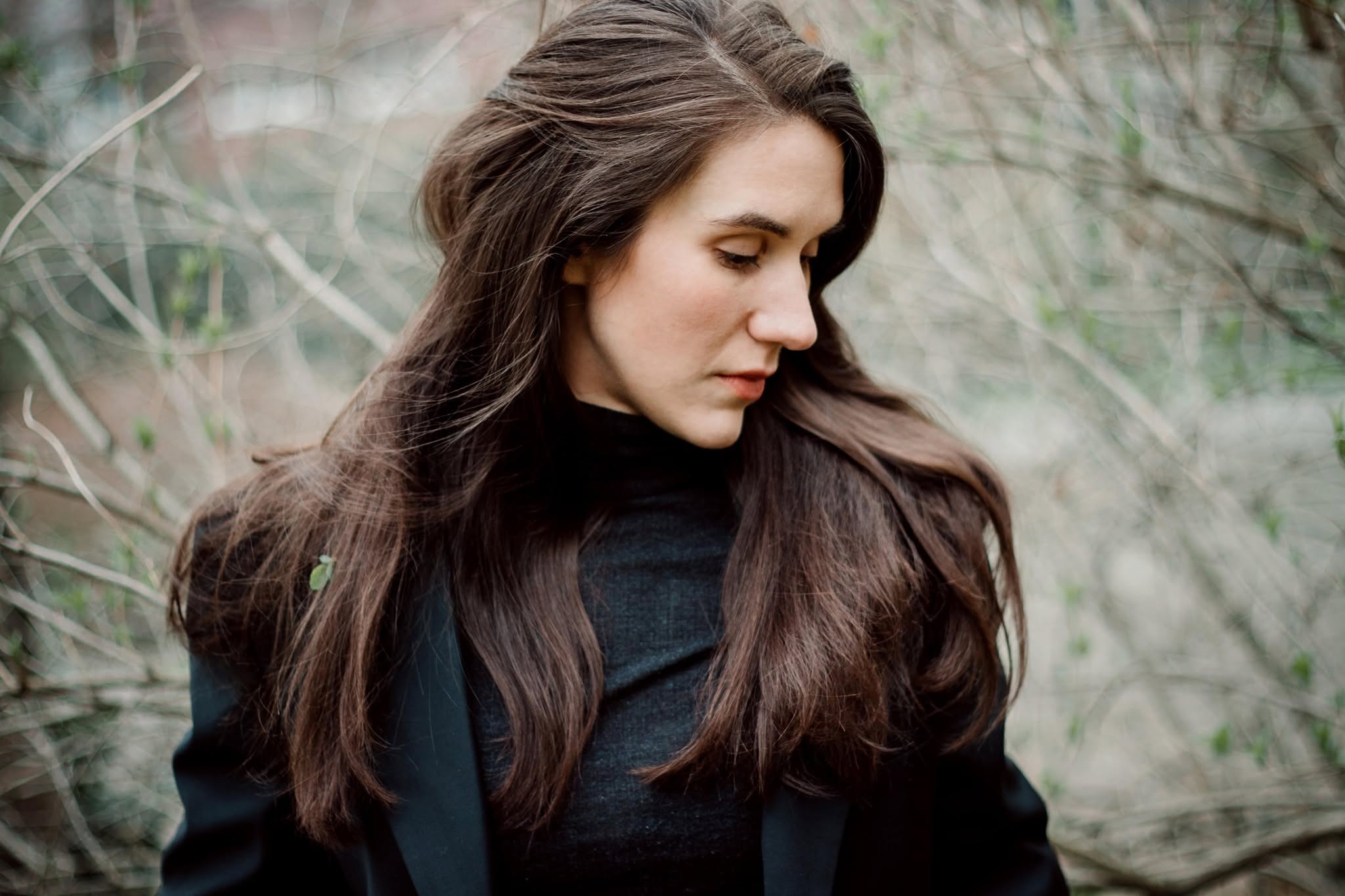
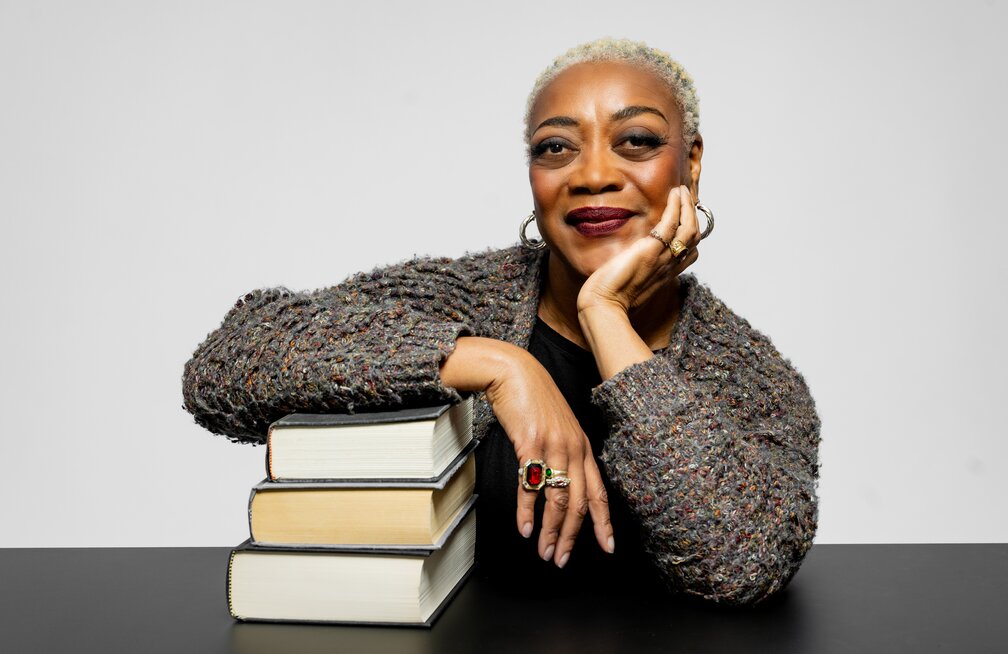
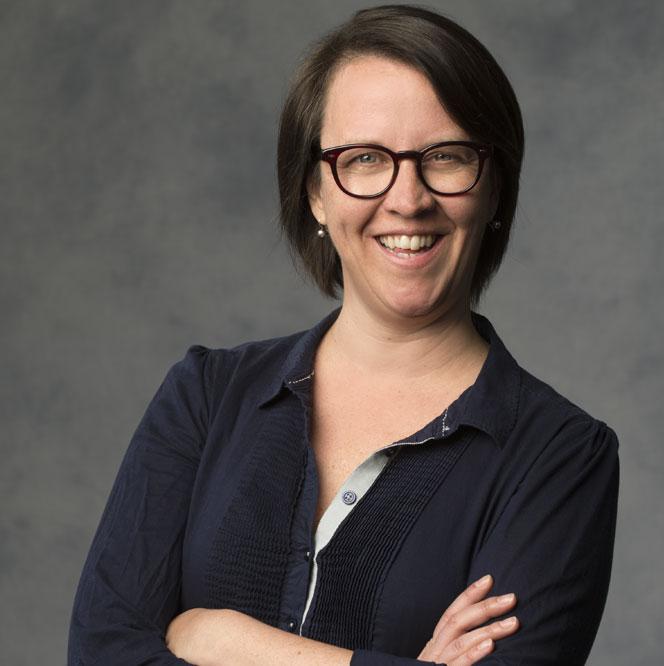
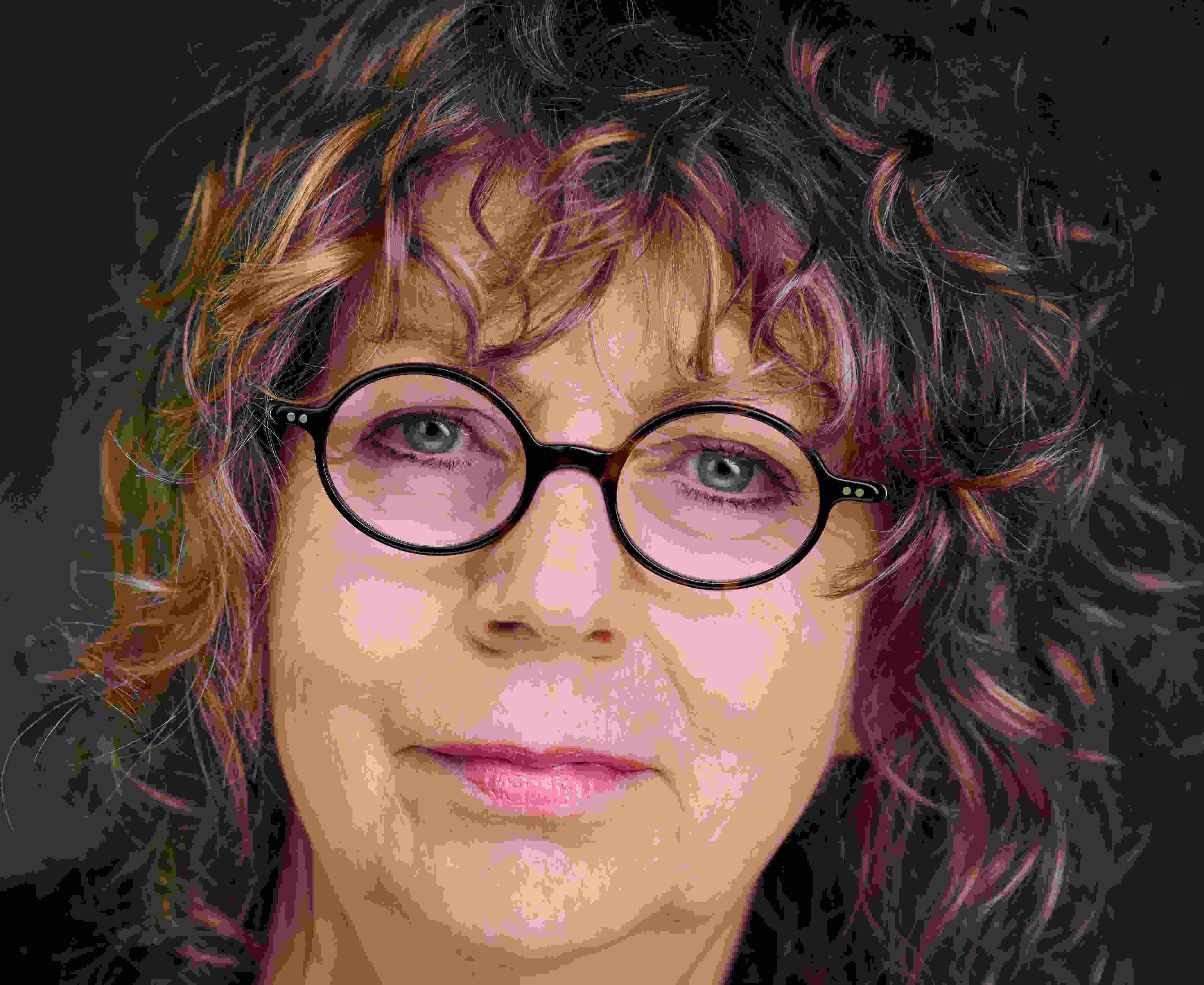
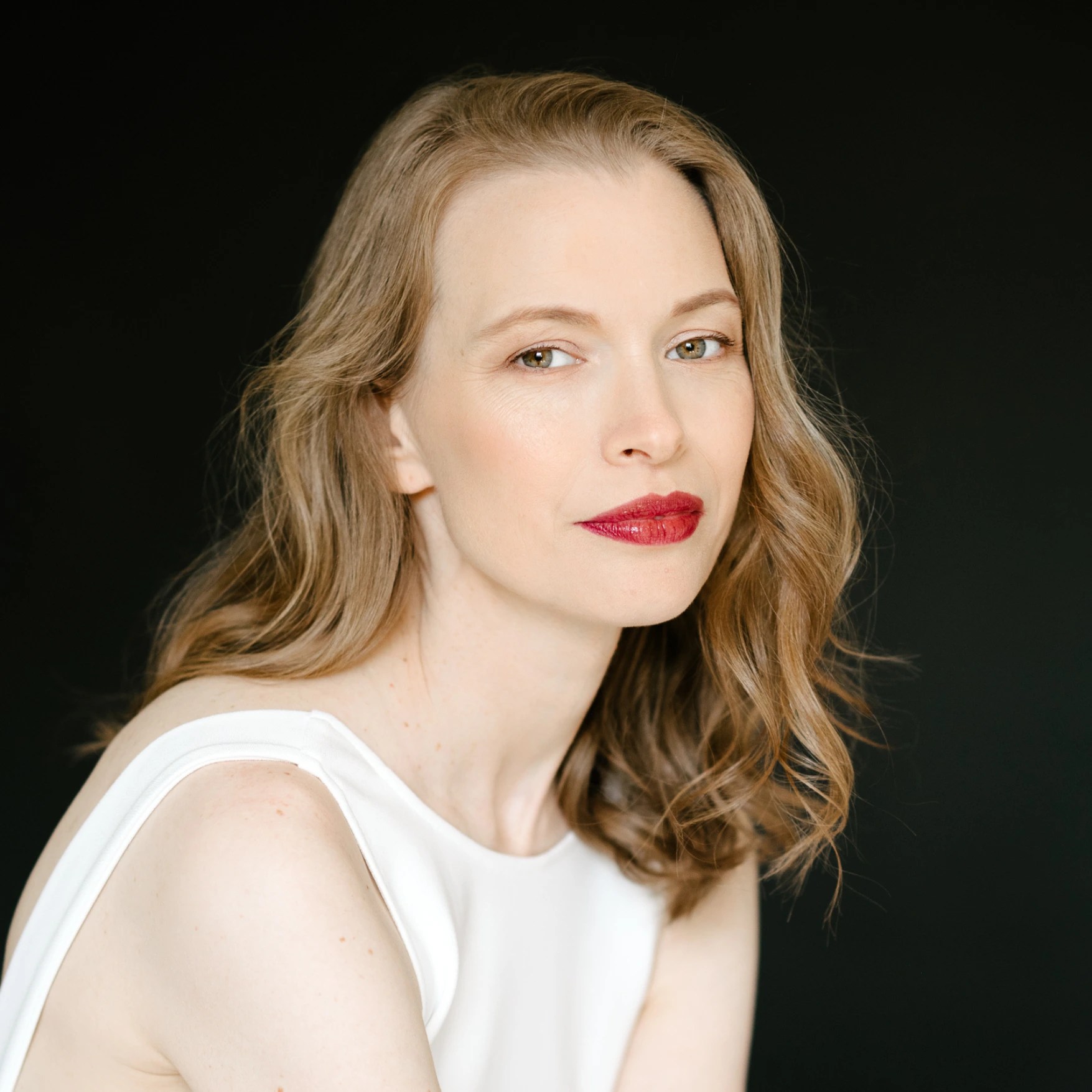
Holly Chaplin
Holly Chaplin is taking on multiple roles, not just singing but much more. I wanted to ask her about the shows.
*****
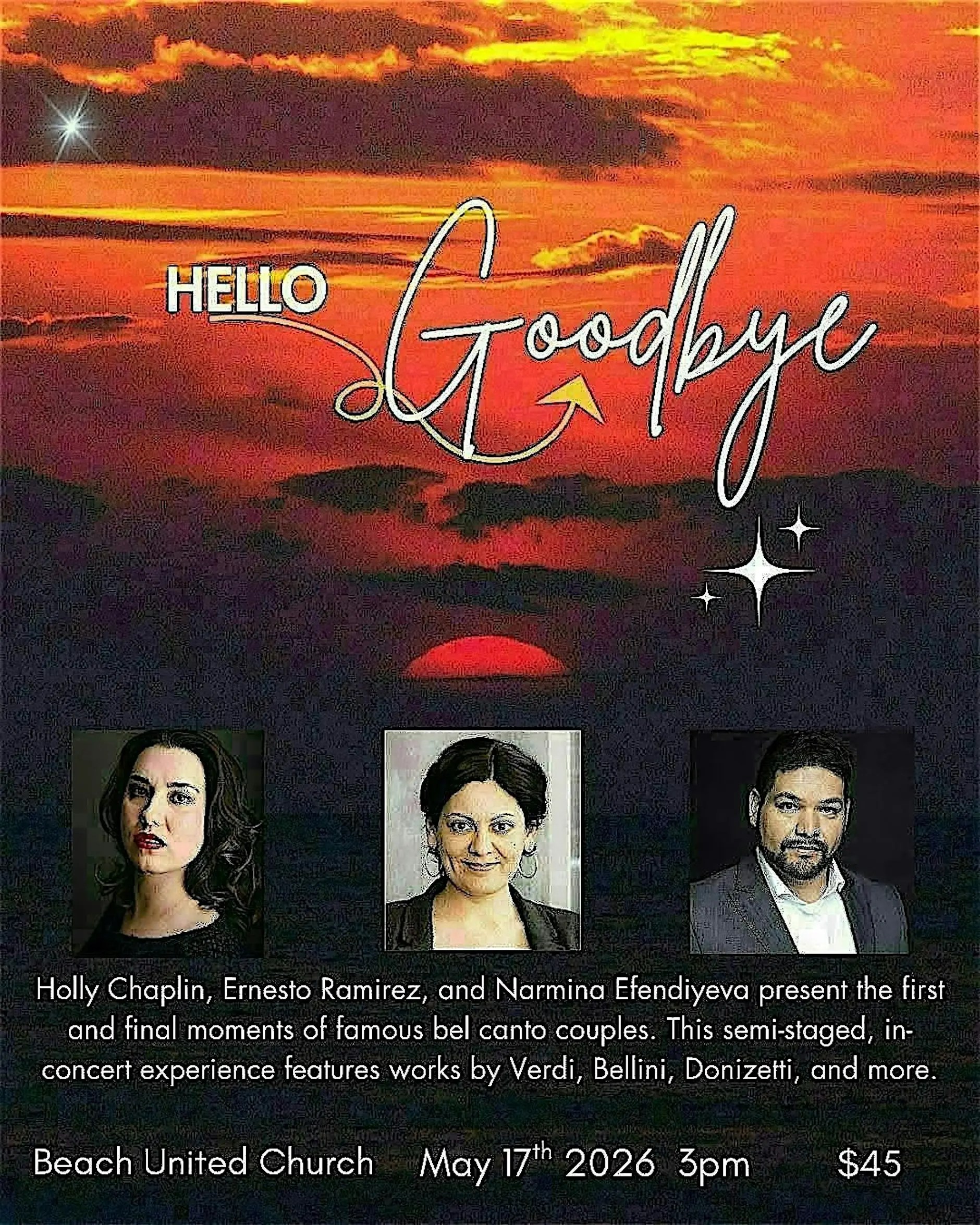
BB:As I recall you produced & directed the pastiche concert “Hello, goodbye” back in May of this year that included music from La boheme, la traviata and L’elisir d’amore.
“We watched fatal love between Verdi’s Violetta & Alfredo and Puccini’s Mimi & Rodolfo before finding our way to happily ever after with Donizetti’s Adina and Nemorino in Elixir of Love.”
Besides singing, what did you do on that occasion?
Holly Chaplin: I think the question should be more like ‘What did I not do?” ha! The short answer to that is SLEEP.
Producing is not for the weak. It’s quite a beast on its own since all of it is based on your time management skills, what you’re willing to invest and your drive to make it all happen!
For Hello/Goodbye, I knew I wanted to sing juicy duets/scenes and arias with Ernesto Ramirez.
BB: I don’t blame you. He’s amazing..!
Holly Chaplin: What I didn’t want to do was a traditional recital.
So I wrote a hallmark-esque play to connect the three operas and their respective scenes. I love writing and theatre so the actual product(as in the script and score) was the easiest part of the production process…one of which took up more than 10 hours of my life!
BB: Wow, . I wrote this in response to the show: “Hello Goodbye” was an original play narrated by Ryan Hofman, contrived to contain the romantic arias & duets between characters in la traviata, la boheme and elisir d’amore. I was reminded of Mamma Mia, a play that’s just a loose pretense to set up our favourite tunes, although this time it was Puccini, Verdi & Donizetti, not ABBA.“
So on top of everything else you wrote the play… Very impressive!Youseem to be having fun with all these different tasks you undertake.
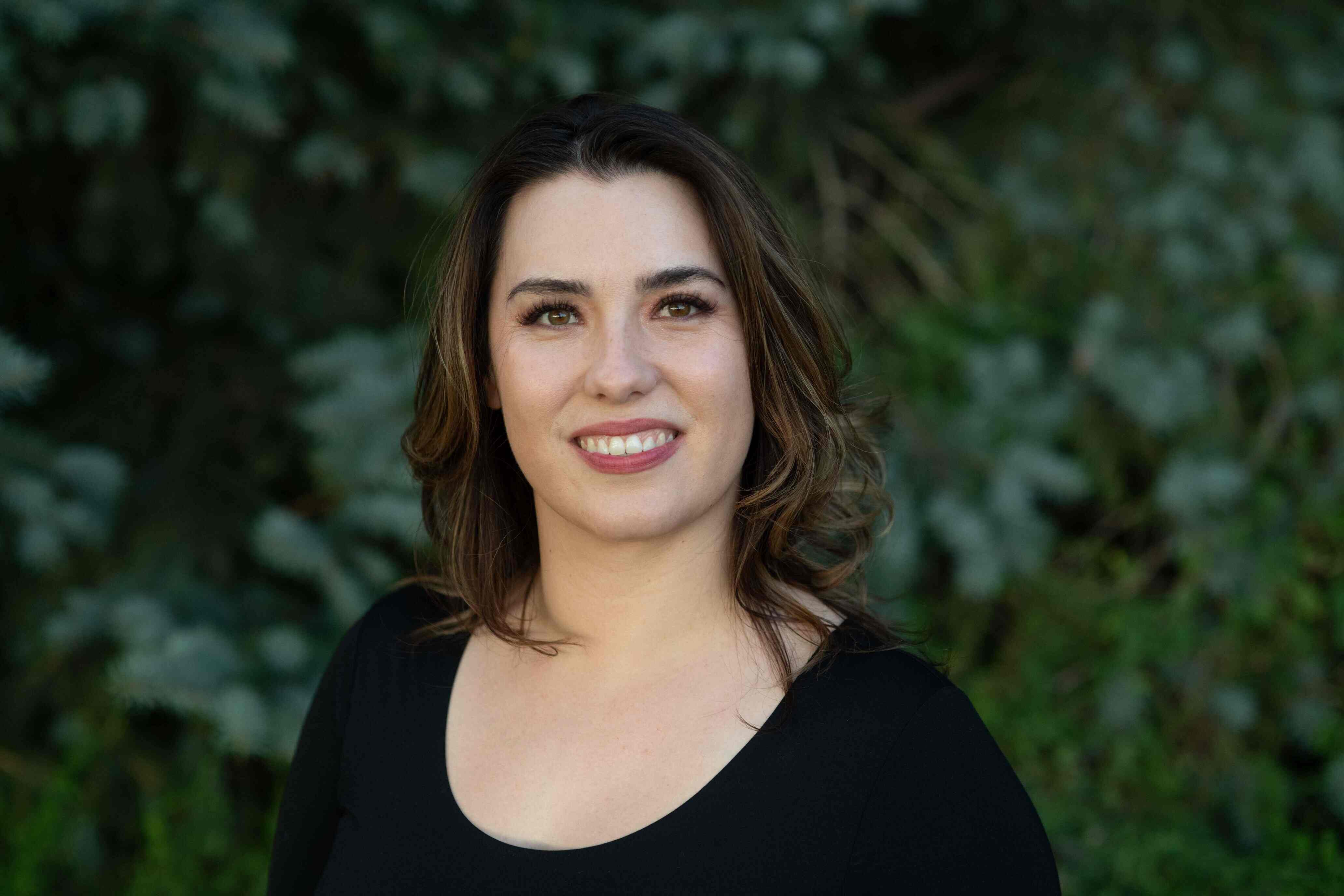
Holly Chaplin
Holly Chaplin: There was designing posters, shooting a promo video/all the joys of video editing, buying ads with Meta, collecting props/set pieces, creating surtitles, logistics of moving everything to the space, lighting design/rentals, calling in every favour, inviting everyone I know…also rehearsing and staging the show. It’s a tonne of work!
Producing by itself is a lot like child birth. To see your idea come to life is amazing…You just need to forget how hard the process was to make your show happen to ever want to do it again.
Luckily, Ryan is taking a lot off my plate this time ‘round.
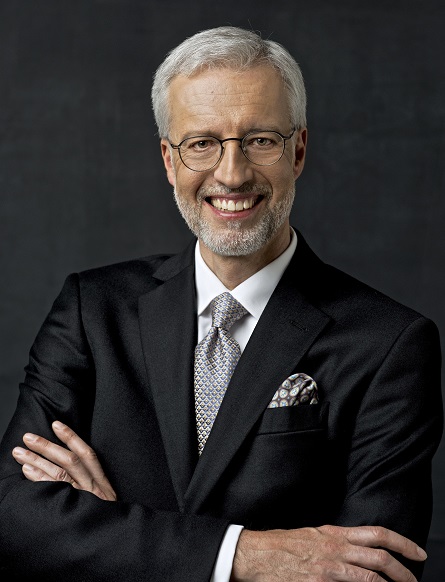
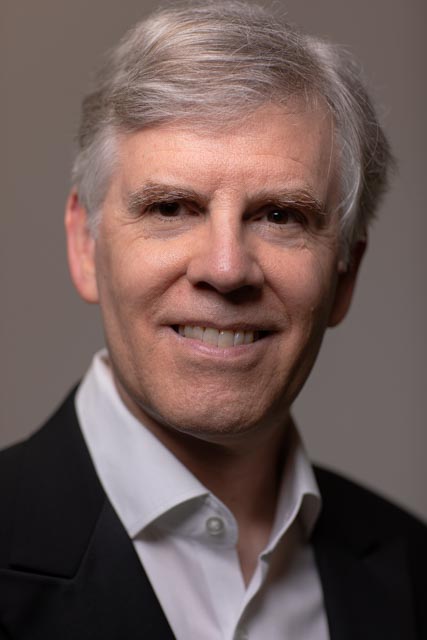
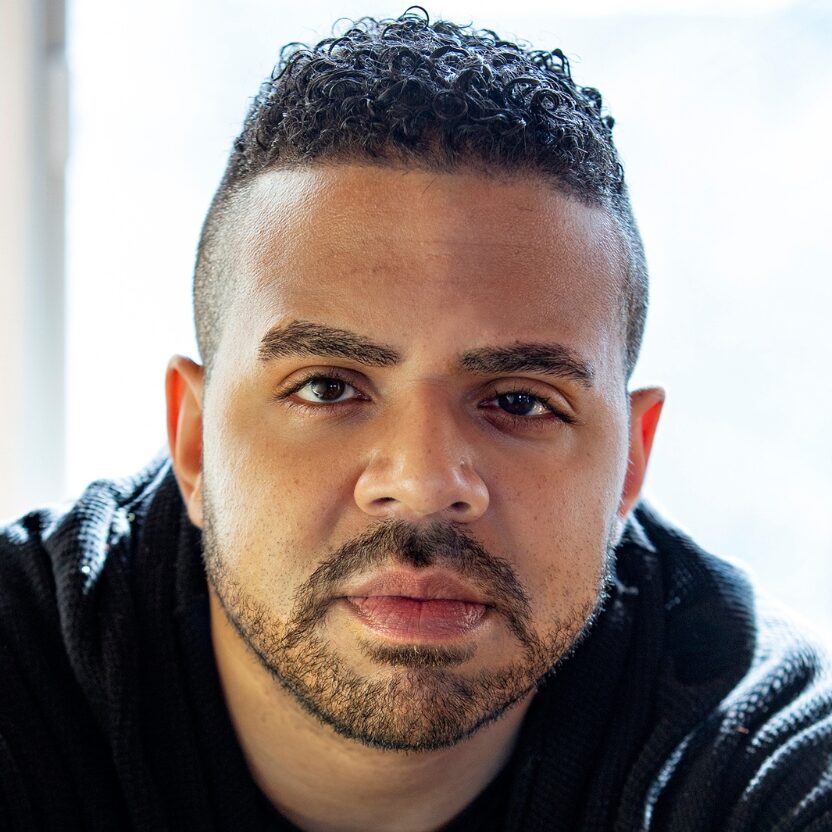
Benevolence Opera Project Artistic Director Ryan Hofman
Holly Chaplin: Just having to direct my piece is exciting, and getting to sing Gilda again…is it Christmas?
BB: Aha, but did you forget how hard the process is? It seems like you’rewilling to do it again. Tell me more about your version of Carmen.
Holly Chaplin: So BOP’s Carmen, which I am calling Fast Times in Seville, is quite a different take on Carmen..hence why I have changed the name. The musical numbers are from Carmen but the play connecting these numbers was written by yours truly.
BB: What is the concept behind that title “Fast Times in Seville“?
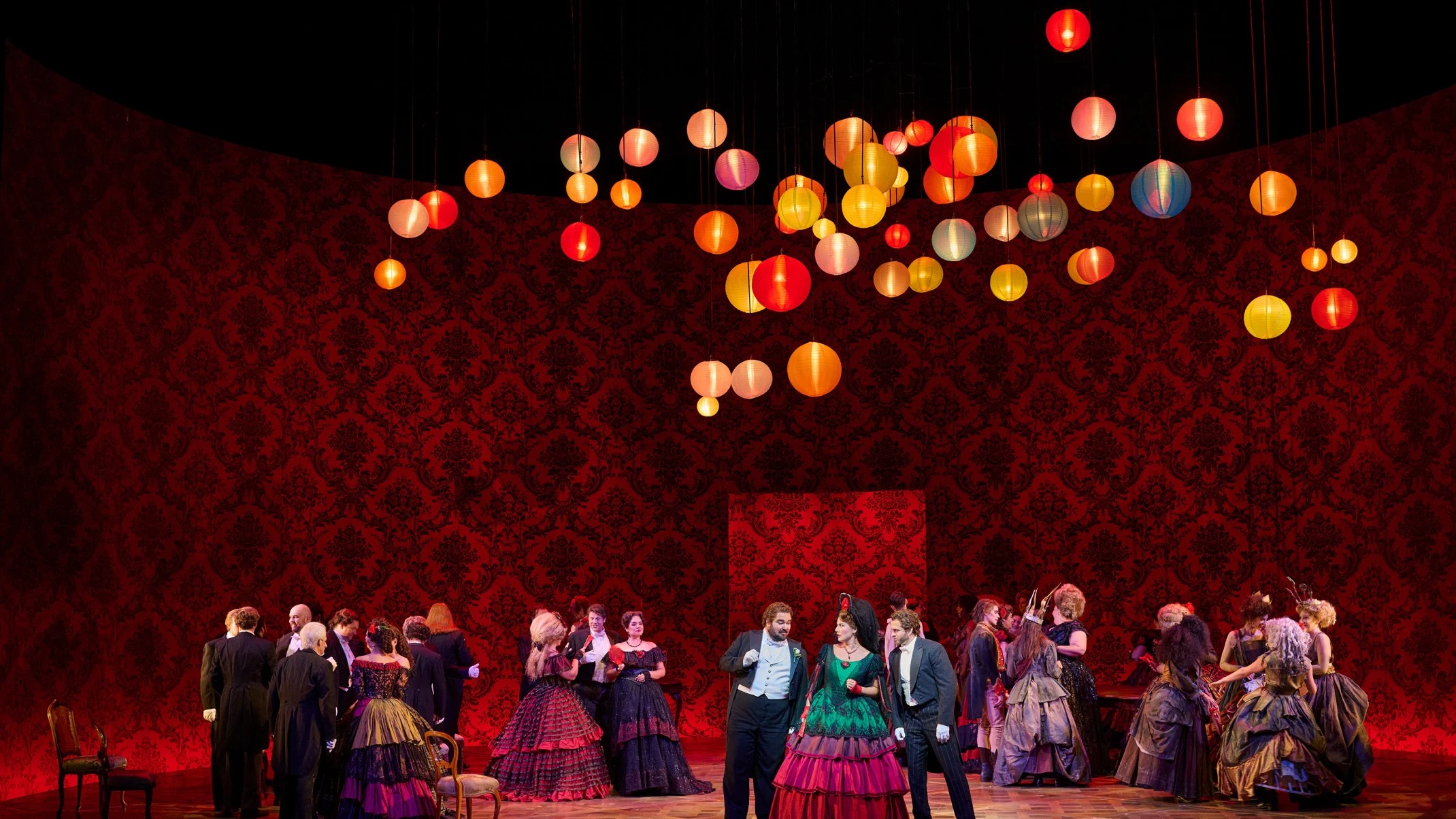
Holly Chaplin: My adaptation is more like American Idol meets Jerry Springer—Fast Times in Seville is set as a televised singing competition where ambition, celebrity, and messy personal lives collide spectacularly. Carmen is the most performed opera on the planet. Indie companies can’t afford to create 19th century Seville well, so why not make a TV studio our world? I wanted to explore Carmen’s outsider status through her ambition and refusal to be controlled, rather than perpetuating the original’s problematic associations between Roma identity and criminality. My Fast Times in Seville is full of big personalities, public humiliation, and backstage drama, where everyone has an agenda and the line between entertainment and real-life tragedy gets dangerously thin.
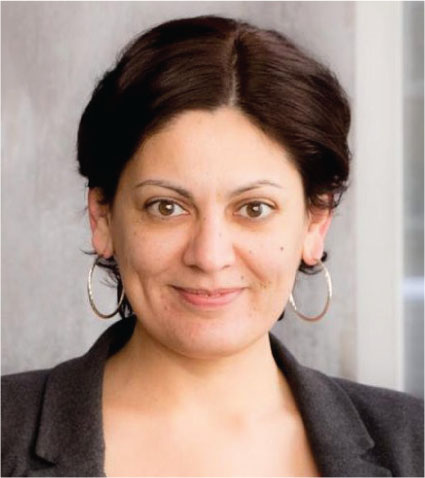
BB: You sang your first Micaela recently out west somewhere with Julie Nesrallah as Carmen. What was that like?
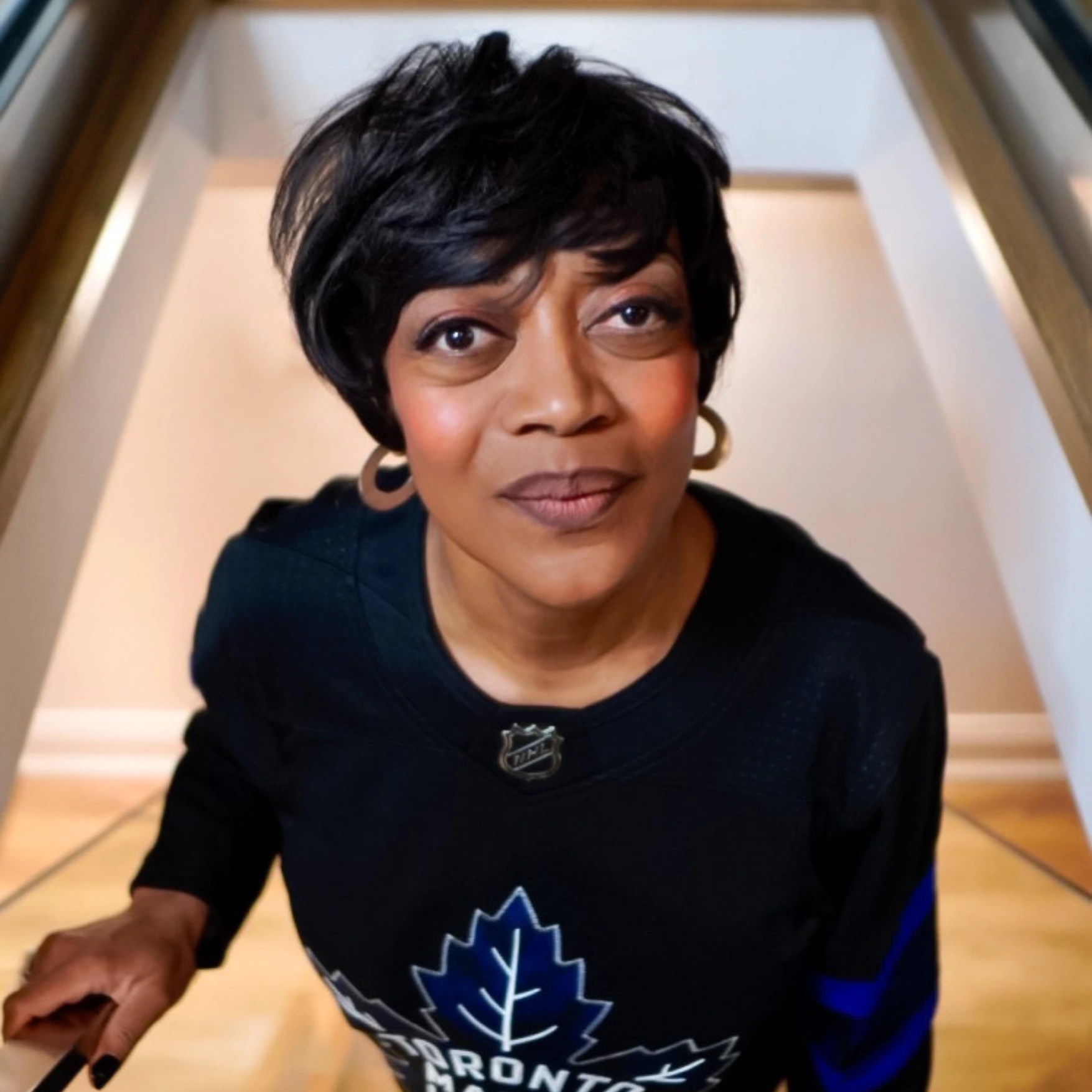
Julie Nesrallah
Holly Chaplin: My week in Saskatoon was an absolute blast! I loved my Carmen on Tap cast—we had the best time. Our production took place right among the patrons and staff of Saskatoon’s Bacchus Lounge, with Trevor Chartrand at the keys, phrasing every line beautifully.
Trevor Chartrand
Seriously, he’s a dream to make music with!
I really like Micaela; she feels wonderful vocally, and it was so much fun to sing opposite Richard Troxell as Don José. He’s spectacular, and having someone of his calibre to work with while mounting the role professionally for the first time was a real gift. I mean, the man has sung at the Met!
Julie and Richard embody their roles so beautifully, and they’re both such generous musicians and actors that they make it easy to create our own little Seville in Saskatoon.
Julie is salt of the earth and an incredibly hard worker who inspires everyone she encounters. She took a chance on me back in 2016, casting me as Frasquita in her production at Lula Lounge. I’m so grateful that it led to such a lasting connection and friendship— that production really helped kickstart my career.
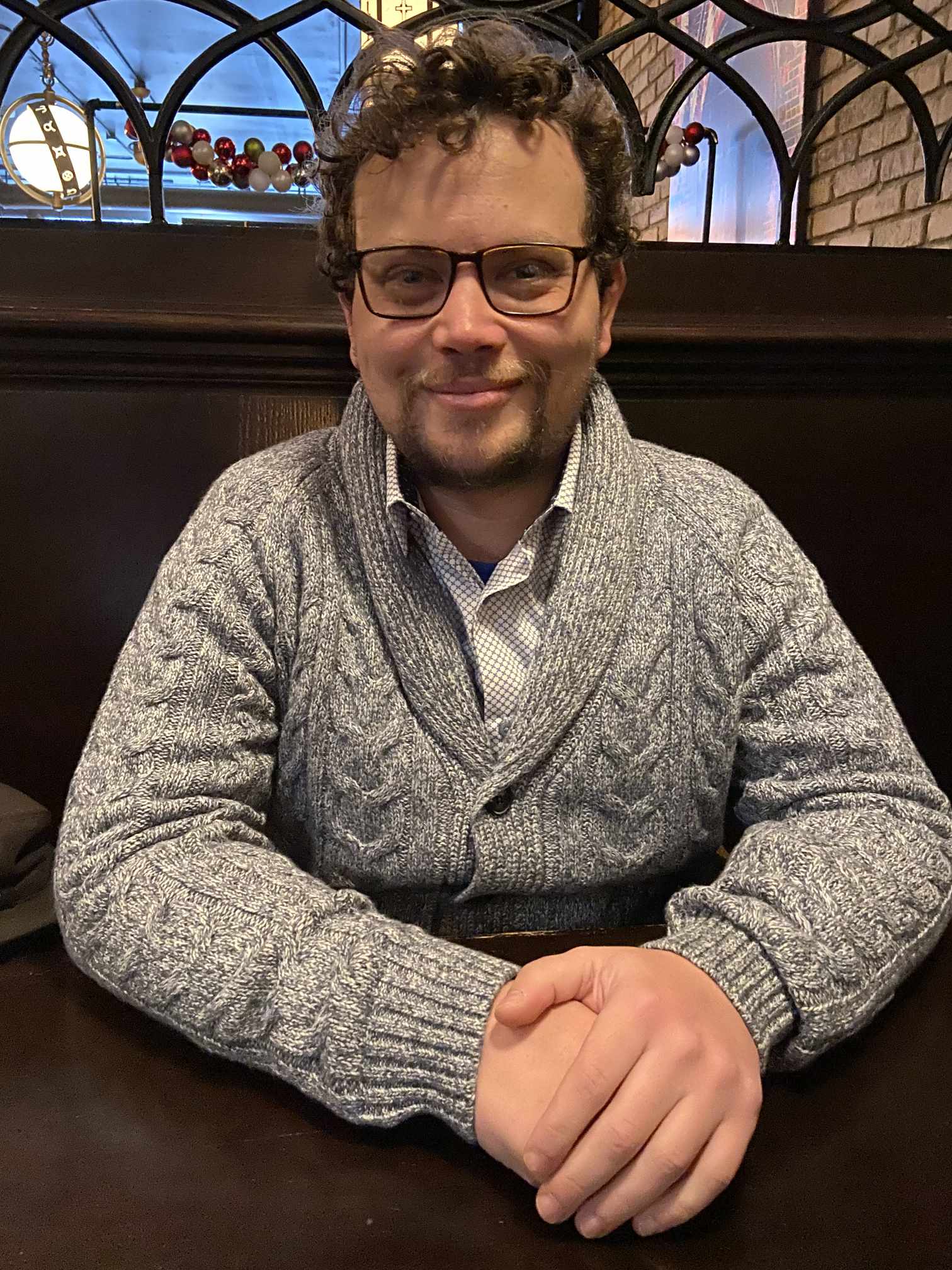
BB: Who’s singing in Fast Times in Seville?
Holly Chaplin: Here are the victims of my creativity and how you can expect to see their characters turn up in Fast Times in Seville.
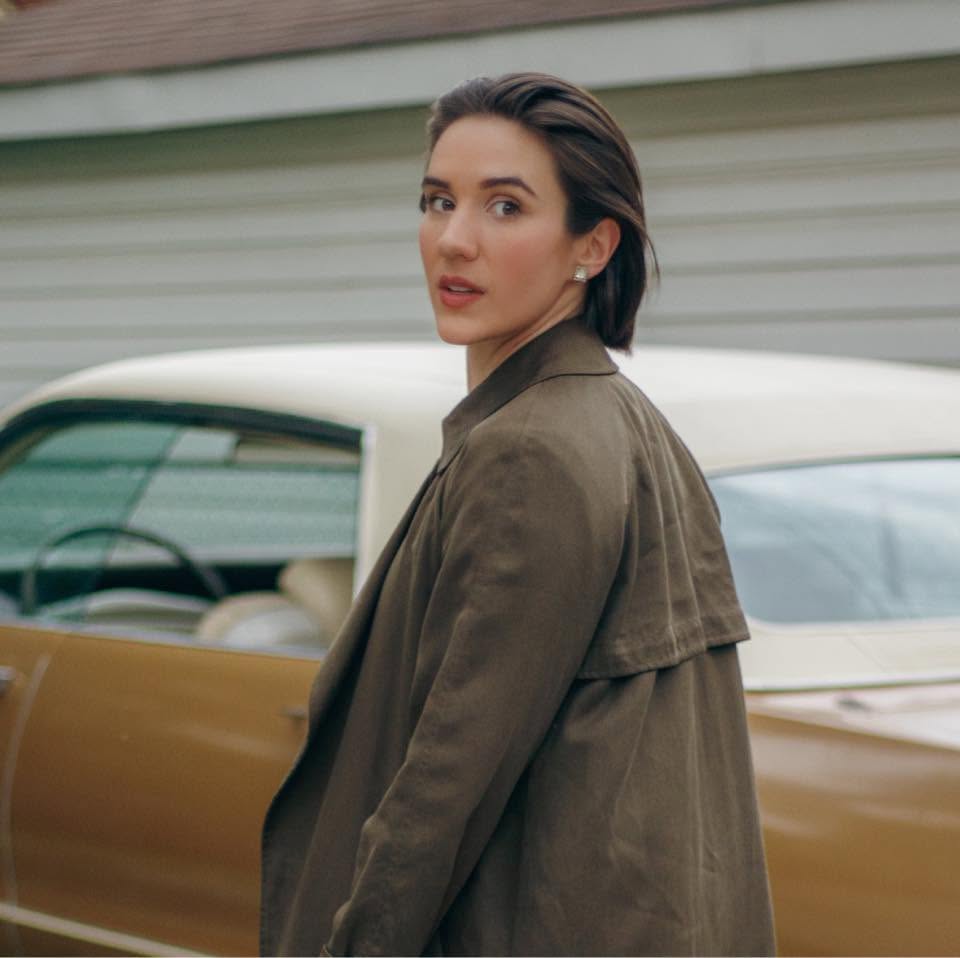
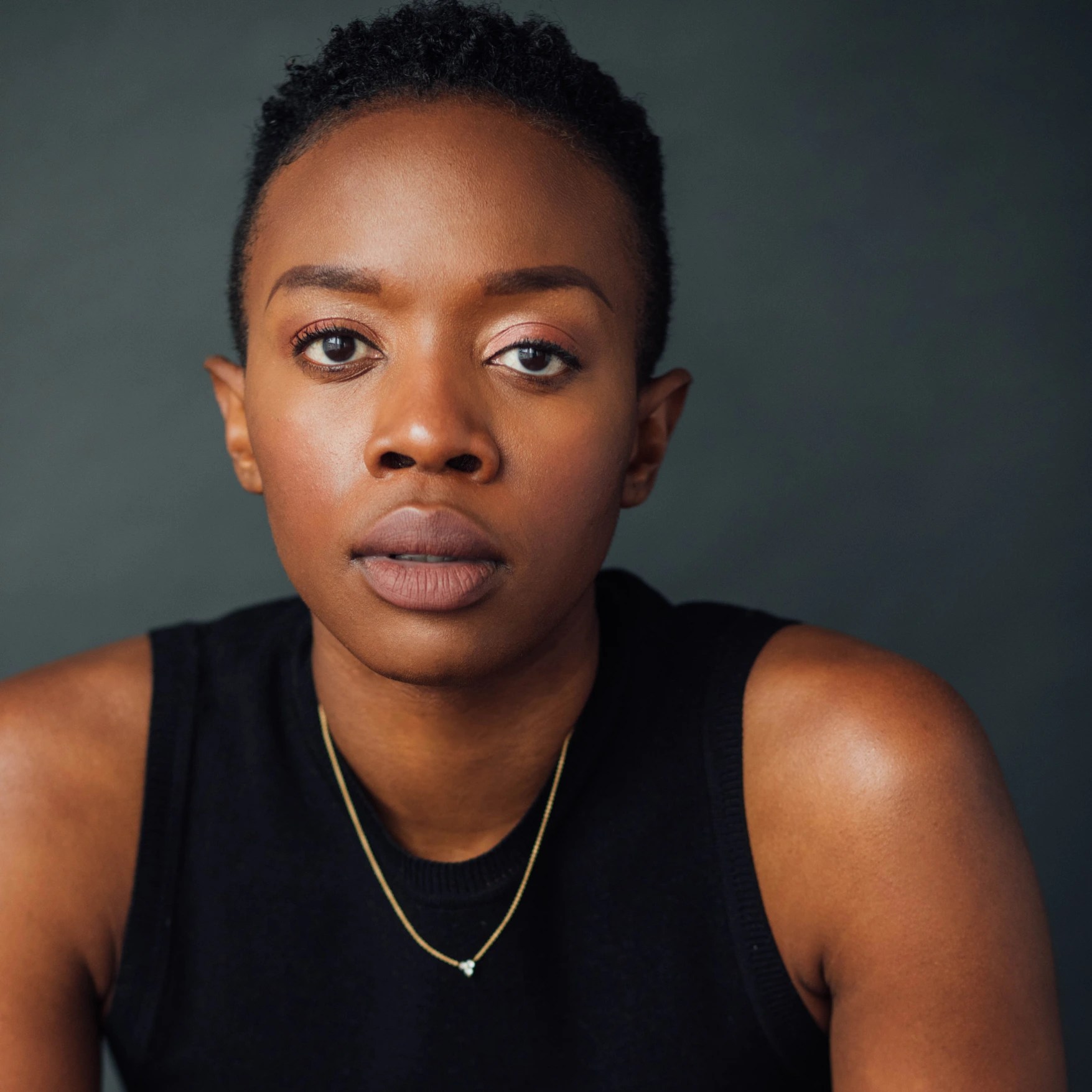
Alex Beley is our Carmen; a fame hungry wannabe Lady Gaga competing to win the singing competition/reality show Fast Times in Seville.
Alex Beley
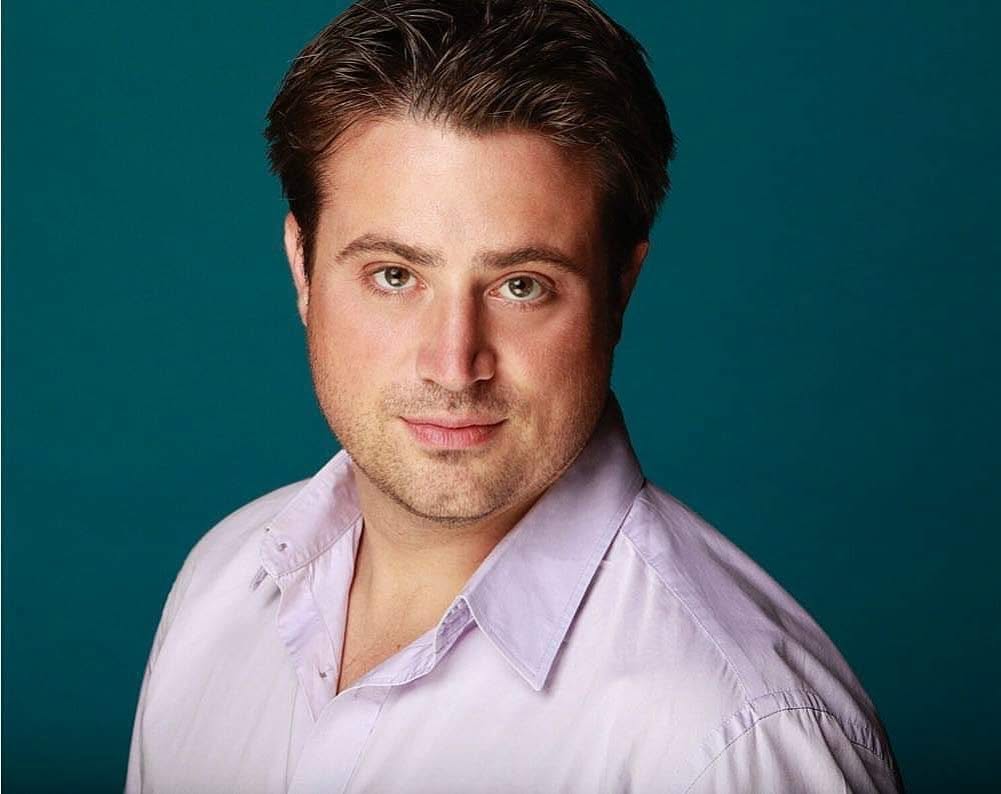
Adam Luther is our Don Jose; a risk taking producer on the show.
Adam Luther
Escamillo will be sung by Jonathan Kirby. Our Escamillo is competing to win and is a Harry Styles personality in this show.
Micaela will be a Christian country singer who wants to represent all that is good and decent…who is also a competitor in the show, portrayed by Angela Gjurichanin.
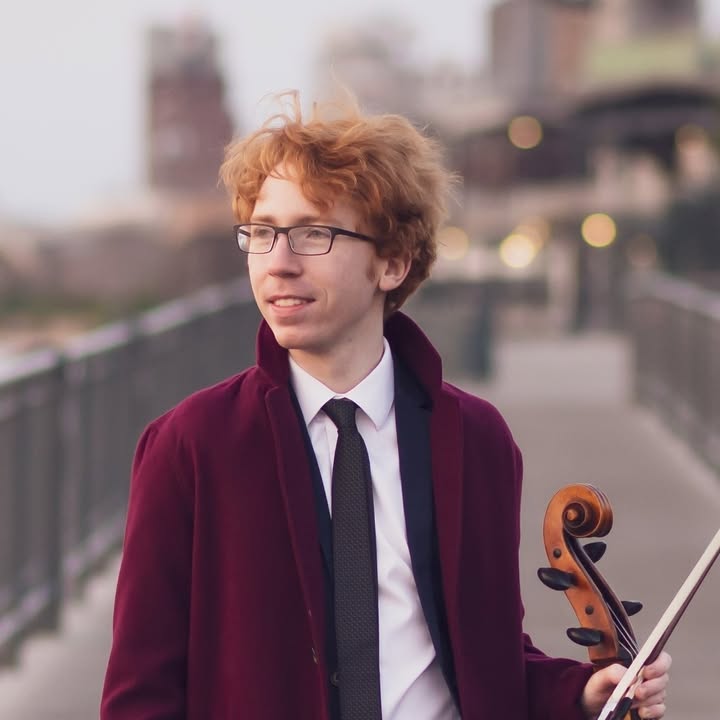
Remendado (Cameron Mazzei) and Dancaïro (Sebastian Belcourt) will be our camera and boom mic operators.
Frasquita(Daniella Agostino) and Mercedes(Anjelique Croteau) will be back up singers/dancers.
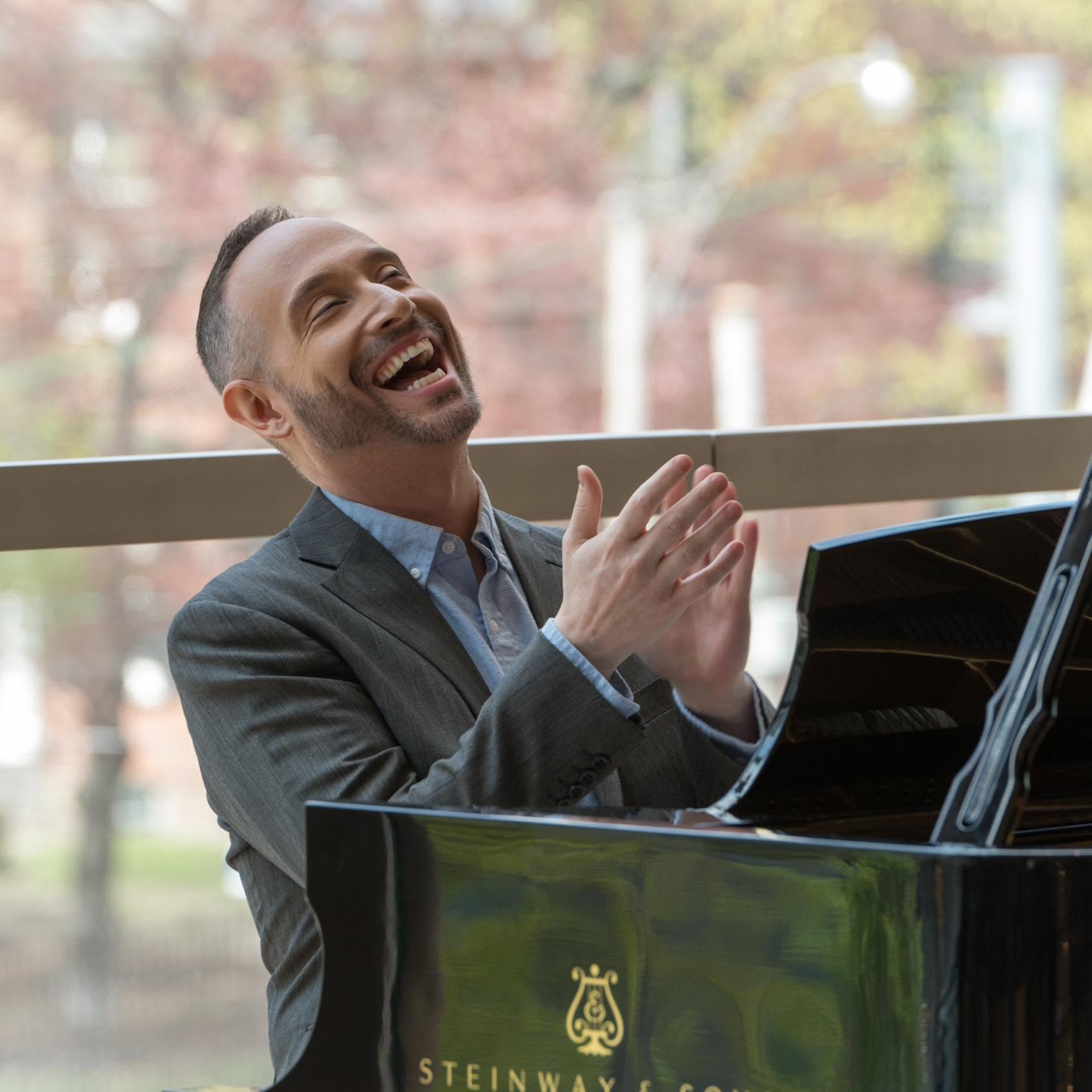
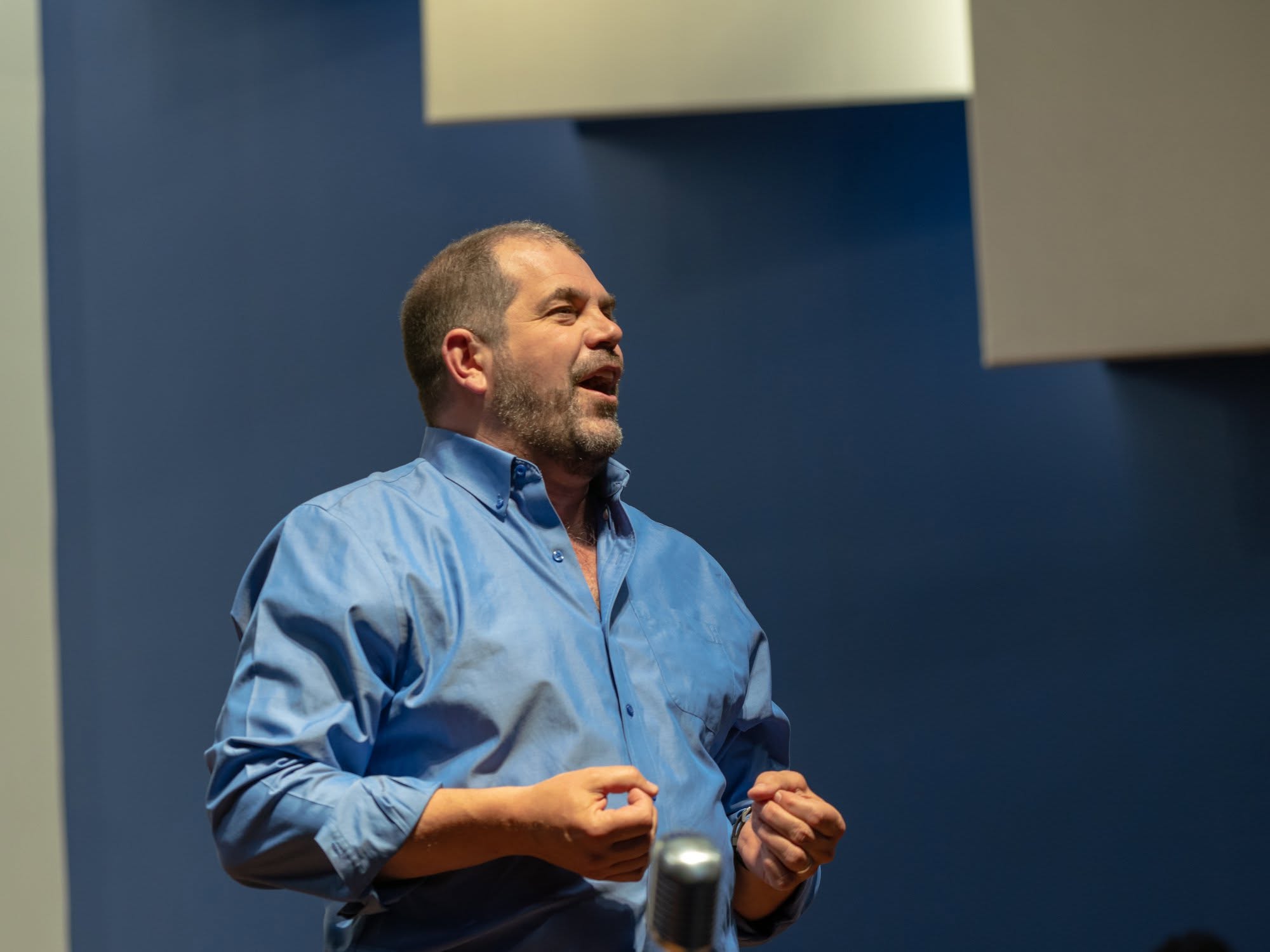
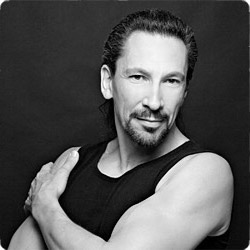
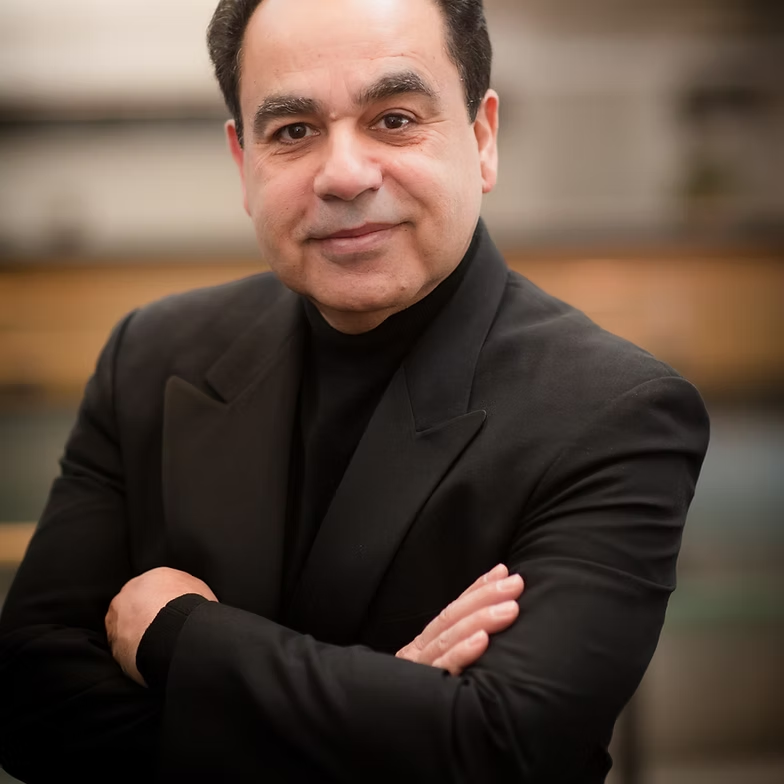
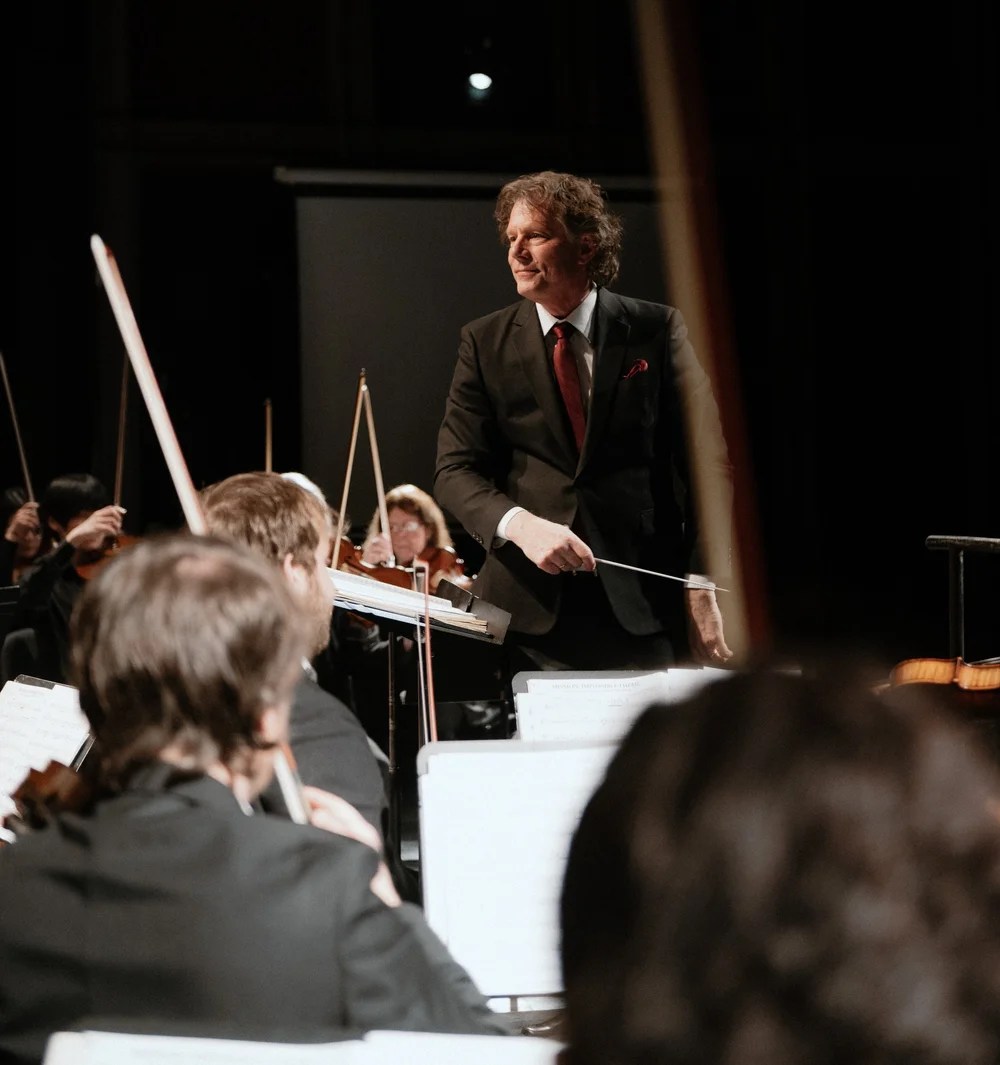
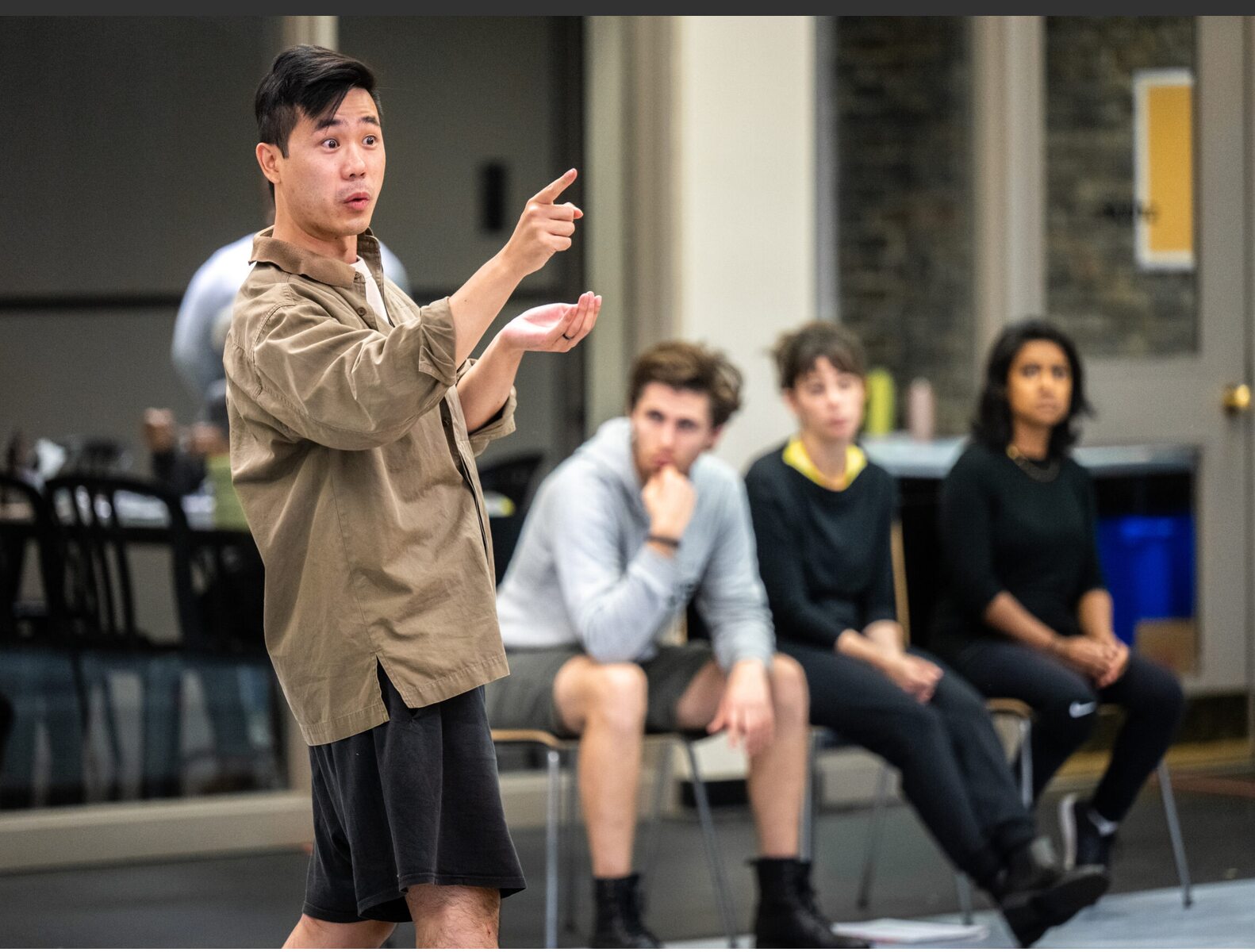
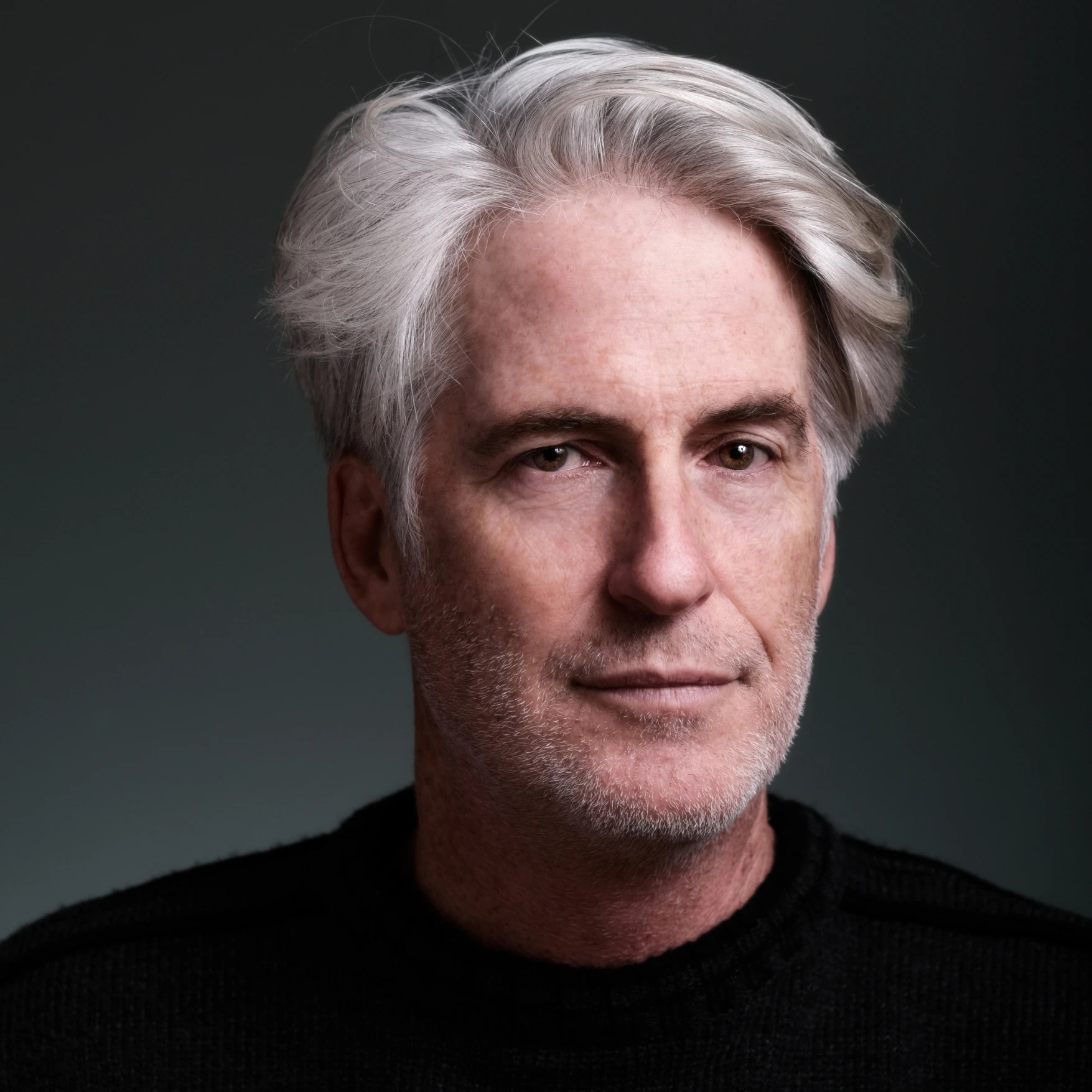
Ryan Hofman will be our version of Ryan Seacrest…
Ryan Hofman
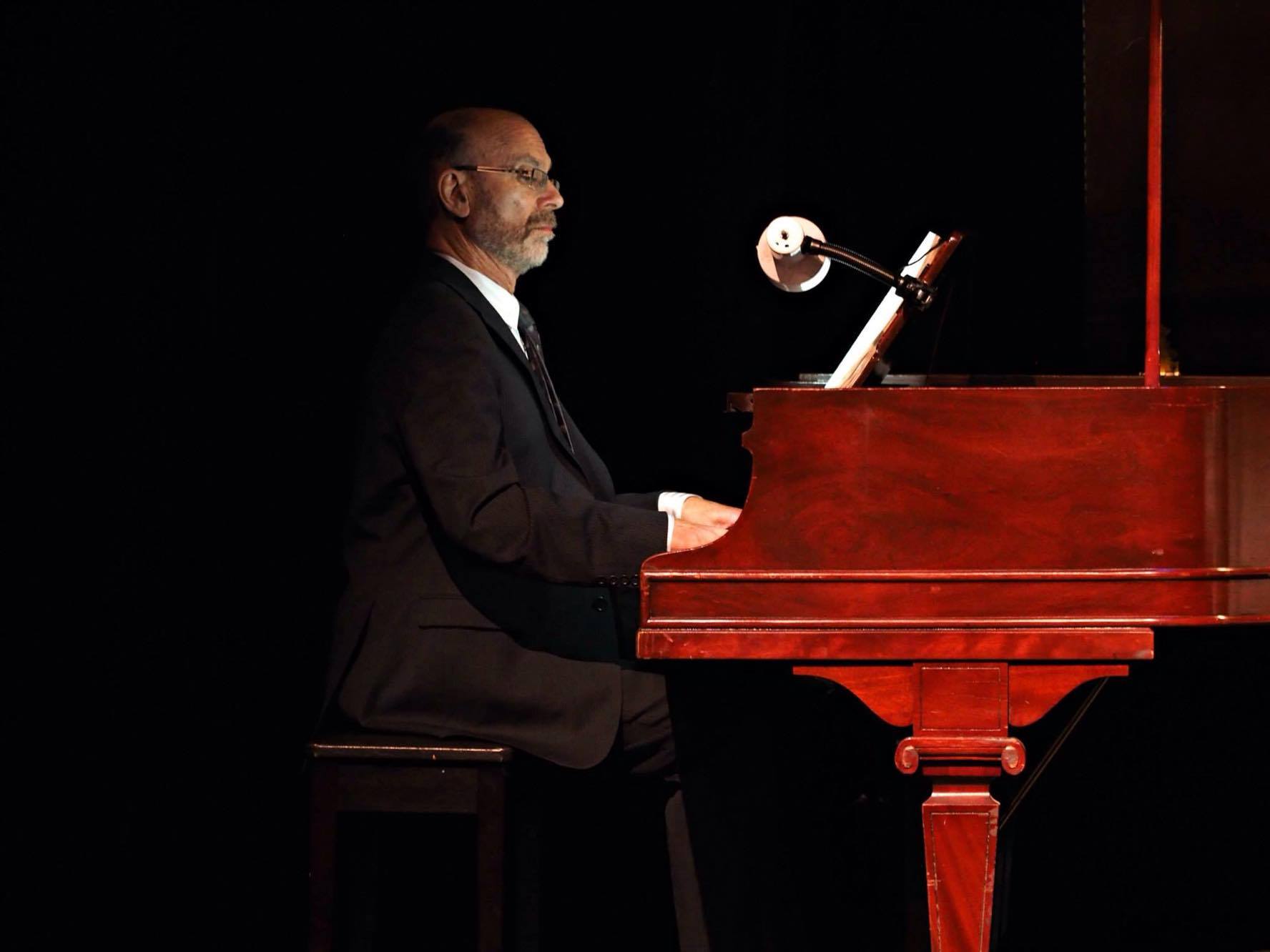
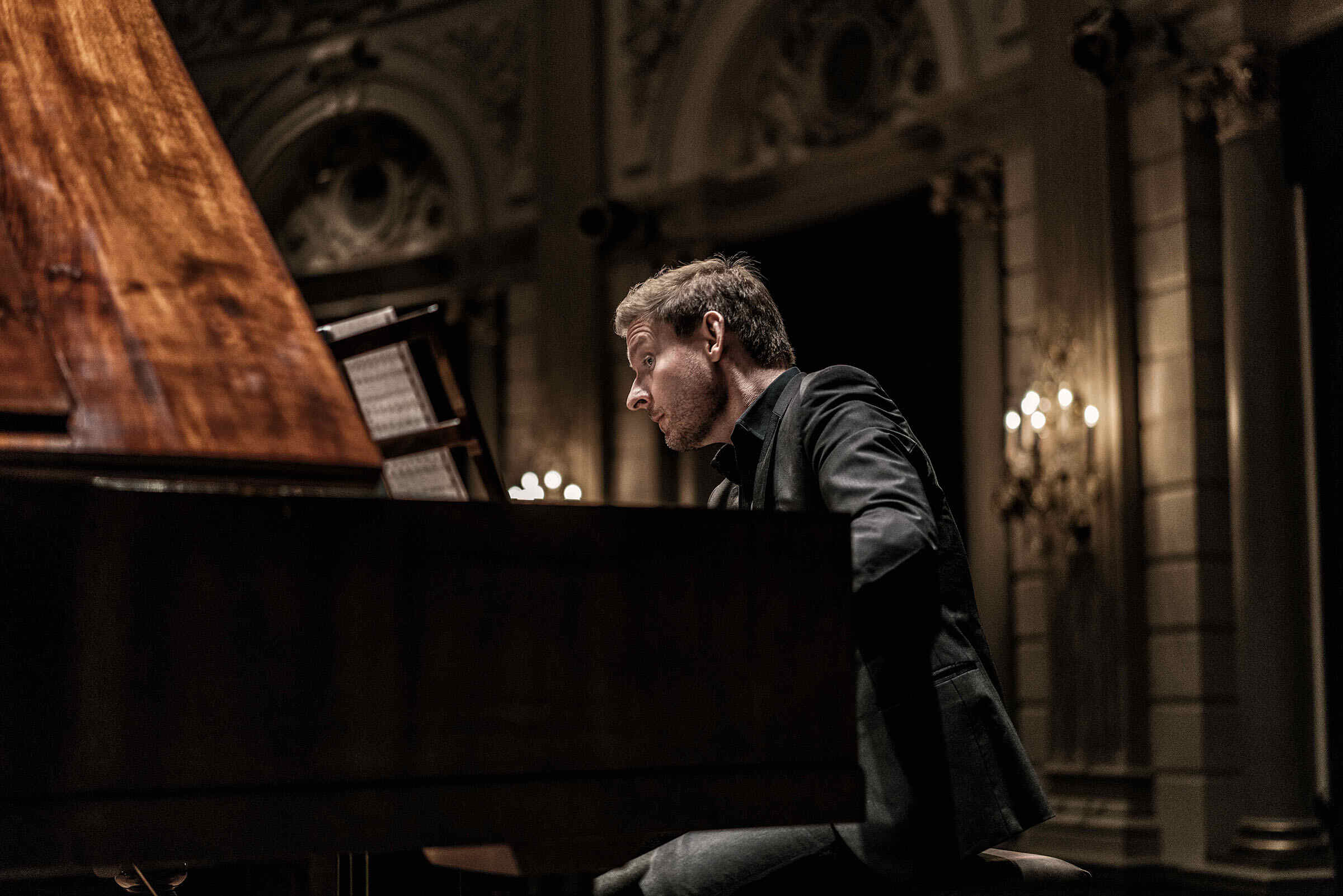
And Brahm Goldhamer will be our orchestra at the piano.
Brahm Goldhamer (photo: Karen Runge)
BB: November 14th you’re in Cursed in Mantua, singing Gilda. Tell us more about the show, its concept, who’s directing and so on.
Holly Chaplin: Cursed in Mantua was born out of the cast’s collective love of HBO’s The Sopranos. Think late ’90s/early 2000s New Jersey, with Mantua serving as our very own Bada Bing—the beloved local institution for drinks, entertainment, and escorts. We’ll have Narmina at the piano.
Narmina Afandiyeva
Holly Chaplin: And in a true mob-style power-sharing arrangement, we’re all directing this one!
Andrew Tees
Holly Chaplin: Our cast features Andrew Tees as Rigoletto, me as Gilda, Adam Luther as the Duke, Cameron Mazzei as Borsa, Sebastian Belcourt as Marullo, Luke Noftall as Monterone and Sparafucile, and Anjelique Croteau as Maddalena and Giovanna.
This will be my second time singing Rigoletto with Andrew, who always plays my brother/dad/friend in various Opera York productions. At this point, we’re practically family. He’s kinda awesome!
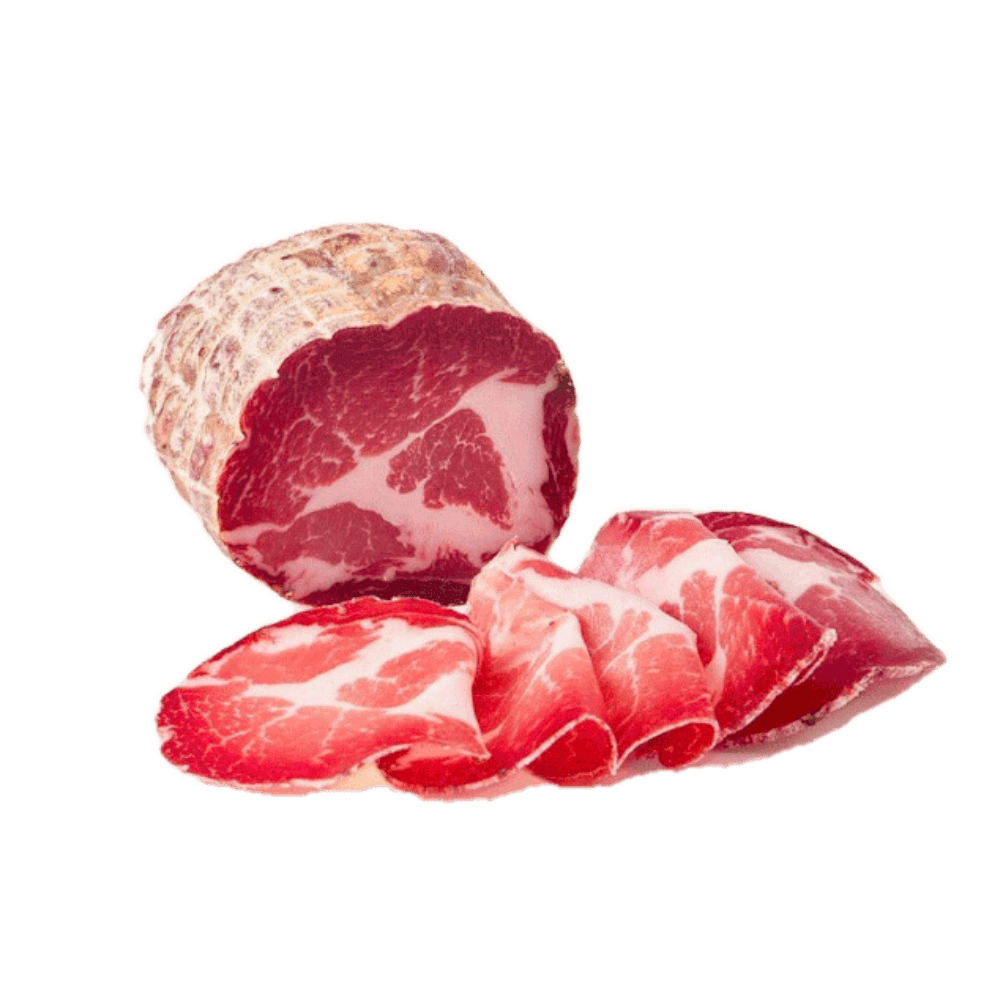
And we may or may not be serving gabagool.
BB: aha! Google tells me that’s capicola or capocollo. And a picture.
Hmm sounds delicious!
Holly Chaplin: Thank you for the opportunity to share these concepts with the world—and give everyone a little glimpse into what goes on in my head at 3 a.m.!
I’m so grateful to Toronto’s opera community, my dear colleagues, friends, and family. This art form is wack at the best of times, but the people I get to make it with, and the people who show up to experience it, make all the madness worthwhile. ❤️
Holly Chaplin
*****
Carmen and Rigoletto will be presented by Benevolence Opera Project at the Redwood Theatre November 13th & 14th. For tickets & information click here.
Watching Opera Atelier open their fall season at Koerner Hall Thursday October 22nd was a snapshot of their history in one impressive show.
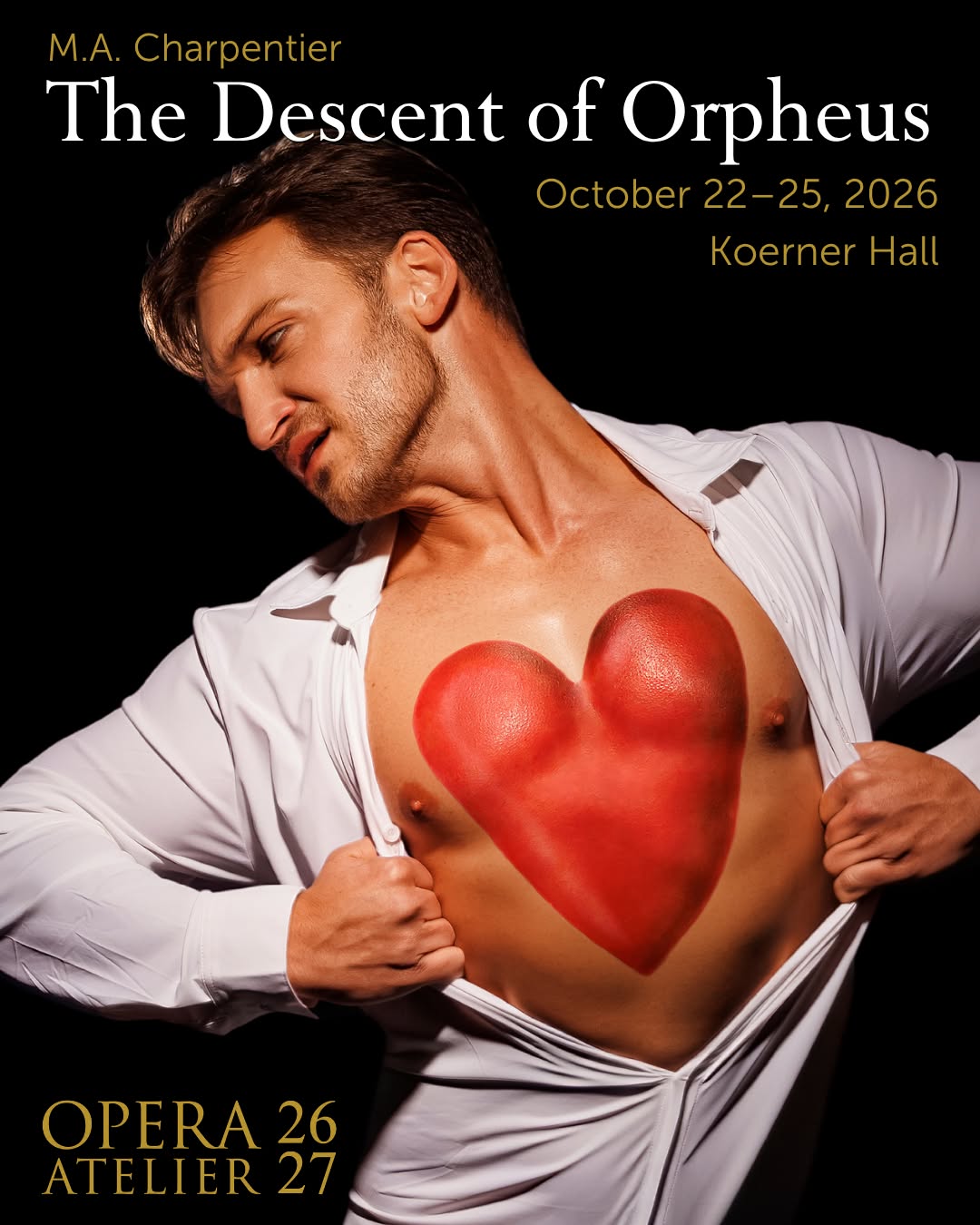
Their new production of Marc-Antoine Charpentier’s The Descent of Orpheus (1686), continues the company’s exploration of theatre freely mixing singing and dance.
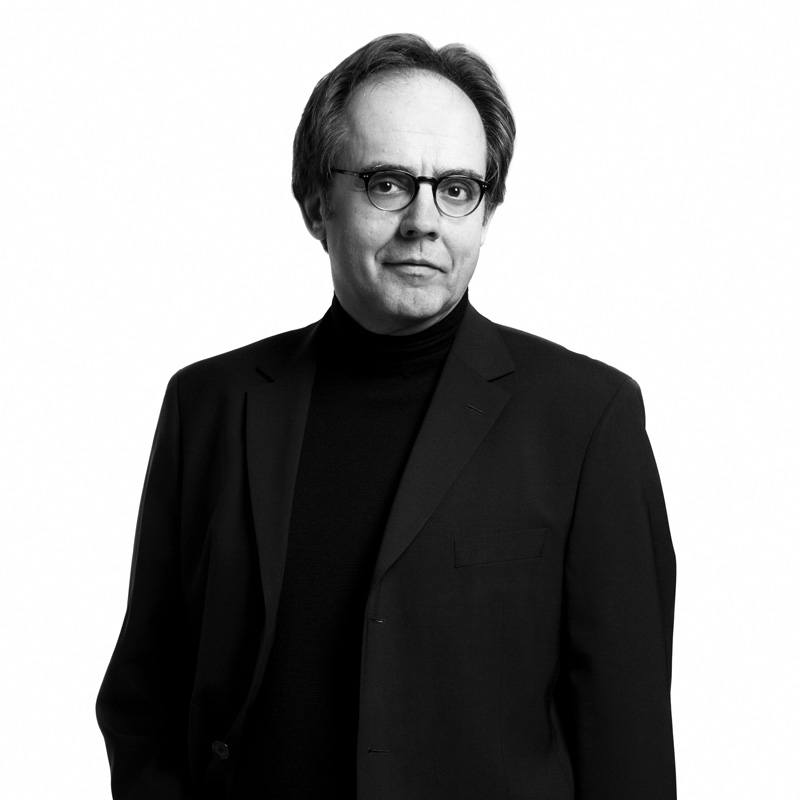
Marshall Pynkoski, co-artistic director of Opera Atelier
In his introductory remarks, Co-Artistic Director Marshall Pynkoski remarked on their “season of heroes” and the parallels between the two featured heroes in their season, namely Orpheus (in the Charpentier that’s on for the next few days) and Jesus Christ (in Handel’s Resurrection, coming in the spring of 2027).
I was wrong to mistake Marshall’s intro for a mere promotional sales-talk. Before long we would see an opera featuring a rather Christ-like version of Orpheus’s story. When placed alongside the July version we saw from Les Arts Florissants at Toronto Summer Music, we see that the Opera Atelier Orpheus chose to emphasize a truly redemptive reading.
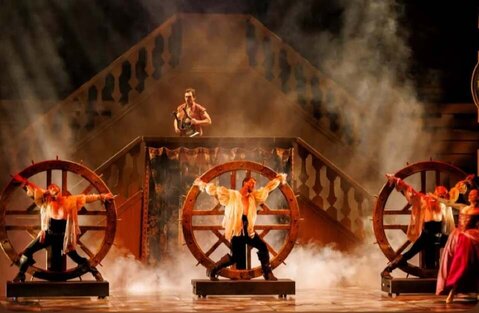
Ixion (Alexander Cappellazzo), Tantalus (Christopher Dunham) and Tityos (Olivier Bergeron) attached to torture wheels, Orpheus (Daniel McGrew) observing from upstage (Photo: Bruce Zinger)
After intermission, to begin the second act we see three torture wheels with Ixion (Alexander Cappellazzo), Tantalus (Christopher Dunham) and Tityos (Olivier Bergeron) attached, as Orpheus (Daniel McGrew) arrives in the underworld. They are not just comforted by Orpheus’s singing, but then rescued, released from torment in an action that reminds me of Jesus’s harrowing of hell. I wouldn’t be surprised if that’s how Charpentier saw it. Opera Atelier’s emphasis contrasts William Christie’s more pagan reading in July with Les Arts Florissants.
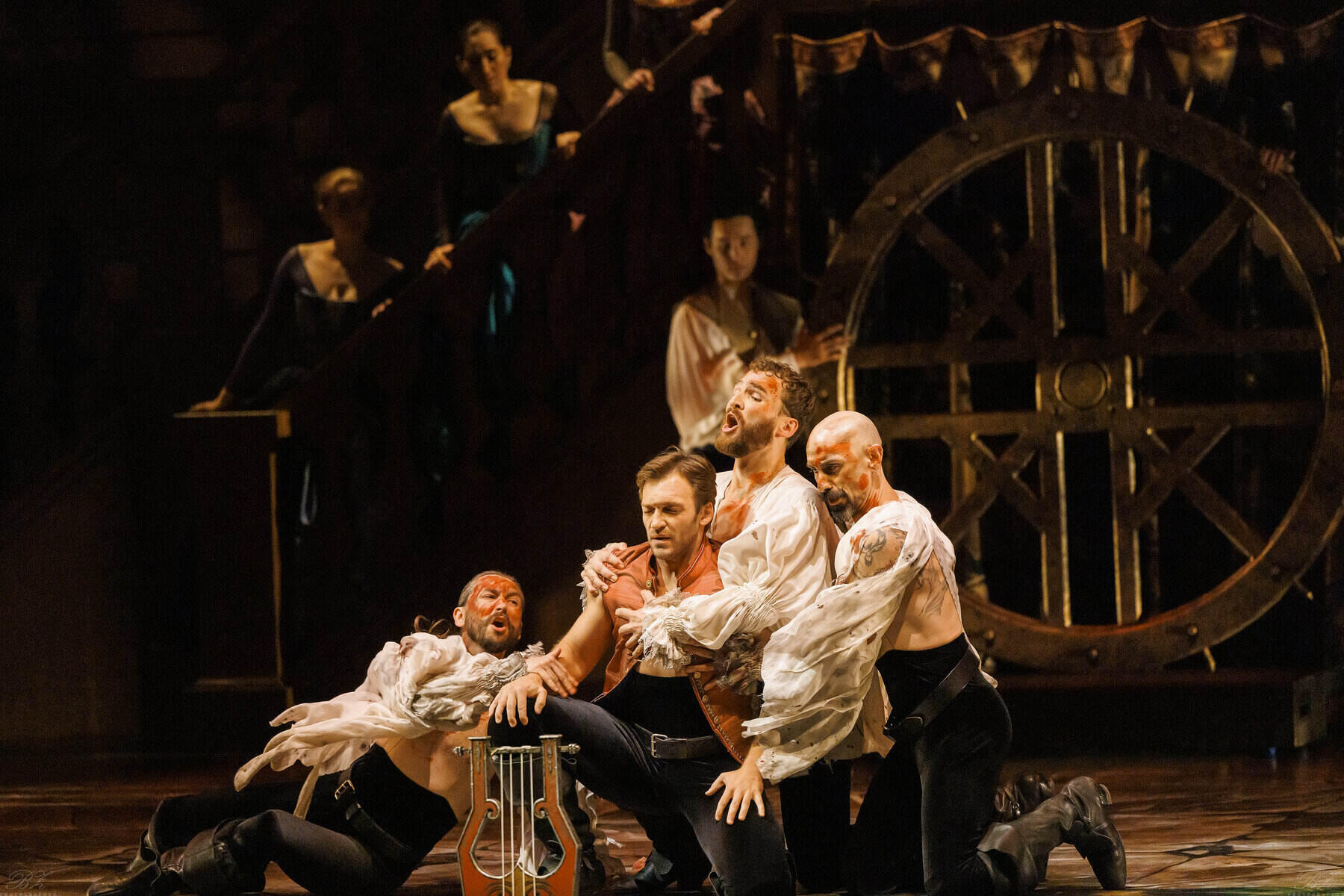
Ixion (Alexander Cappellazzo), Tantalus (Christopher Dunham) and Tityos (Olivier Bergeron) released from torture wheels, Orpheus (Daniel McGrew) embraced by the grateful trio (Photo: Bruce Zinger)
The story in Charpentier’s treatment differs substantially from what we see in the better known Gluck – Calzabigi Orfeo ed Euridice. Where Gluck shows us a musician inspired by suffering & grief to write songs, the operatic experience emphasizing his music-making, the chief drama in the underworld after the three tormented ones are released from their wheel is between Orpheus and the gods of the underworld, namely Pluto(David Witczak) & Persephone(Mireille Lebel).
Orpheus (Daniel McGrew) and Persephone (Mireille Lebel, Photo: Bruce Zinger)
Persephone is so moved by Orpheus, won over observing the grief of the singer, that she then demands clemency from husband Pluto, who ostentatiously submits to her, and frees Eurydice. I felt that Marshall gave this more dignity than the somewhat comical reading we saw & heard in July from Les Arts Florissants. Perhaps Pluto was written with comedic overtones, but Marshall kept the focus on the romantic story, on Persephone’s passionate response to Orpheus’ plight, and then the drama of the revival and return of Eurydice (Mireille Asselin) from death. I love the way they chose to stage this.
So much of our opening night experience at Koerner Hall was governed by a beautiful set design by Gerard Gauci, putting the eight-member chamber ensemble into a pit created in the stage, bounded in front by a small catwalk or passerelle (excuse me as I try to find the right term for this part of the stage design). The players were invisible in this space, the acoustic clarity remarkable. I wanted to include this somewhat silly sequence of three photos with a musician descending into the pit because you can’t see the pit & catwalk in the publicity photos.
The production did not make much use of that passage at the front of the stage, but I am guessing that Marshall will find ways to exploit the intimacy it might afford in some future show. It would be a great place to put a comic figure delivering a prologue or making asides directly at the audience.
Alongside Marshall’s input on the direction and from co-Artistic director Jeannette Lajeunesse Zingg for the elaborate choreography throughout the program, I want to mention Christopher Bagan’s conducting. He also created a prologue in his arrangement of a Ralph Vaughan Williams song “Orpheus with his lyre” for the baroque-sounding ensemble that he led in the opera, sung by Measha Brueggergosman-Lee. As with the reduced version of Pelléas et Mélisande that Christopher premiered earlier this year that included baroque selections alongside Debussy, Opera Atelier again combined compositions from different centuries into a single musical score for their presentation. I’m glad to see that Marshall, Jeannette, Christopher & the company seem to be embracing their creativity without letting questions of historicity terrorize them.
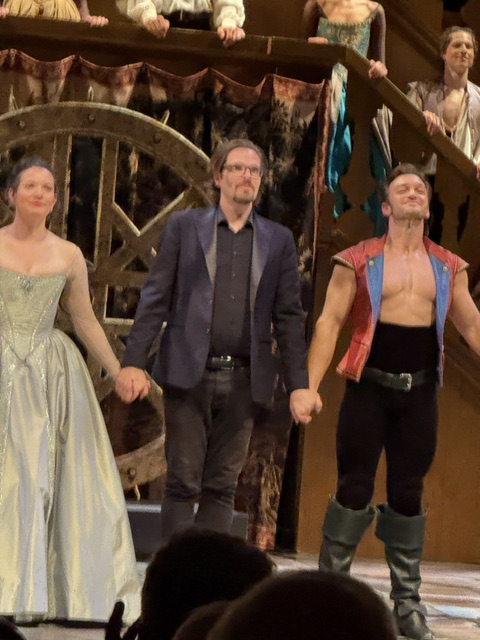
Mireille Asselin, Christopher Bagan & Daniel McGrew accepting applause afterwards
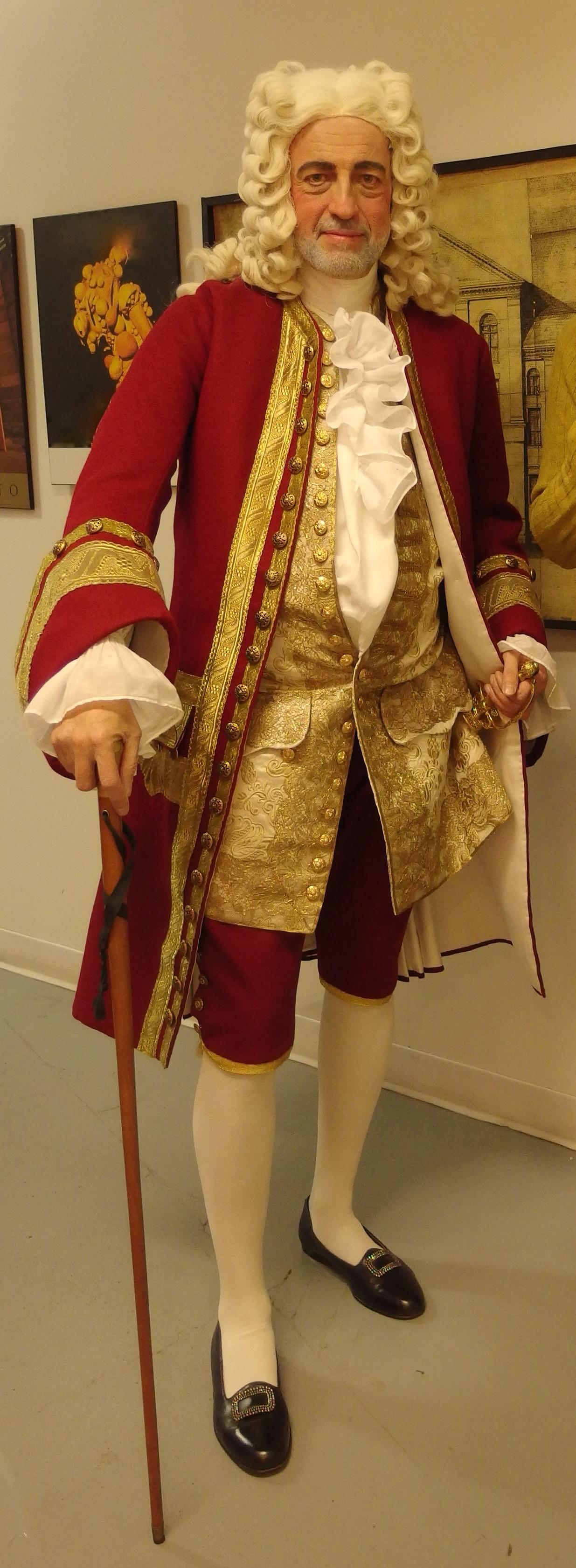
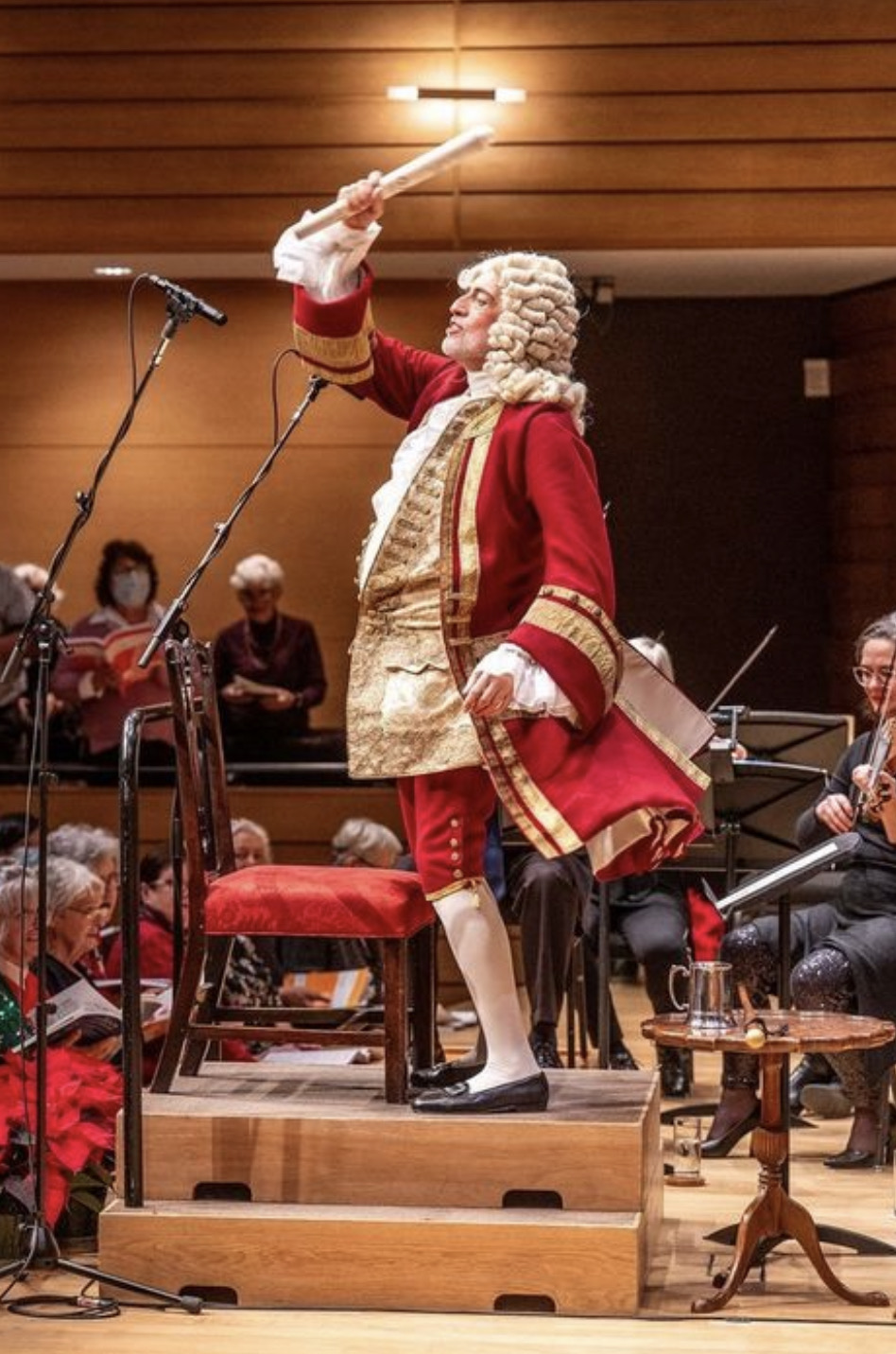
I bask in the reflected glory of interview subjects. If they look good I look good, and that’s especially true when they’re showing their brilliance in this space. One of the most enjoyable interviews I ever did was with George Frideric Handel in 2017. Yes of course, that’s a theatrical persona.
Ivars Taurins as George Frideric Handel
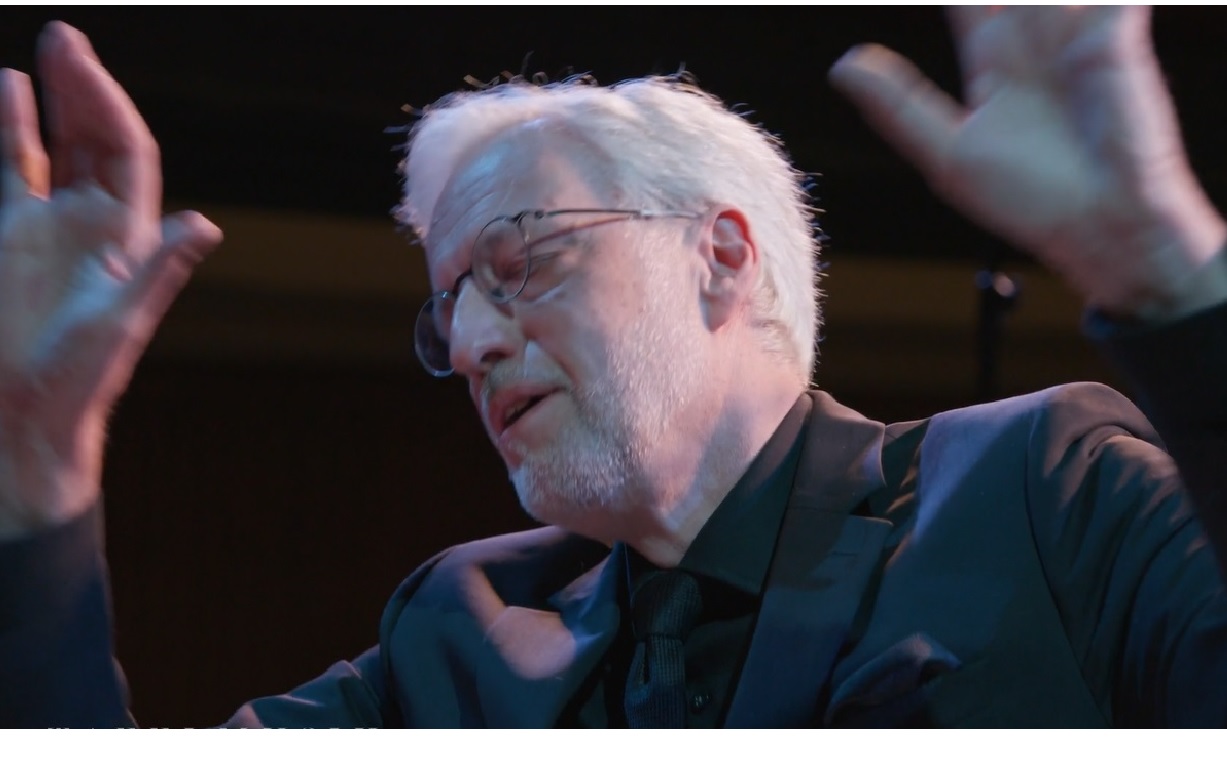
I just realized I am now about to interview someone whose alter ego was already interviewed. But when Ivars is conducting –with or without the costume– he seems inspired, imbued with the spirit of another century, and dare I say it, seems to be filled with the spirit of the composer.
I feel especially privileged to have the opportunity to interview Ivars this time, even if you might say “but you already interviewed him!” Yes & no. This time I wanted to ask Ivars (not George Frideric) about the TafelmusikconcertprogramVivela France! upcoming Nov 27-29…and lots more.
Ivars Taurins (photo: Dahlia Katz)
Barczablog – Are you more like your father or your mother?
Ivars Taurins: As they say, a bit of both.
I got my artistic talents, attention to detail, interest in fine tailoring and sartorial elegance, and love of history from my father (as well as some of his grumpiness). It was the music of his LPs of Rubinstein (Rachmaninoff) and Horowitz (Chopin) that were my introduction to classical music. In addition, my mother’s numerous records of Harry Belafonte, as well as the golden voices of Ella Fitzgerald, Billy Eckstein, Sarah Vaughan, Nat King Cole, Judy Garland, Frank Sinatra, Tony Bennett, and Barbra Streisand regularly filled our house.
These early influences opened the world of vocal music to me, and the revelation of a singer’s abilities to illuminate words through their vocal artistry. Later, in my teens, this was reinforced through the works of Schumann and Schubert, Vaughan Williams and Britten, sung by Dietrich Fischer-Dieskau, Elly Ameling, and Robert Tear. And then I discovered Brahms and Mahler!!
From my mother comes my love of the performing arts – she lived for music, theatre, ballet, and especially the cinema. She took me to Massey Hall to hear all the great artists of the time when I was a child: Rubinstein, Horowitz, Ashkenazy, Segovia, Barenboim and du Pré. She introduced me to ballet (Nureyev & Fontaine, Baryshnikov & Makarova, Kain & Augustin), and Broadway musicals (Camelot, Showboat, The King & I), all at the splendid, elegant O’Keefe Centre (aka Hummingbird/Sony Centre/Meridian Hall).
The O’Keefe Centre had its own orchestra from 1960-87, under the direction of William McCauley. Mirroring Leonard Benstein’s legendary Young People’s Concerts, McCauley presented his own young people’s concerts, to which my mother took me.
And so began my fascination with conductors and conducting, and the magical sounds of a symphony orchestra. The rest is history….
Ivars Taurins (photo: Sian Richards)
BB – What is the best thing about what you do?
Ivars Taurins: Sharing my passion for music with others, whether it’s with my choir, or guest conducting, or in my teaching. Being part of Tafelmusik from its beginnings over 45 years ago until today has been remarkable: seeing many corners of the world, experiencing other cultures, and making music with so many inspirational musicians – and sharing that life-experience with my wife, Charlotte Nediger, who has also been such an integral part of Tafelmusik over these many years.
Charlotte Nediger (photo: Dahlia Katz)
The Tafelmusik Chamber Choir has enabled me to fulfill my desire to explore the passion I have for words and music, and how to actually create the magic that I experienced as a child and in my youth.
BB –What ability or skill do you wish you had, that you don’t have?
Ivars Taurins: I wish I had learned other languages more fully… I get by with what I have (learned over the years through the requirements of being a musician: working with texts, touring around the world, reading treatises in their original languages, and working with European colleagues), but I am in awe of colleagues who can carry a conversation or do an in-depth interview with linguistic fluidity and grace in a number of other languages.
BB –When you’re just relaxing and not working, what is your favourite thing to do?
Ivars Taurins: I have so many other interests outside of music that I only can find time to dabble in them. I think when I’m past being functional as a musician, I will be very content dabbling and puttering around with my numerous non-musical interests. When I do get the opportunity, birdwatching is such a calming, restorative pastime. Being in nature puts everything into proper perspective.
If I had another life, I’d want to devote it to some sort of creative work in museums, or decorative arts, restoration work, historical costumes, curatorial work….
BB: What was your first melody that you remember?
Ivars Taurins: That would be my mother singing me to sleep with the Latvian lullaby “Aijā žūžū lāča bērni” (Hush-a bye, little bear cubs)
Every Latvian knows this lullaby!
BB: Dogs or cats?
Ivars Taurins: If I must, dogs.
BB: Paper scores or digital?
Ivars Taurins: ALWAYS Paper! How can one conduct from a tablet that shows only one page of the score at a time!
BB: Bach or Handel?
Ivars Taurins: Both. Bach for the astonishing complexity and number of layers one finds in his music, even when it sounds deceptively “straightforward” (the monumental opening chorus of Cantata 77, “Du sollt Gott, deinen Herren, lieben”, is a mind-boggling example with its hidden musical, theological, and numerological messages woven into the score).
And Handel for his ability in his operas and oratorios to plumb the depths and inner workings of the human psyche purely through music, often using the simplest of means (the aria “Scherza infida” from Ariodante, for example).
But then, on another day, the music of Purcell or Monteverdi or Charpentier or Rameau will just stop me dead in my tracks.
Ivars Taurins leading Tafelmusik (photo: Dahlia Katz)
BB: Do you have a favourite piece?
Ivars Taurins: There are too many to choose just a single piece (see above). It depends so much on my mood, or the situation. It can sometimes be something I haven’t heard in years, that, like a certain fragrance or smell or taste, becomes a portkey to another place and another time. I hadn’t heard Richard Strauss’ Metamorphosen for 23 solo strings in decades, and when I heard its elegiac strains again it shattered me. Brahms and Mahler do that to me as well, because in my daily (rather hectic) life I don’t listen to the recordings I used to devour as a teenager and young adult. So when the opportunity arises to hear a piece again live at a concert (Mahler 3 with Iván Fischer and the Budapest Festival Orchestra recently) it can be so beautifully overwhelming.
BB: Whohasinfluenced you in your work as a musician and conductor?
Ivars Taurins: Nikolaus Harnoncourt and Carlos Kleiber, both sadly departed. They were both filled with the fire of music, and with an understanding of its potency, purpose, and deep spirituality. They breathed it – and its expression was made manifest through their remarkable communicative powers. To watch Carlos Kleiber, for example, in the rehearsal film-clip of him directing the ‘Liebestod’ from Wagner’s Tristan undIsolde, or conducting Beethoven’s 7th symphony with the Royal Concertgebouw Orchestra leaves me gobsmacked; or to experience Harnoncourt rehearsing the Beethoven symphonies…! These are remarkable lessons in music-making. Kleiber’s passionate, sweeping, balletic conducting style is in sharp contrast to Harnoncourt’s visceral, intense, raw energy (and those searing eyes!).
Conductor Ivars Taurins
BB: I would say you have a unique approach to conducting (Ilike it please note). If you were asked to describe how you approach conducting, how would you describe it?
Ivars Taurins: I jokingly refer to my style as being of the Fred Astaire – Bugs Bunny School of Conducting. Music critic William Littler early on described my style on the podium as being reminiscent of an orangutan on Benzedrine. Perhaps it lies somewhere in between the two.
As a child I watched Bernstein’s Young People’s Concerts on the television, as well as broadcasts of Karajan. Later, when I began to attend Toronto Symphony concerts, I had the good fortune to observe Seiji Ozawa, Karl Ančerl, and Sir Andrew Davis in action, and studied how their particular gestures and individual styles influenced the orchestra. My first real conducting lessons were with the late Simon Streatfeild during my years at Western University. He had a huge influence on me, and encouraged me to pursue my budding interest in period instruments and “early music”, as well as helping me hone my technical and gestural skills as a conductor.
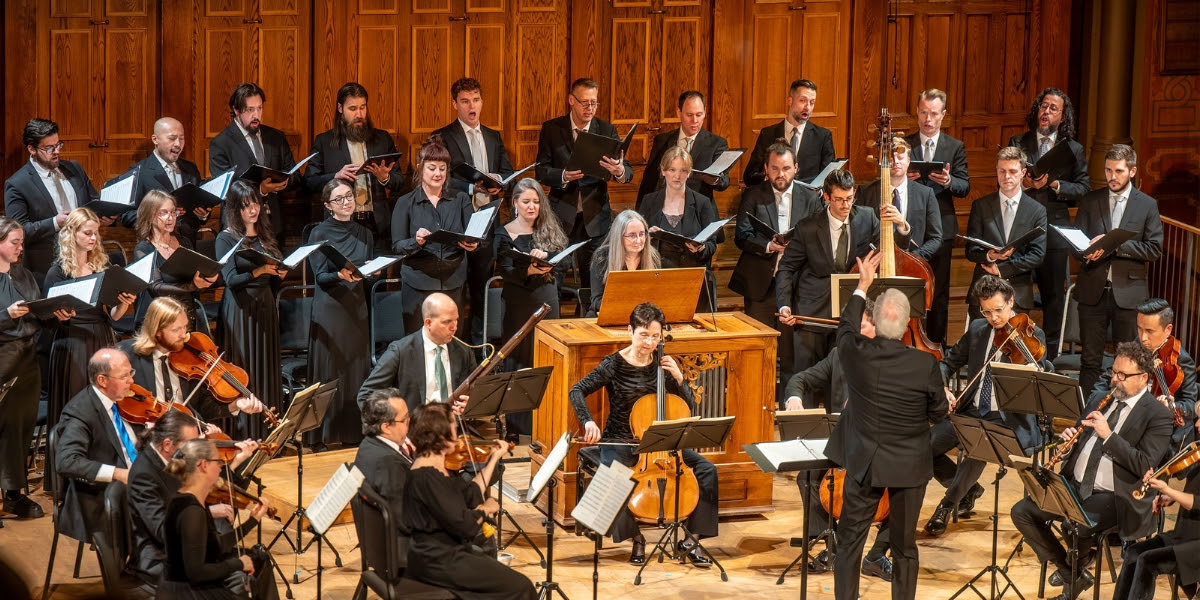
Tafelmusik, led by Ivars Taurins (photo: Dahlia Katz)
BB: Is there a difference in how you approach conducting an orchestra and a chorus?
Ivars Taurins: Not really… both deal with creating sound from an ensemble, and my role is to help them explore and discover the possibilities of colour, texture, articulation, and phrasing and above all emotion within a given piece.
BB:Please tell us about the upcomingTafelmusikconcertprogramVivela France! upcoming Nov 27-29.
Ivars Taurins: The Tafelmusik Chamber Choir celebrates its 45th anniversary this season, and we are in the midst of rehearsals for the choir’s first programme of the season – a celebration of the French baroque composers both well-known (Rameau, Lully, Charpentier) and less so (Campra, Lalande, Desmarest, Bembo, and Mondonville).
BB: The description of the Nov 27th concert “Vivela France” says “No one embraced choral music more exuberantly than the French in the 17th and 18th centuries, not only in the church, but also in the opera theatre and the concert hall.“ Could you please elaborate on that statement?
Ivars Taurins: British music historian and writer Charles Burney noted after a performance in Paris by the Concert Spirituel in 1770:
“I plainly saw, by the smiles of ineffable satisfaction in the countenance of the company, and heard by the most violent applause a ravished audience could bestow, that it was quite what their hearts felt, and their souls loved. C’estsuperbe! was echoed from one to the other through the whole house”.
The French baroque composers and their audiences revelled in choral music. More than anywhere else in continental Europe, the chorus was given a prominent role, whether in the opera theatre, church, or concert hall. Besides glorious Mass settings or Requiems, The Grand Motet became the centrepiece of choral expression, and the motets of the great 17th c. French composers were celebrated at the ConcertSpirituel, the first public concert series created in Europe. Founded in 1725, it ran for 65 years, with two to three dozen concerts a season. Many popular works would be repeated within the same season, as well as new motets being premiered.
BB: In December you’re conducting Messiah, including theSing-along, for the umpteenth time. Please share how you make it seem so fresh every year.
Ivars Taurins: One doesn’t get bored with a masterpiece like Handel’s Messiah. Nor does it grow stale. I liken it to revisiting a favourite painting in a gallery – there is always something new to admire and to discover. The more one studies and delves into a composer’s oeuvre, the more it influences how one approaches a particular work.
And then there is the added factor of working with a different cast of soloists each year, who add their own creative ingredients to the wonderful recipe that Handel has gifted us with.
And the third factor for me is the electricity of live performance, and the audience’s reactions to what is musically and dramatically unfolding before them.
BB: Do you have any suggestions as to how to prepare for theSing–along?
Ivars Taurins: My suggestions: dust off and study your score, listen to the choruses you’ll be singing (preferably using Tafelmusik’s recording!). Consider throwing a Sing-along prep party, where, together with good food and drink, you can try to tackle the choruses en masse. On the auspicious day, have a good lunch ahead of the show, preferably surrounded by family and friends, and upon arrival at Massey Hall find a good spot… you don’t necessarily need to stick to the rule of singing in your voice section if you wish to stay as a group. And above all let the glorious music envelop you in a cathartic embrace!
BB: Seems appropriate to insert one of my favourites...conducted by yourself of course.
BB: What’s next for you this season?
Ivars Taurins: In the new year, I will be preparing the Tafelmusik Chamber Choir for Bach’s St. John Passion, guest directed by Kristian Bezuidenhout.
Kristian Bezuidenhout (Photo: Marco Borggreve)
Finally, the choir’s season will culminate in performances of Purcell’s King Arthur, with renowned Canadian actor R.H. Thomson as narrator.
RH Thompson
Outside of Tafelmusik, this November I travel to Kelowna B. C., to guest direct the Okanagan Symphony in a program entitled “A Musical Grand Tour”, featuring baroque music of Germany, England, Italy and France. Then in December I fly to Winnipeg to direct the WSO’s Messiah, before heading back to once again direct Tafelmusik’s Messiah.
BB: Is there any piece you wish you could conduct?
Ivars Taurins: Brahms: Ein deutsches Requiem. I was immediately drawn to the work when in high school we performed two of the choruses from it:
“Wie lieblich sind deine Wohnungen” (How lovely are thy dwelling places), and “Denn alles Fleisch, es ist wie Gras” (For all flesh is as grass).
Sidebar: Those pieces, and Brahms’ Second Symphony, which we also performed at North Toronto Collegiate, were my first introductions to his music.
If the opportunity arose, and as I’m now in the eighth decade of my life, it would be a lovely circle to close.
*****
November 27th – 29th Ivars Taurins leads the Tafelmusik Baroque Orchestra and Chamber Choir in a concert program titled Vive La France! Click here for further information & tickets.
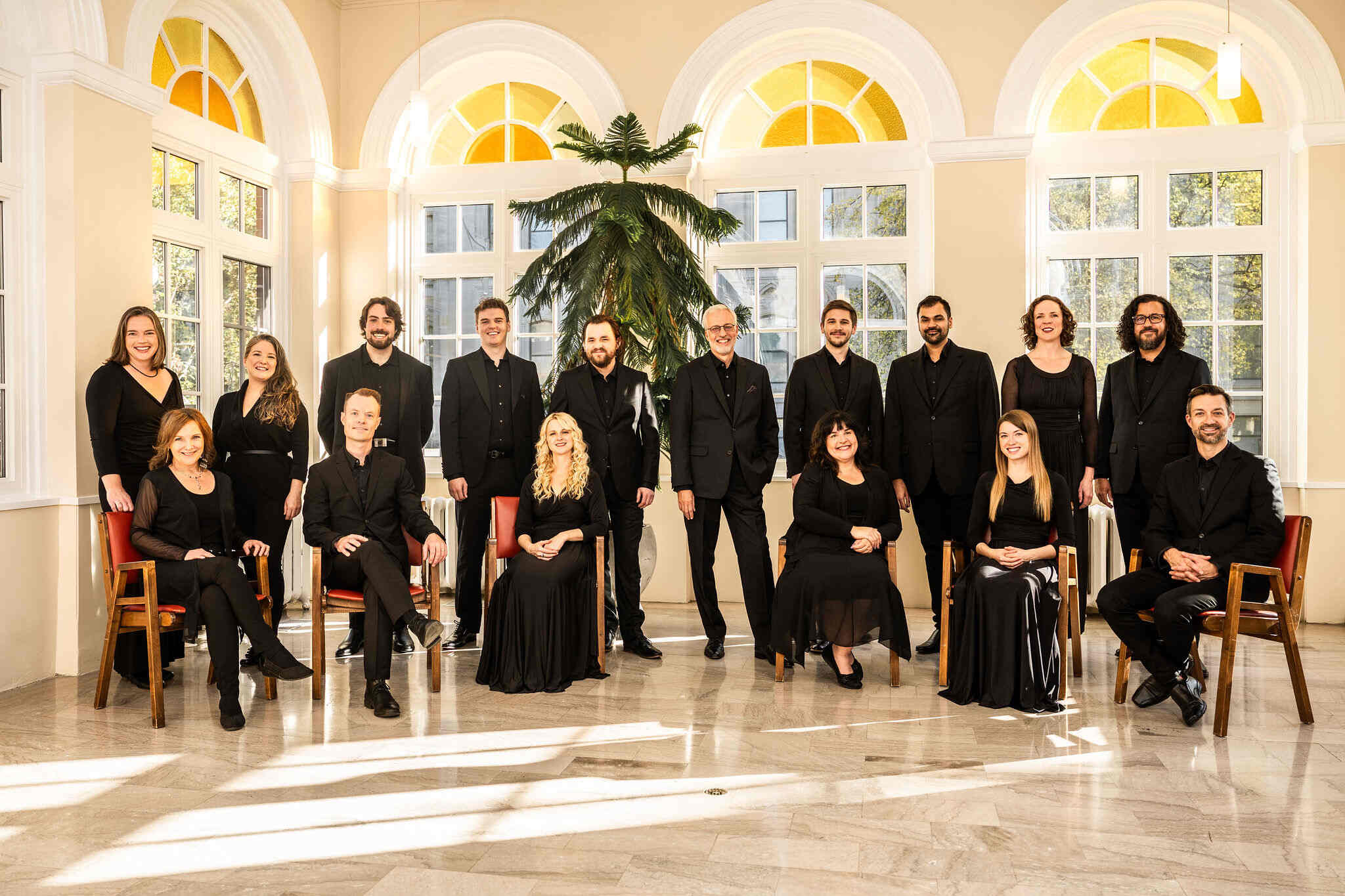
Tafelmusik Chamber Choir, Ivars Taurins Director (photo: Dahlia Katz)
I was glad to see the final show in the Canadian Opera Company’s fall run of La Traviata Saturday afternoon October 17th, a chance to hear the trio of principals (soprano Kathryn Lewek, tenor Long Long & baritone Russell Braun) who sang opening night and for seven of the ten performances.
Violetta (Kathryn Lewek) & Alfredo (Long Long, photo: Michael Cooper) in the Canadian Opera Company’s 2026 production of La Traviata
I was intrigued by the apparent contrast between the two casts as seen at a few key moments. I previously reviewed the alternate cast who sang 3 shows. The headline is another way of framing the “A” cast’s approach to the challenges of Verdi’s roles, and an attempt to keep things positive. Opera as a medium is sometimes understood as musical, sometimes as drama given that it’s a hybrid of words & music onstage. Singers are sometimes understood as beings who live to impress you with their voices, even as the form calls for music & drama. There are several ways to reconcile the two sides of opera, the words & music, the drama & the singing. The “A” cast were the more impressive, the showy singers whose high notes drew explosions of approval from the audience. This time it was the music that drew us and excited us.
I really love to see the final performance of a run of operas, when the cast are working together like a well-oiled machine, when their objectives are crystal clear. I thought I saw a few things that are worth sharing at least as a historian if not in a spirit of judgment.
Kathryn Lewek sings Violetta with a great deal of authority, a true diva. I say that while recognizing that the word is a bit of a double-edged sword in its connotation of egotism. I’m calling attention to a bold approach to entries after pauses, taking a second or two longer than one might have expected, adding a bit of extra drama. In the final act duet “Parigi o cara” the second verse, sung by the soprano, had Kathryn forcing the conductor to adjust his tempo to her slower reading. It’s a simple square melody that we’ve just heard from the tenor, so her change was surprising. But the main thing I felt was of a confident singer who expected to be accompanied, very much a traditional approach to the relationship between the soloist and the accompaniment. She knew what she was doing and showed us, boldly hitting her high notes throughout the opera.
Long Long is a tenor with a brilliant technique who reminds me a bit of Jussi Björling. It’s not that they sound the same, but they both had a tendency to be a wee bit sharp at times, especially when they’re singing at the top of their vocal range. The reliability of his instrument, his intelligent approach is what I want to observe, especially as I waited for the inevitable high C in the cabaletta Oh mio rimorso! to the Act II aria, a note he held for a long time. Long Long sang really well.
Alfredo Germont (Long Long, photo: Michael Cooper) in the Canadian Opera Company’s 2026 production of La Traviata
I was pleasantly surprised by the voice of Russell Braun, who sounded better than I expected. I had assumed he was no longer singing such roles as Giorgio Germont given that he did Don Alfonso in the 2019 COC Cosi fan tutte, and the Speaker in the COC’s 2022 Magic Flute, roles that are more bass than baritone. He also sang Peter (the father) in Hansel and Gretel in 2020, a light baritone role but without the kind of difficult music you find in Verdi.
Russell’s big aria was a highlight of the performance, and it sounded effortless.
Violetta (Kathryn Lewek) and Giorgio Germont (Russell Braun, photo: Michael Cooper) in the Canadian Opera Company’s 2026 production of La Traviata
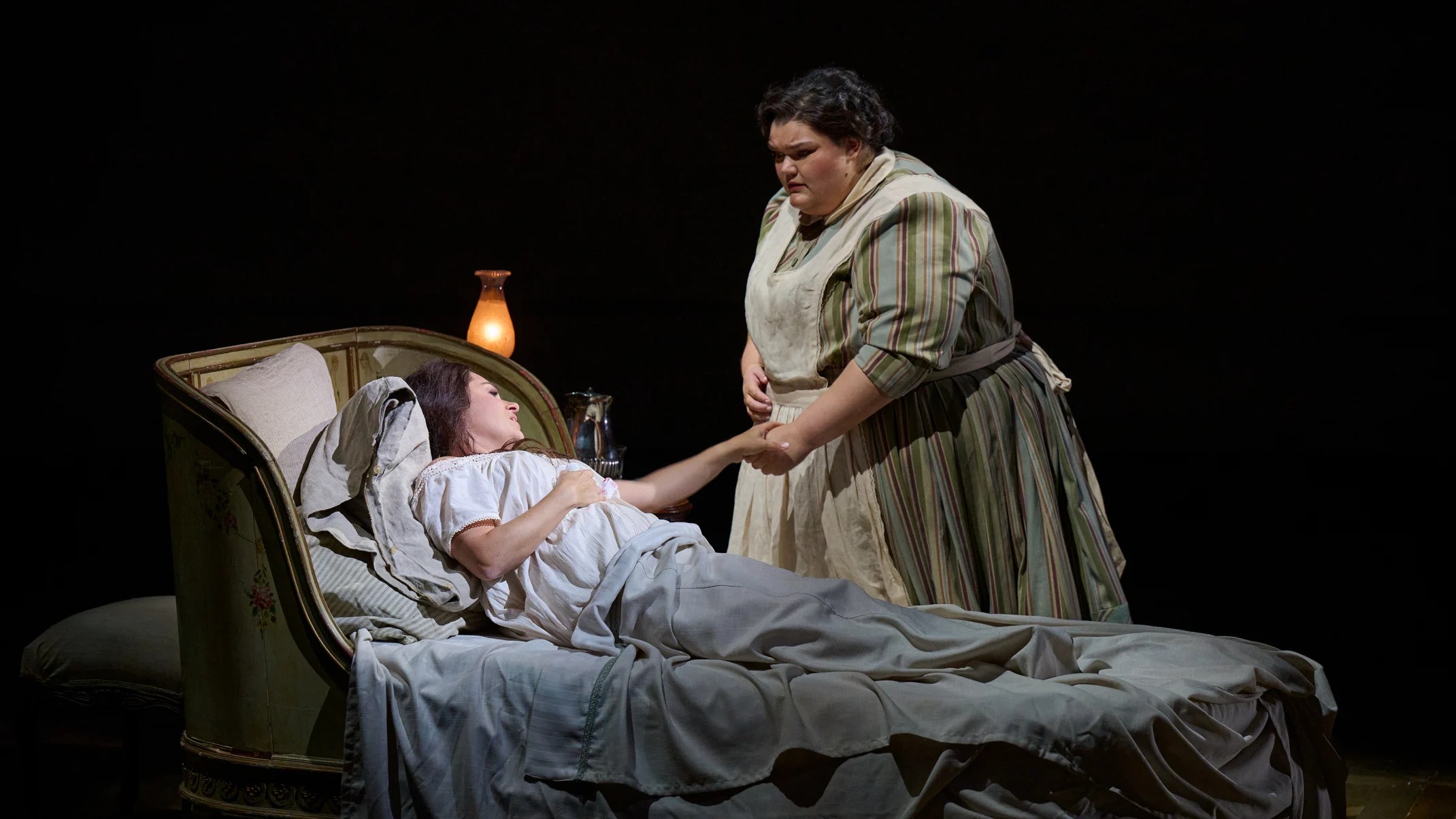
Let me be clear. I was impressed throughout by the voices of this trio. But I was not moved the same way that I had been by the other cast. Maybe I’m a sap but I love being moved to cry by an opera such as La Traviata, and the first time I cried on this occasion was watching Emma Pennell as Annina dressing Kathryn in the final act.
Violetta (Kathryn Lewek) and Annina (Emma Pennell; photo: Michael Cooper)in the Canadian Opera Company’s 2026 production of La Traviata
For the previous acts I was impressed by singing, but not seeing real chemistry between the trio of principals. The surrounding cast of smaller parts were as persuasive as last time, while I felt I was watching three soloists doing an excellent job of singing difficult music. Please note, neither Andriana Chuchman, our alternate Violetta, nor Luke Norvell, the alternate Alfredo, were as impressive in their high notes. When I wrote about Andriana I didn’t mention that I thought her sempre libera was weak in Act I, something I chose not to mention because she made the rest of the performance so compelling dramatically. Kathryn Lewek sang the aria with all the high notes, a virtuoso performance. Ditto Long Long’s wonderful high notes, that never made me really connect to a character: although in fairness this was normal, given that I don’t really like the character of Alfredo. I was happier with Luke’s “oh mio rimorso” minus the high C of this aria in its more extroverted form. The high note sung by Long Long is a show-stopper, so I don’t want to blame him for something that seems false in the opera itself.
Emma was again impressive, always interesting to watch. I especially liked the contrast between her big voice and the delicacy of Kathryn’s singing in the last act.
The Marquis d’Obigny (Nick Murphy), Flora Bervoix (Ariana Maubach) and Dr. Grenvil (Alex Halliday, photo: Michael Cooper) with COC chorus in the Canadian Opera Company’s 2026 production of La Traviata
Alex Halliday’s Dr. Grenvil, who we see among Violetta’s friends in the world of parties earlier in the opera comes back for something more genuine alongside Annina, for the final scene. Ariana Maubach made the most of the rather thankless role of Flora, Violetta’s friend and the host of the party where Alfredo denounces Violetta. It’s funny that in a performance when I wasn’t thrilled by the chemistry of the principals, I was captivated by the work of the Marquis d’Obigny (Nick Murphy), the Baron Douphol (Peter Barrett) and Gastone (Owen McCausland), bringing Violetta’s social circle vividly to life around her. The first part of that scene includes some of the most entertaining moments of Arin Arbus production of Verdi’s opera, juxtaposed against the coming conflict between Violetta & Alfredo. The flamboyance of the staging made a good backdrop for the interpersonal melodama of the climax, where Alfredo throws money at Violetta, and the reactions of the others singing together in response.
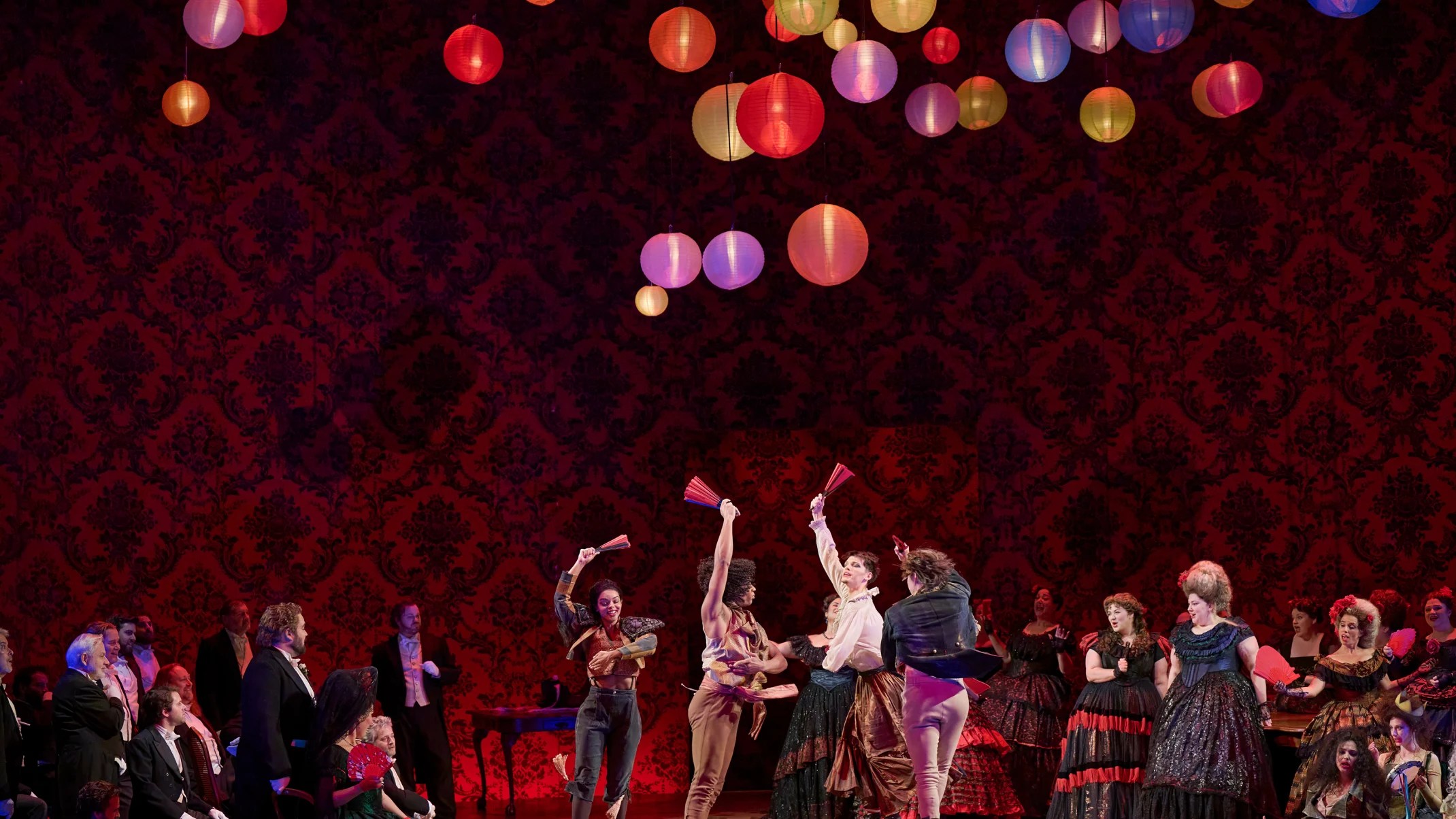
Dancers with COC chorus in the Canadian Opera Company’s 2026 production of La Traviata (photo: Michael Cooper)
This was the closing performance of the Canadian Opera Company’s fall season. The Arin Arbus La Traviata was previously seen in 2015 & 2022, the Atom Egoyan Cosi fan tutte in 2014 & 2019, but that changes next year. Three of the four are new to the COC, while the fourth, Elixir of Love (May 8th) in the production directed by James Robinson was only seen once nine years ago. New next year: Turn of the Screw (January 23) and Ariadne auf Naxos (February 4th), followed by the world premiere of Empire of Wild (May 1st).
The Canadian Opera Company Cosi fan tutte that I saw Saturday October 10th is the best one yet.
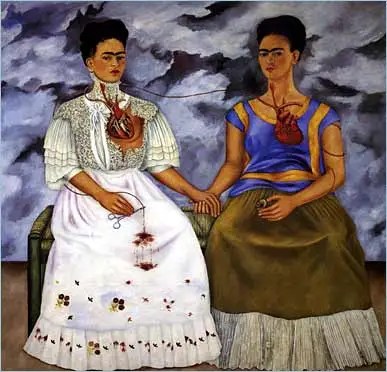
This is the third time that the COC have staged the Atom Egoyan production of the Mozart opera “Così fantutte, subtitled “The School for Lovers” Not only does it feature a stunning design featuring a big reproduction of a Frida Kahlo painting for the curtain, all sorts of colour from huge butterfly wings, and ships on top of heads, but it also features a fascinating concept drawn from that title.
Frida Kahlo’s painting Two Fridas
The idea to present the opera showing an actual school for lovers, with Don Alfonso as the experienced teacher, is a metaphor. In director’s theatre sometimes the original opera’s plot collides with the idea superimposed over top by the director, disrupting or complicating the usual presentation.
Egoyan’s idea is wonderfully conducive to the story: except that in its first iteration it was more serious. The story features a bet between Alfonso & two young men who have been proudly extolling the virtues of their fiancees. That first time in 2014, with Sir Thomas Allen as the mature Don, I found the production stiff, slow, a bit full of itself, pompous and overly complex. I think that’s how it was directed, how Egoyan wanted it to work, seeking to inject depths into a comedy.
Tracy Dahl as Despina and Sir Thomas Allen as Don Alfonso in the Canadian Opera Company’s production of Così fan tutte, 2014. Photo: Michael Cooper
There were some great moments in the singing & delightful images in the set & costumes by Debra Hanson. But speaking as someone who has known and loved this opera since childhood, it felt long and weighed down by its own pretentious concept. It felt like Ingmar Bergman or Woody Allen trying to do Cosi fan tutte, psychology & depth and yes a few moments where my jaw dropped, but unsure how to process it because of its collision with my previous experience of the opera.
In 2019 the COC revived it for the first time, five years after its first run with Russell Braun taking Allen’s role as the mature Don.
Tracy Dahl as Despina & Russell Braun as Don Alfonso, 2019 COC production of Cosi fan tutte (photo: Michael Cooper)
What a breath of fresh air that was, so different. The comedy was no longer being crushed under the weight of psycho-babble, and emerged especially as the cast interacted much more with Alfonso, possibly because they weren’t so much in awe of a singer who had been knighted. The original work began to assert itself, Mozart reminding us how the piece could be done. Maybe Egoyan liked that sense of awe, given that the school for lovers concept revolves around the headmaster? Braun took us closer to the original.
Another factor energizing that revival was Bernard Labadie, who conducted in 2019 with quicker tempi, breathing life into Mozart’s music. Having mentioned a conductor you may wonder when I am going to explain how i could put “starring Johannes Debus” into the headline, but I’ll get to that in a moment.
And so in 2026 in its third incarnation Cosi is truly alive. The design from Hanson and the concept from Egoyan are all still there, but the opera is back to its old self, a fast-paced comedy. While Egoyan’s name is on it and his program note appears dated 2026, I attribute the changes to the assistant directors, namely Marilyn Gronsdal (who also worked on the 2019 revival of Cosi). But it seems that the ponderous weight is lifting with each iteration, the pace quicker (thanks to the conductors), the tone lighter. Daniel Okulitch was our Don Alfonso, energizing the comedy even more than what I reported with Russell Braun, in the process taking the role and the work closer to how it was written.
Tracy Dahl was Despina once again, the star in 2019 and 2014. I remember observing –sadly– that my first laugh in 2014 came in her first scene. She is still the funniest one onstage, a bit older but also wiser, the one we are looking at and listening to.
Dorabella (Martina Myskohlid) & Fiordiligi (Lauren Fagan) listen to Despina (Tracy Dahl; photo: Michael Cooper)
I think she interpolated a high C into her scene where she’s electrocuted by her own therapeutic device! She was inventive, always fun to watch. I love her so much.
I’m excited, writing about this, wanting to report two or three things at once, in a show where after all, we had six soloists, a chorus and an orchestra all contributing to the magic. Ah but first, I must report that there was a bit of drama before the show as COC General Director Ian Derrer came out to announce that tenor Laurence Kilsby was indisposed due to illness.
COC General Director Ian Derrer
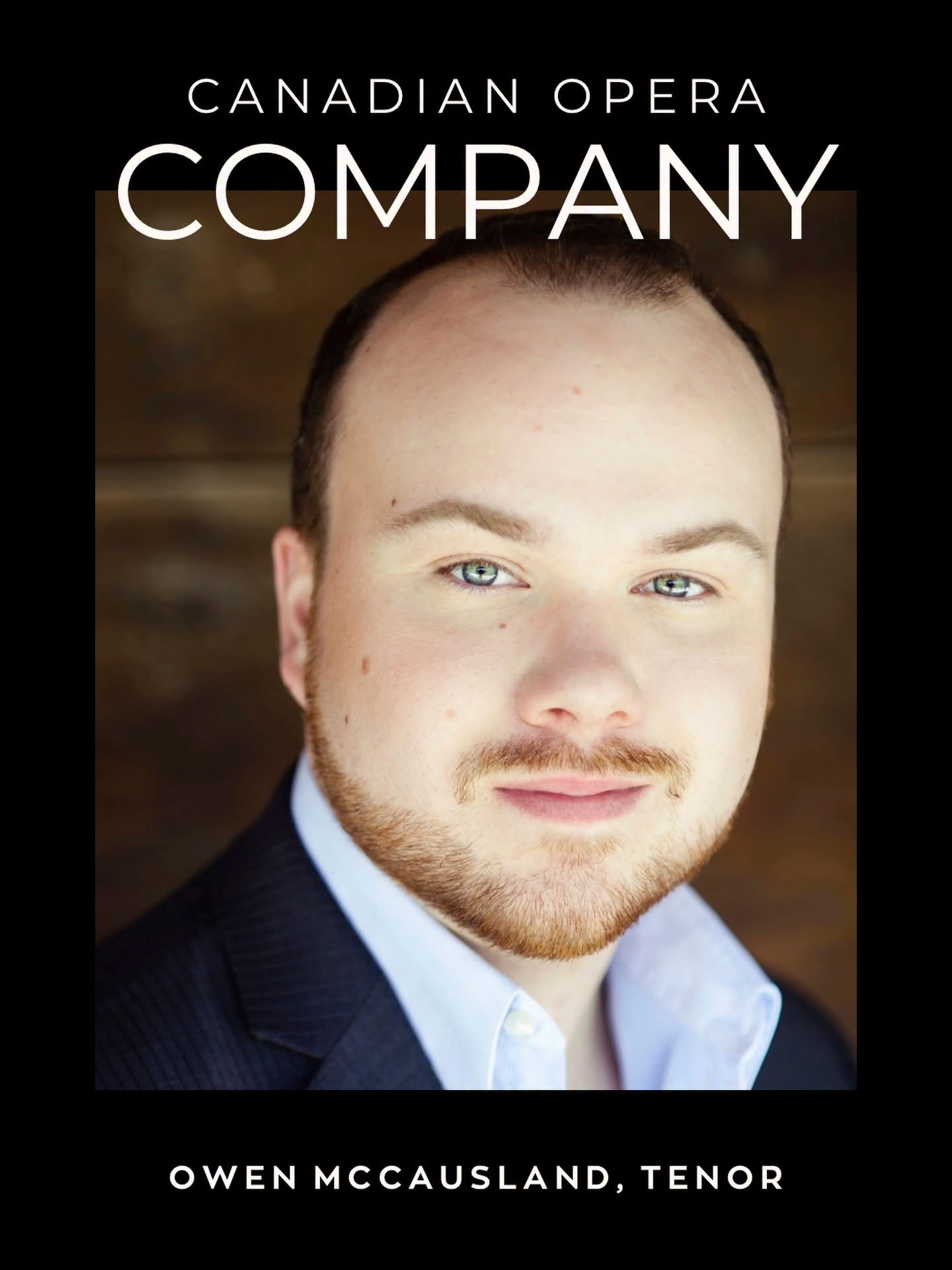
One singer’s misfortune can be a blessing for someone else. While I am sympathetic, I am especially pleased when I get to see a Canadian take the role of an imported singer. Owen McCausland who had sung a small role the night before in la traviata, listed as understudy for Ferrando in the program, stepped in to sing the role.
I’m happy to report that Owen sang very well. His tenor voice has hinted in past appearances that he might have a future as a spinto or even dramatic tenor, but as Ferrando he held back, the stylish Mozartian throughout while saving himself intelligently. In a show where I heard at least two in the cast who were “pitchy” (a word I first heard on American Idol, to suggest someone who is either sharp or flat), Owen was never off pitch as far as I could hear. And he played the romantic comedy very convincingly. I wonder if the excitement surrounding his substitution energized everyone.
The comedy was inspired, all six of the principals had their moments to shine. The audience loved Joel Allison as Guglielmo, Lauren Fagan as Fiordiligi, especially Martina Myskohlid as a stunning Dorabella both in her vocalism & comic shenanigans.
Dorabella (Martina Myskohlid) and Fiordiligi (Lauren Fagan, photo: Michael Cooper)
Let me now get to Johannes Debus’s creative heroics. I am surprised that no review has mentioned his work, possibly because he’s in the orchestra pit at the piano, and not onstage. While I figured he could play I never suspected that he could offer such sparkling decorations to the performance, embellishing upon the interactions between the singers. My subscription seat is in the 2nd row, where I was craning my neck to try to see into the pit as I wondered: is he actually playing? Before long it was clear that yes he was playing as well as conducting.
Ah but Johannes plays much more than what’s written. I’ve heard harpsichordists sometimes undertake some recitatives this way. But he took it so much further. Not only is he elaborating, improvising, but he’s added commentary. There are places where he makes interesting additions to the music.
The famous trio “Soave sia il vento“, when Don Alfonso & the two young women wish the men well as they go off to war, includes introductory murmurings & accompaniment, gentle repeated eighth notes, that Johannes then excerpted at least a couple of times when we were hearing mentions made in the opera of the wandering lovers. He made that music almost like a leit-motiv to remind us of their departure & their journey (fake though it might be) in the minds of the women.
Similarly, the opening ensemble “LamiaFiordiligi” before the bet is made features the declaration of the young men, admiring their fiancees: a melody that is one of the clearest Mozart ever wrote. Late in the opera — when the shit has hit the fan– Johannes quotes the exuberant happy melody, as if to say “how’s that bet working out for you boys?” Johannes is adding a layer something like what Wagner does with his leit-motivs, as though they are a Greek chorus, commenting upon the action, yet the tone is quicksilver light, comical and oh so brief.
And all this was done while Johannes went from sitting at the piano to jumping up to conduct the orchestra: who sounded amazing.
And the COC chorus are also doing lots of heavy lifting, as in la traviata. In addition to their singing they’re regularly playing roles as “students” in Don Alfonso’s school for lovers.
In my experience, when a production is revived it may begin to diverge from the directorial concept and inevitably resist the rigorous concept as it goes back to the original work. Mozart and centuries of performance of Cosi fan tutte (admittedly more in the last century when the morality of the story wasn’t frowned upon any longer) weigh against a director, especially if Egoyan’s voice was only heard in a book of instructions being read by the revival director.
In Egoyan’s director’s note I am a bit perplexed by something he said, that seems a nice parallel to this whole question of a director and their influence: “For those familiar with Così fan tutte, this production may be surprising in two ways. First, we are taking the alternative title of the work and using it literally. It takes place in “A School for Lovers,” with Don Alfonso the teacher of this school in which he demonstrates to his students the complexities and perils of the laws of attraction. The second surprise is that the sisters seem to be in on Don Alfonso’s experiment from the beginning. I was curious to explore what might happen to the dynamics of the opera if there were a parallel wager with the two women.“
He goes on, but I think this is enough. I watched the show, enjoying the cast, watching for any sign that the “sisters seem to be in on Don Alfonso’s experiment from the beginning.” When I watched in 2014 and 2019 I couldn’t be bothered with this, as there was no evidence for it. This time in 2026 I looked closely for any sign of recognition. When they were drinking? romancing? I watched them seeming to be genuinely upset at the end of the opera, when their lovers unmask, feelings they would not have shown such dismay had they been “in on Don Alfonso’s experiment“. I saw no sign of anything anywhere in the opera remotely corresponding to this. But I’m open to discovering how this would work, when the two young women behave throughout as though the wager is genuine and display surprise at the end.
Indeed I thought about how such a thing could be done if a director genuinely wanted to offer women images of empowerment, in an opera that still feels sexist to me, the way the men are let off the hook at the end. What if the disguises were to slip, if one of the moustaches were to slip off and the women were to see, and perhaps nod to one another, and play along. But there’s no sign of that.
In the end I think we come to the 2026 conclusion feeling the way Mozart –the would-be libertine–probably wanted us to feel. There’s a feeling of resignation when Don Alfonso sings the title of the opera, joined by the two young men, a slightly cynical conclusion. Wolfgang & Lorenzo Da Ponte his librettist (who may also have been a libertine) probably thought they were being generous in the way the women are let off the hook, never suspecting that centuries later it’s the men, not the women, who are seen as problematic in their behaviour.
There are three performances of Cosi fan tutte remaining this week, on October 14, 16 and 18. I wish I could go again: especially to hear what Johannes is doing. Please click on the video link below to hear what he has to say.
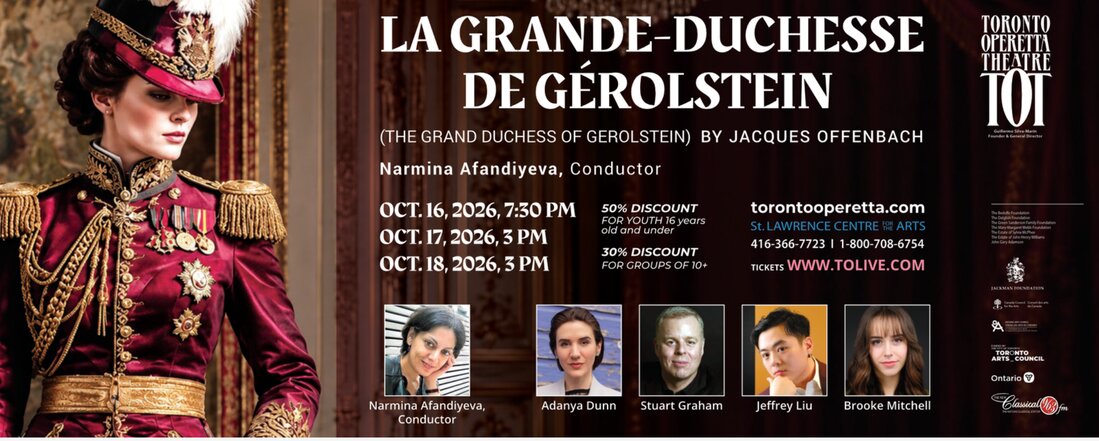
Adanya Dunn is a singer I know from modern opera productions with companies such as Tapestry Opera, FAWN Chamber Creative or Against the Grain.
I heard that the singer who was supposed to sing the title role in Toronto Operetta Theatre’s production of Offenbach’s La Grande Duchesse de Gerolstein had become ill and that Adanya is coming to the rescue of TOT, undertaking the role with relatively little time to prepare.
I had to find out more (and wow she found time to do the interview).
Adanya Dunn
Barczablog: What can you tell me about your development, how Adanya became Adanya?
Adanya Dunn: If I think about “how Adanya became Adanya,” I’m not sure I feel entirely finished becoming her yet! I’m a very curious person, and I think a lot of who I am has come through following that curiosity – trying things, making things, changing direction when something no longer feels right, and allowing different parts of my artistic and personal life to inform one another. I’ve become increasingly comfortable allowing all of those things to coexist rather than feeling I have to be one way or another, and I hope that life continues unfolding to reveal the multitudes that we all are! In some sense… it’s sort of “becoming” as we go – in a verb kind of way!
BB: When you’re just relaxing and not working, what is your favourite thing to do?
Adanya Dunn: I love being in nature and sharing time with people whose company I enjoy – very intentional choices! In my downtime, I can usually be found being creative in other disciplines, whether that’s dance, visual art, writing, composing…
BB: Dogs or cats?
Adanya Dunn: I’m absolutely a cat person, though I do love all animals!
BB: Paper scores or digital?
Adanya Dunn: A mix! When travelling or on the go, a digital score tends to be the most economical in terms of space and weight. But I also really value the tactile experience of a physical score, and particularly being able to see the larger musical picture laid out in front of me. So I still use both, depending on the circumstances.
BB: When did you hear about this gig as the Grande Duchesse,
Adanya Dunn: I found out on September 28, while I was actually performing another gig, that I would be jumping in as the Grand Duchess.
BB: And what does that mean compared to your usual preparation time?
Adanya Dunn: On the 29th I received everything, the score and dialogue, and I began rehearsals on the 30th. So I basically had one day to learn and familiarize myself with the opera. One day! I think that’s the fastest I’ve learned an opera, though not an entirely unusual situation within my wheelhouse.
Of course, there’s a big responsibility in performing the title role – and I wanted to be part of the team and help bring the project to life. I enjoy a challenge and stretching myself beyond what might be considered normal or ideal circumstances. Also, this is my first time performing with Toronto Operetta Theatre – so what a chance!
I also want to acknowledge that there’s a certain sensitivity around doing a jump-in.
BB: Really? could you explain?
Adanya Dunn: Because it usually means that someone else is no longer able to fulfill a commitment for any number of reasons. It’s also a very common part of our profession. I can think of times when I’ve been ill or circumstances have come up where a jump-in was necessary to replace me. That happens. It’s part of working in what I consider to be a somewhat precarious career, and I think it’s important to remember that we’re a network of people who can help and support one another when these situations arise.
The success of a jump-in is dependent on many factors beyond the person jumping in! The team at Toronto Operetta Theatre, including director Guillermo Silva-Marin, conductor Narmina Afandiyeva and stage manager Myra Malley, have been extremely accommodating, giving me additional coaching, making certain adaptations where appropriate, and simply giving me the time, space and support to prepare.
Conductor Narmina Afandiyeva
It takes a whole support structure to make something like this possible.
Director Guillermo Silva-Marin
On my end, a lot of it comes down to trust, and to everything I’ve learned through doing things I had never done before. There’s only so much I can anticipate because every set of circumstances is different. I had never been in exactly this position before, but I knew that I could do it, and I trusted myself to respond to what was in front of me.
BB: Please elaborate some more about how you prepare.
Adanya Dunn: There’s the immediate preparation, but there’s also everything that happened before I ever received the score.
I study regularly with my teacher Don Marrazzo, and I owe so much of my ability to do something like this to what we’ve built together, and to his guidance, care and support in developing my voice systematically and keeping me healthy and prepared.
Don Marrazzo
Then there are the basic things I do myself: trying to keep myself in a good state mentally and physically, eating and sleeping well, continuing my own role study. It’s really about staying prepared for moments when they arise.
I’ve also always been a very quick study. I don’t know if that has any relationship to completing assignments the night before in high school and still somehow managing to pull out an A! But over time, I’ve developed a systematic way of learning things thoroughly both with a long runway and without!
I think the more I do, the easier it becomes to take on increasingly difficult or complex projects. That complexity might be musical, in pitch or rhythm, or it might be staging, choreography or simply time constraints. Working extensively in contemporary music makes learning more traditional repertoire feel easier; taking dance classes, performing and choreographing routines makes it easier for me to pick up staging and movement quickly. I compose, play piano, produce music, dance, paint and make visual art, and I find that these different practices are constantly informing one another. They contribute to having a flexible and adaptable mind and body. For me, performing and communicating stories is a very integrated experience.
Adanya Dunn
BB: I saw you sing at TIFF in 2017 singing Vivier & Schönberg with Topher Mokrzewski, with Tapestry & Against the Grain & Fawn before that time. Rightly or wrongly I’ve associated you more in my head with contemporary music than operetta. Please tell me more about your history with contemporary classical compositions.
Adanya Dunn: I think working extensively in contemporary classical music has kept me on my toes and sharpened my ability to respond quickly. I’ve premiered around 200 new works and have spent a lot of time working directly with composers, librettists and directors, whether on pieces written for me or works that we’re developing and work-shopping together.
Last summer, I was in the Canadian premiere of “Sophia’s Forest”, libretto by Hannah Moscovitch and composed by Lembit Beecher, where we got to work with the composer who was also in the ensemble with City Opera Vancouver. I also work-shopped two new operas and was part of Tapestry Opera’s LIBLAB and Opera Briefs, where the turnaround was incredibly quick, with a couple of newly composed pieces per day. In these situations, we’re constantly negotiating new material in our own voices and bodies, and the piece may continue to evolve throughout the process. We learn how to absorb complicated pitches, rhythms, text and theatrical ideas without necessarily having the luxury of months to sit with them.
That kind of work has made learning more traditional repertoire feel easier in many ways. The practices inform one another, just as my movement and dance practice feeds into how quickly I can absorb staging and choreography.
This also isn’t my first jump-in. I’ve been in for studio recordings, and on standby and prepared for other situations. Sometimes circumstances simply don’t allow us to learn something as far in advance or as thoroughly as we ideally would. All of those experiences build on one another.
BB: Could you talk about how it works in practice, whether it’s new music with Tapestry or Offenbach with TOT.
Adanya Dunn: This is really a condensed version of my normal learning process. Things I might usually spend weeks working through, I’m having to do in a day.
I always begin with the text. I speak through all the parts, reading it like a play and getting a sense of how the language moves. If I’m working in a language I don’t speak, that also involves translating and speaking everything aloud before I begin putting it together. In this case, we’re performing in English, and the natural rhythm of the text is often nicely reflected in the music, so the two begin to come together quite quickly.
Then I get onto my feet. I start acting things out, moving through the material and infusing it with character and my ideas about who this person is. Right away, I want to start bringing my whole self into the process. Even in a coaching, if I still need to be reading from the score, I’m finding ways to remain physically engaged and aware of the character and what I’m communicating, rather than treating the notes as something separate that I’ll somehow add the theatre onto later.
In ideal circumstances, I have more time to work a role into my voice. Different repertoire asks different things of me vocally, whether that’s a role that sits somewhat higher or lower, or simply balancing it alongside other repertoire I’m singing at the same time.
The Duchess sits in a great range for my voice and I’m relying on the years of vocal technique I’ve built with Don, which allows me to bring all of these elements together on a much more condensed timeline.
BB: Tell us a bit more about the Duchess & Offenbach.
Adanya Dunn: Something I’ve found interesting in approaching the Duchess is that it can be easy to hear music that is light, catchy and seemingly simple and think, Oh, this is easy, and just gloss through it.
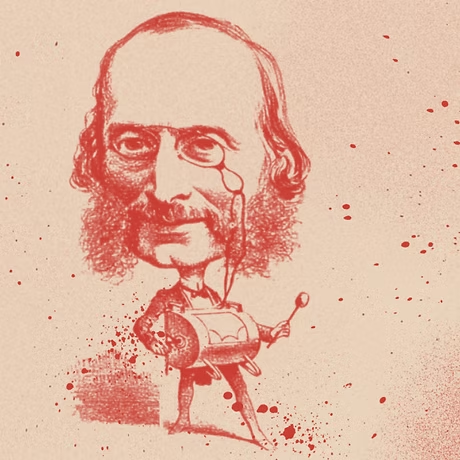
A caricature of Jacques Offenbach (1819-1880)
Adanya Dunn: But there are so many little chromaticisms and unexpected notes within the harmonies. Sometimes another note might technically “work,” but it isn’t what Offenbach wrote.
BB: OMG That is so impressive.
Adanya Dunn: For me, maintaining the integrity of the score is important because those notes were written that way for a reason.
At the same time, the piece needs a certain buoyancy. I don’t want the work of making it precise to weigh it down. Finding that balance has been really fun.
BB: Wow, I wish more people cared about such things.So who is she, and how will you portray your Duchess?
Adanya Dunn: The Grand Duchess is young, about 20 years old, and she has enjoyed a great deal of freedom. She has these men around her who have largely been governing the realm, and she takes a particular interest in her military – she wants to have fun! At the same time, there are societal pressures and responsibilities looming, marriage being one of the most obvious expectations placed upon her.
Adanya Dunn
Our character work at Toronto Operetta Theatre is finding the complexity and nuance within her. We can see her social responsibility while also looking at the ways she wants to maintain, and perhaps in some ways re-claim, her own autonomy, wishes and desires to make change.
There is quite a lot of dialogue in the piece, and we’ve been having conversations in rehearsal about why the characters make particular decisions and even how individual lines can be inflected. The audience may never know every detail of the backstory or character work that we’ve explored, but they don’t necessarily need to. That work gives the choices we make a rooted and grounded place to come from, and that depth is still felt.
And then the music itself is so fun, catchy and glorious. This is also a piece that is rarely performed, so audiences have an opportunity to hear another side of Offenbach beyond the works they might already know. We’re performing it in an English translation by Geoffrey Dunn, no relation!
Guillermo has made various updates to both the libretto and dialogue, allowing us to consider how this work lives in the present. We’re not setting the operetta contemporarily, but we are performing it now, for an audience now. There’s an interesting distinction there. We can remain within the world of the piece while still being informed by our own context, and consider how these characters, their relationships and their choices might resonate today.
Audiences will be delighted by Toronto Operetta Theatre’s take on The Grand Duchess of Gerolstein. There are definitely some surprising twists and moments. The production remains very true to the original while also finding places where agency and free will can be exercised within the world of the operetta.
It’s also such a wonderful chance to hear Offenbach music that isn’t commonly performed. There may even be musical through-lines that audiences recognize from his other works, but here they get to experience this whole other piece, in English, with a wonderful cast.
Audiences might be pleasantly surprised by our Duchess. She may not be quite the same Duchess that people who know the operetta have encountered before. She’s a young woman with enormous responsibility who also has desires of her own, negotiating what is expected of her with what she actually wants. We get to explore that while still letting the piece be what it is: a comedic operetta that’s full of fun, with some unexpected twists and moments!
Adanya Dunn
BB: Is comedy harder than tragedy?
Adanya Dunn: I don’t necessarily think one is harder than the other. They’re very different, and I feel that the director, the team and the particular production can inform the level of difficulty more than whether the material itself is comic or tragic.
With comedy, I think sincerity is incredibly important. There can be all these wild situations and circumstances that are almost beyond imaginable, while at the same time something within them is completely relatable. If the characters believe in what they’re doing and their choices come from somewhere grounded, that’s often where the humour lives. We don’t necessarily have to try to make something funny.
The Grand Duchess of Gerolstein gives us a lot to play with in that way. There’s physicality, movement and dancing, these wonderful larger-than-life circumstances, but we can still approach the characters as completely believable within that world. That combination is a lot of fun.
Adanya Dunn
BB: Is there a teacher or an influence you’d care to name that you especially admire or wish to thank?
Adanya Dunn: Well… 6 years ago, I was a soprano! Earlier, I mentioned my private teacher Don Marrazzo, and I cannot thank him enough – I wouldn’t be where I am today without him! When I moved to Amsterdam in 2018, we began working together on my technique, allowing my voice the space to develop and reveal where it wanted to go in that phase of my life. After a couple of years of that exploration, I “made the switch” from soprano to mezzo-soprano, a process Don guided with such care and curiosity. We continue to work together week by week. I love our sessions, and the constant learning and growing I experience as an artist and performer is something I cherish deeply. As a result of our work, I feel better able to express myself in a more truthful and authentic way, both on- and off-stage.
I’m also so thankful to my manager Morgan Reid and the team at Dean Artists Management to be on this journey together! And grateful for the support and guidance from a wonderful lineage of educators and coaches throughout all stages of my development.
*******
Adanya Dunn is the Grande Duchesse of Gerolstein, starring in the Toronto Operetta Theatre production October 14, 15, and 16 at the Jane Mallett Theatre.
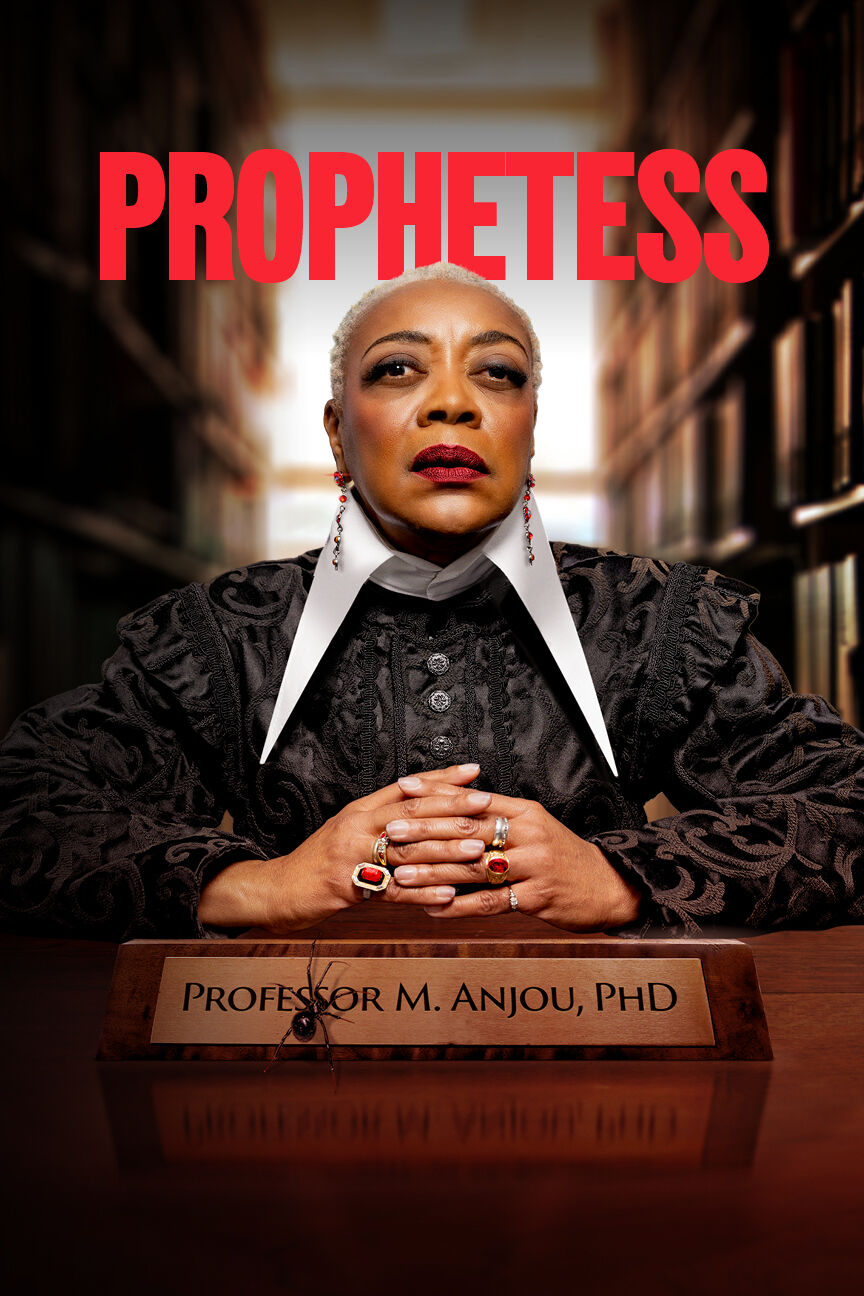
My first impression of Prophetess was one of pure delight, laughing with an enthusiastic Tarragon Theatre audience at the delightful clarity of playwright Ho Ka Kei (Jeff Ho) and the direction of Mike Payette.
Watching Margaret, a professor obsessed with etymology (the study of words), felt tremendously reassuring at a time when literacy & books seem to be under siege by the forces of change, modernity & AI. Margaret takes us back to a realm where words matter. This is but one way among several in which she can be understood as a Prophetess.
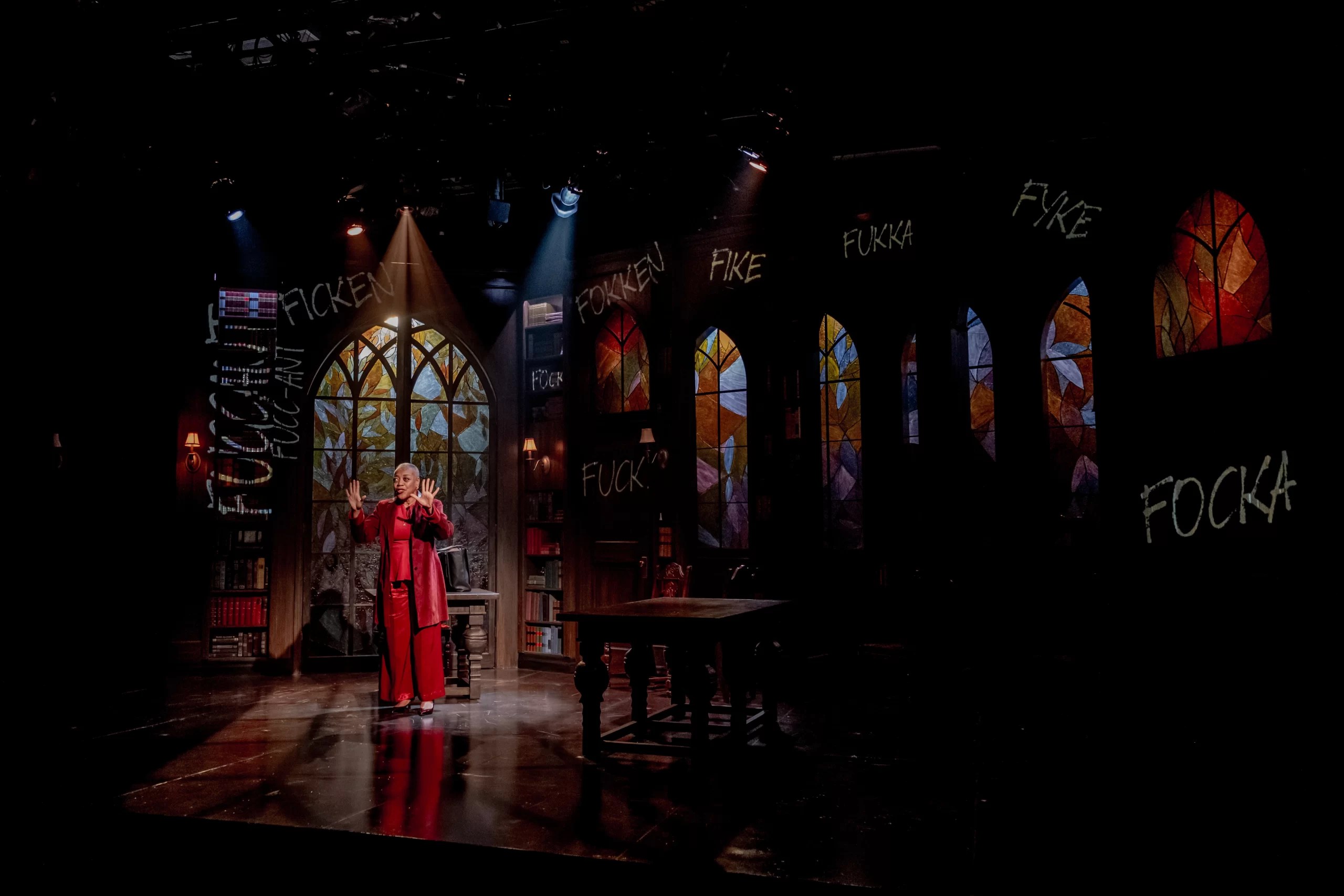
As an illustration we saw a professor lecturing about the history of profanity and the F word.
As Margaret (Karen Robinson) lectures the profanity is echoed in words projected on the set. (Photo: Jae Yang)
The dialogue sparkles, the actors articulate positions & enact political stances. In the first half of the play I was swallowed up by the intrigues, by political conflicts between the larger than life characters, having heard before that the playwright is thought to be gifted. And now I see why. He gave each actor a lot to play with and my goodness they were playing. Prophetess is a virtuoso vehicle.
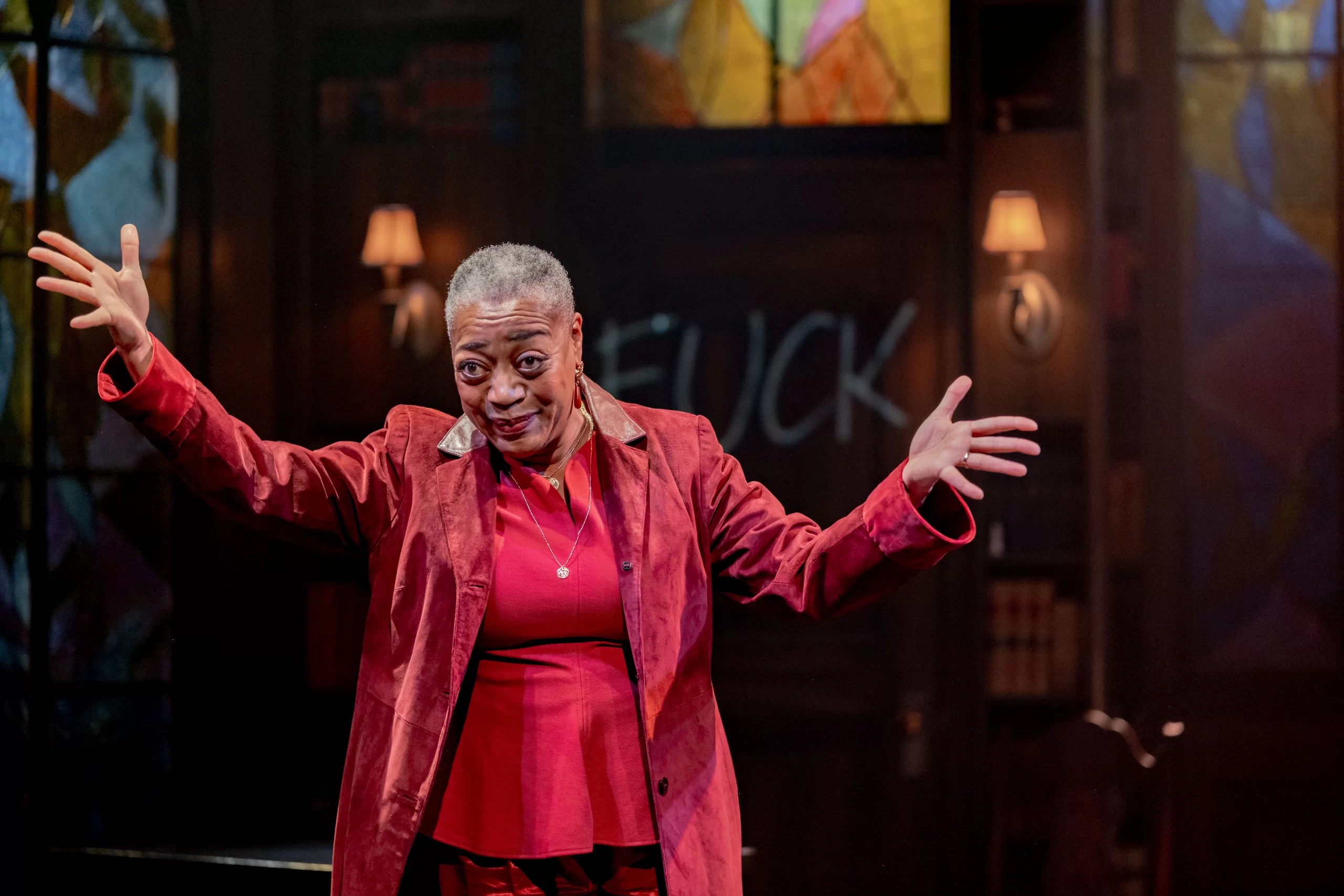
Margaret (Karen Robinson) is a star turn, a generous gift from Ho Ka Kei (Jeff Ho), indeed every actor in this show can thank him for the meaty parts he’s created for them. A good professor especially a tenured one must be able to educate and stimulate their audience in a classroom. Lectures are theatrical, and can be fun. Margaret has a personality every bit as big as her classroom persona, a bit of a diva because she is accustomed to having people listen to her every word, and Karen takes the stage every moment.
Margaret (Karen Robinson) lecturing (Photo: Jae Yang)
Ann (Natasha Mumba) is a young colleague of Margaret, a recent arrival whose first encounter with Margaret will be important to the unfolding of the plot. The arc of her story might be as expected, the young one who goes from listening open-mouthed out of respectful admiration to speaking up, taking charge and acquiring more agency.
Margaret (Karen Robinson) and Ann (Natasha Mumba, Photo: Jae Yang)
Henry & Dicky are two vastly different roles both taken by Rick Roberts. In each guise he is defined by the women around him. We see sweet domesticated Henry at home with Margaret, almost too good to be true.
Henry (Rick Roberts) and Margaret (Karen Robinson, Photo: Jae Yang)
Dicky is perhaps as tricky as his name might suggest. Where Henry embodies an ideal partner, Dicky is another romantic variant, part of the political machinations driven by Elizabeth (Christine Horne), who knows how to smile and much more.
Elizabeth (Christine Horne, Photo: Jae Yang)
At home afterwards I was delighted to stumble upon the audience resource guide, fascinated by depths I had never suspected. Watching the play I had been dimly aware of possible subtexts. Speaking as one of the older persons watching last night, some of my laughter had me feeling out of step with a younger audience, that I may have been a bit triggered at times by plot elements that felt rather close to home.
I went to bed wondering if I had even understood what I’d seen.
I woke up confident that the play works whether one apprehends all the subtle allusions or not. I remembered something a professor said long ago when he spoke of nuances that went over our heads in watching a particular opera. He reassured me that while the musicologists who wanted to go deeper could enjoy the treasures they’d uncover in their digging, that this wasn’t essential to our enjoyment or understanding of the work, otherwise there would only be a tiny audience. The average person delights in the piece without excavating. I don’t think I appreciated those implications until now, recalling a play I enjoyed even as I’m sure I only understood it partially.
The set design by Jawon Kang & projections from Laura Warren underline the different moods of the locations where the story is unfolding, in Margaret’s lectures or in her home: making it easier for the text and the performances to work their magic on us. I was sucked in completely, the 90 minutes of the show flew by.
At its core Prophetess is a very simple story. As one of the older audience members my perspective could be different, as we get glimpses of mourning & madness that ring true for me as someone who has had more than his share of both in my immediate circle. Coming from such a young playwright as Ho Ka Kei (Jeff Ho) I am very much in awe of his insightful story-telling and his ear for dialogue. I’m looking forward to more great things from him in the future.
Playwright Ho Ka Kei (Jeff Ho)
Prophetess runs at Tarragon Theatre until at least October 29th. I recommend you see it.
Scarborough Philharmonic opened their 2026-27 season Friday October 2nd with something of a bombshell announcement.
SPO’s Artistic Director & Conductor Ronald Royer stood before us, disclosing that he’s fighting cancer. He confidently predicted he would beat it, returning fully next year, but for this concert & the next he would share some of his conducting duties.
Ronald Royer (photo: Jamie Way)
He’s undergoing treatment, his hair is thinner, but Ron showed us he is still as energetic, as outgoing in his preamble at the microphone before the SPO plays, as capable of leading as ever.
I’m hopeful, especially watching Ron conduct and listening to the SPO’s excellent sound. Maybe I’m easily distracted but in short order the vibrant live music pushed aside any questions of health.
The concert was titled “Showpieces” at the Salvation Army Scarborough Citadel, Ron offering a bit of a lecture before we started, concerning the debate about program music vs absolute music, a debate that has never been settled except maybe in the competing popularity of different compositions.
Here’s an excerpt from Kye’s program note to About the Trees:
We are now discovering that trees are ‘social creatures’. Through root networks they share water and nutrients and send each other distress signals warning about impending drought and disease. Humans have relied on trees for many things including shelter and fuel and crucially creating the oxygen we need to survive. We also need to trees to build stringed instruments and bows! Canada has a wealth of trees which we often take for granted. Sadly our trees are under threat from the effects of rapid climate change and deforestation. This composition celebrates five of our magnificent Canadian trees and hopefully brings attention to their fragility in a changing world.
Here’s what Kye wrote about the two movements played by the SPO, namely “Pine Tree” and “Poplar”.
The White Pine is the most majestic of trees, growing to a height of 150 feet. It’s wood is highly valued and thus often harvested in it’s prime. This is ‘narrative ‘or program music movement- telling a story. It opens with a proud regal chorale which is interrupted by the timpani and bass drum representing both foresters and elements of climate degradation. Chaos ensues. Protesters try and stop the devastation but are unsuccessful. The movement ends with the opening chorale which is abruptly cut off.
The Poplar This fast growing tree is very useful for winter windbreaks and soil remediation making them a valuable species in forestry and environmental applications. Its graceful, upward-stretching branches and bright leaves seem to touch the sky, while its deep roots connecting it to the earth as may be heard in the orchestra. This tree has oval, heart-shaped leaves that grow close together, fluttering in the wind. One can hear the leaves dancing especially with the tambourine and marimba.
The brass chorale from SPO sounded especially regal, strongly diatonic in a clear representation of something standing up tall & strong. “Poplar”, the second piece, made a lively contrast, in the play of the short fluttering phrases suggesting leaves dancing in the wind.
Ron then led the SPO in a reading of Franz Liszt’s symphonic poem Les Preludes. It’s great to observe how over the past few years the ensemble gets better and better with every outing, the brass & woodwinds especially effective in handling Liszt’s powerful & dramatic themes.
Ron shared the workload with Michael Newnham, our guest conductor for the remainder of the program.
Michael Newnham, shown conducting Peterborough Symphony Orchestra
Michael’s first appearance ended the first half before intermission, an orchestral arrangement of Liszt’s popular 2nd Hungarian Rhapsody, well known at least through the realm of Bugs Bunny, Elmer Fudd, Daffy Duck & more.
Michael and the SPO ran the gamut from the slow sombre opening, building to several shattering climaxes, exploiting all the dramatic possibilities in this playful piece.
Getting another person to assist with the conducting may have been necessitated by doctor’s orders, but this is also a genuine opportunity. Guest music directors bring new perspectives, like a visiting professor bringing outside expertise that can help an orchestra learn new things. And the chance for Ron to listen to the SPO playing while led by Michael can also be a useful part of the discovery, insights both for the players and for their artistic director.
After intermission Michael conducted Dvořák’s cello concerto featuring soloist Cameron Crozman.
Cellist Cameron Crozman
The concerto was another short visit to Eastern Europe, as the Czech flavoured cello concerto of Dvořák following the Hungarian Rhapsody of Liszt both include folk music elements.
But this time our focus was largely upon the soulful soloist Cameron, his powerful tone soaring over the orchestra. The audience’s enthusiastic reception to Cameron’s superb performance was rewarded by an encore, his solemn reading of the Sarabande from the 3rd of JS Bach’s unaccompanied cello suites.
Scarborough Philharmonic Orchestra return November 7th with Viva España, when Ron Royer will be joined by guest conductor Christóbal Soler, mezzo-soprano Lorena Valero, performing Suites No. 1 and 2 from The Three-Cornered Hat by Manuel de Falla, Sinfonía Sevillana by Joaquín Turino and selections from Spanish zarzuelas. For tickets & information click here.
My new word is “audism“: discrimination or prejudice against deaf individuals.
So if someone practising racism is a racist (practicing discrimination around race), I would add the word audist. When I first tried to type “audist” spellcheck changed it to “audits”, perhaps because there are more bankers than activists for the Deaf. But our world is built for those who can hear while regularly discriminating against those who cannot hear well or who are deaf.
Forgive me for the homonym, but it’s the oddest thing that when I try to say “we live in an audist world” that I will likely be completely misunderstood, unheard by those who can hear. Please excuse me, I am taking my time writing this review, pondering things that I am trying to understand.
One doesn’t need to know sign language to be mesmerized by Erin Shields’s multi-media creation To a Flame (TAF) in the 1s1 Theatre and Nightwood Theatre co-production, in association with Modern Times Stage Company and Why Not Theatre, in the intimate Nancy & Ed Jackman Performance Centre.
It’s bilingual in English and ASL.
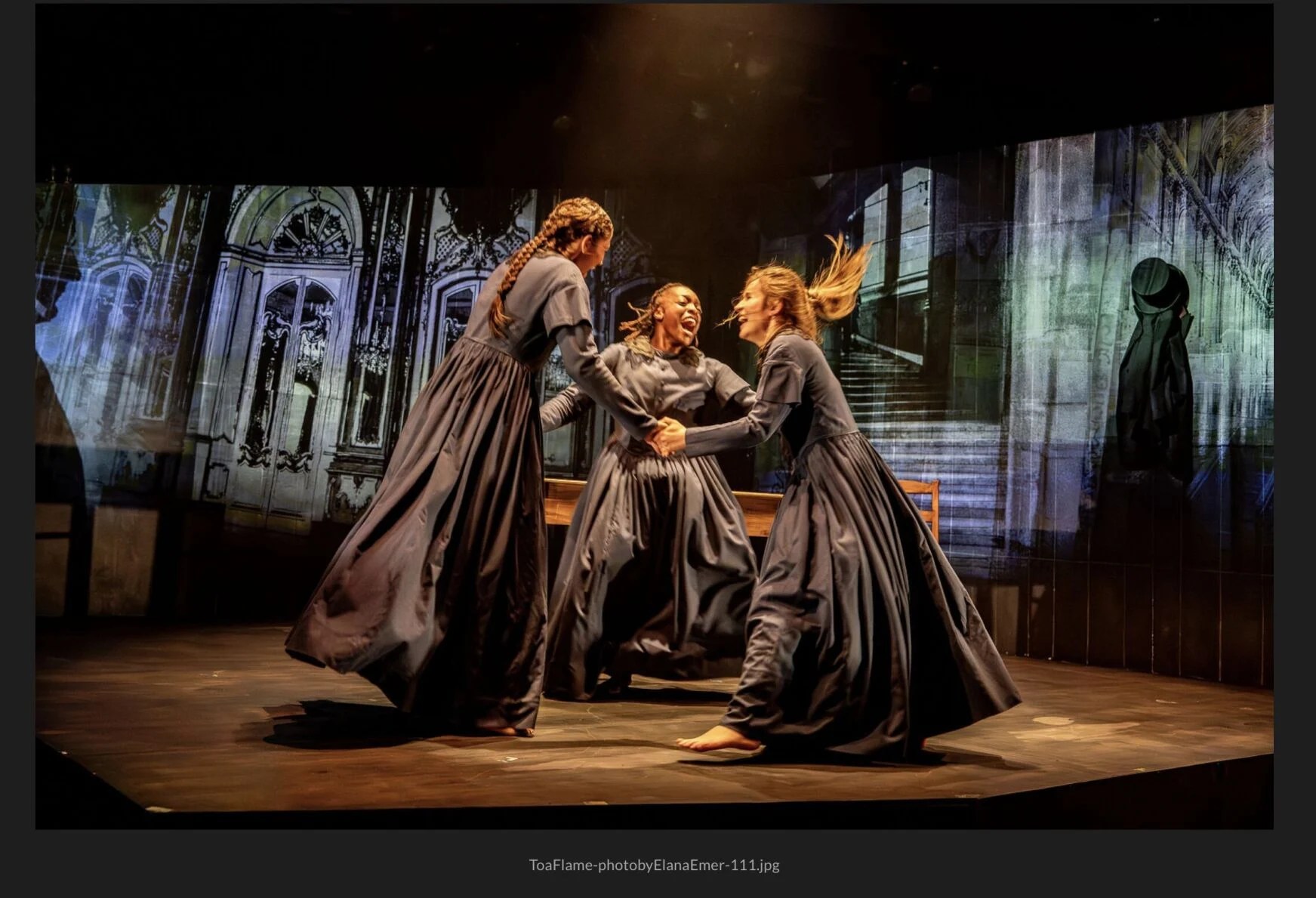
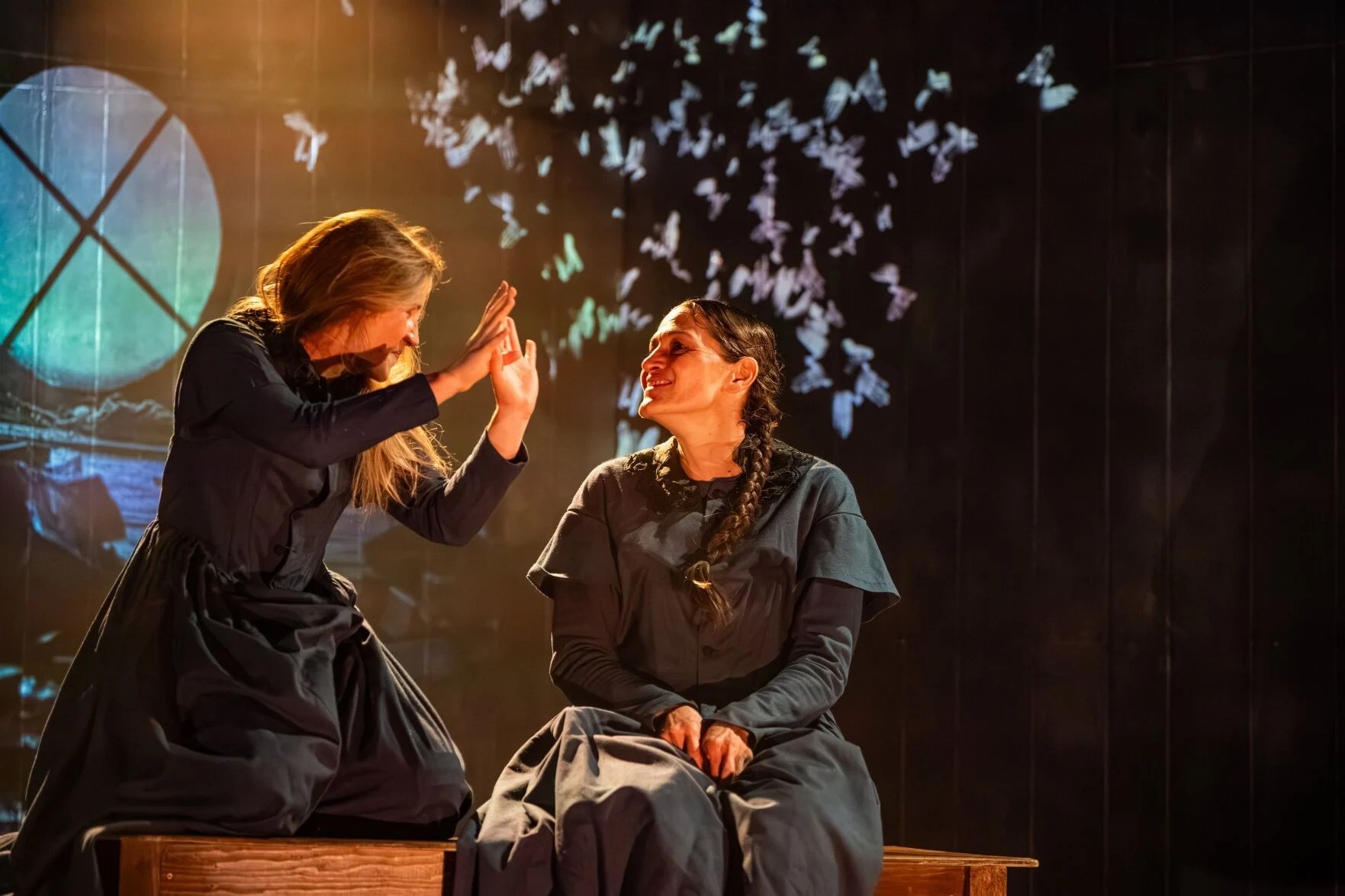
Nickeshia Garrick, Dawn Jani Birley and Juliana Monk (photo: Elana Emer)
I came to it as a big fan of Dawn Jani Birley, drawn like a moth to her show TAF as I attempt to understand my experience of the work and its importance. My first encounter with Dawn’s work was back in 2019 watching & having my mind blown by Prince Hamlet, a bilingual adaptation of Shakespeare incorporating American sign language (ASL). I came away from that hungry for another comparable experience, without having really understood what I had seen. Perhaps I can learn from this? In 2019 my typical week had me seeing & reviewing multiple shows, perhaps leading to superficialities, generalizations made through haste & maybe some mistakes. Don’t get me wrong, I wrote rapturously about the show & don’t regret anything I said: yet I don’t think I really understood the depths of what Dawn was doing. I saw her as a brilliant practitioner, the superb adaptation, missing the activist layer.
Dawn Jani Birley (photo: Bronwen Sharp)
TAF is nothing like Prince Hamlet except for the use of ASL & Dawn’s presence. But this time I am delighted to see that Nightwood Theatre shared a great deal about the creation & development of TAF in a study guide found on the Nightwood Theatre website. I wish more producers of original works made this kind of effort! It’s especially welcome watching this play employing ASL (a language that I don’t understand), telling a story about people trying to make sense of the world, a world that, as I suggested off the top, is audist, discriminating against those who cannot hear. The three women onstage in TAF face a fundamental existential predicament. It’s humbling to confront perceptual limitations, reminded of the challenges anyone faces. ASL feels like a magic trick especially when combined with so many other layers as in TAF.
I can’t help comparing the experience of TAF to Prince Hamlet, one of the most powerful adaptations of a familiar work that I’ve ever seen. Part of the power in Prince Hamlet comes from the adaptation of a familiar story, the recognition of parts while seeing some parts getting new treatment. I wonder if it were clearer that we’re seeing a version of the Poe story, if that might be useful to frame our experience, given that I only found this digging in the study guide later. But then again, my perspective may be narrow, not just as someone wanting to analyze & write about a show but also seeking enjoyment & pleasure when that may not be the chief objective of the creative team.
Obvious as it is to say: everyone will come out of this with a different set of takeaways, but TAF is in many ways like a Rorschach test, an existential ink blot, a mirror. I think about adding audism to my mental list of afflictions alongside sexism or racism, that just as there are persons who are sexist or racist in their prejudices or discrimination, one may similarly be an audist. This is especially likely when one has never examined one’s advantages, never noticed the privileges one takes for granted.
I’m especially mindful of my mother’s last years, as her hearing and eyesight faded dramatically while we (her children) did not always show patience when seeking to communicate with her, so busy with logistical issues of her meals & care that we were insensitive & impatient. I’d like to think that I was patient with her, that I didn’t snap at her or talk down to her. To treat a person who is hard of hearing as though you’re smarter and they’re inferior is to be an audist. At 100 years of age it was not an option to learn ASL, even if my mom had mastered several languages earlier in her life. I suspect I will not be the only one watching TAF while remembering family members and perhaps blushing at recollections of audist moments.
It has taken more than a decade so far. The study guide tells us that Erin Shields’s play TAF was originally inspired by The Fall of the House of Usher by Edgar Allan Poe. I need to explain why I call it important. In my experience theatre and politics are mutually exclusive. The poetry ceases to be art when it preaches.
I’m not sure I really understood what I saw and heard tonight, that’s not meant to sound harsh or as a critique. There is a parallel between what the three characters experience as they seek to make sense of their world and my attempts to understand their gothic horror story as it unfolds. Don’t let that scare you off. Three women appear to be figuring out the confusing & challenging world about something going over my head. It’s stunning, beautiful, reminding me of one of the operas I saw in childhood before they invented surtitles. Just because I didn’t fully understand never stopped me from having a religious experience.
Maybe it sounds funny to say it’s operatic. I sat with the cello in front of me, played by Beth Silver. As a musician & composer I was perhaps paying more attention to this than the average person might do, watching the player, intrigued by their choices, and always fascinated at the richness of the mix of visual and auditory discourses.
Of course no way would the creatives ever call it operatic, not just because the word conjures images to scare people away. I use it not as someone who thinks “opera is boring” but as someone who loves opera, and sees opera as the prototype for cinema & theatre for at least the last 150 years, an ideal blend of multiple artforms hitting you in different channels, music, movement, words. I think it’s a useful analytical framework even if there’s no singing. You had a live cellist playing throughout, three actors speaking some doing ASL, with vibrant sound design, still & video images projected beside them.
In the talk-back afterwards, Nightwood Artistic Director Andrea Donaldson questioned playwright Erin Shields & English to ASL translator / actor Dawn Jani Birley.
Andrea Donaldson, Erin Shields and Dawn Jani Birley
Dawn spoke of the piece working in “Parallel languages”, as the play unfolds in both English and ASL. I felt guilty to be reminded of other sensory channels employed, not just the physical movement of the actors (at times just standing or lying onstage, sometimes dancing), the video and lighting design, but especially the sound design and the live music, the latter two being channels that aren’t available to Dawn. They may not use words but they’re also a kind of discourse, a sort of story-telling. It doesn’t seem fair. Of course the ASL goes over my head, so I should forget about guilt.
The aforementioned study guide tells us that Erin Shields’s play TAF was originally inspired by Fall of the House of Usher by Edgar Allen Poe. Speaking of opera, Claude Debussy took a crack at adapting the story, a tale of gothic horror with supernatural overtones. I was intrigued by the changes Shields & the team made in Poe’s story.
What I dimly recall from the story was the sense of dread and powerlessness, that’s normal in melodrama. While Poe isn’t exactly melodrama, that medium was big in the 19th century, a style that pervades other forms. I’m mindful because I mentioned melodrama a few days ago in my review of Verdi’s 1850s opera La traviata, an opera where no one has any real agency, where true love is defeated by an inexorable disease. While Poe’s original story has much of the same sort of passivity & helplessness as Verdi’s opera, a pessimism fit for Schopenhauer, the characters in Shields’ play give the story a feministic twist, as they refuse to be passive & helpless. While I won’t spoil the show by disclosing anything further, that aspect is significant and exciting.
The study guide mentions Butoh as a form and as an objective of the work. I was intrigued by this. My experiences of Butoh had been of something far slower & more meditative, both from Sankai Juku and from Lindsay Kemp many decades ago. If the methodology informed the work of choreographer & director Josette Bushell-Mingo, that’s great. All I know is that the bodies both in motion and when still were a joy to watch and to experience, like a living sculpture.
I wonder how others might relate to this dark tale. While the story has elements that are gut-wrenching, it is also empowering and beautiful. I found that discussing the show later, it’s hard to really communicate the experience, that a simple synopsis can’t capture the magic of the visuals, the movement or the music. I must admit though that for a piece of art that has a political position, it still manages to be art rather than a diatribe, no real argument to it. It speaks indirectly, implicitly rather than explicitly. There is no preaching, just making images that make you feel.
Nickeshia Garrick, Dawn Jani Birley and Juliana Monk (photo: Elana Emer)
There are only three performances left in the run (one today October 2nd, two on October 3rd), but I am hopeful that the piece will be revived in another city, and hopefully brought back in Toronto the way Prince Hamlet was revived: a show I saw on its return, having missed it the first time.
There’s a lot of good work that went into the development of TAF, with set & costume design by Jung-Hye Kim, the lighting design by André du Toit and the gorgeous Projection Design by Laura Warren. I found myself pondering the title, and recalled the several times we see a digital animation projected that looks like moths, and then figured out aha that moths are drawn: to a flame. I am still pondering what that means as far as the story, even if I myself felt drawn inexorably to TAF.
As I keep thinking about it, I am hopeful I get another look. I want to see it again. I hope it’s revived.
Juliana Monk and Dawn Jani Birley (photo: Elana Emer)
I am intrigued by Prophetess, a new play from Ho Ka Kei (Jeff Ho) to open October 7th at Tarragon Theatre, described this way on their website:
Margaret, the Chair of her English Department — and the Queen of Etymology — snaps awake, haunted by a nightmare of spiders. As she confides in her love, Henry, over breakfast, that very same spider from her dream manifests — speaking, growling, and cursing her. And so begins the first day of her term: overrun with eight-legged beasts, sparring words, a battle for the throne, a journey of joyous love, and insatiable prophecies.
Inspired by Shakespeare’s History Plays, Prophetess excavates etymology to ask: What does it mean to curse or bless oneself? What are the words we choose to define ourselves — and our future?
I wanted to know more about the play & its creator Ho Ka Kei (Jeff Ho) so I asked him some questions.
*******
BB – What is the best or worst thing about what you do?
Ho Ka Kei (Jeff Ho): Working in the arts has been a dream (and rigorous work) for a long time, so I am so grateful to get to do this at all. I work as a playwright, performer, dramaturg, educator, and administrator, and each role asks for something different. The best part of this mix of roles, is that it is never boring… there is always some new artistic adventure. I love the challenge of learning, then doing something new. It’s a double edged thing, in that, the waves of adventure can sometimes flat line… there are real ups and downs in a career in the arts, and sometimes there’s a lack of control or agency, or doubt, or instability.
Ho Ka Kei (Jeff Ho)
Another beautiful thing about working in the theatre, is the people. Theatre is such a collaborative form, that I find most theatre artists to be such open hearted, forward thinking, partners in crime.
BB – What ability or skill do you wish you had, that you don’t have?
Ho Ka Kei (Jeff Ho): To be quicker on my feet.
BB –When you’re just relaxing and not working, what is your favourite thing to do?
Ho Ka Kei (Jeff Ho): Cooking and eating. Spending time with my husband and my two cats. Slowing down and enjoying life against the speed of modern day living.
BB: What was your first performance that you remember?
Ho Ka Kei (Jeff Ho): The Nutcracker. Some ballet company in Hong Kong. When I was six years old.
BB: When did you discover your true voice as an artist?
Ho Ka Kei (Jeff Ho): I think I’m still on my way to discover that. I think it’ll take a life time, if I ever get there.
I’ll share a story of when I was nineteen. Theatre school was such a pivotal phase of discovering the beginnings of my “voice.” I studied acting in Montreal but wrote a lot (the clues were always there). There was a project around creating solo shows, and I was a keener, so I wrote two. Nina Lee Aquino (then, AD of Cahoots, before her time at Factory, and before the NAC) was an instructor at the school and I brazenly took her aside to read her this short work.
Nina Lee Aquino
Throughout this reading, I saw Nina looking around the room, and I thought to myself “oh no, I’ve lost her, I must be terribly boring.” Afterwards, when the read was finished, Nina said: “I was looking around the room at the pianos. These pianos are your set, your scene partners, your characters.” I loved that idea. From that moment on, Nina and I collaborated on this solo piece, with two pianos, that eventually became my debut play, trace, at Factory Theatre. Nina taught me that my voice contains music and language in the same breath. This is something I hold true to this day: words as music, or words and music, there’s always something of that in anything I create.
Since trace, I’ve written, staged, and published a few more plays, and I learn something new from writing each one. There’s always a moment of discovery, a true surprise, even to myself, and I find that that new addition reveals something new about “voice.”
It’ll take a lifetime.
BB: Dogs or cats?
Ho Ka Kei (Jeff Ho): Both. We have cats. We’d love a dog.
BB: Aloud to an audience or reading to yourself?
Ho Ka Kei (Jeff Ho): Aloud to an audience. Always.
BB: Live performance vs video/film
Ho Ka Kei (Jeff Ho): Both. I will always be a theatre animal, but I greatly admire the craft of performing or writing for screen.
BB: Theatre as lab experiment or theatre as sacred temple?
Ho Ka Kei (Jeff Ho): Both. Theatre as a sacred temple of experimentation. Or theatre as an experimental temple. Or theatre as a warm blanket. Or theatre as a jolt of lightning. Or theatre as a circle of kindness. Or really, theatre is one of those beautiful art forms that shapeshifts and flows into whatever container you can imagine. Theatre as smores by a campfire.
BB: Do you have a favourite Shakespearean quote and favourite role?
Ho Ka Kei (Jeff Ho): I do not have a favourite Shakespeare quote of the top of my mind. I do love Sonnet 18 very much, so I’ll say that.
My favourite Shakespeare role would be Ophelia, in Why Not Theatre’s Prince Hamlet.
Rehearsing Prince Hamlet (photo: Dahlia Katz)
BB: What influences do you have?
Ho Ka Kei (Jeff Ho): So many. I feel like life offers influences at every turn: the everyday, to the extraordinary, to the people one meets, to the artists one idolizes. I feel like I’ve started many new plays on trains, because I hear some new wild idea out of some stranger’s mouth.
And then of course, more direct artistic influences (aka. mentors): Yael Farber, Nina Lee Aquino, Mike Payette, Sherry Bie, David Yee, Brian Quirt, and so many more.
So many writers I love reading: Sarah Kane, debbie tucker green, Wajdi Mouawad, Roberto Bolano, Paul Lynch, Hannah Moscovitch, John Mighton, Anusree Roy, Madeleine Thien, Han Kang… far too many others to name.
I also grew up a classical pianist, and as mentioned above, music is so important: Bach, Chopin, Rachmaninoff, Shostakovich, Rosalia, Aretha Franklin, Sigur Ros… so many more.
One of my greatest influences in even becoming an artist at all: Sandra Oh. I mustered up the courage to run away from home to become an artist, because of her (from her role in Double Happiness).
BB: What does your ideal teacher do ?
Ho Ka Kei (Jeff Ho): Inspire curiosity so that the learner can learn to learn for themselves.
BB:Can we reconcile excellence and inclusiveness in our education?
Ho Ka Kei (Jeff Ho): Yes. I don’t think it’s a matter of reconciling excellence and inclusion. That feels to me an antiquated way of considering arts education.
Excellence is subjective and shaped by many factors. An excellent “performer,” in Canada, would be held quite differently in Hong Kong, or Korea, or Mumbai.
Similarly, even within European arts/literary history, many of the inherited modern day “canonical,” writers, were deemed abominations, vagabonds, or uncouth when they first appeared, the furthest thing from “excellent.” Ibsen, and A Doll’s House. Sarah Kane and Blasted. Van Gogh. Then we can consider other artists, Canadian, or from elsewhere, who are now some of the most accomplished, decorated, and celebrated artists in their field… who also had to push up against antiquated standards of excellence: Judith Thomson and the Crackwalker (to give a Canadian example). Jean Genet. Paul Wong (another Canadian Example). The Blk Art Group. Jimi Hendrix. Miles Davis. The list goes on. So: arts education shouldn’t be about holding on to some firm definition of excellence, it should be to empower individual artists, from all walks of life, in their own authentic skin, to blaze excellence the way only they could, whatever identity they hold. To be inclusive of new forms of excellence, and to be open to it, and to champion it.
Now, on the other hand, take a look at the news, and you’ll see that arts institutions are falling like flies. Schools are closing, and the opportunities for young artists to learn is fraying. It will likely fall to practitioners to become more direct mentors, and organizations to offer greater professional development opportunities. The training will shift. It will still happen, but it will be different.
BB: Does Canadian nationalism (elbows up) help or contradict your activism, can we have solidarity across races- LGBTQ – nationalities – somethingelse..?
Ho Ka Kei (Jeff Ho): I am an immigrant and a settler, and very grateful to be Canadian. It is a very tough time. We are so steeped in it, that I see such varied reactions to the nationalism on display. I am still making sense of it.
In terms of solidarity: she may not be Canadian, but I am greatly inspired by Yuri Kochiyama’s legacy and work and words. Similarly with Grace Lee Boggs. We inherit the legacy and work of many who continue to fight for solidarity, across identities. Yes. It is possible. It is.
BB: Please tell us about writing Prophetess.
Ho Ka Kei (Jeff Ho): It started as a commission at Tarragon Theatre, where I work as the Associate AD as well. So it was a very unique experience. I’ve never had to write a play, with so much context: from marketing, to producing details, to budget conversations, etc. etc. That was, and continues to be, a huge learning.
At times, it’s too much information. It’s not helpful for the writing itself. But I would say, writing this from the vantage point of tech week, that I felt quite shielded, or that I was able to navigate being a playwright, while being a staff member of the company.
Also, my relationship with Tarragon started in 2018 or so, when I was a Playwright in Residence. I was invited into the company by Joanna Falck and Richard Rose, and for that, I am eternally grateful to the both of them.
Richard Rose
Joanna Falck
When Mike Payette stepped into the company, we had some great chats, and he programmed one of my other plays, cockroach, as his season opener of his inaugural season. That was a huge honour. Mike was also the one to commission Prophetess, and the director, and the one who programmed it… so I have him to thank for a lot of this reality.
Mike Payette
When it came to the act of writing. That is always a joy. It gives me such joy to write. I wrote the first draft of Prophetess over ten days, on a retreat with Playwrights Workshop Montreal, in Tadoussac. I was staying in Bill Glassco’s cottage. Bill is the founder of Tarragon. It felt so serendipitous to be there, away from Tarragon, while writing for Tarragon. A stroke of luck and fate.
After that initial first draft. We spent the last year workshopping it, where I would duck away from my admin job to keep honing the draft. I also went to the Banff Playwrights Lab, where I got to work intensively on the script with the guidance of Colleen Murphy, and that was such a dream.
Colleen Murphy (Photo: Adrian Lyons)
It was an incredible masterclass in playwriting (thank you Colleen).
Then I prepared the draft for rehearsals, and here we are now, in tech week, about to open in two weeks time.
Time flies. This writing process has been a joy. It is has been up and down. Writing this. Staging this. Realizing this. It’s all a dream. I am appreciating every second, because I don’t know when I’ll get to do this again.
I realize I wrote about the development process very technically. The truth about the heart, and the core, and soul of the piece, that’s all it’s own process, and one I don’t have much control over. I write vomit drafts, and it spills out, and I don’t try to make sense of the vomit until it’s on stage.
BB: Please tell us about Tarragon’s production of Prophetess
Ho Ka Kei (Jeff Ho): This production is a dream. And a lot of hard work, all driven by love.
Starting with the cast. I love love love this whole cast. Karen Robinson, Christine Horne, Rick Roberts, and Natasha Mumba are all incredibly talented STARS of stage and screen. I want to write a little bit about each person because of how much I love them, and also for the fact that I really did tailor these characters to each artist, as best I could.
Karen Robinson (photo: Dahlia Katz)
Karen Robinson is someone I’ve looked up to since theatre school. We took a class trip to the NAC to watch a production of Romeo and Juliet, and Karen played the Nurse. She is this incredible presence on stage, with such range: in her voice, emotions, and sense of comedy and drama. She is gravity. Then, like with Christine and Rick, I had the immense honour of being in Why Not Theatre’s production of Prince Hamlet, which is where I got to share the stage with Karen.
Karen Robinson
There was one moment on tour, where I think, I was out of my light, and Karen, without breaking character, gently guided me to my light, her hand and eyes full of care (professional and personal). I will never forget this moment.
I wrote Margaret for Karen, in hopes to tailor a character that is as full of range, comedy and drama, depth and gravity as she is. I am so grateful she said yes.
Christine Horne is yet another artist I looked up to in school. She is a star, and she floors me with every role I’ve seen her in. Even back in theatre school, I saw all the leading roles she played, and with such varied directors (especially this phase of Toronto theatre where there were a lot of European “auteurs” around… Graham, Jason Byrne, etc… and they all worked with Christine… because she’s the best). Then of course, she played Hamlet in Prince Hamlet.
Christine Horne in Prince Hamlet (photo: Bronwen Sharp)
To this day, in email correspondences, she’ll refer to me as Ophelia… the bond is forever!!! She also read some Juliet at my wedding, as a true guest of honour. I love her.
Christine Horne
I wrote a monster of a role for Christine, because she is one of the nicest, most generous people I know. I wanted to see her dig and bite into a truly vicious character… for the fun of it. And to see her duke it out with Karen on stage again… it’s so much fun to watch.
Rick Roberts is the best. His nickname is Toronto Theatre’s Boyfriend, because it’s true. Everyone adores Rick. He is so immensely gifted as a performer, and also a total hoot in rehearsal… always cracking jokes, always taking care of others, or baking, or taking photos… he’s a magnet of wonderful positivity, while also being a monster of a performer. Like Karen and Christine, we shared many hours on tour in Prince Hamlet. We’ve crossed paths many times at Tarragon and beyond, and I always look forward to seeing Rick.
Rick Roberts
Also, Rick wrote an adaptation of Orestes at Tarragon, directed by Richard Rose, and I was a part of the cast. It ended up pivoting to a digital production, during the height of the pandemic, and it was an experience unlike any other. I am indebted to Rick and Richard for this awesome, experimental opportunity.
Natasha Mumba is someone I know who will win an Emmy or an Oscar one day. I remember thinking this when we went to theatre school together. I was a year ahead of her, and I remember watching her scene study of King Lear, when she was in first year, where she played Goneril. She did this one gesture, and I remember thinking, holy shit, she is amazing. Since graduation theatre school, she has quickly made her mark in the industry, on stage and on screen. Since being in theatre school together, I’ve always wanted to work with her.
Natasha Mumba
Another fun fact about Natasha, is that we both share a core mentor in the incredible Nina Lee Aquino. There used to be this program at Factory Theatre called the Factory Mechanicals, that was an actor training program. There was also the Factory Engineers, which were folks Nina took on as her Assistant Artistic Director. Both Natasha and I went through that program, and we both currently work as Associate AD’s (Natasha at Obsidian). So, not only is Natasha a formidable performer, she is also a dramaturg, and a natural leader.
I’ve already shared lots of words about Mike, but this production is possible because of Mike.
Then the team at Tarragon is a dream. Again, getting to know everyone so deeply as a fellow staff member, has made creating this world, and realizing this play so beautiful. From the crafts people, to the marketing department, to the development team, to Heather, our incredible education and community outreach manager, or to Natasha Parson, the HEART of the theatre… the team at Tarragon is exceptional, and we take the business of sharing new plays seriously, and with a lot of joy.
This section is overlong. Thank you for this chance to share my love for this incredible team.
BB: Well I think it’s admirable & yes totally adorable that given the chance to talk about yourself, what did you do? You opt to talk at length about the team, other people you admire and who inspire you, who make theatre possible. It’s beautiful.What’s next for you this season?
Ho Ka Kei (Jeff Ho): I return to supporting many other new works at Tarragon, being the production dramaturg on Call Me By My Cousin’s Name, by Anahita Dehbonehie, You’re Still Here by Katherine Gauthier, and Definition by Luke Reece. Also working on a piece with OtM, Musical Stage, and Crow’s for Sick Kids – it’s such a potent piece. And hopefully supporting other new works around the city, for example, Human Cargo’s Ghosts of Mariupol, by Christopher Morris at Crow’s. Lots of other fun adventures, I’m sure.
BB: You won the LAMBDA Award for Best LGBTQ+ Drama. Do you see yourself as an activist in your writing & performing?
Ho Ka Kei (Jeff Ho): Yes. I do think every little decision we make plays into a large political conversation. Being an artist, and spending time creating, or sharing in conversation with society is a deeply political act. Look at all the Ed Sheeran hubhub right now. Being an artist is to be an activist, no matter what stance you take.
BB: Have you ever felt a challenge reconciling the business side with the art ?
Ho Ka Kei (Jeff Ho): Yes. It is always a switch in my brain to compartmentalize the business and the art making. For this, I look to my mentor, Anusree Roy, who speaks very candidly about having to treat one’s work as business, as a “brand.” I am not a natural at it. I do not like to think about how much money a piece will make, or how successful a piece of art is, based on how much money it makes, or how commercial its reach is. It is a reality of being an artist in this day and age. I am no longer on social media because I have a very thin skin and I spiral into bad states with it. Leaving social media has done wonders for my mental health. But I know it also affects the business of sharing work in this day and age, especially my books.
There are many cultures of how to behave and treat one’s own art as a business. As Colleen Murphy shared with me, it is up to oneself to choose what culture they wish to participate in.
I am grateful to my formidable manager, Sean Gale-Miller at OAZ who helps me handle this with great humanity, tact, and strategy.
BB: Is there a teacher or an influence you’d care to name that you especially admire or wish to thank?
Ho Ka Kei (Jeff Ho): Yael Farber, Nina Lee Aquino, Colleen Murphy, Judith Thompson, Anusree Roy, Sherry Bie, Tedi Tafel, Jason Byrne, Ravi Jain, Christopher Morris, David Yee, Erika Batdorf, Keira Loughran, Jamie Robinson, Marlis Schweitzer, Paul Wong, Iris Turcott, Brian Quirt.
Many others. My career is only possible because of teachers and mentors.