Talking to Sarah Mole about singing and Toronto Summer Music

It’s now mid October, and the worst of our July heat is a memory, but I remember Sarah Mole dashing about doing a million things at the Toronto Summer Music Festival in her role as Communications & Public Relations Manager. Now that things have cooled off a bit I wanted to ask her to reflect on her work, her life as a singer and her upcoming gigs.

Take a look.

*******

BB: Are you more like your father or mother? What was your first experience of music?

Sarah Mole: I think I am equally like my mother and father! They are both people I admire and cherish very deeply. I grew up in St. John’s, Newfoundland, which is known for its deep rooted musical culture. Though neither of my parents are hugely musical, they’ve always told me I was singing before I could properly talk. Growing up in an environment rich with organic music-making is something I hold dear to my heart and try to carry into my performing.

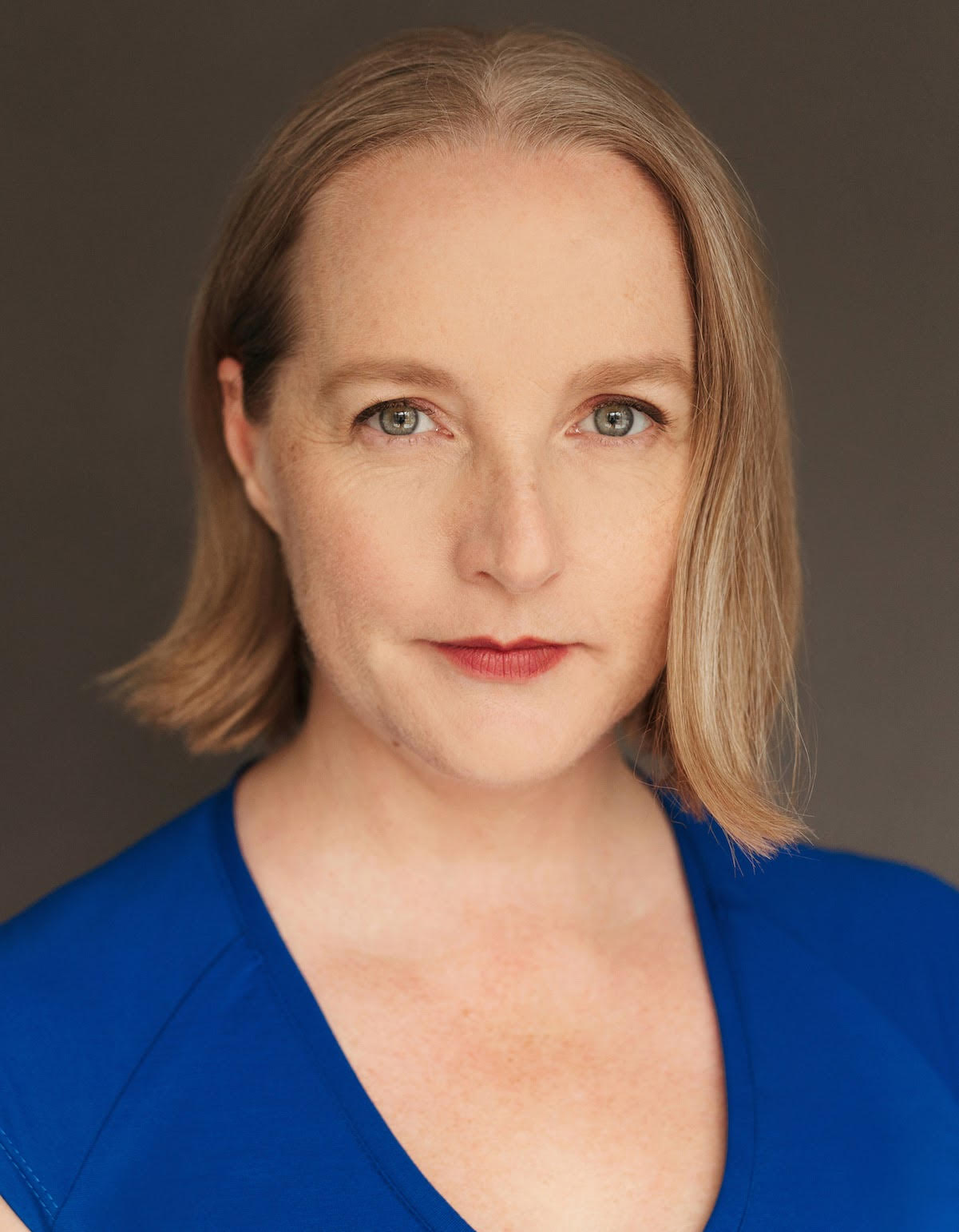
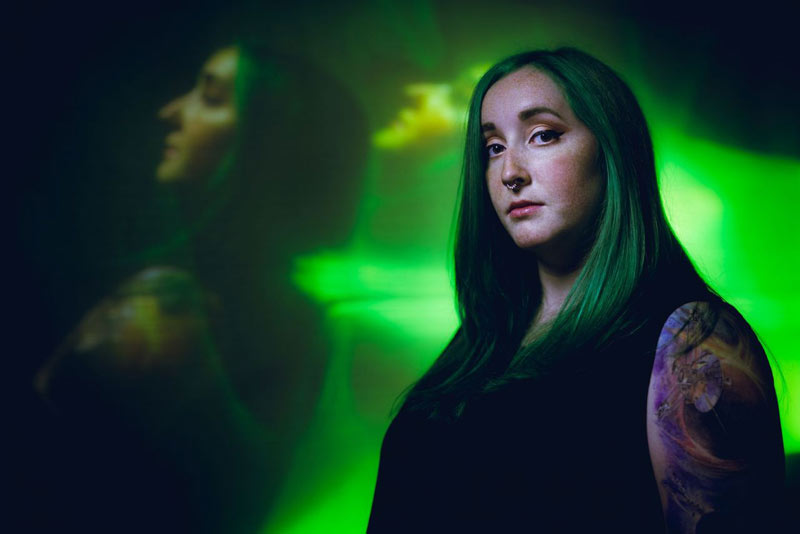
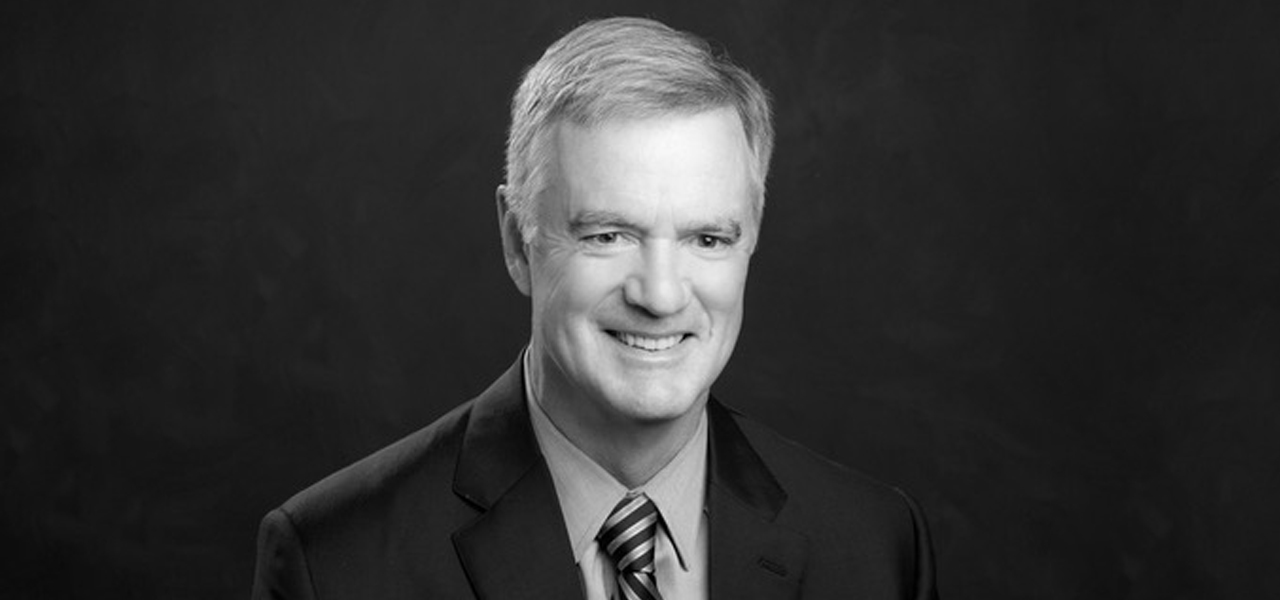
Sarah Mole

BB: Aha Newfoundland! I should have known, amazing place with amazing people.
So…who do you like to listen to or watch?

Sarah Mole: Even though I predominantly work in the classical music sphere, I rarely find myself listening to that genre. If you were to log into my music library, you’d find a multitude of things, mainly RnB, Jazz, Soul, Hip-Hop, and Funk. Top artists include: Hiatus Kaiyote, Leon Thomas, Yebba, Samara Joy, Stevie Wonder, Olivia Dean, Thundercat, D’Angelo (RIP) and Hey Rosetta!

BB: What ability or skill do you wish you had, that you don’t have?

Sarah Mole: I wish I was better at dancing! I’ve started line dancing recently in hopes of getting better, though I’m not sure it’s working too well yet. I’d love to learn a more hands-on art form as well… something like pottery or jewelry making!

BB: When you’re just relaxing and not working, what is your favourite thing to do?

Sarah Mole: In my occasional spare time, I try to do as little as possible! I have a little old lady cat named Mimi, who I love to spend time with.

Mimi

Sarah Mole: I’ve been dipping my toes into weightlifting recently, and love to try new restaurants, bars, bakeries, and cafes around the city. My goal is to try 150 new spots before 2025 finishes, recommendations welcome!! A recent favourite is Gio Rana’s Really Really Nice Restaurant (The Nose) in the east end.

BB: Wow we will have to compare notes! So who do you think of first, when I ask you to name the best singer?

Sarah Mole: Oh god, this might be the hardest question of them all. I feel moved by singers who are true to themselves, and who give honest and sincere performances, not just the ones with the best chops.

I guess I have two answers, and they both reference specific recordings. The first would be tenor Russell Thomas’ performance of Barber’s Knoxville: Summer of 1915 at Wigmore Hall. Knoxville is one of my desert island pieces, and I’d never heard it done before in a lower voice. His interpretation has stuck with me for years, his diction is so admirable, and he gives such an honest, soul-bearing performance. I love the intimacy that is offered with piano as opposed to orchestra.

The second thing that came to mind was a video I used to watch religiously in high school, Sondra Radvanovsky’s “Quel sangue versato’ from the 2016 production of Donizetti’s Roberto Devereaux at the Met. An absolute hair-raising performance.

BB: Talk about how you became associated with Toronto Summer Music.

Sarah Mole: I found out about Toronto Summer Music in summer of 2017. I was still in high school at the time, and was in Toronto to participate in a week-long vocal intensive at the RCM. One afternoon, we walked over to the UofT Faculty of Music to watch an Art of Song Masterclass with Soile Isokoski.

I began working with TSM in 2022, starting in a summer temp position. I had such a fantastic time there for that contract, I knew I had to apply when a permanent position opened up that fall!

Funny enough I didn’t connect the dots of the 2017 masterclasses until this year! I think the universe brought TSM and me back together.

BB: What does your role as “Communications & Public Relations Manager” for Toronto Summer Music entail?

Sarah Mole: My role of Communications & Public Relations Manager entails wearing many different hats! I manage our online presence, which includes social media, email marketing, digital advertising, and media outreach and includes graphic design, video editing, and website editing. During the Festival, I also do the backstage work for all TSM Events. If you’ve ever been in attendance, you’ve likely seen me running around like a chicken with my head cut off, with chairs and stands in tow!

BB: You’re too humble. I asked the question because I saw you doing so very much, and you never lost your cool as far as I could see.

So now that Jonathan Crow has finished his final year as Artistic Director of the Festival, and is now succeeded by William Fedkenheuer has the planning for next summer begun?

Sarah Mole: The planning for the 2026 Festival is well under way. William officially took over as of of September 1st, and has been hard at work ever since! There are some names in the mix that I’m really excited about!! No spoilers allowed unfortunately 🙂
Late summer/autumn normally consists of preparation for our Emerging Artist Program, finding mentors & teachers, putting together application requirements for our fellows, and planning our Mainstage Concerts. Once we enter the new year, we announce those Mainstage Concerts, and then shift focus to programming our other events, which consist of the Emerging Artist performances, and free events such as Noon-Hour Concerts, Masterclasses, Kids Concerts, Exhibitions, etc. Throughout this time, we’re also planning our Community Program, which consists of a Chamber Music, Chamber Choir, and Piano Masterclass stream. For one week of the Festival, we have 100+ amateur adult musicians come to TSM to rehearse with, learn from, and perform alongside professional musicians!

Oftentimes, we have to do some light planning for future years, 2027 and 2028 are already in the works as well!

BB: Do you have any funny / dramatic / quirky stories you can share about the festival, about last minute rescues or disasters averted, or anything at all you can share?

Sarah Mole: There’s sooooooo many. One of my favourite days of TSM is the last day, which consists of the Community Program Showcase and TSM Finale. It generally begins at 8:30 or 9 AM, and runs until 9:30 PM, and this year featured 57 performances! This means I did approximately 57 stage changes in that time, with the help of some other TSM Staff. When you hit hour 5 backstage, and week 4 of the Festival, you definitely feel like you’re in an alternate reality!

Sarah Mole, on hour 7 of the Community Showcase,
working in front of the house and backstage too.

Sarah Mole: Working at TSM has taught me to be veeeeeery quick on my feet. We’v helped with cancelled travel plans, music and iPad mishaps, last minute program changes, etc. The most hectic day in memory was when we found out Sondra Radvanovsky had to cancel her recital during the 2023 Festival. What followed after was assisting in the search party for another available singer who could have a program ready in 3 days, ensuring they arrive in Toronto, printing new programs, re-marketing the event, notifying patrons, and more. J’Nai Bridges graciously stepped in, and it ended up being one of my favourite TSM concerts.

BB:  I understand you hold a Sidgwick Scholar position with the Orpheus Choir of Toronto. What does that mean?

Sarah Mole: The John and Mary Sidgwick Scholar Program has been around since 1989, and is geared towards young professional singers. Scholars act as section leads for the choir, as well as soloists for the many of the Orpheus Concerts.

We receive rehearsal/performance honorariums, and coaching from Artistic Director Thomas Burton, and collaborative pianist Vlad Soloviev. I am now in my second season as a Scholar, alongside seven others, who you can learn about here.

One of the most impactful concerts I’ve done with Orpheus was Samuel Coleridge-Taylor’s The Atonement, with orchestra in March of 2025. The piece had not seen a Canadian performance in over 100 years. I had the pleasure of singing Mary, wife of Cleophas, who is featured in a stunning trio towards the end of the work. I got to perform alongside two dear friends of mine, soprano Rayna Crandlemire and mezzo Anika Venkatesh.

Our section begins around the 1 hour 13 minute mark, we each have a solo and join together for a trio.

BB: What upcoming performances do you have on the horizon?

Sarah Mole: I have two upcoming performances that I’m really looking forward to!

First Saturday, November 8, 7:00 PM Kingsview United Church (Oshawa), I will be singing the Soprano Solo for Ralph Vaughan Williams’ Dona Nobis Pacem, under the direction of Thomas Burton, with the RESOUND Choir – Durham Region, and Organ! I’ve been involved with this organization for multiple years now as a Choral Scholar, and I’m thrilled to now take part in a soloist capacity.

This Cantata by RVW features powerful music that calls on us to remember our shared humanity and work for peace. He takes text from the Mass Setting, political speeches, the Bible, and poetry of Walt Whitman. While the chorus and baritone soloist sing of the realities of life in war time, the soprano solo cries out and acts as symbol of peace. For tickets click here.

Next, Path of Miracles Saturday, November 15 8:00 PM Ukrainian Catholic Church of the Holy Protection of the Mother of God. For tickets click here.

This absolute beast of a work has been SO fun to sink my teeth into. Path of Miracles is a work by Joby Talbot, based on the most enduring route of Catholic pilgrimage, the journey across the Camino de Santiago, to Santiago de Compostela in Northwest Spain. For centuries, people have traveled from all over the world to walk the Camino as a means of finding inner transformation, peace, or to grieve or honor a loved one who has been lost. Much like the journey, this performance will be a challenge, inspiration, and transformative experience.

This performance will be put off by a group called Concreamus, directed by a dear friend, Kai Leung. The group is dedicated to innovation in the choral arts and the creation and performance of excellent new works by young composers. The group is made up of young singers, students, composers, and educators from around the GTA. If you want to hear some really high level singing, I recommend joining us on November 15th!

BB: What is the best or worst thing about what you do?

Sarah Mole: I take it back, this one is probably the hardest question of the bunch! I think the best thing about what I do as a performer is that I get to do the thing I love most in life, and share it with open and willing ears. Having this outlet through which I’m able to express myself is something I’m thankful for every day. On the administrative side, it’s so awesome that I get to help other performers do what they love to do, with a community that loves and cares about art.

On the flip side, remaining steadfast of your passion, self-confidence, and self-worth in the face of rejection, an ever-changing environment and political climate is a struggle that I and many tackle on a daily basis.

BB: In your two roles, as a professional and as an artist yourself, I wonder if you have any unique insights or POV’s?

Sarah Mole: Having this combination of experiences gives me more patience, grace, and understanding for how much effort goes into making performances happen on both ends. There’s commonalities in the preparation for performance between administrator and artist, in the sense that much of the quiet work goes unnoticed and underappreciated. Smaller organizations oftentimes operate on a 3-5 person team, and do the work of many more to ensure artists and audience have a positive experience. Performers spend hours upon hours learning music, exploring themselves emotionally through that music, and creating an experience for audience members to dive into.

These experiences have shaped the way I approach my own artistic and professional practice, and have allowed for compassion and resilience in trying times.

BB: Do you have any influences / teachers you want to acknowledge?

Sarah Mole: I take great inspiration from my peers and colleagues. My close friends motivate me every day to grow, love, care,, and be the best version of myself. They’re such great supporters, and I’m so grateful to them. I’ve been so fortunate with teachers, coaches, pianists, conductors and collaborators. During my time at UofT, I studied under Wendy Nielsen and briefly the great Mary Morrison. Through them, I learned that singing/my musical journey can be what I want it to be, not what others want me to be.

And of course, my family out on the east coast, who’ve been my biggest fans from day one! They never missed a performance, drove me to lessons, and helped me move half-way across the country to continue singing some silly little songs. I try to make them proud every day.

*******

Upcoming for Sarah:

Saturday November 8th Dona Nobis Pacem 7:00 PM Kingsview United Church (Oshawa)
For tickets click here.

Saturday November 15th 8:00 PM Ukrainian Catholic Church of the Holy Protection of the Mother of God. For tickets click here.

And next year Sarah and Toronto Summer Music will be back with their new Artistic Director William Fedkenheuer. When I’ve heard more details I will share them.

Sarah Mole
Posted in Interviews, Music and musicology | Tagged , , , , , , , , , , , | Leave a comment

Another look at Roméo et Juliette as a departure point for reflections on criticism & dramaturgy

This has been a bit of a bewildering week, astonishing contrasts. I repeat my self-fulfilling mantra “I am a lucky guy,” grateful for what I’ve experienced.

Wednesday was Opera Atelier’s Magic Flute, Thursday Tapestry Briefs Under Where, Friday was the burial & celebration of life for my Aunt Vera, who passed away just a few days ago, and then Saturday was my second look at the Amy Lane Roméo et Juliette, in its final performance.

And on Sunday I rested, one might say, but am trying to understand, the different impressions still reverberating in me: especially Stephen Costello’s voice.

The July Celebration of Life for my mom has been influencing everything, inevitably. I said at the time I was anxious about forgetting my mom. I find myself obsessing over my role as an observer at the theatre or concert hall. I want to write testimony, to share observations rather than to judge or assess. I believe I am most helpful in explaining how something works and what it’s doing, as though I were helping the audience digest the performance, as though I were helping the artists be understood. In grad school I recall one role we had in creating lobby displays was to unpack complexities, to make theatre more intelligible.

I wrote about Magic Flute seeking to explain what I thought Opera Atelier were doing, as I’m not sure I’ve ever seen that explained properly before. Oh sure, people say “historically informed” and/or “period performance”, but what does that include? so I broke it down, seeking to list the components and hopefully that’s useful.

I wrote about the Tapestry Briefs Under Where evening, seeking to offer useful feedback. I may have seemed to be playing devil’s advocate somewhat. I hope the pieces were useful for participants, and yes the audience seemed to enjoy themselves. It’s funny how torn I felt, resistant to being judgmental or dismissive, when we were being invited to assess the best of the eleven pieces in the show. What bothers me is that the format –using a pencil to make quick notations — wasn’t conducive to really properly capturing my feelings. I could have easily sat for half an hour making notes after each one: but then again I’m funny that way. I loved the performances, the evidence of a creative process, and felt huge frustration that the meal was snatched away in each case before I really had a chance to let it hit my taste-buds (if the analogy works…I’m not sure).

It was especially wacky to watch Saturday Night Live (Sunday via the DVR), mindful of the challenges the Tapestry composers & librettists face, comparable to the sketch-writers on SNL. Writing is writing, in the end. Perhaps I need to let go of my assumptions about opera, maybe a 3 hour opera is obsolete (as the lady sitting beside me at Romeo et Juliette seemed to suggest, speaking of how her husband disliked Eugene Onegin, and this time she came alone). Maybe the Tapestry shorts are not so much a laboratory exercise, as a new normal, when I recall how many of the “operas” (in quotes) are actually song cycles, short works strung together. Maybe operas need to be shorter, indeed there was a trend there for awhile in the 19th century and early 20th century. Maybe the goal as I define it is all wrong, and the suite of short works is the new ideal, again reminding me of what Opera Revue and Against the Grain do in bar settings, stringing arias & short scenes together into entertainments rather than long complex operas. Do working professionals have the time to go see a four hour opera..? Maybe we’re now into the realm of playlists & downloads of portions of operas, and it’s only the nerds (that’s me…guilty as charged) who trouble themselves with the questions about the bigger longer works.

The great thing about my chance to experience the celebration of life for my Aunt Vera in the midst of these performances is how tender we get in these encounters, willing to listen differently, willing to be quiet and think. I see this in church too during a Christmas pageant. How funny that I want that for Thursday night’s event. In my church days (whether as choir-member, as soloist or organist)I saw the willingness to be supporting & loving to performers, less judgmental and more about appreciation & gratitude. I recall the notion some artists shared of the theatre as a temple, that the arts are sacred. The dramaturg or the critic can be, indeed must be like a steward of the arts, like a midwife to the new creations and protective of the artists. I wish we were as respectful and empathetic to the performers onstage as we are in church or at a funeral. Can we be that way all the time, rather than only rarely? Maybe I’m sounding unreasonable but I think we get glimpses of the ideal, that can inform what we do all the time.

And so I’m going to remark again on the Roméo performance, especially knowing that the run is over. I got a private message from someone I won’t name asking “Was Romeo as bad as what I’ve been reading?” The review I published was arguably incomplete, as I spoke highly of what I saw director Amy Lane doing, even if I was perplexed at two moments (by the corset under Capulet’s clothes, unveiled strangely in the first act, and the moment at the end of the fight scene, where there’s an extra brutal murder that seems gratuitous and to no purpose). The dancers sometimes suggest to me a director who has no faith in an audience’s ability to stay awake, teasing us with endless diversions & distractions (is that so different from Gounod himself? i’ll just leave that question there….). At times that struck me as disrespectful, upstaging the singers. But then again maybe that’s reality, maybe it makes sense given what Juliette was singing about. My job is to try to see what’s in front of me, not to show up with a checklist of requirements & stipulations.

Kseniia Proshina as Juliette (photo: Michael Cooper), sings her aria while dancers seem intent on upstaging her

That being said, my basic sense of Amy Lane’s work was that she was working with Gounod, whose take on Shakespeare is sometimes sensitive, sometimes sentimental and superficial, adding some remarkable moments especially in the last act. I liked that a lot, as I said in my review.

Kseniia Proshina as Juliette (photo: Michael Cooper)

What I didn’t mention was my professor’s commentary back in my undergrad days, when he more or less dismissed Gounod for Berlioz (thinking of Faust). I think the truth is, Gounod was working with the theatre of his time, doing many of the things we see in Bizet & Puccini, namely the recurring themes and the sparkling entr’actes with clever orchestration. As I regularly try to remind myself, we need to stay in the present and observe & testify, rather than resisting and quibbling. To coin a phrase, “love the one you’re with”. Gounod isn’t Berlioz but he isn’t chopped liver either. In the last act we heard stunning music superbly played by the COC orchestra, conducted by Yves Abel. They tell the story in the way that Gounod did it. We can still see Shakespeare through the layers, and a great deal shone through.

Yes it’s nice to hear Romeo again singing the melody in the final scene from the love duet, especially when sung as well as what we heard from Stephen Costello. Yesterday perhaps knowing it was the last show he really let it all out, and I was moved.

I was glad to have the chance to see Korin Thomas-Smith undertake the role of Mercutio, well-sung throughout, as far as his Queen Mab aria, and nobly standing by Romeo in the big fight scene, dying quite beautifully, across from Owen McCausland’s Tybalt. Updating the opera to the 19th century impacted the way the fights were conducted, not with swords but with knives. I don’t know whose idea it was (between Amy Lane and fight director Siobhan Richardson) to stage it this way, Romeo relatively far from the action, instead of in the middle as we expect (given the line that the opera includes from the play) suggesting that by coming between them, Tybalt was able to sneak his sword (or knife) in to wound/kill Mercutio. I am accustomed to hating Tybalt for being such a coward, which (pardon me for this) assuages my conscience somewhat when Tybalt dies, evidently deserving his end. In this version they’re all just fighters and hurling words at each other without any elegant swordplay, perhaps laying the rhetoric bare and making the ugliness of the violence that much uglier. My job–as i keep coming back to it– is not to quibble with Amy Lane and have my nose out of joint that Shakespeare’s sword-fight is missing. I am to show up, bear witness, and seek to understand what the process is, to see what’s really happening regardless of expectations. We still had amazing arias, the layers of ballet & quirky visuals ultimately adding to the magic, not detracting.

I was impressed by both of the leads, even if my original impression when I heard ot the casting (at first two unknown imports, before Stephen Costello was added in place of the original Romeo) was to ask among my friends: why is the COC continually importing singers when there are competent Canadians available? Using a Canadian star has the possibility of building a following for a singer such as Gordon Bintner, Korin Thomas-Smith or Justin Welsh. I don’t understand why a singer we don’t know was imported for the role of Capulet. Justin was Schaunard in the last la Boheme, but should be promoted to the next level of larger roles such as Marcello or Capulet. He has a beautiful voice and is a superb actor. the guy singing Capulet, god bless him, did not sound as good as Justin. I restrain my frustration, only commenting after the last performance, because I go by the Hippocratic ideal, “above all do no harm.” But come on COC. Holly Chaplin sings Juliette, I saw her Mimi a few weeks ago. She has the coloratura and is a good actor. We watched Colin Ainsworth’s superb Tamino this week, he was asked to sing Lensky in USA while being ignored by the COC. Colin has a following in Toronto, in other words he could help sell tickets. Why is Colin ignored by the COC, after his tiny appearance in Falstaff a few years ago? Okay that’s my usual complaint. When a brilliant singer is being imported when a Canadian isn’t available, as for example Iestyn Davies in Orfeo: that’s great. Stephen Costello was superb. And yes, I liked Kseniia Proshina as Juliette, even though her presence does not sell tickets. If a Canadian is available who can sing the role, the COC should be trying to hire that person first.

I’ll be seeing Orfeo again later this week, having exchanged my Saturday subscription ticket for Tuesday night Oct 21, because I want to go see Opera by Request’s concert performance of The Consul (Bill Shookhoff’s baby) next weekend. And the following afternoon it’s the Toronto Operetta Theatre Mikado (Guillermo Silva-Marin this time).

I keep using a word that maybe needs a definition, namely “dramaturgy”. It was something I regularly encountered in grad school, where everyone used the word but no one seemed to have a working definition. You can’t define dramaturgy as “what a dramaturg does” as that’s really a circular definition. Is “the law” simply what a lawyer works with? surely one has to have a grasp of what we mean by “the law”, just as we need to understand what we mean by drama and how it works, what it can do, how broadly we might define it. I had to grapple with this, as it was central to my dissertation. I recall Eugenio Barba’s understanding dramaturgy as “the workings of drama in context”. The dramaturg is all about process, about how the thing works, hopefully holding up a mirror for the drama to know itself better & improve. It’s about process, how it works.

I’m likely broader than most given that I think I am being a dramaturg even when I watch the Toronto Symphony, observing the dramatic elements of their performance, their response to the text they are playing and the ways in which our knowledge of the work provides a context of expectations & familiarity (or lack thereof if the work is brand new). Above all I come back to the Hippocratic oath, that “above all do no harm.” Sticking to a mood of gratitude and a procedure oriented towards testimony, I feel is safest, recognizing that the audience experiences a process, and processes can be analysed & understood. That is part of testimony to report on a subjective experience. When I don’t understand I prefer to say “I don’t get it” rather than to use that as justification for some kind of judgment. Some works require multiple viewings. Amy Lane’s Romeo et Juliette was better on second viewing. I didn’t get why she did what she did with Capulet, but I liked what I saw in the last scenes.

I’m thrilled if anyone even bothers to read what I write here. Thanks for bothering with this big long blog.

Posted in Dance, theatre & musicals, Essays, Opera, Reviews | Tagged , , , , , , , , , , , , , , , , | 2 Comments

Mikado to be Revisited

Next week on October 24, 25 and 26 Toronto Operetta Theatre present their own unique version of The Mikado ….Revisited.
Gilbert & Sullivan get a bit of help from TOT’s Guillermo Silva-Marin.

Guillermo Silva-Marin, Artistic Director of Toronto Operetta Theatre

“Gilbert and Sullivan’s world needs singer/actors of extraordinary talent, and I’m pleased we’ve been able to assemble a cast with a gift for both,” said Silva-Marin.

Karen Bojti as Katisha

TOT champions totally Canadian artists.  

Gregory Finney as Ko-Ko

Mikado…Revisited features both emerging and established singers, including Gregory Finney, Karen Bojti, Madeline Cooper, Máiri Demings, Marcus Tranquilli, Stuart Graham,Emma Puscalau, and Handaya Rusli.  

Madeline Cooper as Yum-Yum

“Gilbert’s lyrics and dialogue spared no one – politicians, romantics or the social elite – while all are bound up by Sullivan in melodies that have burned themselves into the consciousness of operetta fans the world over. Our brilliant cast will charm and delight with hits such as ‘A Wand’ring Minstrel I’, ‘I’ve got a little list’, ‘The Moon and I’, ‘Three Little Maids from School’ and ‘Here’s a Howdy Do’”

This time around, Silva-Marin transforms Gilbert’s parody and places the action firmly in and around the halls of Parliament – our Canadian Parliament! – seeing no need to disguise Gilbert’s satirical targets using the veil of geographical camouflage.   

“The more things change, the more they stay the same,” but purists beware!  There may be a tip of the all-cap hat to the PMO, ICE, EDI, MAGA, METROLINX and TARIFFs thrown in for good measure. Theatre is best when it allows us to see ourselves reflected, and where better than in the halls of Parliament, where our leaders attempt, many times with unintended comedy, to provide ‘Peace, Order and Good Government!

Click here for ticket information. October 24, 25 and 26, Jane Mallett Theatre.

Posted in Dance, theatre & musicals, Press Releases and Announcements | Tagged , , , , , , , | Leave a comment

Tapestry Briefs: under where?

I had my first look at the Nancy & Ed Jackman Performance Centre on Yonge St Thursday night with the first of Tapestry Opera’s experimental programs, titled “Tapestry Briefs: under where?”

Cute title, right?

I was in the audience for the eleven short pieces.

We were invited to comment on what we had seen. They gave us a program with a page inserted that listed the eleven brief works, around five minutes each. Some felt much longer, some seemed to be over in a moment.

We were given pencils to make notes in the few moments between each piece. The promise of adequate time to make comments wasn’t met, indeed for some of the pieces we plunged ahead without a pause for note-taking. Given that my hand-writing (or should i call it printing?) is messy at the best of times, the result was something that was so illegible that I didn’t hand it in. I brought my card home because I didn’t think my scribbling was legible but also because I meant to write something here, to properly comment on the experience.

My feedback doesn’t really matter.

What we were seeing from Tapestry Opera was a bit like the outcome of speed-dating, where a composer and a librettist (the person who writes the words for an opera) were brought together to see what creative sparks might fly. The hope was that some little five minute specimen might have enough legs, enough life to lead the team further, either in a larger version of that five minute creation or at least in their creative chemistry leading them to work together on something else.

I think Tapestry Opera is the most important crucible for new music theatre that I have ever encountered. I can point to several pieces they have fostered like their step-children, providing nourishment & a home for these little ones, and we have seen them grow.

The single most impressive kid was RUR, from a composer who makes me star-struck every time I encounter her work, namely Nicole Lizée. There was a tiny piece that came about in her collaboration with Nicolas Billon, back in 2014 at an event called “Tapestry Booster Shots”, an apt name for a show in the Distillery (once a welcoming place for Tapestry and theatre experiments).

The 2014 encounter between the two Nickies (Billon and Lizée) led to a 2022 birth, the single most impressive new opera I have seen in Toronto or really anywhere in this century. My headline “RUR a Torrent of Ideas” gives you some impression of how i felt. I still remember it, wishing the COC or some other opera company would pick it up. Hey Metropolitan Opera, you have nothing remotely this interesting, why not try it?

No I didn’t see anything last night that felt as exciting as the tiny germ of RUR, but then again it’s not fair to expect that kind of magic every time. The point of this incubator is to fertilize and to support new creation, and then to see what happens. I’m reminded of the mindset of the brainstorm where one is encouraged to offer spontaneously without censoring oneself or holding back out of fear of being critiqued. Excessive criticism or negativity stifles fertility. Giving judgment at the early stage makes people think twice, makes them inhibited.

(oh no I hope I’m not guilty of that)

The audience had a good time. What I think I saw was a kind of skewed process, that may or may not reflect necessity, the practical reality of the process. Of the eleven items I saw the majority seemed to aim for laughs, seeming more like comic sketches that wouldn’t be out of place on Saturday Night Live: and we laughed. Perhaps that’s where the title of the evening was born, out of a spirit of fun. They tell you in improv never to negate, never say no, but to always build on whatever your collaborators bring to the table. No this isn’t stand-up or sketch comedy but there are some impulses that are universal.

So of the eleven I put an X on the page beside two, and considered two others possibly worth further investigation: although I felt a bit rushed making notes so haha next day, I’m not sure which ones to mention. I wonder if the expectation of having to perform something at the end of the process conditions the participants to want to entertain the audience. When you think about it: that’s surely what theatre is at least some of the time. The fact that some people study opera as a musical discipline rather than a theatrical one might lead people to forget about the audience.

One of the sketches (yes that’s what I’m calling it) blatantly played with the repetition of the Tapestry Artistic Director’s name in the piece. While I giggled I wondered: was the composer perhaps confessing to pressure? Nerves? Surely we can’t blame them when the boss’s name pops into their head.

The question I want to ask…

(and forgive me if I sound like I’m judging: but that’s what assessment encourages)

…is how something that might sustain for five minutes of laughter can be used as the basis for sixty, ninety minutes or more. Of the eleven pieces we saw only two or three seemed to have anything that might lead me further. Indeed at least two of the items reminded me of those sketches on SNL that were stretched 30 seconds past their breaking point and were already too long.

I wished for less coherence, to be honest. I wanted the shorts to be left a bit more ragged, as I felt that’s where i’m at these days. I want something to feel less finished, less determined.

My idea of opera may be obsolete so i may be the wrong person to consult. I understand the basis for opera as “big ideas”. I got that phrase from an encounter with Elliott Hayes, who took issue with something I wanted to do. The funny thing is, of course he was right that it was too big for theatre. And that’s precisely why it needed music & the operatic treatment. I was so intimidated and heartbroken in the encounter, I didn’t have an answer at the time. But upon further reflection realized: this is precisely what opera aims to do. Otherwise why make it into an opera? I was out of step with him precisely because what was missing in what I described to him was the musical part, that fills in a significant part, that must carry weight, that must justify the project. Otherwise why do it at all? In hindsight I realize now: the proposal needs to include a healthy sample of the music, arguably to begin in a musical concept fundamental to what you’re doing in the theatre. Otherwise it’s BS, or perhaps can be done without an operatic treatment.

That question lurks in the background. Why opera? We saw some of that answered in the brief fragments.

One reason comes as an implication of the old chicken & egg question. Recalling that opera is both a creation and a style of performance, one might ask: which comes first: the opera or the singer? If we write no new operas, the singers must sing anyway. Therefore one reason to write is to give them something new to sing, at least as an alternative to the huge body of work from past centuries. Some of the items I heard last night were beautiful to hear precisely because of the performances from singers Adanya Dunn, Keith Klassen, Reilly Nelson & Jorell Williams and pianists Hyejin Kwon and Gregory Oh, plus the creative inputs of directors including Artistic Director Michael Hidetoshi Mori. I think this team could have made something exciting or fun or beautiful out of an IKEA catalogue. Indeed maybe next year someone will try that and make it work: but I wonder if that can be sustained beyond 5 minutes? Knowing that you only have to make 5 minutes worth perhaps leads to something wacky & odd, precisely because they know they do not need to sustain it. No I’m not saying this suggests a flaw in the protocol, but it might be worth making a rule that no librettist or composer can make more than one jokey piece per year.

I wonder if there’s a possible creative vector to be pursued in taking existing works and playing around with them, as for instance when we change the gender of a role or re-frame a story in a new way. Can playing with existing operas suggest new pathways for exploitation, I wonder..?

And of course there’s the possibility of mining outside the realm of opera, among symphonic or chamber works that use the voice. What if Tapestry were to stage Berlioz’s dramatic symphony Romeo et Juliette, or Mahler’s Das Lied von der Erde? Pardon me if my suggestions sound strange. But opera has a history filled with adaptations.

The puppets we saw in one of the pieces offer another possible direction in reframing an existing work with a particular set of vocal expectations (thinking particularly of the restrictive thinking surrounding works for a huge orchestra such as the operas of Wagner, Strauss or Berlioz): re-framed in a chamber presentation with puppets. Suddenly Die Frau ohne Schatten, Les Troyens or Parsifal become viable if they’re done with puppets and/or projections in a smaller space with a piano or chamber ensemble. Now of course these are existing works, but pieces that have been understood as prohibitively expensive, and with forbidding vocal requirements precluding all but the biggest voices. I wonder if this strays too far outside Tapestry’s usual purview.

Forgive me if I sound like a bit of a nut, but I’ve drunk from the brainstorm-tank and am letting my mind run wild. It’s a trip, and I’m grateful for having my mind expanded. For that reason alone I’d recommend Tapestry’s laboratory, a place where they don’t insult your intelligence. Tapestry Briefs: under where? will recur again the night of Oct 17th plus matinees Oct 18 @ 4:00 pm & Oct 19 @ 2:00 pm.

Let me repeat, that I am grateful for what Tapestry has done, and look forward to their future undertakings. Discover more about Tapestry on their website.

Posted in Dance, theatre & musicals, Opera | Tagged , , , , , | Leave a comment

Opera Atelier’s beautiful Magic Flute returns to the Elgin Theatre

Opera Atelier are back with the Magic Flute for their fall season at the Elgin Theatre, doing what they do best, in the first of four performances at the Elgin Theatre Wednesday October 15th.

Accompanied by Tafelmusik Orchestra who play on period instruments, their historically informed brand of opera uses movement vocabularies aiming for period authenticity, while playing up the joyful comedy in Mozart’s late opera. They sang a modern English translation so clearly enunciated we didn’t need the surtitles, even though they had the courtesy to offer them.

Tamino (Colin Ainsworth), the Three Ladies (Carla Huhtanen, Laura Pudwell & Danielle MacMillan), plus an unidentified dragon (photo: Bruce Zinger)

Although we sit in a theatre lit by modern lighting, Gerard Gauci’s set design encourages a period dramaturgy, employing an obviously retro stage-craft that is deliberately theatrical, where flowing fabrics simulate water & air, and where the singers never pretend that we are in a realistic space. At one point Tamino points at the dead monster speaking of its dead body lying “in the wings.” The arrival and departure of The Queen of the Night inspires awe even if the moment is completely artificial.

The Queen of the Night (Rainelle Krause), Tamino (Colin Ainsworth) and the Three Ladies (Carla Huhtanen, Laura Pudwell & Danielle MacMillan), Conductor David Fallis leading Tafelmusik Orchestra (photo: Bruce Zinger)

When Tamino observes the animals responding to his playing of the magic flute, they are cute two-dimensional cutouts, rather than modern CGI, even if the effect is every bit as magical.

Tamino (Colin Ainsworth) observing the (fake) animals around him (photo: Bruce Zinger)

That’s part of the fun.

This is a deliberately old-fashioned approach to an opera that often gets revised due to political considerations such as race or gender, as in the recent production from the Canadian Opera Company. The first act flew by flying on the wings of David Fallis’s swift tempi leading Tafelmusik. I found it completely delightful to lose myself in the flawless beauty of the singing, the broad comedy of the acting and the lush colours of Gauci’s set and the costumes from Dora Rust d’Eye & Michael Gianfresco.

Most memorable as usual is that brief cameo appearance, the role that stays in your head because of the unique writing of the role, namely The Queen of the Night, here brilliantly sung by Rainelle Krause, including a stunning encore of part of her second aria featuring extra interpolated high notes, perhaps the most spectacular special effect of the night. No it’s not a long role, only two arias plus a tiny appearance during the finale, but it’s her image on the cover of the program, the one we always remember.

A snapshot of my program.

The cast features performances from Opera Atelier regulars, their voices sounding excellent in the clear acoustic of the Elgin Theatre. Colin Ainsworth continues to sing effortlessly, sounding like a young prince, with Douglas Williams as his comic side-kick, both of them completely human in their characterization, enunciating the text perfectly. Ainsworth’s Tamino is lighter-hearted than in previous incarnations, less of the pompous prince than usual. Meghan Lindsay’s Pamina is his perfect match, playing up the darker trajectories of the story, until the trials at the end.

Pamina (Meghan Lindsay) & Papageno (Douglas Williams, photo: Bruce Zinger)

Papageno finds his Papagena in Karine White, making the most of their lovely moment towards the end of the opera.

Stephen Hegedus was the main counter-balance to the comedy, his voice supplying genuine gravitas in the role of Sarastro. The Nathaniel Dett Chorale sounded splendid especially in the big climactic choruses to conclude each act. As his henchmen, Olivier Laquerre & Alex Cappellazzo supported Sarastro’s attempt to convert the two initiates, Laquerre doubling as the Speaker who first welcomes & questions Tamino, while Alex channelling the comical side of the initiation as he plays off of Papageno.

The final tableau of The Magic Flute (photo: Bruce Zinger)

The Three Ladies, who do so much in the first part of the opera before Mozart & librettist Schikaneder shift the direction of the story away from illusion towards something deeper & truer, were two longtime stalwarts, namely Carla Huhtanen & Laura Pudwell plus Danielle MacMillan, all three impeccably on pitch and hysterically funny. I have been listening to this opera since I was a little boy, a sucker for its farcical moments, which might be why I surrender to the silly stuff more than the allegory, as I loved Blaise Rantoanina’s frenetic take on Monostatos, stealing the show with his agile voice and physicality.

Opera Atelier began 40 years ago, as co-Artistic Director Marshall Pynkoski reminded us in his pre-show talk. At one time their focus was historicity, defending their choices in the face of critical skepticism as they established a recognizable brand. But whatever operatic works Marshall & his co-artistic director & choreographer Jeannette Lajeunesse Zingg undertake, there is a second unacknowledged side, namely their original ideas, that I don’t think receive sufficient credit. At times I think they’ve hidden their creativity behind the mask of historicity, given the originality we regularly encounter.

I’m curious to hear more about their spring production of Pelléas et Mélisande, coming to Koerner Hall in April 2026. Their website says “The groundbreaking production of Pelléas et Mélisande takes Opera Atelier and Tafelmusik Baroque Orchestra into the latest repertoire either company has ever produced, creating a whole new definition for period production.

I can’t wait to see and hear that. But this week the Magic Flute continues with performances Thursday & Saturday nights plus a matinee Sunday.

Posted in Dance, theatre & musicals, Opera, Reviews | Tagged , , , , , , , , , , , , , , , , , , , , , , , , | Leave a comment

Superb Orfeo revival

I was delighted by the Canadian Opera Company revival of Gluck’s Orfeo ed Euridice Saturday at the Four Seasons Centre. Although I thought I liked it well enough when I saw it in 2011 I never expected the gushing tears flooding down my face through much of Act II. Perhaps I understood it better this time.

Some of the credit belongs to counter-tenor Iestyn Davies in a superb note-perfect performance, a display of impeccable musicianship in a role requiring him to be onstage singing or reacting for almost the entire 90 minutes. His portrayal of the Thracian singer was remarkably understated, his facial expressions & physical movement as dignified & restrained as his singing.

I must also thank conductor Bernard Labadie, making the COC orchestra sound like a totally new band, their modern strings as dry and clean as a period performance ensemble, tempi fast and urgent, the stage action and the music working together brilliantly. Between Labadie & chorus master Sandra Horst, the COC chorus were the most important contributors both musically & dramatically. On set & costume designer Tobias Hoheisel’s bare stage and in his understated costuming, the chorus repeatedly framed a context for Orfeo as though they were part of the set design.

Perhaps the difference is me, that the passing of my mother in the past year has softened me up, has changed my sensibility at least for awhile, perhaps permanently. Anyone who has lost a loved one in the past few years might feel the same way about Robert Carsen’s minimalist staging, watching a lover going to the underworld to bring back the one they’ve lost. The ambiguities of the way the chorus appear allow you to project, to hang whatever emotions you like upon these images, that might connote something vaguely spiritual. And they sound & look beautiful in each act. The minimalist stagecraft is purposeful, making the chorus a bit of a Rorschach inkblot with music, where you will see whatever your psychology chooses, especially in Act Two when we’re dealing with life after death in the story.

But to repeat: yes! It worked for me and may or may not work for other people. I was overwhelmed by what felt like a glimpse of spirits in the next world. I have been listening to this music for a very long time, and it has never moved me so much.

There are only three soloists, with the biggest share falling to Orfeo (Iestyn Davies) who’s onstage, singing or reacting for most of the opera, and engaging a great deal with the chorus throughout.

Iestyn Davies and the COC Chorus (photo: Michael Cooper)

While Euridice (Anna-Sophie Neher) and Amore (Catherine St-Arnaud) are important figures in Orfeo’s conflicts, they are somewhat two dimensional in Calzabigi’s libretto, existing in the opera primarily for what they offer to illuminate in Orfeo’s story without much more than that. Given those limitations they both were remarkable singing actors. Indeed Orfeo too is very narrow in his focus, even given the length of the role, and that comes back to Calzabigi & Gluck in their reforms.

Amore engages with Orfeo’s grief both in the first and last acts, but otherwise we know nothing about his / her own feelings (phrased that way because Amore’s gender is ambiguous in Carsen’s reading). St-Arnaud brought positive energy to her portrayal, bringing each act to life when she appeared: very much as her role requires.

Amore (Catherine St-Arnaud) and Orfeo (Iestyn Davies, photo: Michael Cooper)

While we hear Euridice’s distress when Orfeo won’t look upon her, we only know her in her relationship to him, and in the drama as far as his choice to resist or finally to look back at her. The staging and Neher’s portrayal are poised on the edge between romantic comedy and something much darker. I’m grateful for the happy ending even if some purists might prefer the version of the story ending in Orfeo’s heartbreak without any rescue. Not me, especially alongside Romeo et Juliette, the other fall opera from the COC.

Orfeo (Iestyn Davies) resisting Euridice (Anna-Sophie Neher, photo: Michael Cooper)

Act One is full of emotional reflection about love and loss, the exposition of the challenges Orfeo faces. He is despondent at having lost Euridice, whose body is covered in a shroud, and then is being buried by the chorus. Amore appears, telling Orfeo that Jupiter has pity for his grief, offering him an opportunity to find Euridice, provided he can calm the Furies with his music, and bring her back to the Earth. But of course Amore stipulates that he must not look upon her or he will lose her forever.

Act Two is a fascinating mix of action and lyricism, as Orfeo enters the underworld, singing his beautiful music in response to the Furies, who relent. He then encounters the Blessed Spirits, before being reunited with Euridice and beginning their return.

In the Third Act, when Orfeo tries to lead Euridice back to the surface while obeying the command not to look back, the tone is at times almost comical, even drawing laughter from the audience. Eventually he relents, looks back, and she dies. After the celebrated aria “che faro senza Euridice” and his further expressions of despair, Amore returns, declaring that Orfeo has proven his love and so he is reunited with Euridice, who is revived amid rejoicing & celebration to end the opera.

It was in Act Two that I had the strongest response, the act that I liked best when I only knew Gluck from sheet music or recordings, especially Orfeo’s encounters with Furies & the Blessed Spirits.

This isn’t the first time that it took me a couple of views to really understand what Carsen was doing, to properly appreciate the depths of his work, recalling his Dialogues des Carmelites & Eugene Onegin. Carsen’s minimalism is much more than a parallel to the reform dramaturgy of Gluck that stripped away baroque excesses of previous decades, simplifying the way his opera works. The chorus is foregrounded, performing key functions especially in the Second Act, in both the musical & dramatic realms. I want to affirm the value of multiple hearings & viewings, that there’s no shame in not getting something the first time.

Iestyn Davies and the COC Chorus (photo: Michael Cooper)

As I ponder my tearful response to a show I saw & admired back in 2011, I question whether the revival as directed by Christophe Gayra is substantially different from the original by Robert Carsen, or if the show is largely the same and it’s just me, that I am a different person, fourteen years later. Whatever the reasons, I have my ticket to see the show again, and recommend it. I feel the seasonal impulse of Thanksgiving, a rush of gratitude for a brilliant experience.

The COC revival is a co-production with Théâtre des Champs-Elysées, Fondazione Teatro dell’Opera di Roma, Opéra Royal Château de Versailles Spectacles, and Lyric Opera of Chicago last performed by the COC in 2011. Remaining performances of Orfeo ed Euridice are on October 15, 17, 19, 21, 25.

Iestyn Davies and the COC Chorus (photo: Michael Cooper)
Posted in Opera, Reviews | Tagged , , , , , , , , , , , , , , , , | Leave a comment

William Shookhoff discusses political operas: Menotti’s The Consul from Opera By Request

Opera by Request will be presenting Giancarlo Menotti’s The Consul, an opera premiered in 1950 during the Red Scare, a time with significant parallels to our own.

I asked William (Bill) Shookhoff, the Artistic Director of OBR, about the project.

William (Bill) Shookhoff and Ken Baker, in a recent image from Facebook

Here’s the caption Bill put on a picture he posted on Facebook of himself with Ken Baker:
Reviewing the role of Mr. Kofner with Ken Baker, who last sang it a mere 47 years ago. Preparation for OBR’s performance of The Consul on Saturday, October 25th, College St United Church. Without changing a note of the score (only the language of the Foreign Woman), our concert performance will be clearly set in the present, in a country just to the south of ours. Proceeds will go to human rights organizations.”

*******

Barczablog:  How would you summarize the basic conflict of The Consul?

Bill Shookhoff: The hounding, by the authorities, of John, the revolutionary, and the pressure brought on his family.  The constant attempts by his wife, Magda, to find safe haven in another country, and the constant bureaucratic obstacles encountered at the Consulate.  Magda is definitely the central focus.

Brigitte Bogar, Soprano as Magda Sorel

BB: Why is that of interest to you

Bill Shookhoff: Menotti wrote this during the Cold War and the parallel Red Scare in the US.  By keeping the references to specific locales ambiguous, he allows his audience to fill in whatever gaps seem appropriate.  The piece has always struck me as extremely powerful, and in today’s world, it resonates even more powerfully.

BB: Remind me, what’s your background .

Bill Shookhoff: I was born in the US and my family and most of my childhood friends still live there.  Fortunately, today’s technology allows us to stay connected, but the reluctance to cross the border (from both sides) is a definite heartache.

BB: Who will be singing in OBR’s production .

Sebastien Belcourt, Baritone as John Sorel

Bill Shookhoff: It’s a large cast: 
Brigitte Bogar,
Sebastien Belcourt,
Karina Bray,
Zoe Clarke,
Brittany Stewart,
Lucas Kuipers,
Julia MacVicar,
Monica Zerbe,
Kenneth Baker,
Taylor Gibbs,
Joshua Read.

Taylor Gibbs, Baritone as Chief of Police

BB: Does this feel like an elbows up moment?

Bill Shookhoff: Definitely.  It was actually a Facebook post suggesting how appropriate this opera is today that prompted me to remount it.  Without detracting from the original piece, we will be adding some contemporary references via supernumeraries and projections.

Karina Bray, Mezzo-Soprano as Mother

BB: Do you have any favourite political operas/ works?

Bill Shookhoff: There are a few:  Fidelio, The Crucible, Death of Klinghoffer, Andrea Chenier. 

Several others, while still operatic masterpieces, unfortunately lose the political power of the historical events and/or dramas upon which they’re based (Tosca, Maria Stuarda, Un Ballo in Maschera, William Tell).  Don Carlo, Luisa Miller, undoubtedly others, manage a bit of both:  operatic romantic drama with historical/political overtones.

BB: If you get the right signal in response, do you think you might do other operas with political overtones?

Bill Shookhoff: Definitely.  Perhaps will explore the contemporary layering of this production, depending on the reaction.

BB: What’s next for Opera by Request after this

Bill Shookhoff: Salome and Cendrillon are definitely on the books for this season.  A couple of bigger projects, still dependent on funding, are in the works.  A new commissioned work, for OBR’s 20th Anniversary in 2027, is currently in development.

*******

OPERA BY REQUEST presents Giancarlo Menotti’s THE CONSUL  
College Street United Church, 452 Bathurst St (College), Saturday, October 25th, 7:30pm. 
Admission is by donation at the door.  All proceeds will go to Human Rights organizations.

Posted in Interviews, Opera, Politics, Press Releases and Announcements | Tagged , , , , , , , , , , , , , , , , , , , | Leave a comment

COC’s highly original Roméo et Juliette

It might be the best-known of all Shakespeare stories, the star-crossed lovers, dying young for love. Romeo and Juliet becomes Roméo et Juliette when a French composer such as Charles Gounod (1867) is telling the story in music.

The rental production of Gounod’s opera from Malmo Opera being presented by the Canadian Opera Company, is directed by Amy Lane, who created the complex and edgy style seen in the production of Gounod’s Faust from the COC almost exactly a year ago.

Gertrude (Megan Latham), Juliette (Kseniia Proshina), Frère Laurent (Robert Pomakov) & Roméo (Stephen Costello) (photo: Michael Cooper)

The musical side of this production comes from conductor Yves Abel and the COC’s Chorus Master Sandra Horst, between them creating a beautiful reading of Gounod’s opera.

The singing is a strength of the show, led by Stephen Costello throughout, and Kseniia Proshina, who seemed to get stronger as the opera went on. It occurs to me (as i add this the morning after) that this maybe reflects the shape of the original play. Romeo is foregrounded at first with his Rosaline obsession, with his entourage (especially Mercutio), while the story shifts to focus more on Juliet with her “gallop apace you firey footed steeds” and her machinations to be married or escape marriage with Friar Laurence’s help. And with that shift, she is less the girl and more the woman, her feelings so much deeper at the end than what we see at the start, especially if we look at her through Gounod’s lens, aka her cheery aria, that the director seems to deconstruct (see photo below). I must have another look at this show as there may be something seriously feministic at work in her trajectory. I will see the opera again from up close.

Tybalt & Mercutio, antagonists who both end up dead on the stage, were especially well sung by Canadians Owen McCausland and Gordon Bintner, and who were in my opinion the dramatic standouts in the show, and vocally gorgeous to hear. Megan Latham was a pleasure to watch and to hear as Juliette’s nurse. Alex Hetherington made a superb appearance in her big scene singing a stunning rendition of her aria. Robert Pomakov portrayed a trusty Frère Laurent.

Lane has chosen to underline many moments of the opera with dance, even more so than what we saw in Faust.

Juliette (Kseniia Proshina) singing her first big aria (photo: Michael Cooper)

The dancers added something especially meaningful when it came time for Juliette to take her potion to simulate death, a fascinating bit of theatricality suggesting how difficult that experience must have been for Juliette. It’s completely simple, a highly original staging.

Juliette (Kseniia Proshina) and dancers (photo: Michael Cooper)

Lane has updated the story to New York City, on New Year’s Eve, 1889. Her program note explains some of her thinking. Before anyone objects to the updating, I want to repeat what I said about Robert Lepage’s MacBeth that I saw last month in Stratford, that it’s no more strange to hear Shakespeare’s iambic pentameter delivered by people in togas or kilts, than to watch men on motorbikes & wearing leather jackets speaking the poetry of the Scottish Play. The opening chorus number is a big waltz tune that sounds kind of Slavic actually, and doesn’t suggest Verona to me.

When we’re taking Shakespeare and having people sing opera it’s somewhat absurd to get all fundamentalist about what can or cannot be done in a director’s interpretation. So in other words taking the feuding families to a new place (NY City), when they’re also singing arias & choruses in French, surely is no big deal. We still see the lovers, the duels, the deaths. What matters is a chance to get a new perspective, to see the story in a new way. I enjoyed that. Mercutio, Tybalt & Roméo fight with knives rather than swords, but (spoiler alert) they all still die. The lovers still do what lovers do.

I was very moved.

I also came close to giggling aloud seeing the last line of the opera in the titles, as the lovers sing “Seigneur, Seigneur, pardonnez-nous !” (Lord Lord forgive us), recalling that suicide is a sin. Shakespeare didn’t have a problem with it but oh well that’s something the librettists (Jules Barbier and Michel Carré) likely felt they had to include for their bourgeois Catholic audience. I wonder, when they asked Gounod to set that as the last line of the opera, whether either of them thought to say a little parenthetical prayer to the spirit of Shakespeare, asking him to forgive them for what they did to his text. Oh well.

Speaking of text & libretto I wanted to call attention to the greater effort made by the COC in putting up surtitles in both French & English. It’s terrific until you come to the da capo repeat of an aria or a chorus, when for some reason the titles aren’t there. I would ask the people who created the titles: if you don’t need to translate the last lines of (say) “ah leve toi soleil” why translate the first part, indeed why have titles at all?

Yes the COC surtitles are a terrific step forward, invented in the 1980s and changing the world of opera. That doesn’t mean the innovation is already perfect anymore than Monteverdi’s dramaturgy represented an operatic ideal in 1600 that could not be improved. Perhaps things can be done better? But I don’t know that I have ever seen anyone discuss the titles. It was possible to look up at the text in French as sung and to see something beside it in English that was sometimes different from what the French text said. Should the translation represent a precise translation? Or should they aim for something poetic, Shakespearean? I am not proposing to answer the question, but to my knowledge this question has never been posed, at least not here in Toronto. I’d love to hear your thoughts.

The production of Roméo et Juliette continues at the Four Seasons Centre with performances October 8, 10, 14, 16 and 18.
Posted in Opera, Reviews | Tagged , , , , , , , , , , , , , , , , , , , , | 2 Comments

Scarborough Philharmonic Voyages

For a little while I was able to go far away from the world, as Scarborough Philharmonic Orchestra helped me & the enthusiastic audience escape at their Friday October 3rd season opener, a concert titled “Voyages”.

Escapism works for me, voyages into the imagination via the exotic and flamboyant orchestral sounds from Nicolai Rimsky-Korsakov, the Tall Ships from Halifax Harbour by Elizabeth Raum and then the pure emotional schmaltz of Max Bruch’s 1st violin concerto, particularly the virtuosity of violinist Conrad Chow.

Conductor Ronald Royer was a music teacher at University of Toronto Schools before his retirement, the school where young Conrad was a student under Ron’s direction. Now Conrad has gone on to an exciting career as soloist and as a teacher himself. I also went to UTS in another century, very proud whenever I feel the connection. It helps that both Ron & Conrad are such friendly approachable people. Conrad allowed me to corner him for a selfie before he got into his formal concert attire.

Conrad smiles while I juggle my camera

Ron continues to be a passionate educator, both in the programs he curates as the SPO Artistic Director, and as a music director helping his orchestra play better. And his sparkling little talks that he gives before the performances aren’t just witty, they help us to understand the music we’re hearing, taking us deeper into each piece. I am thankful for a good teacher who can show me something and help me experience the music in new ways.

We began with Scheherazade. I’ve been listening to this piece since I was a little kid, always intrigued by the exotic colours suggesting the 1001 Nights. Ron reminded us that the story was about a king who is heart-broken by a faithless wife, who vows to kill a new wife each night: but Scheherazade’s storytelling night after night seduces and finally wins him over. Ron explained that the violin soloist is portraying that storyteller, Scheherazade. Alex Toskov, the SPO Concertmaster, is featured throughout the piece.

Alex Toskov, SPO Concertmaster

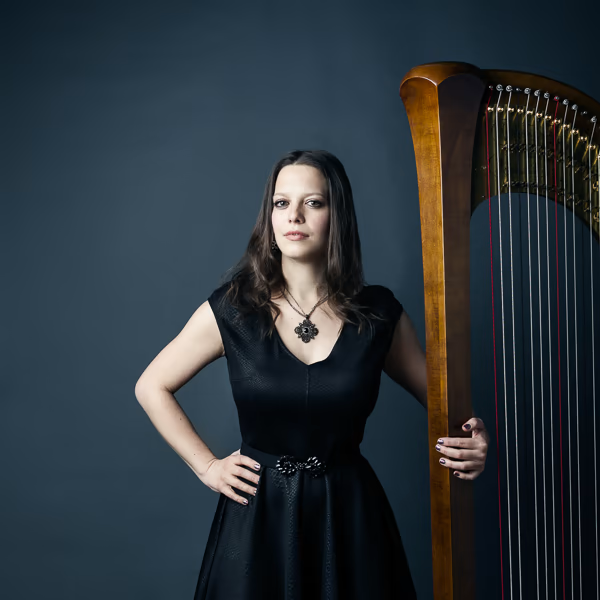
Alex’s thoughtful solos were often accompanied by harpist Liliana Dimitrijevic, a stunning pair setting up the story-telling scenarios. The big theme from the lower brass in the orchestra represents the domineering husband. Rimsky-Korsakov gives colourful solos to almost every section of the orchestra, from top to bottom, including several gorgeous cello solos, the piccolo, flute, oboe, English horn, bassoon, trumpet, trombone, french horns & tuba, as well as percussion. I mention instruments rather than people because I’m not sure which player in the section had the solo, but the level of playing was gorgeous, everyone stepping up for their big moment in the spotlight.

I was struck by the bonus we enjoy sitting in the relatively small Scarborough Salvation Army Citadel, seating perhaps 400 people in a lively acoustic without excessive reverberation, basking in the richness of the sound from the soloists, and thrilled by the gorgeous intensity of the sound in the climactic passages. It’s such a simple thing, really, that instead of sharing the sound with over 2000 people as we do at Roy Thomson Hall, or 1100 people at Koerner Hall, there is so much sound, so much detail when it’s so intimate, hearing the timbre of each instrument so clearly. I am not exaggerating when I invoke that overused phrase, to call it an immersive experience. We hear and feel the music so much better. And it helps that Ron led a really dynamic reading of the piece, playing up the big climaxes, holding nothing back, reminding me again of Ron’s background in film music. The SPO were positively cinematic, sounding better than ever.

After the interval we heard from composer Elizabeth Raum describing her suite Halifax Harbour, and Tall Ships, the piece we heard that’s an excerpt from the longer piece.

Composer Elizabeth Raum

In contrast to the exotic glimpses of Sinbad & the 1001 Nights, we were in a Canadian sensibility, the energetic sound of the orchestra painting pictures that feel much closer to home, and apt for this year of “elbows up”, even if we were again encouraged to think of travel, this time voyaging out into the Atlantic Ocean. But it wasn’t nationalism on our part that we embraced the SPO’s enjoyable performance.

Next came the Bruch violin concerto and Conrad’s turn. I spoke of schmaltz because I find that Bruch invokes a certain kind of sensitive soulfulness, even if he wasn’t Jewish (and has been mistaken for Jewish because of the way he composes), just sympathetic to cultural associations, especially in his pieces for violin. I find that the first movement suggests an intense internal meditation, underscored by orchestral writing that features a rhythmic pulse that reminds me of a beating heart. The violin part flies high above the lower instruments, Conrad’s luscious tone filling the Citadel space.

We segue to Bruch’s slower second movement, a melody that soars in the simplest most direct expression, breath-taking beauty. And then the last movement allegro energico hits us with the extroverted melody from the violin soloist, a tune with suggestions of celebration and dance that I always find stays in my head for days afterwards. It was so beautiful, so uplifting. Speaking of lifting up, we were jumping up on our feet afterwards, thanking Conrad and the SPO for the excitement of this concerto and their performances.

At the beginning of the concert we had the opportunity to meet Michael Jones, the new Executive Director of the SPO, who gave one of the most interesting & heart-felt Land Acknowledgements I have ever heard.

Michael Jones, the new Executive Director of the SPO

I’m looking forward to seeing & hearing where Michael and Ron lead the SPO in the years to come.

The Scarborough Philharmonic will be back November 1st in a varied program titled “Crossroads”. To find out more about the program or to get tickets click here.

Posted in Music and musicology, Reviews | Tagged , , , , , , , , , , | Leave a comment

The lustful lessons of Slave Play

Wednesday October 1st was the opening night of Canadian Stage’s production of Slave Play, by Jeremy O. Harris, a very original work getting its Canadian premiere at the Berkeley St Theatre, directed by Jordan Laffrenier.

The premise is only part of what makes Slave Play so good, a series of inter-racial couples undergoing a kind of therapy via psychodrama role-play, what they call Antebellum Sexual Performance Therapy. You’ll recall that “antebellum” is another way of speaking of the period before the American Civil War and emancipation. We find that out in the 2nd Act, when the therapists take charge of a series of analytical conversations, explaining to us what we’ve seen in the 1st Act.

But OMG to begin? it’s not at all clear what we are seeing. I love the ambiguity and perplexing mystery of what we see to begin. It’s not at all clear what we are seeing. First we meet Kaneisha (Sophia Walker) sweeping the floor, but inspired by modern music to twerk as she works.

Kaneisha (Sophia Walker) , photo: Dahlia Katz

Jim (Gord Rand) comes in, speaking in a southern drawl as Kaneisha’s white overseer, a scenario that becomes progressively more sexual. Hm we’re not watching something from the true antebellum South, not when a woman who is working as a slave is twerking to modern music.

Next we encounter Alana (Amy Rutherford), a well-dressed white woman who might be the wife of the plantation owner, who calls out to Phillip (Sébastien Heine), a well-dressed mulatto who is instructed to serenade her on his violin, that is before things again heat up between them. The sex-toy she has in her hands again functions as a bit of an anachronism, making it crystal clear that no we’re not in antebellum Kansas anymore.

The third couple we meet is first Gary (Kwaku Okyere) the overseer of Dustin (Justin Eddy), a slightly confusing visual given that the overseer in this case appears to be darker than the slave. But again things become physical, first with a struggle between the two men that then leads to intimacy.

(L-r) Alana (Amy Rutherford) & Phillip (Sébastien Heine); Gary (Kwaku Okyere) & Dustin (Justin Eddy); Kaneisha (Sophia Walker) & Jim (Gord Rand), photo: Dahlia Katz

It becomes much clearer in the Second Act with the arrival of Patricia (Rebecca Applebaum) & Tea (Beck Lloyd), who are two young psychotherapists, trying out their new experimental therapy.

Patricia (Rebecca Applebaum) & Tea (Beck Lloyd), photo: Dahlia Katz

I find the structure remarkable, inverting the usual. In the plays of Shaw you might see exposition in Act I, development & complication in Act II and a kind of discussion or debate for Act III. What’s provocative & profound in Harris’ dramaturgy is how we get something mysterious that is only explained/ debated for us in the Second Act, with discussions from the participants, some unpacking their feelings, some expressing their profound doubts about the new therapy. If this were opera it would be as if we had arias in the first act with the recitative explaining the drama only coming later. Because we’re watching role-play in the first act, artificial use of costumes & accents yet anachronistic (for instance in modern twerking music) we are in a kind of metatheatre, artificial performances. Unless you have read the play it’s a bit perplexing, and in the best way. There’s so much richness, so much depth I am dying to see it again.

The last act is in some respects the punchline, and I’d rather not give it away. except to suggest that Slave Play sits neatly on the knife edge, managing to be both a satire full of laughter and a social commentary with moments of genuine pathos.

When I looked for and found the play online I discovered that each Act has a title. Act 1 is “WORK”, Act 2 is “PROCESS” and Act 3 is “EXORCISE.”

Slave Play reminds me strongly of the group therapy and psychodrama I experienced back in the 1980s, complete with the mixture of committed believers and skeptical agnostics. We balance on the edge between a kind of sex comedy and a serious social satire, and I suspect the key might be right in the set design of Gillian Gallow, as we see the show enacted in front of a mirror. You will likely see yourself in this play, but of course it will reflect what you bring. Skeptics will see reason to be skeptical, believers something to believe. The jargon of the therapists is way over the top at times, but they’re not the only ones generating humour.

At a time when white supremacy seems to be making a comeback, thinking especially of our neighbors to the south of us, this is a timely play affording total escapism. I did not expect to be swept away in the complexities of the interactions of the three couples. I found Sophia Walker’s Kaneisha especially sympathetic, Kwaku Okyere’s Gary full of raw vulnerability. Speaking as someone who read most of the play beforehand, I still found so much complexity that I’m dying to see it again. If you haven’t read it the text is likely to be even more absorbing, the ambiguities likely even more challenging. There are some moments that might be triggering especially for persons of colour. But I believe this is ultimately a safe treatment of explosive issues of race dynamics & sexuality.

Seen live, the music adds a remarkable dimension, as though something unconscious is released, something Patricia & Tea (the therapists) call “musical-obsession disorder”, that they say with a straight face (and the audience didn’t laugh although I did softly). There are a few music credits for the show, plus the subtleties of the sound design from Thomas Ryder Paine, and honestly I don’t know whom to credit except to say that this adds another dimension to the play.

Patricia & Tea also describe Racialized Inhibiting Disorder” or RID for short. That’s more serious in my view, although depending on the way it’s presented, there’s a ton of possible comedy buried in this text. Laffrenier manages to balance the comical & serious, the agnostics doubting the value of the new therapy with those who believe. It’s quite exciting.

Slave Play runs until at least October 26th. I strongly recommend you see it.

Posted in Dance, theatre & musicals | Tagged , , , , , , , , , , , , , , , | Leave a comment