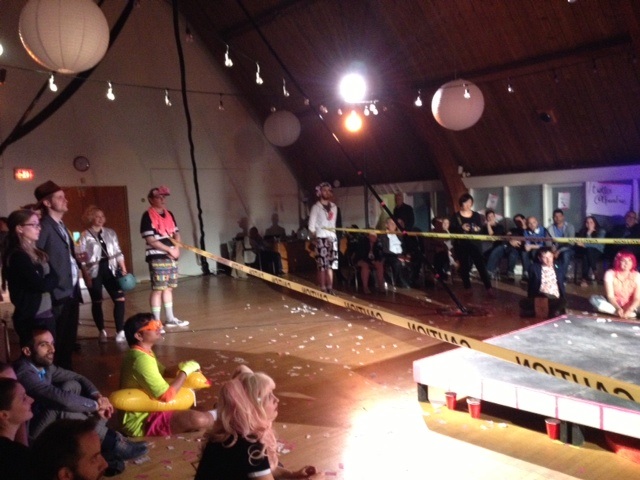
A friend took me to Walrus Talks tonight. Evidently the magazine organizes these colloquia to investigate a topic such as tonight’s theme, spirituality. It seemed apt that we were at Trinity-St Paul’s, a space I think of as much for its acoustical properties as its congregation.
Seven different presentations appealed to different sides of our subject. I had hoped there would be more interaction, perhaps even some debate, but maybe I’ve spent too much time watching CNN lately (they’re discussing Cruz vs Trump in the background as I write this). Perhaps a better way to understand this is to go back to The Walrus itself, as the talks are like a live magazine of sorts. We have several different angles/perspectives.
I came to the evening thinking of myself as a regular church-goer, a believer who comes at Christianity via the musical side. I wrote about this a couple of years ago, that for me I find myself most moved by music rather than sermons or appeals to my brain.
When I spoke to my friend afterwards it was clear that we weren’t persuaded by the same talks. I was surprised at how persuasive Timothy Caulfield was in his atheistic presentation. Curiously, the talks I’d expected to find persuasive –from members of established churches—left me cold, or even left me nodding off in fact, because they were so institutional, so (sigh) religious.
I was struck by an unfortunate thought about the differences between religion and spirituality. Only one talk –Michael Ingham in his conclusions—addressed the difference between the two in positive and concrete terms, namely the tougher objectives of religion. In other places, religion manifested itself simply as a more institutional & rigid body of thoughts. But in fairness I shouldn’t mistake a belief system for the success or failure of a person at a podium.
Natalie Bull spoke about the vanishing places of faith, either being sold to be made into condominiums or rebuilt / renovated, a talk with great resonance in this renovated church space. Deferred maintenance is something many of us have to live with on Sundays. Faith and spirituality aside, there is a huge transformation underway as the demographics lead to the closure of many churches. It was echoed in the sanctuary filled with white or gray-haired listeners, suggesting that the whole spirituality / religion question is one that seems far more interesting to those of us at the senior end of the demographic spectrum.
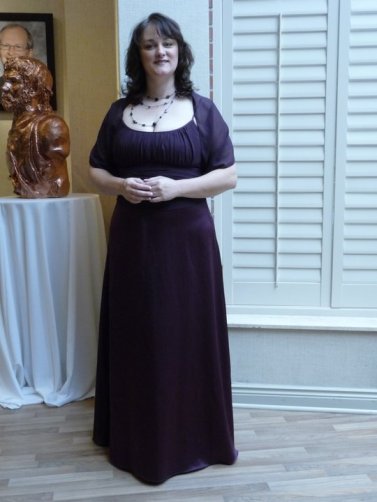
I was pleasantly surprised to see the larger than life personality of Nicole Brooks appear, bringing the space to life. If each of the previous talks were understood to have an impact somewhere between 1 to 5, Brooks’ talk must have been worth 1,000, given the way she galvanized the listeners, old-time religion imported into her talk. She is a very special talent, although –excuse the heresy—I would rather have heard her sing than lecture.
Nicole Brooks
Talking to my friend afterwards, it was clear that the assortment of topics was like a smorgasbord, perhaps well-matched to the diversity of those in attendance, an assortment of viewpoints to mirror those of us listening. He liked the ones that left me cold, and vice versa. To each their own.
Bernard Herrmann died on Christmas Eve 1975 the day after he had finished recording the score to Taxi Driver. I can’t help thinking of the score as a natural conclusion to one of the big issues of his life.
Back in the 1940s it was a different world. Herrmann began his film-scoring career with Citizen Kane in 1941.
A few years later, a pair of films appeared with an interesting common element. Each had a melody about the beautiful young woman whose story was told in the picture, a tune that would later become a popular song.
Laura (1944) was scored by David Raksin, including a haunting song that was strongly associated with the beautiful woman at the centre of the story, surrounded by men who obsessed over her. Lyrics were added later, and the song became a huge hit, one of the biggest hits in history.
“Stella by Starlight” is the song played at the piano by the young composer who will eventually get closer to the enigmatic Stella, in Uninvited(1944), score by Victor Young. Again it’s only later that the song’s lyrics were written and the song became a jazz standard.
I see those songs as a bit of subtext for what’s to come later.
In the 1950s Alfred Hitchcock and Bernard Herrmann began a successful collaboration. I don’t think it’s a radical thought to say that they brought out the best in one another:
The Trouble with Harry (1955)
The Man Who Knew Too Much (1956)
Vertigo (1958)
North By Northwest (1959)
Psycho (1960)
The Birds (1963: Herrmann was a consultant on the bird sounds; there’s no music to this film)
Marnie (1964)
By this time the world and cinema had changed. Whether it’s A Hard Day’s Night, or The Sound of Music, soundtracks were big business and a new revenue stream for the world of film.
And so while the precise truth about the next chapter in Hitchcock- Herrmann saga isn’t known for certain, we know that Herrmann composed at least part of a score for Hitchcock’s next film, Torn Curtain. Whether it was the director or the studio who insisted on something jazzier, possibly with a popular song that could help attract a younger audience, it’s understood that after a confrontation Hitchcock fired Herrmann, who had chosen to compose in his usual style rather than bowing to studio demands.
Let that be the context for considering the haunting saxophone tune in Taxi Driver, Herrmann’s last.
I can’t help noticing how the theme for taxi driver is like one of these tunes obsessing about a woman, not so far from the songs in the 1944 films… Travis Bickle (the taxi driver) is lonely and sexually frustrated. As he wanders the city in his cab, it’s inevitable that his mind would be populated by a romantic tune that might be about an unattainable girl, not so different from Laura or Stella. In this case the film has a pair of women, the unattainable Betsy, played by Cybill Shepherd, and the young girl Travis rescues, namely Iris, played by Jodie Foster.
For me the subtext of that tune is not just the sexual frustration of this violent man driving a cab, but the additional frustration of the composer. Isn’t it interesting how Herrmann shows us posthumously that yes he could write a good jazz tune.
I saw the second of two performances in the world premiere run of Isis and Osiris, Gods of Egypt, a new opera composed by Peter Togni from a libretto by Sharon Singer, presented by Opera in Concert – Voicebox.
There are so many possible ways of approaching a write-up in response to a new work, I hope you’ll forgive me if I insult your intelligence for a moment in summarizing some of the possibilities
Examine the libretto as a way of presenting a story and/or investigation of themes
Examine the setting of the libretto by the composer and how he seemed to respond to its opportunities & challenges
Examine the production as a way of presenting the opera
Examine the performances
While Isis and Osiris has taken a few years to come to this point of fruition, I don’t believe the journey is complete. While librettist and composer may be fully satisfied with their creations their baby has only been birthed into the world with this production; they likely would hope to see it produced again somewhere else. I have no idea whether any Canadian opera companies would be interested in presenting the work, but this is an opera with several moments that are wonderfully operatic echoes of moments we’ve seen before:
There’s a torture scene, as you might recall from Tosca
Because we’re in Egypt I can’t help thinking of Aida, especially when we watch Osiris buried alive, or in the choral invocations of ancient gods. I was also mindful of Akhnaten, both because of the spiritual overtones of the story and because of the composer’s occasional use of pattern music, as meditative as anything you’d find in Glass’s scores.
There’s a drinking song with chorus as part of a betrayal, as we might recall in Otello, including a treacherous baritone concealing his real intentions behind a friendly face, very much like Iago.
There’s a dark warning near the end from Seth that reminded me of Loge’s words of foreboding at the end of Das Rheingold
Composer Peter Togni
But nevermind old operas. Togni’s music is wonderfully easy on the ear. Much of the time it’s pentatonic, the vocal lines following the kind of direct expressive logic opera composers have mostly avoided for the past century. At times there’s pattern music, the minimalist meditation we’ve seen from Glass or Adams, while at other times the textures are subtle, Togni’s easy arioso gobbling up large chunks of text, effortlessly telling the story.
It needs to be mentioned that Robert Cooper led a small band relying at times on the keyboard (I heard at least two timbres, including harpsichord and harp, so it’s possible that other sounds were synthesized as well): but this is the way of the world for this expensive art-form. Earlier in the work there was spoken dialogue between musical segments (I think they’re “numbers” in the classical sense, although I’m hesitant given that I haven’t seen the score), while later Togni did something resembling recitative, in his use of tightly structured bursts of dialogue punctuated by dry little bits of harpsichord to help shape the exchanges, a very contemporary version of recit.
In case you can’t tell, it’s difficult to separate out those four tasks (the ones I list above), especially when, on first viewing/hearing, one can’t easily distinguish between the achievements of the libretto in structuring a story, and the setting by the composer to make something out of that libretto. While our experience of this new work is filtered by the performers & the interpretation by the director, I am inclined to say
whatever shortcomings one might spot in a production & its interpretation of a story (some imposed by the limitations of a small stage that was at times jammed full of personnel including a full chorus and a bare stage), I am inclined to cut the director slack. We’ve had over a century of Tosca and Butterfly, (whereby directors figured out ways to present the complications of the story, singers struggled to figure out how to sing difficult scenes & arias, set designers worked out concepts of the story), therefore I won’t hear of taking the premiere production to task. They’re like the midwife, and likely just as unconditional in welcoming the new baby into the world.
The first time out, each performer is like a figure-skater going out onto a lake in April to do their triple axels, not knowing whether their landing will be solid or go crashing through thin ice. Both of the title roles –Michael Barrett as Osiris and Lucia Cesaroni as Isis—had passages of difficulty to negotiate. I wondered if Barrett was cast because of the weight of his voice, at times resembling a heldentenor, even though he heroically sings about peace rather than war, in a real sense against the vocal type; would it have been wrong to seek a lighter sound? In contrast Michael Nyby’s baritone as the warmonger Seth plays much more according to type, reminding us (as mentioned) of Verdi’s Iago. I wondered if it would be possible to have a lighter tenor sound but of course that likely would have been swallowed up by the orchestral sound, so they likely had no choice.
I need to see it again to really understand the expressive opportunities in this work, to appreciate the ways in which the librettist Singer structured the story, and how Togni responded to what Singer gave him…
I hope to see Isis and Osiris again. I am not saying it needs revision but there are places where I think the opera could be a bit longer, to let the action develop a bit more. For example, when Nepthys hears that Osiris has been murdered, she tells Isis more or less between the scenes, and then Isis’s response to the news begins the next scene, a cinematic effect; I’m not saying it’s bad, but there’s room to let Nepthys tell her, to give more to her character, just as Puccini threw a few crumbs to Suzuki (for example) in the background of the big story of Butterfly. I think, too, that there’s room for more at the end, for a more fully elaborated apotheosis. Osiris’s return could be drawn out more, I believe, a magical moment that didn’t seem magical enough, not momentous enough, even though it was beautiful. To compare it to the first opera popping into my head, Parsifal’s healing of Amfortas –which only requires a momentary touch of the spear—goes on for awhile afterwards, including a children’s choir. After so much suffering and anguish, I believe there’s room for a bit more celebration, although on first hearing my subjective sense of the music may be distorted. I enjoyed Togni’s music, and want to hear more.
Opera in Concert artistic director Guillermo Silva-Marin and libretttist Sharon Singer
Barrett and Cesaroni spend much of the opera in very separate worlds. Isis reminds me of Juliet and Cleopatra, a pair of lovers who really come into their own in the second half of their respective plays; similarly Isis becomes the most important person in this opera in the second act, as she seeks out Osiris. Cesaroni was very much up to the dramatic task, and sounded wonderful. I believe that artistic director Guillermo Silva-Marin knew what he was doing in his casting, recognizing that the key antagonist is Seth, and so he cast the powerful voice and presence of Nyby, who more or less steals the show. His last moments onstage are chilling, as if warning us of the madness that still rules our world to this day. Julie Nesrallah was a solid presence as Nepthys, while Leigh-Ann Allen offered a brilliant soprano sound as Sennefer. Stuart Graham was very sympathetic as the Grand Vizier.
The Opera in Concert Chorus were used more than usual (they’re usually standing at the back in formal attire holding their scores), spending a great deal of time onstage, participating in the action without scores. In a real sense they and their chorus-master Robert Cooper –leading the orchestra—were the stars.
If you can judge a book by its cover – or a small performing arts company by its poetic name – then it’s a match made in heaven, this idea for Travelogue: a collaboration between Bicycle Opera Project (opera with bicycles?) and Toy Piano Composers (what would Schroeder say?). Each company’s oxymoronic name flies in the face of norms & expectations, to signal a playful & non-typical attitude.
Soprano Larissa Koniuk– founder & artistic director of Bicycle Opera Project– is often seen in the vicinity of a bicycle (photo: Dahlia Katz)
Tonight was the second of two presentations of Travelogue, to begin Toy Composers’ Curiosity Festival, running until next week, but the only one of the three that also involves BOP. The other two programs are
Playback April 6 & 7 at the Canadian Music Centre
Metal April 9 at the Heliconian Hall
It may be that the notion of the travelogue as the structuring concept behind this brief anthology of short works was inspired by BOP’s nomadic habits, riding around with their entire show attached to their bicycles.
April by Monica Pearce
Road Trip by Elisha Denburg
My Mouth on Your Heart by August Murphy-King, libretto by Colleen Murphy
Waterfront by Tobin Stokes
Travelogue used the first floor space of the Arts & Letters Club, a wonderful showcase venue for voice (for example, this is where the Toronto Wagner Society usually introduce their scholarship winner), with rather rudimentary stage facilities. Each of the operas received a fair hearing, in collaboration with the delicate playing of Wesley Chen, Piano and Music Director, Anthony Thompson, clarinet / bass clarinet, and Ilana Waniuk, Violin.
April makes a great beginning to the anthology, a curious piece of meta-opera that suggests layers upon layers including a reflection back upon the cycling opera company. “Lucy is riding her bike up the Don Valley trail”, and there we are with an opera putting a bicycle onto the stage, and doubly self-reflexive. When the story begins to repeat, the ambiguities multiply, as we wonder what’s in the present, what’s merely in Lucy’s head, as she seems to watch herself meeting someone again and again. I would have wished it to continue a bit longer, as we didn’t seem to have nearly exhausted the possibilities. Call me old-fashioned, but I think there’s enough in this one scene to fill a whole evening, especially given the subtleties of Monica Pearce’s score. I was thoroughly sucked into this world of images by soprano Larissa Koniuk, tenor Chris Enns and especially BOP newcomer mezzo-soprano Marjorie Maltais.
Each of our operas is given a preamble from the composer, a part of the evening that was somewhat uneven, given that at least one of these was a witty performance, another a charming talk resembling stand-up comedy. But in fairness this is experimental, the preambles representing something introductory. I hope I don’t seem like a churl for wishing that the same degree of commitment and rigour had been shown by all four.
Road Trip was the beginning of something that could be much more substantial. As with the output of the Tapestry Opera libretto laboratory, your mileage may vary, as some of these pieces seem more finished, while others represent the beginning of something that could eventually bear fruit, especially after more workshopping.
The title and description had me cringing as I read about it in the program, as I wondered how My Mouth On Your Heart could possibly work, especially given this synopsis:
Liam travels to the side of the highway where his girlfriend, Anna, died when a drunk driver smashed into her car. Anna’s pointless death has left Liam in anguish. Standing alone on the highway, clutching a flower, he finds himself travelling back and forth between Life and Death, trying to make a decision about where to go with his own grief.
I was won over, as this turned out to be the highlight of my evening, the score, libretto & especially the performances, breaking down my resistance. Enns, Maltais (as the death-figure) and Koniuk (the life-figure) engage in a spectacularly passionate bit of singing. This is surely the most operatic part of the program, where we justify the process. For the other three, charming as they are in places, I’m not persuaded that those pieces really needed to be set to music, that the music is an essential element. In this case –where the subject is daunting to any actor let alone to a composer—August Murphy-King’s composition justifies the effort, and redeems everything else in the evening. We’re into a completely irrational realm of passion, where it doesn’t matter that one occasionally couldn’t hear a word, when the music was so sublimely articulate. The concluding lines of the opera utter the title, something that’s redeemed both by the way it’s composed & the manner in which it’s sung by Chris Enns, who usually does the heavy-lifting for BOP on the dramatic side.
L-R Larissa Koniuk, Chris Enns and Marjorie Maltais (photo: Dahlia Katz)
The final work followed the BOP practice of ending on a lighter note, this time the comedy of Waterfront, a fun bit of science-fiction fluff in an operatic vein. Geoffrey Sirett was again defying audience members to keep a straight face (I couldn’t manage it), alongside Koniuk and Maltais.
I had the pleasure of hearing the Toronto Symphony play Rimsky-Korsakov’s Scheherazade the final three times they played the work on their recent Florida tour. As a souvenir of my trip, I’ve had a CD in the car for literally months complete with Peter Oundjian’s autograph, their Chandos recording from 2014. By now I know every wrinkle of this recording, that’s admittedly a bit different from what we heard live.
It seems fitting to be looking back at Florida and the TSO this past few months, with this week’s announcement (read it here) of the mutual agreement between the TSO and Jeff Melanson to part company, after some bombshells in the newspapers about JM’s private life. While I was reminded of Bill Clinton –and the talk of impeachment swirling around him in the 1990s—there are some key differences. The people contemplating handing over their money to the TSO care about optics, superficialities, and that’s pretty much as expected.
There’s a certain irony that the big headline-grabbing story with which Melanson first caught my (our?) attention has huge resonances with the current story. Remember Valentina Lisitsa? I confess I was a bit infatuated with her forearms, in love with the fluidity of her Rachmaninoff even if I hadn’t yet read her tweets.
In a curious sort of justice, Lisitsa’s appearance was cancelled for behaviour having nothing to do with her pianism. How apt that the TSO now seems to do to JM what he did to VL: to make a decision about performance based on criteria having to do with optics (her political tweets, his personal life), rather than performance.
I have a confession to make. I was a disgruntled ex-subscriber to the TSO. I’d gone to hear concerts and seen them play brilliantly in one part of the program, then indifferently after the interval. Part of it was the sound in the hall (was i unhappy or the players? maybe both), although the acoustics are better after some money was spent to renovate. It was maddening, as I wondered why performances were so variable. But maybe all it took was time, as gradually more and more of the players were Oundjian’s young discoveries, a growing consensus that became a kind of critical mass. With Jonathan Crow and Joseph Johnson front & centre playing solos in the Rimsky –as they do on the CD—this is more and more, an orchestra who seem genuinely committed and happy, and at times brilliant. The birthday concert for Oundjian featured a love-letter from the orchestra, also known as the Pathetique Symphony in the most committed playing I’ve heard from this orchestra this century. We go back a long way (me and the TSO that is). I recall hearing Jessye Norman sing Wagner with Leinsdorf leading, I remember Ancerl’s Beethoven and Davis’s Mahler. The TSO are back, in the same way that Justin Trudeau says Canada is back: after a struggle in the wilderness. It doesn’t matter. I’m won over completely.
I said something relatively nonsensical to Peter Oundjian who had the grace not to roll his eyes too outrageously, when I compared him to a talk show host. No I didn’t mean I disliked his chats before the shows (which I miss! …perhaps he’ll be reinstated for awhile?). I was thinking of the way he led the Rimsky. He was among friends, in this magnificent work full of solos and showcases. While Crow gets the lion’s share of virtuosic moments, he shares the spotlight. I watched the delight on Oundjian’s face leading this talented young group, as I watched his genuine appreciation for what he was hearing. The tempi were left in the hands of the soloists at those moments, while the leader simply smiled his blessing on the players.
In Florida the tempi were wonderfully rhetorical, full of theatricality. When we get to the call and response of the trumpets & trombones in the second movement (is it a call to battle? Or so it seems), Oundjian defies the tempi I have always heard and which I am pretty sure are in the score, as he lets the trombones ham it up, playing super slow and fat, while the muted trumpet reply is silly as vaudeville. While I seem to be implying that the tempi are free –at least as far as their avoidance of being super strict—the playing and especially the ensemble is oh so tight. This is what I heard since that birthday concert, that this orchestra is playing for Peter O as they haven’t before. There’s a kind of unanimity and commitment that pushes it to a higher level.
Peter Oundjian, autographing the Scheherazade CD for (lucky) me
I grew up listening to this music, on stereo vinyl recordings without the kind of crisp sound you find on this CD. The TSO have had an infusion of young talent to complement the players already there. They sound amazing. I’m looking forward to my next live concert, but for now, I’ll content myself listening to Scheherazade once more.
Baritone John Brancy and Pianist Peter Dugan are raising $20,000 to record an album of their WWI Memorial in Song. Donations are tax deductible for USA tax payers.
Baritone John Brancy & Pianist Peter Dugan are raising money for WWI Centenary Tribute in Song
John Brancy and Peter Dugan have been collaborative musical partners and friends since they met as students at the Juilliard School in 2007. Together they created A Silent Night: A WWI Centenary Tribute in Songwhich premiered on their first professional tour together as recitalists this past season. It is a collection of classical and popular art songs written mostly by composers who lived through, fought, and died in the Great War.
This program honors and illuminates the legacy of these composers, many of whom are often forgotten. On a larger scale, A Silent Night is the first program of its kind that uses the intimate art of classical song to the tell the story of the millions of soldiers who lost their lives in the Great War, simultaneously honoring their sacrifice and mourning their loss with a subtlety of expression that only great music and poetry can convey.
Following its premiere at the Kennedy Center in 2014, A Silent Night was hailed as “refreshingly, marvelously different” and as a “smart program” that was performed “consummately well” – Anne Midgette, The Washington Post.
TORONTO, ONTARIO–(Marketwired – March 30, 2016) – The Board of the Toronto Symphony Orchestra and Jeff Melanson, President & CEO of the TSO, have mutually decided that it is in the best interests of both parties that he resign from his employment with the TSO. The TSO has accepted Mr. Melanson’s resignation effective March 29, 2016.
Richard Phillips, Chair of the Board of Directors of the TSO, thanked Mr. Melanson for the many positive contributions he has made to the TSO. Mr. Melanson has been instrumental in developing a new strategic plan, which has delivered on the following priorities:
Artistic Excellence – The TSO created Canada Mosaic, selected by the Government of Canada as a Signature Initiative for Canada’s Sesquicentennial. This funding announcement marks the largest investment for the TSO in its history.
Toronto Symphony Youth Orchestra – In April 2015, the TSO moved ahead with a new strategy to make the TSYO tuition free. This important initiative has resulted in a 50% increase in applications and a much more diverse and accessible TSYO.
Education and Community Engagement – The TSO has developed a plan for a city-wide music education programme with the aim of serving 345,000 students by 2020. This plan will remain a major priority of the TSO.
Innovation – Mr. Melanson and his team created Sunday Night With The TSO, a weekly radio show on Classical 96.3 FM that serves over 44,000 listeners each week, developed new partnerships with the Polaris Music Prize, TIFF, SickKids among others, and have recently launched new initiatives to engage much more of the diversity of Toronto in the artistic planning of the TSO.
The TSO is proud of these initiatives and accomplishments and looks forward to building on them. To that end, the TSO Board of Directors has formed an executive search committee to identify a new CEO. In the meantime, Sonia Baxendale has agreed to accept the position of Interim CEO. As an experienced leader in industry and philanthropy, and a TSO Board member, Sonia has the in-depth knowledge of the organization and skill set to continue to execute and build on the strategy in place. She will step aside from her position on the Board and begin immediately as interim President & CEO until a new leader is appointed.
About the TSO
Founded in 1922, the Toronto Symphony Orchestra is one of Canada’s most important cultural institutions, recognized internationally. Music Director Peter Oundjian leads the TSO with a commitment to innovative programming and audience development through a broad range of performances that showcase the exceptional talents of the Orchestra along with a roster of distinguished guest artists and conductors. The TSO also serves the larger community with TSOUNDCHECK, the original under-35 ticket program; the Toronto Symphony Youth Orchestra; and music-education programs that reach tens of thousands of students each year.
*******
“Press releases and announcements” are presented verbatim without comment
Season 6 Spring Performance:
A Collage of Contemporary Opera
Join us for “She’s the One” on Friday, April 8 at 7:30 pm! It’s a concert celebrating and exploring women’s lives through Canadian and American contemporary opera. Discounted early-bird tickets are available online till March 25 only. Full-price tickets will be available at the door for cash or credit (using Square).
“She’s the One” showcases excerpts from recent works that will soon be mainstays of the operatic repertoire. Diverse composers include Leslie Uyeda, Elizabeth Raum, Anna Höstman, Anna Pidgorna, Fiona Ryan, John Estacio, and Jake Heggie. The programme is an exciting and eclectic mix exploring women’s lives: intense personal stories, lighthearted moments, and classic Canadiana. Performers: sopranos Maureen Batt, Erin Bardua, Maureen Ferguson and Julie Ludwig are all known as valued Canadian vocalists interpreters of opera and song. These vocalists are joined by dynamic pianist and new-music champion Cheryl Duvall.
See you there on April 8 at Heliconian Hall!
*******
“Press releases and announcements” are presented verbatim without comment
Peter Togni, a well-known name from his time on the CBC, also known as Peter-Anthony Togni, is a busy Canadian composer of spiritually rooted and contemplative music. You can read a detailed biography here. Originally from Pembroke, Ontario, he currently resides in Halifax, Nova Scotia, where he composes and teaches at Acadia and Dalhousie Universities.
Isis and Osiris, a new Canadian opera, concludes Opera in Concert’s 2016 season with performances April 1st and 3rd. In anticipation of that exciting premiere I asked Peter questions to get a better sense of who he is and what he has created.
1) Are you more like your father or your mother?
Composer Peter Togni
I think I am more like my mother then my father, fathers actually, my natural father was killed in a car crash when I was five. My mother re-married and my step father taught me many good things, mostly about telling the truth about myself in all situations. I am indeed very much like my mother. My mum is an introverted extrovert. She has a quiet inner strength but also has a flare for the dramatic, she did a lot of theatre in high school and in fact had a chance to go to Hollywood for a screen test but her mother didn’t like that very much, so she never made the trip.
She can be very self critical as can I. For many years I struggled with what is sometimes referred to as ANTS, automatic negative thoughts. Turning to the negative first before anything else particularly when it comes to my art. If someone paid me a complement I would think to myself,” Ah, fooled them again” It is a terrible place to live and I have since been able to let go of that, well most of that. It is a re-programming of sorts. What makes my life difficult and what is good for me as a composer, is that, like my mother I feel things very deeply. It is often very painful but then the music takes over.
2) What is the best thing about what you do?
The best thing about what I do now is to share the music I write, my craft, my love, my pain, my joy with other people. I write only what I hear and only what I want to listen to. I think I am honest about that now. I have been composing actively since I was fifteen. When I am true to myself, when I care for the gift I have been given and someone tells me they are deeply touched, that keeps me doing it, even on the days when I would rather binge watch some Netflix!
3) Who do you like to listen to or watch?
Composer Peter Togni
I listen to very little music these days. I am now writing 7 days a week and that’s a slow week….ha, ha………… My mind needs some space. The only time a really actively listen is when I am in the car and it is a very limited menu, the Stones, Dylan, Zeppelin, Patsy Cline and Cold Play I sometimes enjoy the stations that play the oldies!. I don’t usually go to concerts unless it’s someone I know personally, I always enjoy hearing Canadian sax player Mike Murley ,drummer Gerry Granelli and bass clarinetist Jeff Reilly all of them happen to be dear friends. I don’t watch T.V. but I do enjoy the Midsommer Murders on Netflix and have been known to binge!! As for movies I have a small list that I watch over and over again. A Man for all Seasons, The Big Lebowski, Office Space, Diva, Gorki Park Dr Zhivago, Big Night and Bullitt, mostly for the car chase, to see the fantastic 1968 Ford Mustang 390 GT 2+2 and the other car was also pretty hot, the Dodge Charger 440 Magnum! I love reliving the experience of these films and they generally fit my various moods.
4) What ability or skill do you wish you had, that you don’t have?
I wish I knew a thing or two about car engines as I would enjoy working on old cars. My favourite is the Ford Mustang mentioned above. My dream is to drive to New Mexico in one of those with my son Benedict, we have talked about it for years!
5) When you’re just relaxing and not working what is your favourite thing to do?
My most favourite thing to do is to chop wood and sit by the fire, not just sit there, but to poke at it and just let my mind wonder. I really enjoy watching murder mysteries with my wife Patricia, we also love the real estate program Grand Designs. Of course I love spending time with my two grandsons when I see them,. they live in the U.S.A.
*******
More questions about creating Isis and Osiris
1- Please talk about your understanding of opera as a form, both with respect to how it works best and how you emulate that in your own work.
I have never been drawn to a particular form of music I just react to something I love at a certain moment in time. I have never given opera much thought really. There are certain operas that I love and admire. I love the sheer beauty of them and also how they are put together, the craft. I love how so many of the arts come together in the opera world, drama, dance, stage design, lighting and of course the written word. It speaks of humanity and our fragile nature like no other form. Singing is the most pure form of music, when the body is music! This is my very first opera. I am certainly influenced by the operas of Handel, Puccini, Tchaikovsky and Britten. I draw from these composers in different ways but I do not seek to emulate, certainly not in Isis and Osiris. I am bringing the wonderful libretto by Sharon Singer to life with many different sound worlds. Arabic drumming, medieval sounding chords and even some of the harmonies of Cold Play, there is something in their chord progressions that I find captivating and warm.
2- what operas / composers do you admire, or think are good in the theatre?
I am always deeply moved by Puccini’s La Boheme tragically beautiful and Tchaikovsky’s Eugene Onegin I am also a great fan of Carmen, it just seems perfect, those amazing melodies just fell from heaven! I greatly admire Monteverdi, he would have been a maverick in any century. On the gloomiest of day’s his Beatus Vir always makes me smile, it is the perfect blend of craft and joy!! Stravinsky’s Symphony of Psalms is life changing, he really wrote what he heard and took what had come before, the great masters, Mozart and Bach and gave them back to us in a fresh and new way as Bernstein used to say.
To me, the most original composer, who wasn’t trying to be, was the Finnish, Jean Sibelius. His fifth Symphony is full of the energy of the universe and has chords that are truly cosmic!
3-Please describe the pathway that led to your collaboration with Sharon Singer on Isis and Osiris
I got to know Sharon Singer through a mutual friend of ours, Andrea Ludwig. Andrea is a wonderful singer and soloist whom I have worked with and written for. One day Sharon and Andrea were talking, I think it was at the grocery store and Sharon said she was looking for a composer for her opera Isis and Osiris. She had worked with another Canadian composer but he backed out and it deeply saddened her. She worked on it for many years. Sharon wanted to find a composer who would be comfortable with writing music about an exotic and ancient time. Andrea then suggested me, as much of my choral music is based on plain chant or draws from the medieval period in some way.
Sharon and I were friends from the first phone call. It just felt right. The opera was her baby but I soon became a co-parent! As the libretto was completed when I began, it was very much the way I usually work, with a finished text. However as I was writing I would play her some of the music and then there was a give and take and she changed some of her text and we were almost building together in some cases. We were also working directly with the stage director for the opera Guillermo Silva, the director of Voicebox Opera in Concert, he was wonderful to work with, with great insights which were very helpful to me as this is my first walk in the opera world. I learned a great deal about the importance of drama, something I never really thought about before and I perhaps should have, as everything is drama in some way, even in liturgical music which I am also involved with.
Voicebox- Opera in Concert artistic director Guillermo Silva-Marin and librettist Sharon Singer
4- Please tell us about your new opera, as a way of telling a story and with reference to other operas we might know.
I was drawn to work on the opera not because it is set in ancient Egypt, but firstly because the beauty of Sharon Singer’s work, her way of telling the story is full of vivid pictures and gets inside the human nature of these Egyptian Gods. It is the story of the desire for power over love. Seth wants that and nothing else and is such a dark figure he makes Darth Vader look like Santa Claus, well almost. Seth is dark, black, evil, but not completely, he has truly loved. Love triumphs in the end, however, Seth is not destroyed, he is still around at the end of the opera. It is a good reminder, beware of tranquility! Every day we have a choice to make, not so much about good and evil but more about balance!. The opera is really through composed, there are arias and duos throughout the work, but they are not really stand alone pieces they are always connected the larger framework, like a movie really. There is a very wide range of musical moods and sounds, from very pure music that speaks of ancient mystery to really thorny sounding music, sometimes terrifying! The same as one would find in the film score today, the mood and sound of the music is tied to the scene at the moment. I feel this opera has everything that is me right now, ranging from the liturgical chant like music to extreme edge with blood on the floor! The opera really does dance a fair bit. I am not trying to recreate ancient Egypt sonically, we don’t know what the music sounded like, we do know some of the instruments were played, including trumpets and oboe like instruments. I imagine it would have been quite bright sounding and somewhat angular and a bit strange?
Isis has the real strength in this opera and is a very modern woman, displays true love and great sacrifice! Her undying love for Osiris keeps the opera flowing and gives it energy!
5-From the examples I have heard, your operatic voice is very original, and not like any current composer I can think of. How would you describe your musical style?
My musical sound comes out of the music of the medieval period, it is often mystical sounding, a little bit in the world of John Tavener and Arvo Part. I am also influenced by some of the romantic Russians and the lyrical line of Puccini. I spend a lot of time thinking about the harmonies I use. I almost define myself by the sound of my chords. I am not scared of dissonance, but I always come back to a tonal center, since that is what I want hear. Even when I am writing instrumental music I always sing the lines, I get inside the sound. There was a time when I felt I had to use a certain amount of dissonance and strangeness to be accepted by the composer community, but gladly those days are over, at least for me. I write what I want to hear and that is true. I am very clear about my filters, I know where the sound is coming from and am open about it. I am always in search of beauty, even in the darkest moments or the most thorny subjects can be shown beautifully and artfully in music, just think of JS Bach’s St Mathew Passion, or the Passio of Arvo Part, that aches and yet is hopeful at the same time.
6-please talk about the spiritual element in opera, both the works you’ve experienced that might have influenced you, and their relevance to Isis and Osiris.
Most of the music I write is sacred, much of it choral, it reflects my life as a Catholic. I am also the artist in residence at St Benedict’s Parish In Halifax. This is very important to me as I play the organ and direct the choir at the 11: 15 Mass. In the old days it was called the High Mass. We sing a good deal of chant and choral music. I also compose for the choir. It is my spiritual centre and bedrock for all of the other things I do. The sacramental nature of it is reflected in much of what I do. I come in contact in the most direct way with some of the most beautiful music of all time, like the Masses of Palestrina, William Byrd, this deeply influences my own music and sound.
Some people were quite surprised when they found out I was writing music about these ancient Gods, how could I do that? To me the story actually foreshadows the death and resurrection of Christ. Osiris died a cruel death and suffered mutilation and then was reborn, the resurrection of a transformed body.
7- Is there a teacher or an influence you’d care to name that you especially admire?
Jean Langlais
I had the good fortune to study organ and improvisation with the great French master Jean Langlais in Paris. He showed me how to develop an idea in my improvisation lessons and gave me the confidence to think of myself as a composer. He also had great stories, and had been a student of Paul Dukas, the composer of the Sorcerer’s Apprentice, who was apparently a very tough teacher!
*******
Voicebox- Opera in Concert present Isis and Osiris– a new opera by Peter Togni and Sharon Singer– April 1st & 3rd.
While the Toronto Symphony has been doing New Creations Festival for a dozen years or so, things seem substantially different in 2016. One of the comments I sometimes hear from my colleagues is a concern that when so many of the supporting patrons for the performing arts are older, what will become of these organizations in a generation? Will anyone carry on the support?
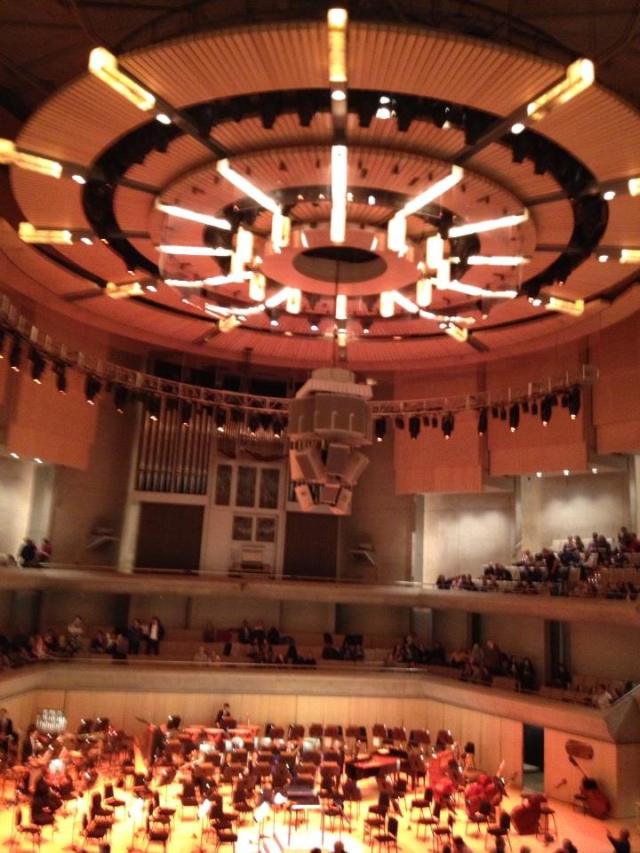
But Roy Thomson Hall is a different experience lately. Just as the TSO has some new young performers, so too in the audience. I believe half of those in attendance were under 35. There was a brief concert in the lobby before and more music in the lobby afterwards.
Roy Thomson Hall has become a very cool place to be.
For tonight’s concert –titled “Knocking at the Hellgate” from Brett Dean’s big work on the program—we were again confronted with an intriguing mix of styles and influences. Dean hit on a wonderful formula for this festival he’s curated. We heard Australian music alongside Canadian music, vocal, concertos and orchestral, with a big emphasis on popular musical influences for each concert.
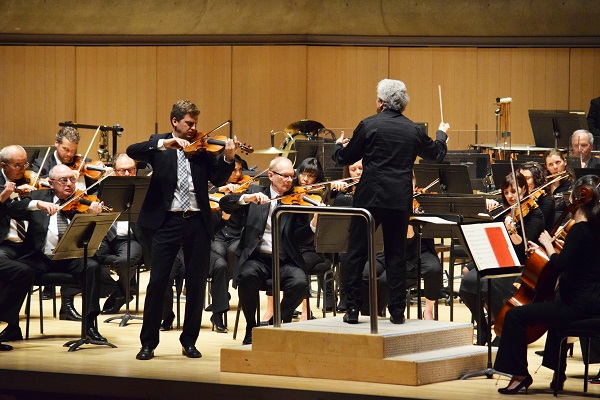
We opened with Water, a piece by Jonny Greenwood of Radiohead, an Australian commission in its Canadian premiere. Greenwood is the lone classically trained member of the band, known for film-scores such as There Will Be Blood. Superficially it’s a minimalist piece, with a kind of pattern music at least at the beginning, as long notes on the tanpura (like a fretless sitar) give us a steady tonality against which other faster patterns work their way through the ensemble. Concertmaster Jonathan Crow was given lots to do, especially on the last pages, when his furious patterns of quick notes seemed to spiral him into orbit, as the ensemble gradually subsided into peace around him. For the moment the TSO were led by Peter Oundjian.
After this meditative beginning, we were ready for the main work on the program, namely Dean’s Knocking at the Hellgate, a six-part suite from his first opera Bliss (2010). Three orchestral interludes surround three arias, sung on this occasion by Canadian baritone Russell Braun, and this time conducted by the composer. Dean offers a surreal amalgam of tiny shards of the detritus of popular culture glued into a nightmare flashback of a life remembered from beyond in all its glitzy banality. It’s an idea I’ve heard attempted before, but without ever getting close to the richness of this remarkable tapestry including electric violin, electric guitar and MIDI. Braun has a substantial sing, especially considering that the orchestra is sometimes very powerful. In addition to a pair of substantial falsetto passages, Braun was asked to sing all over his range for a good fifteen minutes.
I was reminded of something he sang almost exactly five years ago at the Met in Nixon in China, as Braun was again the voice of hope in the last lines sung:
And when at last I take that final breath and disappear eternally above; it will be just a passing breeze, this death that carries me away from my true love. If you would seek salvation remember this: A life in Hell can still aspire to Bliss
[from Amanda Holden’s libretto]
To close the evening & the festival, Dean & Oundjian turned to DJ Skratch Bastid for his Festival Remix, ostensibly sampled from rehearsals of the concerts this week. My hat’s off to the DJ for his work which was well received tonight by the young audience. I’m again reminded of a question (pardon the pun) bedeviling me for the past few weeks, watching Going Home Star, listening to Christos Hatzis, Stephanie Martin, and Kevin Lau (to name just the first three I can think of), each looking at the question of musical idiom as communication. Electric Counterpoint from Soundstreams will also employ a DJ as they pick up this question next week.
It was a happy crowd that emerged into the warm night air.
If I may indulge in a tiny comment, I have to notice that both the TSO and Tafelmusik put libretti into programs, and at least are kind enough to leave the house-lights on for us to follow. But when every opera company in the greater Toronto area (name one and I am sure they are included) manages to project subtitles, isn’t it time for the TSO (and Tafelmusik) to consider doing so as well? Yes I followed the text in my program but would have preferred to stare straight at Russell Braun. Had the words been projected behind (as they could be whenever undertaking songs or choral symphonies like Mahler’s 2nd or Beethoven’s 9th) I believe the experience would be even better. End of rant.