Ambitious TSO program

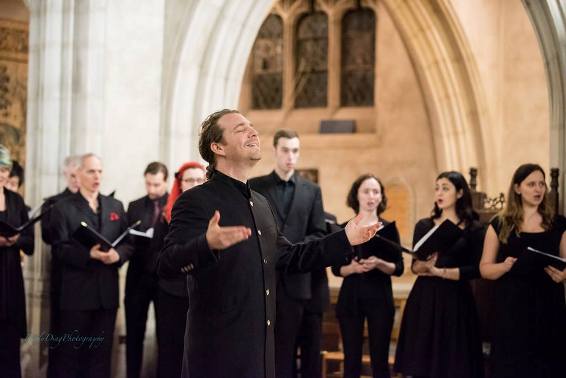
It wasn’t at all what I expected, this Toronto Symphony program of Beethoven, Brahms and Adams, to be taken on a Canadian tour this weekend (Ottawa Saturday and Montreal Sunday). Peter Oundjian did tell us that it’s unusual to program the Brahms 4th Symphony before the interval, with the big modern concerto after. That was a clear signal as to their sense of the true highlight of the concert.

If you get a chance to hear John Adams’ Scheherazade 2, especially live, I would encourage you to hear it. Here’s an excerpt from his program notes:

The impetus for the piece was an exhibition at the Institut du Monde Arabe in Paris detailing the history of the “Arabian Nights” and of Scheherazade and how this story has evolved over the centuries. The casual brutality toward women that lies at the base of many off these tales prodded me to think about the many images of women oppressed or abused or violated that we see today in the news on a daily basis.

The work was composed in 2014 specifically for Leila Josefowicz, who has collaborated with Adams before. As he says in the notes “I find Leila a perfect embodiment of that kind of empowered strength and energy that a modern Scheherazade would possess”. The work is subtitled “dramatic symphony for  violin and orchestra”.  Here’s a brief intro to the piece by the composer.

He mentions Romeo et Juliette by Berlioz, which is also a dramatic symphony, and that in his piece the violin is like the protagonist. Curiously he didn’t mention Harold in Italy, a work with several resemblances to Adams’ work, another composition where a single player –this time a viola rather than violin—is like a protagonist surrounded by the orchestra as though representing the milieu.

Like Harold –and also like Rimsky-Korsakov’s Scheherazade as well—it’s a four movement work:
1. Tale of the Wise Young Woman—Pursuit by the True Believers
2. A Long Desire (love scene)
3. Scheherazade and the Men with Beards
4. Escape, Flight, Sanctuary

And Adams is worthy to be discussed in comparison with those two (Berlioz and Rimsky-Korsakov): arguably the two greatest orchestrators in the history of the orchestral medium.

ja-portrait-1-lw

Composer John Adams

Yes, you need to hear this work, even if it’s sometimes terrifying. Where Rimsky’s composition is a kind of anthology, mediated by the violin soloist who would be Scheherzade the story-teller, both Berlioz’s Harold and Adams’ latter-day Scheherazade seem to be walking through a pulsating world in each movement, sometimes at odds with or even threatened by that world. But Adams gives us a phenomenal range of timbres. When the violin is playing there are often fewer players engaged, often cut back to the celesta, the cimbalom and vibes, a sensual contrast to some of the threatening sounds arrayed against her (although as a Hungarian I was intrigued by the personal associations of some of Adams’ sounds, a very friendly sort of exotica given that one sometimes hears the cimbalom in Magyar restaurants). In addition, though, the full orchestra showed me several new sounds, even while staying mostly in the tonal realm. Josefowicz is sometimes required to play fast passages of short groups of notes, sometimes longer phrases and occasionally venturing into more lyrical music-making. There’s no mistaking the amorous atmosphere in the second movement. Adams is an atmospheric storyteller to stand alongside his heroine, sometimes immersing the violin in devastating walls of sound that make you fear for the life of the protagonist.

Oundjian’s comments (only offered after the interval as we were about to begin the Adams rather than in the first half) explained a lot that had me mystified up to that point. The thematic links he drew –between the oppression underlying Adams’ Scheherazade 2, in the Egmont Overture, as well as the darker side of the Brahms were crystal clear in the music-making. As this is the first performance of this programme, I hope Oundjian and the TSO can find more balance, because right now the two German works opening the concert,  though played with great precision,  are somewhat two dimensional in their lack of emotional depth. Brahms 4th does end with a powerful dark movement –the movement that worked best for me—but there is sensuality throughout all four movements, a warmer side that wasn’t really allowed to bloom, inner voices that could have been given more space to come out. As the TSO relax and enjoy themselves on this tour I am certain they’ll hit their stride.

This wonderful program will be repeated at Roy Thomson Hall Thursday May 5th, then taken to the National Arts Centre in Ottawa Saturday May 7th, and Montreal’s Maison Symphonique May 8th.

Posted in Music and musicology, Reviews | Leave a comment

Maometto II, Conquerer

That was a fast three hours and twenty minutes. While I expected Maometto II, the Rossini opera presented by the Canadian Opera Company at the Four Seasons Centre, to be full of spectacular singing, I did not expect to be sucked into the story, at times spellbound.  This opera about invaders and invasion won me over completely.  The COC Production that premiered at the Santa Fe Opera in 2012 was directed by David Alden (who directed COC’s recent Lucia). Alden seems to understand how to stage a virtuoso vehicle, mostly staying out of the singers’ way.

The story –concerning the expanding Ottoman Empire’s battles with Venetian forces—takes place in the 15th century. Nobleman Paolo Erisso (tenor Bruce Sledge) who leads the Venetians would give his daughter Anna (soprano Leah Crocetto) to Calbo (mezzo-soprano Elizabeth Deshong in trousers ), except that she’s already in love with someone else. The suspense builds, with the impending attack by the Ottomans. And of course it turns out that the one she loves is Maometto II (Luca Pisaroni) who she met while in a disguise on a reconnaissance mission.

15-16-06-MC-D-1323

Luca Pisaroni as Maometto II in the COC production (photo: Michael Cooper)

The audience took awhile to warm to the style, at first somewhat hesitant about applauding, and indeed stunned into silence at times by the power of what we were seeing. And the usual casting expectations are a bit scrambled, as the tenor is the father not the hero, the rivals for the love of the soprano are a bass and a mezzo-soprano.  But we gradually cut loose in response to the big arias in the second act, once we’d decided to embrace the opera. All four principals had great moments, although I think DeShong had the loudest applause. Crocetto and DeShong both had several opportunities to shine in the second act, while Sledge’s best opportunities came earlier in the opera.

15-16-06-MC-D-1818

(l-r) Bruce Sledge as Paolo Erisso, Leah Crocetto as Anna and Elizabeth DeShong as Calbo in the COC’s production of Maometto II, 2016 (photo: Michael Cooper)

At Pisaroni’s first appearance –singing from far upstage—I was frankly astonished at how well his voice projected. Maometto’s music is often ornate & quick, requiring great precision to articulate, but Pisaroni’s pitch was bang on, the voice cutting through the orchestra.  This is a believable conqueror, with physical swagger and genuine presence.

15-16-06-MC-D-975

(l-r) Luca Pisaroni as Maometto II and Bruce Sledge as Paolo Erisso in the COC’s production of Maometto II, 2016. (photo: Michael Cooper)

Harry Bicket is a big reason why this was such a spectacular experience, raising the bar for the COC orchestra. I couldn’t help noticing – in contrast to what I’ve seen in the Carmen performances—how well Bicket followed the singers throughout without any slips. Bicket made Rossini sometimes sound like Beethoven, sometimes like Mozart, and always like Rossini. With Bicket you know your performance has integrity & authenticity.

With sets & costumes designed by Jon Morrell (who did costumes for COC’s Aida) there are some arresting visual images, including some genuinely scary moments to amplify the drama that’s in the score. But we’re not experiencing a story being told in realistic fashion. Even so I did not expect to be on the edge of my seat, fearful and troubled by what I was seeing.

I’m seeing the opera again later this week, eager to once again hear four excellent principals and their stunning music. Bel canto can take getting used to, a style so full of coloratura that the decoration takes over, more icing than cake, more froth than coffee. But one rarely hears this music sung so accurately, with such sensitivity & passion.

Maometto II continues at the Four Seasons Centre until May 14th.

Posted in Opera, Reviews | Leave a comment

Lucretia’s Rape: “Is it all”?

If you go see a show and it mystifies you, thank God for the internet to answer questions.

And that’s the last thing I’ll say in this review that sounds even a little bit reverent.

When I was a young boy I saw Benjamin Britten’s The Rape of Lucretia in a student production, one of the first operas I’d ever seen, leaving me baffled with its curious mixture of violation and piety. Fast-forward to 2016, the second time I’ve seen this opera, and again in a student production, this time from Metro Youth Opera at the Aki Studio. To say that the world has changed in the intervening decades is hardly earth-shaking. I feel much better about being mystified as a child as there’s still a whole lot in this opera to perplex a viewer, even if the world is perhaps catching up to Mr Britten. In the 1960s there was no internet to answer a twelve-year old’s questions, whereas I think I have a pretty good idea this time.

Let me be clear, though, this is a wonderful production of Britten’s opera, staged with conviction.

I suspect there would be no staging if not for Christina Campsall, offering one of the most remarkable portrayals I’ve seen in a long time, particularly considering that MY Opera have a mandate to offer performing opportunities to young singers. Campsall would not be out of place in any professional production, looking and sounding wonderful particularly after violation, her lowest notes eloquently evoking her profound suffering.

campsall

Christina Campsall as Lucretia. (Photo: William Ford Photography)

Anne-Marie MacIntosh as Lucia was a bright spot in the otherwise dark tale with flawless coloratura while Jonelle Sills as the Female Chorus asked the key question at the end of the opera, that I felt wasn’t really answered. But I don’t believe I can hold this against MY Opera, considering that this is likely a weakness of the opera as written.

While I think of myself as a believer, I felt like an agnostic watching the scenes of Britten’s opera everytime we ventured into the Christian gloss he’s added to the story. For example, in the Epilogue the Female and Male chorus have a kind of spiritual confrontation. The Female Chorus begins her questioning by asking:

Is it all? Is all this suffering and pain is this in vain? Does this old world grow old in sin alone? Can we attain nothing but wider oceans of our own tears?”

Sills was wonderful, hurling her question up at the lighting booth, where the stage manager might have been the God to which this world responded. One might have expected the lights to go out, so powerful was her questioning.

The Male Chorus responds (again this is an excerpt):

“It is not all. Though our nature’s still as frail and we still fall and that great crowd’s no less Along that road endless and uphill; for now He bears our sin and does not fall and He, carrying all turns round stoned with our doubt and then forgives us all.”

I can’t blame Daevyd Pepper –the Male Chorus in the MY Opera production—that his answer seemed feeble and inadequate, given that the world Britten lived in at the time of the opera’s composition in the 1940s wasn’t precisely tolerant or forgiving. Even now rapists are enabled by a society quick to question any claims by women, making it so painful for women that many attacks go unreported. I felt no consolation in this Christian gloss upon the story, a bland series of platitudes to push me back to the agnosticism of my teens, when I didn’t go to church. Was Britten sincere, or is this a coded passage from a homosexual who was unable to frankly say what he felt to a more unforgiving world back in the 1940s? His depiction of violation is so electrifying, his depiction of shame and degradation so heart-breaking, that the Christian parts seem astonishingly lame in comparison, as if the composer were trying to say “don’t believe any of this, the truth is in the brutality of man”.  And as a society we have yet to answer.

Music-director Natasha Fransblow led a very tight performance, including percussion effects with the piano above and beyond her excellent pianism. Stage Director Anna Theodosakis made a very believable tableau of violation in the secular world of a story transposed to a more recent time via costuming designed by Lisa Magill; but I suspect Theodosakis shares my ambivalence towards the opera’s preaching, her own sermon placing the focus upon consent and rape rather than faith and redemption.

The final performance of The Rape of Lucretia will be on Sunday May 1st at 2:30 pm in the Aki Studio in Daniels Spectrum.

Posted in Opera, Reviews | 3 Comments

Carmen Encore

The second cast in the Canadian Opera Company’s Carmen production directed by Joel Ivany brought us into a more realistic world than what we’d seen in the opening night’s cast.

This is a cast that’s physically beautiful, from the heroic profile struck by David Pomeroy as Don José, the powerful voice & presence of Clémentine Margaine’s Carmencita (delivered with a proper Spanish accent in the dialogue), the statuesque beauty of Karine Boucher and the effortless charm of Zachary Nelson as Escamillo the bullfighter. That’s in contrast to the more symbolic impact of the first group, whether in the distant stillness invoked by the interpretation of Russell Thomas as Don José, the occasionally introspective Carmen of Anita Rachvelishvili, or the big Escamillo of Christian Van Horn. Where the first cast put me in mind of a conceptual encounter between virginal innocence (Micaela & Don José) and arrogant experience (Carmen & Escamillo), which is to say something theoretical and in the mind, the second cast seemed more genuinely sexual, more at ease with their movements and with their bodies.

15-16-05-MC-D-0340

Clémentine Margaine as Carmen and David Pomeroy as Don José in the Canadian Opera Company production of Carmen, 2016. (photo: Michael Cooper)

This is also a cast whose French is mostly better than the other cast, more intelligible and more expressive with their text, which shouldn’t be surprising when the female leads were given to a pair of Francophones.

We heard wonderful power in the voices. Margaine’s voice is a wonderful instrument, particularly rich in the middle, and seamless from top to bottom. David Pomeroy’s voice is blossoming beautifully, sometimes employing a careful focus to save vocal resources, but blazing hot when he cut loose. Boucher is a very sympathetic performer who wins over the audience, while Nelson seemed to be having fun throughout.

Having heard this production  twice, I am a bit conflicted about the work of conductor Paolo Carignani, whose tempi are on the fast side. While I usually like that, I felt the entire cast was more than a bit in awe of him. Is it my imagination, or did the chorus stand together throughout in clumps, staring at the conductor for fear of missing a cue..? He seemed to be battling his soloists at least a couple of times, although the big ensembles –for instance the Act II quintet—were of course very tight: while the singers hung together in a group staring at the conductor. The results sounded pretty good, the orchestra responding throughout with a clean crisp sound. And in fairness I saw lots of give and take during Pomeroy’s big aria and Margaine’s Habanera. But when in a pair of performances I see singers off by a couple of beats, I’m inclined to wish the conductor would adjust rather than the singers. Yet it does sound wonderful on the whole (as I said, I’m conflicted).

And even though i knew it was coming, Act IV was still a fresh & vivid creation.  Both casts offer something valid & original.

Carmen continues at the Four Seasons Centre until May 15th.

Posted in Opera, Reviews | Leave a comment

Colourful Kensington

Late this afternoon, hungrier than I’d expected to be, I found myself at the corner of Oxford & Augusta.

The Morrocan Stew I consumed at Urban Herbivore left me full.  That should have been enough.

moroccan

But then I noticed the new place across the way.

business_logo

And I knew I wasn’t 100% full, or at least that there was room for something more.

Hm…. grk ygrt as in “Greek Yoghurt”?

I didn’t read the menu so much as dream aloud.  “Do you have something combining almond butter and banana?”

And my eyes wandered to the signage, as I heard words confirming my wishes…

And i heard her mention chocolate…(!)

sign_inside

Of course I had to try it.

closeup

This little write-up can’t possibly capture the experience of eating, but at the very least I can show you some pictures.  Look for the dazzling colours painted onto the stairs.

STAIRS_cup

It tastes as good as it looks.

Posted in Food, Health and Nutrition | 3 Comments

A Carmen that ends differently

When I’ve missed opening night I try desperately to avoid reading other reviews, a sort of anxiety of influence. Social media makes it tough when you see headlines proclaiming the brilliance of that show: as I saw on Facebook concerning Joel Ivany’s new Carmen with the Canadian Opera Company, that I saw this afternoon in its second performance. When I encounter this much fanfare I resist – out of perverse obstinacy—insisting that I be moved and not influenced by what anyone else thinks, even when (especially when?) I already admire the director.

Joel Ivany headshot

Director Joel Ivany

I’ll aim to avoid spoilers so that I don’t steal any of Joel’s thunder. This is the man whose young company Against the Grain Theatre accomplishes a curious sort of alchemy, through a modern adaptation + translation, or “transladaptation”, managing to be new without violating the text. His new version of Cosi fan tutte, namely A Little Too Cozy comes to Toronto next month.  He is a big reason for the buzz I felt in the theatre.

But this Carmen is not a transladaptation. In fact for three acts it’s a very conventional reading of Bizet’s Carmen, not terribly different from previous versions of the opera that we’ve seen.

Then for Act IV, Joel Ivany the radical takes over.  In fairness, we’re set up for that ending in the first three acts even while staying close to the text as written.

15-16-05-MC-D-4225

Simone Osborne as Micaëla and Russell Thomas as Don José (Photo: Michael Cooper)

Simone Osborne is Micaëla in this cast (there’s a second cast I’ll be reviewing later this month). Can we call it a love-triangle, when one girl is the epitome of sex while the other stands in for conservative wholesomeness, family values and has been selected by Mom? that’s the challenge Micaëla faces both in winning the man’s heart and in winning our sympathies, even if this was likely a totally different sort of dynamic for the family audience in 1875 than now. The last time I saw this production Micaëla was done in such a way as to seem bold (or even feminist?) in visiting her lover Don José and in pursuing him into the mountains in Act III, singing an aria about facing her fears.  She was admirable and the music was moving, even if it didn’t really correpond to what Bizet likely expected. I believe Osborne was closely directed by Ivany, doing the most basic thing in the text: to make her seem young, virginal, vulnerable, and especially (in Act III) afraid. Her courage in her big Act III aria is not a denial of fear but rather the acceptance of her terror while believing God will protect her, a different emphasis taking us directly back to the text. Even a little kiss on her forehead in the first act from José is a big deal. Emphasizing this simple element about Micaëla changes the arc of the entire opera.

By implication Don José is then also more of an innocent, likely also a virgin, helping to explain why he is so totally out of his depth with Carmen. By contrast, not only are Escamillo the bullfighter & Carmen a pair of experienced lovers, both alluding to others they have loved, but they are public personas who boldly address groups of people in their arias.  How can José possibly compete with that kind of flamboyance? Russell Thomas is the naive José, overwhelmed by passions he’s never felt before, becoming a very believable romantic volcano, eventually spinning out of control with frustration and rage. The voice reminds me of James McCracken, who starred opposite Marilyn Horne in Leonard Bernstein’s seminal Met production and the first great recording of the Opéra-Comique version (employing dialogue, like this production). The voice has incredible projection even if –like McCracken—he has a quirky way of singing some vowels; for instance the second syllable of “Carmen” sounds like “ayn”, or the French word “plus” (as in “tu ne m’aimes plus”) becomes more like “plee”. But wow does this voice carry, and he has wonderful conviction at every moment.  Someday i’d like to hear him sing Wagner or perhaps Verdi’s Otello.

The two larger-than-life performers certainly deliver. Anita Rachvelishvili’s Carmen sails through her performances to crowds –such as the Habanera—without much difficulty, but also without engaging me at a level beyond her big persona. I was won over by her softer scenes, such as the fortune telling scene of Act III and especially in her duet with Thomas to end the opera. The voice projects even when she sings softly, the moments that I found most persuasive, whereas I found the big numbers a bit generic for my taste, and indeed felt that Ivany and the chorus were trapped in her aura for those moments. Better in a smaller part was her toreador, namely Christian Van Horn, although it’s a role that works whether you’re likeable or not, and in this version Van Horn gave us an enjoyable Escamillo, with a ringing voice and lots of swagger.

What’s so different about the end of this Carmen, and how can I talk about it without giving it away? Let’s just say that John Allemang – interviewed by the Globe and Mail recently about life as an extra—and his colleagues come to the fore. Bringing the last act of this opera to life –an act that can seem predictable– is Ivany’s greatest achievement. Some of it is simply a matter of being creative with the opera exactly as written. The other divergence is at the very end, a tiny change that doesn’t violate the plot even as we’re left with something different from any Carmen I’ve ever seen. See if you can watch what Thomas and Rachvelishvili do with the ending without being moved. I was blindsided, and will only spoil the ending confessing that I’ve never cried at the end of this opera before, never felt such a strong sense of tragedy.

Not like this.

The cast is full of Canadian talent. Alain Coulombe offers a fleshed out version of army captain Zuniga. Iain MacNeil has the necessary flamboyance for Dancairo, the smuggler leader, accompanied by the more soft-spoken Remendado, the ever smiling Jean-Philippe Fortier-Lazure. Sasha Djihanian and Charlotte Burrage as Frasquita and Mercedes –the gypsy girls who seem to function as Carmen’s backup singers—were regularly pressed into action by Ivany, whether wielding dance moves in Act II, rifles in Act III, or all dressed-up for the bullfight in the last scene. In the first and last acts we have the pleasure of watching the Canadian Children’s Opera Company, alongside the COC Chorus. Should I offer my expression of gratitude to Alexander Neef for the Canadians onstage? Perhaps, yet they could do better. My dream is that unless we’re seeing a real star onstage, the default position of the COC should be to hire a Canadian. While Van Horn –an American—was good, there are Canadians who could have sung this role. I will set aside consideration of the two leads – Russell Thomas and Anita Rachvelishvili—who were wonderful, even if there may be Canadians who can undertake the starring roles. Both of the women playing Micaëla (today’s Simone Osborne, and Karine Boucher in the other cast) are Canadian, as is David Pomeroy the Don José in the other cast.

Paolo Carignani led a brisk and energetic reading of the score (the way I like it). And as I have mentioned, a whole different cast takes the stage April 20th who may offer a different interpretation. Carmen continues at the Four Seasons Centre until May 15th.

Posted in Music and musicology, Opera | 1 Comment

Sweet Swan of Avon: The Musicians In Ordinary celebrate William Shakespeare

Sweet Swan of Avon – Series of Words and Music Concludes

THE MUSICIANS IN ORDINARY CELEBRATE SHAKESPEARE

ON ACTUAL 400TH ANNIVERSARY OF HIS DEATH, APRIL 23


ENGLISH-LANGUAGE AUTHORITY & AUTHOR SETH LERER

READS IN ORIGINAL PRONUNCIATION

Four centuries to the day after his death, The Musicians In Ordinary celebrate William Shakespeare (1564-1616) with the last of three special performances, Sweet Swan of Avon, Saturday, April 23, 8 p.m. at the Heliconian Hall, 35 Hazelton Avenue in Yorkville (Bay subway).  

Shakespeare - 250 px.jpgThe series has featured readings from the plays and poems of the writer whom his contemporary Ben Jonson praised as “the Swan of Avon”.  Complementing the words are airs or madrigals “apt for voices or viols” and consort music, along with lute solos from the age of the Tudors and Stuarts.  


Seth Lerer, distinguished American author (Prospero’s Son and Inventing English: A Portable History of the Language) and scholar of English language and literature (https://en.wikipedia.org/wiki/Seth_Lerer;http://literature.ucsd.edu/people/faculty/slerer.html), will read excerpts from Pericles, Hamlet, Macbeth and other works in the original pronunciation. Lerer made his MIO debut in 2015, reading the poetry of John Donne.


In the program, titled Shakespeare’s Sorrows, soprano Hallie Fishel and lutenist John Edwards perform airs by John Dowland (1563-1626) and his contemporaries. Christopher Verrette leads MIO’s violin band in Dowland’s completeLachrimae or Seven Tears.

Tickets, $30, $20 for students and seniors, are available at the door.  More information is available fromwww.musiciansinordinary.ca or http://musiciansinordinary.blogspot.ca,
by e-mailing
musinord@sympatico.ca
or by calling 416-535-9956. 

Deanne Williams (www.deannewilliams.com) is special consultant for the series.  Williams is author of Shakespeare and the Performance of Girlhood (2014), co-editor of The Afterlife of Ophelia (both published by Palgrave Macmillan), and an associate professor of English at York University.

John Edwards notes, “Shakespeare has been called ‘one of our first and greatest psychologists.’  Four hundred years after his death, his insights and penned portraits of the inner workings of heroes and villains continue to teach – not only actors who express themselves onstage, but also all of us – how to perform in the hour we spend strutting and fretting upon the stage.”

The Musicians In Ordinary are supported in part by the Spem in Alium Fund of the Toronto Community Foundation.  

THE MUSICIANS IN ORDINARY PRESENT

Sweet Swan of Avon: Shakespeare’s Sorrows – Last of three programs celebrating Shakespeare

Hallie Fishel, soprano; John Edwards, lute; violin band led by Christopher Verrette.

Seth Lerer, reader

Saturday, April 23, 2016, 8 p.m. at the Heliconian Hall

PROGRAM:

Readings from Pericles, Hamlet, Macbeth and other works.

John Dowland: Lachrimae

Music by other composers of the Tudor and Stuart eras.

*******

“Press releases and announcements” are presented verbatim without comment

Posted in Press Releases and Announcements | Leave a comment

Famous tunes at the TSO

And the beat goes on. While there may have been a change of leadership, the Toronto Symphony hot streak continues, with bold performances onstage & at the box office.

Sunday afternoon I attended the second of a pair of concerts with a broad assortment of different styles that might have been titled “Tuneful TSO”, including some of the most famous melodies one is likely to encounter at a symphony concert. No it wasn’t a pops concert, even if there were a couple of charming eruptions of applause between movements: something that I quite enjoy, especially when it’s warranted by the performance, as it was today.

The young American conductor James Feddeck led the TSO in this curious mix of compositions. On the one hand you might label it Germanic, what with Mendelssohn (selections from his music for A Midsummernight’s Dream) Handel (harp concerto), Wagner (“Ride of the Valkyries”) and Elgar (the “Enigma” Variations): the latter a composer who surely felt Wagner’s influence. Or would you call it English, on the grounds that—Wagner aside—Handel has been adopted as an English composer, while the Mendelssohn we heard was selected from his incidental music for a Shakespeare play? I wonder what input the young conductor had on this program, which had a very coherent feeling to it. We began and ended with powerhouse displays of trombones. And throughout there seemed to be a fascinating rapport between Feddeck and the orchestra, who seemed to be having almost as much fun as the conductor.

We began with the Wagner as a glib curtain-raiser, Feddeck perhaps pandering to the lowest common denominator in his quip that while the opera from which it’s taken is over four hours long, this might be the best 5 minutes.  Exxcuse me?  I’d say it’s not the worst 5 minutes so long as you include the vocals by the valkyries, but what we get is a ridiculously repetitive piece whose only redeeming feature is the way it showcases the players. I recall a professor decades ago saying that when Wagner wrote this he likely didn’t expect orchestras to be able to play it perfectly, that a slightly ragged sound in the strings would have added an air of wildness to the piece, a wildness that’s no longer evident when orchestras play as skillfully as this one. I love the opera, which I would never have investigated had I used Mr Feddeck as a guide. At this point I set aside my misgivings about negative commentaries (oh well… i forgave Bugs Bunny so i suppose I can forgive Feddeck), and his somewhat leaden tempo. But the slower speed does allow the players to relax somewhat, to really wail away in the climactic passages: as they did.

Talk about contrast..! The next item was about as far away as you could get. The roughly hundred players mostly vanished, as 30+ remained alongside Heidi Van Hoesen Gorton, the soloist in Handel’s harp concerto. We went from a loud celebration of war (whether you understand the piece for its operatic maidens scooping up dead heroes or the scene in Apocalypse Now, a ritual of killing) to something angelic. I was thrilled at how silent this audience became, hanging on Gorton’s every note, her highly dynamic reading of this concerto. I remember this piece for my frustration as a teen, having heard the tune partway through on the radio, hypnotized and tormented because I had no idea what I had just heard (has that ever happened to you?). It took me years to find it, one of the prettiest pieces, in a lovely recording by Judy Loman. In her interpretation Gorton elaborated the melody with ornaments, holding the audience in the palm of her hand.

heidi-van-hoesen-gorton

Toronto Symphony harpist Heidi Van Hoesen Gorton (photo: Christopher Wahl)

When the TSO announced their program earlier this year, they stated their intention to make more use of the virtuosity in their midst: just as they did in employing their harpist – Gorton – as soloist in a concerto. The remainder of the concert continued to highlight the talent in this orchestra. Feddeck led very clearly articulated readings of three movements from Mendelssohn’s incidental music to Midsummernight’s Dream. As with the Wagner, I can’t help thinking of the cinematic associations, given that we’re in the midst of my film music course at the Conservatory, having recently looked at Korngold, who adapted this music in Reinhardt’s 1935 version of Shakespeare’s play (the one with Mickey Rooney and Olivia DeHavilland).

Neil_Deland

Toronto Symphony principal horn player Neil Deland

For me the highlight was the “Nocturne”, featuring a sumptuous solo from horn player Neil Deland.

And there were a great many more beautiful solo moments after the intermission, in the Elgar. The most impressive thing Feddeck gave us was his introduction, a charming lecture including short demonstrations from the TSO to illustrate his points, as he explained aspects of Elgar’s “enigma”, a comfortably informal presentation. Feddeck seemed very much at home with the TSO, and i believe the feelings are mutual. His expansive tempi, too, seemed guaranteed to please the orchestra, who had the time to properly build to climaxes. The audience ate it up.

Peter Oundjian returns this week with Angela Hewitt in a program of Bach & Shostakovich.

Posted in Music and musicology, Opera | Leave a comment

Lucio Silla: slaying the tyrant at the Elgin Theatre

Tonight I saw Opera Atelier’s Lucio Silla, an opera receiving its Canadian premiere production at the Elgin Theatre. I’ve wondered what was so special about this opera, having heard about previous Opera Atelier presentations of the work in Europe, and now I know.

In his introductory talk, Director Marshall Pynkoski spoke of Opera Seria, a form whose reputation can be a turn-off.  When the opera began he proceeded to show us how our assumptions about the form have been wrong: in effect a continuation of much we’ve seen from Opera Atelier. Their Alcina in 2014 was full of comedy, as was their Clemenza di Tito back in 2010, both of which are the same genre. But this shouldn’t be such a surprise, any more than the inclusion of funny scenes in a tragedy.    While Opera Atelier may be in their 30th anniversary season their historically informed approach still contains lessons.

As we’ve seen in other OA productions, recitative is not merely the filler between arias, even if singers might sometimes offer them in perfunctory fashion in recitals, as the dull preparation for their vocal fireworks. There are other ways to understand – and interpret—the aria and recitative discourse of Opera Seria. Recitative can be – indeed must be—the place where the story is advanced, and where the characters have depth and integrity, whatever they might show in their vocal solos. Because Pynkoski, music-director David Fallis, and choreographer Jeannette Lajeunesse Zingg sought to invest every moment with dramatic depth, the arias have a different relationship to the recitative. At times the tension and pace are so intense that the arias feel less like a place for the singer to show off, but suddenly become a place for everyone to relax, to reflect.

The arias too have a few surprises. Sometimes we’re watching dancers function as supernumaries, or seeing action on another part of the stage while an aria gently goes on. And it doesn’t hurt that this is Mozart. For a sixteen year old he wrote amazing music, never less than engaging and sometimes astonishingly beautiful. It’s a huge thrill to discover this new work. While it’s always been there (at least since the 18th century) here’s a chance to see it staged. One may wonder: why isn’t this work done more often? What’s wrong with it that we haven’t seen it before now in Toronto (or New York for that matter)?  I think the answer in each case is the same one, the tyrannical monster that perhaps needs to be slain. Whether it might be misconceptions about opera seria, or the false belief that an early Mozart opera that’s never produced is deservedly obscure, in each case the assumptions deserve to be ended.

zzRESIZED_company_160405_09052

Lucio Silla, with Gerard Gauci’s set & costumes (photo: Bruce Zinger)

Tafelmusik sounded wonderful as usual under David Fallis’ leadership, the Artists of Atelier Ballet were effective even though they did less than expected. I think Gerard Gauci’s set –and this time also including costumes as well—is his most magnificent creation for Opera Atelier that we’ve seen so far.

Gerard Gauci

Set designer Gerard Gauci

Yet it’s the five remarkable soloists in this production who made this happen, five who learned some amazing music even though they likely won’t sing it again –except if Opera Atelier revives the work—given that it’s not an opera that gets produced very often: which I have now decided is too bad. This is an opera worthy of being staged regularly.

Kresimir Spicer in the title role changed from the louder and more violent Silla we saw in his first appearance, becoming gentler both in his sound and deportment. In his final aria, where Silla struggles with his moral choices, Pynkoski has him walk behind the conductor, entering the same plane as the audience, including a lengthy unaccompanied cadenza ending perfectly in tune.

zzRESIZED_KRESIMR_PEGGY_MEGHAN_balet160405_08411

Kresimir Spicer as Silla (foreground), Peggy Kriha Dye as Cecilio and Meghan Lindsay as Giunia (immediately behind), photo: Bruce Zinger

His antagonist was Meghan Lindsay as Giunia, standing firm against his demands. The physical interactions between Silla and Giunia likely are more modern than what was seen in Mozart’s time, as she boldly stands her ground against the harassment of the tyrant. Not only was the tension between the two electrifying, but as contemporary as current headlines.

Peggy Kriha Dye undertaking her first trouser role was wonderful to watch, spectacularly persuasive even though she’s not very tall. Her second-act aria to Giunia is one of the highlights of the evening, sung with magical commitment and pathos (get out your handkerchiefs… I went teary for the rest of the night), a moment suddenly putting me in mind of Fidelio even if this opera predates it by decades.

Mireille Asselin as Celia once again demonstrated that she can effortlessly shift the tone of a show, her every appearance a kind of comic relief, aided by perfect intonation. Inga Kalna’s Cinna was a perfect match, with her brilliant coloratura.

Lucio Silla continues at the Elgin Theatre until April 16th .

So in other words do go see Lucio Silla. You have nothing to lose except false assumptions.

Posted in Music and musicology, Opera | Leave a comment

Questions for Ashlie Corcoran: Löhle’s das ding

Ashlie Corcoran, Artistic Director at the Thousand Islands Playhouse since 2012, Co-Founder and Artistic Producer for Theatre Smash, directs both theatre and opera, working across Canada and internationally. Next season Ashlie will return to Toronto to direct the Canadian Opera Company’s revival of Diane Paulus’s production of The Magic Flute. But in the immediate future Theatre Smash in partnership with Canadian Stage, in association with Thousand Islands Playhouse present das ding (the thing) by Philipp Löhle, translated by Birgit Schreyer Duarte, to open April 12th.

I asked Ashlie questions about herself and this exciting project.

1) Are you more like your father or your mother?

I hope that I am a blend of both of my parents! I definitely get my work ethic from my mom and my determination from my dad. My parents very much support me – as a child they introduced me to a wide range of activities: the arts, athletics, volunteerism and community engagement. They always encouraged my curiosity. I moved away from my home province at 18 – but my parents have always been a big part of my life. They come to visit me often, and I am always in contact with them. Though, I am embarrassed to say I missed my Dad’s birthday last week – I am going to make it up to him soon!

ashliecorcoran

Director & artistic producer Ashlie Corcoran

2) What is the best thing about what you do?

The best thing about what I do – whether it is artistic directing, directing theatre or directing opera is the collaborations I get to have with incredibly bright, passionate and talented individuals. I always find it thrilling to be in a room of experts from whom I can learn.

3) Who do you like to listen to or watch?

It’s the cliché right now – but I honestly can’t stop listening to HAMILTON. I have a bunch of music projects coming up, and I know I should be listening to them…but every time I grab my Iphone, my fingers hit play on the HAMILTON soundtrack instead!

4) What ability or skill do you wish you had, that you don’t have?

I really wish I could sing. And speak Italian, German, French and Russian fluently.

5) When you’re just relaxing and not working what is your favourite thing to do?

As anyone who is friends with me on social media knows – I have a 1.5 year old English Springer Spaniel named Mabel. Playing fetch with her is high on my list of favourite past times.

More questions about Das Ding at Canadian Stage

1) Canadian Stage website gives the following promo for Das Ding:

Philipp Löhle’s highly ambitious social comedy Das Ding spans an interconnected world that binds the fates of the African Siwa, Chinese business people, Romanian pig-breeders and two young newlyweds Katrin and Thomas. As a global crisis attaches itself to the smallest marital problems on a deeply personal level, all are forced to consider whether such a thing as coincidence can exist in a globalized world. Meanwhile, the eponymous ‘thing’ – a cotton fibre in its apparently endless iterations – looks on humanity, amazed.

Please start by describing your emotional reaction to this play and what it means to you

thing_1300x800Since Theatre Smash was founded we have wanted to commission translations of international contemporary work. Our work on German language plays (The Ugly One, The Bus & Norway.Today) showed us that both our artists and audiences have a particular facility and attraction to these highly theatrical and deeply intellectual scripts. Birgit Schreyer Duarte and I wanted to work together on a project for awhile. We decided that it would be great if she translated a play for Theatre Smash. She pitched three different plays, but this was definitely the script that got us both the most excited. I love non-naturalistic plays where form and content share equal dramaturgical importance. What makes Das Ding (The Thing) so exhilarating and truly contemporary is how it examines the structures of the world financial order, while also happily examining the architecture of playmaking. The script inspires us to believe we are travelling across the globe in seconds or inside the mind of a cotton fibre.


2) Talk about Löhle’s writing and what resonances we might expect.

lohle-philipp

Playwright Philipp Löhle

Through a temporal and geographic explosion, and with five actors playing thirteen interconnected characters, the play attempts to put the entire world into its focus – in all its tricky, comic and tragic entangled-ness. The theatrical possibilities inherent in this script are almost unlimited. The audience and creators are invited to joyously play along with their imagination, while also using their intellect to piece together the various scenes and relationships. This form helps examine the play’s central ideal – there are innumerable consequences brought about by everything we do. Nothing is the end; events constantly reverberate through the world.

3-Talk about the unorthodox casting for Das Ding.

While the play involves thirteen characters, we have chosen to cast five actors. Because of the play’s diverse temporal and geographic form, and because each actor plays up to three very different roles (in gender and ethnic background), we are excited to cast non-traditionally – including cross gender casting and blind casting. It is important to us that the casting for The Thing included multiple ethnicities: the play takes place in North America, Asia and Africa. However, no actor was cast in a track that involved him or her playing his or her own ethnicity. (Except for the Canadians – who we imagine as potentially being any ethnicity.) Additionally, while the casting breakdown says that there are two female characters and eleven male characters, we have chosen to cast two women and three men. Through this multi-ethnic/cross-gender casting, we are attempting to examine the script’s main idea – that we are all connected to each other, in small, almost arbitrary ways. In my directorial concept, this will also be explored by having the narrative of the Cotton Fibre distributed amongst all of the actors.

4-Please comment on the translation, and how you and translator Birgit Schreyer Duarte have made the play intelligible to a Toronto audience.

What a great question! First of all we translated the play directly – this involves a lot of detail work as we scrutinize each line, looking to see if it captures Philipp’s original intention, and also is accessible to our audience. We have now, with Philipp’s permission, pushed the translation into adaptation in some cases – setting its central story in Toronto. As a pluralist society, Toronto is a highly relevant place to discuss the blurred geographic, linguistic and cultural borders in our globalized world. Additionally, by placing the play in Toronto, we will strengthen Philipp’s original intention of using direct address as a self-aware and self-critical theatrical metaphor.

coc_pic

Wow what a group…(!) COC 2006/07 Ensemble Studio: Andrew Stewart (bass-baritone), Lauren Segal (mezzo), Ashlie Corcoran (stage director), Jon-Paul Decosse (baritone), Virginia Hatfield (soprano), Justin Welsh (baritone), Betty Allison (soprano), Melinda Delorme (soprano), Miriam Khalil (soprano), Yannick-Muriel Noah (soprano), Lawrence Wiliford (tenor), Liz Upchurch (Head of the Ensemble Studio

5-Next season, as you return to direct the Canadian Opera Company revival of Diane Paulus’s Magic Flute, I wonder if you could please comment upon the influence of your time with the COC’s Ensemble Studio.

Being asked to join the Ensemble Studio in 2006/7 was akin to winning the lotto. I had no opera experience at the time (I’d maybe seen a half a dozen as an audience member). In applying, I thought that I would use the year (if I got in) to explore whether I liked directing opera. But, during the call back (when I directed a scene from both COSI FAN TUTTE and ALBERT HERRING), I fell in love – hard. I didn’t need the year to figure it out – I was an immediate convert. The COC has given me a lot of opportunities in the subsequent years – assistant directing, and directing their school tours. I have learned so much about opera, about theatre creation, and about how to engage with a community, through that organization. I am beyond thrilled to return to direct on the main stage next winter.

6-Do you have an influence or teacher you’d care to mention who is especially important to you?

walkerc

Dr Craig Walker, Queen’s U

Ah, I am so lucky to have so many great mentors in my life. University professors like Dr. Tim Fort, Dr. Craig Walker and Anne Hardcastle jump out immediately. Mallory Gilbert and Richard Rose – both of whom I met at Tarragon Theatre – have had a massive impact on me, as has the mentorship of Daryl Cloran and Atom Egoyan. All of these people – and so so so many more – have been incredibly generous with me. I strive to be as open hearted with others, as they all have been with me.

*******

In January 2017 Ashlie Corcoran directs The Magic Flute for the COC here in Toronto. But in the immediate future –April 12th to May 1st 2016– Ashlie directs das ding at Berkeley Street Upstairs Theatre (for further information).

Posted in Dance, theatre & musicals, Opera | 1 Comment