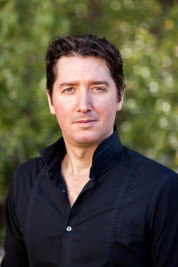
10 Questions for Chris Walroth

The Toronto Symphony’s new year begins on tour in Florida.

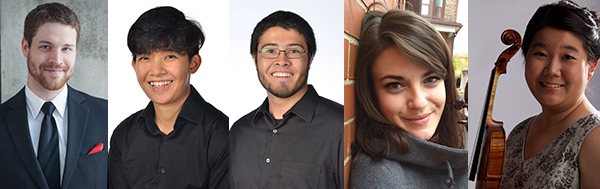
click photo for more info

click photo for more info

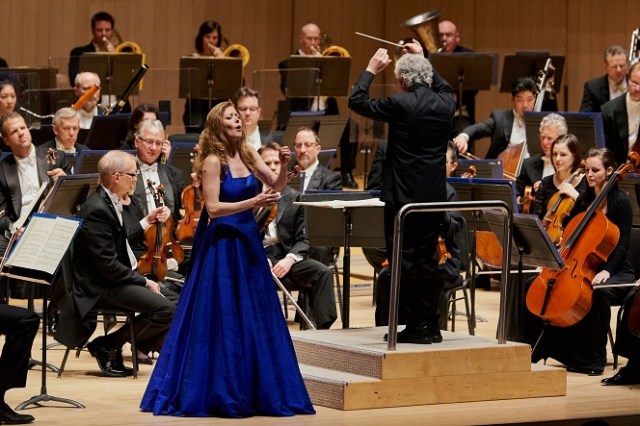
It’s tough enough when a hundred well-rehearsed players take the stage at Roy Thomson Hall in Toronto, where we all presumably eat & sleep; quite another to undertake playing Beethoven or Chopin or Tchaikovsky, having lugged all those instruments & people & music-scores & a miscellany of equipment to a variety of concert halls in another country.

I am in awe of such an enormous undertaking. Just thinking of the possible difficulties makes my mind boggle.  This is another one of those complex endeavors resembling an iceberg, where the efforts of support staff ‘beneath the surface’ are invisible. In the spirit of giving credit where credit is due, I wanted to find out more from the TSO’s production manager Chris Walroth: himself someone who insists that he’s just “a small part of a large effort”.

Photo by Sean Howard in the back of the Tippet Richardson TruckKiwanis Community Theatre Centre loading dock, Sault Ste. Marie

In the back of the Tippet Richardson Truck, Kiwanis Community Theatre Centre loading dock Sault St. Marie, Ontario. (Sean Howard photography)

I asked him ten questions: 5 about Chris and 5 more about taking the big show on the road. Forgive me if I sometimes address him as though he does it all, when he’s often speaking for the team.

1-Are you more like your father or your mother?

Physically I am my father’s son.  When I compare photos of my dad in the 40’s and me in the 70’s if you ignore the hairstyles we are the same man. My dad could always find something to keep him busy. I’m a lot like that, I can’t go more than three days at the cottage before I’ve got a project to work on. Dad was very outgoing, the life of the party. In that respect I am more quiet and reserved like my mother. Mom also instilled in me a love of the arts and made sure I saw live theatre, music and dance at an early age. Both parents taught me the value of hard work, how to live happily within my means and the compassion to help others. Performing artists need to get their energy up for a performance, production and technical people who support them need to find their quiet and calm centre so that they can keep things running smoothly behind the scenes. My family tell me I am most like my maternal grandfather: the quintessential calm quiet man.

2-What is the best thing about working with the Toronto Symphony?

Pianist Jan Kisiecki (photo: Mathias Bothor--DG)

Pianist Jan Lisiecki, who also appears on the TSO tour (photo: Mathias Bothor–DG)

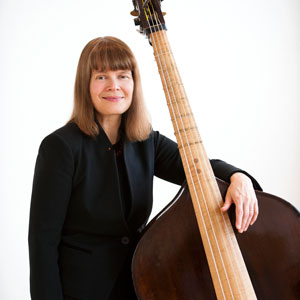
Really I have to say the music and the privilege of getting to know the people who make it. As a lifelong fan of classical music, being able to get this close to the music and the people who have been so welcoming to me, it is really the best part of my job. My desk is about 20 feet from where the conductor walks on stage so the music is always with me, some times I get the privilege of having Jan Lisiecki @janlisiecki practicing within ear shot of my desk or Jeffrey Beecher @jeffreybeecher working out a tricky passage on his bass, and it’s like my own private concert. I also get a free pass to sit in the auditorium and hear the orchestra work at any rehearsal. My favorite seat is in the Harry Belafonte section at Roy Thomson Hall, a block of seats main floor centre dedicated or donated in honour of Harry Belafonte.

3-Who do you like to listen to or watch?

I’m all over the spectrum as far as music goes. With so much live classical music in my life when the orchestra is working I tend to have less of that in my playlist. Lately I’ve been going way back to some of my early influences from the coffee house scene of the 70s. David Wiffen, Doug McArthur, I recently found a copy of Raffi’s Folk album “good luck boy” from the days before he started to write kids songs. 

New artists in the same vein like the Good Lovelies are also on my current play list. In the summer during the orchestra’s ten week hiatus I play a lot of classical music. Clearly I miss them when they are gone. I watch mostly drama, not a lot of situation comedy grabs me. Early in my career I worked as the technician for the Frantics comedy troupe, and lighting director for their CBC radio show.  (Chris recalls The Frantics)

Perhaps my close association with them makes me more critical of the laugh track driven sitcom. I have to say within living memory TREME, House of Cards, Jessica Jones are among my favourites. I also enjoy quirky reality TV like Time Team: a bunch of British archeologists digging gleefully in mud and rain looking for a bit of pot shard.

4-What ability or skill do you wish you had, that you don’t have?

That’s hard there are so many things I can’t do, I’m barely fluent in one language despite all the big words I am abusing here. I’ve never been particularly athletic. I am surrounded by such great musical talent and I can’t carry a tune or play an instrument. Sometimes I wish I had the discipline and dedication to train not for a professional career but just to play music as recreation.

5-When you’re just relaxing and not working what is your favourite thing to do?

I am never happier than when I am on the water. My first taste of freedom was being able to take a canoe out on my own any time of the day or night. I was a proficient paddler long before I learned to drive. I learned to sail in high school and added Kayak skills more recently. These remain my most relaxing activities. Put a paddle in my hand and you can almost see my blood pressure lower and my shoulders relax. As they say a bad day on the water is better than a good day ashore. The other place you will find me happy is in a woodworking shop, I spend so much time making; plans, phone calls, budgets, that making something out of wood, that is made to last is a great antidote to the stresses of work.

(Photo: Tanya Babalow)

(Photo: Tanya Babalow)

*******

Five more about being the TSO’s production manager, and the orchestra’s upcoming tour

1-How long have you been Production Manager, and please talk about the career pathway.

I’m currently in my eighteenth season with the TSO, barely out of rookie status compared to the 40% of the orchestra who have been here for over 25 years. I am however seventh as far as staff seniority goes. I started out in the theatre as a jack of all trades technician and stage manager. I mostly worked with smaller companies and most of my work was freelance so I was never in one place for very long and I took on a variety of jobs: lighting tech one week, audio the next, a few weeks of carpentry etc… I took a turn into the world of planning corporate and trade shows for awhile, Mary Kay gave me a masters education in people motivation, I also got to play with the latest audio visual toys and special effects before they became more affordable for the arts sector. With a few exceptions most notably Technical Director for Mary Lou Fallis in a variety of her one woman shows, and Elyakim Taussig for his Taussig and Enemies show in which he played the piano and I played most of his enemies. (Me in the check shirt).  

I had little work experience with musicians and almost none with orchestras when I joined the TSO. It turns out if you are motivated the basics of orchestra is pretty easy to learn. And I had a lot of mentors in the orchestra who brought me along.  What the TSO needed was someone with strong skills outside their comfort zone of overture, concerto, symphony in the same hall every night. So far I seem to have proved up to the task.

2-What’s the best thing about your role with the TSO?

Well since I already talked about the music above, I have to say all the people I interact with every day. I am mostly a pessimistic introvert. So work at the TSO is like a giant therapy session for me. First the ninety musicians, sixty staff, and countless volunteers, venue staff and vendors are all in their way my customers. I have a small bit critical role in co-ordinating and facilitating everyone’s efforts on the concert. Production management is really all about fixing what might go wrong before it happens or before anyone notices.  We are always looking for what’s wrong and don’t pay attention to what’s going right. I have learned that most people don’t respond well to a constant barrage of negative so I have tried to retrain myself to notice success occasionally and comment on those things.

3-Orchestras tour so much nowadays that it might appear routine, yet I suspect there’s also a part played by Murphy’s Law: which states that whatever can go wrong, will go wrong. What kind of things can go wrong?

Indeed, “Murphy was an optimist” is the first rule of touring (here’s the “TSO rules of the road” video from a previous tour).

“Eat like a hobbit” is the second rule.

The most important rule of tour stories is you have to tell your own personal most embarrassing story first. So here is mine.

The last thing you do in any venue is called the idiot check, one final look everywhere at everything because if you forget to take it from here you are going to feel like an idiot when you get there and don’t have it. Years ago we were just leaving Quebec City heading for Montréal when I got a call from a colleague who was on tour with us. She told me the venue staff called her to let her know someone’s wardrobe was left behind in a dressing room, she just wanted to let me know that she could swing by and pick it up and bring it to Montréal. Well that’s great I said thanks. She said by the way they told me there was a name on the garment bag. Curious I asked oh whose name? Yours, she replied.

I was also guilty of inadvertently stealing a harp dolly from the National Arts centre.  I returned it as soon as I realized we had packed an extra one on the truck at load out but ever since then the NAC crew hide their harp dolly if they know I am coming by.

Tippet Richardson Truck at the NAC loading Dock

Tippet Richardson Truck at the NAC loading Dock

Seriously I never sleep well until the whole tour is over and the truck is unloaded for the final time. Once all the instruments and people are home safe I can really relax. On our European tour we shipped over $6.4 million in “professional Equipment” instruments music and wardrobe.

Photo by Chris Walroth

Photo by Chris Walroth

What I have come to realize is the intimate relationship between a musician and their instrument especially for string players is far more important than the monetary value. Loss of an instrument for some of these players working at the highest skill levels can be a huge career challenge.

Chris Walroth: about to pack the truck for the homeward trip (on a previous tour)

Chris Walroth: about to pack the truck for the homeward trip on a previous tour

4- How long have you and the team been working to plan the current tour?

TSO Music Director Peter Oundjian

Tour Planning starts way in advance, easily two to three years out with the artistic team led by Peter Oundjian and Loie Fallis working out repertoire and confirming soloist availability. At the same time operations starts to look at budget and logistics and since the fees we earn on tour don’t cover the cost of putting 120 people on the road for a week or two our development and sponsorship team start to identify people or companies that may be willing to underwrite a portion of the cost. The actual booking of the dates is handled by an agent or manager who is familiar with the area we are touring to. They sell our program to the various presenters and try to arrange the dates to maximize the number of concerts per week and minimize the travel hours between locations. I provide a tour rider to the agent, mostly boilerplate stuff every orchestra needs, load in crew, x number of orchestra chairs, music stands, two large dressing rooms etc. There are a few things that vary per show for example on this tour we are asking for two concert grand pianos one for the soloist another for the orchestral overture. If we are touring to a new region the operations team tries to get in an advance tour about a year out, to look at the venues, hotels, restaurants and other amenities, also to travel the same routes the orchestra will take to check drive times available rest stops etc.

If it’s a cross border or overseas tour we start to make the general arrangements for shipping, based on previous tours I can make a fairly good guesstimate about how many pallets and weight for air freight, it’s only about sixty days out I start looking at a more final list of what we need to ship including how many musicians want us to ship their personal instrument.

At the same time I am contacting all the venues to confirm they have our rider, when we can load in, and all the other little details. Our Assistant Production Manager Alaina Viau oversees the tour book we publish for the orchestra with schedules bus calls and a variety of other useful information on each city. Then we pack everything push it into a truck and head out on the road.

Once everything is on the truck it’s in the good hands of our long time Sponsor Tippet-Richardson. Their staff is so great I really don’t have any worries while the instruments are on the truck. 

5- Who is the most important mentor or influence you’d care to name that led you to where you are today?

This is the hardest question yet. There have been so many people along the way who gave me opportunity to prove my worth and work beyond my comfort zone. So many mentors and friends over the years, production people are very generous with their time and advice, I guess we all feel it’s a small community and we are all part of the same team. It’s hard to pin down just one. I guess if I take the question literally, there is really only one answer: one of my oldest friends, Fred Bunting. We met over thirty years ago when I brought a touring production of ‘beyond the fringe’ into the Oakville centre. We became friends that first day and worked together off and on ever since. Fred was in this job before me and when he decided to move on he was asked if there was anyone he would recommend. He said only one person and if they could convince me to move back to Toronto from BC they should just give me the job don’t even bother posting it. He then spent the next month browbeating me into sending a resume.

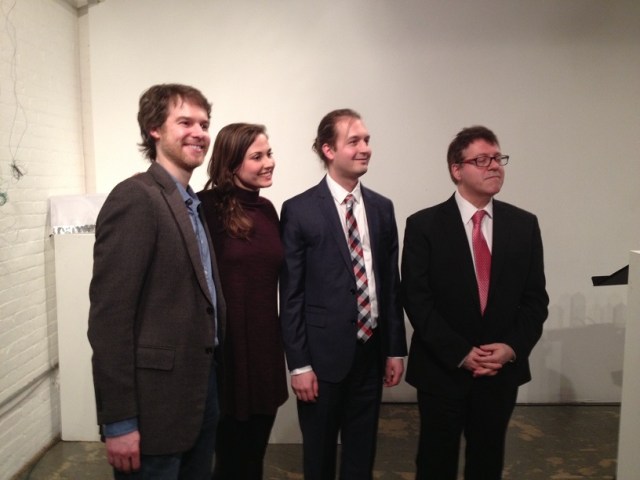
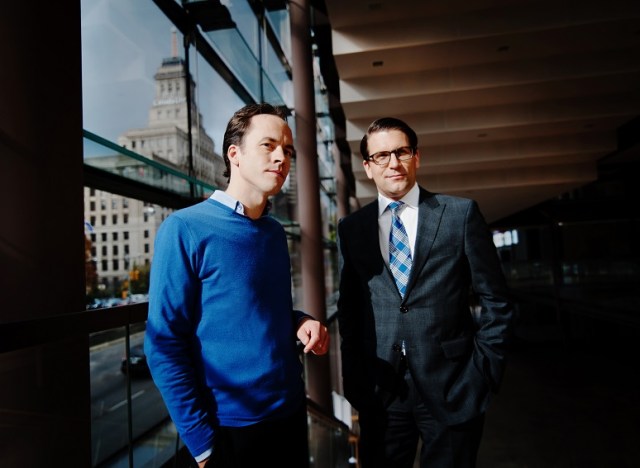
Jon Welmers, Fred Bunting, Chris Walroth. The window behind us is the loading door for Concertgebouw

Jon Welmers, Fred Bunting, Chris Walroth. The window behind us is the loading door for Concertgebouw

It was a job I felt totally unqualified for having no experience of orchestras. Fred was persistent countering every objection I made, and I guess almost eighteen years later he has been more than proven right. I have to add only that I could not have been a success without the trust the orchestra placed in me. From day one at the TSO I have felt a welcomed member of this large diverse extended family.

For anyone curious about how our tour is going you can find most everything on Twitter #TSOFlorida.

*******

Chris Walroth and untold helping hands make it possible for the TSO to tour abroad, this time in Florida, January 2-10th, performing six concerts. You can hear Chris five minutes into this TSO podcast where he talks about touring.

Posted in Interviews, Music and musicology | Tagged , | Leave a comment

Pollyanna looks back at 2015

The year isn’t quite over yet, but already we’re looking back at 2015 as 2016 draws closer.   When we remember Pollyanna’s credo –“if you can’t say anything nice, don’t say anything at all”—no wonder we look back.  As the dollar continues to plummet, as rumours of war abound, retrospectives are safer.

It was a year when the Pollyanna sentiment seemed to be in the ascendancy.

  • Trudeau beat Harper. I can’t help wondering, would that have been the case if the Paris attacks had come just a few weeks earlier, possibly dampening our enthusiasm and our willingness to open our hearts?
  • Merkel –who welcomes refugees–rather than Trump –who would slam the door– was Time Magazine’s person of the year. Here’s hoping that it isn’t Trump in 2016, because you know what that’s likely to mean in an election year (gulp!).
  • Refugees have been a big news item in Canada, where the prevailing impulse is welcome & assistance. I’m proud of my country.

I can’t help remembering some of the big stories of the year through those rose-coloured glasses.

  • January & February is usually the coldest time of year, but can see some wonderful explorations. The Toronto Symphony had their New Creations Festival, curated by George Benjamin, including a residency by soprano & conductor Barbara Hannigan.  Opera Five paired a new opera by Darren Russo with Wolf-Ferrari’s Secret of Susanna. Soundstreams gave us Whisper Opera.   The COC’s pairing of Tcherniakov’s Don Giovanni and Egoyan’s Die Walküre occasioned some fun headlines at the very least (both “Some resist seduction by Tcherniakov’s Don Giovanni” and “Don Giovanni or Don JianGhomeshi…?“), and several brilliant performances.
  • March and April can be times of optimism, and I was hopeful traveling to hear Opera Lyra’s Figaro, even though the company would close in the autumn. But this was a heady time of possibilities, including Opera Atelier’s Orpheus and Eurydice (as Marshall Pynkoski showed signs of breaking free of the historically informed strait-jacket), Metro Youth Opera’s Béatrice et Bénédict, a workshop performance of Mozart’s Requiem directed by Joel Ivany comes to fruition next month with the TSO.  One of my highlights of the year was Adrianne Pieczonka singing Strauss’s “Four Last Songs” followed by Wagner’s Tristan Prelude & Liebestod.  And while we’re speaking of the TSO, the Toronto Symphony were the centre of a major controversy, replacing Valentina Lisitsa with Stewart Goodyear, then eliminating the programmed Rachmaninoff concerto altogether when SG became an online target of harassment.  Although TSO President Jeff Melanson took some heat over the cancellation, I think that he did the right thing.
  • May and June? The COC offered a new Barber of Seville with the Lepage Bluebeard-Erwartung pairing, while later Against the Grain presented Death & Desire, a curious mix of two composers’ song-cycles.  I mostly recall a couple of brilliant performances, namely Alek Shrader in Barber¸ but particularly the work of Krisztina Szabó in the COC’s Erwartung and AtG’s Harawi.  In high-diving you get marks for what they call “degree of difficulty”; if artistic performance recognized such things, Szabó ’s work on these two jagged pieces of modernity would have her on whatever podium properly recognizes brilliance.

    Mezzo-soprano Krisztina Szabo (photo: Bo Huang)

    Mezzo-soprano Krisztina Szabo (photo: Bo Huang)

  • For July and August, Nik Beeson’s Dive, and Karita Mattila’s concert for Toronto Summer Music were highlights in a period when I otherwise seemed to be asleep, busily preparing for a few things in the weeks that followed. Bicycle Opera came to Toronto on the Labour Day weekend to finish their summer tour, another lovely anthology of short littles pieces showcasing great singing actors.
  • September and October begin a new season. My highlight was an old film offered by tiff in collaboration with the TSO, namely Vertigo, including an appearance by Kim Novak.  But I was far more intrigued by the live score with film, seeing two more in the weeks that followed, namely Back to the Future and Psycho on Halloween night.  It may be too soon to call this a trend, but I am hoping we see more of these films with live performances of the score.  The COC offered us a new Traviata plus the first opera by a Canadian composer in a very long time.  The undertaking is admirable even if I was conflicted by the project.  Opera Atelier meanwhile went in the opposite direction, bringing us up to date with the 17th century’s Armide, in a very strong production. 

    Jack Rennie (Amor) holds Peggy Kriha Dye (Armide). Photo: Bruce Zinger

    Jack Rennie (Amor) holds Peggy Kriha Dye (Armide). Photo: Bruce Zinger

  • November and December? More experiments, including Tapestry’s “Tap: Ex METALLURGY”, Soundstreams’ Electric Messiah, Soundstreams’ co-production with Canadian Stage of Boesmans’s opera Julie, CASP’s “The Living Spectacle”, combining adventurous song with movement/dance, and another wonderful concert from Sondra Radvanovsky.

And while I am thinking of Pollyanna looking back in gratitude, I’m thinking especially of a group of women who either call Toronto their home or who have chosen to come here:

  • Canadian Barbara Hannigan, who has been here a few times lately after a long gap, and returns in 2016

    soprano & conductor Barbara Hannigan (photo: Elmer de Haas)

    soprano & conductor Barbara Hannigan (photo: Elmer de Haas)

  • American Christine Goerke, who did her first Walküre Brunnhilde last winter (earlier in 2015) , and soon will return to do her first Siegfried Brunnhilde in a few weeks, before taking the role elsewhere.
  • Sondra Radvanovsky: one of the great singers in the world who happens to live here, and fortunately sings here sometimes as well
  • Ditto for Adrianne Pieczonka, one of the great singers in the world
  • And I mentioned Krisztina Szabó who was back for the fall COC season as well.

There are men too even if I seem to be blinded by the aura of these women.  The key men in the picture for me are executives, builders such as Alexander Neef of the COC, Jeff Melanson of the TSO, Michael Mori of Tapestry Opera, artists such as,  David Fallis, Johannes Debus, Topher Mokrzewski, Jan Liesicki and Stewart Goodyear.

And yes let me echo what Stewart’s name seems to imply. Have a good year!

Posted in Cinema, video & DVDs, Music and musicology, Opera, Personal ruminations & essays, Politics | Leave a comment

Toronto Symphony goes to Florida

It’s a story with many players, and not just those who play musical instruments. If it were the first time it would be more dramatic. But by now it seems that they’ve figured out how to do it, after many safe & successful tours.  The Toronto Symphony are going on a bit of a trip.

They’re shipping musical instruments, not animals, but they’re every bit as delicate, if not more so. If you google “violin horror stories travel” you’ll see that it’s not a simple thing for a musician to travel with their instrument.

Ditto for “string bass horror stories travel.”

Photo by Chris Walroth

A photo tweeted by Chris Walroth, TSO Production Manager, with the caption “Tour trunks ready to load”.

So in other words, when the Toronto Symphony goes on a tour to Florida it’s a colossal undertaking.

I understand that for the tour of Florida in early January, 116 people will be on tour, including 94 musicians and 16 staff.  They’ll use three buses for the entire tour in Florida. Each bus seats 56 people. There will also be three cars or vans pressed into service for additional travel.

Hm, I wonder how much space is taken by timpani, violins, bassoons,  how much by timpanists, violinists, bassoonists, etc.?

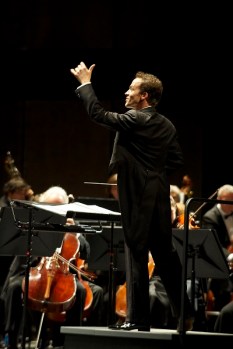
The TSO will be playing six concerts, two different programmes, led by their Music Director Peter Oundjian, including Rimsky-Korsakov’s “Scheherazade”, “Wondrous Light” by Canadian composer John Estacio, and two notable Tchaikovsky favourites featured in December programs at Roy Thomson Hall. While I didn’t get to hear the “Polonaise” from Eugene Onegin, I was particularly blown away by the rapport between Oundjian and the orchestra in their interpretation of Tchaikovsky’s “Pathétique” symphony, a very powerful performance that makes an impressive calling card indeed.

The TSO are joined by Canadian piano virtuoso Jan Lisiecki, who will play Beethoven’s Piano Concerto No. 4 on one program, and the Piano Concerto No. 1 by Chopin on the other.

The concerts will surely draw Canadians, both those who have either moved south and those who winter there. While Florida is often thought of in the same breath with “vacation”, it’s going to be a busy few days for the orchestra.

The Toronto Symphony led by Peter Oundjian (photo: Malcolm Cook)

The Toronto Symphony led by Peter Oundjian (photo: Malcolm Cook)

Posted in Music and musicology, Press Releases and Announcements | Leave a comment

Donald Trump: crossover artist

What is the rationale behind crossover and why is it attractive?

Sometimes it’s an escape, no longer being required to follow the rules of your old realm, as you visit a new one.

Sometimes it’s the insight, the expertise in one world, applied to a different world.

To the audience, it’s exciting either way, so long as we can discern the crossing of a frontier, a boundary transgressed.

We used to see this in football, when a European footballer – what Canadians might call a “soccer player” –started place-kicking. The ability to kick one sort of ball had all sorts of application to kicking another.

And some information is useful just about anywhere. Many politicians have law degrees. Some have experience in business or commerce. While a background in teaching is much rarer in the political world, voila: our new Prime Minister is a former teacher.

The headline came to me at a recent concert. “Crossover” is a word we’ve been using for awhile to describe creations that reflect an artist from one discipline going over the boundaries –such as they are—into another discipline, something that deserves a little extra thought when applied to a politician.

Hm. But wait. Is Donald Trump a politician? Just because he is part of the race for the Republican nomination for the 2016 American Presidential election doesn’t make him a politician.

I am not even sure he’s a typical businessman. Yes he has had money, although I understand he’s also been broke. Let’s be clear, I read newspapers so whatever I speak of here is entirely hearsay, conjecture based on what i see in the popular media.

So let’s think for a moment about that “p” word. It can be taken in a number of ways…

There are all the things seasoned campaigners learn to win elections. This might involve telling the truth, but I believe the popular mythology at least since Nixon is that “politician” is a synonym for “liar”. One learns how to represent oneself in order to be elected, presumably with help from spin doctors, image merchants who teach one how to speak, how to behave on camera, how to react to questions.

There’s a classic illustration in a film that could be part of the manual for how to be a politician, even if it’s not something you’d associate with politics: at least not at first. 

Okay it’s a baseball movie. But the reason Crash Davis teaches Nuke Laloosh about clichés is because interviews are potentially dangerous: if you say the wrong thing. The management of your image in baseball might have a slightly different objective, naturally, than in politics, but it’s still largely the same phenomenon. A baseball player (at least in this model of how to approach a career) doesn’t want a higher profile, doesn’t want to say anything risky because they hope to be allowed to play, to be underestimated by the media.

Your average politician isn’t so very different from Mr Laloosh, in their desire to avoid crucifixion in the eyes of the media. They aim to blend in, to be team players.

And that brings us to Donald Trump, who doesn’t show any interest in blending in, as his every action seems designed to get attention.

If you are a fan of a particular genre, you’re in very different a position to assess crossover than someone who doesn’t know that genre at all. Let’s say you’re a fan of science fiction. Your perspective on a new Star Wars movie will be different from someone who simply accepts all the hype. As a sci-fi fan you will probably want to see this new movie because…

  • You liked Empire Strikes Back, (i know i did) but were frustrated with aspects of the next four films
  • You know that JJ Abrams will breathe life into the series, especially when teamed with writer Lawrence Kasdan (who wrote ESB)
  • Even when those movies don’t work it can be fun

But let me set that aside for a moment, as I reflect on the crossover phenomenon.

There’s a special energy when someone ventures into a new field. They may be dreadful, but at the very least it’s impossible to resist the slow-motion train-wreck.

But what if a few people know it’s bad, but many people do not?

Let me recall a few examples, where the person crossing was genuinely transgressing (a word that means to cross over, but not in a way that we usually consider good, more like the crossing of a boundary or limit): yet no one seemed to notice or care.  Star Wars is an interesting example, because in my experience real hard-core sci-fans do not really like this series, with the exception of episode 5.  And yet when most people speak of science fiction, they speak of Star Wars.  It’s as though a transgressor were the touchstone, the example that defines the form, which surely seems odd.

Here’s another example namely Aretha Franklin singing “Nessun dorma”.   Now of course I bring this up, knowing that it totally depends on the background of the reader, as to how this is understood. Opera purists, especially of the most rigorous sort? They might cringe at the thought. While Aretha sang this “song” (and calling “nessun dorma” a “song” is already an odd thing to do) there have been few such transgressions in imitation.  I expected more imitations, more to follow her transgressie example.
I found her performance quite enjoyable. It’s not to be mistaken for the original. She’s not portraying prince Calaf, the character in Act III of Puccini’s opera Turandot. And so what!? Franklin covers the song, and I might add that it’s less transgressive in some respects than Bette Midler’s cover of “Beast of Burden”, where the performance mocks the original.

So let me be clear, while some would dislike what Aretha did, I approve heartily. I use this example because whichever side you’re on –purist or advocate—you can see that the perception of the transgression depends on your background, your starting context.  In keeping with the physical analogy –where “transgression” is the crossing of a frontier or boundary between different discursive regions– clearly you see this differently depending on which chunk of land (or discipline) is your own home turf.

Similarly, when Leonard Bernstein’s West Side Story was given the reverse treatment –that is, a popular work was given to opera singers—I don’t think the result was nearly as enjoyable as what Aretha created. Listen for example to Jose Carreras & Kiri Te Kanawa sing “Tonight”.   I think opera fans probably smile or even giggle at this, but aren’t offended the way they are by Aretha, because it’s ultimately a question of whose frontier is being invaded.  We get a glimpse of Bernstein on camera, as he admits that he’d had misgivings about the project. Again, depending on your background, you have a response to this.

Now what has this got to do with The Donald?

I speak with the experience of a Torontonian, which is to say, someone who watched Rob Ford campaign for Mayor. The parallels we see here in Toronto to Ford & Trump are hugely instructive, I believe.  And I keep meeting people who see the same pattern in the Fords.

Ford came from the sidelines, someone who wasn’t taken very seriously as he began his run. His big slogan was to get rid of the “gravy train”, as he asserted that the previous regime was over-spending.

Was this true? Nope.

Did it matter whether it was accurate? Of course not. Most voters have no idea about the accuracy of politicians’ assertions. This is as true for Eisenhower & Reagan as it is for Ford or Trump.

What might be different, though is style. Eisenhower & Reagan might be prototypes for what we see now. Dwight D Eisenhower was a war hero who didn’t really pretend to be a politician, but who did at least deport himself as one. Similarly, Reagan was an actor (who can forget the disbelief on the face of Doc Brown, when Marty McFly tells his 1955 version who is President of the USA in 1985), yet one who brought the skills of another discipline –the calm deportment and smooth delivery of his speeches—to the political arena. We may have understood these two as a kind of crossover, but they did not flout their otherness. They did not mock the offices they sought by being anti-political.

I don’t think Rob Ford sought to flout politics. He simply brought a very authentic populism to his campaign, a style that appealed to some. In the end health prevented him from seeking re-election, as it was his brother Doug Ford who lost to the new candidate in the 2014 election, not Rob himself.  Doug was in effect running on the Ford brand, which by now included drugs, driving while using a cellphone, and a host of other behaviours that tainted his run. But at its core, what Ford did was a prototype for Trump, in offering a kind of political counter-discourse.  Being like all the other politicians wasn’t what Ford –or Trump– want.

With Trump you get someone who doesn’t resemble a politician. The strength of this is evident in debates, where we see Trump as the anti-politician, the man who is new by being different. That he spouts ideas that no politician would dare to say is a surprising asset: because it’s not about the content. Nevermind that his anti-muslim rhetoric is offensive, stupid, misguided. Trump becomes the issue, becomes the central question in the election.

The fact he’s not a politician at all, that he seems to know nothing about politics, is suddenly an asset. Because of course, most voters don’t know anything either. The accuracy of his claims never seems to matter. There is a small group of voters currently who seem to be calling him out. A large group –who have no idea about what a politician is supposed to do or what they should say or what they should know—gobble up his every word, but not because of what he’s saying. It’s because he’s coming from outside, and therefore has the edginess of a crossover artist. He doesn’t resemble a politician because now that we take a closer look, he isn’t one. And that becomes an asset when all the others are assembled on a stage, sadly similar in their conservative posturings and mutterings.

I have hope that the discourse will change, but at the moment it’s largely about The Donald, about what he’s doing each day, where anything we’d normally see as liabilities become assets, his bizarre statements energizing a different sort of voter.  The long election campaign has this advantage, that people will get a really good look, and hopefully by November 2016 come to their senses.

We shall see.

Posted in Music and musicology, Opera, Personal ruminations & essays, Politics | Tagged , , | 1 Comment

Andrew Davis’ big beautiful Messiah

Today I was fortunate to attend the last of the Toronto Symphony’s annual performances of the Messiah with the Mendelssohn Choir, employing Andrew Davis’ new (2010) orchestration. I missed it when they offered it last time but hope that Jeff Melanson & TSO make this an annual event, as Davis’ version is a perfect fit. The TSO, TMC, and four high-powered soloists sound wonderful in Roy Thomson Hall.

The Toronto Symphony and Sir Andrew Davis, conductor laureate (photo: Malcolm Cook)

The Toronto Symphony and Sir Andrew Davis, their Conductor Laureate (photo: Malcolm Cook)

Davis, who bears the title of “Conductor Laureate” with the TSO, and who led the TSO at RTH for years including more than a few Messiahs the conventional way, could be expected to have a good sense of the space & the work. Some might call it blasphemy to propose to “fix” the Messiah, that there’s nothing wrong with it. And of course that’s absurd, recognizing that the work has been presented in many different versions in the centuries since its composition.

What Davis has accomplished is like a bit of post-modern thinking, a pragmatic combination of old and new. Hearing Messiah in the 2630 seat Roy Thomson Hall must be a different experience than my historically informed performance (“HIP”) encounter via Tafelmusik a few days ago at the 1135 seat Koerner Hall. So please don’t confuse Davis’ work with the large-scale Messiahs of a half-century ago, as for instance in the famous recording led by Sir Thomas Beecham and featuring Jon Vickers. The scholarship of the HIP crew informs some of what we heard today at RTH, when possible. At other times Davis makes other choices, which I label “pragmatic” in recognition of certain natural limits.

For example, the reverberation time of the space makes it challenging to push the chorus into impossibly quick coloratura –such as what you find in “And he shall purify” from Tafelmusik in the intimate confines of Koerner Hall—without loss of clarity. I sat there watching David address a chorus who are physically so far away from one another at the edges of the stage, that i wonder whether there’s a time delay for those at each end, hearing their colleagues across from them.

But I was surprised at how quickly Davis was able to get the Mendelssohn Choir to go in choruses such as “And With His Stripes“ and “All We Like Sheep”. But here Davis played with the orchestration, adding percussion & winds as though to help accentuate the beat, the way a painter might outline a shape (as in a cartoon or in stained glass) to help us discern those sections. The relative balance was completely different in places from what I heard earlier in the week, as some very muscular sounds from the orchestra helped keep everyone together, even as Davis did a great deal of give and take, between loud & soft sounds. We were treated to some concertante effects, where the orchestra would suddenly drop out leaving just a few soloists, or perhaps a string quartet in accompaniment, suddenly punctuated by a few key accents.

At times Davis’ version resembled an adaptation, where we recognize elements through the new overlaid layers, combinations of the familiar (choruses, soloists, strings & trumpets) and the new (marimba? Sleighbells? Snare-drum? Celesta?). At other times, the word coming to mind was “crossover”, as we were in the presence of something very playful and new. During “All we like sheep” Davis gave a braying animal sound to one of his brass reminding me of nothing so much as the wacky pastoral scene in Richard Strauss’s wonderful tone-poem Don Quixote. The lady sitting in front of me glared at me when I laughed as loudly as the jackass I thought I heard hee-hawing in the orchestra. In my defense I can only say that I laugh just as loudly in church when the minister makes a joke during the sermon.  My laughter was respectful, as i thought i was in the spirit of Davis’ creation.

And while we’re speaking of loudness I should mention the soloists. Only tenor Andrew Staples sang in a manner that the HIP-crowd would recognize, which is logical considering the way the tenor’s part is written.  The other three soloists are more properly understood as opera singers, namely soprano Erin Wall, mezzo-soprano Elizabeth DeShong and bass-baritone John Relyea. In Roy Thomson Hall we need their powerful voices even before we look at the extra cojones the orchestra seemed to display.  I don’t believe that the HIP performers from Tafelmusik’s performance –soprano Joanne Lunn excepted—would be audible against this big orchestra in the big space. Relyea’s tone carries, a sound you feel as much as hear, whether asking “why do the nations so furiously rage together” or announcing that “the trumpet shall sound”. DeShong has a stunning sound (although I wish her Part II aria had not been truncated), big and full and opulent at every moment. I’m glad the TSO gave us this opportunity to hear her, as I hope the COC will bring her back again sometime soon. Wall’s voice too carries beautifully.

John Relyea performing Messiah with the TSO in the Toronto premiere of Sir Andrew Davis's orchestration in 2010 (Photo: John Loper) Francine

John Relyea performing Messiah with the TSO in the Toronto premiere of Sir Andrew Davis’s orchestration in 2010 (Photo: John Loper) Francine

Yet the day belongs to the Mendelssohn Choir and especially to the orchestra in Davis’ brilliant creation, sometimes as though refreshed and modernized, sometimes a tidier version of our old friend.  In this version, the Hall, the Choir and the Orchestra are so well-matched, i can only wish that the TSO will bring back Davis’ version every year.

Posted in Music and musicology, Opera, Reviews | Leave a comment

Questions for Leanne Pepper @ University of Toronto Faculty Club    

At one time I used to regularly meet Leanne Pepper on the bus on the way home, when she lived a few block away from me in the east end of Toronto.   I’ve known Leanne for a decade or two, vaguely aware of her role as General Manager of the Faculty Club.

From time to time I had occasion to visit the University of Toronto Faculty Club:

A university is brilliant minds, research facilities, power grids & utilities, books, information technology.  Some would say that the whole world is  here in microcosm, a great many types of work going on, as people strive to learn, to discover, to change themselves and the world.  And sometimes the community needs to eat, to take a break, to have some fun, to celebrate or simply to relax.

Leanne Pepper, General Manager of the University of Toronto Faculty Club

After years of being vaguely aware of the Club, and especially after seeing Attila’s show in the summer I thought I might interview Leanne, ask her some questions: about herself and about her work with the Faculty Club.

1) Are you more like your father or your mother?

A bit of both, my father was bit of a perfectionist.   He had his own electrical business.  He worked long hours.   He taught me how to ride a bike, to swim, gardening. Also the importance of enjoying what you do in life.  He took great pride in his projects especially his garden.  He won lots of awards for his garden.    He also loved cruising.  I think it was because of all the great food!

He loved to entertain.  He also loved to cook especially BBQs.  Oh how he loved to eat and enjoy wines.   Especially lobster and shrimp!   Also he really enjoyed sitting watching the birds.

My mom was my best friend.   We loved to travel together.  My mom had the best laugh.  She was always very positive.   She had no problem talking to strangers.    She always loved to make people laugh.

She always took great care of herself.   She exercised every day.  Loved to swim and walk.   She always liked to  keep busy.   Also loved to sit and read books.   She loved to dance!  She had her gold medal in ballroom dancing.

She loved unconditionally.

2) What is the best thing about running the Faculty Club?

We are the # one Faculty Club in North America!   It’s an honour to serve the University of Toronto community.    The staffs are awesome!  The members make the club extra special.

The club is so beautiful, to be surrounded by fabulous paintings.  One of the greatest benefits if being able to eat at the club daily!  Great food!


3) Who do you like to listen to or watch?

I love to watch the food channel!  My favourite radio station is CBC metro morning  and Jazz 91.1

At work I listen to Live365

4) What ability or skill do you wish you had, that you don’t have?

I wish I learned to play the piano, harp and sing!  One day I will.

5) When you’re just relaxing and not working what is your favourite thing to do?

I love spending my time in the kitchen creating new dishes.  Especially creating vegetarian meals and desserts.

Also gardening and watching the birds.   I love spending time with family and friends.

*******

Ten more about managing the Faculty Club at the University of Toronto.

1)            Who can become a member of the Faculty Club? Do you have to be Faculty or are staff eligible, and what about students or neighbours living nearby? And what is “the Joint Membership” and how does it work?

The Faculty Club is open to Faculty, Staff, and Retirees, Alumni, President Circle members and Community.   Coming soon….. Grad students and parents of students.

The Joint Membership plan is the best benefit ever!  University of Toronto is the only University that has a plan like this.  The JMP gives members access to the AC, Hart House, The Goldring Center and of course the Faculty Club.

An eligible employee or pensioner of U of T can take advantage of the services and programs as a benefit, the fees for all facilities have been discounted and subsidized by the University. As a convenience the remaining monthly fee is deducted as a benefit from payroll, or through several pre-payment options for pensioners.

The purpose of the benefit is to expand opportunities for fellowship, fitness, and enjoyment of campus life for all employees and pensioners. Spouse/Partner membership services can be arranged through the individual facilities.

We have reciprocal agreements with over 300  clubs internationally, loyalty points, discounts off ROM, AGO, Bata, Textile Museum, Ripley’s Aquarium,  Shaw Festival, Science Center, Hart House Theatre, Tarragon Theatre

Leanne Pepper at lunch (but we didn't talk with our mouths full)

Leanne Pepper at lunch (but we didn’t talk with our mouths full)

2)   You speak with evident pride about everything on the menu, from your hamburger, to your fish & chips and to your Macaroni & cheese, all of which you’ve called the best burger / Fish & chips / Mac & cheese in town!   How often do you change the menu and how is it created?  Is it from the chef or a team effort?

The menus are changed seasonally.  It’s a team effort.    In the pub we have a bits and bits menu, daily special and a very extensive menu.   We have the best burger, the best fish & chips the best Panini sandwich, and the best mac and cheese on campus.  Some members say it’s the best in Toronto!

It has to be the best for our members!

3)            I assume that your list of wines & spirits is as extraordinary as your menu. How do you go about staying informed?

Selecting wines and spirits is also a team effort.  We work with great wine agents.

Special thanks to Dale, Dan, Colleen and Pierre.

We have a great selection of craft beers on tap and cider.

We also have a great selection of single malts.  Not as many as McMasters Faculty Club.

4)            How many staff do you have?

RESIZED_04

Hiro and Rhys are ready to help you

In total we have approx. 26 full time staff and lots of casual staff.   I am every so grateful to have a Great team!

  • 10 Kitchen
  • 3 Pub staff
  • 5 Dining room
  • 1 Bartender
  • 5 Office staff
  • 2 House staff
RESIZED_03

Beline is a graduate of  George Brown who works in the kitchen

5)            I wrote about Attila Keszei’s show in the summer at the pub.  I know there’s a collection of great pieces there, but you also have shows from time to time.  Please talk about art at the Faculty Club.

The club has a fantastic collection of paintings.

In  the pub and foulds dining room we feature local artists:  like Attila’s show.  It was fabulous!

I have a couple of openings for next year.

6)           What would you dream of offering that you don’t offer now? What is on your wish-list as far as ambitions for the Club & plans for its development

  • Catering
  • Overnight accommodations
  • Condos for our members
  • Spa

My wish list includes an elevator,  kitchen for off premise catering,  overnight accommodations… Boutique spa and gym, more bee hives, parking, roof top garden,  larger  kitchen with a larger dish washer, more storage space,   a business center for our members, library, wine cellar, French doors leading to the patio from the dining room, new dining room chairs, carpet and drapes.

7)  Tell me about the bees..!

It is very exciting to have 4 bee hives on our roof.   Many thanks to Pieter Basedow and the U of T bees.   Yes we offer tours/workshops/talks on beekeeping 101.   Also the chef works with the honey. It’s lovely to feature the honey with cheese.   We extracted the honey last week.  54 bottles of honey for sale. The money goes to U of T bees.

8)          I understand that you teach etiquette.  In this day of empowerment, why should I want to learn proper etiquette, a concept that seems kind of “retro“, and a relic from the bad old days of class distinctions and elitism..?

Etiquette and manners are so important,  it never goes out of style.   This is a life skill. Knowing how to handle cutlery and where to put your napkin is just the beginning.   It’s important to know how to present yourself, what to wear, also how to make conversation with a stranger.  This helps builds confidence.  The workshop also includes social and business etiquette.

1st impressions are a lasting impression.

9)          What’s the history of the faculty club, and how old is the club

The Faculty Club is located on land originally granted to William Willcocks when he arrived in Upper Canada (Ontario) from Cork, Ireland in the early 1790s. A pioneer colonizer and public official, Willcocks bestowed part of his estate to his son in law Dr. William Warren Baldwin after his marriage to Margaret Phoebe Willcocks in 1803. Dr. Baldwin emerged as a prominent political reform leader in Upper Canada during the 1820s and 1830s. He and his son, Robert, are historically recognized as principal architects of responsible government in the late 1840s, a vital step in Canada’s evolution from colony to nation

Meanwhile, by 1818, Dr. Baldwin had built a country house on his 200-acre estate, which he called Spadina, derived from a native word for “hill” or “sudden rise of land.” He designed an extra wide road that led from his house at the top of the hill (next door to the future Casa Loma) and extended three miles south to Queen Street West, then the northern boundary of the Town of York (which became the City of Toronto after 1834). He included along the road that would later be named after his estate a circle intended to be a fine English country garden now known as 1 Spadina Crescent. Dr. Baldwin named a connecting street just north of the circle Willcocks in honour of his wife and her family lineage.

Neighbourhood development in the area known until 1859 as the “Liberties” did not advance north of College Street until the 1880s when the Honorable Sir Adam Wilson, a partner in the law firm of Robert Baldwin and eventually a municipal councillor and provincial cabinet minister, resided at 41 Willcocks Street along with his wife Emma. Ìn July 1888, the Wilsons sold the house for $5,625 to Elizabeth Prudence Campbell, “widow,” who resided there until her death in 1916. The Campbell estate sold the property to The Primrose Club for $17,250 in October 1919.

Originally called the Cosmopolitan Society when founded in 1907, the Primrose Club was a private meeting place for Jewish business and professional men. Prominent Jewish architects Benjamin Brown and Arthur W. McConnell redesigned 41 Willcocks by merging it with the attached homes at 37-39 Willcocks to create the current Georgian Revival-style building, featuring an elegant lounge, dining room, and ballroom that placed it among the city’s most prestigious clubs. The Primrose Club remained at 41 Willcocks until 1959 when the University of Toronto acquired the building for its new Faculty Club.

Previously, male and female members of the University`s Faculty Union customarily met separately – the men at Hart House and the much smaller contingent of women at the University Women’s Club on St. George Street. But at the insistence of some professors, including German scholar Barker Fairley and his wife, Margaret, who offered the Club a collection of Group of Seven works on the condition that it welcome women as members, the Faculty Club opened its doors in the summer of 1960 to faculty and senior administrators of both genders. This impressive collection of Group of Seven art is open for public viewing in the elegant Fairley Lounge on the main floor of the building. In 2009, the Faculty Club celebrated its heritage by renaming one of its upstairs meeting halls “The Primrose Room.” For more than a half century, the Faculty Club has served as an important social centre for the University of Toronto community, including faculty, administrative staff, alumni, and has been one of the most successful university faculty clubs in Canada and North America.

10)          How long has Leanne been in the hospitality industry, and how many of those years were spent here?  Do you have any influences, teachers or mentors?

Over 40 years!  21 years at University of Toronto Faculty Club. 10 years at McMaster University Faculty Club.   OMG time flies when you are having fun!!!

I graduated from George Brown in the culinary arts program.

I also graduated from the Washington School of Protocol.

My biggest influence in my life was my brother   Randy Pepper. He was the best brother in the whole wide world.  He opened my eyes and heart to making a difference in this world.  He helped me discovered the world through travel, food and wine.  He showed me the magic in world by sharing special moments with family and friends.

*******

The 2015 holiday luncheon buffet will soon be history (the University will be open until December 22nd, closing until the university re-opens January 4th)…RESIZE_06

…but in 2016 there’s a New Year’s buffet January 14th, Robbie Burns Dinner Friday January 15th , Winterlicious and more.  Check the Faculty Club calendar to see what’s coming next.

Posted in Interviews, University life | Leave a comment

Tafelmusik Messiah

There is a trinity of Messiahs this week in different venues running until the weekend. Although there are two others—Toronto Symphony in Andrew Davis’s re-orchestration employing the Mendelssohn Choir and Against the Grain’s choreographed version — I went to see Tafelmusik Orchestra & Chorus at Koerner Hall. The three are completely distinct:

  • TSO offers the big fat sound
  • AtG is the smallest ensemble and physically mobile
  • Tafemusik’s is arguably the most authentic presentation of Handel’s sacred oratorio

Messiah is one of those works that stands alongside Hamlet or Beethoven’s 9th, works one encounters again and again in a lifetime. I had the additional pleasure of taking along a friend who hasn’t seen the work in awhile: a pleasure I heartily recommend. Seeing and hearing Messiah through the eyes & ears of the person beside you who’s revisiting their old friend, you get a fresh perspective. Or as an act of outreach you might consider taking someone to Messiah who has never seen it before: that is, if you’re able to find tickets to something so beloved by Torontonians. Some brave souls want to take in three Messiahs in one day later this week; check the hashtag #MessiahCrawl for further information. Clearly some people can handle a lot of Handel. And I can’t deny that I’ll be hearing this music again before the week is out.

To see Tafelmusik Orchestra & Chorus under Ivars Taurins performing for a knowledgeable crowd is to penetrate deeply into the work. As I look back on the evening, it’s a bit like a workshop, recalling lessons learned, insights offered by conductor, chorus, orchestra and four wonderful soloists: soprano Joanne Lunn, mezzo-soprano Mary-Ellen Nesi, tenor Rufus Müller and baritone Nathaniel Watson.

Tafelmusik Chamber Choir, directed by Ivars Taurins (left foreground). Photo by Cylla von Tiedemann

Authenticity –a word I used earlier –can be a bit of a can of worms, and wasn’t something I brought up in the interest of any sort of deep analysis, but rather to distinguish this experience from the other two on offer. The historically informed style mostly helps make the singing intelligible, brisk tempi that help soloists, although the chorus are at times pushed. When Tafelmusik sing “And He Shall Purify” –the chorus immediately following the lines “for He is like a refiner’s fire”—it is as though the singers themselves are undergoing a kind of purification trial-by-fire, in their unerring precision. Or at least that’s what I imagine, not wanting to attempt this myself. They make it sound easy. 

My favourite chorus is one that seems to enact a kind of dialogue, one found in the original text of ”Lift Up Your Heads”. It’s a thrill watching the physical eloquence of Taurins leading the sections of the chorus, as he gets a genuine back and forth conversation happening before us, a miniature drama enacted within a few minutes.

Each soloist has opportunities to shine. Müller starts us off with two of the most visceral words in the entire work, provided one seizes that opportunity. When he sings “Comfort Ye” it’s truly an exhortation to take comfort, to relax, to feel better. The beauty of the voice is a great start, but there’s a gentleness in the way he seizes the moment, stopping us and the oratorio in our collective tracks, making us breathe and feel calmness. Nesi’s eloquence in the opening of Part II was especially welcome. I found myself especially attracted to the lower notes she sang, a wonderful rich colour that never impaired the clarity of her delivery in so many important lines, such as “behold your God”, and the entirety of “He was despised”. Watson did not thunder when he gave us the voice of God telling us he “will shake the heavens and the earth, the sea and the dry land,” but rather a calm authority, clear & strong. Lunn employs a beautiful tone that grabs you every time she begins to sing, her unmistakeable sincerity adding an additional layer to the performance.

My head resounds with so many wonderful moments, I’m glad I’ll be hearing this music again before too long. How about you?

Posted in Music and musicology, Reviews | 2 Comments

10 Questions for Joanne Lunn

Joanne Lunn is one of Britain’s leading Baroque sopranos, in great demand around the world.  

Fortunately Toronto’s Tafelmusik Baroque Orchestra is among the important ensembles with whom she collaborates.  Lunn rejoins Tafelmusik this week for Handel’s Messiah Dec 16-19 at Koerner Hall plus the Singalong Dec 20th at Massey Hall. I asked her ten questions: five about herself and five more about singing Messiah.

1-Are you more like your father or your mother?

I have been blessed with the most wonderful parents.

I’m so grateful to them for their unswerving, unconditional love, care and laughter throughout life and for keeping my feet firmly on the ground.

They have been a fount of encouragement and grounding as I decided to become a musician, trained and live it out with all the up’s and down’s that that entails.

I hope that I might be likened to them in their characteristics, for they are best of folk and I love them dearly!

Soprano Joanne Lunn (photo: Andrew Redpath)

Soprano Joanne Lunn (photo: Andrew Redpath)

2-What is the best thing or worst thing about being a singer?

The best thing is simply making music that gives joy to many.

The worst is probably getting or fearing getting a cold.

The travelling can be tough sometimes, it all sounds very glamorous zooming off to far flung places and is often fun but on a long, busy tour you spend a lot of time away from your family, and much of that is spent waiting and travelling. Often you see little more of a place than the airport, your hotel and the concert venue!

However, that said, not all trips are like that and to spend this entire week in Toronto for these performances of Messiah is a real luxury! I love it here and Tafelmusik are fantastic. You can be rightly proud to have such an amazing orchestra in your city.

3-Who do you like to listen to or watch?

My absolute favourite album of all time is one of Jerome Kern songs called “Sure thing”.
Sylvia McNair is accompanied by Andre Previn.The easy style of music combined with their amazing level of musicianship is wonderful and you’ll find me on many a long flight/bus journey being soothed by this album!

4-What ability or skill do you wish you had, that you don’t have?

Hmmm, sounds a bit random, but to be able to ice a cake with fondant icing! This completely baffles me for some reason. I love baking and can turn out a half decent cake. I have all sorts of great and wonderful ideas for how I’ll decorate said cake, then I attempt to get a flat piece of icing smoothed down and round the sides of a cake…..well, I end up stressed and it looks like a dogs dinner!

I decided to leave our Christmas cake un-iced this year to save ruining a perfectly delicious cake.

I’m sure that a short YouTube clip and a couple of basic tools would probably solve my problem but so far for some reason (maybe laziness?!) I’ve resisted that solution to my fondant icing dilemma! Nevermind, the world will keep turning 🙂

5-When you’re just relaxing and not working what is your favourite thing to do?

Spending time with my family. I’m married with 2 young children and because I am away quite a lot there is nothing better to do than to spend time to them when I’m at home.

Baking is a real pleasure for me too (without the icing stress!) and taking walks in the beautiful Chiltern’s where we live.

Sorry, that’s 3 favourite things.

*****

Five more about singing the soprano part in Messiah with Tafelmusik

1- How does singing the soprano part in Messiah challenge you?

Despite having sung Messiah many times, it still remains my favourite Oratorio. Keeping fresh in each and every performance is therefore vital. This is a challenge to any performer when they return time and again to a familiar work.

Therefore, I aim to sing and listen along as if it’s the first time I am able to hear, declare and wonder at these great Biblical truths.

2- Is there an interpretation the Messiah that you especially admire (whether it’s a historically informed version or not, whether encountered live or recorded)?

I love it when the chorus is really involved in the drama of the piece – the Tafelmusik Chamber Choir did this particularly well the last time I sang it with them I remember.

The chorus numbers portray so many different dramatic persona that it’s great when a chorus, as a body, take on that character and sweep us all along.

Tafelmusik Chamber Choir, directed by Ivars Taurins (left foreground). Photo by Cylla von Tiedemann

3-Do you have a favourite number in the Messiah: something that you’re looking forward to hearing?

As a Christian, I particularly love singing “I know that my Redeemer Liveth” as that is the cornerstone of what I believe. Handel uses radiant E major and the simplicity of the melodic line shared between the violins and soprano reinforces the amazing declaration that Jesus Christ died and is now risen from the dead so that we may all be forgiven and have eternal life.

My “goose bumps guaranteed” moment is in the final 12 or so bars of the entire piece in the Amen. Wonderful!

4-Messiah combines theatre, music, and sacred texts. Please reflect for a moment, on where you place the emphasis among those three (drama, music & spirit) and how this informs your preparation & your performance.

I feel the emphasis must be on all three!

Jennings knitted together text from Scriptures that takes us on a Bible overview from the Old Testament prophesies to Jesus’s fulfilling them in his birth, trial, death and resurrection. Then we get the opportunity to consider our current trust in Him and future hope of His return.

Handel of course was adept to writing both oratorio and opera and could gauge the dramatic pace of a piece exceedingly well. This work is no exception.  He reports that he was so inspired and transported on reading the text Jennings delivered to him, that he sat down and wrote Messiah in just a matter of days – barely stopping to eat or drink! Imagine that.

The end result has certainly stood the test of time with performances still filling churches and concert halls around the globe. The music stands in it’s elegance and beauty, as music always does, as a servant to the words – lifting them from the page and giving them an enhanced expression than if they were merely spoken.

5-  Is there a teacher or an influence you’d care to name that you especially admire?

There is always a special respect and friendship that grows with every teacher one has and I am grateful to them all. From my first infant school music teacher, lovely Mrs Clements who fostered and nurtured my innate love of music, through to the 4 voice teachers I’ve had so far.

My current teacher is Julie Kennard and she is totally brilliant. Her lessons are encouraging on a human level, for she takes time to be interested in you and inspiring vocally as she teaches solid technique so clearly and encourages musicality that one finds something new in ones own voice pretty much each lesson.

click for further information

I’d certainly recommend her to anyone who is hoping to study in England!

*****

Joanne Lunn joins conductor Ivars Taurins, Tafelmusik Baroque Orchestra & Chorus, and soloists Mary-Ellen Nesi, Rufus Müller, and Nathaniel Watson for performances of Handel’s Messiah Dec 16-20.

Posted in Interviews, Music and musicology | Tagged , , , | 1 Comment

2 Natural experiments with audience

Every performance is an experiment, or so said Joyce Wilkinson, a wonderful professor I encountered at OISE a number of years ago.  Performance is a kind of proposition (and you can take that both ways). When you think about that, you recognize that the discourse of art is not the clear language of safety equipment. Everything before you is hypothetical, as in a series of thoughts that depend on a hypothesis. “If this, then that”.

And yet many of the premises of our experiments are unexamined by and large. There are assumptions that can be challenged because they are not automatic, oh no.

Two recent hypothetical encounters –that is, performance situations – remind me of this with wonderful clarity.

Instance #1 was written up a couple of days ago, namely Electric Messiah. At the time I remarked about the ambiguities of their performance vis a vis the distinction between performer and audience, in their replication of a flash mob. We’ve seen this on youtube, where a bunch of people are suddenly in the midst of something resembling a crowd, but in fact the spontaneity we see is scripted. And so, while people walked about the space, singing snatches from the Hallelujah Chorus –muttering or whispering or even barking “Hallelujah” at people around them—it was not what it resembled. In a perfect world people would express their joy spontaneously, would suddenly shout hallelujah or hosanna or WOW GOD YOU’re COOL, because of course they might also say “wow God you piss me off” or “why are you allowing kids to get cancer, allowing the bombs to fall from the sky…etc” Who knows what a real spontaneous display of spirit might look like. But I guess I resent the imitation of something spontaneous when it’s actually fake. Does it break my heart or am i confronted with a kind of mirror that makes me suddenly more agnostic, less willing to make the kinds of professions of faith i wish i were capable of making. No offense to Soundstreams, but i think it’s a kind of critique if a performance makes someone (ME!) more agnostic and less capable of being spiritual.

Or maybe it’s the Drake that hits me that way, the manifest equity and clever investment weighing down the west end of the city..?  I find myself gagging on the fakeness in this part of town, so maybe i shouldn’t hold it against Soundstreams.

As I stood there in the Electric Messiah space, with these people circling around playing spontaneous I was sorely tempted to bark back, to do a real spontaneous unrehearsed hallelujah in their faces, to throw a handelian monkey-wrench into their pseudo-authentic performance. Am I mad or insane to think that a flashmob resembles something madly real and beautiful? It’s a fantasy that people really step forward out of their banal lives and begin to sing.

But it happens, as instance #2 might illustrate, although actually it’s there in #1, in my response. The artificial segregation between audience and performer is at least part of it. We are conditioned to be silent between movements even though this is counter-intuitive and lately a tendency being resisted and countervailed (for instance, at the Toronto Symphony lately).

We learn to be quiet. Before we were conditioned to be such sleep-walkers, such docile sheep, humans were more in touch with their impulses. They would cry out during performance, as Dr Johnson famously reported, although we’re now better trained to stifle our voices.

Tonight I was playing the piano at a Christmas Party, a fun occasion. At one point a young child approached the piano. Although his dad would have stopped him I encouraged him to come play, and play he did.child_italiandept

We get trapped by our sophistication. No one wants to show that they aren’t competent. But before we discover and internalize all those criteria for conformity, before we are taught to be paralyzed in fear, we are more likely to emulate this charming young fellow.

There’s an ideal response described by Nietzsche at one point in The Birth of Tragedy when he talks about the chorus as a kind of extension of the crowd. I think that the Maenads are the ideal in a sense, and not one that most performers would care to invoke, given the way that one ended up. If we think of some of these impulses as continua, as polarities, one extreme might be enlightenment (Apollonian) , the other, embracing our animalistic nature (Dionysian). The lad is a gentler form of the anarchy lying in wait. This is an element in art that rarely rears its head in the realm of high art: and that’s too bad. As I alluded previously in writing about Tap: EX, rock music has at times been a channel for something genuine via the human id.

And excuse the pun, it remains largely untapped. Where is the nasty fearful dark side of opera? Nobody seems to want to go there.

At least not yet.

Posted in Music and musicology, Opera, Personal ruminations & essays, Psychology and perception | Leave a comment

An Electric Messiah comes to Messiahville

carla_light

Carla Huhtanen

We may as well be living in Messiahville. There are so many performances of this work in Toronto, it’s amazing that they don’t play excerpts on the organ at hockey games (but then again, there’s been so little cause for celebration maybe that’s the problem).  Is it because in a city full of churches and dwindling congregations, that there are loads of people whose slender connection to Christianity is through Charlton Heston movies and Handel?  All I know is that there are so many year after year that there’s  an implicit demand to change it up.

  • Tafelmusik offer their historically informed version next week at Koerner Hall, as well as their singalong performance led by Herr Handel, aka Ivars Taurins.
  • In 2010 the Toronto Symphony turned to Sir Andrew Davis, Conductor Laureate, for a new orchestration of the work, a version that’s to be offered again next week at Roy Thomson Hall
  • In 2013 Against The Grain (aka “AtG”) offered a version in a rock venue that was choreographed by Jennifer Nichols, and will be offered again next week at Harbourfront Centre Theatre.

So in other words next week there will be three different approaches front and centre in Toronto, to say nothing of performances in local churches.

SlowPitch Sound, resident DJ at the Drake Hotel Underground

SlowPitch Sound, Ear Candy resident DJ

Tonight I saw what might be understood as an adaptation of Messiah from Soundstreams, presented as part of their “Ear Candy” series.  They used the Drake Hotel Underground for “Electric Messiah” to make the furthest departure yet from the original, at least on the local scene.   I couldn’t help seeing it as part of the Toronto ecology, likely influenced by what’s come before.

Before speaking of other Messiahs, I would simply like to contextualize it with the other piece I kept thinking of tonight, namely Tapestry’s Tap EX: Metallurgy, when a modern opera company had invited a rock band to create something new.  I had been somewhat disappointed that when handed the opportunity, members of a punk band opted for a very tame & calm sound.   Tonight, playing an adaptation of Handel, we experienced something far edgier, precisely because it was an adaptation, a kind of crossover performance incorporating some intriguing parts into a new sort of hybrid combining the old (Messiah) and new (synth, DJ, electronic… you name it!).  When crossover works you get the wisdom from the old form informing the new one.  And so we had a magical moment of a DJ playing with a vinyl chunk of Handel, sampled and teased into a totally new shape.  We had a vocalist singing “Comfort Ye” in a new language even while staying within hailing distance of the original.

Linda Hutcheon’s Theory of Adaptation

Handel served as a kind of backbone as so often happens in good adaptations.  To paraphrase Linda Hutcheon, an adaptation can work like a palimpsest (a metaphor she uses), where we see meaning through several layers.  I could experience some of the original Handel even as the new layers were painted over the old piece, that still showed through.  The two (old and new) interact delightfully.

You could see that it’s an experiment, and so there were places where they were very respectful of the Handel / biblical text, other places where their playfulness went a bit further.  I think I prefer those places where they really went to town, deconstructing Handel into bits; but after all this IS Messiahville, and so I have to think that the team preparing this adaptation were mindful that some might be offended if they went too far.  We were played with –the audience– as far as the whole classical paradigm, because you really didn’t know who was a performer and who was audience, as they imitated some of that flashmob dynamic we’ve seen before on youtube.  It recoils on itself a bit, because when you have someone walking thru the crowd saying ‘HALLELUJAH’ into people’s faces, you thereby call much of the formality into question, making those places (see photo) where the four soloists sing in concert seem repressed.  At times we had something organic, at other times it bounced back to something closer to a typical Messiah.  But it’s an experiment right?  Overall, lots of fun and many moments of great beauty.  I recall sharing a quiet giggle with the person beside me, recognizing how the opening was being modified.  It’s one of the pleasures of the palimpsest, whereby we glimpse the original through the overlaid layers of new creation, moments of delight in the recognition, which is a great experience so long as one isn’t arriving with too many stipulations.  I know I didn’t have any.

The four soloists: Gabriel Dharmoo, Christine Duncan, Jeremy Dutcher, Carla Huhtanen

The four soloists: Gabriel Dharmoo, Christine Duncan, Jeremy Dutcher, Carla Huhtanen

As with AtG’s version, we had gone to a more popular space, had added movement (although the choreography was a relatively small part compared to what AtG gave us).  But whereas AtG gave a more or less faithful performance musically while playing with the mise-en-scene and adding movement, Soundstreams made big changes in the text and the dramaturgy.  This is really a series of fragments paraphrasing many of the best-known solos and a few of the key choruses.  Many of my favourite numbers are missing, because one can only cover so much in the hour of this very elaborate deconstruction; no ‘Glory to God’ with the angelic soprano, no ‘Lift up your heads’,  and no Part III! Perhaps the biggest change they made was in handing Handel to a very different sort of orchestra.   We had guitars and synths and even so Handel was still discernible.  At times the vocalists – Gabriel Dharmoo, Christine Duncan, Jeremy Dutcher, and Carla Huhtanen –sang alone, sometimes together.  There were passages of varying fidelity to the original, and I have to say that I worry that my usage sounds pejorative, when I really don’t mean to imply that there’s anything wrong with a broad divergence from the text.  We had some mysterious moves from dancer Lybido.  It was a collaborative effort, although some, such as SlowPitch Sound, Ear Candy’s resident DJ, were at times front and centre in that process, while others were more self-effacing.  John Gzowski’s guitar was a prominent contributor at times, although I must also acknowledge Doug Van Nort’s electronics, the Electroacoustic Orchestra of York University, the aforementioned SlowPitch Sound (DJ) and curator Kyle Brenders.  I wonder who did what in this “mix” (the word has at least 2 meanings), not forgetting also the input from dramaturg Ashlie Corcoran, who –in such a new creation—might have functioned as a kind of director.

Jeremy Dutcher sings "Ev'ry Valley" under the watchful eye of Kyle Brenders at the controls.

Jeremy Dutcher sings “Ev’ry Valley” under the watchful eye of Kyle Brenders at the controls.

Suffice it to say that I will say what I always say, as I did after most Tapestry shows, as I did after Bicycle Opera shows, or after most AtG shows: that this is another of those experiments that must continue, and hopefully go further next time.

Next week?  Choose your Messiah..!

Posted in Music and musicology, Opera, Popular music & culture, Reviews | Tagged , , , , , | 4 Comments