Embedded in David Warrack’s oratorio Abraham

Your task is not to seek for love, but merely to seek and find all the barriers within yourself that you have built againt it  — Rumi

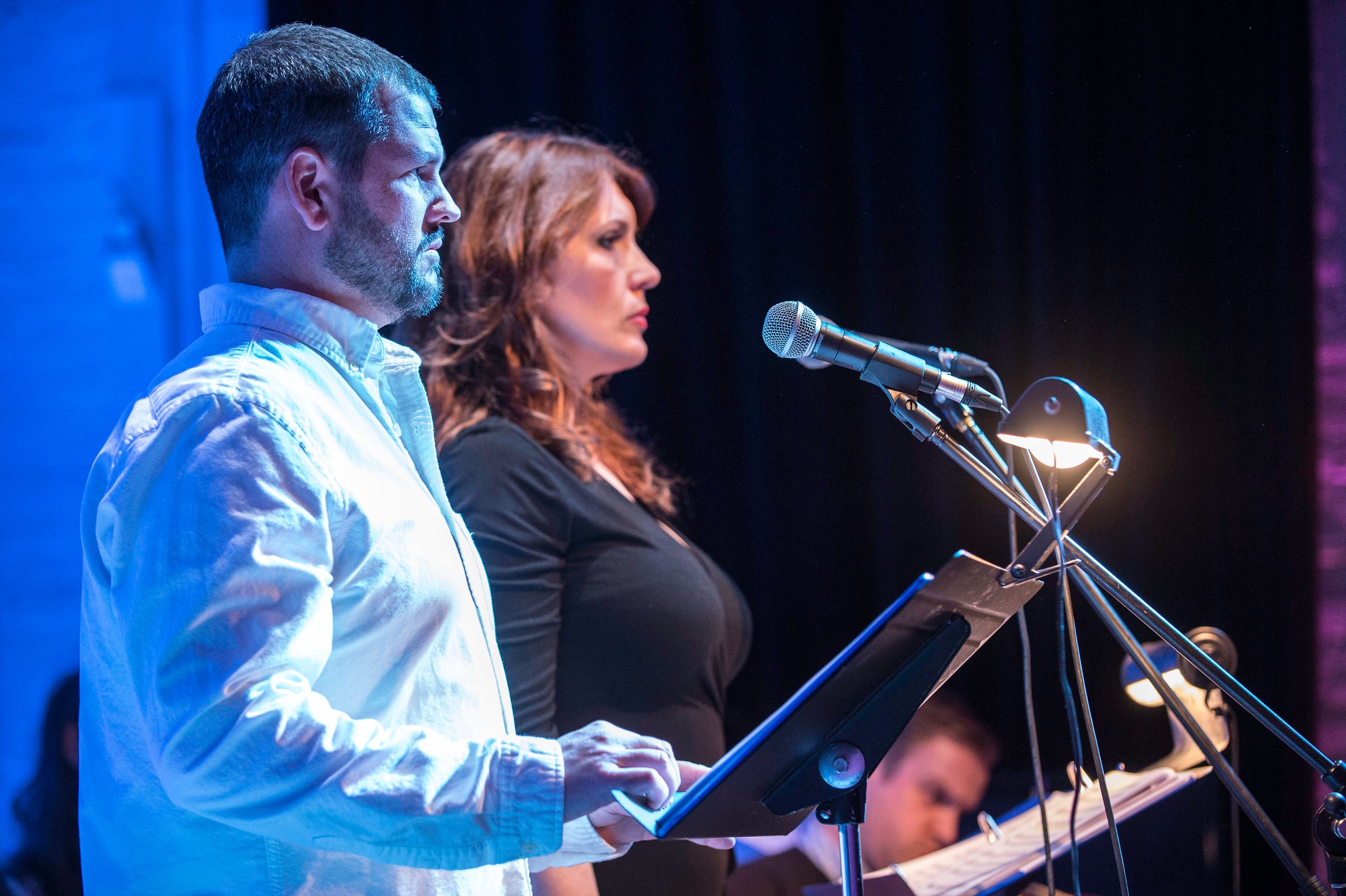
I am home after standing & singing alongside the Elmer Iseler Singers. It’s been exciting to share the sanctuary of Metropolitan United church with such luminous talents as Richard Margison, Meredith Hall, Theresa Tova, Ramona Carmelly, Hussein Janmohamed, George Krissa, Lydia Adams, composer & pianist David Warrack (and that’s far from a complete list!)…

And it’s over as suddenly as it came together.

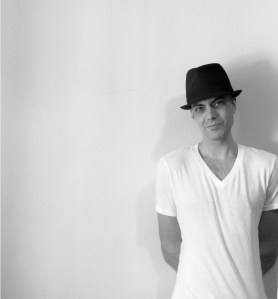
Composer & pianist David Warrack

Embedded? That’s in the sense of the embedded journalists of the Iraq War, where the writers lived so close to the warriors that they lost any illusion of objectivity. I’m deep in this project, fortunate to be one of the soloists at Hillcrest Church where composer David Warrack normally hangs his hat. Don’t expect objectivity, as this is more of a love letter.

David used bass Paul Babiak and me, the two of us portraying the voice of God, in the Prelude to the piece. Yes you read that right, two of us are the voice of God. There are a number of ways I come to grips with this, in a project celebrating Abraham, the patriarch of three different religions. If you consider that the holy books (The Koran, the Bible or the New Testament) could be understood as the paraphrase of three different groups, listening to the voice of God, then it makes sense. Why two rather than three? Ah but an Old Testament story such as that of Abraham would be shared by Christianity & Judaism, so you’d only need two voices not three: and please excuse me if that sounds reductive. That’s one way to understand it.

Paul suggested that perhaps God is in the space between our voices, a lovely mystery. And speaking of paraphrases, i hope i did his idea justice in how i represented it here.

A new work such as this one is ultimately a conversation, as the work poses challenges to a series of artists who offer their answers at this time. It’s a bit bewildering to undertake a new work because there are different ways one can sing the same notes. This was less an issue for me –with only a few notes and clear specifications—than for some of the other singers, who had a number of possible options. I was especially fascinated by the work of Richard Margison in the title role, singing at times with a big operatic sound, at other times with a whole range of tones loud and soft. He’s sounding quite wonderful.

Tenor Richard Margison (photo: Katie Cross)

Tenor Richard Margison (photo: Katie Cross)

Abraham seems to have a future, not just because of the warmth of the audience in response. There are plans for future performances, as Warrack continues to add to the piece, which he calls a work in progress. Just as it’s a privilege to be present at a new birth, so too for the premiere of a new work. Assume that I will be at the very least telling you about its next incarnation, when I hope I will also have the pleasure of participating.

Posted in Personal ruminations & essays | Leave a comment

Mahler’s Symphony No. 2: benefit for St. Michael’s Hospital

Benefit concert for St. Michael’s Hospital presents Mahler’s monumental Symphony No. 2 

TORONTO — An epic Mahler masterpiece takes centre stage on Nov. 16, 2015, in a special concert at Metropolitan United Church to benefit St. Michael’s Hospital (SMH). This annual fundraiser has generated over $27,000 in just two years, with 100% of ticket proceeds going to SMH’s Medical Surgical Intensive Care Unit (MS ICU). Presented by Opera 5 general director Rachel Krehm and her family in remembrance of Elizabeth Krehm, this year’s performance offers Gustav Mahler’s Symphony No. 2, a monumental work commonly known as the “resurrection symphony.”

Kingston Symphony music director Evan Mitchell conducts the Pax Christi Chorale in addition to a full orchestra comprising members of the Kitchener Waterloo Symphony, the Kingston Symphony, the Canadian Opera Company Orchestra and music faculty members from the University of Toronto. Opera 5’s Rachel Krehm sings the soprano role and is joined by Toronto-based mezzo-soprano Michele Bodganowicz.

The annual fundraiser is presented in memory of Elizabeth Krehm, who passed away at the age of 22 in the MS ICU at St. Michael’s Hospital on Nov. 17, 2012. During her month’s stay in the MS ICU, Liz received a high level of care from the unit’s doctors and nurses, prompting the Krehm family to establish this benefit concert series in her honour.

“As a family of musicians, we believe strongly in the healing and connecting power of music,” says Rachel Krehm. “We held the first memorial concert for Liz in 2013, to mark one year since her passing away. It raised such a significant sum for St. Michael’s Hospital that we decided to make it an annual event. St. Mike’s MS ICU took such good care of my sister during her stay, and we as a family want to support the unit and its staff so that it can continue to offer extraordinary care to patients and their families.”

The concert takes place on Nov. 16, 2015 at 8 p.m. Admission is pay-what-you-can with a suggested minimum donation of $20, and 100% of proceeds benefit the Medical Surgical Intensive Care Unit of SMH. This admission model ensures access for anyone who wishes to attend.

“It is the dedication of our community fundraisers like the Krehm family that helps the St. Michael’s Foundation raise much-needed funds to support the care of the patients who need it most,” says Jennifer Grey, Associate Vice President of Special Events and Annual Program of St. Michael’s Foundation. “This benefit concert has raised over $27,000 in the past two years—an impressive achievement! We wish the Krehm family much success with this year’s event and thank all of the dedicated and generous donors who attend the event each year in memory of Elizabeth Krehm.”

LISTING INFORMATION
Mahler’s Symphony No. 2
Nov.16 at 8 p.m.
Metropolitan United Church, 56 Queen St. E., Toronto
Tickets: by donation at the door (pay-what-you-can)
More info: 647-248-4048 or see www.facebook.com/events/159116471104369/

Posted in Press Releases and Announcements | Leave a comment

NDP delusions: a leader stays on, and what we need instead

Justin Trudeau is a very lucky man. Oh I’m not saying he doesn’t deserve his win. I am ecstatic about the election last Monday, and as mentioned previously, had a Liberal sign on my lawn.

But our democracy needs a genuine conversation among the parties. That isn’t about to happen for awhile, and that’s what I mean about calling JT a lucky man.

  • Conservatives? Harper has resigned. The Conservative Party may leap into a leadership battle. Doug Ford has made noise about being the next leader. In the meantime, however, this party is not going to be able to hold the Liberals accountable, which means lucky Justin (part 1)
  • NDP? Even worse. Yes Mulcair is a great Parliamentarian. But his campaign was a disaster. I pick up my headline from a wonderfully incisive piece on THE LEFT CHAPTER

Whereas the Conservatives will at least have a leadership campaign if not an actual soul-searching, that doesn’t seem to be in the cards for the NDP.

Mulcair will be much more of a thorn in Justin’s side than the conservative leader, at least until they choose someone new. But the NDP are apparently in a time-warp, re-enacting scenarios we have seen before.  I am a former NDP member, having canvassed, having had my heart broken in losing efforts, and a man with huge sympathy for the NDP.

I believe there’s a culture of political correctness within the party that is in some ways very admirable, but also dysfunctional. Defeat is normal within the NDP. No I don’t mean they always lose, but I do mean that they lose more often than any major party. When you have 300+ ridings in the country and come away with fewer than 40 members, that’s a lot of defeated candidates, a lot of stoicism, a lot of expressions of gratitude in the face of heartbreak. Now look back at the past decades and you see a great many more defeats, more downcast eyes, more sadness.

Under the circumstances is it any wonder that Mulcair is staying on? This party of heartbreak and stoicism have a high pain threshold, a tolerance for agony you won’t find in the other parties. Denial ain’t just a river in Egypt, it’s a pain management strategy.  Is the NDP really seeking to become a party that wins, or are they paralyzed by who they have always been: a party of pain & commiseration.  No one in this party lays any blame on Mulcair, who was likely following the strategy he was given, ineffectual as it turned out to be.

But Mulcair staying on gives Trudeau a break because this party have decided to keep banging their heads against the same wall as before. They are now unmasked. Mulcair is no longer the powerful leader of the opposition, oh no.  He’s been revealed as the inheritor of Jack Layton’s mantle who couldn’t nearly replicate that success, as they slipped back to where they usually finish: a distant third.  Our parliament really should be a conversation among strong & articulate alternatives.  We need strong voices on all sides of the House.

Now of course if Trudeau fails to deliver, Mulcair is ready.  The question is, does Mulcair represent the future of the NDP? Or its past..?

Reuters/Canadian Press photo from an article a month ago. The world has changed since then.

Posted in Politics | 3 Comments

Ideal Pyramus and Thisbe

There are several ways to approach opera composition & opera production. I would like to propose that there might be a polarity we could imagine between extremes, given that at least one of those options is entirely in the mind. Is opera ever realistic? It’s a crazy idea when we remember that opera is a form full of singing and dancing personages. Perhaps the sanest operas are those that eschew display and showmanship, that set aside the virtuoso imperative while embracing the ideal nature of the form.

And so this may sound arbitrary to some of you, that I’d divide opera between those seeking to imitate life, and those turning their back on that life, preferring to go inside to represent an ideal world. Oh I’m not saying that this latter group only portray perfection, just that the level of abstraction is so high that we’re in a realm that’s much more concerned with ideas & concepts than character motivation or gut feelings.

The Canadian Opera Company’s new production of Pyramus & Thisbe is really a program of three works, two serving as a kind of prologue to Barbara Monk Feldman’s new opera. I can only offer my own rationale for the two baroque pieces that begin our program:

  • Monteverdi’s Lamento d’Arianna is a brief scene including some of the best known music of the early 17th century.  Excuse me for waxing ridiculous for a moment, as I include a version of the famous tune sung by a MAN, which is perhaps an indication of how far we’ve come in the past 30 years.  I am not really sure why this is there except as a portrait of heart-break, of love that has been lost. But that is exactly what we see on this program. We do not see love enacted, no kisses, no hugs, no smiling eye contact.  This is as modern as Facebook, lovers in that most modern situation: all alone.
  • Monteverdi’s Il combattimento di Tancredi e Clorinda
    Love is a battlefield as Pat Benatar was wont to say. Whatever your age (and unlike the personages in that song I am not young), the male and the female may seem to be at war.

    We’ve seen a lot of this lately. A couple of days ago I watched another baroque opera concerning a battlefield where man and woman encounter one another. You tell me whether Lully’s Renaud & Armide or Monteverdi’s Tancredi & Clorinda are any more or less realistic than the figure in Benatar’s song. [wow Trey Wilson!]

Speaking of the battle between the genders, it wasn’t too many months since we saw two other operas on the COC stage encompassing a conflict between man and woman. The woman in Erwartung? Or perhaps Duke Bluebeard & his wives? Whether we’re using Schonberg’s expressionist toolkit, Bartok’s more symbolist method, or the baroque operas I cite above, we won’t mistake these stages for the real world.

And that’s all preamble for Pyramus and Thisbe, the third and longest work on the program. We are in an abstract realm, contemplating the meaning of love as though making a forensic examination. I don’t mean we’re poring over bodies or stains on the sheets. But there’s a character onstage who looks just like Peter Falk’s Columbo, played by Owen McCausland. In the battle (Tancredi & Clorinda) it’s as though we’re watching bun raku, that form of puppetry where a story-teller (or in this case, a singer) frames the performance of the puppets (who in this case are a pair of humans), mediating for us.

Owen McCausland as Testo in Il combattimento di Tancredi e Clorinda (Photo: Chris Hutcheson)

Owen McCausland as Testo in Il combattimento di Tancredi e Clorinda (Photo: Chris Hutcheson)

Once we’re into the new opera, he continues to be a curious figure divorced from the world he is observing. The stage is populated by chorus members paired off as if in echo of the two main characters. They foreshadow what’s to come in the story, as the men wrap shawls around their necks as though to hang themselves: although we don’t see an actual suicide.

One big reason I mentioned the two operas from the spring (two paragraphs ago) is that once again Krisztina Szabó appears to be the go-to singer for a company taking on new / difficult music, alongside the third principal, Phillip Addis. But I don’t believe this score is anywhere near as challenging as what Szabó took on in Erwartung.  Even so this is a remarkable achievement for all three singers & the chorus. The two Monteverdi works that begin the program call for a totally different vocalism, both in comparison to the new music and indeed compared to what we’re accustomed to hearing.

(l-r) Krisztina Szabó as Arianna with Phillip Addis and Owen McCausland in Lamento d’Arianna (Photo: Gary Beechey)

(l-r) Krisztina Szabó as Arianna with Phillip Addis and Owen McCausland in Lamento d’Arianna (Photo: Gary Beechey)

I feel I should mention director Christopher Alden & set designer Paul Steinberg. With a new work you can’t help wondering whether what we’re seeing is in the score or something superimposed by the creative team. For most of the work, we’re watching performers in front of a flat wall of colourful splashes, suggesting pure abstraction rather than representation. And so when Addis and Szabó tussle as though on a battlefield, we can’t take it seriously as a “battle” but rather as something more akin to Benatar’s song: that is, an amorous conflict rather than genuine warfare. The wall had the additional advantage of affording the singers acoustic support, making it possible for them to be very subtle.

I like some of Barbara Monk Feldman’s music very much, and think that it’s a worthwhile composition, a wonderful moment as Canadian composition returns to the COC stage after a long hiatus. I wish I could have more of a sense of what she wrote, given that there are some intriguing layers to the text, the words coming from several interesting sources. I’d need to study it further to have a real sense of it. Again, this is a matter pushing the work into an ideal direction, poetic rather than realistic, and therefore very much in harmony with the style of presentation.

I love Turner as much as the next guy, but i don’t expect all the paintings on display at the AGO to be landscapes or portraits.  Who’s afraid of abstraction?  So long as you don’t mistake this for la boheme or Lucia di Lammermoor you might find Pyramus and Thisbe fascinating & beautiful. The COC will present this triple bill of works again until November 7th. For further information click this logo or the pictures above.

Posted in Opera, Reviews | Tagged , , , , , | 4 Comments

Yannick Nézet-Séguin conducts Mahler 10

Yannick Nézet-Séguin conducting the Orchestre Métropolitain

I will put aside the question of the new Orchestre Métropolitain recording of Mahler’s 10th Symphony (Deryck Cooke version) for the moment, to talk about Yannick Nézet-Séguin, who conducts.

Is Nézet-Séguin the most successful conductor Canada has ever produced?

That can be understood in terms of fame, a discography or the quality of one’s output, as understood through “skill” or “musicianship”. I just want to put that provocative thought out there before I go any further, because I think he’s more famous everywhere else than here (except perhaps Québec, which is after all an entirely different world from Anglophone Canada). He made something of an impact as a wunderkind here in Toronto with a flurry of appearances in 2006, but since that time, seems to conduct everywhere else.  And of course i answer the question with a resounding YES.

(sigh)

Not only do I love his work, but everyone I know who speaks of him tends to say the same thing. I made my first acquaintance with him at a production of Pelléas et Mélisande in Montréal back in 2001, an interpretation that I found wonderfully understated & sympathetic to the singers (oh my god that’s 14 years ago and he’s still just coming up to 40 years old). About ten years ago Nézet-Séguin came to Toronto where he conducted Gounod’s Faust for the Canadian Opera Company, the best thing about that production. And just a few weeks ago, he led his first of several performances of Verdi’s Otello for the Metropolitan Opera. Although I did not attend I’ve read reports including words such as “tremendous”, “exciting” “goosebumps” and “electrifying” from those who did. In the gossip of the CUNY opera listserv, Nézet-Séguin is touted as a possible successor to James Levine at the Met; but how could he fit it in, when he’s already conducting in Rotterdam, Philadelphia and l’Orchestre Métropolitain in Montréal? A look at his schedule is a reminder that he is a vigorous young man –like that other Montrealer Justin Trudeau whose recent election victory against older leaders was built first & foremost on legwork & long days—as he manages to lead at least four orchestras in different parts of the world.  They wouldn’t be asking him to conduct if he weren’t good. See for yourself.

click image for more info

While perusing that amazing schedule, I noticed that Nézet-Séguin will be leading the Philadelphia Orchestra in the Mahler 10th come next spring. I wonder how it will compare to what I’ve been listening to incessantly on my car CD player, ATMA’s new release with l’Orchestre Métropolitain?

One of the reasons I left the CD in the car for the past few weeks was due to a bit of a struggle to find a way to do it justice, to ensure that I really found the right words to describe this interpretation. And so the long preamble about the conductor might seem to be an evasion, but in fact I wanted to make more of this review than just to talk about the recording.

So let me just say that, even with the attendant risk of dissuading Mahler freaks, I want to call this a tremendously original interpretation, one that is different from any Mahler 10 I’ve heard before. I’d been persuaded of the importance of Cooke’s version back in the 80s (when Cooke’s version was brand-new) when I first encountered Levine’s reading, at a time when I bought several of Levine’s recordings of Mahler (including this one) leading the Chicago Symphony. At the time my idea of Mahler was largely based on the ultra-romantic approach, especially the versions conducted by Otto Klemperer and Bruno Walter. That may sound odd, how could Mahler be anything but romantic? The references risk a kind of circularity of argument. But I think Klemperer and Walter emphasize the lushness of Mahler, making the works longer by use of slower tempi and occasional rubati. More recently conductors have pushed their Mahler into a higher gear, playing it faster and with greater cohesion. I put Leonard Bernstein at the top of this heap of revolutionaries (given that I credit Walter, Mahler’s friend, with a kind of authenticity to his stylistic choices). Where the big developments in a symphony can seem to take an excruciatingly long time in Klemperer, they become breath-taking when done at Bernstein’s pace.

Nézet-Séguin takes us in Bernstein’s direction without being nearly so frenetic, without any signs of discomfort. The orchestra plays with clarity yes, but also with what sounds to my ears like pleasure. The opening movement builds to that unforgettable climax, but sounding brand-new in doing so as a kind of soft and vulnerable exposition, inexorable but absolutely truthful. There’s a simplicity to it that makes it sound brand new, and so much beauty in that discordant moment that I’ve never noticed before, less a scream than something emerging from deep within. The scherzo second movement erupts in a climax at it conclusion but without that sense of struggle one finds in the slower recordings, nor the stress I experience in Bernstein’s recordings caused by careening so quickly through the music. Not to be reductive, but oh my God, Nézet-Séguin and OM seem to play as fast as is possible while still sounding as though they’re having fun rather than losing control. This is a joy-ride and masterfully done, not a desperate mad dash with the fear of a mis-step. The passionate phrases in the third movement are not overly mystified, as they can be when the pacing is at the whim of a distant conductor taking everything a bit too slowly, the phrases emerging like a reticent confession. No, these emerge exactly as one would want, with a natural rhetoric to them, building to climaxes that feel totally organic, as though the big orchestra were a large athletic beast bounding through the forest at a happy gallop.

The darkness of the fourth movement, with its sudden contrasts of playful phrases hangs together for me better than any performance I’ve ever heard. It’s not morose nor overly introspective, just matter of fact, fatalistic in its surrender to what is on the page. As such we get an inexorable Mahler that moves from great moment to great moment, without suffering over itself, without all the self-congratulations of the older style conductors. The odd juxtapositions between disparate elements with which Mahler confronts us in this work? They’re simple and unanswerable in such a direct reading. Those magisterial closing phrases of the final movement feel that much more profound when the composer is given the benefit of the doubt: that he knew what he was doing.

This man is an amazing conductor and yet he is so young. Perhaps Nézet-Séguin will come back to Toronto sometime, perhaps to lead the TSO or conduct an opera for the COC: if he can find the time.

One can hope.

Posted in Music and musicology, Reviews | Tagged , , , | Leave a comment

The erotic agonies of Armide 2.0

Opera Atelier opened their 30th anniversary season with their latest take on Lully’s 17th century masterpiece Armide. They’ve done the work before, the greatest opera you’ve never seen.  Perhaps it isn’t performed as frequently as it deserves, but it is a colossal mystery in some ways, the styles of the period largely a matter of speculation & experiment for a company such as Opera Atelier. There is so much that’s new in this production that i wanted to think of it as Armide 2.0,  as it it were a new version. Indeed I’d go so far as to say this feels like a breakthrough for Opera Atelier, not just a change in the approach to Armide but possibly a different pathway in everything we may see from them going forward.  I sure hope so as I think it’s the best thing they’ve ever done.

Colin Ainsworth (Renaud) and Peggy Kriha Dye (Armide), photo: Bruce Zinger.

Colin Ainsworth (Renaud) and Peggy Kriha Dye (Armide), photo: Bruce Zinger.

Let’s go back, to earlier productions to get the context. Lully has always been the promised land for Opera Atelier, an opera company that resembles a ballet company. Nobody integrated dance into opera like Lully, who was after all a part of the court of Louis XIV, that dancing king. If one reads too many history books one loses sight of the forest for the trees. But that’s what Opera Atelier used to do, captive of a notion of performance that wasn’t just historically informed, but at times tyrannized by a concern for accuracy bordering on fetish. Paintings were used as authorities, creating a precious and overly careful look that is still somewhat in evidence. The result was beautiful to be sure, but often at the expense of drama or even life.

The French Tragédies lyriques are not segmented in the same way as Italian baroque opera. Theorists wrote about divertissements, in their identification of the supposed function of the dance, which is to say as a kind of release of tension within the opera’s dramaturgy. But this tension & release model probably errs in being reductive, missing the real possibilities of dance. The earlier Opera Atelier attempts at Lully –productions of Persée as well as earlier versions of Armide –were more rigid in their structuring. Dance was not integrated as fully into the work as what we saw tonight. Director Marshall Pynkoski, Conductor David Fallis and Choreographer Jeannette Lajeunesse Zingg between them have arrived at something much more organic & true to the text in the way that the music and text flow, with dance fully integrated into the story-telling. Sometimes it’s the members of the OA ballet , sometimes it’s the stars of the production moving with the music or even dancing. This is very different from the opera putting ballet as a kind of garnish onto the surface as a kind of decoration; the dancers and dance are fundamental to the musical and dramatic conversation. I couldn’t help thinking that Louis XIV would have approved of this seamless connection among the parts.

There’s something more obvious that is different in this Armide, and it’s in the vocal interpretations. Again, it’s a departure from the fetish for beauty that has handcuffed this company for so long. Tonight we heard singers willing to make rough and angular sounds, so edgy as to be worthy of a 20th century opera, at times resembling speech or rap. The music wasn’t lost, but it was no longer a strait-jacket. As a result there was a whole new playfulness to the opera, a sense of possibilities, of experimentation. A whole new vista opens up for me, and i hope they see it too in their future productions.

Armide (Peggy Kriha Dye) is tormented by her contrary impulses, unable to kill Renaud (Colin Ainsworth).

Armide (Peggy Kriha Dye) is tormented by her contrary impulses, unable to kill Renaud (Colin Ainsworth).

Foremost in this regard was the title role as portrayed by Peggy Kriha Dye, who seemed to break out of the usual restrictions one perceives when seeing this company. Her expressive range was beyond that of any performer I’ve ever seen with OA, because of her willingness to undertake different sounds, a different set off assumptions. She took her character beyond the usual boundaries of the baroque sensibility that’s usually displayed by OA, to something very modern & disturbed, a genuine agony as she is tormented by her love, conflicted and at times seeming genuinely mad. Her lover Renaud, played by Colin Ainsworth, showed off a voice that continues to grow in size & expressiveness, at times bigger than we’ve ever heard him, yet at times very soft & subdued. Daniel Belcher’s take on La Haine (or hate), called for wild & flamboyant sounds very much in character, unlike the prettier approach we’ve heard in previous OA productions of this opera. We were in a realm of the grotesque, an explosion of sound that was suitably over-the-top. The confrontation of Stephen Hegedus’s Hidraot with Armide is much angrier and more passionate (fully committed regardless of whether the voice is pretty) than the subdued interpretations OA have offered in the past.

The emotional range of the production is beyond anything we’ve seen from this company before, less of the obsession with beauty and as a result, a fluid drama encompassing everything from comedy to possible tragedy. There’s a great deal to admire in this production, from the baroque version of blondes having more fun (Carla Huhtanen & Meghan Lindsay second guessing super-serious Armide as they encourage her to surrender to her desires), to the comical byplay of the two chevaliers (Olivier Laquerre and Aaron Ferguson). Opera Atelier’s use of the ballet is the most perfect integration of dance into an opera I’ve yet seen, often a key part of the story-telling.

Opera Atelier will be taking Armide to Europe, but for now, see it at Toronto’s Elgin Theatre, where Armide runs until October 31st.

Posted in Music and musicology, Opera, Reviews | 3 Comments

Embedded in Oshawa Opera

logoI spent an afternoon observing auditions for Oshawa Opera alongside Artistic Director Kristine Dandavino and Michael Robert-Broder.  For the AD, an extra set of eyes and ears offer additional perspectives.  Or as she herself said, she’s the one who makes the decisions. For me, it was a combination of education & fun.

The idea of the objective journalist might be dead, especially after the embedded journalists of the Iraq War.  I don’t lose sleep worrying about objectivity as someone who sees how badly the boundaries have been blurred, between the observer and participant, between combatant & civilian.  Nowadays just about anyone can carry a camera – their smart-phone—and become a journalist. A blog? Just another perspective among millions of others in every discipline under the sun.

I thought it might be fun to observe, while observing the diverse roles in play even during an audition.

The Sunday afternoon is broken into chunks of time, corresponding to appointment times for each audition. Seventeen different singers took the stage.  Singers were asked to prepare a pair of contrasting arias. Once up there, the singer was asked to explain the meaning of what they were presenting: which meant an informal synopsis of the action.

Some were asked a pair of intriguing questions:

  • Why would you like to sing with Oshawa Opera?
    Answers varied, but were a chance to hear about the singer’s career and their motivations
  • If we could produce any opera, and choosing something that you are capable of singing, what role would you choose to sing right now?
    This is a great indicator of a singer’s self-knowledge. Kristine seemed especially impressed by singers whose self-understanding corresponds to their actual instrument.  Or –a parallel concern—there’s a great deal of drama in singers aspiring to be something they are not, singing repertoire that is beyond them, or simply singing the wrong fach (vocal classification)

Some were asked their age.  It’s not an unreasonable question, that may sometimes take a person by surprise.  The thing is, some young singers are remarkably advanced for their age, so much so that you don’t recognize just how young they are, and so that info is very important to properly assess their singing. Two thirds of the singers were talented young singers still approaching their prime, being under the age of 35.

Although some of them brought their own piano player, most singers chose to use the piano player supplied by Oshawa Opera, who accompanied them on the Steinway in the Trinity St Paul’s Sanctuary on this Sunday afternoon.

I jumped up onto the stage on two occasions, to get a better sense of the experience ( and Kristine didn’t object):

  • Once as a singer (to fill in when there was a no-show) I sang from “dalla sua pace”, Don Ottavio’s first aria in Don Giovanni.  It was fun explaining the context and then singing.  I wasn’t warmed up at all (choosing the moment on impulse), and perhaps fatigued from a very full day, when I’d subbed at the organ, at my church this morning.  I stopped partway through when I cracked one of the notes and started to giggle, totally undisciplined.  But while i am a church singer & a professional accompanist, i can’t pretend to be an opera singer, not by a long shot.  Later I would hear a few singers go flat on high notes, making me regret in hindsight that I had stopped.  I was very impressed that one of the singers wasn’t deterred by his flat notes. That’s brave, and a wonderful skill when I think about it: to persevere whether flat or sharp. We see politicians who blunder on even when they are obviously fibbing. To continue singing even when flat or sharp is a useful skill.
  • Once I played the piano. I’d rehearsed this morning with Ramona Carmelly, who is a soloist at  my church, and will be a soloist in the upcoming oratorio Abraham.  This was enormously fun, playing first an aria from Samson et Dalila, then from Un ballo in maschera.  Fun!! 

rinity -St Paul’s (click for more information about the venue)

From the stage you see a lot of empty seats.  You hear the wonderful welcoming resonance of the space, that makes any voice sound better.  Michael & Kristine are totally positive, encouraging the best of every performer. While this may not sound obvious, there are people who can be picky in auditions, who can make you feel uncomfortable in your performance.  I believe –and Kristine also believes- in making the auditioning performer feel as welcome as possible.  You want to find out the best they can offer. You don’t ever discover this if you make them feel inadequate.

A few of the young singers were significantly better on their second aria.  If this were one of those cattle calls where you get swept aside after singing a mediocre performance, where a brusque “THANK YOU” ends your performance (thinking for instance of the charming fellow singing “a wandering minstrel I”, in his audition to play Hitler in The Producers), we would never have discovered those improvements. 

Let me repeat, this is no cattle call, it’s a gentle and attentive process.  With young performers this is particularly important, given that these are part of the apprenticeship of the singer, as they seek to cultivate genuine professionalism. And that begins with the artistic director & staff welcoming performers, in a collegial atmosphere.  The community of art is best served by treating everyone with respect.  Dandavino is a teacher so this is a perfect fit.  Some of her comments after performances sound like voice lessons, as she gently comments on what the singer is doing, usually couched as a polite question about their intentions & objectives.  It’s always respectful.

By the end I was profoundly exhausted, hours of listening and a little bit of performance.  I emailed my notes off to Kristine, for what they’re worth as the perspective of another set of eyes & ears.  It’s very exciting to have discovered a few more voices I’d never knew existed, alongside a few talents I’d already encountered.  There are lots of good singers in this country.    In a week when we heard of the demise of another opera company it’s good to know that people are still singing, that opera isn’t just something for the biggest cities.

John Henry, Mayor of Oshawa, and Kristine Dandavino, Artistic Director of Opera Oshawa

John Henry, Mayor of Oshawa, and Kristine Dandavino, Artistic Director of Opera Oshawa  (photo: Alycia Bryer)

Posted in Opera, Personal ruminations & essays | 2 Comments

Back to the Future, live with Toronto Symphony

“Great Scott! After thirty years we find ourselves being sent Back to the Future. This time the re-entry is in the concert hall…”

Composer Alan Sylvestri (click for more info)

So said composer Alan Silvestri in his program note for showings this weekend of Robert Zemeckis’ 1985 film at Roy Thomson Hall, with that brilliant score played live by the Toronto Symphony, including an additional 20 minutes of music for the occasion. It feels a bit like a rebirth, this phenomenon of orchestras playing film-scores as live accompaniment to films in theatres, one that’s happening more and more all over the world. During TIFF this past September the TSO made Vertigo with Bernard Herrmann’s wonderful score even more compelling, played before our eyes rather than as an invisible part of the film. Live performance can re-invigorate a familiar movie in ways that are almost impossible to communicate without actually seeing for yourself: but I will try.  This is simultaneously something old and something new.

Old? Yes we have seen the film before, but there is an even older component, echoing the way silent film worked. In the days before the talkies the musical component was in effect out-sourced, such that the performance was a little different in each location. In a big-city theatre it might have been an orchestra, while in a smaller town perhaps it would have been a small ensemble or maybe just an organ or piano.  Nowadays we take the perfection of the soundtrack for granted: that it’s synchronized, that it’s flawless and the dynamics balanced perfectly with other sounds in the film.  In a live presentation like this one, the levels can’t be quite so perfect. The occasional wonky sound from the brass or percussion –the intrusion of a live performance—was a little splash of life, a reminder that at least some of this Back to the Future was unpredictable. You’d look down from the screen where Marty & the Professor were enacting their story, to see a gang of percussionists making those magical sounds, strings, brass, all making it happen.  Watching the film with a live performance of the music is literally deconstructive, taking the usual seamless whole apart. We see how it’s done, complete with four percussionists, brass, string, woodwind players…you may never connect a particular sound to a specific instrument, until you see it played in front of you and discover what it takes to make that sound. And while you think you know a film, might have seen it a dozen times (as i’ve seen this one), it’s brand new when you see it done this way, brand new as though it had just been created, because in a live performance it really has been created anew.

Conductor Steven Reineke (click for more)

And yes it was perfect. That’s definitely new. Steven Reineke conducted the orchestra in front of the huge screen, with a smaller screen below to prompt his cues. Maybe it’s crazy to say this, but silent movies would have been way easier with this kind of system. We glimpsed a process that is wonderfully precise, allowing a live performance to synchronize with a film originally released with a recorded orchestral accompaniment. No question it feels like a tour de force to have everything synchronized, right down to that lightning strike. But it’s wonderful that they’re figured this out with the help of technology.

There’s something else new that originated with Reineke’s brief spiel at the beginning of the show, even if it’s simultaneously old. Reineke told us to feel free to respond: to cheer for heroes, boo the villains, and to applaud anytime we wished. And we did. When George finally punches Biff? Whenever the Delorean hit 88 mph and time-traveled? When the lightning strikes?

Huge applause.

I couldn’t help thinking that this too was both old and new. I’ve never seen this kind of eruption at a Toronto Symphony concert, where we’re supposed to be silent at the end of a movement of a symphony even though instinct screams “applaud”. I love displays of emotion & approval by an audience. And yet when you read of the premieres of symphonies in the early 19th century you see we’ve changed. Movements of symphonies were encored in response to wild applause.

People don’t usually notice film-scores. It’s a truism that film music is done right when you don’t notice it, whereas if you notice it something must be wrong. The downside of this is that people don’t notice just how much of their magical experience originates in the subtle musical compositions accompanying the visuals. You might try playing parts of your favourite film with the sound turned off: as we do in my film music course at the Royal Conservatory of Music. We watch the scene without the music and we listen to the music without the visuals. Is the shower scene music from Psycho inherently scary, without Norman Bates to remind you to scream? How does the music work?

I am hopeful that films with live accompaniment will bring new audiences to the symphony. So said the gentleman sitting beside me, on a pilgrimage Back to the Future  from Halifax: one of his favourite films in a unique presentation. At one point Reineke asked us: “who is at their first symphony concert”? Hundreds of hands went up, including the fellow beside me. And will they encounter the same old attitude? I’d be very happy if some of those rules –especially the prohibition on applause between movements—could be swept aside. I recall ballet performances where an impressive jump would generate spontaneous applause, same as the lightning in this film.  Sometimes I wish we were free to cheer or jeer exactly as we feel, and certainly the excitement of this crowd feels able to break through to a new kind of appreciation. But of course I might regret such an invitation when the level of chatter & iphone play interferes with my ability to hear the music.

The TSO will be playing Bernard Herrmann’s score to Psycho as part of their presentation of Hitchcock’s film on October 31st. I can’t wait to see what films will be next to get the live accompaniment treatment. Maybe I’ll see you there.

Posted in Cinema, video & DVDs, Music and musicology | 1 Comment

Enough tenors for now: COC 2015 Ensemble Studio Finalists

It should be no surprise that the eight finalists just announced for the the COC’s 2015 Ensemble Studio competition don’t contain any tenors in the group.

No wonder, when last year the top three places in the competition went to tenors, even though the ensemble already has talented tenors.  (my mistake… two of three were tenors as i was advised after publishing)  

The riches were amply on display last night’s La traviata, from the opening line delivered by Charles Sy as Gastone (winner of the 2014 competition), to the star turn by Andrew Haji as Alfredo.

This year’s finalists? (click for more info)

  • click for more info about the finalists

    click for more info about the finalists

    mezzo-soprano Emily D’Angelo (Toronto);

  • mezzo-soprano Lauren Eberwein (London, Ontario);
  • soprano Eliza Johnson (Stratford, Ontario);
  • mezzo-soprano Marjorie Maltais (Clermont, Quebec);
  • soprano Samantha Pickett (Kitchener, Ontario);
  • baritone Zachary Read (Halifax);
  • baritoneBruno Roy (Montreal);
    and
  • mezzo-soprano Pascale Spinney (Laval, Quebec).

Coming Tuesday, Nov 3. 2015: http://coccentrestage.ca/

Posted in Opera, Personal ruminations & essays, Press Releases and Announcements | Leave a comment

Tragic Canadians in Traviata

I had a second look at Arin Arbus’ production of Verdi’s La traviata for the Canadian Opera Company with a few cast changes.

At the centre of this world is Joyce El-Khoury in the title role, opposite Andrew Haji as Alfredo Germont and James Westman as his father Giorgio. El-Khoury is the most beautiful Violetta I’ve ever seen to grace a stage, completely believable as the statuesque creature at the centre of the story, commanding the stage at every moment. The voice was big and powerful when necessary yet often surprisingly understated.

Soprano Joyce El-Khoury (photo: Kristin Hoebermann)

Soprano Joyce El-Khoury (photo: Kristin Hoebermann)

Her surprise suitor is Andrew Haji, seemingly in total awe of this beautiful woman who might be out of his league. And when he has the temerity to declare his love to her – “un di felice”—El-Khoury suddenly sat down, seemingly stunned by the sincerity of his declarations: and I felt very much the same way. The moment signified the earliest moment in this opera that I have ever burst into tears before. I was shocked at the drama created at this moment. And yet it was all about the singing. Haji has a tone that is perfectly Italianate, very musical and yet seemingly effortless.

Andrew Haji (photo: Veronika Roux)

Andrew Haji (photo: Veronika Roux)

The third of the principals is the flawless baritone of James Westman. His suavely sung interpretation sits on the fence between being the main obstruction in the plot and being hugely sympathetic & likeable.

Tonight’s character dynamics are substantially different than those of the opening cast of Ekaterina Siurina, Charles Castronovo and especially Quinn Kelsey, who has what I’d consider an unprecedented importance in that cast. As the strongest character by far (to say nothing of the impeccable voice), Kelsey’s Giorgio Germont rules the stage, such that the story in large measure becomes about him. In contrast, the charismatic El-Khoury is very strong in her scene with Westman, when she shows a genuine kindness, looking at the portrait of Germont’s daughter. Where Siurina’s tragedy is one of being overwhelmed by the strong will & presence of Kelsey, Westman as a more sympathetic Germont, makes it seem as though El-Khoury is bravely participating in making the choice rather than being pushed. It may sound like a small distinction but this seems like a different version of the story arc, a very different sort of tragedy. When we get to the last scene El-Khoury has a kind of heroic presence, and tantalizingly sings of redemption. Siurina (and by implication Castronovo) felt to me more like someone trapped in a melodrama, someone without any will to resist, without hope and therefore whose fate was written on the wall.

Baritone James Westman (photo: Rob Harrris)

Baritone James Westman (photo: Rob Harrris)

Yes yes I know the story, and I’ve seen it a million times; but there are tragedies where one comes to a moment in the story that one dares to hope for a different outcome, to dream of a happy ending, even if it never comes (we may see it in King Lear, or in Madama Butterfly). Those were imaginable if not actually possible tonight in a way that they did not seem feasible in the darker story-telling via the other cast. How wonderful to have both options. I believe this second cast –in which the principals are all Canadians—gives us something more genuinely tragic, whereas the previous cast –also so very powerful & very moving—seemed to me more of the realm of melodrama than tragedy. But please don’t take that as an insult, as melodrama was alive and well in the 19th century when Verdi wrote this opera, and it may well be more authentic than a tragic reading, even if modern tastes seem to prefer tragedy—where the stories involve choice and agency—to melodrama—where the personages are helpless and have no control of events. Forgive me if this sounds academic, but i am deep in a fascinating book about melodrama.

Neil Craighead was a sympathetic Dr Grenvil, Thomas Goerz a suitably menacing Baron Douphol. Lauren Segal made an intriguing Flora, possibly the first time I wished we had a chance to find out more about this mysterious friend of Violetta. Iain MacNeil was the life of the party as the Marquis d’Obigny. As in my previous look at this production, Aviva Fortunata’s Annina and Charles Sy’s Gastone both took the stage boldly whenever they had the opportunity.

The chorus in their two scenes made these the most believable La traviata parties I can recall, vitally important to establishing the credibility of the action. Where the first is warm and joyous, the second is darkened by the plot developments hanging over the scene. And when we get to the last scene, the puppets we had seen at the party return as shadows of Carnival, possibly creatures of Violetta’s imagination rather than objective phenomena.

La traviata has eight more performances. The cast I reviewed tonight sing again Oct 30th and Nov 6th, while the other cast sing Oct 17, 21,24, 29, Nov 1, and 4. See it if you can.

Charles Castronovo as Alfredo and Ekaterina Siurina as Violetta (Photo: Michael Cooper)

Charles Castronovo as Alfredo and Ekaterina Siurina as Violetta (Photo: Michael Cooper)  Click image for further information.

Posted in Opera, Reviews | Tagged , , , | 2 Comments