Nabucco not as written

I had another chance to see the Canadian Opera Company’s Nabucco last Saturday, this time using my subscription seat. The first time courtesy of the COC comp ticket I watched and listened as a reviewer, while this time it was simply for enjoyment.

In the process I noticed two places in the opera where the performance did not follow what Giuseppe Verdi wrote in the score.  There are likely other instances but these were the two I noticed, both in the last act, and I wanted to call attention to this fascinating pair of changes.

Please note! No musical score is a precise instruction for the performance. It also varies somewhat depending on the period of musical history. While for recent operas composed in the new millennium singers normally sing precisely as it’s written (leaving aside works that build in moments where there are interpretive choices left up to the singer) for the baroque singers were like partners of the composer, expected to elaborate their parts, adding cadenzas and ornaments. This didn’t really end in the bel canto period given that singers were empowered, indeed expected to add additional high notes, although in time publishers would capture these and publish them as options. Singers would learn the standard approach to the score from their coaches and conductors, and might then honour that or change it somewhat.

This is also trickier when it’s an opera such as Nabucco that isn’t well known. I have never seen it before this year, when it’s getting its first COC production in 2024, so “normal practice” could be a bit elusive to identify. When we speak of a production taking liberties it might be understood as a good thing. I’m always intrigued by such choices, and don’t think of a musical score as some sort of document that must be read literally.

This is all a preamble to two relatively small things that happened later in the opera.

While it’s one thing for a soloist who inserts or changes their part to make a departure when a chorus does it, that’s a much bigger deal. While a soloist’s changes are easily done without rehearsal (although a purist conductor may object) the chorus making adjustments are far more complex. It means you plan and rehearse the changes, and they’re surely no accident but the result of deliberation and planning.

I mention all this in appreciation. Normally I don’t read reviews by other Toronto writers, but just now I checked and couldn’t find anyone mentioning this.

The COC Chorus has lots of members but when something like this happens we need to properly credit the creatives behind the choice.

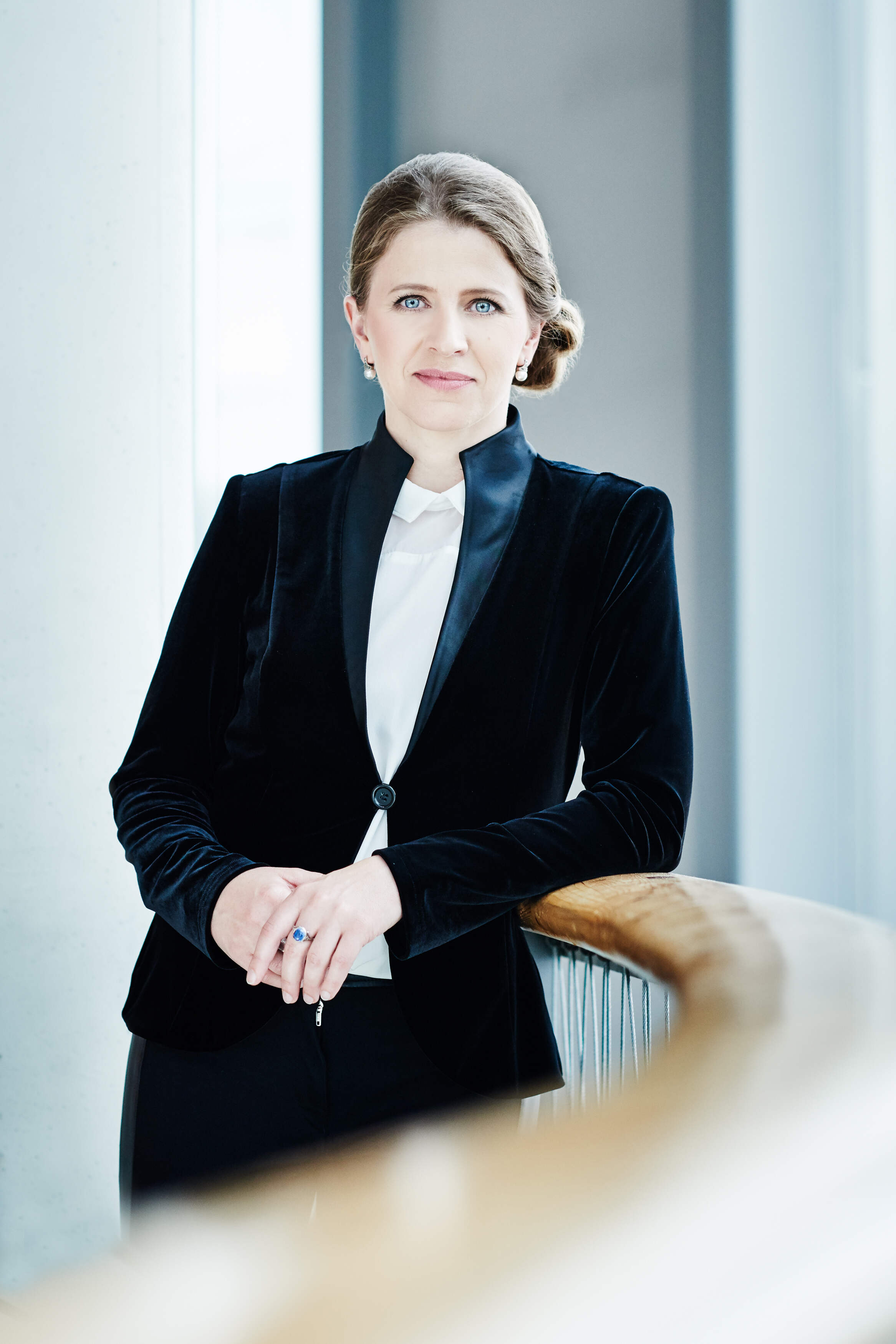
Sandra Horst, COC Chorus Master

There are two key figures involved in the changes to the score (aside from all the singers in the chorus), namely COC chorus master Sandra Horst and conductor Paolo Carignani.

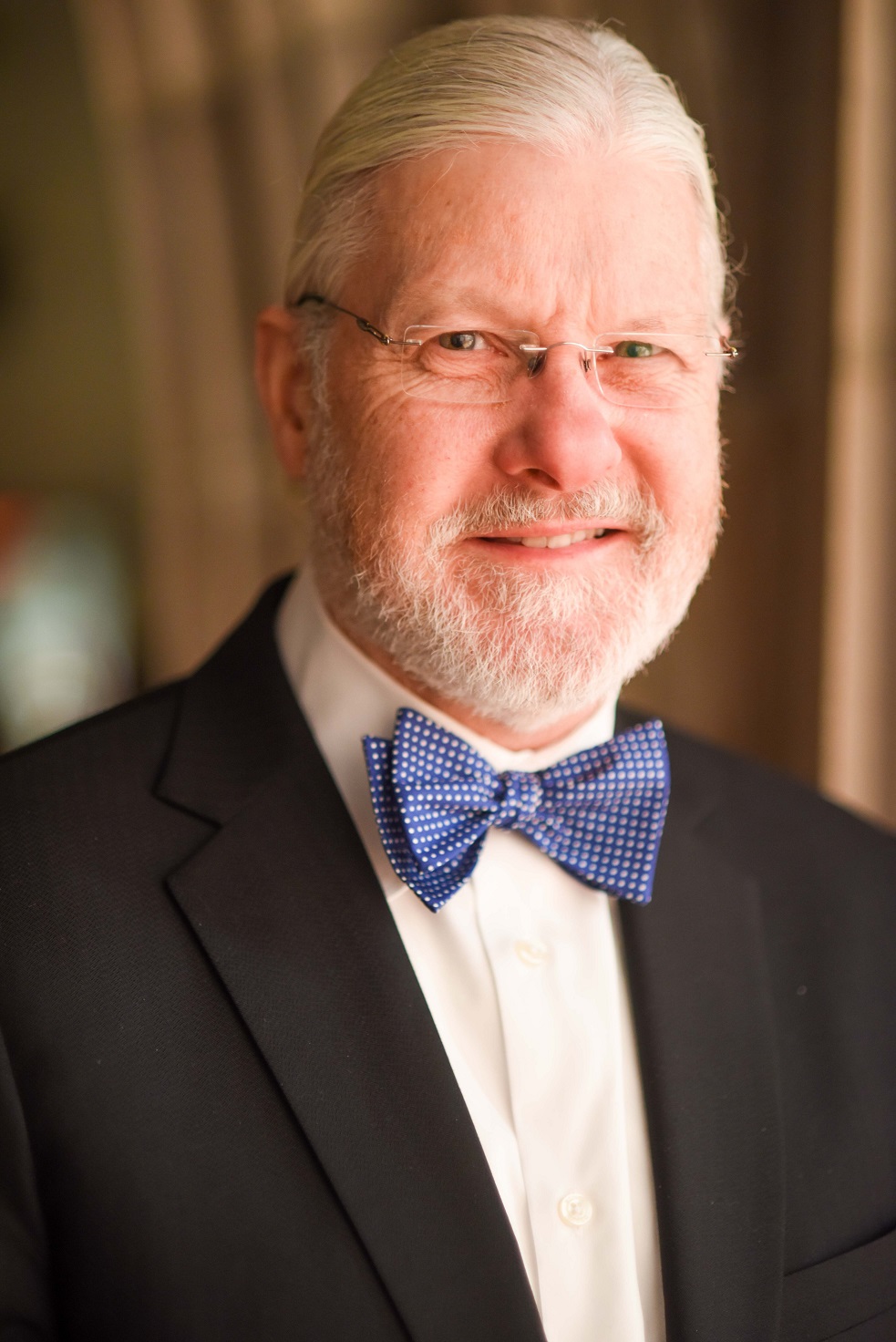
Conductor Paolo Carignani

The first change is relatively brief but still a magical moment.

Here’s a picture of the score for Va pensiero, the celebrated chorus of the Hebrews from the last act. If the COC chorus didn’t do it as written let’s have a peek at what the score says.

The difference between what we see in the score and what the COC chorus did is a stunningly simple alteration. You can see how the voices sing “virtu” followed by two chords in the piano-vocal score, corresponding to the orchestra..? In other words, the voices cut off while the orchestra plays.

But that’s not what we heard.

Whether this was the creative idea of the conductor or the chorus master, it’s something that they would have created as a team, executed both times I saw the opera. Instead of letting the orchestra finish, the chorus softly persist with their last note long after the orchestra are done, the chorus holding their gentle sound unaccompanied for several seconds of magic. It was hauntingly beautiful adding to the beauty of this moment.

No wonder the audience responded with powerful applause.

When I went fishing for this in my score, i remembered the other, even bigger departure from the original.  In the last scene, large passages are done unaccompanied, the chorus and soloists singing a cappella.

I am reminded of something we regularly did at Hillcrest Church with the quartet of soloists or even with our choir on occasion under the direction of David Warrack: namely to do entire verses or entire pieces a cappella.

The audience or congregation listen differently when singers are unaccompanied. There’s an intensification of the drama. Need I add that it’s scary for the singers, knowing that a page or two later in the score, the orchestra will re-enter and we will find out whether they’ve been singing in key or gulp out of key.

If you’ve ever sung a cappella you know how challenging this can be. There you are singing without the usual support system –the accompaniment that keeps you in tune– and so uh oh, what if you wander into the wrong key, going flat or sharp? You aim to stay in tune when you don’t have the orchestra’s support to keep you in tune. When the accompaniment (whether it’s piano, organ or orchestra) comes back in: it’s like a test. Did you stay in tune? At the end of bel canto cadenzas when the orchestra enters for the last chords, it can be embarrassing! But for these big long unaccompanied passages both times I saw the COC’s Nabucco the re-entry was brilliantly precise!

Whoever had the idea to depart from the way it’s written in the score –between COC Chorus master Sandra Horst or Conductor Paolo Carignani — the execution of this makes me want to credit Sandra for practising with the chorus and getting perfection from them. But it’s a team event, the singers deserving credit above all. For all I know (as someone who doesn’t know this opera very well) it may be that this approach is a tradition, or something that’s regularly done. Or maybe it’s a brand new idea.

But I don’t know.

It’s also a bit of a reminder that both of the operas presented in the COC’s fall season are in some sense religious if not precisely Biblical. One leans more towards the Old Testament, the other (Faust) is Christian, but not from a Biblical source. 

I will be seeing Faust again on November 2nd.

Posted in Music and musicology, Opera | Tagged , , , , , | 2 Comments

A natural high from Tafelmusik’s Feast of Unknowns

Tafelmusik have outdone themselves this time.

This concert titled Feast for the Senses was an exploration of new flavours presented with the assistance of Amandine Beyer, guest director and violin soloist, a genuine feast.

Violinist Amandine Beyer with Tafelmusik (photo: Dahlia Katz)

Baroque for most people means Bach or Handel or Vivaldi, not Muffat (huh?) Lalande (qui??) or Elizabeth Jacquet de la Guerre (de la quoi??). And while we may know the name of Jean-Philippe Rameau, the chance to hear his music played in this authentic style is an opportunity not to be missed.

At the dawn of the new millennium Opera Atelier, the company who collaborate with Tafelmusik, gave us our first look at the brilliant French operas of the 17th century. Artistic Director Marshall Pynkoski and Music Director David Fallis showed us a new sort of opera, the tragédies lyriques such as Persée or Armide (both composed by Lully) or Médée (by Charpentier) featuring dance music for ballets that wasn’t merely a divertissement but represented important action in their stories. And no wonder when presented for a King who expected everyone around him at court to dance. Over the next quarter century maybe I expected too much of Marshall & Opera Atelier, who also offered us historically informed productions of Der Freischutz, and several Mozart operas plus several baroque masterworks. They did give us the one Rameau opera, his Pygmalion in 2018 on a double bill with Charpentier’s Actéon. If like me you’ve been desperately waiting to hear the glorious orchestral dance music of Rameau, you must get to Jeanne Lamon Hall this weekend for one of the remaining Feasts.  

In other words the dance numbers after intermission showcase Rameau’s unique approach. There is something I’d describe as counterpoint but it’s not like what we hear from Bach. The orchestra on the stage almost seemed to be divided between strings on one side, continuo players (cello, bass, guitar, harpsichord) on the other, with the wind players in their midst as though reconciling a tug of war. Bassoonist Dominic Teresi played an especially interesting role, offering up counter-melodies and delightful ripostes as though seeking to change the subject of the debates, sometimes leading the call-response between the violins & continuo into a new direction. The complexities of textures are as richly astonishing as a smorgasbord, and that’s without having any notion of what the music is meant to do, given that Rameau employed these pieces in his operas. We heard a ballet des démons, an Air majestueux, but were discouraged in the program from our usual OCD program perusal behaviours:

A note to the listener: it can be daunting to be faced with a long list of movements in a French suite, such as the Rameau selection this week. It is absolutely not a requirement to follow along, with the fear of getting lost mid-list. You are welcome to close your program booklets, sit back, and enjoy the ride. You may find that you’re occasionally wanting to tap your toes (Muffat would approve!). Or you may want to imagine yourself seated on a train enjoying a tasting menu of French delights as the landscape rolls by.

Violinist Amandine Beyer with Tafelmusik (photo: Dahlia Katz)

Forgive me if my attention to the history is off-putting. The exquisite performances of Rameau dance music remind me of music we used to speak of as stoner music, the compositions when one was getting high back in the day. But instead of Pink Floyd or King Crimson I would always prefer Hector Berlioz or Claude Debussy, who represent the same sensuous tradition of orchestration as Rameau. What’s amazing about the Rameau is how it alters your reality, sharpening your senses as though you’ve taken a drug: but no drug is needed. Or perhaps Rameau is the drug. Rameau is powerful like that, and especially in a lovely space like Jeanne Lamon Hall where you have such an intimate connection to the performers.

The program notes by Charlotte Nediger, Tafelmusik’s keyboardist, are part of the fun. Tafelmusik’s historically informed approach on period instruments often serves to illuminate classic works. Last month it was the Jupiter Symphony of Mozart sounding fresh & different. Their annual Messiah will be coming up soon enough. While the pieces unearthed via careful research may be “old music” from the 17th or 18th centuries, they’re still far from familiar.

Charlotte Nediger (photo: Dahlia Katz)

As Charlotte’s clever program notes explain, with Michel Richard de Lalande we would visit the intimate daily life of Louis XIV. What did the King hear while eating? A popular choice was Lalande’s “Simphonie pour le souper du roi“. But of course. In 1687 the Sun King couldn’t very well say to his computer “Allo Siri play me quelque chose digestif! ” At one time that’s what musicians were expected to do.

Aha that means Lalande gave Louis actual Tafelmusik (table music).

Beginning in gentle plaintive tones Lalande’s Simphonie gradually picks up energy, becoming energized and much quicker. In its time perhaps that helped the royal digestion..?

We next heard the first of two Fasciculi or bouquets from Georg Muffat, a scholarly composer whose multilingual gifts remind me a bit of Georg Frideric Handel. Just as Handel’s operatic & musical gifts reflected his time in several different countries, a distillation of German, Italian and later English cultures, so too Muffat, whose writings have been helpful for those like Tafelmusik seeking insight into period performance practice. Perhaps it was more normal for a smart composer to function in German, Italian, French and Latin, given the necessity of moving between royal courts and the churches of the time.

The first Bouquet exemplifying the state of mind of “Gratitudo” was clearly meant for our current season of Thanksgiving, a dance suite of tremendous variety and rhythmic vitality. Charlotte paraphrases Muffat’s most important secrets on how to play in the French style:
to steer the player to what is most pleasing to the ear so that those playing and listening can feel the impulse to dance in one’s heart and feet at the same time.”

Between the two Muffat dance suites came something entirely different, the violin sonata #5 by Elizabeth Jacquet de la Guerre, from Amandine and continuo in the persons of Charlotte at the keyboard, principal cellist Michael Unterman and Theorbo Lucas Harris. While we were now hearing a smaller ensemble, the intensity was if anything greater, especially in the playing from Amandine, whose intonation and phrasing are unlike anything I’ve experienced. Her connection to the ensemble was organic, perhaps embodying the ideal. You know you’re seeing and hearing something special when you see the Tafelmusik players grinning back at their leader & soloist.

Violinist Amandine Beyer

Tafelmusik will repeat their Feasts of the Senses Saturday & Sunday, October 19 & 20 at Jeanne Lamon Hall.

Posted in Dance, theatre & musicals, Music and musicology, Opera, Reviews | Tagged , , , , , , , , , , | Leave a comment

Everlastingness: Micah Schroeder and Stéphane Mayer in concert October 22nd– POSTPONED

UPDATE from Micah Schroeder (via Facebook) 

“It is with a heavy heart that due to unforeseen personal circumstances of one of our performers, we are no longer able to present our recital Everlastingness on Tuesday October 22. I was so looking forward to singing with these wonderful artists and we hope to be able to present this concert to an audience at a later date.”😢

MICAH SCHROEDER & STÉPHANE MAYER PRESENT AN EXPLORATION OF IDENTITY, MEMORY, AND DISPLACEMENT IN RECITAL

On Tuesday, October 22, 2024, Toronto will witness an evening of music that delves deep into themes of identity, memory, and displacement. Baritone Micah Schroeder and pianist Stéphane Mayer will be joined by violist Brenna Hardy-Kavanagh at the Tranzac Club for a thoughtfully curated recital, featuring a blend of classical and contemporary works by composers from Canada, Armenia, and beyond. The concert is anchored by Everlastingness—a poignant piece by Armenian-American composer Mary Kouyoumdjian, based on the text by Royce Vavrek, exploring the traumatic history of an Armenian painter, Arshile Gorky, living, living in America after the Armenian genocide who takes his own life.

The recital, which begins at 7:30 pm (doors at 7:00 pm), will offer audiences a journey through cultural and historical reflections, particularly focused on themes of personal and collective memory. The program includes works by Danika Loren, Jocelyn Morlock, Stéphane Mayer, Komitas Vardapet, Francis Poulenc, and Robert Schumann, blending tradition and modernity to tell stories of loss, remembrance, and reconnection.

Tickets are available at everlastingness.eventbrite.com.

Micah Schroeder, Berlin-based Canadian baritone, shares a personal connection to the recital’s theme:
My Armenian grandmother fled the horrors of the Armenian Genocide of 1915 as a young girl and sought refuge in the United States. In the turbulent cultural landscape of the early 20th century, many traditions and languages were lost in the push for assimilation. Unfortunately, my grandmother passed away before I was born, and my mother never learned the language, leaving our connection to our Armenian heritage fragile. Through my music, I hope to rekindle that bond—using it as a means to reconnect with the language, history, and culture of my ancestors.”

Mary Kouyoumdjian and Royce Vavrek note in the music that:
Using specific lyrical images and extrapolating form quotations attributed to the artist, this piece functions like a fever dream as Gorky’s memories consume him. Gorky witnessed the Armenian Genocide as a teenager and lost his mother to starvation during one of its severe winters. Migrating to the United States with his sister, he began a new life for himself as a painter, and then suffered a series of tragic events from a studio fire, a debilitating car accident, marital troubles, and ultimately a suicide.

Concert Details
Date: Tuesday, October 22, 2024
Doors Open: 7:00 PM
Recital Starts: 7:30 PM
Location: Tranzac Club, 292 Brunswick Avenue, Toronto, ON M5S 2M7

Program Highlights

  • Recuerdo – Danika Loren
  • Lieder und Gesänge aus Wilhelm Meister – Robert Schumann
  • Involuntary Love Songs – Jocelyn Morlock
  • Everlastingness – Mary Kouyoumdjian
  • Krounk – Komitas Vardapet
  • Banalités – Francis Poulenc
  • Annabel Lee – Stéphane Mayer

    The evening will offer approximately one hour of music as well as a 20-minute intermission.

    Tickets:
    Available at everlastingness.eventbrite.com.

*******

Press releases and announcements” are presented verbatim without comment

Posted in Music and musicology, Press Releases and Announcements | Tagged , , | Leave a comment

Ambitious COC Faust

The Canadian Opera Company have a new production of Charles Gounod’s 1859 opera Faust, telling the tale of the old man who sells his soul to the devil for youth and romance.

Gounod’s opera is but one of the many versions of the Faust legend.

The musical Damn Yankees is about an old baseball fan who is so frustrated that he sells his soul to become a young ballplayer. I recorded Phantom of the Paradise from tv earlier this week, Paul Williams’ cinematic opus about a rock musician selling his soul; I’ll have to watch it again.

I understand that some think of Queen’s Bohemian Rhapsody as a version of the Faust legend.

Later this month Art of Time Ensemble will be presenting Sankofa: The Soldier’s Tale Retold, reimagining Igor Stravinsky’s L’Histoire du Soldat: another version of the Faust legend.

There are several operas based on the Faust legend, including Spohr, Boito, Busoni and Berlioz.

For a time Gounod’s version was recognized as one of the most popular operas in the world. It’s interesting to observe that the other formerly most popular opera of the second half of the 19th and early 20th centuries is Giuseppe Verdi’s Il trovatore, another melodramatic piece with religion as a large subtext for the story. As both works appeal to a Christian audience, the declining popularity of each opera seems to parallel the declining attendance in churches. It may also be relevant to mention that the protagonists in each story confront forces beyond their control, especially metaphysical ones, with little agency.

The libretto of Gounod’s opera by Michel Carré and Jules Barbier seems to be designed for a conservative audience. With direction by Amy Lane and choreography by Tim Claydon, the new COC Faust does a good job reconciling the 19th century sensibility of Gounod’s version of the opera with a modern audience.

Before we even heard the first note of music, I was admiring several features of the set & costume design by Emma Ryott, as seen on the cover of the COC’s fall program. For much of the opera we’re looking at a large staircase construction resembling a human spinal column.

At other moments we see a huge X-ray image of lungs, echoed by the artificial trees downstage.

Mephistopheles (Kyle Ketelsen), accompanied by his entourage, Faust (Long Long) and Marguerite (Guanqun Yu), set & costume design by Emma Ryott (photo: Michael Cooper)

So it’s no surprise to see that Amy Lane speaks of human aging, a big part of Faust’s story.

It’s fascinating to look at the ageing process,
to feel your body start to question, provoke
or even fail you whilst at the same time your
mind sharpens and your knowledge grows
and I’m deeply intrigued by how human
desire evolves throughout these experience
s

I like ambitious productions of opera that seek to change the way we see and hear them. Sometimes they force us to rethink our assumptions, to look beneath the surface. This Faust contains some of those challenges.

A chat Erika and I had with a couple of other patrons in the lobby at intermission gave me the chief insights I’m going to share. They didn’t like it as much as I did. While I was fascinated by the set, it may have been too intellectual. We all love the music, both Gounod’s score and the singing by the principals. Their words were harsher than mine, concerned that the result was cold and abstract, the principals seemingly lacking a connection with one another.

I believe it’s useful to glance briefly at the other Faust operas, especially Busoni & Berlioz as compared to Gounod. I recall a professor in my undergrad laughingly dismissing Gounod’s opera while insisting that Berlioz is truly sublime. The reason that’s relevant to what Amy Lane has done with Gounod’s opera, is that we’ve drifted away from the conservative melodrama that filled theatres for the opera in its first decades. This version of Gounod is very sophisticated, very beautiful to look at, yet in many ways estranged from the original text in seeking to be so much deeper than what one used to get. I think it’s important to appreciate what the work is doing, even if one might prefer something else.

I had tears in my eyes in two different places in the opening scene, arguably one of the places where Gounod’s opera is less sentimental and more intellectual, indeed quite similar to what the Berlioz wrote. For me Kyle Ketelsen’s Mephistopheles is the star of the show in a theatrical portrayal that also sounds superb top to bottom. As with the Metropolitan Opera’s Damnation of Faust directed by Robert Lepage, or several productions of Wagner’s Flying Dutchman, I have found that the imagery associated with Mephistopheles and the demons always gets pride of place, while there’s a kind of reluctance to show unabashedly Christian images, a readiness to deconstruct spirituality or avoid it altogether. Because Mephisto is always cool & suave, he survives modernizations. In that respect Kyle had a bit of an advantage over the other leads: but he seized the moment, taking the stage every time. You have to love that kind of swaggering flamboyance.
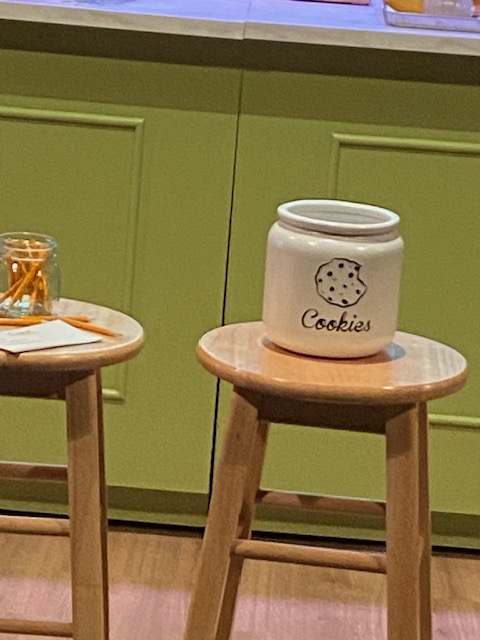
And Mephistopheles had an entourage, helping throughout the show. His two assistants, who were not listed in the program but whose names are given in photo credits as “Lucie” (for Lucifer?) and “Bubbs” (as in Beelzebub?), were portrayed by dancers changing the tone of many of the scenes, interacting with chorus and soloists throughout.
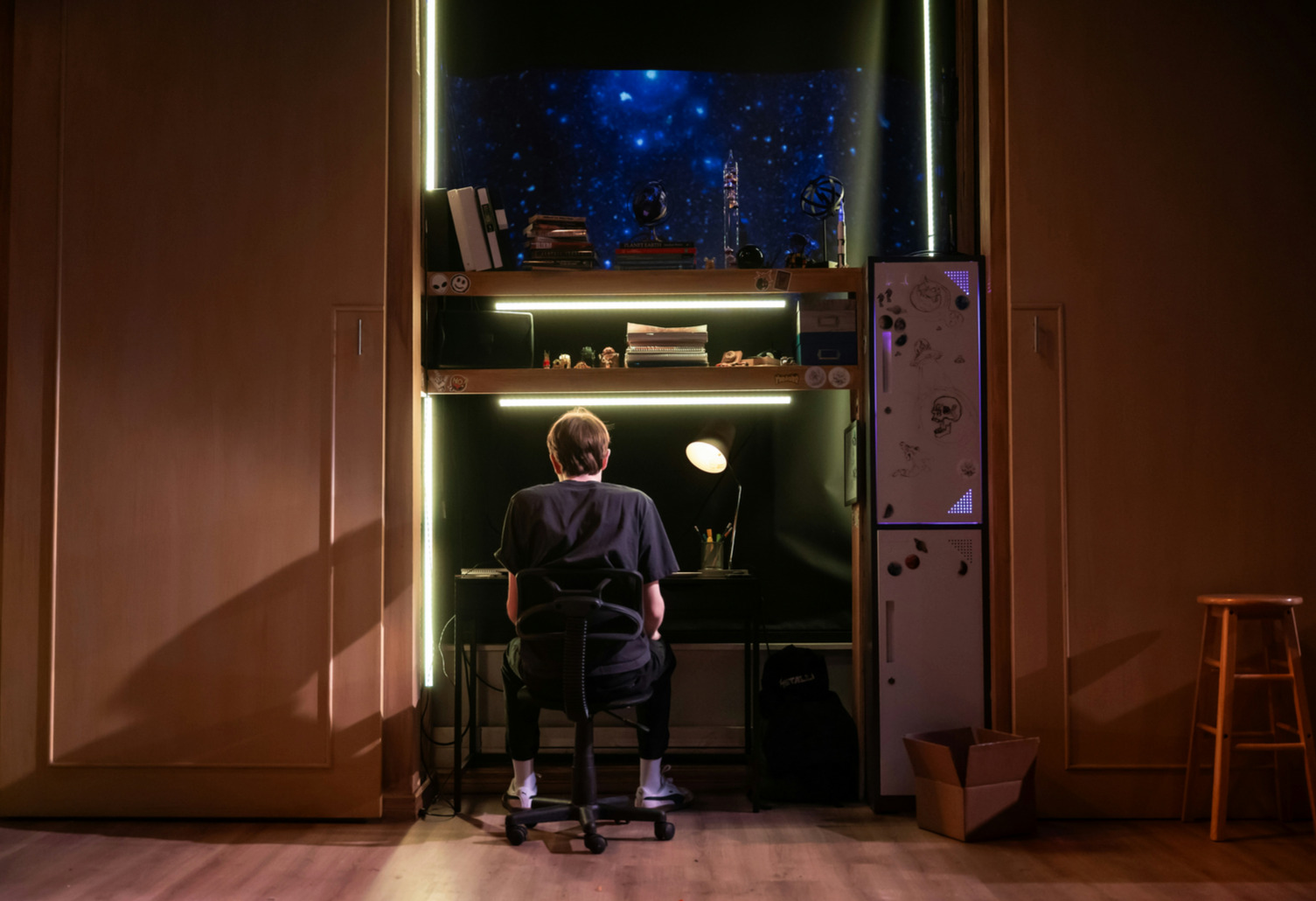
Lucie (Sierra Richardson) and Bubbs (Tina Desroches, photo by Michael Cooper)

They serve to underline the challenges faced by the personages of the opera, who have little or no agency once they make a fatal choice such as selling their soul ( Faust) or throwing away a medallion that protects them from harm ( Valentin ). I think Amy Lane was seeking to improve Marguerite, the simple heroine of the work, which is perhaps a worthwhile effort even if the story doesn’t make it easy for the director. As portrayed by Guanqun Yu this afternoon we saw someone sensitive and thoughtful, but also with a beautiful tone and reliable intonation.

Long Long as Faust was very effective vocally, hitting all the important high notes and especially sympathetic in that opening scene when he’s the old man on the verge of suicide. For me this was one of the best scenes and got us off to a great start, especially when Kyle’s suave demon introduced himself from the staircase upstage with a resonant “me voici”.

My other favourite scenes also involve Kyle. He teams up with Marthe (Megan Latham), in over the top romantic comedy to contrast the leads, a lovely scene that is likely a prototype for what Puccini does in Act III of la boheme decades later, and then is a horrific tormentor in the church to begin Act IV with Marguerite and a demonic chorus.

Alex Hetherington was delightful as Siebel, singing one of the nicest melodies of the night to open the third act, and Korin Thomas-Smith was a strong presence as Wagner.

Siebel (Alex Hetherington, photo: Michael Cooper),

Our Valentin was Szymon Mechlinski in his COC debut, a strong voice and a solid actor in a role that in many ways aligns with the most conservative aspects of Gounod’s version of the story. While the soldiers still sing their famous chorus upon returning from war in the fourth act, it’s turned into a burlesque with fun choreography.

Valentin (Szymon Mechlinski) and COC chorus members (photo: Michael Cooper)

I wonder whether Gounod’s opera can work as well if it isn’t allowed to be an old-fashioned romance full of sentimentality & melodrama, as the first casualty was in the sense of a real connection between the tenor and soprano, whose love felt rather polite without real passion or heat. But in the season of Halloween there are other compensations in this story and in the visuals offered by the COC.

Faust (Long Long) and Marguerite (Guanqun Yu, photo: Michael Cooper)

Perhaps that’s what the director wanted? There is much in this production that is clever, sensitive, insightful: but the production has not yet found its way, based on what I heard in the lobby conversations. Of course those who come expecting to see a certain sort of story presented may come away frustrated, but that’s inevitable if one shows up with stipulations, instead of giving the piece a chance to diverge from what you saw last time.

Musically the orchestra and the chorus led by Johannes Debus are the stars, very much as we saw in the COC’s production of Nabucco. It’s ironic that I find myself intrigued by the comparison, that the COC’s Nabucco –arguably a weak flawed early work from Verdi that also contains sentimentality & melodramatic moments– feels like a much stronger production than this one, because it doesn’t fight against the essential character of the work, but presents the piece, warts and all. Yet I wonder whether anyone in 2024 could possibly present this conservative plot-line as written. The solutions especially in the last scene are intriguing, and (believing in writing spoiler-free reviews) I won’t speak too much about them for fear of spoiling it for you if/when you see the show.

Faust continues at the Four Seasons Centre until November 2nd.

Posted in Opera, Reviews | Tagged , , , , , , , , , , , , , , , , | Leave a comment

Sankofa: The Soldier’s Tale Retold, and Andrew Burashko’s farewell to Art of Time

For the last 25 years, Art of Time Ensemble has been on the cutting edge of the performing arts in Canada, fusing music with theatre, dance, film and literature in unique and unprecedented ways.

The list of illustrious artists who have collaborated with Art of Time includes Margaret Atwood, Peggy Baker, Brent Carver, Barbara Hannigan, Branford Marsalis, Michael Ondaatje, Madeleine Péyroux, Jackie Richardson and many others.

Michael Ondaatje (photo: John Lauener)
Peggy Baker & Andrew Burashko

Led by Artistic Director Andrew Burashko, Art of Time Ensemble transforms the way you experience music. Fusing high art and popular culture in concerts that juxtapose the best of each genre, Art of Time entertains as it enlightens, revealing the universal qualities that lie at the heart of all great music. 

And now Andrew and Art of Time have come to their one last event, a new version of Igor Stravinsky’s Histoire du soldat, (Tale of the Soldier), Sankofa: The Soldier’s Tale Retold. There will be five performances only October 24 to 27. Click for further information

I’ve always thought “Art of Time” is the coolest most poetic name for a performing arts enterprise, given that performance–especially music–is just that: an art constructed in units of time, experienced in time.

And now it’s time to ask Andrew a few questions.

Andrew Burashko

Barczablog: What is the best or worst thing about what you do?

Andrew Burashko:  The best thing is definitely having the platform/outlet for my creativity. The opportunity to collaborate with extraordinary people/artists is also right up there.

The worst is finding the means to do the things I just mentioned.

BB: Who do you like to listen to or watch?

Andrew Burashko:  Where to begin? There are countless artists whom I admire – in every discipline. At the moment, I’m watching Slow Horses and listening to a lot of Stravinsky and Cecile McLorin Salvant.

BB: What ability or skill do you wish you had, that you don’t have?

Andrew Burashko:  I wish I were a better improviser.

BB: When you’re just relaxing and not working, what is your favourite thing to do?

Andrew Burashko:  Read, listen to music or watch a film or show.

BB: What was your first experience of music ?

Andrew Burashko:  My mother is a musician, so I was born into a home with music. My very earliest memories of music are Peter and the Wolf and The Nutcracker.

BB: What is your favourite melody / piece of music?

Andrew Burashko:  It’s impossible to choose a favourite. The one constant in my life since the age of seven has been the Beatles.

BB:When did you start studying piano ?

Andrew Burashko:  I was nine.

BB: Do you ever feel conflicted, reconciling the business side and the art?

Andrew Burashko:  Absolutely! Always. One has nothing to do with the other.

BB: An artistic director is a curator, a leader & a manager. What is the part you enjoy the most, what part is hardest for you ?

Andrew Burashko:  I am also a performer (pianist or conductor) in almost all of our productions. I have also stage directed one of our biggest projects – War of the Worlds.

War of the Worlds: Nicholas Campbell, Sean Cullen, Marc Bendavid (photo: John Lauener)

I would say those are the most satisfying roles. Next to that is curation. Managing is the role I like least.

BB: electronic or paper? as a composer and as a performer, do you prefer to work with a pencil and scores, or electronic notation?

Andrew Burashko:  I must say that I have evolved from the analog to the digital. It’s just much easier to have everything you need in one portable gadget….. And to never need a page turner.

BB: do you have any ideas about reforming / modernising classical music culture to better align with modern audiences.

Andrew Burashko:  That has been my mission from the very beginning. I created Art of Time Ensemble with the aim of bringing classical music out of its silo – of giving it a contemporary relevance. That is why I always looked for connections between classical music and other styles of music as well as more contemporary performing arts forms. I’ve always tried to create a ‘way in’ for new audiences to classical music. In many ways, this last production exemplifies many of those goals. 

BB: tell us about the origins of Sankofa: The Soldier’s Tale retold.

Andrew Burashko:  Sankofa: The Soldier’s Tale Retold reimagines Igor Stravinsky’s L’Histoire du Soldat with a new libretto by poet Titilope Sonuga. Through the journey of a fictional soldier attempting to enlist in WWI, this Soldier’s Tale is set against the historical context of the No. 2 Construction Battalion — the only Canadian battalion composed of Black soldiers to serve in the First World War.

Poet Titilope Sonuga (photo: Ayo Erinle)

Yes, this project has been in the making for four years. I have always loved this music and the multidisciplinary nature of the work but I never liked the story – so crudely cobbled together from multiple Russian folk tales by C.F. Ramuz, Stravinsky’s librettist. About 10 years ago I discovered another version written by Kurt Vonnegut in the 1990s. His libretto was much more powerful but made no sense with the original music. It did, however, open my eyes to the possibility of this incredible music accompanying another Soldier’s Tale.

Then in 2020, the summer of Black Lives Matter, my friend Craig Northey (of the band Odds) gave me a copy of an album by Shad titled “A Short Story About War” – a brilliant meditation on war from many different perspectives. The album has no narrative arc but there is a recurring character – a sniper who is a Black kid from Toronto. That is what inspired this idea.

Andrew Burashko, Sankofa’s librettist Titilope Sonuga and director Tawiah M’Carthy (photo: John Lauener)

The librettist, Titilope Sonuga, was suggested to me by Joel Ivany, the artistic director of Against the Grain Theatre, an original commissioning partner on this project. When I presented this idea to Titilope the only directions I gave was that this new libretto be a story about a Black soldier in a white army, that it be an homage to the original by being for the same three characters as the source material (Soldier, Devil and Narrator), and that it be written in rhyming verse (also like the original).

It was her idea to base it on a fictional soldier from the real No. 2 Construction Battalion–the only Canadian battalion composed of Black soldiers to serve in the First World War.

BB: tell us about the team involved in Sankofa.

Andrew Burashko:  Sankofa’s director, Tawiah M’Carthy was recommended to me by Ravi Jain and Chris Abraham – two directors I greatly admire. It evolved from there. I’m very excited about the team we’ve assembled. It was Tawiah who recruited Ordena Stephens-Thompson (the Narrator) and Olaoluwa Fayokun (the Soldier).

Diego Matamoros, Titilope Sonuga, Andrew Burashko, and Tawiah M’Carthy (photo: John Lauener)

I was the one who suggested Diego Matamoros for the role of the Devil. Tawiah also brought in Des’ree Gray (costume designer) and I proposed Kevin Lamotte (lighting designer) and John Gzowski (sound designer) – both long standing Art of Time collaborators. The musicians, all students from the Glenn Gould School, were chosen by Barry Shiffman, the Associate Dean of GGS.

BB: what was your favourite Art of Time program / concert?

Andrew Burashko:  Again, It is very difficult for me to answer. The ones that come to mind first are the larger productions such as War of the Worlds , I Send you This Cadmium Red and Variété.

What is Sacred (photo: John Lauener)

The projects that perhaps best exemplify the ethos of Art of Time were What is Sacred and Words and Music. Both of these programs featured classical, jazz and popular music along with theatre and dance.

BB: Was there anything you dreamt of doing but couldn’t undertake?

Andrew Burashko:  Yes, I’m still dreaming about them and will hopefully do them in the future – if I get the opportunity to play in a much larger sandbox.

BB: what’s next for you after Art of Time?

Andrew Burashko:  Sankofa is our last mainstage production, but we will be performing our previously created Leonard Cohen project in Brooklyn in the new year and releasing one more recording. Beyond that, I honestly don’t know. Hopefully, many of our projects will have a touring life.

BB: If you could tell the institutions how to train future artists, what would you change?

Andrew Burashko:  Unfortunately the only thing that prepares an artist for the stage is the stage itself.

One can give them the best training in the world, but no matter how much an arts education program demands of its students it will never be as demanding or cruel as the real world.

BB: What influences / teachers were most influential on your development?

Andrew Burashko:  There have been many important artistic influences in my life. Marek Jablonski and Leon Fleisher with whom I studied piano definitely shaped my understanding of music more than anyone else. Peggy Baker, with whom I collaborated for 20 years, was also very important in that she brought me out of the concert hall and into the theatre, where I learned the possibilities of creating new worlds.

It’s been an indescribable honour to have had the opportunity to collaborate with so many amazing and inspiring artists. I can’t wait to see what’s next.

*******

Sankofa: The Soldier’s Tale Retold will be performed five times October 24 to 27. Click for further information

Posted in Dance, theatre & musicals, Interviews, Music and musicology, Opera | Tagged , , , , , , , , , , , , , , , | Leave a comment

Rachel Fenlon talks about her self-accompanied Winterreise

It sounds so simple: a self-accompanied Winterreise.

It’s already a significant achievement to either sing the songs or play the piano part of Franz Schubert’s romantic song-cycle of the lonely winter wanderer.

But doing both at the same time? A tour de force, and without any recent precedents I am aware of, setting aside Schubert’s own performances singing & playing his own songs: in the early 19th century.

Rachel Fenlon (photo: Insonia Production)

If we were only speaking of the virtuosity required, that would already be something remarkable, but there is an additional level of expressiveness. We sometimes speak admiringly of a pianist who seems to follow the singer as if they were of one mind.

As if they were of one mind?

Rachel Fenlon (photo: Insonia Production) 

But in this case it’s actually one mind producing the whole: and it’s extraordinary. What i have heard from Rachel so far is remarkable, superb. She is one of a kind.

On October 11th Orchid Classics will be releasing her new recording of Schubert’s cycle: playing the piano and singing the songs.

I had to find out more about her and her remarkable artistry.

Barczablog: Are you more like your father or mother?

Rachel Fenlon: My mother has been a huge influence for me, and I definitely like to think I’m more like her. She was a Montessori kindergarten teacher and was formerly in air traffic control for the British Air Force (there’s a total parallel between these two jobs, btw), and she just retired last year. I think our similarities are, whilst we both have ambition, and the calling to contribute to community and culture, we both value family and our personal connections so much. My mum has been my greatest teacher on what it is to love, and to connect.

BB: What is the best or worst thing about what you do?

Rachel Fenlon: Haha. Great question. The best thing about what I do is that it isn’t work at all. It is my greatest passion, and the fact that I get to perform full time still blows my mind all the time. The worst thing is probably navigating a life on the road being away from the people I love, despite the fact that the people I love are scattered all over the globe… it’s hard to miss birthdays and important moments for the people you love.

BB: Who do you like to listen to or watch?

Rachel Fenlon: Listening to music is a huge part of my daily life. I love listening to the old classical greats such as Gould, Richter, Annie Fischer, Horowitz, Gieseking, Jessye Norman, Elly Ameling, Wunderlich…I also love those genre-fluid artists, people like Meredith Monk, Chick Corea playing Mozart, Laurie Anderson, Tanya Taqaq, Olivia Chaney. I listen to a ton of pop and indie music as well – I love radiohead, Bjork, Sufjan Stevens, Joni Mitchell, Joan Baez….the list goes on and on. 

BB: I’m not surprised at all.

What ability or skill do you wish you had, that you don’t have?

Rachel Fenlon: I wish I could really cook. My sister Sophie is a professional head chef, and she’s that person who can take random end-of-week ingredients from your fridge and turn them into a gourmet meal. I mean, I cook to stay alive, but, you know, there’s not a lot of imagination there. 

BB: When you’re just relaxing and not working, what is your favourite thing to do?

Rachel Fenlon: I love being in nature. It resets me, in a way nothing else does. I love hiking, and being on, in, or next to the ocean shore. My Mum lives on Saltspring Island and when I think of truly relaxing, it’s being there, spending my days in nature, making home cooked dinners with friends with produce from the garden. 

Rachel Fenlon (photo: Clara Evens)

In my daily Berlin life, I would say relaxing looks a little different. This past year, I felt like I learned the importance of rest between the busy times, and I’ve really been leaning into that. So in my Berlin life, relaxing looks like spending an entire day at home, getting cozy and reading, watching a movie, watering my plants. Going for long lazy walks along the Kanal, spontaneously meeting friends for food or wine.

BB: What was your first experience of music ?

Rachel Fenlon: My first experience of music was hearing my Grandad play – he was a jazz pianist, and my earliest memories are sitting at the piano with him, and playing the piano with him from age 3. My Grandad was self-taught and he was the only person in my family who was musical, so it bonded us in a really deep way. What was amazing about him was how he listened to music. He didn’t read music, but his ears did all the reading you’d need… He taught me how to truly listen. We would also spend hours listening to his record collection, which is amazing to think about now –  how he would do that with a 4 year old child! He introduced me to so many of the jazz masters – Armstrong, Corea, Ellington, Peterson. He passed away when I was 18, and the beautiful thing is that he got to see me develop quite a lot over those last years. I dedicated my upcoming album to him and my mother. 

BB: What is your favourite melody / piece of music?

Rachel Fenlon: Schubert D.960 – the B flat piano sonata, the opening theme of the first movement, is my favourite melody. It is everything. 

It would be impossible to answer my favourite piece of music!

BB: Understood. Forgive me if I seem to be a sadist with that question, but it’s always interesting to see how people respond. So, if you could only sing one song what would it be ?

Rachel Fenlon: The Irish folk song “The Sally Gardens.”

BB: You are both a pianist and a singer.  Talk a bit about your background training, and how you got here. 

Rachel Fenlon: My introduction to music was playing piano, from age 3, and from about 7 years old I was so obsessed with the piano that I was always positive I would be a pianist. I don’t come from musical parents, but as I mentioned earlier, my grandfather played jazz piano. With singing, I always sang around the house – I’m reminded by my family that I used to make us all reenact entire musicals and perform them for neighbours. So yeah, I was definitely always a singer! My formal singing lessons didn’t begin until I was 17 years old. I was in children’s choir, and then choirs in high school, which was hugely influential now that I look back, and in choir is where I really developed my love for singing and performing. It wasn’t until a high school choir kept me after rehearsal once when I was 17, had me sing through Olympia’s “doll song” aria, and sent me home with some opera CD’s that I had considered being an opera singer. But like many singers, that first interaction with opera is HUGE. That same year, I was in the children’s choir for “The Cunning Little Vixen” at Pacific Opera Victoria, and it all sort of sealed the deal: I wanted to become an opera singer. The path after that is winding – pursuing singing and piano, and in University at UBC in Vancouver, finding myself going back and forth constantly between the instruments – singing leading roles in the operas, playing piano for singers, learning Beethoven piano sonatas when I wasn’t learning a Mozart soprano role. I was a young artist at Vancouver Opera, and singing roles on their mainstage from age 24, and it wasn’t until I moved to Berlin and truly challenged myself in my identity, in who I am as a person and an artist, that I realized that I would never be quite whole unless I found a way to combine my singing and playing.

Rachel Fenlon (photo: Clara Evens)

When I reflect back now, it was all leading me to 8 years ago, when I gave my first self-accompanied performance of Schubert Lieder, and I had the first feeling on stage of being home. Since 2016, that feeling has been my guide for pursuing this in a really professional sense and I’ve been completely committed to being a self-accompanied singer first and foremost.

Rachel Fenlon (photo: Jeremy Knowles )

BB: You’re releasing your recording of a self-accompanied Schubert’s Winterreise. Could you unwrap that for us, what does that mean?

Rachel Fenlon: Yes! I’m so excited about this record. It’s my debut album, and it’s a long, long, longtime dream to put my interpretation of Schubert out into the world. Winterreise is about 75 minutes long, and this recording was made over 5 days last summer (2023) at Domaine Forget, in their gorgeous concert hall which was designed especially for recording. The record is me singing and playing simultaneously – I’ve been asked a few times if I ever considered recording the parts separately, but that’s so impossible for me to imagine – the way I sing and play are so interconnected. They completely inform one another. For me, singing and playing doesn’t feel like two things, it feels like one complete, new entity.

My producer, Carl Talbot, and I had the concert hall to ourselves for 5 days,staying in little huts with views of the river, and we recorded day and night. We actually opened up the final evening of recording to a public performance – from which, many of the album takes were chosen, coincidentally!

What self-accompanied means, for those not familiar with classical song tradition, is that I am sitting at the piano singing and playing the accompaniment, which is unusual. The common performance practice with art song in the 20th and 21st century has been that there are two musicians on stage – a singer and pianist. However, this wasn’t always the tradition. Schubert himself premiered the first 12 songs of Winterreise, singing and playing himself. Reynaldo Hahn, the famous French composer, was a great singer and sang and played all of his songs. The tenor Richard Tauber also has recordings of self-accompanied Schumann songs. All of this has been an inspiration to me, as well as the contemporary pop music singer-songwriters, such as Joni Mitchell, Nina Simone, Elton John, Maggie Rogers…

BB: Classical singers with proper support normally prefer to sing standing. What’s it like singing while playing the piano? 

Rachel Fenlon: I honestly find I’m able to access a deep sense of support for my singing when I’m sitting. The ribs expand easier, and I can connect to certain core muscles which are harder standing up – so once I started practising from that knowledge, things got a lot easier. The challenges for me lie in things like when the piano part is enormous and bombastic, and I have to sustain a free, floating vocal line over that.

It can also be tricky to be aware of balance because I’m so submerged in what I’m doing. I often record my practice sessions to figure out things like balance – especially when I’m singing loud, I can’t always tell if I’m playing too loud. I really need external ears or a recording to figure those things out. Another funny challenge which I’m constantly giving myself notes on is not to slow down when I’m having a soprano moment…. I often write to myself “be your best accompanist!!!”, as in: help myself out more!!

BB: And there’s that other tiny issue, the gender: as the cycle was originally written for a male singer. Please talk a bit about that. 

Rachel Fenlon: I sing the entire Winterriese in the original key, which is the high key (although there is a version for an even higher voice, but I don’t like that as much). The original key fits gloriously for my voice. The first time I sang and played through it for fun, in 2020, I was shocked how much I loved singing it.

To be honest, I love it in the female voice, and I have two beloved recordings of women singing it: Christa Ludwig and Brigitte Fassbaender. Chistine Schaefer also recorded it…it’s definitely not unheard of in Germany, although it’s still very rare to have a woman singing it. I mean, of the 300 plus records of Winterreise, there are probably 5-6 women singing it (you’ll have to double check those stats).

And there is no recording of a singer accompanying themselves, which is wild to me!

BB I’m not surprised!

Rachel Fenlon: Something I would love to comment on with regards to your question on gender is that, whilst I am female-identifying, I have never in my life felt as close to a character as I do when I’m singing Winterreise. I feel I embody it with my entire being. I don’t change the pronouns of myself to be a woman, nor my love interest to be a man, nor do I imagine my sexuality differently. It transcends that for me. It truly does. We live in an interesting time in history where there are many beautiful, open conversations happening around gender. For me with Winterreise, it’s not about me being a man, woman… it’s about being a human and what it is to grieve, to feel, to lose, to have hope, to love, to suffer, to be alive.

Rachel Fenlon (photo: Clara Evens)

Rachel Fenlon: I also want to share that I get a lot of comments after a Winterreise performance that people are surprised how much they loved it in a soprano voice. That always makes me happy!

BB: I think song cycles are usually improved when a woman sings them, because the voice isn’t competing with the lower notes for piano or orchestra the same way. A composer has to get out of the way of a male voice (and sometimes they totally fail to do so…), while a soprano is usually soaring freely: or at least that’s what it sounds like. I’m sure you sound great on lots of other song cycles.

And you mentioned in an email that you’ve been singing and accompanying yourself on the piano in art songs.  What cycles / songs have you done or are working on for the future? 

Rachel Fenlon: Yes! Singing and playing is about 95 percent of my career, which takes me on the road internationally, year round. When I first began, 8 years ago, part of my goal was to learn as much repertoire as I could to figure out what really worked – and didn’t work.

I’ve performed everything from Schumann’s “Frauenliebe und Leben”, Brahms songs, Debussy’s “Ariettes Oubliees”, Britten’s folk songs and “On This Island”, tons of Schubert, Mozart, Hugo Wolf, both Mahlers, Alban Berg’s “Sieben Fruhe Lieder” to very contemporary music such as George Crumb’s “Apparition”, a staple of my repertoire, and several song cycles which have been written especially for me as a self-accompanied singer.

One of the beloved song cycles in my repertoire is a new song cycle written for me by Canadian composer Matthias McIntire, called “Sing Nature Alive From My Insides”, set to my poetry, for me to sing, play and perform live electronics.

I premiered that at Ottawa Chamberfest in 2022, and I’ve been taking it on the road so much the past two years, as it is one of the most incredible works I’ve encountered. The piece will be having its Berlin debut in February and at the Konzerthaus Berlin, which is a huge moment for us. 

I think the repertoire is vast, and I’m curious if other singer/pianists will pop up, and what they gravitate to.

BB: You mention “soprano solos and synthesizer“. Does that mean you sing while someone else synths, or do you play a synth, and if so what are you playing? 

Rachel Fenlon: What I mean by that is that I perform with live electronics, which sometimes means a synthesizer, or a different midi medium, like laptop or midi keyboard for live electronic and vocal processing. The cycle I mentioned above, sing nature alive, is written for electronics and live vocal processing as well as acoustic voice and piano. I run all of that myself – triggering cues on midi mediums, and sometimes playing synth, which I absolutely love. The work which has me doing this the most so far is Matthias McIntire’s sing nature alive. His electronics are as exquisite as his acoustic writing – Matthias is one of the great gifted composers in Canada. I’m going to share a couple of recordings – one from “sing nature alive” , and one from his work “cathedral grove” for solo violin and electronics. 

What I love about performing with electronics is that as a solo performer, you feel like you suddenly have an entire orchestra on stage. The sonic scope is huge and infinite, and it’s so all-encompassing. It’s also a TON of fun.

The clip you’ll hear is “Sing nature alive” from a recent performance at Sweetwater Festival, where I just performed it a few weeks ago. I’m playing the sounds of my own voice, as well as overlapping waves and singing. 

This is “tide”, the last movement of the song cycle. 

BB: Classical music is often understood as a separate discipline from other musical genres & forms. Some artists such as Gershwin or Bernstein encountered huge obstacles and disrespect from the musical establishment because of the way they crossed over into popular forms. Please talk a bit about the boundaries that singers and pianists encounter, and how that looks to you as of 2024. 

Rachel Fenlon: I think Classical Music can be its own worst enemy. I don’t believe in high art – it’s a term I’ve come across a lot, and one which has even been thrown in my face a few times. It’s not a real thing. Music is music. Art is art. I think the very notion of genre itself wants to limit us, and it comes out of a place of fear, not out of abundance. If classical music wasn’t afraid of its own relevance, it would be much cooler. Which is why I think it’s on us – my contemporaries, peers, generations ahead and behind – to make the music we feel called to make. That’s always what it’s about for me. The music which calls us is the music we answer. For me, that’s Schubert, that’s Crumb, that’s crazy-amazing contemporary music. I LOVE pop music, and I feel like Schubert songs are the original pop songs. Simple harmonies, and simple thoughts about love and life. You know that Sting recording when he sings Dowland songs? Or Barbra Streisand singing Schubert and Faure? Or Bjork performing Pierrot Lunaire? That’s where my heart is at. I think our society pushes us in a direction of labelling things too soon and too often – and so much of the magic of humanity lies between those things. A great day is a great day not just because of the beautiful event which happened at x o clock but because of the morning interaction I had with a stranger, and then the way the sun hit the leaves in the backyard, which triggered a memory of this special moment… I think we put way too much emphasis on the extremes and it misses so much nuance. It’s also why I struggle when I go to orchestra concerts and it all sounds so shiny and rehearsed, and I leave feeling like I’m missing something. The great orchestras for me are the ones who find the spirit of spontaneity, who are daring, commissioning amazing composers and taking risks. 

Thinking about singers in 2024, it’s an interesting question. From my perspective, singers have little power in the industry so it’s all about finding ways to empower ourselves and gain our autonomy. For me, that autonomy is singing and playing and just doing my own thing, without waiting for approval. But this is much harder when you’re an opera singer, and you need an orchestra or a full opera set. Empowering oneself feels like it’s about finding what you do uniquely that calls you, and listening and committing to that calling, I think. It’s not always easy. Singers get so much different feedback. One day your voice is too small for this role, the next it’s too big… It’s extremely precarious and yet, it’s the most precious thing of all, having that kind of incredible voice. I admire my opera colleagues so much. I guess what I would say also about being a singer in this time is that it is also about building a community, not a network  – I hate the term networking – so that you have the support of people who love and support you no matter what. I also think community can be collaboration as well – I’m part of three artist collectives which serve exactly this vision.

There are a few contemporaries of mine I admire who are really following their unique voice – one is the Toronto based Danika Loren – who is a singer/composer and sings her own compositions – she’s incredible. Another is Olivia Chaney, who trained classical but sings and plays more indie/folk and records on nonesuch label. I also really admire Gabriel Kahane. I love his records, and he also sings and plays lieder sometimes apparently! Hania Rani is fantastic – a Polish composer/pianist/singer, who studied classical piano and composition and is now having a huge international touring career, and I listen to her records all the time.

BB Please talk about how you approach performance vs recording.

Rachel Fenlon: It’s funny, because until Winterreise, I always thought the surrender happened on stage in live performance. Now that I’ve recorded my first album, I realize how much surrender happens in the studio, too. It’s just a different form – it’s a long form. We took almost a year to master the album, choosing takes and things, and it’s wild how creative that process is, too. The beautiful thing about an album is that you get to say something else about the work in a really “complete” way, and it’s so personal, because it’s just between you, the producer and the composer. Even though, it too, is ephemeral – it is just one moment in time.

Live performance is about rehearsing with a ton of intention and clarity, and then being completely present on stage, and actively listening with your audience. In my heart, I love nothing more than being on stage and sharing music – I love the communion of it.

BB: If you could tell the institutions how to train future artists, what would you change?

Rachel Fenlon: I’ve been teaching masterclasses more over the past couple years and I absolutely LOVE working with the next generation. I think for me it is about elevating their joy and passion, and giving students as many tools so they can figure out which ones work for them. I think where institutions can go wrong is by not seeing the multitude of what a musician can be – we get pretty niche and limited pretty early on. How amazing would it be if singers could take composition classes, and electro-acoustics, and instrumentalists could sing and they could all collaborate together? I learned the term from an interview last week, called informal learning. I wish that was more encouraged in institutions.

Also from a practical business point of view, being a successful musician seems to have a lot to do with organization and business skills. It would be amazing to offer that to young musicians – basic key skills for having your own enterprise. It’s not that I think artist are entrepreneurs or anything, I just think it’s a tough life to choice being that it’s so against the grain of society and information about how to pitch yourself, how to interview (haha), how to do admin every day (because when you’re a full time musician, you get tons of emails a day), how to manage your finances, etc., is empowering. 

BB: What influences / teachers were most influential on your development?

Rachel Fenlon: The most influential teachers were my university voice teacher, Nancy Hermiston, who taught me tenacity and confidence.

Nancy Hermiston

Judith Forst has been a big influence as well, she was also my voice teacher for a while and I learned a lot about technique as well as musical preparation from her.

I’ve never really had one mentor, rather, I’ve had many coaches and people I look up to who have taken me under their wing – conductors, composers, people in the industry who have a great deal of experience and believed in me from very early on. Alongside this, I would say my biggest influences are my friends – certain friends who I can discuss music with, others who I can share my work with and get feedback, friends with whom we share career advice, friends who are huge emotional supports, friends with whom I collaborate regularly. I think this kind of peer-learning has been huge in my life, and I would not be half the musician I am without the friends in my life.

*******

BB: October 11th Orchid Classics release Rachel Fenlon’s new recording of Schubert’s Winterreise.

I wanted to share a video of a recital Rachel did last year. My mind boggles watching this, given that
BOGGLE #1– long ago I accompanied my brother in An die ferne geliebte by Beethoven, a song cycle that Rachel plays and sings from memory,…Perfectly.
BOGGLE
#2– and more recently after I watched Emily d’Angelo singing the Berg cycle last November with the TSO, I got the songs from the EJB library to play through: but wow here she’s singing and playing these challenging pieces from memory. Awesome.

OMG this is impressive.

And as far as what’s in this recital, we begin with
Berg– Sieben Frühe Lieder,
at 18:15 you get Beethoven – An die ferne Geliebte,
at 34:00 Crumb – Apparition 1 The night in silence under many a star and
at 38:00 Messiaen – Trois Mélodies.

Posted in Interviews, Music and musicology | Tagged , , , , , , , , , , | 2 Comments

COC’s timely Nabucco

I’ve just seen the Canadian Opera Company’s new Nabucco, a production of Giuseppe Verdi’s 1842 work from Lyric Opera of Chicago greeted by a rapturous audience at Four Seasons Centre this afternoon.

I never thought that Nabucco could feel so timely. We were watching a Biblical story that resonates strongly for me with what I see on the news reports about the war in the Middle East every day:

War at the intersection of faith groups.
People being held hostage
Questions of loyalty within familial relationships.
Accusations of betrayal
Threats of violence and death
Fear of genocide,
People living in exile searching for freedom.

Did I miss anything?

Directed by Katherine M. Carter with sets designed by Michael Yeargan and costumes designed by Jane Greenwood, we’re happily looking at a presentation that’s recognizable rather than displaced into another era, such as we sometimes get in director’s theatre. The Israelites look exactly like what you’d expect them to look like.

Maybe the Babylonian costumes seemed a bit like sci-fi but nobody’s weaponry or body language wrecked the illusion.

The COC chorus carry a huge load in this opera, both musically and dramatically. Given that the other fall opera is Gounod’s Faust, another work full of great choruses, I think that the COC planners remembered their chief assets: a superb chorus and orchestra. Conductor Paolo Carignani led a vibrant and energetic reading, often encouraging his chorus and soloists to sing more softly so that they build to powerful climaxes at the end of their numbers. As expected, the Third Act chorus “Va! pensiero” was one of the highlights.

Earlier in that Third Act the set design by Michael Yeargan helps us see the power struggle play out between Abigaille (Mary Elizabeth Williams) and Nabucco (Roland Wood), as they each climb upwards towards the throne.

Roland Wood (Nabucco) and Mary Elizabeth Williams (Abigaille)
(photo: Michael Cooper)
The throne is at the top of the stairs Mary Elizabeth Williams ascends behind the COC Chorus (photo: Michael Cooper)

Those two singers were my two favourites, even if their rivalry is only in the story, and not a battle for our attention or applause. Roland Wood in the title role is a COC regular, employing a lovely bel canto timbre and superb dramatically. Mary Elizabeth Williams is a brilliant newcomer as Abigaille, whose voice was more than up to the challenges of this daunting role, sometimes dark at the bottom of her range, sometimes agile in her coloratura and possessed of some powerful high notes when she chose to use them. Her last scene was very effective, poignant and yes, brought me to tears.

Mary Elizabeth Williams (Abigaille, centre) surrounded by COC chorus, Matthew Cairns(Ismaele) & Rihab Chaieb (Fenena)
(photo: Michael Cooper)

I thought at times she was being prudent, holding back likely because she sang less than two days ago and needs to conserve her voice for a run that will have her back for five more performances. I’m looking forward to hearing and seeing her again, the most exciting voice I’ve heard in a long time.

Two former COC Ensemble Studio singers gave us standout performances. Rihab Chaieb as Fenena and Matthew Cairns as Ismaele sounded and looked terrific. Simon Lim as Zaccaria was superb vocally, with a big powerful voice.

Rihab Chaieb (Fenena) and Matthew Cairns (Ismaele)
(photo: Michael Cooper)

Nabucco continues at the Four Seasons Centre with five more shows October 12, 17, 19, 23 & 25.

Posted in Opera | Tagged , , , , , , , , , | Leave a comment

A seriously playful TSO program

The search for fun can be a serious pursuit.

The Toronto Symphony, Conductor Gustavo Gimeno (photo: Allan Cabral)

Play is the operative word for a Toronto Symphony program titled “Spirited Overtures:”

Gioachino Rossini–Overture to The Barber of Seville
Igor Stravinsky–Jeu de cartes (Card Game)
–intermission–
Wolfgang Amadeus Mozart–Violin Concerto No. 3 in G major
Johann Strauss II–Overture to Die Fledermaus

It was a theatrical event, overtures to opera or operetta to begin and end with a ballet score and a concerto in between.

TSO Music Director Gustavo Gimeno explained the rationale for the program. The core idea of this concert is Stravinsky’s 1936 ballet score Jeu de cartes, that quotes from Rossini and Ravel among others. It was remarkable to hear the Barber of Seville Overture and a few minutes later to be hearing a passage in the last section of the ballet that quotes at least one, maybe two themes from Rossini.

The orchestra offer a nerd’s exploration of comedy, drilling down on music-making that reminds us of humans as cartoons.

Yes of course that famous overture leads us to the famous Bugs Bunny cartoon.

“How do! Welcome to my shop, Let me cut your mop
Let me shave your crop. ….Daintily, ….daintily…”

What Rossini (especially in his Barber of Seville overture) and Stravinsky (in Jeu de cartes) have in common is an approach to composition that brings out the comical.

Rossini famously makes humans like automatons or puppets or robots. The music resembles a cartoon because it’s often so quick it flashes by like an express train.

Stravinsky in Jeu de cartes, as in Petrouchka, gives us a ballet score that plays up angular little phrases, jagged chunks of music that don’t offer a lot of pathos but instead suggest, again, cartoons or puppets, somewhat similar to the images on playing cards. Remember too that cards in a deck challenge us with a kind of arbitrary randomness, and Stravinsky does that for us in the music, so we don’t get an orderly progression from say small to big or dark to light, but sudden abrupt shifts when the cards take us suddenly to a new face or idea. The phrases too are short little ideas, something like what we see on each card.

Stravinsky’s Jeu reminds me of Debussy’s Jeux (1913), another ballet score that Stravinsky surely encountered given that he was not just a young friend of Debussy, but busily premiering his own Sacre du printemps at the same time as Debussy’s score was premiered, and decisively emerging out of the older composer’s shadow. Both scores are often very laid back, taking us into a genuinely recreational sort of music, playful and relaxed. The question of the influence of the composers upon one another is a deep and complex one that I’m only hinting at, but Stravinsky offers us lots to think about in the way he plays with many sorts of musical influences, chopped up into tiny chunks in this score as if they’ve been run through a food processor. The chief structural element is a thematic figure that I understand to represent each of the three deals, like three hands of a game, to signify the one organizational principle around which everything else is built. We hear that music –suddenly making calm order out of the chaos– at the beginning, after five (to introduce the second deal) and fifteen minutes (to introduce the third deal) and again near the end of the 21 minutes piece.

After intermission we were presented with a stunning rendition of Mozart’s third violin concerto played by soloist Renaud Capuçon, the violinist on a Deutsche Grammophon recording with the Orchestre de Chambre de Lausanne.

His performance with the TSO who play on modern instruments makes a brilliant complement to the Tafelmusik Mozart 2nd violin concerto I heard last week (when they played on original rather than modern instruments, with Rachel Podger as soloist). It’s an endless conversation at this point as to how far one goes in pursuit of authenticity, whether through original instruments or historically informed performance practices. I don’t think it makes sense to argue or insist on one over the other but rather to register gratitude and wonderment that we have the chance to hear both sorts of performance.

Capuçon offers a stunning sound, a wonderfully subtle delicacy to his tone in the middle movement and perfect intonation. The tasteful cadenzas especially in that theatrical last movement offer us another side to the playfulness in this program.

TSO Conductor Gustavo Gimeno (photo: Allan Cabral)

We concluded with more fun in a breath-taking reading of Johann Strauss Jr’s Die Fledermaus overture. I’m glad we had a chance to see a playful aspect of Gustavo tonight, the TSO responding eagerly to his lead.

And the TSO will be playing again Saturday night at Roy Thomson Hall (8:00 pm)and Sunday afternoon at George Weston Recital Hall (3:00 pm).

Posted in Dance, theatre & musicals, Music and musicology, Reviews | Tagged , , , , , , , , , , , , , , | Leave a comment

Picture this: challenging showcase as TSO season-opening concert

The concert was titled “Pictures at an Exhibition.” Roy Thomson Hall was full Saturday night for a fun evening at the Toronto Symphony.

Music Director Gustavo Gimeno leading the TSO (photo: Allan Cabral)

It was a showcase for the TSO. Music Director Gustavo Gimeno’s program notes suggest that he was engaging in an exercise to build his ensemble by challenging them somewhat.

The first half featured Beethoven’s triple concerto employed TSO concertmaster Jonathan Crow violin, principal cellist Joseph Johnson and Jan Lisiecki, 2024/25 TSO Spotlight Artist on piano.

Jonathan Crow violin Joseph Johnson cello Jan Lisiecki piano Gustavo Gimeno conducting the TSO (photo: Allan Cabral)

After a splendid and sensitive account of this uplifting Beethoven piece, we were treated to a substantial encore, announced as “a bit of Mendelssohn”. I think it was the slow movement in A from the D minor trio #2, a delicious bonus to reward the delighted crowd, exquisitely played. It has been exciting to watch these three young artists develop and grow with every new challenge, and a bit of a coup to see them working together as such a cohesive trio.

The concert opened with Carlos Simon’s Wake Up! Concerto for Orchestra, receiving its Canadian Premiere this week. The title puts me in mind of the subtext a composer might have, wanting to entertain and delight the listener but maybe not wanting their serenade to put us to sleep. Although the piece opens with a series of jagged and raucous utterances of a two-note motif that sounds a lot like an orchestra saying “wake up” (given the title of the piece) there were also several lyrical passages, lovely solos for flute, violin and cello, exciting passages for the percussionists and complex rhythmic pages to give conductor Gimeno a bit of a workout as well.

Composer Carlos Simon accepting applause earlier this week after the TSO played Wake Up! (photo: Allan Cabral)

And after intermission, Mussorgsky’s Pictures at an Exhibition but not get the usual Ravel transcription as conductor Gustavo Gimeno explained in his program notes.

Modeste Mussorgsky

For the second half of the program I wanted to approach a familiar piece from an unfamiliar angle, and this brought me to Pictures at an Exhibition orchestrated by Sergei Gorchakov…I greatly admire Gorchakov’s rarely performed version. To me it feels more direct and raw, and less sweet and refined, with a soundscape that captures the original mood of the music. This is not to say that the differences are conspicuous. Unless you are intimately familiar with Ravel’s instrumentation, you may not even notice them. But for the musicians, it’s the equivalent of playing the part of Hamlet for years and then all of a sudden being asked to instead play Claudius. It is a way to challenge ourselves, to refresh the whole formula and it’s going to be wonderfully invigorating.”

The effect was to make a familiar piece seem new. In a few places Gorchakov uses similar instruments, for example in the opening Promenade featuring trumpet for the melody as in Ravel. But in many places we heard something bigger, louder. The brass had a bit of a workout, especially given that they were already employed prominently in Simon’s opening piece.

Gorchakov (1905 – 1976) seems to be a bit of a one-hit wonder, although perhaps in time we will learn more and hear more about him. I saw references to him in Google as a conductor but could not find anything reliable, given that I can’t read Russian.

Roy Thomson Hall was full, the crowd enthused and vocal in response to a terrific Saturday night concert to conclude the opening program of Toronto Symphony’s 2024-2025 season.

Somebody must be doing something right, considering how much younger this group is than the audiences I am seeing at other Toronto cultural events. The TSO have been gradually changing over the past decade. Music Director Gustavo Gimeno begins his fifth season on an impressively high note.

Mark Williams is their new CEO since April 2022.

TSO’s new CEO Mark Williams (Photo by Philip Maglieri)

Mark came out to make an announcement before the concert.

The Toronto Symphony Orchestra (TSO) is thrilled to announce a landmark $15 million gift from the Barrett Family Foundation, marking the largest pledge in the orchestra’s history and the most significant commitment ever made to support programming at a Canadian performing arts organization. This extraordinary gift will support the TSO’s community engagement and education programs, ensuring that the power of music continues to reach and inspire audiences of all ages across the city.

It has been a great start to the season.

Posted in Music and musicology, Reviews | Tagged , , , , , , , , , , , , , , | 4 Comments

Tafelmusik get Podger who gets Mozart

As I look at this stylish picture of Wolfgang Amadeus Mozart I wonder.

Through the decades I have been listening to his music there are a variety of approaches, sometimes so respectful as to put Mozart on an impossible pedestal. The historically informed performance movement has gradually changed the way we understand his music and how to play it. He is one of the most frequently played composers, tremendously popular: yet maybe misunderstood, in how he is played.

I say that after the breath-taking performances heard Friday night in an all-Mozart program from Tafelmusik Orchestra under the leadership of Rachel Podger at Koerner Hall to begin the season.

Tafelmusik led by violinist & Principal Guest Director Rachel Podger (photo: Dahlia Katz)

If you love Mozart please please find a way to go hear this concert. What I heard was so strong and confident as to be paradigm shifting. I’ve been listening to Mozart’s C major Symphony (known as the “Jupiter”) and the violin concerti all my life. Last night’s was astonishingly different. It felt brand new, refreshingly direct, simple. Please note Tafelmusik have inspired such feelings in me before. Their Mozart, Haydn or their Beethoven contrast with the usual ways we heard well-known pieces, given that their historically informed performance style meant going faster, without the same sorts of vibrato, and with the delightfully rich timbres of original instruments.

Yet this was a quantum leap, more impressive than ever before.

For starters there’s the benefit we enjoy of the usual Tafelmusik thorough scholarship, playing in a historically informed style, and the sweet-sounding winds and the deeper throb of the strings that an orchestra employing original instruments offers. and they usually play pieces in a far quicker tempo than we heard in the generations before. I recall a time when Mozart was played with a big orchestral sound, much slower. The meaning of the discourse changes in much the same way the delivery of lines is altered by someone doing the William Shatner approach (sorry Captain Kirk…).

Do you say “to be or not to be, that is the question”? or do you ham it up, to squeeze meaning through pauses, saying “to be….. or…. not to be… that…. is the question”. In the quest for more meaning the listener is no longer pondering meaning because it’s ponderous. Weighed down by its own quest for ultimate heaviosity, when we treat something with too much respect.

Similarly, the opening to the first movement of the Jupiter Symphony. You don’t have to know the piece for me to explain (as I aim to be inclusive).

The first phrase is a series of notes on the beat, with a quick flourish of notes sliding up to that note, with an answering softer phrase from a different complement of instruments.

Earlier generations of conductor (whom we admired of course) would conduct the piece to give you every note played (C, g-a-b-C, g-a-b-C) as though it were important to be played as part of the meaning. Last night I think I saw and heard what Mozart really wanted, as Podger and Tafelmusik gave us something more like C – C – C, the notes in between so light & quick as to resemble ornamentation rather than a meaningful utterance. That older generation of interpretation resembled the William Shatner delivery, giving the notes emphasis that wasn’t likely given back in the 18th century, but rather to be thrown away.

I feel certain that Mozart never meant us to really notice these notes, because of what follows. The soft phrase that answers when done this way takes us almost into the realm of call and response. No Mozart wasn’t writing blues, but suddenly there’s a playful conversational element that’s missing when we think of this as (perhaps while genuflecting to the great Mozart) the Jupiter symphony. The name wasn’t from the composer of course but added years later. If we lose the pompous fear and instead acquire a modicum of playfulness? that’s likely closer to the right spirit.

And Tafelmusik were playing together with Rachel Podger violinist, herself making eye contact around the ensemble as though (to quote Paul, the friendly gentleman seated beside me) Tafelmusik were a chamber ensemble not a big band requiring a conductor with a baton. That’s especially exciting when we come to the last movement, an extraordinary display of musicianship accomplished by players listening to one another.

There is a rhetorical elegance to what we were hearing and yes, seeing. I must compliment Rachel and Tafelmusik for their dramaturgy. It may be that in fact the ensuing tutti, when everyone comes in forte, was a moment later than it might have been from a modern orchestra with conductor, slaves to the metre and the baton. But this felt like genuine dialogue, discourse of the highest sort. We saw the orchestra speaking and answering. To speak of call and response is perhaps a modern idea, but there are many places where Mozart has sections going back and forth, as though in conversation. The third movement is especially dramatic that way, a drama that’s clearer when instead of a conductor enforcing an interpretation, we actually have Mozart speak to us, through the back and forth of sections who listen and respond to one another with the fluidity of a string quartet.

I feel that Rachel Podger gets Mozart, understanding his music as no one I’ve ever encountered. Her leadership of Tafelmusik is truly inspiring.

And it doesn’t hurt that we were in Koerner Hall, where the sound is particularly transparent.

Rachel plays the phrases, her body language a tiny bit larger than necessary because her head and arm and shoulder movements serve to indicate where the downbeat is, where the others should also place their downbeat. I saw eye contact across the stage between players.

I also saw some amazing smiles and expressions from Rachel, and it’s a mutual thing. When the players in the orchestra are smiling in every section you know something good is happening.

She was sometimes looking out at us, particularly during the violin concerto.

Violinist Rachel Podger and members of Tafelmusik (photo: Dahlia Katz)

Rachel seemed to be playing with us at times, teasing us, testing us. Audience members on all sides were giggling with me, as I wasn’t the only one to observe something that felt like a kind of gamesmanship, pushing the rules of the concerto procedure to its limit. We see that there’s a moment when the soloist has the option to pause or continue. She looks out at us with a whimsical expression as if to say “what do you think audience? will I continue? what will I do?” And of course she went on, pushing the pause to its limit without in any way broaching the rules of period performance. I think at that moment a few hundred people were in love, the violin a subtle instrument of witty comedy. We were reminded that a virtuoso such as Mozart (who played his own concerti) had all sorts of freedom to elaborate or pause especially during cadenzas.

I’ve previously made a mental division, associating the Toronto Symphony with newness and modernity while aligning Tafelmusik with the baroque, early music and their older period instruments. While that’s more or less true, yet we heard something edgy and new in Koerner Hall tonight, as though an old portrait had been cleaned and we saw it as though for the first time.

Rachel and Tafelmusik seem to have a special chemistry. Rachel said in an earlier interview that she’s “always been struck by the spirit of Tafelmusik, the lovely sense of collaboration”. That is what we saw and heard. And I look forward to hearing Rachel Podger’s ongoing contribution to Tafelmusik in the concerts to come.

But first “Mozart Jupiter” as the concert is titled is repeated this weekend, September 29 and 30 at Koerner Hall. See and hear it if you can.

Posted in Music and musicology, Reviews | Tagged , , , , | 2 Comments