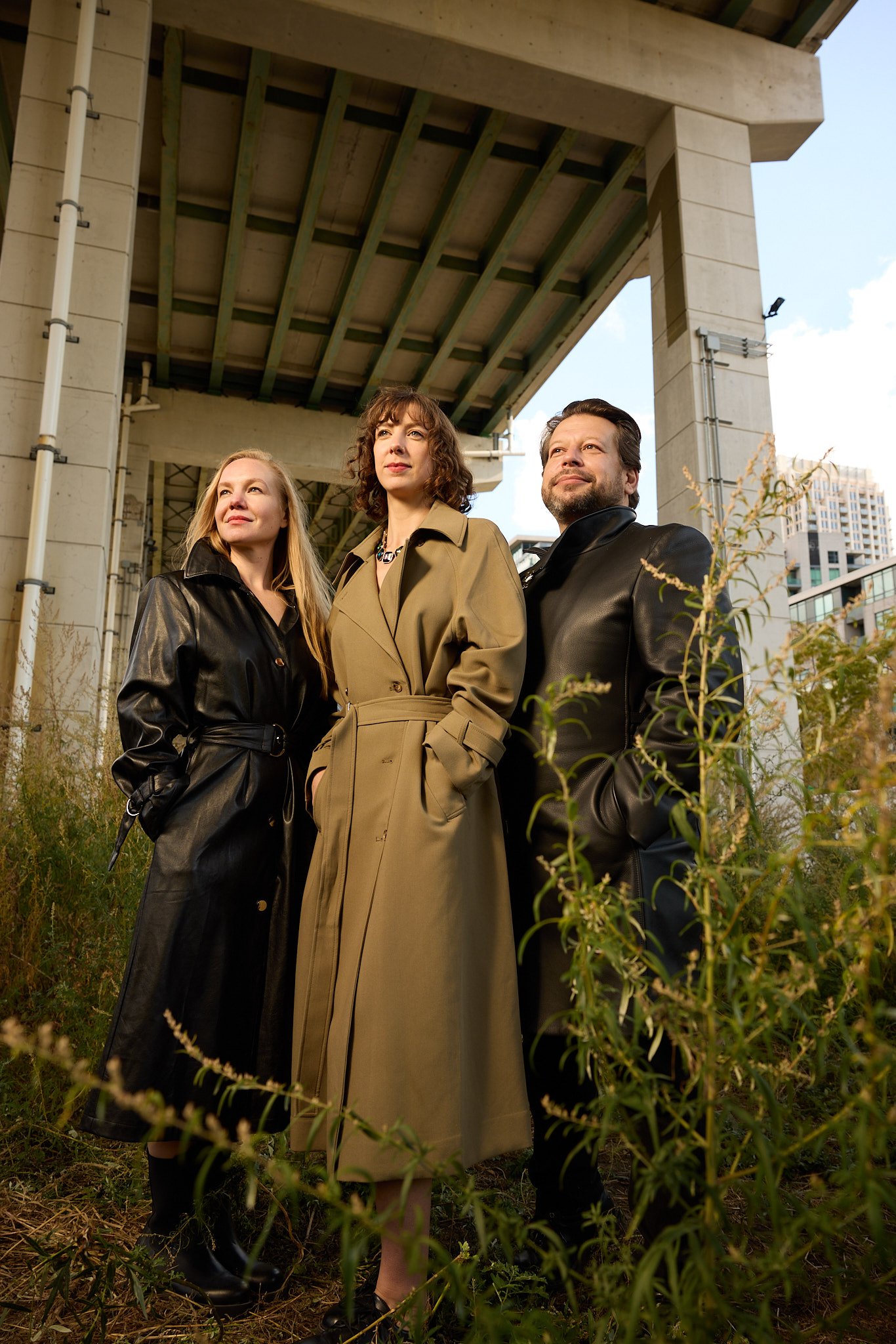
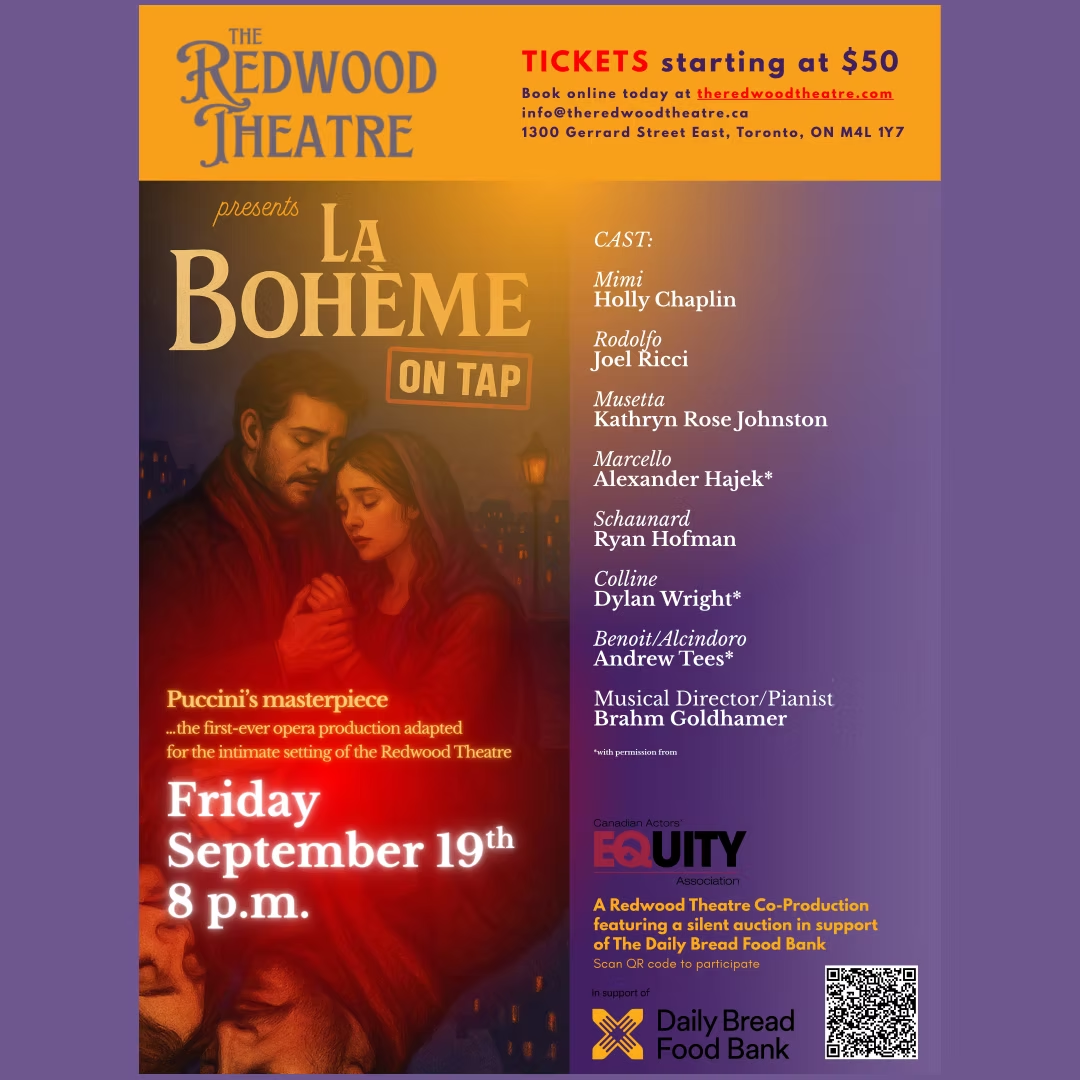
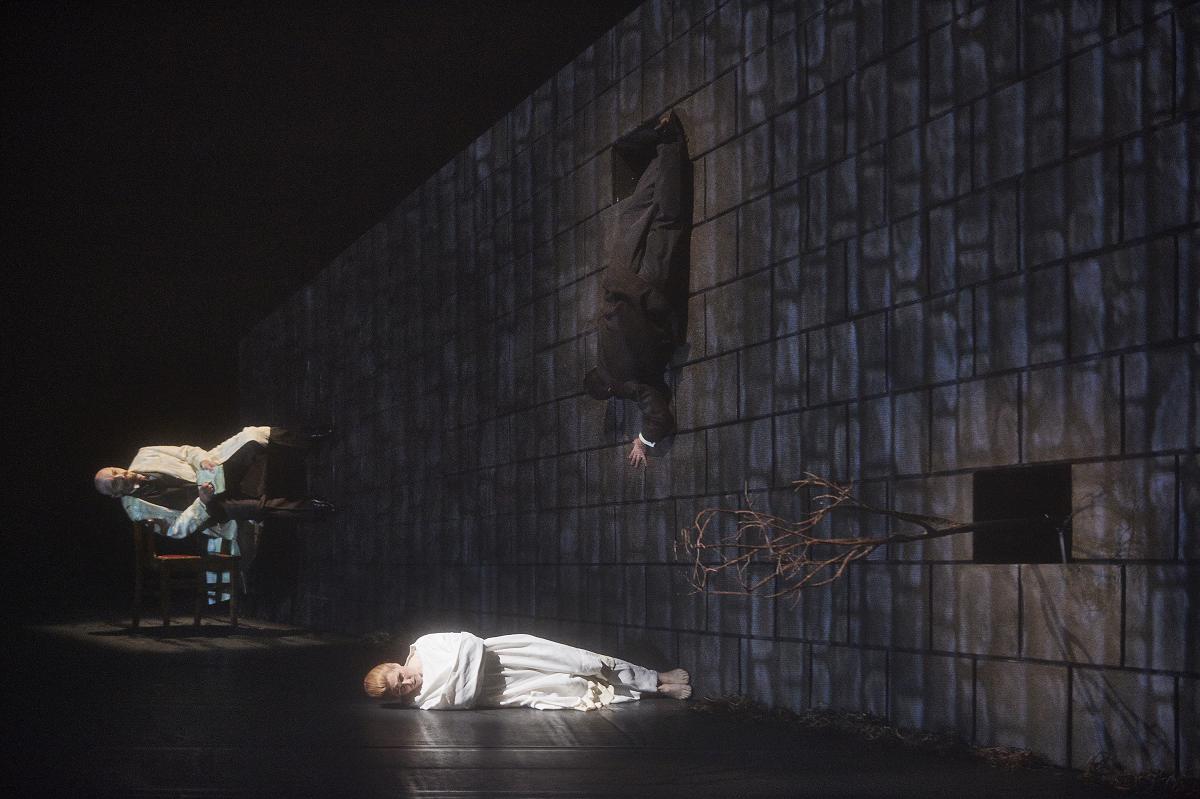
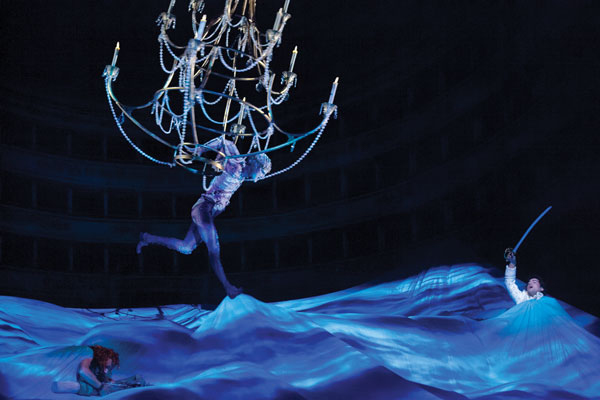
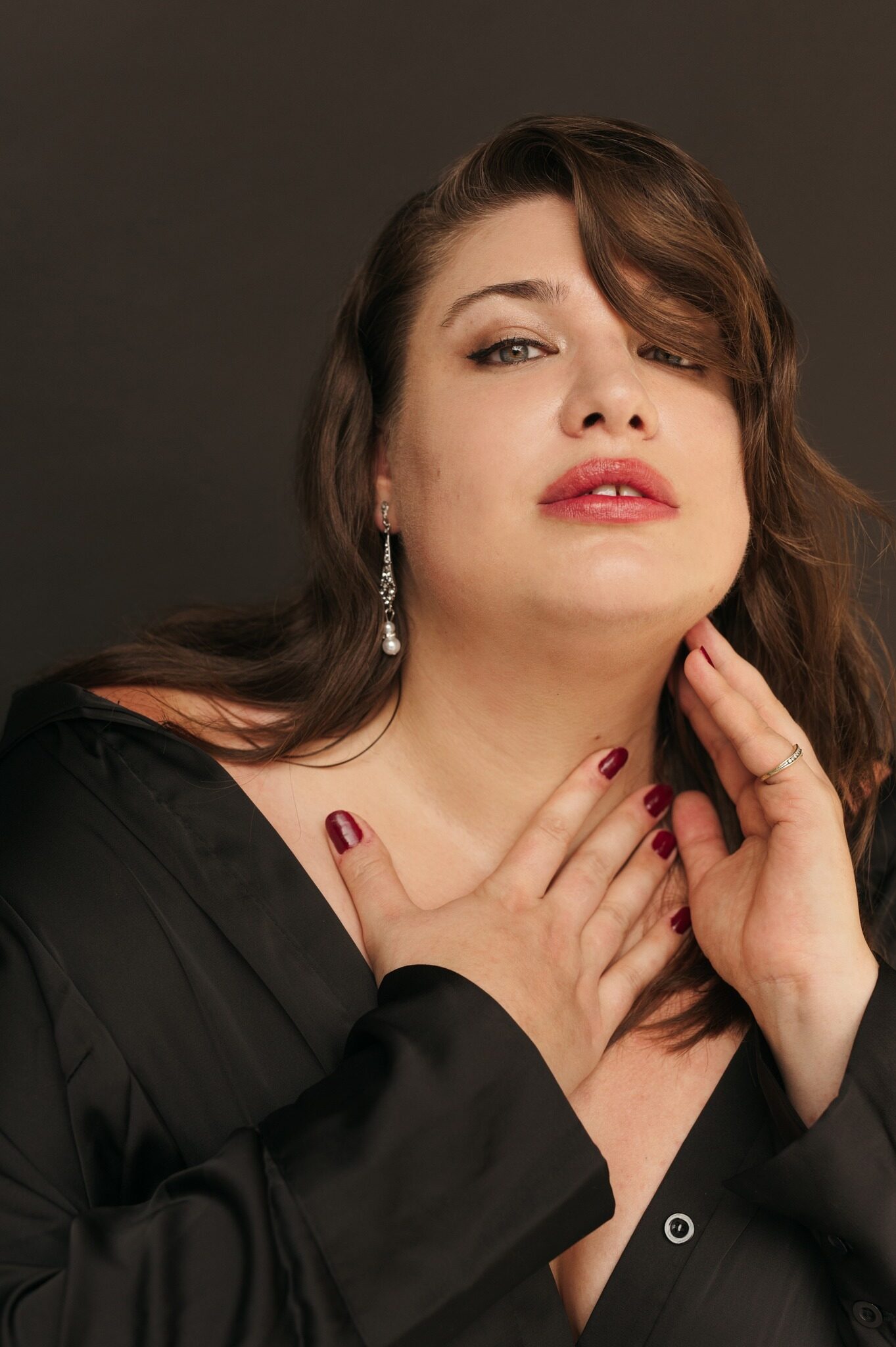
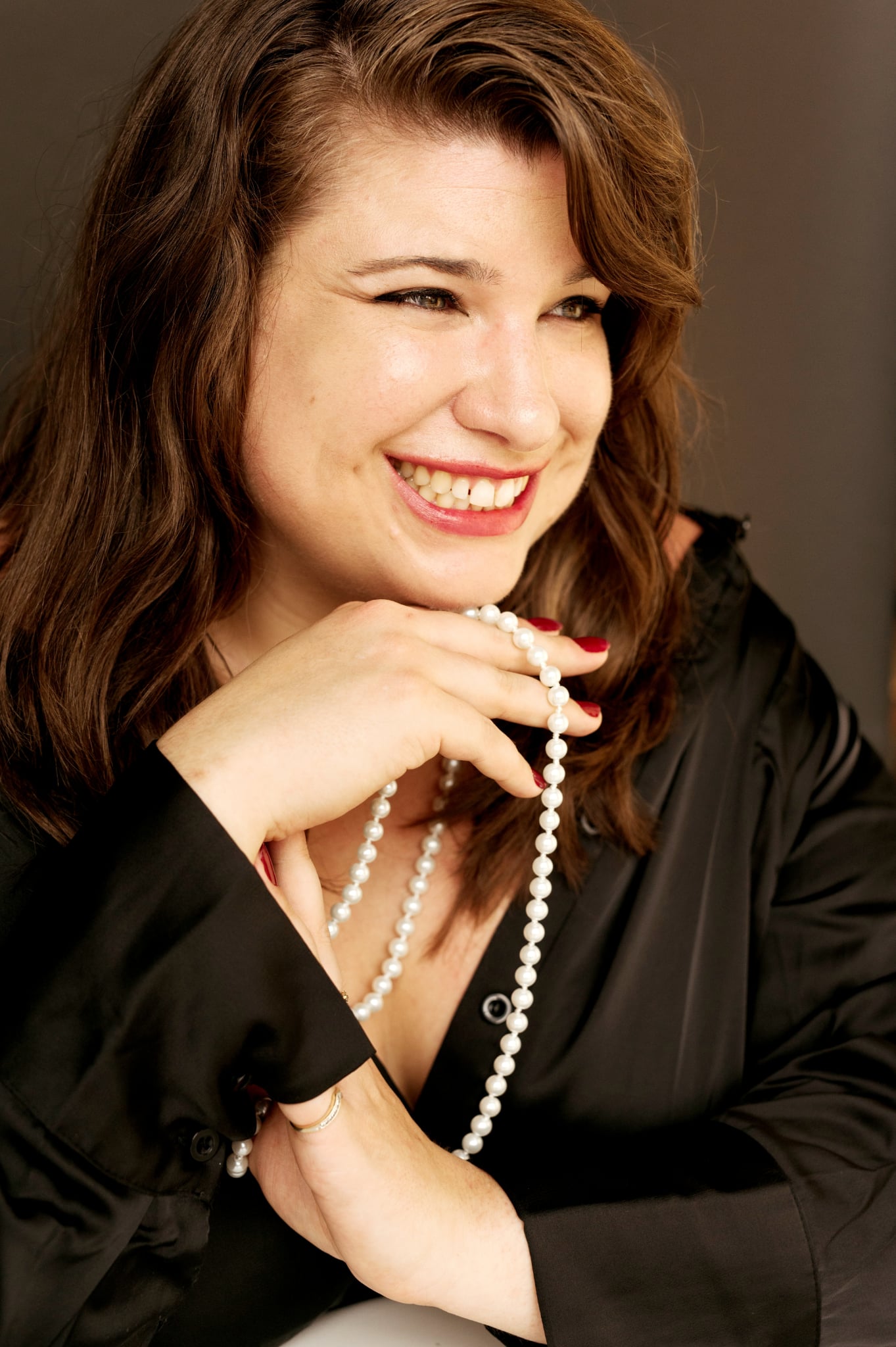
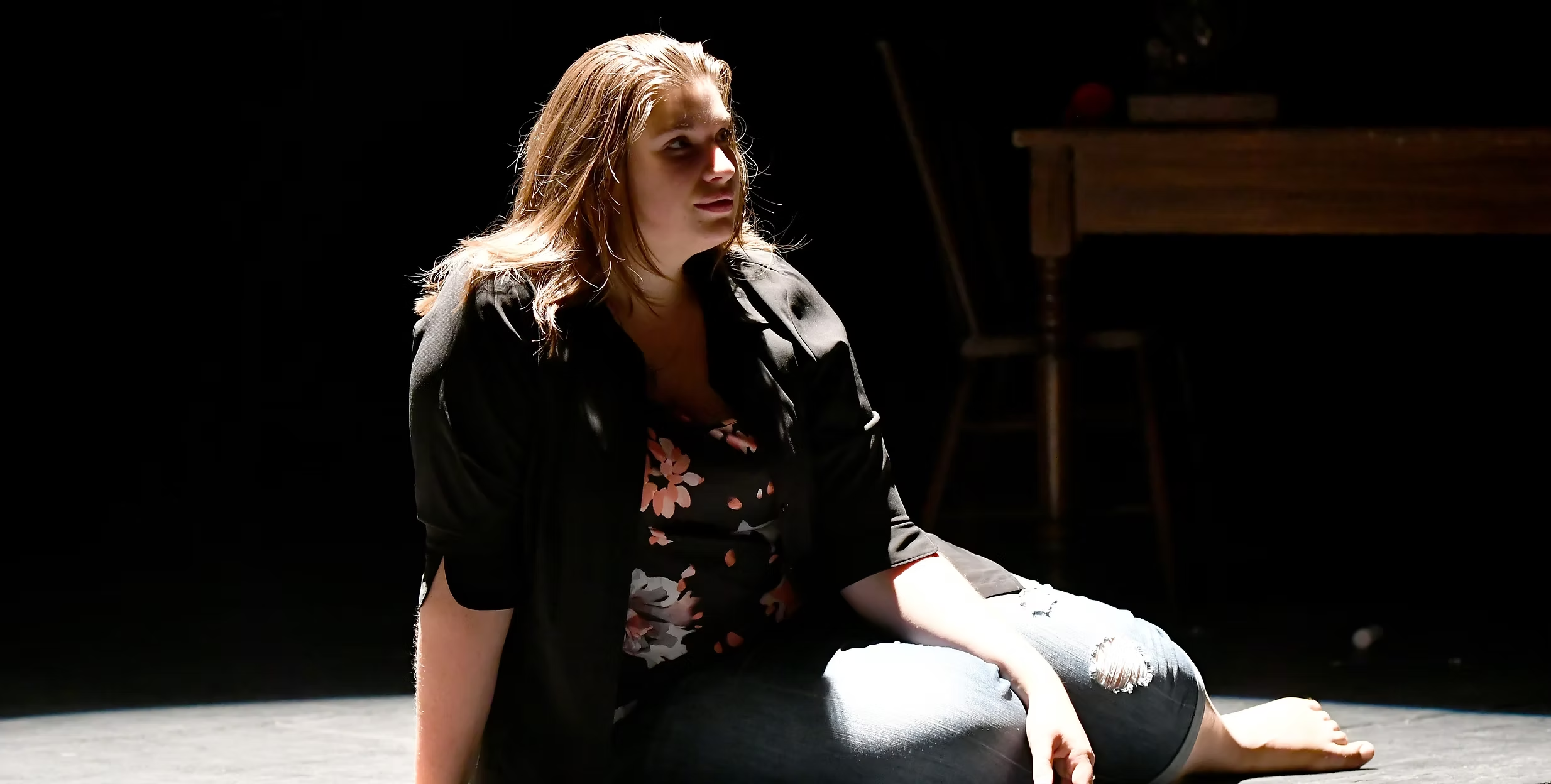
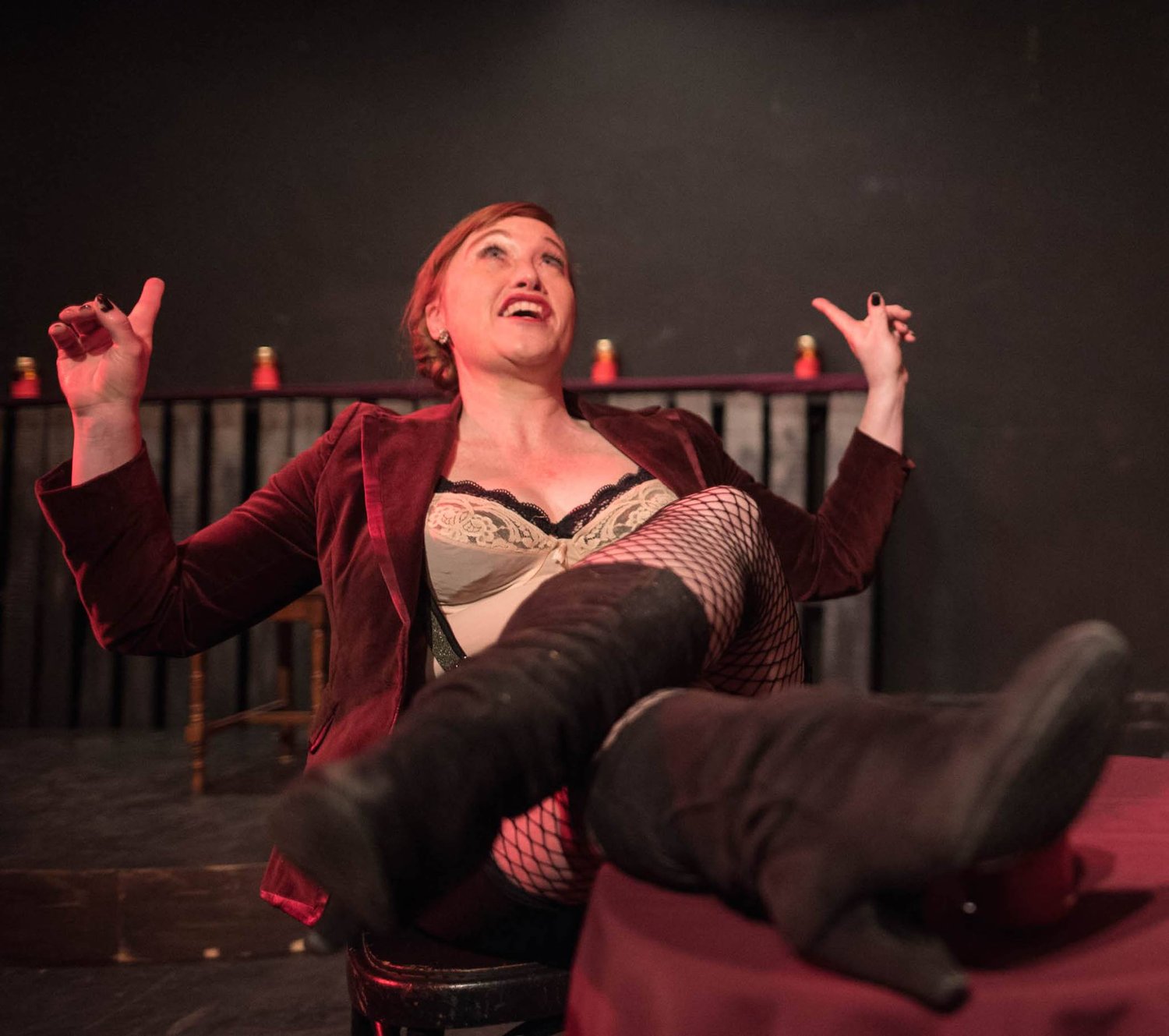
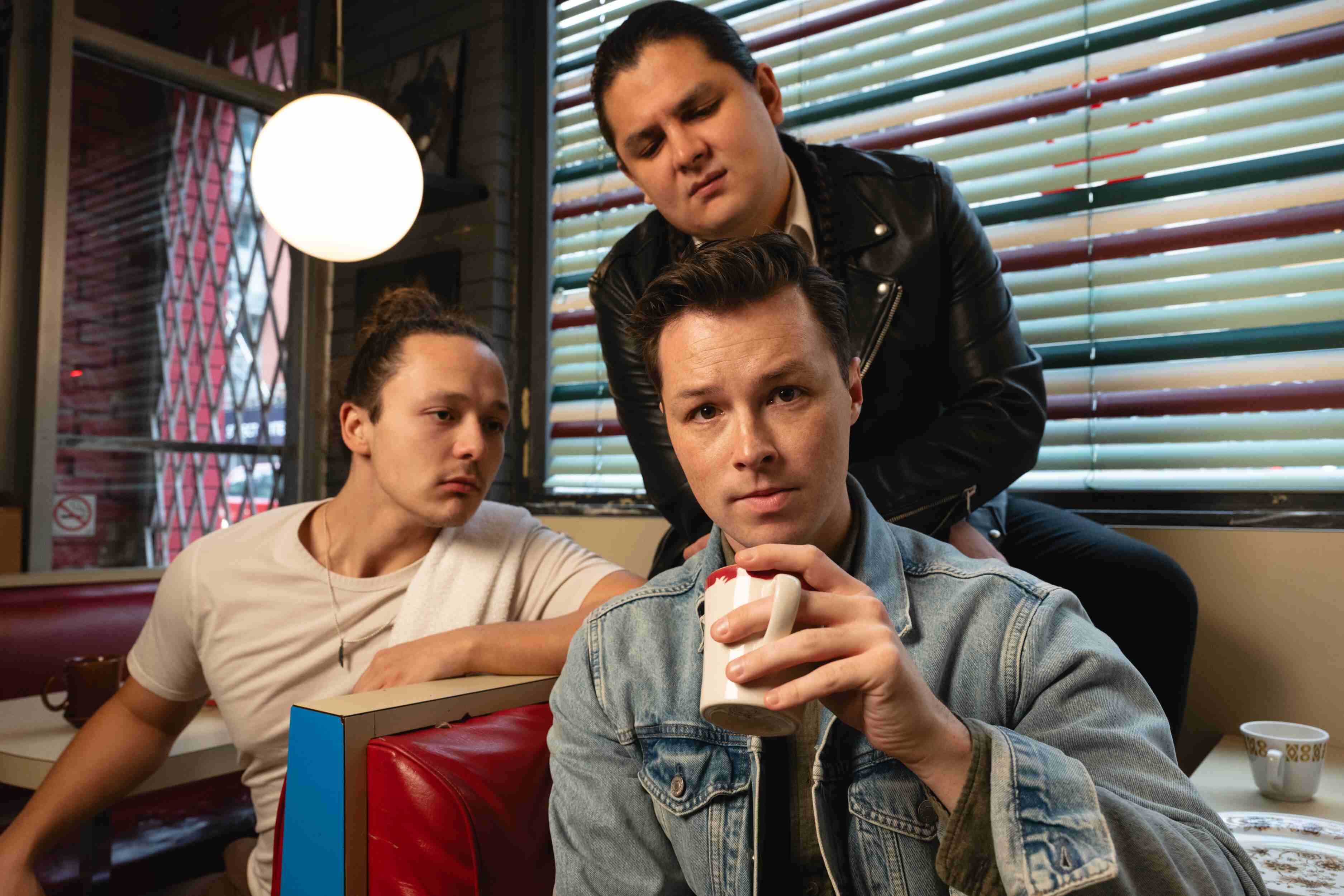
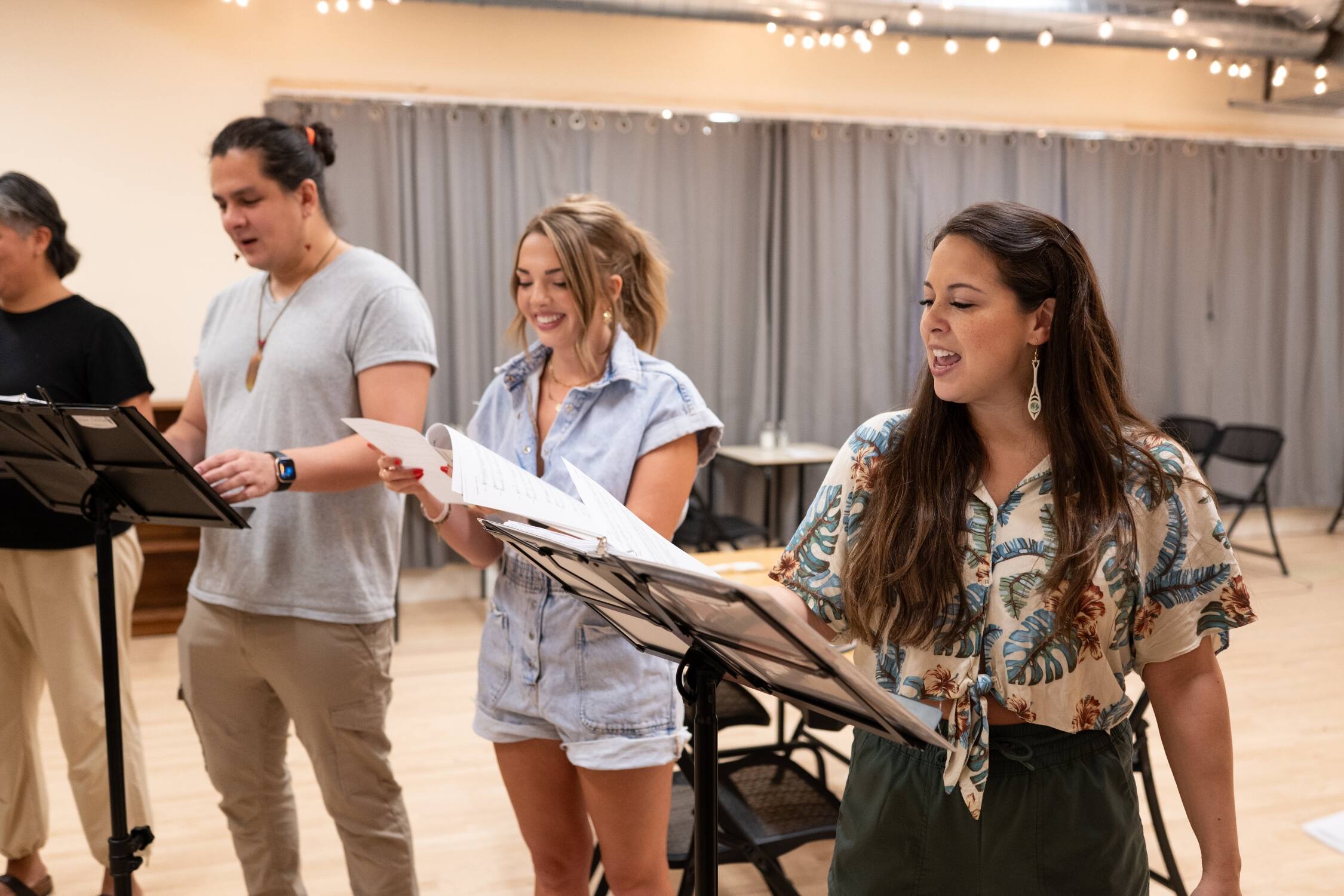
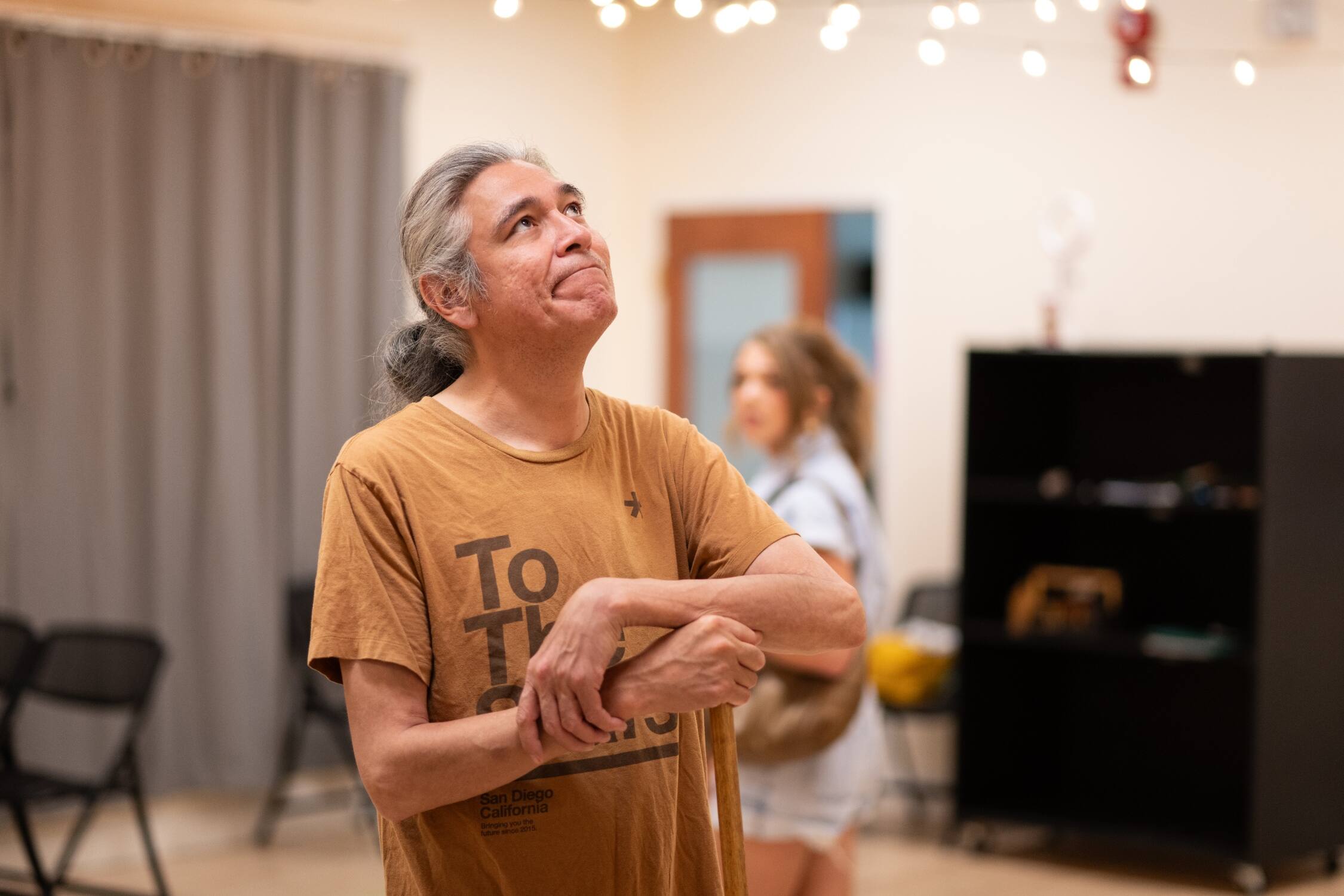
La Boheme is being presented at the Redwood Theatre on Friday September19th 8:00 p.m., a co-production with The Redwood Theatre in Support of Daily Bread Food Bank.
I talked to Alexander Hajek who sings the role of Marcello the painter.
*******
Barczablog: La boheme is often spoken of as a comedy with a tragic ending. Do you think of boheme as more comic or more tragic?
Alexander Hajek: Well it certainly ends tragically ( not to spoil things of course ) but I’m not sure I’d classify it as either. It’s really the perfect opera because it has such high and low brow moments woven throughout. Some of the funny lines are quite tragic and even the cutest moments have a tinge of foreshadowed tragedy.
BB: Do we maybe need to dispense with genres, when they confuse us?
Alexander Hajek: No, it’s nice to give opera newbies a little heads up. No one wants to be locked in their seat for 3 hours waiting for a laugh that never comes.
To quote Peter Griffin:
“For the love of god, someone throw a pie already!”
BB: Do you sing the same whatever the genre?
Alexander Hajek: Genres should influence the colour of your sound a tad. If it’s a joke, usually the text is more important and should be more emphasized, but if it’s a swelling romantic moment where multiple people are singing, different text over one another, maybe go for a richer fuller sound to get “the vibe” across.
BB: Imagine you’re Marcello tormenting Benoit in Act I (comedy) or watching Mimi dying, reacting to her situation (tragic). You may want to react, laughing at the joke or even crying at the tragedy: but have to stay in character, to make the comedy or tragedy work. What strategies do you use to stay in character, to keep your focus?
Alexander Hajek: This I find easy, just stay in the moment by pretending you’re hearing Benoit demand the rent for the very first time. And. In turn. Feel as if the text and music you respond to then is something that just popped in your head as a quick witted response on why you shouldn’t have to pay. It’s remarkably effective.
The trap is waiting to just sing your line after they’re finished. It deadens the drama. Keep it fresh.
BB: The public perception of roles will usually focus on a big aria. When you’re learning how to sing especially the arias are a great starting point. But they aren’t necessarily the toughest parts of your role either vocally or dramatically. What part of your role is toughest?
Alexander Hajek: As Marcello uniquely does NOT have an aria. I had to find the most dramatic moment for him and make one out of it. This is either his second act showdown with Musetta or his third act duets with Mimi. They have some of his most gorgeous music and I try and make a meal out of them.
The toughest part of the role is not letting my simmering anger ( either as a jealous lover, or highly annoyed roommate ) not constrict the voice. It’s easy to get carried away by the heightened drama of a Puccini score and forget to keep the instrument fluid and free.
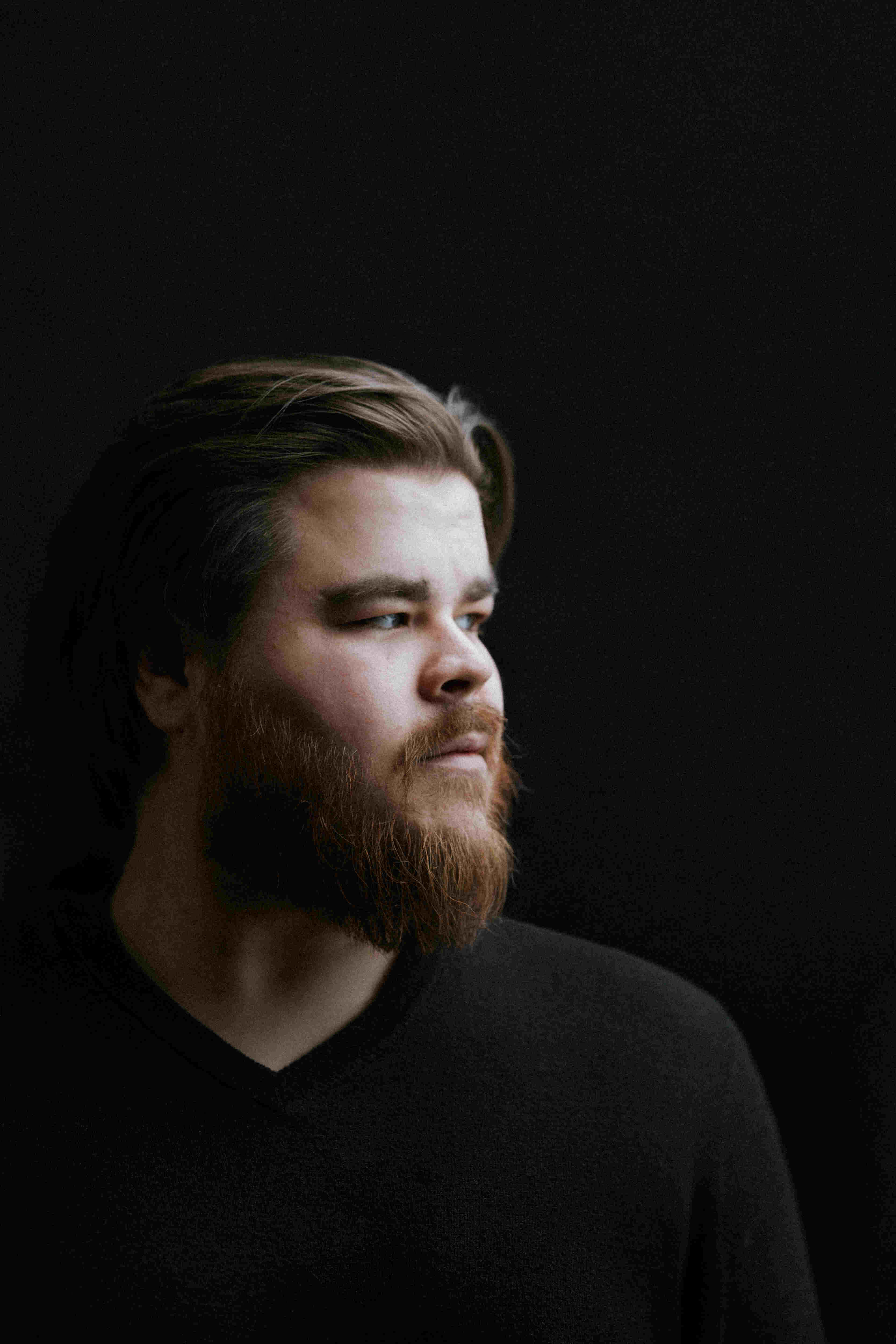
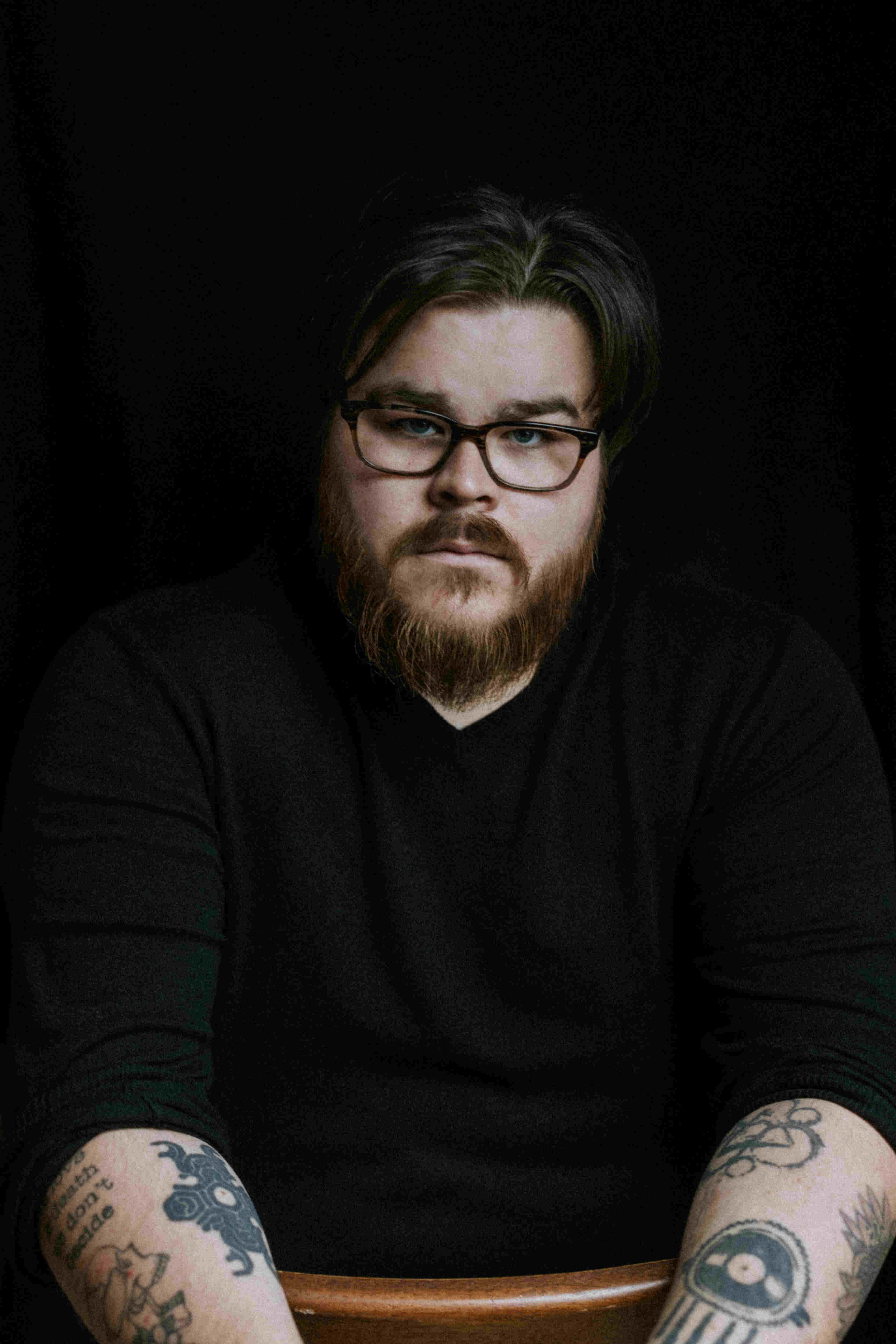
Baritone Alexander Hajek
BB: Using La Boheme as a fundraiser for the food bank seems like a natural. Are there any particular lines of your role or of anyone else onstage, where you are reacting to the challenges of life (as Marcello or Mimi) that you would highlight, that we should notice?
Alexander Hajek: The “starving artist” bohemian lifestyle is absolutely front and center. It informs everything the characters do and ultimately causes the death of Mimi. If they had funds then the tragedy of the opera wouldn’t happen. So every little joke is really foreshadowing how poverty can kill you. If their apartment had adequate fuel for heat, or if any of them had a steady job then they could buy medicine or afford a trip to the doctor. But they don’t.
I guess my favorite lines are in the 4th act when the gents are pretending the few pieces of stinky fish and stale bread for dinner are actually “tongue of penguin” and “the finest champagne in France.” They are wonderfully optimistic and a cheerful bunch.
BB: La boheme is one of the most popular operas of all a great first opera, a terrific opera for people who don’t know opera. Why do you think that’s the case?
Alexander Hajek: It’s not too long and there are no wasted moments. Each scene feels full and captivating but doesn’t drag on forever. The 4th act is only about 30 min and has about 4 sections in it with rapid shift in mood. It’s kindda perfect for peoples’ attention spans these days. And the music is perfect. Everyone gets a leit motif and is immediately accessible. It’s not a score you need to study before hand or hear 20 times to get the subtle nuances. It just bathes you in beautiful western melodies all night.
BB: What do you have coming up?
Alexander Hajek: My most ambitious project is coming up Nov 26th. Opera Revue is having their 4th gala and they have hired some professional wrestlers to help put on another unforgettable show. It was hard to top last years circus themed night with highflying trapeze and dogs jumping through flaming hoops. But we’ve added Queen Hezumuryango as our special guest as well. It’ll be at the Great Hall and will not be something you want to miss.
Danie Friesen, Claire Elise Harris and Alexander Hajek of Opera Revue
In addition Opera Revue with be performing at the Four Seasons Centre for the first time on Oct 14th. And it’s free to attend.
My first Carmina Burana will be with the Toronto Beach Chorale in April 26. (Click for tickets & info)
And I will have my first Don Giovanni in a while with the Hamilton Philharmonic, Ancaster Memorial Arts Centre 357 Wilson St E.
Saturday, February 7, 2026 – 7:30 PM in partnership with COSA Canada James Kahane is Conductor (tickets & information)
*******
But first, Alexander Hajek will sing Marcello as part of La Boheme On Tap Friday 8 pm September 19th at the Redwood Theatre, 1300 Gerrard St East. Tickets start at $50.00. Click for info & tickets. Use code BOHEMEONTAP for $10 off.
Bruce asked me whether the Scottish play is worth seeing. I had seen it from the front row, able to see every detail of the complex presentation in the Avon Theatre, less Shakespeare’s immortal play than Robert Lepage’s Macbeth.
YMMV or “your mileage may vary” comes to mind. Some will love it, some won’t. My goal is to describe how Lepage’s production works, to help people like Bruce decide whether they might like it, even as Bruce’s question gives me a perfect template to examine questions of theatre criticism and the discourse surrounding creations. I continue to obsess about memory since my mom’s passing. I see my role as a witness, to remember & testify to what I’ve seen, rather than as a judge to say “this is good /bad.”
I came to Stratford for Bruce’s birthday party. Although he lives in Stratford he hadn’t yet seen the show, perhaps hesitant because of what he heard, given Lepage’s refusal to do the usual things.
Instead of kilts we get jeans and leather jackets.
Instead of old castles we get cheesy modern motels.
Instead of a medieval tale of murder we get men riding their motorbikes right onstage.
So in other words, no it’s not what you expect when someone says “I saw the Stratford Festival Macbeth Friday night.”
But Shakespeare is still there. We see the most perfect ghostly apparitions I’ve ever seen for the Scottish Play, and I say that having sat in the front row. From further back they will be even better.
The witches are as usual the most interesting characters of all. Lady Macbeth is the usual troubled inspiration for the evil deeds of her husband.
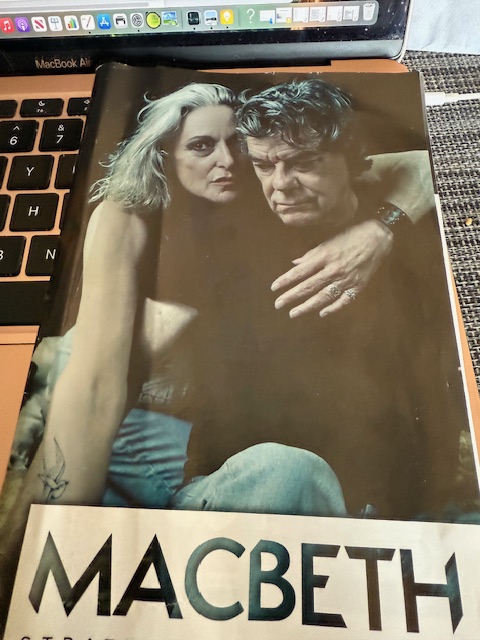
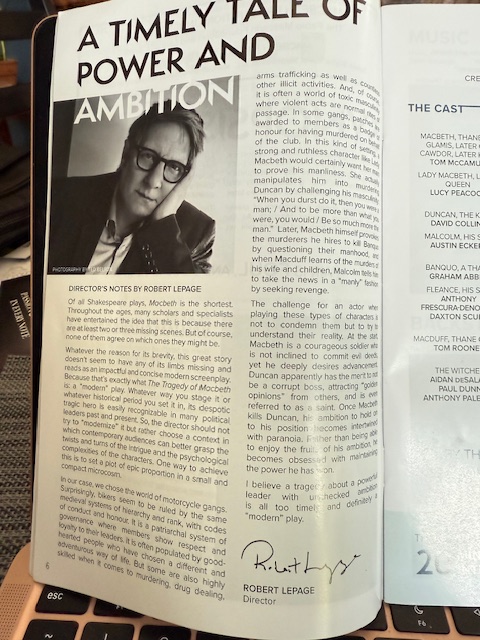
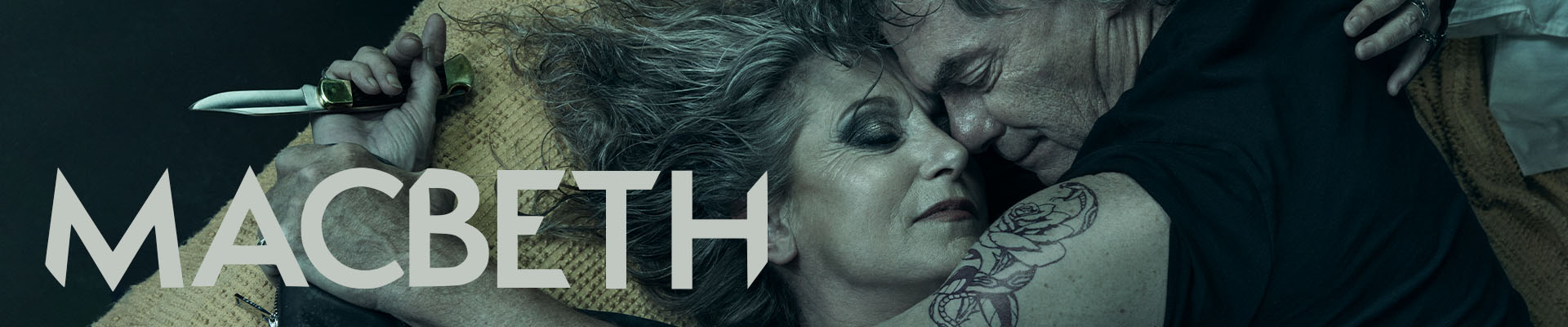
I keep looking at my program because the cover photo is so compelling. It’s all there in the photo.
Lucy Peacock and Tom McCamus
No there are no crowns or kilts to be seen, but Lucy Peacock and Tom McCamus are powerful in the usual ways. Sexy arms enfold Shakespeare’s great over-thinker, her sensuality in the service of murder, mayhem and poetic reflection.
Lepage is the ideal specimen to look at how the modern artist adapts and reframes classics. It’s right there in the photo, where they burned the key word in reverse.
“Ambition” it says, and yes that’s Macbeth in a nutshell.
And it’s also Lepage who rewrites the text as something original and sometimes unrecognizable, so maybe it’s less McCamus’s or Shakespeare’s and more Lepage’s Macbeth.
The design focus of Robert Lepage reminds me of Ridley Scott, a director known for his thorough art direction. I could also mention Wes Anderson or Tim Burton or Terry Gilliam, directors whose work features phenomenal detail & inventive visuals. A Lepage show is best understood as architecture, an investment of time and money to build a space for the live theatre experience. We see that in every Lepage show I’ve seen. Whatever character dynamics we see, they are always played upon elaborate stage designs & machinery, usually via Ex Machina, Lepage’s design company. (read and see more about Lepage’s Macbeth including future dates beyond Stratford on the Ex Machina website)
Photo from Ex Machina website (photo: Ann Baggley)
This was true for Eonnagata (2010), one of the very first things I reviewed on this blog. The stage was relatively empty even as everything and everyone else (sound, light, movement, text) were all brilliantly interconnected.
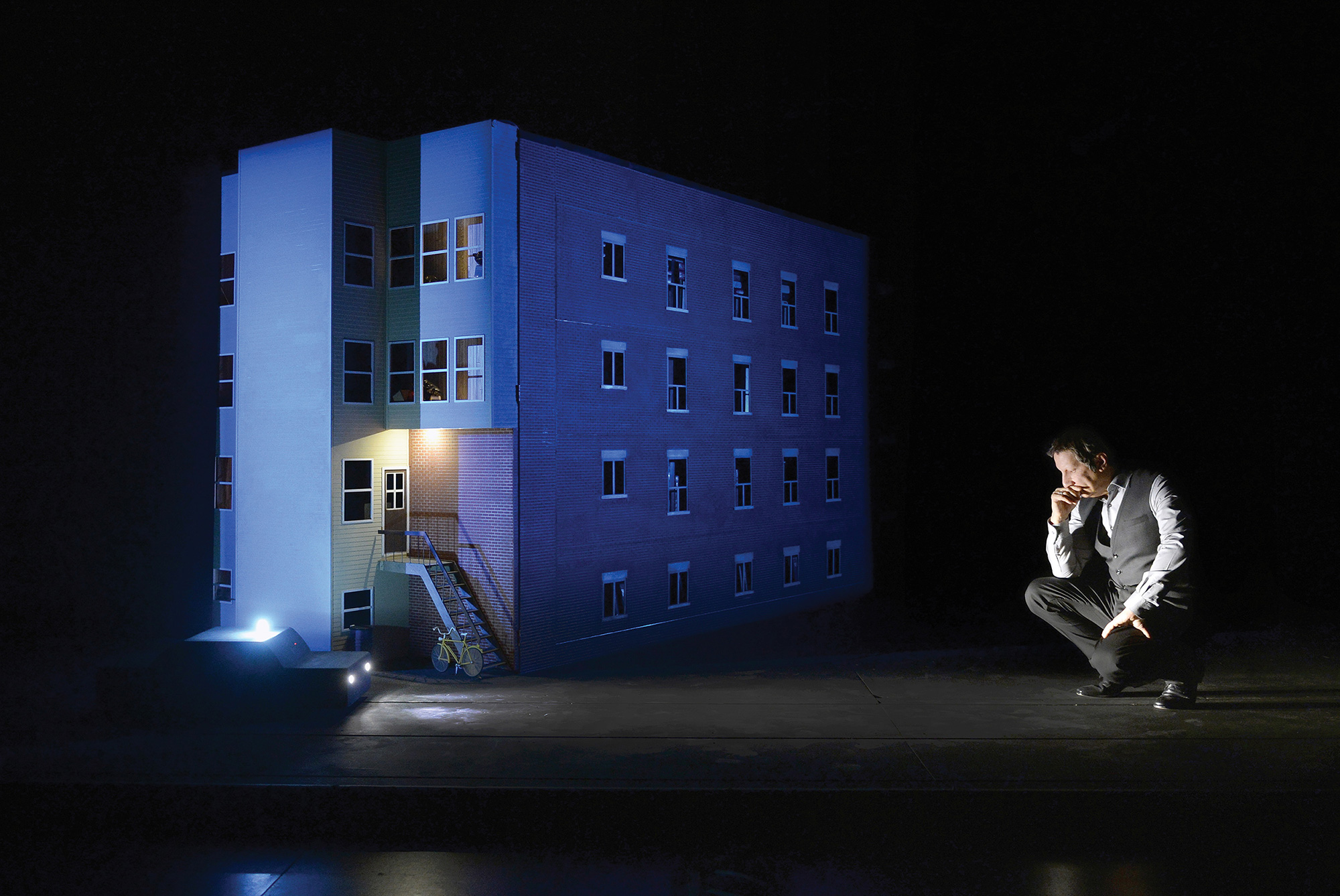
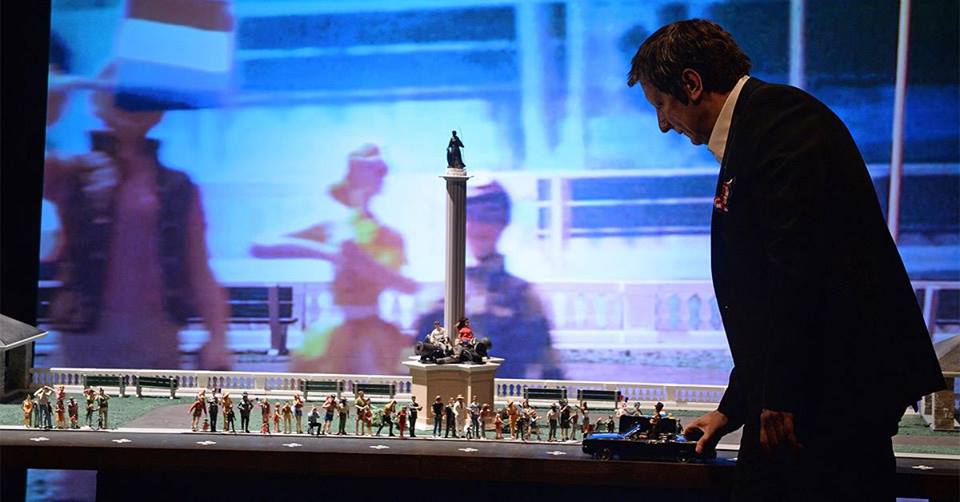
This was true for 887 (2015), a kind of reflection on the life & sensibility of a Francophone written and actually performed by Lepage himself.
Robert Lepage and Ex Machina: 887 (Photo: Érick Labbé)
The big projected images are shot from a camera in the model car believe it or not (photo: Elabbe).
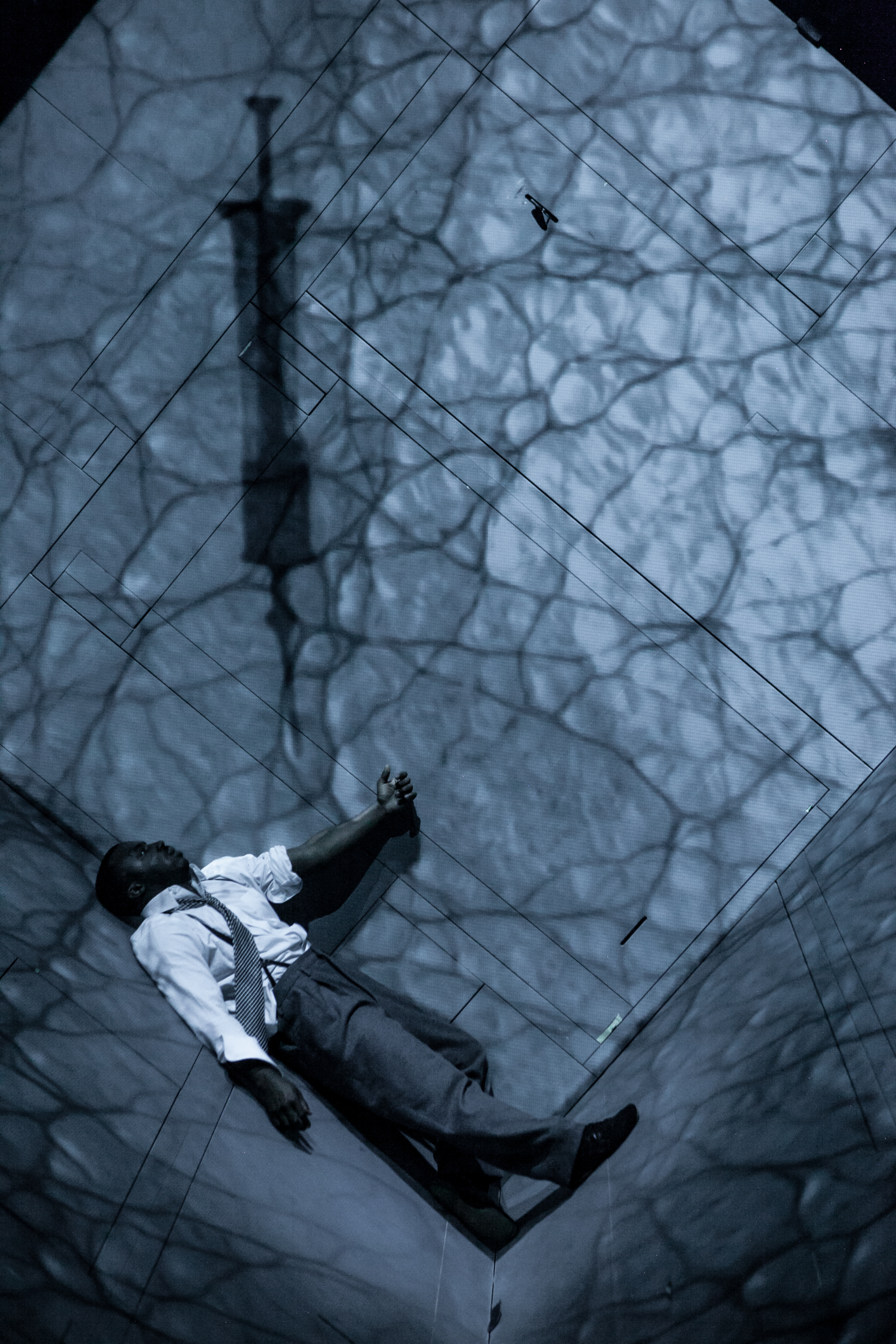
And there’s Needles & Opium (2013), as the stage machine is a simple & blatant metaphor that seems to torture the actor onstage, a box rotating with the performer forced to cope with the impacts of that microcosm (the set, his world).
Wellesley Robertson III in Needles and Opium. Photo by Nicola-Frank Vachon.
This was also true for Lepage’s operatic creations, such as Damnation of Faust (2008). Here’s a brief interview with Lepage about his Met production, still totally relevant to what we see in Macbeth.
There was also Tempest (2012), the four Ring Cycle operas (2010-12), The Nightingale and other short fables (2009), and the first ones I saw, the double bill of Bluebeard’s Castle & Erwartung (1993), the latter two so effective that the Canadian Opera Company will revive them again in 2026.
(l-r) Mark Johnson as the Psychiatrist, Krisztina Szabó as the Woman and Noam Markus as the Lover in the Canadian Opera Company production of Erwartung, 2015. (Photo: Michael Cooper)
I invoke all of these elaborate designs, mindful of impatient & dismissive voices, whether in NY for his Ring or more recently for Macbeth. I mentioned YMMV as a polite way to suggest that one needs to suspend judgment in the encounter with originality. Does one require kilts and castles for a Macbeth to work? That’s a question I would offer to anyone who shows up with stipulations, their nose out of joint before the play has even begun.
And as I sat there in the front row, watching parts of the complex stage set be reconfigured, I remembered my experience with Lepage’s Ring, that in fact it was better to sit further away. Up close there is less of an actual illusion, because we could see the actors or singers working with the complexities of the set, and even saw stagehands working to move the set. It’s impressive, it’s fascinating: but it undercuts a dramatic illusion. It reminds me of a Brechtian dramaturgy –where the apparatus & set call attention to themselves as a way to distance us (Brecht speaks of a Verfremdungseffekt or “alienation effect”), pushing us into a reflective space and away from the story.
Why was Brecht trying to do this? I think he was reacting to Wagner’s dramaturgy, against the ideals of the Gesamtkunstwerk (or “total art work”), and the overpowering illusion of music theatre. We live in that world now. Whether it’s the visuals, music & sounds of a superhero movie or just your smartphone telling you when you’ve received a message, our art, our appliances, cars & virtual realms are often Wagnerian, swallowing us up with messages working together in multiple channels. Brecht wanted critical thinking, so he tried to wake us up from the dream.
Long before Lepage did a Wagnerian opera, he was already employing elements of the Wagnerian toolkit, even as he was sometimes himself working to distance us, pushing us away, encouraging us to wake up & reflect rather than swallow his illusion. Lepage has spoken of cinematic elements, aware of the sophisticated modern audience, and playing with us, using both Brechtian & Wagnerian tools.
Working with composer & sound designer John Gzowski, Lepage (meaning Gzowski of course) faced a challenge in bringing bikers and bikes believably into a Macbeth. One real motorcycle motor is a huge loud sound when it revs, let alone the sound of a whole fleet, and that’s magnified further if they’re the huge type of vehicle driven by bikers. That’s not what Gzowski & Lepage give us, however, because we’d never hear the dialogue even were they to shout or scream back and forth. I can’t imagine the agonies of level setting, editing, revising the sound & music lower & lower, likely with earlier versions ending up on the cutting room floor. The result is remarkable to hear, the voices clear, the music subtly threatening rather than overpowering. I am sure it must have taken a lot of work to achieve something that seems so effortless.
To state the obvious: this is a work of art not reality. The bikes moving onstage were probably electric with sound on the soundtrack to simulate the reality of a motorbike. We are presented with a cinematic image that collapses somewhat if you sit in the first few rows, partly because we see a biker ballet, harmonious movement and gentle throbbing rather than the real raw roar that such machines would generate in reality. And the actors must have had a steep learning curve to execute their movements so cleanly. On so many levels this is a tour de force, to make it look easy rather than something a bunch of Shakespeareans did between soliloquys and swordfights. The moving sets are another part of that tour de force, but nobody usually notices the stagehands, who are especially heroic in this show.
I’m reminded of some of the other daunting challenges Lepage has given to his performers. Damnation of Faust featured all sorts of acrobatic performers climbing and hanging from the set, as did The Tempest.
The machinery becomes such a big focus that the actor or singer may feel threatened, at least given the usual dynamic where an audience watches the stars. In a Lepage show his design is arguably one of the stars of that show.
It felt like a revelation, watching the enraptured audience at the Avon Theatre watching Macbeth last week, speaking as someone who has been a big fan of Lepage’s work. At the interval in the washroom and afterwards, people buzzed as though they were on drugs. But it helps to be open to the experience, to arrive with an open mind rather than to show up with stipulations.
I continue to be fascinated by Lepage & Ex Machina. The originality I see in his opera productions sometimes forces me to look at familiar works in new ways. The pieces that were new to me always moved me. I experienced Macbeth in many of the same ways I came to the Ring operas or Damnation of Faust, sometimes staring open-mouthed, but never indifferent and sometimes powerfully moved. I never expected tears as I watched Lady Macbeth (Lucy Peacock) coming apart at the seams or the ravings of Macbeth (Tom McCamus) as he is haunted. The show hit me in unexpected ways. I’m glad to see that the show has been extended, and perhaps will be revived in a future season, because I’d like to see it again.
So for the record: I think Bruce should go see Macbeth. If we can handle iambic pentameter coming out of the mouths of men wearing togas I don’t see how it’s troubling when it’s a guy in jeans on a motorbike. I don’t want to give away too much except to say that for Lepage’s staging, the supernatural – ghostly elements are the most powerful I’ve ever seen. If you’re interested in going to the show, Macbeth has been extended until November 22nd.
Karina’s new recording of Ralph Vaughan Williams’s Songs of Travel most definitely travels somewhere new, given that the song cycle is normally sung by a man.
Her new recording is the world premiere of this version done by a mezzo-soprano. I wanted to ask her about this and a few other things.
*******
Barczablog: Are you more like your father or mother?
Karina Bray: I owe so much of my musical journey to my parents—they are truly the most fantastic people I know. They have supported me every step of the way, right up to this gender-bending recording, and I couldn’t have asked for better. I feel incredibly lucky to be a true 50/50 blend of both of them, because they are both remarkable in their own ways.
My big voice? That comes from my dad. I remember being a young child out on the farm, helping him and learning from him how to cattle call. That’s where it all began—the roots of my voice were born in those wide-open fields matching the volume of my Dad’s voice.
My determination in breaking barriers, though, comes from my mom. She broke the mold in her own right, becoming the first female night-time manager in a male-dominated industry when there were significant gender barriers for women. Hearing about her carving her path gave me the strength to forge my own.
Surprisingly, no one in either side of the family is a musician. There are definitely music lovers among us, but I’m the first to dive fully into the world of music. In that way, I guess I broke the mold too.
Mezzo-soprano Karina Bray
BB: When you’re just relaxing and not working, what is your favourite thing to do?
Karina Bray: Music keeps me incredibly busy, and I’m truly grateful for how deeply involved I get to be. But during the quieter moments — when I’m not actively practicing and instead sitting back and listening to recordings — my cat loves to curl up on my lap and nap. I feel so fortunate to have the best of both worlds: the joy of pursuing my passion for music, and the comfort and companionship of my cat, who can sometimes be my loudest critic!
BB: Who do you think of first, when I ask you to name the best singer?
Karina Bray: Such a tough question, Leslie! I believe the best singers aren’t necessarily the most perfect, but the ones who reveal the humanity behind the music, some singers are blessed with both qualities. One singer who always comes to mind is Sir Bryn Terfel. His recording of Vaughan Williams’ Songs of Travel has long been my go-to listening choice.
When he was in Toronto, I had the immense pleasure of meeting him briefly. He encouraged me — given my voice type — to take things slowly and explore art songs while my voice continues to develop. In many ways, that conversation sparked the journey I’m on now. His influence played a meaningful role in my decision to record Songs of Travel myself.
BB: What was your first experience of singing?
Karina Bray: I have such fond memories of visiting my dear Oma and Opa, who were both passionate lovers of classical music. There was always music playing softly in the background — even when I was in the kitchen ‘helping’ my Oma, which usually ended with my Opa and me playfully teasing her. She’d play along in the role of the disapproving Oma, of course, but she always laughed with us. That music was a quiet, constant presence in their warm and happy home.
One weekend in particular stands out. My Opa and I were flipping through TV channels when we came across the 1976 film version of Tosca with Plácido Domingo. I must have been only three or four years old, but I was completely mesmerized — by the music, the singing, the drama, the artistry. My Opa, sitting beside me, let me watch the whole thing, my eyes never leaving the TV screen.
Not long after, my mom enrolled me in piano lessons at an old church. While my older sister had her lesson, I would wander up and down the pews, singing to myself. Eventually, the piano teacher — who also happened to teach voice — convinced my mom to let me try voice lessons. And, well… the rest is history!
Karina Bray
BB: Did you win a voice competition?
Karina Bray: I’m truly honored and deeply thankful to have received recognition from several respected competitions over the past two years.
Being named a Gold Place Finalist at the 2024 Euterpe Music Awards and a 1st Place Finalist at the Medici International Music Competition has been incredibly meaningful. I’m also very grateful to have been awarded 2nd Place Finalist at the Clara Schumann International Competition, the BTHVN Wien Competition, and at the Euterpe Music Awards in both 2024 and 2023.
One of the most humbling and unforgettable experiences was being selected to participate in the internationally highly regarded Bayreuther Festspiele Masterclass, which is dedicated to supporting young dramatic voices. There, I had the immense honour of working with world-acclaimed Wagnerian soprano Catherine Foster, a profound experience that concluded with my participation in a recital of Wagner’s music, accompanied on Wagner’s original piano in his home, Villa Wahnfried.
I was also privileged to receive the Richard Wagner Stipendium through the Stipendienstiftung Canada, which allowed me to immerse myself further in the rich musical tradition of Bayreuth, Germany. These honors—granted by juries composed of professionals from international opera houses and esteemed musicians—continue to inspire me to grow, learn, and give my best as an artist. I remain sincerely grateful to everyone who has supported and believed in my journey.
BB: You’re recording Ralph Vaughan Williams’ Songs of Travel, a piece usually done by male singers. Tell me about the project.
Karina Bray: I’ve always genuinely loved this iconic song cycle—my connection to Songs of Travel goes all the way back to 2009. I remember hearing men perform ‘The Vagabond’, for example, and feeling a twinge of jealousy, wishing I could sing such fantastic music myself.
It wasn’t until 2023 that I seriously started planning to go against the grain—to make a female recording of the entire cycle. Through research, I discovered that a complete recording by a woman hadn’t been done before, which only fueled my passion even more. I’ve always believed that Art Song, like all music, belongs to everyone.
When I floated the idea to colleagues, I expected hesitation. Instead, to my surprise and delight, the response was enthusiastic. Many said they’d be fascinated to hear how the cycle would sound from a different perspective. And so, here we are.
This project came to life thanks to an incredible team: Jo Greenaway on piano, whose artistry elevated the work.
Jo Greenaway, pianist
And Ryan Harper, our brilliant recording engineer.
Jean MacPhail
Most importantly, Jean MacPhail, my teacher, believed in me and worked with me in order to make this project a reality.
The recording officially launched on August 27 across YouTube and social media—a poetic coincidence, as that date is just one day after the anniversary of Ralph Vaughan Williams’ passing. It feels like a full-circle moment—a tribute, a transformation, and hopefully, a small step toward expanding the world of Art Song for future generations.
BB: When you sing it, how does it feel in your voice?
Karina Bray: The first song from the cycle that I worked on was actually ‘Whither Must I Wander?’—and it felt like a window had been thrown open, letting in fresh air. It’s hard to put into words, but something about it just felt right. The poetry has always been close to my heart, and to feel my voice open up with such warmth was almost unimaginable.
Ralph Vaughan Williams writes so exquisitely for the voice that singing the entire cycle felt like finding a missing puzzle piece. Everything just clicked into place.
Karina Bray
BB: Do you have any other projects coming up to mention?
Karina Bray: I wish I could say more, but stay tuned for upcoming announcements!
BB: Do you have any influences / teachers you want to acknowledge
Karina Bray: I have been incredibly lucky to be surrounded by wonderful people who have supported me on this journey—most especially my parents, who have tirelessly taxied me to lessons and coachings over the years.
I would like to express my deepest gratitude to Jean MacPhail, my teacher, who completely rebuilt my voice and has been unwaveringly supportive throughout this time. And also my coach Narmina Efendiyeva.
I’m also immensely thankful to Stefan Vinke, Tenor, Sabine Vinke, Soprano, and to Mignon Dunn, Mezzo-Soprano, whose generosity, kindness, and wisdom have guided me through both the rough patches and the joyful moments.
To everyone who supports the arts—thank you. Your support and encouragement are invaluable to musicians everywhere. The arts thrive because of people like you.
Today I enjoyed the second Toronto Vocal Showcase.
The first one was held almost exactly two years ago in late August 2023, the brainchild of Ryan Hofman.
In 2023 he said “Today…I hope I changed the game going forward.“
The game is scary considering how expensive the art form has always been for the producers, how few jobs there are for young singers. I am grateful some people still want to sing, to try to live the challenging life of the artist.
Ryan Hofman
The singers had eight minutes each, usually two arias.
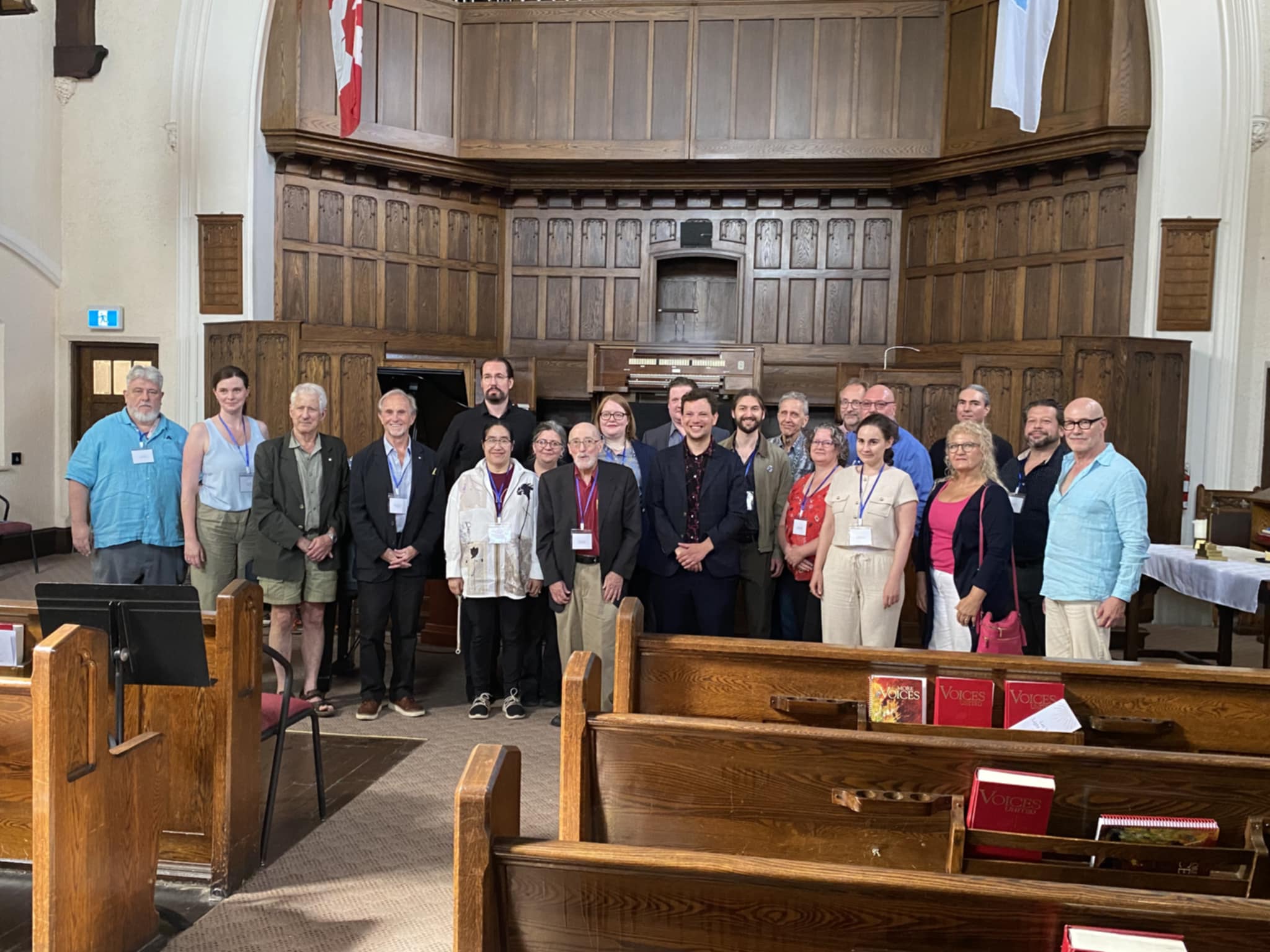
Last year Ryan brought 13 artistic personnel to hear the performances, while this time there were over 20 of us listening & watching at Hope United Church on Danforth.
L- R Barry Peters, Kathleen Allan, Lawrence Cherney, Robert Cooper, Jennifer Tung, Ivan Jovanovic pianist extraordinaire, Lucie Veillette, William Schookhoff, Lauren Yeomans, Josh Wood, Ryan Hofman, Alexander Cappellazzo, Leslie Barcza, Ariel Harwood-Jones, Norman Reintamm, Chelsie Pall, Stéphane Potvin, Sue Tsagkaris, Conrad Gold, Alexander Hajek, Tom Diamond. (Missing: Ryan Harper, Jennifer Carter)
Here is the program we heard today, each singer expertly accompanied by Ivan Estey Jovanovic, Pianist.
“Or sai chi l’onore” from Don Giovanni by Wolfgang Amadeus Mozart & “Marietta’s lied” from Die tote Stadt by Erich Wolfgang Korngold sung by Lauren Estey Jovanovic, Soprano
“Una Furtiva Lagrima” from L’Elisir D’Amore by Gaetano Donizetti & “Fra Poco ricovero” from Lucia di Lammermoor by Gaetano Donizetti sung by Joel Ricci, Tenor
“Chi il bel sogno” from La Rondine by Giacomo Puccini & “Depuis le jour” from Louise by Gustave Charpentier sung by Cassandra Amorim, Soprano
“Nobles Seigneurs, salut!” from Les Huguenots – Giacomo Meyerbeer & Métamorphoses, FP. 121: No.2 C’est ainsi que tu es- Francis Poulenc sung by Lissy Meyerowitz, Mezzo-soprano
“Je suis encore “from Manon – Jules Massenet & “My darling Jim” from Glory Denied – Tom Cipullo sung by Kathryn Rose Johnston, Soprano
“Mein sein Sehnen, mein Wähnen” from Die tote Stadt – Erich Wolfgang Korngold & “Avant de quitter ces lieux” from Faust – Charles Gounod sung by James Coole-Stevenson, Baritone
“Dawn, still darkness” from Flight – Jonathan Dove & “From Rosy Bowers” Don Quixote – Henry Purcell sung by Christian Masucci Facchini, Countertenor
“Glitter and Be Gay” from Candide – Leonard Bernstein sung by Nicole Whitney Dubinsky, Soprano
“Ach, ich fühls” from Die Zauberflöte – Wolfgang Amadeus Mozart “Da tempeste” from Giulio Cesare – George Frederic Handel sung by Olivia Morton, Soprano
—INTERVAL—
“Some Enchanted Evening” from South Pacific – Rodgers and Hammerstein & “Why Do the Nations” from Messiah – George Frederic Handel & “Si puo” from Pagliacci by Ruggero Leoncavallo sung by Johnathon Kirby, Baritone
“Ah mes amis” from La fille du régiment – Gaetano Donizetti & “Ecco ridente” from Il barbiere di Siviglia – Giaochini Rossini sung by Joseph Adams, Tenor
Lubava’s Aria from Sadko – Nicolai Rimsky-Korsakov & “All’afflitto” from Roberto Devereux – Gaetano Donizetti sung by Kcenia Koutorjevski, Mezzo-Soprano
“Oh had I Jubal’s Lyre!” from Joshua – George Frederic Handel “Deh vieni, non tardar” from Le Nozze di Figaro – Wolfgang Amadeus Mozart sung by Amy Moodie, Soprano
“Vivi tu te ne scongiuro … Nel veder la tua Costanza” from Anna Bolena – Gaetano Donizetti & “Thou Shalt Break Them” from Messiah – George Frederic Handel & “Di rigori armato il seno” from Der Rosenkavalier – Richard Strauss sung by Jeremy Scinocca, Tenor
“Signore ascolta!”from Turandot – Giacomo Puccini & “Dove sono” from Le Nozze di Figaro – Wolfgang Amadeus Mozart sung by Chelsea Kolic, Soprano
I feel privileged, getting to hear so many talented young singers.
When I asked Ryan how many actual jobs were the result of Toronto Vocal Showcase 1.0 he couldn’t answer precisely (indeed my question may seem kind of stupid & literal-minded): but there were definitely a couple of connections made. Holly Chaplin & Alex Beley are two and there may be more.
That’s good news.
Pardon me for sounding literal minded again, but it boggles my mind –speaking as someone who pays the Canadian Opera Company for a subscription– that they don’t seem to be trying hard enough to put Canadians in their operas. It is understandable to cast a famous singer who sells tickets or a virtuoso who sings something Canadians can’t sing (for instance when Christine Goerke sang Brunnhilde). Of course that makes sense. But the COC have cast two unknowns as their Romeo and their Juliette. Will unknowns put bums in seats? We shall see. They must have noticed that I will show up whether the leads are Canadians or imports.
For the operas that feature young personages why not use young Canadians? The audience may make a connection to the singers, even if they’re not famous: because they’re Canadian.
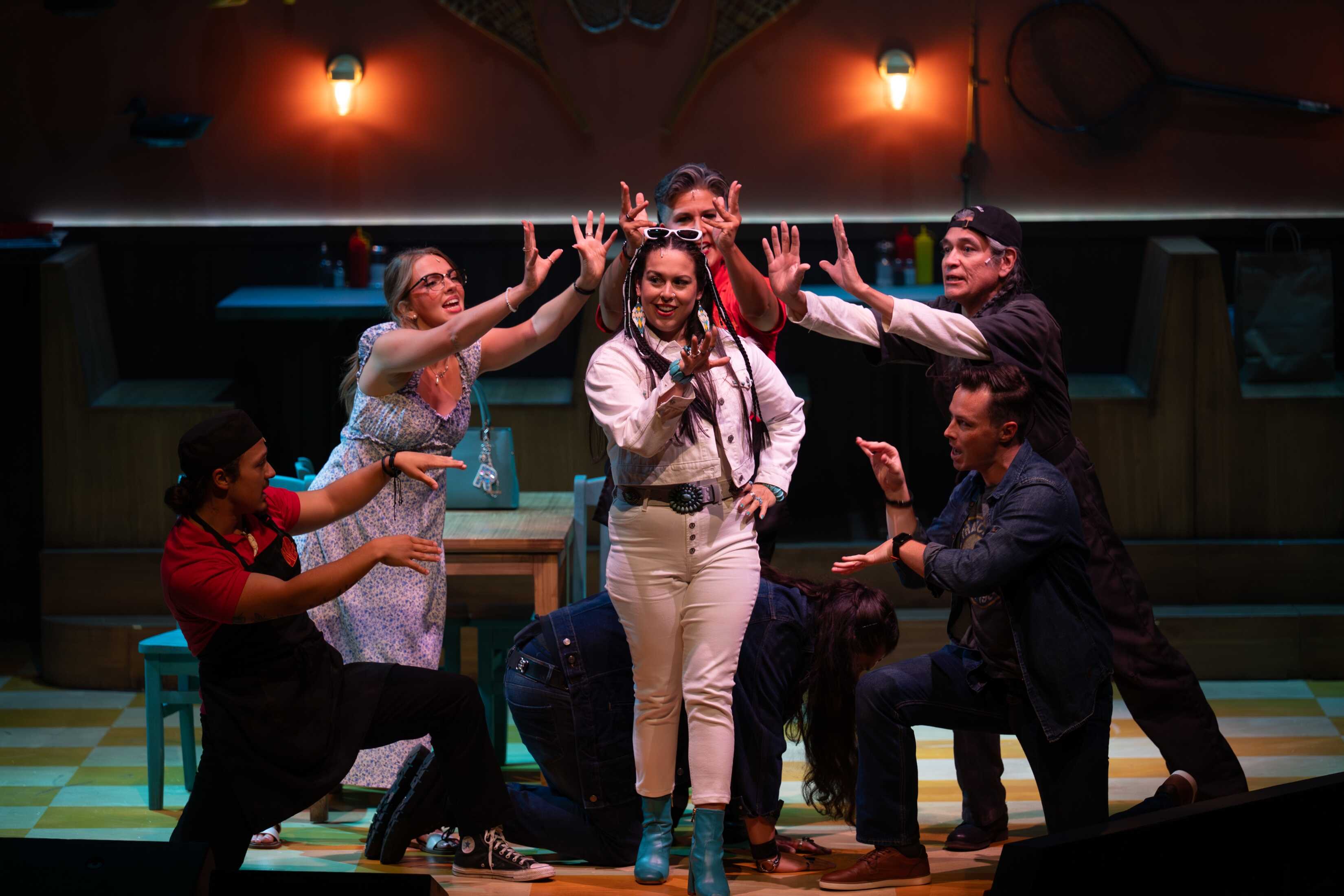
Rez Gas is a new hip-hop flavoured musical, receiving its world premiere production at the beautiful Capitol Theatre in Port Hope, by Cale Crowe and Genevieve Adam.
Genevieve Adam & Cale Crowe
Erika doesn’t like musicals but I persuaded her to come with me to see it, largely because I value her perspective and yes we wanted a fun afternoon. Port Hope is roughly an hour away from our home in Scarborough. I am pleased to report that she loved it at least as much as I did, maybe more. I mention that because Rez Gas is unconventional, not like anything I’ve seen before. It doesn’t work in the usual ways a musical works. Composers don’t always know how to express the emotions Cale captured in the powerful little capsules throughout the show, sometimes as solos sometimes in exciting ensembles. I want to see the work done again, it deserves to be produced elsewhere. I wish they’d make a cast album, the music deserves to be heard.
Although there were lots of words being sung quickly, the cast enunciated clearly, aided by whoever set the levels sufficiently low that the band never overpowered them. I’m grateful even as I recognize the struggles that may take place behind the scenes before they find the right balance.
The cast of Rez Gas, Aurora (Michelle Bardach) centre (photo: Sam Moffatt)
Over many decades, rap has articulated grievances, but it can be so much more. The music Cale composed captures much more than frustration or rage but also takes us through a broad range of emotions, from sad or sentimental, to optimism, romance, even joyful celebration. I was moved to tears more than once.
Cale & Genevieve should be proud of what they’ve created. In our recent interview Cale said “Genevieve often describes her part of this process as “midwifing” the story.”
Clearly Genevieve did a great job bringing that baby into this world.
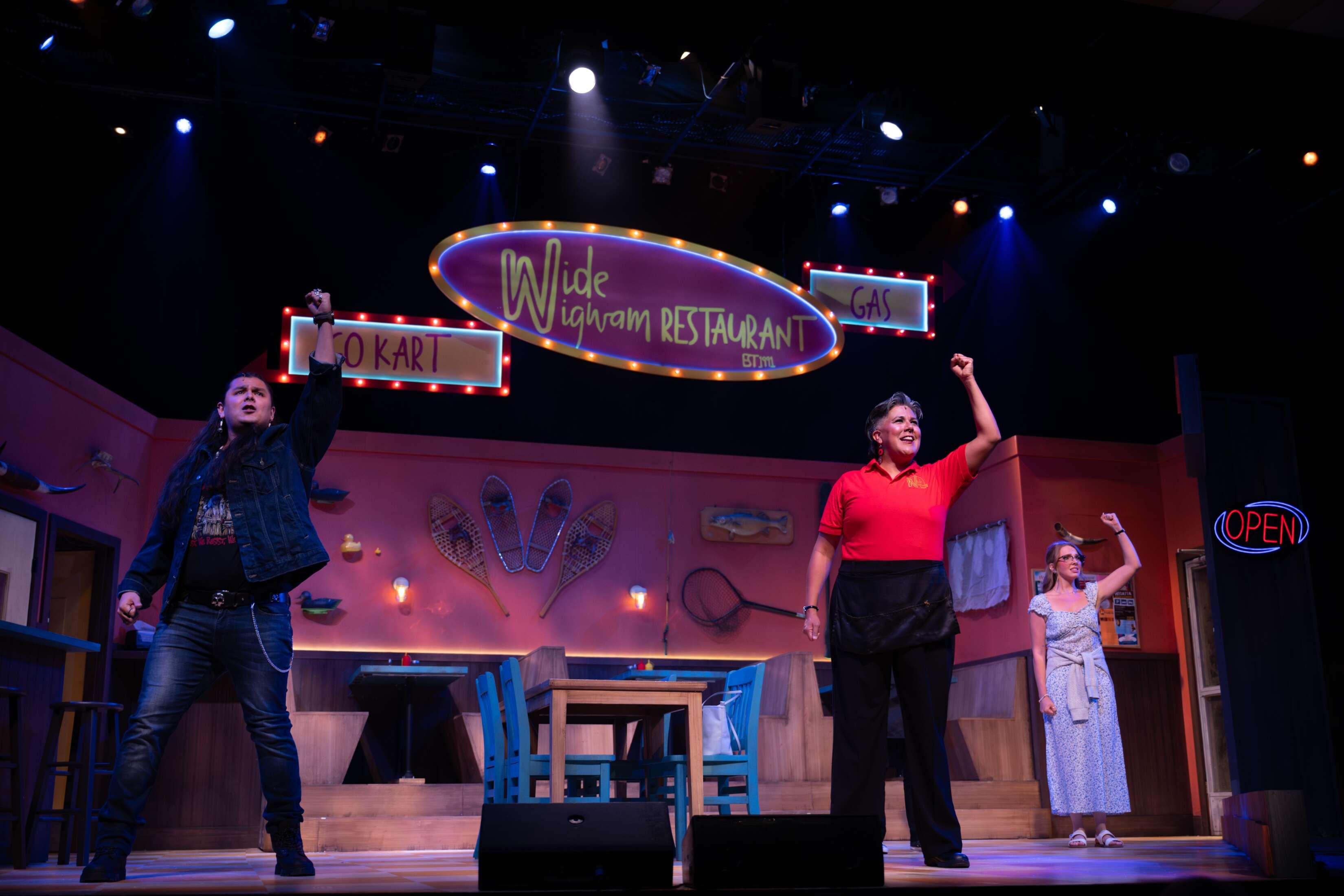
A promo for the play I saw describes it this way: After moving away from his home reservation to pursue a music career, Destin stumbles back into town with unexpected car trouble and lands at the Wide Wigwam diner. There he finds many of those who he left behind and who want to remind him of his history and his place in the community.
Before Destin appears we discover the world of Rez Gas, hosted by Lucy (Nicole Joy-Fraser) who welcomes us into the Wide Wigwam.
Leon (Dillan Meighan Chiblow), Lucy (Nicole Joy-Fraser), & Mackenzie (Emma Rudy, photo: Sam Moffatt)
And there’s also Nolan (Vinnie Alberto) who works for Lucy clearing tables & serving customers, but we will find out that Nolan is also an artist.
Destin (John Wamsley) comes in, unhappy to be stuck in the place where he started long ago, as the car has broken down. We meet Leon (Dillan Meighan Chiblow), whose complex history is entangled with Destin and Nolan.
Mackenzie (Emma Rudy) is the girl Destin met in the city, who teaches at a university and is riding with Destin. It’s actually her car that broke down.
Destin (John Wamsley) and Mackenzie (Emma Rudy, photo: Sam Moffatt)
The arrival of the outspoken Aurora (Michelle Bardach) complicates the plot, while the parts played by Jonathan Fisher also help add soulful depths to the story-telling.
Jonathan Fisher (photo: Sam Moffatt)
Rez Gas is another impressive production in a smaller Ontario community, this time Port Hope. After the show, Erika and I enjoyed dinner at the Santorini, just a few doors away from the Capitol Theatre. Our matinee experience driving to Port Hope and enjoying our meal after a show in a vibrant downtown underlines the value of cultural investments like those of the Canada Council & Ontario Arts Council, helping to support and grow thriving communities. It’s ironic that a piece touted as “a world premiere musical about discovering home” should also function so well as a way to build a better home, meaning the Capitol Theatre and the downtown excitement we felt in our visit to Port Hope. It makes me want to go back again.
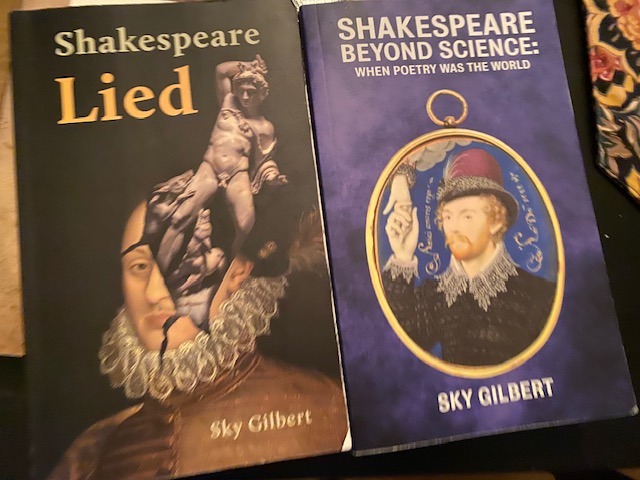
I want to explain where I’m coming from, as I review the second of three books from Sky Gilbert about William Shakespeare.
Oh gosh I see the newer book is getting dog-eared on its third reading.
Shakespeare Lied appeared in 2024, while Shakespeare Beyond Science came out in 2020. My response this time (over the past year) is an even more extreme form of what happened last time. Here’s what I said in 2020 (click here to see the full 2020 review): I’ve been dancing around this one for quite awhile, hesitant about the review because I am in awe of the book. Nobody expects me to be brilliant even if the book has put me in touch with a desire to be immortal, to make an impact. Gilbert’s book deserves to be read, deserves to be influential. While Gilbert hasn’t been a professor for very long (he was still in grad school when I was there not so long ago), he’s doing great things.
As it has almost been a year since I began reading & re-reading Shakespeare Lied that effect applies even more. This has been a very introspective year for me, a caregiver and a son mourning the passing of his aged mom, pondering the meaning of life, pondering meaning itself.
Sometimes a book you read can totally colour your experience, changing the way you see and hear everything. That’s one of the reasons we read. A book may teach you how to unravel your puzzles, even if reading may also lead you into a deeper labyrinth than before. When the world goes to shit, whether you’re looking for a solution or you want to find a really good umbrella, a place to shelter, books do that better than almost any drug or altered reality I know. Music usually is my go – to, but first, I need to look at the single book that had the biggest impact on my 2024, that I continue to re-read as I try to do it justice.
And yes this may be a cautionary tale for those who want me to help promote their work, as I take it very seriously. I will read and re-read a book because I don’t want to just do a book report. I want to understand.
I normally don’t like spoilers, as the experience of the story or the unfolding of the argument are a kind of magic. I feel it’s sacrilege when a reviewer fills their review with the best lines of a comedy or tells you the outcome of a plot and so for example my recent review of Heratio tells you next to nothing because I aim to be spoiler free. But I don’t think I will be ruining anything if I give you the central conceit of Sky Gilbert’s latest book: Shakespeare Lied. Lately this book and its unique lens has become a kind of subtext for everything I see and by implication, everything I’m writing lately.
Sky’s book is a filter through which I’m seeing everything right now. He asks a question that I keep coming back to: “What, after all, is one to believe?“
I hear that in my head not so much as a mantra, but as a reminder. We’re lost in the forest with Hansel & Gretel, not knowing which way to turn.
In 2024 I watched JD Vance and Tim Walz debate through the lens of Sky’s question, impressed by the fluidity of Vance’s delivery even though he lies like a rug, if you take my meaning. But I am not going to go off on the tangent of asking “what is truth” as though I were Pontius Pilate interrogating Jesus. I’m less interested in what fact-checker Daniel Dale had to say than I am in performances, rhetoric, portrayals and (especially apt for politics) reception. What are we to believe, and what is the consensus? We’re as mistaken as Chuck Schumer and the Democrats in how we approach discourse, if we get hung up on questions of truth & procedure, missing the point. And indeed I think it’s worth noting that Daniel Dale was ultimately flummoxed by JD Vance’s running mate, a man who has taken questions of truth and hair to a whole new level. When we zero in too closely on the factoids we miss the forest for the hair.
Or the trees.
Sky’s book was very helpful when I wrote about Canadian Stage’s 1939, foregrounding the play’s colliding performance styles, layers of meaning on top of other meanings. I have a new appreciation for the meta-theatre I see all around us in media. I alluded to General Leslie (Dick) Rhodes, key player in the development of the American nuclear arsenal, a devout Presbyterian from the family of a Chaplain that I mentioned in my review of John Elford’s Our Hearts Were Strangely Lukewarm. Mere questions of truth miss the performative b.s. of genocidal Christians who have no trouble sleeping at night: because they’ve been blessed and absolved.
I could go on with more examples, such as Tafelmusik led by Rachel Podger and the Pictures concert of TSO all through the rose-coloured glasses of Gilbert’s ideas. The point is, Sky isn’t just talking about Shakespeare. Or maybe I should put it in context with his previous book on the subject, Shakespeare Beyond Science: When Poetry was the World (2020).
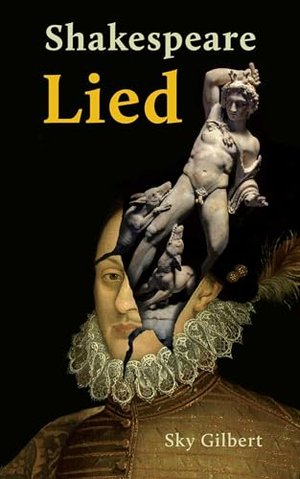
The first book is gentler and more even-handed, while the new book reads like a polemic. There’s an intensity to it beginning with the cover, showing us Acteon, attacked by his hounds, as he bursts through Shakespeare’s head.
I can’t help noticing that Sky used a big long title last time and this time a tiny one. Speaking of filters and influences, I can’t help thinking that — like Daniel Dale’s orange nemesis–Sky is trying to simplify things for those who didn’t get it the first time. But don’t get me wrong, the new book doesn’t dumb it down. Far from it. The first book was more Shakespearean in its flowery approach to scholarship. In fact I think he was very gentle and careful in his diction last time as though he were giving us the undergraduate version, while this one moves more quickly and passionately, like a grad school version.
We’re in the discursive realm of sequels, where the author presupposes a lot more, daring us to follow him as any good lecturer does. Graduate school assumes you saw the first film and so will know about the relationships, the politics, the objectives of each character. We get to the point faster which makes some sentences more electric and even acerbic.
The first book is great preparation for this new book. And they make a fascinating study as a pair. I can’t help looking at 2024’s foray as a continuation of the 2020 study.
But maybe the real difference is that this time it’s personal. I don’t know enough about the background to comment, except to frame this for you, using the words in Sky’s prologue.
During Buddies’ 40th anniversary season, I was delighted when Artistic Director Evalyn Parry announced a reading of my 1986 hit play Drag Queens in Outer Space. A week before the reading I wrote a controversial poem for my blog. I received an email from Evalyn Parry saying the ‘community’ was up in arms about my poem. I politely suggested Evalyn ignore the hysteria. In a return email she stated that due to the offensive nature of my poem, the reading of my play would be cancelled. I was thus forced to remove myself from any association with the company that I founded many years ago. (Shakespeare Lied p11)
We don’t get to read the poem in question so the controversy is a black box, something mysterious and unknown to the reader. I did some searching, looking for something from that time, a clue about the poem, but came up empty… Perhaps we can set that question aside for the moment.
The next thing Sky talks about in his book didn’t seem terribly important, namely his viewpoint about the way he was being read: a discussion of form & rhetoric, not unlike what we saw in the first Shakespeare book, but now pointed squarely at writing of the present century. I’m mentioning this in the interest of being comprehensive & complete, not because I think it’s important. I don’t think we usually need to know what was going on in an artist’s life when they made their creation. Yes Sky sounds a bit angrier in this book than he did last time, even if Shakespeare Beyond Science came out in 2020, long after the controversies I’m alluding to.
As I ponder the two books in August 2025, I’m struck by a contrast, that may be a reflection of where I am at rather than an accurate picture of the two books. But one book filled me with inspiration, one throws me back, hesitant and questioning what lies beneath. The first book suggests I can get closer, get to know something about Shakespeare. The second says not so fast, maybe he’s not knowable, maybe we don’t want to proceed because: our hearts are bruised and even broken. We’re told just a bit of that mystery I spoke of, about poetry & art, from a mysterious community of secrets, concealed identity, performative virtues, backstabbing, conspiracy, false loyalty. It may be dark but it has the ring of truth & authenticity because of its passionate delivery, something less than full out Shakespearean histrionics. Having just seen the latest meta-Shakespearean show (Heratio) I hesitate to try to distinguish between what’s imaginary and what is genuine. And yes I know, the way that second book seems to parallel a zeitgeist full of lies & fakery makes me wonder: is it the book or is it me? Am I watching CP24 or CNN too much? The books are both mirrors, and maybe I need to be careful not to write a book review that sounds like I am talking about myself and my own self-doubt, my own awareness of mortality.
As I pondered the two books and the many sources Sky acknowledges, I knew what lay ahead, because at the end of the second book Sky’s bio says that he’s working on another Shakespeare book tentatively titled “Shakespeare’s Effeminacy”, the concluding volume of a trilogy about the identity of Edward de Vere.
In my reflections, knowing another book was coming I wandered off into the sources, the alternative readings of Shakespeare and his life, competing theories about authorship. It’s a huge industry of course. Let me suggest further reading if you would like to discover more, as I confess my own conflicts & quandaries on the topic(s).
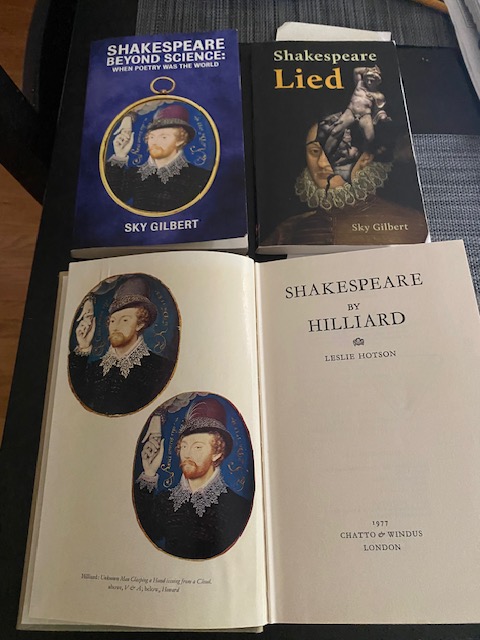
In his first book Sky pointed us towards the research from Canadian scholar Leslie Hotson, a writer from a previous generation, writing about the Hilliard miniature in his 1977 book Shakespeare by Hilliard.
When I consider the way Hotson writes, it’s a trip back in time, less to the era of Shakespeare as to a time of arcane & obscure criticism allegedly in the service of truth and clarity. The book is a labyrinth. While I may have complained at the density of the discourse Sky offers up in his second book, compared to the accessible language of the first, they are both worlds away from Hotson, whose prose suggests something secret & obscure as hieroglyphics or runes inside a musty tomb, as Hotson gives us a musty tome, and I have to give an example to justify such extreme language. In his first book on page 57 Sky says the following:
<<As Hotson tells us (quoting Littleton) , Apollo was associated with oracles and messages that were riddling or “oblique”. This means he was prone to “speaking ambiguously, so that he can be taken divers ways”>> (Shakespeare Beyond Science 57)
That’s Sky. Here’s a sample of Hotson, and it won’t matter where I start, because it’s all a miles-long thread running through that forest I spoke of:
Randolph’s wry-legged god is his translation of Ariostophanes’ term Loxias, which Henry Fielding’s version of the Plutus gives us that oblique deity. For the explanation we turn to Littleton: ‘Apollo was called Loxias; who in his replies was loxos, that is, oblique, and speaking ambiguously, so that we may be taken divers ways.’ (Shakespeare by Hilliard 96 )
So of course, in his book about oblique or riddling messages, Hotson is poking oh so slowly oh so carefully at the tiny relic Sky put on the cover of his first book, spending 200+ pages ultimately telling us a tiny bit about a tiny thing. Don’t get me wrong, I’m not complaining. But I feel a bit like an explorer in that forest, now peering into a deep dark well, afraid I will fall in.
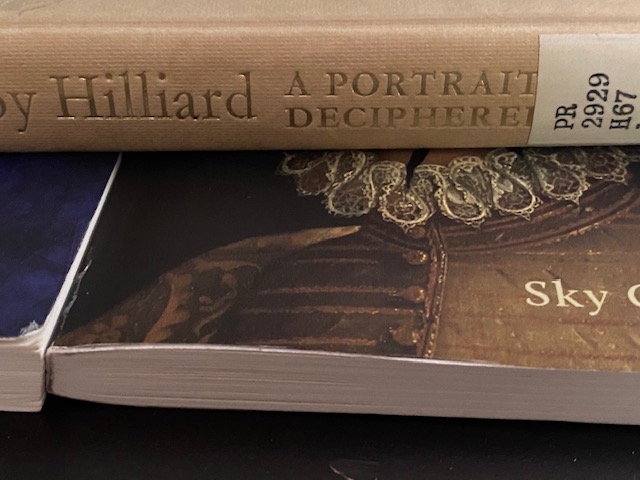
Notice that the book title to the right makes no mention of the subtitle in the spine of the book as mentioned below.
The book’s title as it appears on the spine: “Shakespeare by Hilliard A PORTRAIT DECIPHERED”
While that sub-title is on the spine of the book I couldn’t find anywhere inside the book nor anywhere in the bibliographic record when I look on the UTL website. Hilliard and perhaps Apollo himself would approve of this oblique approach, presumably true to what Hotson wanted.
So as I wander about inside that well (yes I fell in), there are other books and theories that I am simultaneously pondering. Hotson also wrote about Mr WH, a person of some interest in the conversations about Shakespeare and the sonnets.
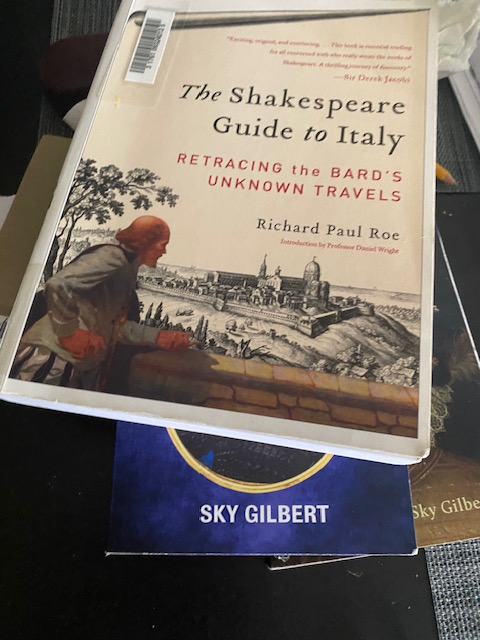
A more recent book complicates the conversation, namely Richard Paul Roe’s 2011 Shakespeare Guide to Italy: Retracing the Bard’s Unknown Travels. I was stunned reading so many explanations that correspond to lines in plays that previously made little or no sense. The book offers connections in many of Shakespeare’s plays, set in places with Italian or Mediterranean place names, drilling down on tiny details over and over again.
Roe’s book on top of the others
I will look in Sky’s third book for some mention of Roe’s analyses. Whatever version of Shakespeare’s life you want to write must reckon with Roe’s conclusions.
Feeling lost I searched and found even more confusion. Paul Streitz wrote Oxford: Son of Queen Elizabeth I, a book that I have to chase down, seemingly arguing many of the same things Sky’s books argue, again speaking of Edward de Vere, Earl of Oxford as the alias or perhaps the true identity of William Shakespeare. Perhaps this is old news? I had not heard this version before, with Elizabeth the Queen in a starring role.
Sky makes no mention of Streitz. I feel a bit perplexed to see that neither Streitz nor Hotson are cited in the back of Roe’s book, which is amazing in a bibliography that’s over 10 pages long. In the tiny Epilogue of his study, Roe calls attention to a disconnect between accepted scholarship & his observations, suggesting that his goal was to “revisit these orthodox beliefs and contrast them for their accuracy with the actual words of the English playwright” (Roe 297).
Maybe in the next generation someone will pull it all together, make sense of the different theories.
I’m reminded of Sky’s title and a year spent observing the lies all around us. Yes there are so many books about Shakespeare that I suppose you dear reader and I could miss a few books. But a scholar studying Shakespeare’s life? That seems hard to believe, even if he meant to ignore or dismiss their work.
Let me quote Sky again even as I admit I am lost. “What, after all, is one to believe?“
So I am waiting for Sky’s concluding book, as I plan to delve deeper into Hotson, Streitz, Roe and yes, Shakespeare.
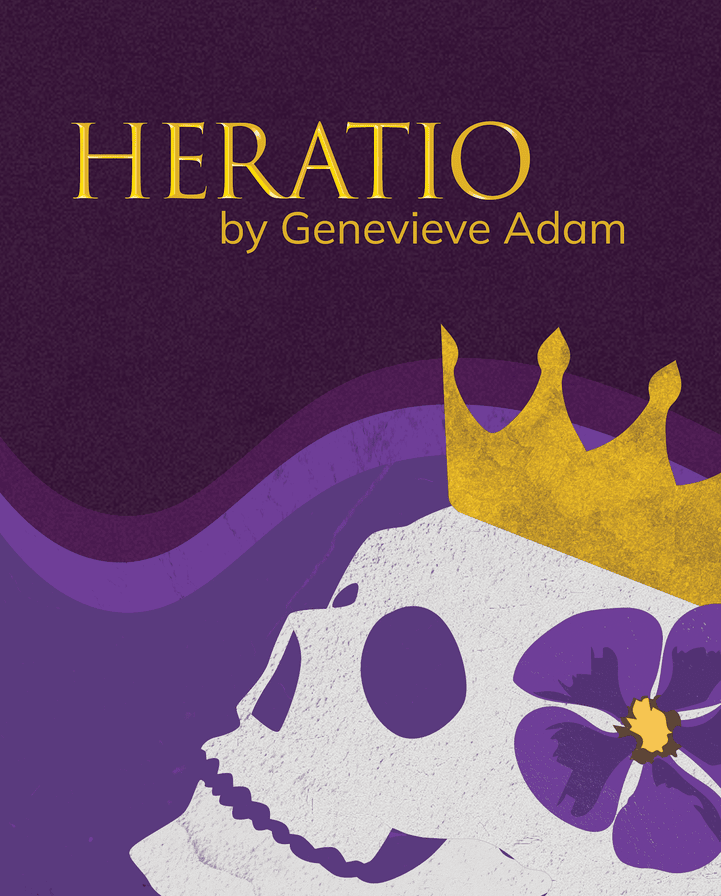
I’ve just seen Genevieve Adam’s Heratio, a new play that picks up from where Hamlet ended.
It’s another of the scripts that build on Shakespeare, with much of the fun coming if you know the original, as in Stoppard’s Rosenkrantz & Guildenstern are Dead. It’s fertile material, as I recall earlier this summer when I interviewed Kenzia Dalie (creator of a show called Clowns Reading Shakespeare) or last year’s 1939 (a work by Jani Lauzon and Kaitlyn Riordan using children in a residential school playing Shakespeare as a powerful microcosm for exploration). The currency of Shakespeare in our culture makes him a perfect departure point, and clearly he’s not close to being exhausted, with lots still to show us in 2025 and beyond.
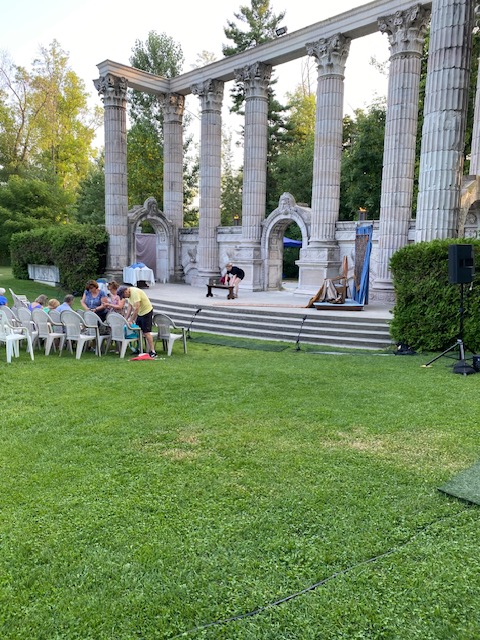
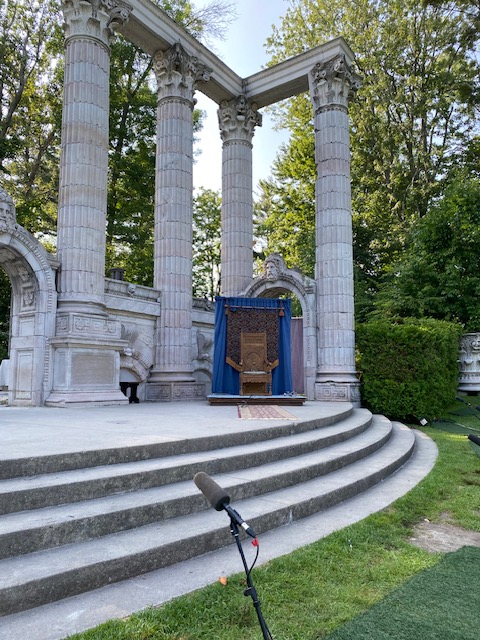
I just want to quickly mention the venue, in passing. I was married there in 1989, a place that is surely one of the most beautiful places to stroll or to watch a play in the Toronto area. Today we were outside near the lake, breezes cooling us on what had been a stifling hot day, as birds swirled overhead, passersby sometimes making noise that never really distracted us from this astounding space and the work being presented.
Looking back as I was leaving after the show
View from my seat in the front row
It’s actually even more beautiful than what you see in my pictures. The actors were right in front of us, delightfully intimate in this tiny space.
Adams’ Heratio is a curious mix that gets to the point quite quickly, combining moments of gravitas & physical comedy, juxtaposing noble personages with the servants who are usually under the radar. It may be an advantage not to know the original, if that means one can arrive without stipulations or requirements of the plot or language. Best to just go with it.
Director Helen Juvonen
Director Helen Juvonen’s program note calls it a comedy which is a useful guidepost for those who worry about such things. I found myself wondering –given that this is a new work–whether they knew how they wanted to finish the play when they started, perhaps working back from the ending. I do like how it ends, and sorry I won’t tell you more.
Every one of the six members of the cast had powerful moments.
Siobhan Richardson (Violet)
Phoenix Fyre (Rue)
We begin with Violet (Siobhan Richardson) and Rue (Phoenix Fyre), a pair of servants charged with exposition & clean up orienting us into the world of Elsinore immediately after the bloody end of Hamlet, as they scrub all the blood off the floor. They’re not to be under-estimated.
Janelle Hanna (Horatio)
Horatio (Janelle Hanna) has a huge challenge in his/her role, somewhat perplexing at first until we find out why, but the title of the play was a big clue.
Jack Davidson (Fortinbras)
Fortinbras (Jack Davidson), a character who appeared briefly at the end of Hamlet, now has a whole new life thanks to Adams’ new comedy, a figure sometimes cut right out of the play, and often forgotten except as a footnote.
Columbine (Rashaana Cumberbatch) is a delightfully difficult creation from Adams, a family member of one of the dead in the play. I couldn’t take my eyes off her, fascinating every time she appeared onstage.
Queen (Philippa Domville)
Last to appear is Philippa Domville, whose presence seems to work magic the way she raises the energy of the ensemble, everyone coming to life. I don’t know if she was meant to be a spark-plug but I can only compare it to the arrival of Jimmy Durante in Man Who Came to Dinner, a strategic moment built into the script that inevitably turns everything & everyone upside down. Awesome.
The comedy is sometimes very dark, but maybe our use of the word nowadays loses something given how freely Shakespeare worked between joyful & sad in tragedies, histories or comedies. I found myself rethinking aspects of a play I thought I knew inside out, re-examining relationships in new ways.
And yes there are lots of laughs in Adams’ meta-Shakespearean comedy.
Genevieve Adam
Heratio continues until August 24th at the beautiful Guild Festival Theatre. Click for info & tickets
Rez Gas is a world premiere musical by Cale Crowe and Genevieve Adam running August 22nd to September 7th at the Capitol Theatre in Port Hope.
Rez Gas playwrights Genevieve Adam & Cale Crowe (photo: Sam Moffatt)
After moving away from his home reservation to pursue a music career, Destin stumbles back into town with unexpected car trouble and lands at the Wide Wigwam diner. There he finds many of those who he left behind and who want to remind him of his history and his place in the community.
Rez Gas features Vinnie Alberto, Dillan Meighan-Chiblow and John Wamsley as a trio of old friends at the centre of the action.
Vinnie Alberto, Dillan Meighan Chiblow and John Wamsley (photo: Sam Moffatt)
The ensemble also features Michelle Bardach, Jonathan Fisher, Nicole Joy-Fraser, and Emma Rudy.
Dillan Meighan Chiblow, Emma Rudy & Nicole Joy-Fraser (photo: Sam Moffatt)
Jonathan Fisher (photo: Sam Moffatt)
The piece is directed by Herbie Barnes. Orchestrations and Music Supervision by Jeff Newberry, with a band led by Music Director Sarah Richardson, and featuring Kia Rose, Emry Tupper, and David Schotzko. Click here for tickets & further information.
I had the chance to ask Cale Crowe a few questions.
*******
Barczablog: Are you more like your father or mother?
Cale Crowe:I used to think all I got from my Dad was his looks, but I’m older now than he was when he and my Mom had me and my sister and people in our family tell me I’m more like him than I realize.
Cale Crowe (photo: Sara Tanner)
BB: What is the best or worst thing about what you do?
Cale Crowe:The best thing about what I do is that I get to connect with people using expressions that touch on the unspoken parts of the human experience, be it through the songs I write or through a show like Rez Gas or possible future works. The worst part? That would be a toss-up between missing time with my son and having people at shows request songs I hate or have never heard.
BB: Who do you like to listen to or watch?
Cale Crowe:I appreciate any music project with a singer that lays themselves bare in their work – whether they’re expressing love, lust, loss, or loathing. Things that leave you feeling like you had a moment within yourself when the song ends. That can come from lyrics or from the physical elements of their voice and the care an artist takes in crafting their work.
In terms of watching, as I’ve gotten older, I’ve come to appreciate anything that can swing the full spectrum of emotion out of me – falling in love alongside the hero, hating the villain, mourning the losses along the way, or even just getting me laughing so hard I have to massage my cheeks from smiling too hard. This summer I made Shoresy my comfort watch – there’s a combination of character development and just how obnoxiously Ontarian that show is that tickles me. It’s full of surprise emotional moments; I never thought I’d tear up watching a losing team come back with five goals in the 3rd period or seeing a bunch of guys just hanging out and shooting the breeze until the early hours of the morning (all the while none of whom are wearing pants – if you know, you know).
BB: What ability or skill do you wish you had, that you don’t have?
Cale Crowe:Being present during the rehearsals for Rez Gas always makes me wish I had kept acting in the 10+ years since my last community theatre gig. Our cast is small, but every member is incredible and deserving of all the flowers, and above all, they make it look so fun. I know a lot of the skills needed to do what I do translate to acting, but I’m more than happy to watch the pros bring this story to life.
BB: When you’re just relaxing and not working, what is your favourite thing to do?
Cale Crowe:I’m big on solo time. After my son goes to bed, I’m often found rewatching shows and movies or playing single-player video games, or scrolling through TikTok or Instagram for longer than I care to admit.
BB: Who do you think of first, when I ask you to name the best singer?
Cale Crowe:It’s a frustrating answer, but I think the question has different answers for different reasons. I grew up at a time where people sang against their governments and didn’t think ahead far enough to consider the health of their vocal cords. Lately I’ve been in love with the (sometimes) metal band Sleep Token and their singer (known only as Vessel). I wish I could sing like that.
BB: What was your first experience of music?
Cale Crowe:Generally speaking, my parents played music all the time when my sister and I were kids – in the car, during house-cleaning blitzes, in the garage on a Sunday afternoon, anytime and anywhere. Music accompanies nearly every formative memory I have. My first-ever live concert was in 2003; Nickelback at the Peterborough Memorial Centre with Three Days Grace and The Trews.
BB: Who are your favourite artists, what are your influences ?
Cale Crowe:I spent my teen years on Billy Talent, Alexisonfire, The Used, My Chemical Romance, Fall Out Boy, that sort of thing. In college, I got into a wider range of music that included (but wasn’t limited to) The Halluci Nation, G-Eazy, Ed Sheeran, and The Weeknd. Today, I’m influenced by anything that intersects between the risk of vulnerability and the risk of trying new things sonically.
BB: Is there a song that you identify with or admire that you’d suggest we listen to, as a way to understand you better?
Cale Crowe:I’m the type of person that will find a song and tack it to a feeling or emotion permanently. A more recent example is the song “Euclid” by Sleep Token; it’s not a happy song by any stretch of the imagination, but it makes me so happy to listen to. It’s full of swells and elements of chorus that make it anthemic and equally, simultaneously heart-breaking.
BB What’s your favourite song that you’ve ever created?
Cale Crowe:My personal favourite from my own collection is called “If You Let Me” – a pretty standard love song, maybe, but depending on my energy level at any given show it somehow ends up being played a little differently every time.
BB: Could you talk a bit about your development and how to see Rez Gas in context with your work?
Cale Crowe:Honestly, to this point, I view Rez Gas as being a pretty stark departure from my other works. It’s the first/only musical I’ve ever written, and in terms of deeper meaning it falls onto the more literal end of the spectrum; much like my work as a musical artist, the setting, characters, and plot are all loosely based on reality, but in my other works the veils of symbolism and metaphor are thicker. That being said, in terms of actually writing each piece of music for this show, much of that process was similar to how I’ve written my records in the past – using looping elements to give more focus to the words and story being told.
BB: Do land acknowledgments feel like a meaningful ritual to you? Do you have any ideas of what settler populations could do or should think about that might be helpful towards genuine reconciliation?
Rob Kempson, Artistic Director
Cale Crowe:I think that proper land acknowledgements (like the one Rob Kempson has written for the Capitol Theatre) can carry significance, but there are many, many variables that can sway that meaning – on both the acknowledger’s and the audience’s parts. I don’t pretend I can even come close to having all the answers, but in the time I’ve had on Turtle Island to think about it, I have come to understand reconciliation as a practice rather than an outcome.
BB: How do you feel about the way new works like Rez Gas are received and presented in Canada, especially in Ontario?
Cale Crowe:With Rez Gas specifically not yet being presented to the world (at the time of this interview), I can’t say for sure how it will ultimately be received. That said, I believe with my whole chest that the world of artistic expression needs all the Indigenous-made projects that can be made. Any culture on the planet is doomed if it isn’t given the space to grow, to evolve, to move forward. The Capitol Theatre has set a standard by facilitating this growth in even this small way.
BB: In August Capitol Theatre presents the world premiere of Rez Gas. The press release says “After moving away from his home reservation to pursue a music career, Destin stumbles back into town with unexpected car trouble and lands at the Wide Wigwam diner. There he finds many of those who he left behind and who want to remind him of his history and his place in the community. ” Please tell us more.
Cale Crowe:Rez Gas is a two-act story that provides a chance for audiences of various walks of life to see a bit of themselves on stage and, hopefully, it gives them pause to reflect on their choices, their relationships, and their communities.
Dillan Meighan Chiblow (photo: Sam Moffatt)
Our entire show has lived its life (thus far) within the walls of the Capitol Theatre Port Hope. It was written by myself and Genevieve Adam during the 2023 Capitol Theatre Creator’s Unit and its world premiere will happen on the Capitol’s main stage. It’s truly been an incredible privilege to come in every day and watch the cast and crew breathe a third dimension into the words and sounds we’ve made.
BB I saw that the music of Rez Gas is described as “ a beautiful expression of Indigenous joy with a hip-hop-infused, unforgettable score. ” Please tell me more about what we should expect to hear.
Cale Crowe:During the making of our show, we made many a comparison to shows like Rent and Hamilton when looking at the music. Audiences can expect a blend of genres, from hip-hop to 90’s country and even ‘00’s rock. Influences ranged from Brooks & Dunn to Linkin Park to Cardi B.
BB: Can you share anything about the writing process or stories from backstage?
Cale Crowe:One thing I can say is that our show did quite literally spawn from the tiniest kernel of an idea – that being that an artist with next to no prior experience in the medium of theatre could conceive something that now has so many people behind it, both on stage and off. I had no idea that any of this would happen when I reluctantly agreed to humor Rob’s (then) impossible ask of including me in that Creator’s Unit, and yet here we all are.
BB: There’s a great quote I saw, where you say“Rez Gas is a labour of love that takes loose inspiration from my own upbringing on the Alderville First Nation territory; some audience members that come from back home may see some semblance of themselves and their home brought to life through our show through its setting, characters, and even costume choices.”
Please excuse me for again asking the obvious question: Is Rez Gas auto-biographical?
Cale Crowe:This is perhaps the most common question I’ve gotten – and mostly from prospective audiences! The long answer is that I wrote Rez Gas during a pretty big transitional period; I was a new parent, I had moved back to Alderville First Nation, I had entered my 30s in the late stages of a global pandemic, and being invited to write this project felt like just another example of how much of my life was in flux at the time. The setting for the show is loosely based on the local hangout of my youth, and the characters are inspired by my own personal relationships – sometimes individuals, sometimes amalgamations of people.
Cale Crowe (photo: Sara Tanner)
The short answer: Eh, maybe?
BB: I’d love to hear more about the creative process at the Capitol Theatre, the team & what you experienced.
Cale Crowe:A rule about success that I’ve come to understand intimately: in any room, always seek to be the least of any skill you have, and then get learning. Yes, I helped conceive the show at a skeletal level, but before I set foot in a rehearsal space and watched our director and actors’ creativity flow, I could never have imagined the colours and shapes that the show has been molded into so far. Even when I’m playing the role of wallflower, the team we’ve made has felt very much like a form of home these past weeks. The laughs are real, there are no bad ideas, and every single person in the room feels in their whole body that we’re making something that The Capitol Theatre’s audience will talk about long after this run is over. I’ve heard the words “This is only the beginning” several times since we started rehearsing.
BB: I interviewed Genevieve Adam recently about Heratio, her other new show that opens really close to where I live in Scarborough, not realizing wow she had a second one the same month, coming up in collaboration with you. Talk about what it was like working with her and the team to create this work.
Cale Crowe:Genevieve often describes her part of this process as “midwifing” the story. In truth, she was also often playing the role of soundboard, editor, therapist, and all the while wearing dozens of other hats that were required to get the ideas we had onto paper.
Genevieve Adam (photo: John Gundy)
I hadn’t heard her name prior to Rob match-making us for this project, and in the time we’ve known each other she’s become someone I’ve relied on for support in so many ways.
Rob Kempson, Artistic Producer at the Capitol Theatre since the summer of 2021.
Rez Gas came from my head, but the ideas came in the form of a swarm of feral butterflies that she did the work of catching in order to make into something more tangible.
Like everyone else thus far in making our show, Genevieve never once made me feel like I didn’t have good ideas or something important to say.
BB: I recently saw an opera called “Missing” about the girls & women who disappeared in BC on the highway of tears. That very serious subject had to be done as an opera. Could you share something about the conversations between you & Genevieve about the genre, the tone & approach you were choosing for this show, and how the choice of a style would help you approach the topics in the play?
Cale Crowe:One of the first things I told Genevieve and Rob when we discussed making this project: no “trauma porn”. There is a time and a place for Indigenous voices to express the horrors that we as a people have experienced, and both are/should be plentiful, but my priority was to be a relief from that – specifically for Indigenous audiences. I didn’t want our show to be another example of reliving these atrocities; rather, I wanted it to demonstrate how many other sides of our people there can be. We’ve faced so much adversity, but we also laugh. We cry. We rage. We lust. And every now and then, we need a good smack (metaphorically) to remind us of what’s important, just like everyone else. And yes, our show does still touch on elements of adversity that Indigenous people face in modern times, but the goal for me was always that personal perspective rather than one that turns our stories into statistics.
BB: In 2025 Canadian culture seems precarious. We hear “elbows up”. I want to thank you and Capitol Theatre in Port Hope for doing your part,although we may sometimes forget the importance of local culture, employing local talent.
Cale Crowe:I can’t say for certain what the future holds when it comes to the arts and our cultural expressions, but if it takes turbulent times for us to remember how important these domestic works are, then now is certainly an example of that. Canadians – especially those of us who live closer to the border – often experience life second-hand from Americans, and nowhere is that more evident than in our media. The whole “elbows up” movement, complicated as it may be, is a great opportunity for the average Canadian to reflect on what gives us our identity – and what sets us apart from our neighbours. Rez Gas doesn’t serve to play a role in that, but all domestic artistic expression made now and in the years to come will be bricks in this house we make for ourselves as Canadians.
BB: Could you offer any advice to creatives wanting to make something for the stage?
Cale Crowe:There is no limit to the number of necessary drafts.
BB: do you have any upcoming gigs you want to mention after this?
Cale Crowe:I have a few that I can’t talk about just yet. I’ll say this: The day after our curtains fall for the last time is the day I pick up my music career again, and I plan to hit the ground running.
BB Do you have any influences / teachers you want to acknowledge
Cale Crowe:I want to give a special shout-out to Christine Stone, my high school Drama teacher. She’s the one who made me fall in love with the theatre way back in 2006 (almost 20 years ago!) and she was among the first people I was truly excited to tell when we confirmed we were mounting this show. Christine, if you’re reading this: I love you, I hope I make you proud, and I’m still sorry I never completed a single ISU assignment you gave in all my time as your student. When you see this show, I hope it makes up for that.
BB: I’m sure she will be proud of you!
Rez Gas is a world premiere musical by Cale Crowe and Genevieve Adam, directed by Herbie Barnes, music supervision by Jeff Newberry, running August 22nd – September 7th at the Capitol Theatre in Port Hope. Click here for tickets & further information.
The New Orford String Quartet appearance July 30th at Walter Hall was not as expected.
Yes our Toronto Summer Music program was already a departure from normal expectations, putting Brahms’ F minor piano quintet before rather than after Beethoven’s Op 131 String Quartet.
When Jonathan Crow came out to explain a few things after intermission, such as the unexpected sequence, he added to the drama with an announcement.
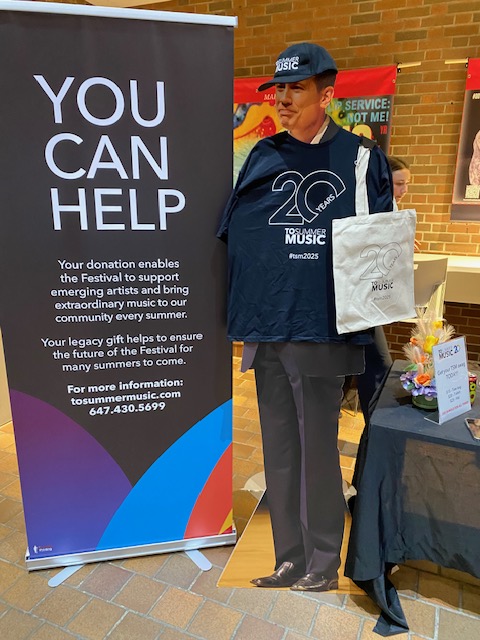
A larger than life-size photo of Jonathan Crow wearing all possible TSM swag
After close to a decade as Artistic Director, I came knowing that tonight was Jonathan’s last concert performing as AD at a TSM concert. I wanted to experience that.
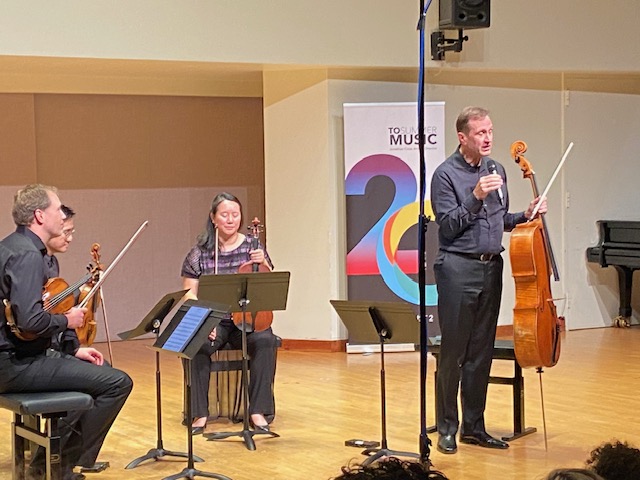
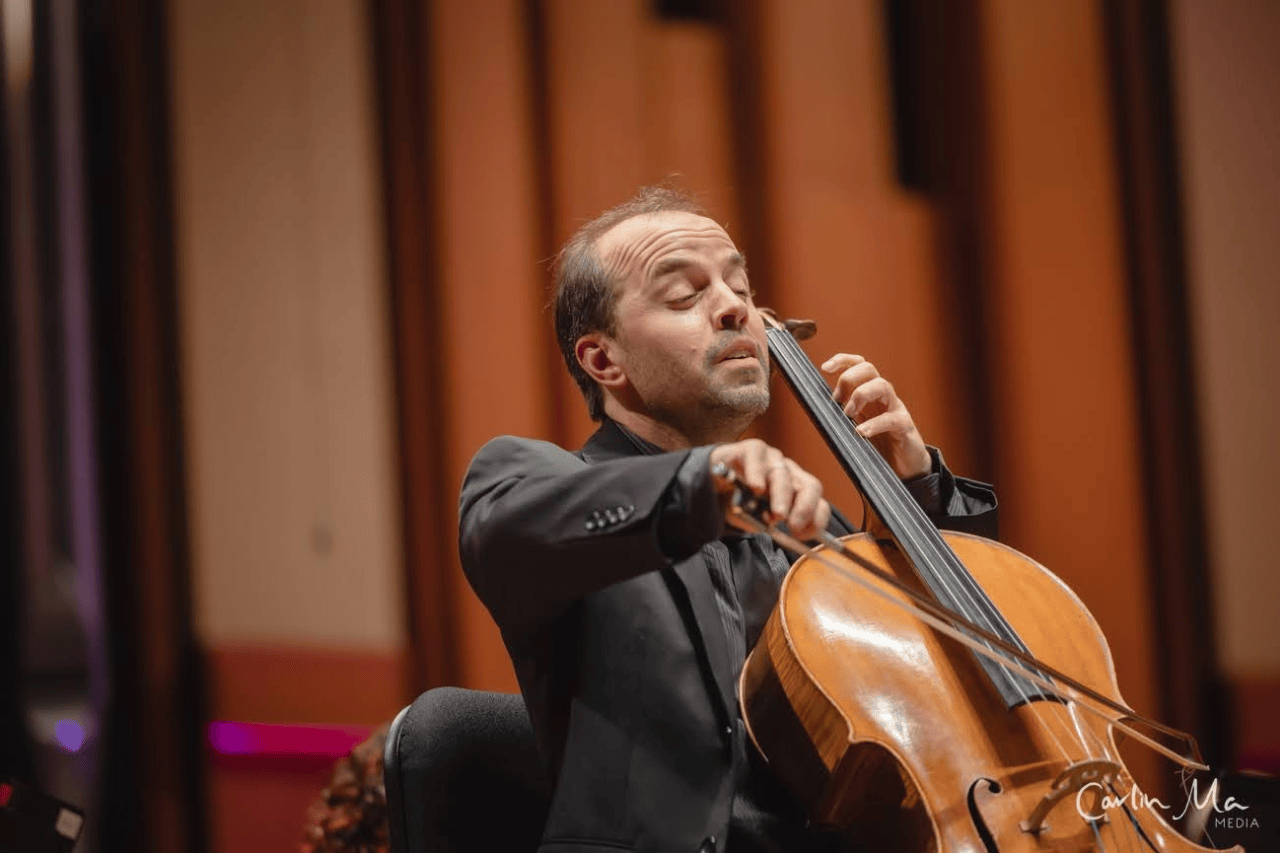
The drama came in the introduction after intermission, when we heard that cellist Brian Manker was leaving, and this performance was to be his last concert with the NOSQ after more than a decade in the ensemble.
After Jonathan’s announcement, Brian said a few words.
(L-r) Jonathan Crow & Andrew Wan, violin, Sharon Wei, viola and Brian Manker, cello
It made the reading of this passionate quartet extra special, every note more poignant than usual.
Nothing was held back, the frequent moments of dialog between instruments taking on comical overtones at times, the players smiling and exchanging intimate glances. They played with one mind, unified and their ego vanishing into the Beethoven, presented as an organic whole.
I don’t think I am the only one who didn’t want it to end.
Earlier they played Brahms, a work in four big parts that seemed to improve, becoming more cohesive and expressive with each successive movement.
Ian Parker Piano, Community Program Mentor
Pianist Ian Parker seemed to play without looking at his music or the instrument, thoughtfully watching the quartet most of the way. Their ensemble play was very tight.
Toronto Summer Music has taken things to a higher level under Jonathan, both in the excellence of the programming he has curated, the remarkable talent coming to our city, and the explosion of attendance lately. He’s going out on a high note.
Cake was served afterwards in the lobby.
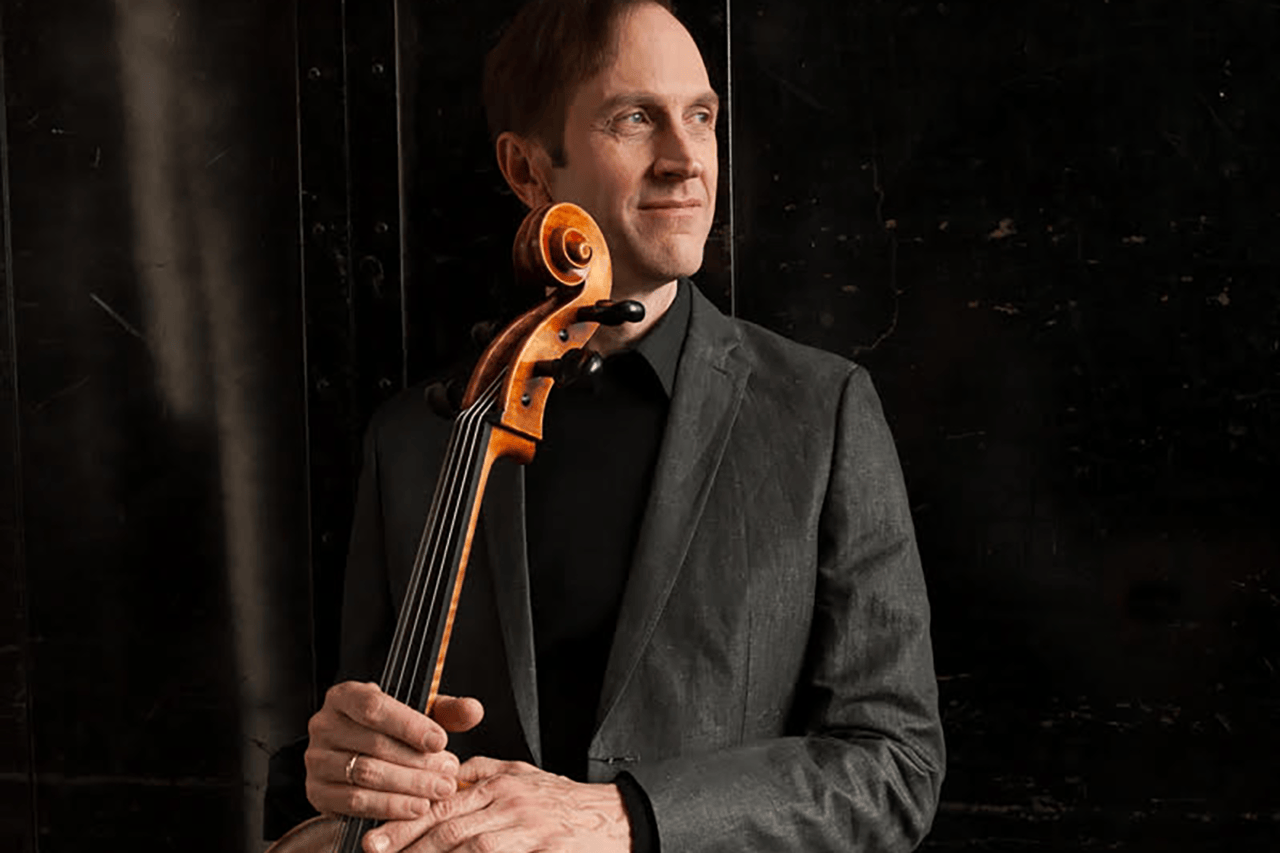
Cellist Brian Manker, Chamber Music Institute Mentor
Friday night’s Toronto Summer Music concert at Walter Hall titled “Affairs of the Heart” lived up to its name.
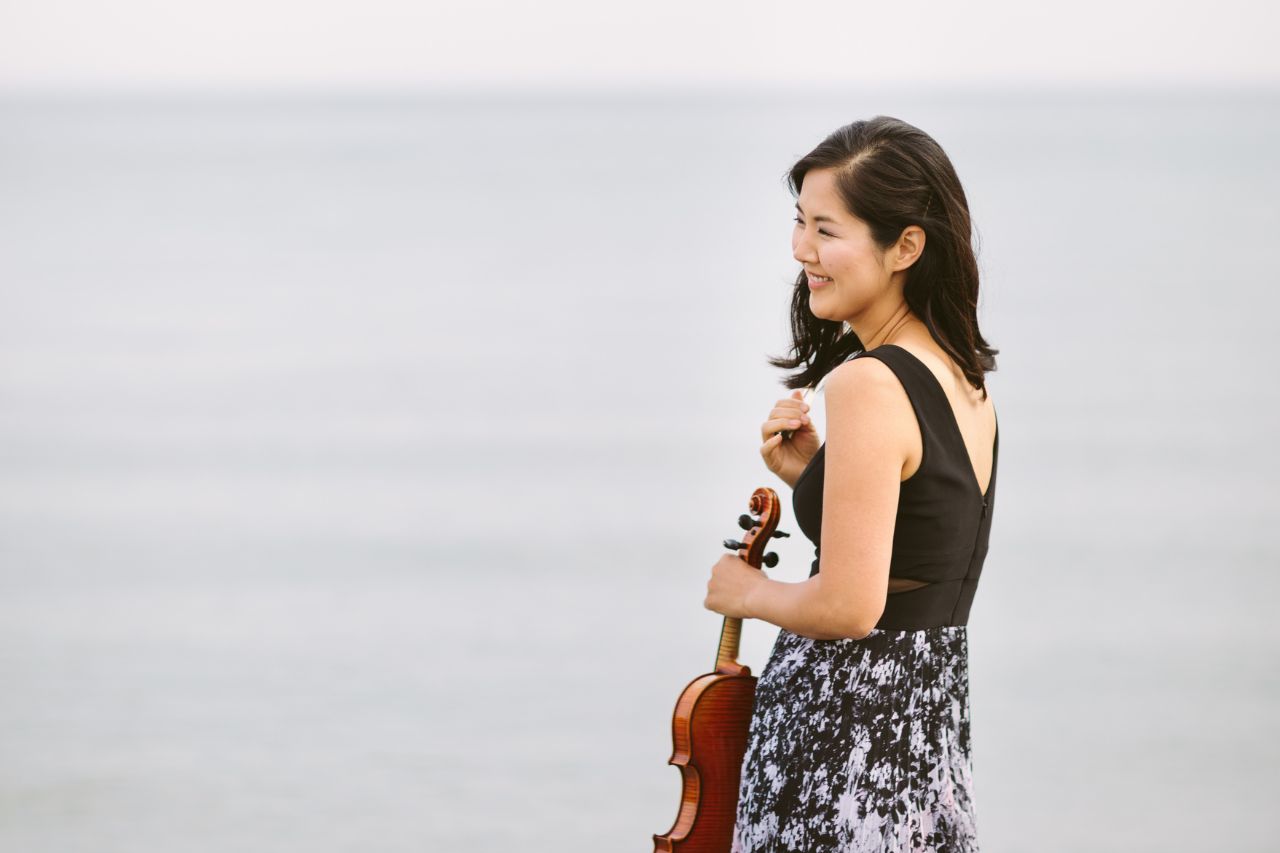
Three chamber works in a diverse assortment of styles brought the sold out audience to its feet each time.
We started with Mozart’s Duo for Violin and Viola in B-flat Major, K. 424, representing something of a masquerade. I saw in the program note that Mozart composed the piece in a style of Michael Haydn to fulfill a commission for his gravely ill friend.
Min-Jeong Koh, violin, Chamber Music Institute Mentor
Rémi Pelletier, viola, Chamber Music Institute Mentor and Community Program Mentor
I don’t know the specifics well enough to understand if this represented a departure from what Mozart might have usually written, but the performance from Min-Jeong Koh, violin and Rémi Pelletier, viola, was played with theatrical flair. In the final passages the back and forth between the two instruments was offered complete with an over the top vaudevillian challenge played out between the two, as their charming comedy underlined what was already clear on the pages of the composition.
The revelation of the night came next, namely Shostakovich’s Cello Sonata in D minor, Op. 40. I heard others afterwards marvelling at a work that was as new to them as it was to me.
Efe Baltacıgil, Cello, Chamber Music Institute Mentor
Efe Baltacıgil, cello and TSM regular Philip Chiu, piano, took us for a wild journey in four movements.
Philip Chiu, Piano, Chamber Music Institute Mentor
While the work was identified for us in the program as a sonata for cello, the work gives a great deal of work to both soloists. I will have to go get the score to see what the composer was doing. The first movement is sometimes tranquil, very lyrical, a kind of friendly conversation between two moody souls, collaborators who are mostly friends and definitely on the same page. While Baltacıgil’s cello was often a powerful sound filling Walter Hall with a rich tone, I was awed by the way Chiu held back so often, very quick yet soft. I was put in mind of a word we’re not supposed to use anymore, namely “accompaniment”, given that Chiu’s role is fully collaborative, the title of the sonata notwithstanding.
The second movement infected me with a need to tap my toes, making me worry i was bothering my neighbours in the hall, infectious rhythms in triple meter and mercurial, quicksilver emotions prompted out of nothing and then gone with the ending of the phrase. The repeated little phrases suggest dance although, hmm, whose tune are they dancing to? I have to wonder, as we ponder authoritarians lurking in the wings for our possible future, whether the one tiny consolation is to be found in the way oppression triggers brilliance in the artists responding to tyranny. Yes I may be reading too much into the surreal shifts of tone Shostakovich throws at his artists and the listeners. As I wonder whether the composer wants to tease us or scare us, at the very least this is challenging for the artists, who pull us all back to safety with something orderly in the simple solid cadence, like the ground under our feet (and hopefully we didn’t face-plant). The solemn & troubled largo that follows allowed Baltacıgil to show off his superb tone as though it were Shostakovich’s protagonist, Chiu’s underscoring like a softly menacing reminder that the world isn’t always as you think it to be.
After the internalized Largo, Shostakovich concludes with something more extroverted, dancing us out the door with a brief & energetic Allegro. The tune that begins on the piano & then taken up by the cello is a bit wacky, even morbid. It would work as a theme for the Addams Family franchise or a horror film, complete with the requisite humour that the genre often includes nowadays. We erupted in appreciation after a flamboyant but flawless reading from Baltacıgil & Chiu. I wish they would record this, as their chemistry together is quite beautiful.
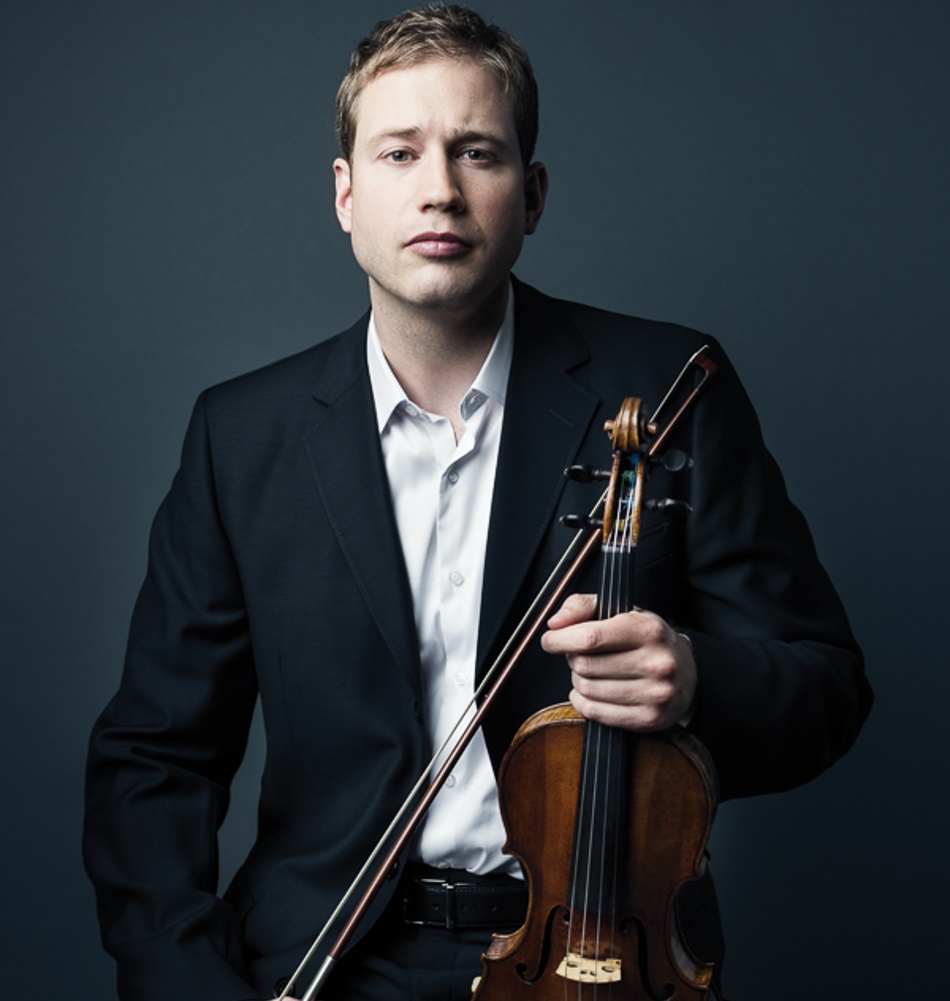
It was intermission, as I was asking myself what I could properly remember, what I could record here. Memory and its absence haunts me, now a little over two weeks past the celebration of life for my mom, and the performance of Missing Thursday that I couldn’t help experiencing as a celebration of life for the missing girls & women. I remember how I spoke at a festival at the U of T in 2005, observing the bias our institutions lend towards print & books & buildings, while festivals celebrate people and happenings in the present. Jonathan Crow in his last year as Artistic Director of this festival is still a tall presence, a young – looking violinist we’ve been lucky to see with the Toronto Symphony and at the TSM Festival. He would perform in the last work tonight, and is back next week to play on Monday & Wednesday, as well as whatever other appearances he makes as a host & presenter speaking into the microphone. He has curated a superb & unforgettable festival, even as I write this, aware of how memory fades.
Jonathan Crow, Violin, Chamber Music Institute Mentor
After intermission we went on another sort of journey with Brahms’ piano quartet #1 in G minor, four movements sometimes very gently musical, sometimes elaborately virtuosic in the demands made upon all four players, namely Crow, Pelletier, Baltacıgil, and Chiu. I was grateful for the programming, as the combination of pieces was suggestive, Shostakovich’s Slavic grotesquerie making a perfect preparation for Brahms’ flirtation with musics suggestive of ethnicities to the east such as the Roma or the Magyar, although Brahms makes art music with allusions.
Festivals may make for strange bed-fellows (speaking of “Affairs of the heart”). Baltacıgil is principal cellist in Seattle, Crow is concertmaster alongside Pelletier in the Toronto Symphony, and Crow has played a great deal alongside Chiu in recent TSM festivals. The cohesion between these players suggests a longer term connection, a lovely chemistry. Chiu regularly allowed the piece to breath, while all three string players stepped up for key solos but otherwise blended rather than sticking out. I wonder if they will ever get the chance to play together? There is a special magic in the encounter between musicians from different cities, coming together as teachers & mentors, sharing their gifts.
Speaking of gifts Toronto Summer Music Festival is a growing feature of our city and could use your support. I will quote from their website which asks “Why TSM?” Support access to classical music for first-time concertgoers, young people, and students. Support musical excellence through some of the world’s top classical musicians. Support opportunities for emerging artists as they launch their careers. Support new music and ensure the exciting future of the art form. Support a thriving community of music-lovers brought together by shared enthusiasm.