10 Questions for Rachel Andrist

Canadian pianist Rachel Andrist studied at the Cleveland Institute of Music with Ann Epperson and Warren Jones. In 1997, she moved to Europe and joined the music staff of the Theatre Royale de la Monnaie in Brussels, Belgium. Since then she has been a regular guest at the Salzburg Festival, the Salzburg Easter Festival, and the Bavarian State Opera in Munich, and has also been on the staff of the Glyndebourne Festival, De Nederlandse Opera in Amsterdam, English National Opera, and Scottish Opera.

Andrist has worked extensively with conductors Sir Simon Rattle, Antonio Pappano, Ivor Bolton, Rene Jacobs, Valery Gergiev, Philippe Jordan, and Kazushi Ono. Since 2008 she has been the head coach for the Young Singers Project at the Salzburg Festival, the head of Musical Projects at the Royal Danish Opera Academy, and a guest at the Chicago Opera Theater. In the fall of 2010, Andrist returned to Canada to join the music staff at the Canadian Opera Company.

In November 2014 she begins the second season of Recitals at Rosedale.

I ask Andrist ten questions: five about herself and five more about her professional life as a collaborative pianist & leading Recitals at Rosedale.

Pianist Rachel Andrist

1) Are you more like your father or your mother?

This was difficult to answer so I polled my two wonderful sisters and my amazing brother. They decided I was the best and the worst of both of them.

2) What is the best thing or worst thing about being a collaborative pianist?

There are so many different facets to what I do and there are many good things and many difficult things at the same time. In any given day, I might play a staging rehearsal, a working session (audition) for Alexander Neef, I might coach either ensemble or mainstage singers, plus ( and very important ) do my own practicing. There are always things to translate or programmes to put together and I am also a voice coach at the Glenn Gould School. So, one of the things that I find challenging is changing my “hats” several times a day.

The best thing about my job for me, is when a singer says “I could not have done this without you”.

3) Who do you like to listen to or watch?

To be honest, I listen mostly to Fado and jazz. I also love country music….big fan of the Dixie Chicks. I consider “Takin the long way around” my theme song!

My Father was a jazz drummer and I inherited a lot of his love for Oscar Peterson, whom I did get to hear live once in Bruxelles, and most especially, Bill Evans.

4) What ability or skill do you wish you had, that you don’t have?

Well, I would like to have the skills of Lara Croft, Tomb Raider, but if that’s not possible, I wish I could dance really well. And play pool!

5) When you’re just relaxing and not working what is your favorite thing to do?

I am a serious fan of three different sports teams, which right now shall remain nameless because none of them are based in Toronto:) So I can spend lots of time yelling at the TV. I swim several times a week and often get my best ideas for recitals and repertoire in the “medium” lane. I have loved books and have had my head buried in them since I was very young.

~~~~~~~

Five more about your roles as a collaborative pianist and as Artistic Director of Recitals at Rosedale

1) Recitals at Rosedale is dedicated to art song, employing some of the greatest singers in the country. Please talk about your objectives and what direction you would you like to go with the series .
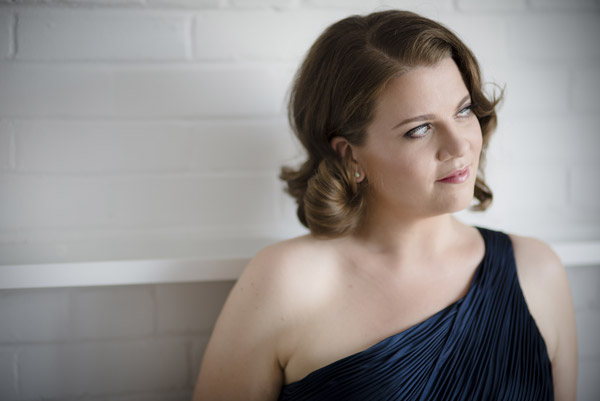
Ileana Montalbetti (photo: Bo Huang)

Ileana Montalbetti (photo: Bo Huang)

Recitals at Rosedale was originally the idea of Samuel Tam, who was the music director at Rosedale Presbyterian Church at the time. He had organized a concert for Ileana Montalbetti and I to air some repertoire for a competition she was doing and we “borrowed” the church and invited people. One thing led to another, the church came into the project and now we are in our second season.

Last year, we explored themes that were a tribute to the church…..the Seven Virtues and Deadly Sins and we put together programmes of art song tied together by quotes. My personal favorite was the Love…Actually concert where we took the audience on a journey through the stages of grief. There is so much amazing song repertoire in this world and I love the fact that most opera singers are dying to sing this repertoire. So in the long term, of course we want the series to continue and we will keep programming emotional journeys for people to come along with us.

2) Please talk about your November 9th programme “A Walk on the Dark Side: Myths, Legends and Fairy Tales.”
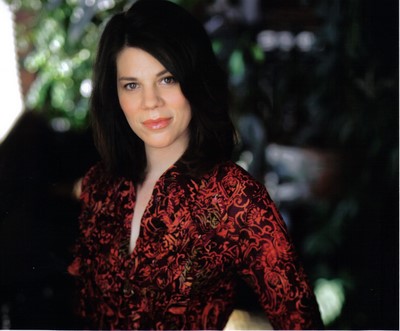
Allyson Mchardy

Mezzo-soprano Allyson Mchardy

The November 9th programme came from a germ idea after Allyson McHardy and I worked together last year on the Virtues programme. She is such a treasure to collaborate with and at some point in a rehearsal, we looked at each other and said, “we have to do the Zemlinsky songs”. So this programme of fairy tales and myths and folklore was built around those pieces. I played them ages ago in Bruxelles on a programme of songs and words by Maurice Maeterlinck and was fortunate to have had Jose Van Dam for a coach and have always wanted to do them again.

Leslie Ann Bradley (photo:  Lisa-Marie Mazzucco)

Leslie Ann Bradley (photo: Lisa-Marie Mazzucco)

I found some wonderful Szymanowski songs for Leslie Ann Bradley and Geoff Sirett is also featured in a mixed group of songs. We chose three settings of the famous Heine Lorelei ( Liszt, Clara Schumann and Gershwin) and we also have a group based on songs about the Moon. The wonderful pianist Robert Kortgaard is joining me and we are going to tie the groups together with movements of the Ravel Mother Goose Suite.

3) You are one of the busiest artists in town, between your work as collaborative pianist with the Canadian Opera Company, and as Artistic Director of Recitals at Rosedale, now in its second season. At the piano you make it look easy. Between the playing, the programming & the promotion, what’s the most enjoyable part of your work?

Well, everything is, as long as the balance is right. But I guess that can be said about life in general. One of my mentors ages ago said to me that it was important to be able to know when art was art and when it was business. I don’t consider myself a promoter at all but I guess the work I do for the series sort of makes me one, but I hesitate to use that word because I don’t think that part of things suits me.

4) You’re mentoring the very best young talents in this country. If you could talk to the singers who are younger, what would you say, what advice would you have that might make the difference in their development?

Well, at the risk of sounding terribly simplistic, learn to sing. Really learn to sing and when you do then a lot of things will be taken care of. Like what voice type am I and what should I sing and all that stuff that young singers seem so concerned about these days.
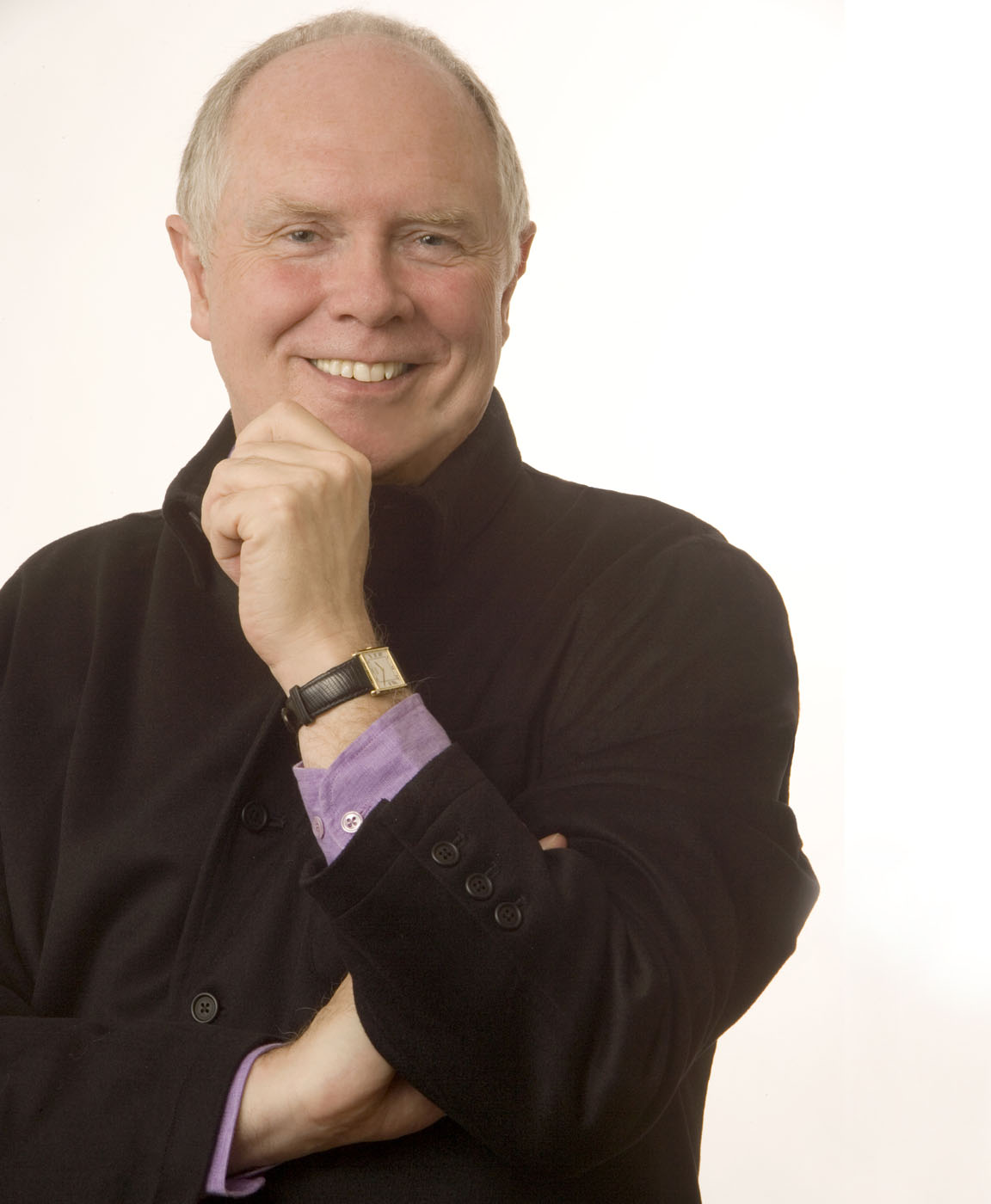
Stephen Lord (Photo: Christian Steiner)

Stephen Lord (Photo: Christian Steiner)

Stephen Lord and Sir Thomas Allen were over for brunch at my flat last winter and we were talking about this same thing…..that everyone wants the “diet pill” now and everything needs to be fast tracked. Singing is something that takes a long time to learn to do and its also very important to keep developing and keep studying and keep being open to new things because your body changes at times in your life and you need to rebalance your voice. The best singers I know work like crazy and they coach and they keep getting better. You need to want to sing healthily and well until you are seventy!! And of course there are the other things……if you don’t LOVE words, learn to love them! Read poetry, learn languages, read history. For example, if you are singing any of the arias from Don Carlos and you don’t know anything about the political situation at the time, you are not doing yourself any favours. There is knowledge out there that is so easy to get and so accessible now…..remember when you had to go to the library to find anything out? Be CURIOUS!!

5) Is there a teacher or influence you’d care to name that you especially admire?

Stuart Hamilton

I was so lucky…..I worked for Tony Pappano for five years and learned so much about singers and singing, Tony’s dad was a voice teacher and he spent his life playing lessons. I was also fortunate to work a lot with conductors like Simon Rattle, Ivor Bolton, Rene Jacobs….amazing musicians and inspiring people. I would consider Martin Isepp my mentor for art song and of course here in Toronto, I play all of my recital music for Stuart Hamilton, who is always pushing me to do better. For all these people and many others I am very grateful.

~~~~~~~~

RECITAL: A Walk on the Dark Side: Myths, Legends and Fairy Tales
NOVEMBER 9 at 14:30 at Rosedale Presbyterian Church
After an inaugural season that transported audiences from The Seven Virtues to The Seven Deadly Sins, artistic director Rachel Andrist with artistic advisor Monica Whicher are thrilled to invite you to the 2014/15 season. Beginning November 9th with “A Walk on the Dark Side: Myths, Legends and Fairy Tales”, Recitals at Rosedale presents soprano Leslie Ann Bradley, mezzo soprano Allyson McHardy and baritone Geoff Sirett with collaborative pianists Robert Kortgaard and Rachel Andrist.

The programme features works by Mahler, Debussy, Symanowski, Weil, Gershwin and more.

click for further information about the upcoming recital

Posted in Interviews, Music and musicology, Opera | Tagged | Leave a comment

Stewart Goodyear: Diabelli Variations

While Stewart Goodyear might be the greatest pianist in the world today, as a Canadian he lives under the radar as Canadians so often do. Not only does each country have their favourite son or daughter, but Canadians are a reticent bunch, slow to show the kind of pride Americans routinely demonstrate in support of their own artists.

The epic Sonatathon adventure of the past few years—a one-day reading of all 32 Beethoven Sonatas in Toronto as the “Marathon”, repeated in a few other cities—has been a natural outgrowth of the pianist’s deep love for this romantic composer.

Marquis Recordings captured studio versions of all 32, making them available in a set that does justice to this wonderful body of work. They’re the best such set I know of.

Goodyear is a curious synthesis of the thoughtful precision of a Barenboim, and the passion of a Schnabel, playing several of the sonatas faster than anyone has ever heard them: note perfectly. One might expect a trade-off between accuracy –which might call for a slower tempo—and speed –which might compromise that accuracy. But no.

Goodyear manages to be both fast & accurate.

His Appassionata last movement + coda is the fastest I’ve ever heard yet wonderfully precise.

His Hammerklavier an even greater extreme, considering how slowly some take the four huge movements of that sonata.  I daresay he brought a unique intelligibility to the finale with his breath-takingly fast tempo, as if we’re up in a jet, seeing the huge landscape for the first time, that was previously hidden by the slowness of our traverse (via other pianists).

Click for Marquis website to purchase

And now he’s taken on Beethoven’s Diabelli Variations, a late work that’s a perfect complement to the set. Indeed, I’ve joked earlier that Beethoven’s C Major sonatas are like one extended meditation (from Op 2 #3, the Waldstein in the middle of the book and sonata #32); with these variations Beethoven again takes up his fascination with C Major.
Goodyear has something else to offer, though, which you would have noticed if you’d picked up any of the sonatas or the complete set: namely, he writes astonishingly well. His liner notes are wonderfully eloquent. I am reminded of Anton Kuerti, a Canadian of another generation, whose notes were wonderful reading.

The essay accompanying the Diabelli’s is similarly brilliant. But that’s not why you should get the recording. Goodyear comes at the variations with a bit more care than I thought I noticed in the sonatas, possibly because –as he claims—they’re a recent discovery for him and not the lifelong obsession that we see in the sonatas. In a few places I sense care, a prepared attack, rather than the breakneck impulsiveness we sometimes encounter in the sonatas. But that’s perhaps apt for these pieces. I felt –having listened to the recording twice today (the highlights of my day, and a perfect set of bookends) –that each one is like a jewel. There’s an implicit set of rules or procedures for each variation, and so Goodyear is totally self-consistent in each one. The notes are clear, distinct and untrammelled by excessive emotion. Many are playful. Some are fearlessly powerful. The last one, which I’ve heard turned into something sentimental is emotional without losing its own sense of proportion.

Goodyear’s recording of Beethoven’s Diabelli Variations is now available from Marquis Recordings.

Posted in Music and musicology | 3 Comments

Happy Halloween, Frankenstein’s Boy!

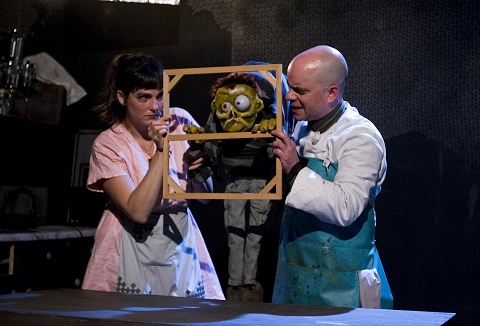
The song during the pre-show was a tip-off I suppose. While the title says the show is about a boy, this song says otherwise.

And there it is, right on the poster.

click for tickets & info

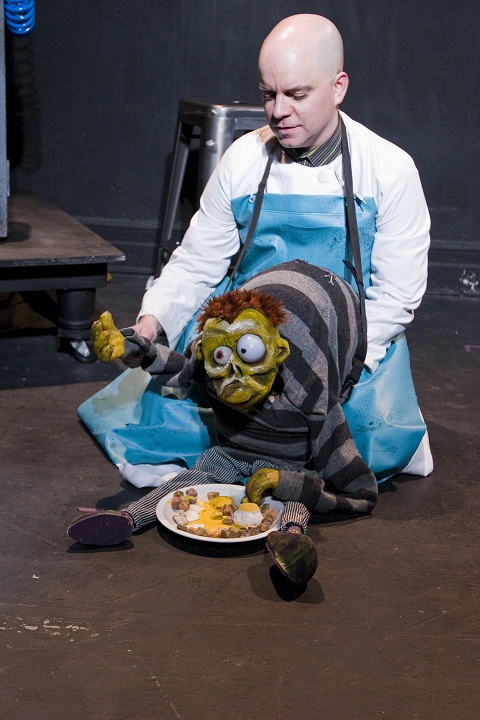
Eldritch Theatre’s newest is Frankenstein’s Boy, a classic tale mixing the grostesque & the beautiful, employing some familiar tropes & romantic gestures.

When I say “classic” I’m also referencing existing texts, known storylines and even familiar turns of phrase, very much as the title might suggest, and certainly along the lines of the picture.

Eric Woolfe, playwright, puppet maker, actor & classicist

Eric Woolfe is the writer, grabbing chunks of known horror texts from romantic literature, theatre and film across a couple of centuries.That Woolfe has sewed them together as though it were a quilt is only appropriate, although come to think of it there’s another more grotesque kind of sewing invoked, using pieces of human bodies rather than fabric.

Did I make you shiver? Did I?

Woolfe is respectful of the integrity of the bodies he’s plundering, whether we’re speaking of captured flesh or text.  It’s not a neat & tidy split between Kimwun Perehinec’s beauty and Woolfe’s grotesquerie.  Both of them take their turns trundling down the thoroughfare of terror.  Both look good with red all over their hands.  Depending on how suggestible you are, it’s a matter for giggling or gagging.

Kimwun Perehinec and Eric Woolfe

Kimwun Perehinec and Eric Woolfe (photo: Dawn Weaver)

Frankenstein’s Boy puts Woolfe and Perehinec onstage at the Red Sandcastle Theatre, a deliciously intimate space seating perhaps fifty or fewer initiates as though at a seance on Queen St East.

We didn’t join hands however.

Kimwun Perehinec (click for official bio)

I watched a very eager audience lean forward, clearly familiar with Woolfe & his body of work (or should that be “bodies of work”?) for Eldritch Theatre.

Woolfe and co-conspirator Perehinec create a horde of creatures with varying degrees of humanity, a multitude of voices, body-shapes, and impersonations.  At times I wanted to second guess, observing the choices made between scary and silly, the willingness to hold us in suspense or make us laugh. But then again, how real would I want the illusion to be? How genuine the blood and gore? At times Perehinec & Woolfe choose to let us see how they’ve made their magic, making this a safer voyage than what it might be. Even so we’re still sometimes right on the super-sharp knife edge… Coming into the theatre on a Sunday afternoon from this friendly neighbourhood, I’m feeling confident and giggly rather than shivering with fear. This could be a nasty journey if undertaken on a dark night. I wonder if Woolfe & Perehinec will be scarier as they get closer to Halloween?

In the meantime, I commend you to the Eldritch Theatre website, where the biographies demonstrate Woolfe’s darkly comic sensibility. For more of the same visit the Red Sandcastle Theatre, 922 Queen Street East October 23th – November 8th: if you dare.

Eric & accomplice

Eric & accomplice (photo: Dawn Weaver)

Posted in Dance, theatre & musicals, Reviews | 1 Comment

Opera Atelier Alcina

I’ve seen the new Opera Atelier Alcina. It’s been a month of opera-going in Toronto that already stands head and shoulders above any previous month. While occasional productions can be great, we can add this remarkable production of Handel’s opera to a month that already includes Finley’s Falstaff and Kaduce’s Butterfly, a month like no other.

Musically it’s as good as anything heard from a company known for historically informed performance. David Fallis leads Tafelmusik Orchestra and chorus in a probing exploration of a score that’s known in several versions. I confess I wasn’t aware of the ballet component—explained in the program and given free rein onstage—having always understood this opera as a virtuoso showpiece. It’s a full evening’s entertainment even with some cuts (arias missing or presented without their da capo).

In the lead-up to the opening, we’ve been told about the use of video in the production. For an ensemble known for being historically informed, there may have been some anxiety about the use of modern technology. Yet that’s surely not a legitimate concern, not when we’re already in a modern theatre using –for example—modern lighting. Opera Atelier have always been a mix of new & old, not genuinely recreating the old but rather making something new while employing elements of the old such as the movement vocabulary—both in the choreography of dancers and in the body language of singers—as well as period instruments and performance practices.  The dramaturgy that recapitulates so many elements of baroque theatre isn’t harmed by video projections onto sets that are not naturalistic.

The last few seasons have given me another simpler way of understanding Opera Atelier. Never mind “historically informed”. What we’re mostly seeing is Marshall Pynkoski’s direction with, Jeannette Lajeunesse Zingg’s choreography. Pynkoski injects something very original. There’s more comedy in the story than I’ve seen in any other reading. The ballet is an important element that’s restored in this production.

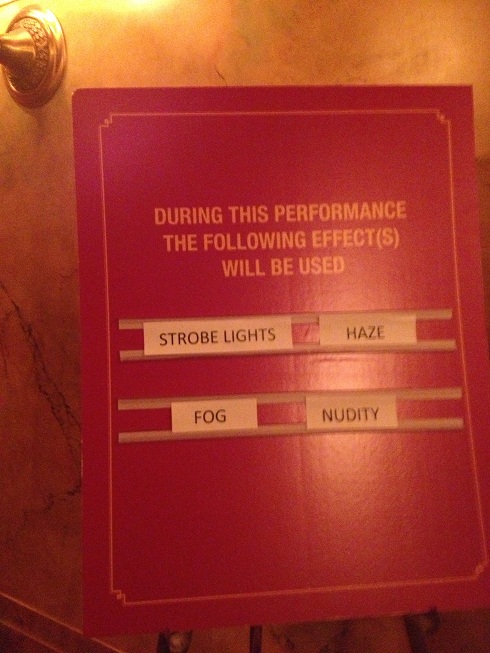
And then there’s the male nudity. It’s perfectly explicable in a story of metamorphoses, where discarded lovers of the witches are transformed into animals or rocks, who are then liberated at the conclusion of the opera. It felt really apt, after seeing the Michaelangelo show at the AGO, even if it’s not historically informed; but it was certain to appeal to at least some in the audience, lobby warnings notwithstanding.

A cautionary sign in the lobby of the Elgin Theatre

A cautionary sign in the lobby of the Elgin Theatre

Sorry that I have no pictures of naked men to offer.

Alcina sounds wonderful, thanks to Tafelmusik, Fallis and the best collection of soloists Opera Atelier has ever assembled. Falstaff may be sold out, Butterfly may or may not be your cup of tea, so you must see & hear Alcina if you can. Meghan Lindsay manages an ambiguous reading where the title character is simultaneously scary yet sympathetic, beautiful but also pitiable at times. Mireille Asselin offers us a comical sorceress, wonderfully accurate in her coloratura. Wallis Giunta’s Bradamante ranges from comedy to pathos, while Allyson McHardy’s Ruggiero sounds & looks wonderful. Kresimir Spicer’s Oronte has some of the prettiest singing of the night, and Olivier Laquerre is a dramatic stalwart.

Alcina continues until November 1st at the Elgin Theatre.

Posted in Opera, Reviews | Leave a comment

Continuum Souvenir

Continuum Contemporary Music are celebrating 30 years this season.

Click for more information about Souvenir

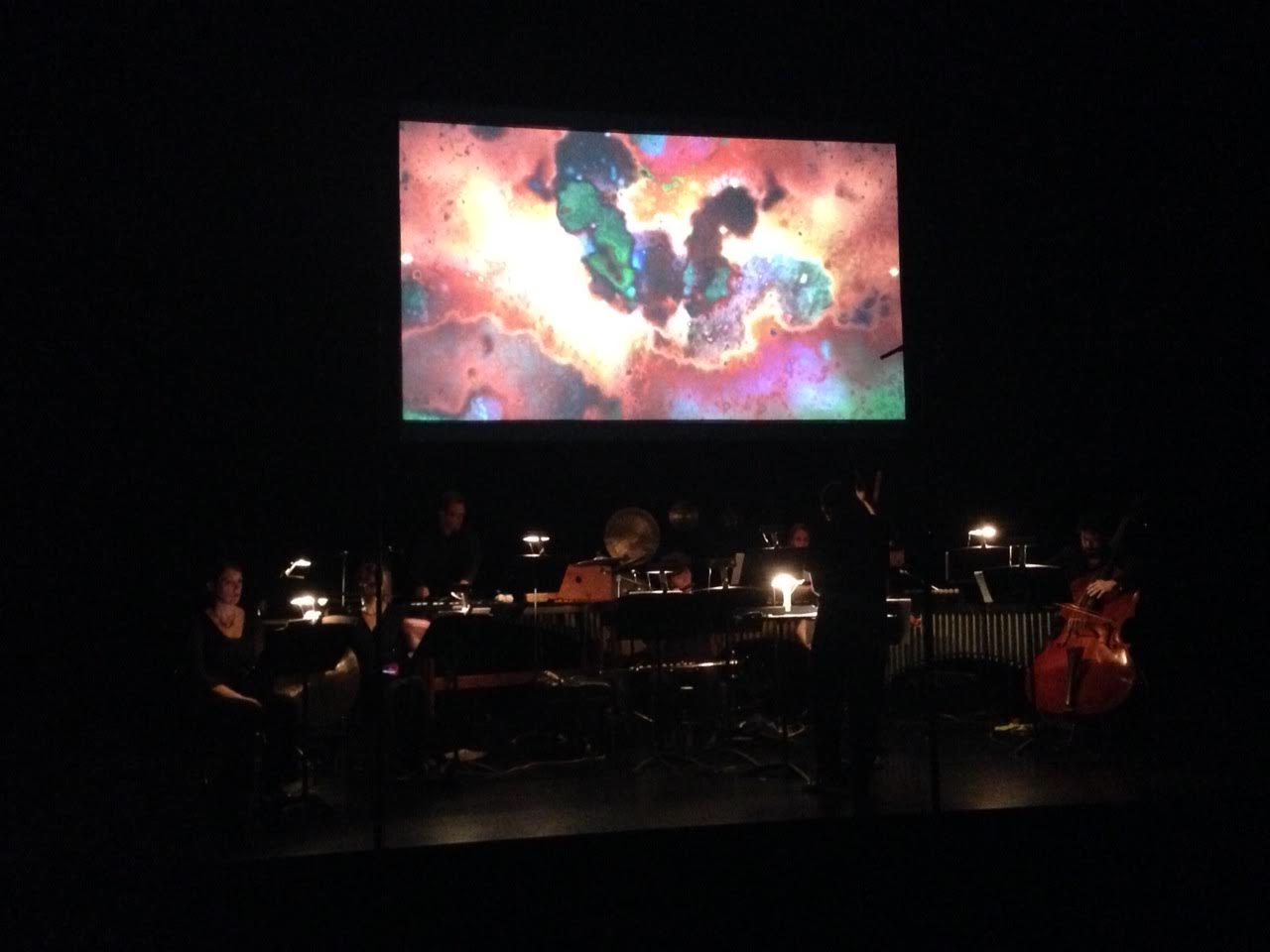
I’m an admirer of ambitious projects, and they don’t get much bigger than this.  Jennifer Waring’s note in the program explains Souvenir, Continuum Contemporary Music’s collaboration with film-maker Gary Popovich presented tonight and to be repeated tomorrow.  According to Waring, the project, consisting of several segments of film with live music aims at nothing less than

Cosmic time, a history of the universe, and within that, a mapping of the development of human self consciousness, in film and music.

At the heart of the film is a fundamental issue about musical signification, one of those chicken-and-egg questions. Waring explains:

I say collaboration, but Souvenir was always more about creating a structure within which composers and filmmaker could work more or less independently while contributing to a unified whole. The conundrum of how to unify a concert program while allowing creative autonomy to a diverse set of artists was a preoccupation at the time—Souvenir was one response. The process has a reflexive quality as composers reacted to the filmmaker’s description of their segment, with the filmmaker then reacting to their work. Because Continuum is in the business of music it was important that the images be set to music, rather than the other way around as is customary. This ensured the six pieces of music their own logic and coherence, independent of the film, allowing them an independent life.

Which comes first, I always wonder, words (or image) or music? And is it necessarily an advantage to go first –and then have the other component reacting—given that the one who goes last has a kind of veto? Joseph Kerman –admittedly in a totally different context—said of music composition in Opera as Drama that “the composer is the dramatist”. I believe the reason this is so has to do with having the last word, being the one who gives the work its shape, taking the words of the libretto and then imprinting over that.  Composers in film sometimes have comparable power, even if they’re working under the gun, without comparable glory or resources, but still getting the last word (or note).

Is a composer necessarily better off composing something, leaving the filmmaker “then reacting to their work” (as Waring says)? I don’t see this the same way Waring does. I think the “other way around as is customary” is freighted with issues of dignity, when the composer’s music responds to a film. No matter who goes first or last, there are ways to create dignity –or kill it– in collaborations.

I could be wrong (again…it happens all the time), but I believe Souvenir isn’t exactly what Continuum or Waring thought it might be. I am not saying I know better; I am not sure I really get what the project is doing. What I did not do is stick around for the talkback, for the members of the project to tell me what I was supposed to see, what the project supposedly means.  I feel very strongly that if something has to be explained then the meaning may be too deeply buried, may even be something Harvey Olnick called “fictitious form”.  What I have is a set of impressions and overall I am very impressed, but not reading this quite the same way as the program notes.  I don’t think it’s necessarily what the creators thought it would be. That’s not so uncommon, where a creator makes something and it turns out a bit unexpectedly.

The film has at least two parallel ways of being understood:
1) Popovich’s six segments of film:

  • Season One: Winter
  • Season Two: Spring
  • Season Three: Summer
  • Season Four: Autumn
  • Season Five: Winter
  • Season Six: Spring

2)The six musical compositions (in order, corresponding to the six segments of film):

  • Ice (1999) Linda Bouchard
  • Proliferation of Spring (1998) Randall Smith
  • Chaucer Canticles (2003) Michael Oesterle
  • Autumn (1998) Alice Ping Yee Ho
  • Trackl-lied, (2003) Jocelyn Morlock
  • Code Thumbnails 13 (2014) Hiroki Tsurumoto (given its world premiere tonight)

Notice that I spoke of how the film might be understood: because i see it as a single 80-minute unit.  While I suppose one could also speak of six films based on six compositions, that’s not how it came across to me. The fact that I was sitting in a darkened theatre, unable to see my program while film was projected and music played has an impact too.

In my first viewing of the film + live music, I found it a very powerful experience. The opening two segments are relatively gentle, like nature documentaries, while the last two especially are filled with images of death. But that isn’t to say there’s anything really unpleasant at work. The scope of the project is truly mammoth, the cosmic dimension reminding me of Tree of Life: a film that also takes an epic perspective to evolution and our spiritual destiny. I chose to surrender to the imagery without trying to understand or make sense of who did what or what it signified. The linear progression of history is very consistent from beginning to end, so that the six segments cohere into a single film from my perspective, one that pulls the different musical styles together. With the exception of the last film, I found the expressive vocabulary very restrained, verging on minimalistic (not in the sense of pattern music, but rather a tendency towards reticence).

Souvenir will be shown again Monday October 20th at the Betty Oliphant Theatre.

image from the dress rehearsal of Souvenir, Gregory Oh conducting

image from the dress rehearsal of Souvenir, Gregory Oh conducting

Posted in Music and musicology, Reviews | Leave a comment

Esprit’s brassy Polaris

Tonight was the opening concert in Esprit’s Orchestra’s 32nd season. Esprit & their Music Director Alex Pauk are champions of new Canadian music, presented alongside excellent compositions from around the world.

Tonight’s program is a perfect illustration. The first half of the concert was imported from the UK and USA in the persons of Thomas Adès and Charles Ives, while the second half was made in Canada, namely Paul Frehner and Chris Paul Harman. Aside from Ives, the composers are young, all born since 1970.

I can’t help feeling nationalistic. We’ve had an all-Canadian cast (plus director) in a brilliant production of Falstaff from the Canadian Opera Company, a wonderful show from Alex Colville presented as though he were a peer of the artists preceding (Bacon & Moore) and following (Michaelangelo & Rodin) his show. I feel a comparable pride at the inevitable comparison, the Canadians showing they belong on the same program with Adès and Ives.

Thomas Adès’ Polaris (2010) led off. For this powerful piece, brass players are deployed in several places around the auditorium. It’s an old technique—putting me in mind of Gabrieli as well as R Murray Schafer—that certainly changes the way you listen, and stirs up an audience (many of whom craned their necks to follow the sounds coming from all sides and from behind). While my first thought was to ask myself sceptically whether this was nothing more than a gimmick, I repented quite soon. I suppose I’ve been fighting my attraction for the music of Adès since encountering (and railing against) his book, but every moment of this piece was truly beautiful. I am astonished at how well the music seemed to illustrate its subject, as if giving the music of the interconnected spheres rotating around the fixed point in the centre: Polaris the pole-star. At times the piece sounds like the most impressive test piece you’d take into an audio store when shopping for a stereo system (yes that dates me I suppose) , colours pulsing literally on all sides of you. While the notes in the program say the piece uses all twelve pitches, this is the least dissonant 12 tone piece I’ve ever encountered.

The next item was Charles Ives’ Central Park in the Dark (1906). The inclusion of such a piece is a helpful bit of calibration, given that a word like “new” is relative. There are elements in Ives’ composition that were surely more jarring if not revolutionary a hundred years ago, but now serve as a lovely touchstone of a composer’s adventurous spirit exploring sonorities & dramatic effects. This too is part of Esprit’s mission, both as a test of the chops of the orchestra’s players, and a bit of context for the newer music on the rest of the program. A year and a half ago I saw something similar, when Esprit Orchestra played a chamber version of Le Sacre du printemps on the centennial of Stravinsky’s seminal work. The Ives piece is a fascinating combination of extended atmospheric chords that wouldn’t be out of place in a Debussy prelude, gradually mocked by quotes of parts of the song you may know as “hello my baby”, the one sung by the frog in that unforgettable cartoon. 

After the interval we heard from Canadian composers. First up was Paul Frehner’s Phantom Suns (2012), a work I heard premiered at the concert I spoke of alongside Le Sacre. Coming back to it tonight it might be the context that throws me –and all the brass I heard in the other pieces—but somehow Pauk and Esprit seemed bolder this time, as though they decided to step on the gas, and really gun the engine. I recall a subtler softer piece last time, possibly because it seemed slim beside the muscles flexed in the performance of Le Sacre. Or perhaps with the second look at the work, and with all the big brassy moments on the rest of the program, the interpretation has changed.

Paul Frehner and Alex Pauk (photo: Jasmine Pauk)

Paul Frehner and Alex Pauk (photo: Jasmine Pauk)

Closing the program was Chris Paul Harman’s Coyote Soul (2011). We discovered in the pre-concert talk that “Coyote Soul” is an anagram for “Close to You”, a connection that turns up in the music eventually, as the Bacharach tune finally manifests itself. It’s one of the freshest sounding pieces I’ve heard in a very long time, utilizing an odd collection of instruments including recorders, whistles, harps, prepared piano plus the orchestra playing with great restraint. I was struck by how much new music can fall into regular procedures, of the standard dissonances & sonorities: and that Harman did not do any of that. This is a piece that really sounds fresh, that wasn’t pressured to be complex but

Composer Adam Scime

Composer Adam Scime

instead fed off the simplicity of the original tune. I have to wonder if the title is merely an anagram, given how well the title matches the mood of so much of the music. For all its freshness, when he finally tipped his hand and show us Bacharach I was a bit disappointed that there wasn’t magic, even if it was a bit like a labyrinth of variations that only shows us its theme at the end rather than the beginning. I suppose sometimes I prefer to be lost.

Esprit continue their mission, championing new Canadian music on November 23rd, including two world premiere performances: Rise by Adam Scime and … just a stranger here… by Douglas Schmidt.

Posted in Music and musicology, Reviews | 1 Comment

Circle Jerk press release

Soup Can Theatre
Press Release
Media Contact: Sarah Thorpe – media@soupcantheatre.com
Soup Can Theatre, safeword, and Aim for the Tangent Theatre proudly presentCIRCLE JERK
Sex. Death. Bananas.

Concept by Justin Haigh.  Written by Justin Haigh, Scott Dermody, Brandon Crone, and Wesley J. Colford. November 6th to 23rd at the lemonTree studio.

Circle Jerk Promo ImageSoup Can Theatre, safeword, and Aim for the Tangent Theatre are proud to present Circle Jerk; one production, four new and provocative short plays written under unique constraints. This past summer, members of the public were invited to submit original snippets of dialogue that the participating playwrights would have to use as the opening and closing lines of their new creations. After receiving almost 300 submissions, four intriguing lines were selected and assigned to the writers:

“Subtlety is not your specialty.”
“What’s Bulgarian for slut?”
“I think it’s time we talked about your filthy rituals.”
“I fucking hate potatoes.”

As an added twist, each of the lines of dialogue were assigned to two playwrights in order to serve as both the closing line of one play and the opening line of the following play. This loosely interconnected and ultimately cyclical structure (with the first play starting and the last play ending with the same line) puts the “circle” in Circle Jerk. After an intense writing and production period, the end results are four diverse yet cohesive works backed by an impressive roster of talent:

Dust Peddling: Part II by Scott Dermody; A bold and confrontational movement-based piece exploring themes of sexuality and bodily interactions. Directed by Joanne Williams (Wild Dogs On The Moscow Trains – NOW Magazine Critics Pick: Outstanding Production) and starring Scott Dermody (Love is a Poverty You Can Sell 2, Soup Can Theatre – NOW Magazine Critics Pick: Best Ensemble) and Sasha Kovacs (Show and Tell Alexander Bell, Ars Mechanica).

Sex and This by Wesley J. Colford (The Wakowski Bros., Aim for the Tangent – Best of Fringe – NOW Magazine Critics Pick: Outstanding Production); A touching and distinctly modern comedy-drama about death, self-destruction, and the new rules of mourning in the age of Facebook. Directed by two time Dora Award nominee Jakob Ehman (Cockfight, Theatre Brouhaha; Minotaur, Young People’s Theatre; Donors, safeword) and starring Tiffany Deobald (Much Ado About Nothing, Single Thread Theatre) and Carys Lewis (The Corpse Bride, Theatre Panik).

Maypole Rose by Brandon Crone (Donors, safeword – My Theatre Awards Winner: Best New Production); A quirky and salacious window into the imperfect life of a gay couple with an affinity for junk food, weed, and monkey sex. Starring Alexander Plouffe (As You Like It; Canadian Stage) and G. Kyle Shields (Sucker; Theatre Brouhaha).

The Session by Justin Haigh (Love is a Poverty You Can Sell, Soup Can Theatre – Best of Fringe); A dark comedy about a workplace therapist determined to crack open an antagonistic nuclear safety expert with more than just safety on his mind. Directed by Justin Haigh and starring Allan Michael Brunet (Marat/Sade, Soup Can Theatre; Wintuk, Cirque du Soleil) and Matt Pilipiak (Three Men in a Boat, Pea Green Theatre – Best of Fringe – NOW Magazine Critics Pick: Best Ensemble).

In addition to the four new theatrical works, four new short musical compositions – each inspired by one of the four lines of dialogue – will be performed by a live five-piece ensemble and serve as interludes between the short plays; Subtlety is not Your Specialty by Marla Kishimoto, What’s Bulgarian for Slut by Soup Can Theatre’s Music Director, Pratik Gandhi, and I Think it’s Time We Talked About Your Filthy Rituals by Peter Cavell.

Praise for participating companies’ previous productions:

“Sultry … Seductive … Uniformly Delectable … N N N N N – NOW Magazine
“Fast and Furious … A Story of Surprising Depth … ★★★★½” – Torontoist
“Sexually Charged … A Thrill Ride … ★★★★ – My Gay Toronto

Audience Warning: Mature Content, Nudity, Explicit Sexuality, Depictions of Drug Use

Performance Details:
Where: lemonTree studio – 196 Spadina Ave. (just north of Queen)
When: November 6th to 23rd (November 6-9, 14-16, and 21-23 at 8pm. Matinee 2pm performances on November 8th & 9th)

Tickets: Range from $15 to $24 and are available at www.soupcantheatre.com, or in person at the venue starting one hour before show time.

Production Team:
Producer – Sarah Thorpe
Assistant Producers – Justin Haigh, Scott Dermody, Brandon Crone, Wesley J. Colford.
Music Director – Pratik Gandhi
Stage Manager – Katherine Belyea
Tech Director / Lighting Designer – Randy Lee

About Soup Can Theatre: Soup Can Theatre is a Toronto-based company that strives to explore and comment on contemporary issues and societal challenges, and to offer audiences a theatrical experience that is both entertaining and enriching. Previous productions include Love is a Poverty You Can Sell (1 & 2), Marat/Sade, Antigone, and an opera/theatre double bill presentation of A Hand of Bridge & No Exit.

About safeword: safeword is an independent theatre company focused on producing original Canadian plays that embrace controversy, rawness, and realism. Previous productions include Turtleneck and Donors.

About Aim for the Tangent Theatre: Aim for the Tangent Theatre is a Toronto based theatre company with an interest in providing creative opportunities and mentorship for emerging artists, and finding innovative ways to tell old stories through the development of new work. Previous productions include Mature Young Adults, The Wakowski Bros., and Genesis and Other Stories.

Contact: For any media inquiries, please contact Sarah Thorpe at media@soupcantheatre.com.

“Press releases and announcements” are presented verbatim without comment

Posted in Press Releases and Announcements | Leave a comment

Michaelangelo, Rodin and genius

My first look yesterday at the new Art Gallery of Ontario show, “Michaelangelo: Quest for Genius”, was an ecstatic experience.

I don’t think I’ve ever felt so strongly that a curatorial team understand me & my concerns coming to this show, an artist of such importance as to demand respect before you’ve looked at anything.

I suppose I have always resented that kind of authority, however much it might be justified. How then could I get at Michaelangelo—both the man & his work—when his reputation is so immense? And as a writer I felt qualms coming here, hoping I wouldn’t merely spout banalities in the presence of greatness, my poor weak works falling flat on my face. Yes it might be beautiful, but would I sound like a star-struck fan? What could i possibly say that hasn’t already been said many times and better long ago?

In the brief presentation before they turned us loose among the art we heard these very questions addressed by David Wistow and Lloyd Dewitt of the AGO team, interviewed by director Matthew Teitelbaum. What they described in the presentation suggested a way to go into the show, and a way to approach the throne that is Michaelangelo & his work.
There are two big ideas I want to unpack. One concerns the nature of creativity, the other concerns ways of seeing. Let me approach the perceptual one first.

Michelangelo, Three nudes (Studies for the Apostles in the Transfiguration), c. 1532 black chalk 17.8 x 20.9 cm Casa Buonarroti

Michelangelo, Three nudes (Studies for the Apostles in the Transfiguration), c. 1532 black chalk 17.8 x 20.9 cm Casa Buonarroti

I assume that the assembly of this show began with a series of small works from Michaelangelo, collected for centuries by the Casa Buonarotti, hugely valuable pieces that haven’t been seen here before. These are small drawings whose value & worth (in every sense of the word) is huge, yet in comparatively tiny & unassuming pieces in a gallery. Someone had a really clever idea. In the introduction someone spoke of Michaelangelo’s influence over the centuries, and so they paired Michaelangelo’s powerful little drawings with bigger pieces. I wonder, did they ponder over who might not dishonour the master, in the juxtaposition? Whose work would suffice, as a proper accompaniment, to someone who in a real sense taught us how to see?

Someone thought of Rodin. He too, we’re told, had a creative life that was a struggle. And most importantly, Rodin had an epiphany seeing Michaelangelo that changed his art. If I understand this correctly –and I don’t claim I am certain about it—Rodin was influenced more by Michaelangelo than anyone else.  And so we walk around in this wonderful space, that’s shared between the small and the large, Rodin’s work that could be understood as echoes, or even paraphrases, if a sculptor can paraphrase a drawing and the sensibility in those drawings. It’s as though we have the original “pictures at an exhibition” on the piano, and also encounter Rodin’s pieces, that are a lot like the orchestral transcription, but three-dimensional transcriptions of concepts via Michaelangelo’s influence upon Rodin’s sensibility.  We don’t have the literal connection, the one-to-one correspondence between the original and the referent, but still, the parallels are stunning.  Rodin’s sense of proportion & anatomy resonate with Michaelangelo’s physicality.

Auguste Rodin French, 1840-1917 Le Penseur (The Thinker) conceived 1880; cast early 1920s bronze Height: 69.9 cm Gift of Mrs. O.D. Vaughan, 1977, shown in front of an image of Rodin's Gates of Hell.  At first glance i thought this was Michaelangelo, not Rodin.

Auguste Rodin French, 1840-1917 Le Penseur (The Thinker) conceived 1880; cast early 1920s bronze Height: 69.9 cm Gift of Mrs. O.D. Vaughan, 1977, shown in front of an image of Rodin’s Gates of Hell (a piece i didn’t know, and that at first glance i mistook for a Michaelangelo, not Rodin).

I have to go back for another look or two.  But so far I think the big pieces help us to see the proper proportions in the small pieces, that my eye is stimulated by the tension between the different worlds present in the gallery. That’s just a tiny bit of an idea I am struggling to put into words. I’ll go back, and see whether there’s really anything there beyond my sense that I need more time with the art.

As far as the other idea, concerning creativity, it was explained quite clearly by Dewitt, who alluded to a University of Toronto professor, namely Jordan Peterson, as an important input. Their explanation reminded me of Mozart; see if you observe a similar connection. Their perception of a creator whose abilities were godlike, whose output was perfect was ultimately daunting (there we are again, humbled!).  It reminds me of the film Amadeus, when Salieri freaks out at all the perfect scores done in ink, as though the composer were taking dictation from God.

Ah but that beautiful image –Shaffer’s creation as well as the legend that informed it, just like the image of Michaelangelo—is simply wrong. Mozart sketched and worked, even if we only have the perfect copies left to us.

I am always happy when I stumble upon an inter-disciplinary approach to understanding art and how art is made. Psychology (via Professor Peterson) has helped the curatorial team to humanize such forbidding artistry, to deconstruct that myth of the godlike genius, into someone who simply worked incessantly, suffering, discarding, revising… and eventually discovering.

I believe we’ve been messed up badly by criticism & pedagogy, by criteria that inhibit us. Tonight after class I was approached by a student asking about creative outlets, and we talked a bit about teachers who have set us back with their harsh judgments. Teachers of piano or voice are not what they used to be, thank goodness. At one time the raps on the knuckles –whether genuine or merely inflicted verbally—played a part in a kind of self-serving celebration of talent: the recognition of received skill and impossible hierarchies rather than the nurturing of new abilities.  Instead of empowerment we encountered forbidding gate-keepers. If we swallow the old metaphors –of inspiration and god-given talent—we may not think we ourselves are worthy to be admitted to such company, nor anyone else. It’s pretty sick stuff.

There’s a great deal of dead wood to clear away, old ideas about art & the psychology of creativity. A show like this is a wonderful step in the right direction. It’s refreshing that Michaelangelo is one of us, and that we can be welcome in his presence after all.

It’s a beautiful thought.

Michaelangelo: Quest for Genius will run at the AGO October 18, 2014 – January 11, 2015

Posted in Art, Architecture & Design, Reviews | 1 Comment

Alcina preview at RBA

The season of Thanksgiving continues, as I feel extraordinarily blessed for the wonderful day I am having. Not only did I have my three best nights in the theatre since the beginning of October (two performances of Falstaff and one of Madama Butterfly, all from the Canadian Opera Company), the concert I experienced today, again hosted by the COC, was unquestionably the best I’ve seen all year. My head is full of so many thoughts, forgive me if I write about this at length.

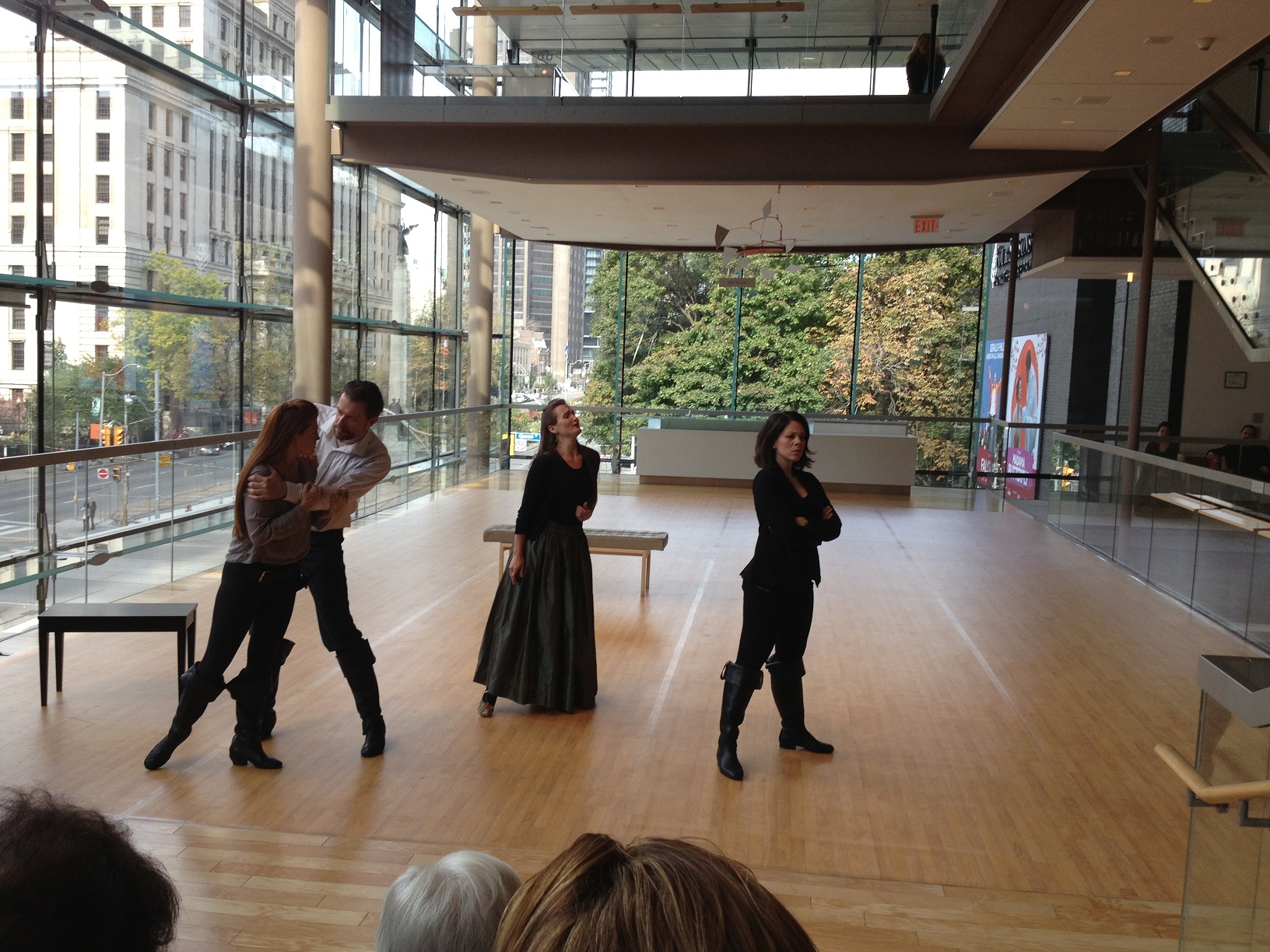
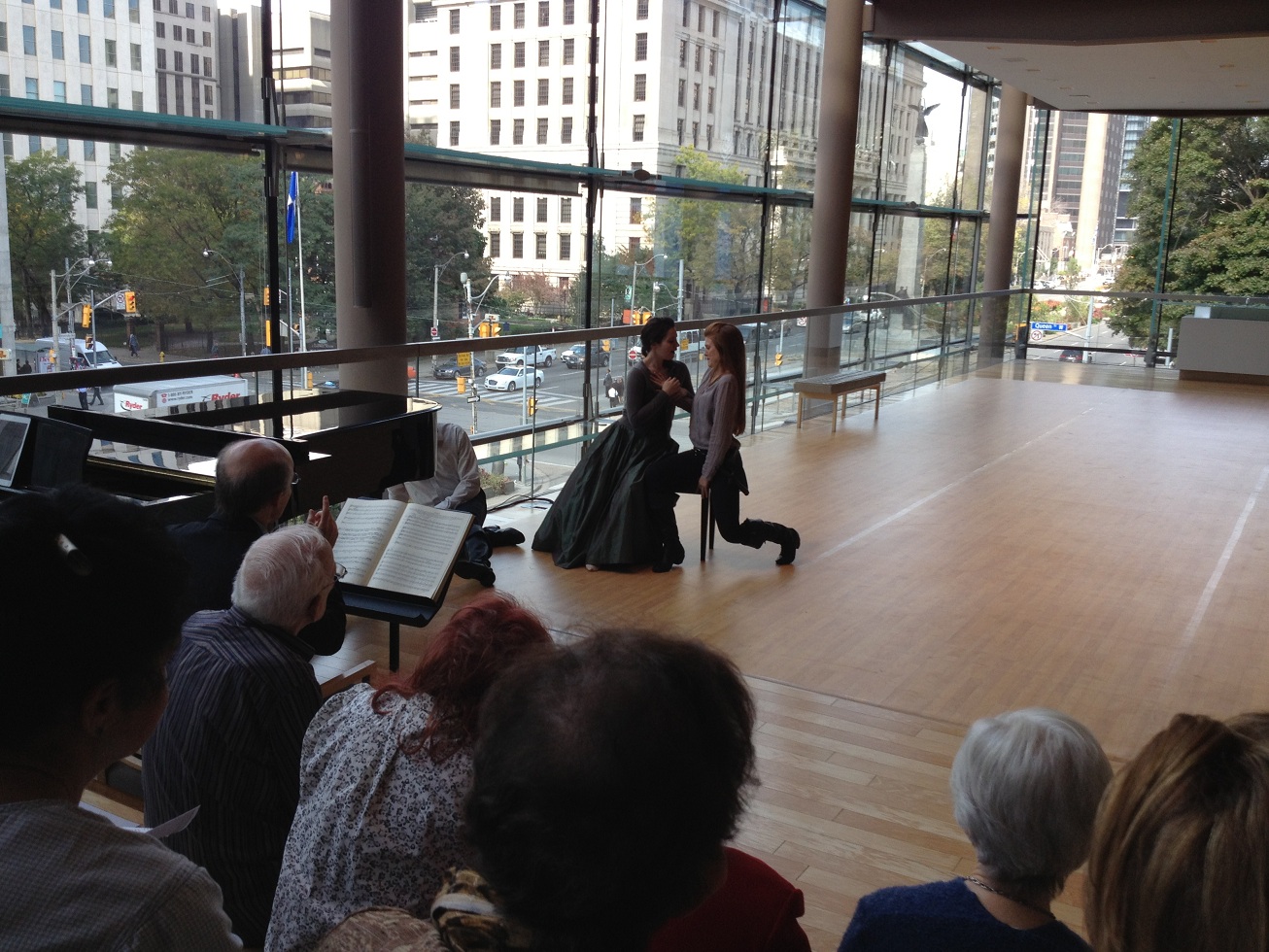
Talk about lucky. The media preview for the new Art Gallery of Ontario show Michaelangelo: Quest for Genius was this morning at 10 a.m. From there I walked to the Four Seasons Centre, the Richard Bradshaw Amphitheatre for what was ostensibly listed as part of the “DANCE SERIES” of the COC’s free noonhour concerts.  That might explain why I didn’t see any opera colleagues in attendance. There was perhaps five minutes of dance, and forty minutes of opera, plus five minutes of Marshall Pynkoski explaining his dramaturgical concept of Handel’s opera. And whereas RBA concerts are usually voice + piano standing still, this concert was almost completely staged, making more use of the space than I’ve seen before.

L-R Wallis Giunta, Olivier Laquerre, Meghan LIndsay and Allyson McHardy.

L-R Wallis Giunta, Olivier Laquerre, Meghan LIndsay and Allyson McHardy.

Don’t get me wrong, I love dance (I was the one who showed up right?). But this was a profound pleasure. Theories notwithstanding, Pynkoski mostly let his singers do the talking, to demonstrate his points. He laid out a concept for Alcina that I find very compelling, and reminds me a lot of what we’ve seen from him and Opera Atelier, in the Mozart operas. I hope I have the words right for what the form to which he compared this opera in his introduction, something like a “variety show”. I am sure he’ll explain this again when the show opens. But make no mistake, this is really original.

Watching today’s performance I was reminded of Pynkoski’s recent productions of Don Giovanni, Abduction from the Seraglio and Der Freischütz. He’s differentiating female characters in tone & class, setting up parallel romantic plots where the sub-plot is much lighter in tone. Pynkoski has a real knack for comedy, bringing it sometimes to scenes where one wouldn’t expect to find it.

It’s unfortunate that Carla Huhtanen, who usually plays the comic sparkplug role for Opera Atelier, won’t be in Alcina. But just as she was a very bawdy, hysterically funny Blondie (Abduction from the Seraglio), Zerlina (Don Giovanni ) and Ännchen (Der Freschütz), what I see here is that Pynkoski is bringing out the mischievous side of the character of Morgana, played today by Mireille Asselin. In her arias “O s’apre al riso” and “Tornami a vaheggiar” Asselin shows off a spectacular knack for coloratura, all while being a comedienne.

Asselin had lots of competition for the laughs & applause however, and by that I mean, other stunning performances.  Wallis Giunta, was wonderfully convincing as Bradamante, the woman who pretends to be a man to win back her man (got that?). We laughed at Giunta’s reactions to Morgana’s advances in comic scenes, but later, when the stress of her situation overwhelms her reason she goes mad with coloratura, aka the aria “vorrei vendicarmi”; in the end it’s surprisingly poignant.

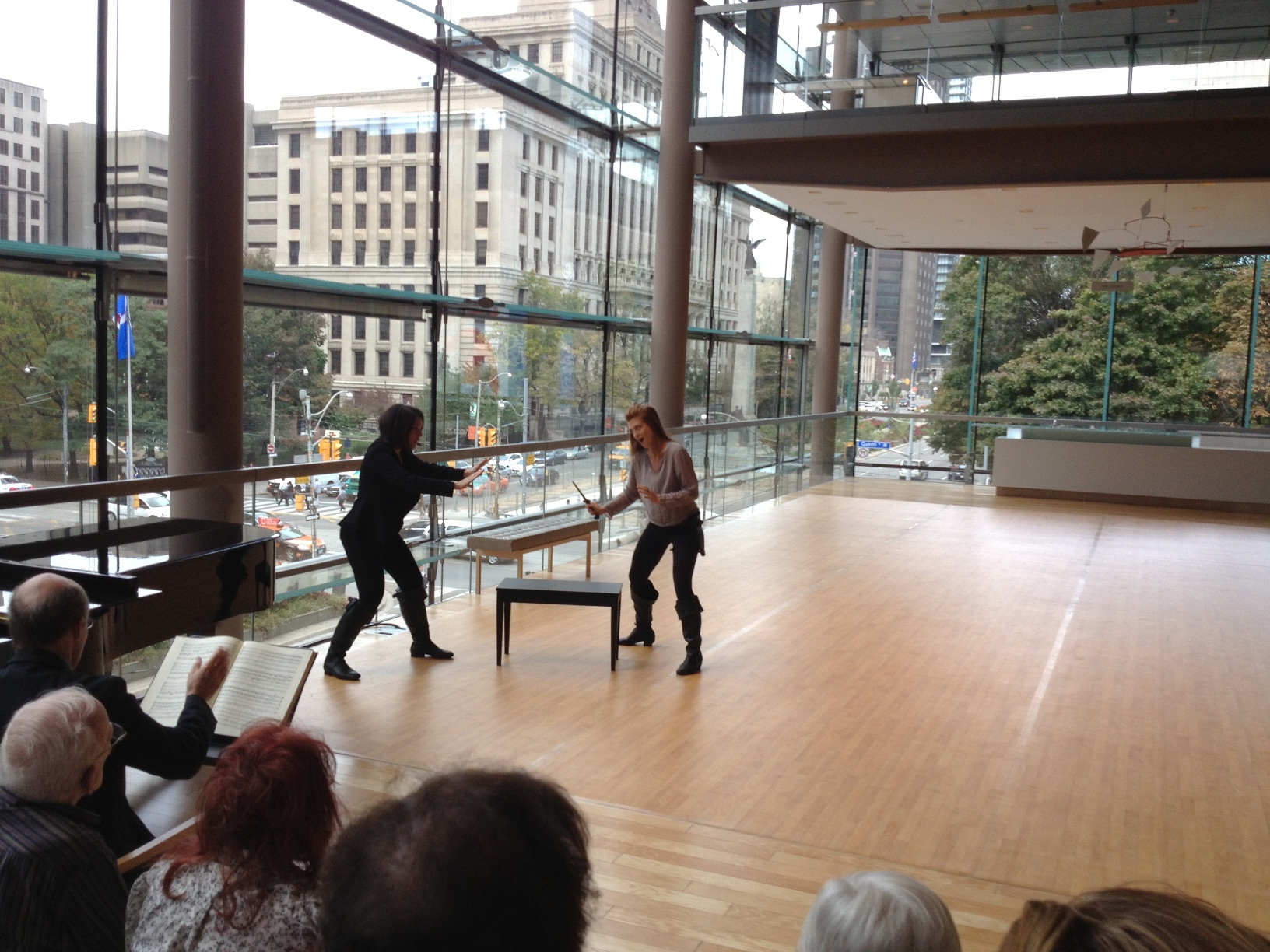
Wallis Giunta (as Bradamante) brandishing a knife in the direction of Allyson  McHardy (as her lover Ruggeiro).

Wallis Giunta (as Bradamante) brandishing a knife in the direction of Allyson
McHardy (as her lover Ruggeiro). David Fallis (at the left) conducts.

Allyson McHardy as Ruggeiro (Bradamante’s man, but played by a woman) sang a heart-wrenching “Verdi prati”; while she’s a singer who has ventured into many sorts of repertoire I have a weak spot for her Handel, the voice reminding me of Janet Baker. Meghan Lindsay in the title role was comparatively deadpan, but lovely in her aria “”Di’, cor mio.” Olivier Laquerre as Melisso was involved in recitatives without arias.
Pianist Christopher Bagan was very capable, while OA music director David Fallis led a wonderfully tight, spirited performance.

Opera Atelier’s Alcina runs October 23- November 1 at the Elgin Theatre (and please note for anyone wondering –after a friend asked me about this– the Elgin Theatre run is with Tafelmusik Orchestra, fully staged with costumes; this concert was a free concert sampler courtesy of the COC’s noonhour outreach)

Morgana (Mireille Asselin)  pursues Bradamante (Wallis Giunta)

Morgana (Mireille Asselin) pursues Bradamante (Wallis Giunta)

Posted in Opera, Reviews | Tagged , , , , , , , , , , , | 1 Comment

A Butterfly with laughter and tears

It’s like no Madama Butterfly I’ve ever seen. The new Canadian Opera Company production is really the same one they’ve been staging for years, yet very different in its new incarnation. There are two parallel casts performing Puccini’s intercultural tear-jerker over the 3 weeks between Oct 10 and 31st.

While I like Brian Macdonald –a director and choreographer I admire so much that I invited him to be a keynote speaker back in 2005 at the University of Toronto’s Festival of Original Theatre—I wonder if it’s his doing.  Wonderful as this production is, one first seen in 1990, with elegant sets from Susan Benson (because it stays out of your way, allowing you a direct connection with the performances & the depths of this wonderful opera), I’ve seen it many times, but never saw anything remotely like what I saw today.

I have a funny story to tell that might give you some idea. My wife observed that she’s never seen so many men crying. But that’s not the joke. At one point, when I was convulsing, trying not to loudly sob into the silence, I heard a voice behind me, an older lady saying rather loudly in a theater that was dead silent but for the crying, at a very tender moment, “elég hosszú”. That’s Hungarian and it’s just my good fortune that I understood.  I went from barely controlling my sobs, to tears of laughter as I completely lost it, convulsing with mad giggles.

Of course what she was saying can loosely be translated as “it’s kind of long”, but I suppose even at her advanced age it must have been her first Butterfly.

Actually it’s one of the shortest I’ve seen, with a break-neck pace from conductor Patrick Lange. I say that as someone who probably knows this score better than any opera, a score i’ve played from one end to the other. My brother sang one of his first solo roles with the COC as the Imperial Commisioner, sung today by Iain MacNeil, making a very solid and tuneful debut. Sometime later that same sibling would sing Sharpless at least once at the O’Keefe Centre, sung today by Gregory Dahl.

I’ve seen a lot of performances of this opera, some live and some on video, and I say without hesitation that today’s was the best I’ve ever seen. As my wife already reported, I wasn’t the only one being moved, in a production that didn’t really do that much for me the last time I saw it.

What’s the difference? There are two people responsible as far as I can tell.

(l-r) Elizabeth DeShong as Suzuki and Kelly Kaduce as Cio-Cio San in the Canadian Opera Company production of Madama Butterfly, 2014. Photo: Michael Cooper

(l-r) Elizabeth DeShong as Suzuki and Kelly Kaduce as Cio-Cio San in the Canadian Opera Company production of Madama Butterfly, 2014. Photo: Michael Cooper

Chief culprit is Kelly Kaduce. I suspected I was in for something special when I responded to the COC’s invitation. As a subscriber I already have tickets to see the “A” cast (who opened the show Friday night); my subscription tickets are at the end of the run, so I chose to see the “B” cast who opened today.

I feel I am channelling Prince Yamadori, a character who makes a brief appearance in Act II. I’ve always felt a wistful attachment to him, the man whose proposal to Butterfly offers a possible escape from her predicament, a pathway she chooses to ignore. Imagine my surprise when Kelly Kaduce said it was her favourite part of the opera in her interview. Yet I was expecting that scene (ha I almost called it “our scene”) to be a highlight, in an act that’s otherwise depressingly sad, because –at least in the productions I have seen—Butterfly walks around with a cloud of misery hanging over her head, even as she claims to be hopeful.

When you’ve seen an opera countless times you think you know what it means, you think you know its possibilities. Today I had my mind opened, if not blown by what I saw. For much of Act II, Butterfly –meaning Kelly Kaduce—is finding laughs. She’s especially funny in her scene with Yamadori, as she mocks him before dismissing him.
Let me add one tiny detail, one that is usually forgotten after this bombshell is delivered to us in Act I. Butterfly is 15 years old. But does anyone ever play her in a manner that resembles a woman under the age of 40? Nope. Usually you see a diva sailing around the stage like an imitation of a Japanese battleship: ponderous, serious, vaguely Eastern, and with no possibility of humour. But oh my, the lines are actually funny, especially if played with the vigour of a teenager. It needs to be said: Kaduce is a believable teenager. While she may be older in Act II she’s still supposed to be a teenager, and that’s what Kaduce gives us. It’s as though I’ve never seen this opera before, considering how different some scenes were as a result.

When –in a scene that has long been one of my favourites, a scene i’ve played many times on the piano with the aforementioned sibling—Sharpless attempts to read Pinkerton’s letter to Butterfly, the dynamic changes completely if you have a bouncy hyper teenager interrupting and jumping up throughout. It’s been a very dark scene in other productions I’ve seen. When Sharpless delivers his electrifying question “what if he never comes back” it can be just one more in a series of dark moments, if everyone is dark dark dark from the opening of Act II. But if Suzuki is worried, while Butterfly’s “un bel di” is sung with genuine faith, and youth? And joy? and energy?  Different story. Sharpless has this secret that can’t penetrate the comedy of the scene with Yamadori, that’s his and his alone, until the kick in the gut of his direct question. The opera’s tone shifts decisively at this point, even if it does a minor reset when the boat is sighted. Butterfly doesn’t seem so forlorn nor the end so much of a foregone conclusion.

Need I say: this is by far the best Butterfly I’ve ever seen, because Kaduce is the best Butterfly I’ve ever seen or imagined.  I had no idea the opera could work so well.

Another big reason, subsidiary but still important, is the work of Elizabeth DeShong as Suzuki. The voice is delicious especially in her low notes, her reactions wonderful to watch. The convulsive moment I spoke of –that led to the comedy from the Hungarian dowager—was actually DeShong’s big moment. She spoke of her favourite moment in the interview I posted last night:

Dramatically, there is a small moment between Suzuki and Butterfly that always resonates strongly with me. When Butterfly enters and discovers Sharpless and Kate Pinkerton, Suzuki breaks down. Butterfly comes to Suzuki and says that she shouldn’t cry. She says that Suzuki has been good. In this moment, I always gently shake my head “no”. I think Suzuki always feels she should have done more to protect Butterfly. It highlights the constant struggle between duty and friendship, that Suzuki feels throughout the opera.

I watched this scene and lost it because it reminds me of moments of profound recognition that have a kind of tragic dimension outside the story. I think the reason those moments are so powerful is because the pattern of suffering is momentarily interrupted, as someone notices and comments on it, and we in the audience can relate to that recognition, our own experience curiously mirrored onstage. It’s heartbreaking both because we’re watching Suzuki break down, and because sweet adorable Butterfly –at this moment played like a delicate child—is seeking for once to take care of Suzuki rather than raging or cracking up herself (although there’s plenty of time for that later).

There are other people in the show, but it’s really all about Lange, Kaduce and DeShong.

Andrea Carè is not a bad Pinkerton, even if he has an appoggiatura approach to many of his high notes, a technique that’s flawless if you’re okay with someone hitting a high note via a nearby note just below it.

Gregory Dahl is excellent as Sharpless, a role that’s sometimes very thankless, a passive observer, a giver of advice that’s almost 100% ignored. I’ve seen more strident approaches –for instance, some show concern or anger in the microseconds when Pinkerton speaks of marrying a real American wife just before the arrival of the bride—but we didn’t get that in Dahl’s reading. I think I like this better actually, because if Sharpless sees what a jerk Pinkerton really is –as happens in the Mitterand film—you end up with a story that’s way too sad too early, and therefore makes Butterfly look like a fool. I’d compare it to productions of Otello I have seen where Iago is so strong that as a result the Moor is made to look like a patsy rather than a hero (thinking especially of the unfortunate era of Sherrill Milnes in the role and as a result killing the tragedy). I need to believe Butterfly is either smart to love Pinkerton, or at least, that she’s a child who had reason to believe in Pinkerton, which is something Kaduce achieves, and which isn’t undermined by either Dahl’s understated approach, nor Carè.

I wonder if I can be trusted. I’ve been raving about Falstaff this week (a pair of reviews) so I may be sounding like a groupie or someone who swallowed the Kool-ade. But I admire the Verdi opera, love the work of two or three key performers. This is better, unexpected and in a sense like bringing something back from the dead, an opera from which i never expected such depth. Kaduce accomplished a miracle, not least because I came out of that theatre happy. During the curtain call she was again as vigorous as an 18 year old, even kissing her Pinkerton in a moment that I am certain made everyone smile (especially recalling another production I saw where people did some ironic booing and hissing for someone who can be seen as the villain). Can you blame me for thinking of Yamadori? I love this woman, and discussed with my wife traveling to see her sing no matter where that might be.

But for now? She’s here in Toronto!

Posted in Opera, Reviews | 8 Comments