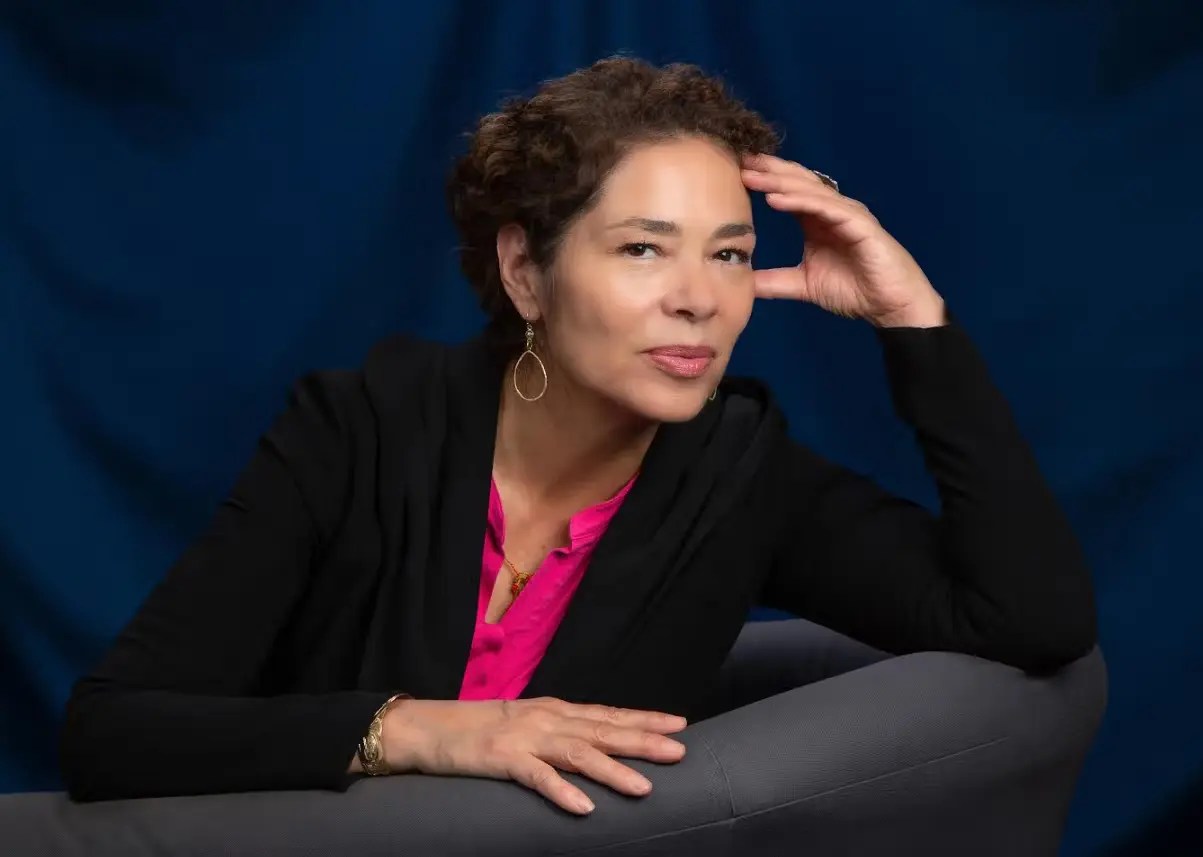
In a week of adaptations, the trip to Roy Thomson Hall to see & hear the world premiere of She Holds Up the Stars from the Toronto Symphony & Red Sky Performance on Sunday April 19th was a fabulous case study in how to do it right. Sandra Laronde wrote the original novella that has become a staged performance with actors, puppets, voices and orchestral music.
Excuse me if I sound a bit reductive in my analysis, but I want to highlight what I saw and what we might conclude. This brief YouTube promotional video gives you an idea of the show, presented first as school performances April 13-18 followed by a pair of public matinee performances today.
Sandra Laronde’s novella tells the story of twelve-year old Misko, a girl who has come to live on the rez, wondering about her missing mother, entranced by a horse that lives on the land nearby. Thomas, the boy who has been training it, seeks to break the horse that she names “Mishtadim”, that the boy & his father call “Brutus”. Misko challenges their concept that a horse should be broken. The man abuses his son, and if he can’t break the horse will “get rid of it”. The abusive father is also deep in debt and will be persuaded to sell the horse, leading to one of the threads in the happy ending.
I found the performance very moving in its simplicity, the story enacted using large-scale puppets, particularly a multi-person creation for Mishtadim, who is eventually ridden by Misko. A small-ish orchestra upstage of the action played in support of the action & dialogue, reminding me of the music we hear in a film soundtrack, composed by Eliot Britton, and conducted by Trevor Wilson. All the parts work well together, mostly because the adaptation does not over-complicate.
While the show works well for children (I was sitting beside a family that included a babe in arms beside me), there’s nothing wrong with story-telling that’s simple enough to be inclusive.
There were moments that I found were crystal clear, from having read Sandra’s novel, that were given additional emphasis, as though underlined by dialogue. I welcome this, although I know some people would make a class distinction between sophisticated creations and those that are sufficiently inclusive to be intelligible to younger adults or even children. For me this is ideal, as I think sophistication is a kind of curse, especially when I look at the way adaptations are received (and sometimes rejected) by those who know the work being adapted. I saw this recently with the Met high-def broadcast of Tristan und Isolde, and with Marshall Pynkoski’s Pelléas et Mélisande. For both operas, the happiest viewers were the ones arriving with no prior knowledge or expectations, while the least satisfied audience-members came with requirements & stipulations because of their attachment to the original. And more recently it was the Gospel stories loosely adapted in Erin Shields’ play about the 4 women named Mary. In every one of these recent cases, it felt as though the artists believe in complexity for its own sake, as though they were not permitted to be simple or direct. Obscurity makes sense if we see this as a credential for the profession, that we know something is art because we can’t easily understand it. Thank goodness Sandra didn’t fall into this trap.
I want to also mention the academics I ran into on the way out of Roy Thomson Hall, who were not as impressed as I, likely because they found the show too sentimental (in fairness I put words in their mouths, when they said they didn’t share my enthusiasm). I think this is again the cursed sophistication I spoke of, the concern that the piece can’t be good if it’s truly inclusive. I am mentioning this ruefully, sad that the very thing I would celebrate in today’s show would be a liability to someone else. All I know is, I came out of the theatre beaming, having shed tears watching & listening, and noticing at least a couple of others in my vicinity who were wiping their eyes, parents who came with their children.
I was moved thinking about the recognition some may feel, in seeing themselves. We may take representation for granted because the arts show versions of us. I’m grateful to Sandra for what she has accomplished with this story, both as a novella and brought to the stage, especially for school children to watch and discuss in class.
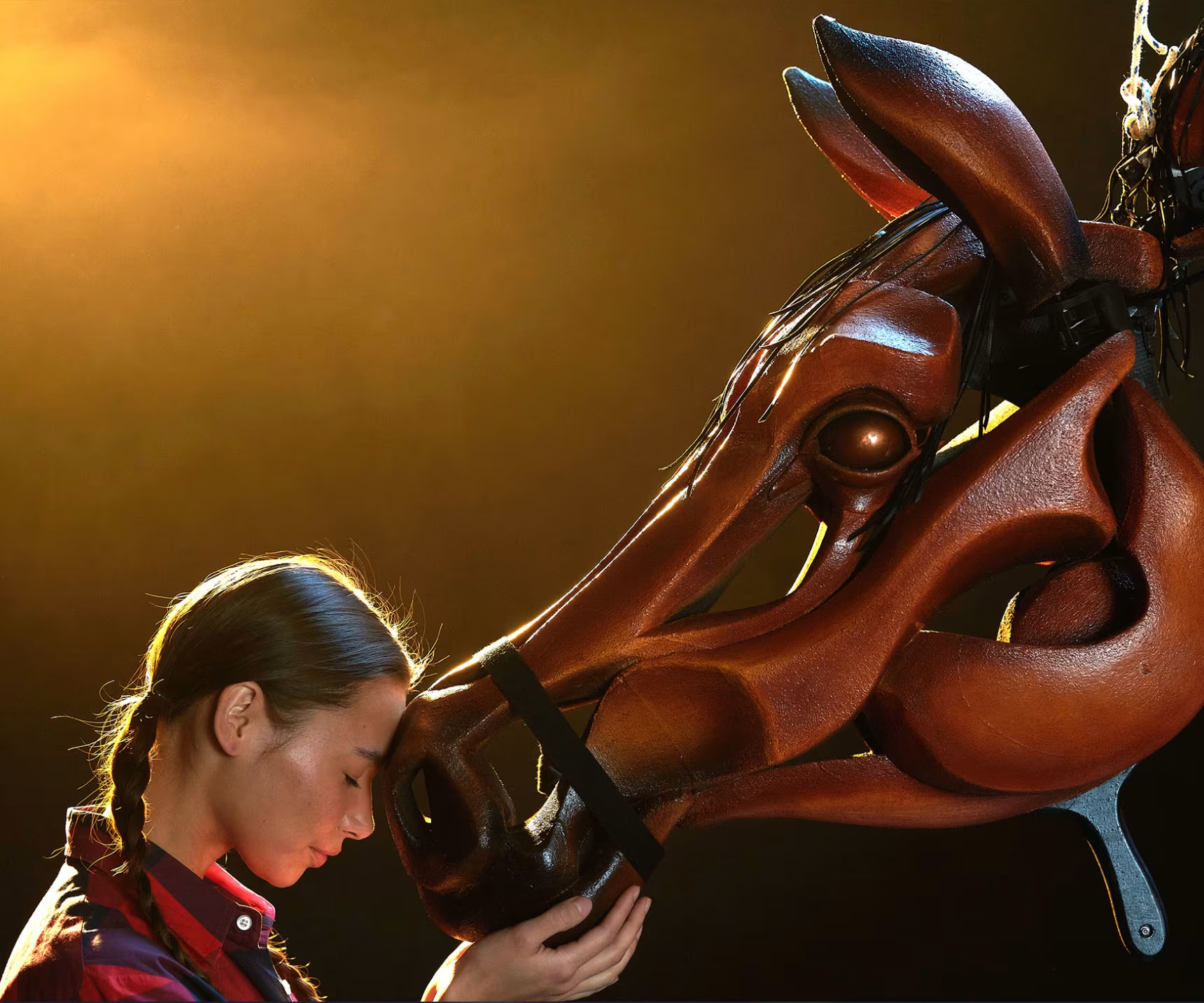
The performers were young-looking actors using amplification to be heard, speaking clearly while at times scampering across the floor like acrobats. Julia Davis was Misko, Marsha Knight her grandmother Kokum, the keeper of sacred wisdom and the one who helped arrange for the happy ending. James Gerus was a vulnerable & sympathetic Thomas, loyal to his father but persuaded by Misko to help her in her quest to save the horse.
Forgive me that I again allude to Timothee Chalamet who spoke of concern about art-forms that were close to dying out. It’s no surprise to see the hall full today, including lots of parents & children, who had a wonderful time. When the art is direct & simple the audience comes out in support. Red Sky and the Toronto Symphony seem to understand this, and it’s good news.

