Two years ago the Canadian Opera Company began experimenting with a public singing competition as the final part of the selection process for membership in the Ensemble Studio. In 2011 & 2012 the contests were held in the Richard Bradshaw Auditorium using piano accompaniment.
This year they’ve taken a quantum leap with Centre Stage, the COC Ensemble Studio Competition Gala. Instead of using a piano in the RBA, the singers stood on the Four Seasons Centre stage, accompanied by the COC Orchestra, conducted by COC Music Director Johannes Debus.
Rufus Wainwright captivated the Gala crowd at the Four Seasons Centre (photo by Michael Cooper)
And perhaps the biggest change in tone was supplied by host Rufus Wainwright, who not only brought an informal star power to the proceedings, but even added a few songs. I knew we weren’t in Kansas anymore when Debus conducted “That’s Entertainment”, followed by two of Wainwright’s own compositions. The audience ate it up.
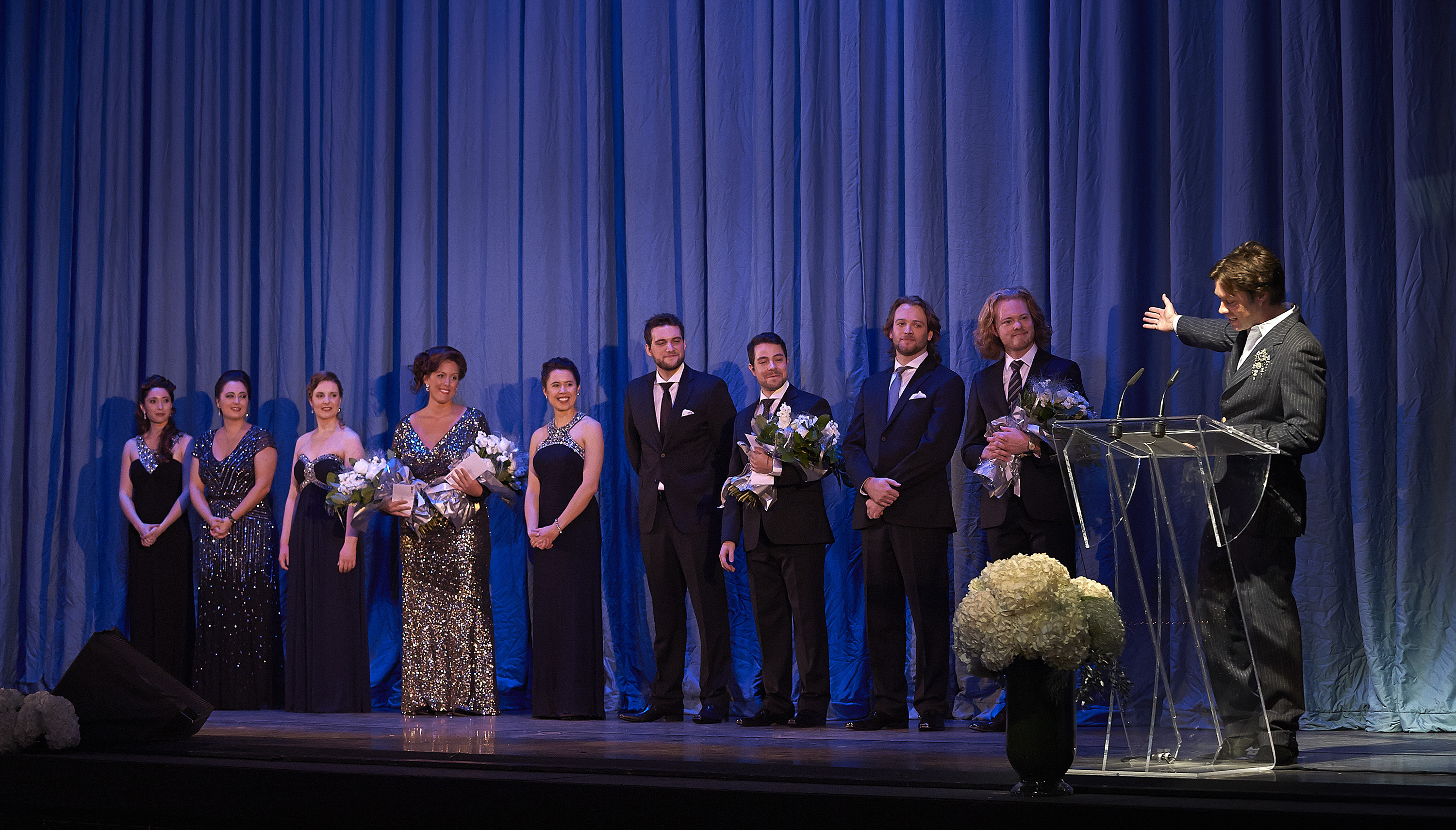
It wasn’t all pop music, however. First –in a portion of the evening before the audience arrived—each of the contestants sang an aria with orchestra in a near-empty hall. Then, after a break, the audience arrived for the gala informally hosted by Wainwright. I wish we had someone as unpretentious hosting the Oscars, as his looseness added a lot to the fun of the evening.
Soprano Karine Boucher
On the very night when “Dancing With the Stars” is about to choose its winner (and no I am not waiting with baited breath, although –hi Mom—I do know at least one person who is), we had some of the chemistry of reality TV with the help of modern technology. In addition to the competition, the audience were asked to vote for their favourite, and –what do you know—our winner was the same as the one chosen by the expert panel, namely Québecoise Karine Boucher. It would be hard to imagine a bigger contrast in styles than what Boucher showed in her two selections. In the public portion of the competition Boucher sang an ornate aria from Handel’s Giulio Cesare, whereas her earlier piece was the luscious lute song from Korngold’s Die tote Stadt.
Second place went to Kitchener-Waterloo native Jean-Philippe Fortier-Lazure, while Brockville native Iain MacNeil placed third.
Yet all nine singers heard tonight were excellent. Johannes Debus & the COC Orchestra acquitted themselves wonderfully throughout. And as I write this some of the audience are still there enjoying a gala dinner.
Bravi!
Ensemble Studio Competition finalists and winners with Centre Stage host Rufus Wainwright (photo by Michael Cooper)
There’s a moment in Terry Gilliam’s Adventures of Baron Munchausen when Vulcan is pressing carbon into a diamond for his wife Venus, and of course she expresses her gratitude, a moment before handing the thing to a lady in waiting with the words “another diamond” (and it gets thrown onto a pile, unappreciated).
At the first appearance of The Great Upheaval –the new show opening at the Art Gallery of Ontario— on its home turf, namely the Guggenheim Museum in New York in 2011, the NY Times review was decidedly unimpressed. They saw it as a prudent use of the gallery’s permanent collection and not much more than that. I wonder if the New Yorkers are like Venus, bored with brilliance and unable to appreciate what they have.
No wonder the curatorial staff seemed surprised at our rapturous response here in Toronto . I have to wonder whether the riches of major centres such as NY turn people into philistines, blasé about brilliance because they’re regularly surrounded by masterpieces, and have lost their reverence for art in the process. It’s a truism that Torontonians haven’t made it until they go to the USA or Europe. Perhaps the same kind of dynamic happens in NYC as well, a place that’s too cool for its own good. The new AGO show from the Guggenheim in NYC is called The Great Upheaval, and its only foreign excursion is to Toronto.
And maybe we’re also so accustomed to language proclaiming great upheavals that we’ve become inured. I wouldn’t miss a chance to see great art from this period (1910-1918) but can any show possibly live up to such hyperbolic language? I need a new set of eyes that can see words afresh.
But The Great Upheaval is true to its promise, a show of such riches that as you come through you will be surrounded by gems of incalculable worth whether or not your husband is the God Vulcan.
Robert Delauney, Red Eiffel Tower (La tour rouge), 1911–12. Oil on canvas, 49 1/4 x 35 3/8 inches (125 x 90.3 cm). Solomon R. Guggenheim Museum, New York, Solomon R. Guggenheim Founding Collection
The story of the Guggenheim collection is in some ways a perfect parallel narrative to the story of art in the 20th century, as we see the taste of a collector identifying a wonderful new direction for art & artists. While it may not have been their original intention, The Great Upheaval is in some ways like a primal story for the collection, which began modestly in the late 1920s long before there was a building.
The organization of The Great Upheaval seems to owe at least a little to the remarkable shape of the space in NY, that long spiral corridor in that magnificent Frank Lloyd Wright building. The AGO space can’t manage the same perfect linearity, but then again, what space could? The art represented in the exhibition from 1910 to 1918 is offered up de facto, which is to say, chronologically, rather than in themed groups around movements or artists. Yes we have several artists whose work recurs throughout. But we encounter their work year by year. The result is a kind of documentary effect, as awkward as history and without any sense that the curators are interfering whatsoever.
Make no mistake, this is a powerful show. I was a bit surprised to see how quickly my media colleagues raced through. After Ai Weiwei & David Bowie, this is a return not just to first principles for the AGO, but a shift to something more substantial & challenging. We begin with Cezanne, Seurat, and Gaugin but we also see Kandinsky and Chagall. Mondrian & Picasso are there too. And there are other artists I didn’t know such as Kupka, Delaunay, Duchamp, Franz Marc and Branciusi, several -isms , such as cubism & futurism. And more.
The questions and issues underlying this exhibition feel like the central questions for all western art. The show purports to begin with “precursors” (as they call Cezanne, Seurat, and Gaugin).
Haere Mai (1891), by Paul Gaugin
But those three were themselves responding to something before,and could easily be understood as radical & avant garde. To get a real context for the actual upheaval on a trip to the AGO one could start with a quick look at examples of 18th & 19th century painting, preferably the most academic & representational examples. One wouldn’t want to look at Turner or Degas or Van Gogh, because those painters were already beginning the “upheaval” (in the same way that Cezanne, Seurat & especially Gaugin were doing).
But those three are precursors in the sense that they not only begin the break from what came before, but laid down the methodology of the avant garde. Gaugin was one of the Nabis, for example, with a manifesto from Debussy’s friend Maurice Denis (who painted the cover for the program of Maeterlinck’s Pelléas et Mélisande). Each painter would undertake a kind of journey often beginning with something academic & conservative, and then striking off into their own individual terrain, becoming progressively less representational and more quirky, stylized and yes, abstract. The manifesto became a kind of virtual rallying place, like a public square, where artists could gather OR react in the opposite direction. Movements and counter-movements became more and more normal by 1910. Many of the painters in The Great Upheaval share characteristics with one another, although I am speaking from a superficial grasp (forgive me… I just saw the show, and spout off about Debussy & Denis & Gaugin, not Kandinsky, who I know in a more superficial way). Each movement can be understood as a kind of conversation, a discursive community where some (if not all) of the terms (as well as the technical requirements of the art-form) are understood by those at the core of the group, while others around them grasp some if not all the necessary concepts. Ideally the “upheaval“ shown in such an exhibit would be more inclusive, a much bigger show, that would incorporate the entire process, beginning somewhere around the Impressionists, or perhaps only with post-impressionists such as Van Gogh, Seurat & Gaugin. But: how much can one see? In fact the show’s purview of 1910-1918 is already immense. I couldn’t really see it all in two hours. The show has me dreaming immense dreams, seeing huge patterns & synthesizing relationships and influences across a continent’s art.
Albert Gleizes: Head in a Landscape (Tête dans un paysage) 1912–13 Oil on canvas Solomon R. Guggenheim Museum, New York, The Hilla Rebay Collection
The ambitions of this show –and its title—are large, and I am above all, impressed and moved by such lofty ambitions. I believe one needs to come with an open mind, prepared to make multiple visits, as there’s a great deal of wonderful art in this show, more than you can see in one visit.
I have not yet seen enough gems to be blasé. (Click image for more information about the exhibit.)
It’s such a privilege to see a rare work. Whatever else I might say about the Voicebox/Opera in Concert presentation of Benjamin Britten’s Gloriana on the occasion of the composer’s centennial, I’m thankful for this encounter with the score.
This sample of Gloriana –an opera recounting the tale of Elizabeth the 1st and Essex—is especially precious because it’s so rarely performed. The first production, on the occasion of the Coronation of Elizabeth II in 1953, was not well received, leading me to wonder about it reception history and to listen to this performance with an ear to why it might have been judged so harshly compared to Britten’s other operas. It must have seemed like a good idea at the time, when Britten & his collaborators sought to invoke one of the greatest English monarchs when her namesake ascended the throne.
It’s not rocket science. Did Britten think to mention to those who commissioned him to write this opera, that the first act would be full of celebration, but that the last act would be a massive downer concerned with mortality, especially in context with what went before? It’s as though someone staged the Nutcracker in reverse, beginning with all the entertainments, and ending with the angst and conflict, and switching it from the PG children’s story to something much riskier.
On top of everything else—that is, having decided to adopt a scenario that begins with good-times and ends with sadness & death—it’s also a study in the nature of power relationships. That part of the opera is totally fascinating, by the way, but probably didn’t win Britten any additional supporters in the charged atmosphere of the coronation, when I’d assume that there would be assumptions of a sort of political correctness. I’m thinking of three parts of Britten’s opera in particular:
1) At one point at a party where Elizabeth has been dancing, she calls the ladies out of the room to change their linen, and then contrives to put on Lady Essex’s dress, that she’d worn a short while before, humiliating the woman. I don’t know if this incident is a historically verified incident or something invented for the opera, but either way it shows Elizabeth as a commanding personality. I imagine the young royal couple (Philip and his wife, whether it was “Princess Elizabeth” or the newly crowned Queen) squirming as they watched this scene.
2) Almost the entire portrayal of Robert Devereax, Earl of Essex, is like an ongoing display of testosterone, making him one of the more interesting characters I’ve seen onstage in awhile, even in a concert performance. We watch this macho man over-compensating from the beginning, until he’s gradually humiliated in his disastrous Ireland adventure, and executed. Again, I can’t help thinking of Philip & Elizabeth sitting, perhaps exchanging glances at one another and giggling. But the guests at the occasion? Squirming.
3) And there’s even a line that calls attention to the odd gender relationship. Elizabeth says (I don’t recall the exact words) something like “he has touched our sceptre”. It struck me as weird, as though the Queen were accusing him of touching her penis-symbol. Maybe the royals wouldn’t have noticed anything odd about this line, and maybe it’s just me.
There’s one other reason –probably the key reason—why Gloriana has been a failure, and it’s a doozey. (hmm! Spell-check seems to know that word)
We’re in the last fifteen minutes of the opera and suddenly whoops it’s as though the tracks that the express train is on suddenly end and we’re riding on dirt instead. The text in two instances screams for something sung, a major musical thought. And instead Britten asks the singer to speak instead. Elizabeth narrates a letter as though she were a refugee from a Raymond Chandler novel. And then Essex does the same.
Why?
I couldn’t help thinking that when Britten was trying to finish the end of the opera maybe he ran out of time composing his commission. This is, after all, a very extraordinary occasion. It’s not as though he could call up Mr & Mrs Mountbatten and ask for an extension, to have them put off the coronation. And so they took a shortcut borrowed from movies, and one that’s not really operatic.
That being said – that I’ve more or less sided with history’s dismissal of this opera—maybe it’s time for the public to discover what a stunning piece Britten has composed. Whatever you think of the opera as a celebration of the occasion of Elizabeth’s coronation, it’s a magnificent piece of music theatre, containing some of Britten’s most beautiful music. The cinematic ending is indeed a letdown, the last act is indeed dark –like so many other operas actually—and yet Gloriana is still a fabulous piece deserving to be produced.
Soprano Betty Waynne Allison
Now, after that lengthy preamble, I must acknowledge the impressive treatment given the work by Voicebox/Opera in Concert. Betty Waynne Allison commanded the stage whenever she appeared as Elizabeth, both vocally and physically. While some variations of the Elizabeth story include unattractive or insecure monarchs, this time we’re in the presence of a radiant Gloriana brimming with confidence. I only wish the role were bigger, given how self-assured the singing was. Adam Luther as her consort Essex was every bit her match. The role is written as a bit of a vocal show-off, with much of the role lying very high in the tenor range. Of the remaining cast Jennifer Ann Sullivan was the most impressive, both in her confident body language and her powerful top.
Peter Tiefenbach played through the score with great care & accuracy, giving us a remarkable welcome to this unfamiliar work. Robert Cooper led the Opera in Concert chorus, in a work full of gorgeous choral writing, sung with elegance & delicacy, which is probably authentic. If I have one quibble –and it would be with both Cooper & Tiefenbach—it’s that the work was so carefully re-created that it failed to seem operatic; or is that how the work is written? We were in the tiny Jane Mallett Theatre, but except for the two women I cited, the volume was so respectful that the effect was more like chamber music than opera.
But of course we need more productions of this beautiful score, more interpretations, and more opportunities to encounter this music. Thank you Voicebox/ Opera in Concert for bringing it to us.
Their season of anniversaries continues Feb 2nd with Hippolyte et Aricie on the 250th Anniversary of Rameau’s death, and Stiffelio March 23rd commemorating Verdi’s bicentennial. Continue reading →
I’ve just come from one of the most absorbing 105 minutes I’ve ever passed in a theatre, thanks to Robert Lepage. I take it on faith (from the program, and from the time on my phone when I came out), as the show felt less than an hour long.
Needles and Opium opened tonight at the Bluma Appel Theatre, presented by Canadian Stage. It’s another Ex Machina production, in co-production with Théâtre du Trident, Québec and Théâtre du Nouveau Monde, Montréal. I read somewhere that this is a new production, but never having seen it before, I wouldn’t know.
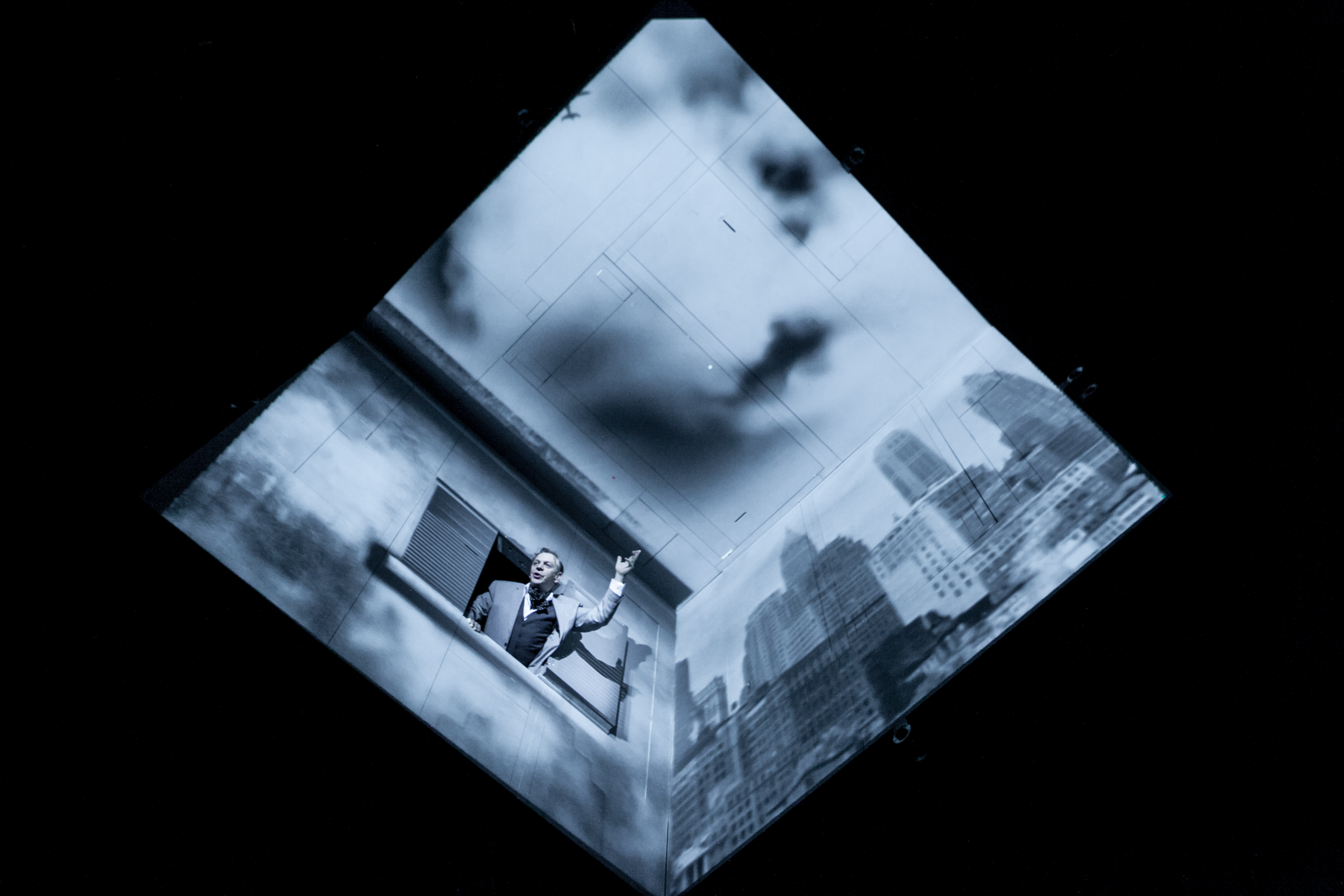
The mise-en-scène is so completely absorbing you’ll be beguiled even if you don’t like jazz or musings about life & art. Anyone willing to meet the work halfway, which is to say, anyone with a poetic sensibility & imagination floats out of the theatre like a child on Christmas morning. The show never lets down, but always offers something, whether eye-candy, music, profound concepts, clever writing, physical virtuosity, or several of the above at the same time.
Marc Labrèche in Needles and Opium. Photo by Nicola-Frank Vachon.
I must say that I am very relieved. The title is a little too close to home, what with the news item about the new toxic drug from Russia –krokodil is it?—that now may have reared its nasty head in St Catharines, and the druggy exploits of a certain local politician who shall be nameless. And then there’s the federal leader who’s come out in favour of legalization of marijuana. Onstage? This is a very romantic understanding of drugs and their dangerous allure (in other words Stephen Harper and Nancy Reagan would disapprove).
I don’t think I have the usual perspective on Lepage. I know him mostly from his operatic work (which I’ll try to put in chronological order):
The Canadian Opera Company double bill of Erwartung and Bluebeard’s Castle
Le Damnation de Faust at the Metropolitan Opera (that i saw alas only through high-definition broadcasts)
The Nightingale and other stories also at the COC
Wagner’s Ring Cycle, mostly via high definition broadcast, although I did have the pleasure of seeing Das Rheingold and Die Walküre at the Met. This might be the one tiny mark on Lepage’s record, and not because his work was less than brilliant. No, this was a collision between a conservative audience in NY and an original approach to Wagner. I was heart-broken by the response, summed up in Maclean’s (I was quoted in Lepage’s defense). There’s nothing wrong with the production that open minds wouldn’t fix. The shows i was at? the audience ate it up.
Thomas Adès’ The Tempest, again via high definition broadcast (and this one was rapturously received on both sides of the Atlantic)
The descent to Nibelheim from Das Rheingold (Ring cycle at the Metropolitan Opera): one of a near-infinite series of configurations of a protean set.
The very first thing I reviewed on this blog, roughly three years ago was Eonnagata at the Sony Theatre. Then as now we were seeing not just the Ex Machina brilliance, but a text written by Lepage. While I’ve never seen any of Lepage’s Vegas spectacles nor anything with Cirque du Soleil, I believe I’m not just conversant in Lepage’s performance vocabulary, but somewhere between “fancier” and “fanatic”.
If there’s one thing I hate about opera –and as an opera lover, scholar, interpreter and composer, it’s painful to admit—it’s a particular attitude among audience members (that is, the subscribers, who are usually the oldest & most conservative). They show up with more stipulations than a first-time home-buyer. They would rather be right than have fun. I say this because in the presence of Lepage’s original text there can be no stipulations. What a blast to be in a theatre full of people loving the show. One is free to enjoy, have fun, to have one’s mind expanded: without drugs. It may be trite to say so, but this is a very trippy show. You will see and feel things that are unquestionably a sort of altered reality.
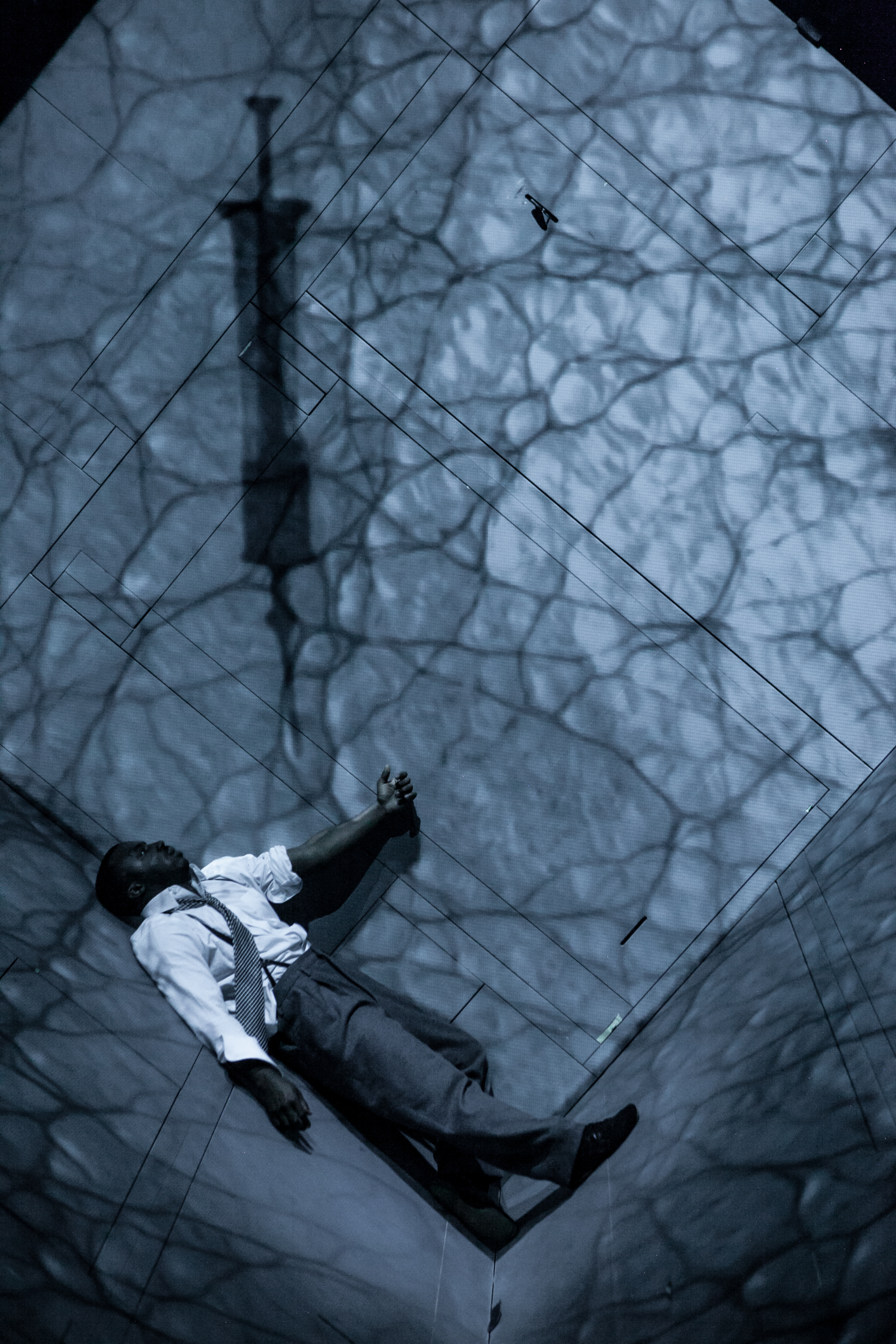
Wellesley Robertson III in Needles and Opium. Photo by Nicola-Frank Vachon.
I couldn’t help seeing all sorts of connections & resonances with other work by Lepage.
As in Eonnagata we’re watching someone on the boundaries between worlds. In Eonnagata we watched a person move between cultures, reminding me of Lepage himself, a francophone Quebecer who has come to English Canada & the USA, bilingual and likely with conflicted loyalties, someone fluent both in high art and popular forms such as circus & shows in Vegas.
In Needles and Opium we watch two (or perhaps three, as there is another figure whose name is Robert) similarly transient figures. We see and hear Miles Davis taking bebop to Europe, where he’s not only appreciated more fully, but free of the usual racist restrictions. And we encounter Jean Cocteau coming to America, a figure who for me echoed Lepage himself in his recent encounter with the philistines of NYC. It’s darkly ironic, but also funny in a deadpan way.
The set and the projections work brilliantly with the aerials. Yes we’re watching people climb on the sides of surfaces or on wires, as in Erwartung or Damnation de Faust, or Das Rheingold. As in The Nightingale & other stories, shadow images tell a large part of the story. The incessantly dynamic set is like life itself, changing endlessly, like that miracle machine in the Ring. People may seem to be static but the set won’t let us see them that way, but forces us to see change & transformation. We’re watching people constantly on the edge, literally brought to a precipice, about to fall, dangling. It may be the oldest of metaphors, but that doesn’t mean it’s not powerful. Marc Labrèche and Wellesley Robertson III are endlessly fascinating to watch.
One nice bonus was getting the chance to bravo for Robert Lepage when he came out at the end. Like Cocteau, he may not be understood or appreciated quite so well in America, but he seems to be at home here in Toronto. I look forward to his next opera, whether it’s with the COC or at the Met.
But right now? You must see this if you can, only on until December 1st.
November 22nd? It’s Saint Cecilia’s Day, the patron saint of music. It’s Benjamin Britten’s birthday, which this year means his centennial.
Okay, those are all in the fine print. Written on my psyche since childhood? November 22nd 1963. Every other important date has been like a footnote to this date.
A day that will live in infamy? While I’ve heard FDR’s famous phrase again and again I still think of this more recent date.
The day the music died? Not the day a couple of musicians fell out of the sky, but the day music ceased to be music.
Childhood’s end? Nope. Only retrospectively, I suppose, especially when conflated with RFK & MLK, but this was first in a series of profound shocks that disillusioned many people.
The official story –aka the Warren Commission Report—is that Oswald acted alone. My gut feeling is that he could have done it, this marine shooting a good rifle from above. Snipers were sometimes given heroic acclaim when acting in the heat of battle, but that only works in a civilian setting if someone wants the target killed. How does that work if the target is a beloved leader? It had been inconceivable, but alas would happen again.
That’s how I come back to Oliver Stone’s film JFK on the occasion of the fiftieth anniversary of that dark day in Dallas. For someone who more or less accepted the Warren Commission’s premise, that Oswald did it, I find the film seductive. The film isn’t really about the truth. One of the amazing things about this long looping film is how it manages to problematize certainty. Stone doesn’t claim to know who’s responsible. His film takes us into a kind of epistemological labyrinth, messing with our heads like a good horror film. Edgar Allan Poe couldn’t have written a scarier screenplay. If there were a single bogeyman we’d have an easier time of it.
It’s not Stone’s best film. Salvador, or Platoon or Natural Born Killers, had better critical receptions. He’s done great writing on Midnight Express and Talk Radio. But I suspect JFK will be the film for which Stone is remembered. It excited me when I first saw it, and still moves me more than most films. On this, the eve of the 50th anniversary of the assassination of John Fitzgerald Kennedy in Dallas Texas, I thought I’d reflect again about this film, a great work of art.
I say “choose your conspiracy” because Stone is wonderfully equivocal. We’re given several possible candidates, rather than zeroing in on one. That marks this film as something very different from what you usually get. We’re not really looking at what happened so much as how the event changed our understanding (which is why I spoke of an epistemelogical labyrinth above) and even metaphysics, if you consider the terrifying pattern of lone killers taking out RFK & MLK. I wish I could believe that James Earl Ray & Sirhan Sirhan simply acted alone, the way Oswald presumably did. Life is so much easier in black and white, but JFK explores the shadows, and captures the change in what we believe: what we can believe.
One of the things I love about JFK is the astonishing depth of talent in this film. Where in the 1950s you’d see a Biblical epic full of cameos from great stars (for instance John Wayne’s brief appearance in The Greatest Story Ever Told: which I refer to in my recent review ofThe Butler), Stone might be giving us The greatest story ever covered up, which is to say the earth-shaking day of Kennedy’s assassination. What talent?
Tommy Lee Jones, very much against type
Edward Asner against type
Jack Lemmon against type
Vincent D’Onofrio, before he had yet become a star
John Candy against type
Did Joe Pesci ever do better work?
Sissy Spacek, brilliant as usual
Kevin Costner, in what could have been a break-out role for him. Around this time he has his big success with Dances with wolves, and then..? I had hoped for more, but this is surely his high water mark
Donald Sutherland takes on a role something like America’s superego, the moral intelligence inside our heads, riding that stunning speaking voice. Of course i connect because he’s a Canadian.
And perhaps most impressive as a pure performance, Gary Oldman’s Oswald, in the performance that I’d put alongside his turn as Beethoven in Immortal Beloved as his most impressive single creation.
John Williams found at least three wonderful music cues that make this for me among his best, and favourite of all his films. In the opening motto (and recurring throughout) we get lovely echoes of Aaron Copland, quintessentially American sonorities. There is another theme that is a pure dissonant agony, ninths and seventh, seeming to ask “why”. No I don’t usually dare to paraphrase music this way, as if to say what it means. I’m breaking my own rules this time. Listening to this music is a kind of exquisite agony, something like the whole ongoing inquiry itself. What will it accomplish except prolong our misery? Perhaps there’s catharsis there somewhere, but first: pain and tears.
Why does a Canadian care so much? I have no idea, but maybe it’s because for awhile I dared to dream and to believe certain things are possible. This film does not dishonour the dreamer even as it suggests the dream is over. I love that at the end of the film there is at least a hint of hope, the possibility of truth coming out someday. I suppose it’s all we’ve got.
Sometimes artists show two or more sides. The different roles played in a concert hall or in a recording studio bring out different aspects of a creative personality, at least as masks if not as divergent personalities.
Click for information about obtaining the CD
That’s how I’m thinking, as I look at the different sides of the pianist Beatriz Boizán. Her recent concert, launching a CD, could have been sub-titled “Action” for its vibrant physical appeal. If “Action“ is to be at one extreme, the CD, titled “Pasión” is the opposite. However this isn’t just a fantasy. I saw the concert, which led me to use the word “feral”.
And the CD? I think “passionate” is the right adjective, one that I’d like to unpack for a moment. The word get thrown around a fair bit without any context. A passionate embrace is one full of emotion, but not necessarily loud or active. I believe it’s understood as a surrender to feelings, as if one were possessed by sensation. In a CD, that means we’re encountering profound emotion in these compositions, but in the compact packages of these performances. The music doesn’t shout, but speaks eloquently, moving us.
Boizánplays the most difficult pieces on her CD differently than she played them in live performance. Where she was willing to risk the occasional missed note in the boldness of her attack, on the CD she manages to be carefully precise, containing the emotion in a tidy package.
Boizán takes us on a tour of Latin pianism, especially as it leads to two great masters of Cuban music. I knew the famous names on this album, but until now did not know the Cubans, even though one is responsible for the most famous tune on the entire album:
Ernesto Lecuona 1895 –1963 (Cuban), including “Malagueňa”
Antonio Soler 1729- 1783 (Spanish), who wrote keyboard sonatas that remind me of Domenico Scarlatti, but with a Spanish flair
Ignacio Cervantes 1847 – 1905 (Cuban)? i am pleased to meet this subtle voice, who doesn’t seem at all out of his depth alongside the acknowledged Spanish masters of the piano
Isaac Albeniz 1860 – 1909 (Spanish)
Alberto Ginastera 1916 –1983 (Argentinian)
While this is a more passionate series of readings than what Boizán offered a few weeks ago, that is, with some of the emotion internalized rather than fully expressed in action, she holds nothing back when we get to Albeniz’s fiendishly difficult “Corpus Christi en Sevilla”, processional music of a Sevillian sound-scape that gradually calms itself. This is among the most difficult pieces for a pianist, powerful octaves hammering in both hands, a challenge to articulate clearly. Boizán finds the right notes to emphasize, bringing forth key parts of the dense texture, wearing her Latina allegiance on her sleeve.
The picture is more abstracted in Ginastera’s Dances, such as “Danza del Gaucho Matrero”, a luscious waterfall of notes pouring in quick succession. Pasión is a wonderful CD, roughly an hour of music that introduces me both to the artist –who I’ve seen only in the one concert—and to several of her favourite composers. I am persuaded to make further investigations of Cuban music.
You would have no better place to begin such an investigation than with Pasión.
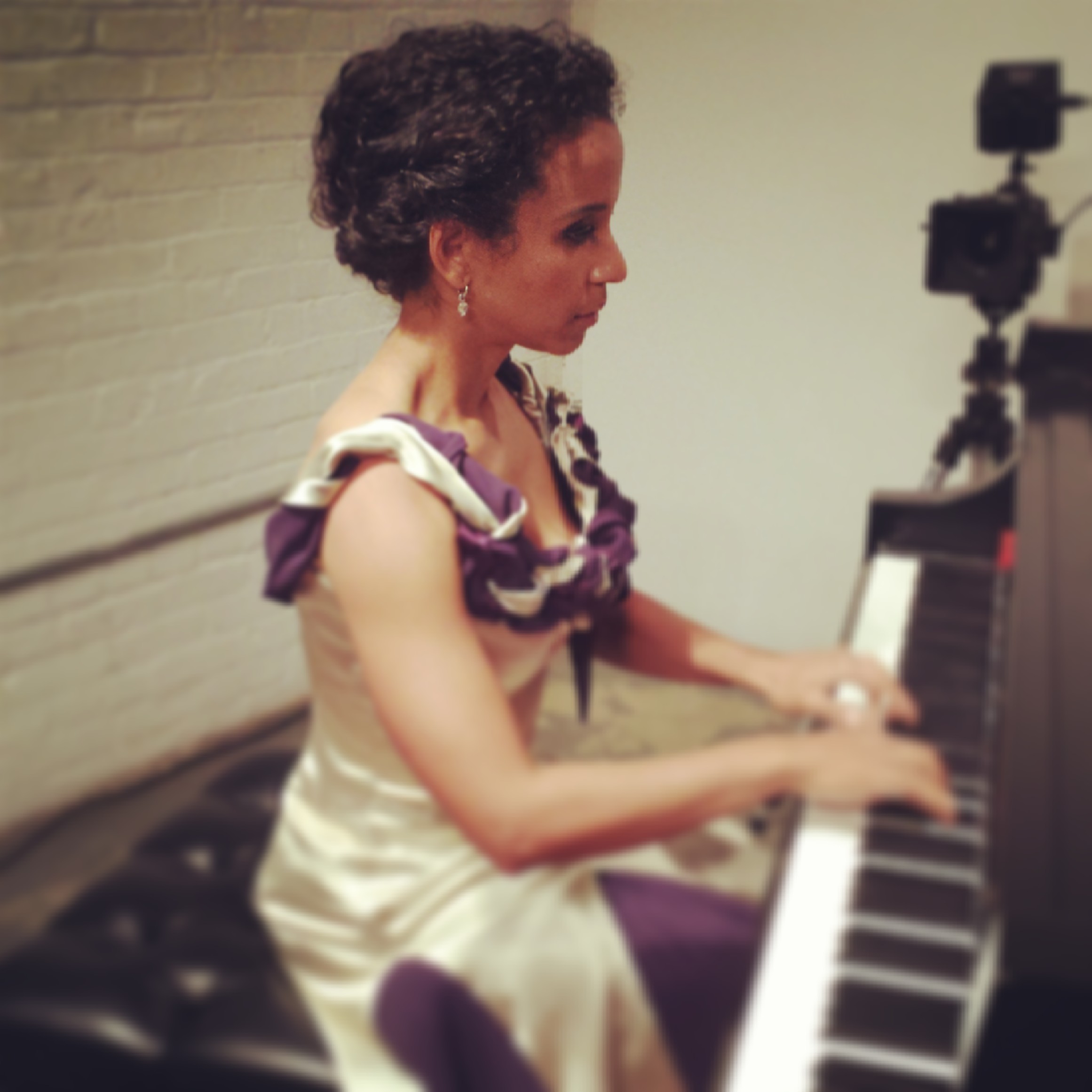
Pianist Beatriz Boizan (photo by Elizabeth Bowman)
“O Gamelan” is both José Evangelista’s composition & a handy name for tonight’s program by Esprit Orchestra, suggesting a genuine reverence for the Balinese ensemble of that name. Many of the works on the program employed some or all of the players of Evergreen Club Contemporary Gamelan, in various constellations of players & instrumentation. In addition we were treated to a dance performance from Evie Suyadnyani, World Music Visitor at the U of T‘s Faculty of Music (which is perhaps one reason I saw the Dean of the Faculty in attendance). My head is still buzzing in a good way from this exquisitely intercultural experience.
Alex Pauk
We began & ended with orchestral works invoking gamelan sounds via conventional western instruments. Echo Spirit Isle (1983), a work by Alex Pauk (composer & also the conductor & artistic director of Esprit) started us off. When the orchestra was playing repeated notes (aka ostinati) I thought of Colin McPhee, a composer whose works suggest Balinese music. Pauk also generated some big tutti, and passages of neutral colour something like washes of colour on paper. Pauk’s work was one of the bookends for the evening. Claude Vivier’s Pulau Dewata (1977), which closed the concert, also had me in mind of McPhee: which is to say that some of the passages sound like attempts to echo or even transcribe a gamelan’s timbres and effects using conventional instrumentation.
Evergreen Club Contemporary Gamelan (click picture for more information)
Chan Ka Nin’s Éveil aux oiseaux (2005) employed eleven members of Esprit + nine gamelan instruments played by Evergreen personnel. At times they blend, at other times there are distinct differences in the ways each culture’s instruments are used. Several moments are wonderfully ambiguous, creating sounds and combinations that are hard to place, delightfully disorienting. The first sounds we hear reminded me of the deep Tibetan horn-sound associated with Buddhist ceremonies, a sound that gave me chills immediately. In an evening where Gamelan sounds seemed to instantly guarantee entry into the spirit of another culture, this composition was for me the most authentic, precisely because I couldn’t place it within any culture, any particular place or time. Very impressive!
Next came something absolutely different in every respect. Lou Harrison’s Threnody for Carlos Chavez for viola and gamelan (1978)suddenly brought us into something intimate and the most tonal work we’d hear all night. Violist Douglas Perry stood alongside seven of the Evergreen players, as he played something resembling a folk song, accompanied by the most delicate sounds I think I’ve ever heard from Evergreen. For all intents & purposes, this is a thoroughly sensuous song, with an accompaniment that likely could be handled by one or two players, but instead flitting around seven different players.
Then we came to the work giving its title to the concert, namely José Evangelista’s O Gamelan, using a modern orchestra to suggest the magical sounds of a gamelan. I was at times unable to figure out what instruments were playing to create the timbres. Evangelista speaks of the gamelan as a goal, suggesting that its sound is an ideal.
My favourite piece on the program was from André Ristic, a work titled Project “Peuple” for gamelan & ensemble. It’s a spectacularly clever composition. If I were to quote the composer’s program notes to describe its ambitions you would likely be struck by the wit of the composer.
Two groups of individuals (the gamelan percussions and winds) are trying to find a “meeting point” through the inspiration provided by a “leader” (the double bass). They succeed and the leader goes despotic.
Ristic refers to the concerto, in looking at the interactions of these musical forces. The only work I can think of that’s comparable is Berlioz’s Harolde en Italie, a concerto that dramatizes the Byronic hero using a viola & orchestra. Why am I not surprised that Ristic is from the former Yugoslavia? I’ve met so many from this country whose well-developed political awareness boils over in the arts. At the beginning, the groups of instruments –the western gang & the gamelan—are like political cartoons, satirical caricatures of two wildly disparate groups unable to communicate. Gradually the double bass asserts itself, leading to one of the most delicious bits of comic virtuosity I’ve ever heard & seen, the bass player like a ferocious demagogue with a bow.
Pauk (conducting the group from Esprit + the Evergreen players) led a delightfully tight reading.
Esprit return January 26th, 2014 with a program titled “Strange Matter”
(…click logo for more information)
I’ve never fully swallowed the Norman Rockwell images showing big happy families at Christmas, which leaves me much more comfortable coming at Christmas via angst than angels.
No wonder I feel as though I’m on the same page with Christian Jeffries. His latest –presented Friday November 15th—reprises last year’s yuletide show, called “Christian Jeffries: The Truth About Xmas—Live at the Flying Beaver Pubaret”.
We’re through the looking glass now. Our mayor is eating at home, so there’s nothing especially shocking about flying beaver. At one time the gay and lesbian demimonde helped us identify the edges of our world. We no longer have our orientation, our up & down, our left & right, not under the current bizarre circumstances. I felt a curious sense of nostalgia for the old days watching Jeffries, a time when you knew good & bad, and could rely on them to wear the right colour hat.
Jeffries is a complete performer, not just a singer but also a wonderful raconteur who holds the audience in the palm of his hand while drily making commentary on the wacky world we inhabit. I’d love to spend the entire time listening to the singing voice, but then I’d lose that other dimension.
Christian Jeffries (photo by Erika Barcza)
Jeffries sang with a trio, namely Donavon LeNabat at the piano, Dustin Shaskin on bass & Jamie Bird on drums.
While many of their songs are familiar melodies of Christmas, there was rarely anything conventional about the readings. LeNabat & Jeffries often took adventurous routes from one chord to the next, as in a wonderfully jazzy reading of the Christmas Song for example. Jeffries is a deceptive singer because his diction is so amazingly clear –I don’t think I missed a syllable all night—and his pitch so precise. He makes it sound very easy, cruising through changes, bouncing around harmonies that make the most familiar song sound brand new. We sat through an evening of charm & schmooze & effortless singing that lasted well over two hours, but felt like nothing. I didn’t want it to end.
I felt very comfortable as Jeffries offered himself as a kind of therapist for our collective ills. No, we didn’t actually get on a couch, but even so, he spoke to us of how Christmas is challenging, a holiday for misfits. I can relate, and evidently everyone else in the Flying Beaver felt as I did. He can make us scream with laughter or applaud at the top of our lungs, yet for the last part of the second set we were exploring something a bit more serious & touching than just silliness.
Christian Jeffries is unlike any other performer I’ve ever seen or heard. The voice is effortless, fabulously musical, floating up to notes without any anxiety that he can make it. He dresses on the boundaries between male and female, inhabiting a persona with a drag element, but underplayed. Seriously, that sort of description is so inadequate, so negative ultimately. I believe Jeffries –perhaps with LeNabat along for the ride—should try performing something conventionally jazzy. Yes I love the patter, but I simply mean that their chops are so good that they could fly purely on the basis of their musical wings, without relying upon their considerable cabaret skills. From a purely selfish perspective I’d want to keep Jeffries a secret, so that his extraordinary talent would stay in tiny venues like this one, where he must perform so intimately that every nuance is right in front of you. But he deserves a bigger audience, the world needs to see and hear this amazing performer.
I’ll keep my ears open for the next show. I understand something’s probably coming for Valentine’s Day. I will do my best to let people know beforehand.
It’s quite a bargain, this deal we’ve struck. Any social contract is a trade-off, giving something to get something. Nobody ever thinks about it, this amazing exchange, because it’s almost totally invisible, unless someone shines light on it, as they do at certain times of year.
Today is a day when people may seem to reflect on that social contract, even if the language is indirect. November 11th is Remembrance Day, a celebration of the lives of those in various arms of the service.
Nobel Prize winner Lester B Pearson (click the picture to read about him)
The participation of Canadians in world wars has been one of the benchmarks measuring the progress of the country on the world stage.
Our sons enlisted on behalf of Britain in the Great War, 1914-1918, with conscription invoked in 1917
Our sons & daughters enlisted in the Second World War, with conscription finally invoked in 1944.
Canadians fought in Korea, 1950-52
In the 1960s and in the decades that followed, our military took on a new gentler role, largely shaped by Lester Pearson’s idea of peace-keeping forces.
For over three quarters of a century we’ve had volunteer armed forces. Most tours of duty over that time were not lethal, although that changed a little over a decade ago, when volunteer forces often found themselves in hostile places such as Afghanistan.
Whatever sort of service –conscripted or volunteer, lethal or peace-keeping–we celebrate in services held on or around November 11th. At any of those services one finds a few common elements:
Poems such as In Flanders Fields and High Flight are read
Honour roles of names are read. In my high school we read the names of students who had died in service during one of the wars. In my church we hear of those who fell and those who served.
Testimonials from those who were there, which becomes a bigger challenge with every veteran who passes away
A poetic evocation of the battlefield in the playing of “The Last Post” and “Reveille”. While this ritual is done in many different configurations I believe the most meaningful was the one I first experienced at UTS, where a two-minute silence would be observed between the two trumpet calls. Stuart Bull, a UTS teacher who served in the war, explained the meaning of this ritual very powerfully to me and the other boys in my school. He spoke of the genuine fear one might have going to bed, that one might not awake, that this trumpet call telling us to go to bed suggested darkness & night, followed by the restoring call of Reveille. In the moments of silence in between we could contemplate those who did not awake and be thankful for our own morning after. If I may add a parenthetical remark, any Remembrance Day ritual that puts something other than silence between the Last Post and Reveille is a kind of ritualistic mixed metaphor.
Hymns such as “Oh God Our Help in Ages Past” and “Eternal Father Strong To Save” are sung.
When I was younger I distinctly remember feeling guilty, as someone who lived in a time of peace. Yet as I’ve grown older, with every year I am more and more grateful for the example of those such as Stuart Bull, who passed many years ago now. What did I know then?
I only know that I feel fortunate to be in this country, a place where I am not facing the dangers I see regularly on the news. They don’t ask much of me in this place where I was born. If you work you’re expected to pay taxes. If you see a red light, you stop. If you see crime being committed you report it, if you don’t have the nerve or wherewithal to jump into the middle of it to put a stop to it.
I’m not asked to go to war, nor was I ever asked to serve. Others have generously done that for me. While I pay my taxes, that’s an easy process, compared to sitting in a plane as it flies into flak, sitting in a tank as it drives across a minefield or under artillery, walking towards enemy fire, riding a landing craft across the English Channel to invade…
It is truly the least I can do to observe those sacrifices, to shed tears for those who did not hold back. It’s part of the deal, and it’s truly a good deal.
To close, the best anthem i know, written in the darkest hours of war as an inspiration, mentioning a sword & a chariot but invoking mental fight rather than real bloodshed.
Having seen a small local production of Verdi’s Il trovatore in Richmond Hill Saturday night, the tunes & situations were very fresh in my head tonight for a broadcast of a 2012 production of the very same opera with big name talents from La Monnaie directed by one of the hottest young directors in the world, namely Dmitri Tcherniakov.
Dmitri Tcherniakov (click for interview)
This is the Tcherniakov who makes his Met debut in a few weeks with a production of Prince Igor. Peter Gelb was quoted in a NY Times article as saying the director “would strip away the usual medieval pageantry and send Igor on a “psychological journey.” I’d already seen something as adventurous in a TFO broadcast last year of Ruslan und Ludmilla that included the most outrageously camp beginning, that was then revealed to be merely a costumed performance, a virtual opera within the opera. What looks conventional turned out to be edgy and provocative.
I did my best to decode Tcherniakov’s take on Trovatore in a single viewing on television (thanks to TFO, the most exciting programming in the area), but would welcome a second look. It’s deep.
The entire opera is set in one room. Azucena and Ferrando seem to work together, handing out printed scenarios to the others –the Count di Luna, Manrico and Leonora—who then roleplay them out in full view of the others, at least until they lose control of the exercise. When they walked into the space at the beginning it felt as though Ferrando and Azucena were real estate agents, with Di Luna & Manrico sizing up the place as though they were potential buyers. As it went along, Ferrando felt more like the man with a memory, the story-teller we’re accustomed to from conventional readings of the opera. The space is classical but timeless, sparsely furnished, and well lit.
We discover that the chorus will not appear. When the men listen to Ferrando telling stories in the first scene, it’s di Luna and Manrico who engage him. When the chorus are written to show fear, these two choristers –the principals that is—laugh it off, until they hear the offstage chorus expressing their fears, and then start to show their doubts. It’s in moments like this that Tcherniakov lures us in, surprising us with depths.
Where are we exactly? For the first two acts I thought I might be watching a kind of therapy, where Azucena & Ferrando engage with persons or souls such as Di Luna, Manrico & Leonora, who listen to one another as if in group therapy. That changes partway through, as di Luna pulls out a gun, changing the dynamics suddenly from something that seems to be about story-telling, spirits & karma, to something suddenly about power & fear. In due course di Luna shoots Ferrando and then when –in the usual place—discovers he’s been betrayed, shoots Manrico too. With the texts being enacted we are able to have our cake and eat it too, to have cardboard rigidity in some of the lines, with overtones of subtlety & depth.
I’d expressed my scepticism generally about Regietheater approaches to this opera, which I believe is one that is so melodramatic as to resist modernization. But in fairness Tcherniakov brings some wonderful insights into many moments in the scenes, stirring things up. Trovatore is an opera full of stories from long ago, told in a series of scenes that are themselves full of stories. Ferrando tells a story of long ago. Leonora tells Ines about a voice she heard singing. Azucena tells a story about something that happened long ago. And so on and so on. So while the original is melodramatic and in some respects two dimensional, those two dimensional aspects can inform moderns as if they were archetypes. At times it is as though we are watching modern people who have a deep subtext haunting them from another century, or another life. They sing of the old medieval story while looking like moderns. And so, while Leonora ostensibly says she will give herself –future tense—to di Luna, in this story it seems very evident that she’s done so, as we watch them lying onstage for the substantial scene of the last act where Manrico talks to his mother. It’s dense with meanings that I believe would be released even further with multiple viewings.
I continue to be impressed with Tcherniakov, and eagerly anticipate his Prince Igor. For what it’s worth, he was received rapturously by the audience at this live broadcast, which likely wasn’t an opening night. But overall this is Regietheater that works.
The singing is mostly excellent. The women are the best singers in this production. Sylvie Brunet-Grupposo has a stunning voice, offering a rather subtle Azucena, especially in context with the directness of the performances I saw last night. In the first half of Tcherniakov’s reading, we could be at a séance watching people speak of souls from other lives, even when they’re singing passionately about their own lives. Marina Poplavskaya is spectacular throughout, dramatically very complex in her response to the layers implicit in this production. Misha Didyk is a spinto Manrico with no high C but lots of power throughout. Scott Hendricks gives as sympathetic a portrayal of the Count di Luna as one could expect, given Tcherniakov’s overlay. Hendricks is a local favourite, having sung Iago & Amonasro here in recent years.
Marc Minkowski’s conducting was brisk & clear, always helping his singers.
I didn’t see any sites offering anything but PAL discs (which aren’t usually compatible with North American players), and so for the time being I’d be cautious about buying them unless you’re certain you have the right equipment to play that format.

 Two years ago the Canadian Opera Company began experimenting with a public singing competition as the final part of the selection process for membership in the Ensemble Studio. In 2011 & 2012 the contests were held in the Richard Bradshaw Auditorium using piano accompaniment.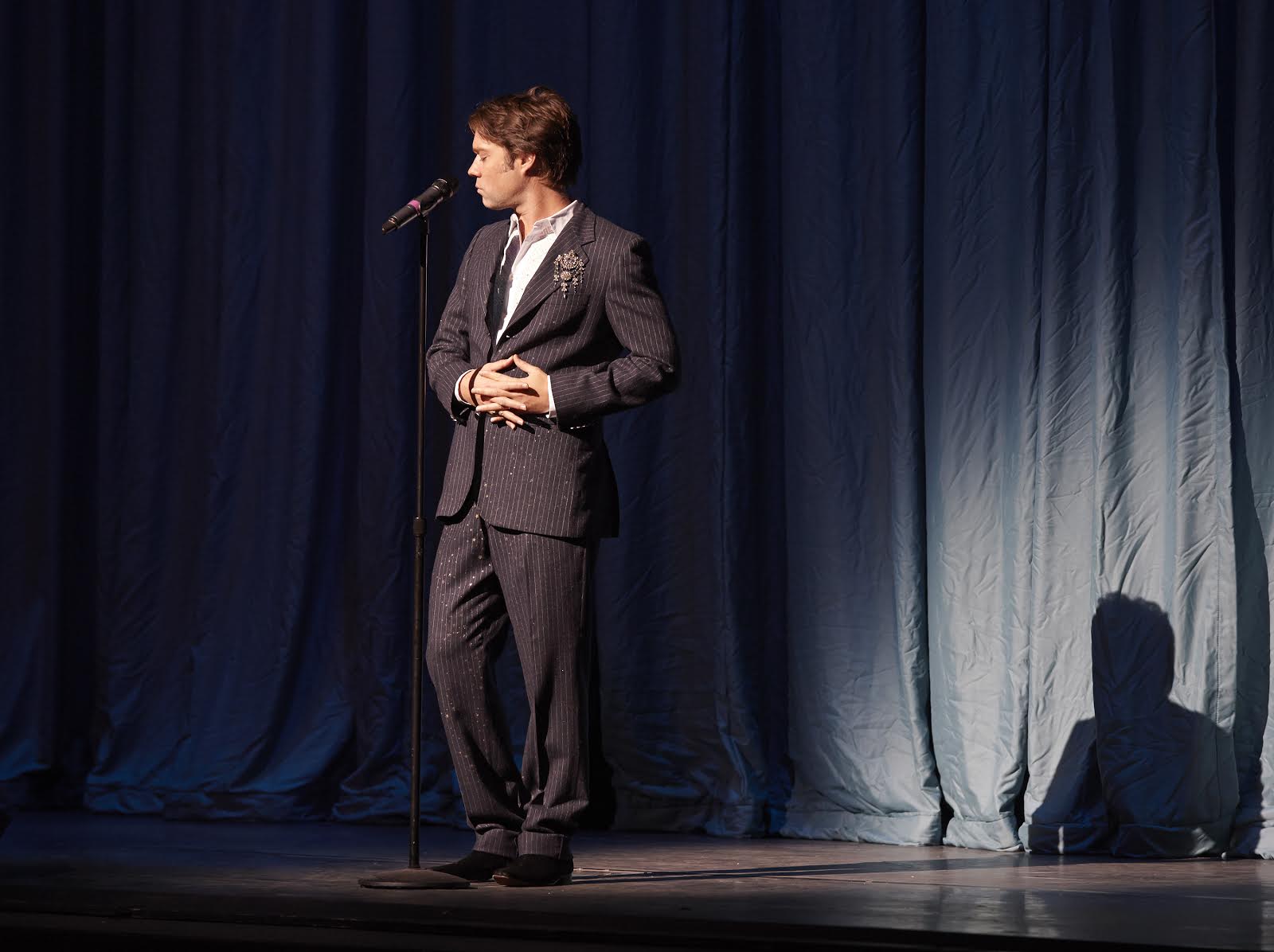











 barczablog