The run is so brief as to make this review seem pointless. Friday night I saw the opening of the Tragedy of Hamlet: Prince of Denmark. My blog may be done by Saturday, but anyone seeing a weekend showing already had their tickets, so my work is surely academic.
But I really love this stuff, looking at something new and trying to understand, testimony that hopefully helps me understand the process, to explore what the piece is doing. This is Hamlet but is not really Shakespeare. We’re in the realm of adaptation, so it’s only Shakespeare if you accept that the Otello by Rossini or Verdi are also Shakespeare. It’s especially curious because the team of Robert Lepage, Guillaume Côté and so many others have made magic without anyone speaking, presenting this wordy play wordlessly.
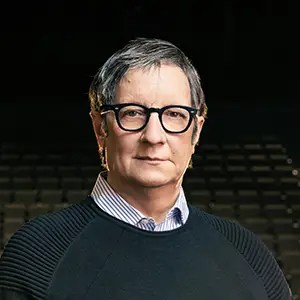
No that’s not completely true. There are titles that appear as you might see in a silent film, introducing segments. As I watched I was captivated, fascinated by story-telling, by moving bodies and a new way of experiencing Hamlet minus the usual verbosity.
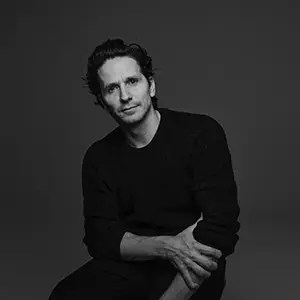
Guillaume Côté is both choreographer and the Hamlet we watched dancing, fencing, and eventually dying.
No soliloquys: although one of the titles mentioned “to be or not to be” more or less as an allusion en passant but that’s okay. I didn’t miss them, recalling an operatic Hamlet adaptation I saw (Matthew Jocelyn & Brett Dean at the Metropolitan Opera in 2022) that left them out. The funny thing at this point is how, dealing with such a known play the speeches become like part of the synopsis, a sort of subtext from another century that we can now discard because haven’t we all seen 100 productions of the play? When you come to the end and say “the rest is…” do we need to hear “silence?” These are among the most familiar lines in the English language, so in other words, maybe we’re ready to let go of the words.
No troupe of players: because the play within a play was enacted by Hamlet & Horatio in masks, rather than travelling players, saving us some extra verbiage.
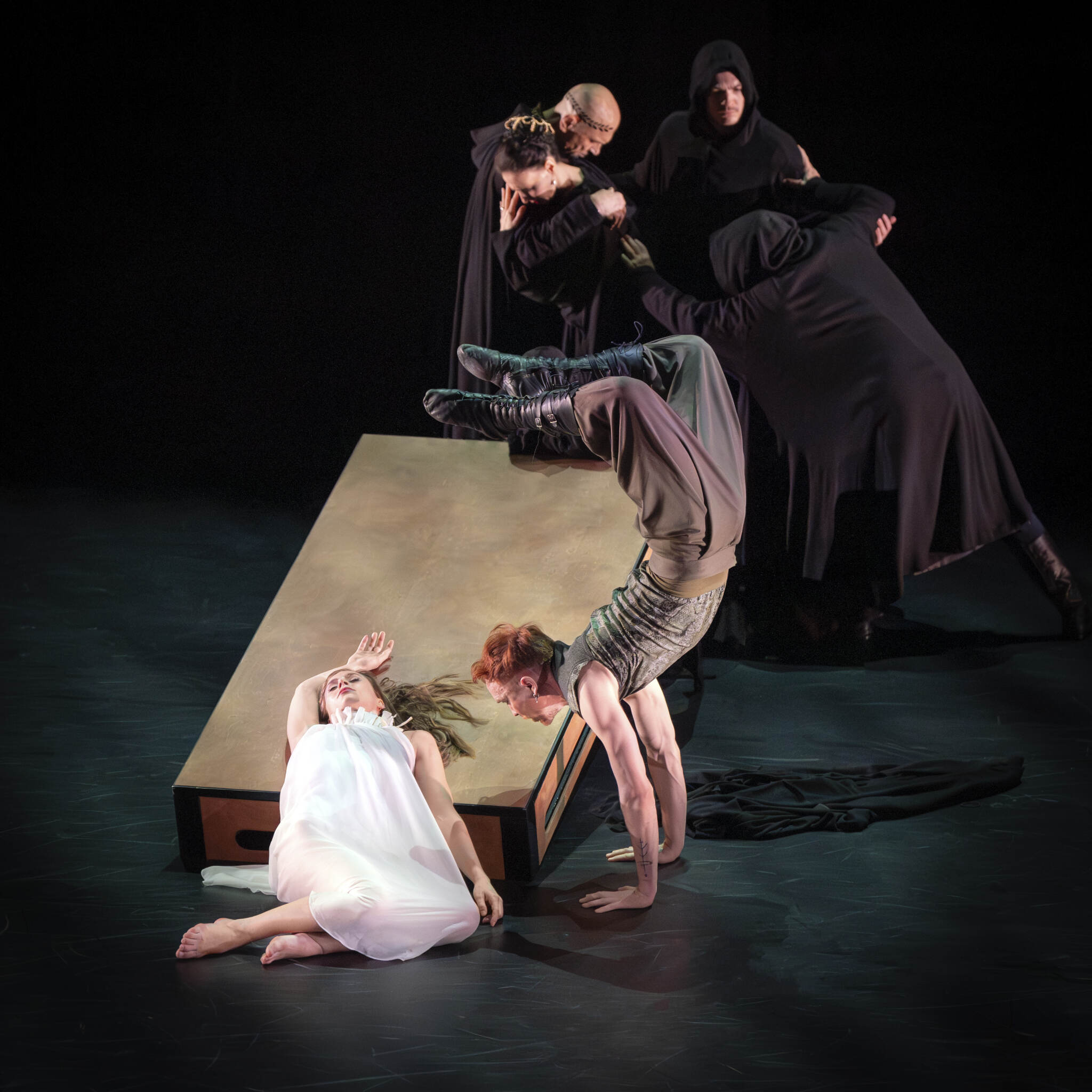
No grave-digger: although we did get the skull of Yorick as a bit of comic relief. I was sitting there trying to decide whether I liked this for a moment, and then with the arrival of the funeral procession for Ophelia, the choice made a lot of sense, given the powerful insanely passionate scene that followed, Laertes & Hamlet tussling over the body, practically enacting a sort of necrophilia, and getting us ready for the duel to come.
No Fortinbras no Osric no Marcellus: as the play has been stream-lined down to its essentials.
Today (the morning after) I am remembering several other Robert Lepage hybrid creations, intrigued by the way we are taken into something new by grafting one thing onto another.
In Far Side of the Moon (both the live play and the film) we see something mysterious as a character seems to fly as they ascend up a wall as though floating.
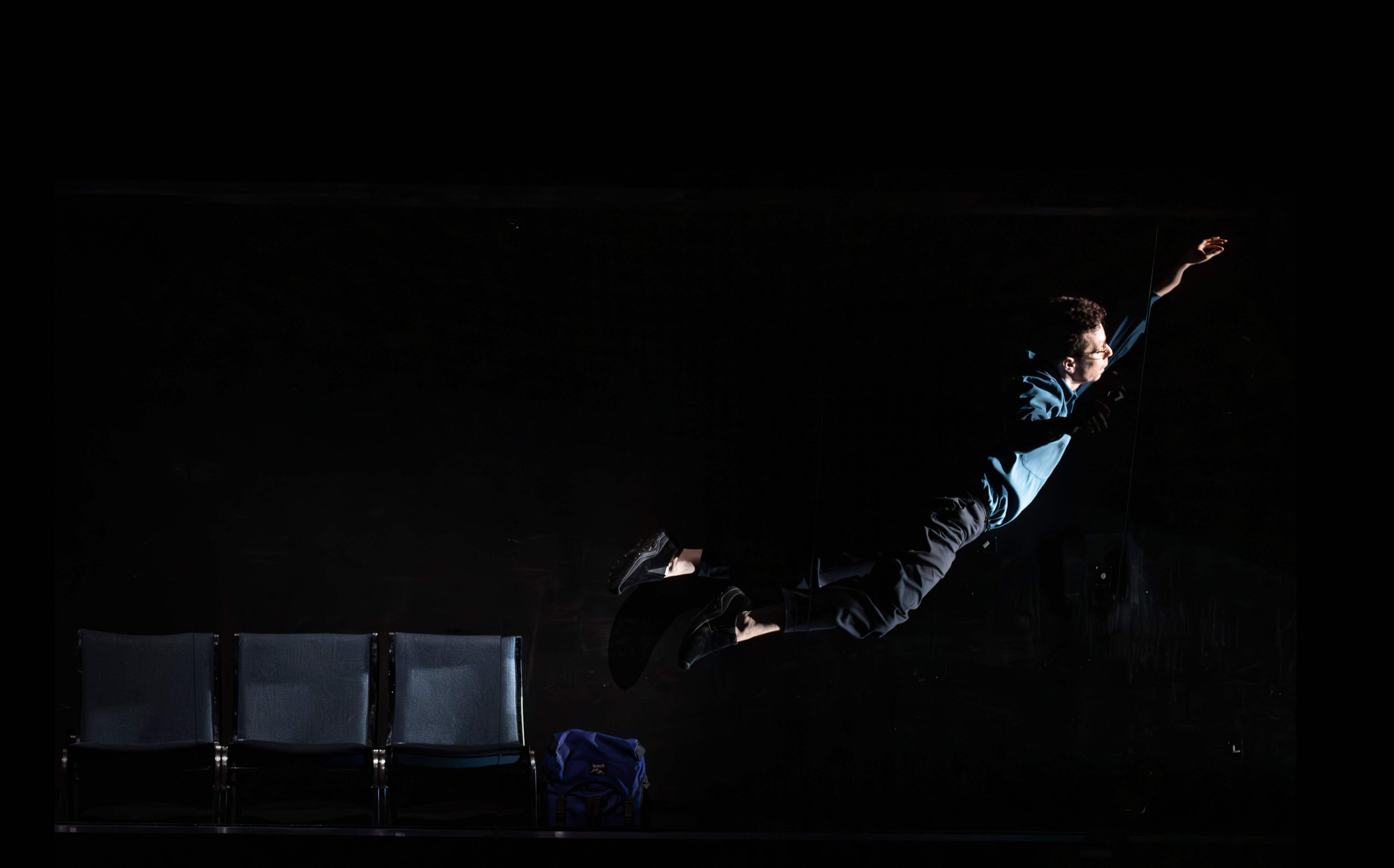
Lepage & Côté do something similar for Ophelia’s drowning, using a massive piece of fabric. It’s both a brilliant use of the set and the dancer, with bodies helping to support her as she floats or drifts or is carried away. It’s not just dance. The fabric has the added benefit of suggesting a very old sort of mise en scène such as we might have encountered centuries ago, as we’ve seen from Opera Atelier in their period sets for baroque opera.
The ghostly apparition when Hamlet sees his dead father is done with shadows reminding me of some of the effects seen in Lepage’s production with the Canadian Opera Company of The Nightingale and Other Short Fables.
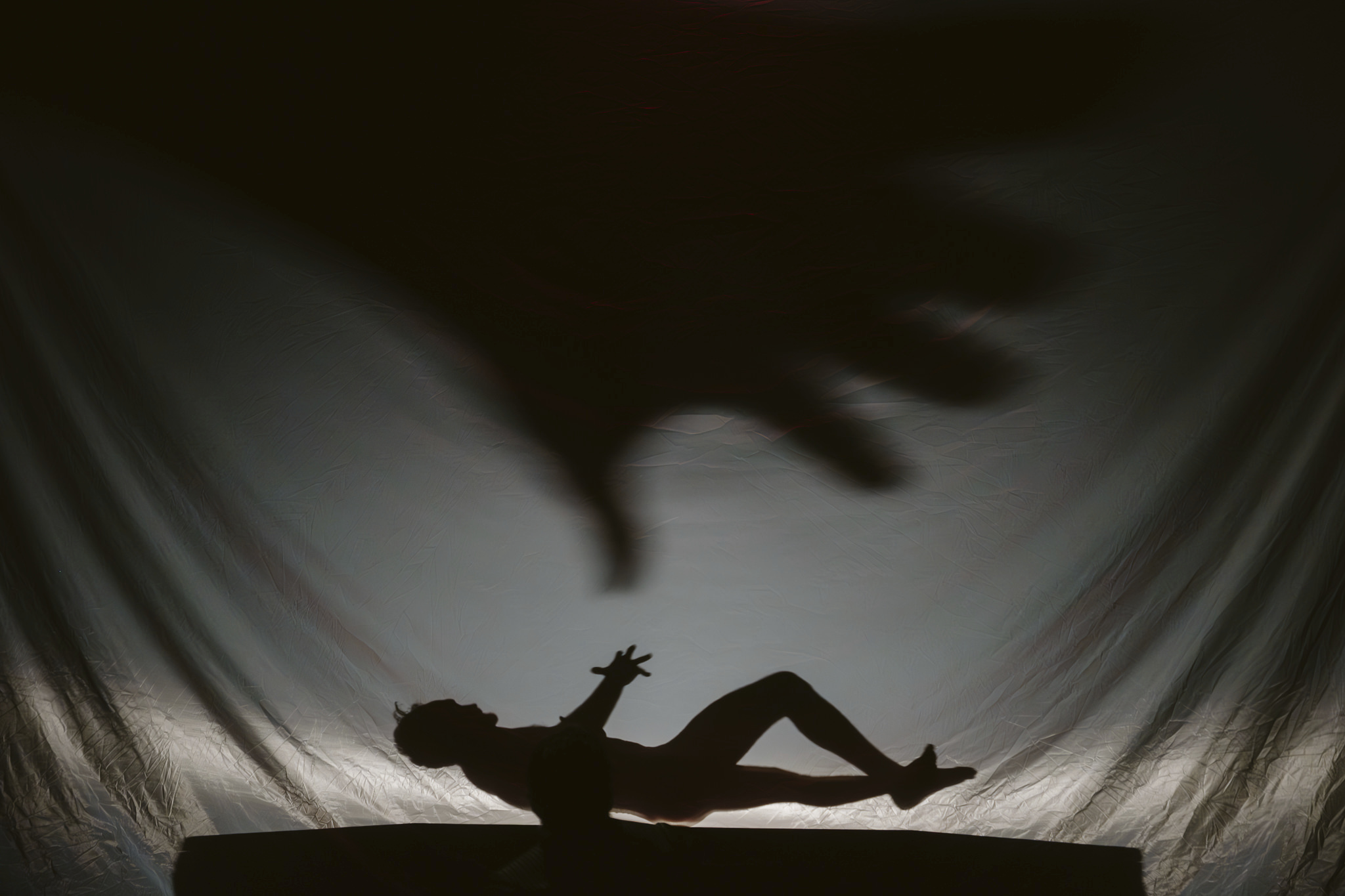
Again this was comparatively low-tech, no CGI or video but rather light & shadow and bodies moving.
The duel employs streamers that reminded me of the way computer effects help us to see the path of a hockey puck or a football in sports replays. I was grateful for a stylization that made the fight easier to follow even if this also likely made the work of Hamlet & Laertes that much harder as they simulated a fight to the death.
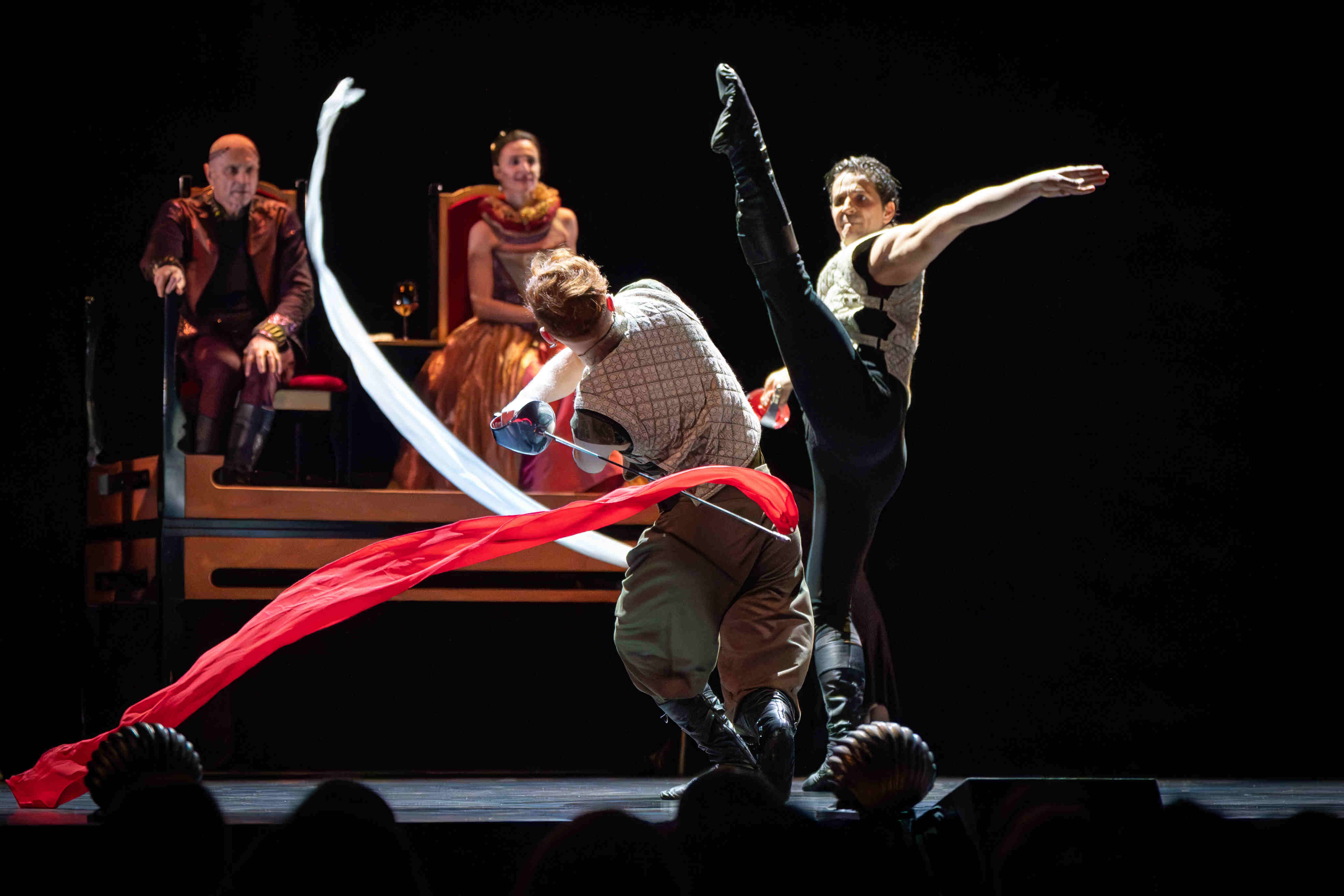
& Gertrude (Sonia Rodriguez) watch from upstage (photo by Roman Boldyrev)
And this too invokes older styles of theatre as with the shadows and the fabric for water.
I noticed another hybrid from Lepage & Côté in the choreography. Maybe I could quietly assume this is all Côté –given that I’m speaking of movement– except that it really impacts the dramaturgy, the process of the story-telling. Perhaps Côté is the one who sketches in the specifics of the dance, after discussion / direction from Lepage. We see Hamlet dance with Rosenkrantz & Guildenstern, a remarkably fun sequence as though to suggest student life & a peer-relationship, although I was also mindful of Monty Python’s Ministry of Silly Walks. This is meaningful not least because R & G are helping to plot Hamlet’s murder with Claudius, so if we can relate to them as a kind of Tweedledee – Tweedledum pair who aren’t fully differentiated as humans with feelings, perhaps (they might have thought) their death is less troubling in a work where almost everyone dies by the end. There are several other examples of a stylized movement vocabulary specific to a character, Ophelia (Carleen Zouboules), Polonius (Michel Faigaux), Claudius (Robert Glumbek) and Horatio (Natasha Poon Woo) for example. It might be true for everyone in the show.
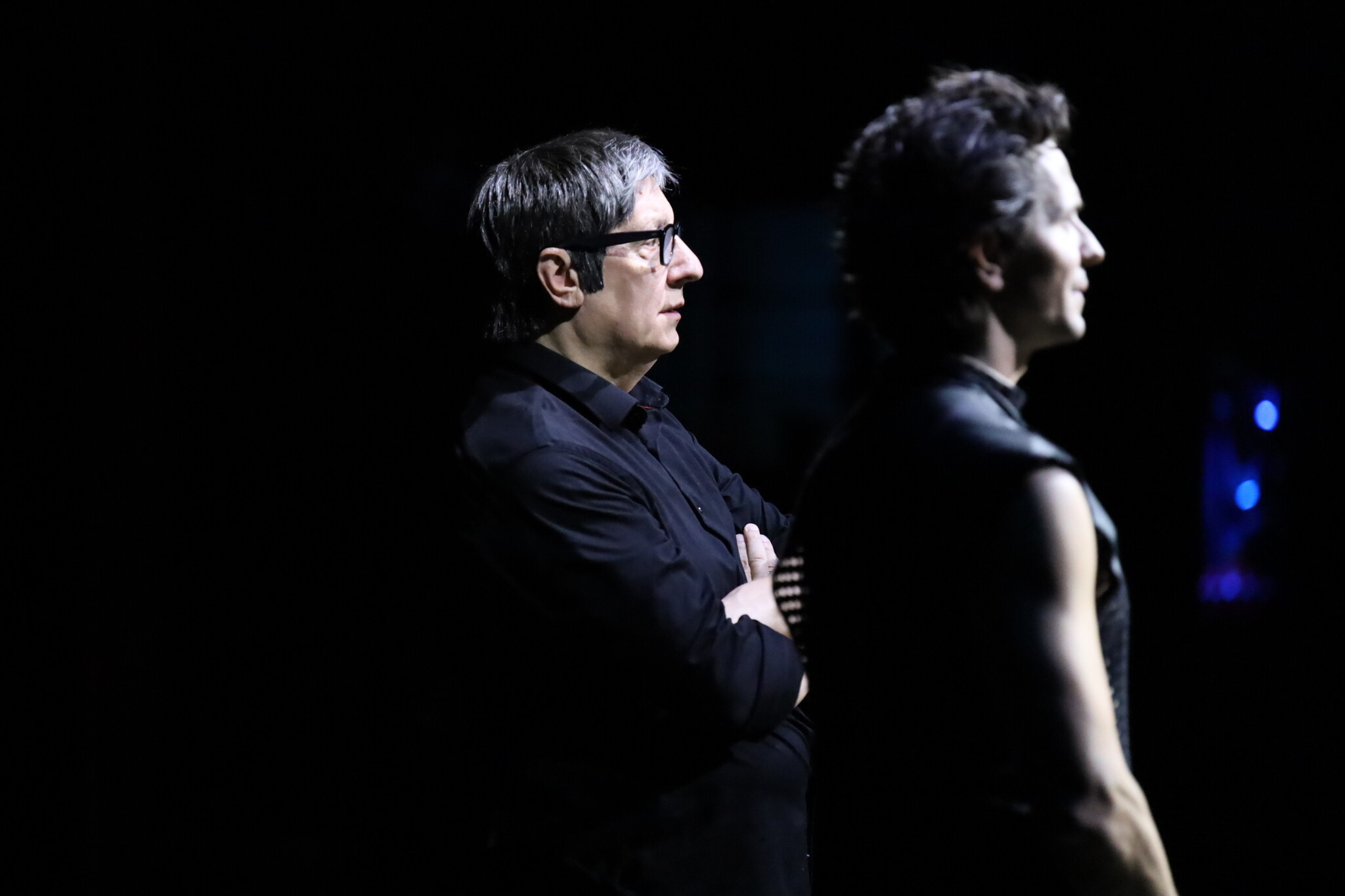
Some of the big musical numbers danced by members of the company are impressive original compositions from composer John Gzowski. Near the beginning there’s one that sounds like a passacaglia, an old form of variations. There’s a musical number for the play within a play, (if i didn’t mix this up with another part), where the piece is in a meter of 5, that makes it especially quirky as we watch Claudius in effect watching himself murdering his brother. And then he freaks out, running away from the play in distress. The choice to immediately show us his failed prayer and Hamlet approaching and deciding not to kill at that moment was tremendously clear, economical, eloquent. At times like this it felt as though we had evolved past words, improved upon Shakespeare (if you can forgive the heresy). The team (Lepage, Côté & Gzowski) made the text fluid & responsive to the needs of the storytelling, and I’m just trying to grasp what I saw & felt, as recollected the next day. I’m recalling my preference, that we need to see & hear these things more than once, to be able to decode and to understand, especially if there is complexity. That’s true for sci-fi films such as Project Hail Mary (that I saw yesterday) or 2001: A Space Odyssey, it’s true for complex orchestral compositions or novels or plays. I keep discovering new things in Hamlet, by the way, speaking of something I have seen and read many times.

While I have been talking a great deal about the hybrid between Lepage & Côté, we must properly include Gzowski in the reckoning. I have no clue as to how they work, how they create, whether the composer works the way they do in some films as a sort of post-production creator, fitting music after the fact. Or maybe he’s the text-maker whose composition is presented to the team and then must be choreographed / staged. It used to puzzle me more than a bit, observing films & plays, as to which came first. In something like Fantasia the film is animated after the existing pieces of music, a pattern followed by Stanley Kubrick in 2001. I understood that film composers come in after the fact, usually. But in the big set pieces at least, surely it is Gzowski who composed music first that the dancers must then encounter & that organizes/structures their movements choreographed by/with Côté. Gzowski has made new pieces of music, an original ballet. I reviewed a Toronto Symphony CD from a live performance of Miraculous Mandarin, a ballet composed by Béla Bartók roughly a century ago; perhaps someday we will have a live performance of Gzowski’s ballet or theatre music, pieces deserving to be heard without any visuals, just as music. As with film music we may notice that the movement & staging completes the experience, that the music might feel incomplete or understated without Hamlet or Ophelia or the others before us onstage: and that’s to be expected. And in some other places Gzowski is likely coming in later in the process, creating sound design & dramatic effects to set moods & help transitions between segments. Yes I think of this as segmented, the way a silent film is segmented, complete with titles to tell us who enters as in the playtext, such as “enter Queen”. If I had one critique –and I don’t hold this against Gzowski– it’s that the levels seemed to be set too high. I put kleenex into my ears the way I do at a rock concert, because I found it too loud. The levels are possibly set here in Toronto by stage management / sound technicians at the Elgin Theatre, possibly the way Gzowski wanted it. All I know is that it felt too loud for my ears.
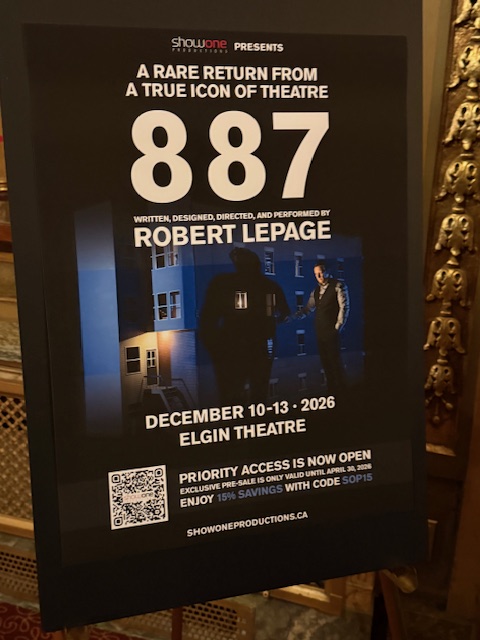
I am excited to see that Show One Productions, the team who brought us Hamlet, will be bringing back Lepage’s 887 in December, a show that I love. I look forward to seeing it again.