I’m a father with grown children. I encountered Mary Pipher’s book Reviving Ophelia in the 1990s. The title might give you an idea of what sort of book it is, and why I would have read it.
Ophelia? Collateral damage in Hamlet’s struggle. She becomes mad, eventually drowning, after her father dies & Hamlet pushes her away.
The perils she faces –parents & peers influencing her—are not so different from those encountered by girls growing up in the 21st century, sometimes with similar results. Drowning is sometimes just a metaphor, the girl losing her authentic self in the stream of pressure to change. As I never had a son I never bothered looking for books about parenting male children.
I keep getting jolted by the evidence in front of me. Earlier this winter I was at a memorial celebration where I could clearly see cohorts of talented people. Those who were in that school in the early 1970s stood together in one part of the room, those from the mid-80s in another part, and so on. And yes the current students were also there in an especially cute cluster.
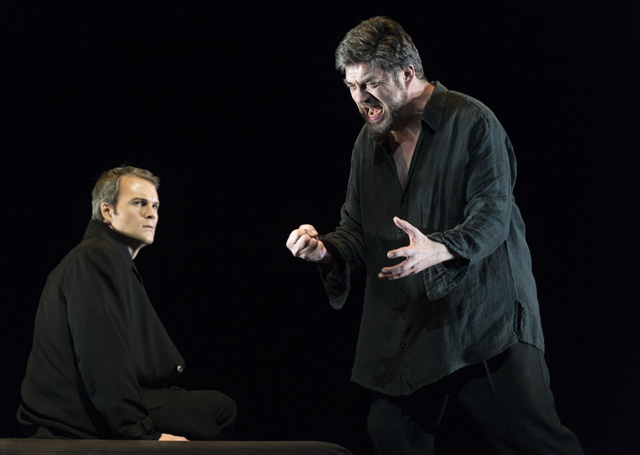
More recently I watched young actors perform at Ryerson Theatre School. Then today, in church I again observed members of the congregation growing up before my eyes.
When my eyes fell on the copy of Pipher’s book on the shelf today, I decided to lend it to one of my relatives. She has a young daughter, but maybe the mother herself was beneficiary of the wisdom of the book.
Mary Pipher: whose new book appears in June
I hope Pipher’s book has been influential, because—if I don’t miss my guess—the world is a safer place for daughters and the parents of daughters than it was almost twenty years ago, when the book appeared. Feminism is so much more than equal pay or reproductive rights.
I’d like to believe that the current generation of girls are growing up stronger and safer from the currents that might endanger them or their authenticity, at least partially thanks to Pipher.
Shay Loya’s book Liszt’s Transcultural Modernism and the Hungarian-Gypsy Tradition
During the production of Feydeau’s The Girl From Maxim’s at Ryerson Theatre School—just concluded last night—I had lots of opportunities to sit and read, between cues. I read most of a book recently arrived in the EJB library namely Shay Loya’s Liszt’s Transcultural Modernism, and the Hungarian-Gypsy Tradition.
I’d grabbed it, mindful of a recent series of questions to Topher Mokrzewski, who performed the Liszt transcription of the Liebestod at the Wagner Exchange recently. I tend to speak in Liszt’s defense to anyone who’ll listen even if it flies in the face of the conventional wisdom, which has long tarred him with several different brushes.
As I’d hoped this new book –part of the Liszt centennial buzz—digs deeply into the complexity of the man and his work. While it may not seem to most people that he needs rehabilitation, that’s because they’re naturally happy with the little corner they’ve driven him to:
Virtuoso
Second-rate composer of trashy music
Loyal supporter of Wagner
I don’t think Loya’s book has an agenda to defend Liszt, but it does problematize the old assumptions, the stereotypes about him and his music. His relationship to modernism –aka “the music of the future”—is itself a complex nut to crack. When we add in Liszt’s other musical activities, it’s that much more complex. In a nutshell, Loya makes me feel much better about being a Lisztomaniac.
I will write more about the book later (haha when I FINISH might be a good idea). But for now I find it illuminates elements in the music I’ve been playing this week. For the Feydeau play, we’ve been using three tunes from Die Fledermaus (J. Strauss) and one each from La Belle Hélène (Offenbach) and Das Land des Lächelns (Lehar). In each case the composer incorporated a style from another medium in a manner somewhat reminiscent of what Loya speaks of. While the Offenbach number (utilizing march rhythms) has little connection to Loya’s book, the other four in various ways seem to parallel some of the trans-cultural phenomena found in Liszt, a composer whose allegiances are hard to know. He’s a Hungarian, which is not to be confused with a “gypsy” (more properly the Roma a people persecuted throughout the world) even though so-called gypsy music is strongly associated with Liszt. Nothing captures this ambivalence better for me than his name: which is “Ferenc” rather than “Franz”. Liszt is both a Hungarian nationalist but also part of the movement surrounding Wagner, which is at least one reason he’s regularly treated as though he were German. The Austro-Hungarian empire (later Austria-Hungary) was a fascinating and complex place that i don’t pretend to understand. I suspect that a Hungarian in this world would face some of the same choices that a Francophone Quebecois faces in Canada, seeking an authentic relationship with their heritage, balanced with possible career aspirations that might lead them to learn English.
Notice how the rhythmic ornaments in this song (“chacun a son gout”) resemble some of the figures found in gypsy music, and the song –now that i look at it–is built in two parts that resemble a dance (perhaps a csardas?), with a slow start and faster finish. Hearing this after reading Loya makes me want to somehow unpack the exotic assumptions of a listener of the time. I can’t help wondering how different this is from more recent conversations about cultural assimilation in our own time.
And yes, I say this recognizing how politically fraught the word & the culture of Roma people are even now, let alone in the 19th century. Their music was regularly imitated and appropriated. I put the parenthetical in the headline to distinguish “appropriate” (the verb) from “appropriate” (the noun). I suppose i was concerned because the noun usage is exactly the opposite of what i feel: that it’s inappropriate to appropropriate.
You hear some of the same type of thing going on in the famous overture.
It’s been a fun couple of weeks chez les étudiants de Ryerson, playing La Dame de Chez Maxim. Due to snow Friday night we’ve played six consecutive nights.
I feel I am cheating to say “we” because I am mostly a spectator at the piano, enjoying the performances of the talented students at Ryerson Theatre School. What a lark… and what an ego trip!
I looked in Francisque Sarcey’s Quarante ans de theatre last night. Sarcey is someone I know from my research on Maeterlinck’s Pelléas et Mélisande. He has no patience for the work, wondering how one can bother with someone who repeats herself so much (and those of you who know the play will realize he’s not necessarily being unkind, even if he refused to meet the work on its own terms, did not precisely enter into the spirit of the play or its style).
But Sarcey is crazy for Feydeau, suggesting that this play is so perfect that you wouldn’t change a word or a gesture. Speaking of laughs, i giggled to notice that this great critic’s review takes us through the work in a way that nowadays would be considered a guaranteed spoiler, giving away several jokes. His critical assessment is the tiniest part of the review. But then again he is shrewd, a commercial success in his own right, in distilling key moments of the play into his writing.
This must seem rather amazing considering that we see so little of Feydeau on our stages. Is the life depicted so different from what we see in our plays and films? Do we no longer have marital infidelity? Nobody believes in ghosts? Everyone now tells the truth?
Sure…
But there are some things that have changed. There are a lot of people in this play, which means lots of actors to hire, and no easy parts to play. It’s a long piece of work, coming in at over three hours of break-neck energy and wackiness. In a big theatre without amplification the performances likely call for a different skillset than what we see now. Considering that the Ryerson theatre has sold out every night perhaps Feydeau deserves another look (although it did help that the show has a huge cast, which equates to lots of family & friends coming to see). In an adaptation –translated into a modern idiom — I suspect the length & number of parts could probably be dealt with (if someone hasn’t already thought of this…).
I am in any case, grateful for what I’ve seen, honoured to be of some use for such a capable & gifted bunch. Dr Cynthia Ashperger didn’t allow her charges to take any shortcuts that I could see. Every night they worked their butts off, seeking perfection in the next performance.
Tonight’s show is the last one. I am very grateful. It’s been huge fun.
I must read more Feydeau, although it suffers without the physical element, the voices and machinations onstage.
“Press releases and announcements” are presented verbatim without comment.
Against the Grain Theatre throws down the gauntlet with program of rarely performed song cycles
TORONTO—Against the Grain Theatre (AtG), the young company that has received critical acclaim for bringing unconventionally staged works to Toronto audiences since its launch in 2010, presents Kafka/Janáček/Kurtág, a double bill of two daring song cycles on March 1 and 2, 2013at 8 p.m. Taking place at the Extension Room, a Leslieville yoga and dance studio, the program issues a challenge to audiences to embrace the intensity of two rarely performed works by Leoš Janáček and György Kurtág.
Kurtág’s Kafka Fragments, a haunting song cycle based on excerpts from Franz Kafka’s letters and diaries, features soprano Jacqueline Woodley, a recent graduate of the Canadian Opera Company Ensemble Studio, and violinist Kerry DuWors. The work is comprised of 40 extracts from Kafka’s personal missives — ranging in length from several seconds to several minutes — that illustrate the writer’s musings on the human condition both in simple and complex ways.
Rounding out the double bill is The Diary of One Who Disappeared, a song cycle by Leoš Janáček that tells the story of a farmer’s son who leaves home for the love of a gypsy woman. AtG is proud to present tenor Colin Ainsworth, mezzo-soprano Lauren Segal and sopranos Lesley Bouza, Eugenia Dermentzis and Sarah Halmerson, accompanied on the piano by AtG music director Christopher Mokrzewski.
Staged by AtG artistic director Joel Ivany, the presentation of Kafka/Janáček/Kurtág is designed by Stratford Festival regular Michael Gianfrancesco and musically directed by Mokrzewski.
“Each of these two pieces concentrates on text, words and the search for meaning in everyday life,” said Ivany. “No doubt about it: this evening of music and drama will be heavy, but we’re challenging our audiences to embrace the intensity. Let’s take a risk together! It’s what Toronto needs.”
“Repertoire like Kafka Fragments and The Diary of One Who Disappeared is the stuff AtG dreams are made of,” said Mokrzewski. “It’s not often that one comes across an opportunity to present works that are so challenging both to the artists and the audience, so I’m chuffed that we’ve created our own.”
Tickets are $30 and are available at www.againstthegraintheatre.com. The Extension Room is located at 30 Eastern Ave., Toronto, ON.
For more information on AtG’s 2012/2013 season and to view artists’ biographies, please visit www.againstthegraintheatre.com.
About AtG
Against the Grain Theatre is a five-person collective comprising Joel Ivany, Christopher Mokrzewski, Nancy Hitzig, Caitlin Coull and Cecily Carver. The wider but closely-knit AtG community includes musicians, actors, dancers, visual artists, photographers, and arts professionals who come together to turn the classics sideways. AtG’s inaugural season in 2010/2011 included three critically acclaimed concert presentations and a fully staged production of La Bohème. Last year’s highlights include sold-out concert performances of The Seven Deadly Sins (and Holier Fare) and a four-run production of Britten’s The Turn of the Screw.
“Press releases and announcements” are presented verbatim without comment.
The Canadian Sinfonietta has commissioned a new chamber opera, Northern Lights, Eastern Fire, by Canadian composer Erik Ross, and Chinese-Canadian librettist Phoebe Tsang, which will be directed by D. Jeremy Smith. With a synopsis steeped in Chinese mythological intrigue, this work will be presented as part of our Chinese New Year Celebration on Saturday February 16 at 8 PM at the Glenn Gould Studio (250 Front St. W).
The Canadian Sinfonietta celebrates the Chinese New Year with a world premiere of the
chamber opera Northern Lights, Eastern Fire. Anna Guo and the Dunhuang Ensemble of
Chinese Instrumentalists will open the evening. Join the Canadian Sinfonietta as they ring in the year of the snake!
Northern Lights, Eastern Fire
music by Erik Ross, libretto by Phoebe Tsang
Charlene Santoni – Soprano – Fox
Xin Wang – Soprano – Taizhen
D. Jeremy Smith – Director and Designer
Erik Ross – Music Director
Clare Preuss – Movement Director
Costumes executed by Laura Gardner
Scenic elements executed by Angela Lim
Joyce Lai and Alain Bouvier – Violins
Tim Fitzgerald – Double Bass, Stephen Tam – Flute
Olivia Esther – Horn, Ira Zingraff – Trumpet
Scott Good – Bass Trombone, Erik Ross – Piano
Synopsis
The Fox Spirit—in the new opera Northern Lights, Eastern Fire—is obsessed with the
alluring Consort Yang. This legendary concubine of the Tang Dynasty is killed through
intrigue. The Fox’s magic allows her to take over the dead beauty’s corpse. However, after a thousand years, the corpse is rapidly disintegrating.
Then the Fox meets the Taoist nun Taizhen, and becomes convinced that this novice is the
reincarnation of the Consort’s spirit. The Fox’s desire to possess both Taizhen’s body and the Consort’s spirit leads her to a fatal seduction.
Canadian Sinfonietta
“Reintroducing live chamber music to the growing Toronto communities.”
Tak-Ng Lai, Artistic Director and Founder
Joyce Lai, Executive Director and Concertmaster www.canadiansinfonietta.com
169 Highgate Avenue North York, ON M2N 5G9
canadiansinfonietta@gmail.com 416 221-3623
How apt that in the week of Valentine’s Day, between performances of Tristan und Isolde, a paean to love, that the Canadian Opera Company should present a concert program titled “Love’s Dark Shore” in the Richard Bradshaw Auditorium. We heard Franz-Josef Selig accompanied by the COC’s Rachel Andrist at the piano in a program of songs by Franz Schubert & Richard Strauss.
Chamber music is sometimes a refuge from opera. It can be a place where audiences go for direct communication, something subtler than the virtuoso display that is sometimes at the heart of opera.
And it’s a place where singers also go, a well-spring of truth, a crucible for pure ideas to be generated without any costumes, sets or orchestra to conceal the naked soul of the singer. In the harsh glare of the mutually intimate stare between the artist and the audience, there is no room for fakery or tricks.
Selig has nothing to prove as far as his instrument is concerned. The COC production was largely sold out because of the drama surrounding Ben Heppner, both as the most impressive current Tristan in the world, but also as a singer who has had his difficulties; and so I kept getting asked online “will he cancel?” “Can he do it”….and now thank goodness it appears yes he’s back. Whew…
Selig in the meantime was a rock upon whom the COC could lean, a dependable artist with a fabulous timbre, remarkable technique and the commitment to match.
On this occasion, I had a chance to see just how impressive Selig’s technique really is. He sounds like a baritone much of the time, without the growly lower register one sometimes associates with German basses (thinking of Crass, Greindl or Frick). This voice is so big and powerful that—if we were to think of the members of the band Spinal Tap, choosing his setting on the volume control—it’s as though he regularly dialled his voice down to 1 out of 10, a super-smooth pianissimo. But even at that delicate volume there was never dryness or lack of warmth, the legato was breath-taking, and the colour was like cognac or honey.
The RBA is a remarkable place to hear a concert, as one looks out at the world through glass on three sides, as though we –artists & the audience—were suspended in a cube above Toronto’s traffic. At one magical moment in Schubert’s Prometheus, Selig extended his hand to mime the effect he was singing (very much like this picture, but with a piano rather than another singer).
Franz-Josef Selig with Ryan McKinny from the COC’s Tristan und Isolde (Photo: Chris Hutcheson)
In the translation, we’re nearing the song’s climax as the singer –Prometheus—defies Zeus, says “Here I sit, shaping men in my image.” By a curious coincidence, my eye picked up the stream of traffic on University Avenue as though just beyond the titan’s reach. We were all there on this mountain in awe. The space is a rarefied place, as though we were in Valhalla, feasting with the gods. Pick your favourite religion (Greek or Nordic) as to which metaphor you prefer.
While I heard some very impressive notes, both low ones and high ones, this wasn’t to be confused with virtuoso display. Selig’s sincerity is blessed indeed, direct and unaffected. I feel very fortunate to have heard him sing today.
January 16th I promised to explore connections between Berlioz’s Les Troyens (an opera I’d been obsessing over) to Wagner’s Tristan und Isolde, currently sharing the Canadian Opera Company stage with Mozart’s La Clemenza di Tito. When music stays inside your head it’s sometimes natural to see links with what follows, as though our experiences were a journey.
Sorry I’m late. I wasn’t waylaid on that path, just distracted by the show I’m in.
I also associate Troyens to my current craze, namely Clemenza di Tito. You see something you love, wondering why it wasn’t more influential. Clemenza is another cul-de-sac rather than a seminal creation, just like Troyens. For whatever reason, composers have looked elsewhere for influences, possibly because neither opera was presented enough to become truly popular (indeed Troyens was not presented in its completed form in the century after its composition). “Classical” is a word apt for the subjects (Titus and Aeneas), the sources (Suetonius for Mozart, Vergil for Berlioz) but also the retro treatment of the materials. Tristan of course is hugely influential and modernist rather than neo-classical.
Today will be the first of the series connecting Troyens to Tristan. Thursday is Valentine’s Day, when we declare our love for one another with the help of the greeting card industry. Or we could turn to one of these composers.
Berlioz had the oddest relationship to Shakespeare’s Romeo and Juliet. He’d seen Harrriet Smithson as Juliet, a woman who consumed him on and off for years. This is the woman who inspired the composer to write Symphonie Fantastique, a piece celebrating an obsessive love affair. When Berlioz composed his own version of Romeo and Juliet there’s a lot more Romeo than Juliet. His romantic imagination celebrates the story through his identification with this tale, and I can’t help thinking that this means Berlioz sitting in the audience staring at Smithson’s beauty.
But the love music Berlioz wrote –titled “scène d’amour”—is among the most convincing non-verbal depictions of the intimate moments between lovers I’ve ever encountered in classical musical. While there are parts of this dramatic symphony that are sung, I like the fact that Berlioz chose not to attempt anything vocal for such a delicate portrait.
Wagner? It’s hard to compare, because of course Tristan und Isolde is an opera. Here’s a chance to hear something roughly comparable in the story, namely a moment of intimacy.
I wrote about it awhile ago (and notice that Wagner acknowledges his debt to Berlioz). I’d thought i would say much more here, but no, I’ve said enough.
German bass Franz-Josef Selig is making his Canadian Opera Company debut as King Marke in Wagner’s Tristan und Isolde. Selig has performed at the world’s great opera houses including the Met, Royal Opera House Covent Garden, La Scala, Wiener Staatsoper, Staatsoper Hamburg, Opéra de la Bastille, Théâtre du Châtelet (Paris), Lyric Opera of Chicago, Théâtre de la Monnaie (Brussels), Deutsche Oper Berlin and Bayerische Staatsoper (Munich).
Recent appearances include Fasolt in the Met’s new Ring Cycle; Bartolo in Le nozze di Figaro (Salzburg Festival); Die Entführung aus dem Serail (Liceu Barcelona); and, Parsifal, Die Zauberflöte and Tristan and Isolde (Wiener Staatsoper). Other credits include Rocco in Fidelio and Die Zauberflöte (Munich), Die Zauberflöte (London) andCommendatore in Don Giovanni (Salzburg). Later this season Mr. Selig reprises his role in the Met’s Ring Cycle.
Franz-Josef Selig will continue in the role of King Marke in the COC Tristan und Isolde until February 23rd in a production that’s sold out except for standing room. In addition, this Tuesday February 12th, Selig makes a special appearance at the Richard Bradshaw auditorium at a noon-hour recital of songs, singing songs by Franz Schubert & Richard Strauss.
I ask Selig ten questions: five about himself, and five about his portrayal of King Marke.
1) Which one of your parents do you most look like (what is your nationality / ethnic background)?
Bass Franz-Josef Selig (Anne Hoffmann)
I guess I’m a nice mixture of both of them. I’m German. I’m married and we have three children, two daughters (26 and 23) and a son (18).
2) What is the best thing or worst thing about being an opera singer?
I’d like to describe the best thing with a short story from the end of our dress rehearsal here at the FSC. There were many young students in the audience and after Act 1 and 2 they were reacting immediately very excited. Then after 5 hours of heavy Wagner-opera with this incredible music of Isolde’s “Liebestod” at the end the audience was so touched that they had to be silent for a moment. Such breathtaking silence is for me one of the strongest experiences you can have.
The worst thing about being an opera singer is the sad fact to be most of your life on tour and far away from your family.
3) Who do you like to listen to or watch?
First I have to say that even though or maybe because I am a musician I do not listen to music all the time. I don’t have earphones on my head all time and most of the time in my house there is no radio etc. playing. I love the silence! When I listen to music I love, for example, recordings of Glenn Gould playing Bach, recordings of Bach Violin sonatas, Lieder-Repertoire sung for example by Fritz Wunderlich…. 95% I listen to classical music.
Tatort
On television I am a big fan of a German crime-series that is called “Tatort” and thanks internet video stream it’s possible to watch it from everywhere!
4) What ability or skill do you wish you had, that you don’t have?
When I studied church music and worked as an organist I used to improvise a lot but I think it was more a brave and technical style. The gift of inspired improvisation would be one of my wishes if “Lady Luck” would cross my way one day!
5) When you’re just relaxing and not working what is your favourite thing to do?
Having time together with my family; playing organ; reading a book.
Five Questions about King Marke in Tristan und Isolde:
1) How does singing and acting the role of Marke challenge you?
I don’t know if this role really challenges me. Does an actor have to be challenged by a role? I would say much more important for King Marke is how I can come closer to this King by getting older and bring in more life experience. That is for sure very important. As a young singer you can probably ‘sing it’ but the inner side of the character you will discover every time a bit more.
2) What do you love about King Marke: both the role Wagner created & in Sellars’ production of the opera?
Franz-Josef Selig with Ryan McKinny (Photo: Chris Hutcheson)
King Marke, I think, is one of the most emotional characters that Wagner and probably any composer created. The way of telling his emotions and the injuries of his soul and heart directly to Tristan and the other people in the scene is unique. Filippo II in Verdi’s Don Carlo also has a very emotional aria but he is alone speaking to himself. That’s a big difference! Peter Sellars is very much interested in the inner life of the characters and their relationships. We had a very close understanding already in Paris 2005 working on the first run of this production. I know that some people have little problems with the fact that in this production Marke kisses Tristan. For me this is a moment of deepest friendship and love for Tristan to whom Marke says “I loved you so much that I never wanted to get married again”. That means to me Marke didn’t want to marry again so that Tristan can become King after Marke dies. I would appreciate when people can think about this without any “homophobic thoughts and fears”….
3) Do you have a favourite moment in Tristan und Isolde?
Hard to say… I really adore the Overture of Act 1 and 3 as well as all these moments when Wagner is able to create music from a full orchestra level sometimes down to one instrument playing in just a few seconds. And then the end “ertrinken, versinken, unbewusst höchste Lust”…. Wow!!! Most of the time that doesn’t stop for hours in my head!
4) How do you relate to King Marke (the king who is betrayed in the medieval legend or as the figure in the Wagner music-drama) as a modern man?
How King Marke opens his fears and wounded heart to other people I think is showing a very modern man. If he were an old kind of hero he could have killed Tristan and Isolde at the end of act 1. But he is asking Tristan “why” instead of taking revenge!
5) Is there a teacher, singer, actor or an influence that you especially admire?
One of my first operas I ever saw was at the age of 24 (that’s true!!) “Tristan und Isolde” at the Bayreuth festival with Matti Salminen singing King Marke. A moment I will never forget.
Singers that I especially admire are Fritz Wunderlich and Cesare Siepi. Actors that I really like are for example Jack Nicholson, Meryl Streep, Bruno Ganz…
~~~~~~
Tuesday Feb 12th Franz-Josef Selig makes a special appearance at the Richard Bradshaw Amphitheatre in a program of Schubert & Strauss songs (accompanied by Rachel Andrist piano), between performances as King Marke in the COC production of Tristan und Isolde.
Daveda Karanas as Brangäne, Melanie Diener as Isolde, Ben Heppner as Tristan and Franz-Josef Selig as King Marke in the Canadian Opera Company’s production of Tristan und Isolde, 2013. director Peter Sellars, visual artist Bill Viola, (Photo: Michael Cooper)
“Press releases and announcements” are presented verbatim without comment.
ENDING ON A HIGH NOTE
For Immediate Release – Toronto, February 8, 2013: After twenty years of developing and producing new Canadian chamber opera, Toronto’s Queen of Puddings Music Theatre will conclude operations this year on August 31, 2013.
Founders and co-artistic directors Dáirine Ní Mheadhra & John Hess explain: “With Queen of Puddings, we’ve achieved what we set out to do, which was to commission and produce original Canadian opera to a high artistic standard, and to develop an international profile for this work. In this current season the company is thriving, with the great success and critical acclaim for our production of Ana Sokolovic’s opera Svadba-Wedding, touring nationally and internationally, and coming up on April 30th the premiere of a new vocal chamber work at the Richard Bradshaw Amphitheatre by composer Chris Paul Harman. The end of our season in August 2013 feels like a very natural artistic ebbing point, and thus feels like the right moment to close the company. We want to conclude in a year like this, which is full of artistic pleasure, highlights, and fulfilment of our goals, with continued financial stability due to a deficit-free track record.”
After August 31, Dáirine will remain active in the contemporary opera world, while John will continue to teach at Western University and perform recitals.
The Toronto based Queen of Puddings Music Theatre was founded in 1994 by Dáirine Ní Mheadhra & John Hess. Acclaimed as a leader in the creation of original Canadian chamber opera/music theatre, Queen of Puddings’ aesthetic is a physical, singing theatre where the performer is the central force and the instrumentalists are integrated into the dramatic action. In addition to the award-winning production of Svadba-Wedding (2011), notable production landmarks include the world premieres of Beatrice Chancy (1999, Rolfe/Clarke), the first opera about black slavery in Canada which launched the career of soprano Measha Brueggergosman; The Midnight Court (2005, Sokolovic/Bentley), the first Canadian opera (and the first Canadian company) invited to the Linbury Theatre at England’s Royal Opera House, Covent Garden; Inês (2009, Rolfe/Bentley), a chamber opera inspired by Portuguese Fado; Love Songs (2009, Sokolovic), declared the best production at the Zagreb Biennale and subsequently presented at the prestigious Holland Festival; Beauty Dissolves in a Brief Hour (2010, Klanac/Rea/Shi), hailed as “an exquisite piece of music theatre”; and Beckett: Feck It! (2012, Hamilton), acclaimed as “an entirely engrossing evening of theatre and song”.
In 2012 Dáirine was awarded the Canada Council Molson Prize in the Arts in recognition of her lifetime achievements and ongoing contributions to the cultural and intellectual life of Canada.
“We are very deeply indebted to our dear friends and close colleagues, for their marvellous support, warmth, and collegiality during the life of our company”, add Ní Mheadhra and Hess. “They have been integral to our work and we couldn’t have given the best of ourselves without their belief that we would do no less.”
La Clemenza di Tito is not known the way the major operas of Mozart’s maturity are known and loved. When I say Don Giovanni or Marriage of Figaro or Magic Flute there are tunes that instantly pop into my head by association, as there likely are for everyone else.
Increasingly I am having the same sort of response to Clemenza di Tito as well:
because I’m seeing another Toronto production, hot on the heels of a more conservative one by Opera Atelier,
because I am playing my recordings of the opera over and over
because I am thinking about what Mozart was doing in this opera (and sitting backstage at the show i am doing, thinking…).
While it’s true that he handed off some of the compositional duties on recitatives to someone else, that doesn’t mean the musical numbers he wrote aren’t good. In fact they’re so spectacularly good that there’s a great deal to discover. It’s a great joy, as if we suddenly found a new Beethoven symphony or a lost novel from Charles Dickens: because we are still figuring this opera out, as it gets produced more and more. It’s not simply an opera seria, anymore than any of Mozart’s operas conform to generic expectations. That Mozart’s ideas weren’t emulated later –one of our tests of musicological importance–doesn’t mean his composition isn’t spectacularly good.
I want to briefly address what Mozart appears to be doing psychologically in this opera, because when you look at it closely, it’s breath-taking.
I begin, though by going to our understanding of human nature, from simple observations about people that are true whether you’re living in the 18th century or the 21st. Think about adjectives describing personality or behaviour.
Some people are understood to have integrity, consistency. Those are metaphors really, when applied to the choices people make. But they are also in a very literal sense true. Consistency means a lack of inconsistency. In a human soul that would imply something harmonious and ongoing.
The alternative to consistency? Inconsistency, capriciousness—where we think of sudden and unanticipated actions or impressions—or convolution, when we think of twists and turns in logic and behaviour.
And so we can identify what these look like if we were to draw pictures, the same way that we ‘d recognize what this might sound like in music. Clarity of musical organization, balance of composition, suggest clarity and balance of mind as well. Complexity, jaggedness, dissonance? That would suggest the opposite.
And lo, Mozart wrote musical numbers in La Clemenza di Tito that exemplify such contrasts. Some of his characters are so balanced and so harmonious in their behaviour that they seem not just sane, but genuinely good. Annio and Servilia are paragons in this opera. Each of them sings a brief aria giving advice that falls like healing balm upon the ear. When they sing a duet together the result might be the prettiest duet ever written. “Torna di Tito a lato”, sung by Annio, is a musical representation of what it demands, as the harmony calls the listener to literally turn, to return and come home; and that’s precisely what the tune does as well. I listen to it over and over, never tiring. It’s healing, simple and uncomplicated. Sigh who needs a shrink when you have friends to sing such gorgeous music? It’s breath-taking in the COC production sung by Wallis Giunta.
Vitellia? If we can put her music on the couch I think it’s fair to say that she is a mess. She’s upset that she’s been rejected, and so when she’s singing with Sesto, her music is a colossal tease (because haha SHE is a colossal tease). Sometimes fast, sometimes slow, she makes you –and the conductor—wait for her. At one point, hearing of Tito’s plan to marry her when she has just sent Sesto off to kill him(!) her indecisive agony (even the title sounds nuts! “Vengo … aspettate … Sesto!…”) manifests in tritones, the forbidden interval that hurts the ear, especially when sung repeatedly. It’s so extreme that it sounds almost comical (and that’s how Opera Atelier played it).
And Sesto? Complex, toyed with by Vitellia, troubled, capable of noble emotions and ignoble passions. “Parto, parto” is a complex aria of many passions. He tells Vitellia he is leaving, watching for a reaction (and saying “guardami” loudly in the middle: “LOOK AT ME”) I think Mozart loved Sesto, and maybe that’s why the audience can’t resist this troubled man, usually sung by a woman in modern productions.
There is, of course, another reading one could supply that’s truer to the purposes Mozart was pursuing, namely moral instruction rather than psychology. This doesn’t really contradict what I am saying, given that singers cannot portray abstractions, but emotions & situations. It would mean, however, that Mozart wasn’t so much portraying Vitellia as “conflicted” so much as “evil”, which works well with that tri-tone. But i find this sort of reading risks a two dimensional portrayal and is far less interesting than allowing her character to have depths and conflicts, to be herself a dissenter in the conversation (especially as we see in the last scene of Alden’s production where she faces Tito) rather than a wooden part of a mechanical allegory. I think Mozart wanted to make this an opera of instruction in some of the same ways that we see in The Magic Flute (the other opera he wrote at the end of his life). At times characters begin singing homilies and lessons to the listener.
However you read it, I am hooked. I can’t get enough of this opera and its complexities.
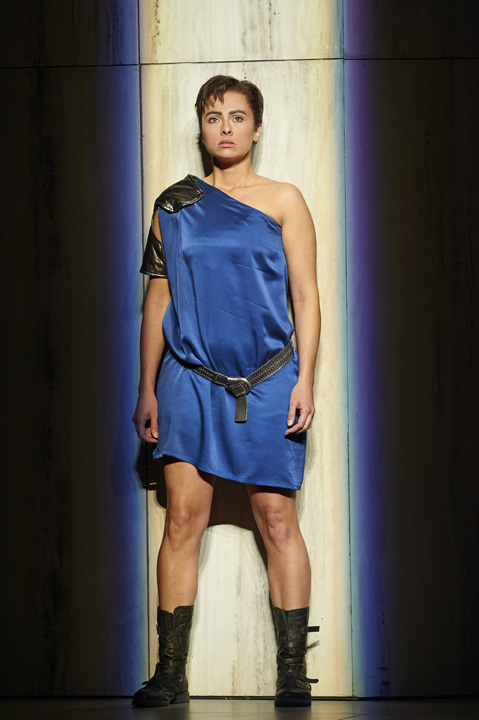
Isabel Leonard as Sesto in the Canadian Opera Company’s production of La clemenza di Tito, 2013, director Christopher Alden . Photo: Michael Cooper

 I’m a father with grown children. I encountered Mary Pipher’s book Reviving Ophelia in the 1990s. The title might give you an idea of what sort of book it is, and why I would have read it.




 barczablog