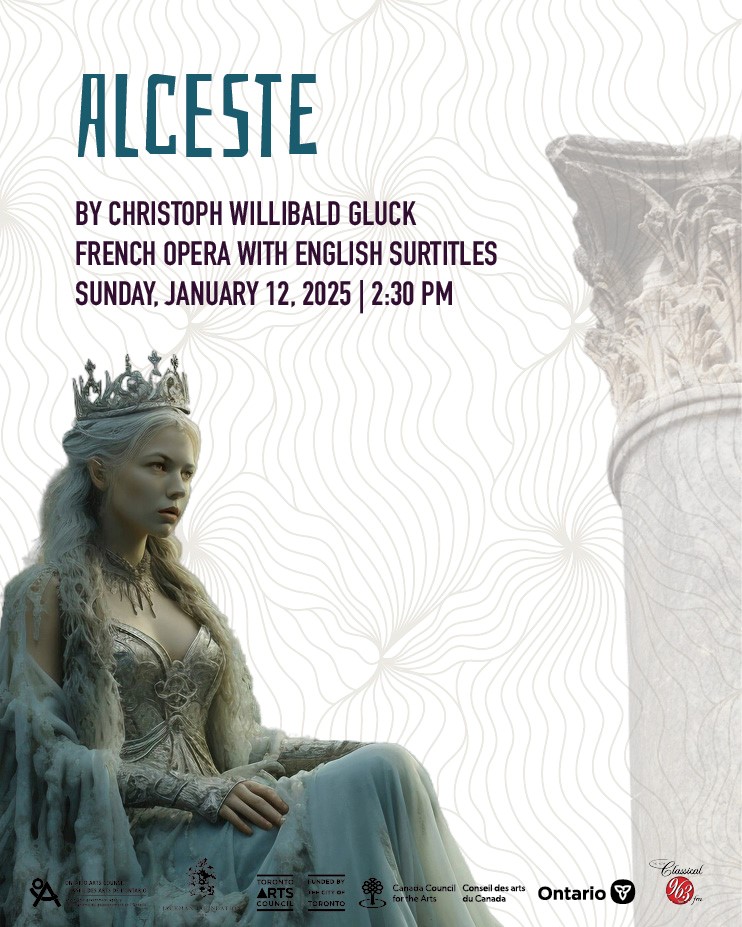
After half a century at the Jane Mallett in St Lawrence Centre on Front St, Voicebox – Opera in Concert presented Gluck’s opera Alceste today at their new venue, Jeanne Lamon Hall in the Trinity-St Paul’s Centre on Bloor St West.
It’s a new beginning.
There are two difficult roles, while the remainder of the parts are tiny in comparison. Without detailing the story taken from Euripides and adapted by Calzabigi, it’s a dark love story, as Apollo has proclaimed that Admète must die unless some other person offers to sacrifice their life for him: and his wife Alceste does so. Their displays of love and loyalty so impress the gods that a happy ending that they are saved from death after all is proclaimed by Apollo himself.
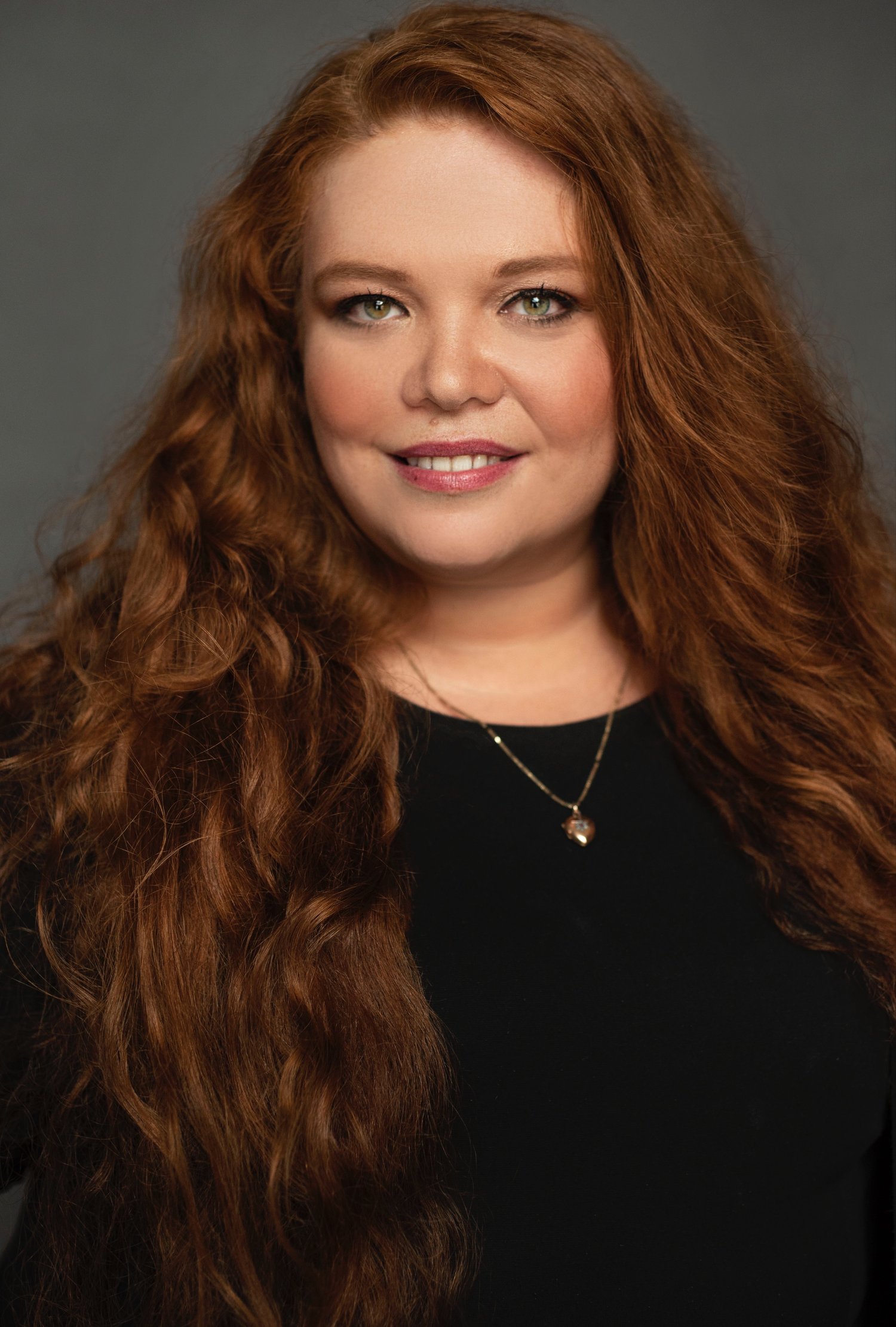
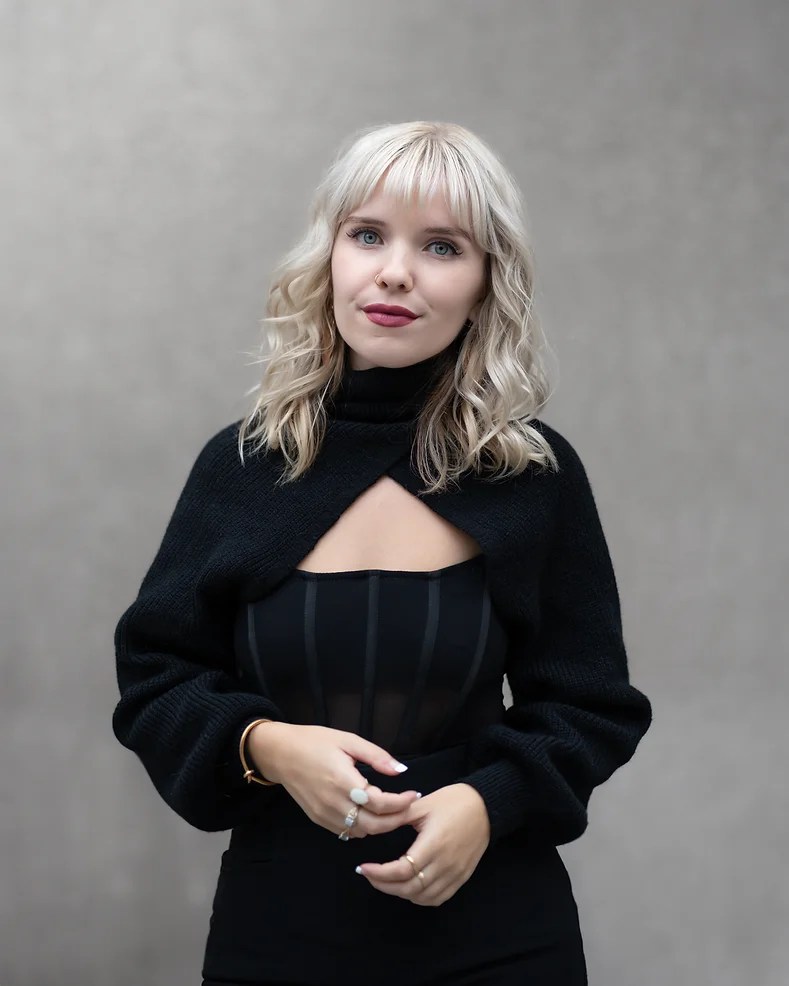
Alceste was undertaken by Lauren Margison, a remarkably difficult role, a great deal of singing over the afternoon. I saw no signs of fatigue, indeed Lauren seemed strongest in the last scene. In our recent interview I shared her recent recording of the great first act aria “Divinités du Styx”. At intermission I chatted with Ryan Harper who recorded this performance, as we mused on what we heard today, even more impressive. Where the video version is more carefully modulated and even, the live version was much bolder, more daring. The high notes popped with extraordinary energy.
Talking to Ryan, we were talking about the interesting acoustic in the Jeanne Lamon hall, that’s so warm and reverberant that Lauren was able to pull back in places to a very soft pianissimo, that was still precisely articulated, perfectly on pitch and distinct. Her legato was exquisite. While the role is not one that she is likely to get to sing again given that the work is relatively rare, I would wish someone would produce it to hear her sing this again.
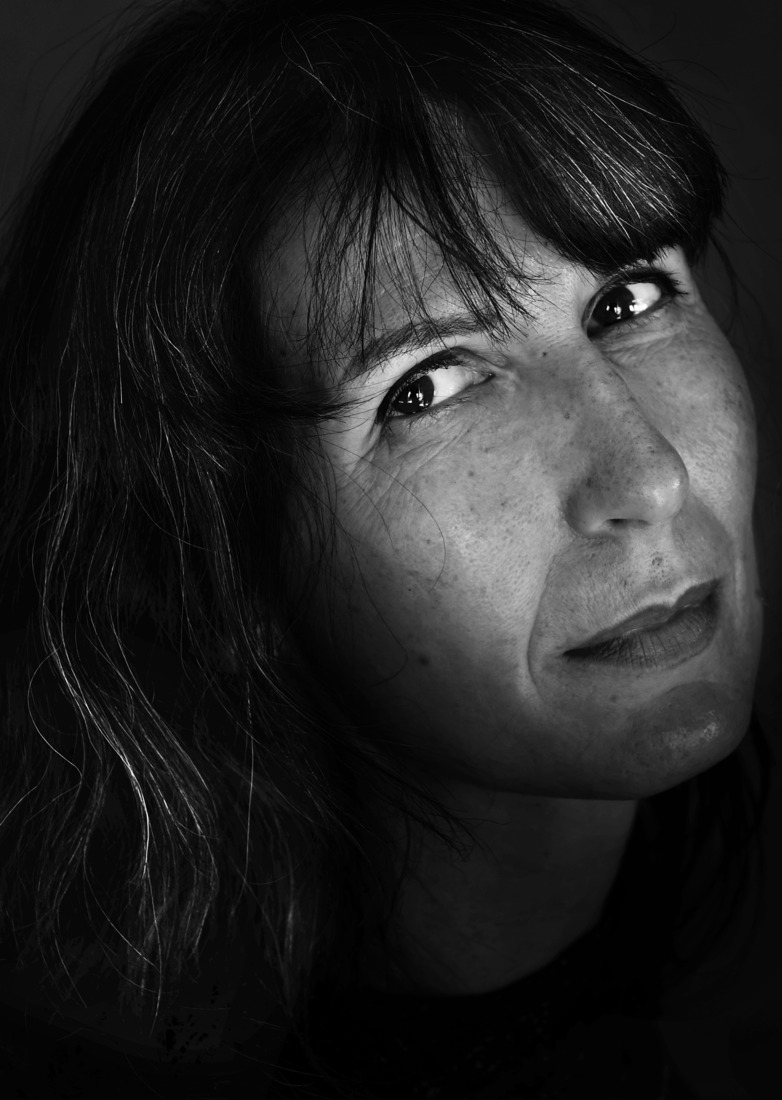
Lauren Margison (photo: Sam Gaetz)
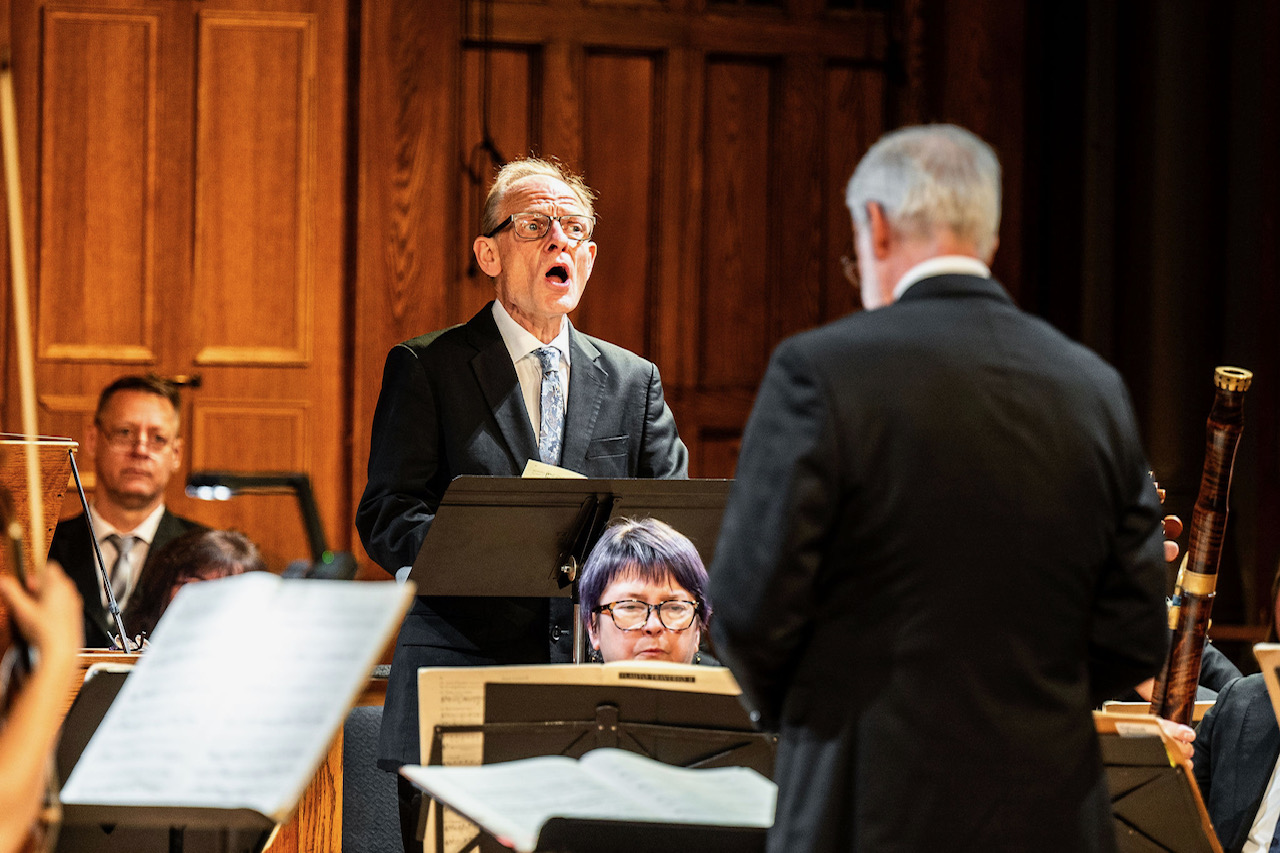
Admète was sung by the ageless Colin Ainsworth, a tenor known in the Toronto area for his many roles with Opera Atelier, a lovely light voice that has lost none of its youthful agility while seeming perhaps a bit bigger and more powerful.
Tenor Colin Ainsworth
We heard in Guillermo Silva-Marin’s introduction that Colin had surgery recently, which meant he did not memorize the piece and used a music stand. Yet the result was superb. While Colin may be a fair bit older than Lauren they seemed perfectly matched, a truly romantic pair together who made the classic love story completely believable, irresistibly genuine.
Let me put in my usual plug for Canadian talent. Lauren and Colin are as good as anyone in the world in this sort of rep. I hope we will see them someday singing at the Canadian Opera Company, who might be Canadian in name, Canadian for their orchestra and chorus, but regularly import singers for roles that could be sung by Canadian artists like these two.
The libretto of Alceste is by Calzabigi, who set out a series of reforms in the preface to the published version of the opera.
Reforms? While the arias of Handel for instance would have a contrasting middle section then repeat the opening section (aka “da capo arias”), Calzabigi and Gluck wanted to avoid vocal display for its own sake, aiming to make the words more dramatic with less repetition and improvised cadenzas. The goal was to make opera less a playground for show-offs and more genuinely dramatic. And yet there is still ample room for drama through music. Gluck the reformer wrote beautiful music that had me hooked on the story rather than preoccupied with a soloist’s coloratura.
I loved the work of Lauren and Colin. Pianist and music director Suzy Smith played flawlessly, articulating clearly while leading a tight performance of the entire ensemble, including the OIC chorus led by Robert Cooper. Speaking of reform, the chorus are as integral to the work as if they were another character in the drama, well-articulated, sometimes very gentle and understated, and thoroughly engaged with the story. I especially liked the suggestion of the underworld, the masks lending a theatrical edge to the proceedings.
As I’m speaking of the new location and the history of Opera in Concert, going back to the days of founder Stuart Hamilton so long ago, I thought today’s show might be subtitled “a bridge too far“. Except for Colin –who was recovering from a recent surgery–everyone doing a solo in the show memorized their lines and moved about the stage. That’s impressive and a step beyond the old opera in concert. In its day Stuart’s shows were done entirely from music stands, with minimal interaction between the players. Director Guillermo deserves credit for trying to make theatre out of opera, indeed that’s a hobby horse of mine. Yes opera is drama, a hybrid form of words and music and therefore sometimes under-estimated as something that’s only a musical form.
The problem? I saw a cast that was often singing out of tune and/or mispronouncing their French words. Maybe that’s unavoidable, maybe there wasn’t sufficient time for rehearsal, but I submit that the cast were aiming too high (ergo the bridge too far reference). I was spoiled by Colin and Lauren whose pitch was bang on throughout their roles. Only Ryan Hofman in his brief impressive appearance as the Infernal God was also precisely on pitch and accurate in his diction. For every other tiny solo yes they memorized lines and moved about the stage, but their French words were either badly pronounced, off pitch or (gulp) sometimes both. The two small soprano parts (wasn’t sure which was which) were also accurate, to be fair, but not the rest of the male cast (I won’t name them). Maybe more rehearsal might fix this, but I believe that if Guillermo simply chose to focus on the concert performance, coaching the vocal performances while letting them sing from music stands instead of asking them to memorize and move about the stage, we’d get a better result. I don’t expect theatrics in an opera in concert but I really do wish people would sing their text (this time in French) correctly and on pitch. (okay end of tirade). I usually avoid naming names, but was spared that transgression because the mess-ups were so nearly universal.
Any location has its strengths and weaknesses. Guillermo explained that for a matinee, with light streaming in through the beautiful stained glass, the projected titles were a bit harder to see at times, although future shows will be at 8:00 pm. Yet the words were big and clear, making them easy to see. I think Jeanne Lamon Hall is less conducive to theatre than Jane Mallett. Our sight-lines in this church space from the orchestra seats, looking up at the performers, make it harder to see subtleties: but its warm acoustic is more conducive to concert performance. Their half a century in the old space means they learned short-cuts, clever ways to make things happen, sometimes using aisles and figuring out the best way to deploy their personnel. I’m looking forward to seeing how Guillermo and his artists work in future in the new space. I admire Guillermo’s theatrical ideas, but hope he will make sure his singers first get their lines and pitches correct before undertaking ambitious stagings.
Upcoming from Voicebox-Opera in Concert: two performances of Puccini’s La Rondine March 20 & 21, and Meyerbeer’s Robert le Diable April 25th.
Canadian soprano Lauren Margison will sing the title role in Gluck’s Alceste on January 12th with Voicebox Opera in Concert.
Lauren is a graduate of the Canadian Opera Company Ensemble studio, the Atelier Lyrique de l’Opéra de Montréal and a multi year alumna of the Highlands Opera Studio. In 2024 she was a first prize winner of the Sullivan Foundation and the recipient of a Sylva Gelber Foundation Grant. She was a first prize winner of the 2018 George London Competition, and was also the youngest finalist in the Meistersinger von Nürnberg competition in 2016. In 2020 she was a semi finalist in the Glyndebourne Cup, in 2021 a grand prize laureate Jeunes Ambassadeurs Lyriques and in 2022 a semi finalist of the CMIM competition in Montreal, the recipient of a Sylva Gelber Foundation grant, and the first prize winner of Edmonton Opera’s inaugural Rumbold Vocal Prize. In 2023 Lauren was a semi finalist in the Paris Opera Competition.
Wow.
Lauren Margison as Desdemona in Verdi’s Otello, Staatstheater Mainz, 2024 (photo: Andreas Etter)
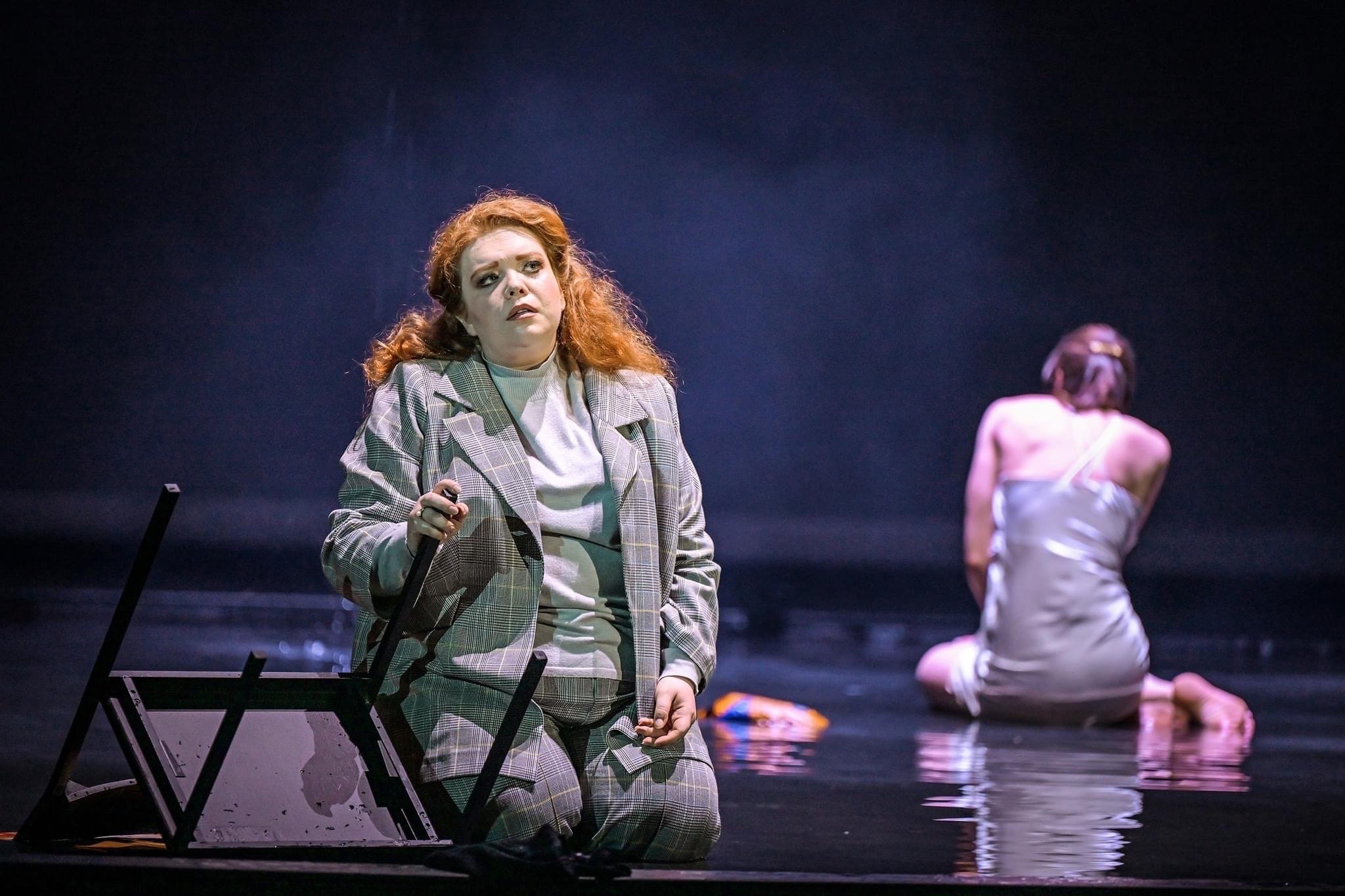
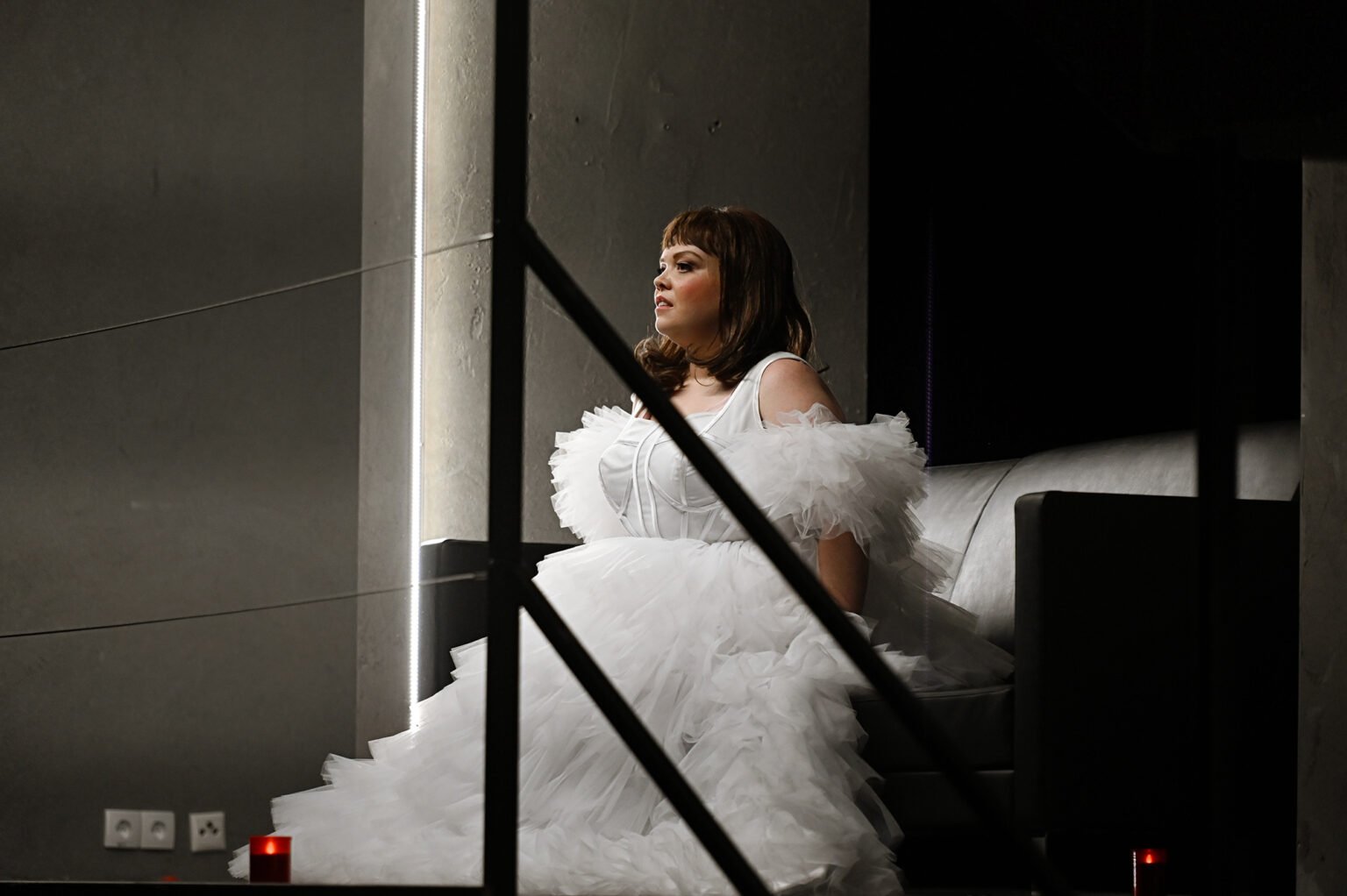
Her recent credits include Desdemona in Otello, Nedda in Pagliacci, Anna in Le Villi (Staatstheater Mainz); Micaëla in Carmen (Pacific Opera Victoria); the titular role in Vanessa (VoiceBox Opera); the titular role in the Csardas Princess (Toronto Operetta Theatre); Tatiana in Eugene Onegin, Donna Anna in Don Giovanni, the titular role in Suor Angelica(Highlands Opera Studio) and as the soprano soloist in Beethoven’s Ninth with the Quebec Symphony.
Anna in Le Villi, Staatstheater Mainz, 2024 (photo: Andreas Etter)
24/25 season highlights include the role of Mimi in La Boheme with Opera de Montreal and her titular role in Alceste with Voicebox Opera in Concert next week.
I asked her a few questions.
Barczablog: What is the best or worst thing about what you do?
Lauren Margison: The best thing about what I do is connecting with others. Whether it be my colleagues onstage, the audience, the composer, the orchestra, the director, the conductor, etc. Making music and sharing that music is by far my favourite aspect of this career. The capacity for vulnerability through music is immense, and without vulnerability true connection is impossible. I find that through music I am more ready to be vulnerable than I often feel in my daily life and I have really tried my best to learn to embrace vulnerability from the act of making music.
The worst thing about what I do is facing loneliness, rejection, and the general existential crises that so often accompany a life so steeped in instability. It’s worth it though. The pros far outweigh the cons in my mind.
Lauren Margison (photo: Sam Gaetz)
BB: Who do you like to listen to or watch?
Lauren Margison: As far as music I must admit that I don’t frequently listen to classical music unless I am learning a piece. Some artists on my regular loop would be Joni Mitchell, Sufjan Stevens, the Beach Boys (in particular their album Pet Sounds), Fleetwood Mac, Cat Stevens, Gordon Lightfoot… I could go on and for the most part the artists would be along these same lines. I discovered Chappell Roan this last year and am entirely enamoured of her energy and the music she makes. If I am listening to classical music I am most likely getting lost in some Strauss, Mozart, Britten, Barber, Verdi, Puccini, Mahler, Beethoven… some of the usual suspects!
I am also really enjoying spending a lot of time with Gluck as I prepare Alceste.
BB:What ability or skill do you wish you had, that you don’t have?
Lauren Margison: I would love to be a bit better at being kind to myself. Thankfully this is something I am working on with my fantastic therapist!
I’d also love to have the power of teleportation… airplane tickets are expensive!
BB: Ha, I’ve heard that one a few times before (Star Trek captures it beautifully).
So when you’re just relaxing and not working, what is your favourite thing to do?
Lauren Margison: I am a sucker for reading classic lit. If you ever find me out and about without a book in my bag then there has been an invasion of the body snatchers incident that should be looked into. I’m currently reading Anna Karenina and while I have some qualms with Tolstoy and his seeming need to write women as either homely and impossibly pure, or fallen vixens, I am quite enjoying it. I love a good crossword puzzle as well and tend to attach my self worth to how long it takes me to complete the daily NYT crossword.
Going for woods walks with my mother Valerie and our family dog Pippin is also high on my list of favourite activities, and family time in general. Finding time together as a family of artists is challenging to say the least, and every moment of it is deeply cherished.
BB: What was your first experience of music ?
Lauren Margison: I have spent a good while ruminating over this question because to be honest I don’t feel I have a first experience. I have it in the same way that I have a first experience taking a breath.
Music has been there at the formation of my cells as my mother played viola in the National Ballet and Canadian Opera Company orchestras while I was in utero, she even went into labour with me while playing Falstaff. Music has been there as a baby hearing my father warming up in the next room. Music has been there as a toddler singing “If I Only Had a Brain” ad nauseam. There was no first experience because it is as much a part of me as the air I breath.
BB: Like Eileen Farrell or Renee Fleming, you don’t just sing opera but also sing jazz and popular music. Will you be singing anywhere nearby sometime soon, that we can hear you sing something non-operatic?
Lauren Margison: As a matter of fact I will be. Highlands Opera Studio, the company that my parents cofounded and run is having a fundraising concert sponsored by one of our biggest donors Vanda Treiser which will feature superstar soprano Christine Goerke and four HOS alums (myself, Simona Genga, Scott Rumble, and Samuel Chan) on February 9th at the Jane Mallett Theatre.
Vanda Treiser with HOS General & Co-Artistic Director, Valerie Kuinka Image Credit: Brenden Friesen
Next question…. As a child of a famous artist, do you think you experienced opera differently because you knew your father was a singer. And did it mean you had more or less pressure when you started to sing?
Lauren Margison: I didn’t think I had experienced it differently until well into my twenties listening to how friends had found their way to opera and the way they would talk about certain opera singers like they were talking about movie stars. As a child I grew up spending time around my parents various work colleagues and friends which is how I saw them.
Here is a fun little anecdote that still makes me smile many years later. At one point when I was around 8 or 9 years old my father was singing in Australia and my mother and I were joining him for the trip as it landed over my summer break from school. Richard Bonygne was conducting and his wife, Dame Joan Sutherland was there with him. My parents wedding anniversary fell on a day off from rehearsal and they were discussing how to go about finding a babysitter, at which point Dame Joan offered to babysit me while they had a lovely anniversary meal. As an adult this story still flabbergasts me, but as a child I simply thought “I want this woman to play with me, and all she is doing is sitting there knitting”.
Regarding the pressure that may or may not have been placed on me there was none from my parents in terms of my becoming a musician. They let me find it on my own and encouraged any and all interests that I had. I am very lucky to have had that level of trust and support from a young age.
I always felt a draw to performing but I also saw first hand the pain that accompanies this career choice. Most people would have seen my fathers busy schedule and thought “what a fabulous career he’s having” but all I thought was “why does dad always have to leave” through eyes blurry with tears. Even with that pain I couldn’t escape the inner pull to performance. I think the most pressure came from within. I wanted to make sure that I could make a name for myself in a genre where “Margison” meant nothing. I wanted to make sure that I was worthy on my own. I fell in love with jazz and had a wonderful time when I was working in that genre, especially my time with the Real Divas, a jazz group I was part of which was created by the wonderful Bill King. However, in due time I felt the unmistakable pull of opera and the rest is history.
BB: What is your favourite melody / piece of music?
Lauren Margison: This feels like an impossible question! The Strauss Four Last Songs are my classical desert island music, that is for sure.
They are just transcendental. I go through periods of being completely obsessed with a particular song and will just listen to it on repeat until I can’t stand it for a time. I remember Kathy’s Song by Simon & Garfunkel being on the top of my list for much of 2020 and it seems to be one of the only ones that I never tire of. I am also lucky enough to fall madly in love with whatever piece of music I am working on.
Special mention goes to the entire score of the Lord of the Rings Trilogy which never ceases making me weep.
BB: Talk a bit about your background training, and how you got here.
Lauren Margison: I have partially answered this a few questions above, but I will discuss it with a bit more detail. I really felt that I wanted to perform by the time I was about 6 or 7 years old and my parents gifted me with a karaoke machine for Christmas. I secretly prepared about an hours worth of Britney Spears, Backstreet Boys, N’Sync etc. to perform for them randomly one evening. I marched into the kitchen with this machine and said “ok I’m ready” and they were naturally confused about what exactly it was that I was ready for, “I’m ready to give you guys a concert”. And that is exactly what I did. They reacted the way any kind parents would react and gave me a standing ovation, they also had a lot of questions.
I demanded I be in voice lessons or choir or anything that would involve me singing. Shortly after that I auditioned for the Canadian Childrens Opera Company and met the effervescent Ann Cooper Gay without whom I don’t know that I would be a singer today.
Ann Cooper Gay
The love that she has for this art form and the kindness and patience she has with children is unmatched. I loved my time in the CCOC and the highlight for me was being part of the Canadian Opera Company production of La Boheme and then twenty years later having the opportunity to sing Mimi in La Boheme with the Canadian Opera Company while I was a member of the ensemble, ( this remains one of my favourite full circle moments in my career thus far). From there I started taking voice lessons with Cydney London, and then Elaine Overholt who helped open my eyes to the jazz world where I met Bill King and joined the Real Divas singing group.
In my late teens I learned a great deal from working with Mary Morrison who really gave me a solid foundation along with working with my father and my mother as teacher and coach respectively before I started my time in the Atelier Lyrique with the Opera de Montreal working with their incredible faculty of teachers, coaches and guest mentors. After that I joined the COC Ensemble and worked with another incredible faculty of teachers, coaches and guest mentors. That is where I first started working with Rosemarie Landry who along with my father became my primary teacher when I went to the Universite de Montreal during the pandemic to do my Masters. In terms of summer programs I first started auditioning for my parents program Highlands Opera Studio when I was 19 years old and for the first few years of auditioning received very kind rejection letters from my mother while she was sitting mere feet away from me. It was a very exciting day when I finally got in.
I feel very proud and grateful to be a product of Canadian operatic training. It is amazing the resources that we have here.
BB: Yes. I don’t think people realize how good our singers are. 50 years ago the COC had no choice but to import because the foreign singers were so much better. I don’t think that’s true anymore, although it’s not commonly understood. You’re a perfect illustration of the excellence of our Canadian talent.
You’ll sing the title role in Gluck’s ALCESTE in January. Talk about the challenges of the role.
Lauren Margison: It is an immense and sweeping role with many technical challenges. It goes from high to low to middle to low again to high and all around. I have really fallen in love with the piece as a whole. It is a massive undertaking but one that I am feeling very excited about. The satisfaction that comes with working hard and seeing the results is unmatched. There is just something so intoxicating about the act of learning music. I have spoken to a good number of friends and colleagues about their processes and it really seems to be a unique experience for each artist. There is no one size fits all approach to learning music and with each new piece I undertake to learn there comes a deeper understanding of my own artistic process and a deeper trust that I build with myself as an artist. This piece took a lot of work and a lot of trust, but I’m really looking forward to getting it on its feet with VOICEBOX Opera in Concert and the amazing team they have assembled.
BB: Gluck is sometimes seen as an austere serious composer, a reformer and influence to later composers such as Berlioz & Wagner, but not as much fun as Rossini. Do we get him wrong, and if so, what would you suggest to producers / directors, as to how we should produce Gluck?
Lauren Margison: Austerity is such a great word and one that I’d say is somewhat accurate in describing Alceste. I’d say it is also triumphant, sensual, melodic, exciting, bombastic and at times understated. There are certain sections of this piece that have skyrocketed to the top of my “goosebumps” list, there are also certain sections that make me understand why it isn’t often performed.
Mozart clearly enjoyed Alceste enough to be influenced by some of the music. Keep an ear out and keep in mind the Commendatore in Don Giovanni. Wink, wink!
As far as how to go about directing the piece I wouldn’t venture to guess. My job as a singer in this context is to show up with my music learned and an open mind. If I were preparing to direct this piece myself, I would certainly have more to say. My job is to bring to life the vision of the director and that is what I plan to do within the context of who I am as an artist. I have worked with Guillermo Silva more than once and I trust him as a director, so I know that I am in good hands which will make the entire process all the more fulfilling. Colin Ainsworth who is singing King Admete is also a good friend which is an added bonus!
BB: Besides Alceste, what’s coming up in the new year for you?
Lauren Margison: I am so excited to be returning to Opera de Montreal later this season to sing Mimi in La Boheme. I am a graduate of the Atelier Lyrique and it was such an incredibly formative time for me that I am over the moon to be returning in such a fabulous role to a company that feels like home.
I’ll also be revisiting Gluck this summer singing Euridice in a special performance of Orfeo ed Euridice with Highlands Opera Studio alongside my dear friend Nils Wanderer singing Orfeo with my mother Valerie Kuinka directing.
And of course I’m looking very much forward to the fundraiser for Highlands that I mentioned a few questions back.
BB: If you could tell the institutions how to train future artists, what would you change?
Lauren Margison: I’m not sure that there are things I would necessarily change, but I think that there needs to be quite a bit more open discussion about success and what that means. I’d also say that it wouldn’t hurt to have more training in fields that are adjacent to being a performing artist. There is no shame in having more than one stream of income, in fact I think it is quite realistic and something that needs to be more widely discussed.
It can be so challenging to find your “team” in this business because inevitably where there are people there are egos and where there are egos there are politics and it can be very stressful for young artists to feel that they are making the right connections and doing so with honesty and authenticity. I’m not sure there is anything viable that I would change because the existence of politics is ever present so long as humans co-exist. My advice to future artists would be to lead with love. Lead with the love of this art form and the love you have for it. That energy is contagious and you will be much more likely to find your people with that energy. However, don’t be naive. Not everyone will want the best for you and that is no reflection on you.
BB: Do you have a favourite teacher or influence you’d like to mention?
Lauren Margison: The voice teachers that I have had in my life have all imparted things that I still carry today. From Cydney London, to Elaine Overholt, to Mary Morrison, to Wendy Nielsen, to Rosemarie Landry to the teachers that have been my primary mentors and educators for my entire life my father Richard Margison and my mother Valerie Kuinka. These are all voice teachers that I have spent at least one year working consistently with and I have learned a great deal from each and every one of them.
Lauren, her father Richard Margison and her motherValerie Kuinka
The fact is there is no end to the list of influences I have had in this business because the wisdom is there if you are open to it. I discussed the importance of vulnerability earlier in this interview and I really feel I need to come back to it because that is the crux of being an artist. This business at its best is about connecting, creating, and sharing. One of the most challenging aspects of it is opening yourself up to the threat of being hurt or rejected but holding fast to the hope of being seen and understood. There is no end to the list of individuals from whom we can all learn and find guidance.
Every human that we encounter can impart wisdom (even if that wisdom is simply witnessing how we don’t want to conduct ourselves) and we can do the same in turn.
*******
Here’s a reminder of what’s upcoming for Lauren Margison.
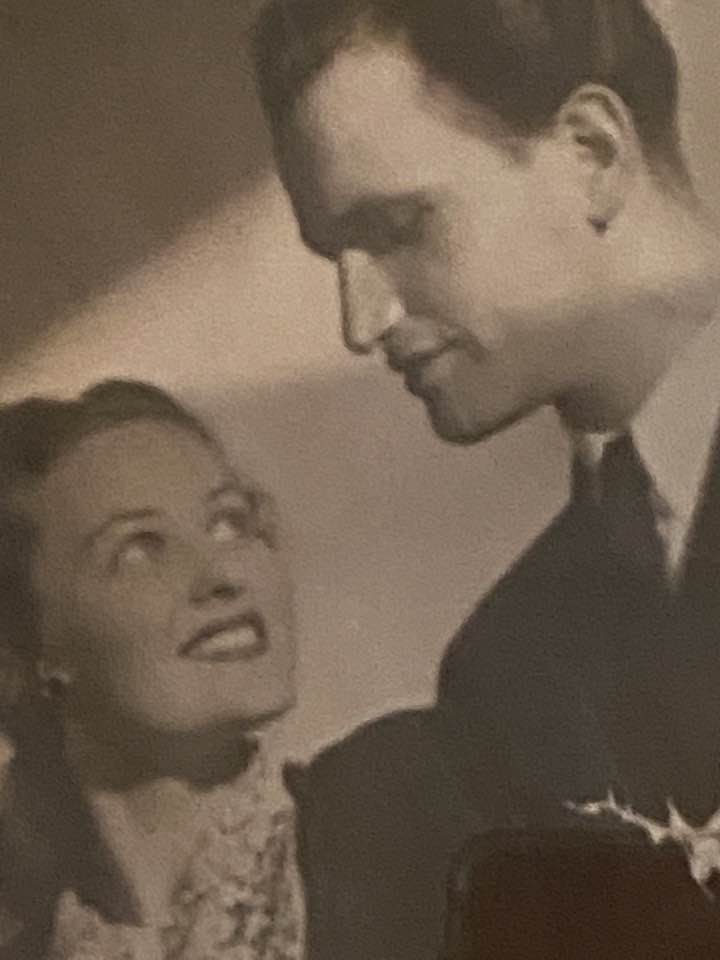
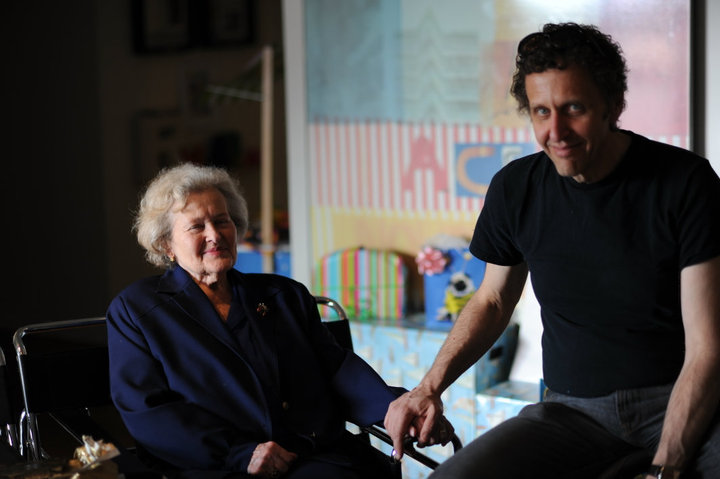
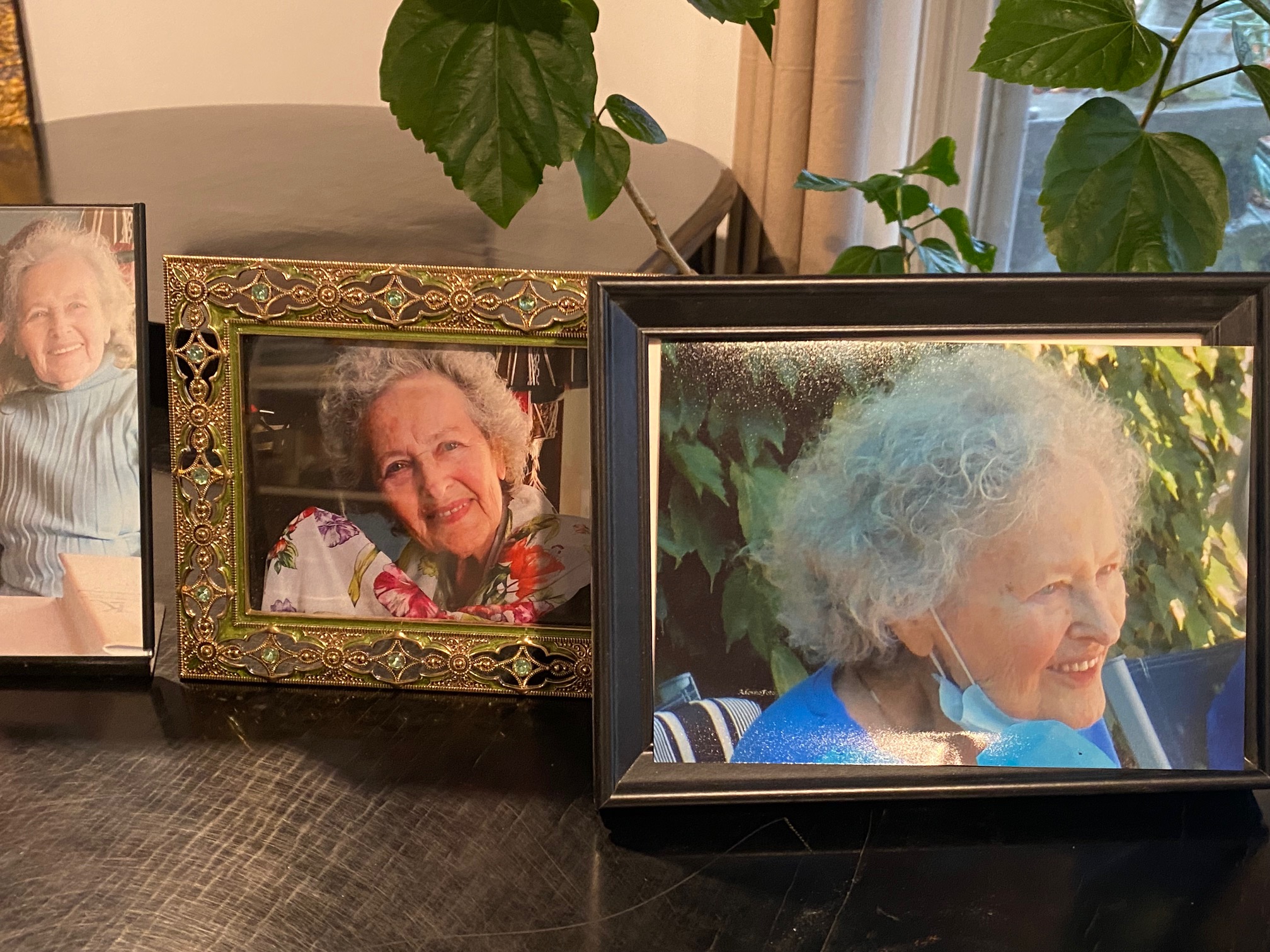
There is so much I can say about Katherine Barcza, born in 1921, although I will let the pictures speak.
Katherine and Josef Barcza
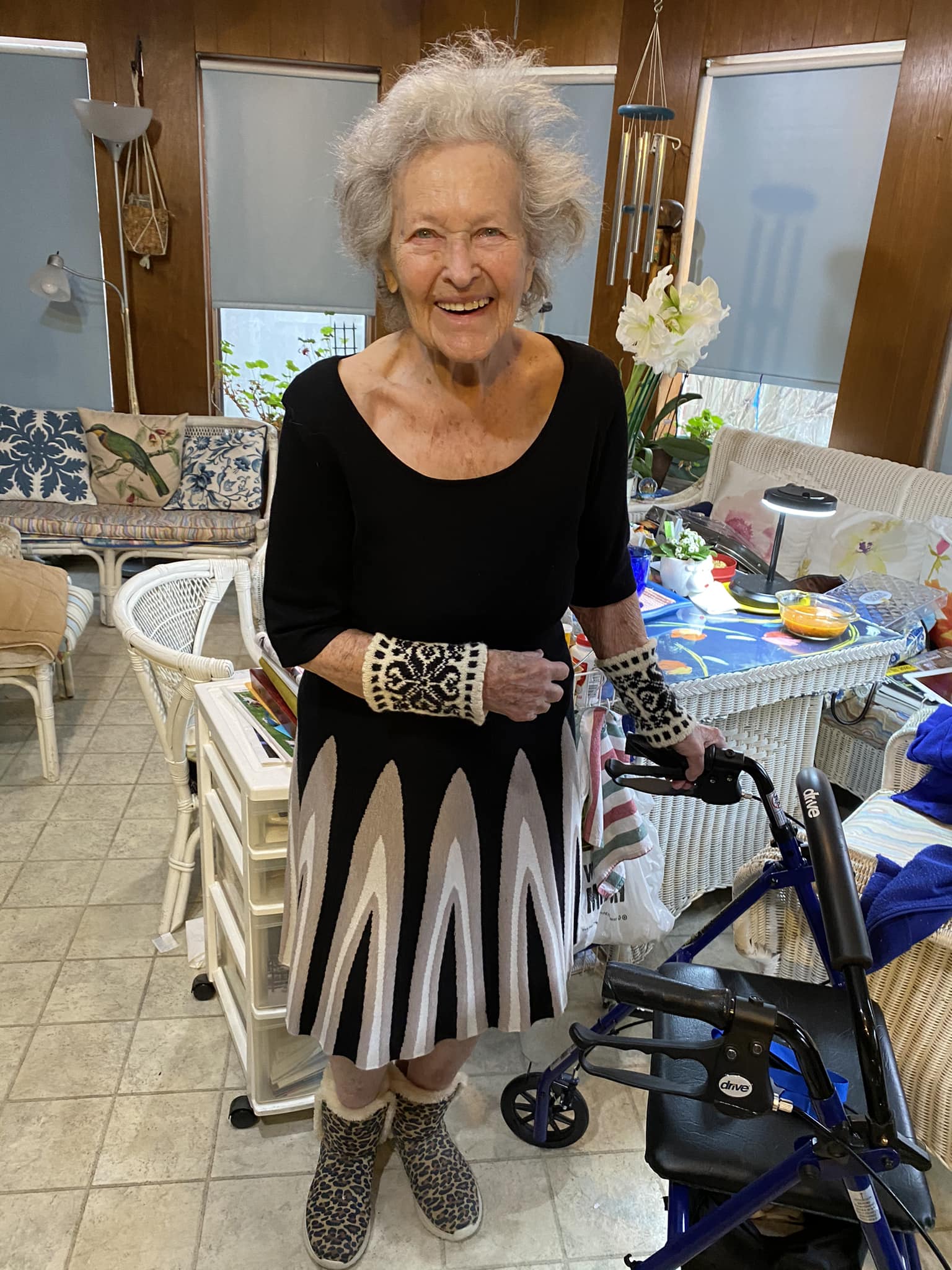
My mom used to light a candle on December 30th on the anniversary of my father’s passing in 1960, exactly sixty-four years ago. Perhaps it’s fitting that she passed peacefully in the night, Saturday morning December 28th in her 104th year.
December 2022, almost halfway through her 102nd year
While I have almost no memory of my father, that is balanced somewhat by the good fortune of having my mother sharing an extraordinary life with me and my siblings. At this moment I simply wanted to announce her passing, while sharing a few photos even if they can’t possibly do justice to such an amazing person.
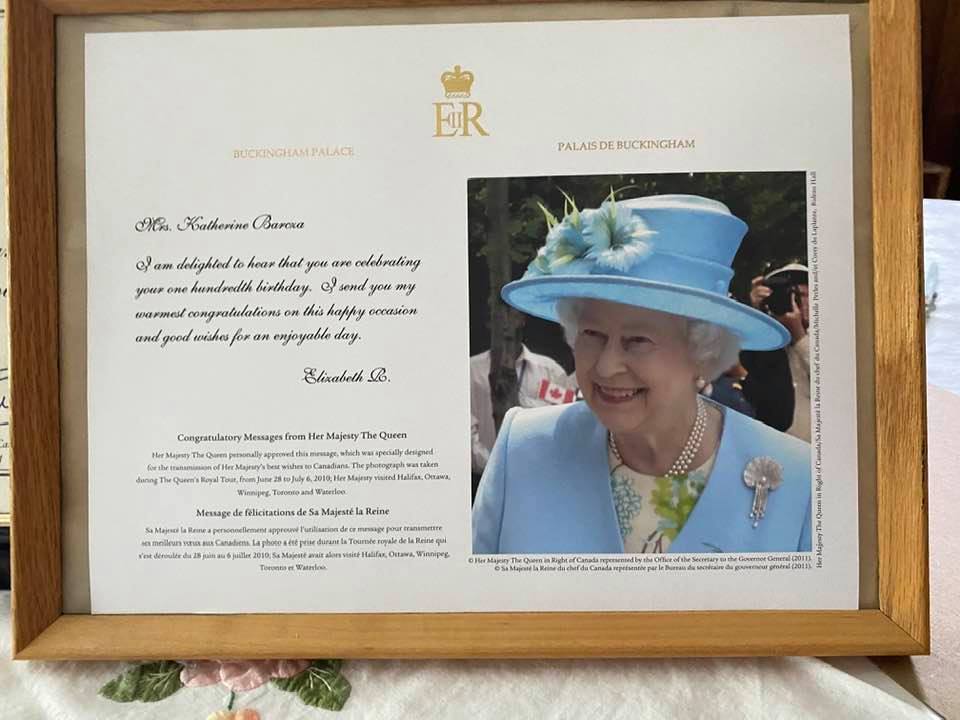
If you live to 100 expect some sort of message from our King or Queen.
Summer 2010
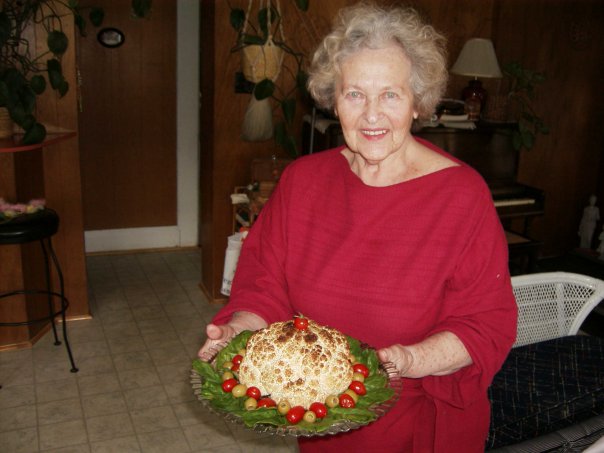
Easter 2008
My dad died in 1960, culmination of the decade when she also lost her middle child of five in infancy (four survive) and her father also died back in Hungary. I can’t do justice to her sense of humour, the resilience of someone who could bounce back from anything life threw at her. She had a wonderful sense of perspective.
This glib joke on the wall is true to my mom’s sense of humour.
The bereaved housewife speaking only Hungarian and a little Swedish reinvented herself, gradually learning English, still with a charming accent, working, remarrying & divorcing (when it didn’t work out), and then getting a teacher’s certificate. I’m sorry she didn’t write a memoir of her time teaching at Humbergrove, never taking sick days never stopped by the snow, until her retirement in 1986.
Or was it ’87? It makes me a bit crazy to think that I can’t ask her…(!)
There were stories from the war, from the arrival of the Russians in Budapest, and after, amazing anecdotes of a teacher who loved her students as if they were her own kids. If there’s a lesson in this it’s to tell you how important it is to capture memories, to record your stories, either writing them down or on tape. Memory fades and right now I am perplexed at how it is all slipping away. And I think I have already said too much as I have no confidence in words to express what needs to be said.
Her joyous outlook was still there a few days ago, the last time I saw and heard her, singing in Hungarian. Her mind was so sharp, remembering details about her favourite novels (she read over 150 in the past decade or so), old movies (Shop Around the Corner was her favourite), song lyrics in multiple languages, places.
I learned a lot about how to live from my mom, a genuine social butterfly who came to life around other people. While she bravely lived a long life alone, after divorcing her second husband, she would regularly host one or more of her four children and friends.
Easter 2008 at my mother’s house
She knew how to cook but perhaps more importantly, she knew how to enjoy life.
Blue was her favourite colour.
I am full of gratitude for what I experienced, to her and to my siblings who shared her care over the past few years.
2024 is the year of Czech Music, a celebration that’s held every decade in the year ending in 4. Speaking of ending, this year’s instalment is swiftly coming to a close, a year that saw the Canadian Opera Company present Cunning Little Vixen early in the year, and the Canadian Institute of Czech Music offer a series of concerts and operas.
I had my own little version at the piano.
But the reason I put that s in brackets–suggesting a plural rather than singular– is in recognition of how Czech music has been a staple for me, especially since COVID. When you can’t go to concerts or theatre, both because of the pandemic and as a careful caregiver avoiding infection, the solitary pursuit of music at home takes on a new significance.
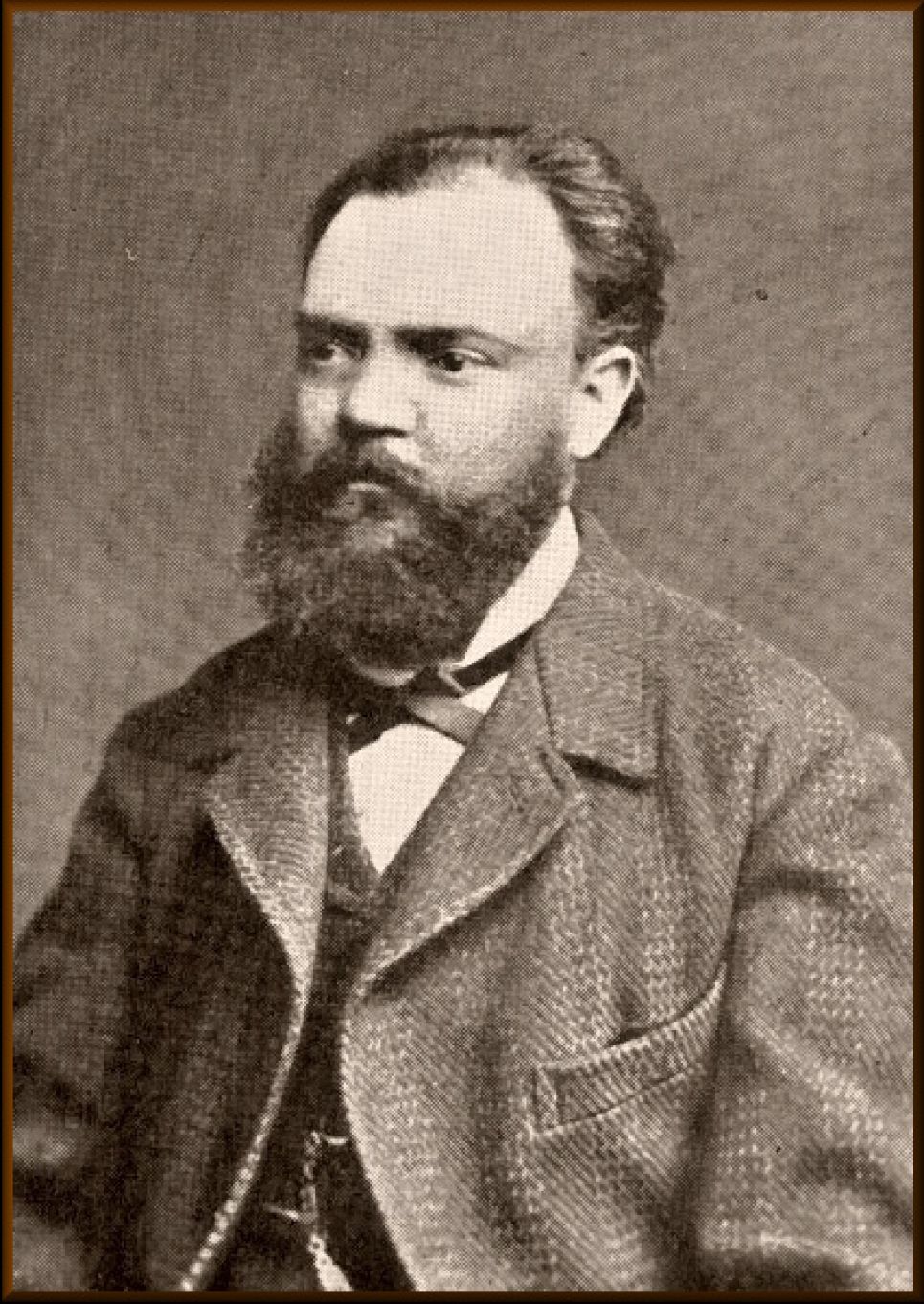
When people mention Czech music they are usually thinking of Antonin Dvořák, the great symphonic and operatic composer who was a focus for a book review as well as an interview with John Holland earlier this year. Dvořák is not the only Czech composer I’m looking at in this piece but he must get the lion’s share of attention to properly reflect his importance to me, the composer who for me is most synonymous with Czech culture.
Antonin Dvořák
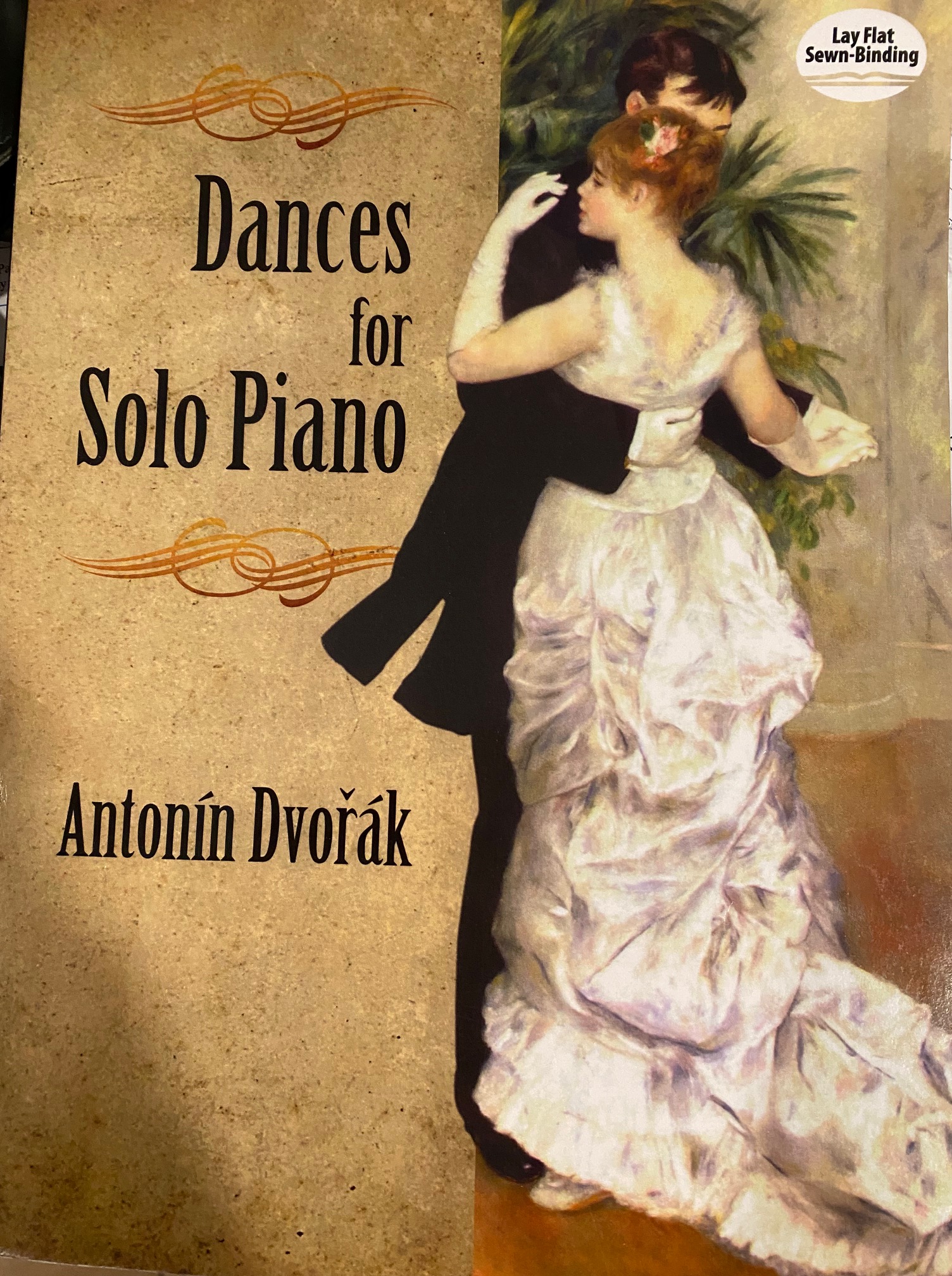
Of course Dvořák also wrote lots of piano music. Years ago I found a Dover edition collecting shorter works at the Edward Johnson Music Library (my usual resource for new discoveries) including the marvellous Humoresques and the charming Silhouettes, lots of fun.
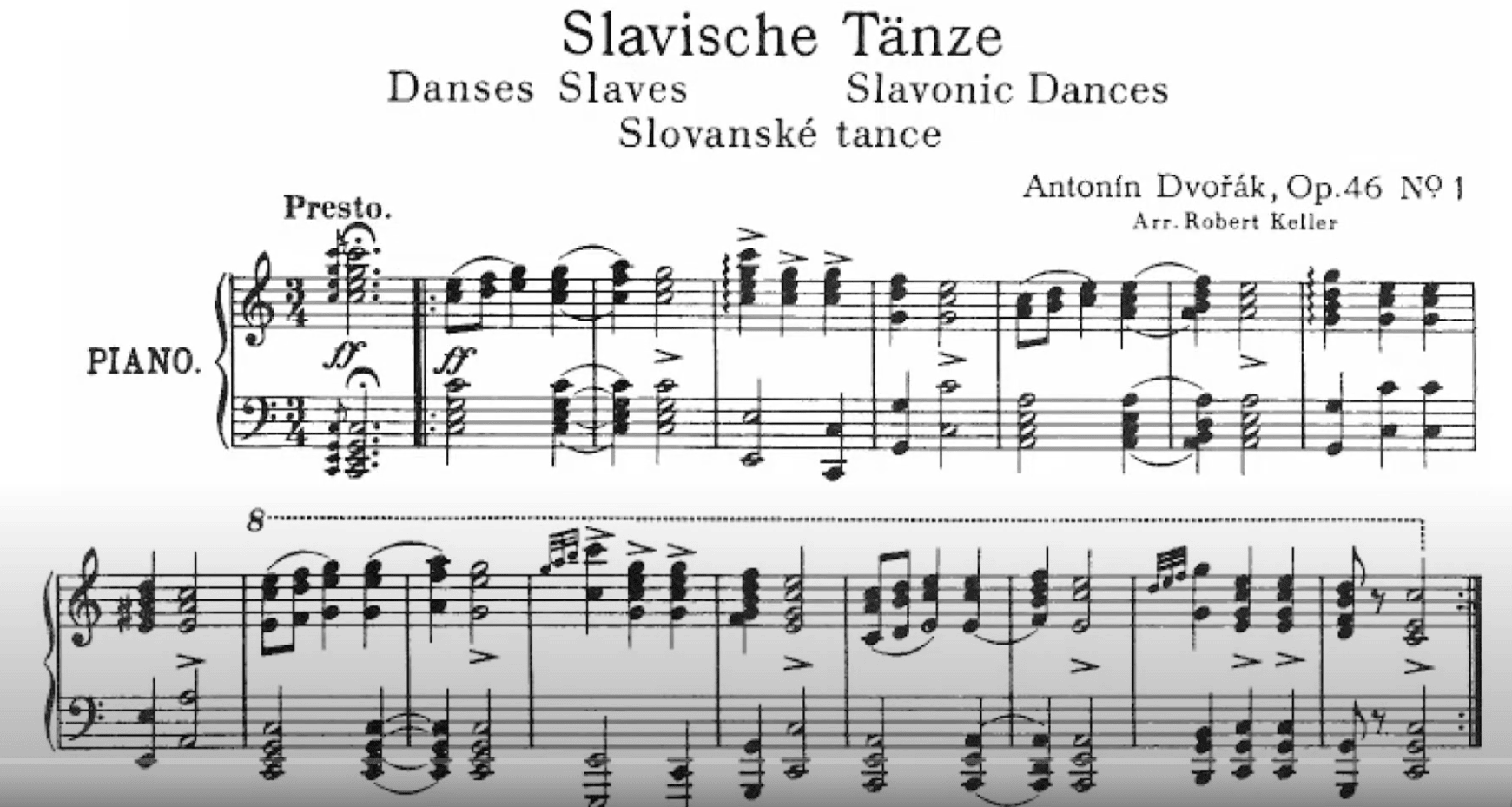
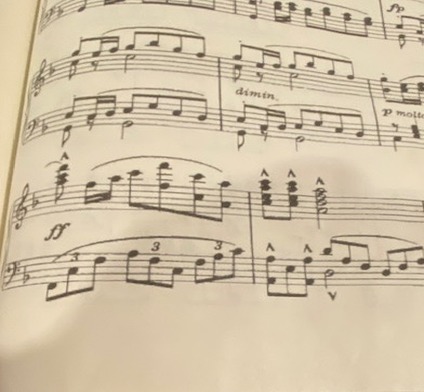
The big thrill in this edition were Robert Keller’s two handed arrangements of the first four Slavonic Dances that Dvořák originally composed for piano four-hands, and better known when we encounter them in Dvořák’s own arrangements for orchestra.
The orchestral versions are full of intricate voices and vivid rhythms: because they’re dances, right?
Now here’s the four-handed piano version, the original that is the first in the eight dances from Dvořák’s Op 46.
The dynamics on piano are so deliciously subtle, they’re a fabulous complement to the orchestral versions. I submit that they’re truly the originals, even if the version most people know and have encountered in concerts or on radio is the version for orchestra. This is true of many of the great compositions we hear from orchestras, that the composer only orchestrated them later.
I stumbled by accident upon the two-handed versions in this Dover collection: but only the first four of the Op 46. Robert Keller is my hero, the man who reduced these towering creations into something for one person. Sometimes the two hands are struggling to fit all the notes onto the page, under the hand.
I have been playing this piece for years now, trying to get every note, trying to articulate every voice, trying to properly shade the dynamics. It’s tempting to go really fast: which is a sure way to mess up, if the adrenaline of the furiant gets the better of you. One ends up like Icarus, crashing and burning because one was too ambitious.
The “furiant” is a “rapid and fiery Bohemian dance in alternating 2/4 and 3/4 time“. We see that in the ambiguities Dvořák built into the piece, right on the first line, where one can see phrases that accent as though the count were in 2, while the bars are in 3.
I found another collection of music that includes not just the eight Op 46 Slavonic Dances, but also the later set of eight more, opus 72, all in the two-handed reductions by Robert Keller. That was my big thrill during the pandemic and since. I wish I could promote the book, but as I peruse the Dover website, I couldn’t find the title. Perhaps it’s no longer available. If you see it, I suggest you grab it.
So for example, picture this exquisite four-handed piece, the eighth of the Op 46, which is one of my favourites. Imagine that of all people Jan Lisiecki & James Ehnes play it..! Here they are at a Toronto Symphony concert, with the TSO’s music director of the time (it was recorded in 2018): Peter Oundjian as page-turner.
Notice how delicate the soft melody sounds when Jan picks it up in the middle of the piece. In Keller’s two-handed version it’s not nearly so simple, of course, as the reduction attempts to get all those notes usually played by two people –into an arrangement (i almost said “derangement” which might feel closer to the truth, at times) as played by the soloist.
Now this performance is gentler and more sedate than what one is tempted to do, in surrendering to the passions of the furiant, again with occasional ambiguities between phrasing in 2 or 3. I want to play it at least as fast as James and Jan, indeed, my touchstone for this is the orchestral version i saw done by Zubin Mehta in his last visit to Toronto leading the Israel Philharmonic in 2017. Here he is, conducting a different ensemble in the same piece.
The energies of an orchestra changing tempo furious with the furiant from slow to break-neck fast, are possible when you’re a soloist. That is the magic and madness of playing it solo. Indeed, when a pianist is emulating and imitating a full orchestra one may imagine in one’s fantasy that the piano is an orchestra.
So for the Op 46, there are eight different dances, and only #1 and #8 is a furiant. Here is a list of the dance types of Op 46.
No. 1 – Presto, C major (furiant) No. 2 – Allegretto grazioso, E minor (dumka) No. 3 – Allegretto scherzando, D major (sousedská) No. 4 – Tempo di menuetto, F major (sousedská) No. 5 – Allegro vivace, A major (skočná) No. 6 – Poco allegro, A flat major (polka) No. 7 – Allegro assai, C minor (skočná) No. 8 – Presto, G minor (furiant)
I retrieved that from the Dvořák website, where I also found lots of fascinating information and images. The numbering on this site corresponds to a different ordering than what I have in my book of the Keller arrangements/reductions. I have adjusted the list to reflect the Keller ordering and the keys as they appear in my book.
I already defined a furiant as a “rapid and fiery Bohemian dance in alternating 2/4 and 3/4 time“, as you find in #1 and #8.
The dumka, as you find in #2 is “a type of instrumental music involving sudden changes from melancholy to exuberance“. That’s a perfect description of the second Op 46 Dance, which starts slowly in a minor key then bursts into a fast melody in major. It’s a split personality of a dance, going from one extreme to the other.
At the piano a soloist may be tempted to make even more extreme and abrupt alterations of pace & mood. I know I’ve tried and I cannot deny that it’s daunting because when one surrenders to the impulse one may suddenly discover that one can’t play all the notes accurately. Argh…
The sousedská as in #3 and #4 is a slow Bohemian dance in three quarter time. It has a calm, swaying character and it is usually danced in a pair. I found that parts of #3 when played at the piano, functioned as extreme ear-worms. When I speak of something as an ear-worm I see that as a compliment to the composer, that they made something that becomes an obsession, refusing to leave my head. #3 is delightful.
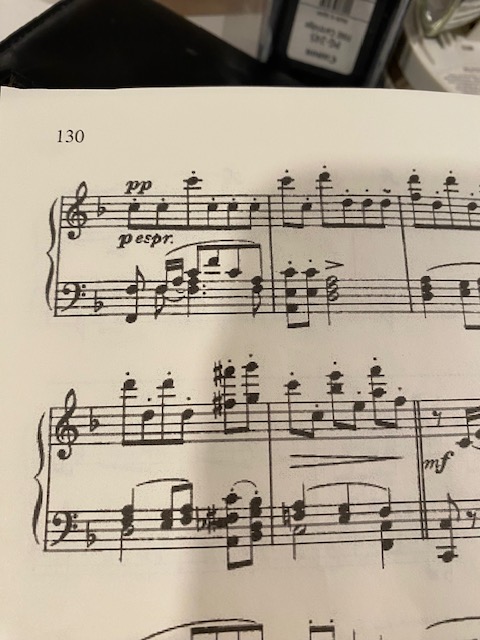
Then there’s #4, which is something else. I found that this piece haunted my memory (another sort of ear-worm I suppose?) for years before I found the piano piece, because the melody moves me so much. I remember the first times playing through this piece it made me cry: which can be really awkward when you’re trying to read the page. I say this giggling at the memory but still, fully captive of this piece.
Its first utterance is gentle and builds to a fortissimo climax in the 45th bar.
The place that always gets to me is passage where Dvořák brings back the melody. He surprises us by putting it in a tenor register, meaning in the left hand. It sounds so faraway and forlorn it totally messes me up even writing about it.
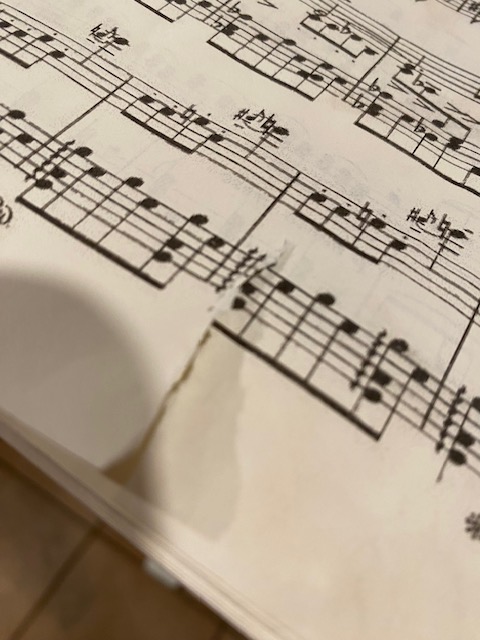
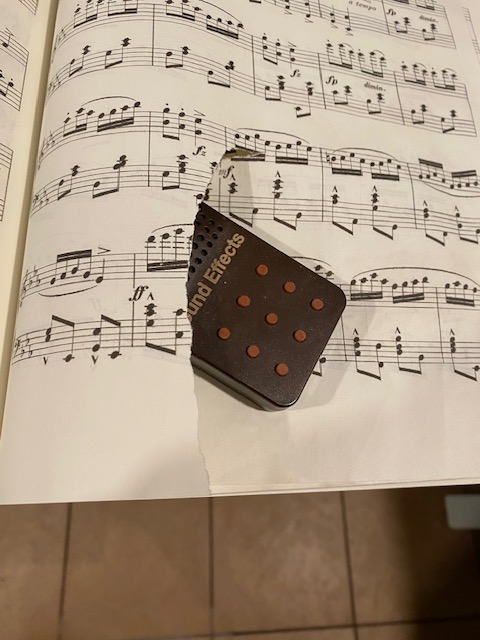
Notice that the left hand has to articulate the melody while the RH is pp, super soft and not stealing the focus. Of course that’s much easier if you’re part of a duo or in an orchestra. In the solo version it’s extra tough AND coming right after a brutally awkward page turn. How brutal? here’s a picture of the torn page, victim of my attempts to get to that soft recapitulation of the main theme.
Collateral damage… I blame the composer
Two hands play the piano and then somehow there’s a hand turning the page as well. Or tearing it.
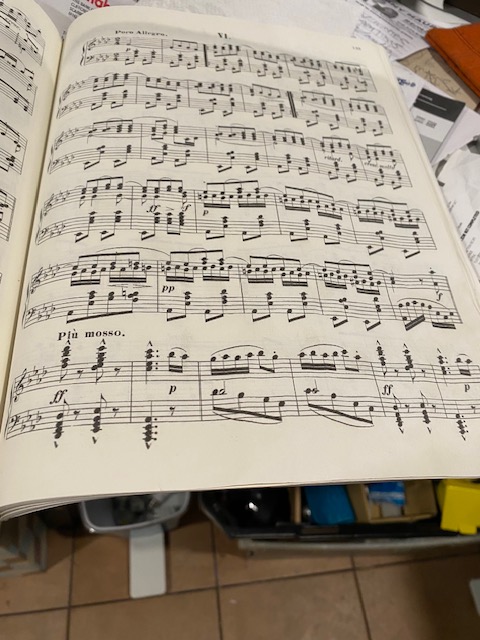
For #6 it’s a polka, a dance that originated in Bohemia in 2/4 time. I find this the most soothing of the eight op 46 dances, even though at times it takes off in a huge hurry. Keller does a superb job of making sure everything is right under the hand even when we’re playing something super fast and loud, as we do at the bottom of the first page. Where #2 is really hard to play anywhere near up to speed, this one seems to naturally work without any struggles.
Or maybe the simplicity is a reflection of Dvořák’s genius, the simplicity of the piece before Keller arranged it for two hands.
The Skočná as in #5 and #7 is a rapid Slavic folk-dance, normally in 2/4 metre. I am again guilty of madly tearing a page. It happened when i was trying to play #7, the piece I have known the longest. I first encountered it in the film Allegro non troppo as an animated cartoon by Bruno Bozzetto, that I used to watch with my daughter Zoe when she was quite young.
No wonder we christened / retitled it as “Bunch of bums”.
Dvořák via Keller’s arrangement had me madly trying to play the piece up to speed even as I sight-read it for the first time. Folly.
I inserted my fart machine.(identified as “Sound Effects”) into the torn page for the purposes of the photo, to show how badly I deranged the page in my haste.
The piece daunts me as I obviously can’t manage all those notes up to speed, AND the page turn.
There is another set of eight Slavonic Dances op 72, although I confess they don’t move me nearly so much as the first set of 8. #1 and #2 are the two I like and know best, the remainder are perhaps best understood as compositions to be learned and played in another Year of Czech Music. The next one is coming in 2034, by which time hopefully I will have mastered the other set of 8 slavonic dances.
I said there are other Czech composers to mention. Let me speak of two, one who likely will be a total surprise.
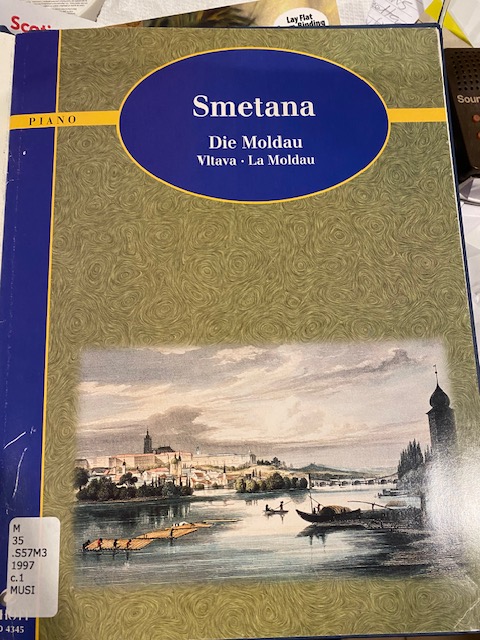
Bedřich Smetana. wrote Má vlast or “my fatherland” a suite of six symphonic poems. I saw a four-handed version of the complete suite in the library, but never expected to find any of it reduced to piano solo. But by a fluke there I was in the Edward Johnson Music Library, and I found the best-known of the six, namely The Moldau, concerning the river. The transcription was there among other reductions of big orchestral pieces (such as Night on Bald Mountain). Schott offer this transcription by Lothar Lechner, a challenging arrangement that is again, full of temptation to surrender to the passions of the piece rather than the prudent management of the fingers.
I love this piece. I sang the melody for my mom a few days ago, as it encouraged her to recall some old tunes. She’s still with us at the age of 103. I was intrigued to read in the introductory essay to the Schott edition that Smetana was living in Sweden, under Liszt’s influence. Maybe his desire to write tone poems is perhaps due to the presence of Liszt. But I’m also intrigued by his exposure to Swedish culture. The familiar melody is Smetana’s take on the Swedish folk tune “Ack Värmeland, du sköna”.
Smetana uses this tune among several in his tone-poem. It first shows up in the pickup to bar #40, and will return after several episodes take us elsewhere on the “river”.
Once I’ve returned the library book you can get it if you like
My one quibble is that the melody we know best is Swedish, not Czech. Perhaps we can forgive Smetana, considering that in our journey down the “river” of the piece we also encounter a rustic wedding complete with a polka tune.
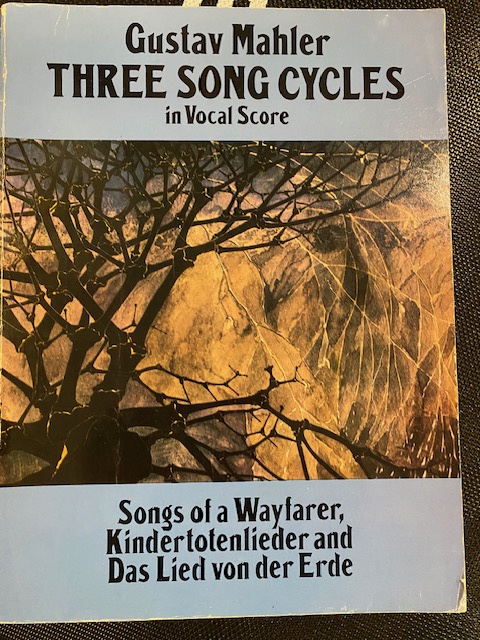
And so the other composer I want to put forward as part of my year of Czech music at the piano–coming from a Hungarian living in Toronto after all–will surely be unexpected. Gustav Mahler was born in Bohemia. I have two books to mention as part of my year of Czech Music.
The first is another marvel from Dover, although I can already anticipate the resistance to the idea of thinking of this as Czech. Perhaps that’s anti-semitism, perhaps it’s simply accurate, given that Mahler himself didn’t identify himself as Czech.
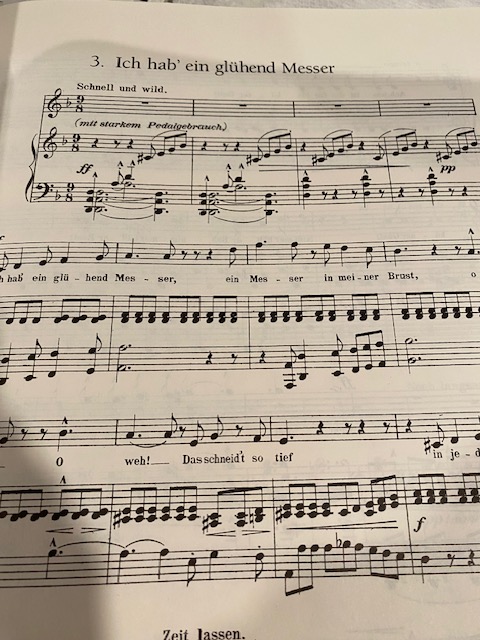
But as I look at the 3rd Song of a Wayfarer, I see something I noticed a moment ago when looking at Dvořák. Remember the “furiant”, identified as a “rapid and fiery Bohemian dance in alternating 2/4 and 3/4 time“? The first line of “ich hab’ ein gluhend Messer” also goes back and forth between duple and triple time, very much as we saw in the first and 8th slavonic dances.
I won’t comment on where any of the other melodies might have come from, only that if we’ll allow Smetana to employ a Swedish folk-tune for his tone-poem surely Mahler can be given some leeway.
My other Mahler is a transcription of the 5th Symphony that I found in the same fortuitous windfall I mentioned above when I saw the Moldau arrangement. Library shelves can be amazing that way!
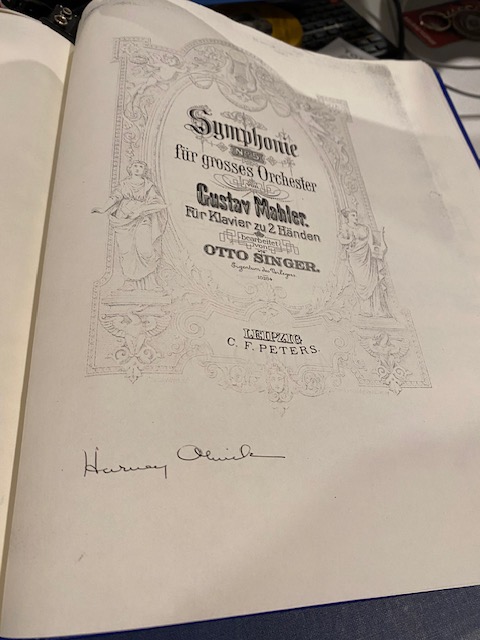
This arrangement is by Otto Singer, or as it says on the title page “bearbeitet”. Does that mean transcribed or edited? I’m not sure.
I share that picture because it has the signature of Harvey Olnick, a University of Toronto professor who gave the score to the library. I remember him fondly for his deep voice and generous manner.
I found it stunning to read (when I google him) that “He exerted great influence at the University of Toronto Faculty of Music; it was largely through his efforts that its music library became the finest in Canada, and he also helped to organize its Electronic Music Studio and plan the Edward Johnson Building.”
Yes. This score for example was his direct contribution.
While I’m playing a reduction of this symphony it’s an astonishing experience to have the whole thing in front of me. At times I think there must be Bohemian folk melodies in this symphony: although I’m illiterate really as far as Czech or Bohemian folk tunes, so I can only speculate. Where does that brash melody come from that opens the 3rd mvmt? Sure let’s give Mahler credit but also, we should consider the possibility that it’s an adaptation of something he heard. Ditto for the melodies in all his symphonies and songs.
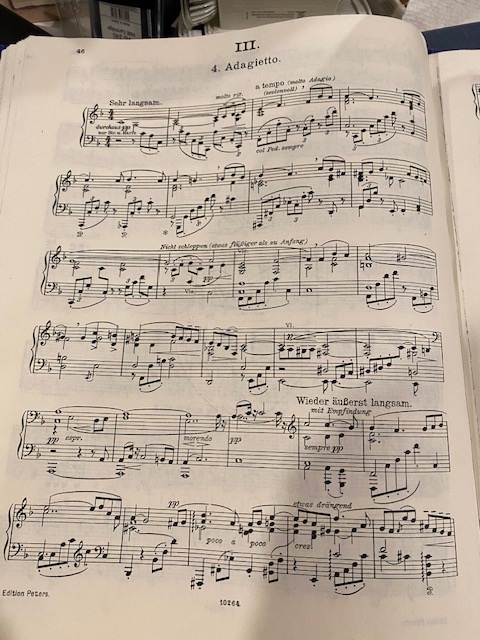
A couple of weeks ago I waded into an online discussion about the Adagietto, aided by the perspective I discovered via this reduction. Oh sure, I can’t claim authority. But as “experts” offer opinions based on their experience as listeners to the symphony, I was able to speak as an interpreter, which is insane when you think about it. I’m no conductor. But I can play the whole 80 minute symphony on the piano, which gives me some perspective as to the role of this gentle 4th mvmt in context with the 5 mvmt whole.
I only bring Mahler up in this discussion of the Year of Czech Music, because I’ve been playing this reduction obsessively, even if I will never get through it up to speed without making mistakes.
I’m especially grateful to the Edward Johnson Building Music Library, who helped me discover so many wonderful scores.
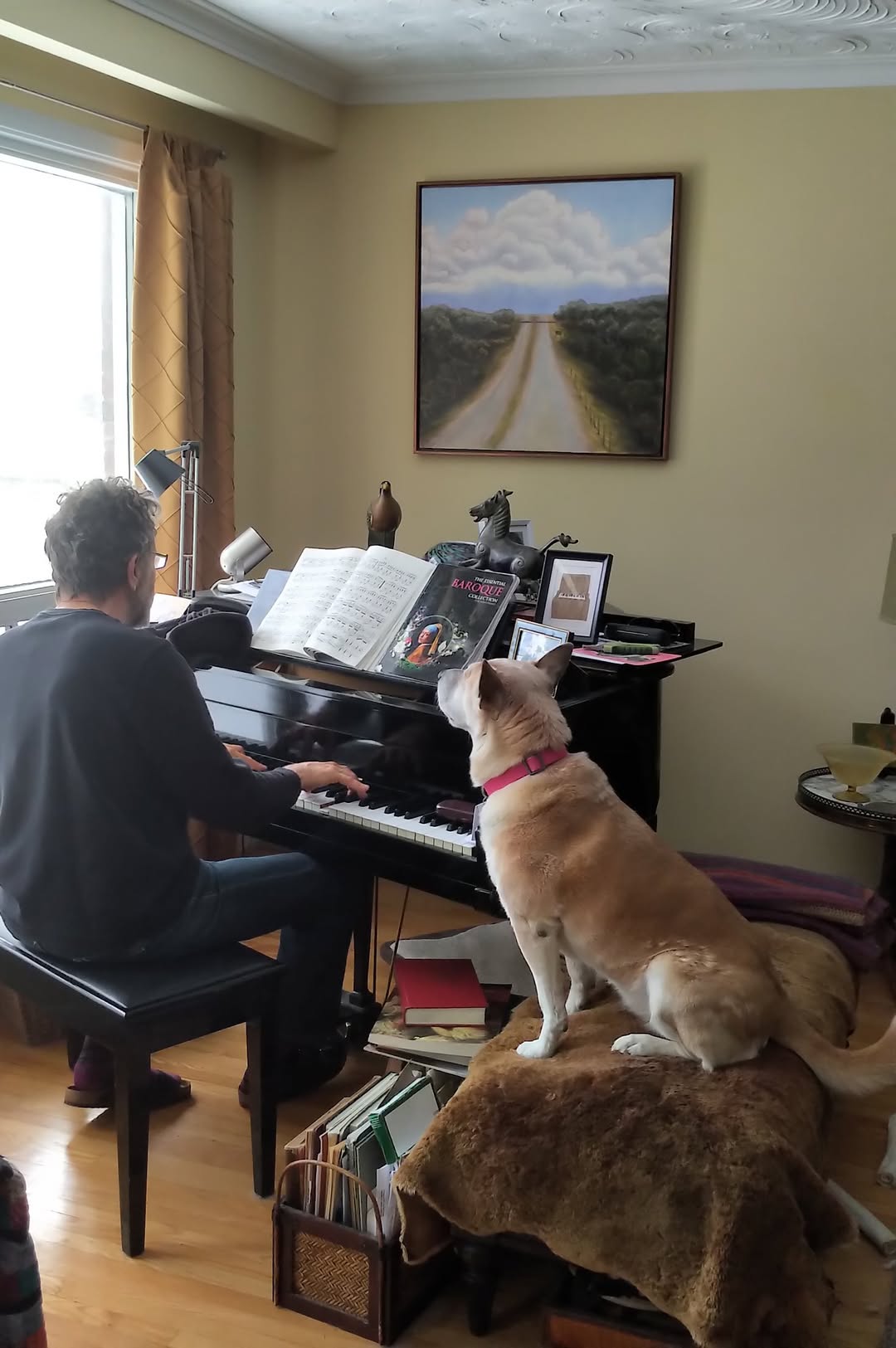
I almost forgot to include this picture: one of my initial impulses for this piece. In 2019 I posted this picture, Sam watching me play Dvorak. The caption when I shared it on Facebook: “Sam (the dog) and Antonin (the composer) may be gone but Alison’s painting still encourages us to believe in possibilities.”
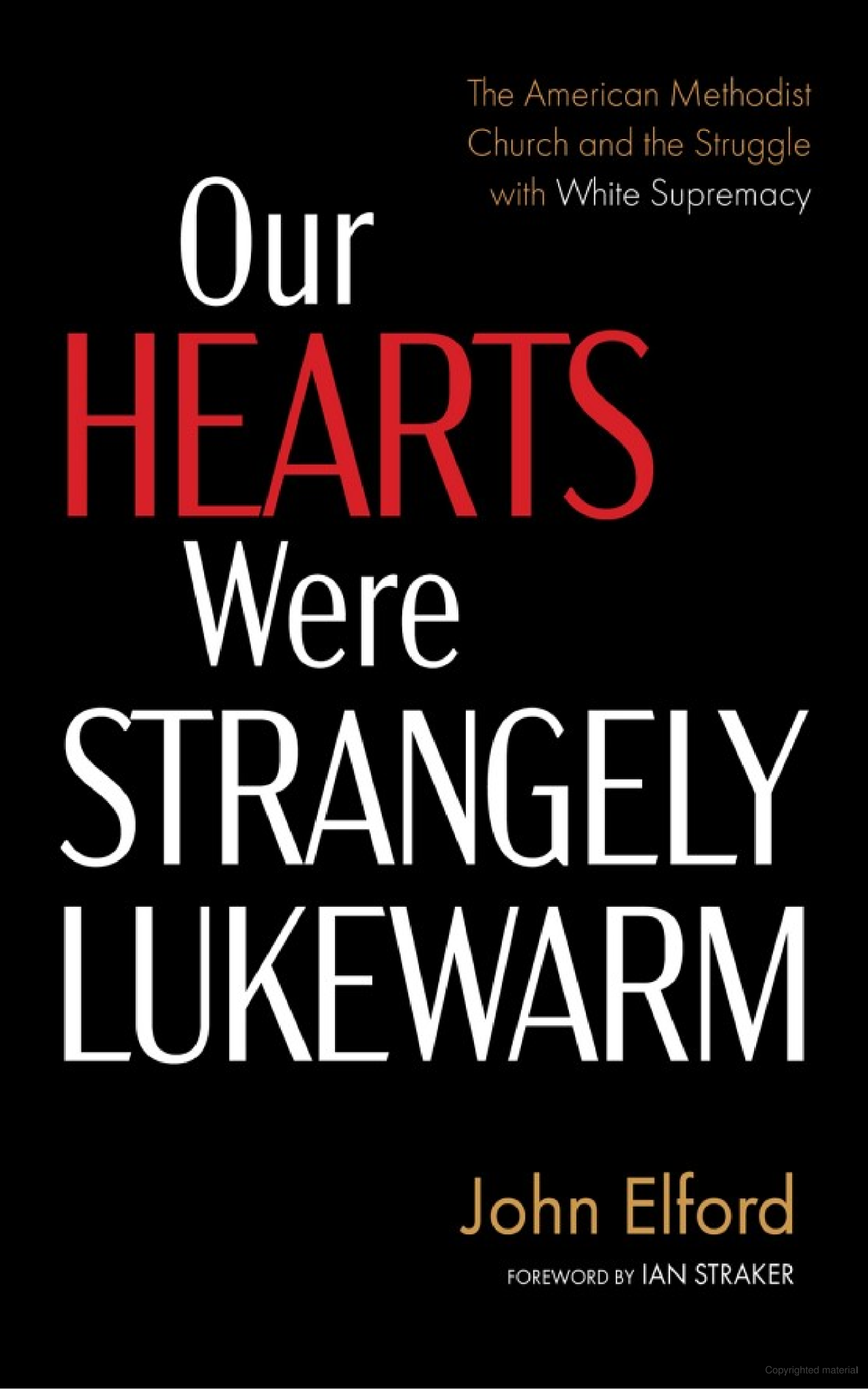
Book titles can be funny. I didn’t really understand what John Elford’s book was doing when I saw the cover. But then again I suppose that’s why we read books, to answer the questions they pose.
Sometimes art functions as a security blanket, as an escape, as a way to cope, as a pain reliever. I say that as I ponder a year that felt like purgatory.
And I kept starting books that I was unable to finish.
Last winter I had two books before me: 1) John Elford’s Our Hearts Were Strangely Lukewarm, a history of White Supremacy in the Methodist Church -and- 2) American Prometheus, the biography of Robert Oppenheimer that is behind last summer’s blockbuster film.
Excuse me as I interrupt my own chain of thought, as I suddenly remember the origins of that metaphor “blockbuster”, a name for an explosive device that used to be understood as something nasty before the later bigger benchmarks for nasty devices were invented, dwarfing blockbusters. Some readers may decide I’ve taken leave of my senses in choosing to focus on such things. But that’s very much where I’m headed in this discussion, for better or worse. It is no wonder that we’ve lost our sense of proportion, our sense of what these words mean: given the context.
At first glance one might think the two books are so far apart in subject matter that my choice to connect them is a kind of non sequitur. Let’s see.
I stumbled upon this book by accident. I went to school with John Elford long before he became the Reverend John in the Methodist Church in the USA.
I try to be a loyal supporter of friends, buying their art, seeing their concerts and plays and operas. And I’ve reviewed a few books by friends, hoping that the somewhat guileless persona I wear on the blog conceals my shortcomings.
I don’t want to pretend to bring any sort of authority to a conversation about a religion (the Methodist Church) that I don’t pretend to understand, or a profession (ministry) that’s far beyond me. While I’ve stepped into the pulpit a couple of times to talk about music, while I think of the music we make in church is a type of ministry: yet it’s not to be mistaken for the work of a preacher.
When I got the book last year, first I thought I’d write something for February / black history month, but wasn’t done reading it yet.
Or maybe for Juneteenth. Nope again.
Now having finished re-reading it I found it felt more timely alongside the Republican Convention, maybe because John is writing about white methodists most of all, even as it does also concern persons of colour within the church.
The title is brilliant because it belies the intensity of the book and its subject. Rev John titled it “Our Hearts were Strangely Lukewarm” but I had a strong response, a study of the history of the methodist church and its complacent participation in white supremacy. I didn’t expect it to be so powerful.
Ever wonder how we got here? That seems like a valid question especially in a year when people seem intent on turning back the clock to another century. My idea of “here” may surprise you, as I am feeling much better about America than I did the week after the Presidential Election. The other books provide the context for that conclusion, but alongside Rev John’s book.
American Prometheus led me to a pair of books that frame America for me as we go into 2025.
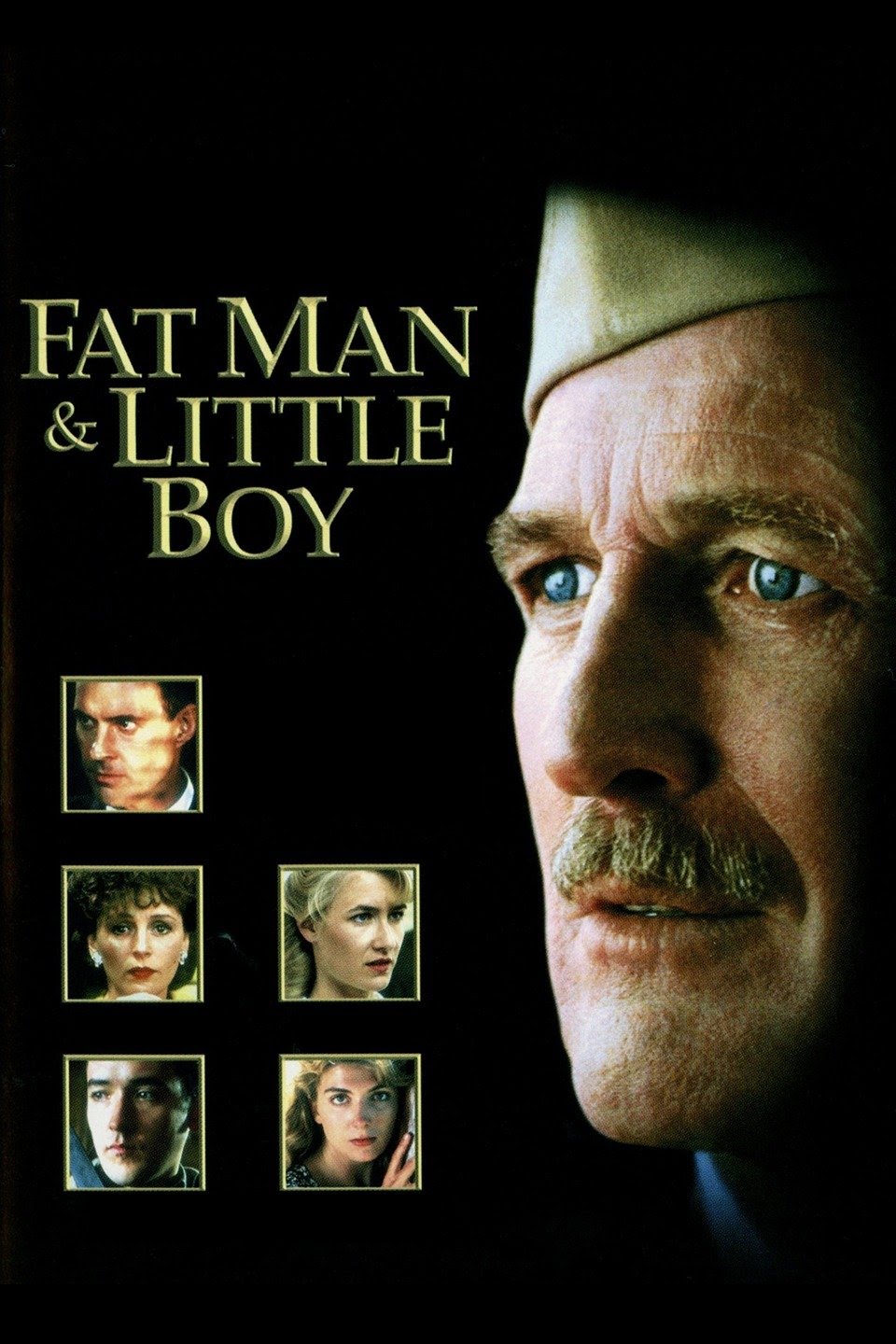
If you’re a regular reader of this blog you may recall my quibble with Oppenheimer, a film that rubbed me the wrong way, as I lauded Fat Man and Little Boy while lamenting the shortcomings of the recent bio. I couldn’t put my finger on it until this very moment as I write this now months later. I wrote that I was disturbed by how clinical and cold Oppenheimer felt, compared to the earlier film, that Roland Joffé (director) and Ennio Morricone (composer) gave us something far more powerful even if the recent film may be more accurate. I now realize why that presumed accuracy is bothering me so much, in context with the November 5th election, and the other two books.
Joffé’s instinct –that it was Leslie Groves not Oppenheimer who really led the Manhattan Project– is shown in a film that put the general’s picture (Paul Newman) not the scientist’s picture on the poster for the film. Yes, Paul Newman was a bigger star than anyone else in the film. And the story made it clear who was really the driving force, and why the director chose to centre the story upon the general rather than the physicist.
That’s what led me to a disturbing book, namely Racing For the Bomb (2002), a biography of General Leslie (Dick) Groves by Robert S Norris.
I was intrigued to discover that in addition to being the project manager for the Pentagon, that Groves was in charge of the camps for the relocation and internment of Japanese Americans. Groves was in charge of the procurement of fuel, the development of the bomb, its delivery and its targets. You could say that Dick Groves was the architect and builder of the Military Industrial Complex.
The affable portrayal from Matt Damon as teh General in the recent film is far off the mark of what you read in this book. Here’s one tiny example.
General Groves is the biggest SOB I have ever worked for. He is most demanding. He is most critical. He is always a diver, never a praiser. He is abrasive and sarcastic. He disregards all normal organizational channels. He is extremely intelligent. He has the guts to make timely difficult decisions. He is the most egotistical man I know. He knows he is right and so sticks to his decision. (p 210 Norris)
Then I stumbled upon a book that disturbed my sleep for much of the year. Nuclear War: A Scenario is a huge best-seller that came out this year. It was triggering for me, as a kid who grew up watching Dr Strangelove, On the Beach, and saw The War Game (!966) in school, when shown to us by an enlightened teacher at UTS. When Goldwater lost to LBJ in the election of 1964 (when I was nine years old) I slept somewhat better, yet fears of atomic war lurked in my psyche, ready to be brought back by a book such as this new one. Let me set aside the actual content of the book, as it should scare the pants off you, if you read it. Annie Jacobsen includes a series of parenthetical history lessons, such as ICBMs and the doctrine of “Launch on Warning.”
The most impressive thing I read in this book–and the thing that links me back to Dick Rhodes and yes Rev Elford’s book– is not its careful descriptions of the intricacies of war (that my younger nerdier self would have obsessed over), but the thinking behind all of this, when Jacobsen observed the similarities between the planning of the Wannsee conference when the Final Solution was laid out in the 1930s by Nazi thinkers, and the more recent planning for nuclear war: a mind-boggling event leading to the extermination of hundreds of millions of people, and perhaps the end of all human life. Committees can be terrifying even as they ignore the implications of their decisions. I am grateful to Jacobsen for daring to say this, to the apes on a treadmill.
The one strange consolation for me is in seeing the way that genocide was somehow neatly compartmentalized in the minds of planners. I see a pattern going back decades. Now I see the reason Christopher Nolan’s film was so sterile, the same sad symptom: that we are not really looking at reality–the way Joffé bravely and painfully does in his film– but hiding away in a realm of abstractions. It has me feeling better about the things I see from the recent election, suggesting to me that the F word really is not a new phenomenon, not when we recall Leslie Rhodes’s work on internment camps, and so many other things going back to the innocent events in the history of the Methodist Church, the topic I began to address. I hope Rev John will forgive me for suggesting the link.
The title is perfect. And the puzzle as you wonder what it means is immediately solved by an explanatory subtitle to explain. John Elford’s award winning history Our Hearts Were Strangely Lukewarm is subtitled The American Methodist Church and the Struggle with White Supremacy.
In the review I published a few months ago of the Metropolitan Opera production of the Davises biography of Malcolm X, I repeated the observation that Christianity is hard. No I don’t pretend I’m original in saying this, but to be a Christian is to contemplate ideals that are daunting when one reads what Jesus told us to do. In fact one of the best demonstrations of being a Christian might be seen in Rev John’s book, not just in recounting the many times different factions within the Methodist movement came into conflict with the leadership of the church.
I did not expect to feel so good when I came to the last parts of the book, telling us of people trying to make amends, and even reparations. I never knew anyone had actually tried that, although indirectly, as in financing black students or micro-loans to help people start businesses. It’s inspiring. I mention it at least in the spirit of wanting to offer something positive after all the negativity you see in this review. I long to bring joy rather than sadness.
If you are looking for a positive and inspiring gift at Christmas time, look no further than Rev. John’s book, that I would call at least part of the answer to the question “how did we get here”. The committees dividing the Methodist Church remind me of the discussions Annie Jacobsen speaks of in the planning for war. I don’t know if the apes will ever get off the treadmill, whereby we avoid the outcome (who does after all), but a first step is in taking a good hard look in the mirror, as Rev John and Annie Jacobsen both do.
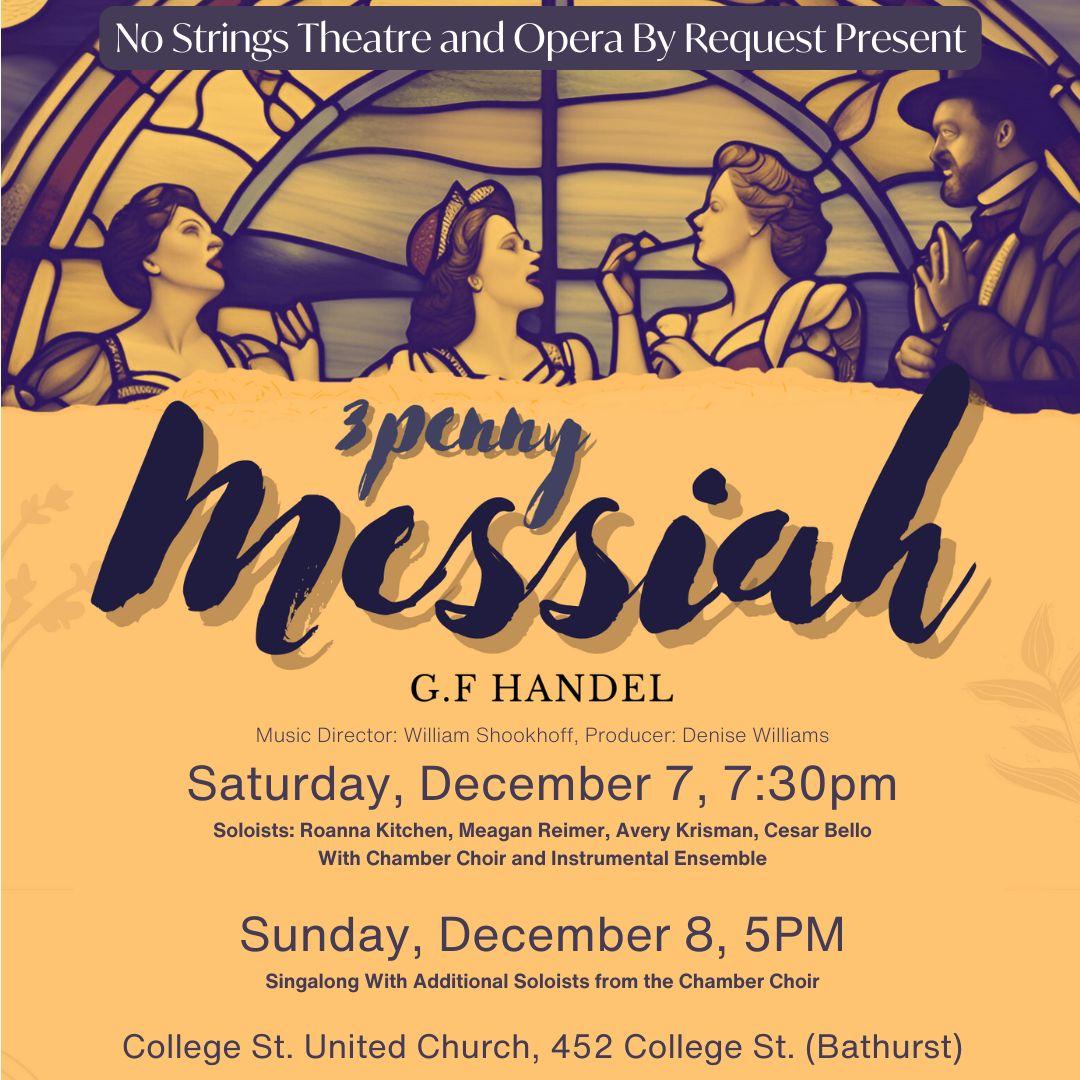
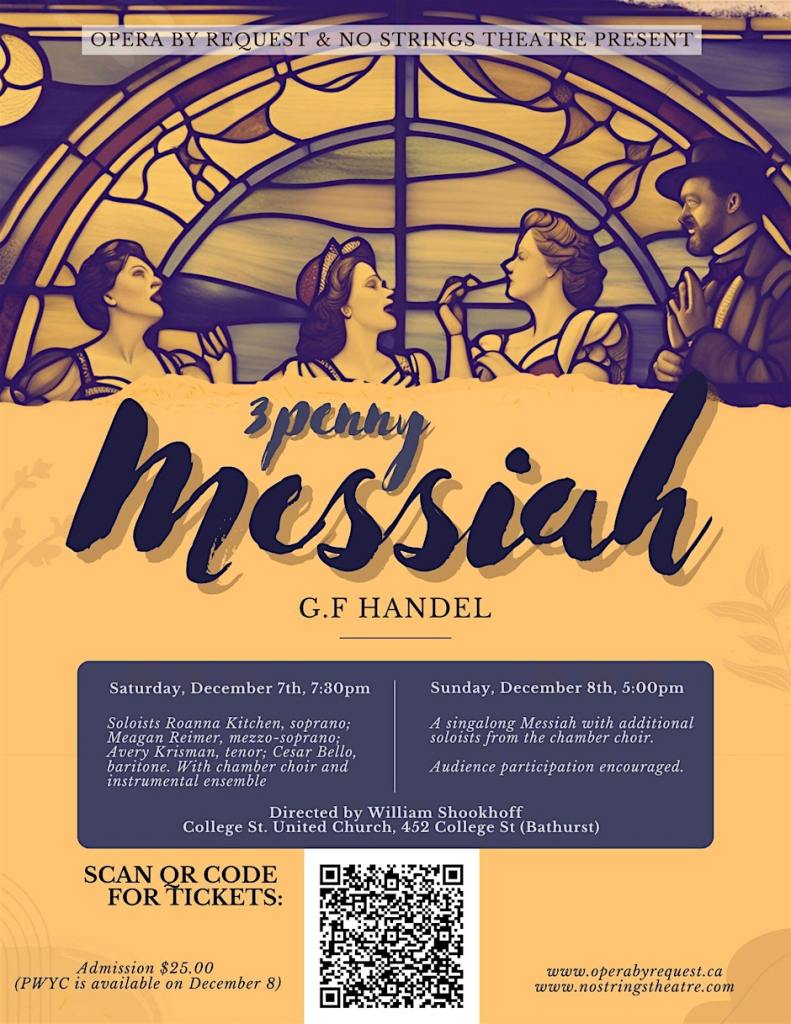
Opera by Request and No Strings Theatre are collaborating on their 3 penny Messiah, a smaller scale alternative to what is offered from big groups such as Tafelmusik or the Toronto Symphony, one performance December 7th and a singalong December 8th.
3 penny Messiah is co-produced by Denise Williams, recently named among 100 Accomplished Black Canadian Women of 2024, and Music Directed by William Shookhoff. I wanted to ask him about the project.
Barczablog: Have you ever done this before (whether in Toronto or elsewhere)?
William: In Parry Sound, with Brenda Muller’s Whispering River Music, over ten years ago now. Was very successful and they’ve continued the tradition, I believe.
Barczablog: Please tell me more about your co-producers No Strings Theatre .
William: I’ve worked with No Strings Theatre and its founding Artistic Director Denise Williams off and on almost since their inception 20 years ago. Denise has been active in developing new talent, and has divided her efforts between new creations and traditional presentation.
Denise Williams
William: We have co-produced Amahl and the Night Visitors several times over the holiday season and will be doing that again this year in January. Over the last three summers we’ve co-presented a summer Young Artist Program with outdoor performances in Adjala Township, north of Toronto. Plans are already underway for 2025.
By the way Denise was recently named one of Canada’s 100 Outstanding Black Women.
Barczablog: Does a smaller venue mean better sound? And not just acoustics, but would it likely be more coherent, easier for us to hear the parts?
William: I’m looking to make this a friendly, intimate presentation, closer to the original Dublin performances than the subsequent Covent Garden presentations which followed. I expect there to be a fair amount of immediate reaction from the audience, and a less formal atmosphere than is sometimes the case.
Barczablog: Do you expect to fill the space? It’s not that big.
William:Certainly hope to. With a chorus that far exceeded my expectations in size, and soloists with their own following, plus the loyal patrons of the two organizations, a full house would be wonderful and not out of the question.
Barczablog: I’ve gone to the Herr Handel fun singalong Messiah with Tafelmusik a couple of times…
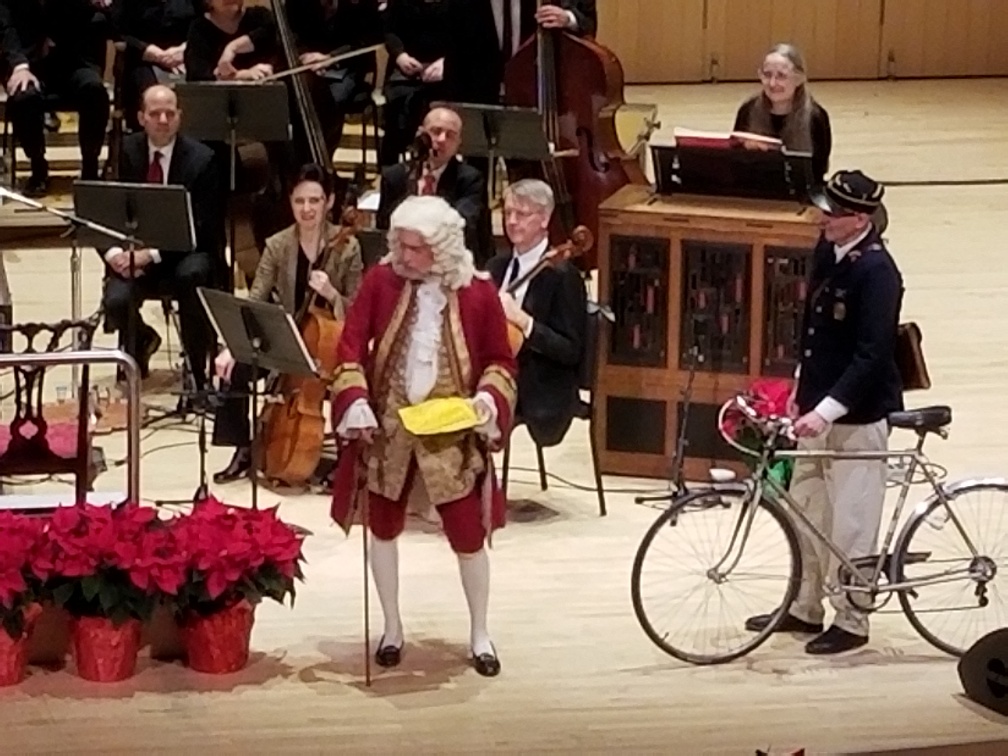
Herr Handel (Ivars Taurins) stares off into space, disconcerted to receive a special message telling him that no it’s not Tom Thomson Hall.
Did you ever attend anyone else’s singalong?
William: Once, long ago, in a church in South London, England. Great enthusiasm and participation. The late Elizabeth Connell took the time off from her operatic career to be a stalwart participant.
Barczablog: OMG I am (or I was) a huge fan of her singing.
What instrumentation will you have, how big is the chamber choir and what’s the maximum size of the singalong (ie, how many seats in the audience?)
William: String quartet, keyboard, trumpet and oboe. 30 voices. With a squeeze, 200 audience is possible.
William Shookhoff, Opera by Request music director and pianist
Barczablog: are you conducting or playing a keyboard (piano or organ)?
William: Emulating Herr Handel by conducting from the keyboard, Yamaha’s equivalent of a harpsichord.
Barczablog: How much of the Messiah will you include, will you have any choral numbers that the singalong omits?
William: Omitting some of the less familiar choruses from Parts II and III, eg, Let all the angels of God; Since by Man Came Death
Barczablog: will you organize the seating by vocal section? (they do that at Massey Hall, so that tenors sit with tenors, etc etc AND one can simply opt out and sit among non-singers)
William: Not specifically, but since many solos will be taken by choristers, I’m hoping our four principal soloists might encourage some audience participation by sitting amongst them.
Barczablog: what is your favorite number (whether choral or solo)?
William: O thou that tellest. I’ve always been struck by its simplicity and poignancy. When I first heard Messiah, age 12, it’s the number I came away singing.
Barczablog: will you sing along yourself?
William: If the spirit moves me and things are under control.
Barczablog: what’s your vocal type?
William: Limited baritone
Barczablog: I saw text on your Facebook page saying the following: please unpack this “Then and now: proceeds from the first performances of Messiah were used to free hundreds of indebted prisoners. Today’s performances help to pay off debts of struggling performers and indebted arts organizations. Two such performances taking place December 7th and 8th at College St United Church. Details available via Opera by Request and No Strings Theatre.”
William:It’s a little bit tongue-in-cheek. I know a lot of singers have looked to Messiah over the year as “paying the rent,” but in reality I don’t expect our proceeds will go very far. However, I think it’s important to remember that, over the centuries, classical music performances have been held as charitable events, helping flood victims, refugees, restoring properties damaged by fire or other phenomena. We’ve seen a lot of that in recent years, and expect that will continue. OBR and NST have from time to time engaged in such participation during their histories.
Barczablog: what’s the price of admission to the concerts?
William: $25 on Saturday. Sunday’s performance has a PWYC option. Click for tickets
Barczablog: Please share names of the performers.
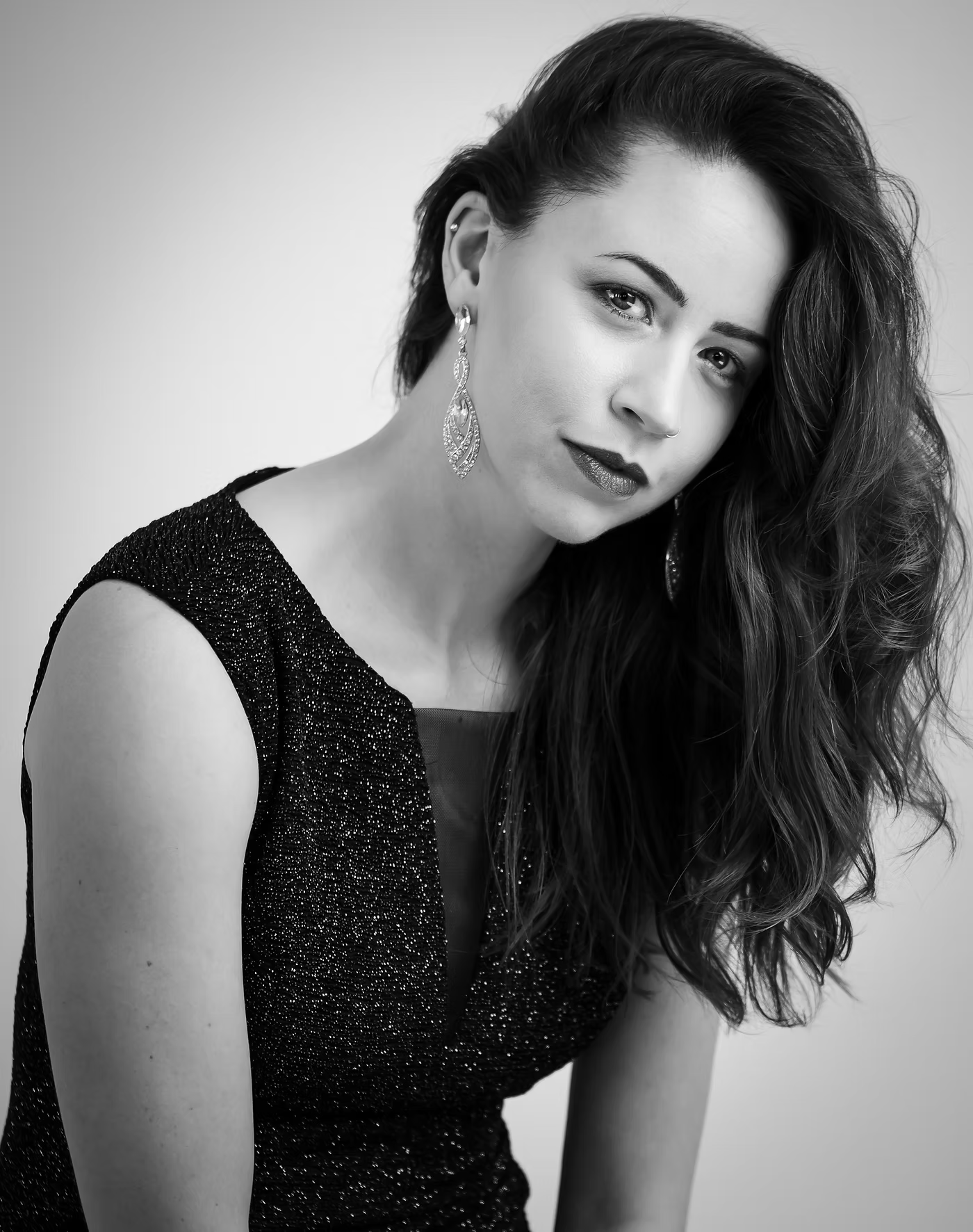
William: Soloists Roanna Kitchen — soprano Meagan Reimer — mezzo-soprano Avery Krisman — tenor Cesar Bello — baritone
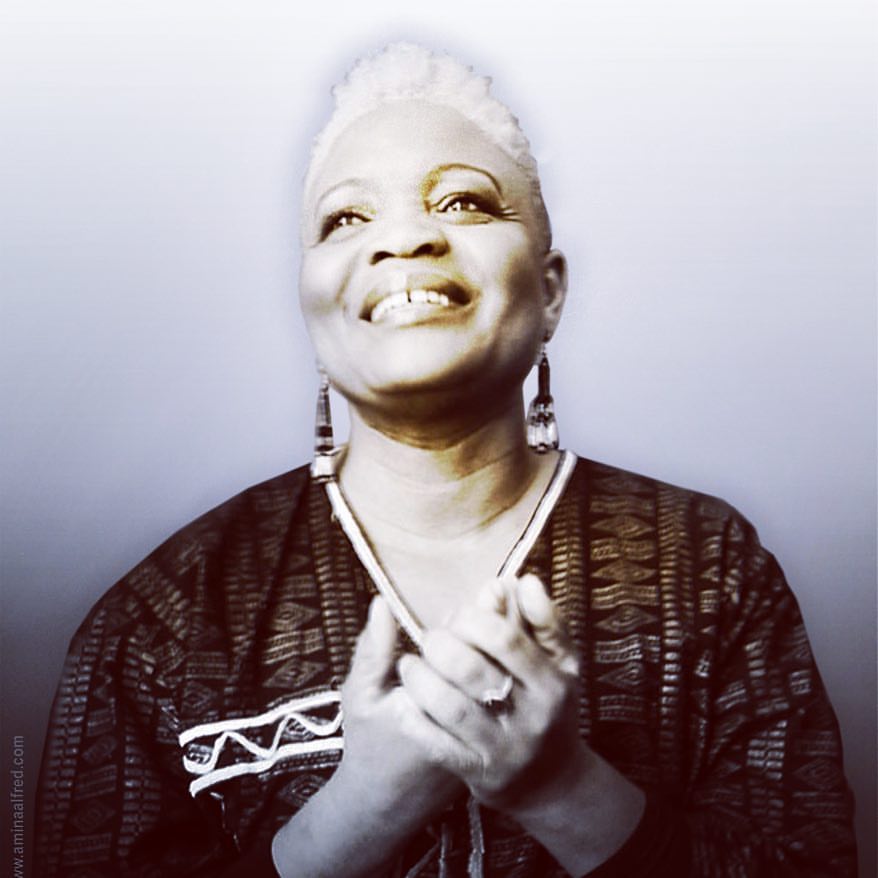
Roanna Kitchen, soprano
Meagan Reimer, mezzo-soprano
Avery Krisman, tenor
Cesar Bello, baritone
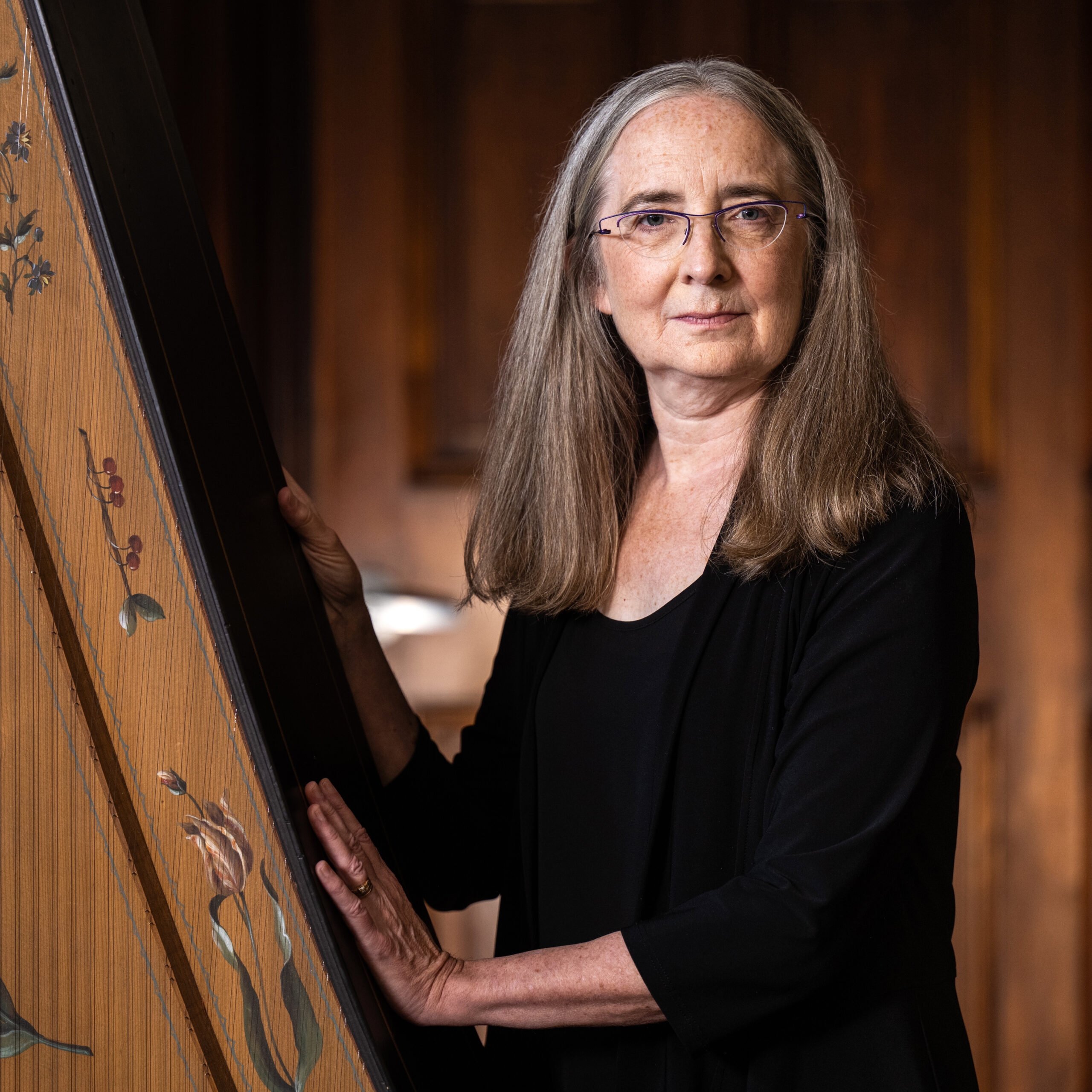
The players, some of whom played in Dvorak’s Jakobin, are as follows: violins: Xiaoling Li and Anna Protosova. violas: Lucy Gelber, Fanny Tang. Cello: Hyemee Yang. Oboe: Hazel Boyle. Trumpets: Tim Birtch, Roy Feuerherdt. Keyboard, music director: William Shookhoff.
Barczablog Will it become an annual event?
William: Let’s see what transpires. Would be wonderful.
Excuse me for this preamble, pondering Christmas oratorios. Toronto is Messiah town, as musical ensembles large (Toronto Symphony Dec 17-22 at Roy Thomson Hall or Tafelmusik Dec 20 & 21, plus the Singalong December 22nd) or small (Opera by Request / No String Theatre Dec 7 & singalong Dec 8, or Toronto Beach Chorale Dec 8th, and many more…) each present their versions of Handel’s work.
And the meme is largely accurate.
This is meant to contextualize my discussion of Tafelmusik’s presentation of JS Bach’s Christmas Oratorio the weekend of November 22-24. Messiah may be the usual Christmastime oratorio in Toronto even if roughly two-thirds of the piece concerns the Passion rather than the events of Advent and Christmas. While Bach’s work is more properly the Christmas piece, you don’t fight tradition.
Ivars Taurins leading Tafelmusik (photo: Dahlia Katz)
While there are some wonderful contributions by the four splendid soloists, I feel that in Bach’s oratorio the dramaturgy of the work makes the chorus the most important contributor.
Tafelmusik Baroque Choir (photo: Dahlia Katz)
My departure point for my musings are, as usual, inspired by the excellent program notes from Tafelmusik keyboardist Charlotte Nediger.
Charlotte Nediger (photo: Dahlia Katz)
I’m quoting her discussion here: “The single most unifying gfeature of the Christmas Oratorio, apart from the continuous narrative, is the use of chorales, the distinctive Lutheran hymns. At least two chorales are heard in each part in a variety of settings, from “simple” four-part harmonizations, to chorale-based choruses, to reflective quotes in accompanied recitatives. All of the chorales used by Bach would have been very familiar to the congregations hearing the Christmas Oratorio in 1734. Chorales were fundamental to Lutheran worship, used throughout the church year and sung from memory by the congregation. When hearing chorale melodies in the context of a cantata, oratorio, or Passion, Bach’s audience would have understood their significance on a visceral as well as intellectual level. Listeners today who approach the work from a secular point of view may still experience the chorales as moments of feeling grounded, or moments of affirmation.
I may have been triggered by the presence of Ivars, aka “Herr Handel”, the leader of the singalong Messiah, but I can’t help wondering, in 1734 whether the congregation would have been as quiet as the modern audience.
The Tafelmusik chorus led by Ivars had me leaning forward in my seat. At the very least Bach was speaking directly to his congregation, who knew these pieces by heart. And maybe congregants were singing along in Bach’s day. There is a gentle lyricism to soft chorus singing, allowing a different sort of reflection than in the virtuoso solos, the words transparent.
Please excuse me as I may seem to make an abrupt leap, in thinking of Friedrich Nietzsche, who criticized Bach for his faith which he understood as a submission. Of course.
Yet I was mindful of a passage in Nietzsche’s Birth of Tragedy that could be describing Bach and his Christmas Oratorio. While most people think of Nietzsche as a nihilist he was for a time a theological student, whose complex relationship with JS Bach might be put alongside his love-hate relationship with Richard Wagner. In 1870 Nietzsche went to hear Bach’s St Matthew Passion three times, a work he admired very much. Nietzsche was a scholar of ancient Greek tragedy but in his youth had been immersed in a Christian context that he would reject, including his time as a composer who even undertook his own Christmas Oratorio (unfinished).
I want to quote Birth of Tragedy because of the way Nietzsche struggles with the concepts of the chorus, reminding me of what I heard and saw Saturday from Tafelmusik and JS Bach in Jeanne Lamon Hall.
Pondering the origins of Greek tragedy, Nietzsche writes “tragedy arose from the tragic chorus, and was originally only chorus and nothing but chorus. Hence we consider it our duty to look into the heart of this tragic chorus as the real proto-drama, without resting satisfied with such arty cliches as that the chorus is the “ideal spectator” or that it represents the people in contrast to the aristocratic region of the scene.” Nietzsche’s complex discourse is my departure point, as I suspect Nietzsche likely first encountered his ideal in the workings of Bach’s chorus as an expression of a faith from which he would turn away. The strong gentle under-current of the Christmas Oratorio is found in the expressions of faith captured in the chorales.
I was thrilled to have my first historically informed experience of this music, that I’ve long listened to in the old way on vinyl, meaning big orchestra without restraint. Ivars led a subtler reading yet still bold when required especially from the trumpets. I’m amazed that something baroque can sound so fresh and new. The soloists made a significant contribution particularly tenor Charles Daniels, whose role as the Evangelist contains a great many notes and syllables delivered in the gentlest most self-effacing manner, plus an aria “Frohe Hirten, eilt, ach eilet” containing a great number of ornate passages sung softly.
In fairness soloists –soprano Hélène Brunet, mezzo-soprano Cecilia Duarte and baritone Jesse Blumberg–were flawless in their execution.
But I was hypnotized by the subtleties of Bach’s choral writing.
Tenor Charles Daniels, conductor Ivars Taurins and Tafelmusik (photo: Dahlia Katz)
Tafelmusik will be back for the Messiah December 20 and 21 at Koerner Hall, plus the Singalong Messiah December 22nd at Massey Hall,
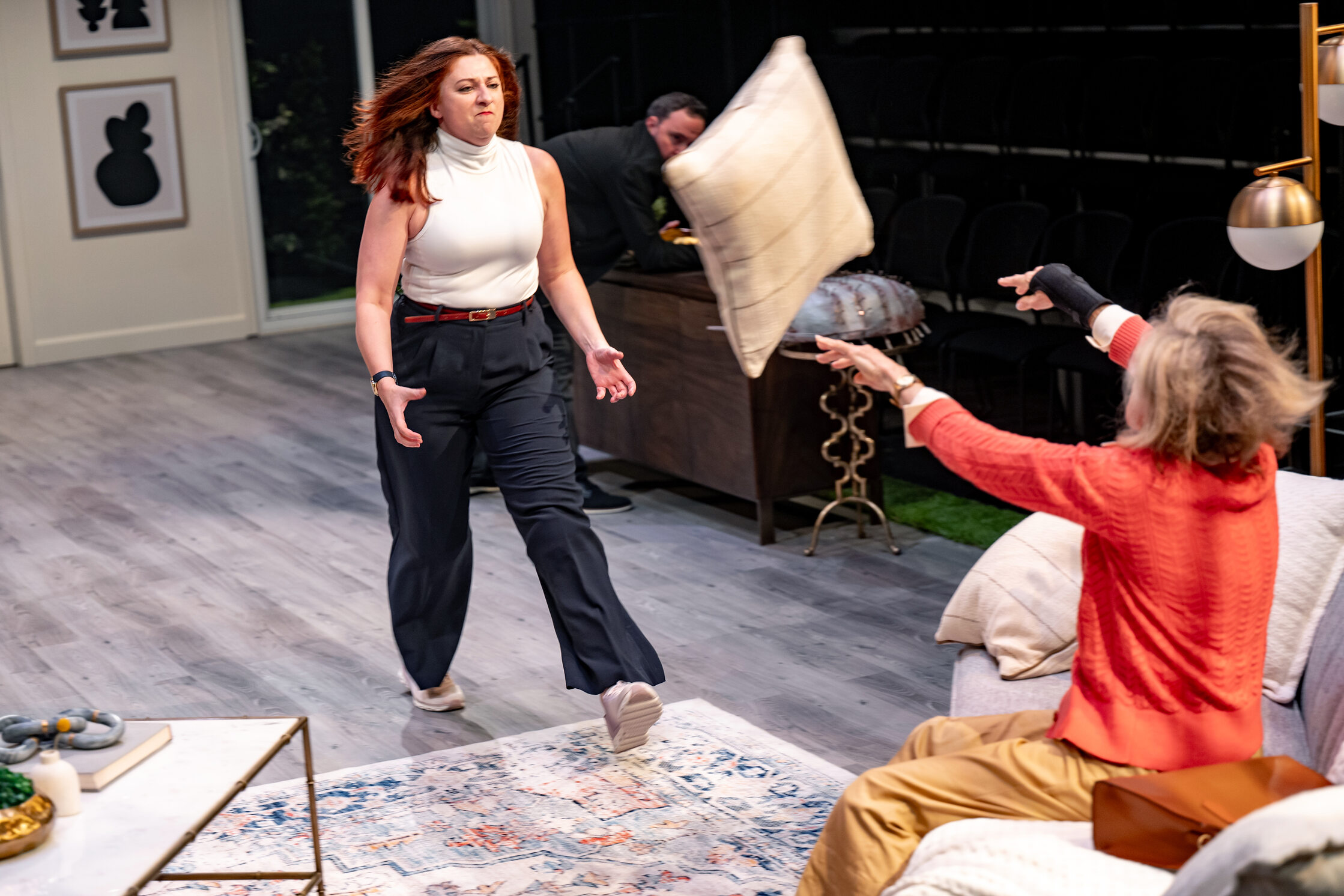
The title of The Bidding War isn’t just a metaphor.
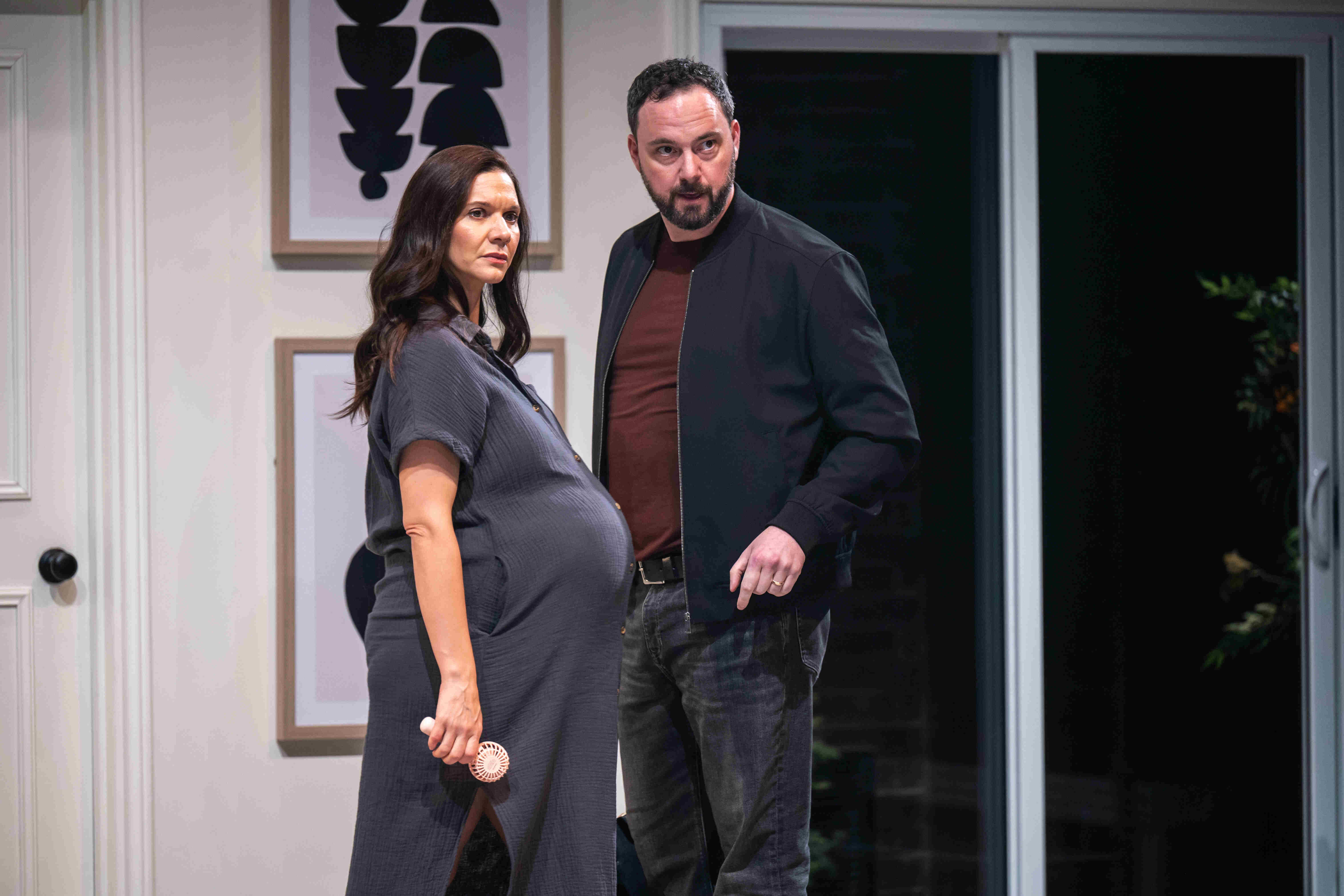
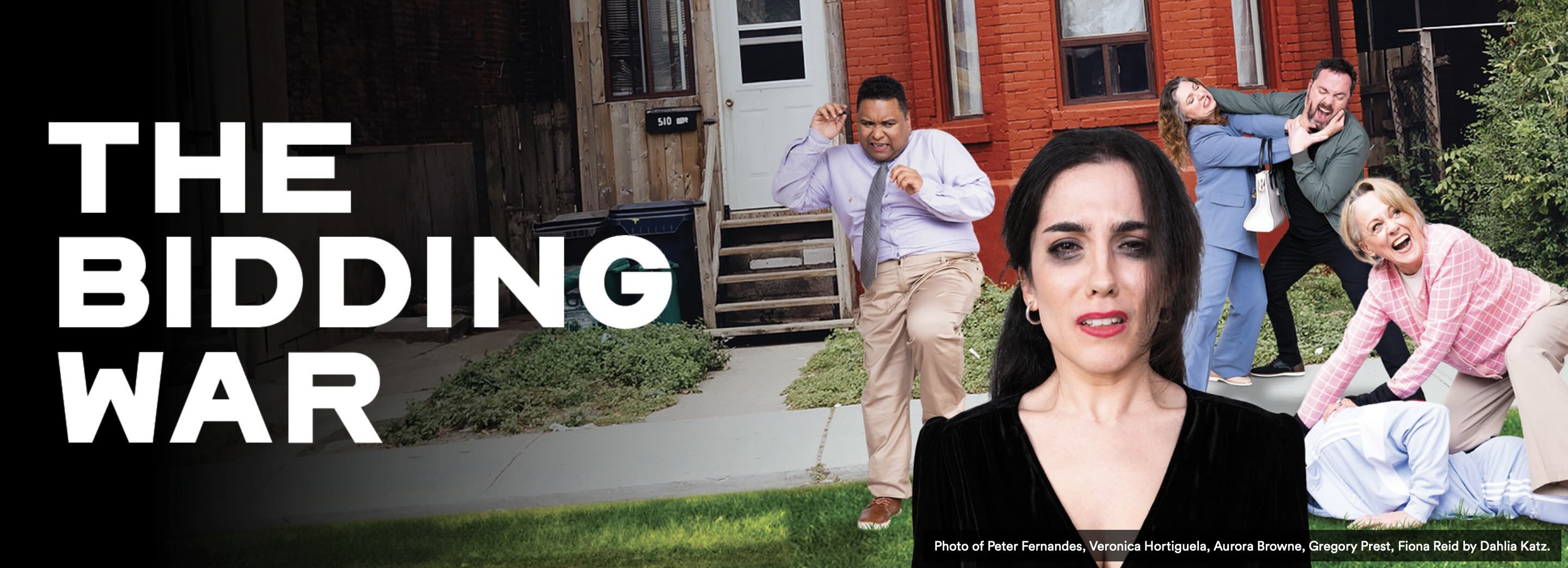
Blayne, an agent (Aurora Browne) vs Miriam, a prospective buyer (Fiona Reid), and it’s not just a pillow fight (photo: Dahlia Katz) as Luke, another buyer (Gregory Prest) watches from background.
Michael Ross Albert’s new play has just opened at Crow’s Theatre with a big cast and big laughs.
The premise is so simple that it can’t miss. Buyers and agents are all squabbling and arguing at an open house that devolves into a fight over the property. Because everyone is there more or less for the same reason (seller, buyer, agent) we can jam a huge crowd and lots of exposition onto the stage for a remarkably short fast-moving play. It’s brilliant, hysterical, irresistible.
The Bidding War is the evil twin of Michael Healey’s The Master Plan, another Crow’s Theatre masterpiece critiquing Toronto’s pretensions. Where Master Plan functions from a distance showing us big ideas and big thinkers, Bidding War is a gritty study of greed seen up close. Never mind housing as a human need, it’s a commodity with Toronto’s NIMBY soul again proudly displayed. No I’m not proud but wow this is funny: because it’s so accurate. For long stretches of the show, almost every single line got laughs. I’m reminded of The Wedding Party also seen in Guloien Theatre a few years ago: another frenetic farce celebrating the worst instincts of humanity, every bit as funny.
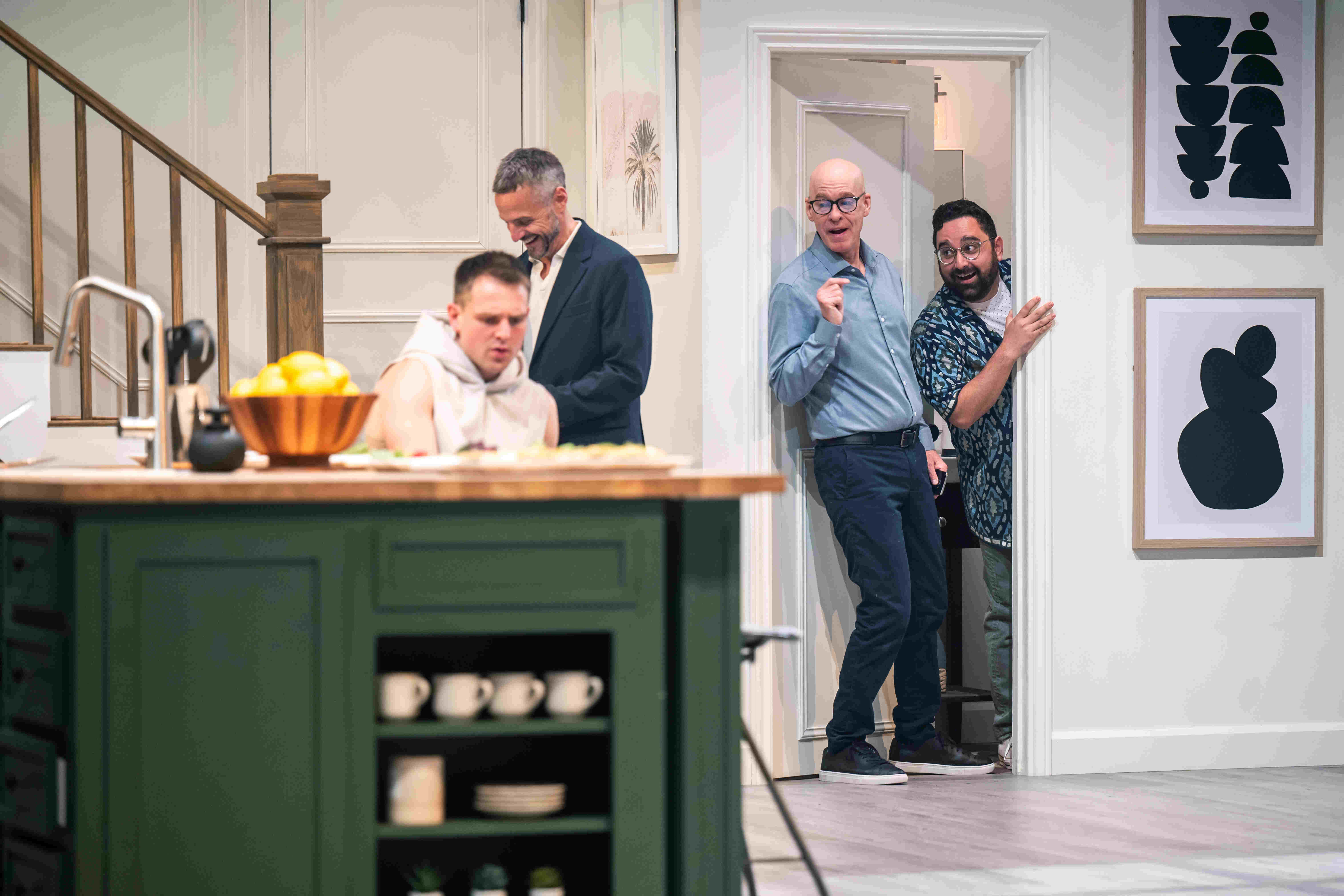
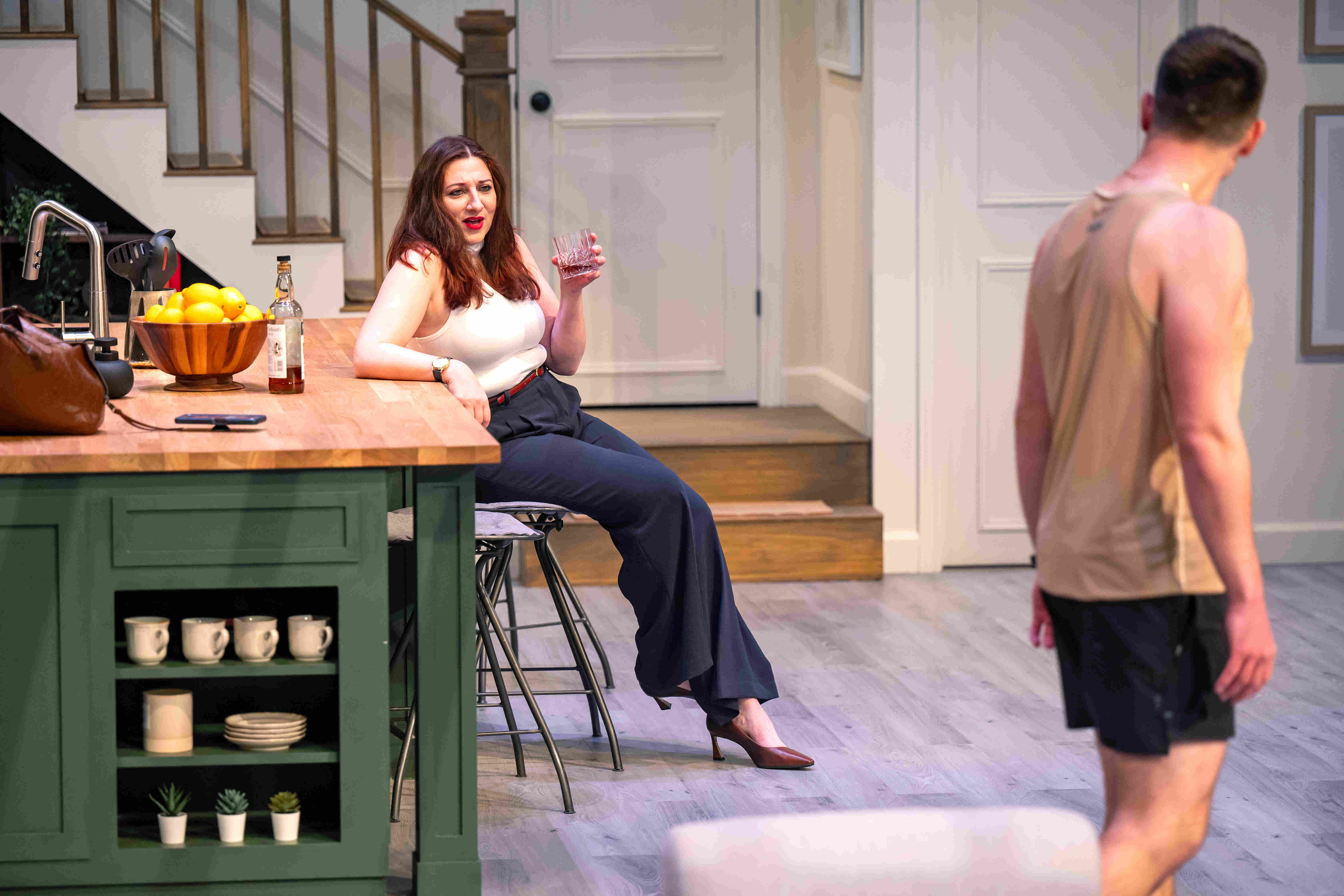
Eleven characters (the seller, four agents and six prospective buyers) each make a claim on our attention if not our affections, given that for all the hilarity they are not terribly attractive people. Presented in the square space of Guloien Theatre we’re watching complex interactions and the audience response from the other side.
We first meet nervous Sam (played by Crow’s regular Peter Fernandes, seen in Fifteen Dogs and The Master Plan), the agent running the open house on behalf, or maybe in spite of June (Veronica Hortiguela), the seller of the house.
Peter Fernandes as Sam, an agent; Veronica Hortiguela as June the seller (photo: Dahlia Katz)
We will meet agents Patricia (played by Sophia Walker), Blayne (Aurora Browne) and Greg (Sergio Di Zio).
Of the six prospective buyers there are two couples.
Pregnant Lara (Amy Matysio) is married to Luke (Gregory Prest).
Lara (Amy Matysio) and Luke (Gregory Prest, photo: Dahlia Katz)
Ian (Steven Sutcliffe) & Donovan (Izad Etemadi) are also a couple.
Ian (Steven Sutcliffe) & Donovan (Izad Etemadi) listen intently while Charlie (Gregory Waters) and agent Greg (Sergio Di Zio) look at their phones (photo: Dahlia Katz)
Two other prospective buyers came alone, namely Miriam (Fiona Reid) and Charlie (Gregory Waters).
There are no bit parts or secondary roles in The Bidding War, a remarkable quality to Michael Ross Albert’s script. Everyone struts around self-importantly, behaving as though they are the most important person: which come to think of it is how people live their lives. Nobody is a bit player in their own life.
The script makes the job of Director Paolo Santalucia that much more difficult, given that we need to hear the lines, sometimes through the explosive laughter of the audience. He brings this War to a boil including moments both sexy and spine-tingling to confirm that real estate is a blood sport.
The physical choreography is very challenging, and likely will get better with every performance. I have to believe they’re having an enormous amount of fun doing this show.
We watch every human impulse play out before us.
Blayne (Aurora Browne) & Charlie (Gregory Waters) checking out their real estate
We build to a stunning climax at the intermission. The last half hour to conclude feels like we are coming down from the high, sobering up after the wild party, trying to remember and understand what we lived through. In some respects it’s very classical as order and stability are reaffirmed in the aftermath.
I expect that just as good affordable homes are difficult to find, tickets to The Bidding War will be scarce, as word gets out on this superb show at Crow’s Theatre, running until at least December 15th.
photo of Peter Fernandes, Veronica Hortiguela, Aurora Brown, Gregory Prest, Fiona Reid by Dahlia Katz
When an artist tells you their goals & objectives one should listen. Gustavo Gimeno’s “European Soundscapes” essay in the current Toronto Symphony program gives us some great clues as to what we should expect from the orchestra.
No they are not swearing off Mozart, yes they will still offer their annual Messiah. But there’s a new focus on 20th-century classical music, that Gimeno calls “a specialty of the orchestra”.
Earlier this month it was a program of John Adams in a concert actually conducted by the composer. Next week Nov 21-23 it will be Brilliant Bartók, including the third recording for the Harmonia Mundi label.
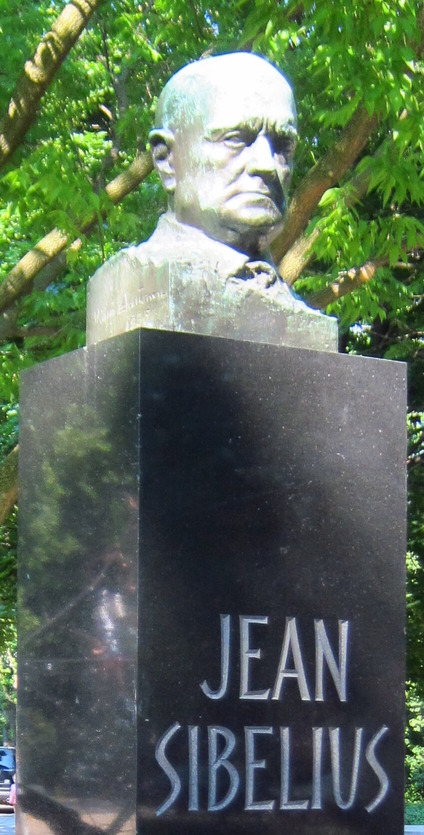
“Fire & Ice” this weekend featured Shostakovich, Sibelius and Sokolović. In some ways this one and the Bartók concert seem to be part of a single large exploration (as Gimeno tells us), given that each program includes a concerto for orchestra, one from Sokolović, the other from Bartók.
I watched a TSO audience behaving themselves, with nary a phone mishap I could hear (meaning no smartphones going off during the music), Roy Thomson Hall jammed full without any well-known pieces, and enormous applause for each of the pieces:
Ana Sokolović:Concerto for Orchestra
Shostakovich:Violin Concerto No. 1 in A Minor, Op. 99 Intermission
Sibelius:Symphony No. 1 in E Minor, Op. 39
As I listened to Concerto pour Orchestre by Sokolović I was reminded of a frequent topic of conversation between me and my daughter Zoe, a painter & singer who is more open-minded than I. Maybe I’m a bit of a dinosaur in my enjoyment of beauty. Maybe my aesthetic places too much emphasis on pleasure and enjoyment. But even so I think one needs to recognize how popularity works, that people like melody and beauty, even if not all modern art requires or celebrates beauty.
Ana Sokolović (photo: Raoul Manuel Schnell)
That’s a preamble for my admission that I don’t really get Sokolović’s Concerto for Orchestra on first hearing it, a piece full of some very original sounds. It’s funny because the program quotes a critic admiring Sibelius saying “Here we have a man really saying things that have never been said in music before”.
I cite this not just because I found the Sibelius piece doesn’t sound all that original, given how often it reminds me of Tchaikovsky, but also because in several places I thought wow Sokolović was making sounds with her orchestra that I had never heard before, sounds that had me questioning just how they had been created. Okay so I wasn’t sure I liked it, I wouldn’t call it precisely “beautiful” but then again Guernica isn’t beautiful either, Sacre du printemps is downright scary in places. So of course naturally I need to hear it again. There’s no denying that it’s a powerful and accomplished piece. I must reserve judgment which is why I say “I don’t get it” rather than to presume to judge that it’s not a great piece of music.
For me the most exciting piece on the program was the violin concerto from Dmitri Shostakovich.
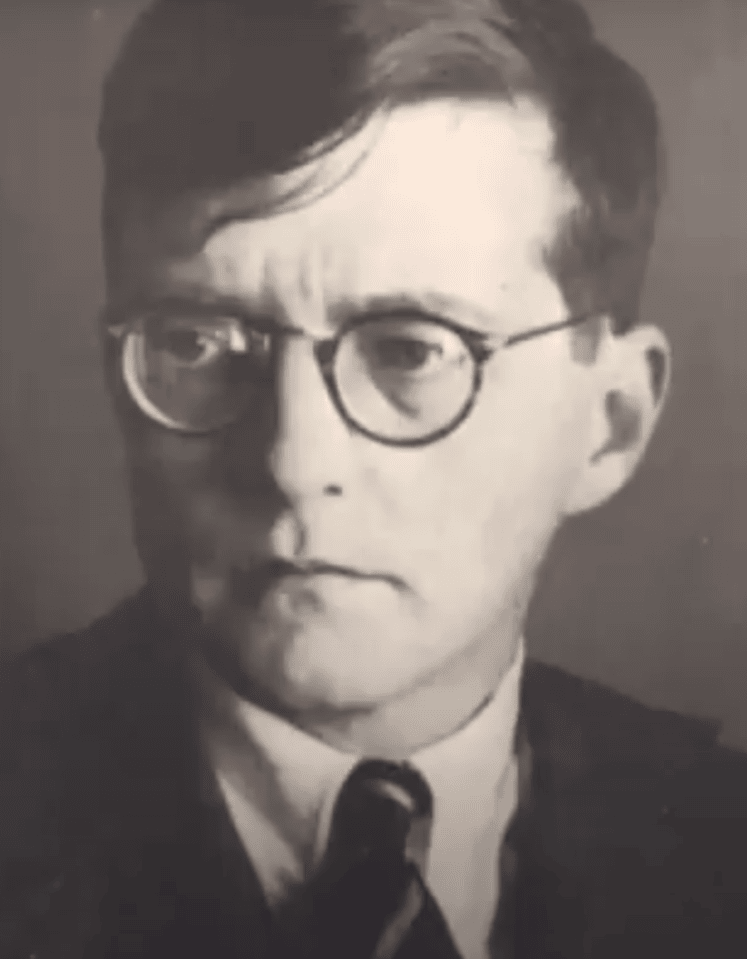
Dmitri Shostakovich
Somehow I have never had the pleasure to hear this concerto before. I thought I knew which violin concerti I prefer, dividing the world up between Beethoven and Mendelssohn with room for a little bit of Bruch, Brahms & Berg: but I have to adjust my pantheon to make room for Shostakovich, especially after the extraordinary performance from soloist Julian Rachlin, violin.
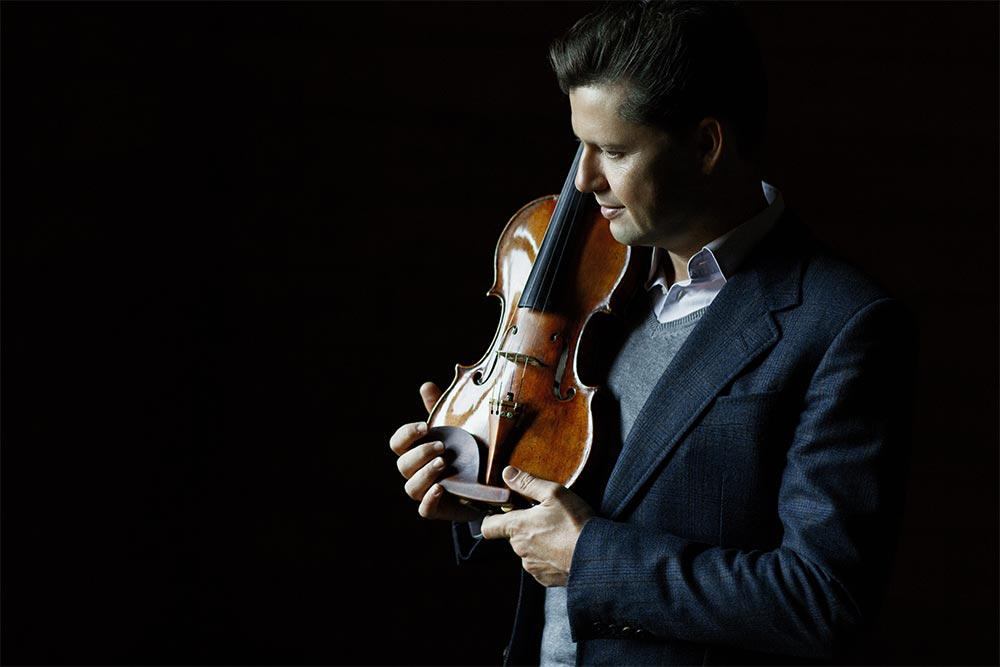
Julian Rachlin, violin
I am currently finding myself especially moved by the works of composers such as Shostakovich, who worked in the shadow of a repressive tyrant such as Stalin. For my whole life I’ve always thought of North America as the refuge from repressive regimes, bastions of freedom. If that is about to change, maybe we need to listen even more closely to people like Shostakovich, to learn from them. Shostakovich is sometimes plaintive and vulnerable, sometimes ironic, sardonic, witty in his juxtaposition of shapes & effects, sometimes brutal, sometimes invoking the simplicity of folk tunes or music as simple as our childhood nursery rhymes. All that happens while we watch a soloist exploring some amazing sounds on his instrument.
But Gimeno and the TSO were not mere bystanders for this work, with a hugely complex orchestral part in four movements, plus an enormous cadenza bridging the third and fourth movements. Maybe I need to listen to more performances of the work but right now what I heard today has me rethinking my ideas about violin concerti, in wonderment at what Rachlin, Gimeno and the TSO accomplished today.
After intermission we were treated to a bold and decisive reading of the Sibelius, a work that is full of big statements and passions, reminding me of Tchaikovsky’s last symphonies, as far as the textures and the way the orchestra is employed. Of course it’s brilliant for a first symphony and a huge crowd pleaser.
The TSO are back next week November 21-23 for Brilliant Bartók, including their third recording for the Harmonia Mundi label.
I was disappointed to miss the live High Definition broadcast of Grounded October 19th, seeing the Canadian Opera Company Nabucco. I thought that the main reason I wanted to attend was to see brilliant mezzo-soprano Emily D’Angelo in the lead role.
Mezzo-soprano Emily D’Angelo
Little did I realize that seeing the encore today on November 9th would be even better, when the American election is still fresh in our minds and Remembrance Day is the day after tomorrow.
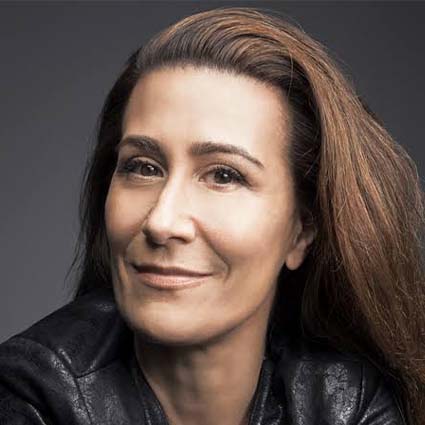
Composer Jenine Tesori
Grounded premiered with Washington Opera in 2023, opened the current season at the Metropolitan Opera last September 23, with music composed by Jeanine Tesori and a libretto by George Brant, based on his 2013 one-woman play: the opera expanding the scope of the play considerably.
When I see a new work I try to acknowledge both the text and its interpreters. And yet before I even get to any of that I have to again take a deep breath while noticing how this piece makes me feel at this time in history. A couple of days ago I saw John Adams conducting music with great resonance to current events, so I was already primed for this.
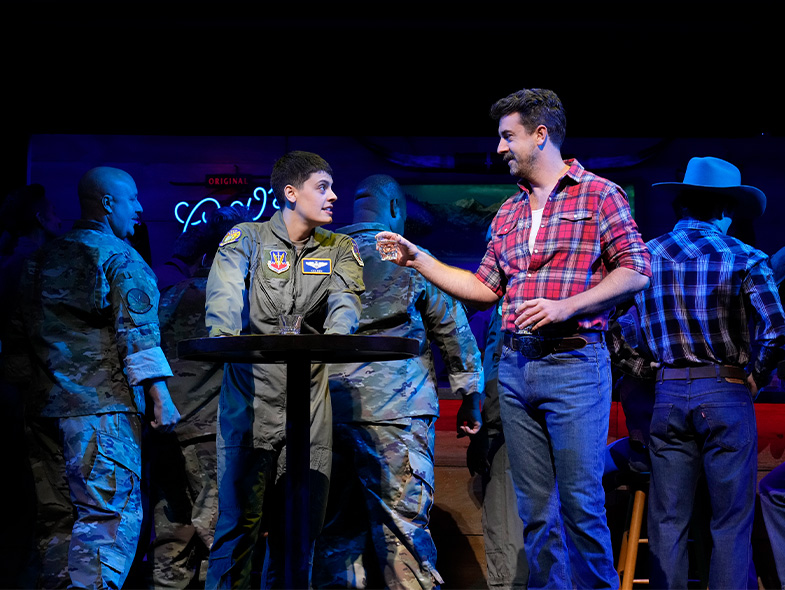
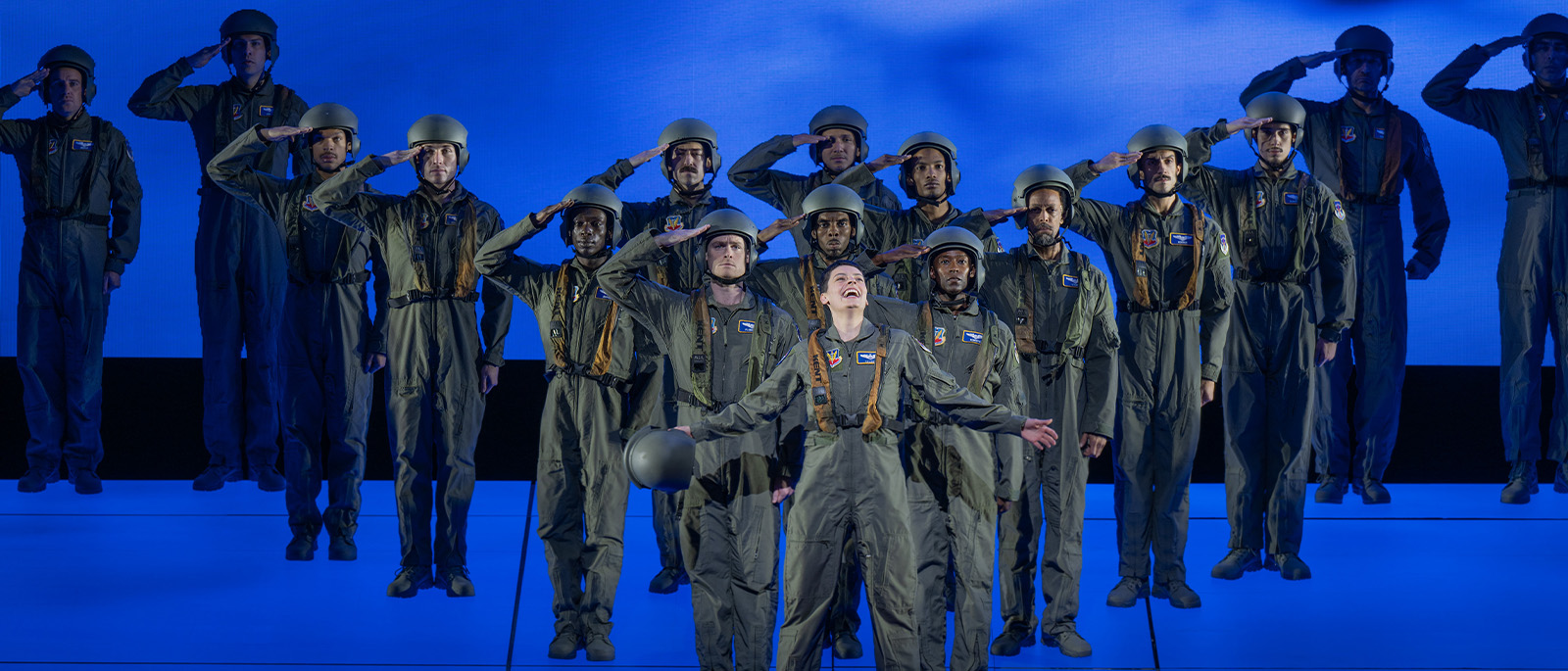
Brant and Tesori hold up a mirror to Americans who watch a story of a woman pilot who gets pregnant, becomes a drone pilot, and then is grounded when she disobeys orders, refusing to kill someone & crashing her expensive weapon. For much of the opera we’re watching humans who seem to be marching in lock-step as though they were all programmed to obey orders, lacking empathy for their enemies. But the pilot Jess (Emily D’Angelo) is changed, seemingly torn in two by on the one hand getting pregnant after a one-night encounter with Eric(Ben Bliss) and becoming mother to Sam (Lucy LoBue), while continuing to fight as a drone pilot, working the controls in Nevada. We watch Jess become progressively more conflicted by her life as a mother and warrior as she is sensitized to the devastation of what she causes on the ground with her attacks.
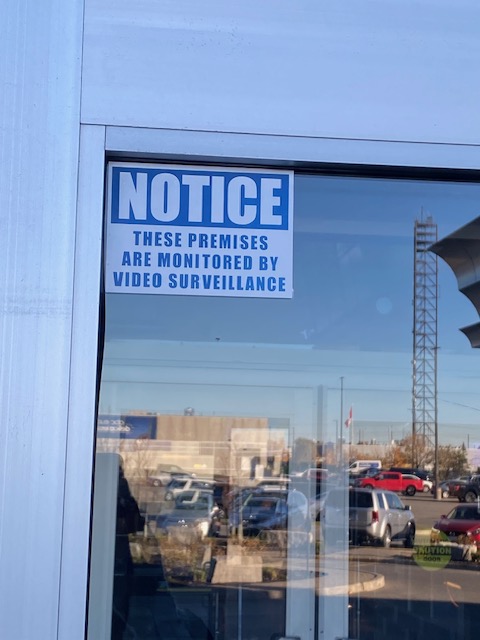
She notices the surveillance even in her own home town when she goes shopping. Coming into the theatre I couldn’t help noticing this sign.
At one point she remarks that in the Odyssey the hero didn’t come home from the war every night. You want to talk about work-life balance?
Playwright and librettist George Brant
I have not read any criticism about the opera, have no idea about its reception. But it strikes me today that Brant is telling an important story that likely will be seen differently since the election. I’m going to say something that American friends may find upsetting, but I speak while recalling my pride in Jean Chretien’s rejection of the invitation to join the coalition that fought in Iraq. There were no WMD (and if you don’t know what that stands for good for you, that you’re not tormented by such factoids). The Gulf War under Bush the 1st, and the Iraq War, under the management of Dick Cheney were both cathartic exercises of American manhood, restoring confidence after the debacle of Vietnam. The first act of this opera shows a lethal war machine with no empathy for anyone on the ground under their bombs, but then again I suppose all armies are like that. The magic of this opera is watching the birth of empathy in Jess, as she is changed by motherhood and by seeing the bodies on the ground blown up by her drone. While this might not strike anyone as realistic, that’s beside the point. Jess is a stand-in for the American psyche even if her attitude may be a rare kind of dissent especially in the days to come. The opera is a mirror, an opportunity for reflection. It’s brilliant even if we may not like what we see when we peer into that mirror. After November 5th it seems especially precious, a reminder of who America can be even if that may be more and more elusive in practice.
My original objective –to watch Emily’s performance– was still worth the drive to the Cineplex. I lost count of how many times I cried, although it’s more than 3 different places in the opera. Torontonians know Emily and her remarkable range. Normally we use that word to speak of a voice, but I meant as a singing-actor. We’ve seen her sing serious and comic roles. We know Emily is talented, bound for great things. I see she’s just had her 30th birthday.
I am not surprised to read that the work was developed as a vehicle for her unique abilities.
Even so I believe the work might be better were it presented on a smaller scale especially after watching the Debussy/Adams Livre de Baudelaire, a work that hit me as a bit of a travesty of the original Debussy songs when done in the cavernous space of Roy Thomson Hall. Similarly I wish someone would present the original one-woman play by Brant, without the extras added by Tesori for the opera. I suspect that if the opera were staged in a smaller venue with fewer bells and whistles, without so many visuals, and instead making more demands on our imaginations, it would actually be stronger and more compelling.
We watch Jess sitting beside Sensor (Kyle Miller), supposedly in a tight space yet there was nothing in the set to give us the claustrophobia mentioned in the text. Sensor is an enjoyable personage whose body language and vocabulary take us into an entirely new realm from the militaristic one where we started. Maybe I’m the only one dissatisfied looking at a set that seems to embrace the ethos of futurism and its fetish for weapons of war. Or maybe I’m hypersensitive since November 5th, triggered by visual cues that seem to celebrate a fascist ethos. But of course that sets up the ending so maybe I should give credit where credit is due, triggered because the set design by Mimi Lien plays into that energy of the text, leading us to a real catharsis.
Yes the score would need to be revised for a smaller ensemble than the large orchestra (ably led by Yannick Nezet-Seguin) if we were to contemplate an intimate staging: but I believe it would be worthwhile. There is a kind of absurdity to begin with, in singing about being a pilot, that I’d place alongside other operatic absurdities such as a woman who’s coughing while dying of tuberculosis: and singing about it. Opera is at its best when taking us beyond words to what can only be expressed musically & vocally. We get that in the last half hour as we watch Jess tormented by the contradictions in her head, and realistic fighter-jets or sky-scapes are not needed to make them compelling. This opera flies on the wings of song and the believable sentiments in the excellent portrayals.
As Eric, the man whose one-night encounter with Jess leads to the pregnancy, Ben Bliss was a good match for Emily’s Jess even if he was the quiet reference point against which we could contrast Jess’s growing disquiet and cognitive dissonance.
First meeting of Jess (Enily D’Angelo) and Eric (Ben Bliss)
I’ve watched quite a few High Def performances, loving the close-up camera work even if it sometimes strips away authenticity: but this was different. I was as swallowed up in the story as if I were watching a romantic comedy, loving the characters and their struggles. Ben’s voice is usually a gentle lyric sound, perhaps reflecting their respective marital roles. In many ways there’s a bit of a role reversal, given that Jess is a lethal killer via her weapons of war, while Eric is the stable voice of home and family, and mostly the gentler singing voice when they sing together. Ben was believable, while Emily was astonishing in this difficult portrayal.
While I’m not saying Tesori’s score is brilliant, it does the job as well as any film-score, fulfilling the usual prerequisite that you not get in the way or call too much attention to yourself. I might feel different were I to see/hear the opera again but I’m persuaded by the performances, especially the leads. In addition to Emily Jess splits into another personage, Also Jess, played by Ellie Dehn, to help us delve much deeper into the character, especially as she starts to have deeper psychological problems. The effect is stunning.
I need to see this opera produced again. It would even be worth seeing in a smaller venue, or even in concert with a piano if the rights weren’t prohibitively expensive and there were singers who could handle the parts.