10 Questions for Sam Stedman

Sam Stedman is a part-time university professor, with a PhD in ethics and theatre from the University of Toronto, and a mission to make his family more eco-friendly, step by step, piece by piece. After 10 years of post-secondary teaching, Sam is branching out in the hopes of reaching a much wider audience, informing and inspiring more people to make positive, engaged, intelligent choices in the world.

“Branching out” is an appropriately organic image for the founding publisher of EcoParent, a magazine that seeks to give you what you need to make responsible, sustainable and, most importantly, attainable lifestyle choices for your family.  With an informative and non-judgmental approach, a fun and inspirational tone, EcoParent promotes engaged parenting and lifestyle choices relevant and do-able for the contemporary Canadian family.

I asked Stedman 10 questions: five about him and five more about EcoParent

1) Which of your parents do you resemble (what s your nationality / ethnic background)?  

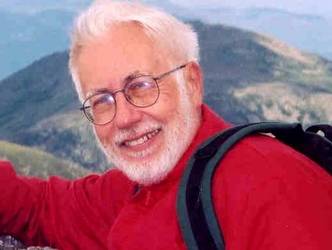
Sam Stedman

Sam Stedman

Not really sure. I’ve always had trouble with picking out resemblances. I think it’s because, in my life, I’ve always focussed a little more on difference than similarity. This certainly fed into my doctoral work in poststructural ethics. But simple answer: I’m told I resemble both. Nationality: total mutt.

2) what is the BEST thing / worst thing about being a magazine publisher?

Best thing is that I’m not beholden to a crappy bureaucracy (like those found in EVERY university at which I’ve taught), full of inefficiencies, redundancies, prohibitions, other sundry deadening forces…need I go on? Worst thing is that I have yet to get paid.

3) who do you listen to or watch?

Mad Men has got to be at the top of the list. But maybe that’s because I’m sort of becoming an Ad Man. Hmmm…musically, I’ve been obsessed (for years now) with 20th century classical. Especially Gavin Bryars and Arvo Part.

4) what ability or skill do you wish you had, that you don’t have?

Web development.

5) When you re just relaxing (and not working) what is your favorite thing to do?

I don’t relax. Such is the nature of a new business. That, of course, on top of having a toddler at home. We do try and get out for nature walks as often as possible.

Five more about publishing EcoParent

1) As an educator and father, how does publishing EcoParent challenge you?

chemicals

What’s in/out there?

It’s humbling to start over in life. There is nothing but daily challenge in this early, infrastructure-building, phase of getting the magazine on the map. It’s particularly challenging as an educator in the sense that my classroom just got exponentially larger, and the stakes ultimately that much higher. While I still believe that theatre is an important culturo-political force, there’s nothing more culturally and politically forceful than child-rearing. As a father, it’s scary to find out, on a daily basis, how many toxic sacrifices have been made in the name of profit – and how little we can trust our government to regulate the products that pass through into the marketplace. Most of the things on the shelves these days that go on our babies’ and children’s skin, for instance, is full of small doses of all sorts of toxic crap to which their little bodies should not be subjected.

2) what do you love about publishing, especially publishing that has such an important political message?

I love the creativity. Yeah, for real. I used to be a theatre director, and I find a very similar creative satisfaction in my day to day creative problem solving in the business world. I also love meeting passionate people that have devoted themselves to making salient improvement to the world, and expect very little in return.

3) What’s your favourite piece that you’ve published so far?

I love our current education special, made up of parent narratives about their experience with different forms of alternative schooling. I think it’s very honest, and will provide parents who haven’t researched much beyond the public school system with some excellent – and very balanced – perspective.

4) How do you relate to the challenges of being a parent, as an ecologically aware human? 

I’ve sort of addressed this already, in part. I’d only add that it’s terrifying. My only comfort is that I was a baby in the 70s, and I’m still a (mostly) functioning human being.

5) Is there anyone out there who you particularly admire, and who has influenced you?

The love of my life, Alexis Butler. She’s shown incredible fortitude through our journey together, and inspires in me qualities that would otherwise have remained sadly dormant.

EcoParent is available electronically (paperless) or in a print version.

Posted in Interviews | Tagged , , , , , | Leave a comment

Elwy’s impact

TIFF logoIn August filmgoers’ thoughts turn to TIFF: the Toronto International Film Festival.  Founded in 1976, TIFF isn’t just a local event anymore, having become one of the most important festivals in the world, if not the single biggest showcase for cinema anywhere.

TIFF has a big relationship with the industry, with the outside world, but first and foremost, TIFF belongs to Toronto and the audience.  How did this happen?

Yost

Elwy Yost

While it’s a long complex story—how Toronto became such an important centre for film— and one that owes a great deal to the vision of those running TIFF, I want to acknowledge the godfather of film in the GTA.  No I don’t mean a guy with cotton in his cheeks putting horsehead to pillow.  Long before there was anything like TCM or Inside the Actors Studio—comparatively recent television programming dignifying the entertainment business and thereby ennobling the constituent arts of cinema and stage— Toronto had Elwy, as he was popularly known, Elwy Yost. Although he died recently, having left Saturday Night at the Movies (SNAM) in 1999,  I believe he’s one of the keys to the Toronto film audience.

I watched SNAM last night on TVOntario: a local educational TV network.  The program included

  • Martin Scorsese’s 1993 adaptation of The Age of Innocence
  • Oliver Parker’s  1999 version of An Ideal Husband
  • A series of interviews in between, including Jackie Maxwell, Artistic Director of the Shaw Festival, encouraging us to notice issues pertaining to manners and morays, and in the process comparing the two films.

SNAM logoThe program is no longer Yost’s  (it’s now hosted by Thom Ernst) but still bears his stamp, as educational as it is appreciative.  Yost had come to TVOntario in the 1970s, having earlier hosted another educational film series on CBC in the 60s called Passport to Adventure.  Over the years Yost programmed literally thousands of films, while gently teaching us and influencing our taste.

Standing in line with TIFF patrons, one encounters enthusiasm side by side with genuine knowledge.  While it’s undoubtedly true that Blue Jays fans are ignoramuses compared to the denizens of Fenway or Yankee Stadium, this is one of the most knowledgeable and appreciative film audiences anywhere.  That’s why the industry comes here.

I’d like to think Elwy had something to do with it.

Posted in Essays | Tagged , , , , , , , , , | 3 Comments

In common

Once every decade Sight and Sound magazine polls experts on film to determine which films are understood to be the best.  In 1962 they chose Citizen Kane best film, and every ten years since that time, they have returned Kane to its place of honour.

Until now, that is.  On the Sight and Sound webpage they announce

846 critics, programmers, academics and distributors have voted – and the 50-year reign of Kane is over. Our critics’ poll has a new number one.” 

The new number one?  Vertigo by Alfred Hitchcock.

If you understand film as a director’s medium Vertigo may seem to be a very different film from Kane.

  • One film is a pseudo-biography, complete with a bogus documentary near the beginning.  The other is a suspenseful film
  • One is black and white.  The other is colour
  • One is the first feature film from a director who would never
    Herrmann

    Genius at work: conductor & composer Bernard Herrmann in his youth

    be so successful again. The other is one in a series of great films from a director at the height of his powers.

But the two films have something very important in common.  Both films have an original orchestral score composed by Bernard Herrmann.  Music plays a prominent role in both films:

  • In Citizen Kane there is a segment of opera within the film, a series of tantalizing fragments from a fictional setting of Salaambo.  But whereas Kane’s mistress is not a great singer, here’s a chance to hear the aria sung by a genuine star, Kiri Te Kanawa.
  • In Vertigo there are several places where Hitchcock lets Herrmann play a special role, such as the opening chase scene 
    …and the wordless dream sequence  

Both films are wonderful, but if I prefer one over the other –and it would have to be Vertigo rather than Kane–it’s because of Herrmann and the role he plays in the film.  I believe Hitchcock entrusted some of his most important scenes to Herrmann, as he would again in films such as Psycho and North by Northwest.

Herrmann may have died back in the 1970s (just as he finished Taxi Driver: another great film) but his music continues to live on.  For example just this past year his music figured in The Artist, a film that won Oscars for best picture and best orchestral score.

I have to wonder.  Did the voters of The Academy realize they were giving Ludovic Bource the award even though the climactic moment in the film is underscored by Herrmann’s music from Vertigo?

Oh well, at least they showed good taste.

Posted in Essays | Tagged , , , | Leave a comment

Carsen’s Tosca

Toronto is belatedly getting to know one of its own.  Opera Director Robert Carsen, who’s made a name for himself worldwide has only recently directed productions in Toronto.

And how romantic is it that—as if to make up for lost time—we’re seeing his work every year?

  • In 2010-2011 (in the spring of 2011) the Canadian Opera Company’s Orfeo ed Euridice was one of the highlights at the end of a stellar season.
  • In 2011-2012 (autumn of 2011) COC followed with Iphigenia in Tauris to inaugurate the following season.
  • In 2012-2013, the third in the series is Dialogues des Carmelites coming next season.
Tosca DVD

click on image for more info on obtaining the DVD from Amazon

How could I then resist picking up a DVD of Tosca directed by our favourite son?

Carsen’s style is wonderfully distinctive even while working from the text.

The two Gluck operas were at times astonishing, even as they hewed closely to the text. Orfeo ed Euridice gave us a world as if perpetually mourning, ashes and precious fire, making the spare enactment of the story stunningly powerful.  In Iphigenia Carsen showed us the nasty implications of a story that’s too often glossed over in the emphasis some directors place on a friendship between two men with homoerotic undertones; like it or not (and I am not sure I did like it), he told the story that’s in the text.

That’s more or less the reality of his Tosca, originally produced for the Opernhaus Zürich, in a sparkling television production with excellent sound & precise camerawork.

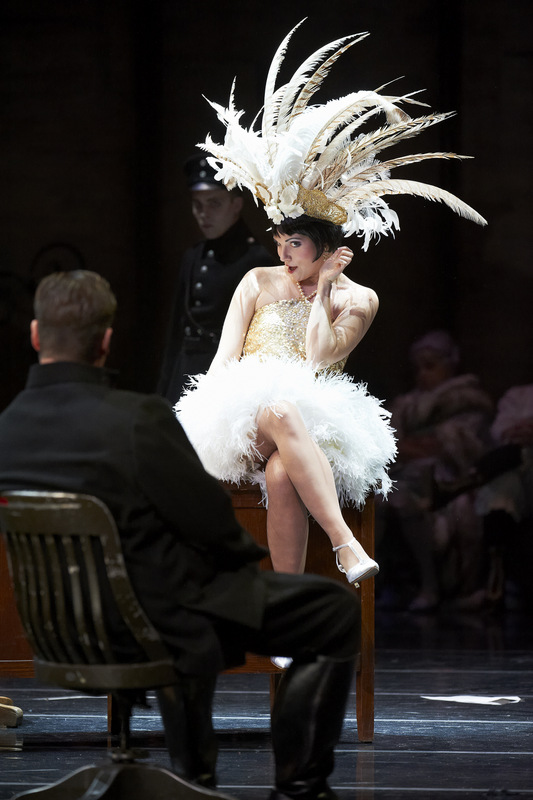
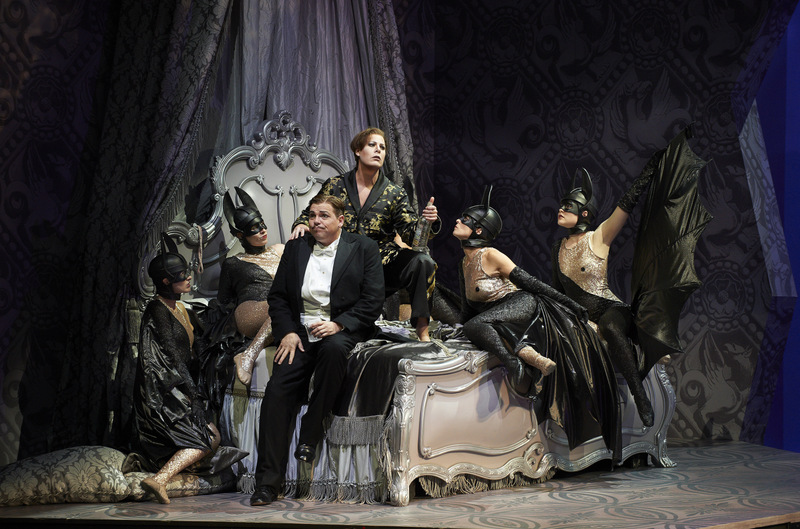
This time the organizing principle is found in Tosca’s life in the theatre.  Without giving anything away –and I believe very strongly in spoiler-free reviews—this story is told in a meta-theatrical way, emphasizing the idea that for Tosca, life is one big performance.

If Tosca is going to work on you it requires some kind of chemistry among its principals.  Emily Magee?  I’d never encountered before, but find her singing more than adequate.  Her take on the complex artist that is Tosca is at least sufficiently deep to stay afloat in some heady company.  I believe the two male leads are –in addition to the fascinating mise en scène— the chief reasons to obtain this DVD.

Count me among those who has been holding his breath throughout Jonas Kaufmann’s career, a bit amazed that the voice works so well.  He sounds too dark for this Fach although this sound is right for roles such as Siegmund (in which he starred at the Met in their High Definition broadcast, although he had to bow out of last season’s Ring Cycle) or Parsifal (to which I look forward eagerly in the coming Met High Def season).  Kaufmann was absent from the stage for much of 2012, although he’s eased back in recently in a concert where he was reportedly in good voice.  I hope he’s okay.

Kaufmann brings an interesting combination of skills, combining an uncommon voice, good looks, and genuine acting ability.  He never seems to be out of character; he never lets the audience down when the camera is upon him. Carsen brings out the artist in Cavaradossi as no director I’ve ever seen.  It helps that Kaufmann can pull this off.

His rival for Tosca and the audience’s admiration is Thomas Hampson, cast against type as Scarpia.  This is a subtler Scarpia than many I’ve seen, commanding without needing to overwhelm, vocally gorgeous throughout.  Need I add, he problematizes the triangle by making Scarpia something of an attractive option for Tosca.  Only in his last scene do we see his true colours, which emerge in their full fury.

Posted in Reviews | Tagged , , , , , , | Leave a comment

News of War

Some dates are more important than others in the timeline of a war.  In the War of 1812,  July 30th, 1812 is a relatively trivial date: 200 years ago today.

The war had been declared on June 18th.

The first casualty was recorded almost a month later.  It’s the death of British Private James Hancock in the Skirmish at River Canard.

In an ambush at Turkey Creek on July 25th six Americans died.

And so, while we’re accustomed to reading of battles with immense body counts, that’s not what the War of 1812 is like.  From beginning to end it consists of tiny skirmishes.  A big battle would entail a few hundred on each side.  Does that make it insignificant? Not at all. Are the deaths somehow less important?  I’d argue that in a war where the entire body count for encounters could be measured in a single digit (as in the 1 at River Canard & the 6 at Turkey Creek skirmishes), the lives committed to the struggle  were never more precious.

stamp

Stamp bearing the image of Sir Isaac Brock and the monument built in his name at Queenston Heights, where he died in battle.

What happened on July 30th?  That’s the day that the British found out that they were at war.  War had been declared on June 18th.  The speed of information transmission at this time is almost incomprehensible to us today.  Forty-two days elapsed between the declaration and the news getting to London.  The skirmishes and deaths I spoke of that happened after June 18th, each have their own variable passage to London.  Some were faster, some slower, depending on the timing of vessels carrying correspondence homeward across the ocean.

I wonder if we can really understand war at this time, when decision making on the ground (or lake) was also slower than what we experience today.  Battles were determined by flukes of communication –or miscommunication—determining the fortunes of battle.

And again, although the war ended with the signing of the Treaty of Ghent in December 2014, the biggest battle of the war was still to be fought, namely the Battle of New Orleans in early 1815.

I wonder, now that the transmission of various sorts of messages is now virtually  instantaneous, whether we can say that we have progressed.  Nowadays one can take one’s mobile phone right into the middle of an atrocity such as a shooting inside a theatre.  Our weaponry and our communication appear to be superior.

At one time I hoped that the increasingly interconnected web of media in the world might hasten a kind of utopian world because war would not be tolerated.  I hoped that watching atrocities on television made war unthinkable.

But I was naïve.  War was always undesirable.   I wonder: is life more or less precious in 2012….?

Posted in Essays | Tagged , , | Leave a comment

Genius Within

After spending so much of the past few weeks thinking about virtuosity –both in my academic research and in the music I have been listening to—I was more than ready to see a documentary studying the quintessential Canadian musician, Glenn Gould.

DVD cover

click image for info on obtaining the DVD

Genius Within: the Inner Life of Glenn Gould is a series of reminiscences, memoirs, anecdotes, assembled into the story of Gould’s life, told mostly in the third person.   Directed by Michèle Hozer and Peter Raymont, it’s a fairly recent doc (2009) that I missed when it first came around during TIFF.

The film is in some respects horribly indelicate, invading the privacy of a defenceless icon.  We’re given several hints as to why certain horrible things happen, without any clear indication.  But after all, how could we really know the inner life of such a secretive person?

And so we watch wonderful images and clips of his great successes in the musical world, of his great tour of the Soviet Union, and later his battles with Leonard Bernstein in New York.  And gradually we can’t be surprised when he retreats ever further into solitude.  We hear of medications for depression, symptoms of OCD, and even see journal entries that made me cringe.  You will know more about Glenn Gould than you probably wanted to know.

We’re told of the three most important women in his life, the first being his mom, so essential to his development.

Then we actually meet Cornelia Foss, both as she appeared when she met Gould in the 1960s, and in the present day when the film was made, looking back on her great relationship with the pianist.  Gould and composer Lukas Foss had met, expressing their mutual admiration (Gould said Foss was the pianist he admired most).  Foss’s wife Cornelia would move in with Gould along with her two children from 1968 to 1972, but Cornelia would eventually return to Lukas.  The pain this caused can be surmised by the tears in the eyes of the children recalling their experiences in our time.  Later he’d have another great affair with singer Roxolana Roslak, with whom he’d happily collaborated in the studio and on disc.

At one point we hear a quote from Gould, that “music insulates you from the world”.  It’s hardly surprising that we’ll hear that Gould suffered from depression, and was likely only really happy while playing.  As the pianist ends his career on the concert stage, moving permanently into studios as a pianist, composer and media artist, we begin to see the Mcluhanesque visionary who’d be remembered for his daring experiments as much as for his pianism.

This is an excellent doc, troubling because it explores its subject so faithfully, leaving us with might-have-been questions.  Gould died at 50, too young.

Genius Within: The Inner Life of Glenn Gould can still be obtained.  I’d recommend it, particularly for those fascinated by this enigmatic man.

Posted in Reviews | Tagged , , , , | 2 Comments

Faster, Higher, Stronger

Is it a competition?  To some extent.

Both Richard Wagner & Claude Debussy used the metaphor of the circus acrobat to describe the virtuoso dynamic with an appreciative audience.  Whether we’re speaking of singers or instrumentalists, there is an implicit element of competition.

How fast can the pianists play a particularly fiendish passage?  How long can the tenor hold the high C?  how audible is the voice over a full orchestra in a huge opera house?

But for each of those three questions, there’s a word that could come straight out of the Olympic motto.  “Citius, Altius, Fortius” translates as faster, higher, stronger, even though we may not be speaking of faster fingers, higher notes or stronger singing audible over a big orchestra.

If that’s all there is to their playing –fastest, highest, furthest—you might think they belong at the Olympics rather than a concert hall.

At one time such competitions were entirely a matter for anecdote and reputation.  Nowadays?  I am embarrassed to admit that I just used youtube to compare the tempi taken by a series of famous pianists on the same passage, to determine who is fastest.

Virtuosity interests me.

Some operas or sonatas or concerti are written at least partly as vehicles to show off the capabilities of performers. More recently one will encounter works that seem to mock our earlier infatuation with pure skill.  Melati Suryodarmo is famous for having danced on butter, a curious critique of terpsichorean skill, an awesome display of bravery every time she slips and falls. 

Callas

Soprano Maria Callas

This is perhaps the most extreme version I know, where we embrace the dance even as we are confronted by its impossibility.  I am also reminded of singers such as Maria Callas or Amy Winehouse, whose skills are wrapped in pain and the imminent danger of failure.  We also saw this with Judy Garland, a singer and actress who died in slow motion before our eyes, imploding over a half-century even as she loudly proclaimed her determination to go on singing.  Virtuosity is sometimes about transcendent skill, sometimes about skill that cannot surmount its challenges.

For what it’s worth, when I compared them, Barenboim and Pollini and even Lisitsa were slower than Goodyear.

I was comparing performances of the last movement of Beethoven’s Appassionata sonata, aka sonata 23 op 57.  Barenboim’s is delicious slow, passionate but restrained and elegant. Pollini brings a great deal more pace to his interpretation. Lisitsa is roughly the same tempo as Pollini, perhaps a bit slower at the beginning, but building quite impressively in the coda, and wonderfully fluid.  In fact when we get to the coda, Barenboim of all people is the one showing blinding speed on the last pages, especially astonishing after the restraint he’d showed earlier.

And then there’s Stewart Goodyear.

Goodyear’s performance is note-perfect, the cleanest and most precise reading out there, and substantially quicker than anyone.  When playing soft notes we get faint ghostly tinkling, but perfectly clear.  When it’s time to crash chords, Goodyear is the most athletic player, making massive volume without any sense of banging or percussive tone.  Where Barenboim sounds a bit ragged at the end, flying up and down the keyboard, Goodyear takes us beyond the issue of the performer’s athleticism, to a place of pure feeling, and as a result I am hearing an entirely new Beethoven.

Pollini and Barenboim remind me of the Schnabel Beethoven, the realm of middle-aged men with ruffled hair who shake their fists at the sky: like Beethoven himself.  Their music is in an anguished search for dignity and meaning in the presence of a harsh world.  Their Beethoven is closer to Callas & Garland & Winehouse I suppose.

Goodyear’s technique is so transcendent, so astonishingly secure, that he plays at an entirely other level than anyone performing these works.  The pieces do not struggle.  There is playfulness and fun in places where other musicians seem to be in a life and death battle.  There is the ease of magnificent technique, fluid fingers and music that has a Wagnerian ability to find true feeling without encumbering us in the pianist’s battle with the keys.  For Goodyear the battle has been won, likely during his practice sessions.  He is at ease, the way a good orchestra should be when they play Beethoven, showing a majestic calmness rather than stress and anxiety.  We are atop Olympus looking down, no longer worrying about climbing.

Goodyear’s Waldstein sonata –op 53—is every bit as accomplished.  The first movement, employing  repeated chords that can sound percussive in the wrong hands, is dramatic but with elegant flow.  In the soft passages, though, Goodyear seems to channel a visionary link with the composer, a self-assured lyricism letting every phrase sing.   The last movement is a bit of an epic, going from soft whispers of the divine to bold proclamations, that must be reconciled into the same tuneful edifice.  Goodyear’s approach seems to favour playing Beethoven as written, easily articulating nuances and shaping the whole with a vivid sense of the unfolding drama.  Again, the key ingredient seems to be that Goodyear is so adept at playing the notes that he can turn such a massive composition into something delightfully simple in the end.

middle sonatasStewart Goodyear’s Beethoven is available either in the complete set of all 32 sonatas on the Marquis label, or you can obtain the smaller set containing these middle sonatas.

Posted in Reviews | Tagged , , , , , , , , , , , | Leave a comment

Homesick tenor

shipEarly in the act, we have a plaintive moment.  A sailor sings a tune, clearly longing for home and the company he misses there.  The quietness of the big orchestra now playing so gently after its earlier savagery seems to echo the tranquility of the still waters although there are moments when the orchestra shows us the wilder side of the ocean.  We are taken inside the loneliness of that moment for the singer, setting up the large-scale action that will follow.  The solo resembles an aria is some respects, but doesn’t have the usual closure of an aria, as the sailor falls asleep before finishing.  The piece is in the key of B-flat showing off the tenor voice.  The light voice of the soloist makes a pleasant contrast to the heavier singing required for the other tenor in the opera, whose part is larger.

You probably recognize this as a description of the beginning of Act I of Der Fliegende Holländer, premiered in 1843.  And although you’re right—that I described the quiet opening of Dutchman—it was phrased carefully so that the same words would also serve as an accurate description of the opening to the last act of Les Troyens, composed in the mid-1850s, and premiered in 1863:

  • Sailor sings a tune longing for home and the people he misses
    • Wagner’s Steuermann wants to see his sweetheart
    • Berlioz’s Hylas recalls his mother and his homeland
  • The big orchestra is playing quietly after earlier “savagery”
    • Moments earlier in the orchestral prelude to Dutchman as well as the brisk opening to the first act with the chorus, preceding the quieter recitative-like exchange between Daland & the Steuermann
    • Act V of Troyens opens with the sweet introduction to this solo, after many loud climaxes particularly in the first two acts before the departure from Troy.
  • During the song, the orchestra swells to remind us of stormier weather
    • Briefly in the second verse of the Steuermann’s song
    • Briefly in the third verse of Hylas’s song.
  • The singer falls asleep during his song
    • After a first verse that includes a high B-flat, Wagner’s Steuermann only manages a few lines of the next verse before sinking into sleep.  His sleep serves a dramaturgical purpose, in setting up the arrival of the Dutchman’s ghost-ship onstage, but without anyone on watch throughout “Die Frist ist Um” and its sombre introductory words that are in such a stark contrast to the jauntiness of the Steuermann’s singing
    • Hylas completes three verses, the third fading away into sleep, observed humorously by two other members of the Trojan crew.  The thematic link to what follows is direct, given that Aeneas and his crew need to tear themselves away from Carthage and to resume their voyage.
  • The piece in B-flat shows off the tenor voice
    • Wagner’s Steuermann goes directly to the high B-flat in the first verse.
    • Berlioz’s sailor does not even go very high, but calls for a sweet sound, to take full advantage of the nostalgic tone of the writing
  • This role contrasts another tenor with a more dramatic voice
    • Erik’s singing is more elaborate with heavier orchestral accompaniments, therefore it’s normally assigned to a more dramatic tenor than the Steuermann, which is a smaller part in comparison
    • The sailor has this one light solo, whereas Aeneas has the largest part in the opera, requiring a more dramatic sound

Is this a mere coincidence?  Perhaps. They’re not at all the same, except in broad outline. 

I think I prefer Berlioz’s tune (a melody that has a tendency to stay in my head for days every time i hear it)even though i love the way Wagner’s song fits into the scene, actually a key part of the action (because the Steuermann falls asleep on the job).

This is but one very specific instance when it seems likely that Berlioz must have observed what Wagner had written so much earlier in the same key, in the same situation.  Berlioz makes no acknowledgement that we know of, but then again why would a composer call attention to an influential colleague who was in many respects a rival?

Yet in contrast we know that Wagner very generously called attention to his debt to Berlioz.  Nobody denies that Wagner could at times be difficult, yet for all his faults, in this instance at least, he was gracious and generous in paying tribute to his French colleague.

Wagner wrote the following note to Berlioz:

I am delighted to be able to offer you the first copy of my Tristan. Please accept it and keep it out of friendship for me.

And this is the inscription inside the score itself:

To the dear and great author of Romeo and Juliet the grateful author of Tristan und Isolde

Whether Wagner perceived Berlioz as a rival or perhaps as a master, I believe it’s worth incorporating these rather small incidental observations into the larger picture.  Wagner is sometimes portrayed as a near-paranoid individual, nasty in his writings and in some of his relationships.  But where there are genuine behaviours that can be understood as hostile or at least unappreciative, perhaps it’s not paranoia at all.  And viewed in the larger context of Wagner’s two forays into Paris –each representing  a disastrous failure—Berlioz’s response to his German colleague is perhaps not so trivial.

We know that Liszt wanted Wagner & Berlioz to be allies in their joint efforts to promote new music.  Oh well.

But I can’t help wondering about the B-flat tenor solos that resemble one another.

Posted in Essays | Tagged , , , , , | 4 Comments

Clouds of laughter

Comedians love Conservative politicians like Harper & Ford.  They’re perfect for the purveyors of satire & political comedy.  And after the kind of week we’ve had in Scarborough I hope we can be forgiven for seeking out a good laugh, particularly in a topical reference.

logoBut have no fear.  Laughs were available aplenty in Scarborough, thanks to the return of the Guild Festival Theatre, the company using the grounds of the old Guild Inn.

Last year Artistic Director Sten Eirik launched GFT–their first season—with a nimble production of Chekhov’s The Cherry Orchard, exploiting the classical beauty of the theatre,  complete with birdsong & fragrant breezes from the lake.

Ambitious as that was, this season Eirik and company are attempting something more elaborate, namely Clouds Over T.O. an original musical based on Aristophanes’ Clouds.  Instead of romance, we’re in the realm of ideas and philosophy.  Eirik is not only director but author of the book & song lyrics, working from a translation by Christopher Kelk, in collaboration with composers David Buchbinder and Adam Sakiyama.

The payoff arrives slowly, because there’s so much exposition at the top of the show, just to explain the premise.  But once it’s established, the show gets funnier.  In the second act the show hits its stride, achieving the biggest laughs of the night.

posterThe performances were uniformly strong dramatically.  Sam Moses is Dr B.S. Kroc, a modern-day version of Socrates, teaching us how to put a spin on things.  Adrian Gorrissen is his chief pupil Fergus, a kind of modern everyman, and, as the guy who gets most of the funny lines, he delivers.  Tyler Seguin was especially persuasive in his hip-hop incarnation of Ziggy-Zag, the musical highlight of the show.

Clouds Over T.O. presented by Guild Festival Theatre continues until August 12th.  Be prepared to dress warmly, as the air from the bluffs cools things wonderfully well.

Posted in Reviews | Tagged , , , , | 2 Comments

Persée

On the weekend I sampled some French culture, visiting the francophone town of Lafontaine Ontario for their Festival du Loup¸ followed by a visit to the nearby town of Midland and the Shrine to 17th Century Jesuit Martyrs.

PerseeToday I am thinking about my DVD of Lully’s opera Persée, both in context with Bastille Day –the day symbolizing  the end of ostentatious displays of royal wealth—and the imminent premiere of Opera Atelier at Glimmerglass Festival later this week.

The DVD is from Opera Atelier’s production of a few years ago, but has a lot of resonance with their new production of Armide that i reviewed when it appeared in Toronto back in April.

  • Both operas are by Jean-Baptiste Lully, opera composer, ballet master and friend of Louis XIV
  • In other words, both operas blend singing and dance more fully than any other opera one could name and therefore a natural for Opera Atelier, who are as much a baroque ballet ensemble as an opera company
  • Two of the principals on the DVD of Persée will also appear in the Glimmerglass Armide namely Colin Ainsworth (Mercure the messenger god) and Curtis Sullivan (playing multiple roles, including a funny turn as one of the gorgons)

Persée includes some wonderful music, such as the scene where the young hero is equipped for his battle with the Medusa, or the hilarious encounter with the gorgons.  Throughout we’re lulled by the sweet sound of Tafelmusik Orchestra and Chorus, authoritatively led by baroque scholar Hervé Niquet.

I bought this recording recently after seeing Armide.  I looked online to see what was available by Lully from Opera Atelier (needing to hear that unique sound again): and was happy to see this DVD, from a production I thoroughly loved.  It’s in the usual Opera Atelier style, which is to say, informed by scholarship about movement, costume & design, yet informed by modern values while remaining respectful of the original.  For those fearful of Regietheater, director Marshall Pynkoski always works from the text, preserving the original sense even as he sometimes offers wonderfully original touches (as he did in his recent production of Don Giovanni).

It’s true that Opera Atelier’s Persée omits the Prologue (an allegorical discussion with Virtue and her attendants).   I don’t miss it, both because the opera was unknown to me before i encountered their production, but also because they make something marvellous from the rest of the opera.

For anyone coming out of the Glimmerglass production of Armide and needing a fix of Lully via Opera Atelier, they may want to obtain the DVD of  Persée.

Opera Atelier’s co-production of Armide with Glimmerglass opens July 21st, running until August 23rd.  As a teaser, here’s a small sample of the fearsome (and silly) gorgons. 

Posted in Reviews | Tagged , , , , , , | Leave a comment