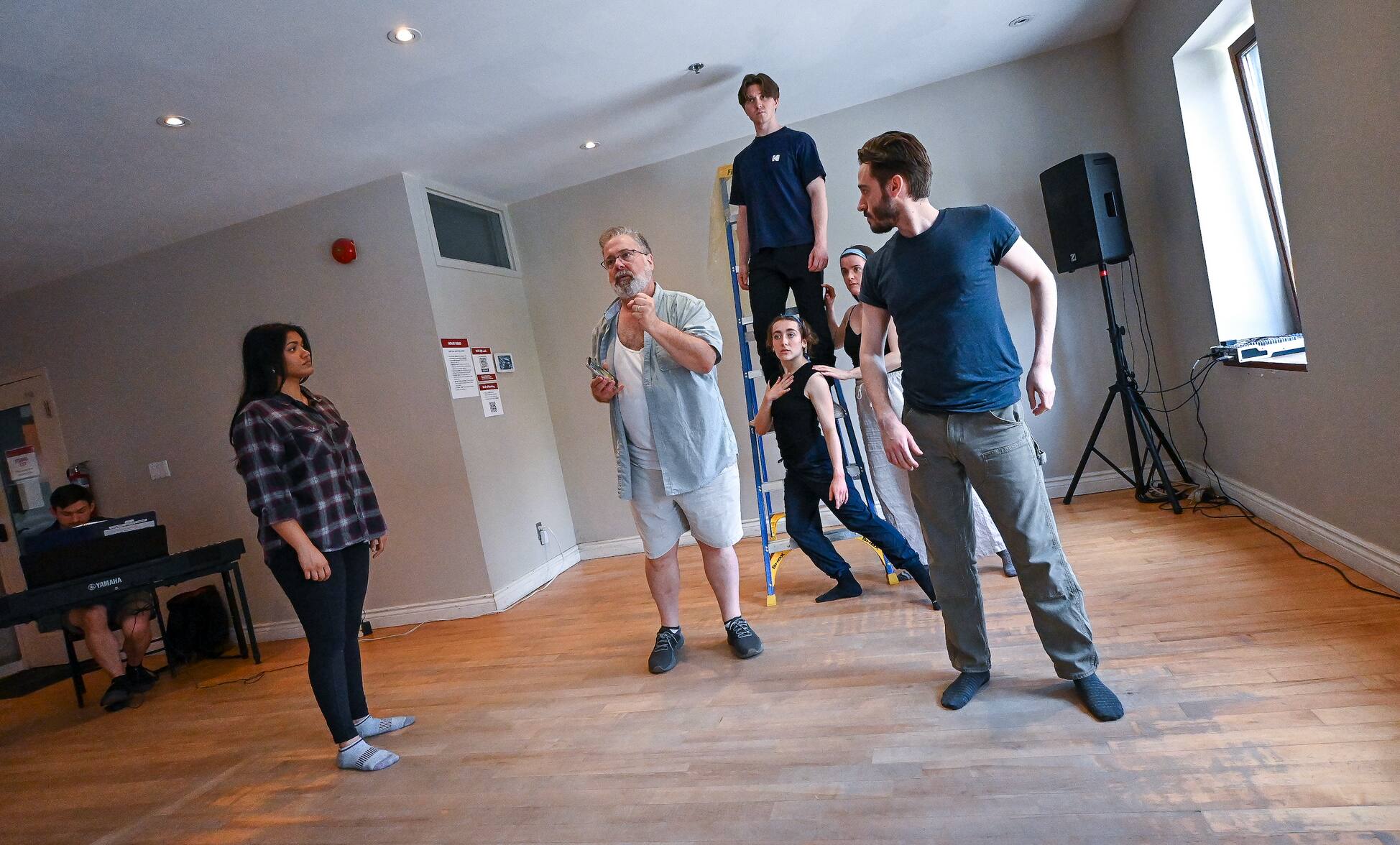
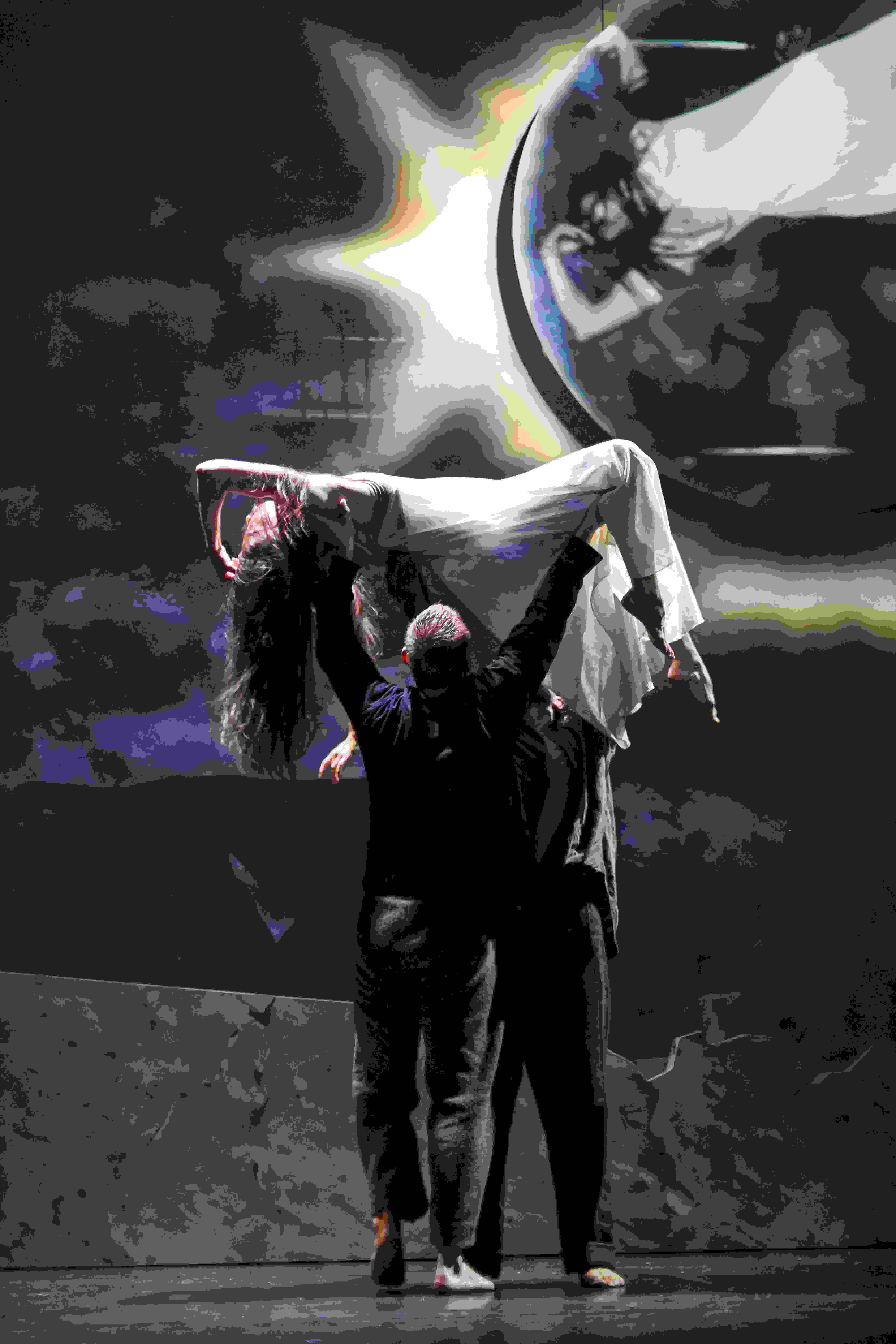
Today I witnessed the Canadian premiere of André Grétry’s Richard Coeur-de-Lion, presented by Voicebox: Opera in Concert at the Jeanne Lamon Hall.
Colin Ainsworth was singing the title role, but was indisposed, courageously singing the role but often dropping to a lower octave. The result was bravely harmonious, even if it wasn’t precisely as Grétry wrote it. I suppose it’s fitting that in this portrayal of the heroic lion-hearted king, Colin seemed to be fearless, truly brave in what he did with his voice. While it wasn’t as written it was stunning to watch all the same, part of an entertaining afternoon of music theatre.
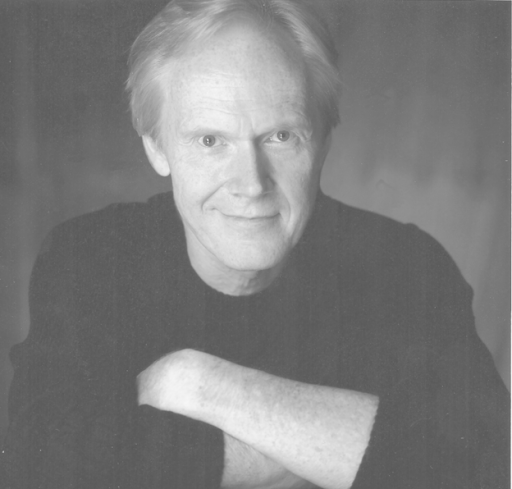
Tenor Colin Ainsworth
The chorus was the big star of the show. Robert Cooper was self-effacing while directing them to perfection, especially the men, who had a much bigger role to play in this macho story of heroism. Sometimes they were in the background, sometimes they had to move or dance, and the whole time they were clearly enunciating their French.
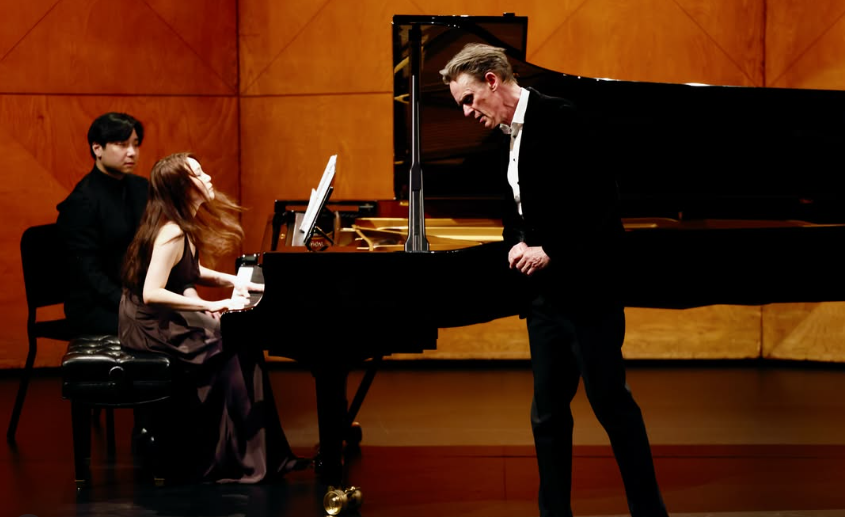
Music Director Suzy Smith at the piano was the other key, excuse the pun, leading a tight & brisk reading that made a strong case for Grétry’s score.
I sincerely congratulated Guillermo Silva-Marin afterwards for this milestone. This is the reason we go to hear Voicebox, for the priceless opportunity to discover new operas like this one. Sung in French but with English dialogue by Guillermo & Diane Loeb, the audience gobbled it up with enthusiasm, laughing often.
While Richard Coeur-de-Lion may be understood as a prototype for rescue opera, it felt like Fidelio turned upside down. Instead of a comic beginning overtaken by a serious dramatic opera, Grétry’s preference was for beautiful melodies and a fun story without much real suspense or danger.
It was very entertaining. Premiered in 1784 this is not to be mistaken for a piece full of virtuoso arias or high notes to show off the voice, but rather a tuneful composition allowing everyone in the cast to shine, the music in service of the storytelling.
Richard may be the title role but his friendly squire Blondel (tenor Yannik Gosselin) has a much bigger part. Initially disguised Blondel is trying to find his master, aided by Antonio, a trouser role sung by soprano Madeline Cooper. The story is as much romance as rescue. Florestan (Taylor Gibbs) was going to meet Laurette (Alice Macgregor), but unexpectedly he’s surrounded & the troops of the Countess (Nicole Katerberg) will help rescue Richard. Everything ends happily, and never mind how it’s accomplished, considering that it’s not the way the historical story played out. Love conquers all.
Voicebox: Opera in Concert return Saturday, February 14, 2026 (3 pm) at Jeanne Lamon Hall, Trinity-St. Paul’s Centre for La Sonnambula.
With every Remembrance Day, I wonder how best to respond to the implications of November 11th, a day when we are encouraged to honour those who gave their lives in wars, in service to the nation.
I went to a school where we had a very powerful ritual celebration every November 11th, led by Mr Bull, a teacher who was a war veteran, who taught us the meaning of solemnity.
He explained the metaphor of the Last Post & Reveille, that when you went to bed at war, you were not guaranteed to wake up the next morning. I liked the clarity of this presentation, which is never so clear anymore when the metaphor is mixed with other poems & songs between the two trumpet calls.
At the end of the service we were marched out of the auditorium, smallest kids first (which was scary the first time I did that), walking between the walls listing the students who had died in the wars. As the school was founded in 1910 we had graduates who died in both world wars and in Korea.
We were trained to be faithful to the flag and the country, perhaps in keeping with the instructions given in the poem “In Flanders Field”, a powerful injunction if you grow up being told to honour those who made the ultimate sacrifice. I wear a poppy, I support the Canadian Forces, especially those who served. All the friends I met in church who served overseas have now passed away. It’s apt that they are remembered both on November 1st and November 11th.
Some of us (me) were more naive and ready to follow our teachers than others. I only know that I felt conflicted by John McRae’s specific request. The last verse is clear.
Take up our quarrel with the foe; To you from failing hands, we throw The torch; be yours to hold it high. If ye break the faith with us who die We shall not sleep, though poppies grow In Flanders fields.
We have been at peace for my whole life, although Canada’s soldiers sometimes went overseas as peacekeepers. That assuages my fears somewhat, when I think of McRae’s suggestion that they “shall not sleep”.
Today I watched Derek Jarman’s 1989 film War Requiem. Britten’s War Requiem, featuring lines from poet Wilfred Owen, is the soundtrack for this stunning film with no actual dialogue.
We see Laurence Olivier as an old soldier clutching medals in a wheel chair, pushed by a nurse played by Jarman’s frequent collaborator Tilda Swinton.
The old soldier (Laurence Olivier) & the nurse (Tilda Swinton)
Because it’s November 11th, I heard the closing passage of Britten’s War Requiem as an answer to McRae, perhaps hearing it clearly for the first time.
The tenor and baritone sing “Let us sleep now.” More war means more young men called to arms, and dying.
If you’re someone who has lived through war and is easily triggered by loud sounds or images of death or battle, this is not the film for you. Jarman does not take an easy path, sometimes juxtaposing images of children playing at war with toy guns, to real images of life & death struggle.
I feel fortunate. I have uveitis, an inflammation of the iris that we used to call “iritis” twenty years ago. It’s one of the recurring symptoms of ankylosing spondylitis that would hurt far worse if I didn’t have the relief via steroid drops that take away the pain thank goodness. My eyes don’t want to work too hard, refusing to focus after a certain point. I emulate Ray Charles, wearing sunglasses indoors because bright light hurts my eyes. All being well my eyes will recover.
I mention this by way of explanation for why I’m going to fewer concerts than usual right now. After a certain point in the day my eyes seem to be working to rule, refusing to do anything complicated, especially in the evening.
But my eyes have an endless capacity to shed tears which is probably a healthy response. I had wetness on my cheeks during Lepage’s Far side of the moon, during the Mendelssohn Choir concert of Brahms A German Requiem and again today watching Jarman’s meditation on war.
At this point in his life, in 1989 one might call Jarman a dead man walking, aware of his AIDS diagnosis and a near-certain death in his future. He would pass away 5 years later. As of 1989 Europe was on the brink of a new era of peace. As of 2025 the optimism we recall when the Berlin Wall came down, with the excitement of glasnost & perestroika feels very remote, hard to recall. In the film the violence of war builds to the ultimate expression of violence, images of nuclear war. This is no glorification of men in arms but a portrayal of the futility of war. I hope we have not forgotten that part.
While it may go against the grain of November 11th and the poem with the poppies, I am grateful for Jarman’s film and what he says, a meditation on war that feels cathartic at a time when so many of the people I know are feeling despair. I will watch it again tomorrow.
Friday night Toronto Mendelssohn Choir & Musicians of Kitchener – Waterloo Symphony presented Brahms German Requiem in a sold out Koerner Hall to rapturous applause.
I had been initially concerned that this massive work employing a big choir & orchestra could feel overwhelming in such an intimate space with its live acoustic: but they thought of that. Instead of the usual version we heard a revised orchestration by Joachim Linckelmann for chamber orchestra, last night numbering under 30 players, offering a good balance to the 160 + choristers in the TMC.
Toronto Mendelssohn Choir & KW Symphony in Koerner Hall, moments before the concert began
It also helps that Artistic Director Jean-Sébastien Vallée led a restrained & gentle reading of this profoundly fascinating work. Speaking as someone who still uses the old-school term “accompanist” to describe what I do at the piano or organ, I am grateful for an interpretation that doesn’t aim for bombast and drama, when subtlety and patience might be more illuminating. A good accompanist is a good listener and a follower above all. If you’ve heard the piece done in its large-scale orchestration you will likely have heard the orchestra making big sounds, with the choir immersed in that sound. I admire subtlety in a musician, and that’s what we heard, both in the large-scale movements and in the solos from soprano Charlotte Siegel and baritone Russell Braun, singing with great delicacy & sensitivity.
Vallée explained his thinking in his introductory remarks, pointing to the ways in which Brahms chose an unconventional approach. As Vallée explained Brahms’ textual choices and their settings show less concern for the dead than with the survivors, their feelings and how one lives. We’re at the time of year when we’re retrospective both for the Saints we remember on November 1st and another sort of Remembrance on November 11th, as we were reminded by Vallée.
Jean-Sébastien Vallée, Artistic Director of the Toronto Mendelssohn Choir
Serendipity is a word I keep using lately, fortunate to stumble yet again upon a performance helping me process grief & bereavement. While the promotional campaign would have you believe that Robert Lepage’s play concerns the space program, I understood Far Side of the Moon as a piece concerning intimate concerns of identity in the wake of his mother’s passing. That was last week. This time it was Johannes Brahms who composed his Requiem in the immediate aftermath of losing his mother.
Jean-Sébastien Vallée conducting Musicians of the Kitchener – Waterloo Symphony
I must express my gratitude for how well TMC assembled and curated this evening of gentle associations, beginning with the image on the cover of the program. As I Lay Sleeping by Vanessa McKernan, was chosen by Toronto Mendelssohn Choir as the image gracing the cover of the program, an image that was pertinent for both of the pieces being performed.
The brief world premiere to open the program from the Mendelssohn choir’s composer in residence Stephanie Martin was also a helpful prelude to what was to come, both as far as its sonorities and its texts.
Here’s an explanatory passage from the program, written by Rena Roussin, the Mendelssohn Choir’s musicologist-in-residence: “Echo is receiving its premiere tonight, and was written expressly for the purpose of being a companion piece to the Requiem. Martin sets the text of an 1854 poem by the English poet Christina Rossetti, joining it to select texts from the traditional Latin Requiem (the Mass for the Dead). Rossetti wrote “Echo” shortly after the death of her father, writing on themes of memory and connection after death.”
First let me show you the poem: Echo:
Come to me in the silence of the night; Come in the speaking silence of a dream; Come with soft rounded cheeks and eyes as bright As sunlight on a stream; Come back in tears, O memory, hope, love of finished years. Oh dream how sweet, too sweet, too bitter sweet, Whose wakening should have been in Paradise, Where souls brimfull of love abide and meet; Where thirsting longing eyes Watch the slow door That opening, letting in, lets out no more
Yet come to me in dreams, that I may live My very life again tho’ cold in death: Come back to me in dreams, that I may give Pulse for pulse, breath for breath: Speak low, lean low, As long ago, my love, how long ago
In addition, right in the middle of the poem, Martin inserts an echo of sorts, the Latin words from the Requiem:
Echo: In paradisum deducant te Angeli Into Paradise: may angels guide you In tuo adventu suscipiant te Martyres. at your arrival the Martyrs will receive you
I found myself thinking about the way we experience dreams, that a dream can seem like an echo of something we lived, that the recollection and memory of incidents and persons are like dreams. Memory is like an echo. I remember the phrase in the hymn “Oh God our help in ages past”, when it says. Time, like an ever-rolling stream, /Bears all its sons away; They fly, forgotten, as a dream / Dies at the op’ning day
Such words are in some respects interchangeable, or at least suggestive of one another. Repetition in an echo is a lot like what we experience in music especially in a hymn, where we repeat something. The effect of repetition in ritual, makes more of an echo. I was very moved by the way Martin set up the entry of that echo phrase in Latin, employing a smaller group of singers in one register, strongly suggesting something dreamlike, spiritual, and appropriately angelic.
If you read the poem, it’s beautiful with a definite suggestion of the afterlife. Martin understood the possibilities of the poem and the musical idea of an echo. What she achieved was in my estimation worthy of its placement alongside the Brahms piece, both in her subtle emulation of Brahms in her harmonies & metre, but also in the gentle handling of the text. I sat with tears flowing down my face, my voice barely able to utter the “brava” Martin so richly deserved. I do hope to hear this again, and hope that the Mendelssohn Choir will record the piece.
Composer, musician and composition professor Stephanie Martin
I wondered at the risk of pairing the immense Brahms work with a new piece, a daunting prospect for the composer of the new work. I can’t help recalling R Murray Schafer speaking of commissions to begin concerts while the late-comers found their way to their seats. “The contract read: ‘It is agreed that the work shall have a minimum duration of approximately seven(7) minutes and no longer than ten (10) minutes.’ That is, the work was to be what Canadian composers call a ‘piece de garage’, intended for performance while the patrons were parking their cars. ”
Imagine the challenge in our culture, that your music is to be presented alongside this solemn work, sometimes with such dim expectations. But Martin more than met that challenge. I congratulate her and the TMC, that they planned and created a stunning opener for the Brahms that followed. For me, heresy as it may be to say so, Echo was the highlight of the evening.
Soloists Charlotte Siegel and Russell Braun with members of the Toronto Mendelssohn Choir and Musicians of the Kitchener- Waterloo Symphony
I have one small topic to mention yet again, as the Mendelssohn Choir show us what’s possible. While the first piece by Martin was in English with a little bit of Latin, they projected titles above the stage for the entire work. They’re helpful, I can’t say this often enough. And of course when we came to the Brahms they also gave us titles. I wish this were standard procedure, especially for that orchestra who regularly play with the TMC at Roy Thomson Hall.
I had a splendid experience, carefully planned months before when Martin was commissioned to compose a work making perfect preparation for the Brahms. The choir prepared studiously, deported themselves carefully onstage. I’m very grateful for what I saw and heard.
The Toronto Mendelssohn Choir will be back December 2nd & 3rd for their annual Festival of Carols at Yorkminster Park Baptist Church, and will appear with the Toronto Symphony for their annual performances of the Messiah December 16-17-19-20-21 at Roy Thomson Hall.
Kyle & Corey, as in Kyle Derek Mcdonald and Corey Arnold are the two creators of The Lion Heart, an opera being presented in concert in Ottawa November 15-16, one of several things they’re doing. I wanted to ask Kyle and Corey about their process and their future projects.
*******
Barczablog: Gentlemen, it’s great to get a chance to ask you a few questions.
Kyle and Corey: Hello, sir and dear readers! We’d like to begin by saying how thrilled we are to be chatting with you about this exciting new opera! And, before anything else, follow us on:
Barczablog: Is it a new opera or the same one we saw in Toronto a few years ago?
Kyle: Yes, our in concert performances this November in Ottawa are of the same opera from the winter of 2022, but with some lessons learned!
Corey: I saw some things I wanted to work on during our workshop in Toronto, so I enlisted the help of Montreal native, Samuel Andreyev, who now lives in Europe and works internationally as a composer and professor of composition.
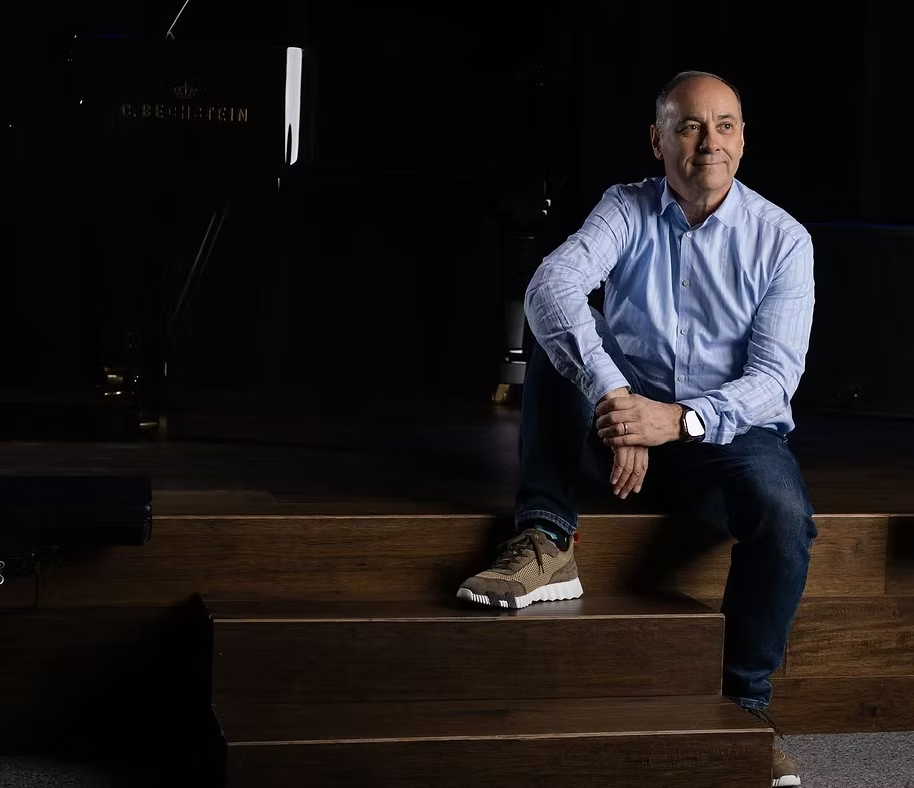
Samuel Andreyev
Corey: I wanted to make sure that this orchestration, which is significantly larger, would be a step higher in other domains such as balance, precision of colour, etc… So it’s the same show, but beefed up on my side.
Kyle: There have been a few changes to the text with a few lines that just never quite satisfied me – they’re too small to mention, really, but for those of us who are confronted with our own work, sometimes you just need to make the kink in your neck go away and make the changes.
BB: November 15-16 to be presented in concert. Who is participating (conductor, singers)?
Kyle: Yes! We’ve assembled Ottawa’s finest to share our little adventure with the people of the nation’s capital. First and foremost, of course, in the composer, Corey Arnold, who’s an Ottawa native!
Young bass Matthew Li, who sings the title role, tenor Philip Klaassen (his loyal minstrel), and baritone Mark Wilkinson (captain of the guards) all have strong ties to Ottawa.
Coloratura Natacha Demers (Mirella), a Gatineau native currently based in Montreal, and baritone Michael Robert-Broder (her oafish brother Walo) hails from Toronto and a very exciting young cast of exceptional singers.
Corey: Maestro John Kraus, who conducted for the Northumberland Symphony Orchestra, now conducts both the Parkdale Orchestra and Kanata Symphony Orchestra in Ottawa. After Parkdale performed a few excerpts from our opera, he was the one who approached us about doing the full thing at this larger scale.
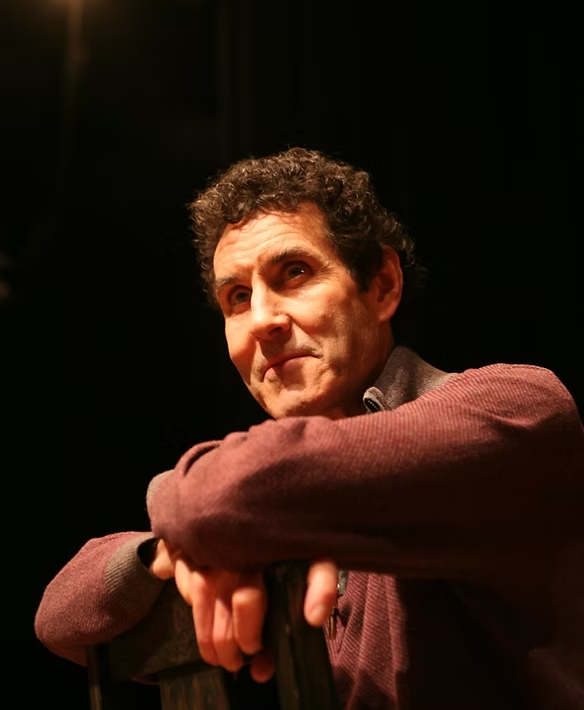
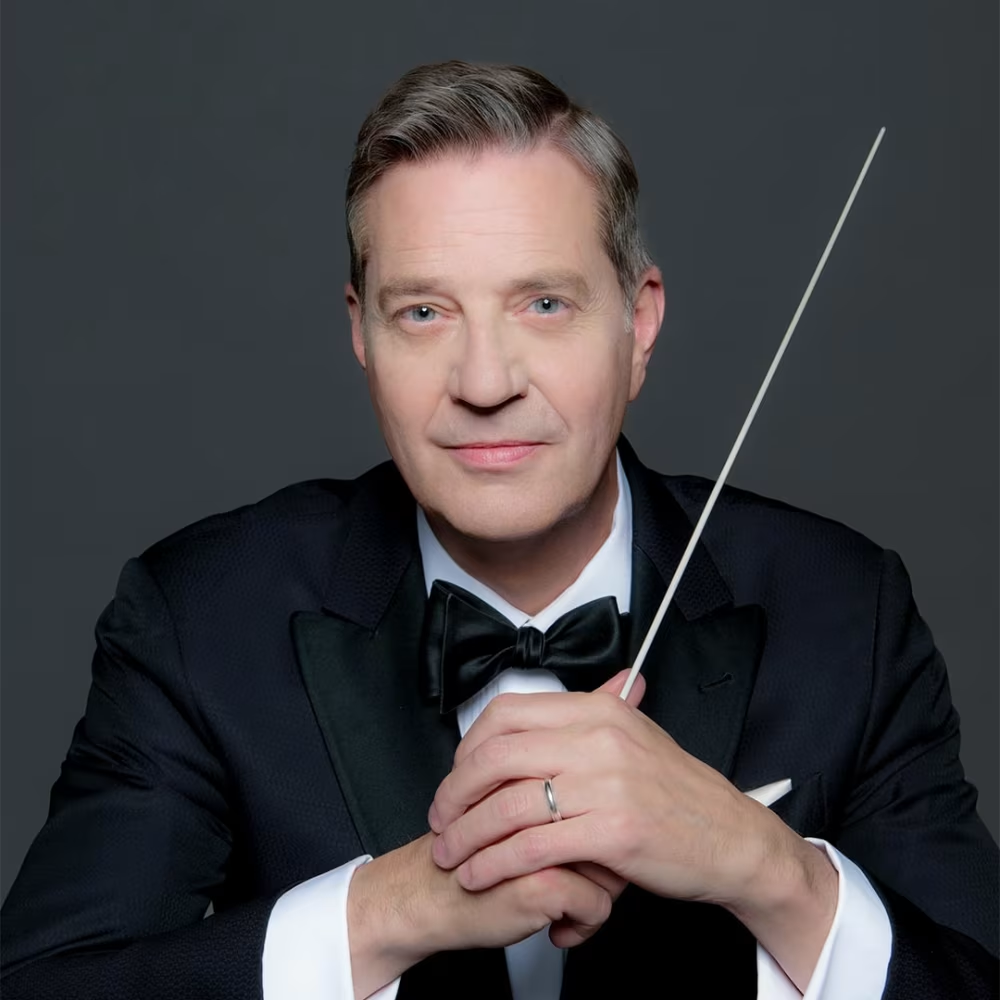
Conductor John Kraus
BB: Could you offer the rough synopsis of the story you started with and what it became in your Libretto (?), what you chose to skip or add?
Kyle: The libretto is shaped by an amalgamation of various hero-worship stories that grew up around Richard I, the Lion Heart, who was king of England from 1189 until his death in 1199. In 1191-92 he went to the Holy Land on Crusade and clashed against the forces of the great Sultan, Saladin. After the war, he was separated from his fleet by a storm, and this is where the legents begin (though his deeds on Crusade are themselves legendary, but are entirely true! Being verified by chroniclers on both sides of the conflict, some of which we touch upon in the opera).
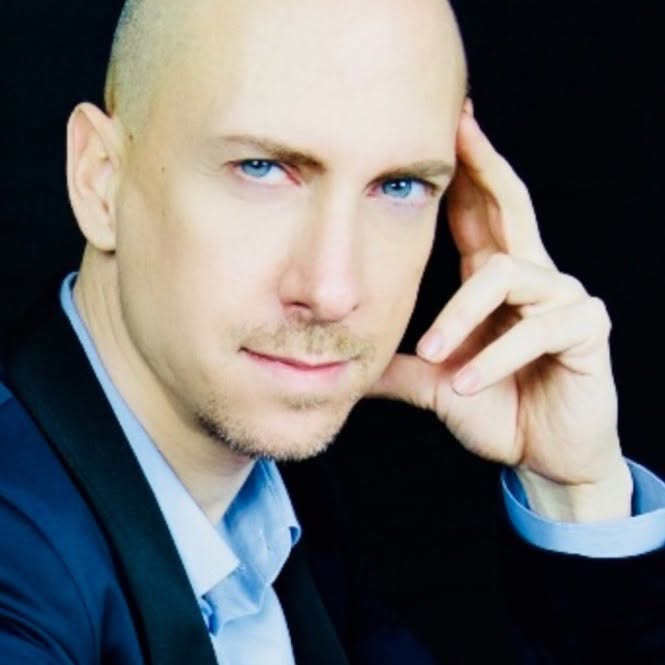
Kyle Derek Mcdonald
Kyle: The first legend that I encountered that told me that there was an opera in it all was that when Richard didn’t return home to England after he was separated from his fleet during a storm, his loyal minstrel, Blondel de Nesles, went across Europe singing the songs they sang together in the Holy Land. What better hook? And what better fodder for an opera?
The next few inspirations were smatterings of various legends and fables about Richard’s deeds while in captivity (he was captured after he was separated from his fleet), imprisoned by Duke Leopold of Austria, and then later King Henry the Lion of Germany. I’m sure there’s another opera in the Lion Heart and the Lion getting on in their love of the hunt and mirth, but that’s for another day. The exchange of punches we see between Walo and Richard was from one legend; the affectionate young maiden – Mirella in our piece – is from another; the battle with the lion from yet another; I put them all under Leopold’s roof (though in some tellings the merging had already occurred) and unified the action so that it transpires in roughly 24 hours. I wanted to hew to Aristotle’s unities of Time, Place, and Action, but the story demanded a departure from Time (events that unfold in real time, like Oedipus Rex), and life goes on.
I wanted to give the audience a sense of Richard’s bravery, but I knew I couldn’t get bogged down in too many details that aren’t shown (opera is not the vehicle for this kind of story telling), so I found a fun way to work some of his most astonishing feats into the main number of Act II: the duet with the adventure-hungry Mirella, which evolves into the “moral of the story.” “Hope lives, so do not heed retreat. It’s fear who’ll suffer the defeat.” The swashbuckling, dare all drama of the duet is suddenly humbled into a pious reflection on the of the grace of heaven and the glory of hope.
My mission was to create a tight, fast-moving (but appropriately paced) book that would give my composer all the cues he needs to make a galloping score with all the right oases in about 90 minutes. And I believe we accomplished that!
BB: By coincidence your performances of your opera (Sat Nov 15, 8 pm & Sun Nov 16, 3 pm) get produced the same weekend Toronto’s Voicebox – Opera In Concert will do Gretry’s 18th century opera comique Richard Cœur-de-Lion (Saturday, November 15, at 3 PM). The Gretry opera is understood as a rescue opera. Is your opera also a rescue opera? Or a heroic romantic opera? Do you have a sense of what genre you’ve written: and does genre even matter anymore?
Kyle: Clearly Toronto wasn’t big enough for the both of us! I’m ultimately disappointed I won’t be able to see it! I was aware of Gretry’s opera when I first set down to write ours – the focus of Gretry is really Blondel, and is structured like a comic opera with a lot of complicated relationships and overlapping happenstances that can make for a very enjoyable evening. Ours is really an adventure story with larger-than-life but oh-so-recognizable characters whose antics ultimately bring about a tragedy that changes the course of everyone’s lives. The first two acts can ultimately be considered a comedy, but things take a devastating turn in act three and everyone is pushed to their limits as honour trembles and cruelty rages. However, not to spoil it, the opera resolves in triumph so I can send my audience home happy and humming.
Corey: Not much to add here, except that the music of these two operas very much reflect the music of their time. So, very different!
BB: When we look at operas such as Gretry’s or the various films of Robin Hood that show us glimpses of Richard, have we ever seen the truth? While I love this following piece of film I know that it’s completely untrue. (Forgive me for including it)
Place your adaptation in a scale for me, between truth and fiction. Are you more truthful than the others I mention?
Kyle: Richard’s catalogue of military deeds, which he shares in “Harken Maiden and Behold” the main duet of Act II, are all TRUE. His prowess on the battlefield is truly legendary and both Christian and Islamic chroniclers were utterly baffled by his daring and ability. It’s true that John, his brother, usurped the throne while he was in captivity; it’s true that he was held captive in Austria; it’s true that Jerusalem was won in a truce; it’s true that one of his chroniclers and drinking buddies was Blondel de Nesles. It’s true that England loved him so much that they essentially paid half their annual GDP to ransom him back. Robin Hood himself is a myth, so Richard’s involvement there is a testament to how well beloved he was.
A manuscript image of the coronation of Richard I in 1189.
After that, however, I yield me to the legends and seek to find the truth in the relationships and personas rather than in the chronicles.
BB: Alas the “truth” might be that Richard died far from home, cheated, forgotten. In opera do we seek the myth instead of nasty truth?
Kyle: My general reasoning is: if the true story is so extraordinary that it hits all the right spots for good storytelling, then have at it and change as little as possible. If not, then put the realities aside and be as creative and interesting as possible. The adage “never let the truth spoil a good story” has been a lesson I took a long time to ingest, but it’s now one I live by (artistically). In real life, I’m pathologically attached to the discovery and transmission of truth regardless of consensus or the fractures it may cause – it’s a tension I’ve experienced for my whole life and I’m still working through how to manage it.
BB: Do you write with at least some thought (peripheral vision?) that companies will produce your opera : and if so, what are the biggest challenges to making your opera something they would want to produce
Kyle: Yes, early in my stagewriting career I had pieces with casts in the dozens (one play I wrote about the first triumvirate was up to about 40, if I recall correctly), and, having been schooled in the real world of live performance, my personal challenge is now to tell the biggest stories with the least amount of resources and without sacrificing quality. When writing I always have an eye on feasibility and budget. You saw my Conan and the Stone of Kelior in 2022 where I was able stretch 14 performers to cover 21 characters and a full chorus. Creativity is always the answer, and it often yields more exciting figurative material which I think is what the theatre is really all about.
With opera specifically, there are many considerations: orchestra size, voice types, vocal stamina staging vs breath support, tailoring roles to singers rather than the other way around, duration, thematic appropriateness (is opera the best vehicle for rapid-fire philosophical exchanges or non-linear, abstract explorations?). The advantage to tech today is that projection is changing the game with regards to set building and cost. Lighting is also a kind of magic, so there’s much that can be done without enormous, elaborate sets or soaring expenses.
This biggest challenge to getting companies to produce our work is, to put it simply, ideological. All of the major pipelines across North America have turned an eye towards identity activism – a mold that seems to include neither Corey or myself. Canada is the worst for this because of the priority groups in the granting system. We actually wrote about this a few years ago and were speaking with Quillette about publishing it. Ultimately, we went with Counterweight magazine out of the UK, which has since closed down. If the readers are really keen, Corey and I can dig up the piece and publish exclusively through the Barczablog and stir the pot.
BB:We can maybe discuss that further another time.…
Kyle: Until leadership decides to serve the audience instead of the cause, sales will continue to dwindle, and new work will continue to unimpress. I think it’s worth noting that the Canada Council for the Arts has such confidence in our work, that they granted us the lion’s share of our budget despite the priority groups. I think this is good news, and I believe a change is coming. When it is, we’ll be there, ready to rock. Until then, we do it our way.
Corey: In the world of musical theatre, we have the flexibility to allow a performer to present a distinctive perspective on the character and we want to bring that flexibility to our own works. John Kirby’s work on Walo gave us a handful of new comedic moments for the character, and we adjusted the score to take advantage of them.
Bass Matthew Li
Our Richard for this production, Matthew Li, has a different voice and tessitura than Kyle does, so I rejigged the role a bit so that the dramatic moments properly create drama for his voice. This flexibility allows us to cater the show to different performers. Budget-wise, we make sure that every opera we produce has flexibility in orchestration. The Lion Heart has three versions now, Piano-Vocal, 16 piece, and 40-piece. Similarly, our second opera, The Bat & The Bells, has three versions: Piano-Vocal, Piano-Flute-Cello, and 10-piece. While the opera world mostly looks at this level of flexibility as belonging to the world of amateurs and regional companies, playing with scope and maximizing the impact at any level of scope (think of Bluebeard’s castle from Edmonton Opera) is an avenue the large opera companies have barely begun to explore, if at all, and I anticipate it will be one of the easiest ways to start improving the business model of opera companies, once they get their heads out of the way.
BB: Do you identify with any aspect of this opera ?
Kyle:Absolutely! Richard is the chivalric ideal – brave, fearsome, just, educated, witty, and convivial. While, like any of us, he has his faults, he’s still a grand example of someone (even in legend) to try to live up to.
I also identify with keeping hope foremost in one’s thoughts – times are tough, the world is changing rapidly, and many of us feel lost and betrayed. Richard fights a literal lion in the opera, but the lion is actually the figurative representation of despair. In order to overcome our lion, we have to believe it’s possible, and that’s hope.
Kyle McDonald
I identify with the powerful friendship between Richard and Blondel, and this in many ways mirrors my relationship with the composer, Maestro Arnold. He lives in Ottawa and I in Toronto, so our time together these days is sadly limited. But I saw him just this last weekend (end of October) and you know what we did? We pulled out the score and played and sang after a long spell apart. Then we talked about our next ambitious project: Possession. I imagine this is exactly what Richard and Blondel did over a few bottles of something aromatic and potent during those dark and dusty nights on the campaign.
And from Corey’s side of things (I don’t want to put words in his mouth but…) I remember when we first started working on the project that he was surprised by Richard’s confidence and assertiveness, and was worried he wouldn’t be able to adequately capture the dash. I can say that Corey has not only captured the dash, but is now displaying some of it in his own life as he’s developed into a bit of a swashbuckler himself: I couldn’t be more pleased!
Corey: Haha yes, Kyle’s right… I must say that this show has captured ideas that did echo some of my personal transformations. We often consume endless media showing horrible things happening to people as a form of entertainment (thrillers, horror, drama) or outrage (political content). But more and more, I’m interested in how the characters respond to this hardship: Do they dissolve into fear and despair, or do they resist the gnawing sensation to stay focused? Do they lose sight of their morality, clawing back peers and their fellow human to get ahead, or do they maintain their integrity? And when I watch, do I maintain the grace and clarity of mind that would be useful in times of hardship, or does cheap criticism come fast & furious? I’m looking for characters I can admire, who teach me about staying focused, being considerate, all while surmounting extraordinary challenges..
BB: Do you have any advice to offer librettists or composers?
Kyle: Know the best medium for your story. This applies mostly to the librettists, but composers too should know what stories music serves best. Have extended, and perhaps even heated, discussions over cocktails or wine about what you’re in it for, and the kind of impact you want to have. Debate character, instrumentation, structure, and sensibility regardless of whether you’re the composer or librettist, and then, when the time comes, trust your counterpart in his/her domain knowing that you’ve gone through it all together and have put all your ideas on the table. Then, do everything in your power to facilitate whatever your counterpart needs.
Corey: There’s a tremendous amount of complexity to an opera. Your instincts will do the bulk of the compositional labour in terms of melody and harmony, but you need to learn to zoom in and out constantly: Does this melody, orchestration and text combination create a moment with a distinctive aesthetic and feeling (Think of Wagner’s leitmotifs, or Howard Shore’s themes in The Lord of the Rings)? Should this moment in the story reflect the essence of something important to the story? If it should, how can I then use this melody/text/image brought back in part or in whole, to evoke a relationship to this “essence”, such as character growth, a melancholic recapitulation, a new perspective on a past occurrence, etc… The music will not just capture the “thing”, but will tell your audience how to feel about it every time it comes back. You have to think of structure on many levels and find alignment. Finally, try to listen to what the text is telling you first, not necessarily what you want the text to say. Once I think I know what it says, I talk about it with my collaborator, to get clearer. I’m lucky to have someone who has a lot of depth to their intention, so making sure I understand it all first is very important. Then, we can discuss modifications more clearly and carefully.
BB : Kyle, you work in so many media (film & television, voice-over, opera, as writer as performer and also as promoter), if you could exert influence over the powers that run opera, what could they learn from those other media – businesses? Should opera adapt and exploit modern media? And, If you had your way, what would the artform / business that we call “opera” do– either speaking of composers or of producers /companies– to make itself more attractive, more viable and more popular?
Kyle: Yes, I have many fingers in many pies (clearly it’s not only idle hands that are the devil’s workshop): theatre, music, audiobooks, digital media, film/television, events, and even a pair of startups – one in the AI space (to get it under control early) and the other in confectionary.
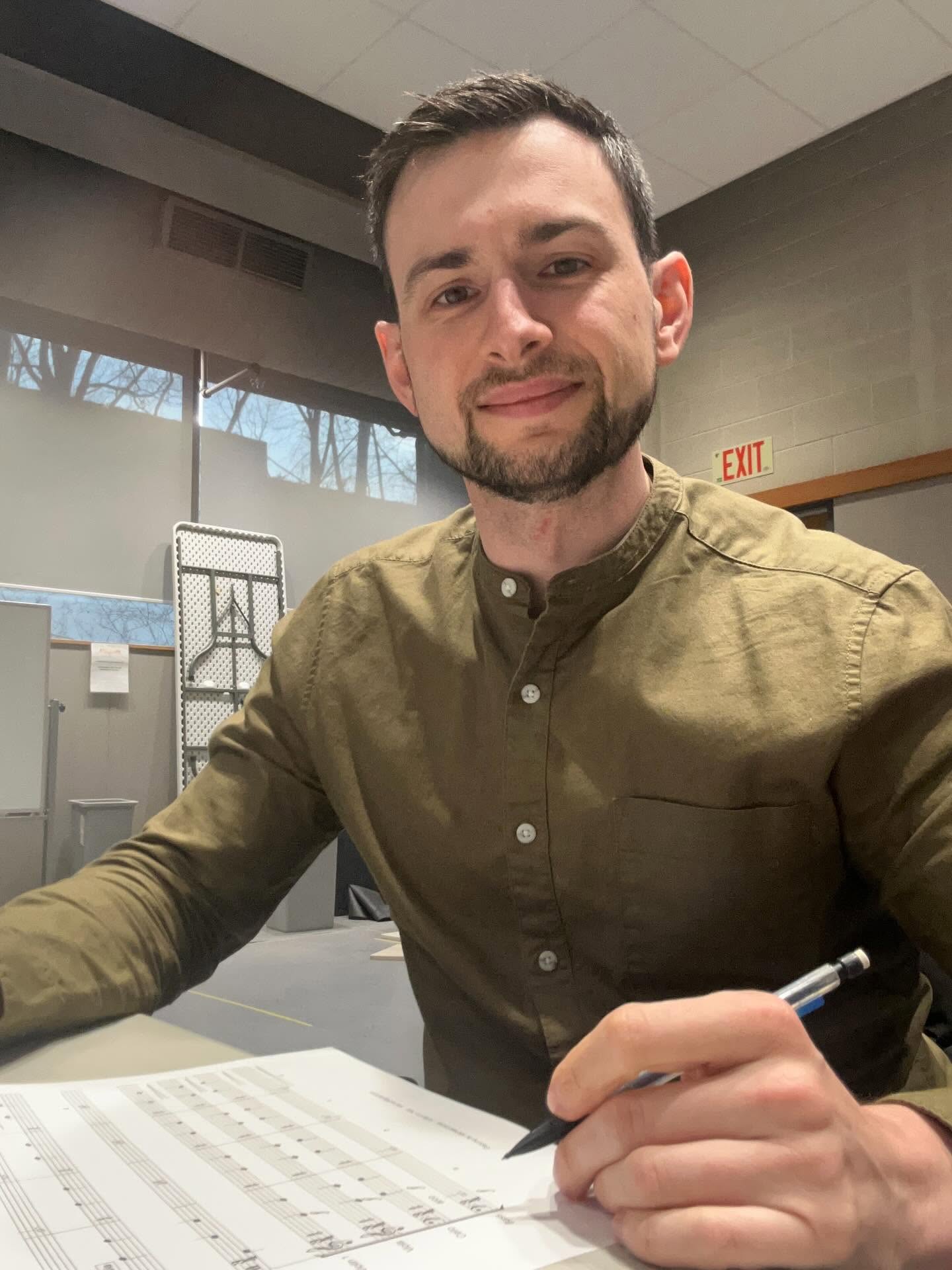
Tenor Corey Arnold
I’m still learning and developing in all of them, but opera has something of a unique problem (perhaps Ballet shares this, but I’m not familiar enough to comment with any authority) and that is: we’re still being treated to Mozart, Verdi, Puccini, Wagner, and all the other greats from decades to hundreds of years ago. Very stiff competition for contemporary creatives. I know you and your readership have listened to me rant about this before, but it bears repeating: it’s not just that it’s Mozart, it’s that it’s done in languages very few Anglos speak, with untenable run times (I’m eyeing you in particular, Wagner), and with production choices crafted in the main around technical considerations (orchestra, fach, cut) rather than performative and storytelling ones. In this concert, we’re using microphones and, if I have my way, every future performance of any one of my operas will involve the use of amplification for the singers – I want every one of my words to be heard and understood, and I want every singer to be able to craft a spellbinding performance with the level dynamic range found in the recording studio.
BB: I know your words likely sound radical to some, but I am certain, were Richard Wagner himself still alive, he would say the same thing. I look at the way he covered the pit at Bayreuth as evidence that he knew enough to make adaptations & changesbefore the era of microphones. It’s ironic when purists get upset at such ideas, given that Wagner in his day was no purist. He was a revolutionary.
Kyle: The other issue is marketing: because the current opera audience knows all the major shows, marketing typically involves putting forward the conductor and the singers. For those who’ll see Don Giovanni 15 times (I am not one of them), this works because the conductor and singers are literally the only point of difference, and are therefore the attraction. For the rest of us “normies” we just see a lot of people looking fancy, and have no idea what’s going on – especially since 90% of the titles of these operas are in languages that aren’t English. It’s a pretty high bar for involvement. However, I am happy to say that I’m seeing changes across the sector on this front as younger members of the industry have started to assert their influence, and I’m confident a lot of this is going to be almost entirely repaired before the next ten years are out. Just remember that Corey and I said it first! Ha!
Marketing. Companies need to focus on the story of the opera and – I’m going to say it again – do it in English (in the Anglosphere). They also need to show footage of the performance, which is always very difficult with live theatre. Stratford is doing an excellent job of this. Bigger companies have budgets and they can pull from past performances so there’s no excuses for them. If a clause needs to be added to artist contracts that material must be made available to the public, then so be it. The age of protectionism is over: if people can’t see it or hear it, they’re not going to care about it. Another thing companies can do is slot a few shoot days at the end of their season with the current company for promo material: the actors next season may not be the same, but there’s an allowance for that with some of these projects. Alternatively, if you have your ducks in a row early with casting, get the performers in to shoot the promo. The ultimate design of the show may change, but that’s not make or break.
In our case, because we don’t have any interesting looking footage for The Lion Heart, we’ve put together an animated trailer that lays out the story, aesthetic, and sound of our piece; we’ve been hearing that it’s really moving the needle for us, so I’m definitely happy about that.
I’ve been saying for years that opera will change you. As an impresario, it’s my duty to get as many obstacles out of the way as possible to facilitate that wondrous magic.
Corey: Only my closest friends know this, but during the pandemic, I was looking for work in other industries when I got hired for a small Canadian software company to assist their clients with using the software. Fast forward 4 years, and I now manage international accounts, travel to major international cities, and work as a developer for the same company. I also get to work alongside entrepreneurs with 20-30 years experience in developing and running companies, and soak up some of their experience. Working in this way was initially quite jarring: there is a tight relationship between my career advancement and my ability to produce value for their customers as mistakes and achievements often have direct financial consequences.
Composer and tenor Corey Arnold
In opera, we’ve lost that tight connection. To some extent we lose it because of ideological indulgences, such as the idea that market concerns are the enemy of art, (as if every composer of the last 400 years was completely free from market demands…) and we end up propped up by grants alone. But some of it is just a lack of business knowledge. I recall one entrepreneur saying to me “an idea doesn’t necessarily make a product, and a product doesn’t necessarily create a business”. When you translate this to opera, a cool musical or narrative idea doesn’t mean you have a great opera. And just because you have a great opera, doesn’t mean you have something of value to anybody. We need to understand that music is rarely ever evaluated strictly on some scale of musical merit (which we often forget in academia…). Performers are paid if the audience is interested in paying, and the audience’s perceived value of the performance can be more about their relationship with the venue or a single performer, or the visual effect onstage, than some quantitative analysis of the quality of the music & text. Business thinking and market demands can’t be a bad word anymore in opera, as they will open our minds to what our audience values. And if we get good at business, we’re going to be much happier on the whole.
BB: What other projects have you been working on.
Kyle: Currently the quiver is filled with a lot of fun, unusual things! I’m narrating and engineering an audiobook called Ethandun for an American poet named William G. Carpenter, who’s written a delightful and moving epic poem about Alfred the Great converting the Danes to Christianity during the Danish invasion of England in the 9th century. We’re aiming for a December release. Want a copy of the book, or to hear the audiobook when it drops? Head to: https://williamgcarpenter.com/
Another project I’m working on (which is the complete opposite to Mr. Carpenter’s grave and reverential work) is a new play that I have the privilege of writing with Kids in the Hall star, Scott Thompson. We’re under strict NDA right now, so the details are limited, but I can share a few things: it’s called a Festive Special, and the logline is: Visionary theatre director Teddy Frisk loses his company after a controversial flop and makes a deal with the devil to get back on top.
Yes, it’s a comedy and yes, it’s a Christmas show. Fingers crossed we’ll be seeing this on stage in December 2026.
Corey and I have been collaborating on our third opera together, Possession (the second is a cute pocket opera called The Bat & The Bells). A seductive tale of horror and exorcism, Possession is a new opera in English that follows the Nagy family in 19th C Hungary who is possessed by the demonic spirit of the infamous Countess Bathory, known for bathing in the blood of her victims in pursuit of eternal youth!
This will also put you on our mailing list which we ONLY USE when promoting an upcoming performance, or when sending an update about the opera.
For everything else, my instagram and website are the best places to stay abreast.
Corey: I’ve been performing regularly around Toronto, Ottawa, Montreal, etc… but have also been working on better connections abroad, having done my first tour of China last fall. My wife, Nadia Boucher (a pianist), and I have lots of energy and interests, so we always have a variety of projects running at any given time.
Kyle and Corey: Thank you, Leslie, for your craft and patience; it’s always an honour!
Kyle Derek McDonald | Corey Arnold. Follow them here:
If you are a fan of theatrical presentations, brilliant design and innovative stage techniques you must get a ticket to see Far Side of the Moon by Robert Lepage / Ex Machina at the Bluma Appel Theatre until November 16th. I don’t know if Canadian Stage will be able to extend the run, but this is a show that people will be talking about for a long time.
You may know Robert Lepage as an innovator, a brilliant designer, known for collaborations with everyone from the Metropolitan Opera to Cirque du Soleil and Peter Gabriel. He simultaneously offers grand spectacle and quirky glimpses of human vulnerability.
Olivier Normand plays all the parts in a show that Lepage played himself when it first appeared in 2000. Once again we see autobiographical elements, as we saw with Needles & Opium, Eonnagata and especially 887.
Two estranged brothers are brought together by the death of their mother. Normand plays both brothers, the mother and her doctor too.
The synopsis from the Ex Machina website says:
The Far Side of the Moon is based on the tempestuous relationship between two brothers with perfectly opposed ambitions, and on the improbable reconciliation caused by the death of their mother. As a backdrop, the Russian-American moon race of the 1960s, where the losers may not be the ones we imagine. There is a sometimes thin line between the trivial and the sublime. Here, visual poetry allows the central character, Philippe, to pass from the banality of everyday life to the majesty of the spatial world, to escape the earth’s force of attraction for the lightness of the sidereal void.
While both brothers look up into the sky their approaches couldn’t be more different.
Philippe is an introverted astronomy student whose dissertation concerned Konstantin Tsiolkovsky (1857-1935) the Russian rocket scientist who has been called the father of space flight. and who conceived of the space elevator, an idea that’s closer to science fiction than fact.
Philippe drawing a schematic diagram to explain Tsiolkovsky’s space elevator. (photo from Ex Machina website, in an earlier production)
His brother André, is a successful television weatherman.
Olivier Normand as André the television weatherman (Photo: Elana Emer)
The two brothers are brought together by banal details arising from the death of their mother. What about the contents of her room? What will become of Beethoven: her goldfish? As Ex Machina told us, there is a sometimesthin line between the trivial and the sublime.
As a son who recently lost his mom and spent much of the past year going through her possessions, trying to decide what to keep as memento and what to donate or give away, this part of the story has a blunt edge that spoke to me with great clarity, right on that thin line between trivia and sublimity. I. found myself a bit astonished trying to reconcile two parts of Lepage. Sometimes he is a reticent symbolist, encouraging a poetic response while keeping us at a distance. At other times he is painfully real, and very funny. One brother has a practical relationship with the sky, making money from it, while the other engages in impractical research that is more obscure or avant-garde, likely reflecting the two sides of Lepage or any artist for that matter. We are not seeing objective figures but rather through the filter of one or the other brother’s perspective, as when we see the mother holding a baby-sized astronaut.
The symbolist side is fed by the imagery, an approach to stagecraft seen over and over in Lepage’s work. The set for Far Side of the Moon is like a trial run for the opera designs for Berlioz’s Damnation of Faust and the Wagner Ring cycle.
In the Berlioz we get an enormous set of squares dividing the stage picture, allowing for projection and division of the performance area. That’s similar to what Lepage and Ex Machina did in Far Side of the Moon, inserting one recurring motif into the stage picture as a departure point for the visual story-telling. A laundromat washing machine door doubles for orbital technology, the same shape doing double-duty to stimulate our imaginations, while the actor or puppets go in or out of that portal.
Philippe in the laundromat (photo from Ex Machina website, in an earlier production)
Olivier Normand as the mother (Photo: Li Wang)
Far Side of the Moon is an economical design when compared to the massive architecture in the Met operas or the Macbeth we saw this past summer at the Stratford Festival. But even on this smaller scale Lepage & Ex Machina enact the same thing as in the Ring cycle, where the set is a model for a world that is completely flexible, changed in radical ways at unexpected moments. And I must also mention that Lepage conceives of his actor (originally played by Lepage himself) as another changeable and ambiguous component like the set, representing everyone. It’s mind-altering and druggy in the best way.
Lepage again employs video to offer secondary viewpoints of something onstage, in addition to the use of a big mirrored surface onstage. As in 887 or Macbeth the video can be very subtle. Sometimes the reflections may confound our expectations & perspectives, as if to suggest being in orbit.
Watching the trailer for the film Lepage made in 2003 from the play, I only wish I had seen that before the show, as it illuminates several interesting connections, underlining moments in the play that went over my head. Now I have to get a copy of the film.
In the final sequence of the play Lepage makes something magical, hinted at briefly in the film trailer, with the help of the mirrored surface onstage, a hauntingly beautiful suggestion of weightless ballet. The musical score created originally by Laurie Anderson is a stunning feature of the show, sometimes in the background but foregrounded in the set piece that concludes the play.
Olivier Normand as Philippe (Photo: Li Wang)
Far Side of the Moon by Robert Lepage / Ex Machina continues at the Bluma Appel Theatre until November 16th. Don’t miss it.
I took Erika to see the Toronto Operetta Theatre’s The Mikado Revisited at the Jane Mallett Sunday afternoon, wanting to escape from the world. Other than the usual topical jokes (and what’s Gilbert & Sullivan without references to current events) we were in an altered reality with a different prime minister. Guillermo Silva-Marin’s new version removed the Japanese references from the Mikado, reframing the story in a Canadian context.
What a great feeling when high expectations of a show are satisfied.
First and foremost I should mention the contribution of Narmina Afandiyeva conducting the TOT orchestra, helping everyone sound beautiful while keeping soloists and chorus tightly together throughout.
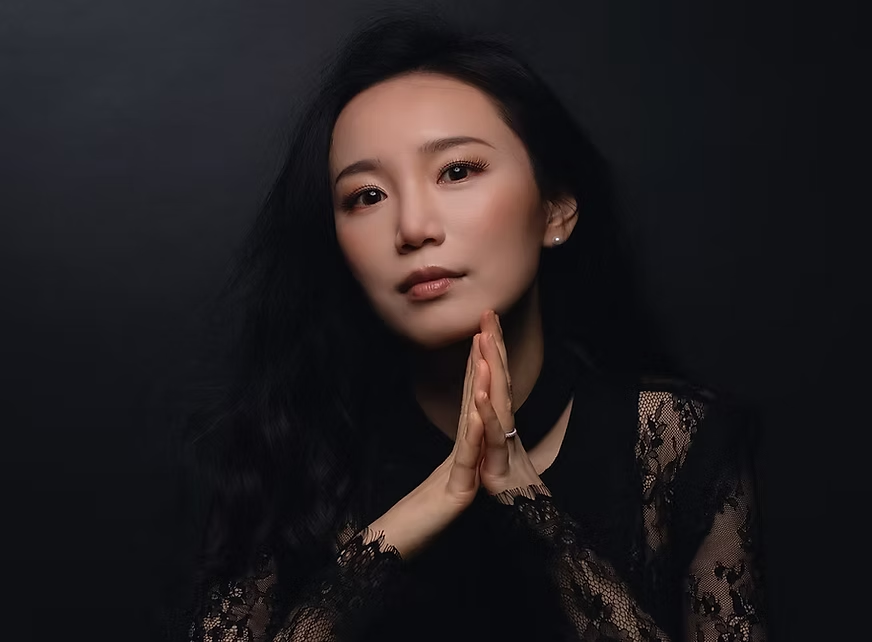
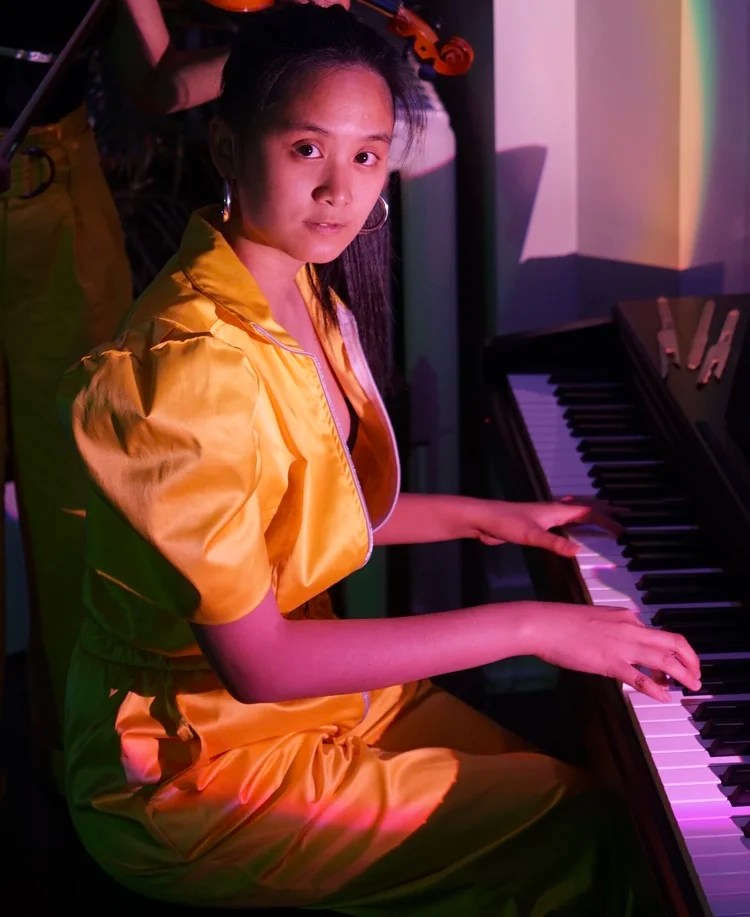
Narmina Afandiyeva
I had already been thoroughly blown away by her excellent pianism a few months ago in the last Apocryphonia concert, so it was no surprise to see what an excellent conductor she was in her TOT debut.
Our revised story veered between romance and comedy, still thoroughly topsy-turvy in Guillermo’s new Ontario adaptation of the story. I giggled to myself, recalling the Stratford Macbeth with bikers, jeans & leather with nary a kilt in sight, while now the kimonos were gone in favour of, what else, kilts in this incarnation.
The Lord High Executioner (Greg Finney), Katty Kat (Karen Bojti), the Prime Minister (Stuart Graham), and kilts.
The romance between Yum-Yum (Madeline Cooper) and Nanki-Blue (Marcus Tranquilli) was as charming as ever.
I spoke of my expectations. I came with the intention to laugh, grateful for the comic stylings of The Lord High Executioner (Greg Finney), who happens to be a superb singer as well.
Greg met his match in Karen Bojti, playing the unruly contralto who always throws everything into turmoil upon her disruptive arrival, with a big voice, strong presence and perfect comic timing. Whenever Greg or Karen were onstage there was always something funny afoot.
Revised, revisited, we still had the boisterous happy ending.
TOT will be back with TOT Cabaret: Viva La Zarzuela on November 29th, and later Kalman’s Czardas Princess December 30, Jan 2, 3 and 4.
It’s now mid October, and the worst of our July heat is a memory, but I remember Sarah Mole dashing about doing a million things at the Toronto Summer Music Festival in her role as Communications & Public Relations Manager. Now that things have cooled off a bit I wanted to ask her to reflect on her work, her life as a singer and her upcoming gigs.
Take a look.
*******
BB: Are you more like your father or mother? What was your first experience of music?
Sarah Mole: I think I am equally like my mother and father! They are both people I admire and cherish very deeply. I grew up in St. John’s, Newfoundland, which is known for its deep rooted musical culture. Though neither of my parents are hugely musical, they’ve always told me I was singing before I could properly talk. Growing up in an environment rich with organic music-making is something I hold dear to my heart and try to carry into my performing.
Sarah Mole
BB: Aha Newfoundland! I should have known, amazing place with amazing people. So…who do you like to listen to or watch?
Sarah Mole: Even though I predominantly work in the classical music sphere, I rarely find myself listening to that genre. If you were to log into my music library, you’d find a multitude of things, mainly RnB, Jazz, Soul, Hip-Hop, and Funk. Top artists include: Hiatus Kaiyote, Leon Thomas, Yebba, Samara Joy, Stevie Wonder, Olivia Dean, Thundercat, D’Angelo (RIP) and Hey Rosetta!
BB: What ability or skill do you wish you had, that you don’t have?
Sarah Mole: I wish I was better at dancing! I’ve started line dancing recently in hopes of getting better, though I’m not sure it’s working too well yet. I’d love to learn a more hands-on art form as well… something like pottery or jewelry making!
BB: When you’re just relaxing and not working, what is your favourite thing to do?
Sarah Mole: In my occasional spare time, I try to do as little as possible! I have a little old lady cat named Mimi, who I love to spend time with.
Mimi
Sarah Mole: I’ve been dipping my toes into weightlifting recently, and love to try new restaurants, bars, bakeries, and cafes around the city. My goal is to try 150 new spots before 2025 finishes, recommendations welcome!! A recent favourite is Gio Rana’s Really Really Nice Restaurant (The Nose) in the east end.
BB: Wow we will have to compare notes!So who do you think of first, when I ask you to name the best singer?
Sarah Mole: Oh god, this might be the hardest question of them all. I feel moved by singers who are true to themselves, and who give honest and sincere performances, not just the ones with the best chops.
I guess I have two answers, and they both reference specific recordings. The first would be tenor Russell Thomas’ performance of Barber’s Knoxville: Summer of 1915 at Wigmore Hall. Knoxville is one of my desert island pieces, and I’d never heard it done before in a lower voice. His interpretation has stuck with me for years, his diction is so admirable, and he gives such an honest, soul-bearing performance. I love the intimacy that is offered with piano as opposed to orchestra.
The second thing that came to mind was a video I used to watch religiously in high school, Sondra Radvanovsky’s “Quel sangue versato’ from the 2016 production of Donizetti’s Roberto Devereaux at the Met. An absolute hair-raising performance.
BB: Talk about how you became associated with Toronto Summer Music.
Sarah Mole: I found out about Toronto Summer Music in summer of 2017. I was still in high school at the time, and was in Toronto to participate in a week-long vocal intensive at the RCM. One afternoon, we walked over to the UofT Faculty of Music to watch an Art of Song Masterclass with Soile Isokoski.
I began working with TSM in 2022, starting in a summer temp position. I had such a fantastic time there for that contract, I knew I had to apply when a permanent position opened up that fall!
Funny enough I didn’t connect the dots of the 2017 masterclasses until this year! I think the universe brought TSM and me back together.
BB: What does your role as “Communications & Public Relations Manager” for Toronto Summer Music entail?
Sarah Mole: My role of Communications & Public Relations Manager entails wearing many different hats! I manage our online presence, which includes social media, email marketing, digital advertising, and media outreach and includes graphic design, video editing, and website editing. During the Festival, I also do the backstage work for all TSM Events. If you’ve ever been in attendance, you’ve likely seen me running around like a chicken with my head cut off, with chairs and stands in tow!
BB: You’re too humble. I asked the question because I saw you doing so very much, and you never lost your cool as far as I could see.
So now that Jonathan Crow has finished his final year as Artistic Director of the Festival, and is now succeeded by William Fedkenheuer has the planning for next summer begun?
Sarah Mole: The planning for the 2026 Festival is well under way. William officially took over as of of September 1st, and has been hard at work ever since! There are some names in the mix that I’m really excited about!! No spoilers allowed unfortunately 🙂
Late summer/autumn normally consists of preparation for our Emerging Artist Program, finding mentors & teachers, putting together application requirements for our fellows, and planning our Mainstage Concerts. Once we enter the new year, we announce those Mainstage Concerts, and then shift focus to programming our other events, which consist of the Emerging Artist performances, and free events such as Noon-Hour Concerts, Masterclasses, Kids Concerts, Exhibitions, etc. Throughout this time, we’re also planning our Community Program, which consists of a Chamber Music, Chamber Choir, and Piano Masterclass stream. For one week of the Festival, we have 100+ amateur adult musicians come to TSM to rehearse with, learn from, and perform alongside professional musicians!
Oftentimes, we have to do some light planning for future years, 2027 and 2028 are already in the works as well!
BB: Do you have any funny / dramatic / quirky stories you can share about the festival, about last minute rescues or disasters averted, or anything at all you can share?
Sarah Mole: There’s sooooooo many. One of my favourite days of TSM is the last day, which consists of the Community Program Showcase and TSM Finale. It generally begins at 8:30 or 9 AM, and runs until 9:30 PM, and this year featured 57 performances! This means I did approximately 57 stage changes in that time, with the help of some other TSM Staff. When you hit hour 5 backstage, and week 4 of the Festival, you definitely feel like you’re in an alternate reality!
Sarah Mole, on hour 7 of the Community Showcase, working in front of the house and backstage too.
Sarah Mole: Working at TSM has taught me to be veeeeeery quick on my feet. We’v helped with cancelled travel plans, music and iPad mishaps, last minute program changes, etc. The most hectic day in memory was when we found out Sondra Radvanovsky had to cancel her recital during the 2023 Festival. What followed after was assisting in the search party for another available singer who could have a program ready in 3 days, ensuring they arrive in Toronto, printing new programs, re-marketing the event, notifying patrons, and more. J’Nai Bridges graciously stepped in, and it ended up being one of my favourite TSM concerts.
BB: I understand you hold a Sidgwick Scholar position with the Orpheus Choir of Toronto. What does that mean?
Sarah Mole: The John and Mary Sidgwick Scholar Program has been around since 1989, and is geared towards young professional singers. Scholars act as section leads for the choir, as well as soloists for the many of the Orpheus Concerts.
We receive rehearsal/performance honorariums, and coaching from Artistic Director Thomas Burton, and collaborative pianist Vlad Soloviev. I am now in my second season as a Scholar, alongside seven others, who you can learn about here.
One of the most impactful concerts I’ve done with Orpheus was Samuel Coleridge-Taylor’s The Atonement, with orchestra in March of 2025. The piece had not seen a Canadian performance in over 100 years. I had the pleasure of singing Mary, wife of Cleophas, who is featured in a stunning trio towards the end of the work. I got to perform alongside two dear friends of mine, soprano Rayna Crandlemire and mezzo Anika Venkatesh.
Our section begins around the 1 hour 13 minute mark, we each have a solo and join together for a trio.
BB: What upcoming performances do you have on the horizon?
Sarah Mole: I have two upcoming performances that I’m really looking forward to!
First Saturday, November 8, 7:00 PM Kingsview United Church (Oshawa), I will be singing the Soprano Solo for Ralph Vaughan Williams’ Dona Nobis Pacem, under the direction of Thomas Burton, with the RESOUND Choir – Durham Region, and Organ! I’ve been involved with this organization for multiple years now as a Choral Scholar, and I’m thrilled to now take part in a soloist capacity.
This Cantata by RVW features powerful music that calls on us to remember our shared humanity and work for peace. He takes text from the Mass Setting, political speeches, the Bible, and poetry of Walt Whitman. While the chorus and baritone soloist sing of the realities of life in war time, the soprano solo cries out and acts as symbol of peace. For tickets click here.
Next, Path of Miracles Saturday, November 15 8:00 PM Ukrainian Catholic Church of the Holy Protection of the Mother of God. For tickets click here.
This absolute beast of a work has been SO fun to sink my teeth into. Path of Miracles is a work by Joby Talbot, based on the most enduring route of Catholic pilgrimage, the journey across the Camino de Santiago, to Santiago de Compostela in Northwest Spain. For centuries, people have traveled from all over the world to walk the Camino as a means of finding inner transformation, peace, or to grieve or honor a loved one who has been lost. Much like the journey, this performance will be a challenge, inspiration, and transformative experience.
This performance will be put off by a group called Concreamus, directed by a dear friend, Kai Leung. The group is dedicated to innovation in the choral arts and the creation and performance of excellent new works by young composers. The group is made up of young singers, students, composers, and educators from around the GTA. If you want to hear some really high level singing, I recommend joining us on November 15th!
BB: What is the best or worst thing about what you do?
Sarah Mole: I take it back, this one is probably the hardest question of the bunch! I think the best thing about what I do as a performer is that I get to do the thing I love most in life, and share it with open and willing ears. Having this outlet through which I’m able to express myself is something I’m thankful for every day. On the administrative side, it’s so awesome that I get to help other performers do what they love to do, with a community that loves and cares about art.
On the flip side, remaining steadfast of your passion, self-confidence, and self-worth in the face of rejection, an ever-changing environment and political climate is a struggle that I and many tackle on a daily basis.
BB: In your two roles, as a professional and as an artist yourself, I wonder if you have any unique insights or POV’s?
Sarah Mole: Having this combination of experiences gives me more patience, grace, and understanding for how much effort goes into making performances happen on both ends. There’s commonalities in the preparation for performance between administrator and artist, in the sense that much of the quiet work goes unnoticed and underappreciated. Smaller organizations oftentimes operate on a 3-5 person team, and do the work of many more to ensure artists and audience have a positive experience. Performers spend hours upon hours learning music, exploring themselves emotionally through that music, and creating an experience for audience members to dive into.
These experiences have shaped the way I approach my own artistic and professional practice, and have allowed for compassion and resilience in trying times.
BB: Do you have any influences / teachers you want to acknowledge?
Sarah Mole: I take great inspiration from my peers and colleagues. My close friends motivate me every day to grow, love, care,, and be the best version of myself. They’re such great supporters, and I’m so grateful to them. I’ve been so fortunate with teachers, coaches, pianists, conductors and collaborators. During my time at UofT, I studied under Wendy Nielsen and briefly the great Mary Morrison. Through them, I learned that singing/my musical journey can be what I want it to be, not what others want me to be.
And of course, my family out on the east coast, who’ve been my biggest fans from day one! They never missed a performance, drove me to lessons, and helped me move half-way across the country to continue singing some silly little songs. I try to make them proud every day.
*******
Upcoming for Sarah:
Saturday November 8th Dona Nobis Pacem 7:00 PM Kingsview United Church (Oshawa) For tickets click here.
Saturday November 15th 8:00 PM Ukrainian Catholic Church of the Holy Protection of the Mother of God. For tickets click here.
And next year Sarah and Toronto Summer Music will be back with their new Artistic Director William Fedkenheuer. When I’ve heard more details I will share them.
This has been a bit of a bewildering week, astonishing contrasts. I repeat my self-fulfilling mantra “I am a lucky guy,” grateful for what I’ve experienced.
Wednesday was Opera Atelier’s Magic Flute, Thursday Tapestry Briefs Under Where, Friday was the burial & celebration of life for my Aunt Vera, who passed away just a few days ago, and then Saturday was my second look at the Amy Lane Roméo et Juliette, in its final performance.
And on Sunday I rested, one might say, but am trying to understand, the different impressions still reverberating in me: especially Stephen Costello’s voice.
The July Celebration of Life for my mom has been influencing everything, inevitably. I said at the time I was anxious about forgetting my mom. I find myself obsessing over my role as an observer at the theatre or concert hall. I want to write testimony, to share observations rather than to judge or assess. I believe I am most helpful in explaining how something works and what it’s doing, as though I were helping the audience digest the performance, as though I were helping the artists be understood. In grad school I recall one role we had in creating lobby displays was to unpack complexities, to make theatre more intelligible.
I wrote about Magic Flute seeking to explain what I thought Opera Atelier were doing, as I’m not sure I’ve ever seen that explained properly before. Oh sure, people say “historically informed” and/or “period performance”, but what does that include? so I broke it down, seeking to list the components and hopefully that’s useful.
I wrote about the Tapestry Briefs Under Where evening, seeking to offer useful feedback. I may have seemed to be playing devil’s advocate somewhat. I hope the pieces were useful for participants, and yes the audience seemed to enjoy themselves. It’s funny how torn I felt, resistant to being judgmental or dismissive, when we were being invited to assess the best of the eleven pieces in the show. What bothers me is that the format –using a pencil to make quick notations — wasn’t conducive to really properly capturing my feelings. I could have easily sat for half an hour making notes after each one: but then again I’m funny that way. I loved the performances, the evidence of a creative process, and felt huge frustration that the meal was snatched away in each case before I really had a chance to let it hit my taste-buds (if the analogy works…I’m not sure).
It was especially wacky to watch Saturday Night Live (Sunday via the DVR), mindful of the challenges the Tapestry composers & librettists face, comparable to the sketch-writers on SNL. Writing is writing, in the end. Perhaps I need to let go of my assumptions about opera, maybe a 3 hour opera is obsolete (as the lady sitting beside me at Romeo et Juliette seemed to suggest, speaking of how her husband disliked Eugene Onegin, and this time she came alone). Maybe the Tapestry shorts are not so much a laboratory exercise, as a new normal, when I recall how many of the “operas” (in quotes) are actually song cycles, short works strung together. Maybe operas need to be shorter, indeed there was a trend there for awhile in the 19th century and early 20th century. Maybe the goal as I define it is all wrong, and the suite of short works is the new ideal, again reminding me of what Opera Revue and Against the Grain do in bar settings, stringing arias & short scenes together into entertainments rather than long complex operas. Do working professionals have the time to go see a four hour opera..? Maybe we’re now into the realm of playlists & downloads of portions of operas, and it’s only the nerds (that’s me…guilty as charged) who trouble themselves with the questions about the bigger longer works.
The great thing about my chance to experience the celebration of life for my Aunt Vera in the midst of these performances is how tender we get in these encounters, willing to listen differently, willing to be quiet and think. I see this in church too during a Christmas pageant. How funny that I want that for Thursday night’s event. In my church days (whether as choir-member, as soloist or organist)I saw the willingness to be supporting & loving to performers, less judgmental and more about appreciation & gratitude. I recall the notion some artists shared of the theatre as a temple, that the arts are sacred. The dramaturg or the critic can be, indeed must be like a steward of the arts, like a midwife to the new creations and protective of the artists. I wish we were as respectful and empathetic to the performers onstage as we are in church or at a funeral. Can we be that way all the time, rather than only rarely? Maybe I’m sounding unreasonable but I think we get glimpses of the ideal, that can inform what we do all the time.
And so I’m going to remark again on the Roméo performance, especially knowing that the run is over. I got a private message from someone I won’t name asking “Was Romeo as bad as what I’ve been reading?” The review I published was arguably incomplete, as I spoke highly of what I saw director Amy Lane doing, even if I was perplexed at two moments (by the corset under Capulet’s clothes, unveiled strangely in the first act, and the moment at the end of the fight scene, where there’s an extra brutal murder that seems gratuitous and to no purpose). The dancers sometimes suggest to me a director who has no faith in an audience’s ability to stay awake, teasing us with endless diversions & distractions (is that so different from Gounod himself? i’ll just leave that question there….). At times that struck me as disrespectful, upstaging the singers. But then again maybe that’s reality, maybe it makes sense given what Juliette was singing about. My job is to try to see what’s in front of me, not to show up with a checklist of requirements & stipulations.
Kseniia Proshina as Juliette (photo: Michael Cooper), sings her aria while dancers seem intent on upstaging her
That being said, my basic sense of Amy Lane’s work was that she was working with Gounod, whose take on Shakespeare is sometimes sensitive, sometimes sentimental and superficial, adding some remarkable moments especially in the last act. I liked that a lot, as I said in my review.
Kseniia Proshina as Juliette (photo: Michael Cooper)
What I didn’t mention was my professor’s commentary back in my undergrad days, when he more or less dismissed Gounod for Berlioz (thinking of Faust). I think the truth is, Gounod was working with the theatre of his time, doing many of the things we see in Bizet & Puccini, namely the recurring themes and the sparkling entr’actes with clever orchestration. As I regularly try to remind myself, we need to stay in the present and observe & testify, rather than resisting and quibbling. To coin a phrase, “love the one you’re with”. Gounod isn’t Berlioz but he isn’t chopped liver either. In the last act we heard stunning music superbly played by the COC orchestra, conducted by Yves Abel. They tell the story in the way that Gounod did it. We can still see Shakespeare through the layers, and a great deal shone through.
Yes it’s nice to hear Romeo again singing the melody in the final scene from the love duet, especially when sung as well as what we heard from Stephen Costello. Yesterday perhaps knowing it was the last show he really let it all out, and I was moved.
I was glad to have the chance to see Korin Thomas-Smith undertake the role of Mercutio, well-sung throughout, as far as his Queen Mab aria, and nobly standing by Romeo in the big fight scene, dying quite beautifully, across from Owen McCausland’s Tybalt. Updating the opera to the 19th century impacted the way the fights were conducted, not with swords but with knives. I don’t know whose idea it was (between Amy Lane and fight director Siobhan Richardson) to stage it this way, Romeo relatively far from the action, instead of in the middle as we expect (given the line that the opera includes from the play) suggesting that by coming between them, Tybalt was able to sneak his sword (or knife) in to wound/kill Mercutio. I am accustomed to hating Tybalt for being such a coward, which (pardon me for this) assuages my conscience somewhat when Tybalt dies, evidently deserving his end. In this version they’re all just fighters and hurling words at each other without any elegant swordplay, perhaps laying the rhetoric bare and making the ugliness of the violence that much uglier. My job–as i keep coming back to it– is not to quibble with Amy Lane and have my nose out of joint that Shakespeare’s sword-fight is missing. I am to show up, bear witness, and seek to understand what the process is, to see what’s really happening regardless of expectations. We still had amazing arias, the layers of ballet & quirky visuals ultimately adding to the magic, not detracting.
I was impressed by both of the leads, even if my original impression when I heard ot the casting (at first two unknown imports, before Stephen Costello was added in place of the original Romeo) was to ask among my friends: why is the COC continually importing singers when there are competent Canadians available? Using a Canadian star has the possibility of building a following for a singer such as Gordon Bintner, Korin Thomas-Smith or Justin Welsh. I don’t understand why a singer we don’t know was imported for the role of Capulet. Justin was Schaunard in the last la Boheme, but should be promoted to the next level of larger roles such as Marcello or Capulet. He has a beautiful voice and is a superb actor. the guy singing Capulet, god bless him, did not sound as good as Justin. I restrain my frustration, only commenting after the last performance, because I go by the Hippocratic ideal, “above all do no harm.” But come on COC. Holly Chaplin sings Juliette, I saw her Mimi a few weeks ago. She has the coloratura and is a good actor. We watched Colin Ainsworth’s superb Tamino this week, he was asked to sing Lensky in USA while being ignored by the COC. Colin has a following in Toronto, in other words he could help sell tickets. Why is Colin ignored by the COC, after his tiny appearance in Falstaff a few years ago? Okay that’s my usual complaint. When a brilliant singer is being imported when a Canadian isn’t available, as for example Iestyn Davies in Orfeo: that’s great. Stephen Costello was superb. And yes, I liked Kseniia Proshina as Juliette, even though her presence does not sell tickets. If a Canadian is available who can sing the role, the COC should be trying to hire that person first.
I’ll be seeing Orfeo again later this week, having exchanged my Saturday subscription ticket for Tuesday night Oct 21, because I want to go see Opera by Request’s concert performance of The Consul (Bill Shookhoff’s baby) next weekend. And the following afternoon it’s the Toronto Operetta Theatre Mikado (Guillermo Silva-Marin this time).
I keep using a word that maybe needs a definition, namely “dramaturgy”. It was something I regularly encountered in grad school, where everyone used the word but no one seemed to have a working definition. You can’t define dramaturgy as “what a dramaturg does” as that’s really a circular definition. Is “the law” simply what a lawyer works with? surely one has to have a grasp of what we mean by “the law”, just as we need to understand what we mean by drama and how it works, what it can do, how broadly we might define it. I had to grapple with this, as it was central to my dissertation. I recall Eugenio Barba’s understanding dramaturgy as “the workings of drama in context”. The dramaturg is all about process, about how the thing works, hopefully holding up a mirror for the drama to know itself better & improve. It’s about process, how it works.
I’m likely broader than most given that I think I am being a dramaturg even when I watch the Toronto Symphony, observing the dramatic elements of their performance, their response to the text they are playing and the ways in which our knowledge of the work provides a context of expectations & familiarity (or lack thereof if the work is brand new). Above all I come back to the Hippocratic oath, that “above all do no harm.” Sticking to a mood of gratitude and a procedure oriented towards testimony, I feel is safest, recognizing that the audience experiences a process, and processes can be analysed & understood. That is part of testimony to report on a subjective experience. When I don’t understand I prefer to say “I don’t get it” rather than to use that as justification for some kind of judgment. Some works require multiple viewings. Amy Lane’s Romeo et Juliette was better on second viewing. I didn’t get why she did what she did with Capulet, but I liked what I saw in the last scenes.
I’m thrilled if anyone even bothers to read what I write here. Thanks for bothering with this big long blog.
Next week on October 24, 25 and 26 Toronto Operetta Theatre present their own unique version of The Mikado ….Revisited.
Gilbert & Sullivan get a bit of help from TOT’s Guillermo Silva-Marin.
Guillermo Silva-Marin, Artistic Director of Toronto Operetta Theatre
“Gilbert and Sullivan’s world needs singer/actors of extraordinary talent, and I’m pleased we’ve been able to assemble a cast with a gift for both,” said Silva-Marin.
Karen Bojti as Katisha
TOT champions totally Canadian artists.
Gregory Finney as Ko-Ko
Mikado…Revisited features both emerging and established singers, including Gregory Finney, Karen Bojti, Madeline Cooper, Máiri Demings, Marcus Tranquilli, Stuart Graham,Emma Puscalau, and Handaya Rusli.
Madeline Cooper as Yum-Yum
“Gilbert’s lyrics and dialogue spared no one – politicians, romantics or the social elite – while all are bound up by Sullivan in melodies that have burned themselves into the consciousness of operetta fans the world over. Our brilliant cast will charm and delight with hits such as ‘A Wand’ring Minstrel I’, ‘I’ve got a little list’, ‘The Moon and I’, ‘Three Little Maids from School’ and ‘Here’s a Howdy Do’”
This time around, Silva-Marin transforms Gilbert’s parody and places the action firmly in and around the halls of Parliament – our Canadian Parliament! – seeing no need to disguise Gilbert’s satirical targets using the veil of geographical camouflage.
“The more things change, the more they stay the same,” but purists beware! There may be a tip of the all-cap hat to the PMO, ICE, EDI, MAGA, METROLINX and TARIFFs thrown in for good measure. Theatre is best when it allows us to see ourselves reflected, and where better than in the halls of Parliament, where our leaders attempt, many times with unintended comedy, to provide ‘Peace, Order and Good Government!
I had my first look at the Nancy & Ed Jackman Performance Centre on Yonge St Thursday night with the first of Tapestry Opera’s experimental programs, titled “Tapestry Briefs: under where?”
Cute title, right?
I was in the audience for the eleven short pieces.
We were invited to comment on what we had seen. They gave us a program with a page inserted that listed the eleven brief works, around five minutes each. Some felt much longer, some seemed to be over in a moment.
We were given pencils to make notes in the few moments between each piece. The promise of adequate time to make comments wasn’t met, indeed for some of the pieces we plunged ahead without a pause for note-taking. Given that my hand-writing (or should i call it printing?) is messy at the best of times, the result was something that was so illegible that I didn’t hand it in. I brought my card home because I didn’t think my scribbling was legible but also because I meant to write something here, to properly comment on the experience.
My feedback doesn’t really matter.
What we were seeing from Tapestry Opera was a bit like the outcome of speed-dating, where a composer and a librettist (the person who writes the words for an opera) were brought together to see what creative sparks might fly. The hope was that some little five minute specimen might have enough legs, enough life to lead the team further, either in a larger version of that five minute creation or at least in their creative chemistry leading them to work together on something else.
I think Tapestry Opera is the most important crucible for new music theatre that I have ever encountered. I can point to several pieces they have fostered like their step-children, providing nourishment & a home for these little ones, and we have seen them grow.
The single most impressive kid was RUR, from a composer who makes me star-struck every time I encounter her work, namely Nicole Lizée. There was a tiny piece that came about in her collaboration with Nicolas Billon, back in 2014 at an event called “Tapestry Booster Shots”, an apt name for a show in the Distillery (once a welcoming place for Tapestry and theatre experiments).
The 2014 encounter between the two Nickies (Billon and Lizée) led to a 2022 birth, the single most impressive new opera I have seen in Toronto or really anywhere in this century. My headline “RUR a Torrent of Ideas” gives you some impression of how i felt. I still remember it, wishing the COC or some other opera company would pick it up. Hey Metropolitan Opera, you have nothing remotely this interesting, why not try it?
No I didn’t see anything last night that felt as exciting as the tiny germ of RUR, but then again it’s not fair to expect that kind of magic every time. The point of this incubator is to fertilize and to support new creation, and then to see what happens. I’m reminded of the mindset of the brainstorm where one is encouraged to offer spontaneously without censoring oneself or holding back out of fear of being critiqued. Excessive criticism or negativity stifles fertility. Giving judgment at the early stage makes people think twice, makes them inhibited.
(oh no I hope I’m not guilty of that)
The audience had a good time. What I think I saw was a kind of skewed process, that may or may not reflect necessity, the practical reality of the process. Of the eleven items I saw the majority seemed to aim for laughs, seeming more like comic sketches that wouldn’t be out of place on Saturday Night Live: and we laughed. Perhaps that’s where the title of the evening was born, out of a spirit of fun. They tell you in improv never to negate, never say no, but to always build on whatever your collaborators bring to the table. No this isn’t stand-up or sketch comedy but there are some impulses that are universal.
So of the eleven I put an X on the page beside two, and considered two others possibly worth further investigation: although I felt a bit rushed making notes so haha next day, I’m not sure which ones to mention. I wonder if the expectation of having to perform something at the end of the process conditions the participants to want to entertain the audience. When you think about it: that’s surely what theatre is at least some of the time. The fact that some people study opera as a musical discipline rather than a theatrical one might lead people to forget about the audience.
One of the sketches (yes that’s what I’m calling it) blatantly played with the repetition of the Tapestry Artistic Director’s name in the piece. While I giggled I wondered: was the composer perhaps confessing to pressure? Nerves? Surely we can’t blame them when the boss’s name pops into their head.
The question I want to ask…
(and forgive me if I sound like I’m judging: but that’s what assessment encourages)
…is how something that might sustain for five minutes of laughter can be used as the basis for sixty, ninety minutes or more. Of the eleven pieces we saw only two or three seemed to have anything that might lead me further. Indeed at least two of the items reminded me of those sketches on SNL that were stretched 30 seconds past their breaking point and were already too long.
I wished for less coherence, to be honest. I wanted the shorts to be left a bit more ragged, as I felt that’s where i’m at these days. I want something to feel less finished, less determined.
My idea of opera may be obsolete so i may be the wrong person to consult. I understand the basis for opera as “big ideas”. I got that phrase from an encounter with Elliott Hayes, who took issue with something I wanted to do. The funny thing is, of course he was right that it was too big for theatre. And that’s precisely why it needed music & the operatic treatment. I was so intimidated and heartbroken in the encounter, I didn’t have an answer at the time. But upon further reflection realized: this is precisely what opera aims to do. Otherwise why make it into an opera? I was out of step with him precisely because what was missing in what I described to him was the musical part, that fills in a significant part, that must carry weight, that must justify the project. Otherwise why do it at all? In hindsight I realize now: the proposal needs to include a healthy sample of the music, arguably to begin in a musical concept fundamental to what you’re doing in the theatre. Otherwise it’s BS, or perhaps can be done without an operatic treatment.
That question lurks in the background. Why opera? We saw some of that answered in the brief fragments.
One reason comes as an implication of the old chicken & egg question. Recalling that opera is both a creation and a style of performance, one might ask: which comes first: the opera or the singer? If we write no new operas, the singers must sing anyway. Therefore one reason to write is to give them something new to sing, at least as an alternative to the huge body of work from past centuries. Some of the items I heard last night were beautiful to hear precisely because of the performances from singers Adanya Dunn, Keith Klassen, Reilly Nelson & Jorell Williams and pianists Hyejin Kwon and Gregory Oh, plus the creative inputs of directors including Artistic Director Michael Hidetoshi Mori. I think this team could have made something exciting or fun or beautiful out of an IKEA catalogue. Indeed maybe next year someone will try that and make it work: but I wonder if that can be sustained beyond 5 minutes? Knowing that you only have to make 5 minutes worth perhaps leads to something wacky & odd, precisely because they know they do not need to sustain it. No I’m not saying this suggests a flaw in the protocol, but it might be worth making a rule that no librettist or composer can make more than one jokey piece per year.
I wonder if there’s a possible creative vector to be pursued in taking existing works and playing around with them, as for instance when we change the gender of a role or re-frame a story in a new way. Can playing with existing operas suggest new pathways for exploitation, I wonder..?
And of course there’s the possibility of mining outside the realm of opera, among symphonic or chamber works that use the voice. What if Tapestry were to stage Berlioz’s dramatic symphony Romeo et Juliette, or Mahler’s Das Lied von der Erde? Pardon me if my suggestions sound strange. But opera has a history filled with adaptations.
The puppets we saw in one of the pieces offer another possible direction in reframing an existing work with a particular set of vocal expectations (thinking particularly of the restrictive thinking surrounding works for a huge orchestra such as the operas of Wagner, Strauss or Berlioz): re-framed in a chamber presentation with puppets. Suddenly Die Frau ohne Schatten, Les Troyens or Parsifal become viable if they’re done with puppets and/or projections in a smaller space with a piano or chamber ensemble. Now of course these are existing works, but pieces that have been understood as prohibitively expensive, and with forbidding vocal requirements precluding all but the biggest voices. I wonder if this strays too far outside Tapestry’s usual purview.
Forgive me if I sound like a bit of a nut, but I’ve drunk from the brainstorm-tank and am letting my mind run wild. It’s a trip, and I’m grateful for having my mind expanded. For that reason alone I’d recommend Tapestry’s laboratory, a place where they don’t insult your intelligence. Tapestry Briefs: under where? will recur again the night of Oct 17th plus matinees Oct 18 @ 4:00 pm & Oct 19 @ 2:00 pm.