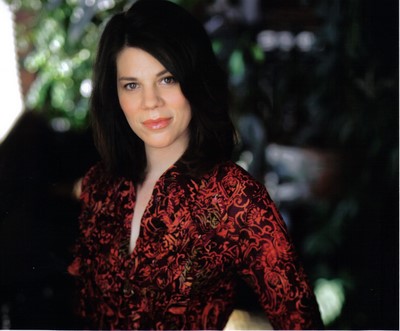
10 Questions for Robert Pomakov

Robert Pomakov is singing the role of Monterone in the Canadian Opera Company’s new production of Giuseppe Verdi’s Rigoletto.  I ask him ten questions: five about himself and five about the role.

1) Which of your parents do you resemble (what’s your nationality / ethnic background)?

Bass Robert Pomakov

Bass Robert Pomakov

My father (came to Canada from Bulgaria). No doubt that is where my musical gene came from (Bulgaria has a great tradition of music, and opera singers). However that being said, especially since my father’s death (5 years ago), my mother’s influence; especially her calm, thoughtful, pragmatic approach to life (from her upbringing in post-war Rochester, NY) have been an invaluable guidance towards my mindset and general contentment.

2) what is the BEST thing / worst thing about being an opera singer?

Best: Embracing my vocation. Worst: Thinking there is something better; there is not.

3) who do you like to listen to? (a favourite singer or performer…can be anyone or anything)

Classic Rock: Neil Young, CCR, The Band, to name but a few. New Orleans Jazz: Preservation Hall Band

4) what ability or skill do you wish you had, that you don’t have?

The ability to write music; I am a re-creative artist, I would love to be a creative artist.

5) when you’re just relaxing (and not working) what is your favourite thing to do?

Ride my motorcycle. Go to a baseball game (hopefully the Jays are on the field) and drink beer. Enjoying far too many pints with my friends at my bar and many other watering holes.

Five more concerning Monterone in Rigoletto.

1)how does this role challenge you?

Extremely difficult vocal writing; high tessatura, yet requiring grand, weighty, full throat sound.

2) what do you love about the part? Here’s a demonstration from a 2009 production in Croatia.

I command the entire stage, all the performers, the orchestra, and of course, the audience.

3) is there a favourite passage: something you’re looking forward to staging/singing?

The curse “Si maledetto” Is it said in complete, utter rage, or does he find joy in bringing someone else down knowing his own time is done?

4) how do you relate to the character as a modern man?

I do not have a daughter, yet I imagine “the modern man” would react if a man (the duke) treated his daughter in such a manner.

5) is there a recorded Monterone you particularly admire?

Monterone is usually cast as a baritone, though it really sings with a much darker voice. Kurt Moll, the schwartzest of all Schwartz basses actually recorded the role. That indicated to me it is a role I should not be afraid of.  Here’s an example of Kurt Moll’s singing from Mozart’s The Magic Flute.

Robert Pomakov continues as Monterone in Rigoletto until October 22nd, Four Seasons Centre.

And this week you can catch Pomakov as part of a free noontime concert Thursday Oct. 20th at Four Seasons Centre for the Performing Arts.  Titled “Love, Loss and Longingthe concert includes a new arrangement of Mussorgsky’s Songs and Dances of Death by Canadian composer Gary Kulesha with the Gryphon Trio, and Beethoven’s seminal song-cycle An die ferne Geliebte.

Posted in Interviews, Opera | Tagged , , | 1 Comment

Inside Job

I may sound a bit like Noam Chomsky with this one.

Here it is in the simplest terms from Democrat Alan Grayson.

WHY is this not being reported in the media?  i suppose the same reasons Grayson speaks of, such as the complicity of the GOP as well as that other party.  I mean it’s so strange to think that bank robbers go to jail, when the banker robbers –who more or less plundered us all –walk away without any kind of sanction or consequence.

I watched Charles H Ferguson’s documentary Inside Job again on the weekend.  When I saw it at the Toronto International Film Festival in the autumn of 2010 I was impressed.  And I was shocked at how little had happened as of September 2010.  As the film reports: the persons responsible for the various actions that collectively left the world economy in a shambles have so far paid no consequences nor even been called to account.

Inside Job

Inside Job: Charles Ferguson’s academy award-winning documentary

Now, over a year later, there are still no prosecutions underway, unless you count the charges laid against the Wall Street Protesters: individuals who probably feel as I do.

In 1929 the bankers were at least partly responsible for bringing down the economy.  Many people had purchased stocks on margin: that is, by putting down only a fraction of the cost, and then paying using their earnings.  When the stock prices dived in the autumn of 1929, bankers did the worst thing possible.  They called in the debts.  Given that nobody could pay, suddenly the banks themselves were vulnerable.

In 1929 it’s worth noticing how honourable people were, compared to their successors in 2008.  Bankers paid the consequences for their bad judgment.  Where defeated Roman soldiers fell on their swords, and dishonoured samurai committed seppuku, bankers jumped out of windows on Wall St: at least in 1929.

Nowadays? The game has changed.  As Inside Job documents, bankers not only sold risky debt as if it were safe, not only did the bankers profit from bad debt, not only did they play both sides (selling the debt products, as well as insuring them against failure), but in the end, some executives walked away with massive compensation even as the most vulnerable in society, such as pensioners, lost everything, on debt products with triple-a ratings.

It remains to be seen whether the protests on Wall St and elsewhere change the nature of the game.  In a free market society, banks would have taken the consequences for bad choices (even if that would have hurt everyone else as well); alternatively, if banks are rescued by government intervention, one might expect conditions to be attached.  In exchange for the new lease on life ( the mega-billions in bailout funding), one might have expected  regulations.   Wall St financiers are watching the protests outside, hoping that the motley assortment on the street blink first.

With every passing year Ferguson’s achievement via Inside Job looms larger and braver.  And one waits to see what consequence if any may follow.

Posted in Cinema, video & DVDs, Essays | Tagged , , , , | 1 Comment

Another Africa

Dienye Waboso as Beka

Shine Your Eye: Dienye Waboso as Beka (Photo by John Lauener)

The new Canadian Stage season begins with Another Africa, a program of two contrasting plays presented by Volcano Theatre that were part of The Africa Trilogy at Luminato Festival in 2010.  This is the first time I’ve seen them.

While the two plays are in some respects like yin and yang, so completely unlike one another, they have Africa in common.

Shine Your Eye is the shorter of the two, written by Binyavanga Wainaina, and directed by Ross Manson, Volcano Theatre’s Artistic Director.  Shine Your Eye revolves around Beka, the daughter of a famous martyred Nigerian activist.  Everyone seems to want something from Beka, whether it’s the woman she meets online, her boss, or the voice in her head.  Unexpectedly, the play explores virtual life through projections of webcam.  The all black cast bring authenticity, physical energy and remarkable vocal skills to this work.  Dienye Waboso was true to the company’s name, erupting with unquenchable energy, particularly in the final ten minutes of her magnificent portrayal.

Roland Schimmelpfennig

Playwright Roland Schimmelpfennig

And then, for something completely different, the second play after intermission is a manners comedy for two white couples.  Roland Schimmelpfennig’s Peggy Pickit Sees the Face of God (or “PPSFG “) takes awhile to get going.  In the first half hour, while I had laughed several times, I wondered if this was a light-weight piece, after the smoking hot intensity of the first work.

But I clearly underestimated what Schimmelpfennig was up to.  PPSFG concerns two couples –all four medical practitioners—who have been separated for six years.  One couple stayed in North America, had a child and gained a bit of weight as they became ever more prosperous.  The other went to Africa: and what happened there is a big part of why you should see the play.

PPSFG consists of two or three very distinctive types of conversation:

  • Superficial chit-chat, always striving to be friendly and positive, particularly when there’s something bad or painful to conceal
  • Soliloquy, where the action freezes while that person explains what they really feel
  • The frequent repetition of lines  we’ve heard before, (both the superficial ones and the serious ones) as the meaning gradually shifts over the course of the play
Ross Manson

Volcano Theatre Artistic Director Ross Manson

As I said, I underestimated the piece.  I was not alone in laughing at the lightness of the play in its first half-hour, but as PPSFG went on, as the repetitions acquired the additional depth of our anticipation of the by-now familiar lines, the audience was often silenced, only to erupt when a laugh-line released the pent-up tension.  I was reminded of a canon (such as Pachelbel) , stunning in the crystalline perfection of its construction.

Another Africa continues at the Bluma Appel Theatre until Oct 22nd.

Posted in Dance, theatre & musicals, Reviews | Tagged , , , , , , , , , , , , | 1 Comment

A Man’s World

Director Christopher Alden

Director Christopher Alden

I saw the new Canadian Opera Company production of Rigoletto directed by Christopher Alden tonight.  It makes a nice companion to the Robert Carsen Iphigenia in Tauris that premiered last week to such acclaim.  Both productions are like close analyses of each opera, taking us into worlds full of nastiness, while illuminating the characters and their predicament in startling new ways.

When a director modernizes an opera there are usually tradeoffs.  On the one hand, those who show up expecting to see the work done a particular way—often the most conservative members of the audience—will likely be upset given that the changes in the work will deny them their usual experience.  On the other hand the changes may remedy some of the objections people have concerning the work in question.

I’d never really noticed just how ugly Iphigenia’s Tauris actually was until Carsen held up a mirror to that ancient world.  While Carsen brought great clarity to that production, and coaxed fabulous performances from his two stars, I came away disturbed by the horrific violence I saw onstage.

Composer Giuseppe Verdi

Composer Giuseppe Verdi

In contrast, Alden’s Rigoletto left me feeling much better than usual.  Perhaps it’s because I know this work so well, having accompanied a sibling in the work literally for decades, wishing I could somehow manage to sing the Duke’s famous music even as I detest and loathe his character (grrrr boo hiss).  When I used to go see Rigoletto in the era of Louis Quilico (one of the greatest Canadian singers of all time) I cried gallons even though there were parts of his portrayal that were silly in the extreme, moments that would make me roll my eyes.  In spite of my resistance to his old-school approach, somewhere before the end of the first act I’d surrender, falling back in love with his version of the grotesque hunchback.   Mesmerized, I’d still quibble with melodramatic touches throughout, rarely satisfied with the entire whole, bothered by leaden moments in several places, the implausibility of the Act II abduction, and other weak moments in the story.  And somehow, I swear that every time, a little part of me would secretly hope that the giddy joy of “Si vendetta”, when Rigoletto vows to avenge his daughter, would bear fruit, that the detestable Duke would finally bite the dust.  And just like Rigoletto himself, when I’d hear the Duke’s last act offstage reprise of the familiar tune of “La donna è mobile”, I’d know the despair that somehow the monster had escaped justice, again (!).

Aha, you’re probably thinking I am one of those conservative viewers, who arrives demanding a particular approach…!

But no.  While  I did have a few pangs watching Christopher Alden’s Rigoletto –which diverges in several ways from the usual scenario- I bought it, even before I read the director’s notes, which totally helped everything fall into place.

The stylized portrayal is helpful this time, mitigating rather than emphasizing the nastiness.  As a result we are not really witnessing a tragedy, not watching Rigoletto struggle and almost escape his fate.  The magical space where the action takes place is redemptive in the sense that no one is held responsible.  This world is a colossal trap, and both Rigoletto & his daughter Gilda are caught by it.  There’s no pathos, no sympathy when the hunchback sings his great third act aria; but watching the aria sung in front of an implacable group of courtiers (even Marullo is a jerk in this one, a stretch for Adrian Kramer by the way), our hearts are moved in a different way.  And it works.

I found I wasn’t quibbling about performances because the characters were in this strange place where I was riveted by their surroundings, the fascinating reverberations of Alden’s reframing of the story, sometimes making actions more pathetic, sometimes bringing an odd sort of humour to the proceedings.  Everything transpires in The Club: the place where the men go to carouse, where the Duke has his secret assignations, where Rigoletto goes to work, denying his humanity, and where ultimately the Duke is unassailable.  His infernal good luck that saves him is somehow less objectionable when placed inside this charmed circle. I don’t feel quite so cheated, not so thwarted, as when the Duke escapes in a more naturalistic production.

Baritone Quinn Kelsey

Baritone Quinn Kelsey

If I do have a quibble –and I express it as a technicality because this did not hamper my enjoyment—it was in the overall level of the voices.  Only Quinn Kelsey in the title role brought the appropriate Verdian voice to the production.  As I’ve never seen a Rigoletto so capably impersonate a hunchback, a man whose acting overcame his obvious youth, I wonder if I was distracted  by the stunning vocalism.  Rationally he couldn’t have been Gilda’s father (he looks like her younger brother come to think of it): but who cares? He sang and acted superbly.  The other performance of note was Philip Ens’ Sparafucile, the hired killer, channelling a weird mix of Johnny Winter and Paul Williams, except that this aging rockstar still has lots of voice.

The COC chorus and orchestra led by Johannes Debus were spectacular throughout, Debus taking some wonderfully lively tempi throughout.

Rigoletto continues at the Four Seasons Centre –with an alternate cast debuting Friday Sept 30th—until October 22nd.

Posted in Opera, Reviews | Tagged , , , , | 2 Comments

Reinhardt’s first and last film

Max Reinhardt

Director Max Reinhardt

The 1935 Warner Brothers A Midsummernight’s Dream (AMSD) directed by Max Reinhardt, is one of my favourite films.  This week I will once again get the pleasure of including it in my film music course.

If wishes were horses beggars would ride.  Ambition is another kind of wish, particularly when encapsulated in PR.  AMSD never seems to live up to the hype of the eight minute promotional film short (see immediately below: click on it to see it on youtube), because its chief ambition was not about box office success but prestige for Warner Brothers, who believed they had an image problem as purveyors of gangster pictures.


Talk about a strange and eclectic mix.  Reinhardt aims high, with his powerfully symbolic style, including two long and contrasting set-pieces.  Each one features long extended musical passages from Felix Mendelssohn’s incidental music for the play, arranged by Erich Wolfgang Korngold (his first Hollywood film job), choreographed by Nijinska.  Where the first is sweetness & light centring on Titania, the second, much darker, centres on Oberon.

But just when you thought you were seeing high art, there are casting choices so blatantly commercial as to mock the artistic pretentions of the project.  Joe E Brown never seems very Shakespearean, nor does Dick Powell.

Yet knowing about this conflict between Reinhardt’s lofty goals and a conservative industry, one can’t help but be exhilarated when it works.  For example, James Cagney & Mickey Rooney manage to transcend their famous personas, each bringing something extraordinary to the film.  Victor Jory, whom you may remember for his skulking carpet-bagger villainy in Gone With the Wind stands tall as Oberon for Reinhardt, a dark contrast to Anita Louise’s sweet Titania.

I’ve read several analyses that find strengths and weaknesses in the film, but am especially fascinated by the historical subtexts.  AMSD would not be seen in Germany until long after the war, because the Nazis banned it.  Was that due to the Jewish content (Mendelssohn, Reinhardt and Korngold oh my… )?  Or maybe it’s the subtle allusions to the Nazis right in the film (they can’t have liked that).

In that second set-piece, notice the following iconography (NB since I posted this, I had to find a different video example):

  • the spectre-like figures in black enter to music sounding more like Wagner than Mendelssohn (just before the video begins)
  • Oberon stands before a crowd resembling the Nuremburg rally captured in Riefenstahl’s Triumph of the Will, filmed over a year earlier. (as the video begins)
  • The black figures force everyone else (fairies and elves) into a mass migration resembling refugees fleeing an invasion. (just before this video) While this last image is perhaps premature given that the Nazis’ handiwork largely lay in the future, yet at the very least the image is prescient, given that both composer Korngold & director Reinhardt would have to flee the Nazis.

Of course the allusions are very subtle.

Miraculously, three of the key figures from this 1935 feature are still alive as of September 2011 :

  • Mickey Rooney (born 1920) who played Puck
  • Olivia Dehavilland (born 1916) who played Hermia
  • Nini Theilade (born 1915) the lead dancer in the two set pieces.

While the film is something of a cul-de-sac, the first and only film by Reinhardt, it’s a great pleasure for me to look at the film, so full of contradictions.   I don’t know that it can be thought of as influential, but it’s still a personal favourite and an interesting site for study.

Posted in Cinema, video & DVDs, Essays | Tagged , , , , , , , , , , , | 2 Comments

Carsen’s Iphigenia

Iphigenia at the COC

Iphigenia at the COC

Robert Carsen has once again held up a mirror to an opera by Gluck with the help of the Canadian Opera Company.  Last season it was an award winning production of Orfeo ed Euridice.  Tonight I saw Iphigenie en Tauride, which the COC are calling “Iphigenia in Tauris” perhaps to emphasize the connection to Athenian tragedy.

The result is even more intense than last year.

I don’t think I realized how dark this opera is.  Or maybe it’s just that when everyone is singing, the drama is concealed or mitigated somehow; how could I miss it?  When everything is sung one can sidestep the gore and dysfunction that are the lifeblood of Athenian tragedy.  Iphigenia is in a most ironic position.  Rescued by the gods just as her father Agamemnon was sacrificing her, her new life as a priestess requires her to sacrifice others to the Gods.

We’re accustomed to portrayals of Orestes as a haunted man, pursued by the furies for having killed his mother Klytemnestra (avenging his father).  Carsen gives Iphigenia her own furies, dancers who sometimes seem to be the helpers in the temple.   In a world of bloody rituals divorced from anything spiritual or holy, the faithful attendants are every bit as scary as furies.

Carsen’s emphasis is decidedly psychological, with larger than life gestures taking us inside the protagonists’ painful conflicts.  Iphigenia is tormented by her role in the temple, while Orestes is haunted by memories of what he’s done.

Diana rescues Iphigenia, taking her to faraway Tauris where she presides over ritual executions.  While this might have seemed like a fair exchange in the ancient world, Carsen makes it clear just how cruel this fate is.  From the first moment Iphigenia is haunted, pursued by reminders of what she is living with at every moment.  This insight from Carsen is especially useful to counterbalance Orestes, the other haunted figure of this story.

Two wonderful portrayals come to life on the bare dark stage of the Four Seasons Centre.  Susan Graham takes us deeper into Iphigenia than I thought possible, a portrayal of strength and nobility.  I have never really liked this character so much as I did tonight, but Graham took me so deeply into her anguish that I see the character differently.  By surrounding Graham with stark reminders of Iphigenia’s actions (via the dancers), her solos were given more transparency than usual.

I had expected to like Russell Braun’s Orestes, and he did not disappoint.  I had been a bit nervous because other productions I’d seen sometimes play up the homoerotic subtext between Orestes and his friend Pylades.  Yet although they are willing to die for one another, this was a dignified and serious presentation that did not go off on that particular tangent, nor any other.

Iphigenia

Susan Graham as Iphigenia (Photo Credit: Robert Kusel © 2006)

It’s not just a metaphor to say this is a dark production.  With all the dancers enacting and re-enacting ritual killing, I’d say this is the largest number of deaths I have ever seen on a stage in a single performance.   Even at the end, when I thought we’d see something more celebratory, Carsen chooses to keep the focus on the internal state of his protagonists rather than show us a happy world: because come to think of it that would mock all the death we’ve seen so far.  The ending is somewhat open (and i will have to think about what it might mean) as we contemplate where these figures shall wander next.  They do not seem fully reconciled to one another, although at least their tormenters — the furies who have been hounding them– are all dead.  I find myself wanting to go back to the beginning, to explore the cycle anew: in other words, to go see it again.

Iphigenia in Tauris plays at the Four Seasons Centre until October 15th.

Posted in Opera, Reviews | Tagged , , , , , | Leave a comment

Glass’ Film Music

Philip Glass

Composer Philip Glass

I heard  “The Film Music of Philip Glass,“  a concert last night by the  Manitoba Chamber Orchestra at the intimate Glenn Gould Studio conducted by Anne Manson with Michael Riesman, piano soloist.  The concert was recorded for a CD that I am looking forward to obtaining, in order to allow me the pleasure of hearing this music again.

Although Glass has an enormous number of projects listed on IMDB   he has yet to win an Academy Award, and is not known for film music, or at least is not synonymous with film music, the way we might observe of  such big names as  John Williams or Danny Elfman. But then again Glass came to Hollywood via artistic rather than commercial pathways; he reminds me of another serious artist who achieved mainstream success, namely Bernard Herrmann, who dreamed of the kind of legitimacy as an opera composer that is Glass’ calling card.  This season for example, the Metropolitan Opera will include Satyagraha, a revival of an earlier production of one of his ‘portrait operas’ in its high definition broadcasts.

The concert opened and closed with a work for piano and orchestra based on a film.  The “Suite from Dracula” goes with the 1931 film, while the “Suite from The Hours” is based on cues in Glass’ 2002 score for the film, assembled at least partly by Michael Riesman, the soloist on this occasion.  In between was Glass’ Symphony #3, a composition whose connection to film is unclear to me ; but then again, perhaps that will be explained in the CD’s liner notes.

Riesman apologized that he forgot to give his introduction to the Dracula music, perhaps mesmerized by the warm applause with which he was greeted.  I wish I had seen Dracula with Glass’ music, so that I might have a better idea how it’s meant to work.  As a stand-alone composition I was unconvinced, finding the music insubstantial, but pleasant: which is probably all one can ask of film music.

Manson & Glass

Conductor Anne Manson with composer Philip Glass

For me the highlight of the evening was Glass’ Symphony 3,  a work that demonstrated the strengths of the orchestra and its relationship with conductor Manson.    Over the years I have been a bit in awe of Glass’ compositions in performance, which are daunting in their requirement of a strict meter that neither accelerates nor drags, played meticulously.  When I think back on all the Glass I’ve heard (and it’s a lot, going back to a concert in 1977, the North American premiere of Satyagraha in 1981, his score for La Belle et la Bête, films such as Koyaanisqatsi, Mishima as well as many more recordings I obtained) the requirement of precision represents a particular kind of virtuosity that may dazzle yet also puts a kind of strait jacket over the performance.  Glass himself remarked –at the time of his Metropolitan Opera production of Satyagraha– that he welcomed new approaches and interpretations of his work; if so I believe Glass would be thrilled with the original approach Manson brings to these works.  In a nutshell, she relaxes the strait-jacket.  The solos have the wonderful give and take one usually finds in a concerto of Mozart or Beethoven, where one allows the piece to have an organic shape rather than observing the crystalline tyranny that one finds in the performances by Glass’ own ensemble.  One doesn’t argue with the composer, but then again, sometimes a new interpreter can bring something fresh to the table.

The third movement of the Third Symphony is an especially wonderful creation, whose origins are explained somewhat by the composer.  The key movement is the third one, whose construction reminds me a bit of Pachelbel’s canon, building from a simple core in the first passage to more and more elaborate construction of solo lines over top, as you can hear in this performance.  Manson and the Manitoba Chamber Orchestra achieve a wonderfully delicate balance in the intimate confines of the Glenn Gould Studio.

Here’s an example of that wonderful third movement from youtube: 

Finally, Riesman returned for a piano concerto based on the music in The Hours.  Some time over a hundred years ago composers were taken captive by the collective notion that the audience prefers a display of skill from the pianist.  For the longest time, no one was willing to write any other sort of concerto, perhaps afraid to fail in a kind of test of their manhood.  While no one measures such things, as far as virtuosity is concerned Glass has written a concerto that is mostly under the hand, rarely very fast and wonderfully lyrical without being taxing.  Of course that ship –classical compositions with any kind of audience—has all but sailed, so that by now, there are no rules, no requirements really.  Glass gave us something beautiful, tuneful, and Riesman gave the authoritative reading.

Now I am impatient to get my hands on that CD…(!)

Posted in Cinema, video & DVDs, Reviews | Tagged , , , , , , | Leave a comment

This is how the world ends

Bela Tarr

Film-maker Bela Tarr

I saw The Turin Horse directed by Béla Tarr at the Toronto International Film Festival.

Tarr says it’s his last film.  This is no warm farewell like Fanny & Alexander(Ingmar Bergman’s last film) or The Tempest (Shakespeare’s last play).  It’s dark, so dark that it makes The Seventh Seal look like a Simpsons’ episode.

Like Seventh Seal it’s allegorical, and perhaps a bit heavy-handed.  I think we forgive a film-maker for being obvious when he has something important to say.

The world we see in The Turin Horse is a world of people who are all takers.  A man beats his horse: purportedly the same horse Nietzsche saw beaten before he went mad.

Mankind is not shown in a very sympathetic light in Tarr’s valedictory.  Nature has been abused to the point that the land is a barren wasteland, such as we’d find in King Lear.  There is no kindness or gentle feeling, only exploitation, cruelty, ethnic hatreds (just in case what we’d already seen weren’t enough!) and a kind of desperation underlying everything.  While it sounds somewhat pointless to read in this synopsis, the 146 minute experience is stunning in its cumulative effect on a big screen.  Although one can see where it’s going, that’s also true of a good book or symphony.  The inevitability only adds weight to the effect.

The score by Milhály Víg is like obnoxious Philip Glass: which is to say it has repetition without variety, only suggesting futility and defeat, and none of the meditative calm one feels from Glass: which is surely a deliberate effect.

In the talk-back session afterwards Tarr told us what’s missing from that mythological world of his film, as he spoke of his desire to work with young film-makers, possibly founding a school for young film makers.  He wants to be the “umbrella” under which they shelter.  He spoke of the need for tenderness.

TIFF logoTenderness, of course, is precisely what’s missing in this world he showed us, a world that beats its horses, while sucking an entire world dry.

The Turin Horse repeats at TIFF on Sept 16 and 18th.

Posted in Cinema, video & DVDs, Reviews | Tagged , , , , , , , , , | Leave a comment

Louÿs the poet

Pierre Louÿs

Poet & novelist Pierre Louÿs

I am following up yesterday’s post on Aphrodite and Mary Garden because of something I found via Google books.  I made an assertion yesterday off the top of my head; upon further reflection i realized i had no idea, but was functioning entirely on instinct.  Having said Aphrodite was no longer being produced (and that assertion appears to be correct), I looked for someone to back me up OR to perhaps contradict me.

God Bless Richard Langham Smith and Caroline Potter, for more or less confirming my blind assertion in their book French Music Since Berlioz.  But when I looked at what they’d said, I was somewhat surprised.   Here I was, worrying about my accuracy, and BOOM, one of the authors of that book(Smith or Potter) confused two different works by Louÿs. Does anyone care? perhaps not.   Okay I am a nerd, guilty as charged. But I thought it’s a great departure point to speak about musical adaptations of the works of Pierre Louÿs.

Yesterday we looked at Aphrodite, admittedly giving it short shrift(but also a link to the score if you want to read through it).  Here’s the quote from Smith/Potter, which serves both to address Erlanger’s operatic adaptation of the novel, as well as a segue to another work.

Camille Erlanger’s Le juif polonais had enjoyed some success at its premiere in 1900 but his Aphrodite, based on a series of gently pornographic prose poems by Debussy’s friend Pierre Louÿs became a lavish and celebrated spectacle as had his teacher Delibes’s Lakme with which it shares at least exoticism. (Smith/Potter)

Of course the error is especially ironic considering the reference to Debussy, the friend to Louÿs.  The poems by Louÿs were the Chansons de Bilitis, a remarkable piece of literary fraud.  Louÿs claimed that he had found antique writings that he purportedly translated; but of course he’d written it all himself, using the framing story to lend his poetry an additional aura.  Debussy would set three of the Chansons de Bilitis, and later write chamber music for the songs.   Potter/Smith accidentally conflated the poems with Aphrodite, which is a novel, rather than a series of poems.

While we’re at it, let’s hear one. Here’s the text followed by a translation:

La Flûte de Pan

Pour le jour des Hyacinthies,
il m’a donné une syrinx faite
de roseaux bien taillés,
unis avec la blanche cire
qui est douce à mes lèvres comme le miel.

Il m’apprend à jouer, assise sur ses genoux ;
mais je suis un peu tremblante.
il en joue après moi,
si doucement que je l’entends à peine.

Nous n’avons rien à nous dire,
tant nous sommes près l’un de l’autre;
mais nos chansons veulent se répondre,
et tour à tour nos bouches
s’unissent sur la flûte.

Il est tard,
voici le chant des grenouilles vertes
qui commence avec la nuit.
Ma mère ne croira jamais
que je suis restée si longtemps
à chercher ma ceinture perdue.

The flute of Pan

For Hyacinth Day
he gave me a syrinx, pipes made
from well-cut reeds joined
with the white wax
as sweet to my lips as honey.

He is teaching me to play, as I sit on his knee;
but I am shaking.
He plays it after me, so softly
that it’s an effort to hear.

We have nothing to say to one another
being so close to each other.
but our songs want to answer,
and turn after turn our mouths
meet on the flute.

It is late:
here’s the song of the green frogs,
that begins at twilight.
My mother will never believe
I spent so long
searching for my lost waistband.


And so we’ve distinguished between the Chansons de Bilitis, which are poems –set by Debussy, not Erlanger– and the novel Aphrodite, set notoriously by Erlanger, and largely forgotten in our own time.  Here’s a bit of an epitaph for the opera from Smith/Potter:

Despite its success, Aphrodite seems to have been written out of operatic history relatively early on: Henry Malherbe, in his important survey of the repertoire of the Opera-Comique, gives it scant attention alongside works which enjoyed considerably less success, although he does give us one picture of an empty set.  He attributes its popularity largely to the basis of its libretto, which fantasises upon female goings-on around the temple of Aphrodite. (Smith/Potter)

Now I feel better.

Posted in Essays | Tagged , , , , , | Leave a comment

Fleeting fame

Mary Garden as Melisande

Mary Garden, the first Melisande

I held a piece of history in my hands. And then after keeping it a few days overdue, I returned it to the library.

I am speaking of a score for an opera signed by its composer.  The opera?  Aphrodite, adapted from the novel by Pierre Louÿs.  The composer?  Camille Erlanger. 

photo of autographed score

photo of autographed score

Nobody had taken this score out of the library since they began barcoding some time ago (perhaps in the 1990s?).  I know that because when I took it out, they needed to put the barcode on the book. I wondered how long it had been since the previous withdrawal.

To my knowledge nobody has staged this opera in a very long time.  But it did very well at one time.  According to Stéphane Wolff’s Un Demi-Siècle d’Opéra Comique, chronicling the works staged in the first half of the 20th century at one of Paris’ opera houses, the opera was staged 182 times, which is more than Gluck’s Alceste (37), Ravel’s L’Enfant et les Sortilèges (30), Faure’s Pénélope (63), and the single performance of Debussy’s La Demoiselle Élue,(it’s not actually an opera, although it served as a vehicle for Mary Garden): but still short of the 343 performances afforded to Pelléas et Mélisande.  

I played through much of the score and was not impressed (see for yourself).  Perhaps it would make more sense to me –and appeal to my ear– if I were reading through it in 1911 rather than 2011.  I confess that the idiom of this work leaves me cold.  It may sound cynical to say that the subject matter and its star had more to say about its success than the quality of its score. Like Pelléas et Mélisande, it starred Mary Garden, a soprano with exraordinary stage presence.  I get the impression from reading between the lines of Garden’s memoir Mary Garden’s story (a self-serving document) that Debussy was smitten with her, for example. Without her special magic to bring the opera to life, the score seems particularly lifeless.

Camille Erlanger

Can anyone hum this man’s music nowadays? His name: Camille Erlanger

I chanced upon Aphrodite, looking at scores by Erkel, the Hungarian opera composer of Bánk Bán and Hunyadi László.  “M1503” is the call number for piano vocal scores.  The scores are then organized alphabetically by the last name of the composer.  “Erkel” was filed just before “Erlanger.”  When my eye fell on the title –Aphrodite –I almost fell over.  I had to have a look to confirm that this was what I hoped it might be: the Louÿs story.  And so I took it out. 

I suppose I should explain the reasons for my excitement.

  • I’ve been researching Pelléas et Mélisande, Debussy’s opera that premiered in 1902.  Erlanger’s Aphrodite dates from 1906 in the same opera house. 
  • Both operas starred Mary Garden. 
  • Pierre Louÿs, who wrote the novel from which the opera was adapted, was at one time Debussy’s best friend. 
  • Long before I ever began researching Debussy a friend handed me a novel saying that it would make a great opera.  The novel was Aphrodite by Pierre Louÿs.  Now in fact while it’s an unforgettable novel, I was somewhat daunted, unable to imagine how to bring this flamboyant tale to the stage, particularly as far as imagining Chrysis or Demetrios (the protagonists) singing.  It certainly helps when you have a seductive leading lady such as Mary Garden, as they had for the 1906 Paris production.  I did finally find a way to stage it –without any singing—in the 1990s, very different from what Erlanger did, especially in the number of performances my version got (cue the laugh-track). 

But you see why I had to look at the score, seeing how the novel had been adapted.    

The one interesting thing about the score was Erlanger’s signature on the frontispiece.  It’s downhill from there.  Perhaps if i heard a performance i might feel differently.  But i wonder if anyone will hear this opera again.

Even so, it felt remarkable to hold the score for an opera performed so many times, signed by the composer.  I finally relinquished my little piece of history, returning it to the library where it will likely again sit untouched and forgotten on the shelves for years.  Sic transit gloria mundi.

Posted in Essays, Opera | Tagged , , , , , , , , , , , , | 4 Comments