Three Oppenheimers

No one left the IMAX theatre for the three intense hours of Christopher Nolan’s Oppenheimer.

Nightmare images that night reminded of my childhood, portents of the end of the world as I tossed and turned.

Kai Bird and Martin J Sherwin, the two authors of the Pulitzer Prize winning book American Prometheus collaborated with Christopher Nolan on the screenplay, which should guarantee accuracy.

Is that all we need for a great film? There’s something crucial missing for me.

I can’t help putting Nolan’s Oppenheimer alongside the other two great works in my head pertaining to J Robert Oppenheimer. One is Doctor Atomic (2006), the opera with libretto by Peter Sellars and music by John Adams. The other is Roland Joffé’s Fat Man and Little Boy (1989), a film co-written by Joffé and Bruce Robinson with music by Ennio Morricone.

I strive always to be positive, so maybe if I speak of what I love from Adams/Sellars and Morricone/Joffé/Robinson, perhaps I will understand why I’m unhappy with what Nolan/Bird/Sherwin have done with academy award winning composer Ludwig Göransson, whose work I loved just a few weeks ago in Black Panther. As I re-play samples of his music via youtube I am both impressed yet left cold, as that’s perhaps my predominant emotion. There needs to be something more in a three-hour film. I think there’s something literal-minded and sterile in Oppenheimer. Yes we know the atomic bomb is lethal, that the H-bomb that much worse. Oppenheimer has a lot more to him than what we see in this film, and I point to Adams and Morricone, who managed to make more human portraits of Oppenheimer than what we get in the new film. Yes it’s big and loud and supposedly authentic, yet that’s not really the only criterion for a biography.
I’m reminded of the two version of Otello, one by Rossini, one by Verdi. Neither of them presents all of Shakespeare’s story and each one distorts elements of the plot: but in the interest of moving us, making us cry, making us care. That’s what I miss in Nolan’s film, and I will illustrate by looking at Adams and Morricone.

We know that Oppenheimer called the test site “Trinity” via a John Donne sonnet.

Batter my heart, three-person’d God, for you
As yet but knock, breathe, shine, and seek to mend;
That I may rise and stand, o’erthrow me, and bend
Your force to break, blow, burn, and make me new.
I, like an usurp’d town to another due,
Labor to admit you, but oh, to no end;
Reason, your viceroy in me, me should defend,
But is captiv’d, and proves weak or untrue.
Yet dearly I love you, and would be lov’d fain,
But am betroth’d unto your enemy;
Divorce me, untie or break that knot again,
Take me to you, imprison me, for I,
Except you enthrall me, never shall be free,
Nor ever chaste, except you ravish me.

The best thing Sellars and Adams do is to make this sonnet into an aria sung by Oppenheimer at the end of the first act of the opera. Here’s Gerald Finley singing the aria. Sellars takes the words that might seem most pertinent to an atomic bomb namely “break blow burn” and repeats them for extra emphasis.


There’s nothing in the entire 3 hour movie as powerful as this.

I’m intrigued lately with melodrama, a form that keeps reasserting itself in various places such as the Shaw Festival production of The Shadow of a Doubt that I saw recently. If we accept that the essence of melodrama is music with words, and a lack of agency for the principals, we can’t help noticing how melodrama persists in our culture in new guises. The aria Finley sings is passion without agency, not so very different from the despairing tone of the Miserere in Il Trovatore from the middle of the 19th century.

Ennio Morricone is one of my favorite composers of film music. He often creates set pieces within a film that lend themselves to concert excerpts, not unlike the way arias get excerpted from opera. Morricone’s music from The Mission, another collaboration with Joffé, also has several such set-pieces. Morricone’s music for The Untouchables (1987) has a few recurring themes that director Brian de Palma employs for brilliant effect. There’s a heart-rending melody we hear when Sean Connery’s character Jim Malone is dying that recurs later when Eliot Ness (Kevin Kostner) gives Malone’s lucky medallion to the new guy (Andy Garcia) who will carry on, a stunning moment. There is also a theme of triumph heard in the courtroom when justice is done, that we hear again as the film ends.

But let me keep the focus on Oppenheimer by looking at a film I regularly see under-rated, even dismissed, Joffé’s Fat Man & Little Boy. I’ve watched it three times this year, and will probably watch it again this week after writing this. No it is not as accurate as Nolan’s film, but then again I enjoy Verdi’s Otello more than most productions of the Shakespeare play even if it departs from the original text. I think fidelity is over-rated. I’d like to offer a quick comparison on a few fronts, just to suggest why I’d prefer the 1989 film to the 2023 one.

General Leslie Groves is the powerful figure behind the creation of the atomic bomb, portrayed by Matt Damon in the current film and Paul Newman in Joffé’s film. Damon is closer in size, given that Groves was actually 6’3” and over 230 pounds. But Joffé and Robinson suggest that Groves is really in control, subtly manipulating Oppenheimer with his secret love-life and political affiliations, verging on blackmail. The recent film may be accurate but we don’t get the same sense of Groves as the power behind the project, indeed Damon’s portrayal is kind of light-weight compared to the nasty fervor Paul Newman gives us. This profile of Groves from the Atomic Heritage Foundation suggests that Newman’s portrayal was if anything too gentle, and that his importance is under-estimated.

Jean Tatlock is the other woman in Oppenheimer’s life, a lover with whom he met even after the beginning of the Manhattan Project. There’s a quote I saw on IMDB that suggests how wrong the new film is.
J. Robert Oppenheimer : Why limit yourself to one dogma?
Jean Tatlock : You’re a physicist. You pick and choose rules? Or do you use the discipline to channel your energies into progress?
J. Robert Oppenheimer : I like a little wiggle room. You always tow the party line?
Jean Tatlock : I like my wiggle room, too.

I read the phrase “party line” in terms of Tatlock’s politics, her association with the communist party. It’s a very 21st century reading, that seems deaf to the realities of the 1930s, when one might have sympathy for the cause of the Spanish Civil War or a trade union without actually being a card-carrying member of the communist party. Yes in the 1950s we have a full-out red scare and black-listing of people in the entertainment community like Zero Mostel or Dalton Trumbo. In the new film it’s hard to see that there’s anything between Tatlock and Oppenheimer, even if he does have sex with her. It’s rather clinical in its presentation of her suicide. I don’t think I like this version of Robert Oppenheimer, he’s not very nice.

On the other hand, there’s the way Morricone, Joffé and Robinson approach Jean Tatlock who becomes a symbol in the film, and for me seems far closer to the likely reality of how she figured in Oppenheimer’s life. Portrayed by the luminous Natasha Richardson, she is a beautiful reminder of an earlier chapter in Oppenheimer’s life, and this time yes he’s smitten, and no wonder. He may have moved on to Kitty (Bonnie Bedelia in this film, Emily Blunt in the newer film), but Tatlock has a special place in his heart. I think Joffé would say that the Oppenheimer who knew her earlier was more idealistic, that he has now sold out in a sense through his relationship to the project. When he gets the letter that she has died we hear her theme.

She has killed herself and it feels as though part of Oppenheimer dies too. No it may not be accurate, although it’s emotional music with a powerful impact. I’d rather have the romantic music of Morricone trying to suggest a deeper meaning, and a conflicted Oppenheimer than the creepy cold approach of the new film, that’s never fully alive in the first place.

Bodelia’s Kitty and Newman’s Groves see eye to eye in their pragmatic understanding of Oppenheimer. She’s drinking heavily, he’s rolling his eyes, yet each gets what they want.

It’s a rather powerful moment whether or not it’s in any way verifiable. But this is what I love in this film, that we’re seeing real human interactions that make sense. We will later see the triumphant reception in America when the war ends, and watch how Leslie Groves (Newman) quietly sees Oppenheimer sucking up the acclaim for his success, loving his celebrity.

Robinson & Joffé create a fictional character who might be the star of the film, my favorite character. Michael Merriman is portrayed by John Cusack, a scientist who also plays baseball and goes riding with Oppenheimer. He has a bad habit of rushing to rescue people without considering his own safety, which works okay the first time we see it (and gets him the attention of a nurse played by Laura Dern), but will lead to his death, when an accident during a test with a radioactive isotope gives him a fatal overdose of radiation.

No we won’t see what happens in Japan when the bombs are dropped, but we do see what happens to Michael, giving the film some balance and extra commentary on the project. Michael has been writing a diary that is a premise for his narrating chunks of the film. But our narrator is going to die.

I realize in hindsight (meaning something that hit me in the night) that although I’ve titled this “Three Oppenheimers” I only spoke of one, namely Gerald Finley. I said nothing about either Cillian Murphy (our 2023 Oppy) or Dwight Schultz (from the 1989 film). I recognize that the picture immediately above, showing the cover of Fat Man & Little Boy tells you something about that treatment of the story: that Paul Newman as General Groves was really the star, which works for me. Cillian Murphy may have given a brilliant performance of the lines he was given but I found him to be a cipher, an enactment of a mathematical concept, which is another way of saying, I really don’t get who he is in this film. Perhaps that’s true to the Pulitzer Prize-winning book, which seems to work very hard at being accurate (at least so far in my reading). I will have to watch Oppenheimer again, and perhaps that will alter my opinions. I’ll be seeing the Joffé film again in the next couple of days, perhaps Wednesday.

I think I prefer melodrama in my films. I love the Star Wars films, the Lord of the Rings films, Tim Burton’s Batman films, the best science fiction such as 2001 or Blade Runner, all of which employ music for the most brilliant moments. I’m sad to see that this seems to be increasingly rare. While there’s powerful music in the Christopher Nolan Batman films (that I like), the music isn’t melodramatic but more subtly supportive of the film. It means that when you hear excerpts of the score later , for instance in a concert, you’re not moved the same way. Similarly Göransson’s music for Oppenheimer is as subtle as the film.

Posted in Books & Literature, Cinema, video & DVDs, Opera, Reviews | Tagged , , , , , , , , , , , , , , , , , , , , , , | Leave a comment

The view from The Inn at Lock Seven in Thorold

Watching boats from the Inn at Lock Seven? Our friends Jim and Louise gave us the idea.

You must have heard that ships are able to travel inland as far as Chicago or Minnesota.

But how do they get past Niagara Falls? The Welland Canal. Google tells me that over 3000 ships pass through the canal each year. It’s closed for the winter, roughly from December to March, when they do necessary maintenance. In the remaining nine months of the year, that’s 3000 ships in 270 days or on average over ten per day.

It’s a thin ribbon of blue on the map, more or less parallel to the Niagara River, ten or more kilometers west, given that the canal is fairly straight north-south, while the river meanders a bit.

That’s what’s so cool about a place like The Inn at Lock Seven.

It’s rather transparent in its purpose, a series of rooms close to the canal giving us a terrific view of the vessels passing nearby on the water.

Every room has a great view, looking directly upon the canal.

We saw the Bluebill, a 200 meter-long container vessel famous for having knocked out a railway bridge in Panama in 2020. And no wonder, when you see what the huge ship looks like up close.

At first it was high in the water, the bridge structure like a big apartment building. (not shown in the picture, because it was over 150 meters away).

There’s not much visible. If the pictures look inept it’s because I was in a state of shock, overwhelmed by the massive ship. I couldn’t get all of it into the picture..

Then –doing what they do in canals—it slowly sank lower as they adjusted water levels for the next lock, the massive thing concealed.

As it finally moved on you could hear its engine throb.

It’s shocking to see something so big up close that moves.

There were several ships, including one named the Beatrix, with the company name “Wagenborg” emblazoned on the side, ownership via Sweden. While the Bluebill went from right to left, or in other words, northwards towards Lake Ontario (and I saw online it had come from Thunder Bay earlier in the week, destined for Montreal the next day), the Beatrix went left to right or in other words, southwards towards Lake Erie.

I can’t imagine the complexities of handling the traffic, the bridges over the canal that sometimes open for big ships, the water pumped into or out of the locks, to enable so many ships to travel through, except to remember that our supply chain logistics sometimes depend on the workers manning these facilities. I’m grateful.

I saw that there are apps and websites offering information for nerds who want to drill down on each vessel, to know where they’re going, what they might carry, who owns them and lots more besides.

In the meantime while in Thorold I drove to a show at the Shaw Festival, reviewing The Shadow of a Doubt by Edith Wharton, roughly twenty minutes drive. While I love Niagara-on-the-Lake, the place Erika and I went on our honeymoon and several holidays besides, it has become expensive both for accommodation and the various shops and restaurants one requires to survive. While the Inn isn’t spectacular by any means, it’s reasonably priced, with its Spartan furnishings the tv, and wifi serving this nerd quite well, and the little refrigerator holding the food we brought along for our short stay.

Thorold offers some lovely alternatives. We had dinner at Karma Kameleon Gastropub. I had the “Nashville Hot Chicken Sandwich“, meaning spicy and delightfully slippery as I dared to pick it up, while Erika had the lobster grilled cheese sandwich, plus local brews (mine by Muskoka) and coffee after. There were some cool desserts I was too full to attempt. We saw a couple of other intriguing places to check out next time: in September.

Posted in Art, Architecture & Design, Personal ruminations & essays | Tagged , , , , , | 4 Comments

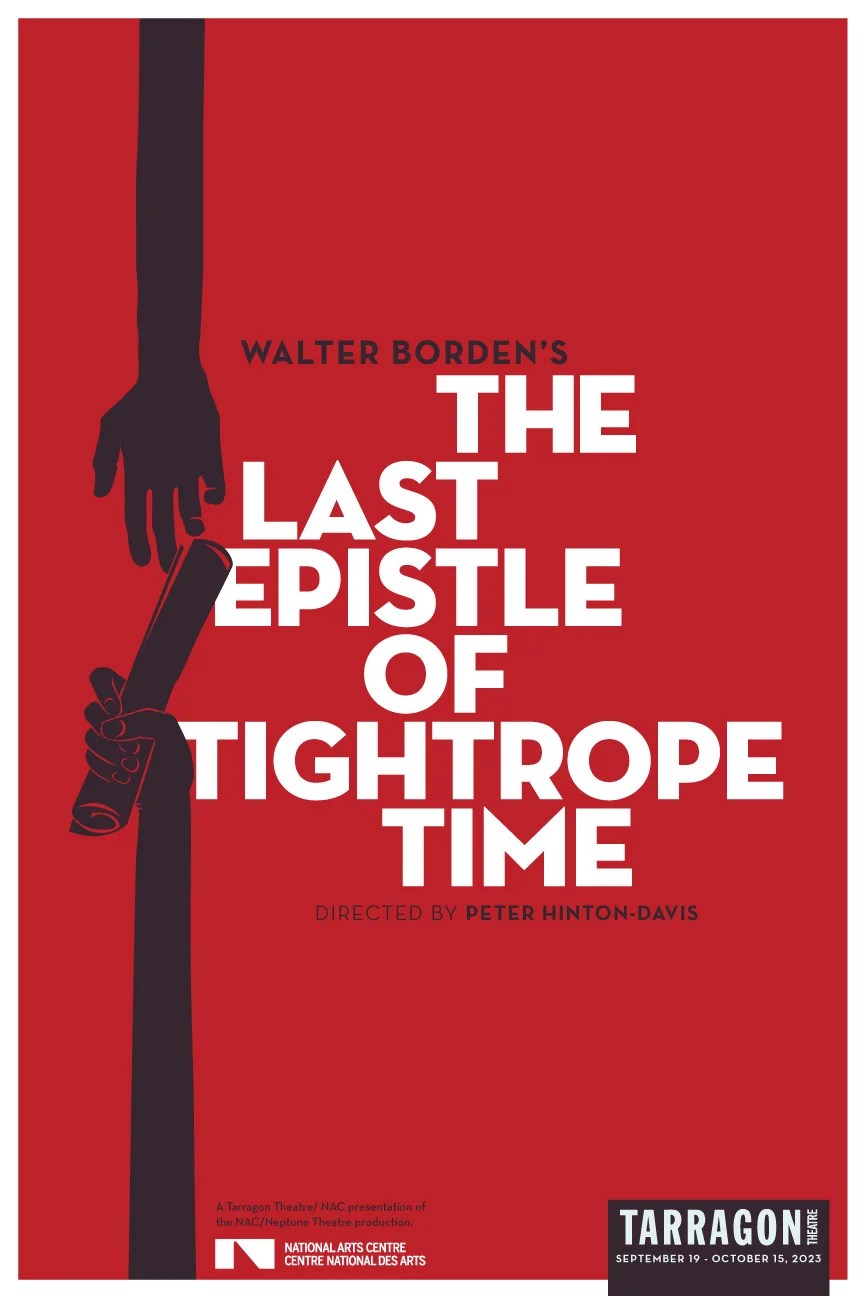
Edith Wharton’s The Shadow of a Doubt at Shaw Festival

There’s a mystery underlying Edith Wharton’s play The Shadow of a Doubt. The text was just rediscovered by scholars in 2016, after sitting unproduced. There was almost a production in 1903 but it was cancelled.

And now the Shaw Festival have produced the mystery drama, directed by Peter Hinton, a sharply drawn and authentic image of the early 20th century as seen in sets and costumes by Gillian Gallow. Truths lurk beneath a veneer of polite conversation between adults who rarely tell the truth. At times it’s as funny as a Feydeau farce or an Oscar Wilde manners comedy, full of wit and horny adults chasing one another around the stage.

Except that’s all against a backdrop of transgression, dark suspicions of sin that are not clarified until the very last moments of the piece, keeping you on the edge of your seat.

When Hinton wants us to recognize the gravity of a moment we’re presented with multiple points of view thanks to live video designed by video artist Haui. It’s as though we’re watching a live performance plus a documentary film at the same time, undercutting what’s being said, problematizing simple actions and statements. I remember seeing something like this in Robert Lepage’s auto-biographical 887, the video irresistibly changing the tone. Same here. It’s as though the video works like a push on the sustain pedal on a piano, to let the moment echo, washing into our ears and suggesting we rethink the moment.

Live video artist Haui

At times there might be ghosts on stage, the secondary images of those we think we see, suggesting that perhaps we should not be so certain about what is before our eyes. Haui creates ambiguity in the concrete bodies performing the live performance, or in other words shadows of doubt.

In the photo below for instance one might wonder whose image is projected.

Katherine Gauthier (Kate), Patrick Galligan (Lord Osterleigh), Claire Jullien and André Morin (John), photo: David Cooper

I wonder why we didn’t see this play sooner, why didn’t Wharton’s play come to light before now? It’s curious how the mystery surrounding the work in some ways parallels the questions raised by the work itself. There are many possible reasons, such as money or an actor no longer available: and we’re not likely to ever know the real reason with certainty.

Yet I’m inclined to think it’s something else as well.

This piece is far ahead of its time. There are some intriguing echoes of what we saw in Scorsese’s film of Wharton’s novel The Age of Innocence, where a woman resists the gossipy forces of a conservative society, her own authentic woman. Ellen Olenska (Michelle Pfeiffer) is unafraid of the strict conventions of New York society, drawing the attention of Newland Archer (Daniel Day-Lewis) , yet choosing to resist Newland, who stays with his wife May (Winona Ryder) until May’s death. Both Ellen and May are underestimated, perhaps like Wharton herself.

The woman defying convention in Shadow of a Doubt is saintly in her integrity, so much so that I wonder if Wharton had second thoughts about the credibility of her heroine. Kate Derwent (Katherine Gauthier), has not merely married above her class but is the bravest personage onstage. I won’t give it away except to say that I was moved to tears more than once and especially at the end. There is something of melodrama here, in the perfection of this heroine beset by the doubts raised by adversaries, whom she resists against all odds.

Please don’t think I’m seeking to cast aspersions on Wharton or her play by speaking of melodrama, a much maligned form still alive in cinema, whether acknowledged or not (and I’d say more about the musical component if I knew whom to credit, although I suspect it’s Peter Hinton). Wharton breaks the usual conventions by giving her heroine sufficient agency to defy her family when she sticks to her guns. As in the Scorsese film, the women are strong and under-estimated, each of them a source of truth.

We’re in that world of sharply barbed conversation, words that are often untrue, except when a woman such as Kate speaks. Kate was nurse to Agnes, daughter of Lord Osterleigh (Patrick Galligan). Agnes suffered a terrible accident and died. The details of that accident come out bit by bit through the play, one of the ways in which we become embroiled in the title of the play, recalling that one usually says something is beyond a shadow of a doubt: but not this time.

Lord Osterleigh gives us more and more subtexts, as he explains to Lady Uske (Tara Rosling) how he accepted and even promoted his daughter’s chosen husband, namely John Derwent (André Morin). Lady Uske is another truth-telling rebel albeit on a smaller-scale, married but honest. I found her so irresistibly outspoken as to seem to speak for the playwright herself.

Tara Rosling (Lady Uske) and Patrick Galligan (Lord Osterleigh), photo: David Cooper

Osterleigh complains to her that his son in law isn’t sufficiently ambitious, that he has married Kate a year after Agnes’s passing, and that Osterleigh fears that Agnes is forgotten. It’s not a fair statement though, as we see Kate encourage her step-daughter to honour the memory of her mother. What more could she do?

We’re in the comfortable world of rich people until the startling arrival of Dr Carruthers (Damien Atkins), who raises questions about the past, while softly blowing the lid off the play by reminding us of the real world. I wonder how much of this portrayal is in the script and how much might be aided by Hinton and a 21st century perspective, turning a figure who might have been played as villainous in 1903, but comes across as a figure evoking sympathy at least in the pathos of his entrance. Yet as the play unfolds he is but one possible candidate for the title “villain”, if we want to think in the old-fashioned terms of melodrama.

Director Peter Hinton

While some aspects of Wharton’s dramaturgy are very 19th century, such as her use of the devices of the well-made play, particularly the use of a letter to impact the plot, I’m inspired by her willingness to mix the snide remarks of superficial rich people with a sharp critique of that class.

Katherine Gauthier (Kate) photo: David Cooper

I wonder if she or others thought this was perhaps too bold, too edgy to be produced in 1903. But it’s perfect for 2023, that’s all I know. For me the excellence of Edith Wharton’s play is beyond a shadow of a doubt.

There’s so much more I could say yet I’m afraid of giving it away. There’s magic in the unfolding of this story, continuing at the Royal George Theatre until October 15th. My chief doubt is that you would have any regrets about seeing it.

Posted in Books & Literature, Cinema, video & DVDs, Dance, theatre & musicals, Reviews | Tagged , , , , , , , , , , , , , , , | 4 Comments

TSM Metamorphosis

Toronto Summer Music’s theme is the same as the title for last night’s concert, namely “metamorphosis”. I’m writing about it Saturday on the closing weekend of the festival.

I’ve been pondering that word over and over in response to the concerts I attended, last night being my fifth. I’m thinking that maybe metamorphosis is a good word to describe both the process of music and the making of musicians, the dual missions of TSM. Their Academy overlaps their performances, the artists’ teaching a natural extension of their virtuosity. It was delightful to stand in the lobby chatting with Carl Lyons (another TSM regular) about the institutional aspect of TSM, the way that one feels one is in the presence of a school and its mission, even as we walk the halls of those other schools where TSM takes place, namely Koerner Hall at the Royal Conservatory of Music and Walter Hall in the University of Toronto’s Faculty of Music.

Every concert has had its surprises, the unexpected moments and last night was no exception.

There was the laughter before we began the Brahms piano trio, when violinist Andrew Wan fidgeted, unready to start and showing his dissatisfaction with his piano bench, dashing into the wings to find a replacement. Then pianist Michelle Cann gave us the punchline when she quipped that benches really should be for pianists only. Were the ones giggling and applauding (like me) also pianists? That was at a moment when the audience were already eating out of the performers’ hands, having already been thrilled by the first part of the remarkable program:

Poulenc: Sextet for Piano and Wind Quintet, FP 100
R. Strauss: Metamorphosen, (arr. Rudolph Leopold)
(intermission)
Brahms: Piano Trio No. 1 in B Major, Op. 8

I was drawn to attend this concert by Richard Strauss’s famous piece for 23 solo strings, not realizing that instead of ten violins, five violas, five cellos, and three double basses, we’d encounter the work in a purer form, with seven players, namely pairs of violins, violas, cellos, plus a single double bass. Surveying the score via youtube it seems that this arrangement doesn’t actually omit anything, as there appear to be seven lines. Perhaps I’m missing something, but this arrangement seems to be a perfect paraphrase except for the matter of size.

Second last page of the score as shown in a youtube performance. The Eroica quote begins where you see the notation “IN MEMORIAM!”

Aha, how ironic to think that we heard a version of Metamorphosen that was itself changed, undergoing another metamorphosis. Even in its original form it’s a long series of changes, twists and turns, as though we watch a loom weaving strands into a tapestry before our eyes.

How interesting to ponder whether this was truer to the essence of the piece, a kind of ideal as we might imagine inside the composer’s head. The title telling us that this is a study for 23 solo strings has always suggested to me that there are 23 voices. But what if you take Strauss’s work and really force each part to play a solo line: which is exactly what we heard. That’s what Rudolf Leopold’s arrangement does.

I hope I have identified the players correctly. The one tiny thing TSM doesn’t do is clearly identify who is playing what in the program, which is likely more of an issue for a blogger than a listener. Still I want to be sure I’m giving credit to the right personnel:
violins Aaron Schwebel & Sheila Jaffé, violas Keith Hamm & Rémi Pelletier, cellos Leana Rutt & Emmanuelle Beaulieu Bergeron, and Michael Chiarello, bass.

It’s exposed. It’s still as densely constructed, but now we see every line and its answers unfolding before us not unlike the way the score lays a piece bare. In the intimacy of Walter Hall the wow factor is even more pronounced. I found myself unable to breathe at times, spellbound.

When that haunting bass line from the Eroica lifts its wounded head to peer out of the bunker where it has been hiding, it’s especially poignant that it be a single player. I thought Leopold changed Strauss’s piece, given that in the score we see that the bass plus both cello lines are all undertaking Beethoven’s melody. Maybe I’m wrong (as I was a bit dazzled and frazzled by what I was feeling and seeing and hearing) but I don’t think the first notes were played by three of the seven players before us, but only by one namely the double bass. Ha, maybe I’m wrong. I’ve now found and listened to a youtube performance of the septet version, and as I listen, I can’t tell for sure whether that’s a solo string bass or not (although it sounds so soft that I believe it’s just one rather than three). In theory I could have answered this question by the evidence of my eyes: except I didn’t realize what I was to look for until long after the moment had passed. Oh well. It’s still magic.

Having the piece in such a concentrated form was a powerful experience that I’m glad I was able to experience. Wow thank you TSM, for a fitting climax to a festival of “metamorphosis”.

The other two pieces on the program were notable for the comments by their perfectionist composers quoted in the program note, of wanting to transform, revise and change each work. Metamorphosis rears its head at every step of the process of composition, lurking in the back of the composer’s mind even after a work seems to be done.

We began with Poulenc’s Sextet, a mercurial work bursting with energy, sometimes taking tranquil breaks from its own relentless work ethic, before bursting forth again. The six were Stéphane Lemelin piano, Sarah Jeffrey oboe,Dakota Martin flute, Eric Abramovitz clarinet, Samuel Banks bassoon and Gabriel Radford horn. I resist clichés yet can’t fight the association of these instruments with comedy and entertainment, making the lightness of this frenetic composition an almost perfect balance with the gravitas we found moments later in Strauss’s elegiac piece.

The closing Brahms trio after intermission seemed perfectly designed to pick up the threads of what we’d heard thus far, sometimes playful, sometimes passionately emotive. The trio of pianist Michelle Cann violinist Andrew Wan and Desmond Hoebig cello took us on a heartfelt journey full of melody, thoughtful ensemble playing punctuated by bold statements from the piano.

Pianist Michelle Cann

I’m grateful that my last TSM concert of the season should offer such a thoughtful meditation on metamorphosis. Artistic Director Jonathan Crow seems to be taking the festival to greater heights with every season.

Posted in Music and musicology, Reviews | Tagged , , , , , , , , , , , , , , | Leave a comment

TSM J’Nai Bridges

The drama of tonight’s Toronto Summer Music Recital at Koerner Hall was as much about the one who didn’t sing (Sondra Radvanovsky) as the one who did (J’Nai Bridges).

I’m sympathetic to Sondra however much I may have wished to hear her. A mature artist’s name and reputation become a valuable commodity to be protected even if that makes twice this year, when we recall her cancellation in the Canadian Opera Company’s Macbeth. I hope she’ll be feeling better soon.

How wonderful then to see the delightful concert TSM conjured up on short notice featuring J’Nai Bridges, last season’s COC Carmen.

Marcelo Puente as Don José and J’Nai Bridges as Carmen (photo: Michael Cooper)

She told us this was her first Canadian recital, wearing a glorious gown in shimmering gold. Erika my wife might be able to tell you what it was made of, I only know that she looked very beautiful from the first moment to the last encore. She is a singer of the younger generation, as I was shown on social media by my friend Jane who accompanied me. Here’s a screen capture from a video on Instagram that gives you a look at her easy smile and her powerful physique. She has a natural charisma, as we saw soon enough.

jnaibmezzo from Instagram

It’s funny that the substitute program they conjured up at the last minute should feel so comfortable, between a well-known cycle by Ravel, and music from J’Nai’s roots in church, aided by two of the talented artists in town for the festival, namely Rachael Kerr piano and Sheila Jaffé. I was reminded of Leontyne Price who also started out singing gospel in church, and would often bring some of that music into her recitals. That kind of music is where her authenticity comes from, where she was originally grounded.

Pianist Rachael Kerr

And so we began with an item not listed on the program, Malotte’s Lord’s Prayer, ably supported by Rachael Kerr at the piano with a bluesy feel to end the first section (“as it is in heaven”). When we do The Lord’s Prayer in my church this Sunday we will sing a softer and more prayerful one, where this older piece is virtuosic featuring brilliant high notes, perfect for J’Nai to start off the program.

The first half featured songs by Brahms: from Op. 59, Op. 43 and, Op. 91, joined for the last two songs by violist Sheila Jaffé.

After intermission we heard the three Ravel Shéhérazade songs, featuring a delicate and idiomatic sound at the piano from Rachael. J’Nai seemed to be telling us stories, as she looked up into the concert hall. I love this cycle, and think it sounds ideal for her voice.

We finished with John Carter’s Cantata, a collection of gospel melodies from church, including Peter Go Ring Dem Bells, Sometimes I Feel Like a Motherless Child, Let Us Break Bread Together and Ride On King Jesus. The piano part is fierce, including lots of challenging passages taking us in unexpected directions.

When our applause persuaded J’Nai to offer an encore, it shouldn’t have surprised me that she sang the Habanera from Carmen. Of course! But this time, instead of seeking to seduce Don José it was as though she were seducing everyone in the concert hall. The second encore was a moving reading of “You’ll never walk alone” to conclude.

Mezzo-soprano J’Nai Bridges
Posted in Dance, theatre & musicals, Music and musicology, Reviews | Tagged , , , , , , , | Leave a comment

TSM: Tradition

Some words have such broad definitions that we miss some of the possibilities. That’s what I experienced last night at the Toronto Summer Music Concert titled “Tradition”. We don’t always get the opportunity to reflect upon this process nor to see it enacted before our eyes.

Part of it shows up in the Festival’s commitment to its Academy, passing the torch from the experienced virtuoso to the younger musical talents coming to Toronto every summer to listen and learn. I wish it were possible to see every minute of this remarkable festival, even if I’d miss the nuances experienced by the artists taking part in such an apprenticeship. Yes a lot of this goes over my head.

And then there was the program:
Gabriela Lena Frank: Four Folk Songs
Iman Habibi: Relics
Jerry Bock: “If I Were a Rich Man” from Fiddler on the Roof (arr. Kelly Hall-Tompkins)
Jerry Bock: “Fiddler Rhapsody and Scherzo” from Fiddler on the Roof (arr. Oran Eldor)
–intermission–
Dvořák: Piano Quartet No. 2 in E-flat Major, Op. 87, B. 162

For me it was a concert that problematized the idea of newness, reminding one of the complexity of influence, as though I glimpsed oral cultures where children were taught stories and songs, to pass on to successive generations. And of course there’s the magic when one culture encounters another, ideally in friendship rather than in enmity (where the word “tradition” may sometimes have negative connotations and impacts), let alone in the music of the oppressed or refugees who have left their homes behind, their art a precious reminder of what they’ve lost.

When I look at a festival schedule it’s guesswork as to what will work, what will be fun, what will be comprehensible. I feel I hit the jackpot with this one even if Walter Hall wasn’t full, possibly because of access issues announced through the courtesy of email telling us that the elevator might not be working, and the kind offer of last-minute refunds to those prevented from getting downstairs to the performance space. That reminder hits home for me, a lifetime arthritis sufferer who is currently in remission but at one time might have been daunted by an elevator on the fritz. And this also reminded me of the inter-generational aspect of traditions even as it suggested a barrier rather than free access.

We began in a modernist place with Four Folk Songs, the compositions bringing us elements of Latin music via a boldly dissonant sound world employing violin (Kelly Hall-Tompkins, who introduced the pieces), cello (Matthew Zalkind) and piano (Philip Chiu).

Composer Gabriela Lena Frank

Kelly spoke of the influence of composers such as Bartok or Shostakovich, perhaps suggesting that for the listener one of our inevitable tendencies is to seek connections, to in effect place a new work into a recognizable musical tradition. We can’t fully understand something we’ve never heard without in some respect understanding where it fits into what came before. I suppose we do that every time we hear something new, whether we realize it or not. Traditions function as markers or even as pigeon holes. At one time this might have been for the purpose of classification, yet tonight we were in the sort of place that seems to break down barriers and invite crossover and dialogue.

Our next exploration seemed much more of a demonstration of oral culture, in the back and forth exchanges in Iman Habibi’s Relics, a duo between Matthew’s cello and Barry Schiffman’s viola.

Composer Iman Habibi

The five brief pieces sometimes would elicit giggles around me for its wit and clever imitative rhetoric, a kind of call and response that seemed primal and pre-verbal, leading us to an explosion of applause at the end for Habibi, who was in attendance. I want to hear more from this eloquent young composer.

The following section included some of the most touching moments of the evening, watching members of the audience embrace the unexpected. No this wasn’t the usual white male Jewish fiddler. For thirteen months on Broadway Kelly Hall-Tompkins was the “Fiddler,” as violin soloist for the Bartlett Sher production of “Fiddler on the Roof,” with numerous solos written especially for her, for over 500 performances. This time Kelly was in the centre of the stage rather than supporting a show.

Violinist Kelly Hall-Tompkins

Kelly played the first part with Philip in support, including one passage where I was tempted to loudly sing the word “tradition” (as in the song) in response to a passage in the piano. I wondered if this was one of the meanings the concert programmers had in mind when they assembled the concert. I saw heads swaying, heard some humming along. The melodies from this Broadway show have permeated our culture. Norman Jewison’s film of the musical is one of my mom’s favorites, preserved in her PVR. For the second part we heard a brilliant solo virtuoso display, Kelly at times seeming to play two parts, as she’d hit brilliant melodic passages, plus lower notes resembling bass on the lower strings.

After intermission we were in a different place again, listening to Jennifer Frautschi introducing and then playing the Dvorak Piano Quartet, alongside cellist Matthew, violist Barry and pianist Philip. While Jennifer spoke of a possible competition between players (at a children’s concert earlier in the festival), it speaks to the way ensembles work, that while section leaders may be trained to make a big sound, yet in chamber music such displays of ego become a liability. We heard wonderfully cohesive playing from the quartet, Philip emerging for the last movement for some bravura playing but always in support of the other three. As Jennifer rightly observed, Dvorak had a spectacular gift for melody, displayed perfectly on this occasion at the boundary between folk and art music. I think Dvorak is under-rated.

Accepting applause, (L-r) Jennifer Frautschi, Barry Schiffman, Matthew Zalkind, and Philip Chiu

The festival continues for another week until July 29th. For further information: https://torontosummermusic.com/

Posted in Dance, theatre & musicals, Music and musicology, Reviews | Tagged , , , , , , , , , , , | 1 Comment

The Butterfly Project

Teiya Kasahara gave the first iteration of a self-exploratory monologue from Amplified Opera tonight at the Toronto Summer Music Festival in Walter Hall. It’s called The Butterfly Project because it’s to be an ongoing investigation, inviting us to explore the origins of the Japanese music appropriated by the European Puccini for his teenaged heroine in the popular opera. Kasahara draws on their experience as a Nikkei (of Japanese descent) Canadian settler to consider (as they say in the program note) what ChoCho-san “might have been thinking , doing, dreaming of during those three years of her life from geisha to bride, wife to woman to mother”.

While Kasahara previously brought a happy and exuberant disruptive energy to their deconstructive exploration of the Queen of the Night, in The Queen in Me, another project with multiple iterations, on this occasion the subject matter calls for a more solemn and reflective approach.

It’s personal.

Interdisciplinary performer-creator Teiya Kasahara

There’s surely some ambivalence underlying Kasahara’s brilliant new work performed with Andrea Wong, consisting of electronics, live sound design, voice, piano and violin. They’ve sung the Puccini and likely loved the music employed in this problematic opera even as we were invited to understand the work anew.

Tonight it was as though Butterfly escaped her usual fate, the role she’s been trapped in by the opera and previous versions of the story by David Belasco or John Luther Long. We heard a new libretto from Eiki Isomura and Josh Shaw, the role sung in Japanese where we’ve previously usually heard Italian. We heard some of the great aria, some familiar melodies, interrupting the usual expectations and pushing us to feel something different. At times Kasahara was seemingly singing with a full orchestra, a remarkable effect.

The Walter Hall stage, afterwards

This was apt for a concert hall, where the emphasis was on music rather than the drama. We were offered tangents, possible pathways left open rather than closed by the death that usually ends Puccini’s opera.

There’s a bit of an irony to mention. The TSM logo shows a Butterfly perched on a violin, mentioning the Festival theme of “metamorphosis”.

Yet the butterfly image of the original opera is much darker, not a metaphor of transformation, but one of conquest given that Butterfly sings fearfully (in the Act I duet of Puccini’s opera) that westerners usually mount butterflies on pins (a fact Pinkerton seems to embrace as romantic, ignoring her fears), a horrible foreshadowing of her eventual fate. In Kasahara’s project Butterfly escapes that horror for one night, as indeed there is the prospect of metamorphosis in their reinvention of the work.

In the first half we listened to music of Japanese composers that was completely new to me, piano, violin & vocal music, by Rentaro Taki, Kunihiko Hashimoto, Kosaku Yamada, and Koichi Kishi, performed by Kasahara, Dabin Zoey Yang, Xi Huang and Gregory Smith.

Andrea Wong

It was appropriately disorienting, considering that in Puccini’s opera we encounter the appropriated melodies without any attribution, subsumed into his orchestral score as a western composition. Kasahara was in a sense refreshing our perspective by reorienting us towards Japan and its culture.

I have a lot to learn.

Posted in Dance, theatre & musicals, Music and musicology, Opera, Reviews | Tagged , , , , , , , | Leave a comment

Toronto Summer Music Metamorphosis

Tonight was the opening concert of Toronto Summer Music, a festival running until July 29th in several performance spaces around Toronto.

For a festival such as this one with the dual objectives of showcasing performance and training artists in its academy its theme of “metamorphosis” can be a powerful metaphor, whether we’re considering the music or the musicians.

I had to do a double take when I read on the TSM website that “2023 is the seventh season with Canadian violinist Jonathan Crow at the helm in the role of TSM’s Artistic Director.”

TSM Artistic Director Jonathan Crow

Time flies, especially when cultural events are disrupted by a pandemic. The butterfly in the TSM logo could be me or any of us, emerging from our masked cocoon.

Festivals offer special opportunities that aren’t usually available, as when five excellent soloists can give us a taut reading of the Mozart concerto.

Two pianists were the stars of the evening:
Beethoven: Sonata No 14
Mozart: Piano Concerto No 12 (arr. For chamber ensemble)
(intermission)
Milhaud: Scaramouche
Levko Revutsky: Preludes Op 7, Nos 1 & 2
Liszt: Etude No 3 “La Campanella”
Rachmaninoff: Suite no. 2 for Two Pianos

Jon Kimura Parker made a welcome return to the festival, seeming ageless in his stunning reading of the Moonlight Sonata, before introducing 21 year old Illia Ovcharenko to us, the winner of the Honens International Piano Competition.

Jon Kimura Parker

Parker, Artistic Director of that competition, spoke of glowingly of the young Ukrainian virtuoso, with whom he partnered on two works in the second half of the program.

Illia Ovcharenko

I had to wonder, how much time have they had to play together, how well do they know one another? Piano duos work together for years, seemingly anticipating one another as though reading minds. How when they met relatively recently, could they get the kind of cohesion we heard in the Milhaud and especially in the powerful Rachmaninoff suite? It was a joy watching them, seeing the eye contact and the body language.

I hope we will have the chance to welcome Ovcharenko back to Toronto again. He demonstrated sensitivity to Mozart, at times bringing out the comical playful side especially in his cadenzas. After the joyful exuberance of the Milhaud duet, the two Revutsky preludes took us in an entirely different direction, something soulfully Slavic in the manner of a Rachmaninoff or a Scriabin, someone I hope to explore further, and someone we need to hear more often. The Liszt afforded Ovcharenko the chance to show us more delicate playing, a subtle approach to Liszt that’s very welcome.

The Toronto Summer Music schedule can be found at https://torontosummermusic.com/events/.

Posted in Music and musicology | Tagged , , , , , , , , , | 1 Comment

Asteroid City, America

Wes Anderson is at it again with Asteroid City.

Wes Anderson

Once more, an elaborate structure plays games with the viewer. Asteroid City is the name of a play within the movie, a fictitious place in America. We go back and forth between fictions, sometimes in black and white sometimes in colour. It never seems real. The film conceals a vast amount of detail under the surface, inviting you to watch the film over and over. Sure you can get through it the first time, indeed this one felt easier than the last one, Paris Dispatch. But as usual there’s much more to be found with every additional viewing. I know that’s what I’ve done in the past with Grand Budapest Hotel, Moonrise Kingdom, French Dispatch, Isle of Dogs. And while I’ve only watched this one once, I know there’s lots there to discover.

Every few minutes someone says something preposterous. For instance in the trailer we hear this announcement:
Each year we celebrate Asteroid Day, commemorating Sept 23, 3007 BC, when the Arid Plains Meteorite made Earth impact.

The cast is a stunning array of talent, including the usual suspects coming back again and again (Tilda Swinton, Jason Schwartzman, Liev Screiber, Bob Balaban, Jeffrey Wright, Ed Norton, Scarlett Johansson, Willem Dafoe, Bryan Cranston, Jeff Goldblum and Adrien Brody) as well as newcomers Tom Hanks, Matt Dillon & Steve Carell. It feels at times as though they’re having so much fun that they’re paying Anderson to be in the film rather than the other way around.

The musical score includes a couple of set pieces from Anderson’s regular collaborator Alexandre Desplat although the film is full of popular songs evoking a period.

This is again full of moments of beautiful symmetry, an artificial work of art that never seems real. It feels less challenging than previous Wes Anderson films, perhaps because it’s so American, often very silly.

While we may be in a surreal version of the 1950s, we’re exploring contemporary issues. In a summer when the film Oppenheimer will remind us of the Manhattan Project, it seems perfectly natural when we see atomic bomb tests nearby in the desert. Or maybe it’s because of the war in Ukraine.

We will see an alien land a space-ship. As in ET and Close Encounters, the military gets involved, censoring everyone and shutting down the town, although they’re so inept as to be comical.

As in his previous films the children are the smart ones, although their special gifts may be a liability. This time they’re even more nerdy and brilliant than before, performing astonishing feats among the goofy adults.

I must watch it again of course. I came out of the film smiling.

Posted in Cinema, video & DVDs, Reviews | Tagged , , , , , , , , , , , , , | Leave a comment

Black Panther in concert with the Toronto Symphony

This was a Toronto Symphony performance like no other.

The idea of presenting a film with live accompaniment isn’t new, indeed that’s how they used to do it in the old days. At one time –thinking of the silent era– films were accompanied by live music, whether on a piano, organ or even a whole orchestra playing the music to underscore the action.

Lately the idea has had a resurgence, with the help of technology. Conductor Steven Reineke is able to synchronize the TSO with the help of instructions on the small screen in front of him ensuring they start in the right place. The rest of us watched the action on an enormous screen above the orchestra. TSO have offered us everything from Psycho to Star Wars, Nightmare Before Christmas, or Home Alone coming at Christmas. You may think you know the film, but it’s not the same with the live accompaniment. It’s a brand-new experience.

I cannot deny while I may claim to be a scholar, a student of film music: I’m a total fan. And when film music is performed live that changes the equation. At times the dialogue was covered by the big sound coming from the orchestra, although we had subtitles to rely upon, so no harm done. Indeed it was a glorious experience, the music suddenly massive and foregrounded as never before.

This was a savvy audience, applauding when Stan Lee appeared briefly. They know their super-heroes.

The star of the evening (and no I don’t mean Chadwick Boseman, Michael B Jordan, or Angela Bassett) was Massamba Diop on his talking drum, an extraordinary performance including a brief encore after the film.

Massamba Diop accepting our applause afterwards, Conductor Steven Reineke just to the left

I was aware that Ludwig Göransson won the Academy Award for best original score, but had not seen the film until tonight. What a treat and no wonder he won the Oscar.

Göransson’s score employs a big percussion contingent (at least four percussionists at the back of the stage) as well as Diop in the spotlight beside conductor Reineke. And the big brass section crushed us with an enormous sound, especially at the climactic moments of action.

It was a younger crowd than usual. We had a great time.

Friday June 30th there is another chance to see and hear Black Panther in Concert at Roy Thomson Hall. I’d go again if I could. It was a tremendous experience.

Posted in Cinema, video & DVDs, Music and musicology, Reviews | Tagged , , , , , , , , | Leave a comment