Last night the Canadian Opera Company had their opening night of Fidelio in a recent San Francisco Opera production directed by Matthew Ozawa, with set and projections designed by Alexander Nichols and costumes by Jessica Jahn. Their design concept is the real star of the evening. While the COC Orchestra led by Johannes Debus, the chorus and soloists all sound great, it’s the look and feel that matters.
While I revel in the happy endings in Beethoven’s music, loving Bruno Weil and Tafelmusik’s recent gallop through the 5th symphony, in 2023 romanticism has become problematic, as we saw onstage last night. In the light of day before the cameras, in this age of media spin and fake news, can we trust the politicians, can we believe that rescue operas are still possible? The dreams of liberation in the 19th century are far removed from the disillusionment of recent times. While there was another rush of hope when the Wall Came down separating Eastern and Western Europe with the fall of the USSR, recent events in Europe darken the horizon. Although I was confident at intermission that Leonore would still rescue her Florestan, it’s against a scary backdrop of regimes and leaders who don’t honour the rules.
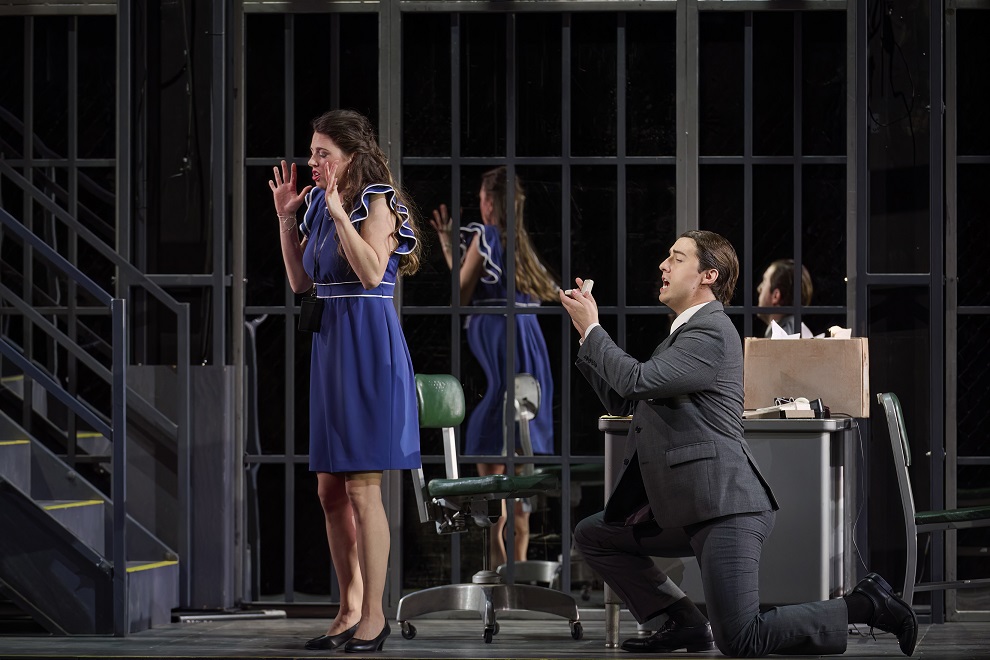
Having seen some pictures beforehand, I came to the show wondering if the piece would still work, an opera that begins with an innocent tone as Marzelline (Anna-Sophie Neher) rebuffes the advances of her beau Jaquino (Josh Lovell)….
Anna-Sophie Neher as Marzelline and Josh Lovell as Jaquino (Photo: Michael Cooper)
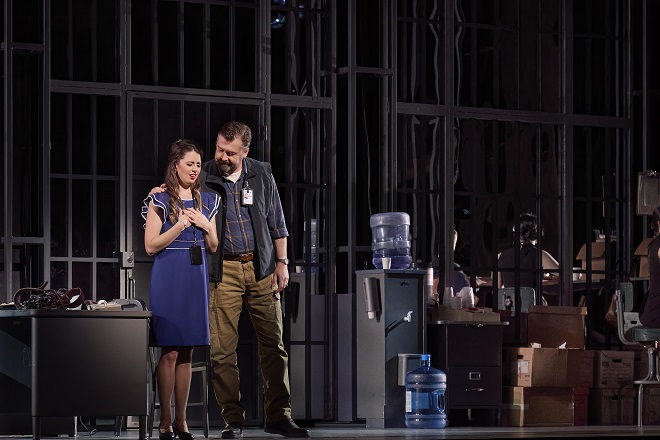
Marzelline is now fascinated by the new guard Fidelio (Miina-Liisa Värelä). In fact it seems to work better than I can ever recall, the awkward shift in tone from pastoral romance to suspenseful rescue opera much easier when played against a backdrop playing up the ironies of our modern lives. Trump might feel totally at home among all the bankers boxes strewn everywhere, although I doubt he’d ever get this close to a prison and the human casualties we see before us. The design concept might be “the banality of evil”, suggesting the ease with which one surrenders to authority, especially in an industrial prison space. Rocco (Dimitry Ivashchenko) is Marzelline’s lovable dad.
Anna-Sophie Neher as Marzelline and Dimitry Ivashchenko as Rocco (Photo: Michael Cooper)
Rocco just happens to be middle management in a prison, supervising guards and burying bodies for the evil plotting of Don Pizarro (Johannes Martin Kränzle). The concept enacts the familiar slippery slope of morality, making the opera seem fresh and contemporary. Even knowing Beethoven’s ending I found myself wondering whether Pizarro would really be taken down or not.
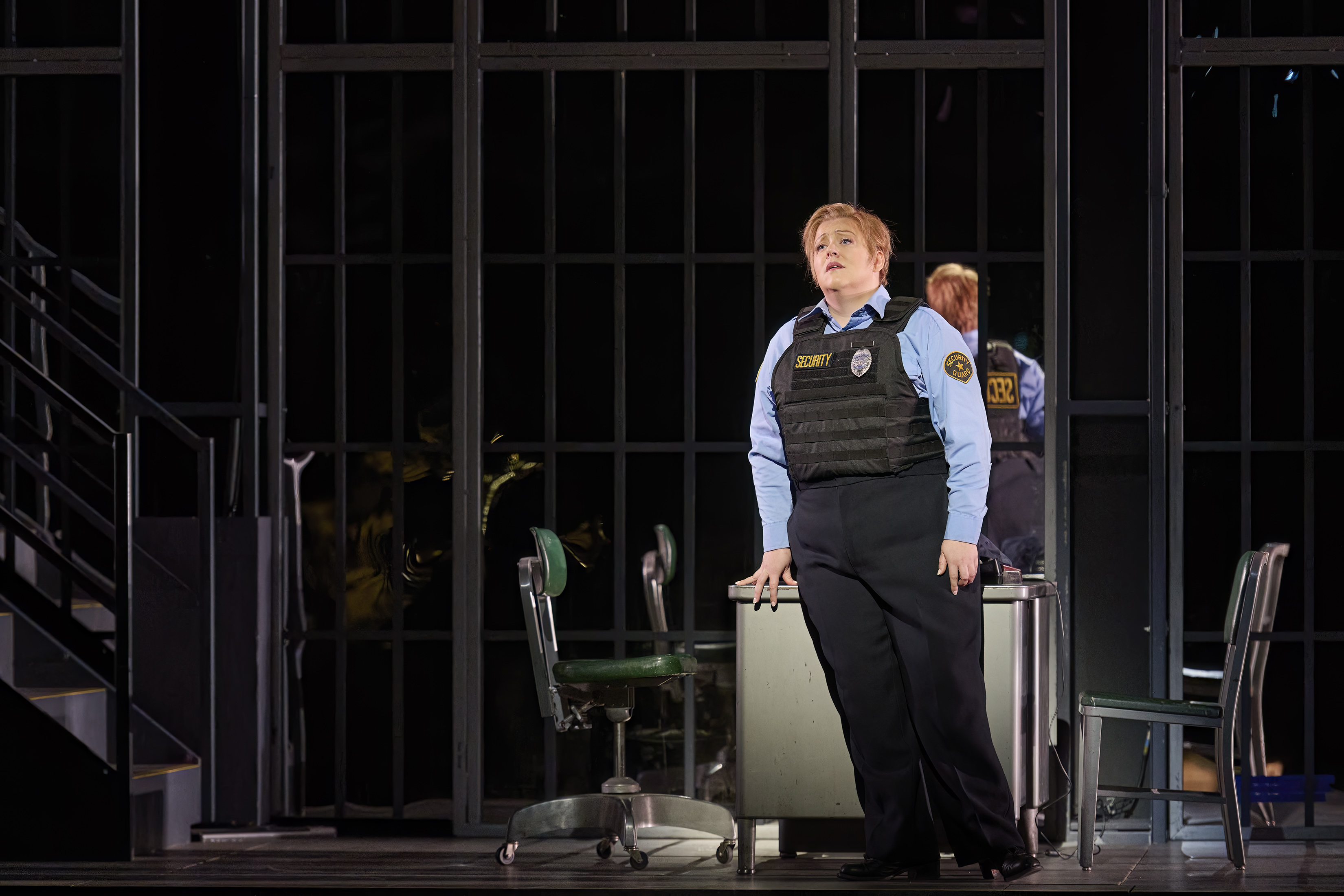
Miina-Liisa Värelä as Leonore, costume designer Jessica Jahn (Photo: Michael Cooper)
Fidelio is of course Florestan’s wife Leonore in a disguise, to infiltrate the prison. Her modern costuming is far more believable than usual, as she looks like just another one of the guards.
I found Kränzle’s Pizarro to be the most interesting portrayal, right on the boundary between the romantic era and our post-truth world. Alas he gets booed when he comes out, playing the villain of the piece to perfection. But although he’s performing a nearly unmusical role, belting out the most believable and lyrical “Ha! Welch ein Augenblick” I have ever heard, making music out of something that is usually barked or shouted, instead of the usual ugly melodramatic villainy he gave something recognizably political, slippery and as contemporary as what you see on CP24 every day.
Johannes Martin Kränzle as Don Pizarro (Photo: Michael Cooper)
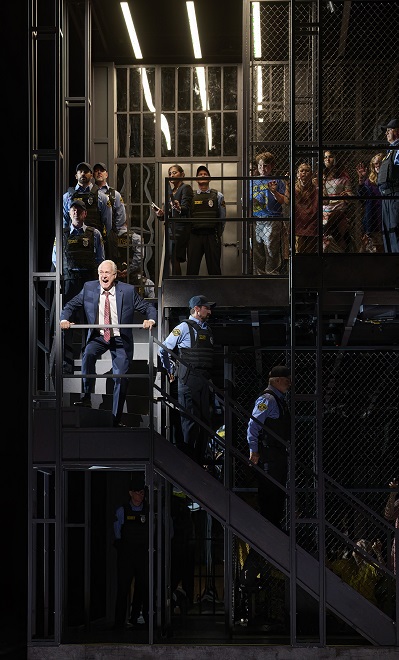
Although the COC chorus did their usual splendid work, I must say that the one thing that didn’t quite fly for me as usual was the emergence of the chorus from prison, a moment that usually brings me to tears. Perhaps that’s because of the design concept that strips away the usual romantic sublimity. I was instead perplexed while listening to nice music from Debus and the orchestra & chorus that left me cold, possibly a deliberate goal of Ozawa et al, deconstructing the usual. It’s now merely sad rather than uplifting.
Canadian Opera Company Chorus and extras (Photo: Michael Cooper)
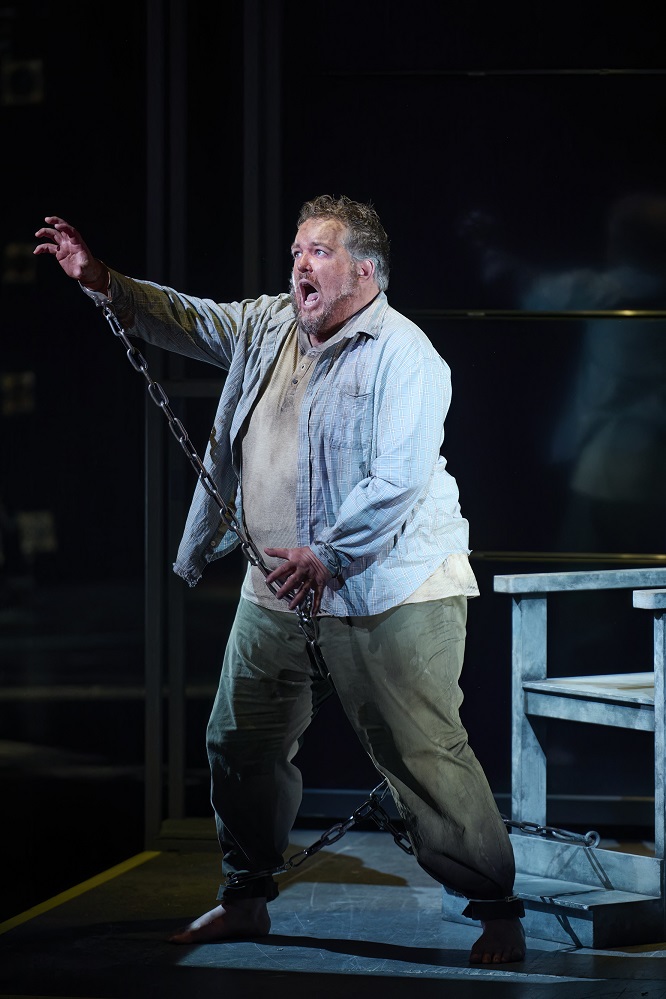
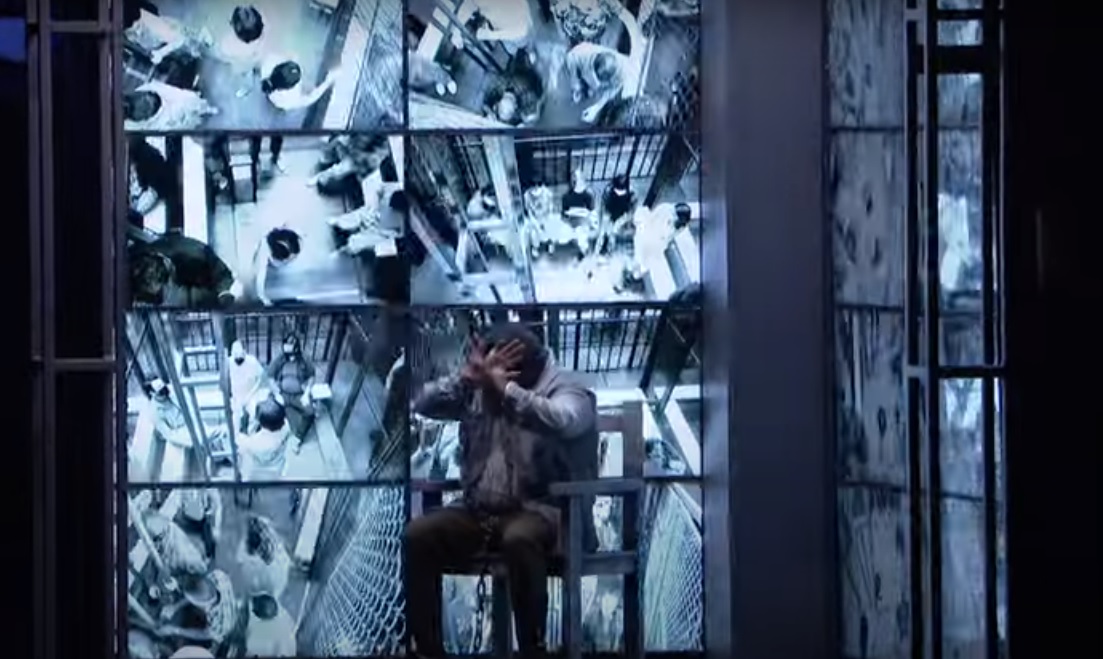
After intermission of course, everything shifts. The design concept works brilliantly as we meet Florestan (Clay Hilley) in one of the great solos of all opera, and he doesn’t disappoint, aided by Nichols’s stunning projections.
Clay Hilley as Florestan (Photo: Michael Cooper)
However it’s sung these are the most beautiful, most powerfully moving images I’ve seen on a COC stage in a long time.
Värelä, Hilley, Ivashchenko and Kränzle serve up gripping drama taking us to the conclusion and the fascinating moment when Don Ferrando (Sava Vemic) arrives at the prison.
I’ll see it again, you should too. Fidelio has six more performances at the Four Seasons Centre until October 20th . Don’t miss it.
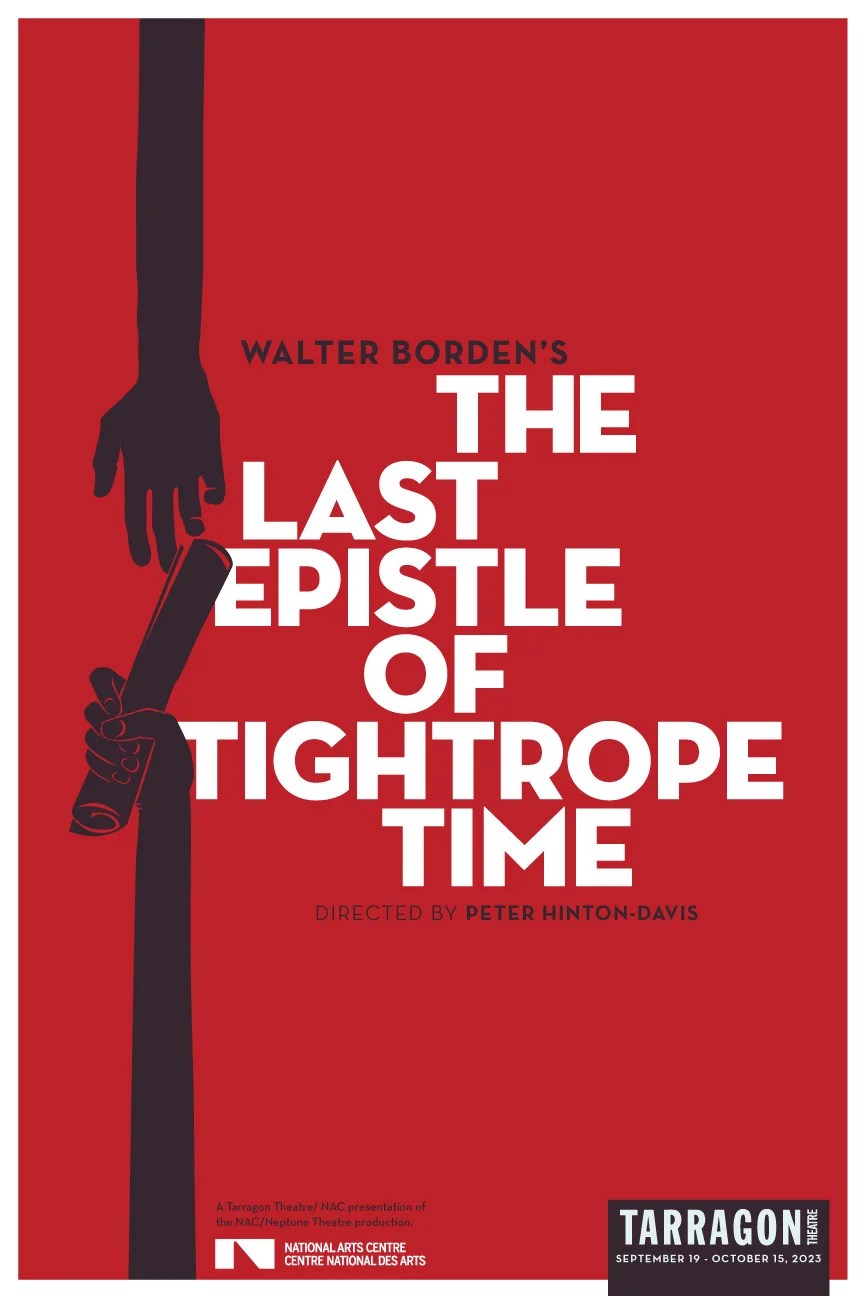
Last night I was present for the opening night of The Last Epistle of Tightrope Time, a Tarragon/NAC presentation of the National Arts Centre/ Neptune Theatre co-production. The Last Epistle is a one-man show written and performed by Walter Borden, directed by Peter Hinton–Davis at Tarragon Theatre before an audience of sympathetic listeners.
As I drove home, I thought of my review of Canoe, where I approached the writeup with caution, concerned that I might give offense accidentally due to my ignorance leading to cultural insensitivity, as I wrote about Indigenous culture. I wanted to be just as cautious speaking of Borden’s griot sensibility, boldly telling us about the life of a gay black man. Sometimes he’s spiritual, sometimes he’s profane, drawing eruptions of laughter from this crowd.
I’m retreating to turf I know, namely opera, when I think about the dilemma we sometimes face between the artist or the text. Yes, Borden came to us in the virtuoso space employing his voice as his instrument to make a brilliant kind of music. The griot energy that has come down to us in rap and stand-up comedy, is sometimes exploited commercially. I feel Borden’s text has an authenticity to his multiple characterizations, even as I marvel at what he’s written, what he must have seen, even if we’re in a place of fiction. The Epistle is a series of episodes and meditations that hang together, a brilliant composition.
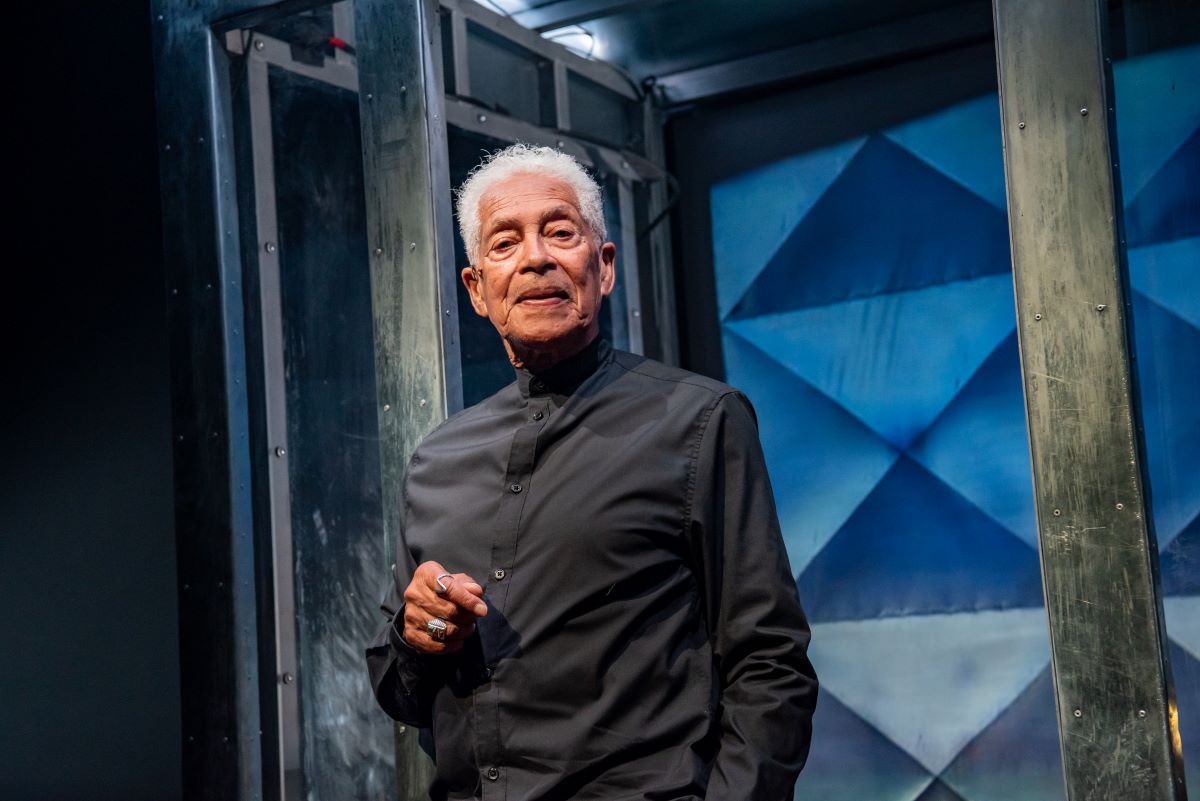
Director Peter Hinton-Davis
Some of that surely comes from the input of director Hinton-Davis and designers Andy Moro (set, costume, lighting and especially brilliant projections), Adrienne Danrich O’Neill (Sound Designer and Composer) and Wayne Hawthorne (associate sound designer), making this solo performance into an ensemble piece, not just from their multiple inputs but fragmenting Borden’s persona as he talks to himself, sometimes literally.
Set, costume, lighting and projection designer Andy Moro
The first half hour I was trying to get a handle, and unable to forget that a one-man show is a lot of work. What a lot of lines, a lot of different characters, and Borden is not young. Once I relaxed into the enjoyment of Borden’s art, those multiple voices and his crystal clear diction, I was hooked. No, Borden is not a young man, reminding me of my own aches as I watched him sometimes trudging slowly, of other aching bodies I’ve seen recently. Theatre is a place for youth, for lithe young bodies, carpenters & builders making things, and stage managers to keep you honest even after everyone’s bleary-eyed & exhausted at rehearsal. I looked around at the young in the audience, among seniors like myself and remembered, oh of course, this was a portrayal, a piece of theatre. Perhaps he’s no longer going to do handsprings but the chemistry between our joyful response and his body language was glorious to see. And wow he was getting stronger and clearer as he went on, strutting proudly at the end.
The text is perhaps revised for this incarnation of a show that has seen multiple lives, new layers and new wrinkles that add to its charm. The depths Borden gave us were always poetic, ruminations sometimes ripping the cover off polite society in blunt language yet never lacking in dignity. The Epistle is sometimes like a declaration or manifesto, sometimes the rueful notes of someone who’s sharing their journey. There’s a lovely ebb and flow to what we see and hear, very musical and very safe.
We’re at times in a place of extraordinary vulnerability resembling a temple of the soul. But then again that’s theatre. Tarragon is a special place that privileges exploration, a sanctuary where one can truly take off all the covering layers to see what’s underneath.
The Last Epistle of Tightrope Time continues at Tarragon Theatre until October 15th. See it if you can.
Tafelmusik launched their 45th season with a concert titled “Beethoven 4 and 5“ at Koerner Hall, perhaps in echo of their anniversary.
We not only heard a wonderful concert, but witnessed a moving reunion between the ensemble and their regular guest conductor Bruno Weil, with whom they’ve made so many wonderful recordings, particularly the Beethoven Symphonies, discs that I prize.
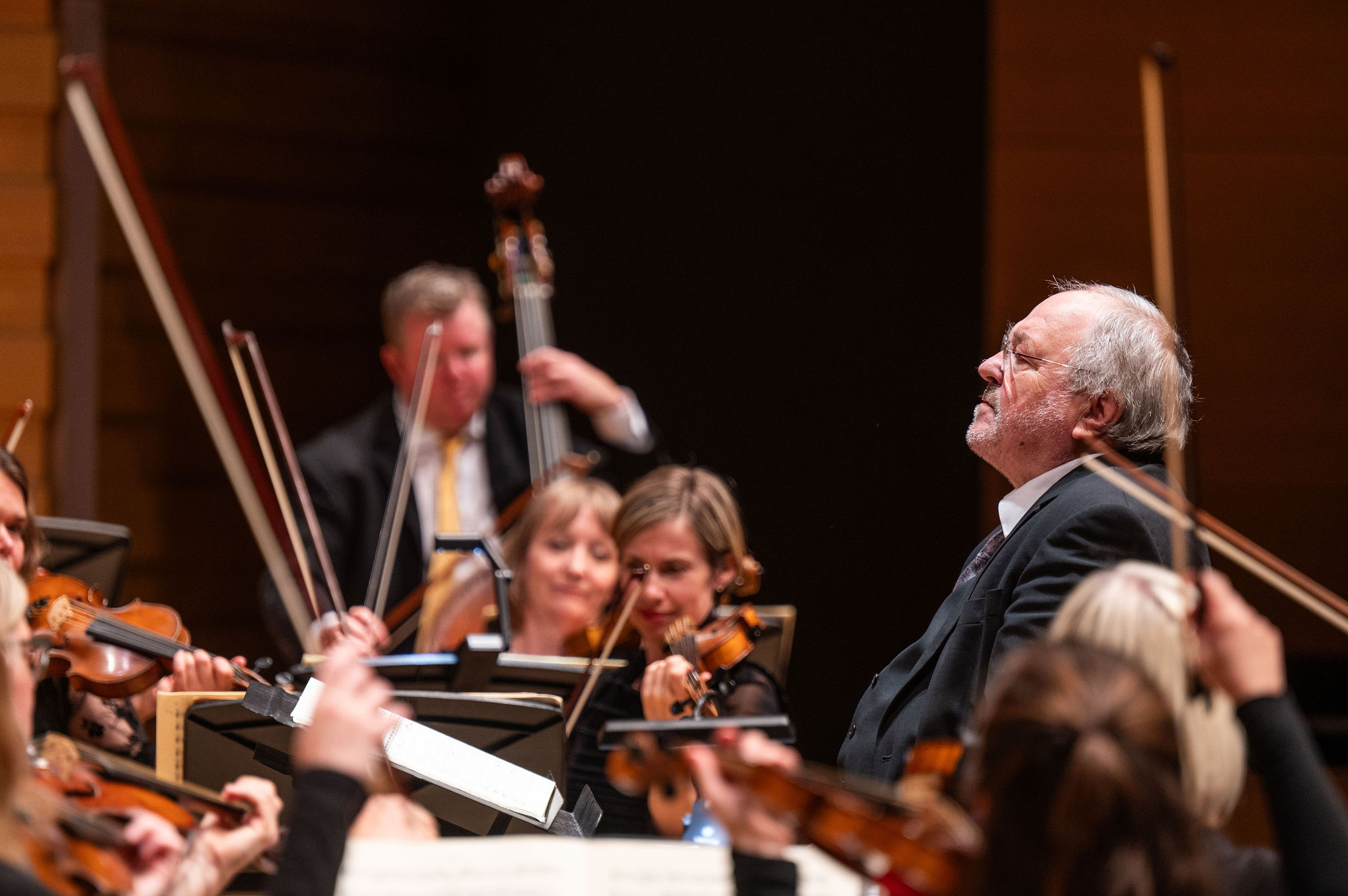
It was great to see Weil again, even if he seemed somewhat pained moving to and from his podium, sitting for portions of the concert but inspired at key moments. Who knows when they’ll get the chance to play with Weil again, who was looking decidedly frail today.
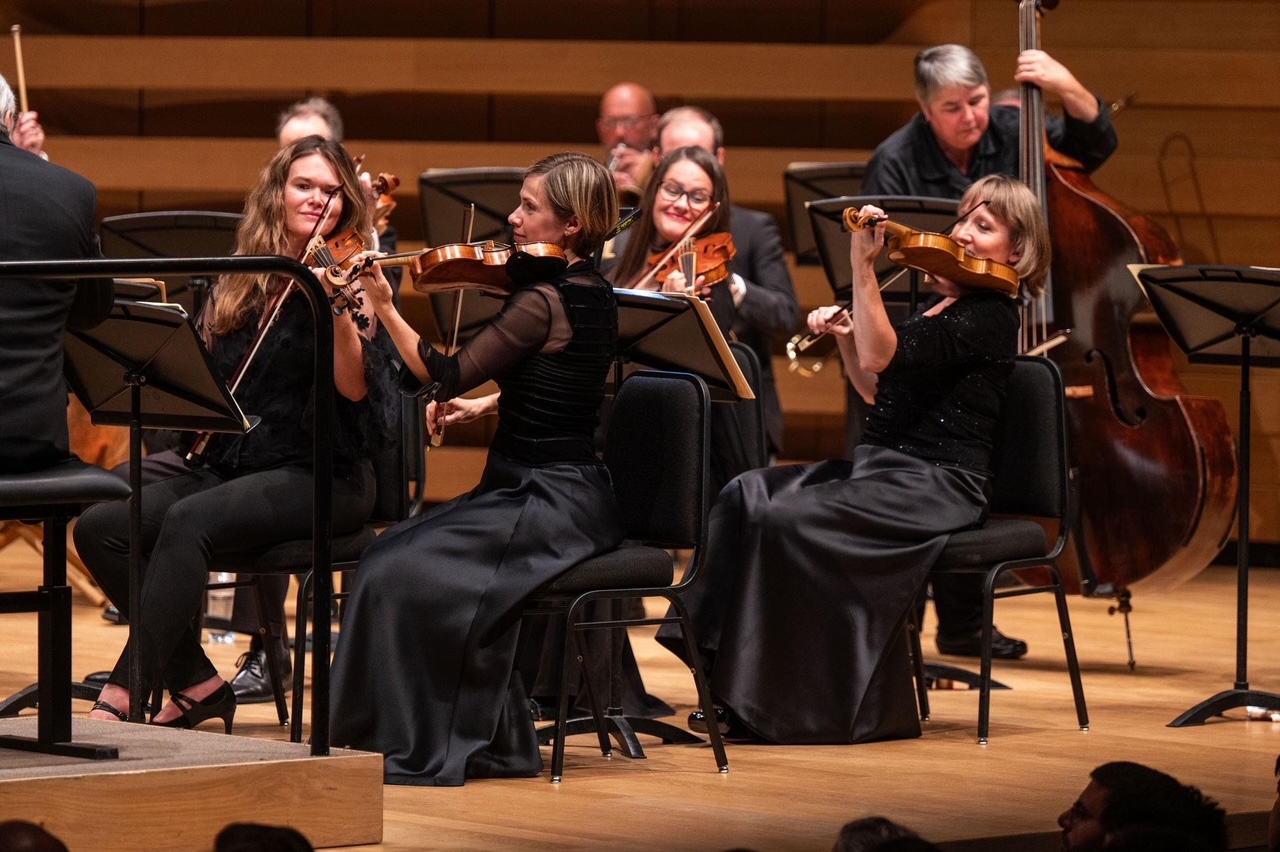
I can’t recall the last time I saw so many smiles from the players of an orchestra, clearly enjoying the program.
Tafelmusik (photo: Dahlia Katz)
We heard the overture to The Creatures of Prometheus to begin, before proceeding to the 4th Symphony. This work sounds different played by an ensemble like Tafelmusik with their sweet sounding strings and winds, especially in Koerner Hall. I think this is my first time hearing Tafelmusik play Beethoven in there since the pandemic disrupted everything. I found myself wondering if my ears were off, as the pure rich sound especially at the lower end made for a powerfully visceral experience. But it’s simply the fact that this was the first time I had heard anything so overwhelmingly beautiful in awhile. The orchestra players weren’t the only ones smiling, although at times my eyes were tearing up, stunned.
I’m particularly fond of the second movement with its rhythms that resemble a human pulse, a meditation of great beauty. The other three movements are rambunctious in comparison, especially joyful at the quick tempi favored by Weil.
Tafelmusik and conductor Bruno Weil (photo: Dahlia Katz)
The smiles were set aside, perhaps considered unseemly given the drama of the opening movement of the 5th symphony, although I saw a few in the lovely second movement. Every moment, each note was beautiful, stirring. Weil sat for the second and third movements, jumping to his feet for the powerful opening of the fourth movement. He resumed his seat in the development (when it modulates), although when we again had the transition from the minor back into the major he once again leapt to his feet, perhaps seeking to inspire the orchestra with his enthusiasm. They were grinning with good reason, the last movement positively orgasmic.
I am perhaps out of touch with Tafelmusik, an ensemble known for their mastery of baroque performance practice. Yes I loved the Beethoven. I’m hungry for more, more romantic music. As the program note reminds us, Weil’s association with Tafelmusik goes back to 1994, almost thirty years ago. I recall less secure performances before they acquired the masterful confidence on display today throughout the program or in their recordings of Beethoven. Am I the only one who wants to hear them play Schubert or Schumann or Mendelssohn let alone Berlioz? They were amazing playing Weber for Opera Atelier’s Der Freischütz awhile back, conducted by David Fallis. But as far as I can tell Tafelmusik have a solid following, subscribers who know and love their baroque, particularly their Messiah in December. To be honest, I love that side of Tafelmusik too even if I wish they’d play more romantics as well. Maybe next year.
Tafelmusik return for concerts October 13-15 at Jeanne Lamon Hall, titled Vive la différence: Lully and Corelli, exploring the rivalry between the distinct French and Italian baroque styles epitomized by the music of Lully and Corelli.
You know you’re at a special concert when you can’t identify the highlight, between pianist Jean-Yves Thibaudet’s flashy reading of the Gershwin Concerto in F before intermission, or an overwhelming Rite of Spring filling Roy Thomson Hall with sound. As he did last season Music Director Gustavo Gimeno cleverly combined pieces encouraging us to hear the music in new ways in last night’s second of two concerts to open Toronto Symphony’s 101st season.
I’m not sure we really understand Gershwin yet, although performances like this one give me hope that we’re finally decoding his contribution. In his time he was often dismissed as a Tin Pan Alley song-writer, as though that were easy, let alone the condescension of insecure conservatory academics, perplexing the composer himself. Meanwhile the use of the word “jazz” to describe his music is problematic, given that this music isn’t improvised nor is it really jazz unless we use the idiom in the broadest terms. What I really loved about this performance was the sense that we were hearing Gershwin presented as a peer of Lili Boulanger or Igor Stravinsky, in other words another classical composer seeking to write good music.
Thibaudet was sometimes big & blunt in his attack, sometimes very subtle and soft especially in the middle movement, particularly in the long solo passage. Yes the trumpet and the clarinet fearlessly bent their notes, wailing away as though in a night-club rather than a concert hall. But the result is still a concerto.
For his encore Thibaudet treated us to a gentle reading of Liszt’s D-flat Consolation, sounding (excuse me for saying) a bit jazzy in his approach to the solo voice. Or maybe the concert encourages me to see connections back to Liszt from Gershwin. I suppose it’s because Gimeno encourages us to look for connections and parallels. The nature sounds that begin Lili Boulanger’s orchestral tone poem D’un matin de printemps (Of a spring morning) are a gentle foretaste of the opening passages of Rite of Spring. And I thought I heard echoes of Gershwin in Stravinsky.
But before intermission ended I was sitting in my seat looking at social media, seeing a picture shared by Gustavo Gimeno.
He wrote this above the photo. “Much enjoying sharing time and performing with dearest Jean-Yves Thibaudet. A wonderful artist and a generous person.“
I showed this to the gentleman sitting beside me, and chuckled saying “isn’t this wonderful, probably a picture from last night”.
He introduced himself as The French Consul, intrigued to discover culture like this in Toronto, wondered “do you get other soloists from France?”
I should have said “I’ll have to look it up” but I replied: we have soloists from all over… Europe, USA, and Canada.” And I said that Gustavo conducts in Luxembourg and elsewhere, it’s a golden age of international co-operation, except perhaps for the war. I joked that Zelensky is in Canada.
We chatted for awhile about culture, while in the back of my mind was the recent Kitchener-Waterloo Symphony disaster (announcement of the cancellation of their season with two days notice to the unfortunate players who just signed a contract) . I blustered on for a few moments, that I’m a lucky, privileged to hear the TSO, that I’ll be hearing another great orchestra in a few days (Tafelmusik’s Beethoven on the weekend), that we have opera and ballet and it brings our city to life.
I wish I could grab one of those conservative politicians who wants to cut arts funding. We need culture, THIS is how Toronto impresses a visitor, not with expressways or tall buildings. And with an audience silent even reverent for the performance and applauding wildly afterwards. Toronto makes me proud at such moments. Tell the politicians. This is a big reason why people want to live here, even if artists can’t afford to live here.
And so on to Le Sacre du printemps, on the autumnal rather than the vernal equinox. There was an electricity in the air, a full audience quietly awaiting. If nothing else Gustavo has made us a better behaved audience, quieter than ever. No I don’t mind applause between movements, not when it’s an eruption of joy as we heard after TSO and Thibaudet’s first movement of the Gershwin.
As I watched and listened I recall again that Gustavo was a percussionist, wondering how it felt for him to have played as a member of the team banging drums or making sounds for some previous Sacre years ago before he started conducting. The piece enacts moments when there’s a tension verging on fearful suspense of what’s to come, sometimes very soft and restrained, sometimes as loud as anything you will hear. For this to work the musician wants to be certain they are making their loud sounds at the right time, confident in the leader and his beat (especially in such a piece with changing time signatures and perplexing entries) and his clear instructions. I’ve seen this piece conducted by someone who did not inspire that confidence, I’ve heard it played without conviction. Coming to this from the inside, as a player, Gustavo seems to really know this piece, and thereby to inspire a level of conviction in the orchestra. I’ve never heard Roy Thomson Hall sound so small, so filled with sound, as last night. At times it felt as though the percussion took over, although the brass gave them a run for their money. The sound was brilliant, amazing. Stravinsky was well-served, perhaps beyond what he imagined (as his own recording is rather staid in comparison).
It follows nicely on the performances and recording of Turangalila last year, when I think the TSO and Gustavo are beginning to serve notice, that they have arrived as an ensemble who can play anything, and play it really well. This was the best Rite I’ve ever experienced.
Gustavo Gimeno and the TSO are back next Thursday Friday & Saturday playing a program of Ravel and Scriabin.
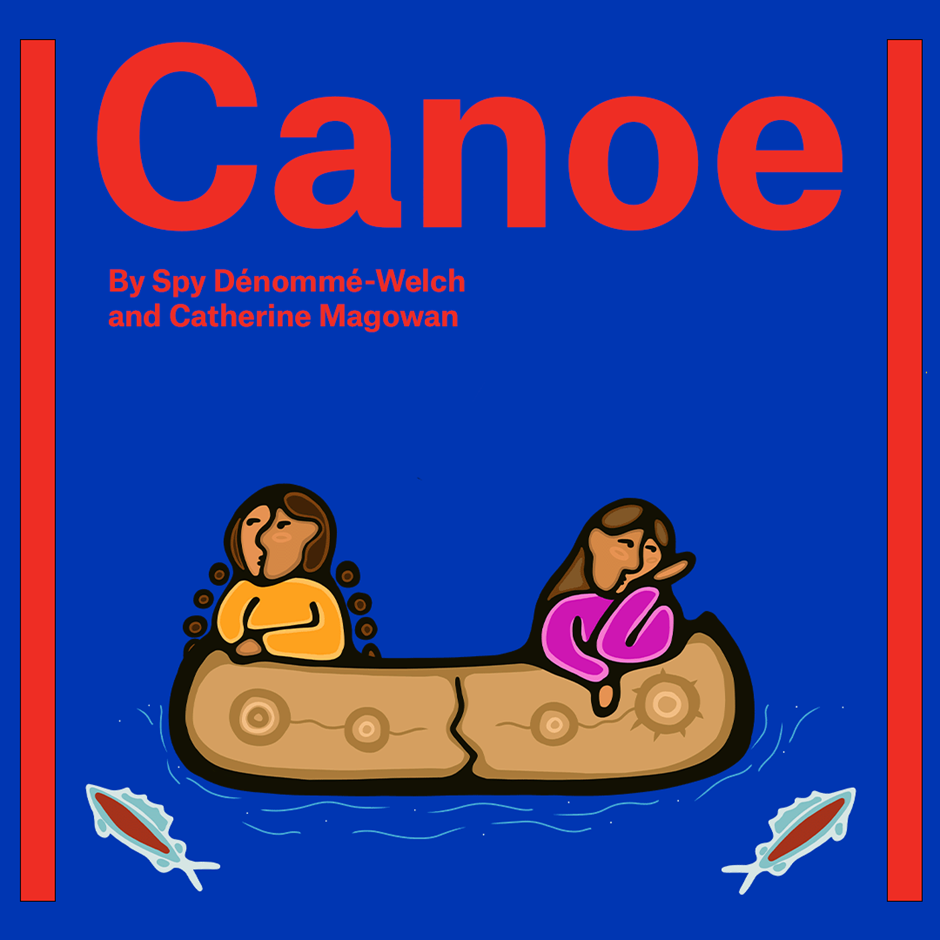
For such a brief title, the opera Canoe invites me to go on at length. It’s not that it is a difficult work, for it was very accessible to the audience at Trinity St. Paul’s. But I want to properly appreciate what I’ve seen and heard. I’m not sure I understand it although I was very moved. I believe it deserves to be presented again, not least because of its depth and richness. I hope there will be some sort of recording.
Opera is a medium that straddles boundaries, a hybrid of words and music with spectacle. How appropriate that Canoe is a product of teams working together across different disciplines, an Unsettled Score production in collaboration with Native Earth Performing Arts, The Toronto Consort and Theatre Passe Muraille.
Dr. Spy Dénommé-Welch | Librettist/Storyteller (photo by by Lady Luck photography)
Co-composed by Dr Spy-Denomme-Welch and Catherine Magowan, we are sometimes in the realm of myth, larger than life events that can’t really be shown in a realistic dramaturgy, but only through the combination of words, music and spectacle.
Creation
A great flood.
The program note from Dr Spy-Denomme-Welch, the librettist / storyteller explains the origins of the work.
It’s taken thirteen years to bring this opera to the stage, a long time to carry a work of art. When I first conceived of this opera back in 2009-2010, I imagined telling the story about the creation of the first birch canoe. From there the voices of Tree Spirit, Debaajimod, Gladys and Constance emerged, and so too the complicated and messy worlds they inhabit (both human and non-human). It’s these elements that make the story of CANOE so compelling and heart wrenching. I wanted to give the work a sense of minimalism, wonder, magic, and imagination while combining new and old forms of artmaking to help tell difficult, relatable human stories, and allow space for the Land to be heard. Ultimately, the story is shaped by a sequence of actions propelled by each of the characters at different points of the opera, all of which collectively activates their transformation.
In these ambitions I feel the team have succeeded admirably, as far as giving the work “a sense of minimalism, wonder, magic, and imagination while combining new and old forms of artmaking to help tell difficult, relatable human stories, and allow space for the Land to be heard.”
A huge story is told in an intimate space at Trinity St. Paul’s. We see mythic events comparable to the Ring Cycle (creation and a flood), yet without the pretension of Wagner, without the weight, without going on for hours and hours. This was playful even while being serious. My perspective may be off, as a person of European Judeo-Christian background, who is comfortable in a church sanctuary that might be a trigger for some, especially in combination with a story touching upon the residential schools.
There’s so much I could say, I want to proceed carefully. I slept on it Saturday and Sunday nights, awake in the night pondering a few things that I don’t fully understand, images that resonate for me in very personal ways. Self harm is terrifying. If I’m off, I hope I can be forgiven as I’m attempting to unpack the wonders of the experience, to share what I felt. I’m a privileged person, so as I was thinking about Residential Schools, the ways in which people become damaged by what they endured, I’m trying to understand but may miss some layers of what’s in this piece. This opera touches upon such things, presented for an audience that included persons like myself, meaning settlers who are trying to understand.
The presentation began with the assurance of support from a social worker if the material was too hard to bear. I recall something similar (that is, the presence of support persons) when I saw Going Home Star, the Royal Winnipeg Ballet piece about residential schools. It’s funny that we don’t offer that for other works. I know people who have issues during the annual noise-fest of the Air Show triggered by the sound of jets, reminding them of war. I know someone who can’t handle war movies because of what they’ve lived through. Perhaps this kind of support should be normalized, and we should re-think our approach to our entertainments, that may be traumatic for some people.
The Idiom of this work is a fascinating mix, at times mythic, at other times presenting average incidents of daily life such as card-playing, eating or dishwashing.
Debaajimod (or Debaaj), played by Michelle Lafferty, is a powerful presence vocally and physically on the stage. They are the one who seems to know what is going to happen or to explain what has happened to everyone else, and sing with an appropriate authority and conviction.
Tree Spirit, portrayed by Conlin Delbaere-Sawchuk, is the title role in a sense as the birch becomes a canoe. That doesn’t mean he ceases to be alive, even if we might think of a canoe (or for that matter, a tree) as an object rather than something that is in some sense alive. The part includes a fair bit of dance, expressive movement.
Tree Spirit (Conlin Delbaere-Sawchuk) and Debaajimod (Michelle Lafferty) photo: Kaytee Dalton
Gladys and Constance are twin sisters although we also come to know them as brother spirits of the elements both at the beginning (creation) and the apotheosis of the end, when (as the program says) “they are destined to travel the galaxy in their canoe, gathering Star People who have been scattered to bring them back to the Eastern Doorway”. Yet we see them playing cards, eating, arguing, living their lives in a remote forest location.
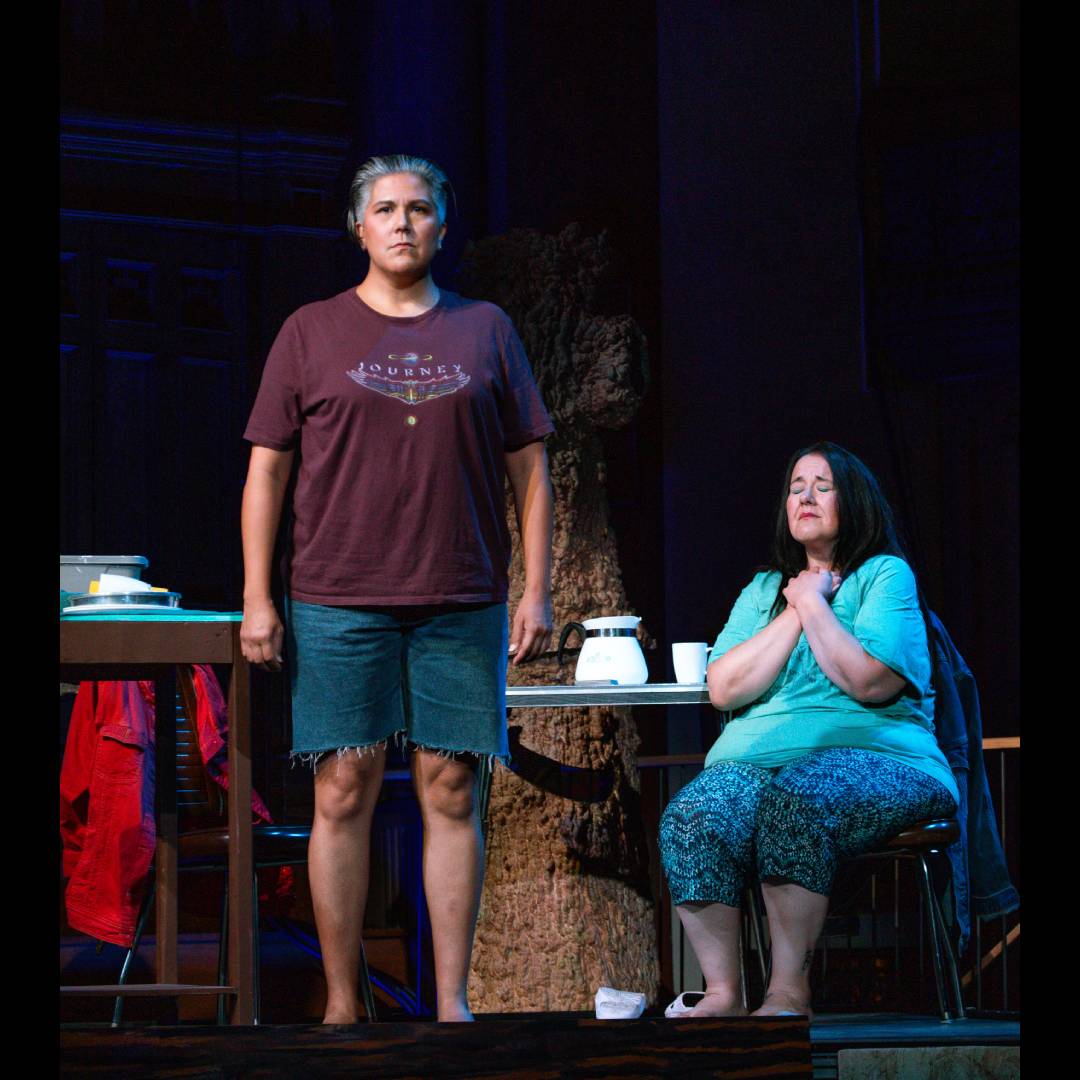
Gladys (Nicole Joy-Fraser) and Constance (Kristine Dandavino), photo: Kaytee Dalton
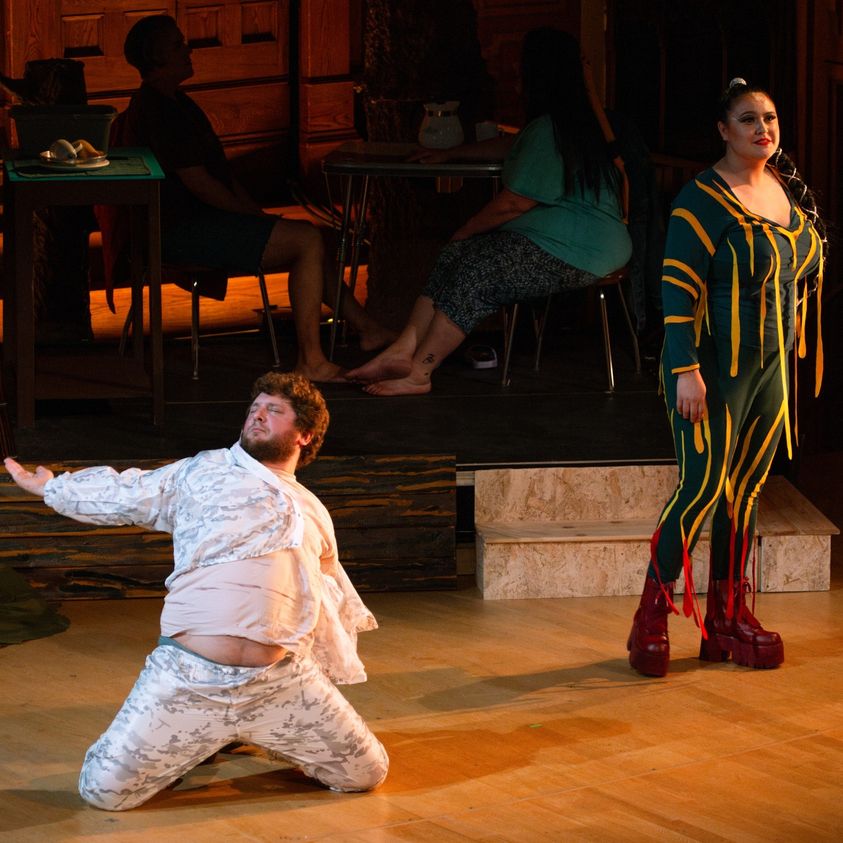
Gladys (Nicole Joy-Fraser) and Constance (Kristine Dandavino) are very different even if they are twins. The first thing we see is a disagreement, as Gladys cuts down the tree, while Constance expresses regret for this action. Gladys has scars on the arm, reminders of time at residential schools, self-harm. Constance prayed for Gladys, seemingly more loyal to the parents and grand-parents, their stories and heritage, which Gladys mocks as fairytales. But Gladys seems to be in pain.
Throughout the music serves the story-telling and a sophisticated characterization, setting up a vivid contrast between Gladys and Constance that’s sometimes ironic, sometimes very painful to observe. I tossed and turned thinking about this in the night. It’s not surprising that the music has these layers (as though Gladys has distance from the past, singing in a different style) when one recalls that the composition of this work has been underway for over a decade, as its style has been changed, as the creators report in the program. It’s breath-taking in its simplicity, very accomplished writing. At times I thought Nicole approached Gladys almost as a cabaret performer, seeming to resist the operatic illusion by playing with the vocal production, sometimes sounding operatic, sometimes jazzy or like a pop singer. Dandavino in contrast had a more serious operatic sound, even when singing with the utmost softness, coming at the story from the other side. They truly were brilliantly matched in their scenes.
There are unique Canoe textures, such as the very modern usage of the word “whatever”, or swear words, yet alongside these old music instruments to suggest period performance. At times we’re hearing instruments making a very antique sound, the theorbo, the harpsichord, the recorder and strings. Yet at other times the theorbo resembles a modern guitar. Sometimes we were in a mythic place, sometimes we seemed to watch everyday life. Music direction was by Catherine Magowan.
Catherine Magowan, Music Director and co-composer (photo by Lady Luck photography)
This is the second consecutive show I’ve seen with a tree alive on the stage, although this is perhaps the opposite of what we saw in Crow’s Theatre’s Master Plan, where the tree is the ironic observer and commentator on the events.
Writing in Opera and Drama Richard Wagner observed that while opera had been intended to employ musical means to create a dramatic form, instead it tended to employ dramatic means to create a musical form. The best operas I know touch upon something verging on spirituality in their dense combination of elements that signify so much more than the sum of their parts, a quality I felt more than once watching Canoe for the first time, and which I am certain would resound much more profoundly in seeing the work again. The best works are those we need to see over and over again, deepening our understanding of them. That’s what I would hope for with Canoe.
I hope to see this opera produced again somewhere, and will keep my eyes open for any possible recording, video or audio, so that I can revisit the magic I experienced this past weekend.
I first encountered Alexander Cappellazzo in the title role of L’Amant anonyme by Joseph Bologne for Voicebox- Opera in Concert back in March of this year, when he sang “a passage in the first scene that contains an obscene number of high notes, that he executed bravely and accurately, managing to keep things light and comical rather than scary, as they would have been for those of us who can’t sing that high“.
So yes I was obviously impressed. But he’s much more than just a tenor soloist.
Alexander Cappellazzo
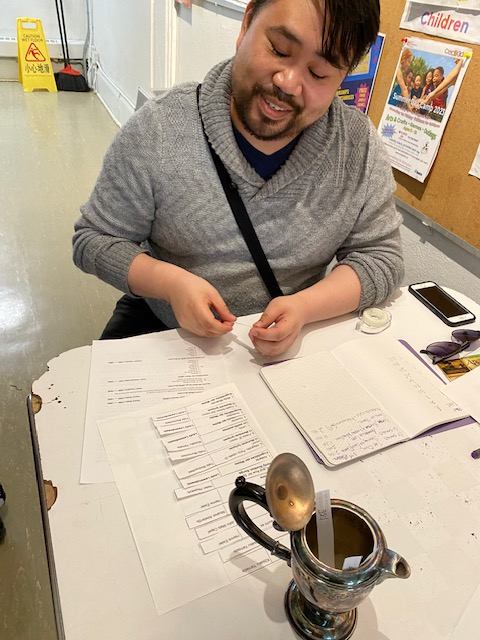
Alex isn’t just a singer but also the founder of Apocryphonia and the Diapente Renaissance Vocal Quintet, two Toronto-based groups dedicated to showcasing underperformed repertoire. In May I saw a very original concert from Apocryphonia, employing a highly original approach, where each audience member participated in a random process to assemble the order of pieces on the program, as you can see in this photo.
Wacky? but also very illuminating. We had a new way of seeing the music and concerts.
The jar in the foreground only had a few pieces left when I took this picture. Notice how the program is being assembled on the page.
Apocryphonia are back Sept 30- Oct 1. with their first concert this fall. I was curious about both of Alex’s ensembles, so I determined to follow up with some questions.
Barczablog:Are you more like your father or your mother?
Alexander Cappellazzo: With how I grew up there ended up being many more influences on my character than just my mother and father.
I lived with my grandmother, and we did a lot of stuff together: I have fond memories for instance of going to Rouge Park to look at the swans with her, or going to the Pacific Mall to pick up almond buns and drinking sugarcane juice. She had a huge influence on my upbringing, and imparted to me a sort of moral awareness and sense of justice I think still guides me. My father has a sense of curiosity and a willingness to discover new things that I admire. My mother is one of the kindest people I know, everywhere she goes she is well loved; I try to be like her in that respect. One of my aunts used to have season tickets to the TSO and I would go with her to see the orchestra growing up, and I would see Mirvish production musicals with my mother; so I was exposed to a decent amount of live music and performance growing up too!
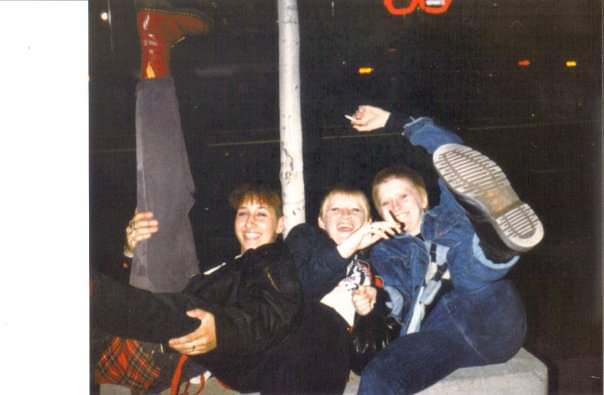
A picture of Alex’s mother, aunt and a friend from the 1980s.
My mother, uncle, and my father were in the Toronto punk scene back in the 80’s, and my step-father was part of the Montreal scene. Besides my uncle, you wouldn’t know it if you saw them now that they were part of the scene, but there are some documentaries and books where there’s video or images of them. Hearing stories about the local and worldwide punk scene growing up certainly shaped my perspective towards production. At the last Apocryphonia concert a friend of mine came up to me and said “I’ve heard of DIY Punk, but this is the first DIY Classical concert I’ve seen.”, and that is one of the greatest compliments towards making art I’ve received.
Barczablog:What is the best or worst thing about what you do?
Alexander Cappellazzo: Simply put, the best thing is that I get to make music! What a joy it is to sing, and even more so when it brings you and others pleasure, inspiration, or whatever motivation it does at that time. I know it’s a simple answer, but this has to be at the core of it all or else why do this sort of work? You gotta love it.
Producing concerts is on equal footing with performing in them in terms of enjoyment; it offers so much freedom and creativity. There’s so much repertoire out there that I love, music I’ve heard that I want to share with others; that I never know if it’ll get any airtime. I don’t have to wait around for someone else to decide to do it. I trust that someone out there is going to like the music I like, and will want to see it.
As for the worst thing, I have to be calculated while writing this; I don’t want to end up writing a rabid polemic on the state of the industry, or come across as whiny or ungrateful! There’s a funny part in Ilf and Petrov’s book The Twelve Chairs – a book that was almost a Shostakovich operetta, but sadly he passed before it was finished; an absolute tragedy… – where a small town event takes an entire day because every speaker ends up making the same rant about the ‘international political situation’; sometimes I fear I can get like that if I don’t rein myself in, or write draft outlines of what I’ll say.
One such struggle for me is the extroversion required for social media and promotion. Social media culture isn’t for me; I don’t think we need to know everything about everyone at all times, and there’s this pressure to be omnipresent on those platforms. On top of that, I run an ad blocker online because I hate the feeling of people trying to sell me something.
The sort of self-commodification that comes with performing and producing isn’t something I totally mesh with. I’ve had to think of that sort of stuff differently in order to not feel gross doing it. It is necessary though, because it’s quite egotistical to think that you can just hole up, do nothing, say nothing, and people will come to you.
Barczablog:Who do you like to listen to or watch?
Alexander Cappellazzo: My wife and I watch a lot of films. We have a subscription to the Criterion Channel, which for 10$ a month we have access to a whole bunch of great movies from around the world, plus commentaries and interviews. Since January we’ve watched around 68+ films, usually around dinner. Some recent stand-out films we saw include ‘High and Low’ by Akira Kurosawa and its commentary, the black-and-white edit of ‘Johnny Mnemonic’ with Keanu Reeves, and Roger Corman’s Edgar Allen Poe movies starring Vincent Price (he’s so cool!).
I’m also a fan of giallo films, especially their soundtracks. Those 1970s Italian genre films have this amazing sense of style that isn’t afraid of being absolutely absurd at times. In the winter, I have a pair of leather gloves I call my ‘giallo gloves’, and pretend my eyes are a camera and grab various walls, fences and doorknobs mysteriously for fun. It amuses me. I want to produce a giallo-themed show one day, that’s one of my dreams.
We also watch video essays on Youtube and Nebula. There’s a lot of really interesting, smart and entertaining people making videos on so many subjects out there! Some of my favourites include Jacob Geller, J. J. McCullough, Philosophy Tube, Religion for Breakfast, and City Beautiful.
As for listening, I highly, HIGHLY recommend the Youtube channel, My Analog Journal. DJ Zag Erlat runs that channel, and he or his guests play vinyl sets of different genres from all over the world. During the lockdown I’d listen to him livestream tri-weekly music sets; I discovered a lot of great music that way. I also watch/listen to classical music score videos on Youtube, which is how I find a lot of new rep.
A few of my all time favourite groups/musicians include: Peter Gabriel-era Genesis, Kraftwerk, 50 Cent, the Igor Nazaruk Quartet, Milton Nascimento, Gesaffelstein, and The Weeknd.
Barczablog:What ability or skill do you wish you had, that you don’t have?
Alexander Cappellazzo: At this point I truly wish I took math class more seriously. I have a great appreciation for Pure Mathematics as well as programming/coding, but I haven’t really committed the more advanced mathematical concepts to memory. I’m really thankful that calculators and ChatGPT are able to help me offset my lack of math/programming expertise, especially regarding Google Sheets! Long, long ago I wanted to become a chemist, mostly because I wanted to learn how to transmute elements into gold, but my mind always drifted when it came to formulae, so I picked something else to want to be.
Barczablog:When you’re just relaxing and not working, what is your favourite thing to do?
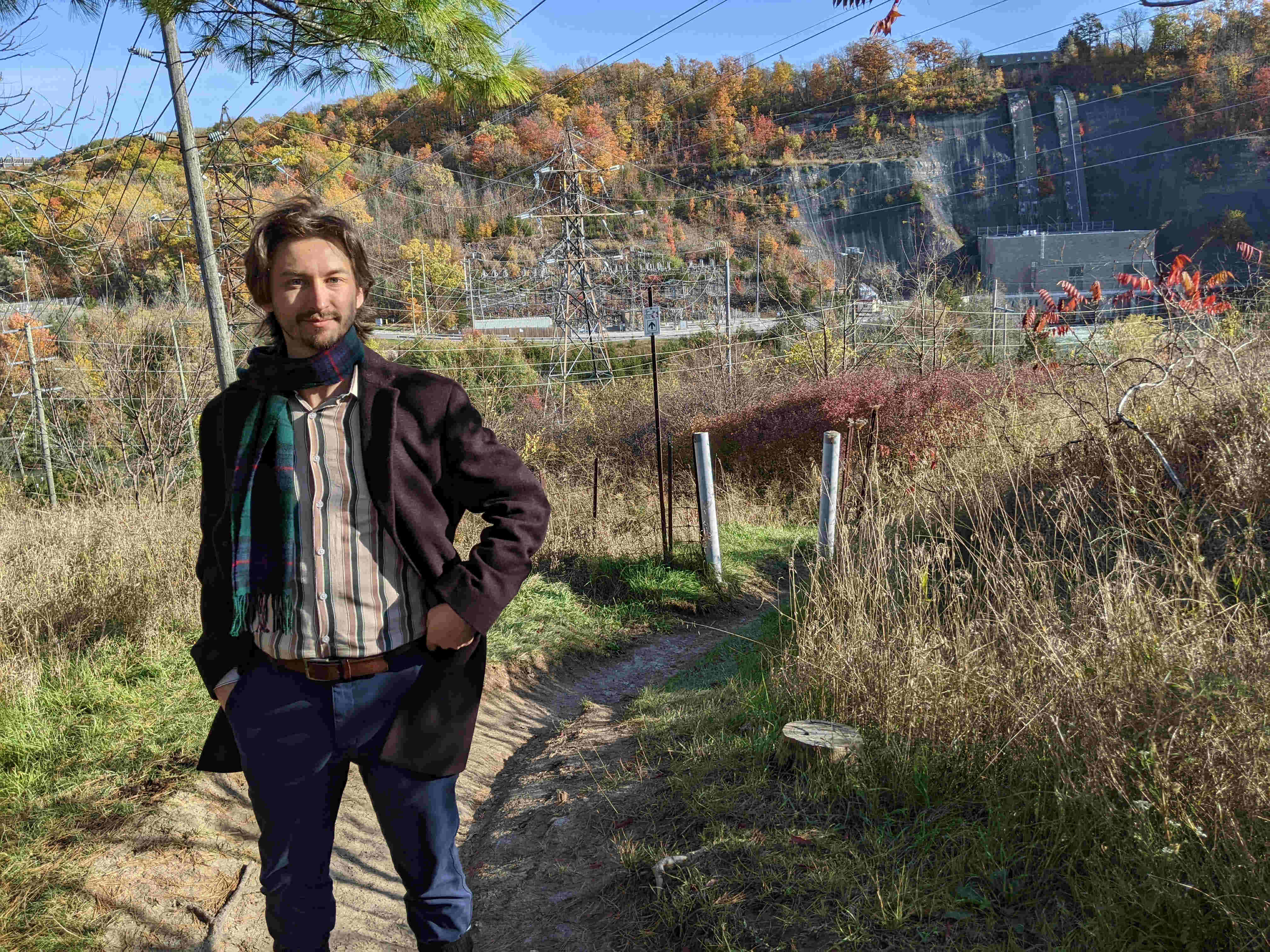
Alexander Cappellazzo: My wife and I try to make good use of our weekends by going on trail hikes and 25km-or-so walks around the city. Where I am in Scarborough I’m close to Highland Creek/Cedarbrae Park, which is one of the best parks in Toronto. The salmon spawn there every fall, we’ve got at least 10 or more very-friendly deer (don’t approach them however!), and it connects to the Waterfront Trail along Lake Ontario. We’ve been doing bits and pieces of the Bruce Trail too; Short Hills Provincial Park in St. Catharines is so far my favourite of it, and on the other side of the Niagara Falls border there’s the Schoellkopf Power Station trail that goes through the ruins of an old hydroelectric plant. I love seeing ruined buildings or signs of previous structures during nature walks, it’s an interesting combination.
At home, my medium of choice is torn between film and video games. I’ve already spoken about the films I love, so I’ll go on to the latter subject. I enjoy classic 6th and 7th generation games like the original Silent Hill Trilogy, Hideo Kojima’s Metal Gear Solid, Suda 51’s Killer7, the Fallout Series and Miyazaki’s Dark Souls games. Less substance narrative-wise, but still a favourite of mine currently is Isonzo, a WW1-themed shooter set in the Italian Front. It’s got a wonderful attention to historical detail in its maps and outfits, and a Puccini-esque inspired soundtrack. The last game I played worth talking about was called Paradise Killer, a sort of cosmic horror, vaporwave, dystopian murder mystery; a very unique premise!
I always tend to wait a while before buying new games. Last year I promised myself I’d buy Elden Ring after I finished writing my grant proposals, but I have yet to purchase it…
Barczablog:What was your first experience of music ?
Alexander Cappellazzo: I will tell three stories relating three first experiences; I’m like a one-person Rashomon over here.
1 – I can’t pinpoint the specific year, but I do know the first piece of classical music that inspired me to become a fan. I used to play trumpet in elementary school band class, and as I was practicing pieces in the book I became enamoured with a specific melody: Tchaikovsky’s ‘Slavonic March’. I half-remember going to HMV with my mother or grandmother and trying to find it on CD. That one piece and that melody is what sparked my love for orchestral music. I eventually branched out towards Prokofiev, Rameau, Purcell, and Beethoven; the last two by way of Wendy Carlos’ amazing soundtrack to ‘A Clockwork Orange’
(Fun Fact: I was apparently named after Alex Delarge!).
2 – When I was very, very young, I used to dance a lot to Oasis’ album, ‘What’s the Story Morning Glory’. I seemed to gravitate to Britpop/neo-mod bands and the Beatles – especially the Beatles. Sadly I couldn’t ride a Vespa at that time.
1960s/70s Progressive Rock bands like Genesis, Emerson Lake and Palmer, and King Crimson really were part of my early musical awakening. The songs told stories, they had different timbres and movements, some songs were over 20 minutes long! It could be beautiful, it could be angular and harsh; it knew how to move you.
3 – My grandmother was a soprano in the church choir, and every Sunday we’d drive over together and I’d sit in my pew and try to figure out how hymns worked. I used to talk with the organist a lot too after services. I loved the sound of the organ, how it filled a space and all the colours it made. I did eventually join the choir with my grandma; she had a quiet speaking voice, but one of the loudest singing voices. We used to listen to a cassette tape of Les Miserables in the car, which was her favourite musical.
If you understand the above three tales, you understand everything about what I like about music.
Barczablog:Who is your favorite composer?
Alexander Cappellazzo: I cannot name just one, that is impossible.
Here is the definitive Cappellazzo tier list of classical composers:
S Tier:
Charles Ives, Alberto Ginastera, Ralph Vaughan Williams,
These three are the cornerstones of my musical personality.
Barczablog:as you can hear in this example
A+ Tier:
Leo Ornstein, Olivier Messiaen, Alfred Schnittke, Samuel Coleridge-Taylor
No matter what, I’ll always come back to these guys.
A Tier:
Henry Purcell, Arno Babajanian, Michel Lambert, Murad Kazhlaev, J. S. Bach
All of them are very great composers, with specific pieces that move me considerably.
Barczablog: Another example
Barczablog: I dream of the day that opera is as Canadian as our theatre or our ballet, where you see companies run by Canadians and mostly performed by Canadians. Can you imagine Canadian opera companies performed with Canadian personnel?
Alexander Cappellazzo: Short Answer: Yes.
Long Answer:
The talent exists, we can see that easily enough by how many amazing Canadian musicians and creative-types we have here and abroad. In my opinion the challenges regarding opera in Canada are much different than opera in Europe or the US. It is a very large country, and many of our cities are not that large in comparison. I wish to see many things happen in the Canadian Opera field, but some of the more urgent ideas is the need to create, support and invest in smaller to mid-sized opera companies, especially ones outside of major urban centres. What is needed is a wider base of the pyramid so to speak.
We have quality, but now we need quantity. This serves two purposes that would aid Canada’s arts sector: paying arts workers; thus retaining talent, and creating more opportunities to grow new audiences; thus growing demand.
I am optimistic about this, the field feels like it is more unified than before. It’s a start and I hope it yields some great results.
Barczablog:How did you get the idea for Apocryphonia? please explain the concept.
Alexander Cappellazzo: Apocryphonia is something that has taken almost a decade to become a reality, and the catalyst can be traced to my fleeting mortality and inherent curiosity.
I’ve always gravitated to non-canon/non-standard repertoire since I started listening to classical music, and I always loved exploring new things rather than sticking with what was already in front of me. I would spend hours at McGill in the library looking for interesting new repertoire to program for recitals; I still do. Both my singing teacher and my vocal coach saw my curiosity, encouraged it, and suggested that I pursue it post-graduation.
I remember during my undergrad reading a professional singer’s bio saying they performed the same role over 300 times or so; that depressed me quite a lot. I didn’t want that future, but it felt unavoidable with how classical music/opera is programmed.
I began to realize that I had two choices: wait around for someone else to program the music I like to perform/hear, or do it myself and trust that others would be interested too. I was really frightened during the lockdown years, and realized how fleeting life is. Any fear of starting something new and unfamiliar was superseded by the fear of passing away before I ever started.
I always wanted to form my own company but I didn’t know how to start. I bit the bullet by writing a grant for a Ralph Vaughan Williams concert for his 150th Anniversary; at that time the only event for RVW150 scheduled in Canada. How could someone like Vaughan Williams, who is not unpopular by any standards, be this underprogrammed? How could there be so much great music out there and yet it hardly sees the light of day?
Surely there must be a conspiracy…
The idea of secretive, hidden music, kept out of reach by concert halls and opera houses, floated in my head until on a neighbourhood walk the word ‘apocrypha’ came to mind.
Apocrypha: secret writings hidden outside of the canon.
I was dealing with Musical Apocrypha…
Apocryphons! (-phone being the Greek for sound, naturally.)
This is the origin of Apocryphonia, the name.
I’ve always enjoyed some healthy esotericism, and this was my way to combine that love with my love of rare and underperformed music. I want to show people how arbitrary the canon is; I want to show people how much great music is actually out there, hidden from view because of decades of Classical Music’s equivalent of binge watching ‘The Office’ on Netflix for the 25th time. It’s not that I don’t like the canon, it’s only that I was blessed with not being attached to the myth of the canon or notions of its ‘genius’ at a young and formative age.
The goal is to keep programming interesting concerts of rare and underperformed classical music. I enjoy playing around with the form of concerts too; randomizing the performance like in my past May concert… Barczablog: You see the description and photo at the beginning of the interview, when I spoke of this. …or shifting movements around of pieces to create a new story as will be the case for the upcoming concert.
There’s historical precedent to playing around with concert forms, but that tends to get glossed over by those that write musical history.
On top of that, I want to create an atmosphere for audiences that is not elite and exclusionary; I want to build a true grassroots community of music lovers through Apocryphonia. I tell people when I’m out putting posters up that I’d rather have five audience members pay $10 than one person pay $50. Toronto is an expensive place to live, and I don’t want people to have to choose between groceries/rent or culture! We’ve had audience members that loved the shows who only could come because we eliminated the financial barriers and welcomed them in without judgement.
In Apocryphonia’s current form, I design all the posters, secure the venues, unite the performers, create the contracts, the schedules, write the grants, create the ad campaigns, post the social media, and so on and so on. I’ve learnt a lot because of this and it’s tough, but the more you do it the better you get. I’m lucky to have a network of people I trust to confide in or go to for advice also.
The plan this year is to expand, find a partner(s) and incorporate to non-profit status. In three years the goal is to be established enough to produce concerts involving orchestra and/or choir.
Barczablog:Tell us about the upcoming Apocryphonia programs
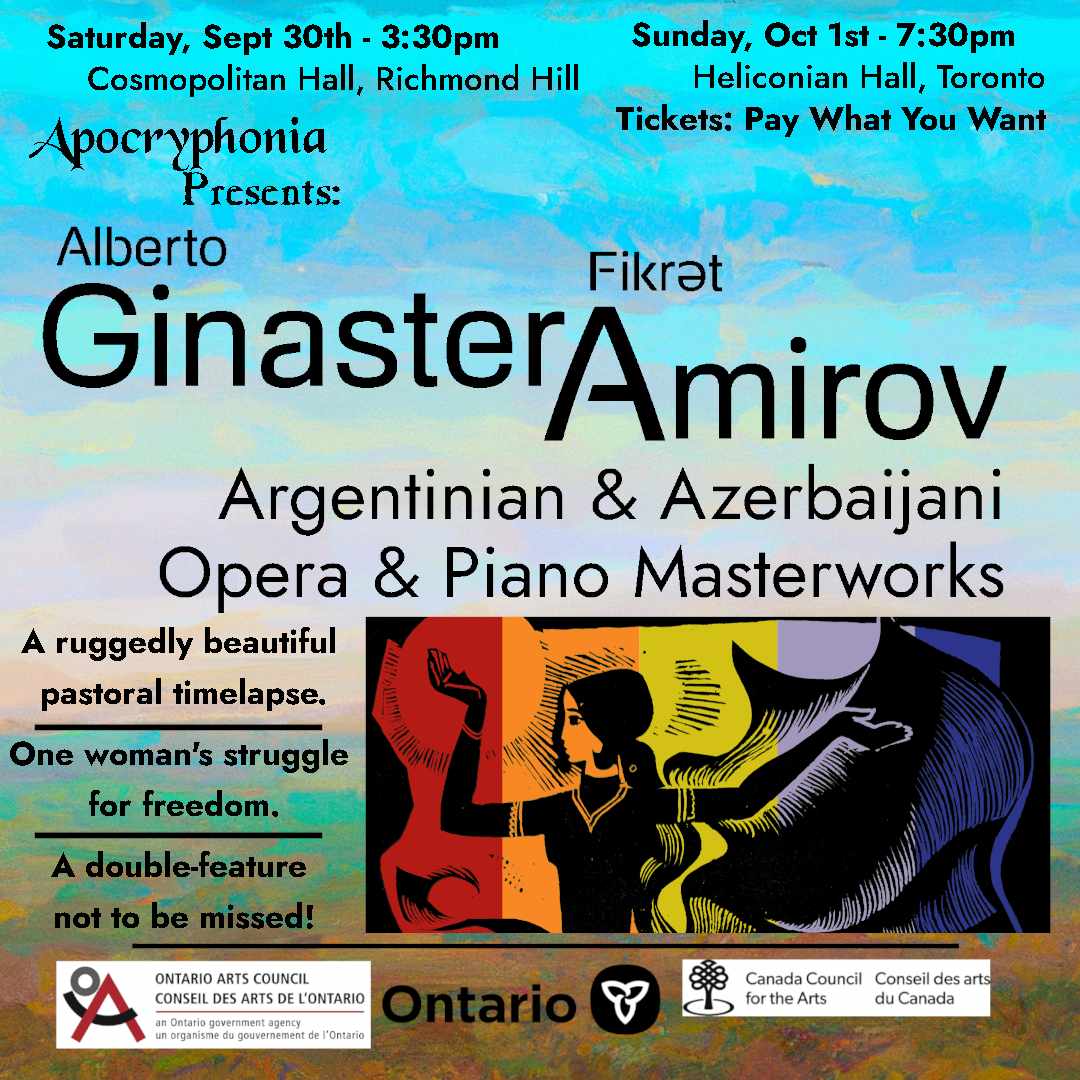
Alexander Cappellazzo: Saturday, September 30th – Cosmopolitan Music Hall (Richmond Hill) & Sunday, October 1st – Heliconian Hall (Toronto) is GinasterAmirov: Argentinian and Azerbaijani Opera & Piano Masterworks. This is going to be a great one; it’s a double-bill of music by Alberto Ginastera and Fikret Amirov. The first half is centered around Los Horas de una Estancia, a song cycle by Ginastera about a day on an estancia ranch, using his Piano Sonata No.1 to further evoke estancia goings-on, and the second half is an abridged performance of Amirov’s opera Sevil interspersed with the Canadian premiere of his Romantic Sonata.
You’ll find that despite both composers never meeting each other, there’s a certain kindredness to how they approach harmonies and rhythms, and how their national culture inspires their compositional styles. On top of that, there’s a big feminist angle to the show; the opera Sevil being very much a story about a woman challenging patriarchal structures and gaining freedom and agency, and Ginastera’s works either using women’s poetry (that of novelist and poet, Silvina Ocampo) or being premiered by women performers (as is the case for both pieces).
Joining me is the wonderful soprano Thera Barclay, and the amazing Narmina Afandiyeva at the piano.
Thera Barclay – Soprano
Narmina Afandiyeva – Piano
After that, Sunday evening, November 12th at Heliconian Hall is Apocryphonia/Diapente’s Rossi of Mantua, the Songs of Salamone; which delves into the music and life of Jewish-Italian Renaissance composer Salamone Rossi (and friends). Rossi was known for several musical innovations involving trio sonatas and monodies, and also wrote numerous Hebrew-language motets and Italian madrigals. Tickets aren’t on sale yet, but save the date!
Early December, stay tuned… I was originally going to be producing my first Apocryphonia opera, but we hit a snag with funding so that got postponed (I expect to produce it for Fall 2024 now). One must always be flexible, and I tend to have fallbacks in case of stuff like this happening. In its stead I’m working on an absolutely gruesome classical cabaret of horror-themed classical music.
Tuesday, December 19th is The Diapente Book of Carols, which is bound to be full of Renaissance holiday cheer. We’ve got an assortment of well known and lesser known stuff in store for you with that one.
Barczablog:Talk about Diapente Renaissance Vocal Quintet
Alexander Cappellazzo: Peter Koniers and I formed the Diapente Renaissance Vocal Quintet last year right when I moved back here from Montreal. I was part of a madrigal quartet in Montreal, Toni Precari, and it was some of the most fun I had singing. Before moving back home to Scarborough in 2021 I contacted Peter, who is also a fellow McGill alumni, and we started assembling the team:
Jane Fingler – Soprano, Jonathan Stuchbery (also a McGill friend!) – Tenor and Lute, & Martin Gomes – Bass.
L-R Peter Koniers–Countertenor, Jonathan Stuchbery–Tenor & Lute, Jane Fingler–Soprano, Alexander Cappellazzo-Tenor, Martin Gomes-Bass
At that time the Omicron variant struck so there wasn’t much else we could do but hunker down and plan for the future; but eventually we all met up, sang some stuff together, and really vibed with each other. We’ve been singing together ever since!
Montreal has such a strong culture for small early music groups forming, but it feels like Toronto isn’t like that yet. I think we’re the only early music vocal quintet currently active in Toronto, which is odd in my opinion for such a big city. We’ve got some superb larger early music groups though like Tafelmusik, Opera Atelier & Toronto Consort though! I hope more smaller groups form in the future, then maybe we could all collab, or start a Toronto early music festival, or something…
Currently, we take turns programming the concerts for the season. The Rossi concert is my idea, and Jane Fingler is working on a Barbara Strozzi/Maddalena Casulana concert for May 2024. Besides that, we’ve got some concerts lined up around the Golden Horseshoe in conjunction with various organizations this year; it’s exciting to see that people are as enthusiastic as we are about this kind of music.
We go out there, tell stories and have a fun time; audiences can tell when you really love what you’re doing and it fuels their enjoyment.
Barczablog:Please tell me what you understand by the term “historically informed performance”, and its relevance to your creative life.
Alexander Cappellazzo: The more you know, the more options you have. Historically Informed Performance in my opinion is the practice of searching through primary sources what those options are for how to perform. With how it stands currently, this phenomenon tends to primarily extend to ‘Baroque and before’ performance practice. One reads a treatise that states how things were done at the time and they do that that way. It creates an amazing effect that you hear things as if they were done at that time.
I’m cheeky however, because technically speaking you can emulate early-1900s styles of early music interpretation and claim that it is ‘historically informed’ by early 20th century aesthetic practices. That is where this concept becomes very liberating because you can start thinking laterally about these treatises. For instance: there are contradictory primary sources out there, or anytime someone writes down what they think performers ‘should’ be doing you can extrapolate that at that time they might not have been doing it that way!
You also start seeing what aspects are being selectively left out of modern ‘historically informed performances’, especially with regards to audiences and spaces.
I didn’t really like early music in University, but I grew to really love it when I learned how much creativity it allowed for performance; a lot of that is due to historical views on improvisation and ornamentation. Take alternative historical tuning into the mix, and all of a sudden you get music that sounds like nothing else!
I highly suggest Le Poème Harmonique’s album Cœur, airs de cour français de la fin du XVIe siècle for some great French early music. If you want something less accurate, but full of passion and love for early music, check out Sting’s (yes, that Sting) John Dowland album, Songs from the Labyrinth.
Barczablog:How do you reconcile your love of cultural artifacts and performance practices from long ago with modern life?
Alexander Cappellazzo: I think in some way the love of the old, of history and antiquity, acts as a buffer to some of the worst things modern life has to offer. There is something fun in how inefficient the past is; it’s almost rebellious in our current ultra-efficient present.
The basement room where I do most of my work is styled like a Victorian lounge; with deep green walls, brocade curtains and spattered curios on shelves wherever they can fit. I like it because it feels a little removed from the now; I enjoy a certain removedness and distance. The more you open yourself up to the past, the more you can see through present obfuscations as well. Do people want to see the same thing, or something different?
I listen to a lot of old recordings of singers, and they tend to have more edge to them when they perform. I want to take the good stuff from the past and leave the bad stuff behind when I engage with the past. Just because something artistic has ‘advanced’ doesn’t mean that the only option is to either forget about it or preserve it in time. You can play with old toys and new toys! You might even come up with something altogether brand new that way.
Barczablog:Are you also singing or performing with anyone else?
Alexander Cappellazzo: This October I’ll be Frederic in Toronto Operetta Theatre’s Pirates of Penzance, which I am extremely excited for. It’s my first Gilbert & Sullivan operetta, and I absolutely love this kind of stuff.
In November I’ll be in Montreal performing for the second time Maria Jiminez’s Oratorio pour Marguerite Bourgeoys, which premiered last May. On top of that I sing with the Jubilate Singers, who have a concert on November 25th. Two days later, November 27th, I’ll be in the Brott Festival’s Messiah doing solo and the chorus singing.
Every Sunday you can catch me at Metropolitan United Church, where I just started as their new Tenor Section Lead. So far it’s been a blast!
Barczablog:Do you have any influences / teachers you’d care to name.
Alexander Cappellazzo: Of course! I owe a lot to a lot of people, but here are a few:
My teachers, a lineage including Lena Wills, Peter Barnes, Stefano Algieri (whom I spent the most time with and owe much to), and most recently Brett Polegato.
My coaches at McGill: Dana Nigrim, Olivier Godin, and Louise Pelletier. Thanks for putting up with me throwing a bunch of random scores that weren’t Mozart and Schubert at you each week!
Patrick Hansen and Stephen Hargreaves who run McGill’s opera program and weren’t afraid to push the boundaries of what opera/classical music can be.
Dr. Ralph Vaughan Williams, a man I never met but feel such a connection to with how we view music, community, and the world.
Apocryphonia begins its season September 30th at Cosmopolitan Music Hall in Richmond Hill and then October 1st at Heliconian Hall in Toronto. Click here for tickets.
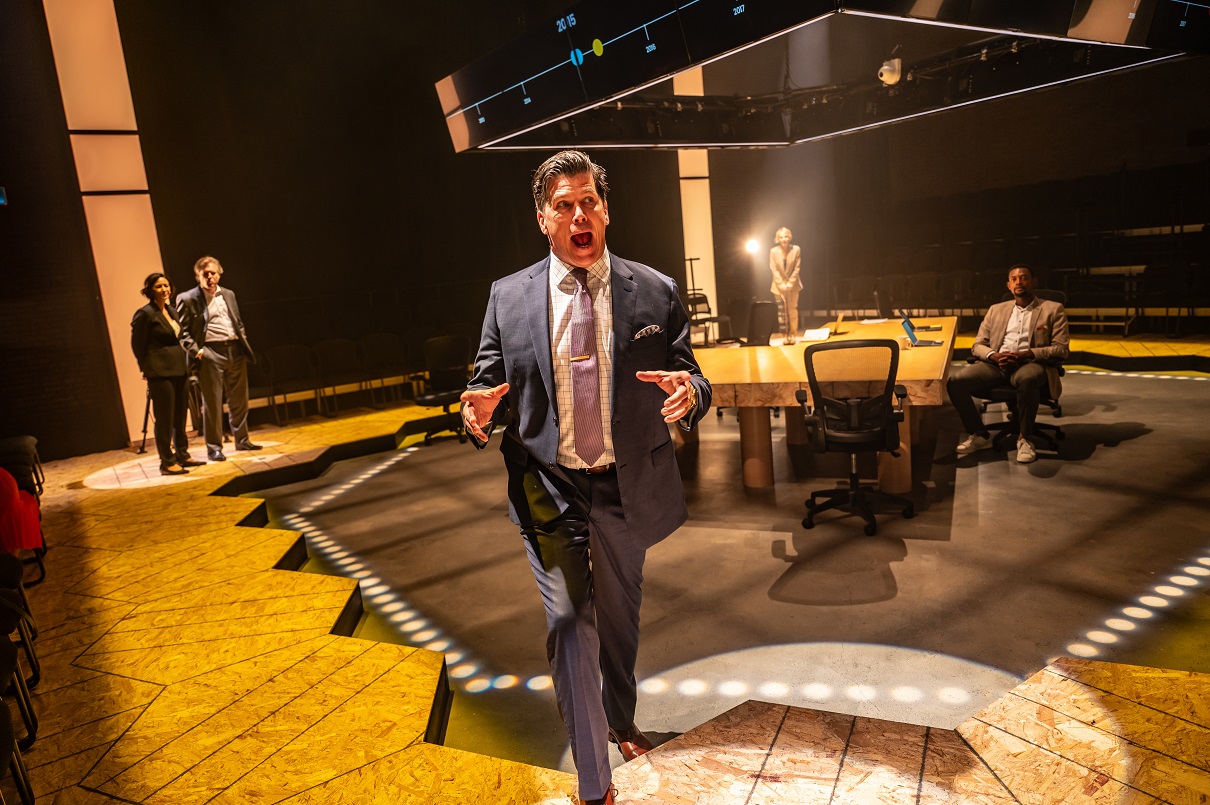
Crow’s Theatre opened The Master Plan tonight, the world premiere of Michael Healey’s adaptation of Josh O’Kane’s book Sideways: the city Google couldn’t buy. Directed by Chris Abraham featuring a powerful ensemble cast this is the most fun I’ve had in a theatre in a long time.
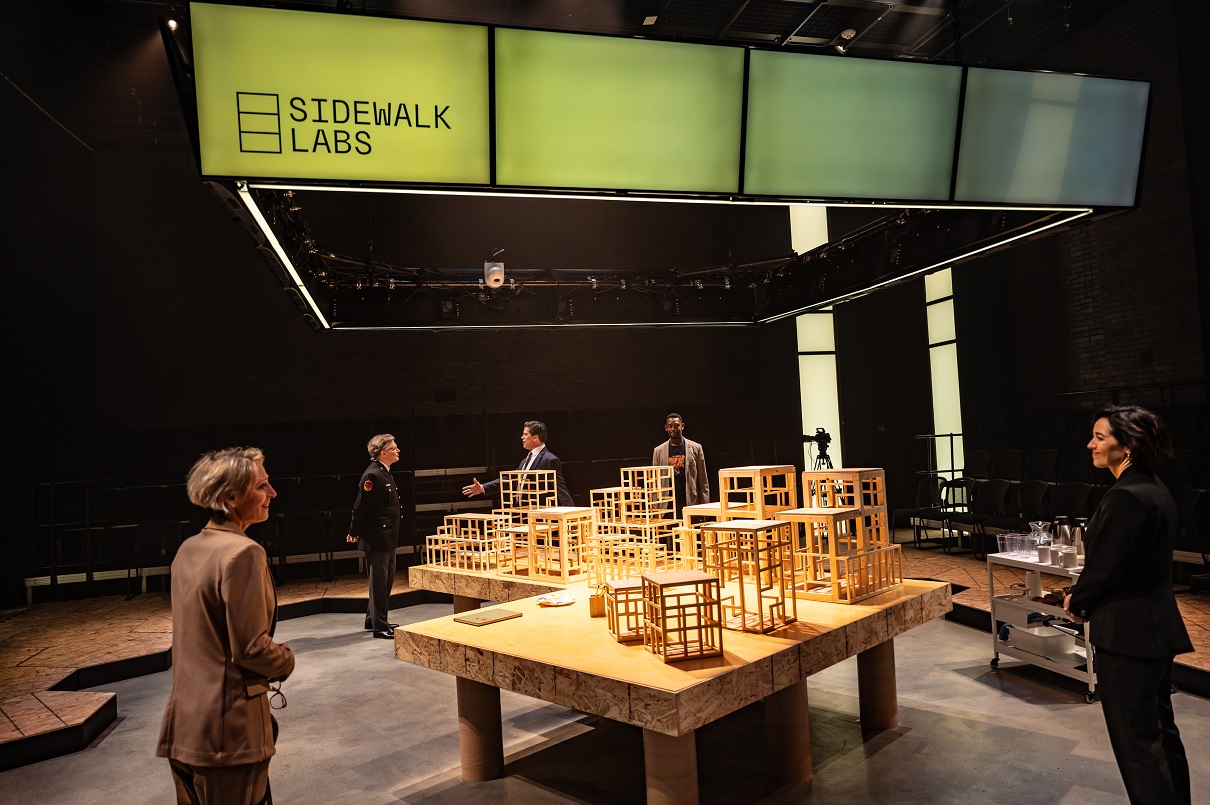
The video design is very memorable, with Amelia Scott credited as video designer, although it may also be partly Joshua Quinlan for the set that displays the video. In sum I was reminded of the use of video in Robert Lepage’s 887 and in the Shaw Festival’s Shadow of a Doubt directed by Peter Hinton, lending a curious sort of authenticity to the proceedings as though we were simultaneously watching something live and something being televised. There were often so many places to look not just because we were in the round but also with the video display capturing additional nuances, lending a gravitas to everything.
l-r: Philippa Domville, Ben Carlson, Mike Shara, Christopher Allen, Tara Nicodemo, video screens visible at the top (photo: Dahlia Katz)
It’s a different show I believe if you sit in the first two rows, rather than the last two. I sat in that furthest back row, still relatively close to the proceedings, given it’s only the fourth row: but bemused by the video display and watching the entire audience responding, screaming with laughter, reacting to everything before us. In the first row I think it becomes much funnier, much lighter, because if has a different balance. I may have to go back to try that, sitting up front.
The show is telling a story that’s universal even if it’s about recent events. If you want to read some different versions of events try googling “quayside waterfront sidewalk toronto” to get a few versions. Or read O’Kane’s book, which is available from Crow’s. I’ve been reading a library version but think I might buy a copy now that I’ve seen this compelling play.
It comes at a time when I’m reading every tweet from Jennifer Keesmaat (@jen_keesmaat Former Chief Planner of Toronto) dissecting Doug Ford’s scandalous deal-making, enjoying the lessons I’m getting in social science from my friend Bill Denning, while watching democracy unravel on either side of the border. Take your pick, do you prefer CNN or MSNBC to observe the GOP pissing on Lincoln’s tomb, or the blatant disregard of the rules at Queen’s Park. I recall how in 2016 began what seemed like a golden age for comedy, as Saturday Night Live became arbiter of the truth, while the stuff you’d get on the news was impossible to fathom. Perhaps that’s how to approach Healey’s adaptation, with the knowledge that horror can be funny. And this is horrifying stuff, so desperately awful in its unfolding, such a perfect portrait of Toronto as to make you laugh with recognition.
There’s a poignant speech about NIMBY-ism that might work as Toronto’s eulogy if we were dead. But we’re stumbling on, still here but messed up.
It’s a lovely illustration of the life cycle for projects. We see the poetic energy at the beginning, when everything is beautiful. And we see things shift towards audits and security questions, creativity forgotten in the shadow of people covering their butts, losing their shirts, and just plain tired.
Abraham has the cast performing heroics for two and a half hours of witty sparring across the space. Everyone has a main character plus other roles they take on.
Mike Shara is Dan Doctoroff, the ugly American we meet in O’Kane’s book, but wow he’s been fleshed out, persuasive and believable.
Dan Doctoroff (Mike Shara) in the foreground, with (l-r) Tara Nicodemo, Ben Carlson, Philippa Domville and Christopher Allen. (photo: Dahlia Katz)
Christopher Allen is the likeable side of Google, in the role of Cam Malagaam: a character we discover is actually an amalgam (ha!) of 30 characters, the one to deliver the haunting NIMBY epilogue.
Ben Carlson is Will Fleissig, reminding me of some of the bureaucrats I’ve known in my time at the university, people who skillfully talk out of two sides of their mouth. I know people just like this.
Philippa Domville is heroic as Meg Davis. She plays her parts with a cane and a cast on her leg, although you assume it’s the way the part was written. She’s one of the most sympathetic people up there, although everyone takes a turn.
Peter Fernandes plays a tree (which makes sense given the sustainability objectives of the urban project in the show), and also takes a turn as the book’s author, as we see for a moment how the story was captured when O’Kane was a reporter for the Globe and Mail.
Peter Fernandes as Tree, Ben Carlson in background (photo: Dahlia Katz)
Yanna McIntosh plays several roles including Helen Burstyn and John Tory. Tara Nicodemo plays several roles including Kristina Verner.
As I was reading the book I was reminded of the film Oppenheimer, another adaptation of non-fiction, as I wondered how it could be done. But this time the creators took passionate positions, unlike Christopher Nolan’s equivocal film. I love the editorializing I see in this show. When Doctoroff calls out our Canadian collegiality, our refusal to be decisive: it has the painful ring of truth. The inability to make this project happen seems to re-enact the same sort of predicament we find ourselves in over and over, whether with transit woes or housing in Toronto, let alone our slow response to the calls for action of the Truth and Reconciliation Commission. While there’s comedy it’s a powerful portrait of our society, and for the most part it’s accurate, like it or not.
Crow’s Theatre have already extended the run until October 8th due to the demand for tickets. And no wonder, it’s a brilliant show.
It’s a pleasure and privilege to watch a film at tiff followed by a talkback, where directors and performers respond to our questions.
Writer and director Chloe Robichaud
A woman in front of me asked writer & director Chloé Robichaud the question I would have asked, and she asked much more cleanly than I would ever have said it.
“Why did you use those pieces of music?”
We had just seen her film Days of Happiness aka Les Jours heureux. I wasn’t sure about the title, btw, which hits me as kind of generic, without any hint of the wonders to be found in it.
Hmmm. But I loved this film.
Here’s part of Norm Wilner’s synopsis from tiff’s website. Beyond this I will do my best to avoid spoilers that might give away the story.
Charismatic, gifted Emma (Sophie Desmarais, who starred in Robichaud’s breakout, Sarah Prefers to Run, TIFF ’13) is on track to become a major player on the Quebec classical music scene. Audiences are enraptured by her work, but her career is very closely managed by her controlling father, Patrick (Sylvain Marcel), who’s also her agent. After years of acquiescing to his demands, Emma is finally in a position to re-evaluate both their professional and personal relationships — and that’s when cellist and single mother Naëlle (Nour Belkhiria) enters her life, offering her the chance to experience an entirely different type of family dynamic.
But let me get back to Robichaud and that talkback question. She remarked that the pieces were like characters in the film. I would go even further, to suggest that they represent an alternate text. It’s as though there’s a double film, two stories one on top of the other.
1-We have these personages –Emma, Patrick, Naëlle and other family members and colleagues– going through the emotions of their interconnections.
2-And we have the pieces Emma conducts.
That makes a curious sort of sense if you think of artists who balance their personal and creative lives, events and persons moving as if in two separate dimensions that sometimes occlude one another, sometimes separate and distinct. I was struck by how much this reminds me of real life, where you go about your business, making breakfast, changing diapers, taking a child to school, and then, zipping away to another realm for a show or a concert. And sometimes the music will be in your head, because naturally, you’re not a machine, you’re a living being with those feelings inside you, from those pieces of music that constitute their own drama.
Robichaud even signals this to us, putting three titles onto the film:
Mai Mozart
Juillet Schönberg
Septembre Mahler
The titles signal the passage of time and the music that goes with it.
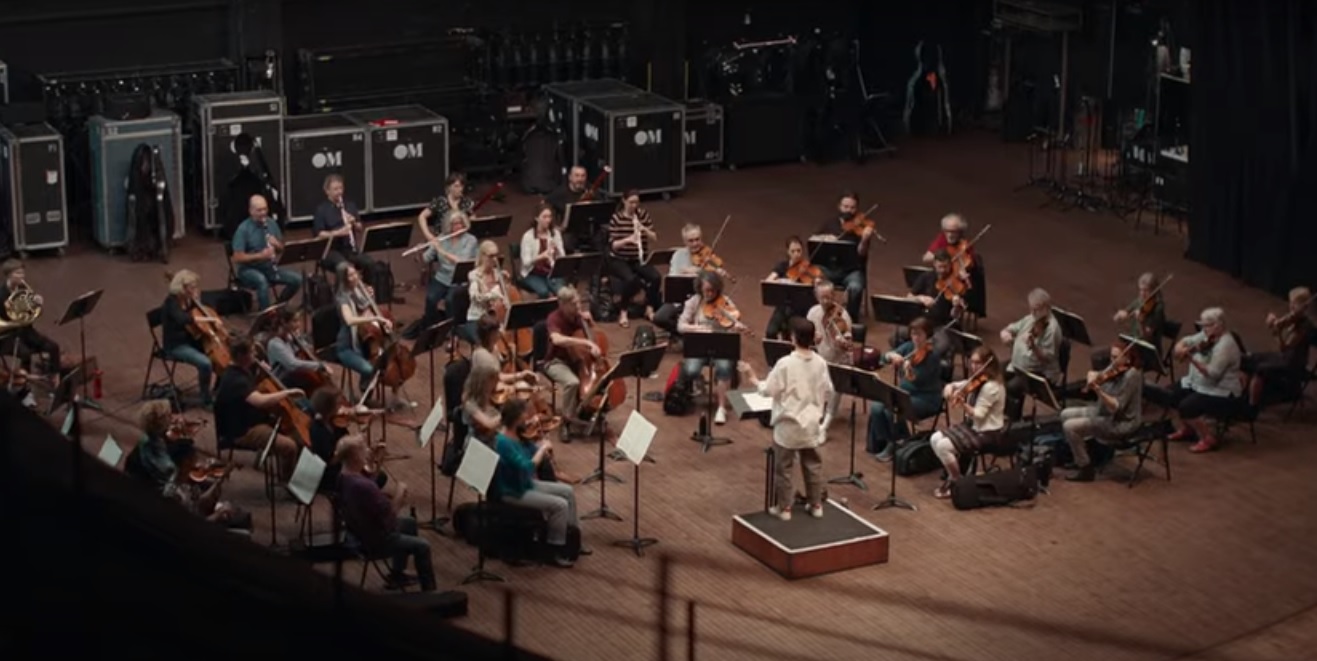
Emma (Sophie Desmarais) is facing the dramas of her life with family and colleagues, and then when she undertakes each concert, also facing the drama of that piece. When she is immersed in the music we’re watching her conducting the Orchestre Métropolitan, whose music director Yannick Nézet-Séguin participated in the film’s preparation.
I aim always to be spoiler free, so let’s say that I will speak of the musical text rather than the plot. Emma goes from the G-minor symphony of Mozart, her style still somewhat overly controlled and in her head, as she’s told by colleagues, to excerpts from the Pelleas und Melisande symphonic poem by Arnold Schönberg, and later to the 5th symphony of Gustav Mahler.
The film’s plotline involving Emma’s family relationships seems perfectly matched to what we’re hearing in the film’s music, as Emma faces passionate conflicts and disorder in her life as she confronts the challenges of the Schönberg, before finding her way to Mahler. While it’s not really as dissonant as the script would have us understand it (a stunning early piece from Schönberg before he invented truly atonal composition), the passages we hear emphasized are still of a passionate late romantic style, very apt for strong feelings.
This is perhaps the normal way music works in a film, as an invisible commentary, although Robichaud is offering something more ambitious, as the arc of the musical plot (of three composers) parallels Emma’s arc.
And it’s unique in using music that is almost entirely source music, even as it functions in the usual ways. We see the OM playing the Mozart, the Schönberg or the Mahler while Emma conducts it, although as we see her subsequently walking away from those scenes, the music plays on: as if inside her head, the way we’d see in a non-diegetic musical score. It’s powerful and makes sense at least as a continuation of what we’ve been experiencing.
There is a fourth composition presented to us in the final credits, when Emma is again conducting, that might suggest a happy ending, even if I’m not giving you any details. Emma and the OM are rehearsing Amy Beach’s Gaelic Symphony, which could be read as a political statement by the film-maker, given that it’s one of the first major symphonies by a woman composer.
We were given a laughter-inducing disclaimer stating that while it’s an IMAX theatre, this was not a film shot with the IMAX process. No matter, I love the big fat sound whether or not we also get the big fat IMAX camera lens. Full disclosure, I’d even watch Adam Sandler conduct an orchestra if it meant I get to hear music as beautifully played as this.
I didn’t see the credit, but if as suspected this is Yannick’s work with his OM, no wonder they sounded so superb. He is arguably the most successful Canadian conductor, and hopefully will be doing great things for years to come.
The question I recall hearing with Tár was whether Kate Blanchett really looked like a conductor, whether her body language suggested a real conductor. It’s a funny question when we recall that every conductor is first and foremost a performer, both for us in the audience and even for their orchestra. When Gustavo Gimeno arrived at the Toronto Symphony I watched his deportment, his arms and his eye contact with the ensemble, watching how the players responded. When Yannick first stepped in front of the OM or the Metropolitan Opera Orchestra, yes he was there to conduct, but it was a performance. He was standing before all those musicians, winning them with his body language and his manner. While in hindsight perhaps I might be expected to judge Sophie Desmarais, evaluating the actor’s conducting, how she held a baton or a pencil (as I suddenly recall so many people cutting up Tom Hulce’s deportment in Amadeus, from a historical era btw when there weren’t any conductors…. But nevermind, classical music can be a catty community), I was swept up in the experience. I was watching the musicians respond to her, listening to the music coming at me, hesitant briefly with the Mozart as I asked myself whether her beat was something the players could follow, and then drawn into the performance of the music. It’s all a series of performances of course. It was compelling, especially in the tight cinematography of Ariel Méthot , right on top of the players and Emma as their conductor. Her face sometimes filled the big screen.
Days of Happiness does offer us some fascinating family dynamics. Music seems to encourage a special kind of tension between people, possibly because the prospect of performance messes up the clarity of communication. The extra layers don’t necessarily lead to happiness.
Oh yes, there’s that word. It’s not obvious, this story. There’s work to be done, opening up to this. There’s a great deal that’s unsaid in this film, and it’s a brilliant layer, considering the added text of the music. Emma and her father Patrick (Sylvain Marcel), have some phenomenal exchanges, where it’s as much what’s unsaid as what’s said. The funny thing is, I know when I watch it again, I won’t necessarily have clarity, but I will have the enjoyment of watching the interaction, the unfolding of the relationships and the complementary storytelling of the music. That’s what I was after before and expect to enjoy next time.
The talkback included a question or two about Tár. I heard a voice sounding skeptical when one looks at the similarities, right down to the same piece of music (Mahler’s 5th symphony) at the core of both films. Speaking softly to defend herself, Chloé spoke of the 7 years it took to write the film plus 2 years preparation.
And after all, Schönberg didn’t know about Debussy’s opera when he composed Pelleas und Melisande.
The frequency with which we’re seeing women conducting seems to be an exciting development if you ever go to the symphony or opera, where you’d encounter Barbara Hannigan or Keri-Lynn Wilson or Gemma New or Speranza Scapucci, let alone Marin Alsop (who famously critiqued Tár).
Last time it was Wharton’s The Shadow of a Doubt. “Shadow” is another word for spirit, right in the title.
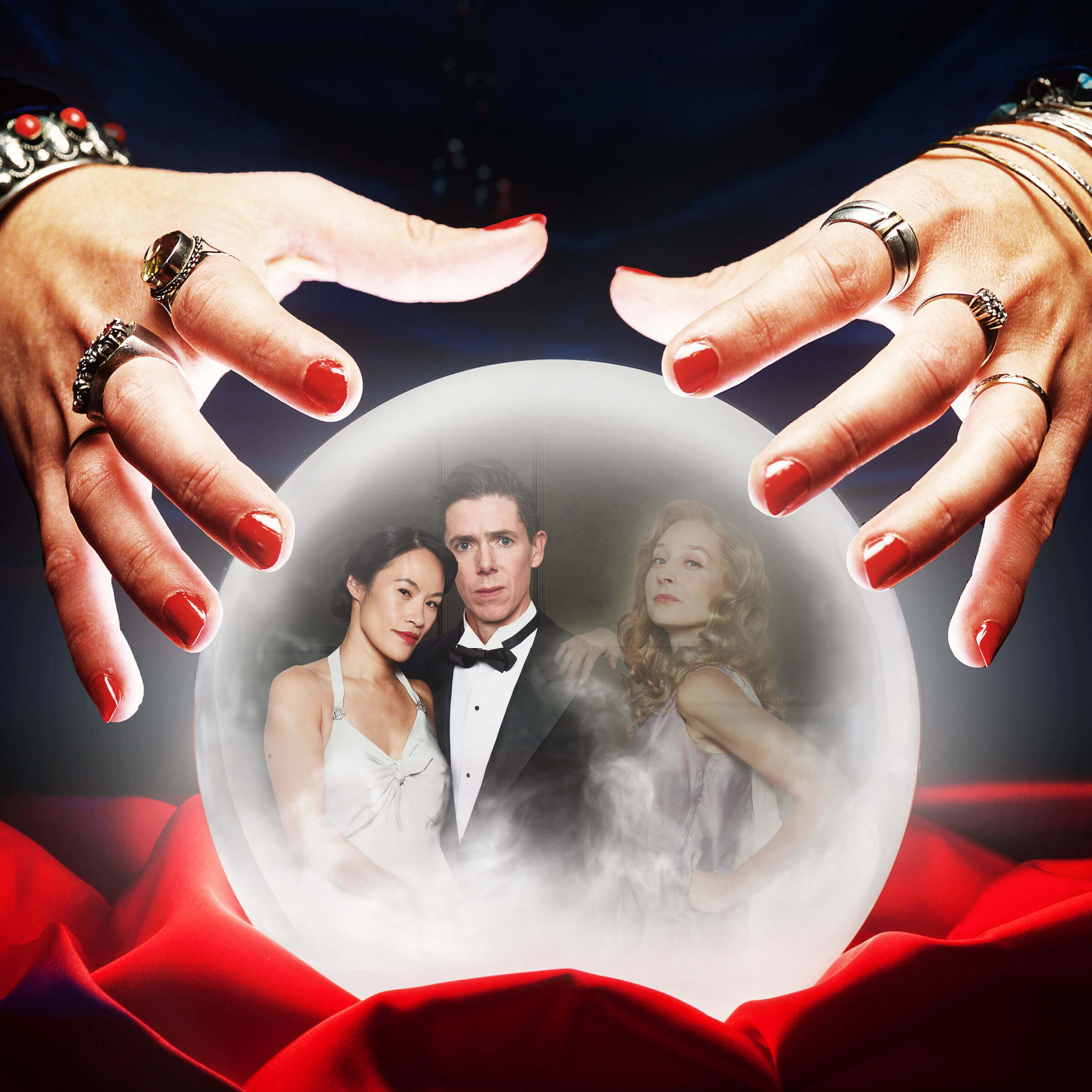
This past weekend Erika and I went to see Blithe Spirit at the Festival Theatre.
My mind boggles at the cleverness of Noel Coward, his manifest awareness that some of us see spiritualists as fraudulent while others hang on their every word. Although that divide impacts the different ways producers approach the story (in productions like this one, or in film adaptations) the play supports either approach.
After watching the show on the weekend at Shaw, Erika and I watched two very different film versions:
There’s the 1945 version produced by Noel Coward, directed by David Lean, and starring Rex Harrison, Constance Cummings, Kay Hammond and Margaret Rutherford, and featuring a wonderful score by Richard Addinsell.
There’s also a 2020 version directed by Edward Hall, starring Dan Stevens, Isla Fisher, Leslie Mann and Judi Dench.
One of the mind-boggling aspects of Coward’s work is how cleverly the text straddles the faith divide, playing equally well for those who think seances are bunk, and those who lap it up. Speaking as someone who is open to the experience (and I can point you to a rather lengthy discussion of my beliefs in my interview with a psychic) , I was struck by how subtly the subject is treated in the text, provided one doesn’t undermine it by mocking it.
Rutherford’s portrayal of Madame Arcati is rather dignified and considering some of the things we’ve seen in her career this is understated. While the lines of skepticism are in the play, they bounce off her full-steam ahead confidence. Dench is asked to make a cynical presentation who is then taken aback by her own unexpected success.
I was delighted to observe the divergence between the play and the two films, having forgotten the key difference at the end of the play, namely the obvious plot twist we get in the films that hasn’t happened, at least not yet. Rex Harrison ends up dead in a car accident, between his leading ladies as we fade to black. For Leslie Mann and Isla Fisher in the 2020 version it’s an actual murder, although the distinction is pretty small.
I love the 1945 version, a flawless piece of film, compared to the 2020 travesty, which features all sorts of embellishments that only show the insecurities of the team. Why turn Charles the writer into Charles the plagiarist, unaware of his theft because his deceased wife Elvira wrote all his novels? This is a new version of the story with nasty karma, in spite of the insertion of a sentimental moment when Madam Arcati reunites with her deceased husband. Dench can’t rescue the work. Nor can Fisher (whom you might recall from Wedding Crashers) nor Leslie Mann (Judd Apatow’s muse and wife). Elvira’s violence is over the top this time, and for some reason the producers decided to let Charles consummate his relationship with his dead wife, that they would somehow have sexual relations. Why do that? I don’t know but it’s one of several creepy things about this adaptation, suggesting a lack of faith in the original. I love the older one and will watch it yet again. I’ll avoid the new one.
Meanwhile, there’s that live show at the Shaw Festival, considerably longer (at three hours and five minutes with an intermission) than either film (roughly 95 minutes) because so much of the original exposition is cut out in the films. The version we saw flew by all the same, immensely enjoyable in the Festival Theatre.
Damien Atkins carries a huge load, a large number of lines as Charles the writer having a séance ostensibly to learn the tricks of the trade by watching Madame Arcati at work, not expecting real results. And he’s got the somewhat thankless task of playing straight man to his dead wife Elvira (the ghost), ironically delivered by Julia Course. Ruth the wife who eventually also becomes a ghost was Donna Soares, herself also playing even straighter while others get the big laughs. We were at a seniors matinee, with some cast changes, namely Jenny Wright as Madame Arcati the medium, and Kate Hennig as Dr Bradman’s wife.
There are so many ways this show can be played. Director Mike Payette offers us something uproarious and energetic throughout, although towards the end it’s wonderful that he lets it get a little scary.
Or to quote Bert Lahr’s lion, “i do believe in spooks I do I do I do…”
There is a kind of magic in live theatre that you don’t get on film, whether we’re speaking of metaphysics or singing voices. When it’s done in the same room as your own viscera, you’re moved in a different way than when it’s a series of special effects. It seems like a real magic trick.
I’m not sure I understand the design, very much the opposite to the all black Shadow of a Doubt we were debating (responses to my review). I suppose it’s fun and stimulating to the eye? There may be some purpose to the colour scheme, that makes the men –especially Charles—seem foppish. The ghostly apparitions though were splendidly accomplished, so I’m not complaining. I was hypnotized, even if there were times that the lines were being delivered a mile a minute. But that makes sense when the show exceeds three hours in length, a fabulous display of energy and passionate commitment.
Jenny Wright was having a good time playing up Madame Arcati’s silliness, a comical turn that sustained us for much of our afternoon, alongside the ironic delivery of Julia Course’s Elvira.
I find that the Shaw Festival never lets me down, especially with a period comedy of manners such as this one. It’s like a glimpse of another time.
Ryan Hofman’s social media post said “Today…I hope I changed the game going forward.“
It may be so.
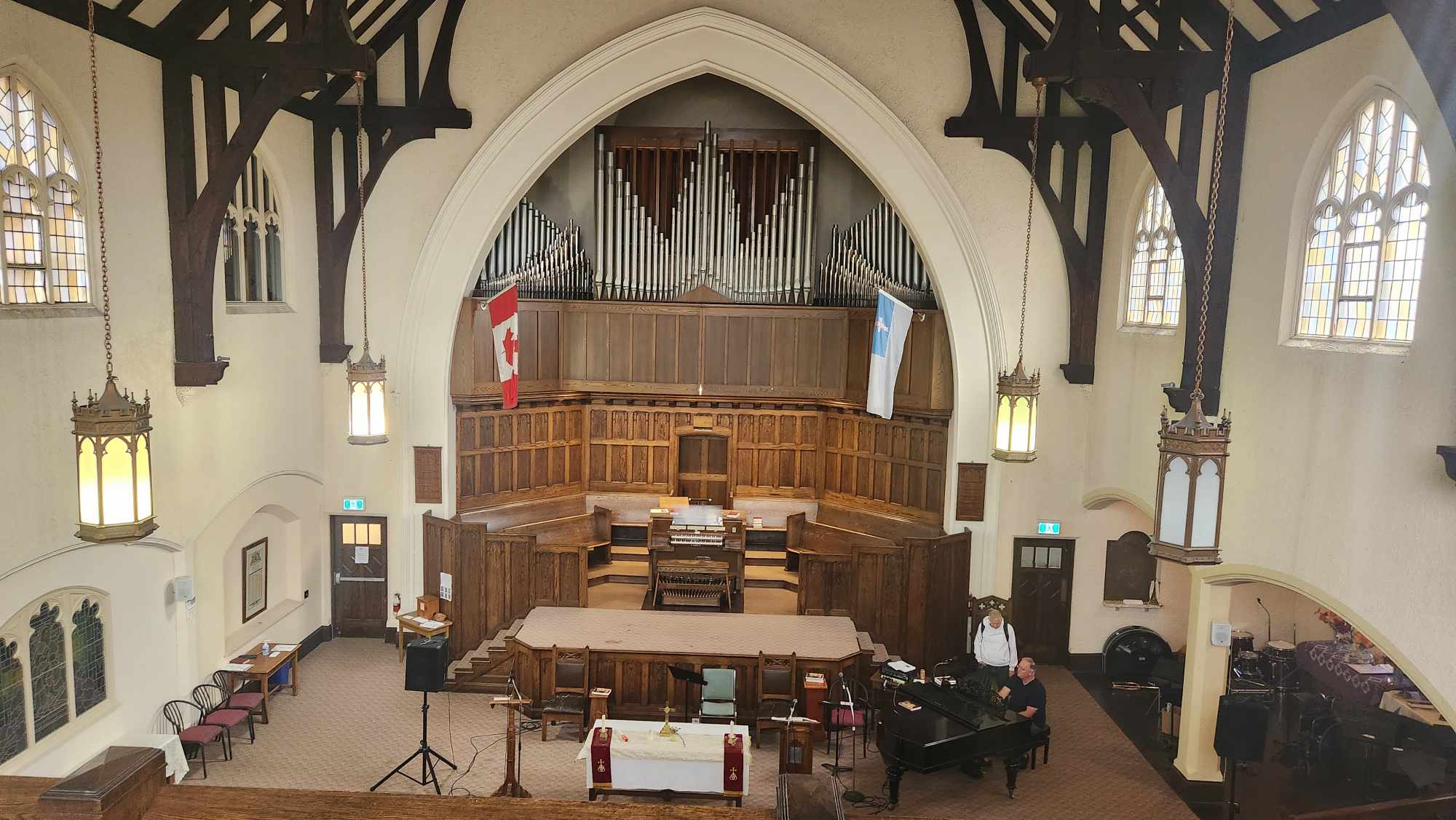
“Toronto Vocal Showcase 1.0” was the title, and Ryan was the producer. Sixteen singers auditioned this afternoon for an audience largely made up of artistic professionals who would employ their voices, supported from the piano by the eager fingers of Ivan Jovanovic, in the welcoming spaces of Hope United Church on Danforth Avenue. I was a fortunate guest listening in.
photo left to right: Andrew Ager, Co-Artistic Director-New Opera Lyra (Ottawa), Jennifer Tung, Musical Director-Toronto City Opera, Graham Cozzubo, Director of Artistic Planning-Soundstreams, Ivan Jovanovic, Musical Director-Toronto City Opera, Gordon Gerrard, Musical/Artistic Director-Regina Symphony Orchestra/City Opera Vancouver, Dr.Elaine Choi, Artistic Director-Pax Christi Chorale, Melanie Dubois, Artistic Producer-Tapestry Opera, Ryan Hofman,Larry Beckwith,Artistic Producer-Confluence Concerts, Renée Salewski-Freelance Director/Producer,Stuart Graham, FORO S: Professional Artist Incubator: Toronto-Mexico-City,Andrew Adridge, Executive Director-Toronto Consort, Rafael Luz, Musical Director-North York Concert Orchestra
Ryan is the smiling bespectacled fellow wearing a vest in the middle, while Ivan is the tall bearded fellow in a blue shirt third or fourth from the left. Ryan’s Facebook caption mentions @torontoconsort @tapestryopera @soundstreams @paxchristichorale @jencctung @stuartgraham.ca @grahamcozzubbo @gordon.gerrard @drewadridge @torontocityopera @new_opera_lyra @now_4_now @maestroluz @northyorkconcertorchestra @confluconcerts Missing from the photo: Michael Mori from Tapestry Opera, Emma Fowler from Soundstreams (Programs Manager).
Of the 16 who sang for us, most were sopranos (7) and tenors (4), while there were also two baritones, a bass-baritone and two mezzo-sopranos. Does that correspond in some respect to expectations, that there is a great demand for sopranos and tenors? Or perhaps it’s simply the optics, that when anyone speaks of an opera diva they mean a soprano.
Sopranos: Holly Chaplin, Amelia Daigle, Ania Hejnar, Lynn Isnar, Laura Neilson, Angela Gjurichanin, Christina Bell Mezzo-sopranos: Alexandra Beley, Alessia Vitali Tenors: Andrew Derynck. Matt Chittick, David Walsh, Tonatiuh Abrego Baritones: Cesar Bello, Alexander Hajek Bass-baritone: Dylan Wright
I wonder how that works out for the mezzo-sopranos the baritones and the basses. There are roles for every vocal category in the canonical operas, and hopefully also in the new works being composed and produced. We didn’t hear any really deep voices neither male nor female. I wonder if they’re in demand.
Among the arias four each were composed by Mozart and Verdi, three from Handel (Messiah in each case), and two each from Puccini, Gounod, Massenet, Richard Strauss, Mendelssohn, Wagner and Carlisle Floyd.
We heard tremendous performances today in Hope United’s vibrant acoustic, a brilliant smorgasbord of Canadian talent. I hope singers and producers find one another, and we get to hear their partnerships onstage in the years to come.








 barczablog