Macbeth closing performance: women have it harder

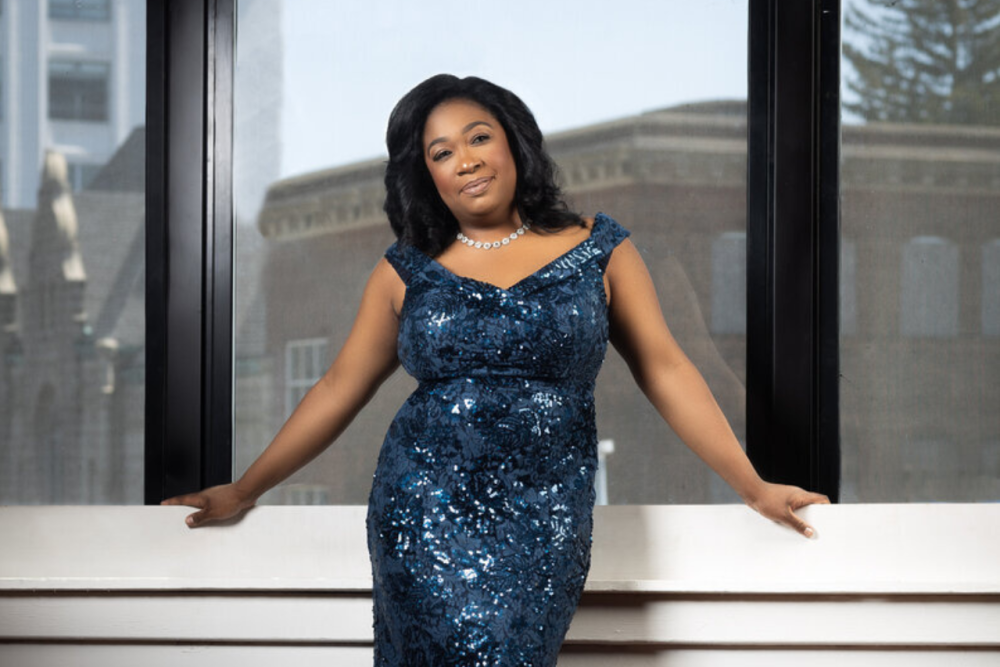
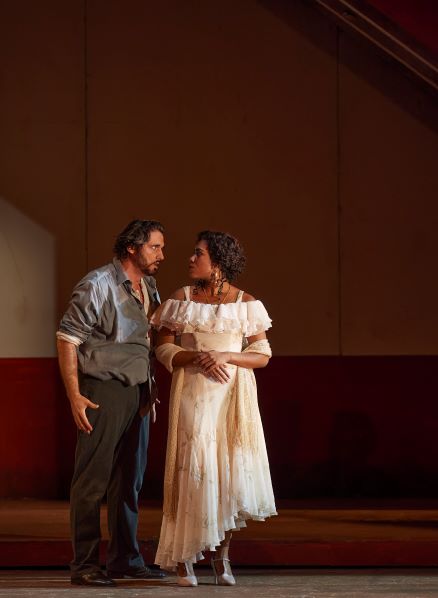
Three weeks ago I reviewed the powerful opening night of the new Sir David McVicar production of Verdi’s Macbeth from the Canadian Opera Company. Today I came full circle watching the last show of the run including exciting changes in the cast. Miracles do happen. As you may have heard the COC gave the understudy a chance to play the lead. Tracy Cantin who had been playing Lady in waiting has been promoted, singing Lady Macbeth for the last few shows.

Long ago I remember hearing that women have it harder, at least in the theatre world. In school I recall that as a guy going out for an audition chances are you’d get a part just by showing up, because there were so many male parts. Meanwhile, there were many more women seeking parts, competing for far fewer roles (at least in the classical rep). The two operas the COC offer might be a perfect case in point. Macbeth is entirely men except for Lady Macbeth and her Lady in waiting. Tosca is even worse, cast entirely with men, plus that one female role, namely Tosca.

I heard Tracy today, undertaking a huge part. For starters, it’s a lot of notes, almost all sung perfectly, with personality. The young singer took the stage, seizing her opportunity. Tracy was opposite Metropolitan Opera star Quinn Kelsey, who made his role debut as Macbeth. Quinn has likely been singing the arias and ensembles over and over for weeks, expecting to take the stage in the first Macbeth of his career. While Tracy learned the music, you wonder, did she ever expect to be singing a performance? It’s rare that an understudy goes on, especially in a big role. I wonder how many staging rehearsals—if any—Tracy actually enjoyed. Chances are this has all been last-minute, as she was suddenly handed this opportunity. She surely didn’t have nearly as much time to prepare as Quinn did for his part.

I think Tracy sang very well, even if the role isn’t a perfect fit, requiring a slightly different voice, perhaps someone older, perhaps a darker sound. The part is a nasty figure pushing her husband to murder, whose last appearance is as a sleep- walker struggling with her guilt. It’s hard to sing, hard to perform convincingly. Tracy was well-received by an enthusiastic audience hollering their support for her.

Tracy Cantin enjoying the ovation from the audience

Charlotte Siegel replaced Tracy as the new Lady in waiting, sounding great in the sleep-walking scene with Lady Macbeth and the doctor.

For this my second time watching the show, every bit as enjoyable as the first time, I had a few more observations.

I enjoyed Quinn Kelsey’s performance. There are times he’s making beautiful sounds, other times when he’s dramatizing, making rougher sounds with his voice, maybe for dramatic effect. I’m hyper-sensitive to this because I saw traviata twice in the past week, and have been compulsively discussing with friends the ways film and TV are leading us to expect a more verismo style of acting and singing in operas from Verdi that were created in a bel canto style. I may sound old-fashioned, but I wish he’d trust his voice, which is so beautiful.

I heard stories about a previous Lady Macbeth Elinor Ross, who sang back in the time of Louis Quilico. Perhaps she sought to be in character? I heard that on the opening night she didn’t appear for her curtain call, forcing Quilico to go out, and then leaving Ross to make the last bow. I don’t think Quilico was happy about that. I also heard that at least once the Lady in waiting for that production received chewing gum in her hand from the diva as she was going onstage. Maybe you get a more true to life portrayal of such a hateful character if you misbehave backstage, making your cast-mates angry.

I found myself wondering, after reading other commentaries, whether we think of the witches as evil or not. Myself, I say no. They are like a character in the opera, perhaps the most important one in the whole show. The COC chorus were their usual strong performers, the witches especially. Aha, all those talented women in the chorus…

There’s so much Canadian talent, clearly visible in both Tosca and Macbeth. Knowing what was coming didn’t lessen the impacts of the last scenes. I found myself even more verklempt at the end than last time. It’s a combination of the singing of the two tenors I wrote in my review of the opening “Adam Luther as Malcolm and Matthew Cairns’ sweetly sung Macduff take over the opera towards the end. ” Luther’s voice has a genuine Verdi squillo, an interesting contrast to Cairns’ gentler sound.

The orchestra and chorus are the stars of some scenes, especially the last ones. Conductor Speranza Scappucci drove the last part of the opera to a rousing conclusion, a little bit of a risorgimento in the removal of an oppressive and tyrannical king (Macbeth) in the battle at the end, celebrated in the final chorus. I can’t get those melodies out of my head, and come to think of it that’s okay, I like it.

The COC’s spring season continues with performances of Tosca May 21, 23, 27, at the Four Seasons Centre.

Posted in Books & Literature, Music and musicology, Opera, Reviews | Tagged , , , , , , , , , , , , , , | Leave a comment

SOLO Traviata in Burlington

Last night was the boldest step forward yet for Southern Ontario Lyric Opera (SOLO), performing a fully staged La Traviata before a rapturous sold-out audience at the Burlington Performing Arts Centre (BPAC).

I’ve been observing the artistic version of the truism “if you build it they will come”. Downtown Toronto is alive all night because of culture. Barrie’s downtown has been enriched by a decade of Talk is Free Theatre, including a performance space offering a focus to their downtown. Niagara-on-the-lake and Stratford show us how culture can transform a smaller community into so much more. Richmond Hill has a beautiful new theatre as a focus in their downtown. And now Burlington joins the growing contingent of cities and towns reviving and developing their communities with artistic attractions.

We’ve been driving through this part of Southern Ontario for awhile now, as we avoid the big bridge in preference for the views one gets closer to the water. Last night I was glad to take a closer look at BPAC, a terrific facility that enhanced our experience last night.

Burlington Performing Arts Centre

Seating about 700 patrons, the intimacy of the space makes for something special. I’ve talked about acoustics before. The audience shares the sound (whatever isn’t absorbed by the building envelope), so when 2600 listen to the TSO, you’re getting a smaller share than when it’s only 700. No, that wasn’t the COC orchestra last night so there may be fluffs, yet the sensuousness of the sound is glorious. The lady sitting next to me gasped during the prelude to the last scene, the plaintive violins conducted by Sabatino Vacca plus the spectacle of Karoline Podolak as Violetta dying before us overwhelming her. And me too.

Ryan Hofman—who did double duty singing and in the lobby still in his costume during intermission, in his other role promoting SOLO—explained the rationale.

Ryan Hofman and James Westman backstage after the show

The bold choice by SOLO to cast the opera with the best talent they could get meant the sweet lyric voice of Ernesto Ramirez as Alfredo Germont, the strong Verdi baritone of James Westman as his father Giorgio Germont, and Karoline’s sparkling soprano, a Traviata to please the most ardent Verdi enthusiast. And getting a partnership with Classical 96.3 (a station I usually listen to) also helped promote the production, ensuring a fully sold-out house.

Conductor Vacca wears several hats as the founder and artistic director of SOLO and also conducting the orchestra.

Conductor Sabatino Vacca with the SOLO orchestra

While it’s a community group with an amateur chorus you wouldn’t know it from the music they made, enthusiastic party guests surrounding the romantic drama of Violetta and Alfredo, directed by Vincent Thomas in a traditional staging.

Vacca made this a very authentic sounding Traviata, in favoring a bel canto approach. By now it’s rare to encounter this, given the profound impact of verismo and film on operatic presentations. By verismo I mean the kinds of Violetta we’ve seen from such sopranos as Ileana Cotrubas or Maria Callas whose approach to acting the role also changes the way the role is sung, sobbing and gasping in places. The Zeffirelli film of Traviata starring Teresa Stratas adds layers of pathos, pushing us further from Verdi’s bel canto original.

Karoline Podolak, Ernesto Ramirez and James Westman with the SOLO orchestra

So Karoline Podolak seems impossibly alive and healthy until the end because she’s singing the work very much as written, reminding me a bit of Joan Sutherland in her ability to toss off delicate coloratura effortlessly. You sometimes hear that phrase, that an artist “made it sounds easy”, but that’s very true for Karoline, whose technique is superb. The voice has a tight focus, the phrasing truly perfect. I found myself envying Vacca, who got to work with this dream of an artist. And so it’s magical that a woman dying of a lung ailment should have such a voice, which is why we usually see singers gasping and moaning rather than singing it as written.

Ernesto Ramirez too gave Vacca the authentic sound for Alfredo. A pushed (spinto) voice is wrong for this role. It was a thrill to hear a genuine messa di voce in the soft “Parigi o cara” building steadily, so truly musical. Ernesto floats some notes, accentuating others when necessary with a big sound in the most dramatic scenes. I discussed this with a friend afterwards, comparing him to the tenor in Tosca, whose “trumpet” voice was out of tune on his two important high notes, and whose acting was rather two-dimensional. Give me a musical singer instead, particularly when he’s a Canadian.

James Westman is the key third principal, arriving in the second act to derail the story with his demands upon Violetta. James not only added his beautiful mellifluous tone both in his brilliant aria in the second act and in the ensembles that follow, but managed to reconcile the contradictions of his character, a loving father whose demands cause inadvertent destruction. I’m not accustomed to watching this and liking everyone’s character, believing the sincerity of the hugs between Violetta and Giorgio.

There were no weak spots in the cast. Daniela Agostino is a very sympathetic Annina in the last scene alongside the subdued baritone of Michael Robert-Broder’s Dr Grenvil, his softness perhaps penance for his edgier appearance in the role of the Barone Douphol. The life of the party? Perhaps Ryan Hofman as Marchese D’obigny, sounding good and having fun on either side of the curtain, or perhaps Adriana Albu’s effervescent Flora, Violetta’s BFF. Corey Arnold (whose excellent acting I’ve observed before) was a three-dimensional Gastone, making a lot out of this small part as Alfredo’s friend and fellow tenor.

I only wish there were more performances, but now that they’ve experienced a show that sold every ticket perhaps SOLO will offer a longer run next time. I hope so.

Karoline Podolak, James Westman and Ernesto Ramirez
Posted in Dance, theatre & musicals, Opera, Reviews | Tagged , , , , , , , , , , , , , , | 1 Comment

Tosca delivers

The Canadian Opera Company’s revival of Paul Curran’s Tosca makes a perfect match with the new David McVicar Macbeth, both powerful explorations of the intersections of the personal with the political featuring terrific performances. I was struck by the similarities, that both operas feature baritones exploring the nature of evil, sopranos who in various ways tempt & challenge them, and a pair of composers exploring responses to oppression.

Tosca is the perfect first opera to answer any critiques about the supposed weaknesses of the medium. When people die in this opera it’s brutal and nasty. They sing about beauty, desire, remembered love and dreams of escape, just like the rest of us but (spoiler alert) it doesn’t end well.

There is often a drama within the drama in opera, observing performers handling the challenges of the medium. The role of Tosca began with Sardou’s well-made play in the 1880s created as a vehicle for Sarah Bernhardt, and Puccini could do no less in creating a spectacular role for soprano that premiered at the dawn of the 20th century, requiring piety, love, jealousy, then murder and remorse. The history of the role is highlighted by performers such as Tebaldi or Callas, and collectors fondly compare different versions of scenes.

Last night was a lovely addition to my personal collection of memories of the role, as Keri Alkema undertook Tosca the day after her beloved dog died: or so I gather from social media, as she reported going home between performances. I was bracing myself to hear that she would cancel (who would blame her? If you’ve ever had a cat or dog, you’d understand that this is truly the death of a family member). But Keri not only showed up but gave us a very powerful, original performance. There was one place in particular that I want to mention, namely the big aria “vissi d’arte”, where Tosca confronts God about the meaning of her life. This was the most internalized, understated reading of the aria I’ve ever heard, sung more softly in places than usual. If you’ve ever been singing while feeling powerful emotion and had your voice quiver or break, you may wonder how one holds it together when one is powerfully moved. I don’t know, only that what I thought I heard was a totally personal reading of the aria, one that had me totally in tears for a few moments. This also features her brilliant approach to the last act (which I observed last time she undertook the role). If you have a chance to see and hear her in her remaining performance on May 13th you’ll get something very special.

Cavaradossi (Stefano La Colla) and Tosca (Keri Alkema) photo: Michael Cooper

The other two main characters don’t disappoint alongside Keri’s Tosca. There are many ways to play Scarpia, the villainous chief of police. Whether he’s physically grotesque or handsome his behaviour and his soul are ugly beyond anything you see short of a CNN town hall. Roland Wood is a delightfully hypocritical Scarpia, his piety seemingly genuine alongside his epicurean taste and insatiable lust, his vocalism secure and flawless.

Roland Wood as Scarpia (downstage, left) in the Te Deum climaxing Act One of Tosca (Photo: Michael Cooper)

Stefano La Colla as the painter Cavaradossi completes the love triangle, an intriguing contrast to Keri’s subtleties in his passionate attacks on high notes, sometimes verging a bit sharp but always fully committed to the moment.

Donato Di Stefano as the Sacristan is a genuine example of an old-school approach to the role, although he was given very little space to operate in his scenes, given the full-speed ahead tempi of conductor Giuliano Carella. The COC orchestra and chorus sounded great especially in the big Te Deum that closes the first act of the opera, one of Wood’s great moments as Scarpia.

Michael Colvin and Giles Tomkins were very effective as Spoletta and Sciarrone, two of the police working with Scarpia, giving their scenes a great deal of depth. Alex Halliday was a sympathetic jailer, impressive in the last act. Christian Pursell was an effective Angelotti in the opening scene.

Tosca continues until May 27th, with soprano Sinéad Campbell-Wallace singing all but one of the remaining performances.

Posted in Personal ruminations & essays | Leave a comment

Opera by Request’s William Shookhoff


Aside from family William Shookhoff aka Bill aka “Shookie” is the person I’ve known longest of anyone I’ve mentioned on this blog. In fact I interviewed him back in 1976, for the University of Toronto’s student newspaper.

Bill Shookhoff

And so forty-six and a half years after the first one this is our second interview.

Let me begin by quoting Bill’s own text that he used on the occasion of a recent performance in Germany.

As the director of Opera by Request in Toronto, Canada, it is a thrill to be collaborating with Musik fur Musik in Berlin for Wagner’s Der Fliegende Hollander. Opera by Request was launched in March, 2007, with a mandate to present operas in a concert format, to enable singers to perform a complete role, and to bring a complete range of operas to audiences at affordable prices. To date, OBR has produced over 100 different operas, and has engaged hundreds of singers. The concept has grown, and we have collaborated with a number of off-shoot companies throughout Canada, but tonight marks the first time we are collaborating with a company located on another continent. On a personal note, I have collaborated with Musik fur Musik’s founder, Vanessa Lanch on numerous productions, plus recitals and competitions, including Canada’s prestigious New Music Competition, the Eckhardt-Grammattee, for which Vanessa was a finalist in 2011. It is a thrill to be collaborating with a cast representing four different countries. I hope you enjoy tonight’s performance as much as I’ve enjoyed preparing for it.

William Shookhoff
Opera by Request

Normally my introduction segues into an interview by mentioning a particular project that’s upcoming. But in Bill’s case there is always something coming up, if not next week, then next month next fall next year…. You saw how above Bill said “To date, OBR has produced over 100 different operas, and has engaged hundreds of singers”..? That’s another way of saying that he is a very busy guy. It was so when I interviewed him in 1976, and it’s still true.


Are you more like your father or your mother?

Definitely my father.

What is the best or worst thing about what you do?

The best things are discovering new work and delving into all the aspects of the work, including orchestration, libretto, history. Also, perhaps most important, is working with other people, developing multi-generational relationships, learning from people of all ages and range of experience.

Worst thing is the countless hours of admin work: PR, emails, schedules, etc.

Who do you like to listen to or watch?

I listen to BBC 3 a lot, because of the variety. Wonderful concerts, but also great jazz programs, plays, conversations. Mostly watch tennis, and Met Opera on HD.

What ability or skill do you wish you had, that you don’t have?

The ability to play the non-classical string instruments, especially banjo, but also lute, yukelele, classical guitar. Also Renaissance instruments.

When you’re just relaxing and not working, what is your favourite thing to do?

Really, just doing that. Relaxing. Enjoying a martini, sitting on the porch, going for a walk, In bad weather, just watching the weather. Also reading, but I don’t read non-stop.

What was your first experience of music ?

My first piano teacher (a student at Cincinnati Conservatory) playing Rachmaninov 2 with University Orchestra. Also going with my brother to opera rehearsals (Cincinnati summer opera was held in an amphitheatre on the zoo grounds).

Who is your favorite composer?

Hard to say. I definitely lean towards Brahms and Mozart for instrumental work. Also Prokofieff and Beethoven. For opera, it’s really whatever I’m working on at the moment, though I specially love the major works of Britten, Strauss and late Verdi. Also Boito’s Mefistofele.

How did you begin to play operas?

I conducted The Boyfriend in high school and fell in love with the female lead. When I got to Eastman, I found that what I could do better than most of my colleagues was accompany singers, so when the opportunity came to audition as an opera coach/accompanist, I jumped at the chance and fortunately was accepted, the first undergrad to work in that capacity at Eastman.

Bill Shookhoff at Trinity Presbyterian Church York Mills 2018

What are the hardest operas to do in concert?

Definitely operas with lots of chorus. The bel canto operas are not terribly suited to piano renditions. Also operas with a lot of action that’s difficult to ignore (fight scenes, deaths).

Singers come out of training programs, including the ensemble studio of the COC. And then what? Some people can make a living, some can’t. You probably have a better handle on the available talent in this country than anyone. Stratford Festival and National Ballet function as places to employ almost 100% Canadian talent. Yet the fiction is out there that we need to bring in singers from abroad. Can you imagine Canadian opera with Canadian personnel?

Absolutely! Of course that talent needs to be nurtured and used judiciously, but there is no reason why young singers, given the training they receive in Canada, cannot be presented as the principal singers in a Canadian opera production. We’ve seen a few singers in recent years who have broken through these artificial barriers, enough to know that there are others equally capable, given the right opportunity.

Talk about Opera by Request and what you believe your mission is with OBR.

The main advantage of OBR is that it is the one place where singers can present roles of their own choosing. Of course, they quickly learn that taking charge of a production is not easy, but that experience (of being performer/producer) is also a valuable one. In this way, singers discover far more about a work than they would if they were simply hired to do a role by another producer. Sometimes the experience has been a wake-up call, where a singer realizes challenges they didn’t know were there. More often, though, it has raised the level of their performance and their understanding of the genre.

How does it work to select repertoire for OBR:

Usually, a few singers get together and present a concept to me, then we fill in the blanks, ie, decide on a timeline, find the rest of the cast, plan a rehearsal schedule and performance date. Occasionally, it’s been a single singer with a dream role in mind, then we work together to flesh it out. I never do all the work of casting for a single singer.

Turandot in 2020: (L-R) Narmina Efendiyeva, Naomi Eberhard, Bill Shookhoff, Amelia Daigle, Corey Arnold, Kyle McDonald

Are there operas you are hoping to do, that you can’t do (for instance LesTroyens,
an opera full of chorus & ballet divertissements is one of my favorite operas)

Peter Grimes, Billy Budd, yes Les Troyens.

Would you ever say no: to requests that you think are unwise for the singers, or something you would rather not undertake?

This has happened on occasion, but then we try to find an alternative that’s more realistic.

Explain the concept of Opera by Request: and explain why it’s important

It’s important for singers to know that there’s an organization that will consider any operatic work, no matter how far-fetched or unrealistic it may initially seem; or that they may be able to learn a role which other mentors or producers have discouraged them from pursuing, perhaps rightly, perhaps not.

How did you get the idea for Opera by Request. Did someone approach you?

It was an outgrowth of a duo recital program where some opera excerpts were included, and afterwards, the singers said “We could have done the whole opera with a little more work.” So I launched a website, thinking I may get two or three requests per year. Instead it’s been more like 2 or 3 requests per month.

Tell us about the upcoming OBR programs
(please note I asked Bill these questions awhile ago, so if anything here is out of date blame me, not Bill)

April 29th: “Caught in the Act”
Weisgall’s The Stronger, with Sharon Tikiryan
Martin’s Six Monologues from Jedermann with Michael Robert-Broder
Lee Hoiby’s Bon Appetit with Meghan Symon

June 9th: L’Elisir d’Amore (postponed from May)

June 24th: Rossini’s Otello (Canadian premiere?)

I hear that you’re also undertaking collaborations with other companies. What roles do you play?

I really enjoy collaborating with other companies and spreading the OBR concept to other venues. Calgary Concert Opera, CLM Productions in Edmonton, Abridged Opera in Windsor, are all in one way or another offshoots of OBR.

Bill Shookhoff at the Calgary Concert Opera Company in 2019

Norman Brown in Ottawa has done a tremendous job in creating OperOttawa, but I’d like to think the work he’s done with OBR was in some ways motivation for his initiative.

I wonder! It’s a funny coincidence that I realized I was overdue for an interview of Bill, when I recently interviewed Norman Brown.

Bill Shookhoff and Barbara King at Polaris Centre for the Performing Arts, October 2021

Do you have any influences / teachers you’d care to name.

Eugene List, piano; Edwin McArthur, opera production; Herman Geiger-Torel, who supported me from the moment I arrived in Canada back in the ‘70s.

Herman Geiger-Torel, General Director of the Canadian Opera Company 1960-1976.

Similarly James Craig. Mario Bernardi was a stern taskmaster, but instilled a sense of discipline and resilience which has helped me to this day.

I was very fortunate to have had the mentors I had, and the opportunities to grow and develop. I hope that in some way I’m able to give back in the same way, to a multi-generational pool of singers.

Rossini’s Otello may well be a Canadian premiere, as was undoubtedly Sullivan’s Ivanhoe. Many productions in the works for ’23-24. News of those will be coming out shortly.

You can follow them on their webpage or via social media (Facebook, Twitter and Instagram).

Posted in Interviews, Opera | 1 Comment

Gimeno Conducts Messiaen’s Epic Turangalila

Roy Thomson Hall was quite full tonight for the first of two Toronto Symphony concerts undertaking Olivier Messiaen’s Turangalila-Symphonie. But for such an event one wants a full house. The response from the audience was as rapturous as the music we had heard.

pianist Marc-André Hamelin (photo: Sim Cannety-Clarke)

My headline is no exaggeration, as I replicate the title the TSO put on our evening, including the stunning pianism of Marc-André Hamelin and the subtler contribution of Nathalie Forget via the ondes Martenot in front of a very large orchestra. It’s like a piano concerto. Hamelin is such a cool customer that he seems to be totally at ease while playing such an amazing range of sounds from soft to percussive clusters, touching seemingly every note of that piano, while offering a measure of reassurance to the rest of the performers as though he were a lifeguard. I suppose part of that is technique, that there’s no sign of effort even as he’s making amazing sounds.

Gustavo Gimeno, TSO Music Director

Gustavo Gimeno is still relatively new in his position as the TSO music director, but he’s beginning to show us who he really is. Or perhaps it would be more accurate to say that the TSO themselves are showing us who they are, in their response to his leadership, fearless in their willingness to play anything.

In 1948 when this work appeared, it certainly appeared to be the most important creation of the century if not the most impressive use of serial composition techniques yet heard, a fabulous meeting of cultures and methods.

Nathalie Forget (photo: Mathilde Assier)

Sometimes it’s tonal with layers of dissonance fluttering about over top, like birds gathering on top of a solid statue. There are places where the clusters in the strings underpinning the quick piano music remind me of George Gershwin, had he lived longer.

There is so much joy and ecstasy in this piece, yet also painful drama. There’s a soft nocturne-like section that reminds me a bit of Wagner’s Tristan even if it’s much calmer, more like Berlioz’s nuit d’amour in his Roméo et Juliette. It’s a hypnotic array of stunning sounds.

And yet Messiaen’s sound is not one that has been emulated: at least not yet. I’m reminded of the conversations I’m hearing about the Ontario Science Centre, a modernist building that will be taken down if the Premier of Ontario has his way even though it’s one of the most beautiful examples of modernist architecture I’ve ever seen. I can’t think of any current composers using anything as complex –or as beautiful—as what we heard tonight. Like the Science Centre (dating from over 50 years ago), the futuristic sound of the ondes Martenot is in its way, an antique, an image of a future that never was. Oh well. Post-modern scores are more pragmatic, while minimalism is also a practical choice, easier for the composer and perhaps easier on the audience as well. The density of the score Messiaen created, layer upon layer, the challenges to the soloists (not just Hamelin & Forget, but also throughout the orchestra, particularly Eric Abramovitz, principal clarinet, and the percussionists), is unique. In a sense Messiaen is himself a virtuoso composer, daunting in the density of the challenges printed on the pages of the score. Did he leave every other composer behind in the process? No it’s not a competition, but even so one might wish that more would attempt something so ambitious.

Roy Thomson Hall is really ideal for this sort of work. There’s so much to hear, layer upon layer: and it could be perceived, the sound transparent.

The two concerts are a joyous celebration that’s one of the highlights of the TSO’s 100th season, but they’re also making a live recording from these two performances, which I’ll be eager to obtain once it comes out. We were asked to refrain from applauding, although there was a lot of coughing unfortunately. I suppose that’s inevitable when it’s live.

If there’s any way you can get to hear it Friday May 5th you should do so. They sounded amazing.

Posted in Music and musicology, Reviews | Tagged , , , , , , , | Leave a comment

Barkley: Snoopy or Benjy?

Barkley Barcza is our newest family member. We didn’t choose the name, glad to use the name that he already seems to know. And yes it sounds cute with his surname.

Snoopy is the beagle everyone knows, the creation of Charles Schulz as part of the Peanuts comic world. I grew up with the animated specials at Christmas time, Snoopy becoming a star with his own pop-song about his battle with the Red Baron. It’s fiction of course, but he’s the beagle of popular mythology, so much so that when I have walked Barkley Snoopy was mentioned by someone I met.

Speaking of which, I’m re-reading Fifteen Dogs André Alexis’s 2015 novel, while being mindful of the Crow’s Theatre adaptation from early this year.

While everyone experiences art differently, I wonder if anyone was feeling as I did, having just welcomed Barkley a few days before. I’m remembering what I wrote about Benjy the beagle.

When Benjy the beagle tells Majnoun about his ability to get a response from people by rolling over in the book, it’s a dark admission, that the dog can manipulate a human. But when Benjy (played by Peter Fernandes) demonstrates this to Majnoun (played by Tom Rooney) and all of us in the theatre, it’s hysterically funny. There’s a tonal shift as the prevailing tone of the show is lightened by the enormous amount of laughter. When you’re watching people impersonate dogs the laughs are guaranteed, and perhaps the first casualty is some of the seriousness that I might have craved.

Benjy is a survivor. He tricks several dogs into eating poison to escape from them. I am in awe of his intelligence.

And I don’t blame him of course. He’s just trying to survive.

Perhaps I was taking it all too seriously? But I was deep in the heart of my own drama with Barkley, a drama that’s still ongoing as he approaches his first birthday. I think of Snoopy (Charlie Brown’s cuddly pet) and Benjy as two extremes, as I learn more about Barkley.

While we do know the date of his birth, much of his life is a mystery. We know he has had previous owners, and they were not always kind to him. That’s more of the Benjy experience.

He’s a handsome beast, taller than we expected at times making me think he’s almost a foxhound rather than a beagle, especially when he’s running in the yard.

As with Benjy (or any dog) one doesn’t know what he’s thinking. Barkley is smart. We may think we’re in charge, but sometimes life turns into a game he’s playing with us. We have a television remote control that he ran with until we managed to give him a treat instead. I have a pair of glasses with teeth marks.

When I think of training sometimes I wonder who’s training whom (and try to laugh about it). Keeping it light makes it all much more enjoyable even if the progress is slow. Right now we’re doing our best to make him feel welcome, to make sure he gets enough hours of sleep per day, exercise and the right food. He knows the sit command and often comes for his name in the yard, knowing he’ll be rewarded. That sometimes feels like a Benjy thing, that he’s playing us for all the treats he can get.

No wonder he’s a bit overweight.

While we won’t give him a cake for his birthday on Tuesday, we will sing Happy Birthday to Barkley on Tuesday May 2nd.

Posted in Animals, domestic & wild, Books & Literature, Dance, theatre & musicals, Personal ruminations & essays | Tagged , , , , , , , | Leave a comment

Creepy COC Macbeth

On a dark rainy day in the midst of Toronto’s traffic chaos I was rendered speechless by the new Canadian Opera Company production of Verdi’s Macbeth directed by Sir David McVicar. I never knew this opera could move me so much. In the last act each scene was better than the last, building inexorably to the conclusion. I don’t want to give too much away.

Verdi would have been impressed.

Some of that is the work of a director making only a few changes from the original. While I try to go with the flow of directors updating and even revising operas, I’m always thrilled when they manage to bring it off without losing the essential thread of the story.

This was a team effort. Perhaps the single most important aspect is the magic running through Shakespeare’s Scottish play. If the chorus of witches Verdi created doesn’t persuade you in the first scene, there’s no point. The creepiness underlying this story of a husband and wife tempted to perform evil acts begins with witches making prophecies. The COC Chorus as a musical entity are led by Sandra Horst and sounded great, but they are usually the dramatic backbone of any good COC show too. The last time I saw this opera the witches were picturesque & well-sung, but never for a moment had me believing they were magical, let alone scary. This was different, better, scarier.

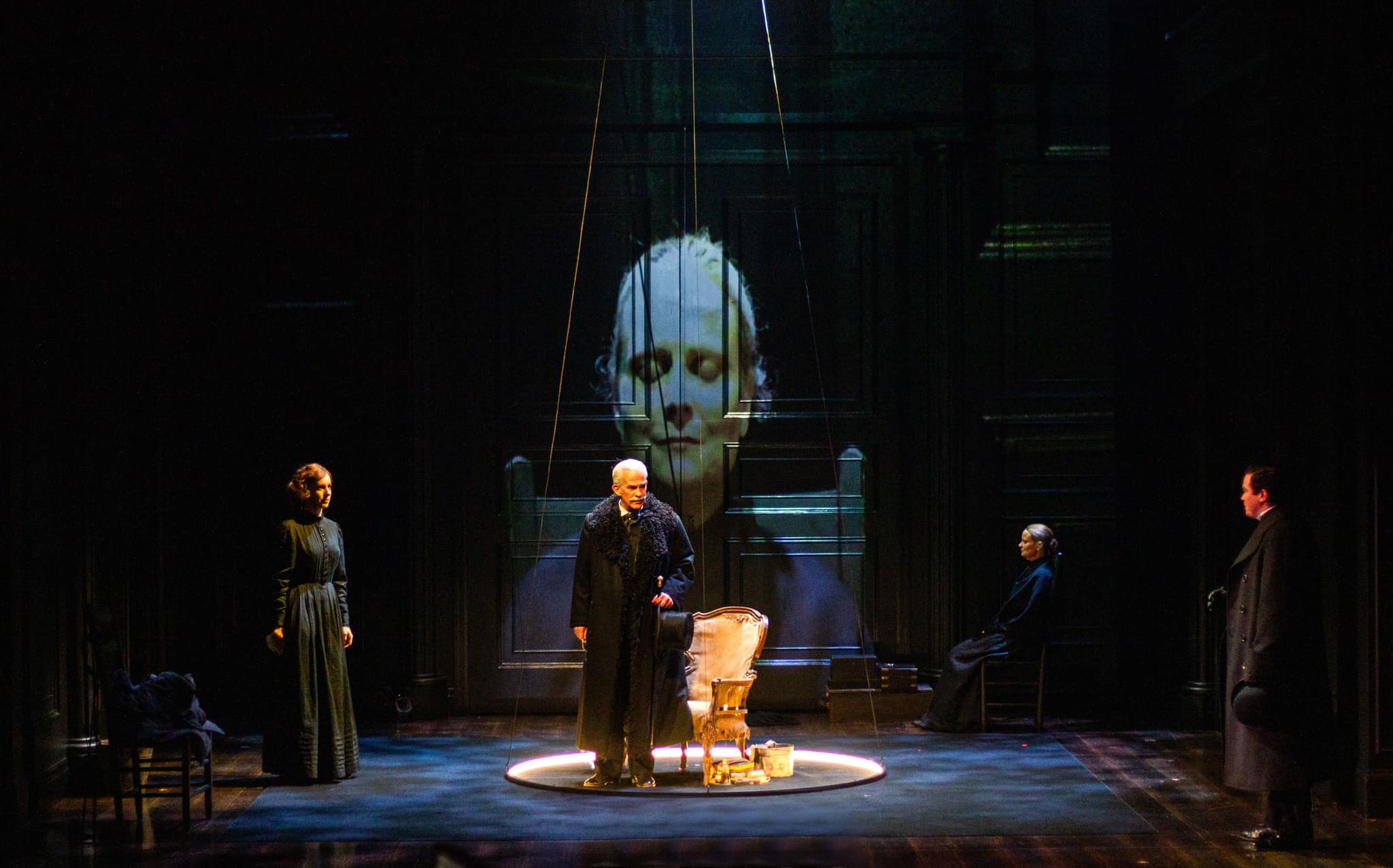
The designs from Set Designer John Macfarlane and Costume Designer Moritz Junge work with McVicar to take us deeper into a pit of gothic horror, employing additional non-singing performers. Here’s a photo plus a close-up showing something disturbing. But it’s disturbing in a good way.

Canadian Opera Company’s new production of Macbeth, 2023. Directed by Sir David McVicar, set design John Macfarlane, costume design Moritz Junge, lighting design David Finn (Photo: Michael Cooper)
Notice the children! (detail from photo by Michael Cooper)

And Shakespeare would have liked it as much as Verdi.

While Macbeth is a virtuoso vehicle for two singers, without the visceral groundwork laid in the first scene, it wouldn’t matter. So yes we were watching and listening to a thrilling pair of singing actors, namely Quinn Kelsey as Macbeth and Alexandrina Pendatchanska as Lady Macbeth.

Pendatchanska was announced as indisposed (aka unwell), but went on anyway. There were a few moments when I thought I detected a bit of extra care as she went for high notes, especially in her first scene. As she went on wow she got better. The sleep-walking scene in the last act was marked by an astonishing pathos, as the relentless monster who pushed her husband into acts of murder had become someone you could pity: which is the ideal. Amazing. Brilliant.

Kelsey brings the secure baritone with him that we’ve seen in previous Toronto appearances, a sound that reminds me a bit of Louis Quilico; in other words, he sounds like one of the greatest baritones of all time. Kelsey gave us lots of jagged edges, a portrayal that’s not very subtle: but then again that’s not how it’s written. His bel canto is superb, his tone beautiful almost every moment except when becoming so tormented as to cry out in pain.

Quinn Kelsey as Macbeth and Alexandrina Pendatchanska as Lady Macbeth (Photo: Michael Cooper)

There are many other wonderful performances I could mention, a big and mostly Canadian cast of strong performers. Adam Luther –aided by his beautiful costume—brought genuine star quality to his appearance as Malcolm. He and Matthew Cairns’ sweetly sung Macduff take over the opera towards the end. Clarence Frazer was a nasty murderer. Tracy Cantin made a solid impression in her scenes as lady in waiting to Lady Macbeth, including the sleep-walking scene alongside Vartan Gabrielian as a sympathetic doctor.

We were in capable hands with our conductor Speranza Scappucci, drawing electrifying sounds from the COC orchestra and chorus, while solidly keeping us rooted in a stylish bel canto reading.

I’m looking forward to seeing the show again. The run continues until May 20th, with soprano Liudmyla Monastyrska singing three of the remaining five performances as Lady Macbeth.

Posted in Books & Literature, Dance, theatre & musicals, Opera, Reviews | Tagged , , , , , , , , , , , , | 7 Comments

Surprising Chevalier

How could I resist seeing Chevalier, the new film about Joseph Bologne?

He’s been called the “black Mozart”. He was given the title Chevalier de St Georges by Marie Antoinette, composer of operas, symphonies, a virtuoso violinist and master swordsman.

Let me be clear. His actual life story is so spectacular as to defy filming, more unlikely than something Hollywood would create. His father was a plantation owner who had sex with a young slave in the West Indies, a servant to his wife. The father would provide for his son’s education in France, where the boy grew up to become a great violinist and swordsman.

If you don’t believe me, go to his Wikipedia entry.

There are some departures from the truth, as the new film takes liberties. Sticklers may object to how Mozart or Gluck are portrayed. The French Revolution looms over them all like a threat.

I recall some of the things I heard when Amadeus came out in the 1980s, the objections to Mozart’s hair or his conducting or his laugh. That was of course a film of a play, not reality, yet it came to be the way many people have understood Mozart let alone the misrepresentation of poor Salieri, caught in the crossfire of Shaffer’s play. I bring that up because in this case it’s a relatively unknown figure whose story has not been told before.

I’m grateful that I saw his opera L’Amant anonyme just over a month ago that brought this composer to my attention. I recall saying something in the review that may have sounded prophetic. I said “His life story would make a great opera: but that’s a tale for another time,” not realizing that they were busily preparing a film. But the story of his life is actually even more remarkable than what they presented. His father, we’re told (tiny spoiler coming), left neither him nor his mother any money. But that’s not true, his father actually provided for both of them. A distant father is perhaps better for Hollywood yet the truth is subtler. There are other discrepancies. But his story is a new one. Director Stephen Williams and writer Stefani Robinson likely won’t be taken to task by anyone in the film world for infelicities, while those of us from the operatic realm aren’t their biggest concern.

Kelvin Harrison Jr. makes the most of the starring vehicle. We saw him in Elvis and Cyrano, two of the few recent films I’ve actually seen. The film looks and sound splendid. It’s entertaining even if it bends the truth a bit. But I don’t think any harm is done in the process. See it, and I’m sure you will enjoy it whether or not it’s accurate.

Posted in Cinema, video & DVDs, Opera, Reviews | Tagged , , , , , , | Leave a comment

Spring Renewal: Scarborough Philharmonic with Ventanas

If it seems as though spring has suddenly come back, thank Scarborough Philharmonic and Ventanas for their concert “Spring Renewal” on April 22nd.

The first half featured popular classical pieces.

We began with Rossini’s Silken Ladder overture, followed by Vivaldi’s “Spring” concerto from the Four Seasons including Concertmaster Corey Gemmell’s brilliant violin solos.

The first half concluded with music from de Falla’s El Amor Brujo featuring mezzo-soprano Veronika Anissimova. Although we recently heard a version of the same composition from the Toronto Symphony at Roy Thomson Hall (that seats over 2600), the SPO playing in the intimate confines of the Scarborough Citadel (whose seating capacity might be 500 or so) raised the roof in comparison, and no wonder. I’ve said before and I’ll say it again. While an ensemble like SPO or Kindred Spirits Orchestra may not have the virtuosity of the TSO, the trade-off is in the rich sound you hear in a tiny hall, immersing you in the music for a truly sensuous experience. The solos from Anissimova, from Gemmell, from Gillian Howard (oboe), Samuel Bisson (cello), and Anthony Reyes (trumpet) were overwhelming, stunningly passionate. Full marks to conductor Ronald Royer for his bold leadership.

The de Falla led easily to the multi-cultural textures we would hear in the second half from special guests Ventanas, the six-piece Toronto-based world music ensemble fronted by powerhouse vocalist and dancer Tamar Ilana, who took the stage for a series of world premieres.

Tamar Ilana

In addition to Tamar, vocalist and dancer, we listened to Demetrios Petsalakis (oud), Jessica Deutsch (violin and vocals), Derek Gray (drums/percussion), Tyler Emond (upright bass) and Benjamin Barrile (flamenco guitar).

The five pieces they played took us through a broad range of styles and dramatic possibilities. We began with a traditional Greek melody from Demetrios Petsalakis, then Benjamin Barrile’s new Columbianas, flamenco-flavored guitar music to which Tamar added dance. The orchestra sat out the first two, but returned for the fuller textures required in the next three pieces.

Ronald Royer (left) and Tamar Ilana

I understood from the spoken introduction that “The boat was empty” by Tyler Emond was a romantic tale of love and heart-break, although I’m just happy to have enjoyed the melodies and the complex textures he asked of the orchestra. Azadi from Demetrios with orchestrations by Ron Royer was an understated composition concerning the plight of women in Iran, that I found very effective. Aurea composed and played by violinist Jessica Deutsch, vocals by Tamar, was an intriguing piece full of energy with dense layers of sound.

Ventanas and the Scarborough Philharmonic Orchestra

We would happily have heard much more from this fascinating group and their committed music-making, whose music worked beautifully with the SPO.

I understand that the premieres we heard this weekend are only the beginning of an ongoing collaboration between Ventanas and the SPO. I’m hoping we will hear more either on record or in future concerts.

Posted in Dance, theatre & musicals, Music and musicology, Reviews | Tagged , , , , , , , , , , , , | Leave a comment

Bud Roach’s provocative new recording Affetti Amorosi

Although I listened twice through to Affetti Amorosi, Bud Roach’s new CD of 17th century songs in his light tenor voice accompanying himself on the theorbo, I took a break for holy week as I turned to his other recent recording, Worship in a Time of Plague a joint project of Capella Intima (of which Bud is Artistic Director) and the Gallery Players of Niagara, something I found easier to process and understand.

I couldn’t put my finger on why I was so overwhelmed by “Affetti amorosi” (Italian for “loving affections”), songs about love, sometimes exuberant, sometimes plaintive, often playful: and why I needed to step back for a moment.

What I did do is read the liner notes, trying to get a bit of a sense of where Bud was coming from.

Let me explain my context. During my MA at the Centre for Study of Drama, I took a course with Professor Domenico Pietropaolo concerning the Commedia dell’Arte (or CdA). We read the scenarios of Flaminio Scala, with the understanding that CdA was more of an improvisational practice among travelling artists, not something really scripted. By the time we get to Goldoni (1707-1793) or Gozzi (1720-1806), we’re looking at plays that recorded lazzi (improvised routines) of performers representing long-established traditions. Arguably –as Professor Pietropaolo insisted—this is no longer true CdA but a remnant, a series of plays employing the older tradition of improvised theatre.

I mention this to suggest the way CdA likely worked in the period from 1400 – 1700. You had the masked performers, who for most people are the emblem of CdA, for instance servants such as Arlecchino, or the Dottore (nota bene, a doctor not of medicine but a learned doctor from a university) or the bullying Capitano (Don Giovanni being an example of this type). These players would be masked and would be expected to improvise of course.

And then there are the lovers, who often were in some sort of conflict with a parental figure. My remembrance of what we knew of these figures was that they would sometimes sing amorous songs: which immediately came to mind with Bud’s CD. Affetti amorosi or loving affections, would be expressed by the lovers in these scenarios. While I recall being told by Professor Pietropaolo that the lovers had songs they sang, I never heard any mention of the precise texts. I can’t recall whether that was something to be speculated / debated between scholars, or simply another of the mysteries that come with performance studies. While we know that Shakespeare wanted music at certain points in his plays, as to what’s played? That’s not recorded, just a word such as “tucket” in the text, to indicate a fanfare. Similarly I remember knowing that there were songs, but having a blank in my head for the actual music.

And that’s where Bud’s CD and its liner notes had me wondering, as a door opened for me, now excited rather than perplexed. The recording offers songs by Giovanni Berti, Alessandro Grandi, Carlo Milanuzzi, Claudio Monteverdi and Giovanni Stefani. Bud explains that these songs would have been introduced to the public through the various companies of CdA players. Yet there is scholarly controversy, as usual. I read these notes as a defence of a bold series of choices, as for instance this (and I quote):

The decision was made to realize a bass line on theorbo or follow alfabetto symbols with the baroque guitar were made according to my sensibility of each aria—a completely subjective preference. Where I saw a walking bass line or structure that offered rhetorical amplification of the text, I have opted for theorbo, such as in Berti’s “Ohime”, and yet for Stefani’s verion of the jaunty patter song “Ecco Lidia” any accompaniment beyond simple strumming would seem superfluous.

Let me pause for a moment to insert Berti’s Ohime. While the word “ohime” might be translated as “alas”, we’re in a realm where the pain is the suffering of a lover, and observed in the performance as a matter that’s fun rather than truly painful.

Ecco Ecco Lidia (here is Ecco Lidia). Exuberance. Fun. The only thing i might lament is that I will never meet this Lidia (that is if she was ever an actual person).

Ohime…

Bud continues:
Neither conclusion would diminish the suitability of other choices, just as adding instruments to a continuo grouping sets no singular standard for performance. There remains, however the inescapable fact that despite its “popular” roots, this music is the product of a rhetorical, highly oral culture, and I would argue that a self-accompanied presentation offers the most flexibility for the expression of rhetorical invention in both poetry and music. One historical bias that played no role in decisions regarding accompaniment was Nigel Fortune’s dismissal of the guitar as being “wildly inappropriate” for songs of a serious nature. I can only hope that my work in this genre serves as an adequate rebuttal.

As you can probably tell, I’m entirely sympathetic to Bud Roach’s approach in this conversation. I’m set off by words such as “popular” and “highly oral culture”, recalling that groundlings heard & understood Shakespeare far better than we do, not just due to the changes in language but especially as we’ve lived through a shift away from an oral culture. Here I am on an electronic device, relying often upon google, when people used to employ something called “memory”. When we imagine the performances of the CdA, meaning the range of possibilities with players traveling all over Europe, we can’t expect them to have orchestras or boom boxes. No, they were portable companies doing things on the cheap on the fly, and changing it up when a player got sick (ha can we imagine a theatre in time of plague?) or had quit the troupe. We have studied the improvisation in the text – coming at this from the drama side of the equation—while the improvisation in the music isn’t necessarily given the same latitude. The study of CdA is as multi-disciplinary as Bud Roach’s work, requiring language, drama, music, and so much more. Need I mention: Bud’s accompanying himself, arrangements that are often very clever, brilliantly supporting the text. Many of these songs can be imagined in multiple guises (as Bud has implied when unpacking the choices he made in his arrangements/ realizations), possibly more serious, possibly more parodic or satiric.

I’ve been listening to this CD a lot, especially now that holy week is over. It’s brilliantly original.

You can find the tracks here from Presto Music.

Posted in Books & Literature, Dance, theatre & musicals, Music and musicology | Tagged , , , , , , , | Leave a comment