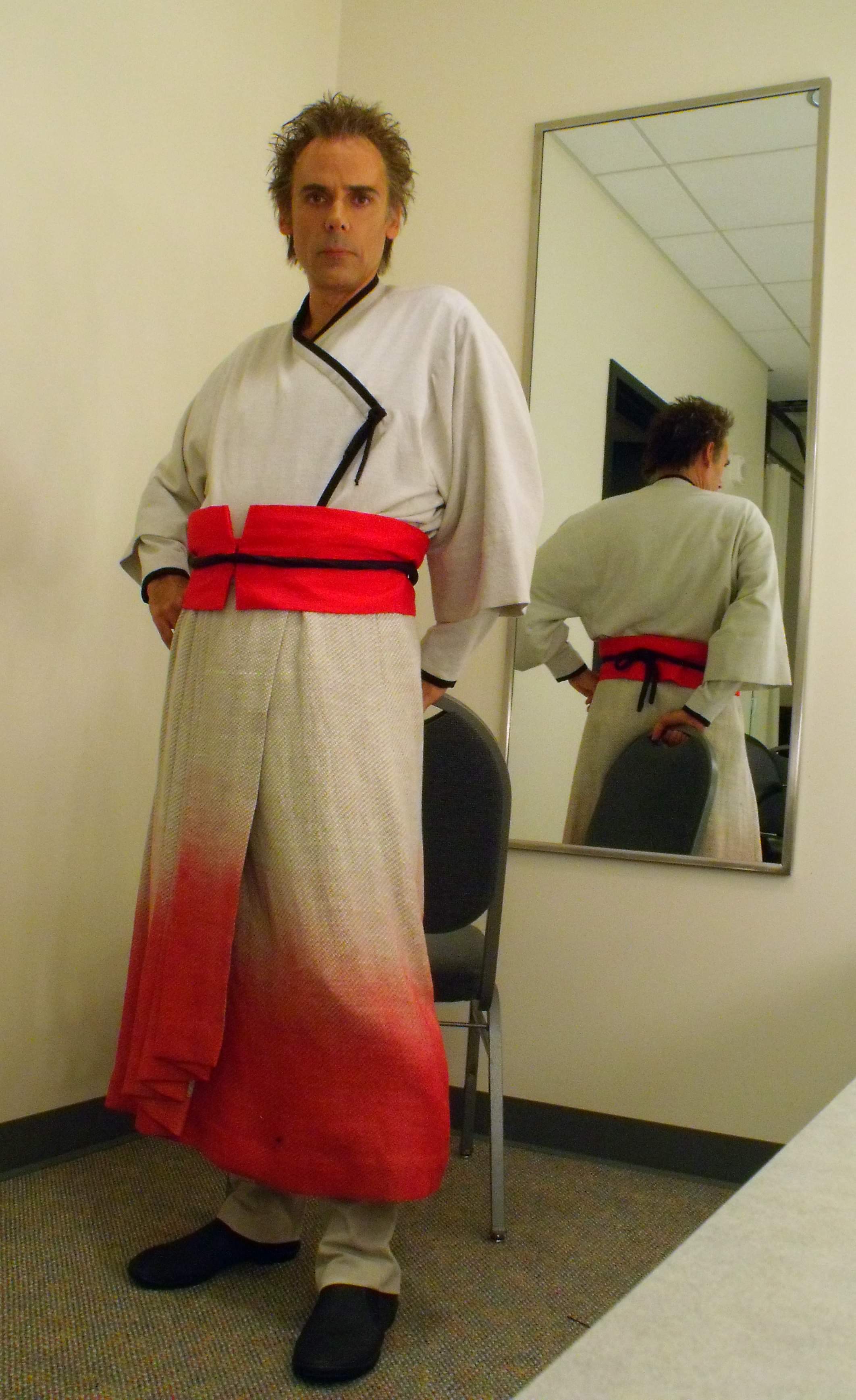
Jack Hui Litster has recently had two original operas produced by OperOttawa.
Jack is a multi-instrumentalist and composer of concert music and film and TV score based in Ottawa, blending his classical and popular music training. As Composer-in-Residence for OperOttawa, Jack composed and produced his first opera “The Day You Were Born”, an innovative online performance using videos of the cast members singing from their homes during the coronavirus lockdown, informed by interviews Jack conducted with midwives and new parents and by Jack’s own experiences as a father of two young children. Jack’s second opera was premiered by OperOttawa in June 2022. Titled What Is Love?, this opera grows out of poetry from Kahlil Gibran’s beloved book The Prophet. Links to both operas can be found at the end of the interview.
Jack began his musical career as a jazz drummer, then decided to broaden his horizons and complete a degree in International Development. In the non-profit sector, he spent ten years fighting for international human rights and collaborating with community activists from Africa, Asia, and Latin America. All the while Jack stayed engaged in the Ottawa music scene, notably with his retro-pop music duo The Ticket, a collaboration with Adam Waselnuk, as well as performing in diverse styles of music including folk, Afro-beat, jazz, and opera.
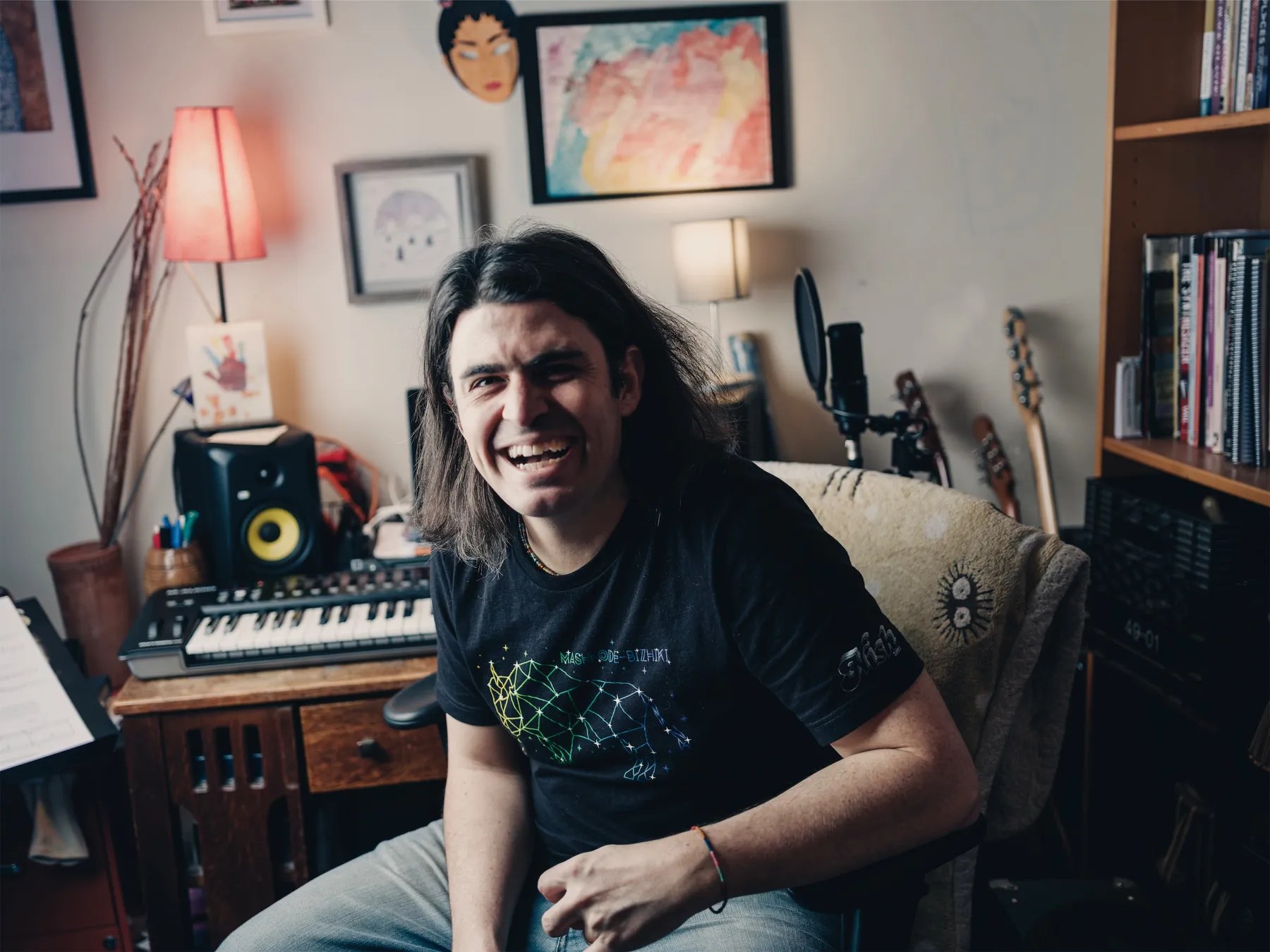
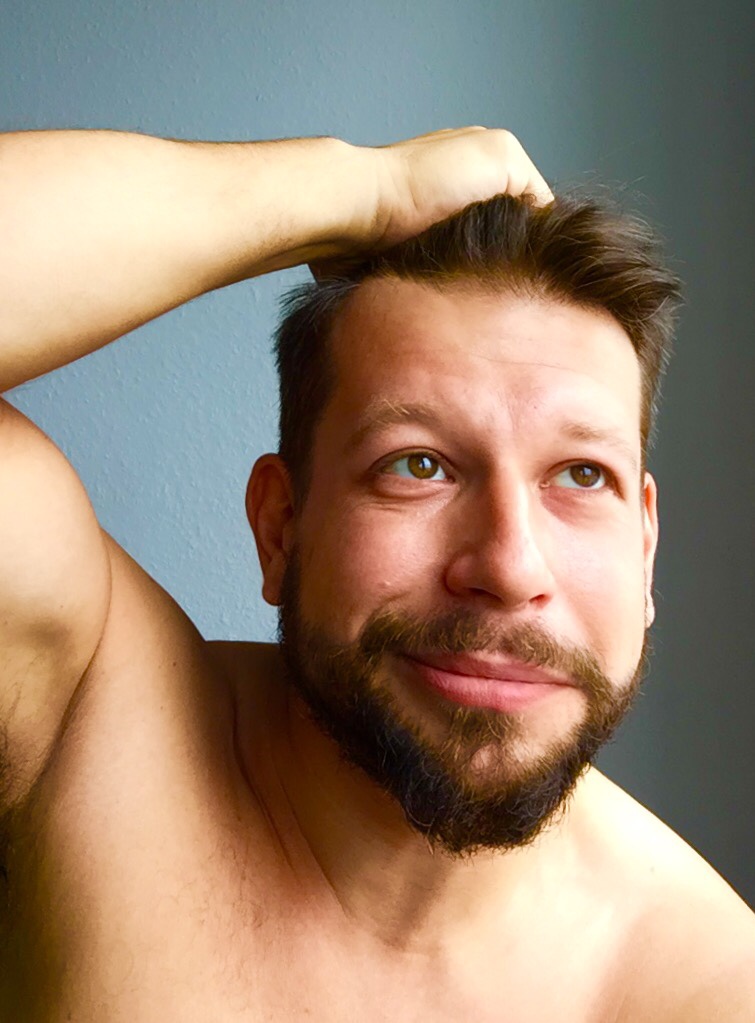
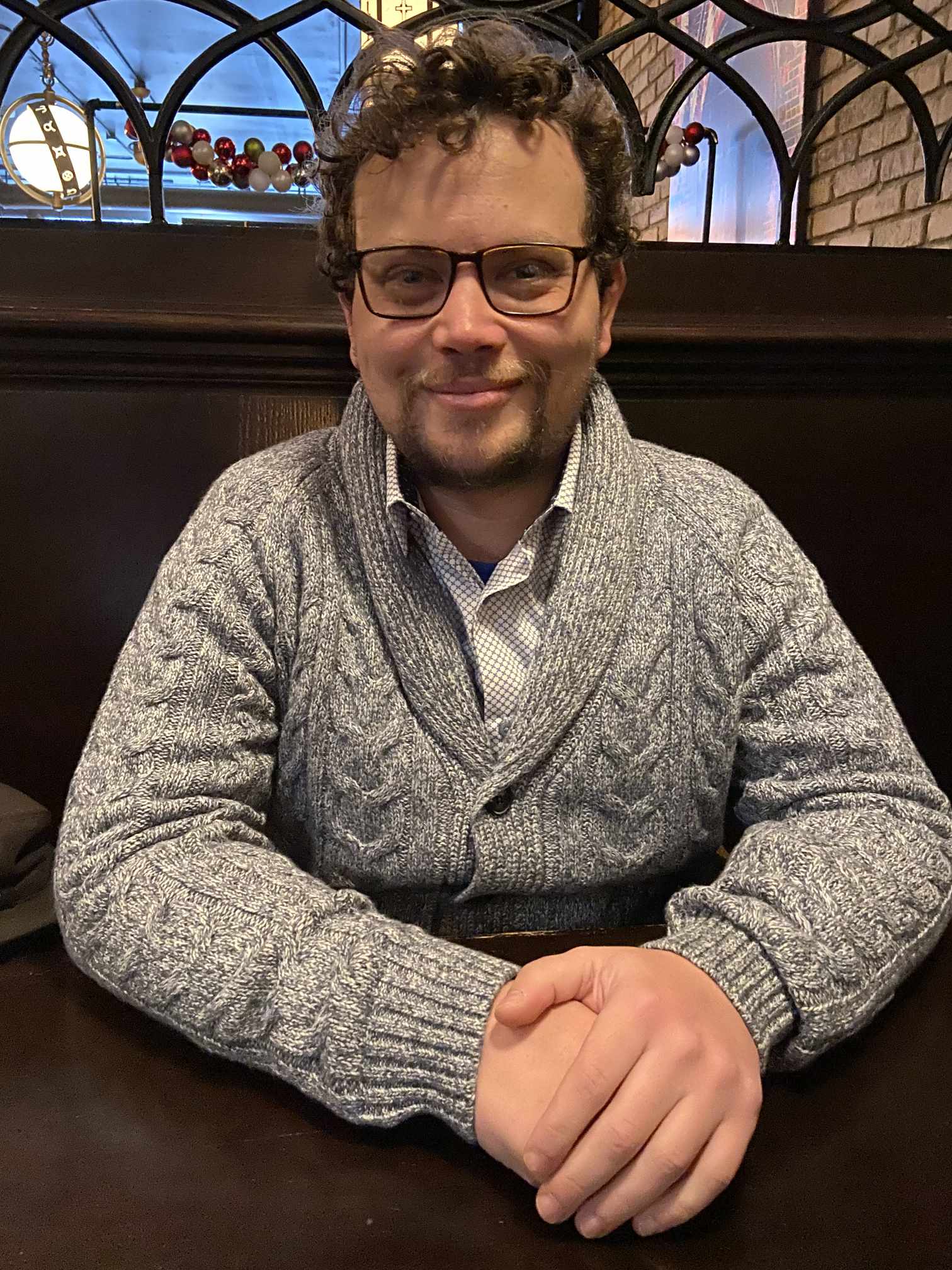
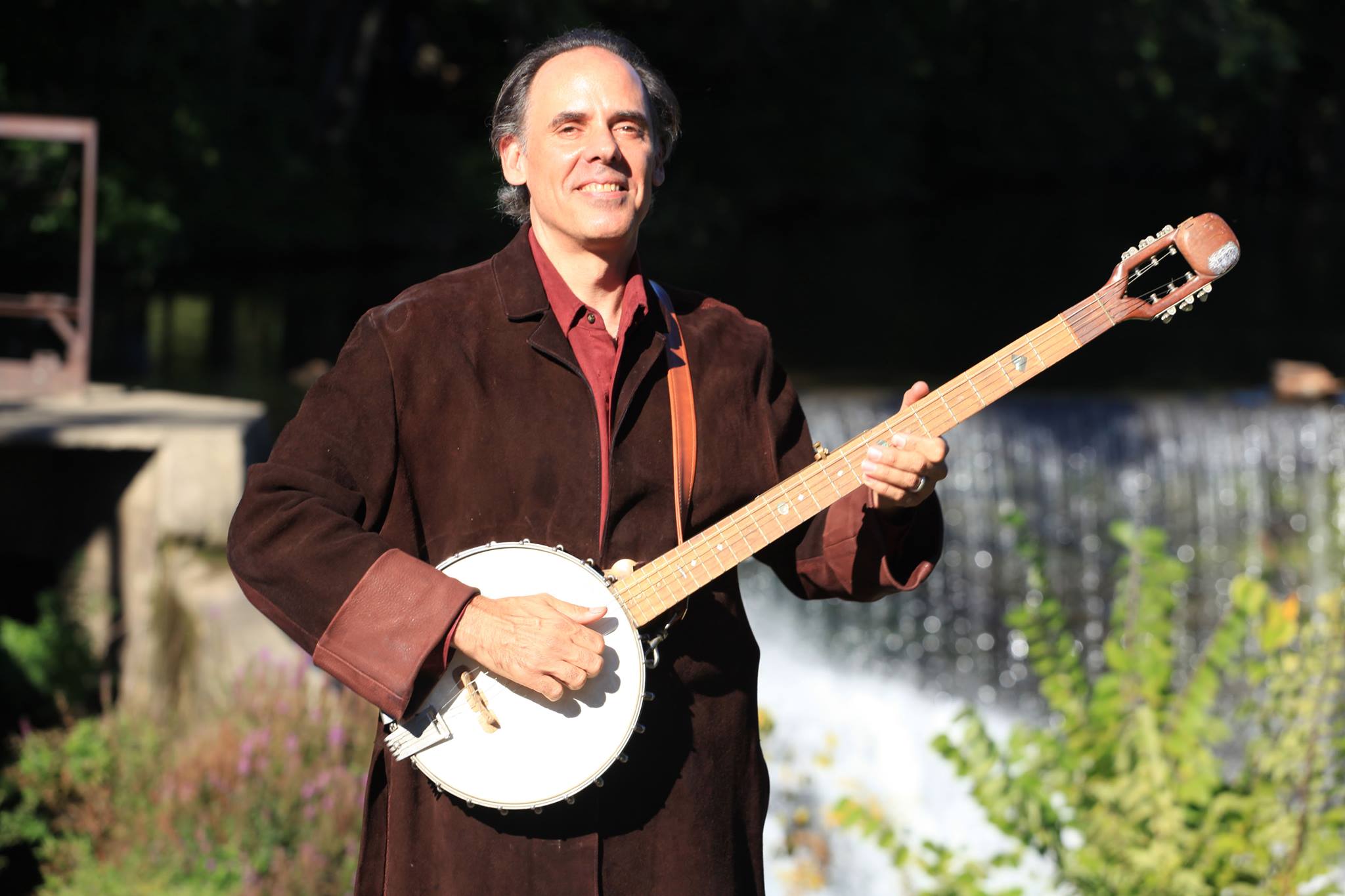
Composer Jack Hui Litster (photo: Curtis Perry)
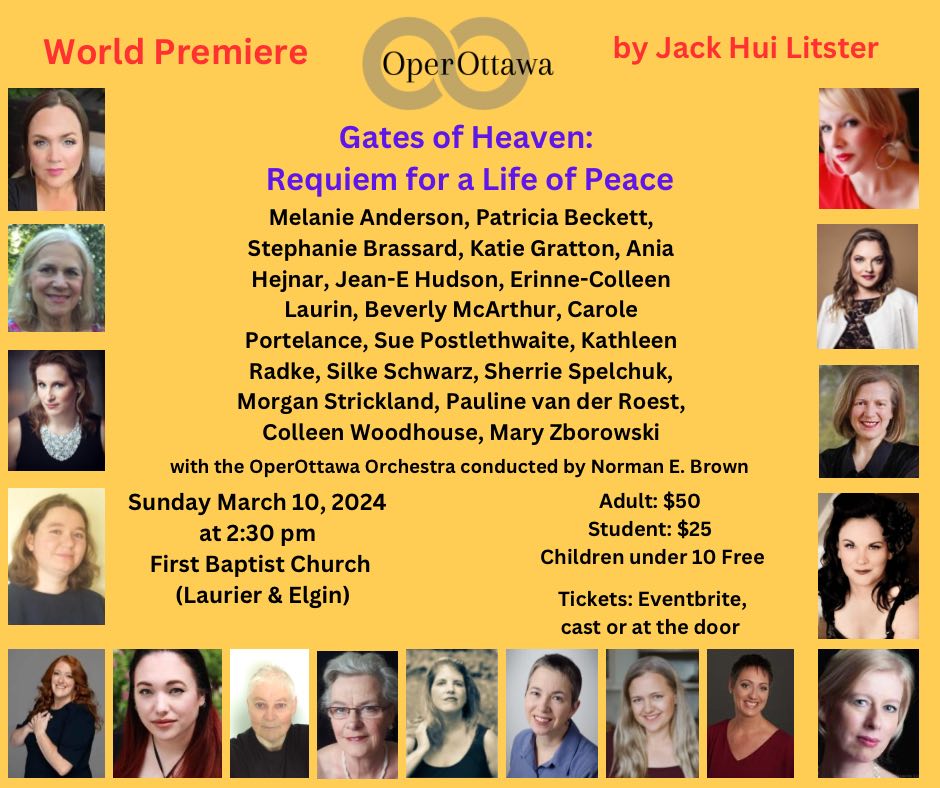
Sunday March 10th will see the world premiere of Jack’s Gates of Heaven: Requiem for a Life of Peace to be presented in Ottawa. A kickstarter campaign launched today February 8th to raise funds for the requiem.
To find out more about Jack’s music and his upcoming project with OperOttawa I asked him some questions.
Barczablog: Are you more like your father or your mother?
Jack: Starting off with a deep question here Leslie! I’ll need to give this some thought… Let’s see, I would say that I have a lot of characteristics of both of my parents in me. From my Mum I get my spontaneously evolving creativity, and the drive to create new projects and new artworks. My Mum and I are both people who step up to take on ambitious large creative projects, even in instances when we can’t yet clearly foresee the end result of a project before we take the first steps. My Mum has done this time and time again throughout her life, from creating incredible artistic projects like an intergenerational dance and documentary film project, to completing a semi-autobiographical book. For me this comes through in all the times when I take on a new project that I’m pouring my own personality and character into, projects that express my own artistic visions, like the operas and requiem that I’ve had the opportunity to write for OperOttawa. I think my Mum and I are both unafraid of embarking on a creative journey into the unknown, without a roadmap or a model to follow, armed only with the faith that the journey (and the connections made along the way) will have been worth it in the end. From my Dad I get the love of honing a craft, of developing an artistic skill set that you can then put into practice in community with others. My Dad is the one in my family who demonstrated to me what it is like to be a musician in collaboration with others and within the community. He played piano and sang at our church when I was growing up, he was the accompanist for countless musical theatre projects in schools, he sang in choirs. My Dad always made space for me and my brother to join him and participate in those musical projects, and he was always a supportive guiding presence for us, also always giving us the freedom to find our own way to express our own art. I will always love performing music live and making music with others, whether in professional, community or family spaces, and the joy that I receive from those experiences is something that I inherited from my Dad.
BB: What is the best or worst thing about what you do?
Jack: The best thing about what I do is the open door. When you are a freelance musician like me, there is no single set path that you are expected to follow. There is no rigid framework that you need to work within. There is no workplace with norms and an established list of acceptable methods, roles and responsibilities. Instead there is the open door. Each musical project, each collaboration, each opportunity, and on a more micro level, each song and even each note of music, is a gateway into nearly-infinite realms of possibilities. And the longer that you work as a musician, and the more projects you have worked on, the more diverse and different are the doors can become open to you. I’m not talking here in terms of privilege and opportunity – the question of who gets funding, who gets recognition, who gets an audience – though those are of course real factors that we all are forced to navigate in our work as artists. What I’m talking about here, though, is the freedom that we inherently have as artists to define who we want to be as an artist, and what forms of art we want to create. We have the freedom to determine what we want to express with our art, who we want to express it with, how we want to express it. The freedom of that open door and the fuel that it gives to my imagination, is unparalleled. I am so grateful that I am able to pursue that creativity, because it is a journey into who I am, what my art can express, and what that might mean to the world that I live in.
BB: Who do you like to listen to or watch?
Jack: Good question Leslie! I do a lot more listening than I do watching, to be honest. As a father who is quite active in the work of our household, taking care of our two children, cooking, cleaning, etc. I don’t spend much time watching tv or films. We actually don’t have a television set up in our house. But I’m always listening to music. For most of my life, I have generally listened to between 6-12 hours of music every day. I do have particular albums that I come back to, I have favourites. But I like to keep finding new artists, new and old, to listen to, to enjoy and to be inspired by. So I’m sure if you asked me this same question again in 6 months my answer would be quite different. The “who am I listening to” response keeps changing and evolving. But for now, as of February 2024, I’m listening to a lot of music by Hauschka (Volker Bertelmann), and I’m also studying a lot of Stravinsky’s music at the moment, primarily the music that he wrote for ballet. Those are the two artists on heaviest rotation for me at the moment. But I also spend a lot of time listening to recordings by local artists, because the Ottawa music scene is so rich and vast. So I’m listening to recordings by Dinuk Wijeratne, Raphael Weinroth-Browne, Nick Schofield, and Nathanael Larochette at the moment, and feeling grateful to be living in the same city as amazing artists like them and so many others.
BB: What ability or skill do you wish you had, that you don’t have?
Jack: I wish I was a better cook. I’m okay as a cook, I can often make food that tastes pretty good. But I wish I had a more innate understanding of flavours, ingredients, dishes, and cooking processes so that my cooking could be as diverse and wide-ranging as the music that I try to make!
BB: When you’re just relaxing and not working, what is your favourite thing to do?
Jack: Hands down, my favourite pastime is to hang out with my family. That often involves reading chapter books together with my kids, and also board games. But we also love spending time outside, whether that means going for walks in the neighbourhood or on hiking trails, or just playing at the park. Also, I must say that one of the most relaxing things for me has always been to sit and read a good book. I could get lost for hours in a good book.
BB: What was your first experience of music ?
Jack: My first memory of music would be when I was maybe 4 or 5 years old. It was around then that I remember learning how to turn on our stereo, put a vinyl record on the record player and drop the needle. I remember putting on records like James Taylor’s Greatest Hits and just lying down on the floor in the dining room where our speakers were, so that I could listen and get lost in the music. My first-ever favourite song was James Taylor’s song “Carolina in My Mind.”
BB: What is your favorite opera?
Jack: I’ll cheat a bit on this one and give two – one really old and one quite new. If I had to just pick one it would be Tan Dun’s opera “The First Emperor” which premiered at the Met in 2006. I love Tan Dun’s music. He is one of my favourite musicians of all time. When I was studying at Carleton University for my graduate degree, my thesis was an exploration of the intercultural music that Tan Dun composed for the film Crouching Tiger, Hidden Dragon. Intercultural composition is on display in a big way in The First Emperor as well. In that opera, Tan Dun, a Chinese American composer, tells the story of one of the most epic leaders in Chinese history, Emperor Qin Shi Huang, the man who implemented the construction of the Great Wall of China. And Tan Dun uses his deep understanding of Chinese opera traditions integrated with the lush melodic grandeur of late Romantic Italian opera. It’s an epic opera: fitting for an epic historical figure.
My second favourite opera, if I may – and this one is also not one of the more predictable choices – would be “King Arthur” by Henry Purcell, which premiered in 1691. Now I know for the purists out there, technically this is actually a semi-opera, as the principal characters have spoken roles, but the music in it, including arias, duets and choruses, and many instrumentals, are performed as concert pieces frequently to this day. King Arthur was a major influence for me when I was writing my first opera, “The Day You Were Born.” I had been commissioned by OperOttawa, and I was seeking examples of operatic music in English that would fit well with an opera company who specializes in early music, particularly Baroque. Listening and understanding how Purcell used the particular harmonic language of his time and the way he set English text to music, was massively influential for me.
BB your style blends classical and popular influences. Talk about how that works for artists and singers performing your music.
Jack: So as a performer I come from a popular music background, and as a composer I’ve studied orchestral and choral writing. I love finding the ways that these different musical traditions can influence each other. Musicians have been blending classical music and pop music for generations, and one of the styles of music where this has been happening in fascinating and creative ways for several decades is in film music, which is the style of music that I associate myself most with as a composer. I write music for recordings and music for performance. When I’m writing music for performance, my favourite way to approach this is to write for the specific musician or singer. The instrument they are performing on is important as well of course, but at the heart of it I am really trying to write for the particular player. This is more feasible in chamber music and when you are writing for the solo voice or a solo player. When I wrote my first two operas I very much had each soloist in mind for each piece that I wrote for them, always being mindful of their particular sound, their character and personality, and their own distinct individual musical superpowers. I take it as an honour and a privilege to write music for another artist to perform, so I want to always take the time to set them up to really shine and feel at home and comfortable in the piece that I’ve written for them. In my upcoming requiem we are keeping it pretty traditional in terms of instrumentation, using a small string section along with two brass and three woodwinds, percussion and 18 women’s voices. However, I do have a new project in the works which will likely take shape and hopefully come to a stage in Ottawa sometime in late 2024, which will feature improvising musicians on a mix of orchestral instruments and instruments from pop music and African musical contexts.
Composer Jack Hui Litster
BB: Do you prefer using trained operatic voices, and do you ever use microphones as in popular music?
Jack: It all depends on the project, and the parameters for every project that I work on are always somewhat different from one to the next. When I’m working with OperOttawa, one of our main goals is to create new music that can be performed by trained operatic voices. It has been such an honour for me to be able to write for these singers, and to gain some insight into what is and what is not comfortable for each of them to perform. In terms of using microphones, that’s an interesting question. We don’t amplify our performances with OperOttawa as we’re working in an a style of music that evolved in a time before amplification was even invented, so the sound mix, the balance that we have acoustically with the instruments and voices we use with OperOttawa is already strong and does not require microphones. We certainly use microphones for recording OperOttawa’s performances though! And in other projects that I’m working on, we don’t necessarily always have operatic singers, and much of my music uses microphones and electronics of all kinds. But it really depends on the aesthetics of each individual project.
BB in your bio it says you have “a degree in International Development” and that In the non-profit sector, you “spent ten years fighting for international human rights and collaborating with community activists.” Please talk about your experiences.
Jack: Sure! I mean it was ten years of my life so I could talk for days about what those experiences were like. But in a nutshell, I first studied music, and worked as a professional performer in my early 20s before realizing that I wanted to go back to school and study a broad range of subjects outside the scope of music. I completed a Bachelor of Social Sciences degree in 2009 with a focus on international development and then I was fortunate to find work in international human rights organizations here in Ottawa. After working for the Canadian Council for International Cooperation for three years, I spent from 2013-2020 working as a Community Engagement Manager for Inter Pares. I was able to co-organize several speaking tours throughout Canada for women’s rights activists from the Philippines. I was able to meet and get to know Inter Pares’ committed donors throughout BC, in Alberta, Manitoba, throughout Ontario and Quebec, and in the Maritimes. I got to work as the liaison with Inter Pares’ board of directors, I got to work on foundation grant proposals and reports. I received my designation as a Certified Fundraising Executive. I was on several hiring committees to bring excellent new staff into the organization. I built and managed a volunteer program. I got to emcee and provide background music for one of the organization’s largest-ever annual events, a performance of a documentary play about women’s rights. I helped to build a strategy for the organization to engage more deeply with Indigenous rights activists across Canada.
It was a lot. I loved it, and I met such inspiring people and lifelong friends. But at the end of the day, when you are an artist, your art keeps calling you. And I came to a point when I realized that if, God willing, I live to a ripe old age, I don’t want to look back on my life and ask the question “what if I had given my music a second chance?” I knew that I needed to find out the answer to that question. So I left Inter Pares to go to Carleton University where I spent two years completing my MA in Music and Culture (during the pandemic!). By that point I had already begun working as a composer for OperOttawa. And so far, the opportunities have continued to blossom. So I’m thankful that this transition has gone smoothly. And I’m grateful for the decade that I got to spend in nonprofit organizations.
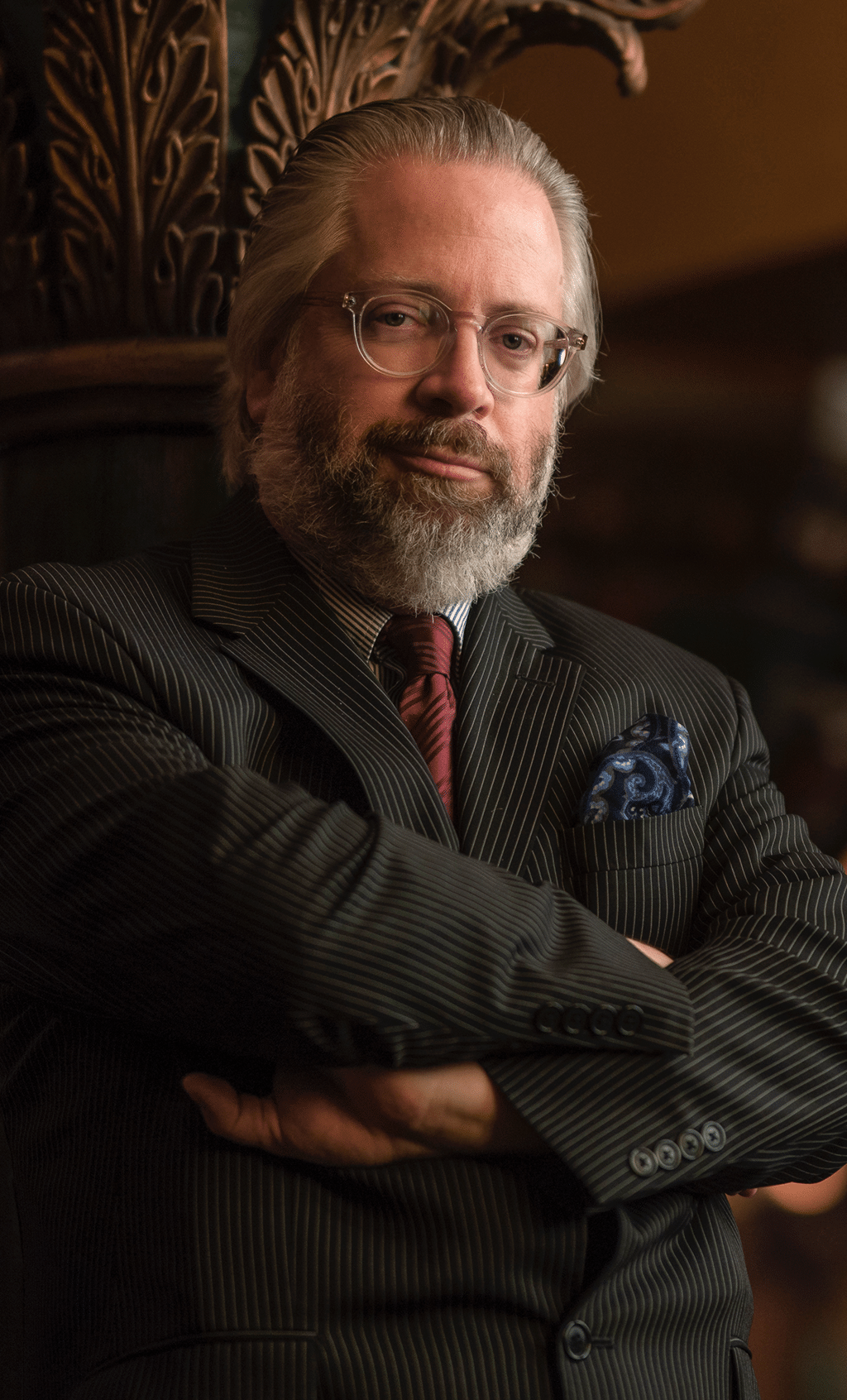
OperOttawa Artistic Director and Conductor Norman E Brown
BB: In his October interview Norman E Brown founder and Artistic Director of OperOttawa said One of reasons I chose do an entire season only using female voices (Suor Angelica, an all female Magic Flute, and a world premiere Requiem by Hui Litster written specifically for female voices in March 2024) is the fact that there are so many amazing female singers in and around Ottawa who are underutilized. Tell us what voices you will be using and what this piece will sound like.
Jack: We will have 18 amazing, accomplished operatic singers from Ottawa and Montreal performing this requiem, which is titled Gates of Heaven: Requiem for a Life of Peace. With the exception of two movements which feature solo voices, this requiem is primarily choral.
Several of the movements feature 6-part harmony, and I had such a great time writing close harmonies for these women’s voices, who between them have a range of two and a half octaves.
This requiem will be sung by the talented singers of OperOttawa, including Melanie Anderson, Patricia Beckett, Stephanie Brassard, Katie Gratton, Ania Hejnar, Jean-E Hudson, Erinne-Colleen Laurin, Beverly McArthur, Carole Portelance, Sue Postlethwaite, Kathleen Radke, Silke Schwarz, Sherrie Spelchuk, Morgan Strickland, Pauline van der Roest, Colleen Woodhouse, Mary Zborowski.
Our singers will be accompanied by the OperOttawa Orchestra, conducted by Norman E. Brown.
Often a requiem is written in memory of a certain person. Gates of Heaven: Requiem for a Life of Peace is dedicated to the memory of Canadian women leaders throughout history. During the performance of the requiem, we will include three pauses in which a commemoration will be read honouring these Canadian women leaders: Allie Vibert Douglas, Viola Desmond, Madeleine Parent, Keiko Margaret Lyons, Rosemary Brown, Ethel Stark, Portia White, Kathleen Livingstone, Kenojuak Ashevak, Mary Ann Shadd, Hide Hyodo Shimizu, Lotta Hitschmanova, Violet King Henry, and Shirley Greenberg.
At its origins, a requiem is a mass for the dead. Over the past six centuries, requiems have been written by celebrated and gifted musicians, from Palestrina to Mozart, Verdi to Fauré, Duruflé to Rutter, and many, many more. There are requiems that are quite dramatic, like Verdi’s requiem or Mozart’s requiem, which seem at times to be exploring the subject of death from the perspective of devastated mourners at a funeral. Then there are other requiems which are more meditative and less dramatic, which have a flowing quality to them, such as parts of Duruflé’s requiem. My vision that I held on to as I was writing my requiem was that this would be the music that someone would hear after their death, at the moment of their arrival at the Gates of Heaven. I wanted the music to lean more into the celebration of a life well lived, rather than the grief and heartache of those left behind. So I pictured the relief that you would feel, arriving at the gates of heaven, to have a choir of angels sing you home.
BB: What words are you setting in this Requiem?
Jack: This requiem takes elements of the standard Latin text for a requiem, including Introitus, Kyrie, Offertorium, Sanctus and Benedictus, Pie Jesu, Agnus Dei, Lux Aeterna and In Paradisum. It’s a bit unorthodox but we have added a Gloria as well (partly as an homage to Bach’s Mass in B Minor, and partly because my wife’s name is Gloria so I couldn’t pass up the chance to write a piece in which a choir repeats her name endlessly!). And then the one moment in which we are breaking out of the Latin text is in the final movement. I’ve integrated some English text, titled “Golden Valley” to my setting of “In Paradisum.”
BB do you have any advice to young composers trying to find their way?
Jack; I hope that a young composer somewhere might read this blog. That would be very exciting for me. If you are a young composer reading this, please reach out to me. I would love to hear from you! Even though I still feel that I’m a young composer trying to find my way, I can certainly offer a few words of advice that I’ve picked up along the way.
First, try to find ways to embrace the paradox that on one hand composing is a solitary process – we spend so many days and nights every year by ourselves in our studios, at our instruments, alone with our creative ideas, creating new music in recorded or notated form – and on the other hand, to thrive as a composer, you need to always be growing and nurturing your network of fellow musicians, collaborators and other artists! This paradox is helpful because making time for the important work of relationship-building is a nice antidote to the loneliness of composing by yourself. Remember that your next award-winning, life-changing long-term collaborative partners could emerge at the most unexpected places and times. Keep alert for these possibilities, stay curious, and take the time to be aware of and engaged in the artistic communities that you want to be working with.
Second, it’s okay to have sidelines. Hardly any composers in history have been able to have composing as their singular sustainable income source. And that’s okay. You’re not a failure if you have other income streams besides composition. Composition-related income, in so many cases, is sporadic, short-term, and nearly always project-based, whereas bills are paid monthly and as humans we’re required to buy food on a daily basis. Having a part-time side gig that provides predictable steady income can give you peace of mind, which can help you to be in a better head space when you are doing your creative work. In my case, I am currently juggling roughly 6 part-time jobs, I work as the composer-in-residence for two arts organizations, I freelance as a composer, producer and performer, I teach several music students privately, I’m a contract instructor in a local university’s music department, and I work 10 hours a week at a bookstore in my neighbourhood.
Third, remember that being a composer is a long-term game. Our projects are long and time-consuming. But over time, as my mentor Dinuk Wijeratne likes to say, we are building assets (our compositions) which will continue to earn revenue for us in the years to come. The more years that you work as a composer, the more established you become, and the deeper your list of works becomes, and the more collaborators you have.
BB: Do you have any influences or teachers you would like to recognize?
Jack: I have had so many teachers and mentors who have left an imprint on my music and have each opened my eyes and my ears to what music has the potential to be. In my family, my Nan and my Auntie Eve, who were singers and whose performances I went to often as a kid – they showed me the joy of being on stage, and the emotion that a strong performance can give to an audience. My Dad and my brother Pete, who I performed with in countless projects all throughout my childhood – they made music fun for me from day one. All my uncles and my cousin Aaron, all such incredible singers and choristers, whose effortless harmonies gave me, from a young age, a deep love for Renaissance choral music, as well as choral music more broadly. My high school music teacher Doug McIlwain, who saw something in me and put musical opportunities in front of me, giving me the opportunity at age 17 to be the composer and director for our school’s first ever percussion ensemble. I think that it is only as I grow older that I look back on that and see how much of a vote of confidence and leap of faith that was. My drum teachers, particularly Tom Wolf and Kevin Brow, who gave me so much inspiration and such a deep love of my instrument, as well as so much insight into how much deeper it was possible to go. Dave Restivo, Tom Daniels, Greg Carter, John McLaggan, Lisa Berg in the music department at St. Francis Xavier when I studied there – all such incredibly inspirational professors and instructors. Kareem Clarke, Ben Newhouse, Dave Kusek and Jack Freeman at the Berklee College of Music, who were each so down-to-earth, passionate, and wise about the various aspects of music that I had the chance to study with them. Here in Ottawa, all my many musical mentors, Dr. James K. Wright, Dr. Jesse Stewart, Mark Ferguson, Dinuk Wijeratne, Robbie Teehan and Ed Eagan. I have been so blessed to have the ongoing opportunities to work with and learn from such gifted and generous artists.
I’ve been watching productions of Mozart’s Don Giovanni all my life that end with some sort of ludicrous & unbelievable encounter between the anti-hero and his fake stone guest, who comes to drag him to hell.
Until now that is.
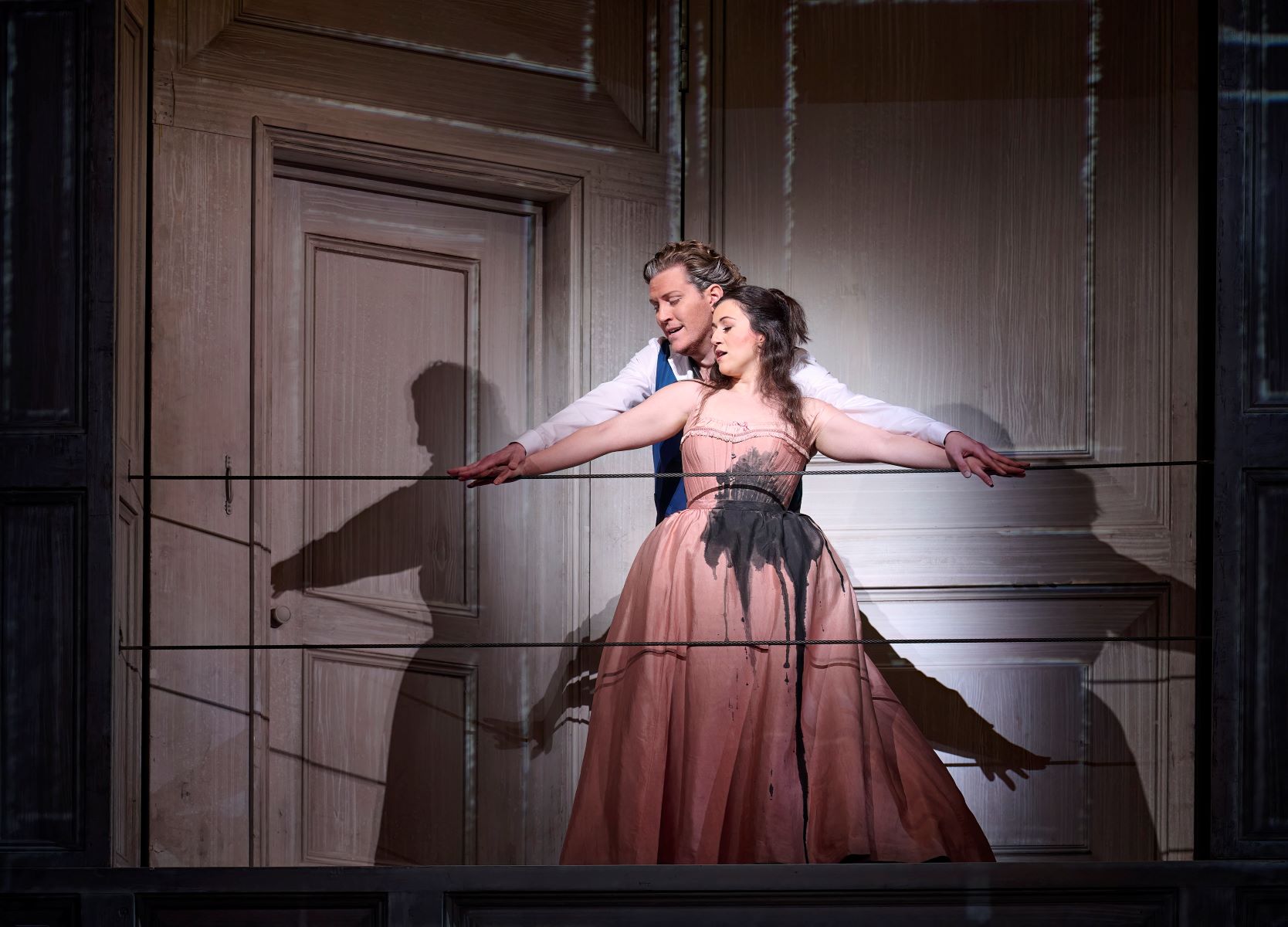
David Leigh’s Commendatore haunting Gordon Bintner as Don Giovanni (photo: Michael Cooper)
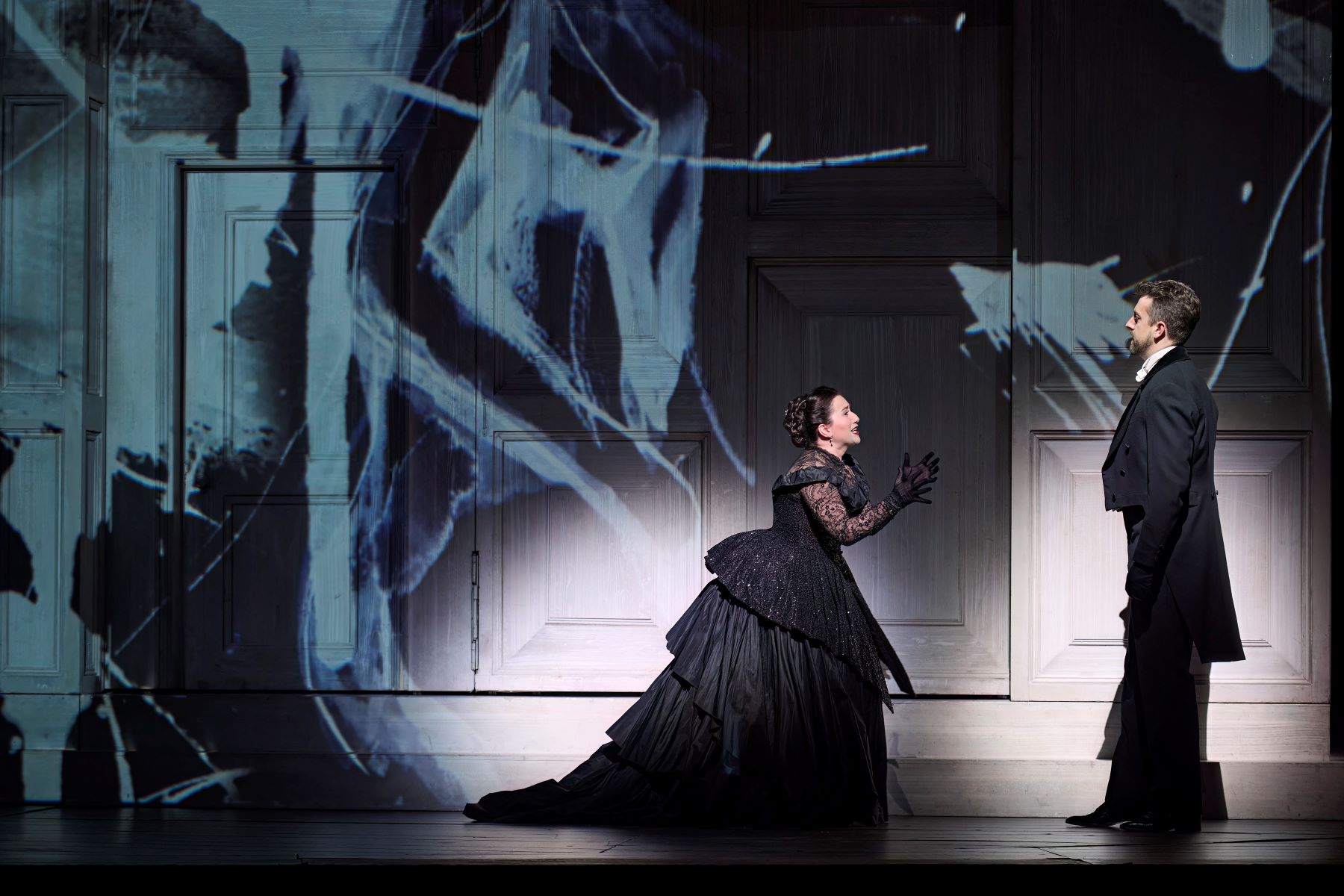
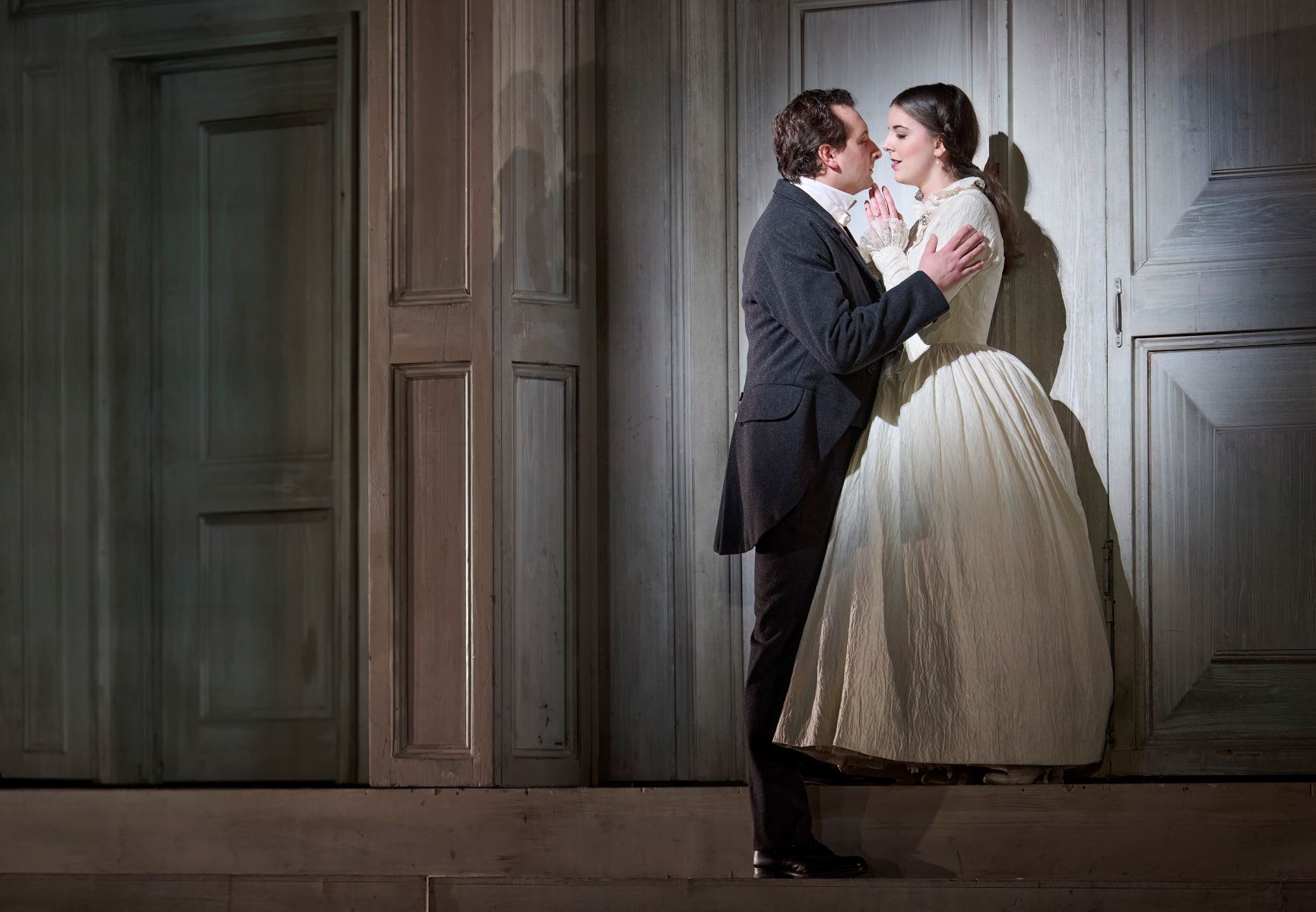
The new production the Canadian Opera Company have brought in via the English National Opera, directed by Kasper Holten with sets designed by Es Devlin and projections designed by Luke Halls takes advantage of modern stagecraft and CGI.
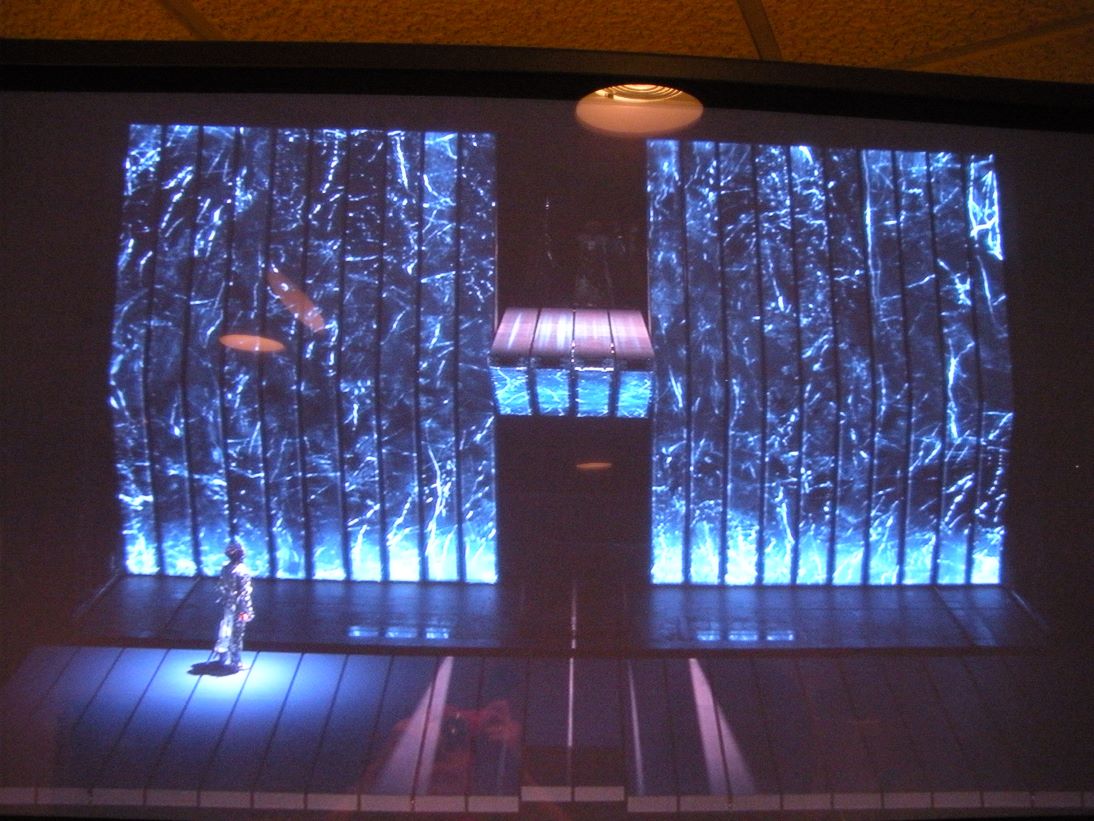
Each segment of the stage picture has moving projections surrounding the characters (photo by Michael Cooper)
Yes operas often make huge demands on the imagination. We want to believe. I don’t want to offer any spoilers except to say that there are scary moments in Holten’s Don Giovanni and not just at the end. This Don Giovanni doesn’t shrink away from the implications of a story that asks us to believe that the spirit of a murdered character comes back to haunt his killer.
It’s a curious coincidence that in 2024, the year of Czech Music, both of the operas in the COC winter season have Czech origins, Mozart’s opera having premiered in Prague.
The version we get minus the usual epilogue ends the opera with the Don’s demise. It’s the first time I’ve seen it done this way, a version that was more common in previous centuries than in our own. While I think I prefer the opera with the extra scene containing the reflections of the characters at the conclusion, this shorter version has the advantage of getting us out of the theatre sooner, while placing the focus squarely on the lead.
Speaking of which, Gordon Bintner as the Don is a secure presence who sings the role brilliantly. We hear a nuanced Mozartean who can be softly seductive or a boastful brute without apology or remorse. His physical presence is as persuasive as the singing, the total package. You won’t hear a prettier baritone sound in this role.
Paolo Bordogna as Leporello with Gordon Bintner as Don Giovanni (photo: Michael Cooper)
Alongside the Don is the superb Leporello of Paolo Bordogna, a gifted comedian with terrific timing and a lovely voice. His catalogue aria is a thing of great beauty, and will make you laugh.
Of the three women the Don is chasing, first we meet the Donna Anna of Mané Goloyan, a soprano who interpolates a high D into her big first act aria “Or sai chi l’onore”, She was totally vulnerable in a role that can be swamped under the weight of her calls for vengeance for her father’s murder, like a walking guilt trip. I like her version of the character more than any I’ve seen, a wonderfully human take.
Mané Galoyan as Donna Anna with Ben Bliss as Don Ottavio (Michael Cooper: photo)
Her betrothed is Don Ottavio, sweetly sung by Ben Bliss in a more macho reading of his part than many I’ve seen, both in the ensemble numbers or in his two arias. While Ottavio is sometimes portrayed as a hapless and passive bystander, waiting for Anna to get past the anger & demands for vengeance over her father, Bliss makes a believable whole out of the parts Da Ponte wrote for him in the libretto. The other member of the family is The Commendatore of David Leigh, getting to do more than usual in Holten’s Don Giovanni. I want to be spoiler free, but he’s the key to this production.
As Zerlina Simone McIntosh gets to sing the best melodies of the whole opera, the woman who is most relatable, and Simone didn’t disappoint. With the Masetto of Joel Allison, we see the closest thing to normal people in the opera. Masetto shows us frustration and anger in a couple of numbers, but never gets a chance to get even with the Don.
But have no fear, the story makes sure justice is done.
Joel Allison as Masetto with Simone McIntosh as Zerlina (photo: Michael Cooper)
The 95 minutes until the intermission flew by. I recall seeing Conductor Johannes Debus say on Facebook that “Toi toi everyone! It’s going to be a pure adrenaline rush from start to finish!”
He wasn’t wrong. The orchestra played cleanly, quickly while Johannes offered brilliant support to his cast, especially in the finales to each act.
That makes two shows in the winter season of the COC that make great first operas, although Don Giovanni’s music is fairly well-known compared to the Janacek.
So far Perryn Leech’s approach (the new General Director) at the Canadian Opera Company seems to be certain to be popular, bringing in productions that are visually appealing while telling the story in a compelling fashion that doesn’t venture too far away from the score as written.
Don Giovanni continues at the Four Seasons Centre until February 24th.
Gordon Bintner as Don Giovanni with Mané Galoyan as Donna Anna (photo: Michael Cooper)
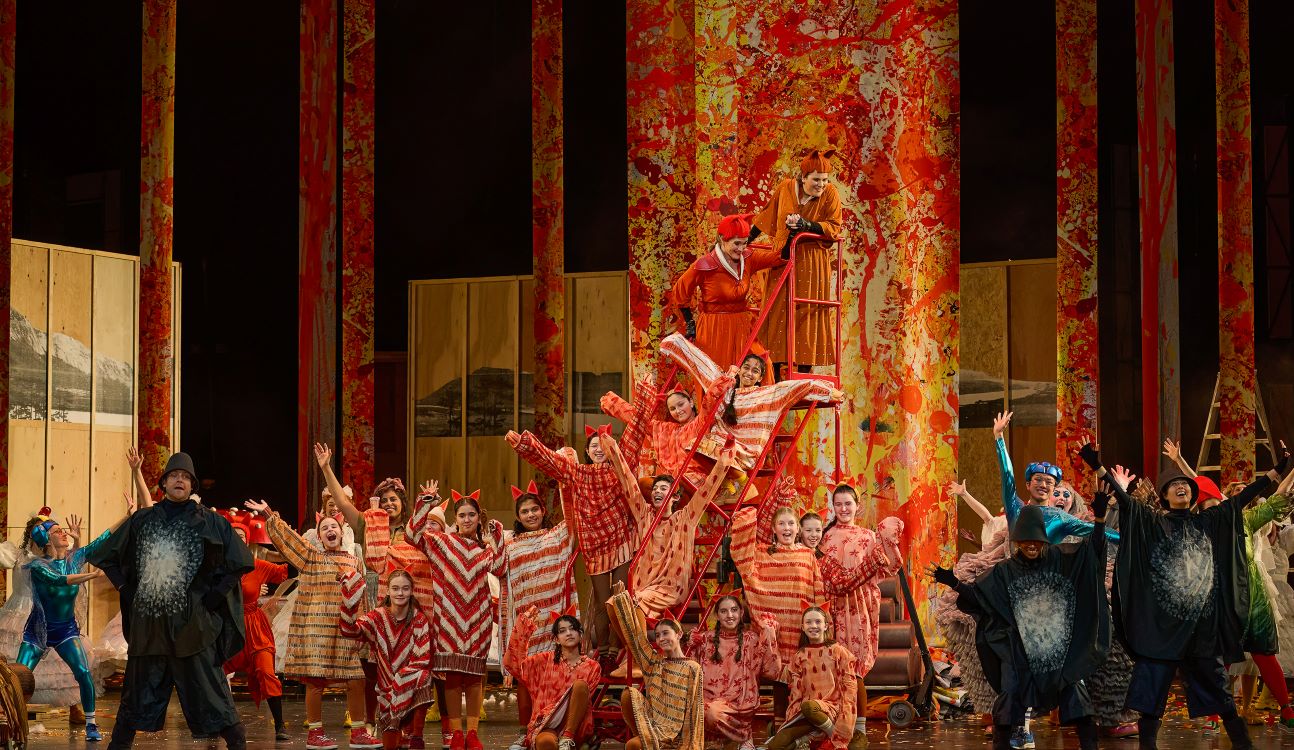
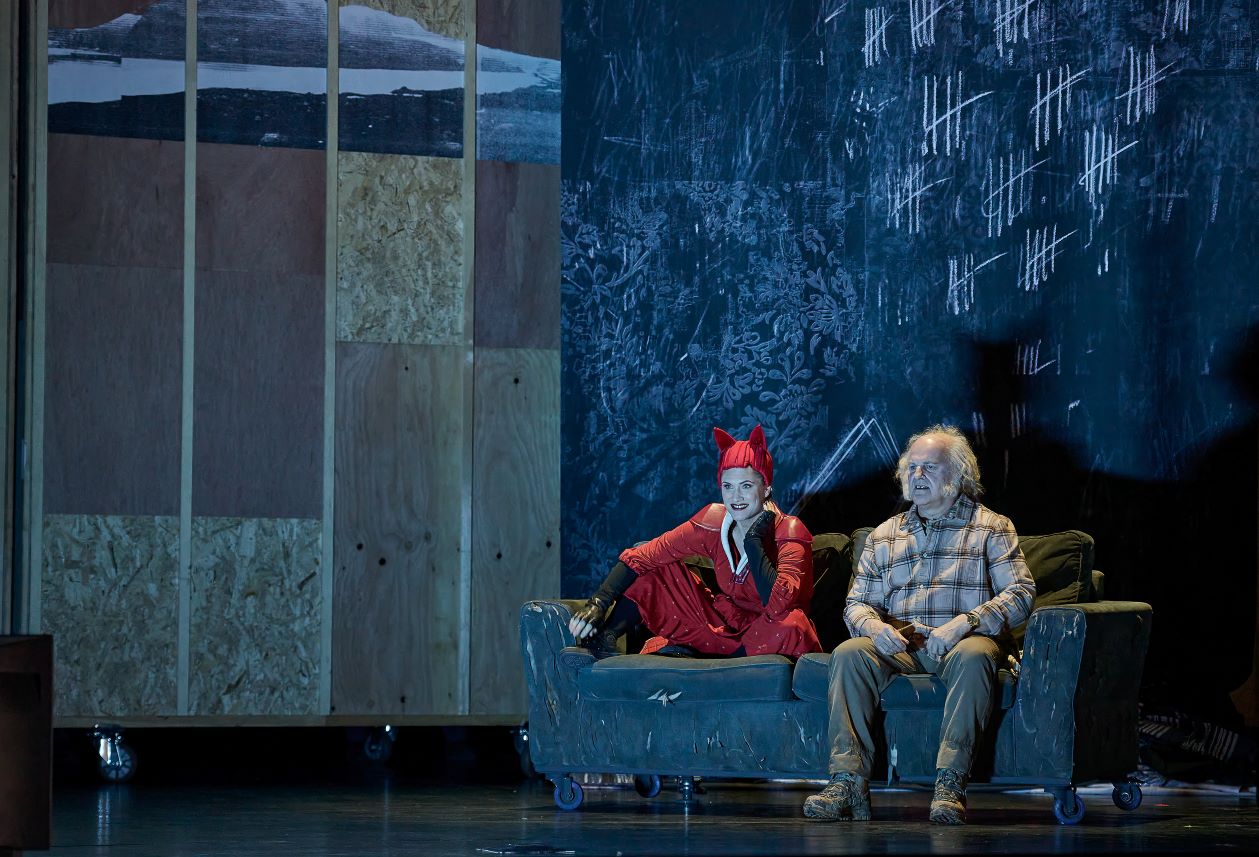
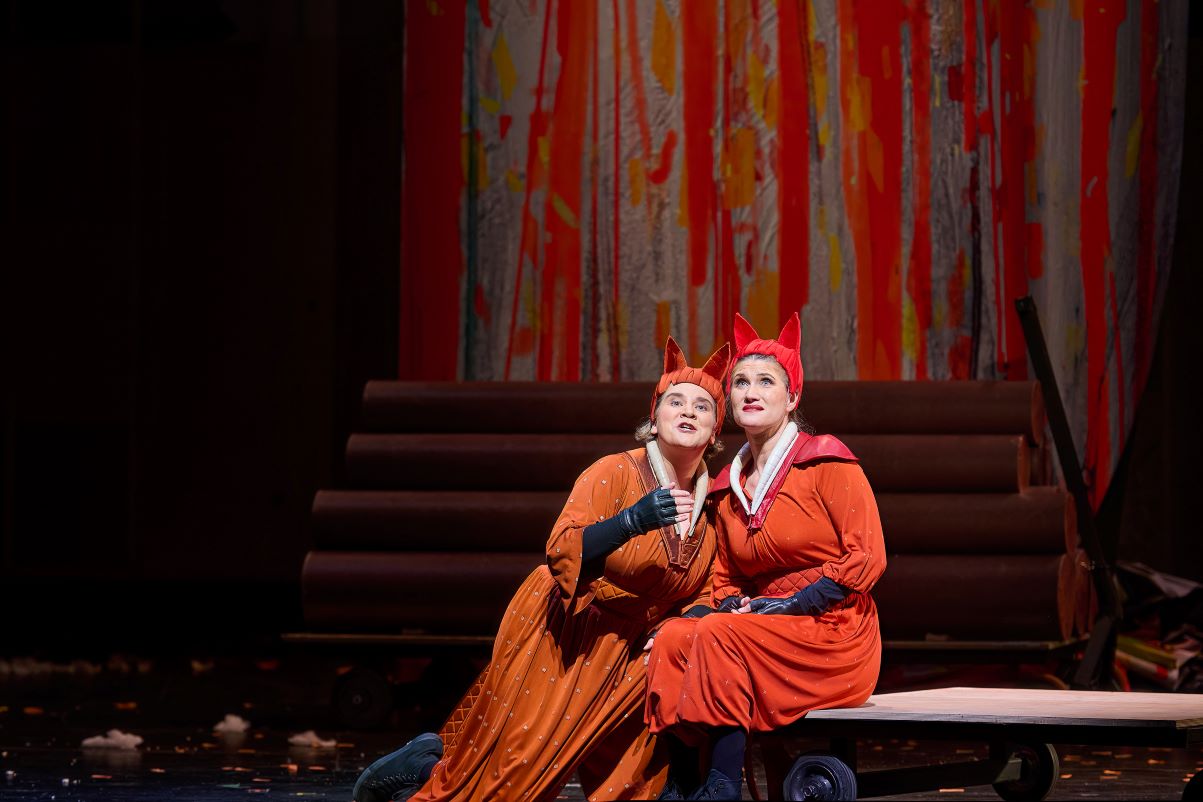
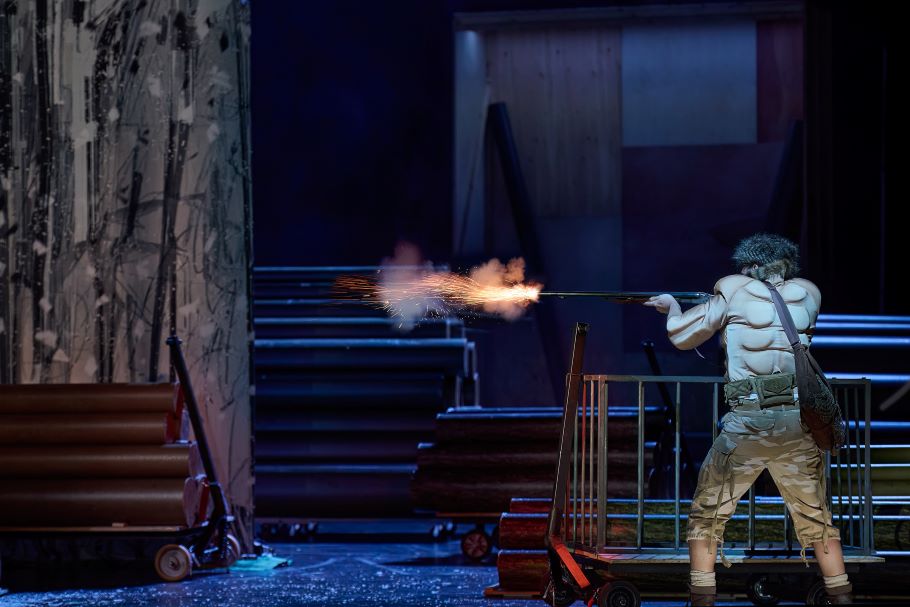
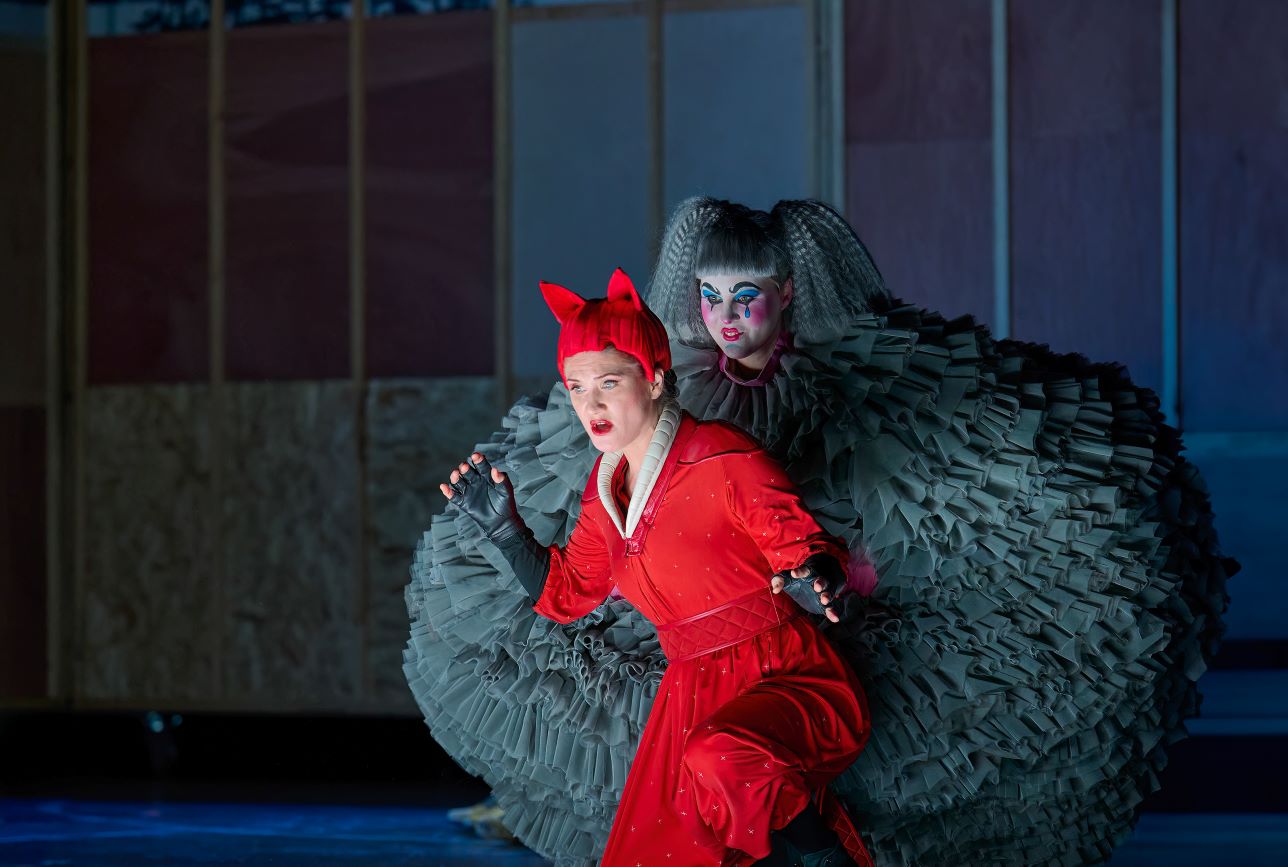
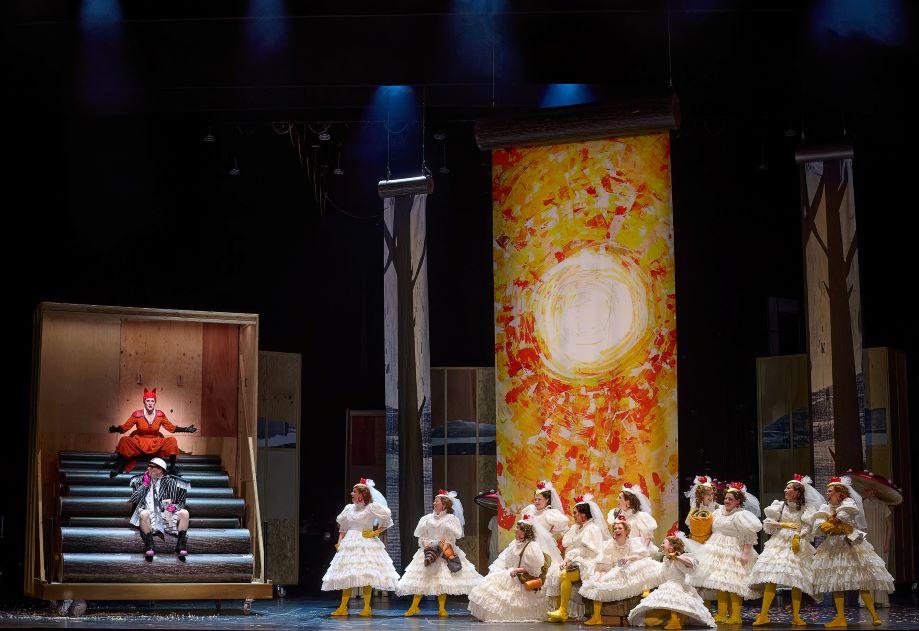
The Canadian Opera Company are currently presenting Leos Janacek’s opera The Cunning Little Vixen. This flamboyantly theatrical production is among the most colourful things I’ve ever seen on a stage.
Vixen is suitable for children and makes a terrific first opera. Six performances remain February 3, 8, 10, 13, 14, 16 of a work that premiered exactly one hundred years ago.
This light-hearted work may remind you of The Nutcracker for the animals and children in the story, featuring not just the COC chorus and orchestra but also prominent work by the Canadian Children’s Opera Company.
Cunning Little Vixen at the COC (photo: Michael Cooper)
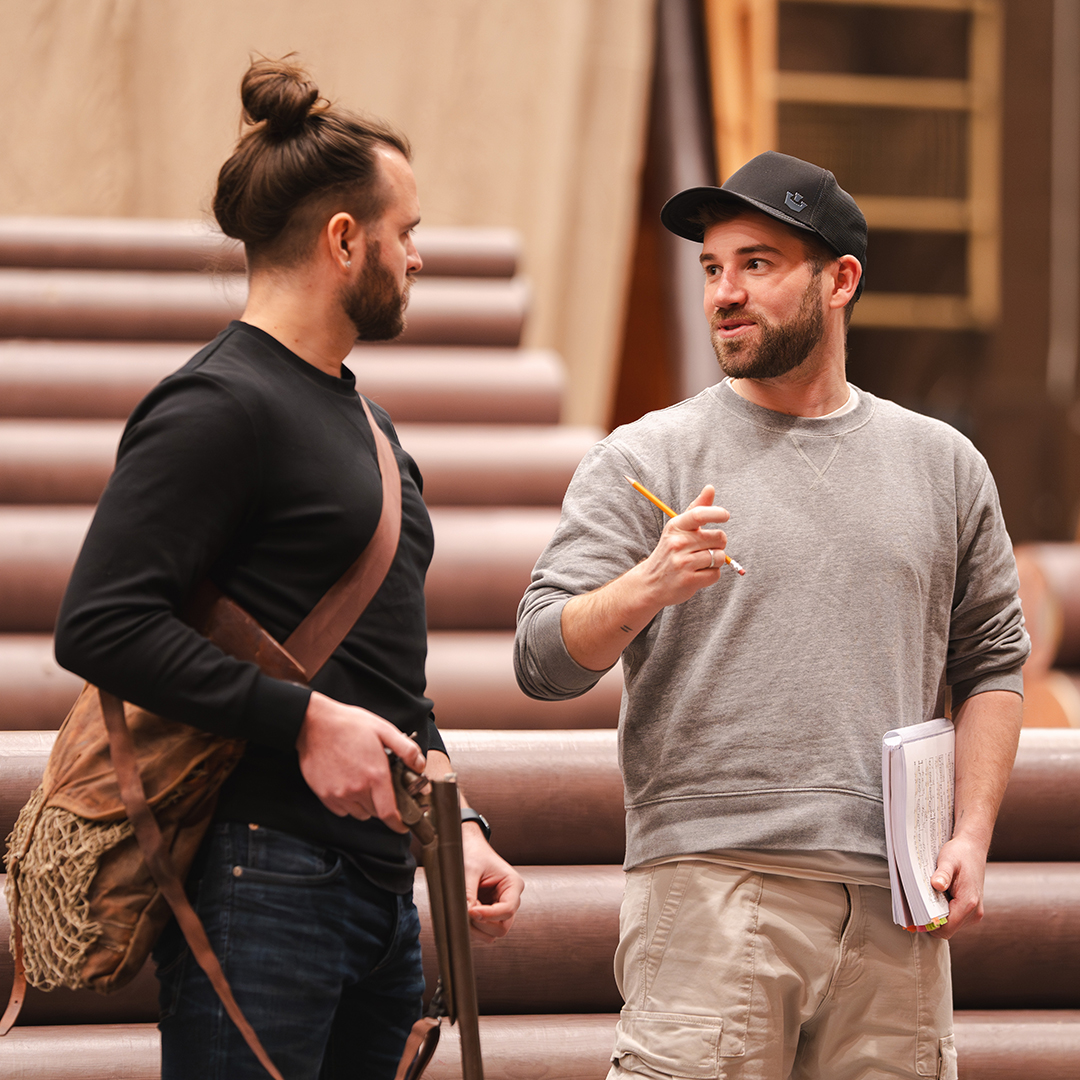
Directed by Jamie Manton this production from English National Opera features sets and costumes designed by Tom Scutt.
Poacher (Alex Halliday) and Director Jamie Manton
It’s timely as these words from the COC website suggest: When a forest gamekeeper traps a fox and attempts to domesticate her, their encounter leads to a poignant reflection on the natural cycle of life and death, as well as our relationship with the planet. This inspiring opera invites audiences to reflect on the advancing toll of climate change and the importance of cultivating a harmonious interrelationship with the natural world.
It’s a different planet now. Yes exploitation of natural resources was the key to the exploration of Canada, and the fur trade was one of the key industries that built our country: but since the 1980s or 90s, fur is not just out of fashion but even illegal in places. Janacek’s opera doesn’t take sides, showing us mostly those who would exploit nature, and the consequences for the natural world, making for a very balanced meditation on forest life. It doesn’t preach.
Based on stories by Rudolf Tesnohlidek serialized with illustrations in a newspaper, Janacek wrote his own libretto, a work so closely associated with him that music from the final scene would be played at his funeral.
While Manton and Scutt fill the stage with a great deal of movement and brilliant colours, they don’t opt for a realistic presentation. It’s not Disney nor even Maurice Sendak (who designed the last version of this opera seen here). There’s a Brechtian aspect to the staging and design, reminding us regularly that no we’re not seeing a realistic presentation. When the fox and the vixen get intimate, they take off their headpieces that include their fake ears. It’s simultaneously a reminder that the theatre is not real life, yet invites us to see the emotions of the players under those costumes. This is a production that chooses not to create illusions but instead asks you to be an imaginative partner, thinking and feeling with the performers.
A constant feature of the stage picture is found in a banner that unrolls throughout the opera, for me inducing tears on the first page of the score. Just as the opera began with illustrated stories on newspaper pages, so too this presentation before us. Almost every picture accompanying this review shows some of the images, although the best ones weren’t captured by the COC photographer. They represent a show within the show, or in a real sense, they are where the story originates. The sparseness of the set pieces and the colourful costumes encourage us to keep looking back up at the story-telling banner.
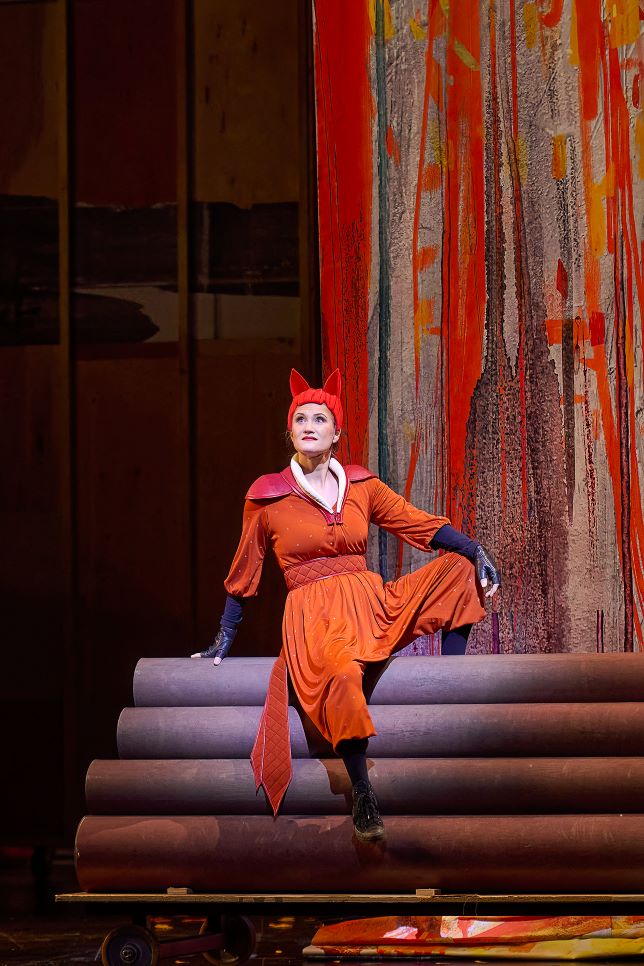
Vixen (Jane Archibald) photo: Michael Cooper
Jane Archibald was a crowd favorite as Sharp-ears the Vixen. I don’t think I’ve ever heard her sing off pitch, although this time it was more a matter of her energetic physical portrayal as her impeccable vocalism.
Vixen (Jane Archibald) and Forester (Christopher Purves) photo: Michael Cooper
Christopher Purves is the forester, truly an everyman especially in the last act. Purves’s appearance is older and crustier than other foresters I’ve seen, which works for me being somewhat crusty myself. In an opera so preoccupied with the passage of time and renewal, it’s that much more poignant seeing someone to whom I can relate so easily. In my recent interview with Adam Klein, the word “agism” was a huge topic, observing that singers seem to be shown the door far too soon nowadays, a problem especially pressing when you need someone onstage to play the leading roles who aren’t young lovers. Yet in fairness when I look it up, aha! Purves is much younger than I, and in fact is a good actor, rather than actually being old. The portrayal was gruff at times, but full of delicacy especially in that amazing last scene.
Vixen is an ensemble show, led ably as usual by COC’s resident music director Johannes Debus. The many chorus moments and children’s solos were lovingly presented, never covered by the orchestra and beautifully articulated.
Fox (Ema Nikolovska) and Vixen (Jane Archibald) photo: Michael Cooper
The fox who romances and then marries Sharp-ears the vixen was Ema Nikolovska, clearly enjoying herself. The voices contrast wonderfully but blended perfectly.
Poacher (Alex Halliday) photo: Michael Cooper
Alex Halliday was a sympathetic Poacher, in a role that can be played much darker. But he is just trying to survive, or to find a fur for his girlfriend.
The animals are all great fun. As a tenor I was sympathetic to what happens to Adam Luther’s strutting rooster, seemingly punished for having superb high notes. Carolyn Sproule as the dog has the wackiest costume of the night.
Vixen (Jane Archibald) and Dog (Carolyn Sproule)
I’m delighted to see that the roles are shuffled for the relaxed performance February 13th , Karoline Podolak singing Sharpears for Jane Archibald and Joel Allison as the Forester for Christopher Purves. That gives the COC a ready cast in the event that anyone gets sick. We have been seeing a lot of illness and cancellations, so while people may behave as though the pandemic is over, it’s especially tough for singers.
This is an opera where you can see how much fun the players are having, and maybe wish you could be up on stage with them yourself. It feels very short, and I didn’t want it to end.
Vixen (Jane Archibald), Priest (Giles Tomkins) and hens (COC chorus) before story-telling banner. photo: Michael Cooper
The Year of Czech Music is an event that since 1924 has commemorated the major figures of Czech music. I understand that it began in 1924 for Bedřich Smetana’s 100th anniversary, and has been repeated on every year that ends in a “4” , as a worldwide celebration.
2024 has additional significance, with the centennial of Janacek’s The Cunning Little Vixen (composed in 1923, premiered in 1924), that opens this week with the Canadian Opera Company, and the bicentennial of Bedrich Smetana, born March 2nd 1824.
John Holland is the founding director of the Canadian Institute for Czech Music. In the fall of 2014, he produced the Canadian premiere of Dvořák’s opera Jakobin. For 2024 the year will be commemorated in Canada with several presentations of opera and concert repertoire.
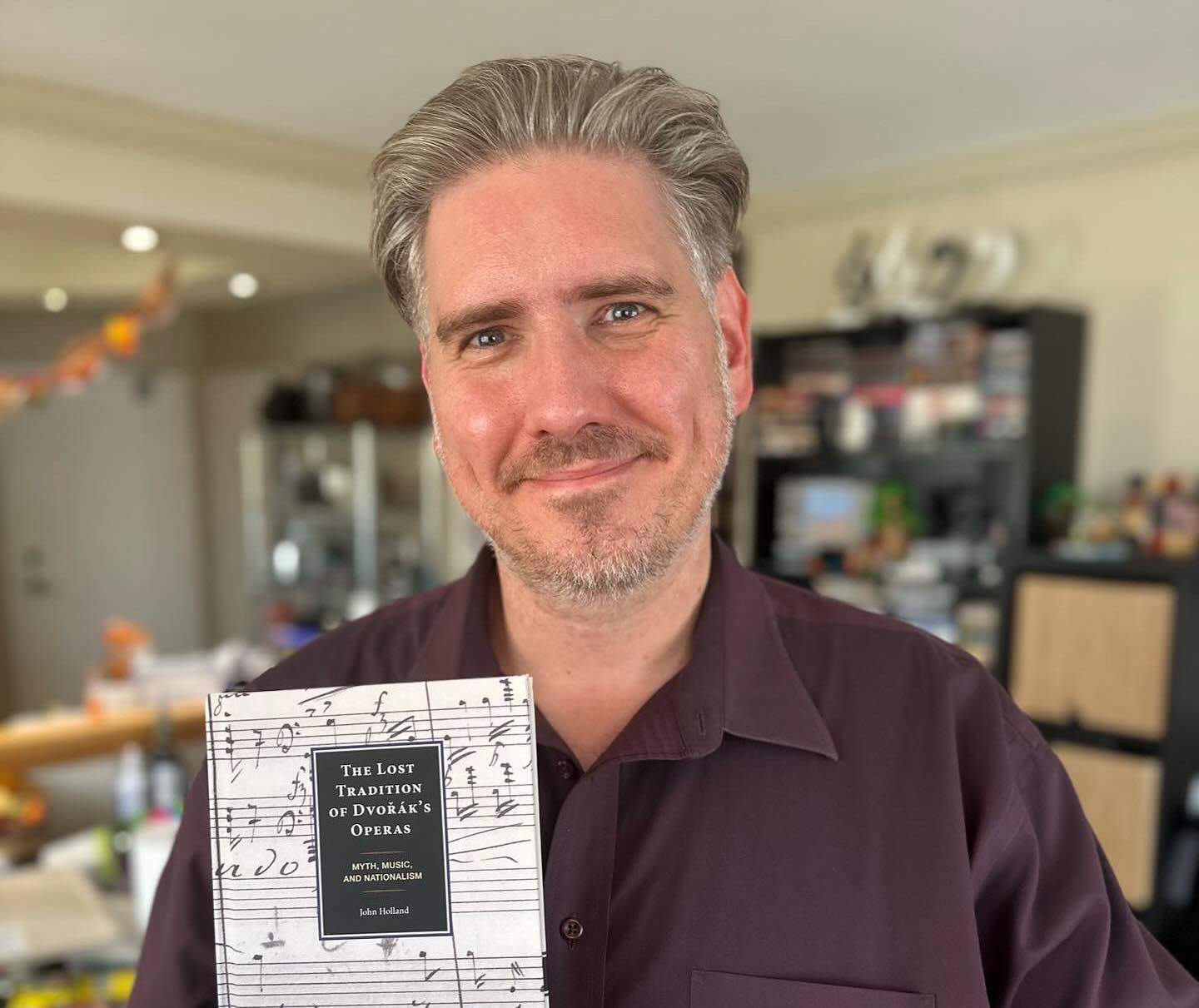
John is a singer and musicologist who recently published The Lost Tradition of Dvořák’s Operas: Myth, Music, and Nationalism. Other than Rusalka (an opera that’s regularly produced), you might never know that this great composer actually composed ten operas.
John Holland holding his new book
I was glad to interview John in the middle of a busy month of teaching and singing to talk about opera and especially his first love, Czech Music.
~~~
Barczablog: Are you more like your father or your mother?
John Holland: I feel I have the analytical mind, critical thinking, and wit of my father, and the drive, determination, and creativity of my mother. My parents worked in very different fields, my father was a lawyer, and my mother is a professional skating coach. I grew up having a love of reading and thirst for knowledge, but also a love of swimming, skating, and outdoor activities.
With regard to music, my father’s side didn’t have a lot of music, but with us living in Windsor, my father had a huge affinity for Motown. The music definitely comes from my mother’s side, the Czechoslovakian side of the family. A visit to my grandparent’s house would never go without LPs of Czech and Slovak folk songs being played, or even dancing polkas in the family room. My family even has a family polka band, the Polkadelics, which was founded by my two uncles and their friends. At one point or another several of us nieces and nephews have sung or played in the family band.
BB: What is the best or worst thing about what you do?
John Holland: The best thing about what I do is that I get to surround myself daily with music that I love, and work in a performance art, whether on stage or in concert. I teach music, I write about music, I plan music projects, and I also conduct. The central aspects of my life revolve around being a complete musician, and being able to work in a field that I adore is sheer joy.
Without a doubt, the worst thing about the music industry is the devaluing of music and performing arts. It is heartbreaking to see the juxtaposition in worth between someone who plays a professional sport and someone who is a professional performing artist. I have many colleagues who are at the top of their art, and struggle to make a living, while people in other fields do the bare minimum, and collect a livable wage.
When I look back at the pandemic lockdowns, everyone was stuck at home and wanted to consume arts content, whether stream of operas, musicals, concerts etc. What those people forgot is that musicians were some of the most affected by the lockdowns. Concert halls, opera houses, music theatre productions, choral ensembles, and the like were the last things to open up, and always the first things to be shut down. Even today, many auditions I go to have the caveat of “this production may or may not happen because of the tenuous nature of the arts post-pandemic.” Lawyers, dentists, custodians, mechanics, all do not work for free or for exposure, and it is time there was more value for the profession of performing artist. The world cannot function without music and the arts. Art is work, as the slogan goes, and it needs to be valued as such.
BB: Who do you like to listen to or watch?
John Holland: I have always been proud of my eclectic musical tastes. Even while answering these questions, I have been listening to Dave Brubeck’s Time Out Quartet, Queen’s Greatest Hits, and a recording of Palestrina Motets. Of course, I love opera and art song, and all forms of classical music, but I have many other favourite genres of music. Working in classical music often means that when I am not working, I want to listen to other genres. Some may call them guilty pleasures, but I hold no guilt about them. I am a big fan of jazz music of the swing era, and also neo-swing. There is a band called the Squirrel Nut Zippers, and their album titled HOT is one of the great modern swing albums. I have my dad’s affinity for Motown, and really enjoy Michael Jackson, Billy Joel, Sam Roberts, Buena Vista Social Club, and lots of other non-classical music. I worked at Grigorian music store on Yorkville for over 15 years, and through that time, was able to hear so much diverse music, and really expose myself to new sounds. It was great!
What do I like to watch? Well, I am a big hockey fan. Being from Windsor, my friends were either Detroit Red Wings fans or Toronto Maple Leaf fans, but I was raised with a more discerning taste. It is very interesting living in Toronto and being a die-hard Montreal Canadiens fan. Watching my Habs in 2020-21 eliminate the Leafs from the playoffs was so amazing. The next day, I walked around the city decked out in all of my Canadiens swag. It was glorious.
Aside from hockey, I love sci-fi. I was raised on Star Wars and Star Trek, and love them both to this day. I am also a fan of sitcoms, historical dramas, britcoms, and the like. The brit coms ‘Are You Being Served?’ and ‘Black Books’ are on my top tier list. One of my favourite things to watch are ghost hunting videos.
BB: What ability or skill do you wish you had, that you don’t have?
John Holland: This is easy. I wish I had the ability to teleport. There are so many things I wish I could experience or participate in, and travel or travel time is usually the mitigating factor in not being able to do it. Also, being able to visit distant family in the blink of an eye would be wonderful. I do a lot of singing in Ottawa, and the drives can get pretty tedious sometimes. If I could snap my fingers and be there, that would be great, and if I cannot have that superpower, then someone better develop that Star Trek transporter very soon.
BB: If we had high-speed rail? Not quite teleporting but its carbon footprint is better than air travel. Can you imagine being in Ottawa or Montreal in an hour or two, no trip to the airport, guilt free environmentally? Not sci-fi: they’ve already got it in Japan & Europe, at 320 km/hr. Oh well…
When you’re just relaxing and not working, what is your favourite thing to do?
John Holland: In those rare down times, I have a variety of things I like to indulge in to relax and recharge. I like to read and go on walks, as they help me zone out from the thoughts of a music career, and help me refocus. Swimming and Skating are also good because they are very different from music. I am also an avid gamer, and even have a live stream video game channel on www.twitch.tv/johnholland2000. I regularly stream games, and even do some of my singing practice on twitch. Gaming is another activity that takes me away from the heavy focus that professional music often demands.
BB: What was your first experience of music ?
John Holland: The aforementioned Czech music afternoons at my grandparent’s house were probably some of the earliest musical memories I have, including the family polka band. My mom and dad would always play music around the house, and often sing along. Being a skating coach, my mom was always playing a variety of music on the stereo as she created skating programs for her students. My dad listened to basically anything that caught his fancy, but had a great love for Motown, R & B and Soul music. Many a day the house would be filled with The Temptations, Smokey Robinson, Vivaldi, Tchaikovsky, and many others. We were a household of Mozart to Motown.
BB: What is your favorite opera?
John Holland: For someone who is a singer and a musicologist, this is a tough question. There are so many mainstream operas that I enjoy, but also rarities. If I have to pick a favourite, I would have to say Mozart’s Le Nozze di Figaro. It is simply sublime. There is a reason it has the longevity and performance frequency that it does. I have a soft spot for it as Figaro is a role I sing very often, and it is different from say, Leporello in Don Giovanni, which is my most performed role. Figaro is smart and quick-witted, and gets to work with an equally sharp partner in Susanna. Beautiful arias, amazing ensembles, and vibrant characters make this work a masterpiece.
So, if I have to pick a favourite obscure work, it is Dvořák’s Jakobín. The score is terrific, and the arias and ensembles have that distinctive Dvořák flavour. You’ll be hearing more about Jakobín this year!
BB: I’m looking forward to it! First I need to get that score out of the library, have a closer look.
The Canadian Opera Company have done lots of Czech operas over the years, including The Bartered Bride, Jenufa, Rusalka, Makropolous Affair, From the House of the Dead and coming later this week: The Cunning Little Vixen. Is there a Czech opera that you’d like to see produced by a major company like the COC or the Met?
John Holland: Without hesitation, it is Dvořák’s opera Jakobín. It is simply his best operatic music. Dvořák didn’t limit himself to one idiom, and composed in the two leading operatic styles of the day, Verdian and Wagnerian. Within these two styles, he added his singular talent for creating music in folk music and folk dance style. Jakobín was a major focus of my PhD research and my recent book. While Rusalka is his most well-known opera (and don’t get me wrong, it is beautiful), I feel Jakobín has a wonderful story, stronger characters, and a seamless amalgamation between art music and folk music. Jakobín is also similar to The Bartered Bride in that it presents a window into Czech village life. The plot has moments of tenderness, moments of comedy, and moments of absolute charm. The soprano role of Terinka has one of the most beautiful arias that mixes folk and art music. The opening of act two takes place in a schoolroom where the village music teacher is rehearsing one of his own compositions with the children of the school, and some of the villagers. This is one of the rare instances in music that shows a music rehearsal process within the stage action, and it is filled with charm and fun. Some of the kids sing in wrong spots, some of the basses come in late. It is pure joy! Something like Jakobín would suit the COC, MET, or professional companies because aside from a robust chorus role (and the COC has a fabulous chorus), there is a large part for children’s chorus, which the COC has, and should definitely be utilized more. All that said, Jakobín would be a no-brainer for the COC, and I actually proposed the idea on a few occasions, but in the interim, it falls to groups like the Canadian Institute for Czech Music to carry the torch of this marvelous work. I produced the Canadian premiere of Jakobín here in Toronto back in 2014, and we are remounting it for the autumn of 2024. It is a chance for Torontonians to see this beautiful and unjustly neglected work.
BB: Do you ever feel conflicted, reconciling different aspects of opera, between the promotion and the art, between the perspective of a scholar or that of a performer?
John Holland: This is a very interesting question. Personally, I have never had issues with promotion of opera, and especially being paid for it. There are so many wonderful music projects, opera or otherwise, that are not promoted to the extent they should be, and then those involved don’t end up feeling valued, and then we get the misconception that opera and the arts don’t make money. While I do think there is a problem with public perception of opera (people thinking it is elitist, etc), many things are not promoted. As performers, we should never feel apologetic for promoting ourselves and our hard work, and we should never feel ashamed for wanting to make money in our profession. Too many professional-level musicians still take gigs that pay far less than what they should, or are even pro bono.
This hurts the industry for all of us.
The conflict between scholar and performer is a fun topic for sure. As a musicologist and opera singer, I am both, and have never felt that one has diminished the quality of the other. I have had several colleagues and teachers over the years who have tried to guide me towards one field, forsaking the other, but I feel that my work as a musicologist gives me a great understanding of the music I am singing or conducting, and that my work as a performer gives me unique insights into musicological research. I feel that all musicians should have the duality of music research and performer, at least on some level.
BB: Of everything you sing (whether we’re talking about opera, lieder, pop tunes or anything else) what feels the best in your voice and what do you think sounds best?
John Holland: First and foremost, Mozart. Give me Mozart all the time. In the opera world, Mozart is the music I have sung the most often, and what I have been lauded. Next, Dvořák…anything Dvořák. The style and music just suits me. Haydn, Handel, Bach, Schubert, Rossini, Donizetti, are all composers whom I adore, and whose music feels good to sing. I have always had a soft spot for music theatre, so things like Phantom of the Opera, Les Mis, and the classic musicals are all fun. Also, another non-guilty pleasure, anything from Gilbert & Sullivan. It is brilliant musical comedy, and suits my voice well.
BB: Singers come out of training programs, including the ensemble studio of the COC. And then what? Some people can make a living, some can’t. Stratford Festival and National Ballet function as places to employ almost 100% Canadian talent. Yet the fiction is out there that we need to bring in singers from abroad. Can you imagine Canadian opera with Canadian personnel?
John Holland: I can imagine that, and wish for that every day. As a singer who has sung around the world, I often hear from foreign directors and conductors about the high calibre of singers that come out of Canada. I spent three summers studying with Nico Castel from the Met, and he said to me, “Every singer I hear from Canada is world class…it’s just a shame it is so difficult for you to work in the United States.” This is the crux of this argument. It is restrictive for foreign singers to work in other countries because they want to promote and encourage their home-grown talent first. Now, I love singing in Europe, but why is it that I can sing Leporello and Figaro in Prague and Salzburg, and receive wonderful reviews, but struggle to find opportunities to sing them here? I have a colleague, a baritone, who has a world-class voice, and has still never sung at the COC. Why is that? The calibre of singers in Toronto alone is enough to warrant a Toronto Opera Company, let alone a Canadian one. There are elite singers in this city who have to scrap and scrounge to be able to continue their art, yet if they had been born in Italy or Germany, would have a proper career as a house singer and given their due. Also, hiring local singers is cost effective for major companies. Travel expenses and accommodations would virtually be wiped from the operating budgets. We train singers in this country, why can we not employ them?
Also, from a staffing standpoint, I am in no way criticizing the current artistic and administrative staff of the COC, but there are people in this country who can do all of those jobs, and at the same level. Again, it is not a knock against those people, but why are we so averse to engaging local singers, GMs, conductors, etc?
BB: Nowadays it’s very expensive to live in Toronto. Can a performer survive without a day job?
John Holland: I think this ties into the previous question a bit. If there were more A-level opportunities, then perhaps more singers could make a living just as an artist. As it stands now, it is very difficult to make it solely as a singer. Those who do often have independent wealth or financial backing, which makes it a very exclusive group. Can you imagine if a professional hockey player had to have financial benefactors (outside of their wage) to play their sport? Or a dentist having to apply for financial aid to be able to practice dentistry? The sad reality is that most of the professional singers in Toronto have to have other sources of income. We all have church music jobs, but we all have to have ‘day jobs’, whether it be teaching, the service industry, the tech industry, etc. I currently teach at York University, teach private voice lessons, conduct a church music program, and work as a professional singer. Many of us juggle schedules like this and succeed in spite of it. It is a wonderful celebration of the dedication of singers in this city, but also a signal of the shocking state of the financial reality of Toronto.
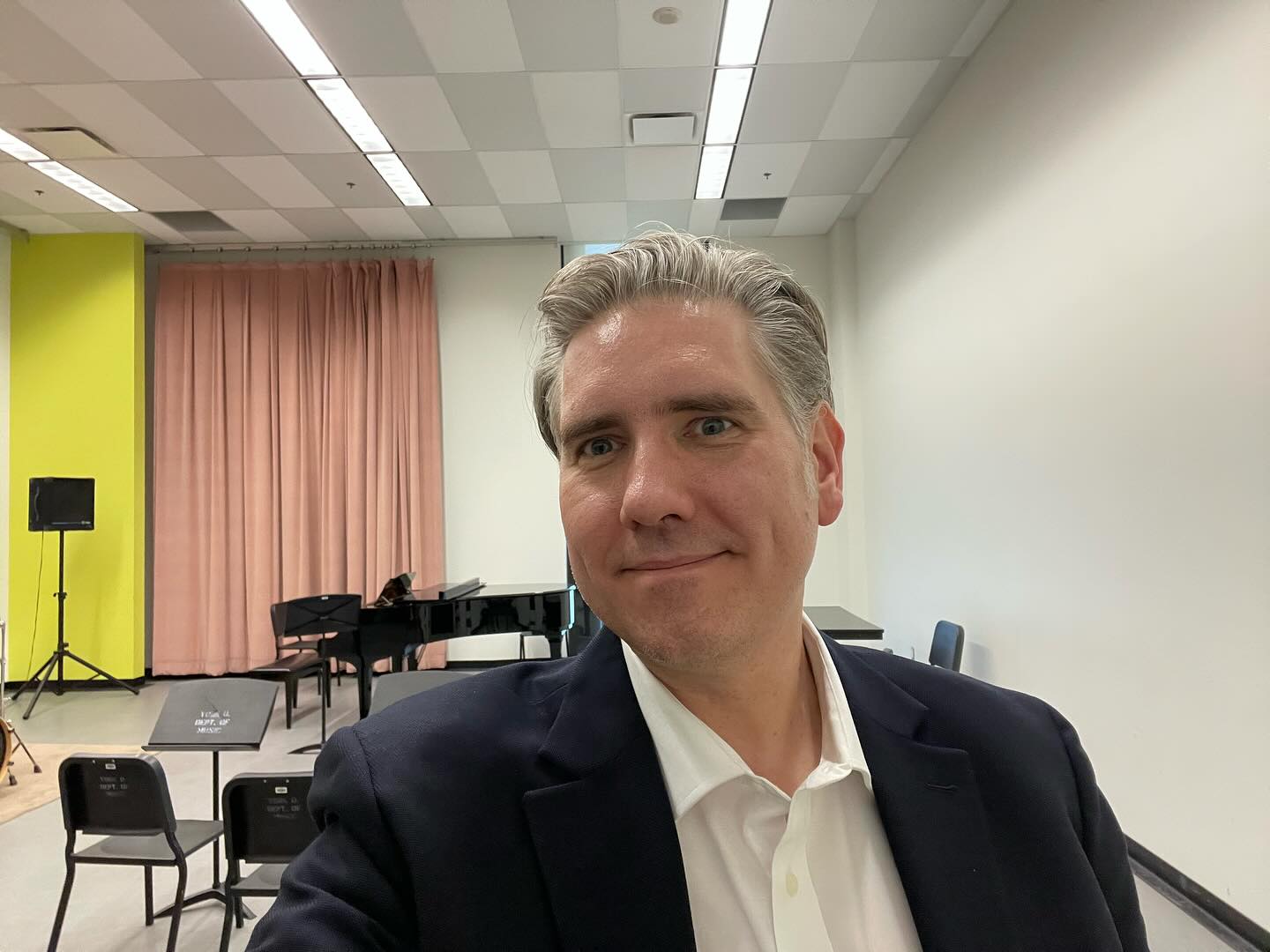
John Holland, teaching at York University
BB: You’re both an academic who has recently published a book as well as a practitioner. Please reflect for a moment on the connection between the two
John Holland: There are many instances where an academic pursuit informs a performance focus, but for me, it was somewhat the other way around. I was looking for unique repertoire to bring to auditions, something that would set me apart from the thousands of other baritones out there (I know all of the sopranos out there understand this to the Nth degree). Simultaneously, my Czech grandfather used to bemoan the fact that I seemingly sang in every other language other than Czech. Necessity is the mother of invention, so I started looking for Czech opera arias and art songs to bring to auditions, and boy were they hard to find. I ended up putting a Dvořák aria on my audition repertoire, and instantly was asked questions about what that was. People were shocked to know it was Dvořák, and even commented on how they never realized Dvořák composed operas. I also became known for singing Czech music, and it helped me stand out in auditions. I was also conscripted by a musicology professor of mine during my masters degree to present a two-hour lecture on an opera, either Rusalka or Midsummer Night’s Dream.
I had recently sung the Britten opera, so of course I picked Rusalka, something I knew very little about. What happened is that there were zero resources upon which to draw, so I found that I was doing much of the analysis and research from scratch. The end result was that I went into a two-hour lecture with about four-hours of material, including a self-created catalogue of leitmotifs. That was a tell-tale sign that work needed to be done in this field.
This leads into my book, which is on Dvořák’s operas, and came out of the necessity for awareness on this music, and was the focus of my PhD work at York University. The performer and academic have always gone hand in hand with me. I feel that when I know the story of a piece of music, I sing it better, and I feel that when I have performed a piece, I have unique and intimate knowledge of it that a solely music theorist may not. The expertise in Czech repertoire has also given me the opportunity to coach the sung Czech language. I have coached singers all over the GTA, both university singers and professionals, and through zoom, have even been coaching singers across the United States. This also helps in awareness and accessibility of Czech music, and thus aids me in my quest!
BB: Tell us about your new book on Dvorak’s operas.
John Holland: My book ‘The Lost Tradition of Dvořák’s Operas: Myth, Music, and Nationalism’ was published in October 2023 by Lexington Books, which is part of Rowman & Littlefield. The book grew out of my PhD research and a need to create awareness and understanding about Dvořák’s operas. Think of it this way. When one examines the compositional oeuvre of Antonín Dvořák, one bears witness to a catalogue of well-known works, and critical successes, in every genre except one, opera.
The question then arises, ‘What happened to Dvořák the opera composer’? With ten operas to his credit, which span his life, Dvořák was no stranger to the genre. While some of Dvořák’s operas have remained popular at home, the majority of them are lost in obscurity. Only Rusalka has begun to break onto the international opera scene, and only within the last thirty years. This book examines Dvořák’s operas, specifically Jakobín and Rusalka, from a critical standpoint, focusing on such criteria as tonal structures, thematic material and motives, subject matter, Czech folklore and musical influences, textual language, nationalism, characters, compositional history, performance history, and reception. The intent of this research is to vindicate and validate Dvořák as an opera composer; to show him to be an overlooked master in Nineteenth Century opera and the bridge between the Verdi and Wagner traditions. Now, well over one hundred years after his death, it is now time for Dvořák to take his rightful place in the operatic echelon. There are definitive reasons why Dvořák’s operas have been lost to the greater operatic world, through political intrigue, social climates, and ethnic bias, all of which are part of the story that this book tells. The book is available through the publisher and Indigo, but is on the shelves and in stock at Remenyi House of Music, so my advice is to buy it there and support local stores.
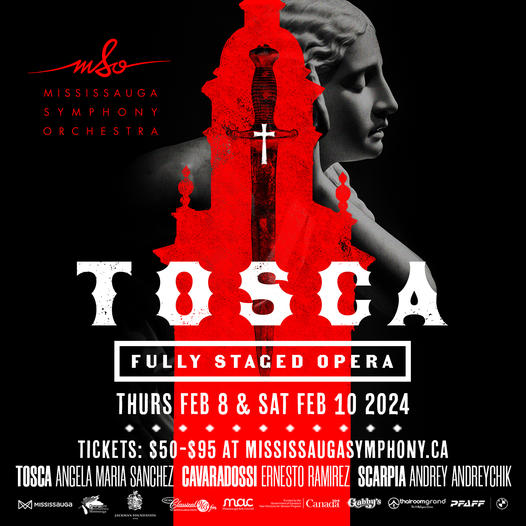
BB: You’re singing the comic role of the Sacristan in the Mississauga Symphony production of Tosca, followed by the more serious role of Marullo in Rigoletto (a character whom Rigoletto identifies, rightly or wrongly as a friend) for Opera York. Recalling your portrayal of Papageno last year with Opera York, when your friendly demeanor was very welcome, do you have a preference for a comic role or is it more accurate to say you’re flexible and can sing any sort of role?
John Holland: If you ask my mom, she will say that I have always been a ‘character’ my whole life. I have loved telling stories, and so opera and music theatre are the perfect ways for me to tell stories through music. I had, and still have, a very vivid imagination. Growing up, I was always kind of quiet, except when I was singing. When I began high school, I became involved in musical theatre and since then, I have been addicted to the stage, and haven’t shut up. Essentially, I will sing any role I feel will suit me. I mean who doesn’t enjoy playing the villain now and then, but I love being part of musical comedy, and have been told I am a good stage comedian, which is a heart-warming compliment.
Comedic timing, especially in opera, is a real skill in itself. Making an audience laugh while you are singing in a foreign language takes as many physical cues as it does musical. That’s why I really jump at the opportunities to sing Bartolo in Barber of Seville, or Leporello, or Figaro or Papageno. They are challenges beyond just the music. Also, when you find that synergy with comedic cast members, it can really create something special. I sang a Figaro in 2022, and the Susanna I was paired with, Grace Quinsey, was just as much of a stage comedian as I am, and we found ourselves anticipating each other and creating jokes on the fly during performances. We had a chance to rekindle that synergy as Papageno and Papagena with Opera York in 2023. That kind of comedic timing and connection is very rare, and when you find it, you have run with the opportunity.
BB: Does one have to be an extrovert or even an egotist, to be a good opera singer?
John Holland: Ironically, I know many singers who are tremendous stage characters, but quite introverted and soft-spoken when not on stage. I think that many of us save our extroverted bursts for when we are on the stage. When I am on stage, I try to be larger than life, but when I am at home, or with family or friends, I am just myself.
As far as being an egotist, there are those types of people in the opera world, but there are also those people in every walk of life. One thing I will say, aside from ego, to be a good opera singer, you have to have confidence in your abilities, know your strengths, and play to them. If you are good at what you do, don’t be apologetic for it.
BB 2024 is the Year of Czech Music. Every year that ends in a 4 gets that honour. Your organization The Canadian Institute for Czech Music has planned some events to commemorate, as it did ten years ago. Three operas will be presented, beginning with The Bartered Bride on March 9th from Opera by Request. This coincides with the 200th anniversary of the birth of the composer, Bedrich Smetana. Please talk about the CICM, its history and what you have planned for this year.
John Holland: The Canadian Institute for Czech Music was formed in 2013 to promote research and performance of Czech Music in Canada. It grew out of my PhD work, but has since become its own entity with projects and collaborations with groups such as Opera By Request, Toronto Orpheus Choir, Nocturnes in the City, and the Czech Consulate. In 2014, the previous Year of Czech Music, we produced the Canadian premiere of Dvořák’s Jakobín at Trinity St. Paul’s with soloists, two choirs, and an orchestra. It was a real triumph for our organization, but also for bringing this music to light.
Toronto has a large Czech diaspora, many of whom came here to escape WWII or the Communist occupation, and one lady came to me after that performance and said she had heard Jakobín in Prague as a child and never thought she would ever hear that music again, and thanked me. It was uniquely touching.
Now, in 2024, the CICM is proud to present the Year of Czech Music Opera Fest. This encompasses three operas over the course of 2024, including Smetana’s Prodaná Nevěsta (The Bartered Bride), Janáček’s Věc Makropulos (The Makropulos Case), and a remounting of Dvořák’s Jakobín.
Other projects include lectures, a book release, and the touring duet recital The Voices of Prague.
William Shookhoff
Starting off the activities is the recital The Voices of Prague, which features music composed for or premiered in Prague. We know that Mozart’s Don Giovanni was written for Prague and premiered at the Estates Theatre in 1787, but it was possible due to the success of Mozart’s Figaro earlier. This exciting recital includes music by Mozart, Dvořák, Smetana, and more. Arias and scenes from Jakobín, Don Giovanni, Le Nozze di Figaro, Prodaná Nevěsta, etc. Soprano Grace Quinsey and bass-baritone John Holland (that’s me!) are joined by William Shookhoff on piano to bring this wonderful music to life! It will also provide some teaser music for what is to come on March 9th. The recital is on March 8th, 2024, as part of the ‘Fridays at Noon’ recital series at St. Andrew’s Presbyterian Church. For more information, click here.
The first opera in our Opera Fest is the quintessential Czech opera, Smetana’s Prodaná Nevěsta (The Bartered Bride), and will be on Saturday, March 9th at 7:30pm at College Street United Church. We celebrate the 200th Anniversary of Smetana’s birth (March 2nd), and this performance is linked with the Czech Philharmonic’s Smetana200 project. This collaboration with Opera By Request will be presented in concert with piano accompaniment, and sung in Czech with English supertitles.The amazing cast features soprano Grace Quinsey as Mařenka, a young village woman betrothed to another man, tenor David Walsh as Jenik, her true love, and bass-baritone John Holland as Kecal, the marriage broke trying to split them apart. Tenor Alexander Cappellazzo plays Vašek, the man Mařenka is promised to. Her parents are Krušina, baritone Henry Irwin, and Ludmila, played by soprano Mila Ionkova. Vašek’s parents are the wealthy landowner Mícha, played by bass Mikhail Shemet, and Háta, mezzo-soprano Alex Beley. A trio of stellar circus performers round out the cast; Ringleader, Mezzo-soprano Catharin Carew, Esmerelda, soprano Thera Barclay, and Akrobat, bass Kyle Simpson. William Shookhoff is the pianist and music director. The score is filled with folk melodies and dances, and moments both comedic and touching. There is the possibility of a second performance on the afternoon of Sunday, March 10th, so stay informed through our social media. Ticket information can be found here.
In the spring of 2024, one of the most curious opera plots returns to Toronto in Janáček’s Věc Makropulos (The Makropulos Case). The story about the mysterious history of Emilia Marty is filled with intrigue. The cast is led by soprano Antonina Ermolenko as Emilia, and baritone Michael Robert-Broder as Baron Jaroslav Prus. The performance will be in concert with piano accompaniment and sung in Czech with English supertitles.
In autumn of 2024, the CICM revisits its success from 2014 in the remounting of Dvořák’s stunning opera Jakobín. The story features themes dealing with mistaken identity, a music schoolroom, a love triangle, family reconciliation, patriotism, and the healing power of music. The plot centres around a small Czech village, and gives a glimpse into village life during Dvořák’s time. Benda, the music teacher, lives in the village with his daughter, Terinka, played by soprano Grace Quinsey. She is in love with Jiří, a peasant singer, played by Ryan Downey, but is also courted by an older man, the Purkrabi (village bailiff), played by bass-baritone John Holland. Strangers come to the village from France, where the French revolution has been taking place, and word has spread around the village that these strangers are Jacobins who are coming to bring the persecution of the revolution to the Czech lands. In fact, the strangers are Bohuš, played by baritone Michael Robert-Broder, and his wife Julie, played by soprano Paulina Swierczek. Bohuš is the estranged son of Count Vilém of Harasov, bass Dylan Wright, and is at odds with the count’s nephew, Adolf, played by baritone Alasdair Campbell.
There may be some more Czech surprises added to the season, so be sure to visit our website: http://www.canczechmusic.ca and follow us on instagram.
BB: If you could tell the institutions how to train future artists for a career in opera, what would you change?
John Holland: Opera is a competitive field, and while you don’t need to be cutthroat about it, you do need to be focused, driven, and determined. You need to know that YOU are the marketable commodity, and nine times out of ten, you will be doing your own self promotion, and artist driven projects. Young singers need to know that the phone is not just going to ring with companies offering you role after role, you have to be comfortable with pounding the pavement, and hounding groups for auditions and opportunities. The music training is always good here in Canada, but the career training is something that needs to be revamped. Canada is a country with far more choirs than opera companies, so don’t ignore oratorio and sacred music, as many of us joke that November and December Messiah gigs can cover months of rent. All of the stagecraft skills I learned and I have been praised for, were not taught in the classroom, but learned by watching professionals and working with them. Institutions should take more of a proactive approach to preparing artists in this manner. Lastly, this is less for the institutions, and more for the music students, a music degree does not a career impart. You cannot rely on your degree and expect a career to just come to you. I have seen music students excel in their degree but fade away outside of an institution, and I have seen others who may not have been the best student rise to the challenge. There are even those who have professional careers and didn’t even study music at an institution. Your career is what you make it. Talent gets you the degree, but hard work gets you the career.
BB: Wow several good thoughts there…!
Now please talk a bit about your own educational pathway and how it prepared you for your current career.
John Holland: I really do feel I have been on a proverbial “road less taken” along my education and music career. While I always did music as a youth, it was focused on piano, trumpet, and choirs. I started my university studies at the University Windsor, majoring in Physics and History. I had never had a formal voice lesson until halfway through that first year, and was instantly thrown into an opera workshop in February of that same year. Concurrently, I was taking a music history class as my arts elective, and little did I know that the musicology bug had bitten me. The next year, I transferred into music (even though I had the highest mark in first-year physics) and I never looked back. I spent my undergrad immersed in musicology, theory, and early music (I spent these years singing as a countertenor). After completing my undergraduate degree, my mom picked up a flyer about a summer program happening at the University of Western Ontario, and I applied on a whim. I met Theodore Baerg, and he gave me a voice lesson that changed my life. We worked on breath support and opening up the sound, and in 15 minutes I began to realize myself as a baritone. It felt good to have my voice open up like that. I enrolled in the Artist Diploma degree, and then my Masters degree. Again, musicology reared its head, and I took a myriad of opera history courses with Don Neville. Upon completion of my Masters, I began to do auditions, performing, conduct choirs, lectures, and teaching. I also began working at Grigorian Music Store. When I was accepted to my PhD at York, one of the things I was told is how much they were impressed with the broad scope of my music career, and how I wasn’t limited to just one focus, but proficient in a variety of them. This is something I have always been very proud of…the fact that I am a well-rounded, multi-faceted musician.
BB: Do you have any teachers or influences you would care to mention?
Baritone Sherrill Milnes
John Holland: At the University of Windsor some of the standout teachers for me were Edward Kovarik, Richard Householder, David Palmer, and Gillian McKay. While at Western, Theodore Baerg, Don Neville, Torin Chiles, and John Hess were instrumental (pun intended) in shaping my professional career and musicality. At York, Lisette Canton, and the late Michael Marcuzzi were excellent guides through the mazes of musical research. In the professional world, I have great respect for what I learned from Gerald Fagan, Robert Cooper, and Edward Moroney. Working with the late Nico Castel for three summers was invaluable.
I also had the honour of being directed in Don Giovanni and Le Nozze di Figaro by Sherrill Milnes. Singing Leporello recitative rehearsals with Sherrill singing Don Giovanni is something I will cherish. I learned a lot about Italian recitative from him and Nico, and now it is something I am somewhat of an expert with. I am always open to learning, which is what we do as musicians for our entire lives.
BB: What do you have coming up, including The Year of Czech Music?
John Holland: Things are busy, but that is very good!
February 8th and 10th, I have the Sacristan in Tosca with Mississauga Symphony.
March 1st and 3rd, I have Marullo in Rigoletto with Opera York.
Sandwiched in between those two shows is a trip up to Ottawa to sing on the Ottawa Bach Choir’s all Monteverdi concert on March 2nd.
A week later, The Voices of Prague recital is a St. Andrew’s ‘Fridays at Noon’ series, and then the next day, March 9th, is The Bartered Bride as part of the Year of Czech Music Opera Fest.
In the spring, we have The Makropulos Case, and more tours of The Voices of Prague recital.
On August 6th, I will be singing Figaro in Le Nozze di Figaro with the Toronto Concert Orchestra. This includes a stellar cast including Grace Quinsey, Allison Arends, and Michael Robert-Broder.
Into the Autumn, we return to Jakobín ten years after we premiered it in Toronto. And if anyone is interested in what I am up to, you can always find out info at my website: John Holland – Baritone, Conductor, Musicologist (johnhollandmusic.ca) https://www.johnhollandmusic.ca/.
Left to right: Mikhail Shemet, Grace Quinsey, Allison Cecilia Arends, and John Holland
I heard baritone Alexander Hajek singing at the Toronto Vocal Showcase 1.0 in August. He sang well.
Full disclosure? I grew up accompanying my brother baritone Peter Barcza. I tend to be harshest with baritone voices ever since. So it was a great pleasure to discover Alexander’s voice, the most impressive baritone sound I’ve heard in a long time.
Not only does he know how to sing, but he’s a personality with commanding stage presence. When it was his turn at the Showcase, he completely took over.
I noticed that Alexander appears regularly under the auspices of Opera Revue, a creative group who’ve been identified as a “gateway drug to opera” with their performances of opera arias and excerpts in bars around the Toronto area.
Baritone Alexander Hajek
Here’s Alexander’s blurb from their webpage, giving you some idea of the larger than life personality behind the voice.
Economic refugee of an earlier plague ( Pre-Monkey Pox ) Baritone Alexander Hajek has only recently returned from his decade long Operatic European safari. While there he sang for lots of fancy people in lots of fancy places, but ultimately felt hollow because his razor sharp wit, sarcasm, and criticism would sail over their fancy heads. Alex discovered his passion for busking one evening at a Weihnachtsmarkt while fulfilling his part of a friendly glühwein inspired wager. He knew right away from the enraptured attention displayed by his captive audience that he was fulfilling his purpose of bringing comfort and distraction to the masses. The overflowing hat of unclaimed income was just icing on the cake. He has dedicated a considerable amount of his time and energy to raising funds for the defence of his spiritual homeland of Ukraine and defeating the mongrel invader. Having obtained his bachelors and masters singing license from the same school that Robin Williams studied at, the two met backstage for a few minutes and shared the most precious gift of all, a few laughs. The encounter left a Coco sized hand print on Alexander’s heart, and ultimately inspired the performances that you are about to bear witness to.
And I was pleased to see that he’s playing the role of Alberich in Edmonton’s upcoming Das Rheingold, one of the keys to any production of the opera.
So I interviewed him.
~~~~~~
Barczablog: Are you more like your father or your mother?
Alexander Hajek: I’m definitely more like my mother. My father was out of the picture for the majority of my life and upbringing. So I still have some odd genetic traits left over from him. Bad eyes (corrected with LASIK, a blessing ) and a gift for working with my hands. I got a hard work ethic and tenacity from my mother, along with fairness and integrity.
BB: What is the best or worst thing you do?
Alexander Hajek: I’d hope it’d be my singing, it’s the one thing on earth I’ve devoted the most time to, but I’d be happy to be known for my story telling and ability to empathize with my fellow humans.
The worst thing I do is try and cheer someone up who doesn’t want/need it.
BB: Who do you like to listen to or watch?
Alexander Hajek: Singing wise it’s old ( some dead ) opera singers. Hvorostovsky, Bastianini, Vickers, Bruson, Del Monaco.
For “fun” I enjoy the late night and comedy/stand-up news shows. Jon Stewart, George Carlin, John Oliver, Colbert, Robin Williams and Chapelle. Big fan of Emo rock as well ( MCR, Billy Talent )
BB: What ability or skill do you wish you had, that you don’t have?
Alexander Hajek: I wish I could shred on an electric guitar. But my hands are not really build for the instrument, too soft and doughy for metal strings.
BB: When you’re just relaxing and not working, what is your favourite thing to do?
Alexander Hajek: I’ve been a fan of warhammer for about 30+ years.
BB (What is Warhammer, I wondered…. I had no idea so I looked…. )
Alexander Hajek: So you’ll usually find me at my desk assembling and painting some miniatures. It’s a great time to passively listen to music for enjoyment/study. I also attend tournaments around Ontario, it’s fun to meet other people in the niche hobby.
Big fan of nature and the sun in general so I also bike everywhere weather permitting.
BB: What was your first experience of music?
Alexander Hajek: It really clicked with Disney’s The little mermaid. I was kinda obsessed with singing along to the cassette in the car ( dates self ) after that is lots of choirs. Singing for me was like a fish taking to water ( parallel intended )
BB: What is your favourite opera?
Alexander Hajek: Cruel to ask for just one. Anything by Verdi, Susannah ( Floyd ) and Eugene Onegin.
BB: Do you ever feel conflicted, reconciling different aspects of opera, between the promotion and the art?
Alexander Hajek: For sure. Opera is an art form that you need to be trained to do. That training takes forever, and can be so focused on the minutiae that it takes great determination and obsession to stick it out. I can think of a dozen peers of mine, specifically in North America that have dropped out of the biz because they can’t sustain themselves, either financially and/or sacrificially when it comes to family commitments V “career”.
The traditional opera base is shrinking and not being replaced fast enough with new converts. It’s an uphill battle against changing demographics and cultural tastes.
And then the conductor points out that you’re turning that 8th note into a 16th or that you’re only sort of dotting that rhythm. Some days it’s harder than others.
BB: Of everything you sing (whether we’re talking about opera, lieder, pop tunes or anything else) what feels the best in your voice and what do you think sounds best?
Alexander Hajek: My voice, for whatever reason of nature lends itself to an Italianate sound. So I feel good singing Verdi because he was a clever lad and wrote for people with a voice type just like mine a few hundred years ago. The style of bel canto and verismo are like a yoga session for the voice. But singing something intelligible in English is pretty magic too. Then you can literally feel your audience hooking into your performance. Simply because they can understand you word to word as opposed to phrase by phrase.
Sometimes the nuances of the French and German languages elude me.
BB: You joined Opera Revue in 2019. Talk about your relationship to the team (Actor/Soprano Danie Friesen and Pianist Claire Elise Harris) and what kind of input you bring to their shows.
Alexander Hajek: I’ve been titled the “ideas guy” of the group. I come up with some zany ideas about an upcoming show or Schtick and the gals either enthusiastically agree or groan in disapproval.
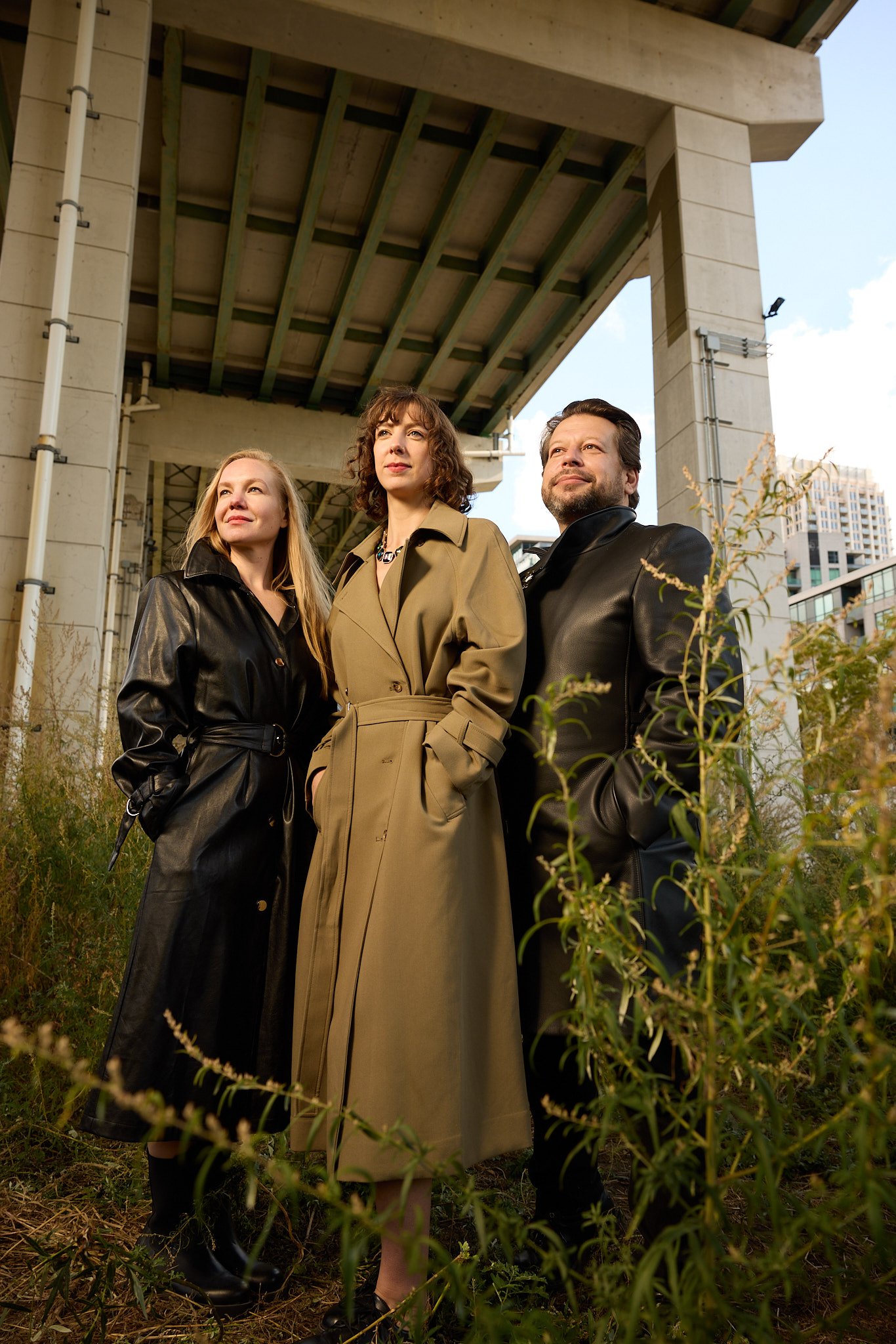
Claire Elise Harris, Alexander Hajek and Danie Friesen
We all bring a wonderfully diverse perspective to our merry little band and so far balanced out to some success.
I also seem to enjoy playing librettist. I was initially very opposed to adapting classics with spoofy/modern lyrics. But I remember it was Mozart & Da Ponte’s explicit instructions that their operas be performed in the vernacular whenever possible. So if it’s okay for those guys? I got over my own elitism pretty fast.
Alexander Hajek, Claire Elise Harris, and Danie Friesen
Our housing crisis/ papageni duet is an absolute show stopper and frequently interrupted by raucous laughter from the audience.
Hosting our own shows is really a dream come true. I mentioned I enjoyed listening to stand-up and political comedians in my spare time. Opera Revue has given me an avenue to scratch that itch through introducing our arias to the crowd in a relatable way, people often remark that’s one of the best parts of the show. It’s an old art form and provides endless material to make the guests cackle with laughter when viewed through a modern lens.
BB: I watched some of your YouTube videos, which includes some creative short films you’ve made. Will you do more, and what’s your favorite?
Alexander Hajek: I had a tad bit of time over the Covid lockdowns. With no outlets of public performance to look forward to. I turned to YouTube to create some content. It kept me sane. But the gulf between live opera singing and internet clips is too wide for me. It’s fun. But without a Hollywood budget to back it up it’ll always look amateurish by comparison of what you can get online, for free, these days, I’ll stick to the stage for the most part. Plus the whole idea of overtones of the human voice can never be captured on a recording properly.
IYKYK
BB: yes! Absolutely.
Alexander Hajek: The video that I have on my site called Sicut Ovis is my most cherished recording I probably have. It was recorded at the funeral of my best friend who had taken his own life a few years ago. A large group of former St Michaels Choir School alumni (classmates ) turned out to help sing some hymns for the service. We all agreed we should sing Sicut Ovis ( a Tenebrae staple sung at a special mass during Easter ) we didn’t have any tenors though. So I just said I’ll sing it cause his mum would have wanted it. Anyways. It was the most moving musical moment of my life.
BB: Wow thank you so much. That’s beautiful.
Singers come out of training programs, including the ensemble studio of the COC. And then what? Some people can make a living, some can’t. Stratford Festival and National Ballet function as places to employ almost 100% Canadian talent. Yet the fiction is out there that we need to bring in singers from abroad. Can you imagine Canadian opera with Canadian personnel?
Alexander Hajek: Oh Canada. I moved back here from Germany, which has a vast, thriving, and government subsidized operatic culture, and was a bit dismayed by the lack of opportunity for Canuck homegrown artists. Lots of the great talent goes to the States or Europe for work or to live.
There is just more over yonder. They. Have 90 opera houses. We. Have one.
I don’t know if it can be fixed. But I’m committing to staying here and giving it my best. With my voice in the traditional houses. And with Opera Revue in the spaces in between.
BB: You’re playing Alberich in the Edmonton production of Das Rheingold, one of the most important roles in that opera (and in the whole Ring Cycle).
Alberich is the one who steals the gold, so (in effect) that’s his hand in the poster
Talk about preparing to sing the role.
Alexander Hajek: Alberich is new for me. And I immediately noticed that it’s not so much a singing role as an angry German rapper/sprechstimme.
BB: Wow I’m so impressed that you noticed, (speaking as someone who’s loved this opera since I was a teen) and especially if the conductor does it up to speed given that much of the Ring can be like a patter song, if done fully up to speed. Alberich is the one who starts the cycle off right in the first scene of Das Rheingold, when he steals the gold: and then makes it into a ring.
That rhythmic laugh (the last thing Alberich sings / barks in this short audio clip) is traditional even though it’s not written in the score. I wonder if they’ll hear that sardonic laughter in Edmonton..?
Alexander Hajek: There are only a few phrases here and there that give you room to expand the voice and “sing”. The rest is very sharply articulated speech, spitting lyrics like an irate chittering insect. I simply started learning it as quickly as possible. It’s not lyrical like Verdi and it doesn’t necessarily sink in the first time you hear it.
So it takes a LOT of repetition to make sense of the patterns.
BB: Do you see Alberich more as a villain or a hero?
Alexander Hajek: I’m only studying him now in depth, so I honestly can’t answer that. He seems like a downtrodden fellow for which nothing has gone right in his life. Then he is presented with unlimited power and….
wait for it…..
Absolute power corrupts.
But it wasn’t “absolute power” at all really. Wotan plays with Albrecht like a cat with a mouse. He’s unafraid when Albrecht turns into a dragon and ultimately rips the ring off his finger without much effort. So. Hence the malicious curse the angry dwarf places on the gold.
Seems like a reasonable response to me.
As this is my first crack at the role, I’m very pleased it will be in a more intimate setting. Plus the drama can come across much more from the performers rather than just the music and little ants standing stiffly on stage barking as loudly as possible.
BB: Edmonton Opera’s Artistic Director is Joel Ivany, formerly of Against the Grain Theatre in Toronto.
Director Joel Ivany
AtG used to cleverly do shows in Toronto in smaller venues that would be 100% sold out and full, creating a “buzz”. There would be drama in the rush to get tickets for the smaller shows, and the excitement of a full house. I hope you get a similar buzz for your show in Edmonton. Have you had any previous experience with AtG or contact with Joel Ivany before?
Alexander Hajek: I sang a duet with Joel’s sister (Rochelle ) back in Mendelssohn Youth Choir, Robert Cooper conducting, so we met for the first time then. The next time we crossed paths was when Joel was redirecting a Carmen I was doing with the COC.
He had that “it” factor and I’m not surprised he’s become such a popular choice for Canada’s productions. I was also asked to jump in for a Candide at Banff a few summers ago and got to see the digital/aerialist Orfeo.
It’s a good indication of where the trends of modern stagings are going.
BB: I watched you sing in the Toronto Showcase back in the summer. Of all the singers you were by far the most confident, most comfortable in front of us both in your spoken introduction and in your arias. I especially liked your champagne aria from Don Giovanni. But of course this is familiar territory when you’re doing Opera Revue. Between a serious role such as Alberich, the videos, or the arias of Opera Revue, what’s your favorite?
Alexander Hajek: Thank you for that. Practice makes perfect to perform comfortably and I’ve luckily had plenty of performance opportunities recently thanks to Opera Revue. It had never crossed my mind to become an “entrepreneur/Artist”. But waiting for the traditional classical music business in North America to re-emerge from the pandemic to offer enough work to be able to sustain oneself necessitated some unexpected changes in my career plan.
I do “like them all” because they can each offer a rewarding feeling of accomplishment. Making a video is fun and tedious cause of all the editing and post production work one has to do. Singing with a full orchestra is a high with few comparisons. Making people laugh in a pub is its own reward. As long as I’m telling the truth. It’s a privilege to have a medium to deliver it.
BB: Nowadays it’s very expensive to live in Toronto. Can a performer survive without a dayjob?
Alexander Hajek: Short answer. No.
The cost of living crisis in Toronto is driving many artists out of the city. They simply can’t afford to stay with the amount of work being offered, or the pay scale. 95% of the performers I know have multiple sources of revenue ( church gigs, teaching, chorus work, temping miscellaneous) this leaves them fatigued, burned out, and a tad bitter. I worked with a construction/house flipping company over the pandemic. The money was stable and great.
But it left my body broken and my throat full of concrete dust. Working a restaurant would equally damage the voice for obvious reasons of general din of noise.
BB: If you could tell the institutions how to train future artists for a career in opera, what would you change?
Alexander Hajek: How to do taxes. How to network. How to promote yourself. And have them work in an actual theater, whether that’s front of house ticket sales or on the catwalks operating follow spots.
BB: That’s what I did. My MA and PhD were at the Drama Centre where you get the practical experience of using the theatre as a laboratory to play around in.
Alexander Hajek: Get to know the space beyond the floorboards. It’s a living breathing organism and has many parts. Knowing how they work will make a more well rounded artist and human.
BB: Does one have to have a big ego to have a career in opera?
Alexander Hajek: No. There are very humble people out there who are just as capable of taking up as much space on stage. And I think the raging shouting narcissists of the not to distant past have had there time come to an end. The whole Me Too movement and “woke” “revolutions” have made the backstage a more pleasant place to work in my opinion. More work to be done but, so far so good.
BB: Do you have any influences or teachers you would care to mention?
Alexander Hajek: In roughly chronological order and hardly extensive Steven Henrikson, William Perry, Daniel Ferro, Stephen Wadsworth, Tom Diamond, Darryl Edwards, Wendy Nielson, and Joel Katz
BB: What do you have coming up in 2024? I noticed https://operarevue.com/upcoming (click the link for details) listing shows Jan 19th, Jan 21st, Jan 28th and Jan 31st.
Alexander Hajek: Opera Revue have a few shows in the near future. February 14th ( Valentine’s Day ) Opera Revue is producing our third debaucherous show. It’s gonna be a two show evening with the later show being substantially spicier than the earlier one. I promise an unforgettable performance with some local burlesque dancers.
I’m also excited to sing my first Ernani with Opera in Concert Feb 25th. Verdi is my passion and his works seem to fit my timbre very well these days. https://www.operainconcert.com/Ernani.html
BB And Alberich is coming later in the spring, in Edmonton.
This is both a trip down memory lane and an attempt to promote some acting classes.
When I saw that Cynthia Ashperger is offering acting classes my first impulse was to check my schedule. I’ve worked with her before as a composer and music director: but I’m no actor, which is precisely why I wondered whether I could find time (unfortunately I cannot) .
The classes are on Sundays 10-1 from Feb 4 to March 21st.
I had the privilege of working with Cynthia at TMU (then known as Ryerson’s Theatre School) three consecutive years roughly a decade ago, making music among some of the most talented young students in the country.
I won’t name-drop except to say that they’re working all over, some on Broadway, one I know of having starred in a Disney film, and making their impact on stage and in film: largely because of what Cynthia taught them.
In 2013 it was a Feydeau farce. I was captured by the energetic students who woke me from my nap in what must surely be the most embarrassing picture ever taken of me. Please note I was working at the U of T at the same time, usually working a full day then going to the show where I would sleep.
Drew Douris-O’Hara, Jake Vanderham and Kaleigh Gorka, plus the sleepy old grouch on the right aka me.
I learned my lesson! Smile even if you’re half asleep.
Me with Drew Douris-O’Hara
These are just some of the talented people Cynthia taught. It was my little thrill to be onstage with them, trying not to attract any attention to myself.
In 2014 it was an adaptation of a Dickens novel forcing the actors to play multiple parts with an insane number of scenes, in 2015 it was Ödön von Horváth’s Tales from the Vienna Woods, a politically challenging piece.
Cynthia and I first connected back at the University of Toronto’s Graduate Centre for Study of Drama (as it was then known). I wrote an opera with the title “Silence is Golden” about my mother Katherine Barcza. My mom was then approaching her 80th birthday and I wanted to celebrate her.
Cynthia played my mom, Michael Devine played “me”.
A picture of Michael Devine teaching, that I found on his Facebook page
Now please note, Cynthia was a beautiful young woman (still is actually), so this called for some real acting. I didn’t expect to be working with her over a decade later, when she was teaching acting at a downtown university.
Cynthia doesn’t know I’m posting this. I saw the image come up in my Facebook feed and thought I should bear witness, and realized what nice memories I have of Cynthia.
She’s a fine actor, a superb teacher, and a really nice person too.
I cherish such moments as this comment Cynthia posted on the blog after the Feydeau show closed. This is from February 21st, 2013. Dear Leslie, I think I just landed from our Feydeau extravaganza. We put on some Feydeau! Wonderful to be able to read this to know that it all actually happened. You were more than just a little part of it. Your presence and the music was very important. And I would agree with Sarcey – it is nearly a perfect play. Feydeau was one of the reasons I became an actor. Him and Odon Von Horvath. Some of my earliest memories are of a wonderful production of Flee in Her Ear in Gavella Dramatic Theatre in Zagreb when I was a child. Yes, he needs to be performed and not read. Well I’m up for it any time…Cynthia
In reply I said You’re so generous (thank you), no wonder it turned out so well. You really get Feydeau.
That’s the thing. A university theatre program can properly delve into under-performed repertoire, exploring works that deserve more attention, AND paying attention to each part, each line, each actor. Ideally you have a director who can bring out the best in every one of the performers. That’s why I recommend studying with Cynthia.
I was in the lobby of the Alumni Theatre waiting to get my tickets for Kyle McDonald’s Conan and the Stone of Kelior in May 2022. Ryan Hofman boldly introduced himself, telling me he’d encountered my brother at UBC when he was studying there. I was intrigued to hear that while he was a singer he had recently studied business in hopes of working in opera. Little did I realize he would soon show me that he had taken the lessons to heart.
Ryan Hofman
I have never seen anyone adapt so readily to their new world.
Over the course of the next year I saw Ryan get involved with several regional opera companies. First it was Southern Ontario Lyric Opera (SOLO). The picture from backstage was at the SOLO la Traviata in May 2023, just a year after we first met.
Ryan Hofman and James Westman after the performance of Traviata in Burlington
New Opera Lyra (NOL) in Ottawa was the next company Ryan brought to my attention. You may recall my interview with Andrew Ager, composer of operas getting their world premiere with NOL, including Great Gatsby, coming up in April. Ryan is not just the consultant promoting this company, he will also portray Tom Buchanan in the opera.
Ryan also talked to me about Opera York (a company I’ve reviewed before) although I was unable to make it to see their Die Fledermaus, presented this past November.
In August I was invited to Toronto vocal showcase 1.0, produced by Ryan, bringing 16 singers before an audience of opera professionals plus a few invited guests like myself.
photo left to right: Andrew Ager, Co-Artistic Director-New Opera Lyra (Ottawa), Jennifer Tung, Musical Director-Toronto City Opera, Graham Cozzubo, Director of Artistic Planning-Soundstreams, Ivan Jovanovic, Musical Director-Toronto City Opera, Gordon Gerrard, Musical/Artistic Director-Regina Symphony Orchestra/City Opera Vancouver, Dr.Elaine Choi, Artistic Director-Pax Christi Chorale, Melanie Dubois, Artistic Producer-Tapestry Opera, Ryan Hofman,Larry Beckwith,Artistic Producer-Confluence Concerts, Renée Salewski-Freelance Director/Producer,Stuart Graham, FORO S: Professional Artist Incubator: Toronto-Mexico-City,Andrew Adridge, Executive Director-Toronto Consort, Rafael Luz, Musical Director-North York Concert Orchestra
Look at this picture and wrap your head around the fact that the most comfortable person you see at the centre is the new kid, Ryan Hofman. His confident yet easy manner made this event very enjoyable, not stuffy but fun. Singers looking for other sources of income might glance at this and be astonished that Ryan has done so much so soon. Part of it is his personality, but also his ideas.
I wanted to know more so I interviewed him.
~~~~~
Barczablog: Are you more like your father or your mother?
Ryan Hofman: I would say I have my mother’s smile but look similar to my father.
Personality wise, I am closer to my mother with my father’s humour.
I grew up in Peterborough, Ontario, where I first gained my love of singing in the Peterborough Children’s Chorus. Grew up singing the circuit as a boy soprano.
BB: What is the best or worst thing about what you do?
Ryan Hofman: The best thing about what I do is being able to make a positive impact on singers’ lives and being of service to the industry in hopes of making it better tomorrow than it was today. The worst thing: trying to separate personal relationships from professional ones. As you know, working with friends can be beneficial but also can present some roadblocks along the way. This is why it is so important to maintain professional integrity in order to avoid nepotism and politics.
BB: Who do you like to listen to or watch
Ryan Hofman: Believe it or not, I listen to pretty much everything apart from country or heavy metal.
BB: What ability or skill do you wish you had, that you don’t have
Ryan Hofman: I wish I could clone myself, to be in multiple places at once, although I am not sure the world would be ready for that!
BB: When you’re just relaxing and not working, what is your favourite thing to do?
Ryan Hofman: Favourite thing to do would be watching reality television, going to the gym or watching the Leafs and Jays disappoint.
BB: What was your first experience of music ?
Ryan Hofman: Singing in the children’s choir at St. James United from a young age. My first opera live was Tosca with the COC at the Hummingbird in Grade 9 (2004).
BB: What is your favorite opera?
Ryan Hofman: Tough to pick just one. Manon by Massenet I find to be a massively underrated and underperformed opera, but Candide and Gianni Schicchi are not done nearly enough. For the classics, maybe I am biased but Cosi fan tutte, Giulio Cesare and Don Pasquale.
BB: Singers come out of training programs, including the ensemble studio of the COC. And then what? Some people can make a living, some can’t. Stratford Festival and National Ballet function as places to employ almost 100% Canadian talent. Yet the fiction is out there that we need to bring in singers from abroad. Can you imagine Canadian opera with Canadian personnel?
Ryan Hofman: I am glad you bring it up; From what I have noticed from my years performing and administrating, just because you are in a YAP, does not necessarily guarantee longevity in this competitive industry. It certainly helps of course with all the resources at the artists’ disposal, but this industry is ever changing and ever evolving.
This is one of the reasons I decided to pursue this path. I noticed early on in my work with SOLO that there isn’t someone who specializes or champions regional companies from my knowledge in Canada and I saw a void that could be filled. The work regional companies do is just as important and my goal through working with these companies is to hopefully change the trajectory of them. A lot of it is circumstantial. Just because someone is singing with a regional company doesn’t mean they are any less of a success or any less of an artist. It is certainly not that way in Europe, so why should it be different in Canada/North America? Work is work. If you are getting paid for what you have been trained to do and what you love to do, that must be considered a success. Success comes in all different forms and every artist has their own story and journey.
BB: Nowadays it’s very expensive to live in Toronto. Can a performer survive without a day job?
Ryan Hofman: I think it is paramount to be multi-faceted these days. A performer can surely survive without a day job if they are consistently working as a singer, but it is a very small percentage. Most performers I work with or speak to are either teaching, working retail, as a barista or an office job to continue to finance pursuing their dreams. Yes, it is expensive living in Toronto, but it is also quite expensive pursuing music.
BB: If you could tell the institutions how to train future artists for a career in opera, what would you change?
Ryan Hofman: If I had any suggestions to institutions, it would be to incorporate the business of music into the curriculum. This would cover grant writing, entertainment law (contracts and finances) and the art of networking and marketing yourself as an artist. The more skills a singer can have, the more the can be set up for success. Knowledge is power. I believe this can give them the knowledge and education in order to feel empowered not only as an artist, but as a person as well. Networking, I really believe to be an art. It is important to put yourself out there. You could be the best singer at an institution, but if no one knows who you are, then you are still the best singer that no one knows.
Institutions, I believe, do their earnest in their efforts to help mold young musicians into exceptional talent; however, I think there needs to be a fine balance between the development of the craft and the development of the artist as an entrepreneur. I also think an emphasis on mental health should always be a top priority.
BB: Talk about your own educational pathway and how it prepared you for your current career.
Ryan Hofman: I attended the University of Ottawa for my Bachelor of Music and Master of Music from 2008-2014. I was first introduced to my teacher Ingemar Korjus, through the Ontario Youth Choir in 2006, while in high school. I finished my master’s with Christiane Riel, graduating in 2014. While living in Ottawa, I was fortunate enough to work with James Westman when he was in town. It was through our work together that led me to work with J. Patrick Raftery at UBC, where I graduated with a Master of Music in Opera in 2017.
Then of course, 2020 happened. Some life altering events occurred and this inspired me to pivot, as it did for many others, I am sure. I decided to take a leap and move to Toronto in April 2021 and enroll in the Music Business Certificate program at Humber College (all over zoom). My inspiration for this was the thought process of what I believe a lot of musicians think about daily: identity. If I were to lose my voice tomorrow, how would I identify myself? Singing is what I do, not who I am. I actually found this discovery to be quite liberating and freeing.
During my time at Humber, I was very fortunate to intern at the MRG Group, where I was the Intern, and later Coordinator of MRG Live. Through my work here, I learned more about concert promotion, production, contracts, and other necessary facets of the music industry.
BB: Describe how you made the connection at SOLO, at NOL and Opera York.
Ryan Hofman: I was first introduced to SOLO through my work as a soloist in 2018. It was merely through reaching out to companies to audition. I was fortunate enough to be involved with four productions.
When I decided to pursue my freelance work as an Artistic Consultant and Outreach Officer (yes, a mouthful for sure, ha), SOLO was the first company on my list I that wanted to reach out to. The idea really came to fruition in January 2022.
Being a musician and working in this industry requires not only persistence and resilience, but also resourcefulness. Working with a company like SOLO has also helped me grow as an administrator. It was through my collaboration with SOLO that I decided to continue to pursue working with more regional companies.
My connection with New Opera Lyra stemmed from a prior professional relationship with Andrew Ager. Through mutual connections and our work together at Rideau Park United, it was a no brainer to expand my work to Ottawa.
Composer Andrew Ager
Finally, I was hired by Opera York for Die Fledermaus this past November. It was through working with this company as a singer that I decided to come on and work with them in a behind-the-scenes capacity.
BB: As I mention in my intro at the beginning of this interview, I first met you at Conan and the Stone of Kelior in May 2022. You fearlessly introduced yourself. Most people don’t have that kind of nerve. Did anyone (a teacher or mentor) explain to you why this is a good idea? OR was it simply an impulse..?
Ryan Hofman: I believe it was a bit of both if I am being honest. I remember taking a Business of Music class during my days at uOttawa about the importance of Networking that helped drive that mindset. It goes back to my earlier point that this is very much a relationship industry and if you want others to invest in you, you need to invest in getting to know them just as well. I did a little research before our interaction, and you were someone I wanted to meet. Being relatively new to Toronto at the time, it was important to put a face to the name. The more genuine networks and relationships you can form in this industry, the better. It is so easy to get caught up in the competitive nature of this industry that we often forget why relationships are important and how to develop and maintain said relationships.
BB: Do you have any teachers or influences you would care to mention?
Ryan Hofman: All the teachers and mentors I have worked with from a young age to today have all played an intregral role in my development: Dr. Giles Bryant, Ruth King Seabrooke, Sally Pirie, Margaret Marris, Christine Slevan (Peterborough) Ingemar Korjus, Trygve John Ringereide, Sandra Graham, Christiane Riel, John Avey and Laurence Ewashko (Ottawa), James Westman and J. Patrick Raftery and Nancy Hermiston (Vancouver)
Thank you does not do enough justice.
BB: Please talk about the vocal showcases you’ve been offering.
Ryan Hofman: My inspiration for the Vocal Showcases came from years as a performer and working behind the scenes. Auditions can feel so stressful and like a cattle call, and I really believe this can have a negative impact on the singer’s psyche.
The vocal showcase is modeled similarly to what record labels and music companies do. Industry professionals, especially during Canada Music Week gather to hear unsigned artists or artists not working as much as they should be.
This model in Europe is often called “Death by Aria”. My goal in creating this unique platform was lack of opportunities for singers. I find there are high-calibre singers out there who do not have the luxury or privilege of representation and as a result, often get disqualified as organizations will go to agencies because it is what they know. Another important aspect of the showcase is to pick singers that are also high-calibre and gracious people. I believe this is vital in helping change the industry for the better. This not only encourages further camaraderie amongst colleagues, but also helps change the dynamic of the process in a positive way.
Originally I was just planning on organizing an audition for a conductor colleague of mine and then I heard other conductors’ inquiry on how to hear a fresh patch of singers. That was the light bulb moment where things really took off.
My first Toronto Vocal Showcase ended up having 16 singers, with 14 panelists representing 16 organizations from Toronto and across the country.
Instead of the usual “2-3 aria” requirement, I give a time limit (8-10 minutees) and list of the panelists and leave it up to the singers to decide what to sing and thus, best showcase them as an artist. I want them to feel empowered.
With every showcase I have done, I make sure to do a pre-showcase coffee social with the panelists and invited audience (arts patrons, critics, etc), as a means of making it more of a social event amongst colleagues and less of a work environment.
I decided also to take away the tables and have them dispersed amongst the sanctuary. The invited audience would then be seated in the balcony. This gives it more of a concert and showcase like feel and less of a high stress audition situation. In fact, the panel and audience are encouraged to clap after every performance. There is a certain psychology behind everything as well. By making it a closed invited, with an invited audience, it creates a much more nurturing situation in a controlled environment allowing for a positive experience for all participants.
From the Ottawa Vocal Showcase
I am happy to say that I just had a second singer hired from my Toronto showcase for an engagement in Ottawa in June namely Alexandra Beley. Holly Chaplin was the first with New Opera Lyra.
Soprano Holly Chaplin
The plan is to make the showcases an annual event in various markets. The plan is to take this to Vancouver and Montreal this year.
And now Ryan directs a question back at his interviewer.
Ryan Hofman: As one of the invited audience members, what was your experience like and how did you feel about the afternoon as a whole? Do you think this is something that could be successful going forward?
BB: I was intrigued watching it. I’ve seen lots of auditions in the theatre world as a music-director doing community theatre and student theatre at the university level, also playing the piano for singers at auditions, plus a few as a singer. Yes it seems like a wonderful idea, and I’m glad to see that you’re expecting to expand this, repeating it again in Toronto and Ottawa as well as future showcases in Montreal and Vancouver.
The informality of it all (as I mention above, with that photo of you and the other opera professionals) was really good. If you want to hear the best of an artist it’s not helpful if you terrify them or make them feel unwelcome.
Finally I want to ask you Ryan, what do you have coming up (both as a performer and in your consultant role):
Ryan Hofman: Yes. Singing in the world premiere of Andrew Ager’s The Great Gatsby as Tom Buchanan, April 19 & 20 at 7:30pm at Southminister United Church in Ottawa. Tickets available here. June 8th, 2024 Lord Nelson Mass with Cantata Singers of Ottawa: http://cantatasingersottawa.ca/wp/cso-60/
There’s an error of sorts. The database reports Adam’s debut Wednesday January 19, 1972 as Yniold, playing the little boy in Pelléas et Mélisande, as discussed in part one of our interview.
But seven Pelléases and four Zauberflötes (second boy) later: what’s this?
Adam is again reported making his debut but this time as an adult almost 30 years later in 2001 in Arabella. Maybe other singers have accomplished this feat, but were missed because the database didn’t connect adult and child performances, separated by so many years.
His latest entry is Sat, October 31, 2015 in Tannhaüser.
The 94 Met performances are comprised of -seven Yniolds, including the debut of Louis Quilico (Pelléas) -four Zweiter Knabe (Zauberflöte) -six Count Elemers (Arabella) -one Steva (Jenufa) -one Chevalier de la Force (Dialogues des Carmélites) -seven Japanese Envoys (Le Rossignol), -thirteen Chekalinskys (Queen of Spades) -fifteen Jews (Salome), -one Witch (Hansel & Gretel) -two Iskras (Mazeppa), -eight Fyodors (War & Peace) -seven Drunken Prisoners (From the House of the Dead) , -thirteen Yaryzhkins (The Nose), -two Loges (Das Rheingold), -seven Heinrichs (Tannhaüser)
I wish I could see / hear Adam sing in Toronto. He’d be an ideal Parsifal. But in the meantime I had lots more questions. Here is the rest of our interview.
~~~~~~~
Barczablog: Looking back on the roles you sang at the Met, what was your favourite and what was the hardest?
What was my favourite: that would be Yaryshkin in THE NOSE.
My other favourite Met gig was covering Gandhi.
What was the hardest: that would probably be Aron in MOSES UND ARON — I say that because I covered it twice and had to completely re-learn it for the second one.
Barczablog: Who was the director whose work impressed you most, and you’d like to work with again?
Adam Klein: Ooooh, good question. The first name that pops in is someone who does things with opera that are different but also work: Phelim McDermott, who directed the Met’s SATYAGRAHA in which I covered Gandhi twice, but also co-directed Spoleto USA’s THE LITTLE MATCH GIRL by Helmut Lachenmann in which I was the first person besides the composer to portray Leonardo da Vinci – thanks to John Kennedy basically picking me for the part – but Phelim okayed that choice quickly, remembering me from SATYAGRAHA.
Actor and Director Phelim McDerMott
This all sounds like I like Phelim because he liked me, me me me, but that’s not my intent. Regardless of who played Leonardo – and Phelim had no control over the SATYAGRAHA casting to my knowledge – that LITTLE MATCH GIRL would have been one of the coolest productions ever, anywhere. Ten actors/puppeteers and me providing the stage visuals (and there were visuals of the huge orchestra and chorus because they surrounded the audience): Phelim and co-director Mark Down, with their hand-picked actors and me, developed a visual language using a sort of extended shadow puppetry which, like what Phelim and his troupe did with Satyagraha, perfectly complemented the music, which itself perfectly complemented the heartbreaking Hans Christian Andersen story, or at least Lachenmann’s reading of it, with a German translation of something written by Leonardo thrown into the middle, and that’s where I came in.
Four photos above were taken by Adam Klein, the photo below of Adam by Julia Lynn. Adam delivered texts from the notebook of Leonardo da Vinci in translation.
Barczablog: This is again reminding me of your theatrical flair. If you lost your voice (horrible thought) you would still have a lot to offer as an actor. I wonder (just like the old song says): “You outta be in pictures“. While you’re very musical you really get theatre and drama.
Adam Klein: We not only developed this visual language in the most collaborative endeavor between directors and players I’ve ever been part of: we also spent about two weeks doing creative/acting/movement exercises and question-sessions in order just to get to what we wanted to say, in this story, with this language. Some performers prefer the preparation process to the performances: if the process in every opera could be like this piece was, I would be one of those people. And I don’t say that for me the process trumped the performances because each night a score of the aging Charleston audience that came in expecting the music from the Disney film would get up and walk out on all fours once they realized there was no intermission. I say it because once the rehearsal process is over, we have to try and repeat what we’ve come up with for every performance, and though performing the show was fun, it was nothing compared to how much I enjoyed the journey we took to get there. So often in opera, you show up for the first rehearsal to learn that one of your cast-mates, or the director, or the conductor, is in it for themself and not interested in collaboration, in this art form that’s supposed to be the ultimate synthesis of all art forms and therefore has the potential to be the ultimate collaboration experience in order to let the piece grow to its full potential. Most of the time, opera falls short of what I think should be a given; that time in Spoleto, we got there.
Now I mention co-director Mark Down, whom as I understand it Phelim brought in to the project, though I don’t remember why he thought two directors would be better: it might be because Mark had a lot of experience with shadow puppetry; I don’t think it’s because quite a few of the actors were in Mark’s troupe. Anyway, though we were all present at rehearsals, I don’t know what was discussed between Phelim and Mark outside rehearsals, and so I don’t know just how much of MATCH GIRL was Phelim’s, how much was Mark’s and how much was us actors’.
So I want to give Mark a tentative co-first-place for this question, even though Phelim did have ultimate authority. Except for a very few decisions, the production just wasn’t run in an authoritarian way.
I also have to give a close second place to William Kentridge for his NOSE which I got to be in at the Met.
This was the other example in my career of a perfect marriage between story (Gogol), music (Shostakovich) and visuals (Kentridge) which made it such a hit that first season, after years of Eurotrash murders of classic shows, many of which I was in, and premieres of shows that don’t hold a candle to the Nose. Circumstances were slightly similar to the Phelim-verse: we spent a week developing a physical language that all the cast (a very large cast) could use, to give the piece homogeneity in that way. Unfortunately, some of the opera singers weren’t on board with this process and spent rehearsal time just jawing about opera-unrelated subjects instead of helping this piece be as successful as possible, or at least keeping quiet. Also similar was Kentridge’s bringing in of Luc de Wit as co-director, to handle this physical language – because Kentridge the visual artist knew that wasn’t his forte.
I discovered something about Met broadcasts during NOSE, though. Over the speaker in the Green Room we were treated to a rehearsal of the pre-show dialog that, during the actual show, would feature Mr. Gelb being interviewed about the production. The rehearsal was with someone else whom I don’t know, doubtless involved with the broadcast side of things, reading the questions, and someone else reading Gelb’s answers. What do you know, come broadcast time, in the “live” interview, Gelb gave the same, verbatim, answers to those very questions, which means the whole thing was scripted. So why they didn’t just record the interview and have done with it, I don’t know. That would seem safer.
Barczablog: Maybe it’s like our interview process. I’m always trying to make these interviews seem life-like even though you see the questions and reply through email or Facebook Messenger. It seems everything is becoming virtual.
Adam Klein: Hmm. Maybe.
A very close third on my list would be not an opera but Mahler’s 8th Symphony with the Boston Philharmonic under Benjamin Zander no titular Director other than him the conductor. That experience was so good, not because Zander was a great director, though mind you he was an excellent conductor (and by that I mean his physical technique was easy for a singer to follow and flexible enough to follow the singer when necessary; AND his ideas about the piece were spot on and he communicated them well to singers and orchestra): but because he hand-picked the solo singers, who to a person were both able and willing to do exactly what Mahler asks us to do in the score.
Barczablog: I’ve inserted this little video excerpt to contextualize what Adam is saying. When Benjamin Zander picks you it’s not some random event as this video shows.
That includes pianissimo high notes from the dramatic soprano as well as everyone else. I had previously done an Eighth with another group, and some of those soloists were your standard opera singer: yes, Maestro, yes, Maestro, then come performance you just sing as you please, composer be damned. Well, not Ellen Chickering. And not me. And not the rest of us. Our pianissimo ensembles were actually pianissimo, which made the loud sections all the better by contrast. One example: when the tenor solo first sings in the “Faust” section, the instructions are that he is not to stick out as a soloist while the chorus women are describing him, until a certain point where he does arrive at the front of the texture. If the audience doesn’t understand why they can’t hear the tenor up to that point except as part of the accompaniment to the women, that’s because the program writer and/or pre-concert lecturer didn’t do their jobs: it’s what Mahler wanted, and it’s up to the producers to educate their listeners to what Mahler wanted BEFORE the concert. Of course, the producers themselves have to understand Mahler to start with, and not just program it because they know it’s popular, particularly the Eighth. It is, in my opinion, the closest Mahler got to writing an opera, Das Lied von der Erde notwithstanding.
Anyway, I count that production of Mahler’s Eighth in the top five of my classical music career experiences. (And it bears repeating that opera singers don’t just sing opera.) The other two to round out the five, as it were, are both Spoleto productions: Pascal Dusapin’s FAUSTUS, THE LAST NIGHT, conductor John Kennedy, director Davide Herskovits – totally cool on every level; and Giddens & Abels’s OMAR, conductor John Kennedy, director Kaneza Schaal. Visually AMAZING, excellent libretto, so-not-out-of-the-mold music, perfect prosody.
Actually it doesn’t come first on my list only because MATCH GIRL was just that much cooler, though I think OMAR is a more important piece. I think I’ve said that to you before: in my opinion it’s the greatest American opera of the last hundred years, if not three hundred, even if I don’t recuse myself regarding my own opera LEITHIAN, which has never had a full production, simply because my opera is taken verbatim from the Tolkien because I didn’t think I could or should try to improve the plot, whereas with OMAR Rhiannon had to fill in a lot of gaps in the story to make it the vibrant piece of theater it is.
Barczablog: We’ve talked about agism & lookism and the evolution of opera singers. How do you see opera changing since the advent of High Definition broadcasts?
Adam Klein: I don’t see anything good coming out of the Met HD system, what I call Hollywood on Amsterdam Avenue. First, Gelb’s negative opinion of opera and classical music is well known, so his motivation to turn opera into film must be wondered at. Next: Opera, once again, is a synthesis of many art forms, so if you’re going to layer the art of filmmaking on top of it, you should be able to make it even more amazing than it was before. Nothing about the filming of the shows at the Met does anything to enhance the operatic experience. I could cite many examples but I’ll list just a few. To start with, generally, broadcasting opera favors the smaller voices, and worse, it disfavors the larger ones, because the close body mikes they use simply can’t handle the decibel level, upwards of 110 in many cases; and it equalizes small and large voices, removing the amazement we feel, when in the physical space, that a human unamplified could be making that much sound, and it’s still pretty.
In fact, the mikes often make us sound ugly: Callas is the premiere example. You listen to the live back-of-the-hall recordings of her and compare them to the close-miked studio mixes: I thought her voice was just not pretty until I heard that field recording of LUCIA where she was soaring over everything, and only then did I understand why she was so revered for her voice and not just her acting.
Okay, at the Met it’s not even mikes in the footlights anymore, which gave the big voices a chance while still favoring proximity to the lip of the stage. It’s body-mikes just like they use on Broadway. That’s what makes it possible to cast someone like Terfel, who himself said he was no Wotan, to star in Le Cirque des Nibelungen. I don’t think Gelb et al are totally responsible for this: the recording industry for decades has played with levels: Bjoerling and Nilsson in TURANDOT, for instance.
Barczablog: Yes of course. I’ve always loved that recording, first encountered it as a kid, and come to think of it, it’s a bit of a travesty…You’re right. I suppose that too is a kind of virtual opera.
Adam Klein: His voice was tiny compared to hers, and on the recording you can tell that he’s one foot from the mike and she’s at least eight feet away if not more. It sounds ridiculous, whereas Corelli and Nilsson were matched for volume, for which I relate a first-hand report from my father Howard who reviewed operas for the New York Times in the early 60s and got to hear Nilsson & Corelli live together at the Met. As he described it, there was nothing like hearing the two of them going at it in the duets and reverberating around that hall: finally Nilsson had someone to share the stage with, in terms of vocal prowess. Now, it is LITERALLY IMPOSSIBLE to reproduce such a thing on an HD broadcast. The audience member is at the mercy of: the speaker system in the movie theater; the quality of the mikes on the performers; the fingers of the sound technician playing with levels on the mixing board; the prerogatives of the impresario choosing singers who may look more the part on screen, in his/her opinion, regardless of whether they can or should sing the role.
And that’s just the aural aspect of opera, which is also an acting medium, so you should get the visuals right. They do NOT.
Two examples:
In SATYAGRAHA, a large part of the impact of the piece in the theater is the static quality that the so-called minimalist music sets up. (I’ll save my opinions on true minimalism for another time.) Twenty minutes of basically the same music, building ever so slowly, is the general pattern. Big chorus numbers with Phelim choreographing the great Met chorus as best he can while still letting them read the words off the monitors at the back (because it was decided there was no way they’d be able to memorize the Sanskrit, supposedly). If any opera could benefit from what I call the slide-show treatment, it’s this one, because it’s a kind of musical slide show to start with. But static music with static staging requires what to keep the director’s intent when translated to film? Anyone? Watch how David Lynch films things: he calls them “moving paintings”, but often he just sits on a locked-off shot, forcing the viewer to look around the image instead of trying to follow one moving subject, which forces the viewer to notice things she wouldn’t otherwise have seen. This is what this type of minimalist music does with our ears: we get used to the pattern, and suddenly things jump out at us that we wouldn’t have noticed in a one-time-through situation. And this effect can’t be ignored when you stage such a piece, and Phelim didn’t ignore it. BUT. The person at the video mixing console in the semi-trailer on Amsterdam Avenue DID ignore it. What would have worked as a static shot with maybe a few judicious cuts to other angles became an endless series of pans and zooms which not only dissipated the visual impact of what was going on on stage, but also had nothing to do with the timing of anything in the music. It’s as if a D. O. P. (Director of Photography) and camera crew from the NFL broadcast world were contracted to come film an opera. Without doing any musical homework. Sorry, but it’s not the same.
Example The Second. In THE NOSE, because of the proximity of the new Lincoln Center movie theater, between rehearsals of something else I got to watch myself in one of the re-broadcasts, to see what they did with Kentridge’s visual tour de force. Oh, guess what. Pans and zooms. Pans and zooms. Nothing to do with who’s on stage or where they are. Wait! Did they cut to a shot of someone not singing at all, right in the middle of one of Paolo Szot’s high notes??? Yes they did! There, they did it again, this time to James Courtney in his ONE SOLO. I guess they got bored. Wait, did they pull back to get the wide-angle shot of all Kentridge’s drawings and words flying everywhere and then out of the main playing area onto the walls?? No they didn’t! This last all the more surprising since Mr. Gelb crowed to me personally about exactly that, early on in Tech Week. But either he didn’t tell Mr. NFL D.O.P. to be sure to include that, or D. O. P. ignored him.
Now, those people paying good money to sit in a movie theater in West Podunk, North America: do they know that what they’re seeing is so different to what they’d see if they could afford to go to New York to see it live? No they don’t, because the Marketing wing has told them (I’ve seen the brochures) that the Met is the best opera company in the world, showing the best singers in the world, in the best productions in the world, and Jane Q. Public has no way to independently verify these assertions – none of which are true, at least not all the time and in my opinion not most of the time. Of course, ALL of this is my opinion.
Lookism: When Gelb took over at the Met, he declared No More Stage Makeup. It Doesn’t Look Good On Screen. With the result that for most of the productions I was in after he showed up, I didn’t even get BASE makeup. Yet the harsh stage lights remained the same, so we all got washed out, except on the Silver Screen where we look “nice and natural.” Sorry, no sale.
Barczablog: Parenthetical observation of the ironies of it all.
My first impression of Lepage’s Ring (naive believer that I was and maybe still am) was that the objective with that set, combined with the High Definition broadcasts was in a sense to give us something in the cineplex that was as good as what you see when you come to Lincoln Centre. It was one of the motivators that inspired me to see the show in NY and having seen it, I didn’t lose that impression, that Lepage’s set seemed to set up a relationship with the camera that was superior to what you could get in the house except in the very best seats. It reminded me of what we learn in theatre history about the stage of Serlio in the Renaissance, that would give the prince the perfect perspective, while everyone else was in a sense envious of the prince’s view. Of course that’s turned upside down if the expensive seats in the theatre aren’t as good as the ones we get in the Cineplex, but that’s how it felt when I saw it. The ideal seemed to be the broadcast version not the live version (and the policy you’ve reported on makeup seems to support this, right?).
Don’t laugh but I saw that Gelb might be a visionary, if this was what he asked of Lepage (ha okay maybe not). But I guess that was merely (excuse the pun) my projection. I can’t help but wonder if there was ever any discussion about this, as a possible objective for the set in the theatre.
Metropolitan Opera General Manager Peter Gelb
AND I also can’t help wondering whether Lepage actually meant to do something much more elaborate as far as the puppets and ubermarionettes. There you and the Rhinemaidens were, on wires, and we don’t see that again other than Lepage’s gorgeous Grane (the horse) in the last opera. Did he have something else in mind, what with all that expense?
Just as I am a fan of Adam Klein, I am a fan of Robert Lepage.
Robert Lepage and Ex Machina: 887 (Photo: Érick Labbé)
Excuse me for interrupting…. back to Lookism.
Adam Klein:Lookism: Before Gelb took over, we were at a party for one of the shows I was covering and one of the Artistic Liaisons told us they needed to do something to bolster the subscription base because, and I quote, “Our audience is literally dying.” So no matter who replaced Volpe, they had to try something. But when that new production of ONEGIN came out, I saw from my commuter-bicycle the huge photos of the two leads in a steamy embrace, loudly plastered on the sides of the NYC buses. It was as if they were telling us that the voices don’t matter anymore, the music doesn’t matter anymore, the sets and costumes don’t matter anymore: what people come to an opera to see is exactly what they can already see on Spanish telenovelas. Or soap operas. Oh. I get it. Soap OPERAS. Well maybe that’s what the Intended Demographic wants to see on the second or third most famous opera stage in the world (after La Scala and Bayreuth), but that’s not what I would pay for. And then when sales continue to decline, it gets blamed on the SINGERS AND INSTRUMENTALISTS. Some of that made it into the media during the strike threat and mediation.
Rule #1: The chief magic of opera is in the voice. As much as I am interested in elevating the acting side up to where the sets, costumes, instrumentalists and voices already are or should be, without the amazing sound of an operatic voice, the rest is nothing. We can’t lose sight of that when translating this particular form of live theater to a two-dimensional screen with two-dimensional sound. (Unless they’re doing quadraphonic speaker systems for opera now like they’ve been doing for blockbuster sci-fi films for decades now: since I don’t attend opera in movie theaters I’m not aware if they have or not.) So should opera telecasts only be HD-streamed in 3D quadraphonic format? Wait, 3D IMAX quadraphonic format. YES. To start. That would be closer. Then we’ll see. But keep live opera on a physical stage while you’re at it, please. There’s nothing like it.
I’m a big advocate for bringing the greatness of opera out of the ivory tower executive suite down to the Person On The Street. I hear that in Italy for centuries opera has been the theater of The People, but in the US it’s still the theater of the Privileged, while Broadway is OUR theater of the People. (However, tickets to the big Broadway shows are as exorbitant as they are at the Met.)
People have tried producing operas in a Broadway setting only to discover that, mikes or not, you need Classical training for the stamina required to sing even a Puccini opera; why aren’t more opera companies doing productions of at least the classic Broadway shows which were written for singers with technique? My teacher Walter Cassel sang Wotan AND Billy Bigelow. Unmiked. I get the impression that those in control of opera are not doing a good job selling its strong points, its uniqueness, to the general public; meanwhile, essential funding from government entities continues to dwindle in this age of increasing conservatism bordering on totalitarianism, with the result that your local mom & pop opera company is struggling to survive while people think they can get their proper dose of opera by going to their local AMC or Cineplex or Cineworld. It may not even be possible to fight the big publicity machine trying to turn this venerable live theater form into a subset of the film world; yet companies like Taconic Opera, Utopia Opera and Harrisburg Opera Association continue to innovate and mount well-received, well-attended productions on shoestring budgets; and while that endures, the True Spirit of Opera will continue to have a presence on this planet.
As far as agism goes, that didn’t start with HD streaming and it won’t end in opera or the film world (or any world it’s a part of) unless the “intended demographic” comes to include people in their 40s, 50, 60s, 70s and 80s. Wait! Isn’t that the exact age of operagoers?? Yes it is!! So why do impresarios continue to cast twentysomethings who can’t sing what we veterans can sing? I don’t know: why did Mildred cut off the ends of the roast to cook it, like her mother and grandmother did? (Grandma enlightens us: “My roasting pot wasn’t long enough and I had to cut the roast to fit inside it.” This isn’t as tangential as it may seem: in a remount of a Richard Jones production of QUEEN OF SPADES in San Francisco, I as Chekalinsky was dressed in a fat suit. When at the final dress I asked the designer why the fat suit, his answer was: “Well in the original production, the tenor singing Chekalinsky was quite fat, and we decided to keep the look.”) They do it under the mistaken dogma that Youth Always Sells, which ignores Rule #1 of Opera: The Voice Comes First. (The exception to both of these is: Star Status Trumps Everything.)
So if HD streaming, and let’s be clear, several big companies are doing it, is demoting Rule #1 down the list in favor of film-style visuals, which aren’t being done well anyway, it is certainly not changing opera for the better. The bigger pity is that it doesn’t need to be this way. You want opera on film? Then stage it for film! Get the film people from Marvel or Harry Potter, who understand the power inherent in the unity between music and footage, to cut it right! Don’t film it in an opera house, do it on a bluescreen set! You’re already spending all this money, you might as well do it right.
Barczablog: Talk about the way American companies cast opera and perhaps reflect on what you saw in Canada. We have more govt funding you have more private donors: but does it feel ultimately like the same set of problems, Europeans condescending to us.
Adam Klein: I don’t know if Europeans condescend to North Americans, but enough Eurotrash productions get here to show that we look up to them. We don’t need to.
Barczablog: Thank you for saying that!
Adam Klein: Casting opera: I’ve already touched on this in the answer about HD, but I can write specifically about the regional houses in the US and Canada. In the US I’ve worked in: NYC, Boston, Chicago, Portland ME, Portland OR, El Paso, Fort Worth, Dallas, Seattle, Central City, Indianapolis, Memphis, Milwaukee, Cleveland, Buffalo, San Francisco, Atlanta, Charleston SC, Charleston WV, Norfolk VA, Nashville, Durham, Harrisburg, Pittsburg, Philadelphia, Wilmington DE, Hartford CT, Yorktown NY, and many other smaller companies; in Canada: Edmonton thrice, Winnipeg twice, Regina and Toronto once each.
To start with, the visa problem alone keeps many regional houses from even thinking of hiring from outside our respective borders. The pandemic made it worse. The U.S.’s a-hole behavior after Nine Eleven made it worse.
I got into the Canadian scene as a replacement for a tenor who didn’t show up for RIGOLETTO in Regina, and I happened to be free. Irving Guttman ran that company at the time, as well as the ones in Edmonton, Winnipeg and Vancouver. From that one gig as The Duke I got five other jobs: as Edgardo in Lucia in Edmonton and the leads in Bohème and Butterfly in Edmonton and Winnipeg. So I never auditioned for any of those jobs.
I did audition, in New York City, for COC when Richard Bradshaw was there, and eventually got the one gig covering Mime in their new RING cycle in the new theater. Bradshaw told me that the reports he heard about my work were good, so I was optimistic about more engagements in lovely Toronto; but then he passed away, and so did my name in the ears of the Powers that be.
I posted this photo previously in context with Richard Bradshaw’s mentorship, something extra he was known for. He’s gone now.
Barczablog: Sigh, another reason (not the only one) to lament Richard’s passing.
Adam Klein:When Irving Guttman retired from all his Western companies, that was the end of my career there as well. So I’m afraid that doesn’t shed much light on Canadian opera casting as far as my work goes, but I can report that most if not all my colleagues on the stage in my Prairie Province Gigs were Canadians, from all over; we even had a Newfie who described herself to me as crazy, perhaps anticipating what I might hear about Newfies while in Canada. She wasn’t any crazier than I was. (hmm, maybe there’s a reason I love folk music from Newfoundland…)
At all these jobs I never felt singled out for not being Canadian, or yes being American, which aren’t exactly the same thing; and I really miss those times (plus you can rent curling ice by the hour in all the big cities, whereas in the states most big cities STILL don’t have curling facilities, at all, and those that do (DC for example) are run by clubs that you have to belong to in order to play unless you bring your rink to a spiel. Imagine how bowling alleys would do if that were the case.). I should also point out that these Canadian singers were just as good as the Americans I worked with in all the American houses; and in Canada, an opera singer is an ACTOR and therefore a member of Canadian Actors’ Equity Association (CAEA), so for instance I got to work with a guy Torin Chiles who was an extra in a Jean-Claude Van Damme film. That doesn’t happen in the States, where opera singers are NOT actors, they’re “musical artists” and members of American Guild of Musical Artists (AGMA). So in the States, where AGMA operates that is, which doesn’t include most of the regional houses, we don’t get the same benefits as members of Actors’ Equity or SAG-AFTRA or CAEA.
Okay, why did I mention curling?? I discovered it because of opera in Canada. Squash as well.
All right, now the question of casting in US opera companies. This has CHANGED. Back in the 80s and 90s and the early 00s, the model was this: an opera company books time at one of the many NYC venues that work for such a thing, and sends out feelers to agencies that it works with, to send singers to audition for this or that role, or it’s an open call to everyone, so they can cast for several seasons at once. The singers contacted by their agents to attend the audition must engage and pay their own accompanist; that plus any coaching they might pay for to prepare their arias, and whatever travel arrangements they must make, is the singers’ only expense. Since so many singers have moved to the NYC area specifically because it’s the Opera Audition Mecca, travel outlay only really affects out-of-towners. The opera company foots the bill for their own travel, lodging, and booking the audition space. My audition for COC was a big rehearsal room in Juilliard’s Rose Building.
NOW there’s an entity called NYIOP, for New York International Opera Auditions, which works like this: NYIOP sends out a blanket email to every singer on their list, announcing upcoming auditions, which will cost each singer several hundred dollars to participate in, and they still have to bring their own accompanist, and pay for travel if need be. Meanwhile the opera companies show up on a free ride: NYIOP takes the singers’ money and pays for the impresarios’ everything. This of course favors rich singers or singers with rich obliging parents. Also, though NYIOP lists which companies will attend and what shows they’re casting for, the impresarios are under no obligation to show up. For example, in my last (and I mean it was my last) audition for NYIOP, a Polish opera company was slated – GUARANTEED – to attend, so I prepared an aria from a Polish opera specifically for that impresario, because I’d studied the Polish language for years and would love to work in Poland. I showed up for my time slot, with my accompanist, and started with the aria from HALKA. Those who were there limply asked for a second number, which I sang. Not only did I get no job (and this was the last of more than a dozen NYIOP auditions I sang at, none getting me any jobs), but I found out, AFTER I sang, that the Polish impresario had not shown up. So, hours and hours wasted memorizing an aria I’ll never use anywhere in the States, and money again wasted paying NYIOP so they could pay travel & expenses for those impresarios who did show up – and make a profit for NYIOP as well, of course. If an opera company makes and pays for its own arrangements to set up auditions, they will send SOMEONE to listen to us. If We Singers, who are the Inexhaustible Wellspring on which All Opera is funded, just like the Middle and Lower Classes are the Inexhaustible Wellspring on which the U.S. Economy is founded (get it? Funded – Founded. I’m here all night.), foot the bill for the travel, lodging and audition venue, Mr or Ms Impresario can show up or not, no biggie. It’s all good.
Whatever.
But there is a commonality between these systems. The voice. An opera audition is not an acting audition. We might almost do it like they audition players for symphony gigs: behind a baffle. All they really want is for us to stand there and sing at them. But I don’t want to imply that they’re only listening to our voices, because many if not most of them listen at least as much if not more with their eyes as their ears – so the black baffle wouldn’t work. (Or it would force them to use their ears.) But it all depends on the impresario. My wife Tami Swartz, when casting for Harrisburg Opera Association, looks at the complete performer; can she sing, can she act, will she arrive prepared, can she play well with others? Not irrelevant but certainly secondary is how she looks. But we have a baritone friend who at a gig in the US walked into the office of the impresario, who was moving headshots around on the floor, mixing and matching them in order to come up with a cast for La Bohème.
Barczablog: Ha, weren’t we just talking about the impact of the high-def broadcasts? If it’s understood like a film (with its visual impact) that makes total sense. But yes it’s crazy.
Adam Klein: Who auditions us? Not the conductor or stage director, unless that’s the same person as the Executive Director or Music Director. Sometimes the Exec’s right-hand person: Tami and I drove a thousand miles (1600 km) to audition for a regional opera house exec, whom I knew from a previous gig, only to end up singing for an underling of his. No explanation.
Once you get a gig somewhere, if you behave well and perform well enough, you have a chance to be asked back: hence my 5 Prairie gigs after my sub job in Regina. But then comes Regime Change, which never takes into account which performers the local audience liked the best, but always brings in Those The Impresario Already Knows. (Same as in the film industry.) Under John Moriarty at Central City I had three summers in a row of work. Then Pat Pearce took over when John retired, and I was out. Before this, New York City Opera under Donald Hassard hired me for two productions and added a third in their 1995-96 season; then Paul Kellogg took over and I had one more gig (Marco Polo) and that was it for me at the old NYCO. I debuted in San Francisco under Pamela Rosenberg; next season she took a symphony job or something in Europe and I no longer existed at SFCO. I debuted with Washington (DC) opera in THE DREAM OF VALENTINO under Ed Purrington, who the next season retired and was succeeded by an internationally famous tenor; no more gigs there for Adam. I worked two successive seasons in Portland OR under Paul Bailey; he retired; no more Portland gigs. At all these places, my qualifications and performance were never in question; in fact they didn’t matter. I survived regime change at the Met because it has a whole executive tier absent from regional companies: those who choose the covers and comprimarios stayed the same during that transition. But then Lenore Rosenberg retired, no one knows me there anymore, and I’m out, despite a very good audition I did for the new guy there a few years ago.
And finally a sensitive topic, and I won’t name names, but it’s about sexual orientation. Some US companies are famous for hiring singers on the same bus as their impresarios, and those not on that bus are less likely to get hired. And it goes both ways. So to speak. It shouldn’t matter, one’s orientation, but obviously it does. I only mention it because it’s directly related to the question of how operas are cast in the US, and this is indeed a factor.
Another sensitive topic: religious discrimination. Though I never got confirmation for this, it’s likely that I didn’t get hired back in Nashville because I wore one of those little Darwin fish-with-feet pins to a Patron Party. A little old lady came up and asked me, “Is that the Holy Sign?” (read that in a Southern accent) I said “no, it’s about evolution.” “What’s that?” she said. I gave a very short explanation of what evolution is. Never worked in Nashville again.
And then there’s agism, which can’t be stressed enough, or often enough. We have a glut, a plethora, of excellent experienced singing actors all over this continent (and I include Mexico which has tons of great singers) who are basically forced out to pasture when they hit the magic age of Forty-something as the latest conservatory crops come in. Tenure doesn’t exist in opera, unless somehow you become a Name, and then it doesn’t matter how lousy you sing, as long as your Name will still sell a certain quota of season subscriptions. I am singing better now than I did at twenty, at thirty, at forty, or at fifty; yet my agent doesn’t put me up for those roles that Name tenors still sing, or at least perform, into their seventies.
Finally, that little national hire-Americans-first policy that on paper affects every corporation, but in practice doesn’t happen at big opera companies because of, they say, executive/artistic discretion and/or management prerogative. In other words, Management is exempt from this rule because opera is such a personal, person-driven business. This may hold up regarding the international stars whose exotic caché does sell seats no matter what I think of their abilities, but it crumbles when you talk about the cover casts and the secondary roles. I can’t speak for the Canadian educational system, but the USA has plenty of institutions (Juilliard, Curtis, NEC, CCM, IU School of Music, UNT Denton, AVA, to name a few) that churn out singers just as good as any of the Names you see on your local HD screen. But because Big Opera Houses work primarily with select European agencies for their singers, cover jobs are constantly being given now to Eastern European and other non-American singers on that agency’s roster who don’t have our training, but whom this or that Big House assures us are the “best in the world”.
No, Mr. and Mrs. Public: We Americans and Canadians, and Mexicans, are in fact theBest in The World. But you’re not seeing us.
So, there you have some ways operas are cast, and some ways they’re not cast, in the US.
Barczablog: I noticed recently that the Canadian Opera Company inserted covers or second casts into several performances. The new General Director Perryn Leech has been great at employing his covers, including a few Canadians.
Canadian Opera Company General Director Perryn Leech
Given COVID (which persists) and other respiratory ailments, should double casting be the new normal?
Adam Klein: My only job with COC, in 2006, was as a cover, so that’s been the norm there for a long time, I should think. All my Met, NYCO, SFOC, Seattle and Central City jobs had cover casts. Well, they have apprentice programs to draw from. Most regional companies, though, simply can’t afford more than one cast. Best they can do, and I’ll give a personal example, is have people on standby. During my Edmonton Bohème gig, Monique Pagé and I came down with the RSV outbreak that was sweeping the town and filling the hospitals with kids. (This was 1997, mind you, and lots of people have only just heard of this bug.) Well, what does La Bohème have? Kids. It didn’t lay us up, but it affected our voices to the point that director Michael Cavanagh asked us if he should fly in two other singers just in case we couldn’t sing by opening night. We said no, and we sang all the shows, but the reviewer was unkind to us because of our voices – and then a bunch of schoolkids wrote the paper to complain that the reviewer should have taken into account that we were sick with RSV! Thanks, kids and paper.
The point is, Edmonton Opera didn’t pay for an entire cover cast to deal with that particular epidemic. And as COVID gets more and more normalized, I predict it will be treated like that case of RSV, or a flu epidemic, or the frigging common cold. Bottom line: you feel sick, you stay home.
However, I’ve been in four full opera productions since the COVID pandemic started, and they’ve contained something I’ve never experienced before at a job: fear that I won’t get paid. Because regardless of how SARS-COV-2 affects me personally if I get it, and I’ve caught it, and it’s mild for me (caught it one time while boosted; probably also caught it before there were tests for it), I can’t show up for a rehearsal or performance if I test positive; in fact there’s a mandated quarantine period I must observe. In an office job you get sick leave and a backlog; performing jobs are time-specific/sensitive. Every morning at Spoleto and Chapel Hill’s productions of OMAR, I didn’t know if I’d be going in to work for the next five days until I took the test they provided and it came up negative. That’s a stress I really don’t want to repeat. I don’t want this taken out of context, though. I am a safety-first person and have gotten all the COVID vaccinations and boosters; I don’t want to be responsible for killing a colleague’s grandparent just because we didn’t wear masks that fateful day. I think the politicization of a simple health issue is idiotic, but not surprising given the poor opinion given to science by the general public, in the USA anyway. And whose fault is that, eh? Not answering that, but it should be asked. And dealt with.
Barczablog: Thank you for bringing that up.
In a company the size of the Met with so many performances, how unusual is it for the cover to get a performance?
Adam Klein: Well, that depends on the impresario, doesn’t it. In Volpe’s day, when I came back as an adult, and I believe in Bing’s day when I was there as a kid, covers were trusted and expected to go on if the slated singer became indisposed; and in fact were often given one performance from the get-go. This is how Roberta Peters’s career became big. It worked thus: you hire a really good singer to be the cover, and give that singer one performance in the seven-to-whatever-performance run of the show. This is what I did as Steva in Jenufa: I covered British tenor Chris Ventris as Steva, and British tenor Richard Berkeley-Steele covered Kim Begley as Laca; we sang one out of seven shows, I believe. With Karita: her excellent cover Cynthia Lawrence did not have a scheduled show.
During Volpe I also went on as The Witch when Philip Langridge (whom by the way I first covered as Loge in the earlier Otto Schenck RHEINGOLD production; I also covered him as Aron) took ill, the first year of that dreadful Richard Jones Not-For-Kids production, and I got as far as full dress, prosthetics and makeup during one of the next season’s performances.
The two witches, Adam Klein and Philip Langridge
We even got a photo of The Two Witches; Philip was SUCH a nice guy. He died of cancer a while after that.
When Gelb took over, this policy changed: he, I was told (and not by him), declared that Only Stars Shall Grace the Met Stage. When it turned out that Stars wouldn’t work for Cover pay, the cover system was left in place – but they now flew in Stars when contracted Stars got sick, keeping the Covers as Covers, so the only way an understudy could go on in those first few Gelb years was if the Star became indisposed during the show. In other words, Roberta Peters couldn’t happen anymore. That first year, I was passed over to perform Steva: to replace Jorma Silvasti they flew in Raymond Very for me to cover. Twice. (And Silvasti is HOW MUCH of a Name?) So I was out about twelve thousand dollars that season. That was bad enough – but we found the reasons they gave for it fishy to say the least, given I’d performed this role just two seasons before. I’d give more details, but I’m not officially retired yet…
If it had just been me, I might not tell this story. But the same thing happened to at least three other cover cast singers in other productions that season, including Kelly Cae Hogan and Raúl Melo. In fact that’s how I met Raúl, at a meeting among AGMA members about this very issue.
So imagine my surprise during Le Cirque des Nibelungen, Season 2, when Stefan Margita whom I was covering as Loge developed a heart condition and couldn’t do the next show, that they didn’t fly Raymond or someone else in, because anyone and his brother can SING Loge.
But as The Albino said in The Princess Bride, “No one survives … The Machine.”
I’m sure Richard Croft who first did the Machine Loge said “no way ever again” if they asked him, because his replaced hips couldn’t take the rake, and Arnie Bezuyen who had covered him and then taken it over must have been inextricably otherwise engaged – however, the probable main reason I was allowed to go on was ore music staff member’s positive report on my singing of Loge during my coaching with him. This is probably the most salient example that all my years of being as prepared as possible paid off. I went on for that show, and then Stefan went home to Europe with his condition, and Jonathan Friend himself tracked me down in the auditorium during a rehearsal for something else and quietly asked if I would go on for the last show, many days from then. So instead of an insert in that show’s program book, I got a bio. That, my friend, is how I went on as Cover Loge not once, but twice. Under Gelb. Did I get any plum mainstage assignments the next season? No, I did not.
Barczablog: Debbie Voigt is shown on the documentary about Lepage’s Ring staging a rebellion in Die Walkure: refusing to follow direction out of safety concerns…
Please navigate this terrain more fully: -did Lepage make unreasonable demands of his singers ? You spoke of the Rhinemaidens’ vocal challenge, singing while dangling, did anyone else face comparable vocal risk? -were you braver than others, as you seemed to work really well as a wall-walker -did Lepage change his plans for the final two operas, in response to her complaints
Adam Klein: Navigate the terrain. Very well put.
Adam Klein as Loge in Das Rheingold
The Machine scared EVERYBODY. Its sheer weight was bad enough; its constant software crashes made it even worse. The many moving tongues, each one of which could crush you if it went haywire, didn’t help either. Then there was the bad blood because of the non-union-built set (which WAS The Machine). No one was happy in RHEINGOLD that first season. I can’t comment on the WALKÜRE revolt, though, because I never covered Siegmund at the Met or anywhere else, just did it in concert twice.
I also can’t comment on whether Lepage made unreasonable demands on singers because I never worked with him: I came to the production late, as the new Froh cover, when everything had already been staged, and I got my directions for Froh, and later Loge, from the resident Met AD (Assistant Director): they’re assigned in every production to dole out to the covers the original, Name, director’s pearls of wisdom, and for any production they almost never imparted anything about motivation or other reasons to do this or that move, only simple blocking directions with the occasional warning that if you didn’t go to that spot, you’d not be lit right. (Years back, of course, there was Corelli’s Corner, but no one was paying attention to that by this time, at least I never heard people talk about it. Closest I got to that sort of thing was when I covered Tom Rakewell and the director was giving the company blocking, and Sam Ramey was blocked to do one of his arias from behind a big table; except that when Mo. Levine showed up to conduct the tech rehearsals, he reblocked it so Sam would be in FRONT of the table, DOWNstage. That’s power, Ladies and Gentlemen.)
I do remember that, after the Machine’s final move failed in two different performances, so that the Gods simply couldn’t walk into Valhalla, they came up with a contingency plan that could be implemented at a moment’s notice, once they knew whether the bridge would deploy or not. It was simple low-tech, because it just involved how the singers would get onstage and then off the stage to be replaced by the acrobats, or whether the acrobats would even be used since they couldn’t walk up and then down the bridge if it wasn’t tilting. So before everyone went on for that last scene, we were told which one we’d be doing.
I think I’m remembering that Plan B was to simply stand on the actual deck, down of the Machine, for the whole scene. And maybe walk offstage into Valhalla while the still-vertical Rainbow Bridge shone brightly.
Loge at the end of the opera, the gods ascending.
Barczablog Yes that’s what I recall seeing in the high-definition broadcast.
Adam Klein: Did anyone besides the Rhinemaidens face vocal risk? Well, anyone hanging on a wire had an issue with support, but that was mostly the non-singing acrobats, the Rhinemaidens and Loge. As I think I mentioned previously, I took to that wire like, well, a mountain climber to a rappelling rope. Because in my youth I’d done my share of rock climbing, tree climbing and rappelling, and that was on just 600 pound test rope; this was 1500.
Adam repairing the roof, no Rhine-maidens anywhere in sight
So yes, you could say I was braver than some; also I knew how to work the wire so that I could stand on that rake without fear of falling: the roof I’ve been repairing has a similar angle and if I’m standing on it facing downroof, even with my fancy patented rubber-soled shoes I don’t feel secure; and that’s how every singer but me in the RHEINGOLD cast tried to stand on the Machine when it was tilted. Because I trusted the wire, I could stand at right angles to the tilted floor, which was much easier, and which also made it possible to crouch down, stand back up, walk easily side to side on the arc the wire afforded me from its attachment point at the top, and generally make it look like I was on level ground. I could have given people lessons, probably. But I’d be lying if I said I wasn’t scared that any moment the Machine would decide to do something lethal.
Barczablog I could see it. I saw your Loge from in the house and it was completely different from what I saw in the broadcast of the opening. You were totally at ease up there, the most god-like portrayal of anyone in the show.
Notice the cables on Loge (Adam), although this isn’t a hazardous moment with Fricka (Stephanie Blythe)
Adam Klein: Why, thank you, sir. In addition, my technique allows me to sing with my head tilted up, something not everyone learns to do – and you need to point your voice out into the audience. Also, as I mentioned, any tenor can “sing” Loge, it’s all in the midrange, and unlike Tristan or Tannhäuser there are no stamina issues until the speech at the very end, and by that time either you have the volume or you don’t. But you’re all the way downstage anyway. And let’s not forget, in this production, we were miked. For all performances, not just the Scratch, Stream and Radio Broadcast. (The Scratch is a recording of a performance prior to HD Stream Day that they play simultaneously with the live stream, and swap out for it if/when the signal is interrupted anywhere between the stage and the movie theaters. As Julia Child said, “your guests will never know.”)
But we all faced constant physical risk from that machine not twisting how it should, or twisting how it shouldn’t. We were constantly reminded how heavy it was when going to the commissary, because a huge steel I-beam had to be installed to support it: it went the length of the orchestra members’ dressing room and peeked out into the hallway outside the dining area. No set in the forty-plus-year history of that building, no matter how large or elaborate, compared to that thing for sheer dead weight. They could have at least explored the issue of lighter-weight materials… maybe they did… I wasn’t consulted… I’m just a tenor after all… a tenor who can re-roof a house…
I also can’t say anything about Siegfried and Götterdämmerung because I wasn’t in them either. I also didn’t see them or Walküre. Part of my anger management program, which dictates I engage as little as possible in activities that will make me angry. I lost my one chance to perform Siegfried, in Europe, because the Met wouldn’t release me for the production.
Lauren Pearl in Gould’s Wall (photo: Dahlia Katz)
Marcy Richardson is Amour (Darryl Block photography)
Barczablog: Lauren Pearl sang her role on a wire in the opera Gould’s Wall, Marcy Richardson sang Amour in an aerial-themed Orphée. Given your own aerial proclivities, I wonder if you could comment. Is this a specialty we should cultivate?
Adam Klein: What we should cultivate is good physical fitness for opera singers.
Being able to dance is a plus as well, especially if you have a chance in Hades of being involved in a Broadway production. I’m not a natural dancer, but when I got hired to cover Rudolph Valentino in Argento’s opera I took it upon myself to take tango lessons so I wouldn’t be out in the woods at the first rehearsal. (Little did I know that ballroom tango had nothing to do with the kind of tango the choreographer wanted… but I mastered that too…)
There is indeed the dilettante trap, and no one can be great at everything; but the base level of competence among opera singers for anything other than phonation could be raised substantially. The main reason I see for lack of movement/acting/language ability in opera is sheer laziness. Very few of us have chronic or congenital conditions that prevent us from moving and behaving like the characters we’re supposed to be portraying. So I have no sympathy for those who won’t do the work.
Barczablog: I take pride that in my role as manager of mail services at the University of Toronto for roughly 30 years, we established regulations to protect our staff from customers who would overload bags or try to send huge heavy boxes. There are rules & regulations, weight limits protecting the trash collector. Maybe there should also be rules to protect singers and actors from the sort of thing Julie Taymor wanted to do in her Spiderman, or from Lepage’s Machine.
Should the union have a bigger role in protecting singers, establishing boundaries for safety?
Adam Klein: Which union? CAEA, Equity and SAG/AFTRA do have power in this regard; maybe they should use it more often. (That Spiderman points to “yes”.) I briefly mentioned that my union, AGMA, doesn’t have contracts with most regional US opera companies, so anything AGMA might do would affect mostly the dancers, choristers and stage managers at the union houses. (Yes, a stage manager in an opera is a Musical Artist. She does, after all, have to be able to read music. And she works more during an opera than ANY singer. Yet she’s not invited to the cast parties. As Opera Czar I would change that.)
What I would like to see change is the attitude of Management, such that Safety First is just a given. Oh, I saw Lord of the Rings The Musical in Toronto: a stage that moves up and down, AND revolves 360°, AND has eighteen independent moving parts, and all the Orcs are using all four limbs to move about, the arms sporting extensions to make them more like legs. In retrospect I’m amazed no one got hurt that night. Yes, there should be limits to that sort of thing. We’re now just throwing technology at theater pieces thinking it’ll make them better, while ignoring the reason there’s live theater in the first place: HUMAN INTERACTIONS.
Which brings me back to Lepage. I did mention that when I was added to the production I was told that he wanted to focus on the characters’ relationships with each other; but A) that went out the window the moment The Machine showed up, and B) we’re talking about Name Opera Stars here. Many, like me, do take quite an interest in our portrayals and interactions; some do not. One can’t assume everyone will be on board. Then there are parts like Erda: what are you going to do with basically a rock talking at you? Still, it would have been nice, been better, if more attention had been paid to Lepage’s reported wish that this RING was NOT supposed to be about amazing special effects, even if the Machine would have behaved properly.
Barczablog: Opera is theatre. It can be done in a big venue like the Met Opera House, requiring big voices, or in something more intimate. I recently wrote about a pair of upcoming productions of Das Rheingold in western Canada, where one will be in a 2500 seat theatre, one in a 700 seat theatre. The big theatre option seems to be risky nowadays (financially and otherwise), while the smaller option has lots to recommend it especially for performers who can act.
Adam Klein: Small hall or big hall, opera voices need to be big; and acoustics matters more than size. The IU Opera Theater stage was patterned after the Met stage, almost down to the inch, at least the main stage: the Met has thrice the offstage acreage though. But the real difference is in the auditorium section. The Met has an alphabet-plus-five number of rows in the orchestra (ground floor) section. IU doesn’t make it to the end of the alphabet, I think it gets to P. Plus, the heavily textured walls soak up any reverb that might occur. Little-known fact, even to acousticians: the human ear is tuned to the human voice. Therefore, the farther away one is from a source of unamplified music, the more the human voice will predominate, even against brass. Also, the human vocal instrument is essentially a tweeter, not a woofer, so direction matters. Therefore, the one thing you should NOT skimp on, regardless of seat count, is how deep you make your auditorium. What happens at the IU “MAC”? It’s so shallow that singers can’t point their voices anywhere that will fill that space, so they’re constantly drowned out by the orchestra, which is almost completely exposed, as in most halls. They blame singers not being heard on their young age and their undeveloped technique, but it’s the hall that’s killing them.
Vocal size, I have said or intimated, should have a minimum threshold in opera, as long as we don’t amplify it, which I hope we continue not to… ahem news flash: Pavarotti was miked. Battle was miked. Others are being miked. Several of the RHEINGOLD stars were miked not just for the HD but for the house speaker system as well. Why anyone ever produced something with Boccelli NOT being miked mystifies me. Why risk bad publicity for the blind crooner when the Big Boy, the Tibor Rudas-proclaimed World’s Greatest Tenor was miked from early on, basically when he left his native fach to brave the waters of Puccini and the like, and took to hiding his mike in his bowtie? That tidbit I got from someone who sang one of the Pavarotti Plus concerts. Everyone else had mikes on stands except the Man from Modena with his Bowtie Special. I don’t mention this to stir up enmity; I just know millions of people still believe his voice was huge. It wasn’t. Pretty, though.
But to get back to the auditorium issue: hall size also matters less than orchestra size and placement. There is a simple reason singers can be heard at Bayreuth: The pit is covered. Why every opera house built since then, that performs Wagner, hasn’t done something similar (but more humane to the players!) with its pit, baffles me. No one’s voice is big enough to get over a full Wagner orchestra in an open pit. It’s hard enough to get over a PUCCINI orchestra, since he constantly doubles the vocal lines in the strings, and if the clarinet starts playing, forget about it. (People have no concept of a clarinet’s power. Except clarinetists. Luckily they can also play really soft.)
I know I’ll never get my wish for all opera voices to have a minimum decibel level. Vocal technique is still too medieval in its approach, even now, for enough teachers or singers to come to a consensus on what good basic phonation is, much less how to sing Wagner versus Verdi. Each competing technique amounts to a religion with its converts, zealots and detractors, and that includes mine, which now disagrees on fundamental issues with that of each of my own three teachers. I’m a product of all three of them, but I don’t sing like any of them. But the size of my voice has not remained constant from the start.
The first quantum leap came with my first teacher Gloria Hilborn, who knew a lot about resonance and registration. That was in my late teens and early twenties. It got my voice to an acceptable opera size; my second teacher Walter Cassel helped me expand my range and stamina: Walter was an international opera star in his time, singing with Callas, Nilsson, Vickers, Vinay, all of them. So I paid attention, even though his vocal philosophy was almost 180° from Gloria’s. And it got my career started. My problem wasn’t size but timbre. Dramatic voices are gravely misunderstood: I’ve been mistaken for a baritone countless times due to the dark color I get from my high hard palate, lack of tonsils or whatever. People didn’t know what to do with me. But I was filling houses at regional companies with that dark ring of mine for a decade before my Met career started, and that includes my Prairie gigs.
My third teacher gave me squillo, employing muscular adjustments that would have alarmed Gloria, but which I’m living proof do no harm. If you do it right. Curiously, my third teacher stopped using that particular piece of technique in the years between when I left him and when he wooed me back– and I’m gone again, but that’s a very different story. Its relevance here is size. With that added squillo my voice took another quantum leap, so that when I was eventually onstage at the Met with Domingo, I could hear my voice bouncing off the back wall but not his, which surprises me to this day. He’s not known for a small instrument. Well, neither am I, I suppose. Until I sang Heinrich der Schreiber with the late Johan Botha. And that’s another story which I think I’ve already told.
But back to theater size! The acoustically best opera house I ever sang in was the Grand Opera House in Oshkosh, Wisconsin. Hands down the best. Seated about 550. Survey the great opera houses of Europe and what do you find? I tell you what you don’t find: auditoriums of three thousand seats or more, built to pack them in to maximize your company dollar. The hall I sang in in Dallas is 3420, the Met’s about 3800; somewhere I could swear I sang in a 4000 seat hall. Unamplified.
So theater designers have a problem: how do I design an acoustically great hall that will also make a profit? I don’t have an exact answer, but they should start with what doesn’t work in the ones already built, and not repeat the mistakes.
Meanwhile, sports stadiums accommodate tens of thousands, and they fill the seats. Amplified.
I don’t want to seem insensitive to the more intimate operas, though. One of my top five, PELLÉAS ET MÉLISANDE, should NEVER be done in a barn like the Met, for the reason you stated: smaller is better for the acting, and in this case also for the music. If you’re going to put an intimate piece like that on in a barn, then equip it with a Jumbotron so the audience can see the singers’ faces, just like they do in tennis stadiums and the like.
But in my oh so humble opinion, and had I my druthers, no opera house would be bigger than the ones Verdi’s operas were premiered in. They were written for such halls, after all. Lincoln Center should have included a smaller music theater venue: the Vivian Beaumont doesn’t cut it, and of course NYCO’s house was for ballet. Did you know?: the New York State Theater stage and auditorium was designed specifically to DEADEN the sound coming from the stage, i.e. the dancers’ footfalls. Despite this, NYCO had many successful years there, dealing with those acoustics one way or another.
Barczablog: What was your favourite moment as a singer? What moment are you proudest of as an artist?
Adam Klein: What moment have I enjoyed most, and I’m saying “have enjoyed” because technically I’m not retired. That would have to be Mahler’s Eighth with Benjamin Zander and the Boston Phil (not Ozawa’s Boston Symphony), because that experience came the closest to completely fulfilling the composer’s wishes, and the ending is SO cathartic. At least there’s ONE Faust piece that doesn’t end tragically but ecstatically. I’m only sorry no recording was issued of it. But bootlegs were made, and because of one of them I got my first job singing Das Lied von der Erde, in Princeton: the conductor heard that recording somewhere and looked me up. Talk about an audition.
What moment am I most proud of: that would be my performance as Tristan with Seattle Opera: Clifton Forbis had spent the whole rehearsal period and first few performances nursing an allergy or illness of some sort, and he decided to take a day off, so he called me in the morning and said “Go make some money.” (in his Southern accent it sounds even better.) Proudest because the role of Tristan has a legendary quality and mystique about it since so many tenors have crashed and burned performing it. I heard tell of one performance somewhere where three different tenors tag-teamed it one night, as one then the other fell short. So there I was, the Cover, never done the role before, neither conductor nor stage director nor General Manager had heard me sing it, even though I’d been there every performance, singing along with Cliff in an unused dressing room, just to keep fresh. Right before the show, Speight came to my dressing room to tell me not to worry, because this was supposed to be the broadcast performance but he switched the date for that to later to spare me any extra pressure. If he’d asked me beforehand I’d have told him not to worry, but something tells me that would never have happened. I’m not a Name.
As it turns out, I got through it just fine, with flying colors one might say, as the recording of a few years ago in NYC at the Opera America recital hall should attest. I knew I’d have no problems, but knowing that beforehand and knowing it after you’ve done it are two very different things. With the extra money I made, I bought a full wetsuit and tested it off a jetty in a Seattle coastal park.
Oddly, this little triumph of mine led to absolutely no engagements either performing or covering Tristan. The performance I did with Julia Rolwing with Eccentric Theater Company was her idea, and she got my name from my agent. I did it on condition I got to film it and have rights to the film. (The YouTube algorithms threw a copyright claim on it for a video that included the Act 3 english horn solo! I challenged it and the claim was withdrawn.) I also made the conditions that every performer who wanted one got a copy.
Technically my wife Tami was the videographer; I edited it later.
Barczablog: Are there any roles you want to do that you haven’t yet undertaken.
Siegfried would be nice since I pretty much memorized it when I thought I might get to do it in Europe that time.
Peter Grimes again; I did it at IU but not professionally.
Lennie in Floyd’s OF MICE AND MEN but I’m too short.
Apollo on stage: I did it in concert once with piano.
Siegmund in a full production: I did it twice in concert but only Act 1.
Król Roger would be great, after studying the Polish language ten years straight and falling in love with the music of Szymanowski. Which I hope you can tell from the video of the song cycle. Why he’s not up there with Duparc and Chausson in Song Lit Class is, well, he hasn’t had many champions… till now…
I’d like to PERFORM Gandhi instead of cover it. In a production where I get to be pronunciation czar so I can correct all of Constance de Jong’s mistakes. Philip didn’t set the Sanskrit himself. He wrote the melodies senza parole and Ms de Jong picked verses from the Bhagavad-Gita and shoehorned them into place, ignoring prosody completely and getting many vowels wrong.
A word about my “94” Met credits. No one’s file lists the singer’s cover jobs. We have to memorize and rehearse these just like the Names do. A few of mine: Mephistopheles (Busoni’s Doktor Faust), Cousin Gilbert (Gatsby – I sang the final dress of this), Tom Rakewell (I sang the Sitzprobe), Menelas, Oedipus, Aron, Gandhi, Herod (while singing Third Jew), Bezukhov (never even got a coaching for this one), and Bacchus (coached this with Walter Tausig before he retired – and he uttered the prophetic words “A word we don’t use here: piano.” I. e., much of Bacchus is to be sung piano. Same is written all over Tannhäuser, and we know what happened there.) Long story short, Met covers make more money just covering than most singers make performing. But they get no credit; hence the term “golden handcuffs”.
Pelléas. That would be a good bookend. But they often give it to lyric baritones. Even the Met, featuring Barry McDaniel when I was Yniold. See, misunderstood voice type.
Barczablog: I’m a bit obsessed with the relationship between different types of culture, the way film is changing theatre and opera, the relationship between melodrama & opera, and film music, the ways business concerns change the artform, and the struggles singers face just surviving. Please continue with what you’ve been saying (as in our chats)…
Adam Klein: Mise en scene using puppets, CGI, video, circus, etc. elements. Yes, that stuff is very popular (and not just post-Volpe, and not just at the Met.) Before that era started, Baz Luhrman put Boheme on Broadway, using “age-appropriate” and other-appropriate performers. I didn’t see it, I didn’t audition for it. But I remember Linda Ronstadt’s comment after she performed Mimi: “Opera is hard!“
Now I’m no fan of the stereotype horn-helmeted obese woman image of opera that’s still in the mind of the general public. Before throwing tech at opera thinking to reinvent it, try to make it fulfil its intrinsic potential by raising the bar on the interpersonal front. Opera is a synthesis of many art forms simultaneously, and the only one that has traditionally been skated on is acting. That has added to the stereotype that opera singers are stupid – because they can’t act, supposedly. But for most of my gigs, indeed all of them except ones at places where Park and Bark refuses to die, I’ve had the privilege of working with many singers who give their all on the acting side as well as the singing side. E. g., Phillip Ens is my favourite bass — well he splits that title with Vladimir Ognovenko, but Phillip’s voice is prettier. He’s just a natural actor, nothing he does is contrived. And I’m not trying to single him out. Central City, Indianapolis, all my Prairie Provinces gigs, Memphis, Spoleto, Wilmington, Boston: everwhere there’s an opera company there are quite competent acting singers and singing actors. Now what does acting have to do with Julie Taymor’s deadly Spiderman production and the Bunraku Butterfly? And of course the amazingly distracting moving graphics projected onto the Machine in Lepage’s RING? To repeat, opera has to start with great singing. The tech matters nothing if we don’t deliver that. Second, even in stereotypically described “ridiculous” opera plots such as LUCIA, if the performers interact like actual human beings instead of statues, if their movement is organic instead of a slide show, then you get DRAMA irrespective of the singing, which COMPLEMENTS the singing, just like the sets, costumes, lighting, and musical arrangement are supposed to do.
Now I’d like to add something to what I’ve said about Le Cirque Des Nibelungen. Of course one can blame Lepage for not making sure enough time was spent developing the characters and their interchanges, because the buck does stop with him; but so much went on with the Machine constantly crashing (WINDOWS operating system??? “Really???” – we all thought) and the threatened strikes because of the non-union set builders, that I believe something still considered by many in the opera business to be as unimportant as performer interplay was just thrown to the curb. The show must go on, and there are only so many hours in the day, and instead of Lepage’s vision of a well-acted AND acrobatic RING cycle, we just got more of the same Met park-and-bark with lots of tech thrown in. Criticize Lepage all you like: it was NOT his fault that time simply ran out. Was it?
Robert Lepage as we saw him in 887.
I gave the tech a chance. As the Froh cover I watched the opening scene between Alberich and the Rhinemaidens, from the house, during the first full tech rehearsal and subsequently. I couldn’t take my eyes off the stones falling from where the Rhinemaidens’ flippers were hitting them. There was no chance of my being able to even try to see if anyone was interacting, from that and being aware that those Rhinemaidens were also suspended on wires while singing. What that must have done for their ability to breathe, without getting at all technical vocally. No matter what vocal religion you follow, we all have to breathe in before we can breathe out to phonate. Later on, as Loge, my wire only held me from behind, it didn’t suspend me, so my breathing was not so affected. Not the case, I’m sure, for the Rhinemaidens. So right off the bat when I get there I’m seeing things that are subverting anyone’s desire for this production to be as realistic as possible. It had “Eurotrash” written all over it.
And my definition of Eurotrash is something like: Take a tried-and-true opera and do everything you can to make it not work as intended, and if you can manage it also make it as shocking as possible, because we’ve done Traviata a thousand times and no one, we believe, wants to simply show up and watch a period-correct Demimonde salon when we could set it in, say, a crack house. Unfortunate if this is what people think Lepage was after.
Barczablog: Another obsession? The Canadian singers’ plight (especially since the pandemic) seeking employment when artistic directors often will import rather than develop domestic talent. I’m curious about how it’s been for you, and whether you’ve found that the USA is more welcoming to your own domestic talent (meaning people like you).
Adam Klein: I very much like the way you approach these things. Okay, context. First, some of my Canadian history. Break-in gig: I replaced Claude-Robin Pelletier in Regina in 1995 or 6 for their RIGOLETTO; then Irving Gutmann brought me back for five more gigs: three in Edmonton, two in Winnipeg. Lucia, Butterfly and Boheme in Edmonton; Boheme and Butterfly in Winnipeg. When Irving retired, as you might expect, I didn’t get any more gigs at his former companies even though Michael Cavanaugh seemed to like my work. So my next and so far last CA gig was with COC, covering Mime in their (then) new RING cycle. Then Bradshaw died and I didn’t get asked back although the Higher Ups were giving good reports about my work. Mind you, I have no problems with Canadian companies giving the jobs to Canadians; I wish that would happen more in the States as well — at the big companies.
Barczablog: I wish I could report that Canadians got the work. With the COC here in Toronto Ben Heppner sang Tristan but otherwise we’ve been importing, especially in your fach. Perhaps we’ll see an improvement with Perryn Leech (as I mentioned above), but so far it’s status quo, as in mostly imports. I was frustrated by the recent Fidelio in Toronto, where the two import leads couldn’t sing on pitch. As I’ve said before, better to have incompetents who are Canadian.
Speaking of Canada as a whole, though, it’s far more nationalistic possibly because Canadian artists aren’t as expensive as the imports. I’m an idealist but it’s business pure and simple. That’s what Gelb would tell you, and what our Canadian general directors would say as well. In Quebec there’s a genuine nationalism where francophone artists build careers (indeed that’s where you friend Lepage got his start after all. Yannick too. I saw his Pelleas in Montreal when he was very young). Across the country you find Canadian artists, although come to think of it, the comparison between those two Alberta Rheingold productions I spoke of recently (upcoming this spring, in Calgary and Edmonton) are contrasted both in size and in the casting philosophy. Edmonton’s seems to be 100% Canadian, where Calgary’s resembles Toronto’s approach, almost entirely imported talent. I guess this corresponds to the USA, where you have bigger cities with big companies using the imported stars and also regional companies who give work to American singers.
Adam Klein: The regional companies simply can’t afford the money or hassle bringing in foreigners (or STARS) most of the time. But despite the hordes of American opera singers out there, a place like the Met deals with foreign agencies for most of their singers, on the assumption that American opera fans think that opera stars have to be exotic and not homegrown, Richard Tucker and Leontyne Price notwithstanding; and this practice now includes the cover tier more than previously, even with that “fill positions with Americans wherever possible” edict in place, and American singers are at least as well trained as Europeans and sing at least as well, too; there’s no excuse for how many Americans are NOT at least given cover work at the Big Houses.
Speaking of which, I haven’t sung at the Met since the 2015 season when Botha did his last Tannhäuser there; I was Heinrich der Schreiber. I wrote to Someone In Charge There early the next season, simply asking for advice about my career; but her answer was “The reason we didn’t have you back this season was that we simply couldn’t hear you in Tannhäuser.”
I wrote back informing her that Mo. Levine had ASKED me to sing more quietly because I was drowning out the tenor singing above me! Also, that was the season someone joined the Music Administration staff straight from the very European talent agency the Met was getting most of its singers from. No one cried, “Conflict of interest!” much less “Hire Americans first!” Anyway, this new guy didn’t know my voice or my work, and no one but the coaches knew the part of Heinrich der Schreiber, which often ducks down below Biterolf in the ensembles, and my voice is dark anyway, so I’m sure they really COULD hear me but thought they were hearing one of the baritones. It doesn’t help that Heinrich der Schreiber has no real solo lines. So that was that, for that version of the regime; all those people are gone now, and the one in charge of hiring the Cover/Secondary Role tier was brought in when a woman from Houston took the job in Music Administration condition they also bring this guy to do Lenore’s old job. Well, before the Pandemic I auditioned for him, sang very well, but got no job from it. And that’s where it stands.
Barczablog Wow so useful to get a sense of how the American opera world works.
Adam Klein:I’m not retired, but agism, regime change and agent inaction have combined to make my singing career moribund: I was in the world premiere of OMAR at Spoleto USA but not in the Boston, LA or San Fran mountings. I did return with the rest of the original cast for the Chapel Hill remount, though.
So as you can see, my perspective about things going on in the greater opera world will be out of date, but since Le Cirque des Nibelungen is over now I’m still a good source for that.
Barczablog: Powerhouse Opera is an organization in Toronto seeking to help singers with bigger voices. Does opera have a problem right now in how it’s preparing singers for careers?
Adam Klein: Dolora Zajick started a similar big-voices institute out west somewhere; Anthony Laciura’s doing something similar. For DECADES opera has had a problem with how singers prepare for careers, starting in grade school where there is in effect no vocal program, not to mention MUSIC program to speak of, except at the few Gifted & Talented schools; and continuing at most colleges and universities, where the emphasis is on choral singing, and the teachers shy away from anything approaching the athleticism required to perform standard opera. Even at IU which is considered an opera factory: One semester I was a guinea pig in a conducting class, and the piece they were learning to conduct was Butterfly Act 1. The students needed singers to conduct; the singers got familiar with the roles. The teacher was Robert Porco, head of the Choral Department! At one point I went into my speaking voice on one line because I was confused by something, and Porco stopped the conducting-teaching he was supposed to be doing, to try to give me a voice lesson, telling me that my speaking voice was where I should be singing! Always! Flavor of the month, baby. Time was, when Richard Tauber was in his prime, that my sound was commonplace and sought-after.
Well, we’re not in that time right now. We have maybe 350 million people in the USA right today, it’s easy math to figure out how many of those could be opera singers. MILLIONS. But unless everyone who wants to sing in public learns the same technique, and we know they won’t, we can’t even separate the baritones from the basses, much less Heldentenors from Spinto-tenors. And contraltos, forget it! Statistically, genetically, one would expect the same proportion of contraltos as basses, but they’re always in short supply if not nonexistent. This is wholly due to the medieval world that is Vocal Pedagogy.
The current opera singer population is made up almost entirely of people who against all odds stuck with it, and who also lucked out not having their voices wrecked forever by charlatan teachers, whose numbers are legion, both in schools and privately; and/or who had parents rich and/or supportive enough to get them through the tough times of college and the first few years of a career; and the few singers who aced this or that competition, either fairly or in the rigged fashion – this also has applied to apprenticeships: Santa Fe Opera had yearly auditions at I.U. to find singers for their apprentice program. Well, fine, there was the list of singers who signed up to audition for it. THEN there was the Harshaw List: this was the very same list of singers, with asterisks placed by IU voice professor Margaret Harshaw next to the names that SHE thought should be picked as apprentices. My classmate Jeff Springer saw it. We had no asterisks by our names.
So, in a word, politics enters the mix, so the more politically astute singers will obviously do better in that environment than the “nice” people. Then there’s the thick skin it’s best to have in the opera world, which many just don’t possess, to survive the constant violent banter, backbiting, sniping, not to mention the constant threat of failure – or even after a triumphant performance, a bad review by an ignorant reporter. For example. When I actually sang the written high E-flat (that’s the one above high C) in the duet between Edgardo and Lucia, did the reviewer comment that “Mr. Klein hit a note that even the great Pavarotti didn’t attempt”? No! He took the Pavarotti recording as gospel without glancing through the score, and proclaimed “Mr. Klein had pitch problems and in one part of the duet missed the note completely.” (It didn’t help that the soprano had learned her part from that same recording and was either unable or unwilling to re-learn it correctly.) What would my career have been if that reviewer, one of many in this ilk, had been INFORMED?
Barczablog: as I may have mentioned, my core belief as a critic comes from the Hippocratic oath: “above all do no harm”. Argh…
Adam Klein: At least I might have gotten another engagement as Edgardo somewhere… Once again, this isn’t some Adam Pity Party I’m on here, this happens all the time to lots of us. Our careers are shaped at least as much by people who don’t do what they should as it is by what we’ve achieved through lots of hard work. And luck.
Anyway, I would say that opera has ALWAYS had a problem in regard to how singers prepare for their careers, and the bigger and darker voices are hit especially hard, because that sound has all but disappeared from pop culture (listen to the singing in 1950s TV Western theme-songs like Bat Masterson and compare that to Happy Days and later); also there are many impresarios who simply don’t like the dark sound or the big sound for whatever reason, and they hold the keys. I mentioned rigged competitions: some more subtly so than others. There was a local opera singer competition in Indianapolis called the MacAllister Awards, founded by tractor salesman P. E. MacAllister. It touted big names as the judges, but the preliminary rounds were adjudicated by P. E. himself, and he did not like that big dark sound. Thus, NO contestants with such voices ever made it to the final rounds where the famous people could hear them. Put enough competitions like this together and you have a very effective way of shaping the general sound of opera singing for the foreseeable future. Having such a voice myself, I’m glad I won the three little competitions I did, though they didn’t further my career much. For the curious, they were all in 1990 and were: Center For Contemporary Opera Vocal Competition, Toledo Opera Vocal Competition, and the Jacksonville-MacMurray Music Association Competition which was not just for voice. I beat out a clarinetist and a pianist, I think. I got one little concert from the Jacksonville one; a role in a future opera production was expected for winning the other two, but both impresarios had to be reminded of that much later, after I’d not heard from them, for both I had to re-audition personally, and neither of them ever hired me for a production. I got later gigs with Center for Contemporary Opera, when they underwent REGIME CHANGE.
And then there are the predilections of those in charge at the opera companies themselves. They are the final Cerberus guarding the gate to the stage. If they don’t like your sound, or your choice of ornamentation, or the speed of your vibrato, or your weight, or your height, or your color, or your sexual orientation, or your intelligence, or your manner of speaking — you’re out, and there’s not a blessed thing you can do about it.
Still, I did all right. I’m one of the lucky ones.
Barczablog: Does one need to be an egomaniac to succeed in opera ?
Adam Klein: One doesn’t need to be an egomaniac: I know lots of singers with careers as good as mine, and many stars, who range from humble to ebullient without crossing over into me-me-me territory. But there is the Richard Fredericks joke: chatting a girl up ad nauseam at a bar, he gets to: “Well enough about me, let’s talk about you. Have you heard me sing?”
On the other hand, a very healthy confidence will get you far.
Barczablog: Bravo…. Hadn’t heard that one.
Thanks Adam!
Adam sings the role of Tristan in Act Two of Wagner’s music drama with NY Dramatic Voices on Saturday January 13th. For tickets click here: https://www.newyorkdramaticvoices.com/events
Barkley the Barcza beagle came into our lives exactly a year ago next Monday. He came home with me and Erika January 8th 2023. His birthday is May 2nd. He will be two years old in four months.
The recent interview with Connie Barcza has reminded me. No I’m not as adept with my smartphone as Connie is with her camera, but I thought I could share some of the photos I’ve taken over the past year.
Barkley is a Beagle. Since my childhood popular mythology has centred on Snoopy, Charlie Brown’s dog.
Thank you Charles Schulz!
Although Charlie Brown adores Snoopy, sometimes it seems that Snoopy is smarter than Charlie Brown. That works for me, given that I often think Barkley is smarter than me.
I am a bit leery of the breed, because they’re challenging. I shared some of my misgivings early in the year in the wake of reading André Alexis’s 2015 novel Fifteen Dogs and the Crow’s Theatre adaptation of the book.
Beagles are smart!
In the book and the play Benjy the beagle tells Majnoun about his ability to get a response from people by rolling over. Sigh, I’m a sucker for everything Barkley does: and probably Barkley knows it.
Barkley has a fan club among my friends. They’ve been very helpful.
My friend Mari with her friend Barkley
No wonder I currently have over 300 pics in my camera, mostly pictures of Barkley.
A meme that my friend Carol sent to me.
Barkley is the ideal dog for this opera lover. When I’m at the opera I’m ready to cry, ready to believe whatever they put in front of me. Barkley can be as loud as Jon Vickers and as passionate as Maria Callas. I’m hooked.
Sometimes he stands on his hind legs. We’ve heard speculation from friends that he might be part coon hound or harrier, given his size and disposition.
As he’s a rescue who came into our lives when he was over half a year old, we don’t know for sure.
Today we took him to the veterinarian because he was limping. His paw seems to be fine but somewhere below his left shoulder, something isn’t quite right. Some days he runs like crazy in the back yard, and you’d never know there’s anything wrong: until on the way into the house he starts limping again.
The vet thinks it might be a muscular sprain of some sort. As I recall when I’ve had a twisted ankle or a pulled muscle, I would adjust. You walk differently when you know you’ve hurt yourself, and you avoid taking risks. I wouldn’t play touch football or run for the light if I had something hurting in one of my legs.
While Barkley seems to be one of the smartest dogs I’ve ever encountered (for instance when he brings me his inter-active toy that requires refilling with kibble), I can’t expect him to stop dashing after squirrels just because of a pain in his leg. So we’re nursing him along, hoping he’ll heal.
The vet recommended anti-inflammatory medication to help healing and reduce his pain. And we’re also encouraged to give him Melatonin to keep him chilled out, more willing to nap while he’s healing.
It’s a relief when he settles down to rest. It makes me nuts to see him limp. But I don’t believe it’s very serious. Sometimes he seems okay, walking without a limp. Is he limping for effect? smart as he is, I don’t think so.
He ran and ran like crazy in the snow. It seems pretty universal that dogs love snow. We haven’t had very much so far this year, but he did get his chance earlier this month, before it all melted.
Barkley pauses in his running to sniff under the snow.
Barkley and Erika are watching tv right now (okay he’s snoozing beside her), while I write this. I’ve spent much of the day cuddling up to him. It’s a bit addictive, especially during the holiday season.
How do we begin? It’s a good question to ask on January 1st.
I am a big fan of tenor Adam Klein. I saw him play Loge in the Robert Lepage production of Das Rheingold, just about the only singer who really took to The Machine without any signs of fear. He actually looked like a Nordic God which come to think of it, was the character he was playing.
Loge…! He’s the one in the picture hanging from a wire.
Adam Klein as Loge walking the wall centre-stage of the Metropolitan Opera’s Das Rheingold, designed and directed by Robert Lepage
I interviewed him back in 2012. And I reviewed his film of Winterreise that he made with Eric Solstein. Adam is a fine musician and a superb actor.
Above all this blog is fun. I am a fan, chatting through Facebook Messenger with the artists I admire such as Adam Klein, keeping track of their work, reading their commentary. We don’t always agree. But I’m a huge admirer of Adam’s voice and his acting. And I feel fortunate that he answers my questions.
I’m starting off 2024, contemplating beginnings via an interview with Adam Klein. Pardon me as I offer a bit of a preamble as usual giving context. In fact there’s much more of my interview of Adam that’s still to come. But I asked him about a role he sang at the Metropolitan Opera in the 1970s: when he was just a boy.
Does everyone sing as a child? I think so. The sad fact I hear from people, sometimes when I’m playing at a gig, sometimes just chatting, is that so many people regret quitting piano lessons. More fundamentally, even if you don’t study piano, you surely sing as a child. Didn’t everyone?
And some do a lot more. I glimpsed that right in my neighbourhood.
Neighbourhood Church choir opportunity #1 that I observed was David Wright, my best friend who lived up the street from me at #55 Strathallan Blvd. I was also a child whose voice had not yet changed. I may have thought I was a better singer than David and had not yet learned modesty: but I was not in a church choir. David and his choir took part in the Canadian Opera Company’s production of The Luck of Ginger Coffey in 1967, one of two original operas commissioned for the centennial year. My mom took me to see it, and I was entranced, maybe a bit envious even though I was also very much in awe. But while my brother was studying singing and would soon be in the COC himself (and he too was a former child church choir singer please note), I was the guy playing the piano for him, on the sidelines.
Conductor David Fallis
Neighbourhood Church choir opportunity #2 that I observed was David Fallis who lived across the street at #8 Strathallan Blvd. I am kind of vague about this, but I recall that David sang in a production of Amahl and the Night Visitors. I was sitting way in the back, didn’t see too well but heard him sing. He sounded good.
David has gone on to be one of the most important figures in Canadian music, conducting choirs and also leading many productions of Opera Atelier, to name just a few of the things he has done.
Me? I didn’t sing in a church choir. While I played the King in my church pageant at St Ansgar Lutheran Church, the family stopped going to church.
If there’s a lesson it’s not just “stay in school kids” but also “stay in Sunday school and your church choir, kids!” Just as we see Wayne Gretzky learning hockey as a child, Pele learning his football wizardry at an early age, surely the opportunity to make music as a child is nothing to be sneezed at.
That’s all as a kind of introduction to talking about Adam Klein’s childhood experience with the role of Yniold at the Metropolitan Opera. On the first day of 2024 I will ask Adam about his first Metropolitan Opera role. Adam’s debut was Wednesday January 19, 1972 as Yniold, the little boy in Pelléas et Mélisande.
~~~~~~~
Barczablog: As a child you sang the role of Yniold in Debussy’s Pelléas et Mélisande with the Metropolitan Opera. Do you remember much about the experience?
Adam Klein: I remember being in a room with my mom, and some people I didn’t know, from the Met Executive branch obviously, because it was to discuss how much I should be paid per performance, as I was the first boy soprano to do this principal role, and maybe the first boy ever to do a role that big, otherwise shouldn’t there have been precedent and the matter already settled?
But there I was, eleven years old, and a hundred dollars seemed like a huge amount of money to me, and no one told me how much the other leads were getting, and surprisingly in retrospect my entrepreneurial mother didn’t coach me beforehand to let her do the talking or anything; AND we had been getting paid in the Children’s Chorus at the rate of FOUR DOLLARS a performance for Boheme and Werther and Faust, a whopping five for Carmen since we were in TWO acts of that.
So when the Suits floated, “how about a hundred dollars?” I was perfectly fine with it, and after that my mom couldn’t say anything really. And so it was that while Blegen, Stuart, Tozzi et al were raking in thousands every show, my total gross pay for nine shows as Yniold in PELLÉAS in the 1971-72 season was nine hundred dollars.
The following season the Drei Knaben got one hundred each the days we sang and fifty each the days we covered. I hope this wage inequality has been rectified since then.
Barczablog: I suspect the reason you show up with two different debuts in the Met Opera database (that I looked up) is that pay scale. Those $100 roles perhaps don’t really count in the Met’s way of thinking, even though your Debussy was nothing to sneeze at.
Yes it’s a long time ago, but can you remember who you sang with?
Adam Klein: Giorgio Tozzi was the Arkel in the PELLÉAS I did in 1972.
Drawing of Giorgio Tozzi as Arkel from 1972 Met Pelleas et Melisande, by Patricia Windrow (Adam’s mother)
There was one performance when he went up on his lines, in his big long speech at Mélisande’s deathbed, and he just kept uttering unintelligible syllables for quite a long time. As soon as the curtain came down, Judy Blegen in the bed burst out laughing and said something like, “Oh George!” That’s the only time I worked with him.
I remember Joe Andreacchi my cover never got to go on for me, not even the day I was sick. My mom pumped tea with lemon and honey into me all day and I don’t remember having any trouble for that performance.
The guy who sang the Shepherd was Gene Boucher, I think, you can check; he had a faster vibrato than the rest of the cast, not a goat-bleat by any means. Every syllable right on pitch with that fast vibrato. My boy soprano instrument never developed a vibrato, though some do; and as an adult I have a more declamatory style that many, to the point that I still don’t use vibrato on the shorter syllables.
Possibly I was influenced by Gerhard Stolze in that regard; I learned Herod and Mime using his recordings of them. (Mind you I DO NOT learn roles from recordings, I just listen to them once I’m familiar with the score as a memorization and/or stylistic aid, and though the close-miking on studio opera recordings is mostly a detriment to the live experience in an opera house, Gerhard’s pronunciation was always crystal clear.)
Personally I think varying the amount of vibrato is interesting; Dan Montez the founder and still director of Taconic Opera, in his oratorios anyway, insists on vibrato on every note, from start to finish, which I’ve done my best to comply with. He hasn’t harped on it much at all for the opera roles he’s hired me for though. But obviously this is a matter of taste.
But I remember thinking about how much he (Gene Boucher) was able to use that vibrato in his ONE LINE that he had. “Parce que ce n’est pas le chemin de l’étable.“
Barczablog: OMG, I love that line, that is my favourite scene of the opera, a scene that alas is sometimes cut. It’s a subtler form of what we get in the film Silence of the Lambs. Clarice is like Yniold, traumatized by what’s happening to the lambs, although Maeterlinck (and then Debussy) don’t hit us over the head with it. We simply see the little perplexed boy asking the shepherd why the lambs are silent.
“Parce que ce n’est pas le chemin de l’étable.” Or in other words, “because this wasn’t the path back to the stable:” but rather (unspoken) the path to the slaughterhouse.
Adam Klein OH, “Parce que c’est n’est pas le chemin de l’étable”…. of course… duh… yes I performed that scene and it should never be cut. I just never made the connection with the movie because I don’t associate slaughterhouses with anything Hannibal Lecter said, even the part about the lambs… also I only saw it once and what comes to mind if I’m ever reminded of it is “Dr. Lecter…. Dr. Lecter….” followed by Jodie Foster’s behaviour upon accepting the Oscar for whatever movie she got that for… I’m not a fan of horror movies in general. And… when I did the role I maybe knew the sheep (moutons — not agneaux which might be another reason I don’t associate the two: it’s not called “Silence of the Sheep”) were going to a slaughterhouse, but if I did, I thought they stopped bleating because they were confused as to why they weren’t going to the stable, and so they all stopped at once instead of one by one. Also, the Met provided no sound effect.
I personally had no trouble learning the music, and neither did my cover Joe Andreacchi. But then, musicianship has always been one of my strengths. Yes, subtle, as an impressionist work is wont to be.
And Yniold should ALWAYS be done by a boy, or a girl dressed as a boy. With the haircut they gave me one couldn’t tell what I was.
Barczablog: Perhaps in Debussy’s time it was hard to find anyone competent for the role.
Adam Klein: I can’t say whether the Met had a boy do it then because they knew they had boys in the chorus who could handle it. Probably everyone who made that decision is gone now.
Another Yniold memory isn’t from performances but from the review. I forget the name of the lady who reviewed the show for The New York Times, but she criticized my French.
Barczablog: After a deep dive into google and Adam’s files, we saw that the reviewer was actually a writer at the New York Post named Harriett Johnson, and not the NY Times after all.
While her review may have been wrong, it appears that it upset your mother more than it troubled you Adam… That’s kind of amusing.
Adam Klein: I actually remember not caring as a kid what Harriett wrote about my pronunciation, because I knew I said it right.
I was more surprised how mad my mom was.
Now A) I pronounced the words exactly as I’d been coached, so this comment should have been laid at the Met music staff’s door; and B) I learned French from my mother who though born to British and American parents grew up outside Paris, in an area called Le Vésinet, and I learned it before I studied it in school, which at that school, Lincoln Square Academy and then Professional Children’s School, was every semester, every grade.
Of course, we know how critical the French are, even of their own populace, when it comes to singing French, but this reviewer was an American I believe. Anyway, my mother was absolutely infuriated that she criticized my pronunciation since to her Le Vésinet ear I pronounced everything perfectly. I don’t know if her letter got published. So, no complaints in the review about my pitch, or audibility, or acting. Just the pronunciation. Meanwhile, Thomas Stewart and all the others – the closest we had to a French singer in the cast was Barry McDaniel – weren’t taken to task for how they pronounced anything.
Drawing of Barry McDaniel as Pelléas by Patricia Windrow (Adam’s mother)
Golaud (Thomas Stewart) and Yniold (Adam Klein) 1971-72 season, Metropolitan Opera (photo: Jack Mitchell)
Here’s the New York Times review from January 1972 by Harold C Schonberg, far more flattering in its assessment.
“The role of Yniold was sung by the boy soprano Adam Klein. In the original production a child also was used. Debussy was unhappy with the uncertain pitches of the youngster, and shortly afterward assigned the role to a real soprano. So it was done ever after, with the smallest soprano in any company getting the role of Yniold. At the City Opera production last year, however, a return to the boy soprano was made. Young Master Klein at the Metropolitan Opera produced some attractive piping trebles as near to the pitch as could be expected of any youngster his age.”
Adam Klein: I think Schonberg was trying to be kind. BUT I don’t think it’s because he and my dad were colleagues.
Barczablog: You’re probably right (that he’s being kind). Even so Schonberg sounds like an arrogant windbag, resisting the impulse to be scathing in his critique of a child. Jerk. I bet you anything he didn’t know what Yniold’s pitches were supposed to be, likely couldn’t have sung it himself. So when he says “as near to the pitch as could be expected of any youngster his age” I seriously doubt he knew what he was talking about. Excuse me pompous critics make me crazy.
Adam Klein:I have the broadcast recording: my pitch was as dead on as any of the adults’.
Barczablog: I believe you! I did hear the broadcast, although (sorry!) I did fall asleep for some of it. Nothing personal. That was decades before I first chatted with you.
Adam Klein: But I can see sleeping through Pelléas…very dreamy music.
Paul-Émile Débert was the director [of Pelléas]: I remember he had bad breath. I remember everyone in the cast being very nice to me, and that it was very easy to work with Thomas Stewart.
I remember one night his cover performed; but it must have been scheduled that way because we did a run-through with him first. That was Louis Quilico.
Baritone Louis Quilico
Barczablog: I remember hearing about this because Quilico was my brother’s voice teacher, and one of the greatest baritone voices in the world. His debut was big news here in Toronto and across Canada.
Adam Klein: Quilico was shorter than Thomas: I guess one notices such things when up on their shoulders looking into a window, or just sitting on his knee.
I remember, every performance, once my last scene was over, going and sitting way down stage left to watch the rest of the show: this was the little space between the proscenium wall and the big gold curtain, you can get to it without being seen from the audience.
Even at age 11 I was a Debussy fan; I grew up hearing my dad play it a lot on his piano.
I remember the photo shoot we had for publicity reasons: I was asked to sit across from Judy Blegen and we were to smile at each other: I thought that was really weird because we never interacted in the show.
Barczablog: Here’s another photo of Adam as Yniold with Thomas Stewart, the original Golaud for the production.
Yniold (Adam Klein) and Golaud (Thomas Stewart) 1971-72 season, Metropolitan Opera (photo: Jack Mitchell)
In Part two of this interview Adam is grown-up, as with this photo from Tristan und Isolde in Seattle 2010. I will ask about The Machine in the Lepage Ring, Peter Gelb, the impacts of High Definition broadcasts and more.