Tahara, Royer and SPO play Schubert and Saint-Saëns

Tonight’s Scarborough Philharmonic Orchestra was my first live experience of the ensemble, a return to live in person appearances featuring pianist Lisa Tahara conducted by music director Ronald Royer.

It’s a pleasant change of pace to have a concert relatively close to my home in Scarborough. Their website says it succinctly, as “Downtown Sound. Uptown.”

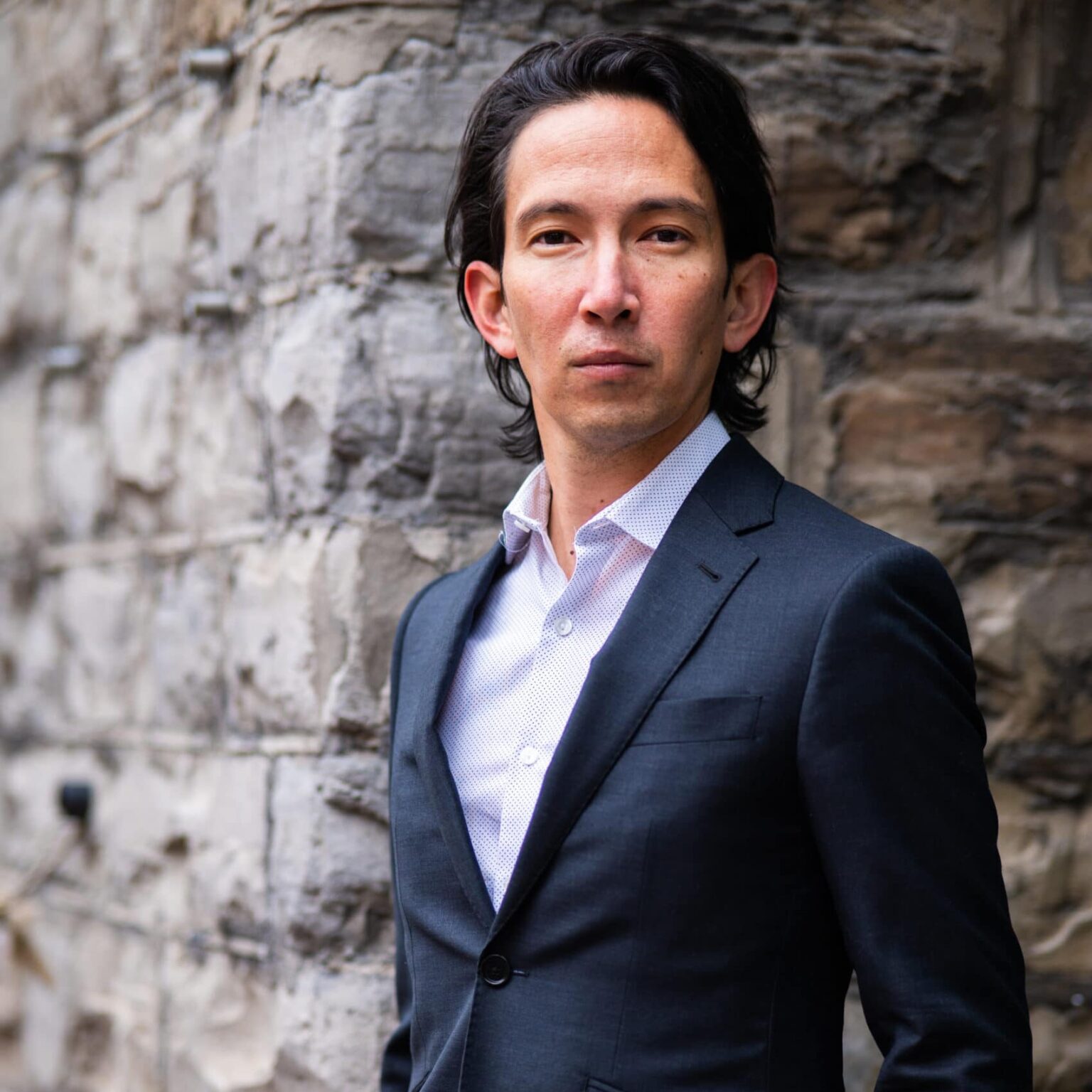
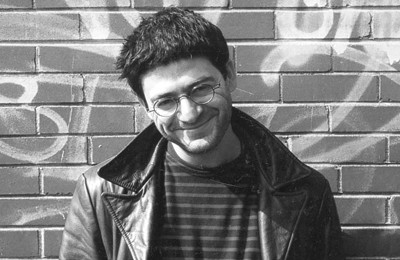
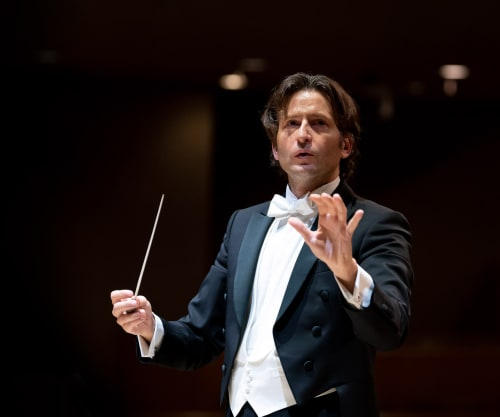
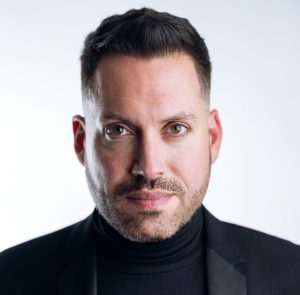
Conductor and Music Director Ronald Royer

Although we were to hear two of my favorite compositions tonight, namely Saint-Saëns 2nd piano concerto and Schubert’s 9th Symphony I was a bit hesitant, knowing that the works are difficult, possibly beyond the capabilities of a community orchestra.

And to make matters even more challenging, the SPO played at the Scarborough Citadel of The Salvation Army, a space with a remarkably clear acoustic. I’d want to hear at least another concert, sitting somewhere else, but from where I sat the sound was pristeen but a bit dry, which makes it a bit unforgiving. It’s ideal for a conductor such as Royer who seeks to mentor, improve and perfect his youthful players, even if they may find it a little scary at times, leaving them nowhere to hide.

But they seem to love playing there, and the audience ate it up.

The concerto is a piece I love so much even though lately it hasn’t been programmed anywhere nearby.

Its three movements build in speed and energy as we go on, from a meditative first movement to a second movement scherzo and a crazed tarantella for the finale. It’s a challenging concerto that is so much more than just a showpiece for a soloist, possibly the best thing Saint-Saëns ever wrote.

Did I mention that I like it? The performance was a thrill.

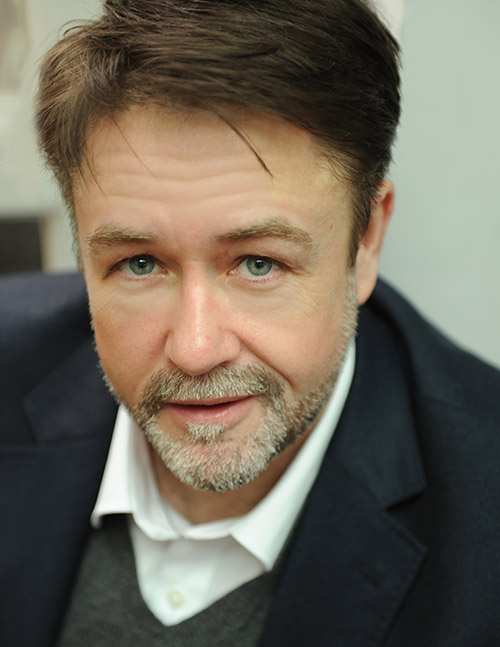
Pianist Lisa Tahara

Programming a concerto is usually a great idea I’ve seen in other regional orchestras, whereby one foregrounds the virtuoso soloist while the orchestra hides, playing a part that may not be nearly as difficult as a symphony. But this concerto is tougher than that, as the SPO provided excellent support to Tahara, including some challenging passages for the horn player and the timpanist executed perfectly. Her Yamaha instrument was not an ideal vehicle, not as beautiful as her playing. While its tone is brilliant up top as one might expect of a Yamaha, it’s somewhat clunky in the lower registers, even though her phrasing was elegant, light in the scherzo, her quick octaves marvelous to watch. And I was lucky to be sitting really close! On a night when I can’t deny that I was attracted by the popular repertoire choices, it’s fitting that Tahara offered as an encore the piece that might be the most popular piano solo of all, namely Clair de lune, in a thoughtful reading.

For the Schubert 9th, also a favorite of mine, the SPO rose to the occasion. Royer has some excellent ideas on how to make the piece sound good, getting the best out of his ensemble. In the middle movements we were going at a very quick pace, the phrases understated and tending towards softer dynamics, in the interest of getting the notes right: which was a brilliant strategy. It meant that when we came to climaxes they were effective, and the players were able to get through this huge long work.

For further information about the SPO, visit their website.

Posted in Music and musicology, Reviews | Tagged , , , , | 1 Comment

Holst’s Neptune and Wagner’s Lohengrin Prelude

I’ve just noticed something concerning Gustav Holst’s Planets suite.

You’ve probably heard that Holst did not mean planets in the sense of astronomy but rather to be more of a meditation on the astrological significance of each planet. His seven part suite of music introduces us to Mars, the Bringer of War, Venus the Bringer of Peace, Mercury, the Winged Messenger, Jupiter, the Bringer of Jollity, Saturn, the Bringer of Old Age, Uranus, the Magician and Neptune, the Mystic.

Yes we know that “Mars the Bringer of War” has been imitated by film composers such as John Williams in Star Wars and an even more blatant knock-off in the battle music from Gladiator, composed by Hans Zimmer. You may expect to hear the stirring melody during Jupiter (the same motif heard early in the movement played quickly, but now done in a more thoughtful fashion), “I vow to thee my country” sung for Remembrance Day.


And yet I never hear anyone mention the thing that I would say is the most important thing Holst sought to do with this suite.

It hit me today as I thought about the upcoming Toronto Symphony concert this week, to be led by their Conductor Emeritus Peter Oundjian, as I remembered the recent TSO concert in October, when Gustavo Gimeno conducted Ligeti’s Atmosphères (a work with its own planetary & inter-planetary associations via Kubrick and 2001: A Space Odyssey) followed by Wagner’s Prelude to Act I of Lohengrin.

It hit me suddenly as I wondered: what if instead of the Ligeti, Gimeno had juxtaposed Wagner with Holst? I was following the chain of association, whereby we think of that Ligeti piece leading us to Holst’s planets in space rather than in astrological charts.

But the Wagner and the Holst are both addressing spiritual concerns.

Perhaps it’s accidental, but I noticed a pattern in Holst’s Neptune that is such a close match to what we hear in the Lohengrin prelude as to resemble a parody. No I don’t mean to suggest that Holst is mocking Wagner. But in a sense he seems to be setting up the comparison with such a precise reboot of the template, perhaps inviting us to compare. That Holst only orchestrated the piece later might mean that the emulation of a pattern was not deliberate. And of course I’m likely reading something into it (perhaps after playing one too many hymns) rather than picking up something intentional.

Both pieces seem to be about the spirit, the deepest meanings of life. Lohengrin is an allegory about faith. A woman’s predicament –slandered by evil rivals—is that she can be saved by the perfect knight of her dream, provided that she doesn’t know his name. It’s a metaphor for Christian faith itself, that she is saved provided that she doesn’t demand proof of her saviour’s existence. And once she asks the fatal question in the story (asking his identity), her faith is now problematic and he will answer her question before leaving her, because she has doubted.

In the Lohengrin prelude we hear a perfect little tone-poem depicting the descent of grace in the vessel of the grail, coming down gradually from above. It’s first in the highest octaves, then restated lower, and finally given a big climactic statement by the full orchestra. Then we hear the theme associated with the tragic knowledge of Lohengrin’s identity: which is why he must leave.

Neptune is a different kind of tone-poem. Where Lohengrin tells a tale of certainty, Neptune is the mystic, the one asking questions. We begin both pieces with soft woodwinds. But where the angelic host in Lohengrin comes down softly but with no ambiguities, Neptune seems to be questioning, the harmony wandering as though unable to decide between adjacent tonalities, and in an irregular time-signature as well. The phrase is soft and delicate but harmonically ambiguous. As with Lohengrin’s main theme, Holst gives it to us three times, each time a bit bigger in volume and orchestration.

Instead of the doubting theme in Lohengrin, Neptune includes a transition introducing a wordless chorus sung by high voices. And now, in this movement featuring a tone of questioning, I think it’s appropriate to wonder, to question who or what the voices signify. Where Lohengrin is a closed tale with a precise ending of punishments and rewards, Neptune is the questioning mystic, presented to us in an atmosphere of wonderment.

I associate those voices with spirit itself, with life. We may be coming to the end of our lives with Saturn the Bringer of Old Age, terrified by Uranus, the Magician, but the gentle questioning of Neptune brings us into the presence of life itself. While the piece fades away, the voices go on. Is that bad? I don’t think so. I believe the voices going on and on are like spirit, a suggestion of eternal life. There is no closure as we get in Lohengrin, but it’s wonderfully ambiguous.

I’m looking forward to hearing it again at the TSO, who will play it November 9, 10 and 12.

Posted in Music and musicology, Opera, Spirituality & Religion | Tagged , , , , , , , , , | Leave a comment

ARC Ensemble: Chamber works by Alberto Hemsi

ARC Ensemble are the Artists of the Royal Conservatory of Music in Toronto. They are superb players but they’re also important because of the work they do. For example, their new recording Chamber Works by Alberto Hemsi, that was just released this past October 14, is the first commercial release devoted to the composer’s unique and extraordinary works, as part of their “Music in Exile” series from Chandos Records.

When we listen to chamber music we’re often hearing classics from long ago, not newly discovered music from the past.

Here’s the description from the ARC Ensemble’s press release accompanying this their latest.
“It is ironic that composer Alberto Hemsi, who spent much of his life rescuing music that faced extinction, should have his own brilliantly original works threatened with a similar fate. As part of its mission to research and recover 20th century music suppressed or marginalized by repressive regimes, war, and exile, Canada’s acclaimed ARC Ensemble focuses its sixth Chandos recording on this overlooked and prodigious talent.”

You may wonder about Alberto Hemsi and what his music sounds like. Alberto Hemsi, composer and ethnomusicologist, was born in 1898 in Anatolia, then part of the Ottoman Empire and now Turkey. He died in 1975 in Paris.

He’s best known for his work capturing traditional Sephardic melodies in arrangements such as his Coplas Sephardies, songs that include piano arrangements. Here’s an example of one of them.

The notes to the CD compare them
“to the path that Béla Bartók followed in reviving Hungarian folk music, Hemsi attempted to “recreate with them the traditional spirit of the people in the manner I thought was most favorable and appropriate to the song’s mood.” He saw this as “rescuing work in a triple process: reproduction, reconstruction, and recreation.”

But that’s the Hemsi who is known. ARC Ensemble are also probing scores that haven’t been heard before.

Hemsi is an original, “very different from what anyone else was doing at the time,” says Simon Wynberg, Artistic Director of the ARC Ensemble. “Hemsi worked outside the European mainstream, using fairly simple Sephardic melodies as the building blocks for extended and sometimes quite complex concert works.”

I’m trying to find a proper analogy to what I hear on the CD, but it’s truly unique. Because Hemsi represents a sort of creative cul de sac, being mostly unknown and unheard, he was able to boldly make his own original voice. There’s no pressure from the conservatory powers to conform to movements or styles. Instead he’s happily capturing something of his ethnicity but mixed into a modern texture free of the need to be atonal or dissonant.

The recording features four multi-movement works, plus a single movement work. Here are the tracks:
1-3: Danze nuziali greche Op 37 (1956) for cello and piano
4-6: Tre arie antiche (dalle “Collas Sefardies”) Op 30 (c. 1945) for string quartet
7-9: Pilpúl Sonata Op27 (1942) for Violin and piano
10-13: Quintet Op 28 (c.1943)
14: Meditation, Op 16 (before 1931)

The Danze nuziali greche (Greek nuptial dances) don’t sound Greek to me, but rather more in keeping with Hemsi’s Jewish roots, as you can hear in this example (but what do I know).

The cello is melodic, the piano sometimes wonderfully percussive, rhythmic, yet simple and direct. Throughout this album I’m amazed at how much drama Hemsi gets out of two instruments, particularly in the mature works, simply by repeating patterns and phrases. You’ll notice that the track sequence begins with the latest works, delving further into Hemsi’s past with each track.

The Tre arie antiche are melodies from the Collas Sefardies arranged for string quartet, brilliant use of the instruments in ways to illuminate tunes without getting bogged down in games of virtuosity for its own sake. The melodies get handed around the ensemble yet they’re always transparent. I’m struck by how Hemsi’s music at its most elaborate still seems closer to something popular like Gershwin or even folk music rather than anything from a conservatory artist.

The Pilpúl Sonata for violin reminded me at times of Stravinsky’s ragtime or Ravel’s jazz, or perhaps a bit like Debussy. The piano is elegant and clean, moody yet seeming to come from a different place in Europe, as though we found a new late violin sonata from Debussy or Ravel. But wait, in the music he’s showing us that he was actually Jewish. There are repeated phrases that sound like prayers.

The quintet (for a string quartet with an additional viola) is perhaps the least Jewish sounding of the works, featuring a more typically modernist texture of the mid-century, while still being completely tonal and melodic. Its ambiguities are not troubling but merely procedural games, going in circles like a child playing with a pet or a toy. While this four-movement work comes almost as the climax of the album it needs to be said that this is Hemsi’s earlier voice. As he gets older (at least in the earlier tracks I heard on the CD) he seems reconciled to his ethnicity and increasingly welcomes and even foregrounds that in his work. I can’t help wondering what kind of dialogues (whether internal or with colleagues) underlie his choices and creative pathways.

The Meditation “in Armenian style” is a lovely work. Cellist Tom Wiebe doesn’t overdo the schmaltz, his understated playing offering a superb calling card for the composer both in this (his earliest example on the recording) as well as the late Danze nuziali greche.

The ARC Ensemble album features violinists Marie Bérard, Erika Raum, and Emily Kruspe (Pilpul Sonata), violists Steven Dann and Julien Altmann, cellist Tom Wiebe, and pianist Kevin Ahfat.

The ARC Ensemble will be performing in Toronto November 13th playing music of Robert Müller-Hartmann. Further information

Posted in Music and musicology | Tagged , , , , , , , , , , , , , | 1 Comment

ARC Ensemble: music of Robert Müller-Hartmann

The ARC Ensemble will be playing on November 13th at Mazzoleni Hall at the Royal Conservatory, in a program featuring the music of Robert Müller-Hartmann, Sunday 13 November 2022 at 2:00 pm.

This text is from the RCM website for the concert:

Müller-Hartmann left Hamburg for London in 1937 and died in Dorking, Surrey in 1950. WWII, internment and the economic hardship that followed his move to England, meant that he had little time or opportunity to re-establish his career. None of the works on this program have been heard in 80-plus years.

Download the program notes | Tickets & further information.

Posted in Press Releases and Announcements | 1 Comment

Pieces we’re eager to hear #2: Schubert’s 9th and Saint-Saën’s Piano Concerto #2

SCHUBERT’S GREAT SYMPHONY
– Saturday, November 5, 2022 | 7:30 pm

The Salvation Army Scarborough Citadel
2021 Lawrence Ave. E. (at Warden)

Scarborough Philharmonic Orchestra
Ronald Royer, Conductor
Lisa Tahara, piano

This performance features Schubert’s masterpiece and a virtuosic piano concerto by Saint-Saëns to be performed by brilliant local pianist, Lisa Tahara.

PROGRAM:
Charles-Camille Saint-Saëns – Piano Concerto No. 2 in G minor, Op. 22
Franz Schubert – Symphony No. 9 in C major (The Great)

For tickets and further information

*******

Press releases and announcements” are presented verbatim without comment


Posted in Press Releases and Announcements | Leave a comment

Pieces we’re eager to hear #1: Alpine Symphony in North York


Richard Strauss–
An Alpine Symphony

Rafael Luz Conductor

Saturday
November 5, 2022
8:00pm

Prince Ballroom
Pan Pacific Toronto
900 York Mills Road
North York (Leslie & Don Mills)


Through mist and fog, atop a glacier, across green meadows and babbling brooks: Richard Strauss’ An Alpine Symphony has it all. You’ll experience close to 100 players onstage. As a boy, Strauss experienced an Alpine adventure similar to the one described in this piece; he and a group of climbers lost their way heading up a mountain and were caught in a storm; the experience stayed with him the rest of his life.

NEW!! CASH BAR
A cash bar will be open for the purchase of wine, beer and snacks for consumption before, during and after the performance.

NEW!! CASUAL SEATING AND ENTERTAINMENT
Seating will be at round tables for 6 to 8 people in a more casual atmosphere, with background entertainment by pianist Heidi Savoie before and after the performance (7pm-7:45pm and 9pm-9:45pm)

PARKING
Complimentary free parking in the hotel lot.

TICKETING
Tickets will be available at the door from 6:45pm
The auditorium will be opened at 7pm
Seating is unreserved, so arrive early to claim your favourite seat.
Full refunds will be available to any patron wishing to cancel their tickets for any reason prior to the performance

Buy Tickets now

*******

Press releases and announcements” are presented verbatim without comment


Posted in Press Releases and Announcements | Leave a comment

Tim Burton’s The Nightmare Before Christmas—In Concert with the TSO

Tonight Erika and I watched The Nightmare Before Christmas shown with the Toronto Symphony playing the score live, conducted by Sarah Hicks at Roy Thomson Hall.

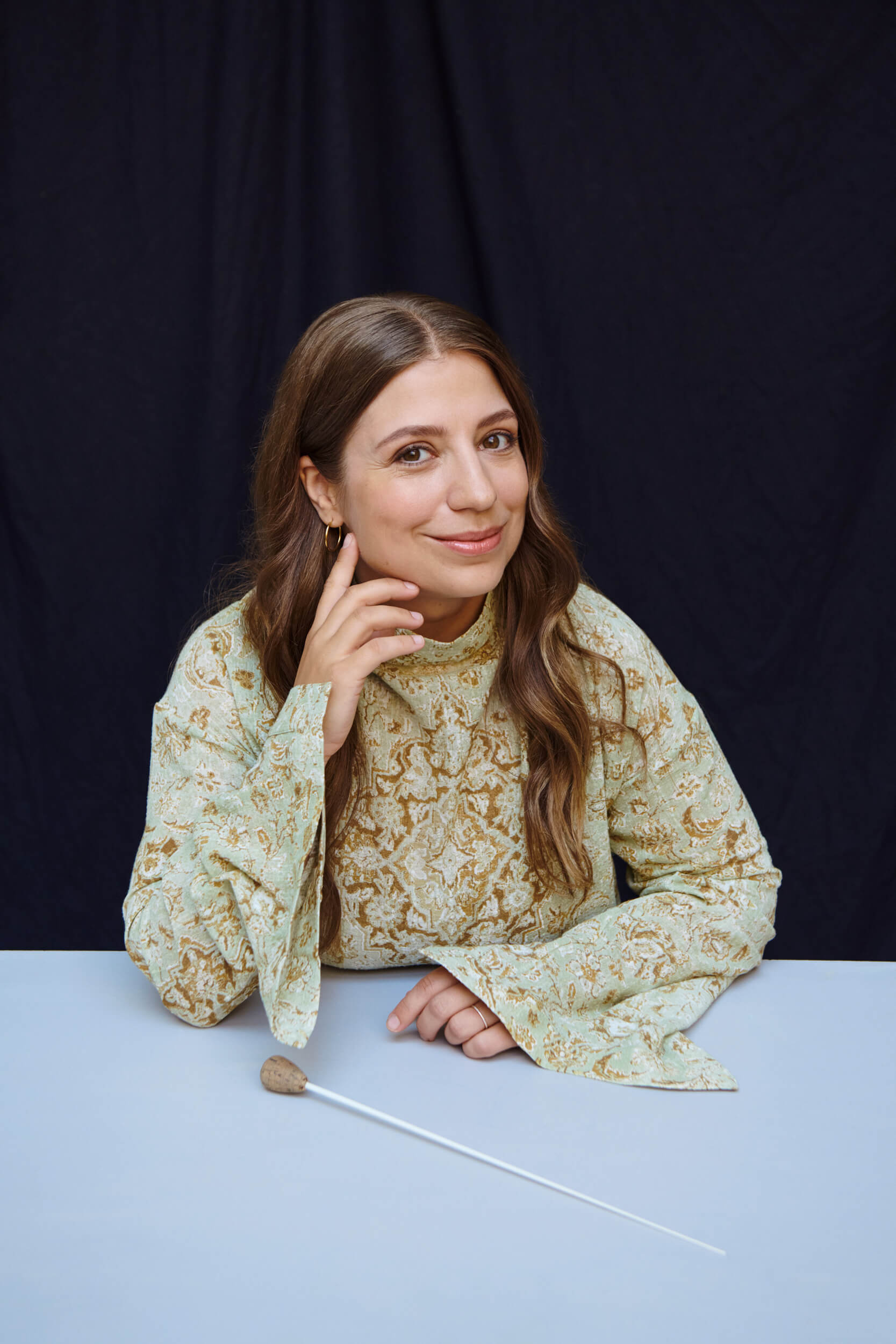
Conductor Sarah Hicks

As with the 100 Years of Film Music concert we attended earlier this week, I’m seeking to connect the “pops” presentations to the TSO’s serious programs.

You sometimes hear musicologists remarking in program notes about the music for the Dies Irae (day of the dead) employed in classical compositions such as Symphonie Fantastique by Berlioz, Totentanz by Franz Liszt….

Or Sergei Rachmaninoff in his Rhapsody on a theme by Paganini.

Tonight I noticed that Danny Elfman also uses it, in his filmscore to The Nightmare Before Christmas (1993).


Tim Burton wrote and directed this film. You might recall it for its beautiful live-animation imagery, perhaps ignoring it because it’s a children’s film. There are some superb voices employed in the film, beginning with composer Danny Elfman himself, Catherine O’Hara, Chris Sarandon and Paul Reubens.

While the film is less than 90 minutes long, its score is through-composed for every minute of the film. Offhand I can’t think of another film that does that.

Elfman’s usual sound is quite different from what we hear in most films, a melancholy reminiscent of a Gustav Mahler or a Kurt Weill, full of tunes in minor keys with shifting tonalities.

Hicks called us out in her introduction, getting us to admit that we’re there because we’ve seen this film before. Oh yes. I know I’ve seen it more than 10 times. Many in the audience know it so well that they’d applaud when we came to the ends of songs.

These TSO concert presentations of our favorite films can be quite magical.

I recall seeing Ratatouille with my grand-daughter over five years ago.

I remember Vertigo co-presented by TIFF complete with a Q & A by Kim Novak afterwards.

Back to the Future was the occasion when a stranger sitting beside me started talking about how much he loved this film, having made a pilgrimage all the way from Halifax to see it, his first ever live symphony concert.

No question, these presentations are bringing people to the symphony for the first time: including a four-year old sitting close to us in the balcony. There were several who were costumed for the occasion.

The TSO will be showing the film again Saturday night October 29th .

Posted in Art, Architecture & Design, Cinema, video & DVDs, Music and musicology, Reviews | Tagged , , , , , , , , , , , , | 2 Comments

100 Years of Epic Film Scores from the TSO

The Toronto Symphony program “100 Years of Epic Film Scores” is a kind of history lesson, while celebrating the role music has played in film for over a century. The significance of the century comes from it being TSO’s 100th anniversary, being commemorated throughout the season.

Steven Reineke was a combination of conductor, curator, history teacher & lecturer: and stand-up comedian. He’s a real entertainer.

Conductor Steven Reineke

Every piece was explained for its historical significance, including some funny anecdotes in a program playing at least one thing from each decade:
1920s:
Erdmann & Leuschner: Overture from Nosferatu (1922)

1930s
Max Steiner: Main Theme from King Kong (1933)
Whiting & Mercer: “Hooray for Hollywood” (the first item on the program)

1940s
Erich Wolfgang Korngold: Suite from The Sea Hawk (1940)

1950s
Miklós Rózsa: “Parade of the Charioteers” from Ben-Hur (1959)

1960s
Bernard Hermann: Suite from Psycho (1960)
Elmer Bernstein: Main Theme from The Magnificent Seven (1960)
Maurice Jarre: Overture from Lawrence of Arabia (1962)
(intermission)

1970s
Nino Rota: Love theme from The Godfather (1972)
Jerry Goldsmith: End title from Star Trek: The Motion Picture (1979)

1980s
Ennio Morricone: “Gabriel’s Oboe from The Mission (1986)

1990s
Rachel Portman: End titles from Emma (1996)

2000s
Hans Zimmer (Music from Gladiator (2000)
Klaus Badelt: Pirates of the Caribbean: The Curse of the Black Pearl (2003)

2010s
Alan Silvestri: Theme from the Avengers (2012)

2020s
Michael Giacchino: Main Theme from The Batman (2022)

There were times we heard music that’s so popular it needed no introduction. As we began the second half of the concert, after intermission Erika sighed beside me when they began to play Nino Rota’s music from The Godfather, while the audience cheered. At times there was a fervor bordering on something you’d find at a sporting event or a rock concert.

But at other times I watched Reineke conducting pieces that deserve to be played in the regular TSO concert programs. I wonder if Gustavo Gimeno would consider programming the music of Bernard Herrmann. We heard a wonderfully edgy performance of music from Psycho, although yes people did start to giggle when they heard the music from the shower scene.

Reineke’s friendly manner with the microphone is hugely educational, while he’s also like a cheerleader for the TSO, reminding us of how well they were playing. Yes, the dry Psycho score written entirely for strings offered the brass a bit of a break, after the fanfares from Ben-Hur or Sea Hawk. Yes you could hear the clear emulation of Holst’s Mars the bringer of war (coming up in a TSO concert next month), in Zimmer’s Gladiator: as Reineke explained.

Conductor Steven Reineke (photo: Michael Tammaro)

It was like a lecture on film music history, but a lot of fun.

These pieces stand on their own without the film, recalling that their purpose was to be played in support rather than in a concert. We were treated to an encore from the big name conspicuous for his absence from the above list, namely John Williams, in music from Superman (1978).

My one quibble is the parking. Right now it’s pretty crazy downtown with the construction, so be ready for a long drive home. Next time I think we’ll take transit (perhaps a GO train).

The TSO repeat this program twice on Wednesday Oct 26: at 2:00 and 8:00. It’s brilliant.

Posted in Cinema, video & DVDs, Reviews | Tagged , , , , , , , , , , , , , , , , | Leave a comment

Another look at Alden’s Dutchman, a first look at Harold Wilson

Today’s matinee was the Canadian Opera Company’s closing performance of The Flying Dutchman, complete with a singer making his debut. The American bass Harold Wilson stepped in for an indisposed Franz-Josef Selig in the role of Daland. When I looked it up I saw he’s covered the role at the Metropolitan Opera.

Not too shabby.

Bass Harold Wilson

While it may be unfair comparing Wilson to anyone else (when they’re at the end of a run and he’s fresh) he sounded bigger & more precisely pitched than any singer we’ve heard in this show. The production may be different from what he’s seen, but even so Wilson fit in perfectly. We were lucky to have him.

I’m pleased that COC artistic director Perryn Leech found such a capable replacement.

Christopher Alden’s production is in its fourth incarnation with the COC. Roughly every seven years it comes ashore in Toronto, like the Dutchman himself.

I find that director’s theatre productions of opera aka “Regietheater” have not just their good and bad points, but more accurately good and bad scenes. There are moments in the show when one goes “aha”, because for that instant at least, the concept clicks. And there are also moments when the concept doesn’t quite fit the story.

While I heard comments on social media critical of the way Alden ends the work (and because it’s closing night I am comfortable offering a spoiler), it’s a brilliant resolution to the problem every director and designer faces with this opera. We’re told Senta is true to the Dutchman unto death, via stage directions in the score telling her to jump into the ocean (or the theatrical equivalent), followed by the ships sinking and the two, now happily transfigured, seen ascending into heaven. Of course nobody ever does it that way anymore, if they ever did.

By having Erik the hunter shoot her, which is totally consistent with the characters onstage at that moment and not far from what’s written, Senta can keep her promise. Alden then has the Dutchman ascend a spiral staircase as though into heaven: an effect that always gets me, today being no exception.

The production has diverged somewhat from its first presentation in the O’Keefe Centre, as usual. I suppose it’s inevitable. It was very different the first two times in that big barn of a theatre where we now have much more detail in Four Seasons Centre because of the intimacy of the venue. My friend Celine Papizewska reminded me of some of the edge she saw in Alden’s original version that’s not there anymore, especially the “horrific Holocaust imagery of the ghost chorus”. Whether that’s what Alden intended or not, it’s drifted in a new direction, possibly because the performers are restoring the usual readings of their roles, reflecting the score. Daland (both Selig or Wilson) are now closer to the usual comic territory of the role. The chorus in Act III seemed more human.

I found that I enjoyed Marjorie Owens’ Senta even more today, as I noticed some lovely nuances to her singing especially in her Act II ballad. Miles Mykkanen was again excellent as the Steersman, although I continue to be perplexed by what Alden asks of this character. In Act III when the chorus picks up the song from Act I with the refrain “Steuermann! Lass die wacht” (Steersman leave the watch), it’s as though Alden thinks this has to be literally directed at his Steersman, when it’s just a reprise of the song from Act I, and generic in its suggestion that the Steersman leave the watch. They’re drinking and having fun, but Alden asks Mykkanen to walk like a zombie across the front of the stage. Mykkanen does a great job of it, vocally & dramatically, but no matter how many more times I see this I don’t understand this. Oh well. (although –second thought next morning–perhaps the Steuermann is enacting something that made more sense in the earlier Alden versions, alongside a nastier version of the chorus, perhaps a dissenting soul, guilty, not wanting to take part..? but I’m still not sure)

The orchestra and chorus were again the real stars. Conductor Johannes Debus got the biggest applause of the night, deservedly.

Dutchman may have walked up his spiral staircase for the last time, but we still have a few Carmen performances left October 26, 28, 30, and November 4.

Posted in Personal ruminations & essays | Tagged , , , , , , , , , | 4 Comments

Orpheus in the Underworld

Toronto Operetta Theatre opened their production of Offenbach’s Orpheus in the Underworld tonight, directed & designed by Guillermo Silva-Marin, and the familiar music conducted by Larry Beckwith.

In a month when the opera stages are showing two divas murdered by a jealous tenor (COC’s Flying Dutchman and Carmen) and another whose tale of heartbreak leads her to kill herself (Opera Atelier’s Dido and Aeneas) we need something more lighthearted: and this fills the bill.

It’s farce not high art, so we’re in a place where we don’t ask difficult questions. Last night I heard Yuja Wang play a transcription of music from Gluck’s heaven, tonight we heard Offenbach having fun playing with Gluck’s famous tune “che faro senza Euridice”. Yes this husband and wife couple are dying: dying to get away from one another that is. The gods help as only they can, showing them and us lots of fun along the way.

Beckwith gives it lots of energy, the tiny orchestra boisterous in their support of the chorus and soloists.
There were a few standouts, vocally and dramatically.

Gregory Finney is TOT’s best investment, always bringing a show to life whenever he comes onstage. While the voice is quite lovely, his delivery is like the funniest character in a sitcom. Just like Kramer in Seinfeld or Karen Walker in Will & Grace, he’s precisely at the centre of the funniest scenes, delivering the lines that bring the house down. Finney’s instincts are superb.

Gregory Finney as John Styx (photo: Gary Beechey, BDS Studio)

We saw & heard River Guard in late 2019 singing with Tongue in Cheek’s eight drinkers program. Time isn’t flowing in the usual way, given the hiatus in the performing world from roughly March 2020 until this year, so I have to say: I didn’t realize it was so long ago, until I double-checked. He impressed then with his voice and personality, as he did tonight in the role of Pluto. As with Finney, Guard is another one with great instincts, taking the stage boldly, moving and singing with flair. It’s a great sounding voice used with musicianship but usually at the heart of the comedy.

Vania Chan sang Cunegonde five years ago with TOT, an impressive take as I recall (and again I can’t believe it’s so many years ago). Tonight as Eurydice she was if anything even better, with lovely vocals that were often used to underline comic moments, a delight.

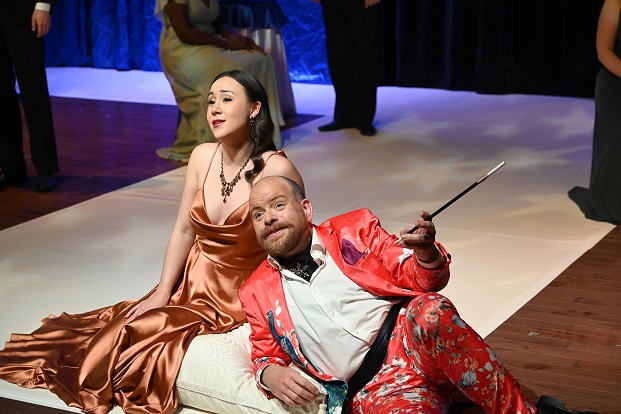
River Guard as Pluto (Aristaeus) and Vania Chan as Eurydice (photo: Gary Beechey, BDS Studio)

Julia MacVicar’s relatively small part as Diana was impressive dramatically and vocally, as they showed us a big stunning sound.

It’s a huge company, full of lovely young talent, but the ones I mentioned were the standouts. This show is overflowing with youthful energy, wonderful tunes, although there were times it was hard to hear the text. The ones I mentioned all enunciated clearly, which goes a long way towards making comedy funny.

Orpheus goes back to the underworld again Saturday night October 22nd and the afternoon of Sunday October 23rd at the St Lawrence Centre.

Posted in Opera, Reviews | Tagged , , , , , , , | Leave a comment