Pieces we’re eager to hear #2: Schubert’s 9th and Saint-Saën’s Piano Concerto #2

SCHUBERT’S GREAT SYMPHONY
– Saturday, November 5, 2022 | 7:30 pm

The Salvation Army Scarborough Citadel
2021 Lawrence Ave. E. (at Warden)

Scarborough Philharmonic Orchestra
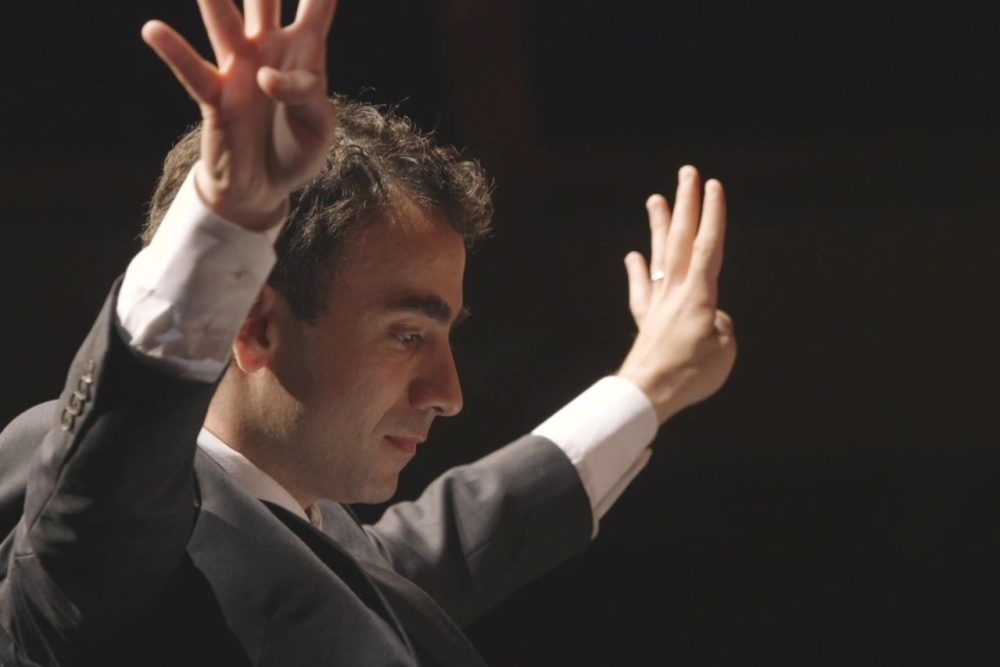
Ronald Royer, Conductor
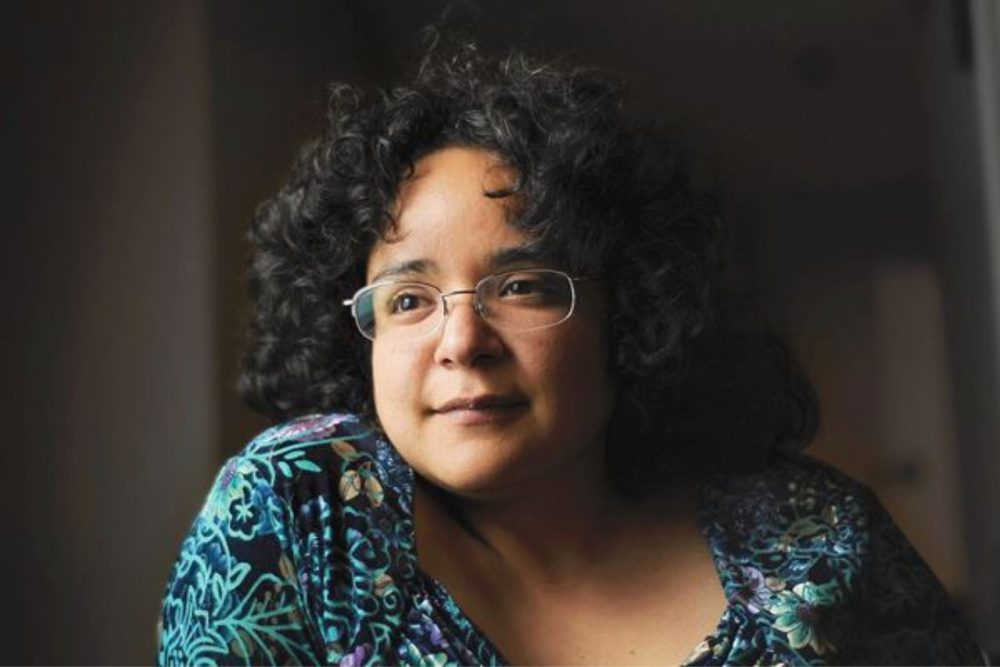
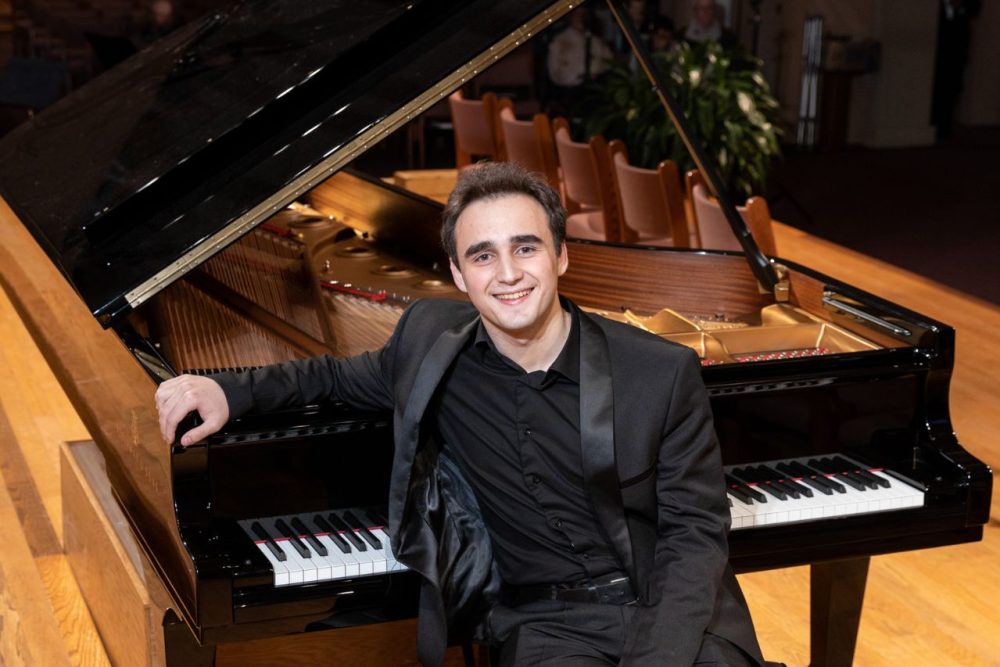
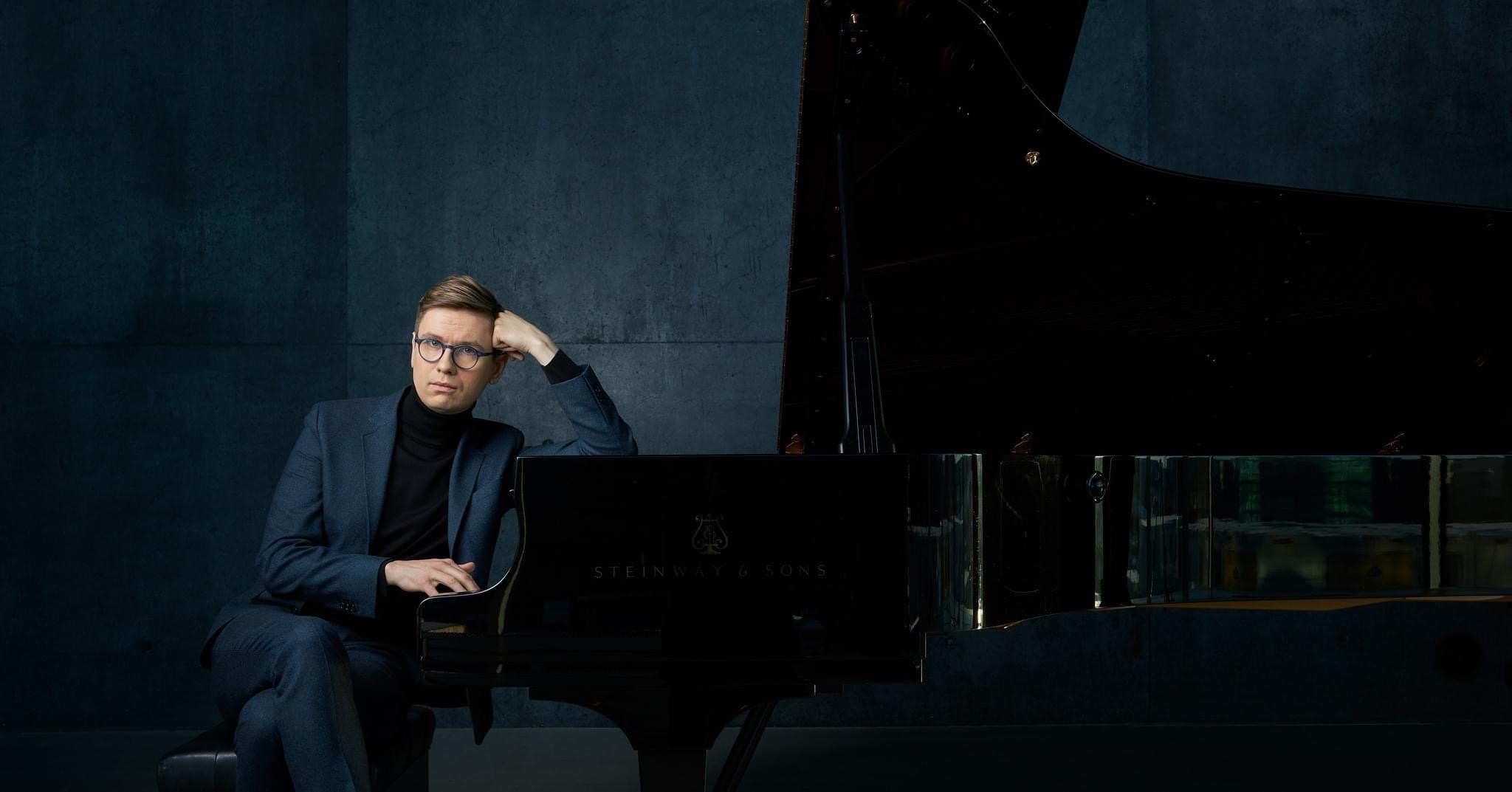
Lisa Tahara, piano

This performance features Schubert’s masterpiece and a virtuosic piano concerto by Saint-Saëns to be performed by brilliant local pianist, Lisa Tahara.

PROGRAM:
Charles-Camille Saint-Saëns – Piano Concerto No. 2 in G minor, Op. 22
Franz Schubert – Symphony No. 9 in C major (The Great)

For tickets and further information

*******

Press releases and announcements” are presented verbatim without comment


Posted in Press Releases and Announcements | Leave a comment

Pieces we’re eager to hear #1: Alpine Symphony in North York


Richard Strauss–
An Alpine Symphony

Rafael Luz Conductor

Saturday
November 5, 2022
8:00pm

Prince Ballroom
Pan Pacific Toronto
900 York Mills Road
North York (Leslie & Don Mills)


Through mist and fog, atop a glacier, across green meadows and babbling brooks: Richard Strauss’ An Alpine Symphony has it all. You’ll experience close to 100 players onstage. As a boy, Strauss experienced an Alpine adventure similar to the one described in this piece; he and a group of climbers lost their way heading up a mountain and were caught in a storm; the experience stayed with him the rest of his life.

NEW!! CASH BAR
A cash bar will be open for the purchase of wine, beer and snacks for consumption before, during and after the performance.

NEW!! CASUAL SEATING AND ENTERTAINMENT
Seating will be at round tables for 6 to 8 people in a more casual atmosphere, with background entertainment by pianist Heidi Savoie before and after the performance (7pm-7:45pm and 9pm-9:45pm)

PARKING
Complimentary free parking in the hotel lot.

TICKETING
Tickets will be available at the door from 6:45pm
The auditorium will be opened at 7pm
Seating is unreserved, so arrive early to claim your favourite seat.
Full refunds will be available to any patron wishing to cancel their tickets for any reason prior to the performance

Buy Tickets now

*******

Press releases and announcements” are presented verbatim without comment


Posted in Press Releases and Announcements | Leave a comment

Tim Burton’s The Nightmare Before Christmas—In Concert with the TSO

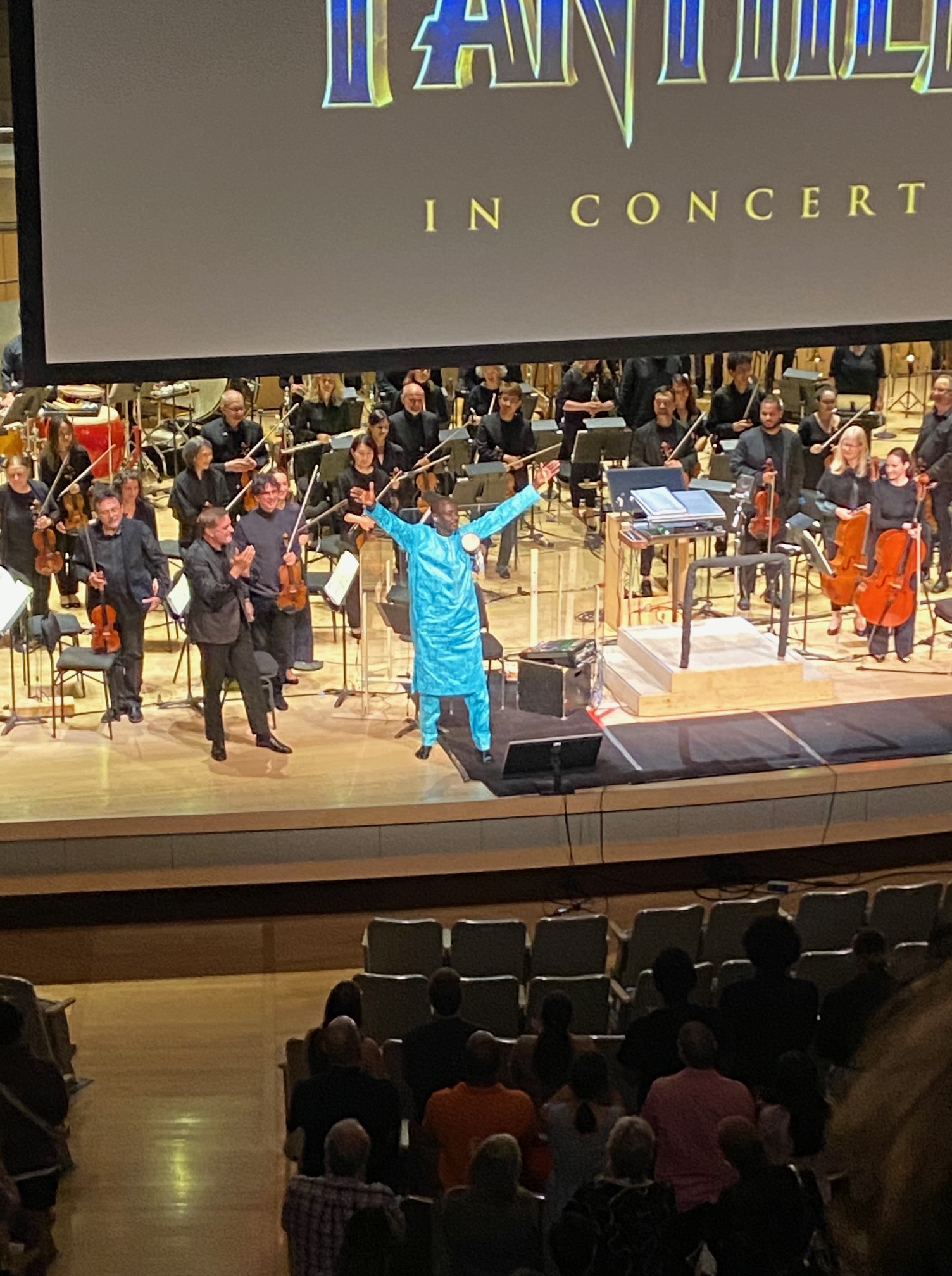
Tonight Erika and I watched The Nightmare Before Christmas shown with the Toronto Symphony playing the score live, conducted by Sarah Hicks at Roy Thomson Hall.

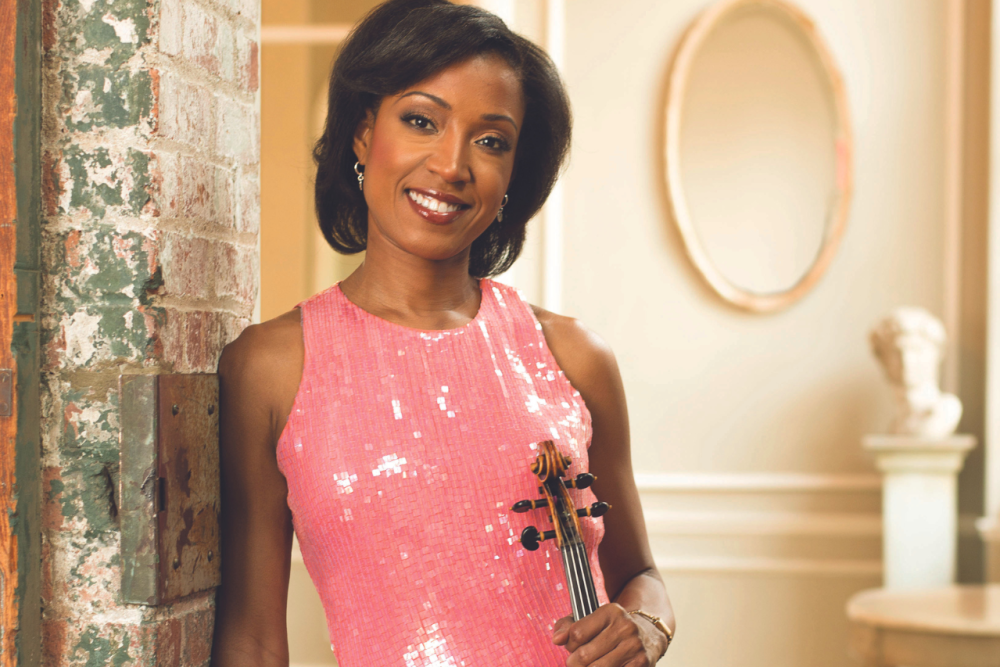
Conductor Sarah Hicks

As with the 100 Years of Film Music concert we attended earlier this week, I’m seeking to connect the “pops” presentations to the TSO’s serious programs.

You sometimes hear musicologists remarking in program notes about the music for the Dies Irae (day of the dead) employed in classical compositions such as Symphonie Fantastique by Berlioz, Totentanz by Franz Liszt….

Or Sergei Rachmaninoff in his Rhapsody on a theme by Paganini.

Tonight I noticed that Danny Elfman also uses it, in his filmscore to The Nightmare Before Christmas (1993).


Tim Burton wrote and directed this film. You might recall it for its beautiful live-animation imagery, perhaps ignoring it because it’s a children’s film. There are some superb voices employed in the film, beginning with composer Danny Elfman himself, Catherine O’Hara, Chris Sarandon and Paul Reubens.

While the film is less than 90 minutes long, its score is through-composed for every minute of the film. Offhand I can’t think of another film that does that.

Elfman’s usual sound is quite different from what we hear in most films, a melancholy reminiscent of a Gustav Mahler or a Kurt Weill, full of tunes in minor keys with shifting tonalities.

Hicks called us out in her introduction, getting us to admit that we’re there because we’ve seen this film before. Oh yes. I know I’ve seen it more than 10 times. Many in the audience know it so well that they’d applaud when we came to the ends of songs.

These TSO concert presentations of our favorite films can be quite magical.

I recall seeing Ratatouille with my grand-daughter over five years ago.

I remember Vertigo co-presented by TIFF complete with a Q & A by Kim Novak afterwards.

Back to the Future was the occasion when a stranger sitting beside me started talking about how much he loved this film, having made a pilgrimage all the way from Halifax to see it, his first ever live symphony concert.

No question, these presentations are bringing people to the symphony for the first time: including a four-year old sitting close to us in the balcony. There were several who were costumed for the occasion.

The TSO will be showing the film again Saturday night October 29th .

Posted in Art, Architecture & Design, Cinema, video & DVDs, Music and musicology, Reviews | Tagged , , , , , , , , , , , , | 2 Comments

100 Years of Epic Film Scores from the TSO

The Toronto Symphony program “100 Years of Epic Film Scores” is a kind of history lesson, while celebrating the role music has played in film for over a century. The significance of the century comes from it being TSO’s 100th anniversary, being commemorated throughout the season.

Steven Reineke was a combination of conductor, curator, history teacher & lecturer: and stand-up comedian. He’s a real entertainer.

Conductor Steven Reineke

Every piece was explained for its historical significance, including some funny anecdotes in a program playing at least one thing from each decade:
1920s:
Erdmann & Leuschner: Overture from Nosferatu (1922)

1930s
Max Steiner: Main Theme from King Kong (1933)
Whiting & Mercer: “Hooray for Hollywood” (the first item on the program)

1940s
Erich Wolfgang Korngold: Suite from The Sea Hawk (1940)

1950s
Miklós Rózsa: “Parade of the Charioteers” from Ben-Hur (1959)

1960s
Bernard Hermann: Suite from Psycho (1960)
Elmer Bernstein: Main Theme from The Magnificent Seven (1960)
Maurice Jarre: Overture from Lawrence of Arabia (1962)
(intermission)

1970s
Nino Rota: Love theme from The Godfather (1972)
Jerry Goldsmith: End title from Star Trek: The Motion Picture (1979)

1980s
Ennio Morricone: “Gabriel’s Oboe from The Mission (1986)

1990s
Rachel Portman: End titles from Emma (1996)

2000s
Hans Zimmer (Music from Gladiator (2000)
Klaus Badelt: Pirates of the Caribbean: The Curse of the Black Pearl (2003)

2010s
Alan Silvestri: Theme from the Avengers (2012)

2020s
Michael Giacchino: Main Theme from The Batman (2022)

There were times we heard music that’s so popular it needed no introduction. As we began the second half of the concert, after intermission Erika sighed beside me when they began to play Nino Rota’s music from The Godfather, while the audience cheered. At times there was a fervor bordering on something you’d find at a sporting event or a rock concert.

But at other times I watched Reineke conducting pieces that deserve to be played in the regular TSO concert programs. I wonder if Gustavo Gimeno would consider programming the music of Bernard Herrmann. We heard a wonderfully edgy performance of music from Psycho, although yes people did start to giggle when they heard the music from the shower scene.

Reineke’s friendly manner with the microphone is hugely educational, while he’s also like a cheerleader for the TSO, reminding us of how well they were playing. Yes, the dry Psycho score written entirely for strings offered the brass a bit of a break, after the fanfares from Ben-Hur or Sea Hawk. Yes you could hear the clear emulation of Holst’s Mars the bringer of war (coming up in a TSO concert next month), in Zimmer’s Gladiator: as Reineke explained.

Conductor Steven Reineke (photo: Michael Tammaro)

It was like a lecture on film music history, but a lot of fun.

These pieces stand on their own without the film, recalling that their purpose was to be played in support rather than in a concert. We were treated to an encore from the big name conspicuous for his absence from the above list, namely John Williams, in music from Superman (1978).

My one quibble is the parking. Right now it’s pretty crazy downtown with the construction, so be ready for a long drive home. Next time I think we’ll take transit (perhaps a GO train).

The TSO repeat this program twice on Wednesday Oct 26: at 2:00 and 8:00. It’s brilliant.

Posted in Cinema, video & DVDs, Reviews | Tagged , , , , , , , , , , , , , , , , | Leave a comment

Another look at Alden’s Dutchman, a first look at Harold Wilson

Today’s matinee was the Canadian Opera Company’s closing performance of The Flying Dutchman, complete with a singer making his debut. The American bass Harold Wilson stepped in for an indisposed Franz-Josef Selig in the role of Daland. When I looked it up I saw he’s covered the role at the Metropolitan Opera.

Not too shabby.

Bass Harold Wilson

While it may be unfair comparing Wilson to anyone else (when they’re at the end of a run and he’s fresh) he sounded bigger & more precisely pitched than any singer we’ve heard in this show. The production may be different from what he’s seen, but even so Wilson fit in perfectly. We were lucky to have him.

I’m pleased that COC artistic director Perryn Leech found such a capable replacement.

Christopher Alden’s production is in its fourth incarnation with the COC. Roughly every seven years it comes ashore in Toronto, like the Dutchman himself.

I find that director’s theatre productions of opera aka “Regietheater” have not just their good and bad points, but more accurately good and bad scenes. There are moments in the show when one goes “aha”, because for that instant at least, the concept clicks. And there are also moments when the concept doesn’t quite fit the story.

While I heard comments on social media critical of the way Alden ends the work (and because it’s closing night I am comfortable offering a spoiler), it’s a brilliant resolution to the problem every director and designer faces with this opera. We’re told Senta is true to the Dutchman unto death, via stage directions in the score telling her to jump into the ocean (or the theatrical equivalent), followed by the ships sinking and the two, now happily transfigured, seen ascending into heaven. Of course nobody ever does it that way anymore, if they ever did.

By having Erik the hunter shoot her, which is totally consistent with the characters onstage at that moment and not far from what’s written, Senta can keep her promise. Alden then has the Dutchman ascend a spiral staircase as though into heaven: an effect that always gets me, today being no exception.

The production has diverged somewhat from its first presentation in the O’Keefe Centre, as usual. I suppose it’s inevitable. It was very different the first two times in that big barn of a theatre where we now have much more detail in Four Seasons Centre because of the intimacy of the venue. My friend Celine Papizewska reminded me of some of the edge she saw in Alden’s original version that’s not there anymore, especially the “horrific Holocaust imagery of the ghost chorus”. Whether that’s what Alden intended or not, it’s drifted in a new direction, possibly because the performers are restoring the usual readings of their roles, reflecting the score. Daland (both Selig or Wilson) are now closer to the usual comic territory of the role. The chorus in Act III seemed more human.

I found that I enjoyed Marjorie Owens’ Senta even more today, as I noticed some lovely nuances to her singing especially in her Act II ballad. Miles Mykkanen was again excellent as the Steersman, although I continue to be perplexed by what Alden asks of this character. In Act III when the chorus picks up the song from Act I with the refrain “Steuermann! Lass die wacht” (Steersman leave the watch), it’s as though Alden thinks this has to be literally directed at his Steersman, when it’s just a reprise of the song from Act I, and generic in its suggestion that the Steersman leave the watch. They’re drinking and having fun, but Alden asks Mykkanen to walk like a zombie across the front of the stage. Mykkanen does a great job of it, vocally & dramatically, but no matter how many more times I see this I don’t understand this. Oh well. (although –second thought next morning–perhaps the Steuermann is enacting something that made more sense in the earlier Alden versions, alongside a nastier version of the chorus, perhaps a dissenting soul, guilty, not wanting to take part..? but I’m still not sure)

The orchestra and chorus were again the real stars. Conductor Johannes Debus got the biggest applause of the night, deservedly.

Dutchman may have walked up his spiral staircase for the last time, but we still have a few Carmen performances left October 26, 28, 30, and November 4.

Posted in Personal ruminations & essays | Tagged , , , , , , , , , | 4 Comments

Orpheus in the Underworld

Toronto Operetta Theatre opened their production of Offenbach’s Orpheus in the Underworld tonight, directed & designed by Guillermo Silva-Marin, and the familiar music conducted by Larry Beckwith.

In a month when the opera stages are showing two divas murdered by a jealous tenor (COC’s Flying Dutchman and Carmen) and another whose tale of heartbreak leads her to kill herself (Opera Atelier’s Dido and Aeneas) we need something more lighthearted: and this fills the bill.

It’s farce not high art, so we’re in a place where we don’t ask difficult questions. Last night I heard Yuja Wang play a transcription of music from Gluck’s heaven, tonight we heard Offenbach having fun playing with Gluck’s famous tune “che faro senza Euridice”. Yes this husband and wife couple are dying: dying to get away from one another that is. The gods help as only they can, showing them and us lots of fun along the way.

Beckwith gives it lots of energy, the tiny orchestra boisterous in their support of the chorus and soloists.
There were a few standouts, vocally and dramatically.

Gregory Finney is TOT’s best investment, always bringing a show to life whenever he comes onstage. While the voice is quite lovely, his delivery is like the funniest character in a sitcom. Just like Kramer in Seinfeld or Karen Walker in Will & Grace, he’s precisely at the centre of the funniest scenes, delivering the lines that bring the house down. Finney’s instincts are superb.

Gregory Finney as John Styx (photo: Gary Beechey, BDS Studio)

We saw & heard River Guard in late 2019 singing with Tongue in Cheek’s eight drinkers program. Time isn’t flowing in the usual way, given the hiatus in the performing world from roughly March 2020 until this year, so I have to say: I didn’t realize it was so long ago, until I double-checked. He impressed then with his voice and personality, as he did tonight in the role of Pluto. As with Finney, Guard is another one with great instincts, taking the stage boldly, moving and singing with flair. It’s a great sounding voice used with musicianship but usually at the heart of the comedy.

Vania Chan sang Cunegonde five years ago with TOT, an impressive take as I recall (and again I can’t believe it’s so many years ago). Tonight as Eurydice she was if anything even better, with lovely vocals that were often used to underline comic moments, a delight.

River Guard as Pluto (Aristaeus) and Vania Chan as Eurydice (photo: Gary Beechey, BDS Studio)

Julia MacVicar’s relatively small part as Diana was impressive dramatically and vocally, as they showed us a big stunning sound.

It’s a huge company, full of lovely young talent, but the ones I mentioned were the standouts. This show is overflowing with youthful energy, wonderful tunes, although there were times it was hard to hear the text. The ones I mentioned all enunciated clearly, which goes a long way towards making comedy funny.

Orpheus goes back to the underworld again Saturday night October 22nd and the afternoon of Sunday October 23rd at the St Lawrence Centre.

Posted in Opera, Reviews | Tagged , , , , , , , | Leave a comment

Yuja Wang, Magnus Lindberg, Anton Bruckner and the TSO

As we tentatively poke our heads out, looking for signs that normal life has resumed after the pandemic, concerts like tonight’s from the Toronto Symphony affirm relationships & collaboration, the latest in a series of celebratory moments in the orchestra’s 100th anniversary season.

The first & worst sign of COVID to hit me in 2020 was Yuja Wang’s scheduled TSO concert in April: first in a heart-breaking series of cancellations. She might be the most exciting pianist in the world right now, between her stylish appearance, her flamboyant interpretations, brilliant technique and the encores to really impress. Thank goodness we now pick up where we left off in April 2020.

Magnus Lindberg’s piano concerto #3, composed with her in mind –co-commissioned by the TSO, the San Francisco Symphony, Orchestre de Paris, China NCPA Orchestra, Norddeutscher Rundfunk and NY Philharmonic—had its world premiere last week in San Francisco. One of the concerts included this encore, shared from YouTube.

You won’t hear better piano playing anywhere. The TSO rose to the occasion in response.

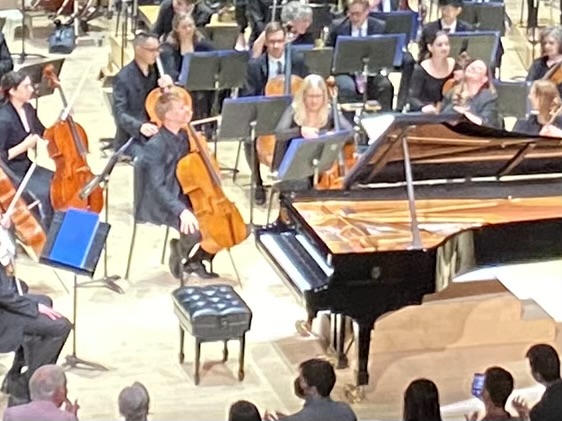
Yuja Wang under the watchful eye of principal cellist Joseph Johnson (photo: Gerard Richardson)

It will sound cliché, but Yuja makes it seem easy. Her deportment throughout the concerto and in her two delicious encores showed no signs of effort or struggle, just the joyful exuberance, sharing something beautiful with an adoring audience. While she has every right to behave like a diva –especially given the wild response from the Roy Thomson Hall crowd tonight—yet she’s the picture of humility, sharing the spotlight with TSO conductor Gustavo Gimeno, composer Lindberg (who came up onstage to a rapturous reception) and the orchestra.

Her bows always freak me out. She drops so far (an athletic move you don’t expect to see in a concert hall) I worry she’s going to hit her head. But she always comes up smiling, thank God.

Don’t get me wrong. Although Yuja beamed happily, this concerto does look challenging to play. But she’s Olympian in her technique, a true athlete of the keyboard. At times Yuja’s fingers were going quickly, at times she was boldly hitting octaves with precision with no apparent loss of accuracy even though the targets were widely spaced. Her energy seems limitless.

Yuja Wang and the TSO (photo: Gerard Richardson)

Lindberg’s composition reminded me at first of Ravel but more dissonant, the music emerging out of a wash at the beginning of all notes, gradually finding its way not just to tonality but something very beautiful, resembling a style we might call “impressionistic”. In short order I thought hmm reminds me of Gershwin in the extended chords but not really bluesy. What if Gershwin’s family never left Russia and then grew up in the same milieu as Stravinsky or Rachmaninoff? That’s what I thought I found in this music, sometimes melodic with chords and clusters, not as syncopated as jazz, and often luscious & sensual. There are some dissonant moments to make us appreciate the many moments of great beauty.

In the program note Lindberg alludes to the novels of William Faulkner and his narratives from several points of view. I’d want to hear it again, but I thought I encountered something like this, phrases or events that recur, sometimes in parts of the orchestra, sometimes entirely at the piano, a lovely metaphor even if this might be the normal self-referential writing you’d expect in a concerto from the middle of the 20th century or of course earlier, sometimes in a dialogue or working together. Everyone seemed very thrilled, between Yuja’s playing and the lovely sound of the TSO.

Lindberg, Gimeno and Wang enjoy the applause with the TSO (photo: Allan Cabral)

Yuja gave us a pair of encores. The first, paraphrasing music from the scene among the blessed spirits in Gluck’s Orfeo ed Euridice, was truly like a trip to heaven, as we heard some of the gentlest softest playing I’ve ever heard in Roy Thomson Hall, the audience dead silent in respectful awe. That was followed by something I can’t identify (sorry), a late romantic study of some sort, that was as big and brash as the first was gently angelic.

Most of our evening was the Bruckner 4th Symphony after the intermission. The symphony is called “the romantic” which also describes Gimeno’s approach to tempi & dynamics. Passages that were more introspective and soft were slowed, allowing space for reflection. But in the big powerful parts, especially when the full orchestra was called for, Gimeno pushed the pedal to the metal. The big climaxes in the last two movements were virtuoso displays from the whole orchestra. It was fun watching the applause afterwards, when Gimeno raised every section to give them recognition. The orchestra clearly respond to his leadership.

We began with a short celebratory fanfare composed by Janet Sit, with the whimsical title Omega Threes <*)))< Let me be clear, I’m not sure I fully understand that title although I do recall that for dietary health we’re supposed to eat fish oils to get our Omega Threes. The piece is a 21st century alternative to Saint-Saens “aquarium“ movement from his carnival of the animals.

The concert repeats Saturday night Oct 22.

Yuja Wang accepting the rapturous applause tonight
Posted in Music and musicology, Reviews | Tagged , , , , , | 2 Comments

The tenth anniversary ELIZABETH KREHM MEMORIAL CONCERT

Join us for an evening of music in celebration of Elizabeth Krehm’s life and in support of St Michael’s Hospital ICU.

Come Closer: Songs on Texts by Elizabeth Krehm – Ryan Trew
Symphony no. 4 “Italian” – Felix Mendelssohn 

Evan Mitchell, conductor
Rachel Krehm, soprano
Canzona Chamber Players Orchestra

Elizabeth Krehm

Thursday November 3, 2022, 7:30 pm
Christ Church Deer Park
1570 Yonge Street, Toronto

Admission by donation at the door:
Suggested minimum of $25
All donations go to the St. Michael’s
Hospital ICU in Elizabeth Krehm’s name

For more information, please call
647-248-4048

Posted in Press Releases and Announcements | Leave a comment

Darkly Comic Bengal Tiger at the Baghdad Zoo

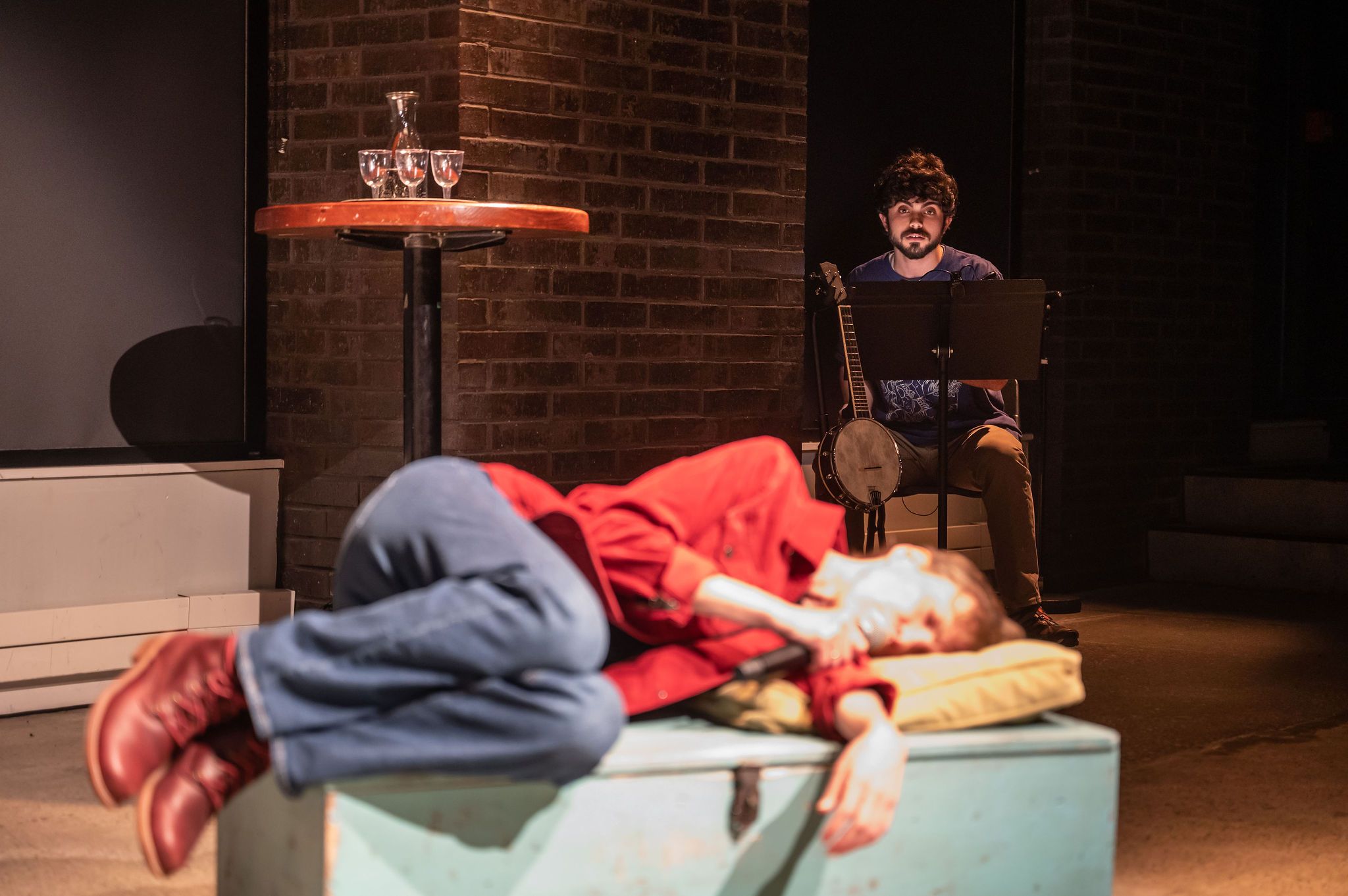
I’ve just come from the matinee of Rajiv Joseph’s play Bengal Tiger at the Baghdad Zoo, presented by Crow’s Theatre in co-production with Modern Times Stage Company.

The title tells you the basic premise, a tiger is caged in a zoo far from its place of origin. It’s also the time of the Iraq war in 2003.

The Guloien Theatre space is configured as a square, a cage in the centre surrounded by rugs as we begin.

In the first minutes of the play we see a person (Kristen Thomson) in a cage, who we discover is portraying a tiger. We see no tiger costume but rather a person in a cage. This is only the first instance of many when we will be drawn in, invited to use our imaginations. While this war story may be based on recent events, while we see personages performing in Arabic languages without titles, creating an aura of realism: yet it’s a wild poetic fantasy including ghosts, guns and gore, even if we’re spared many of the grosser manifestations.

We begin with Kev (Christopher Allen) and Tom (Andrew Chown), two soldiers pacing around the cage with their weapons. When Tom carelessly reaches into the cage to offer some food to the tiger (how they see the woman in the cage) she tears his hand off: or so we’re told. Kev immediately kills her (the tiger): at which point she (the woman) steps between the bars of the cage. We’ve seen this for a long time in films, so it’s not troubling, indeed it makes a great deal of sense that the tiger and the humans can communicate, especially after they’ve died. She is but the first in a series of characters speaking from beyond the grave.

(l-r) Sara Jaffri, Ali Kazmi, Andrew Chown, Kristen Thomson, Christopher Allen and Ahmed Moneka (photo: Dahlia Katz)

Musa (Ahmed Moneka) is a figure we’ve seen in generic terms in the news, the local whose work with the invaders puts him in a dangerously compromised position, let alone coping with his own conscience. First shown working as a translator, we discover other aspects of his life, especially his work as a gardener who created animal-shaped topiaries. The set design by Lorenzo Savoini even includes a series of vaguely lit topiary-figures hanging above us on all sides of the theatre. Sara Jaffri plays two very different characters, the ambiguity of that duality part of what’s haunting Musa. Mahsa Ershadifar who is listed as “Iraqi woman” seems to play more than one person although ambiguities in the play add a fascinating layer to our experience, wondering whether the character is the same one we saw, also whether they’re living or dead.

I saw it described as comedy by Rouvan Silogix (director of the play & artistic director of Modern Times Stage Company) in his program note. It’s darkly comic, full of profanity. Yes there are places where people laugh. Also places where people shudder, gasp, quiver in awe. It grows on you once you figure it out, knowing who’s who and what to expect. I found myself wondering how come Kev’s vocabulary had improved: until I remembered that we had seen him near death. And his after-life version explained to us that he was learning a great deal. Please don’t mistake my discussion of ghosts as something to be confused with Halloween or Ghostbusters, as we’re instead in a very spiritual realm even if the spirits onstage hurl questions at their creator.

The story is a surprisingly positive view from a dark place, moments where the characters struggle is truly life and death, including reflections from beyond the grave. There are some dark characters, for example Ali Kazmi in an overpowering portrayal of Uday Hussein, son of Saddam. To be precise, we never meet Uday as he’s already a ghost when he first comes strutting into the middle of the stage. His accoutrements remind me of the operatic Salome as he walks in carrying the grotesque severed head of his brother. Depending on where you sit and how you feel about this sort of thing, it may give you the giggles or trigger you. Think of this as very dark comedy. If you have any kind of history with wars or bombardments you might not see anything comical at all.

But it’s very well done. I think John Gzowski’s sound design may have contributed to the sense I had that many were cringing: which may be exactly what the director wanted. For something so full of artifice & theatricality it sometimes resembles something we might have seen on CNN during the Iraq War.

But it’s well done. It works.

There are people I know who wouldn’t want to see this because it would trigger their visceral memories of war. If you want something powerful and totally unlike anything you’ll see onstage in Toronto, this is the show for you, on until November 6th.

Posted in Dance, theatre & musicals, Reviews, Spirituality & Religion | Tagged , , , , , , , , , , , , , | 1 Comment

COC Carmen Opens

I saw and heard opening night of the Canadian Opera Company’s Carmen tonight at the Four Seasons Centre, a revival of Joel Ivany’s 2016 production. It’s a wonderful take on a well-known work with a very original approach to the last act.

But don’t expect me to tell you. I aim to be spoiler free. To find out see the show. But it’s not odd or a travesty, distorting the work. Bizet would approve.

American mezzo-soprano J’Nai Bridges brings a sultry sound and a smoldering hot stage presence to everyone’s favorite femme fatale. She is especially good in the last scene with tenor Marcelo Puente, and he saved the best for last. I’ve never seen such a hair-raising interpretation for the last pages of the opera.

Marcelo Puente as Don José and J’Nai Bridges as Carmen (photo: Michael Cooper)

It’s not the same as last time (in 2016).

The night was full of terrific performances. Lucas Meachem, whom you may recall as Marcello from the COC’s 2019 La Boheme, was the best Escamillo I’ve ever seen, singing the role really well while swaggering with all the poise of an Elvis.

Lucas Meachem as Escamillo (photo: Michael Cooper)

Joyce El-Khoury gave us a superbly sung Micaëla.

Joyce El-Khoury as Micaëla and Marcelo Puente as Don José (photo: Michael Cooper)

It’s a cast featuring strong Canadian voices such as Alain Coulombe (Zuniga), Alex Halliday (Morales), Ariane Cossette (Frasquita), Alex Hetherington (Mercedes), Jonah Spungin (Dancaïre), and Jean-Philippe Lazure (Remendado).

Ariane Cossette as Frasquita, Alex Hetherington as Mercédès, Jean-Philippe Lazure as Remendado, J’Nai Bridges as Carmen and Jonah Spungin as Le Dancaïre (photo: Michael Cooper)

As with Flying Dutchman that opened last week, the COC lead with their strengths. Their orchestra led by conductor Jacques Lacombe sound superb, the chorus delightful throughout. Ivany’s stage is full of true to life performances, wonderfully authentic from every person or child onstage.

Carmen continues until November 4th at the Four Seasons Centre.

Posted in Opera, Reviews | Tagged , , , , , , , , , , , | Leave a comment