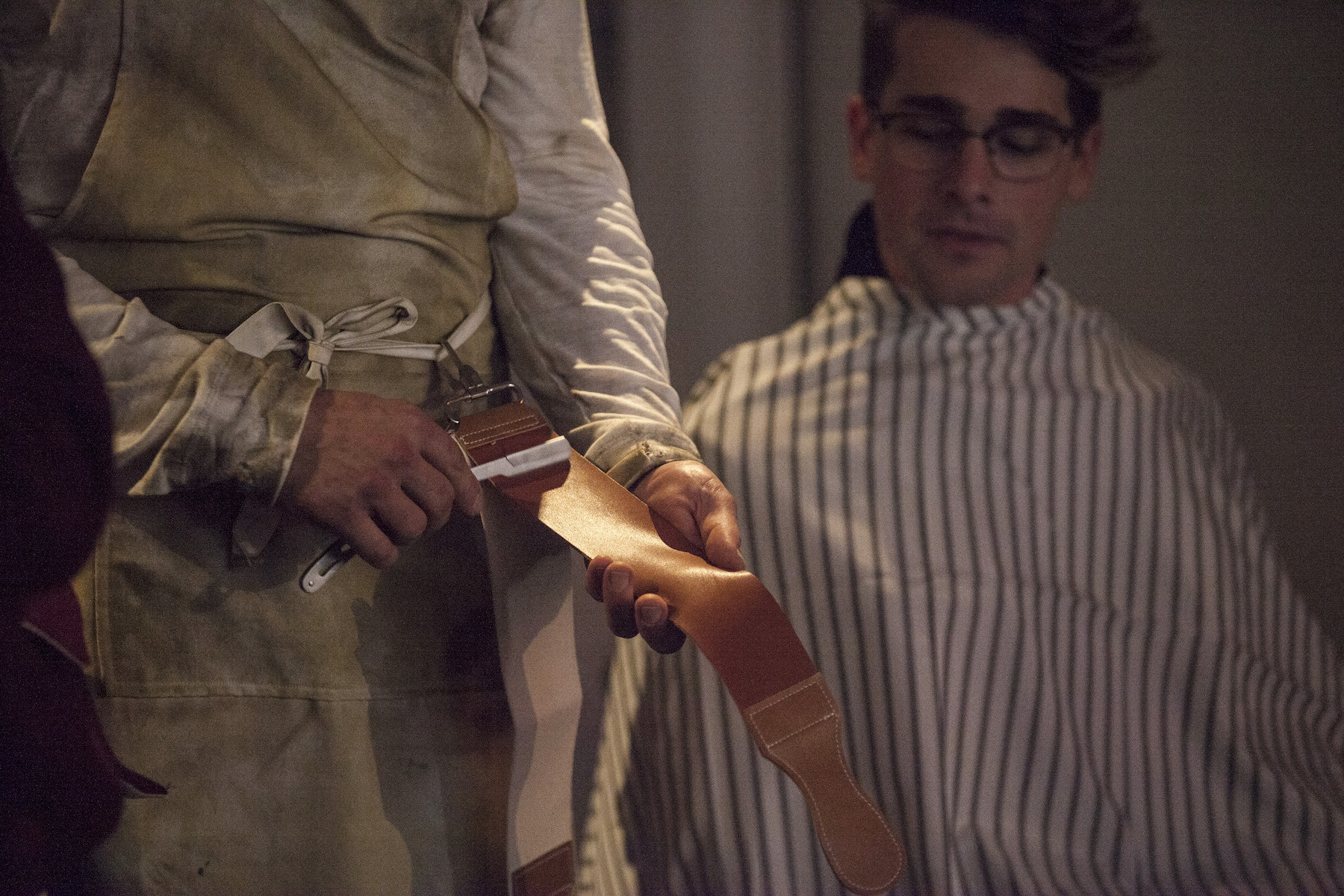
After a three-week pop-up appearance in London, UK, in 2018, TIFT is bringing their steady hands and sharp razors to cheeks and necks in need in Toronto in June.
Located discreetly within the Neighbourhood Food Hub at 1470 Gerrard Street East, clients are sure to receive the closest shave they have ever known, given with more dexterity than any street mountebank.
Services are $70+HST and also include a stylish trimming of the hair, a soothing skin massage, a pomaded head, and a slice of meat pie (while supplies last), all while being serenaded by some of the country’s top theatre talent.
TIFT’s Toronto Tonsorial Pop-Up Parlour will be open to 44 patrons per day and for limited hours between June 6 and July 3, 2022.
For more details and bookings, please go to www.tift.ca and click on Sweeney Todd: The Demon Barber of Fleet Street.
“Press releases and announcements” are presented verbatim without comment
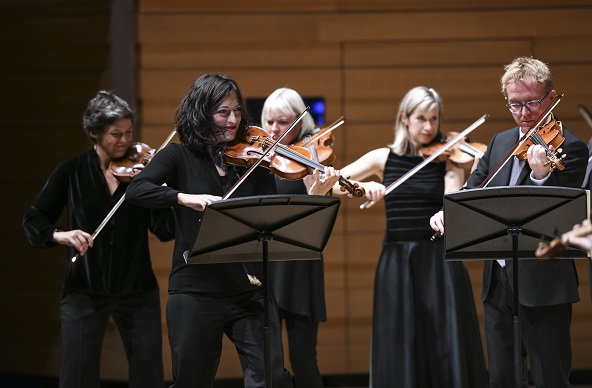
I’m heart-broken with the news in my inbox, that Elisa Citterio is leaving Tafelmusik. I can’t help but wonder about the subtexts for this change. Perhaps it’s just the pandemic and its deadly weight.
Citterio seemed to be boldly taking Tafelmusik in a new direction, of which I heartily approved.
In September 2019 we heard a program including Mendelssohn and Tchaikovsky.
In October I reviewed the new Vivaldi con Amore CD, a recording that was my constant companion in the first year of the pandemic, including the half-year I was still working at the U of T: playing Vivaldi to cheer me up. It is still one of my 3 favorite CDs that I own.
In 2018 we heard a programme featuring Citterio’s astonishing brilliant reading of Beethoven’s violin concerto and the Pastorale symphony. I went to hear them twice. Amazing.
Let me repeat, that I have no idea what’s behind Citterio’s departure. It could be something personal, such as a health—related choice. Or the cumulative darkness of the pandemic.
I hope she’s okay. I adored her work, but perhaps more importantly I adored the way the orchestra played for her, with her.
And there’s the small matter of my health. First it was Erika then it was my turn to test positive for COVID. We had tickets to see the Cyrano production at Shaw Festival, on the day of our anniversary. It’s not all bad of course. Shaw staff were delightful on the phone, giving us our money back.
I guess we weren’t the first people to call up reporting that we were too sick to come. Instead we’ll cocoon at home.
And the Canadian Opera Company has announced its new season. We’re going back to seven operas, after a few years of six. Although wait, we only programed three, and actually managed just two this year, with none the year before. So, there is no “normal” anymore.
Pomegranate, a co-production with Vancouver Opera, by composer Kye Marshall and librettist Amanda Hale, is a new work coming in June 2023, described as follows on the COC website:
A fateful trip to Pompeii’s ruins ignites the fantasies of smitten teenagers Suzie and Cass. The pair is transported from 1977 to 79 AD, where sexual freedom can be found in the looming shadow of Mount Vesuvius—but not for long. The timeline shifts to 1981 and the Fly by Night, a Toronto lesbian bar, in the aftermath of the infamous Bathhouse Raids.
As the couple struggles to repair their love in the face of homophobia and an impossible ultimatum, fragments of memory endure, revealing a transcendent love for the ages.
There is also a new production of Verdi’s Macbeth directed by David McVicar featuring Quinn Kelsey in his role debut, opposite Sondra Radvanovsky, conducted by Speranza Scapucci.
The other five productions have been seen before. Next year it’s Egoyan’s Salome, Guth’s Marriage of Figaro, Christopher Alden’s Flying Dutchman, Bizet’s Carmen directed by Joel Ivany, and Puccini’s Tosca directed by Paul Curran. While the three I named by their director rather than the composer are not my favorites, they’re all great works, worth watching.
I recall seeing some negative words last year when they announced the three operas for this season, and I opined that perhaps we should try to imagine programming during the COVID pandemic. Butterfly never got out of her cocoon, squelched by Omicron. Traviata and Flute are taking the stage this month. Whatever my misgivings over Egoyan, Guth and Alden, I welcome live performance.
But speaking of negative: first I need to see an antigen test come up “negative” to allow me to resume theatre & concert going.
Kyle McDonald and Mightier Productions premiere a new opera on May 5th, titled Conan and the Stone of Kelior.
I asked Kyle a few questions.
Kyle McDonald, creator of Conan and the Stone of Kelior
BB: When I look at your website, I see a commercial venture: (hopefully you recognize these words)
MIGHTIER PRODUCTIONS IS A PRODUCTION COMPANY WHOSE MANDATE IS TO PRODUCE ENTERTAINING AND INTERESTING FILM, TELEVISION, THEATRE, AND LITERATURE BY MERGING TRADITION WITH INNOVATION FOR AN AUDIENCE WHO CRAVES TO BE SWEPT UP AND TRANSPORTED AWAY. FOLLOW AND SUBSCRIBE!
In other words, your website for Mightier Productions isn’t following the usual template for an opera company. Opera is usually understood by its expense, the most costly art form to produce.Could you talk about how you see yourselves?
Kyle: That is a good observation, and the simple answer is: I’m not an opera company! I’m an individual creative who uses this production company to build brand familiarity for the various projects I want to undertake. In the past I’ve done spoken theatre, film and tv, and I’m even going to be putting out a fully scored and foleyed audiobook of a new novel length epic poem in the latter part of 2022. The majority of the work I’m doing is my own, but I’m open – once I’ve grown a little more ¬– to producing projects that aren’t my own.
The desire is to reach a point where, when a presenter (season planner at a venue), producer, or impresario (operatic producer), hears that something is backed by Mightier, then the doors swing open. This isn’t just for me, because it also means I can make paying work for artists, and give audiences something to look forward to and talk about.
BB: You’ve made films. Your IMDB entry includes 28 credits as an actor and 5 as producer. You act, you sing. Why Opera?
Kyle: Opera…captured me. I grew up listening to grunge, hard rock, and heavy metal. I played in band at school (2nd and 3rd trumpet, whose dynamics ranged between super loud, and ultra loud), and one year the band played Verdi’s Requiem, and I had never heard anything like it.
Verdi’s heavy metal
From there, I followed the rabbit hole – Beethoven, to Mozart, to Wagner…and then there was no coming back. I always tell “laypeople” that opera is the most (heavy) metal thing out there.
I didn’t ever think I’d be able to sing it. I think I still don’t believe I’ll ever sing it, despite how often I’m doing it these days. It’s a bizarre thing – I hear myself in recordings, and I don’t believe it’s me.
I was very fortunate in my late 20’s: by the design of a theatre practitioner named Tedde Moore, I was put into the hands of the late, great Donna Sherman who set me up for lessons with Helga Tucker. I then spent a few years learning this exceptionally difficult craft. I walked away from it for another few years as acting on camera and in voice-over beckoned, and it wasn’t until my friend Vincent Thomas put me in a show with Ottawa’s Pellegrini opera, that I started performing.
My first full opera was La Boheme. I did not do a great job. But I got stronger, and better as time went on (as one does). As I was performing these pieces in Italian, German, and French, I wondered…why not English?
Guillermo Silva-Marin, General Director of SOLT
It turns out Guillermo Silva-Marin of SOLT, TOT, and OIC had asked this question (and answered it) long ago, and he put me in a German opera called Martha, but did it in English. My family came to see it and loved it. I’d been doing Shakespeare for years, and had never seen that kind of reaction. This roared to me: do it in the language people speak. So, I’ve been doing that ever since.
BB: When I look at the ads for Conan, I wonder: is this the usual audience or a different one? OR is the usual audience waiting for this, the audience for rom-coms, sci-fi , fantasy and video games who are now waiting for opera that addresses their taste preferences?
Kyle: This is part of the experiment. I wager that if you were to look at the demographic data on who does what, the pop-culture consumer circle would barely, if at all, overlap with the opera goer circle.
However, I consume high concept pop culture (I love video games, which now also boast some of the best compositional work around), and I was utterly changed by opera. I’m not a flowery or sentimental person, and my tastes are pretty heavily masculinized, so, if I can get hooked, I think almost anyone can. And I’m especially interested in getting boys and men interested in “fine art.” Beautiful things really do make life, and ourselves, much better.
I don’t think music is the issue with opera – it’s something my colleague Corey Arnold and I have said many times, and will continue to say – the trouble is the trappings. Unfamiliar languages; stiff acting; excessive runtimes; archaic practices. Generally, rigidity is death.
So far, our theory has been born out by experience – those who see our work (or any operatic work) wherein the rigidity is removed and the story telling is prioritized respond quite positively.
On top of that, there isn’t a person I’ve spoken to about Conan and the Stone of Kelior who hasn’t said “an opera with Conan the Barbarian running around? I’d see that.”
Now it’s time to put it to the test.
BB:Is Mightier Productions seeking new works / new composers/ commissions? Please paint a picture for me of what creations you will put before the public 5 or 10 years from now.
Kyle: At present, I am but one humble artist, but, if things go well I could see Mightier being involved in developing new writers and composers for the stage, in producing TV and Film, and in possibly even in literary publishing.
I also imagine that my tastes and interests will keep evolving. I’m working on building a catalogue of operas right now because that’s where my interests are. But, I do predict that that interest will wane, and I’ll move on to something else, ideally being subsidized by the proceeds from my catalogue.
I can even envision the company spearheading online campaigns to educate the public on the fundamentals of the Canadian Parliamentary system or the foundations of personality science and reasoning.
BB:Let’s talk about the way you create your pasticcios. Composer and/ arranger to do a project?
Kyle: My first was about James Bond, which I put together in 2015. I spent much of that year and the next just listening to as many operatic works as I could.
My process is this:
Allow the idea of what subject matter I want to pursue to come to me. Thankfully, my idea “faucet” is almost always on and I don’t get blockages. Ideas intrude at will into my thoughts, so I just follow them.
Once the subject matter is selected, I then devise the plot. What happens? What are the challenges? What’s the most important scene? I usually work backwards from the most important scene – making sure everything before serves that scene.
If the piece is an existing property – the way it is with Bond and Conan – I think of what the existing media have had to say about it and use that as a launch point. In both cases, though, I have made some adjustments: I’ve made them both less serious. Especially Bond. My heart lies in drama, however, I’ve seen so much doom, gloom, and gritty realism of late, I just think people who dare to leave the house and spend money should leave feeling moved and invigorated, but not depleted.
When it comes to the pasticci, for scenes and pieces that are less familiar (I can’t build an entire show out of arias and duets), I put on an opera while I write, work on design, or game, etc and, if I stop what I’m doing to listen, I put that piece on the list.
Of course, there are the numbers that everybody knows, and those are at the top of the list – I’ll go out of my way to make scenes appropriate for them.
While this is going on, I’ll write the outline of the plot, and a rough outline of the book, and then put words and music together. I actually do this using screengrabs and typing it all out in Microsoft paint! I use the piano score, but I also collate the orchestration and then send both to my engraver, who puts it all into Finale. From there, I can do whatever arranging or re-arranging I want. That’s one of my favourite parts, since everything becomes negotiable.
BB: What recognizable numbers might we encounter in Conan?
Kyle: Right off the top, we have the Black Swan theme from Tchaikovsky’s Swan Lake – to which I’ve added a vocal line.
We have the Confutatis from Mozart’s Requiem
I’ve adapted Rachmaninoff’s Prelude in C# Minor into the aria of the show, called “I, Conan!”
I’ve included the Anvil Chorus and Azucena’s aria (Stride la vampa) from Verdi’s Il Trovatore
Cortigiani, vil razza dannata from Verdi’s Rigoletto in the mouth of a boy king pant role who’s just been spanked, as well as selections from ACT IV in Sparafucile’s house.
The Habanera and the Sequidilla from Bizet’s Carmen:
As much of Puccini’s Turandot as humanly possible, including Nessun Dorma sung to a magic stone.
The People that Walked in Darkness from Handel’s Messiah makes an appearance in the cruel and plotting mouth of a wizard
Fafner’s music from Wagner’s Seigfried also makes an appearance in a place called The Halls of Madness…
The Pearl Fisher’s duet by Bizet
There are also selections from Mussorgsky, Rimsky-Korsakov, and more!
BB: Do you expect to build a following, subscribers? Have you already got a subscription audience?
Kyle: It’s my hope to build a following. My subscription audience is very modest, but the plan is to extend. This is the first personal project where I’ll have just enough of a budget to reach people beyond my immediate and secondary circles. That’s the hard thing: how do you get people who don’t know you to take a chance on you? Ultimately, I’m hoping that I can stir up enough attention to get the big boys to come out and play. I’m happy to partner and learn.
BB: Are you in some sense “alternative “: which begs the question , alternative to what? are you more mainstream, commercial than those writing operas nowadays? Puccini and Verdi are mainstream, commercial. Do you aim to create that kind of sound, a variety of operatic art that is melodic and singable?
Kyle: In the pop-world, I’m high concept with alternative leanings, though, only marginally alternative. In the fine art world, yes, I think I’d be considered alternative, even though I’m trying to marry popular culture and fine art.
As for those writing operas today, I’m hesitant to speak extensively on it because I haven’t heard everything, and I’m not interested in criticizing anyone’s output, but from what I have heard, yes, you could say I’m much more mainstream/commercial, although those are naughty words in fine arts circles (which gives you an inkling of why audiences are shrinking…)
I prefer to say I’m more humane. It seems strange to say, but in the last ten years I’ve become quite convinced by the data that human nature isn’t nearly as malleable as we’d all like to think, so, I’m no longer wasting my energy on trying to re-invent the wheel.
If I can get something as memorable, human, and delightful as what Puccini and Verdi did, I’ll consider that mission accomplished indeed!
BB:Do your operas require less rehearsal (offering the extra advantage of economy)?
Kyle: Noooot just yet. They’re all new! However, I think that the time that it takes to learn a role is much shorter than traditional roles. I’ve even noticed this in my own practice – when the role is in English or French (the languages I can speak), my learning time is cut almost in half. I believe this isn’t merely because of familiarity, but also because one can imbue the text with intention at the same time: memory is powered by meaning. If you need to memorize something, find a way to make it emotional, and it will go much, much faster.
BB: Are your pasticcio operas possibly easier for singers, who work with known arias?
Kyle: I wonder about this – I wager in some ways they are, because they already know it – but in other ways not, because they have to undo the learned behaviour that has attached itself to the previous version.
I’ll add this though: just about every note and key in my pasticci are negotiable. I want the roles tailored to the singers, not the singers to the roles.
BB:Can you dodge the pitfalls (composers showing off, dissonant & overly complex) with pasticcio?
Kyle: I think I can. While a composer has only his or her own mind to draw from for an opera, I have hundreds of operas, with dozens of scenes. I can also make any alterations I want – from orchestration, to vocal lines. I’ve done a considerable amount of this to sections of Conan already.
BB:What about (history) pieces like The Beggar’s Opera & ballad opera : could that work?
I’m sure they could – I could easily pull from those and slot some it into a pasticcio. Outside of long passages of Baroque music, the music is seldom the problem for contemporary audiences.
BB: In the exchange a few weeks ago concerning Richard was the conversation helpful?
I think so. We were very targeted with The Lion Heart. We weren’t trying to invite the larger public, because we needed to know if it was ready for that. Plus, the larger public won’t respond to an in-concert performance the way they would to a fully staged. Fully staged is now on the table, so we’re grateful for that!
That being said, we’ll always accept a helping hand. We’re just two fellas trying to make it happen!
BB: Verdi and Wagner each wrote a few operas before they really hit their stride, before they became truly proficient. As far as learning how to make opera, how many operas does it take to learn the medium? How many operas have you created so far (whether as a collaborator as with Richard, or in the pasticcio genre)…?
Kyle: I would love to be grouped into the same category as these giants – though, truly, it’s Corey Arnold who should be in that list. I couldn’t be more impressed or happier with what he did with The Lion Heart. It’s exactly the opera it should be, and, I’m confident, once more people hear it, they’ll agree. I think he hit a home run on the first at bat.
We’ve composed a pocket opera since then, and, once again, he’s note and phrase perfect. Our next endeavour is a lascivious tale of horror and cruelty, and I’m just as confident he’s going to absolutely crush it.
I think it’s just a matter of getting the big boys to put us up so regular people can get word. It’s all in the marketing, alas.
As for the pasticci, I have the tremendous advantage of having music that’s been tested and enjoyed for centuries, so that’s no worry. And, for the writing, I’m merging playwriting with screenwriting, and I’m reasonably confident in my structural sensibilities, so these are pretty much good to go by the time they’re done.
The learning I want to do now is going deeper into personality profiles and subject matters that aren’t as familiar to me.
BB:Talk about your singers and your team for Conan.
Kyle: In my supporting leads I have two of the best up and coming singers in the city, possibly the country: Lynn Isnar and Corey Arnold. They’re just pure magic – and their English diction is exemplary!
Bass Robert De Vrij
I’ve also managed to snare a real veteran – bass, Robert De Vrij! I still can’t believe he said yes, but he’s a huge fan of Conan, and he loves the project.
I also have a gaggle of very promising young singers and performers, and I’m very much looking forward to watching them command the space.
Additionally, the set is a combination of set pieces and projected backgrounds illustrated by the immensely talented Mark Rehkopf – such that every scene is literally a work of art.
Kristi Ann Holt – who worked on the new Fraggle Rock – has also put together our shadow serpent.
Designer veteran Jim Smagata is coming aboard to do our lighting design.
And Geoffrey Davis, who seems to have worked on every wardrobe department in the province, is handling the costumes and has been losing sleep from all his exciting ideas.
Maestra Diana DiMauro, stage manager Sarah Brawn, and my apprentice director, Jordan M. Burns, have been marvelous in supporting me through everything as well, and this is their first time working on such a production in their respective capacities.
BB:What is your operatic ideal, and are you expecting to reach that ideal some day..?
Kyle: It’s curious, but there’s at least one more pasticcio I want to make, and it’s a story I’ve probably wanted to tell for the longest time, going all the way back to my teenage years. I don’t want to say anything about it yet…but if it goes the way I envision it…I’ll probably retire from making pasticci after that.
There’s also a legend cycle that I want to write with Corey Arnold, of which I will also say very little…a lifetime of work there.
BB:What can opera learn from film?
Kyle: Charisma, Speed, Fun, Marketing.
Charisma: allowing singers more freedom to be themselves, rather than the expected constraints attached to their fach (voice type). The score is the score, and there’s only so much room for deviation, but it seems to me that so much time is spent in the shadows of other performers that we’re missing new lights. Risks must be taken, people must be free.
Every operatic great has been criticized by some coach (or several) somewhere, but what they’re criticized for is often what makes them a titan.
Also, more shaping the part to the singer will go a long way.
Speed: Cut, cut, cut. And cut those repeats.
Fun: Doing 1 and 2 will usually take care of this, but it’s imperative to remember: opera is not an educational outing, it’s visceral experience. If you demand that your audience reason their way through a show, you’re in the wrong business. I also recommend injecting humour wherever you can.
Marketing: pictures of singers (who aren’t international stars) will pique the interest of hard core aficionados, and possibly a portion of arts-interested females, but, if you want to get new and diverse audiences to come, you have to use your promotional materials to tell a story.
A) Tosca: see Puccini’s classic starring so and so, with so and so conducting, and with the so and so orchestra! Pictures of Tosca, Scarpia, and Cavaradossi in concert attire = great for industry and aficionados.
=OR=
B) Tosca! the tawdry tale of a beautiful singer who’s coveted by Scarpia, the boot, the most powerful man in the country who dares to overturn church and state to have her! If she refuses his advances, her lover, the brilliant painter, Cavaradossi, will suffer the price! Murder, passion, blasphemy, and betrayal stud this luxuriant opera filled with some of the world’s most powerful music! A flowing red dress, a bloody knife clattering on the table, a revolution, and a portrait on fire = regular person
We need more B)
I also recommend trailers – though I understand how hard this is with union red tape and limited rehearsal times. Yet, the COC can afford this. And even when trailers are used, the world of theatre and live performance generally holds everything too close to the chest – show your best scenes! Don’t give away the ending (unless you can without it being obvious), but, don’t hold back. Have you ever said this about a movie trailer? “Now I know the whole movie!” But I bet that movie made hundreds of millions of dollars.
Of course, there are pitfalls to movies and television now – poor writing, rushed plots, a fear of lingering on a single shot lest fragile attention spans are extended beyond their meagre means. The truth is, when something is captivating, you can linger on it as long as you want. Make it captivating. Making it captivating means being judicious with sentimental or indulgent moments. I find every moment in opera is treated as though it’s sacred – honestly, most of it throw away material to get us to those scenes where we do want to linger.
BB:Do you have any teachers or mentors who shaped your values?
Kyle: Yes, now that I look back I can see hands at work that were invisible to me then. To be honest, I was probably a difficult prospect for mentorship, so I’m sure I scared a few away. However, Ron Cameron was one of my earliest in theatre school, and then I mentored directly under legendary Canadian producer Dale Barnes, and I’m in the market for some new ones to help me clamber up to the next level.
In a sense, my mentors didn’t shape my values – they (rightly) ascertained that I’m too stubborn for that kind of direct influence – but they did prevail on me through the effects they wrought: I was able to see in real time that their input courted success. Corey Arnold and I were working on getting ourselves under Joel Ivany’s wing, but his recent move has made that difficult.
I have many informal mentors – Daniel Kahneman, Nassim Taleb, and Sean Carroll don’t know it, but I’m dying to take them to lunch.
And David Mirvish or Perryn Leech: I’m available to soak up some wisdom!
In the meantime, I’ve been trying to do some mentoring of my own: I’m certainly not at the top, but it’s not too early for me to give back where I can.
*******
Mightier Productions present Kyle McDonald’s Conan and the Stone of Kelior at Alumnae Theatre May 5-15.
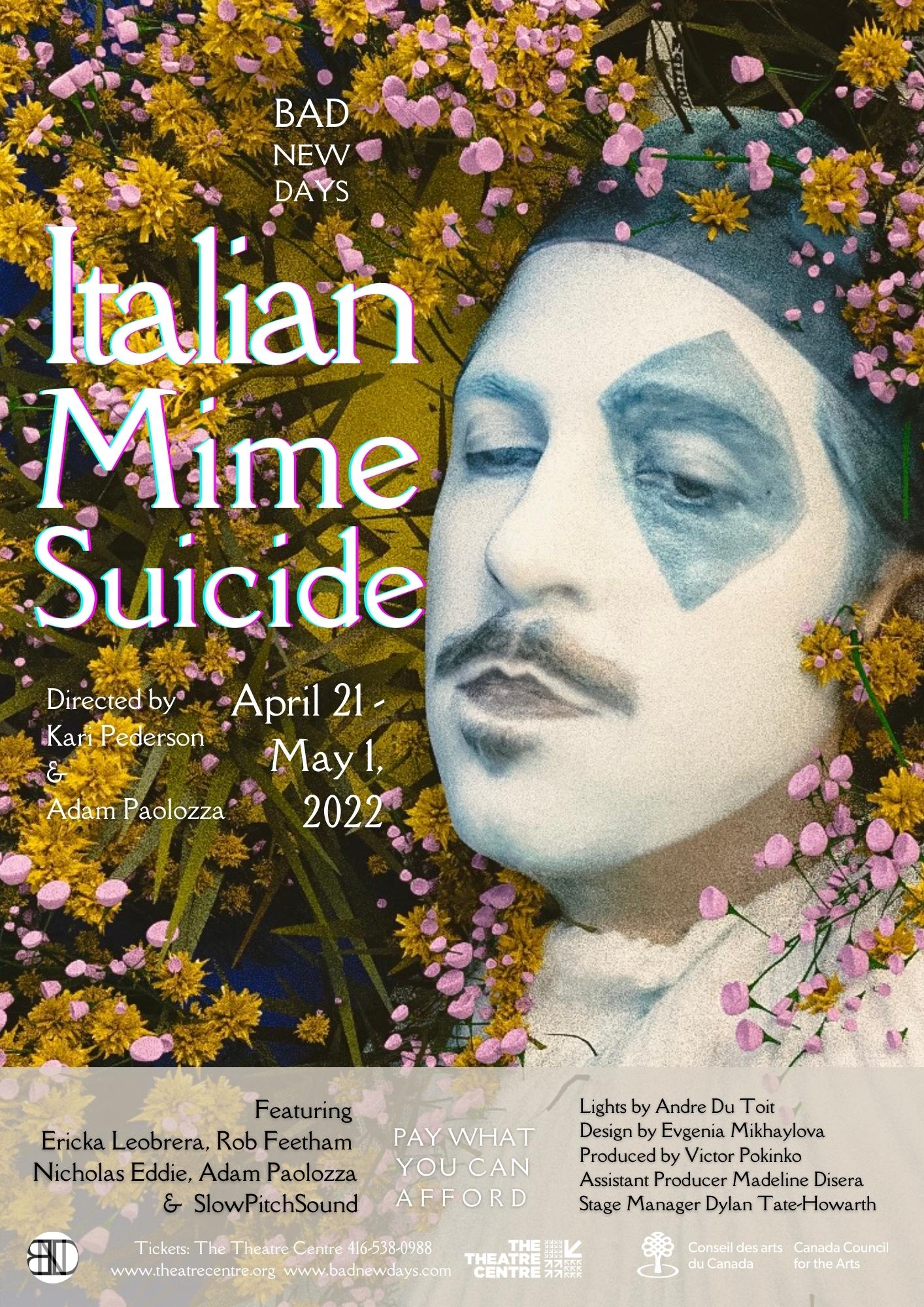
I was at the preview of Italian Mime Suicide from Bad New Days, co-directed by Kari Pederson and Adam Paolozza. It’s short but intense, part lecture, part performance, sometimes serious sometimes funny.
No question about it, I’m out of practice, not accustomed to live theatre.
There were at least two scary moments that jarred me to the core, and had me wondering how they could pull it off safely. Remember that moment in My Favorite Year when the lighting fixture falls and almost hits the actor? There’s something like that: except this is live theatre, not a movie.
There are moments of genuine magic.
I’m intrigued by magic for several reasons. I watched a documentary about film-maker and magician Georges Meliès yesterday. In conversation with my brother on the weekend I quoted the composer of Postcard from Morocco Domenick Argento, who called live singing a magic trick; need I add that it isn’t magic when it’s not live.
I wondered even though I was in the front row, how did Adam disappear like that? How did they make that music?
I was especially fascinated by the musical performance we encountered as part of the show.
Arif Mirabdolbaghi is listed as the composer, a name you may recall from The Double.
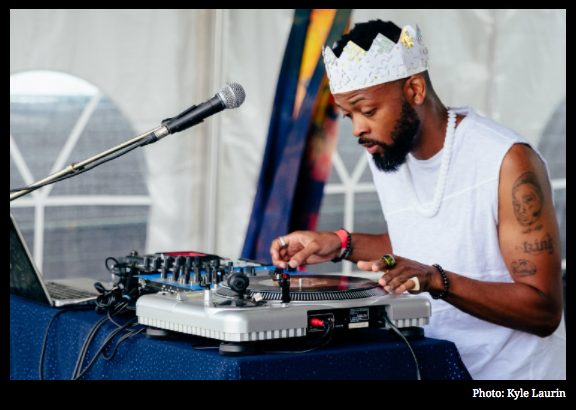
We watched SlowPitchSound aka Cheldon Paterson, first in a brief introduction to the theatre piece, exploring the melancholy sounds of the pre-show tracks as if from first principles.
I realized I’d seen him before, at the Electric Messiah in 2015. Then as now I was aware of his work as part of a collective, wishing I could zero in on his contribution, one of the best things about the evening.
As the show began Cheldon looked up, interrupting his music to say “how y’all doin’?” As I was the closest person to him in the front row, I put a bit of a damper on things, smiling at him –under my mask—while making the hand-gesture to say “comme ci -comme ça” or perhaps “mezza mezza”. What can I say? I was sitting there captivated by the melancholy of the music, not ready for the usual laughter I wish I could offer, possibly because we’re still getting over Sam’s passing (her ashes came home yesterday in a beautiful box).
Cheldon looked at our collective Toronto response, and challenged us, saying something along the lines of “I can’t hear you”, a taunt that drew lots of whoops and screams from the crowd behind me.
I was in the front row hoping to be cheered up but just as ready for melancholia. There we were in the CAMH neighbourhood (has the building been renovated? It looks bigger & newer), while the rest of Queen W seemed kind of subdued: like the rest of us.
Forgive me for suggesting that we Toronto audiences are out of practice.
Maybe it’s just me.
As we went on, there were lots of laughs, hilarity from everyone behind me. And I did laugh a few times.
I even did some schtick with Adam near the beginning when he did a kind of monkey see monkey do thing, tilting my head slightly and having him mimic / mock me… It got a bit of a laugh, and was fun.
Mimesis is the core of this show, as he reminded us a few times. While being a mime might be career suicide –a line of his that made ME guffaw even if no one else in this mime-friendly crowd offered a laugh– mimesis is fundamental to the arts.
Adam believes it and so do I.
How fundamental? As we were leaving, there was another magical moment. A lovely happy gaggle of young audience members (okay okay, everyone in the audience was younger than me…) were giggling, expressing their delight….
I followed thinking it might be members of the cast coming out of the dressing room.
Nope. It was a raccoon glimpsed through a window. Everyone was thrilled to see a raccoon.
I was just following, walking along behind the crowd, intrigued, imitating their energy in observing.
Imitating? You might call it “mimesis”, and you’d be right.
The cast — Ericka Leobrera, Rob Feetham, Nicholas Eddie and Adam Paolozza—are sometimes athletic, sometimes vocal, sometimes sculptural, always beautiful to behold.
While it’s not for me to say, I feel that there’s much more to be mined in this collection of talented people. We’re peering through the eyes of colleagues, sympathetic to the depressed mime among them. What would that be like, I wonder.
They remind me of something we’ve seen in old movies. Was it Wenders’ Wings of Desire or a Fellini film? It’s wonderfully vague yet still close to home, even universal. There’s a circus-like vibe, a familiar world-weary energy that we know.
It’s real and not a copy of anything, very authentic and worth exploring further. How does each one feel about this mime and about mime generally: which we do touch upon..? My melancholy sometimes matches the cast, sometimes only Adam’s sad figure.
For me the musical contribution from Arif and Cheldon is a huge part of the show, brilliant responses in sound as though scoring a (mostly) silent film. Need I add, these creations add a layer of majesty to the magic. The piece is not long but it’s very intense, the music sometimes haunting, sometimes understated.
Italian Mime Suicide opens this weekend, running from April 23 to May 1. Shows are Tuesday – Sat 8pm, Sat-Sun at 3 pm at The Theatre Centre (Franco Boni Theatre) 1115 Queen St W. Tickets are all ”Pay What You Can Afford” www.theatrecentre.org.
Adam Paolozza and theatre ensemble Bad New Days are coming back to Toronto with the provocative genre-bending piece ITALIAN MIME SUICIDE at The Theatre Centre (Franco Boni Theatre) beginning April 21 to May 1 (opening night April 23).
Inspired by a 2003 newspaper headline, “Italian mime jumps off building claiming no one appreciates his art,” a short version of ITALIAN MIME SUICIDE was initially performed as part of a double-bill in 2016. This new, full-length production is an exciting work of (mostly) silent theatre that sensitively explores levity within tragedy. With an aesthetic reminiscent of the kitsch iconography of clowns, mimes and world-weary circus acrobats, ITALIAN MIME SUICIDE is a funny, poetic meditation on melancholy, the acceptance of failure and the usefulness of art in troubled times.
To find out more I asked Adam some questions.
poster image by Omar David Rivero
As we return from the land of Zoom rather than actual theatres, what has your life been like through the past 2 years?
I’ve kept as busy as I could. I was lucky enough to teach some theatre courses at Brock University during the first half of the pandemic. I travelled to Estonia in September 2021 to perform in a puppet show with Viktor Lukawski’s Zou Theatre. This past November we toured Italian Mime Suicide to Montreal at Théâtre Aux Écuries, just before omicron hit.
But, other than that it’s been an existential pause.
When the general anxiety about the world quieted down enough I was able to find some focus and grounding. I’ve reflected on what’s most important to me in the work going forward. And now, being able to finally share work again, I’ve got a new focus and a new energy. I’m also incredibly rusty and nervous, as if things were brand new again. So, as with everything in the pandemic, it’s a see-saw of emotions!
I read that the title for Italian Mime Suicide was inspired by a headline that said “Italian mime jumps off building claiming no one appreciates his art””. Could you speak to the way that story seems to capture the present culture of disruption?
There is a line in the show that says that the arts are “Perennially in decline, but it’s a long, slow merry death”. In a way, the show is an homage to the arts and to artists who continue to create, in spite of difficult circumstances. The show asks why we continue to make art; Why now? Does it matter? Since the pandemic started, this theme seems even more pertinent now than it did in 2016 when we first presented Italian Mime Suicide. We try to affirm that there is dignity in small, creative gestures, that these creative acts are significant and do have meaning. This is a nice thing to remember as the theatre in Toronto tries to start up again.
More than just about the arts and artists, the show is also about empathy and community. It empathizes with feelings of loneliness and isolation, feelings that so many are struggling with these days after two years of COVID. It shows how community can act as a balm to these feelings, holding space for us to laugh and cry. And our friends, though they can’t solve our problems, can support us to feel more fully, standing by us and bearing witness to our struggles. Their support can lighten the load, and as the mime says at the end of the show: “Sometimes even the heaviest things require lightness.”
The title suggests that this piece engages with death….. The pandemic forced many of us to confront mortality and death. Did you have any near-brushes with COVID and death?
Many of my close friends have caught it, some are struggling with long COVID, so that’s been stressful, but I’ve been extremely lucky that no one too close to me has passed away due to COVID.
A modern audience may assume that a mime is always a comic figure. Do we really understand mimes and what do we need to know?
Let me start off by saying that I love the art of mime, but I’m also aware that there is a certain “cringe” factor when we think of mimes. At least when we think of the cliché white faced mime, like sad Pierrot or Marcel Marceau. There’s something almost too precious about mime, it gets dismissed as a “minor” form, something for children or for corporate Christmas parties. We don’t take it as seriously as other forms.
But I think mimesis as an anthropological phenomenon is much deeper and more beautiful than that. Mimesis is the foundation of all representational arts. Even from the time when we’re babies it’s a fundamental way that we learn: we mime the world around us, bringing it inside our bodies to know it better. In this way, mimesis is deeply human and profoundly empathetic.
So, there’s this tension in mime between the kitsch and the beautiful and the show consciously engages with this theme. The emotional journey of the show evokes this back and forth between the tragic and the comic modes of experiencing life, exploring the journey between lightness and heaviness.
Usually in modern theatre a) one begins with a script with characters (Romeo, Juliet, parents etc): then seek people who can play the parts. b) In the old Commedia dell‘Arte it was the reverse, where you start with your company of players, and built the scenario from an inventory of people, skills, lazzi, songs, body-shapes, voices. So…. in 2022 as you do your show: are you closer to A or B?
My practice is very inspired by commedia dell’arte, especially in the way that I organize Bad New Days and the creative process. So, in that sense, yes, a little closer to column B. I tend to start with a theme and fellow artists that I want to work with. Then we get into the room together and start playing, improvising and devising the piece. I try to create space for the artists I work with to bring a little of themselves into the roles they create. Italian Mime Suicide was originally created like this. This time it’s a little different, as this production is a remount. We have some of the original creative team returning, artists who I know really well, as well as some exciting new performers and designers. But even in this case, we try to look for ways that the new performers can adapt things to their bodies and their sense of humour. The show continues to evolve and we make room for this in the process.
Are their any classic lazzi (stock comedic routines associated with Commedia dell’arte) in the show?
The style of the show is more inspired by mime and clown than commedia dell’arte. But there is some classic physical comedy. Pratfalls are important in the show, for example, evoking the theme of “falling” and the loss of dignity that entails. But no “classic” commedia lazzi from the existing canon.
We do, however, use the concept of lazzi in a more structural sense. In commedia the ‘lazzo’ temporarily interrupts the dramatic action to produce a comedic effect. We use similar dramaturgical strategies of interruption, exploring the contrast of quick rhythmic and tonal shifts.
This is a bigger version of a show you did before in a double bill. Is any of this larger version also a continuation of subjects / themes you have contemplated in earlier works? I saw mention of the word “melancholy “ in a press release. Your Scott Walker show was titled “Melancholiac”. Please give me an idea of how melancholy fits into your aesthetic, your understanding of life & art.
As an aquarius, I’ve always been prone to philosophical introspection but it was Albrecht Durer’s engraving Melancholia that first introduced the word to me when I was young. And then in my twenties I read a book by Susan Sontag called Under The Sign Of Saturn that introduced me to many artists, like Walter Benjamin and Antonin Artaud, who engage with melancholy in a more philosophical or poetic way.
But I’ve always been into darker things – the gothic, the uncanny, the grotesque. I think melancholy falls into that area of my taste. And I have explored it before in works like Melancholiac, that you mentioned, and also in another piece called Empire of Night. But I like to balance it with humour. The best comedy rests on a deep well of sadness. I think that kind of contrast heightens the effect of each. This show really plays on that contrast.
Adam singing Melancholiac, December 2019
Does your show involve any audience participation, at least as far as our applause or laughter possibly changing the shape of the show on different nights? If we are silent in awe could that be the right response, or do you prefer something more unruly in our audience behaviour?
There is some room to react to the audience’s changing energy but we don’t change things based on their reaction. I personally prefer a more boisterous audience, and this show is a comedy so I hope people laugh! But there are also quieter, more contemplative moments when silence might feel right. All responses are welcome and I leave it up to the audience to decide how they want to react.
I find your shows always seems to begin from first principles. I wonder: is the dynamic different, when the audience rather than the commedia clowns are the ones in masks?
Hahaha, good question! When we did the show in Montreal last Fall the audience was masked and it didn’t really affect things, other than us not being able to see their lovely faces. If anything, we felt the audience trying harder to connect to us.
Do you do anything with masks in the show, and if so, has your understanding of theatrical masks changed (given the pandemic, and the possible resonance to past periods of masking & epidemic)?
This show doesn’t have any theatrical masks in it. But we’ve been rehearsing in COVID masks to be as safe as possible. That makes a big difference, and when we take the masks off for a run through you really notice how much you’ve missed the expressivity of the whole face.
I haven’t been able to teach with theatre masks, either, as it isn’t sanitary. That’s been a shame for the students as they’re missing out on that training. And the COVID mask, though necessary, is not expressive. So, if anything I’m just reminded how much I miss the human face.
Yes I miss live theatre. But I feel I’m out of practice. It could be me? But when I go to a show or a concert I’m unsure, not confident that I am reacting right. Is there even a social consensus when we’re all alienated from gatherings and community, living in our little boxes under masks? the wrong ways, or things don’t work the way they used to work. It could be me, but I have this sense that everyone is alien, distant, a bit out of practice. Does it change things for artists if we—the audience– are rusty, and haven’t yet found our groove?
That’s an interesting question. I think a lot of social activities feel strange and alienating these days. When we were in Montreal this past Fall the audience response was extremely warm. They seemed so happy and thankful to be in a theatre again. So, the rustiness that you speak of was eclipsed by the energy and desire of the audience to connect to us. It felt like seeing an old friend after a long time and picking up where you left off. I hope we have a similar response here in Toronto. We certainly have missed our audience!
Right now the whole world is in a confused place, needing to remember our relationship to theatre and theatre art. Did that Italian mime think of his death as a work of art?
I don’t personally think there’s anything artistic about suicide. I’m not sure what that poor man thought about his death, and the show doesn’t try to answer that question by representing his life in a literal, biographical way. We engage with the word suicide in more of a metaphorical sense. The show is less about the death of a particular mime, and more so about the death of mime as an art form, and furthermore the decline of live theatre in general, especially in the neoliberal capitalist culture. But, I do think the show tries to hold space and empathize with the kind of feelings of loneliness and isolation that the Italian mime must have felt. I think after two years of COVID, a lot of us can identify with those feelings, even if we don’t feel pushed to such a desperate act as the mime. Hopefully, the experience of gathering together in the ephemeral community that theatre creates offers some form of catharsis, as art can do at the best of times. By contemplating death we try to affirm the fleeting beauty of life.
~~~~~~
WHAT: Bad New Days presents ITALIAN MIME SUICIDE WHEN: April 21 to May 1 (opening night April 23), Tuesday – Sat 8pm; Sat-Sun 3pm WHERE: The Theatre Centre (Franco Boni Theatre) 1115 Queen St W, Toronto TICKETS: Pay What You Can Afford, www.theatrecentre.org WEBSITE: www.badnewdays.com
In childhood I heard musicians and performers protesting the Vietnam War or advocating as part of the Civil Rights Movement. Ever since I’ve admired activist artists. Music, film, satire, humour, painting, can all be powerful voices advocating change, moving emotions, touching hearts, influencing and shaping culture.
The emotional landscape for current artists is especially fraught in 2022. Two years into a pandemic, almost two months into the Russian invasion of Ukraine, as prices are sky-rocketing, the ongoing question of climate change and our exploitation of the Earth might be getting lost in the shuffle of horrors.
No wonder there are protests in Paris, seeking to call attention to the issue in the days before their crucial run-off vote this coming week.
If not now, when?
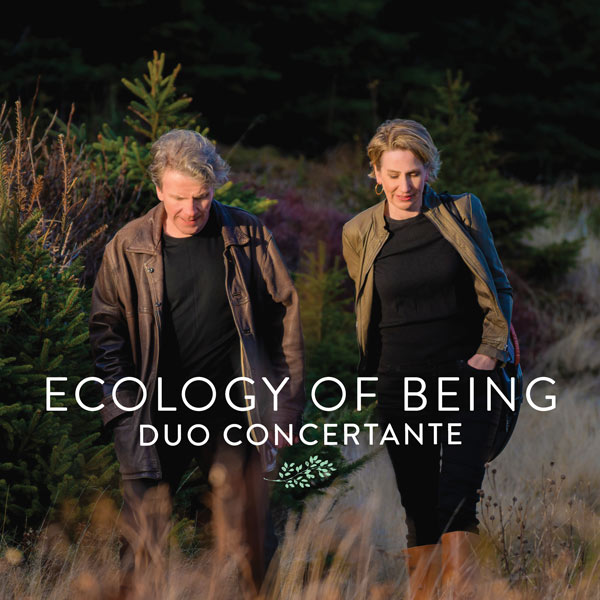
That’s background for Ecology of Being, a new project from Duo Concertante (Nancy Dahn violin and Timothy Steeves piano), including a new recording on the Marquis Classics label, stage performances throughout Canada, an innovative online school program (presented with The Tuckamore Festival) that includes videos, links and live performances, and further performances in Europe. The concerts in the Toronto area are likely to come in summer or fall. So far I’ve listened to the CD and watched some video.
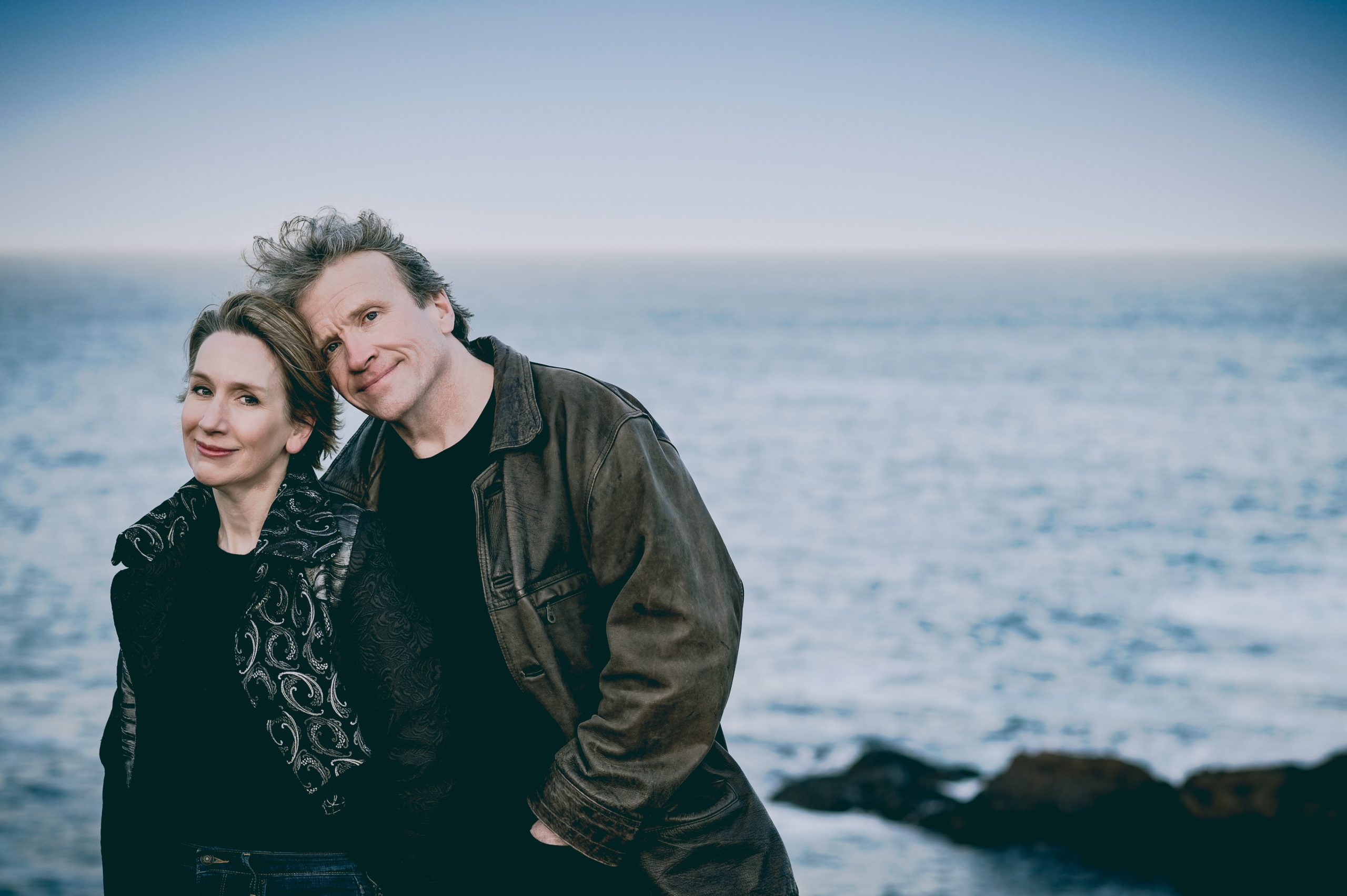
Duo Concertante: Nancy Dahn and Timothy Steeves (Photo: Rich Blenkinsopp)
Their CD takes its name from one of the series of newly commissioned musical compositions inspired by nature and the climate emergency: Ian Cusson – The Garden of Earthly Delight Carmen Braden – The Seed Knows Randoph Peters – Frisson Dawn Avery – Onekha’shòn:a, Ya’kòn:kwe (The Waters, the Women) Melissa Hui – Ecology of Being with Clara Steeves, actor Bekah Sims – shedding, as if sloughed
“We are parents of two children and it makes us incredibly sad that they and the younger generations face huge climate-related challenges,” comment Nancy and Tim. “We hope this project will encourage people to reflect more on their own relationship to nature and the precarious state of the environment.”
Ian Cusson
I’ve been listening to the compositions. Cusson’s Garden of Earthly Delights is not your usual pastoral, because the title comes from a painting of Hieronymus Bosch, suggesting something dark and apocalyptic. Braden’s “seed” is deftly captured as if in a miniature picture, narrow yet perfect. Peters’ “frisson” is deliberately aiming to induce shivers: and succeeds admirably.
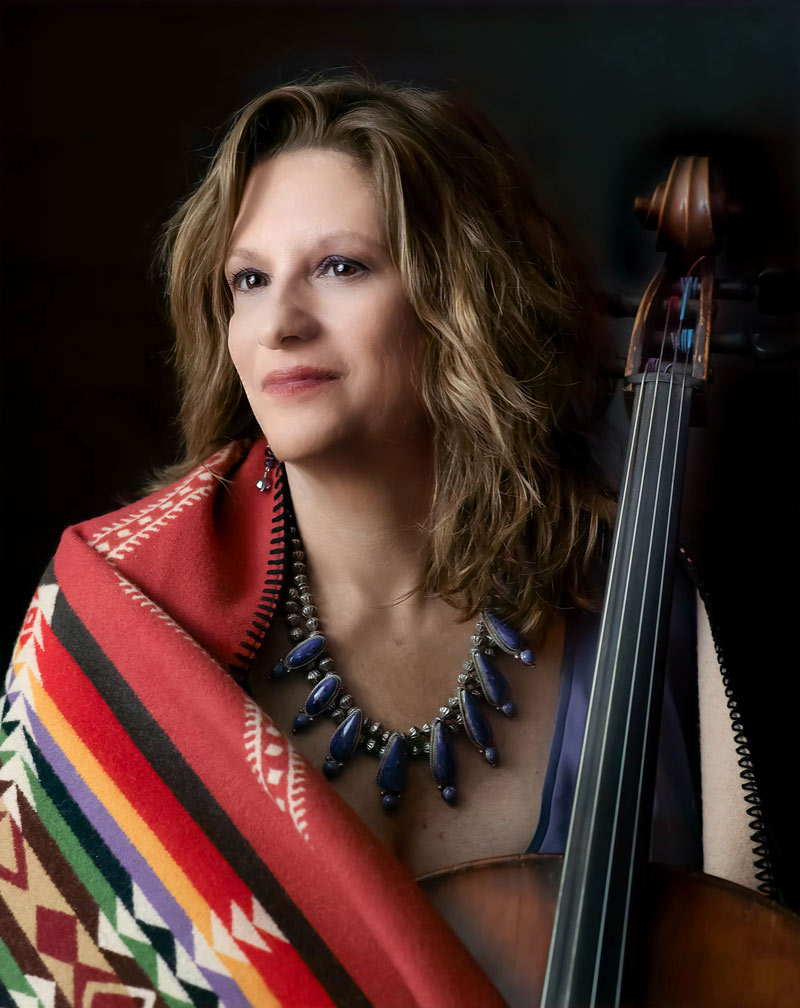
Dawn Avery
I listened to Avery’s piece several times before reading her composer’s notes. The music takes us in a completely different direction, suggesting solemnity, ritual, prayer, and seems apt for the weekend of Passover or Easter. As Avery explains in her composer’s notes, the compositions Onekha’shòn:a, Ya’kòn:kwe (The Waters, the Women) are
“dedicated to the Murdered and Missing Indigenous Women and Girls, Onekha’shòn:a, Yakòn:kwe explores the symbiotic relationship between the well-being of our water and our women. “
The works titled Ecology of Being by Hui incorporate poetry by Shannon Webb-Campbell, who says
“These poems chart questions of belonging, a reciprocal relationship to the land and water, as well as love, longing, and Indigenous resurgence. The poems provoke the personal and are deeply ancestral.”
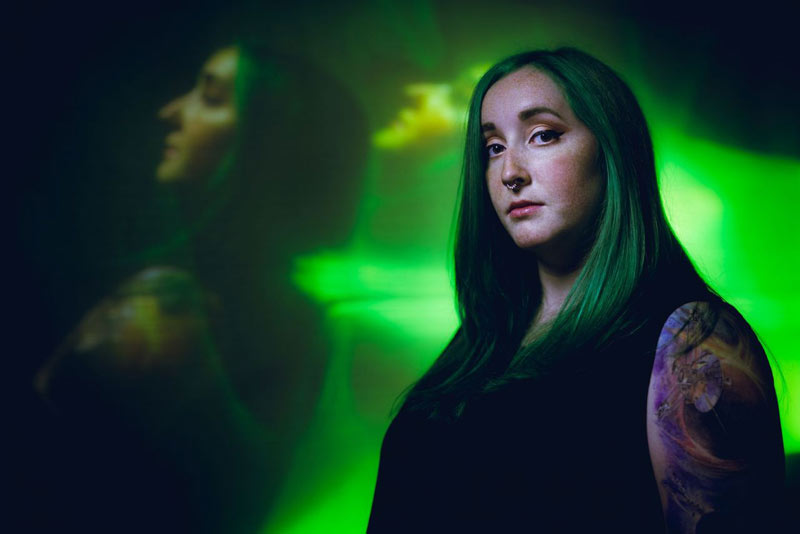
Bekah Simms
Bekah Simms explains the context for her concluding piece shedding, as if sloughed, with program notes that add an essential layer. She invokes the grotesque image of an animal shedding skin “which fall off “as easy as if sloughed like boiled tomatoes,… “
It begins to make sense if we remember how precarious life may be in the days and years ahead, an ordeal that may be survivable but will be harrowing.
She adds:
“I also wanted to consider a strange balance between wonder and beauty, strangeness, and unease/discomfort. This is partially achieved through types of psychoacoustic phenomenon and tuning systems that use ratios and natural properties of sound, even though they can sound “out of tune” on the concert stage. A blend of acoustic and electronic, tempered and non-tempered, slow/simple and hurried and complex… it all boils down to a conflicted, strange, desperate shedding of all that has gotten us to this point.”
I realize listening to this CD that the conversation is no longer a debate between those who resist climate change and those like myself who recognize that we’re living in the Anthropocene, the era of human-caused transformation of the world. The agnostics / disbelievers are in a separate silo, muttering heresies that no longer interest me.
A better question at this point is how do we feel about the Earth, and what are we going to do about it? That’s what this CD addresses.
Melissa Hui
Here is Ecology of Being, a short film featuring the music of Canadian composer Melissa Hui and the poems of Shannon Webb-Campbell with actor Clara Steeves.
I need to properly acknowledge a beautiful moment in my life, even as I struggle to find the words.
As I glance at the time, I immediately think about Sam’s schedule. At 5:28 my viscera know automatically whether she should be getting her dinner, or going out for a walk before sunset.
But no, that’s gone. I am a bit like a boat that has lost its anchor, drifting for the moment.
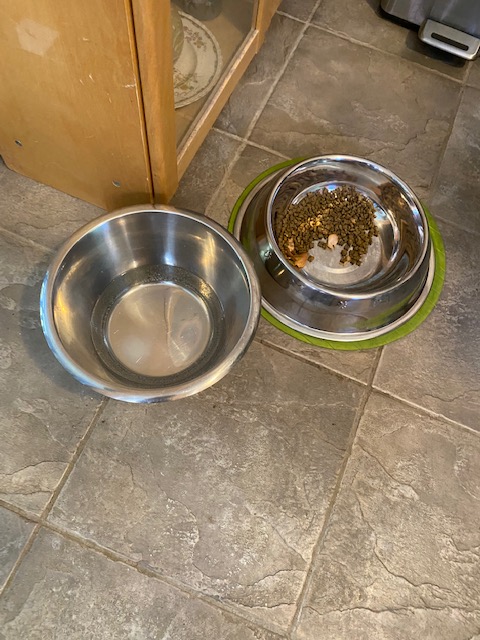
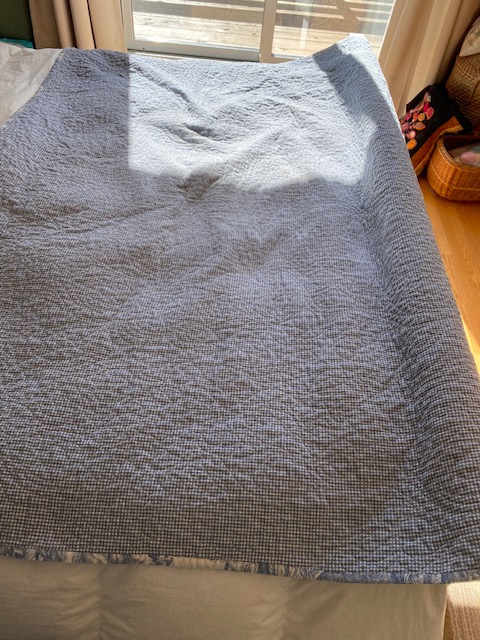
I look at her food and water dishes, not wanting to put them away yet, looking at her blanket on my bed (yes she used to sleep with us).
The blanket
Our dog Sam is gone, with the help of Midtown Mobile veterinary hospice services. They offer advice and also come to you to perform euthanasia if it’s called for. Their website can be found here (click).
Earlier we had looked at their Quality of Life scale, something I’ve mentioned previously. As a pet ages, this gives you a way to help decide whether palliative care should be implemented or if humane euthanasia should be considered.
You can also download a QoL scale on their website. With each passing month, Sam’s scores were getting lower and lower, as we faced the reality of her condition.
We have previously had a dog and a cat euthanized, in both cases at moments of medical crisis, which means not just pain but emotional stress for the poor animal. While it was beautiful to finally see the animals at peace, the journey was in some ways horrific.
This time was very different.
Instead of stress we had reassurance. Instead of fear for the animal, it was a most peaceful journey across the rainbow bridge. Sam was lying with her head against my leg, as I rubbed her, seeking to help keep her calm.
We actually had an appointment for that final visit last week, but at the last minute we backed out, changing our minds because Sam had seemed more alive than ever. We couldn’t bear to go through with it. That moment of reprieve was joyful for us yet we knew we were delaying the inevitable, that she was not going to really recover, not at her advanced age, not with all the ailments tormenting her.
We knew what eventually lay ahead.
And the past week was another painful one for Sam, who has been panting, limping, gasping, slipping & falling. The past few nights we tried to settle her down to sleep, wondering if she would even make it through the night.
Today’s appointment was a model of compassionate care. I’m struggling to write this, finding solace in reporting concrete facts.
Dr Ellis was more like a psycho-therapist than a vet, talking to us about Sam’s issues, holding out possible remedies and hopeful options. There was no pressure to decide one way or the other. If we had changed our mind –as we did last weekend—we were fully supported.
I have been blubbering like a big baby at various times over the past couple of weeks. Yesterday and today it was especially emotional as I took her outside for her last walks in the yard, her last meals, offering her treats and rubbing her.
In due course, I was the one needing comfort, feeling her fur and rubbing her while I still could.
Gradually she became quieter, stiller.
Midtown are more than vets, they’re like psychologists, caring for the pet-owner at their moment of greatest pain. Whatever you decide, you will find them supportive and helpful.
I’m grateful for the excellence of their care, looking after Sam but also extremely compassionate to Erika and me.
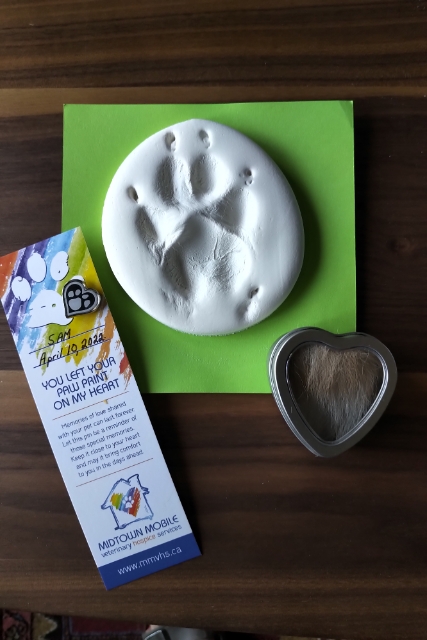
Sam’s pawprint and a lock of hair inside the heart-shaped container
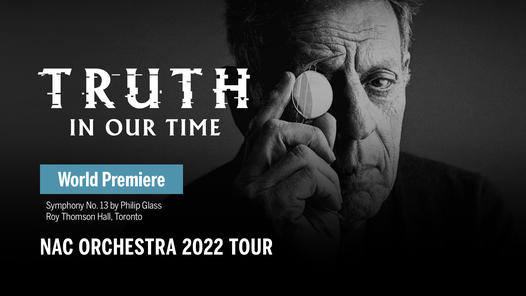
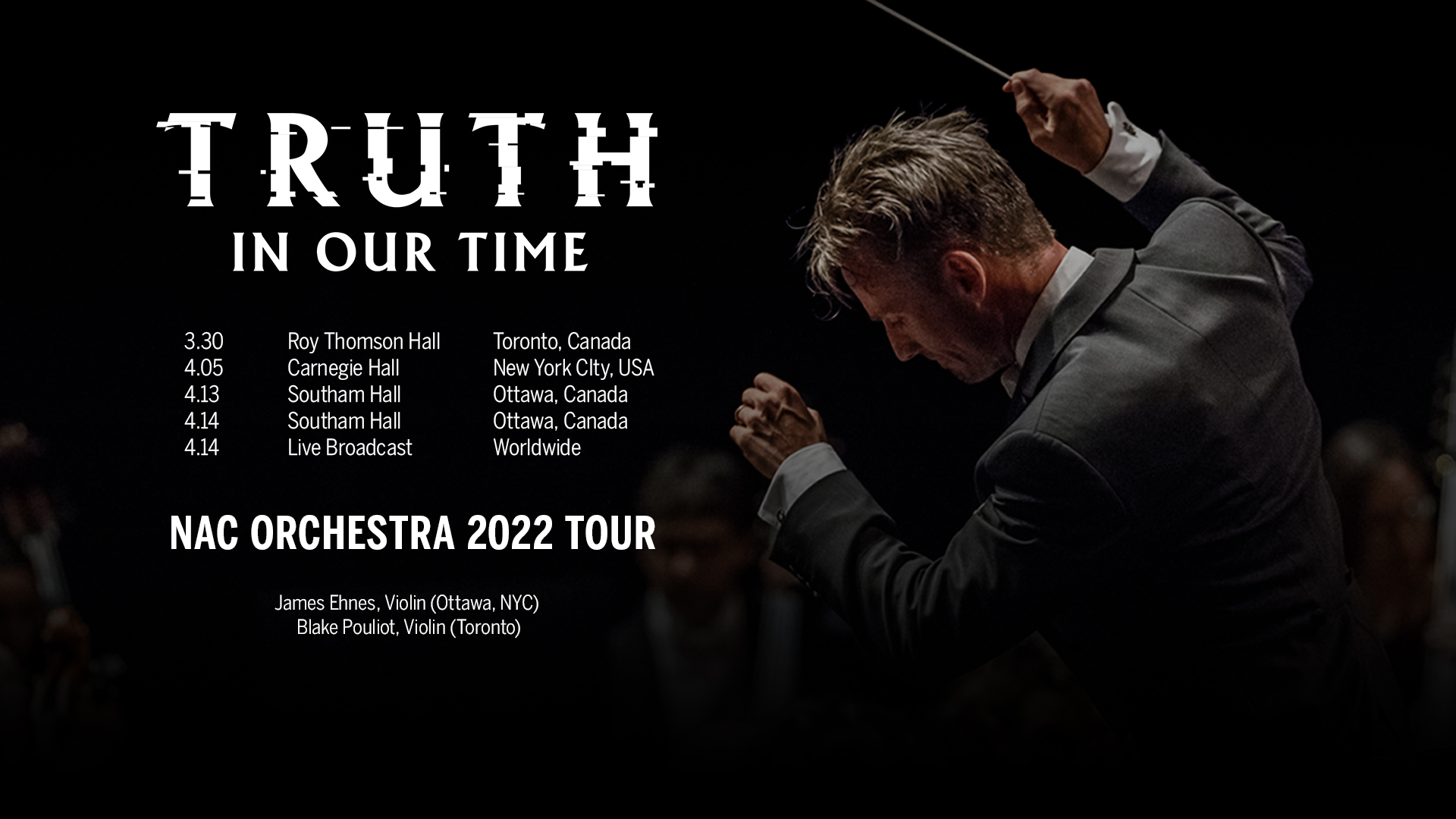
It’s an ambitious package, this National Arts Centre Orchestra Tour. There’s a world premiere of a Philip Glass symphony, commissioned by the family of newsman Peter Jennings, and three other works collected around the idea of “truth in our time”, as a reflection of a great Canadian journalist.
• Nicole Lizée’s brief Zeiss After Dark • Dimitri Shostakovich’s Symphony #9 Intermission • Erich Wolfgang Korngold’s violin concerto • Philip Glass’s symphony #13.
They played to a mostly full Roy Thomson Hall in Toronto tonight (it’s great to see such a big audience) before they go to Carnegie Hall in April. They’re coming home for a pair of concerts in Southam Hall. Tours serve many purposes, building community, confidence, perhaps serving notice abroad and at home that in some sense they’ve arrived at a new level, the best yet.
Almost everything was played with great polish and precision. While there was one moment when every soul in the orchestra cringed for the unfortunate fluff by the soloist, no worries, Toronto is the practice concert. Presumably they’ll get it right at Carnegie Hall.
In every other respect it was an impressive outing.
Shelley led a crystal clear reading of Zeiss After Dark, especially compared to the version I heard in Toronto.
Blake Pouliot was soloist in the Korngold Violin Concerto, undertaken with panache and energy. It was almost as much fun watching him listen to the orchestra when he wasn’t playing, a thoroughly committed performance. His cadenzas were edgy, yet when he needed it the young soloist effortlessly soared over the ensemble. Shelley helped keep the orchestra out of Pouliot’s way, offering support and a luscious sound from the strings, using softness to slowly build to real climaxes, extorting us into an eruption of applause with the final phrases in the opening movement of the concerto.
Shostakovich’s 9th Symphony is a relatively short but demanding piece full of solos. It’s like a Mahler Symphony turned inside out, with its wacky opening and closing movement, with the tender feelings in the inner movements: in other words, the opposite of what Mahler does in his 9th Symphony. I’ve heard several explanations for what the composer was doing. I think I hear him showing us the blunt power-structure that commands artists to perform like trained monkeys, as in that strange sequence of the trombones playing a kind of fanfare with the percussion (suggesting the military to me), followed by what might be the chained artists dancing at the end of their chains, taking up that darkly merry tune.
In 1945 the Korngold concerto was composed, and the Shostakovich 9th Symphony premiered. Korngold was a refugee from Nazi Germany, coming to USA in 1935, while Shostakovich endured Stalin’s oppressive regime, including periods when some of his music—such as this symphony—were banned.
After the concerto, Pouliot played an encore, a short piece accompanied by the orchestra that was announced as a piece by Yuri Shevchenko, based on the Ukrainian anthem; if you search on YouTube for Yuri Shevchenko you’ll find two versions of the piece. It’s a beautiful melody and timely.
I admit that I am not sure I understood the Glass Symphony. It does several things that seem original, unlike other music. While we have some of his usual tendencies, such as the patterns of quavers, the repetition, the stable peaceful groups of notes, the abrupt endings, this composition does things I haven’t encountered before in Glass: although –who knows—these tendencies may be typical of other symphonies. There are some passages that are hard to anticipate, places where the brass seems to conflict with what the strings are doing: yet without the usual understanding of the word “dissonance”.
For what it’s worth, the audience went wild for Glass’s piece, as he likely will be a big draw throughout the tour.
It didn’t move me, speaking as someone who admires much of Glass’s output. I would qualify this by mentioning that Glass is known especially for his operas and his film & theatre music. I’m a big fan of those compositions, although in this case, I find his music admirable in the abstract sense –where I can hear that the players executed it well. I want to hear it again.
That being said, it’s an impressive concert. In any performance, there is a simpler path doing reliable repertoire or the more challenging and adventurous route. Doing a new piece of music is risky, even if the work is brilliant. Some will not understand, some may resist. Without ambition the arts would be impoverished, reduced to the banal and the predictable.
I’m glad to encounter programming that pushes the boundaries, as in this concert.
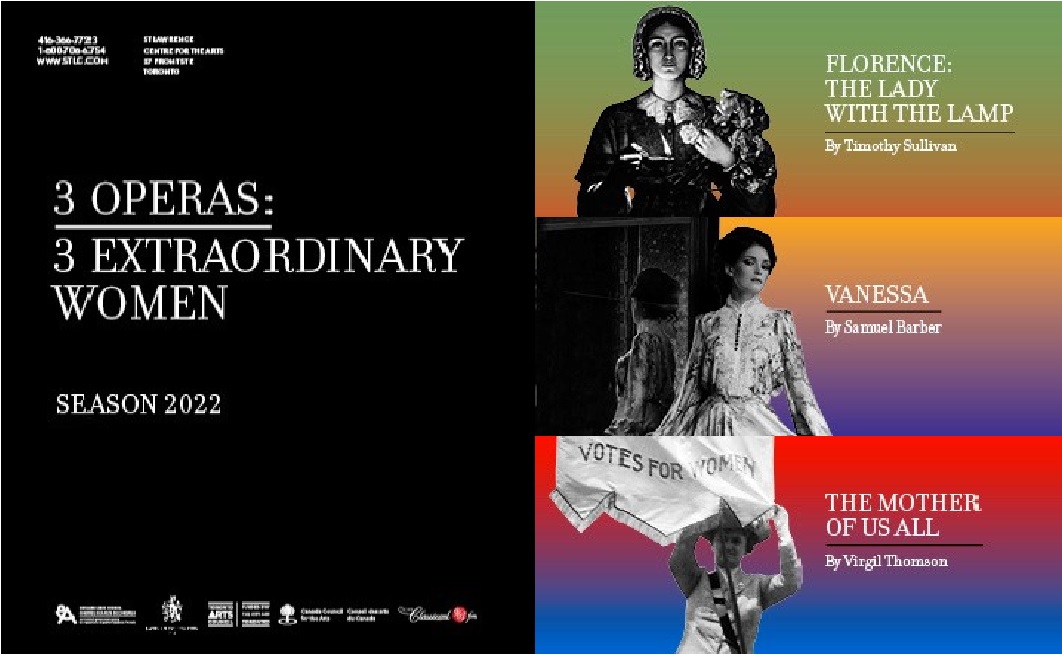
Opera in Concert resumed live performance Sunday afternoon with their first of Three Extraordinary Women, namely Florence: the Lady with the Lamp, composed by Timothy Sullivan and with libretto by Anne Mcpherson, an interesting balance between the contemporary and the historical.
It’s contemporary in its echoes of the horrors in the news, what with a war in Crimea and the challenges in the profession of nursing, while giving us some historical background about the figure of Florence Nightingale. There’s also Opera in Concert’s own history, who selected Florence as their first Canadian work ever to be presented.
Florence premiered at the Elora Festival in 1992, which makes a lot of sense when you listen to Sullivan’s score. Elora is practically synonymous with choral singing. Maybe Sullivan’s original commission stipulated that he needed to make good use of the Elora Singers. Or at the very least he realized he was in the right place to create a challenging piece. I’m just speculating. But as you can tell the opera’s score foregrounds choral music. The two most dramatic parts of the work remind me a bit of West Side Story for their dramatic tension, syncopated orchestration and subtle use of choral colours. Sullivan earned his fee with his wonderful ensembles.
The remainder of the opera also contains some beautiful music, although it’s rarely as dramatic. We watch a group of nurses sadly singing of the war, even though (if I didn’t mess up in my comprehension of the text they sang) they haven’t yet arrived. Moments thereafter comes their brilliant encounter with male personnel who disrespect them & their profession while insisting that they don’t belong there: leading to one of Sullivan’s wonderful choral scenes I alluded to. I loved that scene, but wonder: wouldn’t it have been even better if these would-be nurses were idealists, singing happily the moment before? Musically and dramatically it needs some contrast, not so much unrelenting sadness. I’m recalling the foolish optimism we see from the boys going to war at the beginning of All Quiet on the Western Front. And while we’re speaking of mood, why does the announcement that the Crimean War is over seem to elicit such a blasé sadness? Surely there should be cheers or drunken revelry, especially if they have been miserable. Okay maybe I’m too susceptible to cliché ideas of war and soldiers. Sullivan offered us some lovely melodies, especially from the sad soldiers singing offstage (a lovely chorus again).
Full marks to Conductor Sandra Horst and Chorus Director Robert Cooper for their sparkling work. Horst led an eight-member orchestra who never overpowered the singers but usually gave us plenty of colour.
Lauren Pearl was our Florence, a role taking her to the edges of her range, even if the character seems more saintly than human, a likeable person who is maybe too good to be true. Danlie Rae Acebuque had an appropriately abstract way of singing as the missionary John Smithurst, aided by Guillermo Silva-Marin’s staging, making him seem almost like a spiritual personage remote from real life, situated far outside the story, or at his pulpit. Whenever he appeared, the story seemed to come back to its roots. Ryan Downey’s provocative appearance in the 2nd Act was like a shot of adrenaline for everyone in the show, between his lovely voice and his fearless manner onstage.
Opera in Concert’s season of three operas (compressed into a shorter period than usual due to the pandemic) features “3 extraordinary women”. They continue with Samuel Barber’s Vanessa April 10th followed by Virgil Thomson’s The Mother of us All May 22nd.
Before there were convoys and honking horns, it used to be said that living in Ottawa gave you advantages, because of your proximity to the seats of power.
Yet maybe there’s still some truth to it when we look at the National Arts Centre Orchestra and their Music Director Alexander Shelley.
Last year the NACO enlisted CBC to make four short music films that can still be seen on GEM.
A tiny sample of Lizée’s brilliant creation. The Copyist (missing in action) still hasn’t been found…
Part 2: Ana Sokolovic: Iskra, a 30-minute symphony dedramatizes the COVID-19 pandemic by contextualizing it in the history of humanity.
Part 3: Nicole Lizée: A Guide to The Orchestra Composer and film-maker Nicole Lizée wrote the music, screenplay and directed her episode, which features NAC Orchestra in a magic realist documentary.
Part 4: Shawnee Kish: Music Is My Medicine, as The Mohawk and Two-Spirit singer-songwriter collaborates with young Indigenous artists who have never performed on a stage before.
Yet come to think of it, it’s not fair to say that this project happened only because Shelley and the NACO are in Ottawa. Back in 2017 I recall that Luminato presented Life Reflected, also a work from the NACO and Shelley, produced and directed by Donna Feore who also collaborated on the UNDISRUPTED projects on CBC- GEM.
Who is this Alexander Shelley, you may wonder. That question was partially answered today as Shelley hosted This Is My Music on CBC radio. Now if there were ever a case where we might want someone to go on the radio to tell us of their musical influences, it might be Shelley, who is a genuine curator of music. Sometimes he speaks of the music he heard in childhood, even if it becomes music he makes as an adult professional.
The immediate reason for Shelley’s presence on CBC was the impending Truth in Our Time tour of the NACO that begins with a concert Wednesday night at Roy Thomson Hall in Toronto, featuring a world premiere of a symphony by Philip Glass, the Korngold violin concerto, and Shostakovich Symphony #9.
In April they’ll be playing at Carnegie Hall and then back to home base aka Southam Hall.
Shelley is a fine conductor and a bold curator who clearly makes things happen. I’m looking forward to hearing him lead the NACO at Roy Thomson Hall Wednesday night.







 barczablog